Loading
by BlastRoom
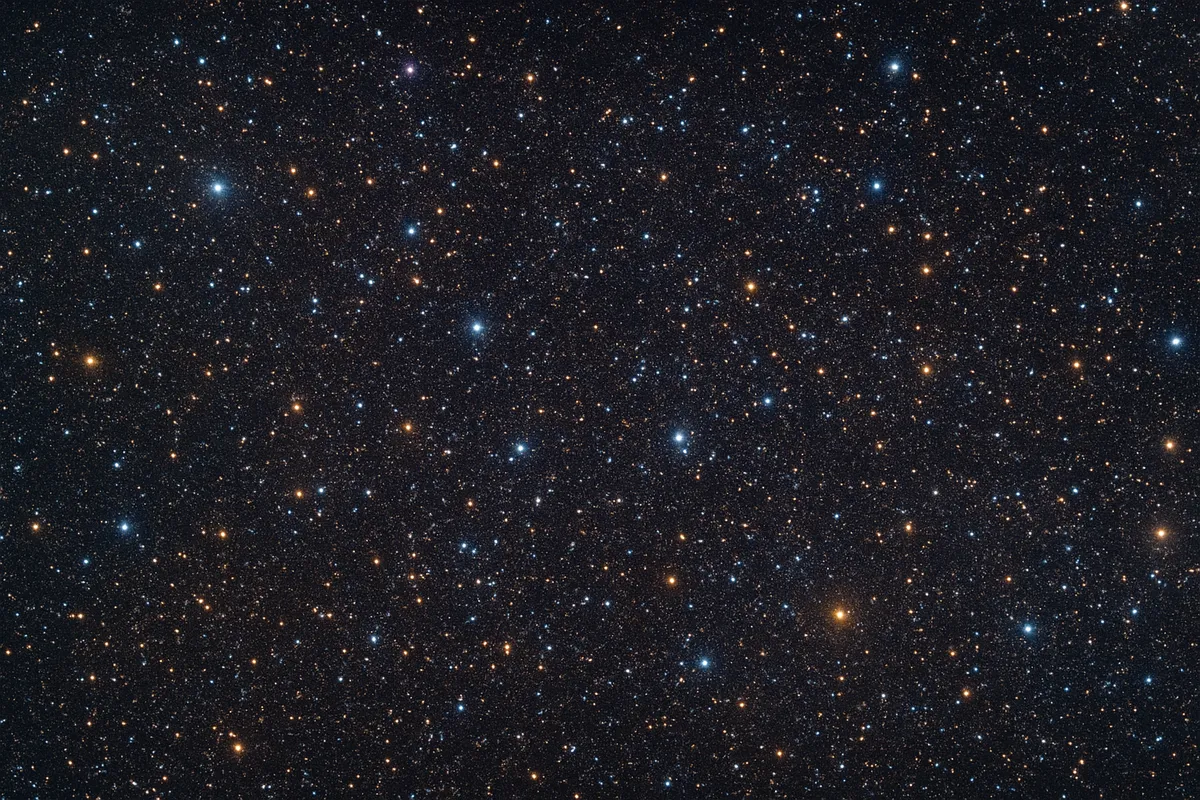
Compare stars by color, spectra, parallax, apparent brightness, luminosity, and tabulated data.
#earth_space_science
30 questions
One question set, multiple game modes. Tap any game to see it in action. Not sure which to pick?
Answer to place stones and capture territory.
Outrun the snow together.
Earn blasts, then hunt the other team.
Answer to earn energy, then climb.

The class blasts through walls together.
Bid on mystery lots. Most money wins.
Sell tours. Nice, standard, or a total scam.

Answer, restock, and serve the rush.
More correct answers pulls the rope your way.
Answer, then shoot down the alien wave.
Answer, then tap to leap the frozen ridge.
For main sequence stars, which visible color usually indicates the highest surface temperature?
Two stars in the same cluster are compared: Star P shines blue-white, and Star Q shines deep orange. What does the color difference show?
A red star is usually cooler at its surface than a blue-white star.
Star A's light is dominated by shorter visible wavelengths than Star B's reddish light. What does that show about Star A's photosphere?
For the colors blue, yellow, and red, what is the usual order from hottest surface temperature to coolest?
A star observed at the same distance changes from yellow-white to reddish as its outer layers expand. What property has decreased at the photosphere?
Use the spectrum figure. What do matching dark lines in Star A and laboratory element bands reveal about Star A?
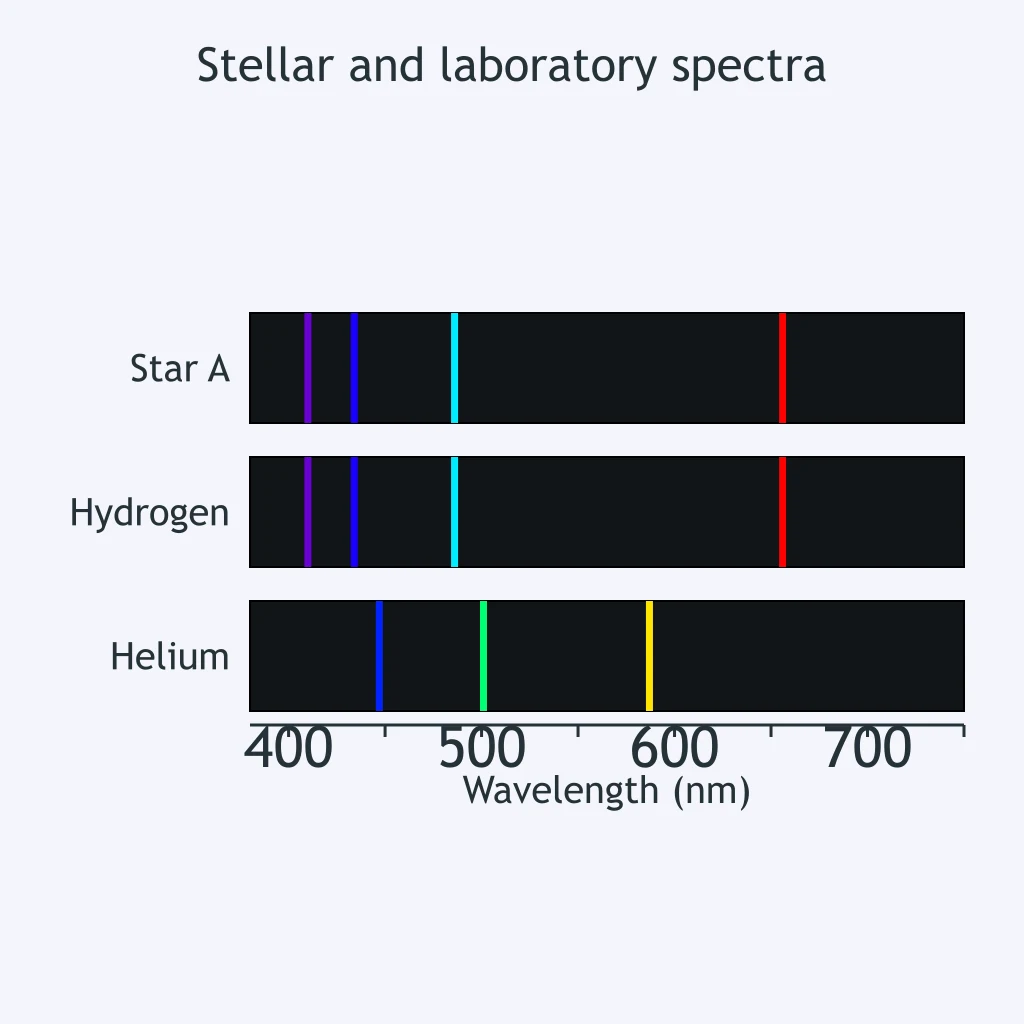
Use the spectrum figure. Star B's dark-line pattern matches one laboratory spectrum most closely. Which element is identified in Star B's atmosphere?
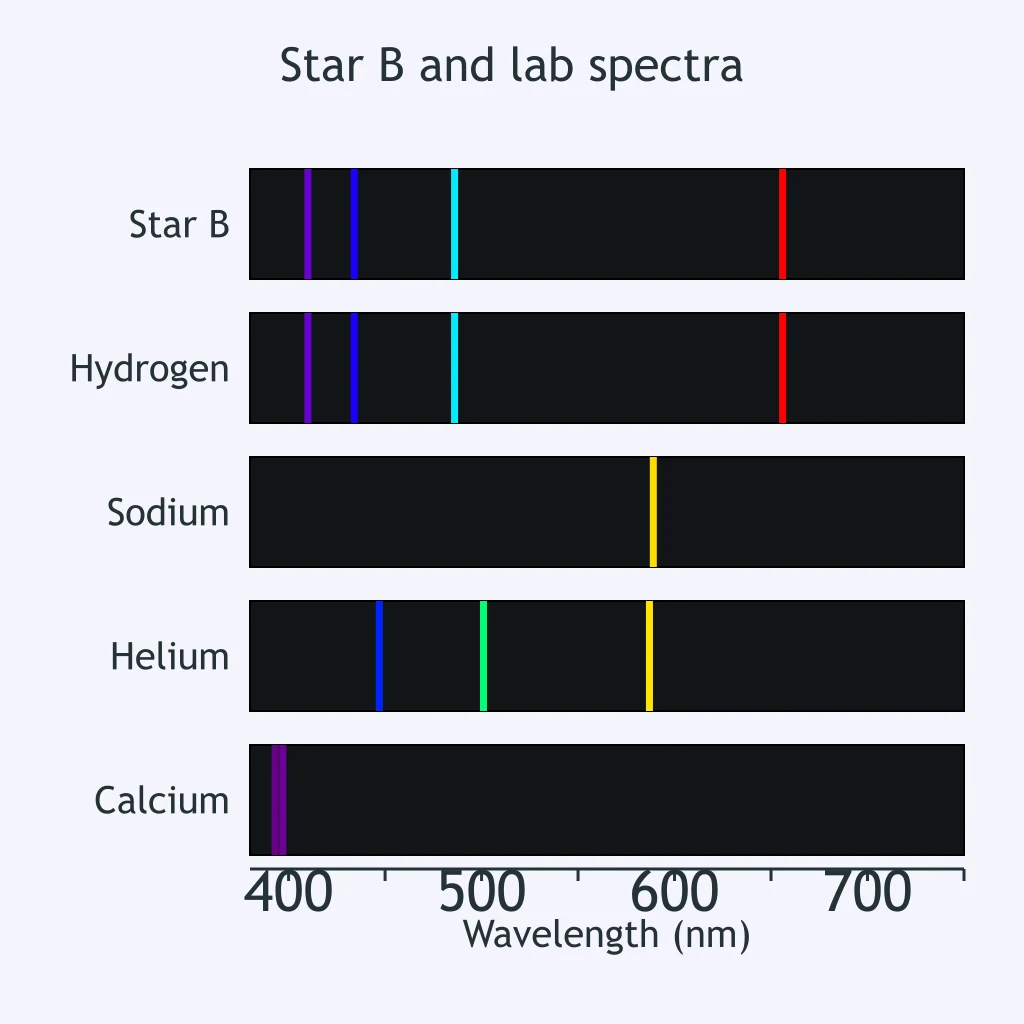
Use the spectrum figure. Star C has dark lines at the same wavelengths as one laboratory band. Which element is present?
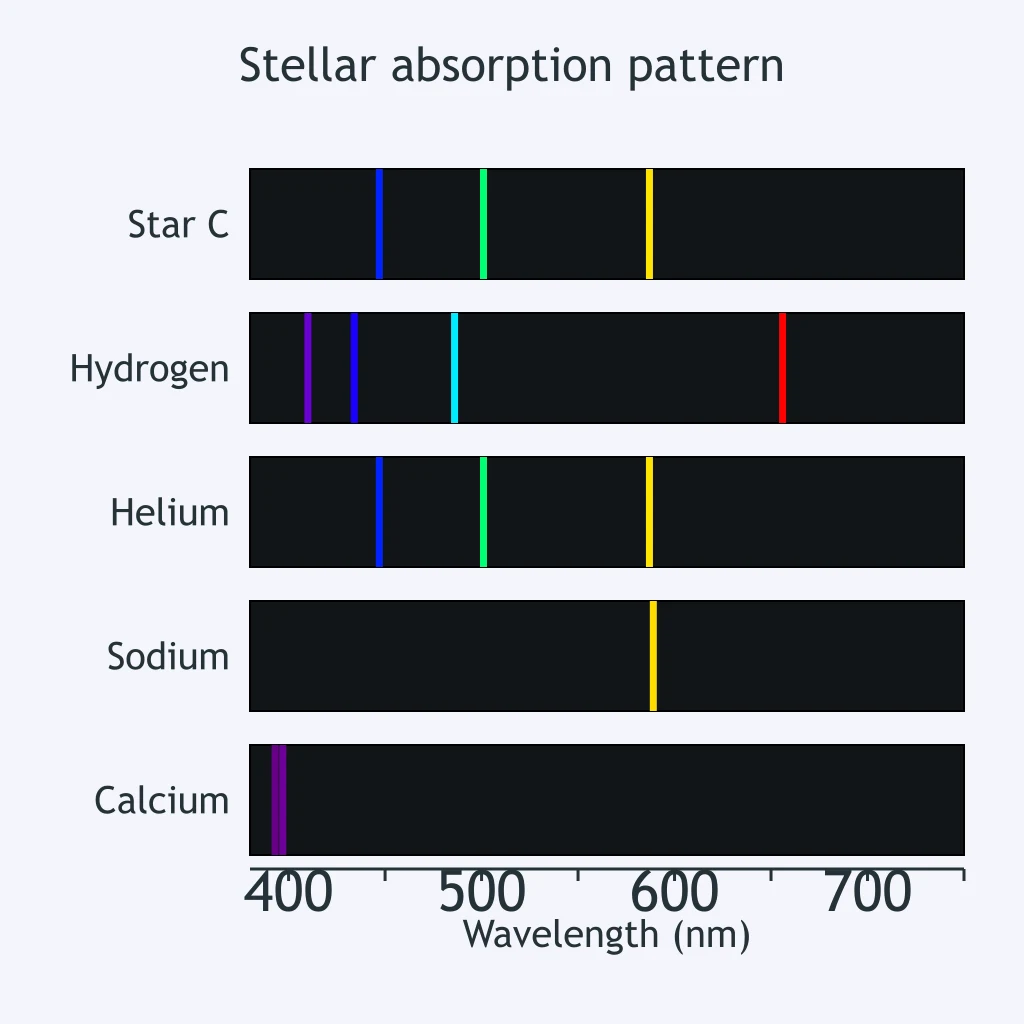
What causes a dark absorption line in a star's visible spectrum?
Use the spectrum figure. Compare Star D's lines with the laboratory spectra. What does the pattern show?
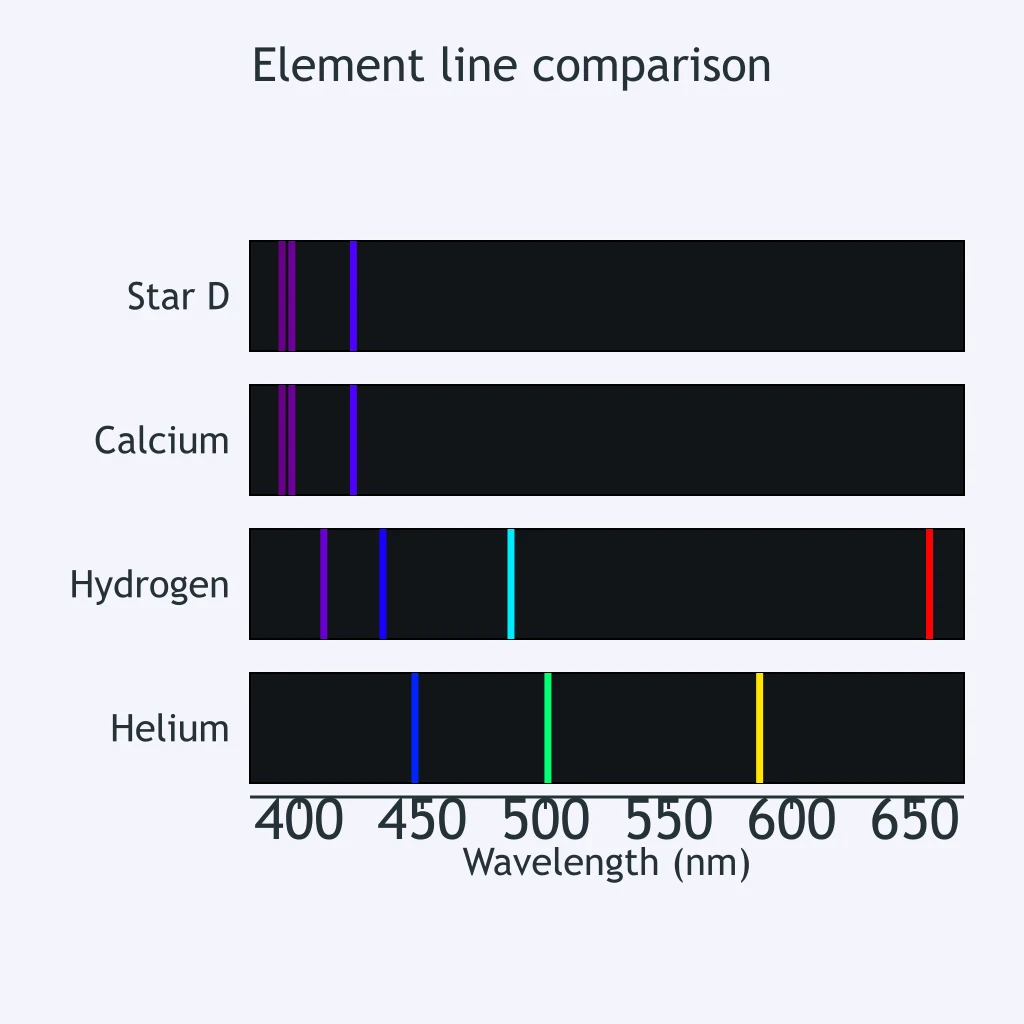
Use the parallax diagram. Earth is shown at A and B on opposite sides of the Sun, with sight lines to a nearby star. What produces the apparent shift?
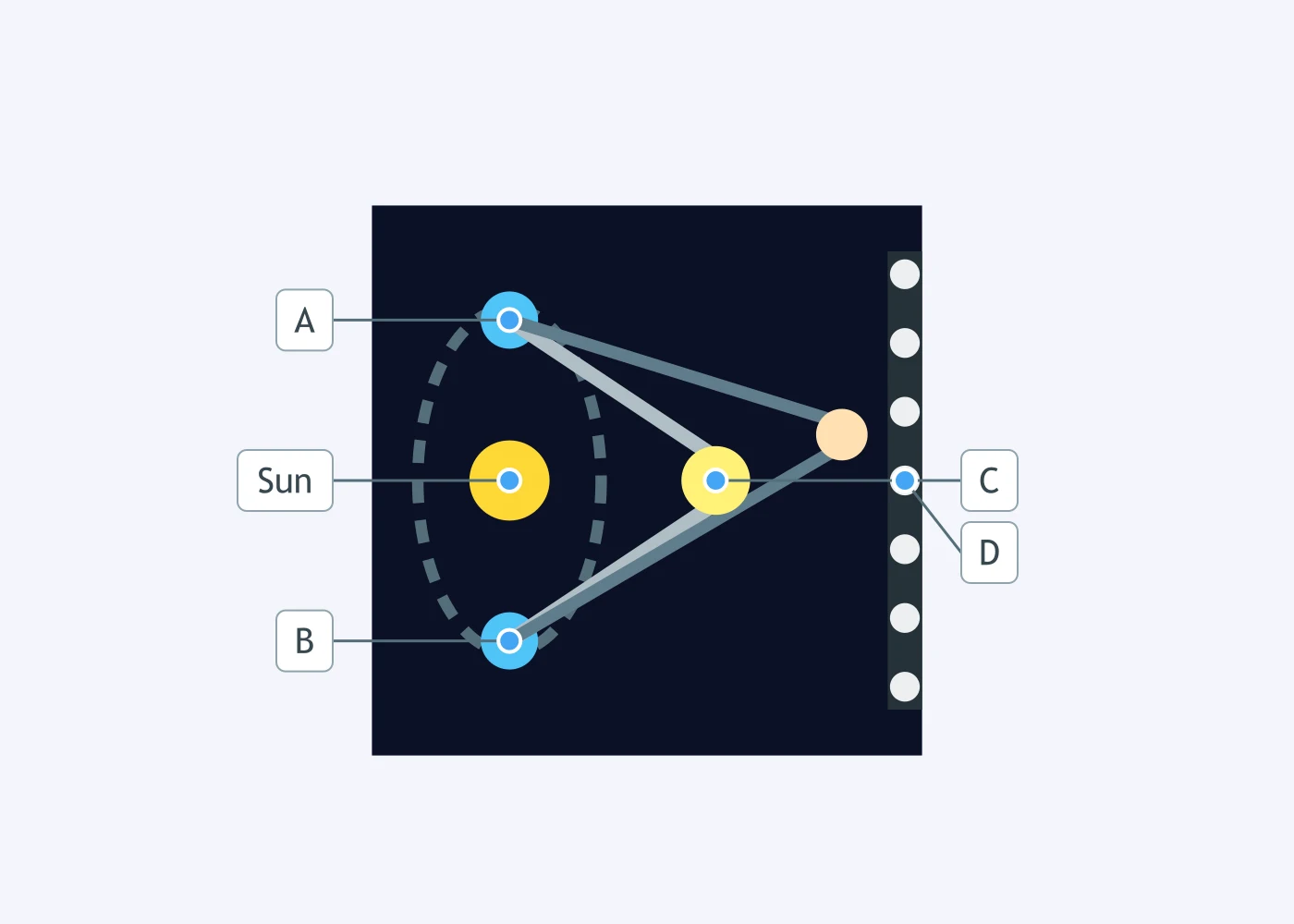
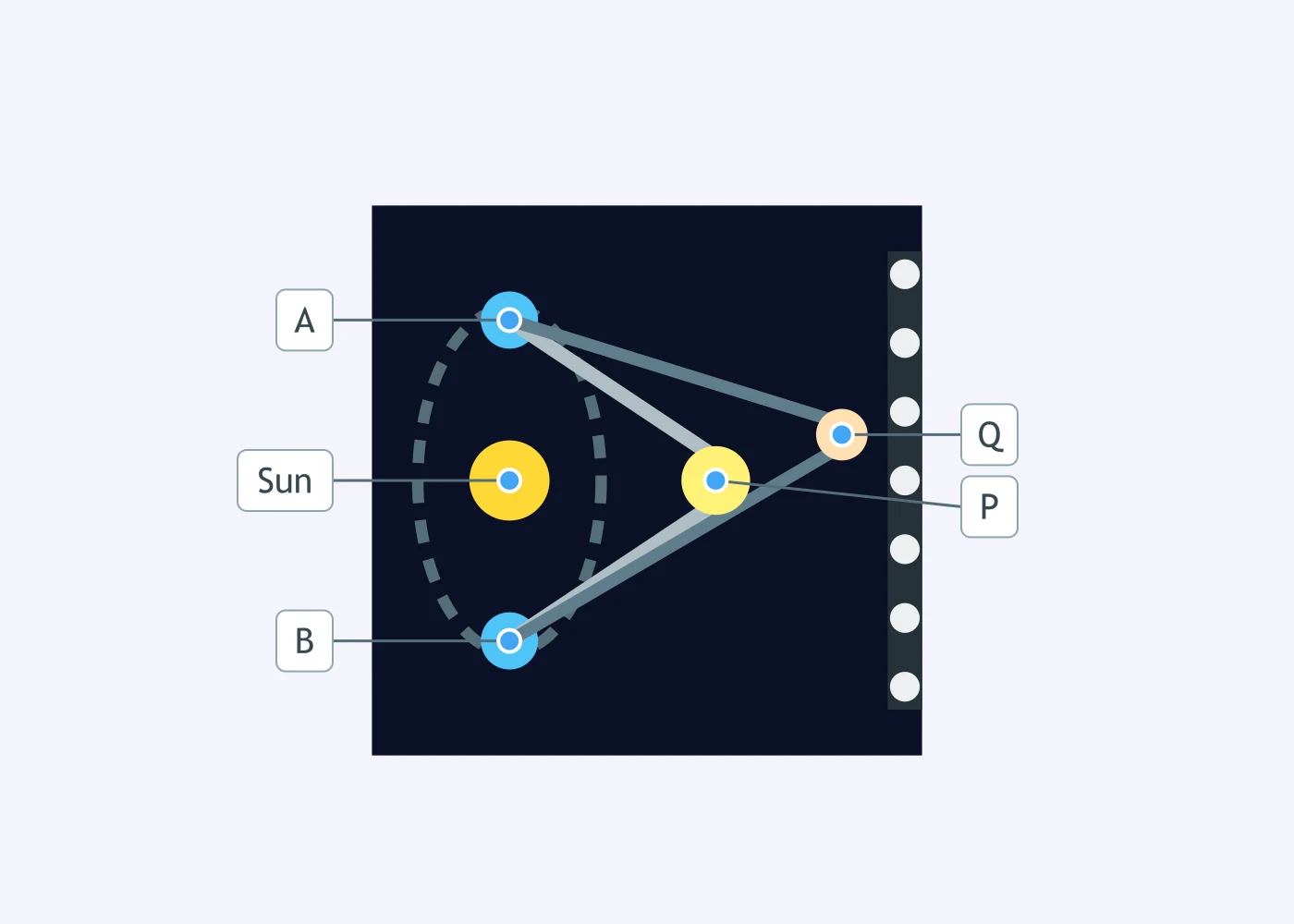
Use the parallax diagram. As Earth moves from A to B, which star, P or Q, shows the larger annual parallax angle?
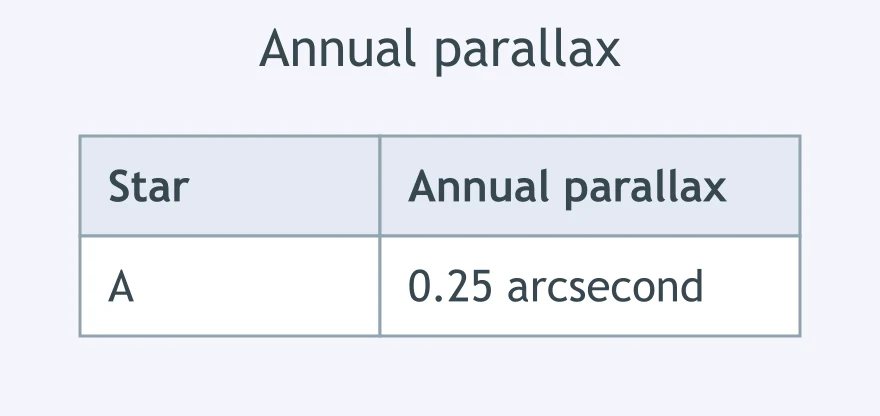
Use the parallax table. Using , how far away is Star A?
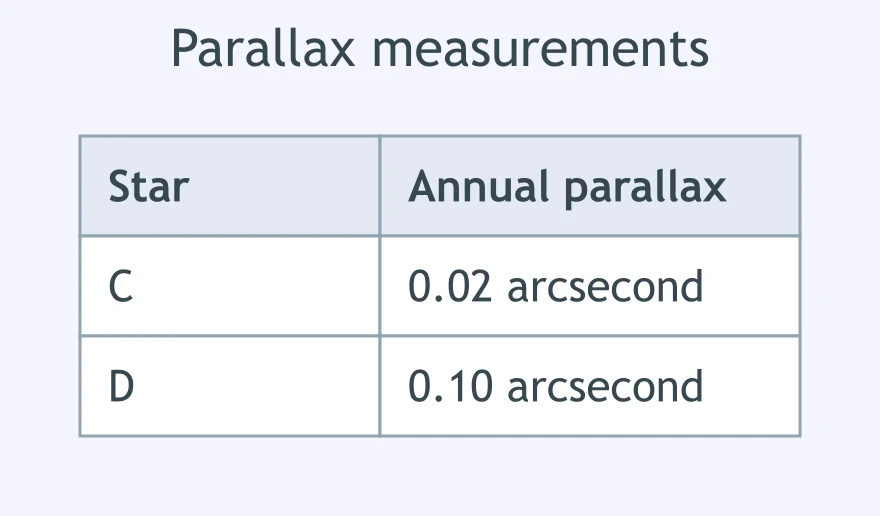
Use the parallax table. Which star is farther from Earth?
Use the parallax diagram. Why are observations six months apart better than observations one week apart for measuring nearby-star distance?
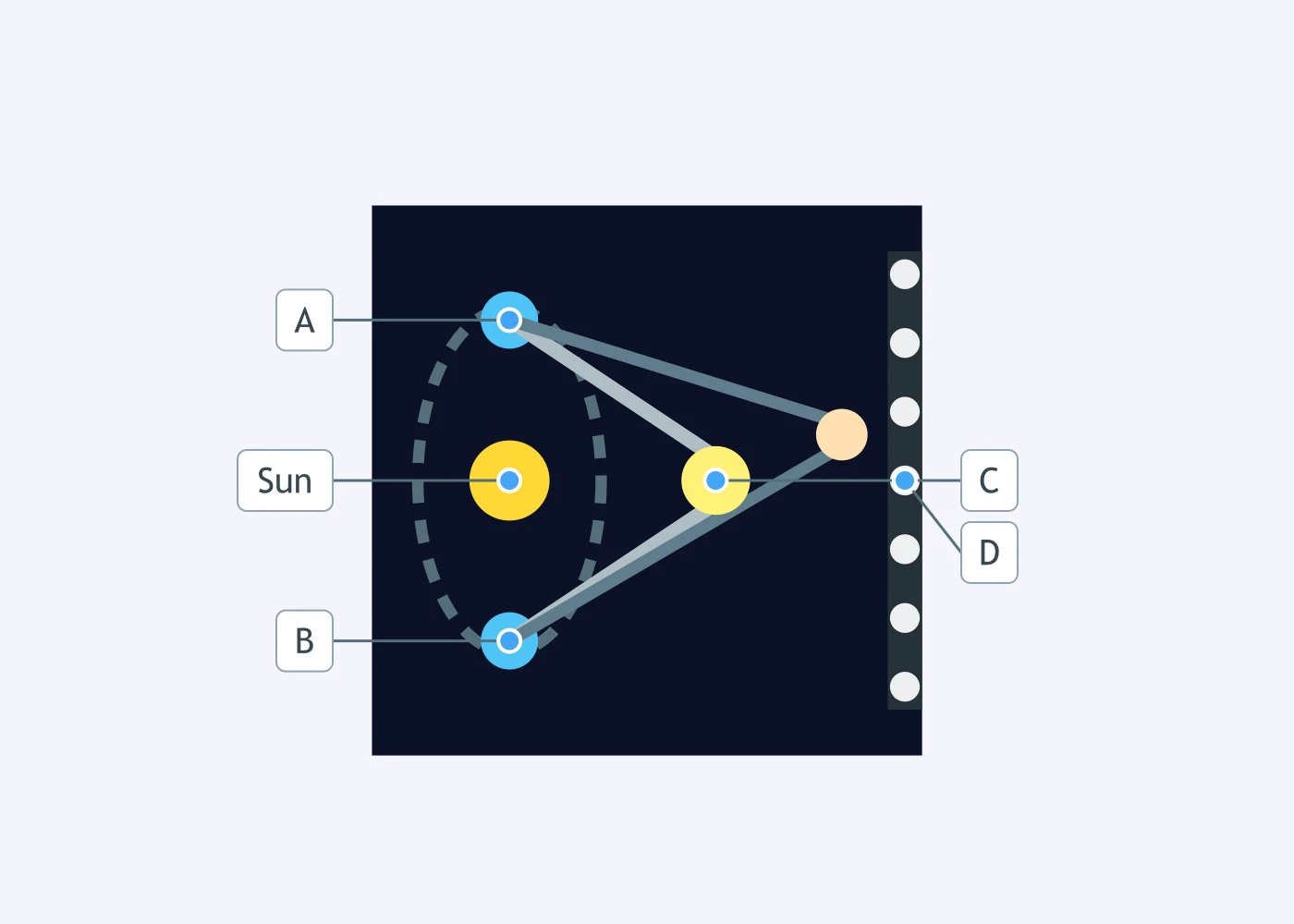
Star X shows no measurable parallax shift while Star Y does. What is the best inference about Star X?
A student says luminosity and apparent brightness mean the same thing. What correction is accurate?
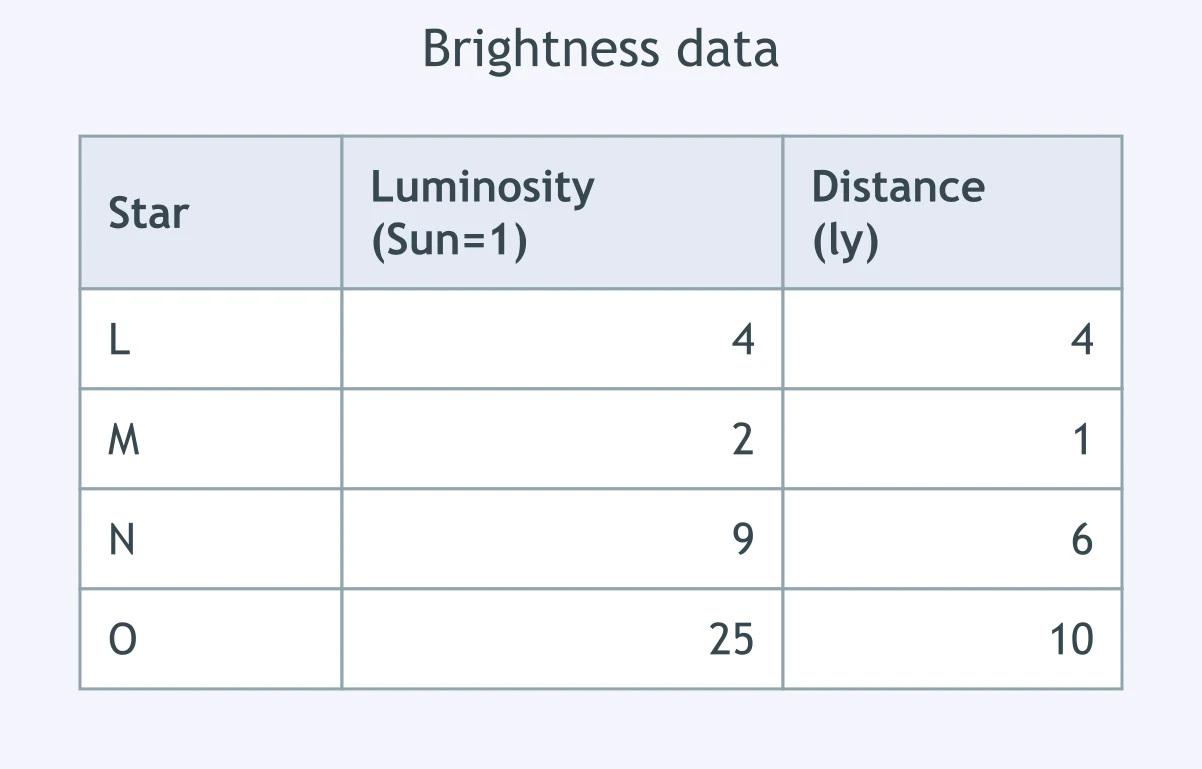
Two stars have the same luminosity. Star A is 10 light-years away, and Star B is 40 light-years away. Which appears brighter from Earth?
Stars R and S look equally bright, but R is four times as far from Earth as S. What must be true about R's luminosity?
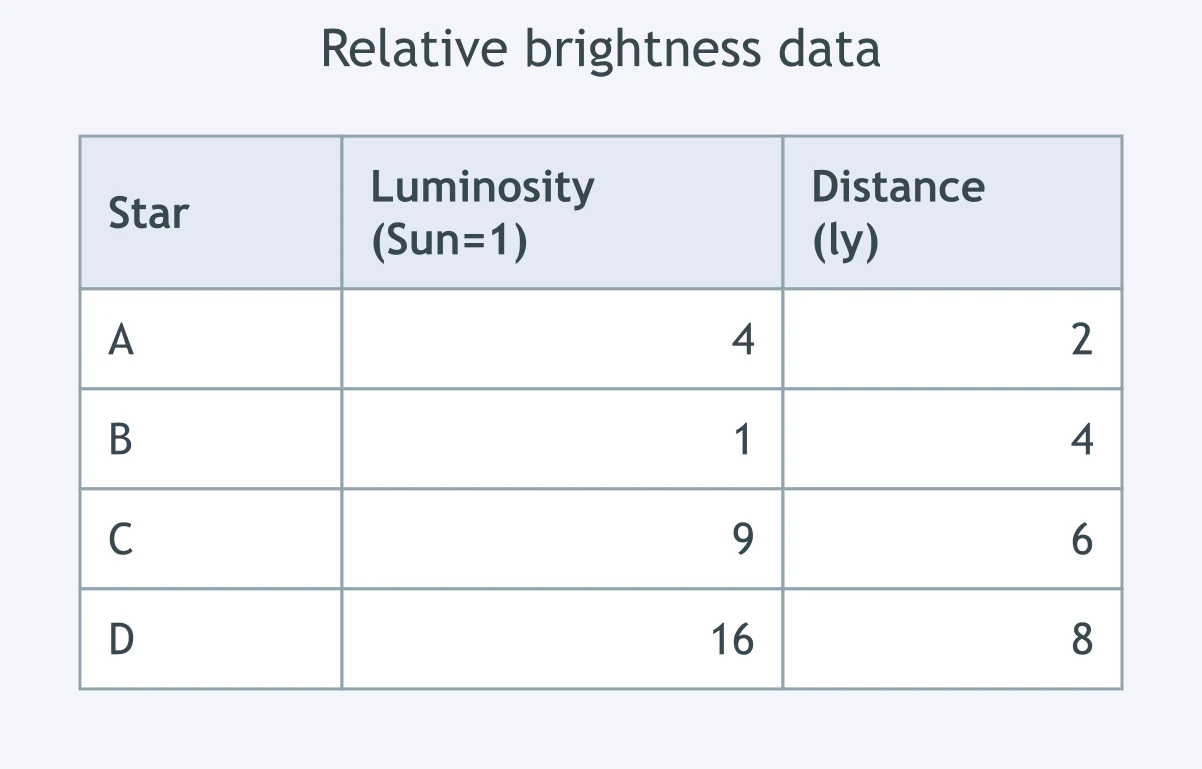
Use the table. Based on luminosity and distance, which star should appear brightest from Earth?
Star A has an apparent magnitude of 1, and Star B has an apparent magnitude of 6. How does Star A look from Earth compared with Star B?
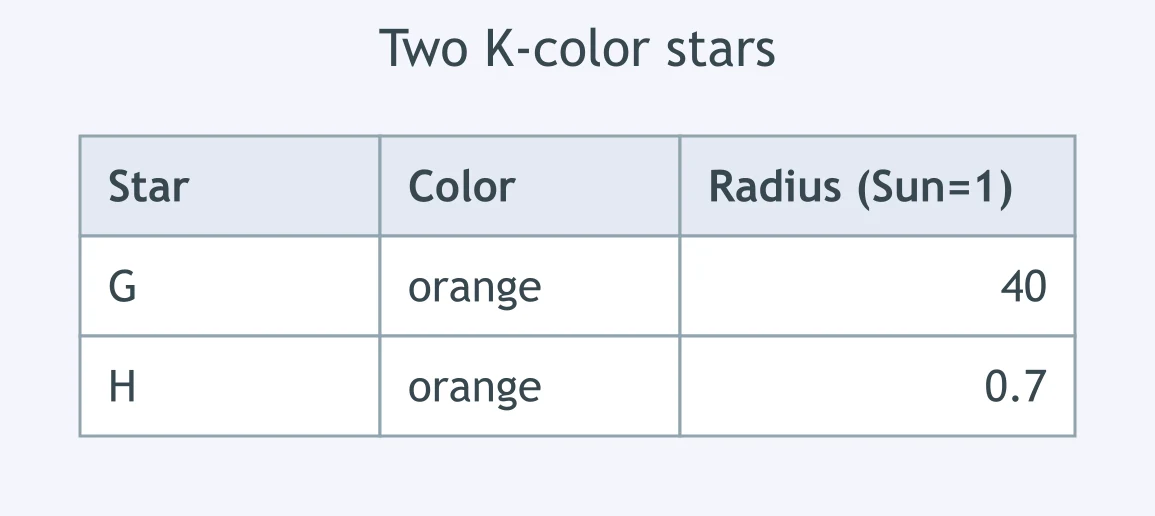
Use the table. Two K-color stars have similar surface temperatures; which one has the greater luminosity, and why?
Use the star data table. Which star has the highest surface temperature based on its color?
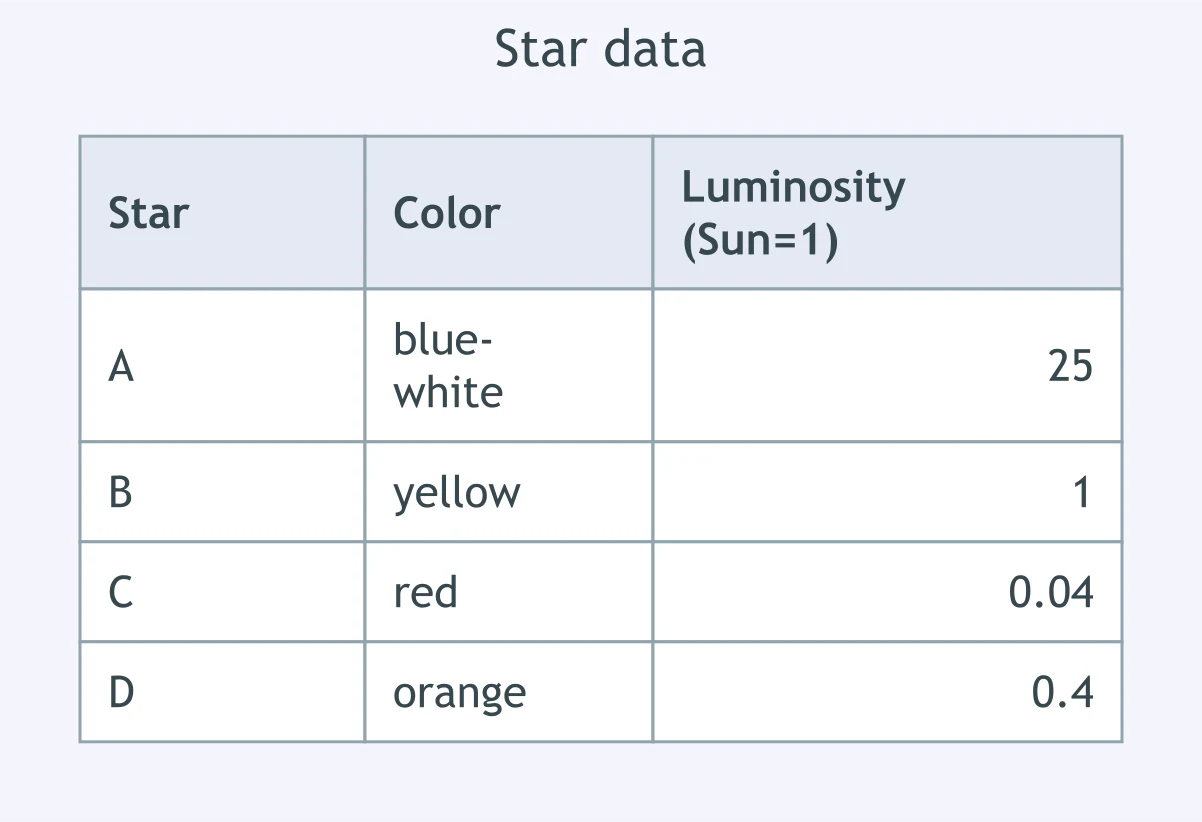
Use the star data table. Which star is nearest to Earth based on annual parallax?
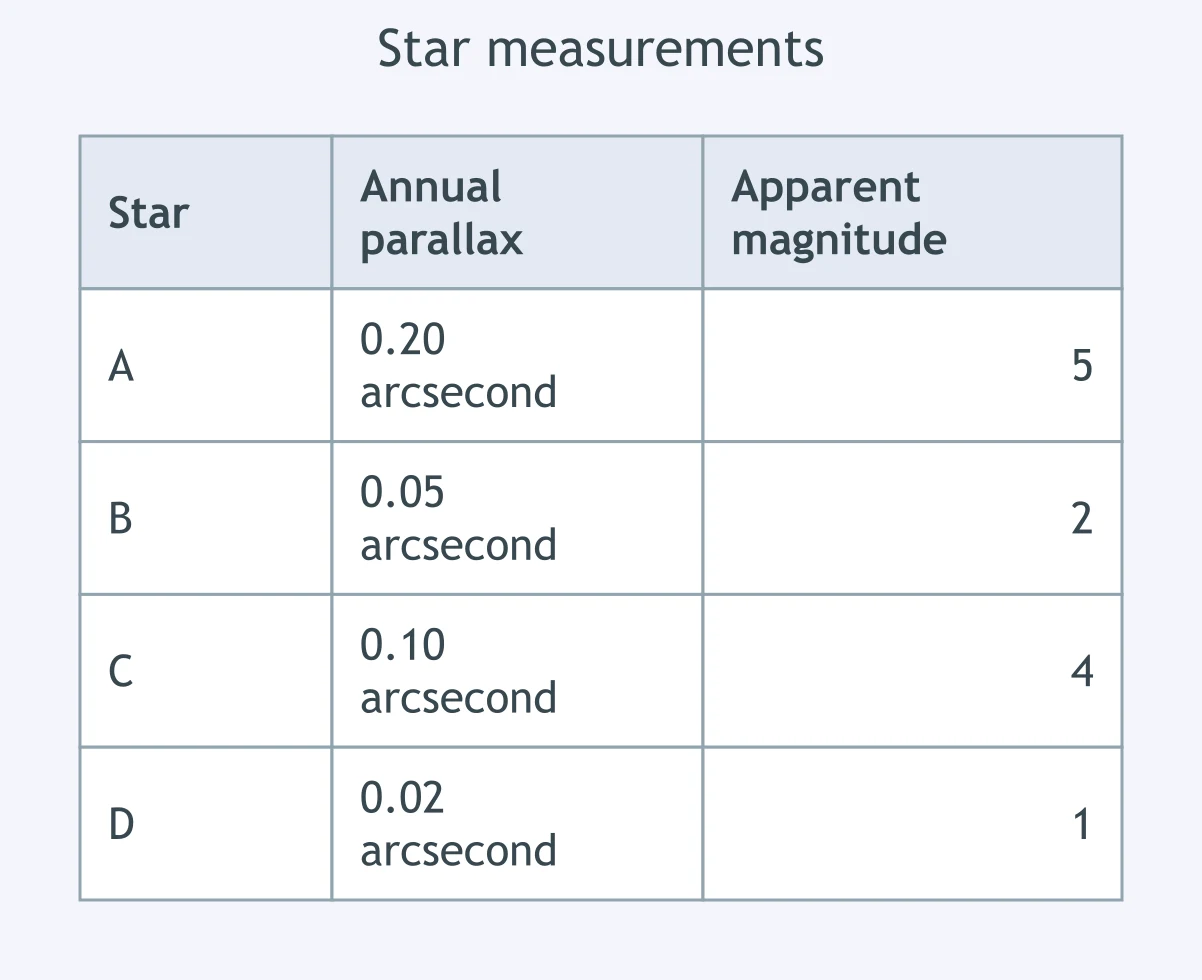
Use the star data table. Which star best fits the white dwarf pattern?
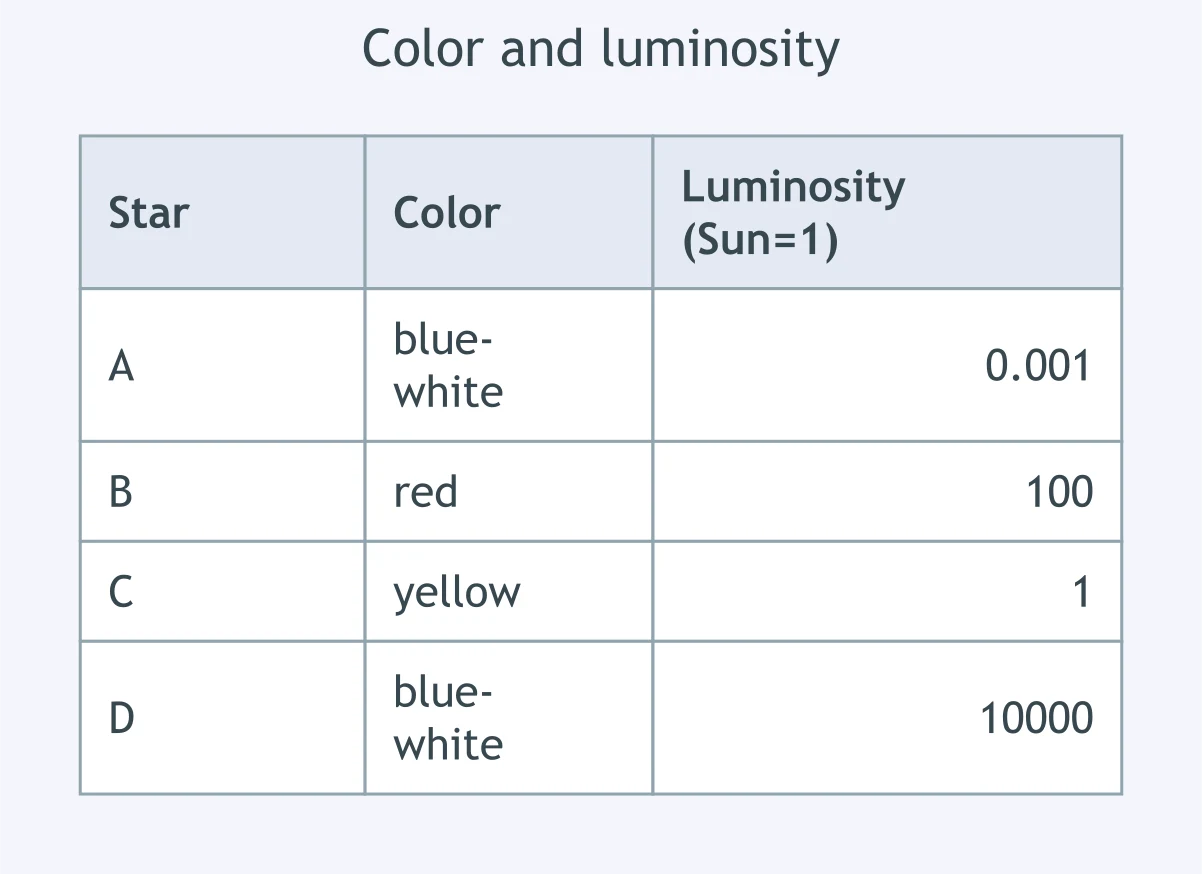
Use the apparent magnitude table. Which star looks brightest from Earth?
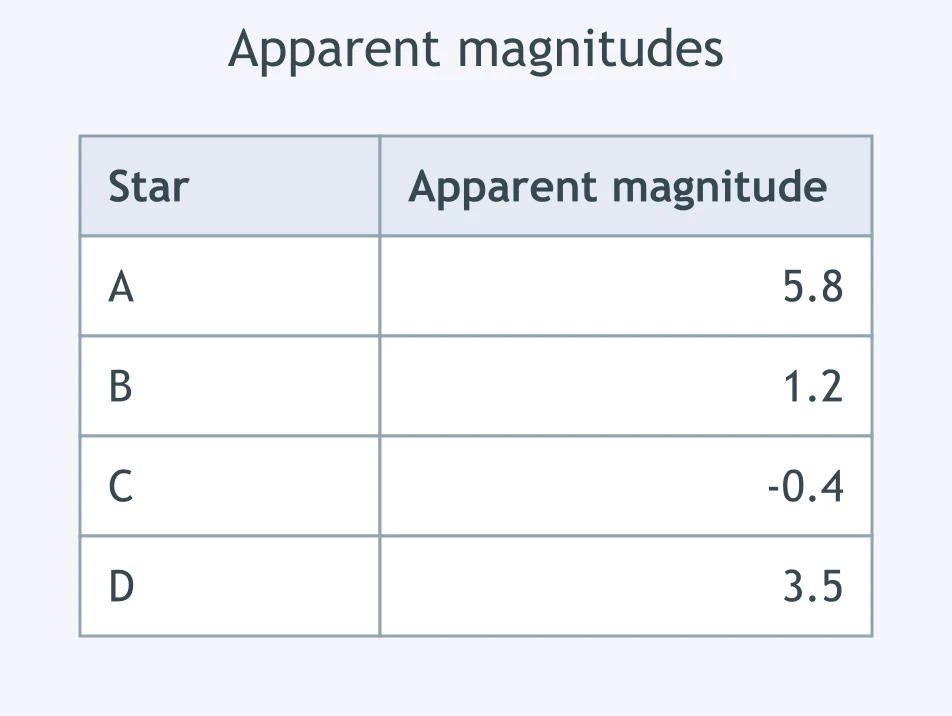
Use the composition table. Which star's atmosphere includes helium?
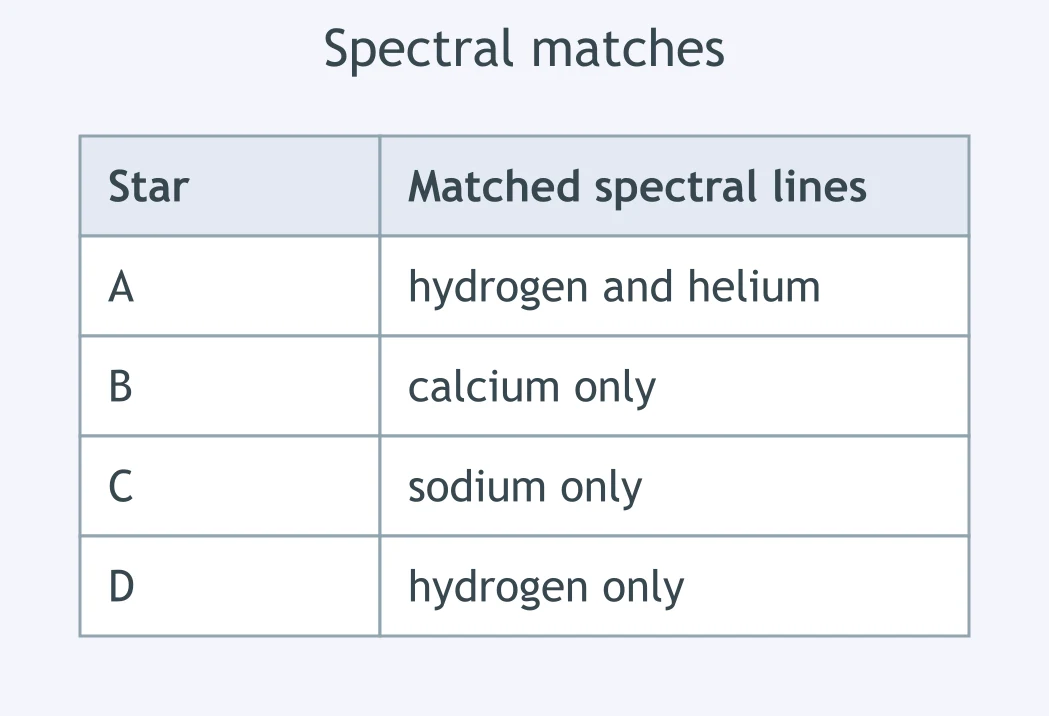
Use the data table. If apparent brightness is proportional to , which star should look dimmest from Earth?
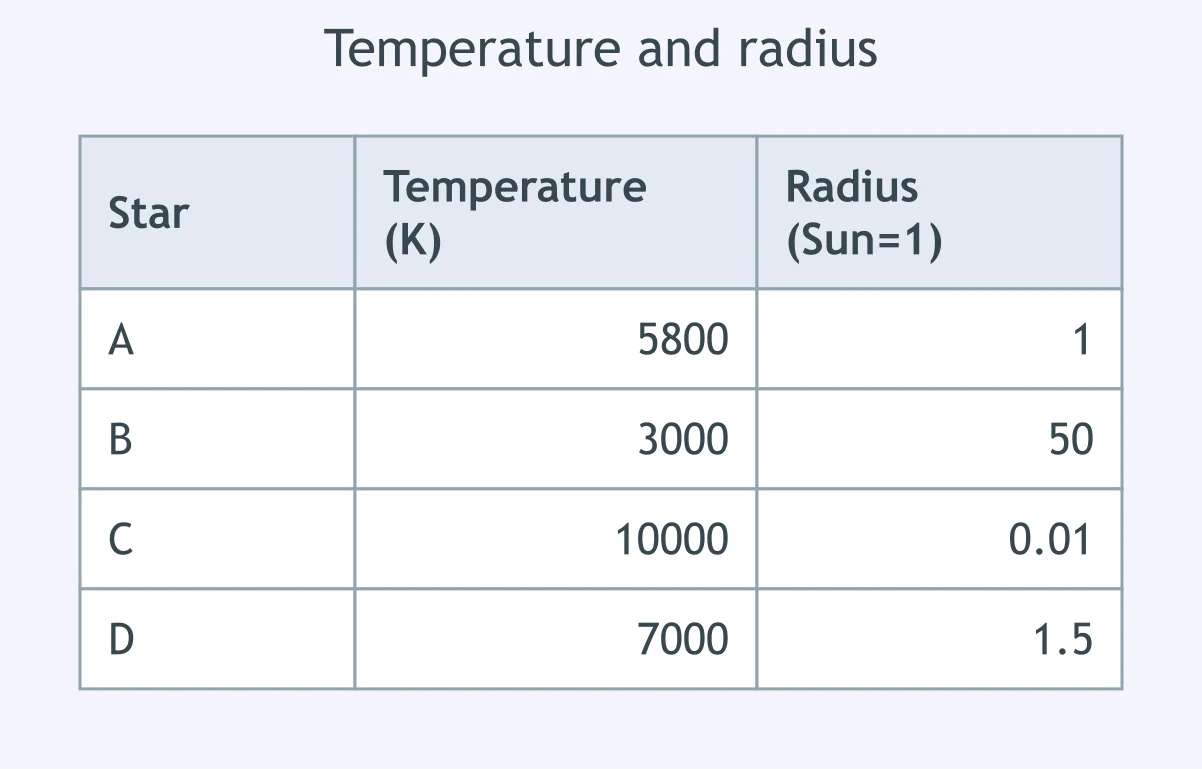
Use the data table and the rule that luminosity increases with surface area and with . Which star is most luminous?
Crack the passcode before the zombies get in.
Answer, then swat bugs for bonus points.
Race through questions at your own speed.
Same question on every screen. Fastest wins.

Pick a tile, answer, hit bonuses and steals.
Stellar Evolution
40 questions