Loading
by BlastRoom
Practice the Sun's layers, fusion power source, surface activity, cycles, size, and composition.
#earth_space_science
30 questions
One question set, multiple game modes. Tap any game to see it in action. Not sure which to pick?
Answer to place stones and capture territory.
Outrun the snow together.
Earn blasts, then hunt the other team.
Answer to earn energy, then climb.

The class blasts through walls together.
Bid on mystery lots. Most money wins.
Sell tours. Nice, standard, or a total scam.

Answer, restock, and serve the rush.
More correct answers pulls the rope your way.
Answer, then shoot down the alien wave.
Answer, then tap to leap the frozen ridge.
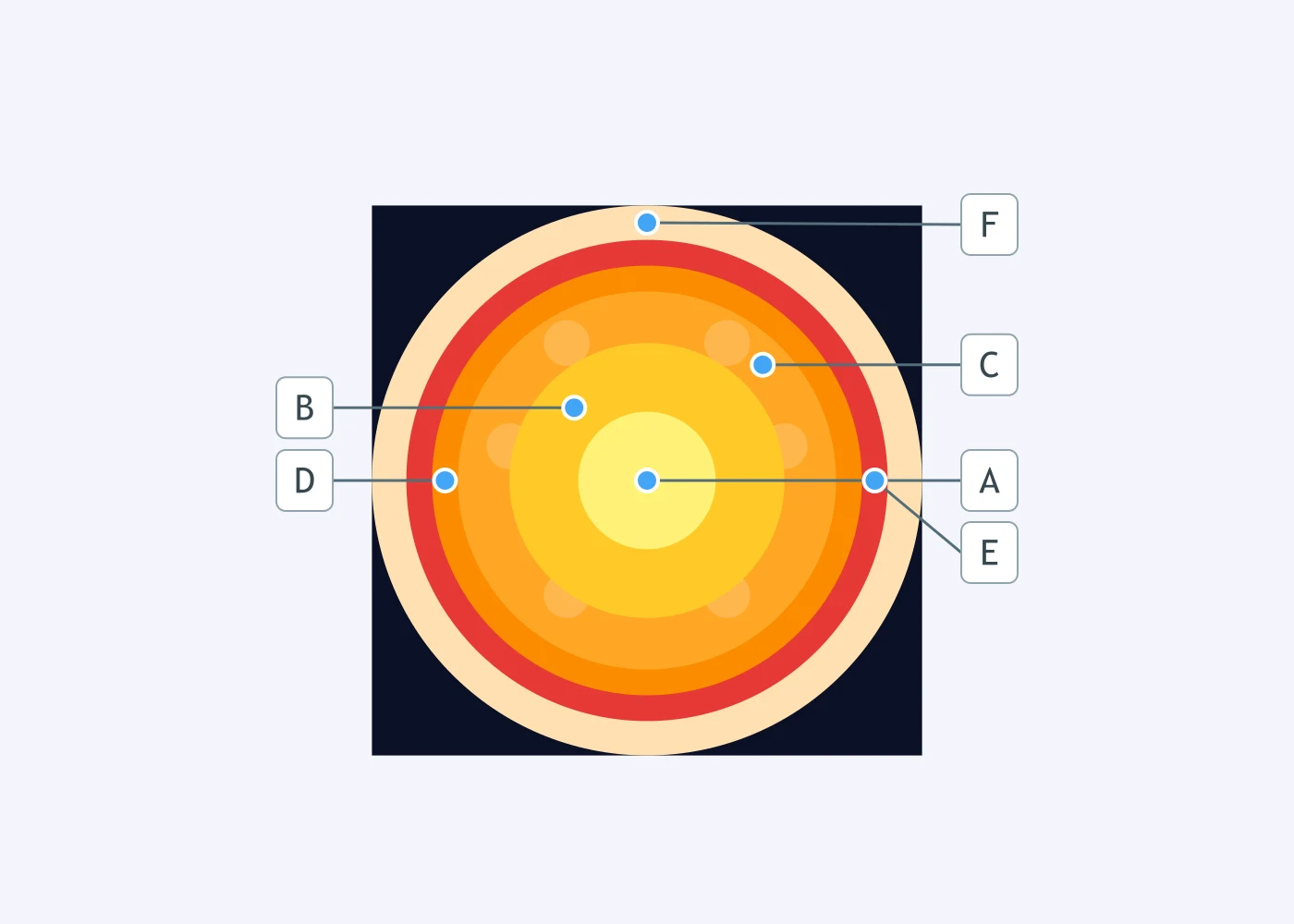
Use the diagram. Region A is the Sun's central region where hydrogen nuclei fuse into helium and release energy. Which layer is region A?
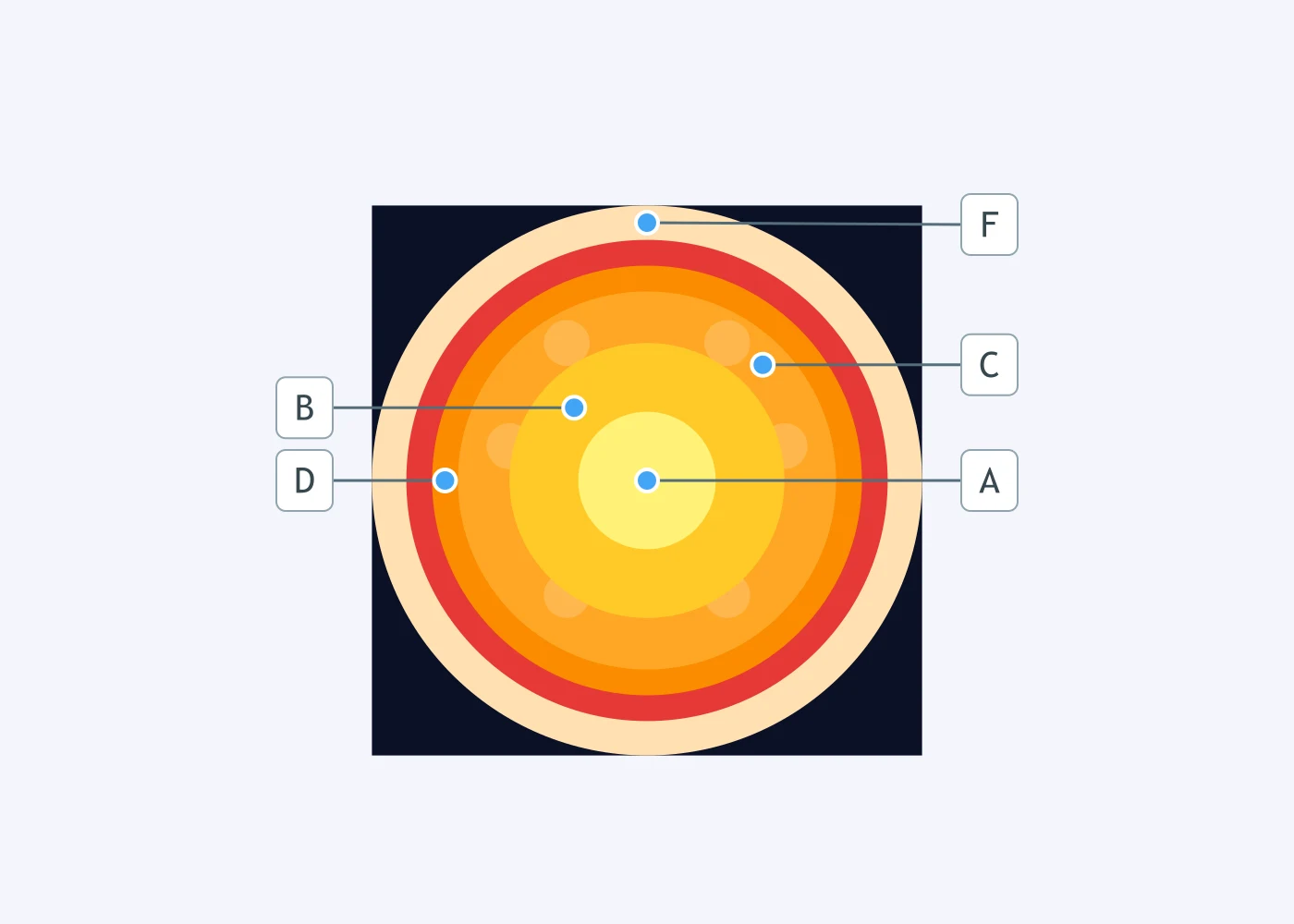
Use the diagram. Region B lies outside the core, where energy moves outward as photons absorbed and re-emitted by dense gas. Which zone is region B?
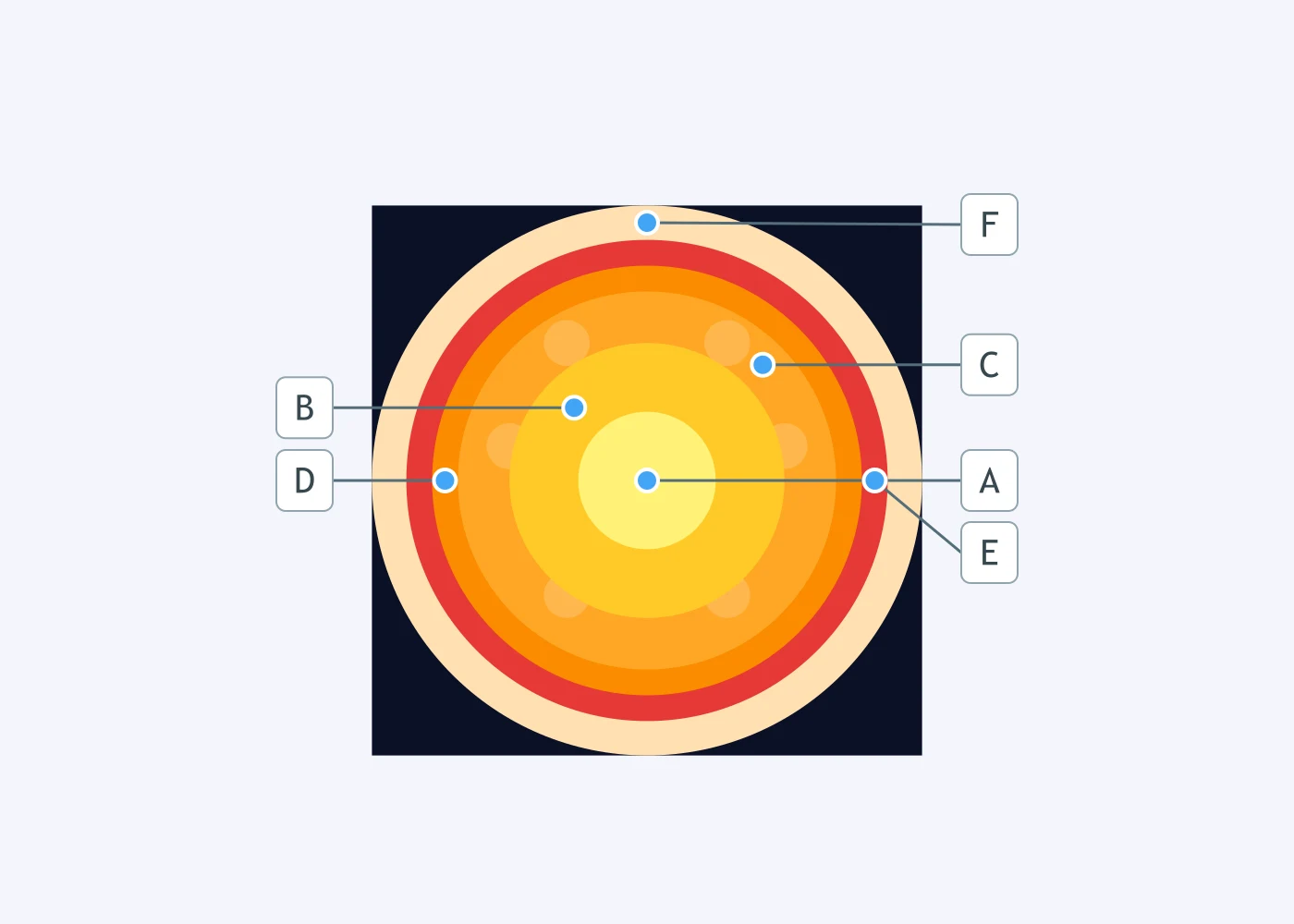
Use the diagram. Region C contains rising and sinking bubbles of hot plasma that carry energy toward the visible surface. Which layer is region C?
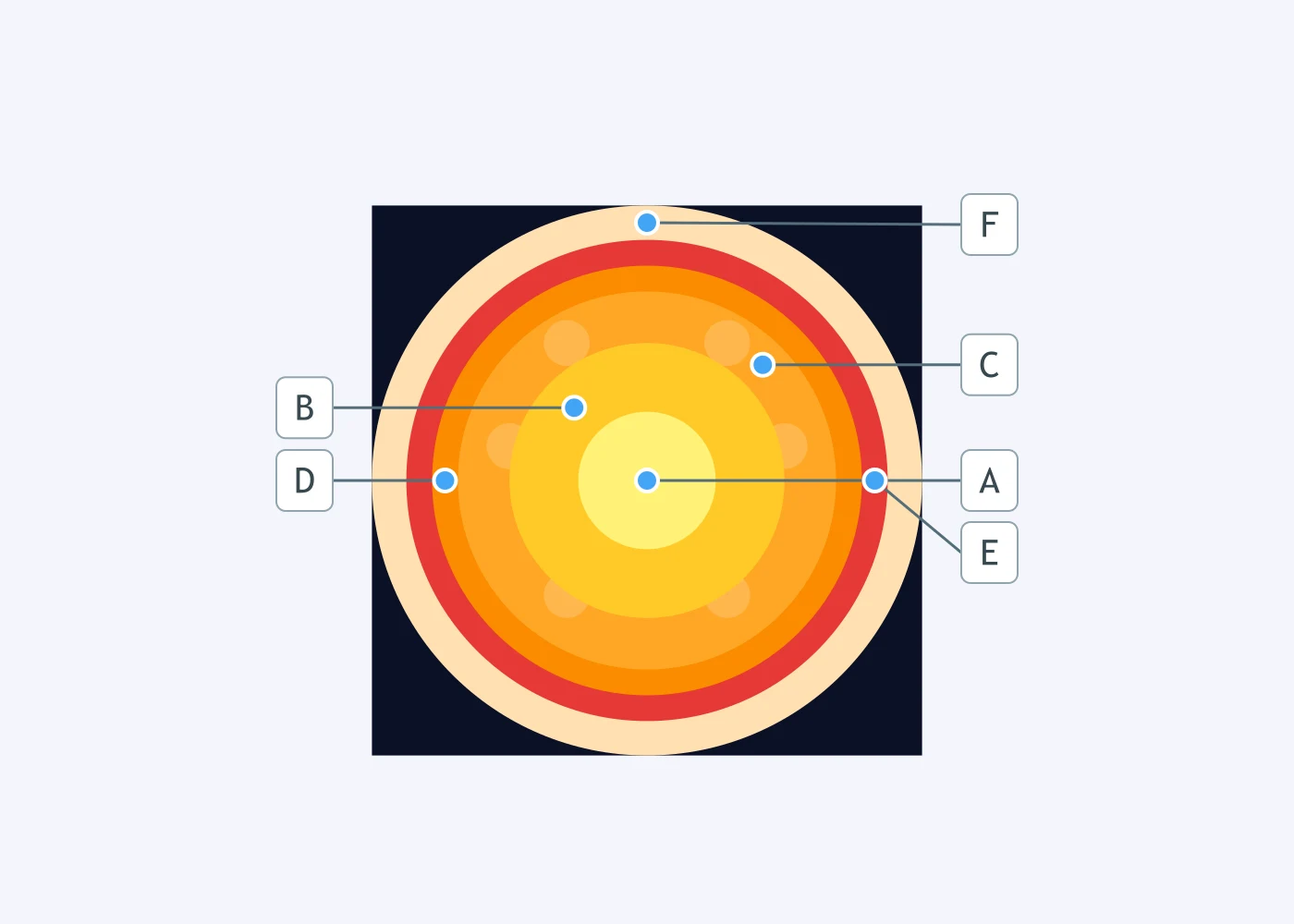
Use the diagram. Region D is the visible surface from which most of the Sun's visible light escapes into space. Which layer is region D?
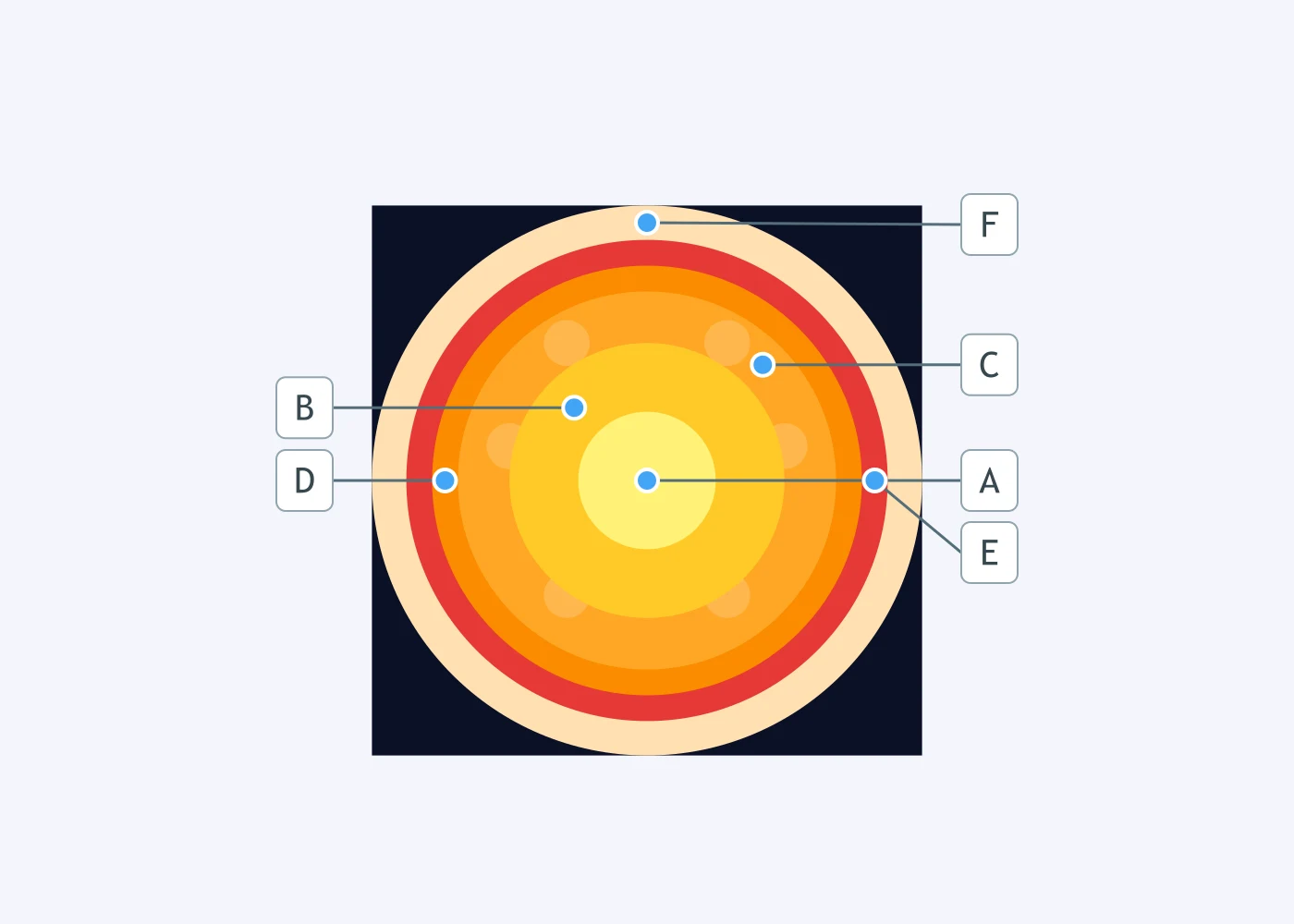
Use the diagram. Region E is a thin layer above the photosphere that can appear as a reddish rim during a total solar eclipse. Which layer is region E?
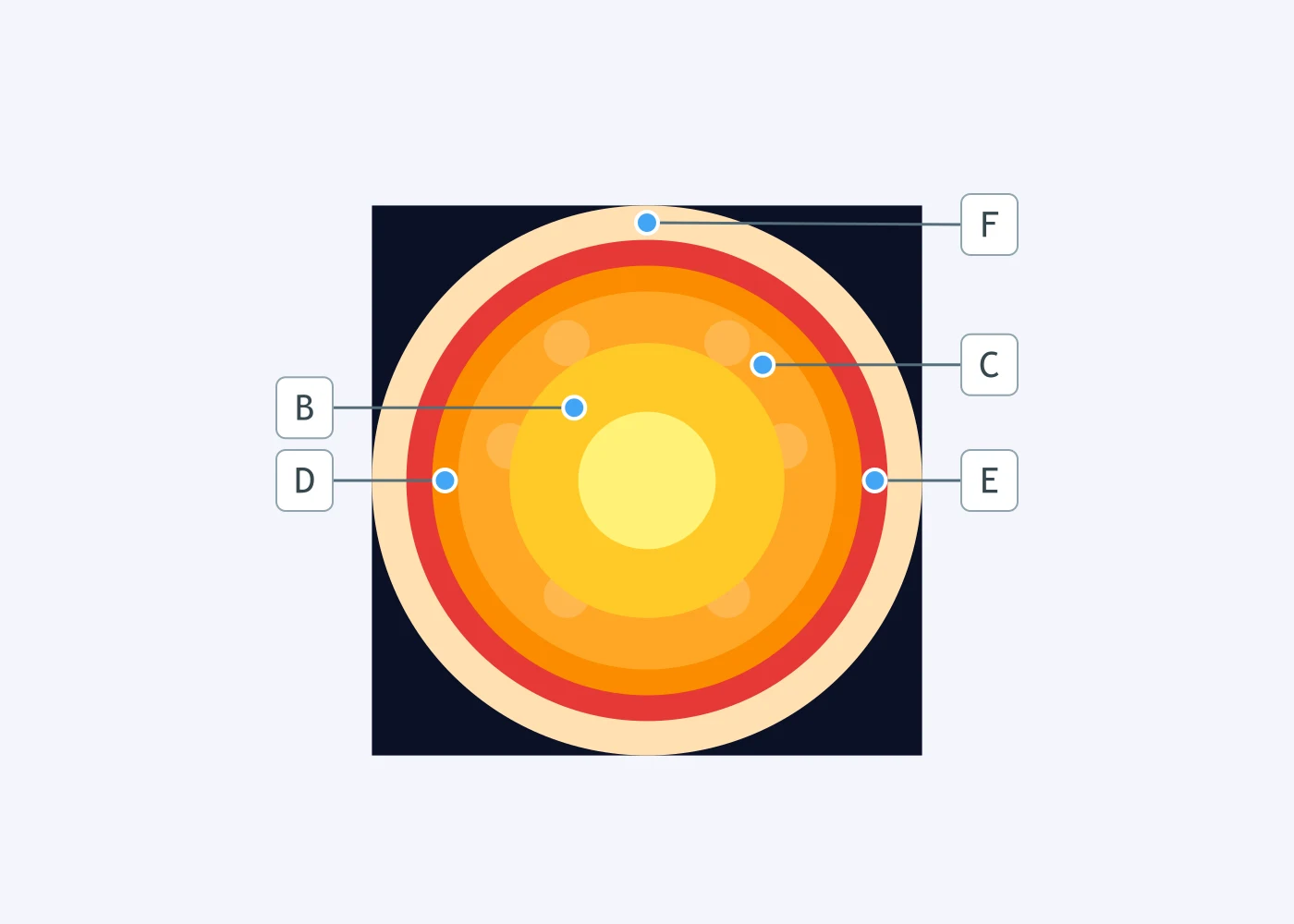
Use the diagram. Region F is the Sun's outer atmosphere, where plasma streamers form a white crown during eclipses. Which layer is region F?
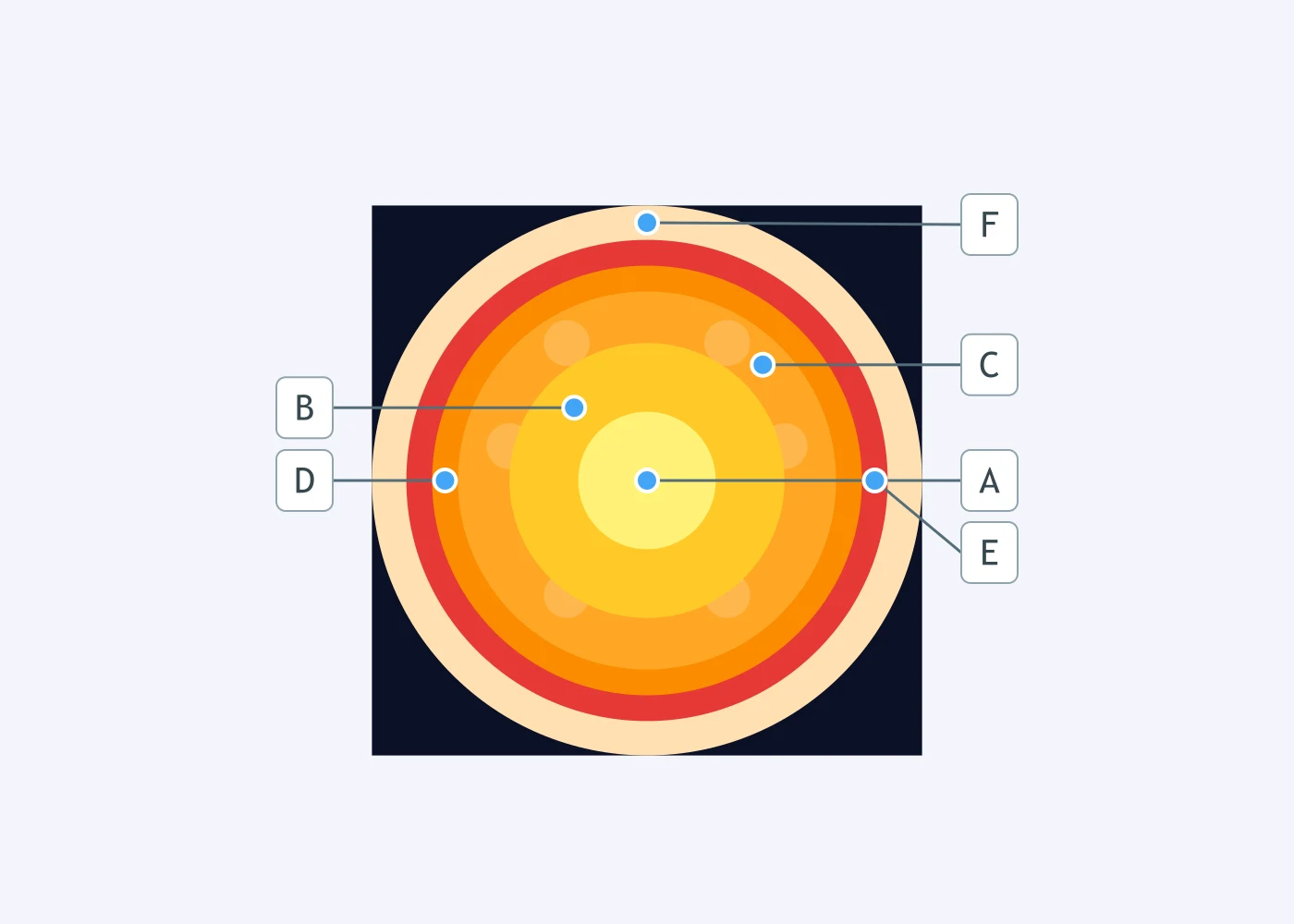
Use the diagram. Energy is produced in region A, then spends a long time bouncing through region B before reaching moving plasma. What is region B?
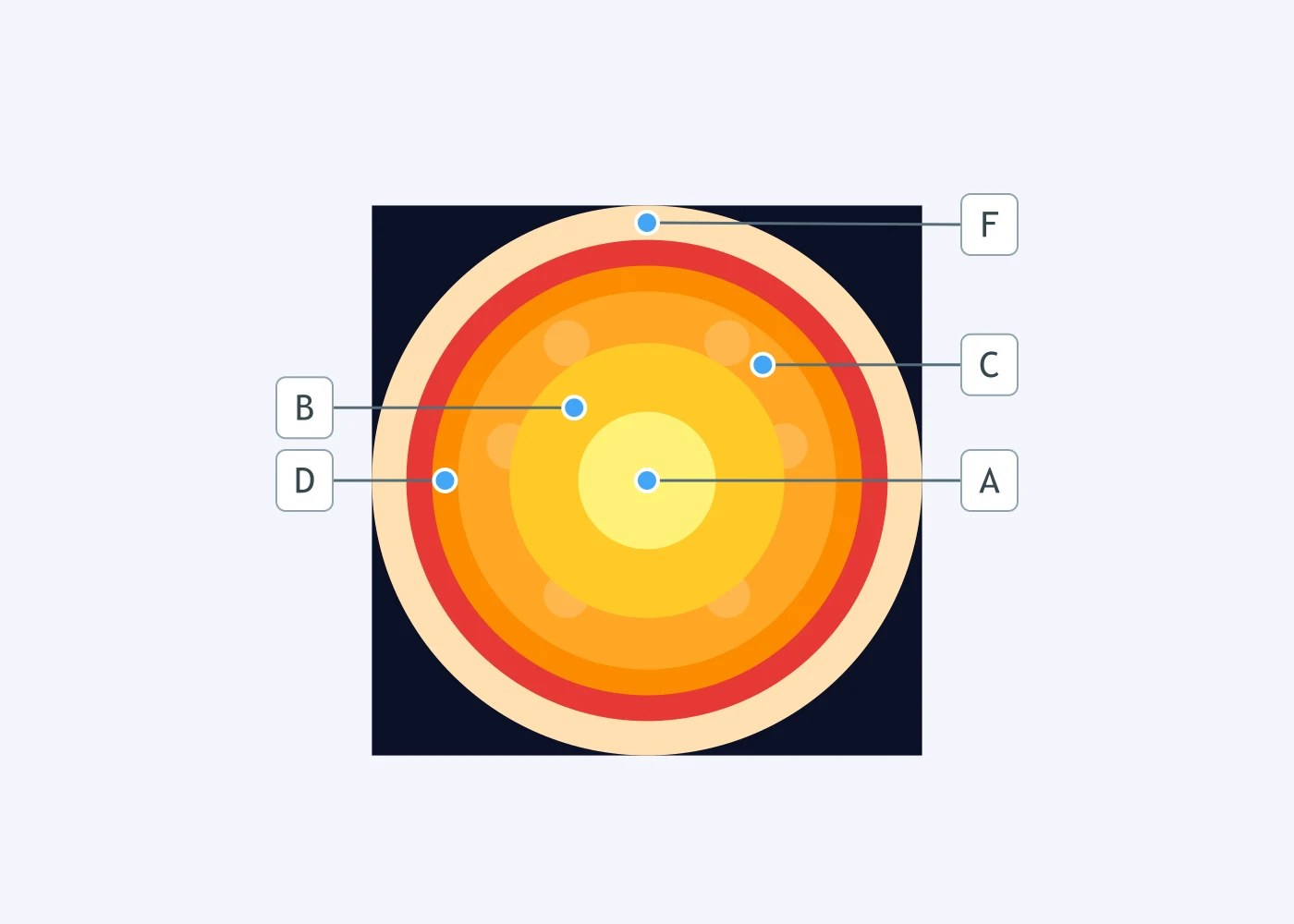
Use the diagram. Region D is cooler than the core but bright enough to be the layer people see from Earth. What layer is region D?
Each second the Sun turns about 600 million tons of hydrogen into about 596 million tons of helium. What happens to the missing mass?
What process powers the Sun's heat and light by combining hydrogen nuclei into helium in the core?
Why is the core the main site of hydrogen fusion in the Sun?
Four hydrogen nuclei in the Sun's core ultimately form one helium nucleus. What else is produced in that fusion chain?
If the Sun's core fusion rate fell sharply, which part of the Sun's force balance would weaken first?
In , why can the Sun's small mass loss each second produce enormous luminosity?
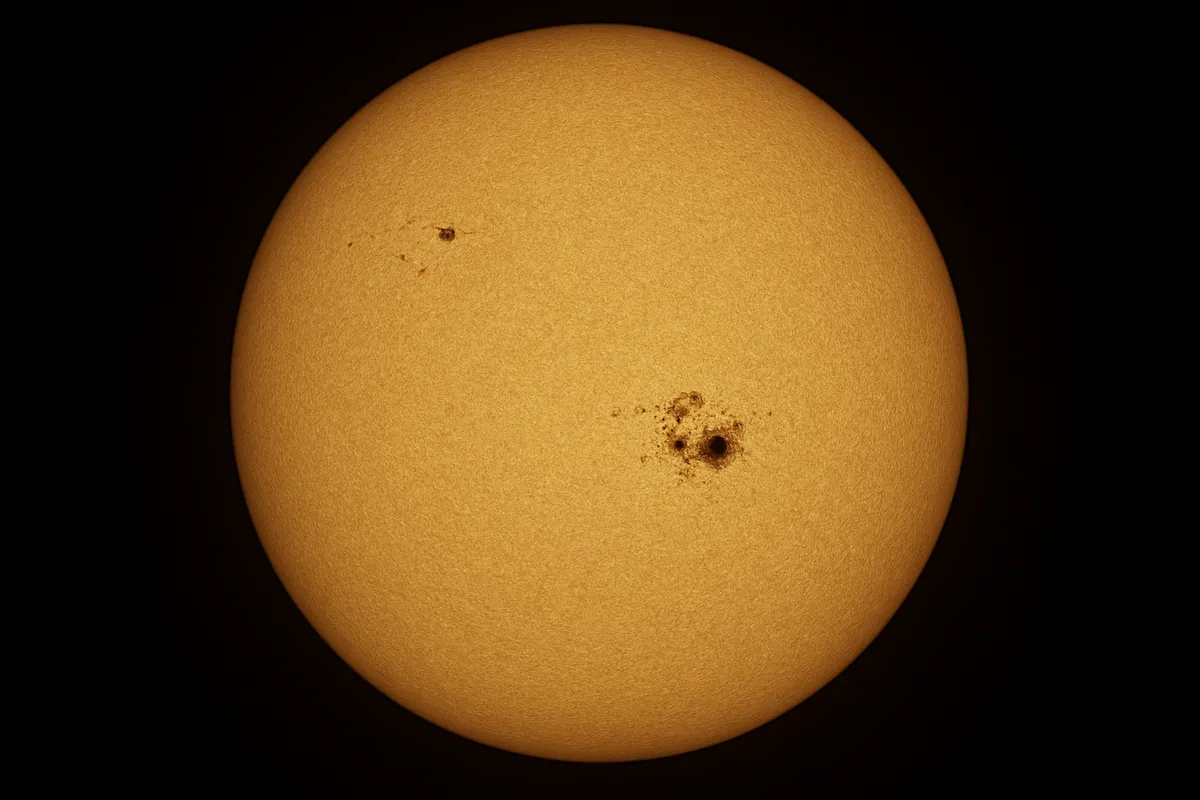
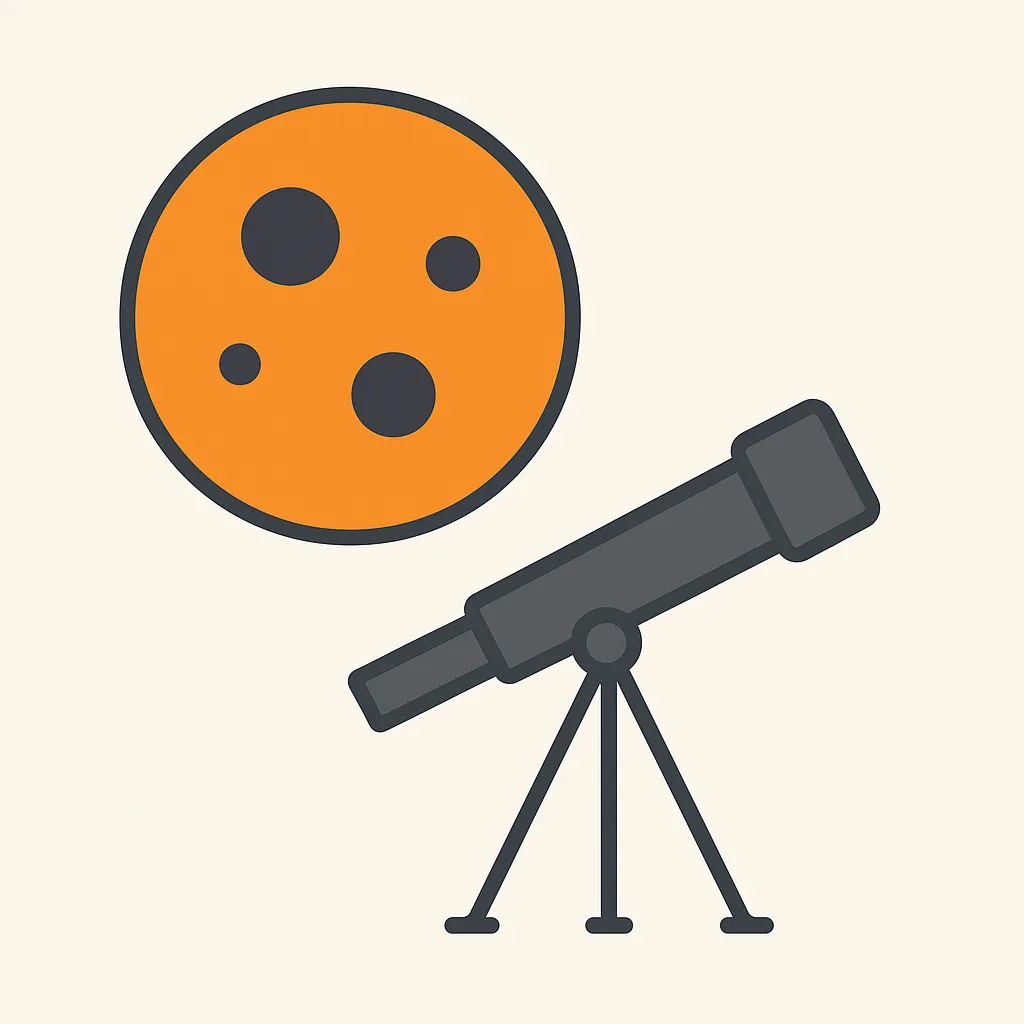
The image shows dark, cooler patches on the photosphere where magnetic fields are especially strong. What feature is being observed?
The image shows a loop of cooler, denser plasma suspended above the Sun's edge by magnetic fields. What feature is shown?

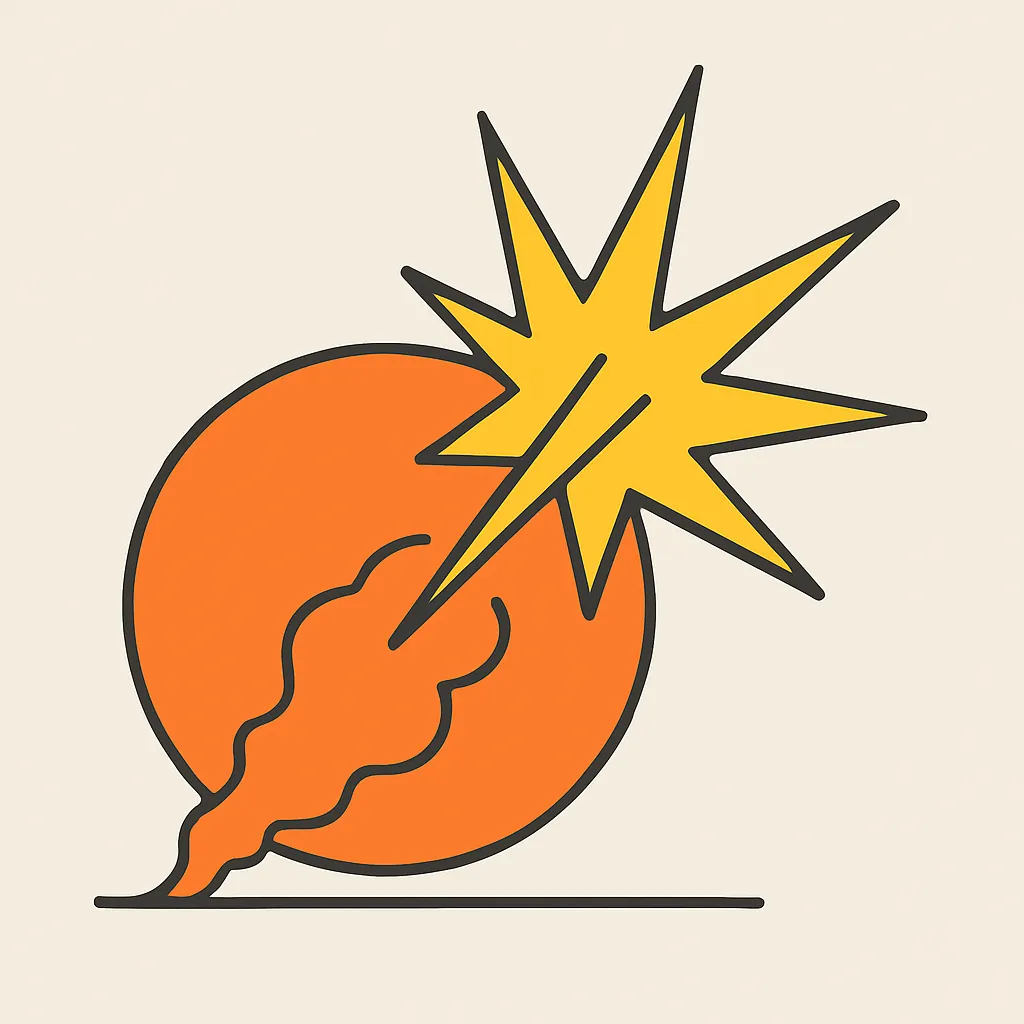
An active region suddenly emits a bright burst of radiation after magnetic energy is released. What event is this?
In ultraviolet views, a low-density dark patch lets high-speed solar wind escape along open magnetic field lines. What feature is this?

What feature is a cloud of magnetized solar particles blasted into space, often after a flare?
A long dark filament crosses the solar disk. Seen at the Sun's edge, the same structure would look like an arch of cooler, dense plasma. What is it?
A radio blackout follows a sudden radiation burst from an active region, not a huge cloud of particles. Which feature most directly caused it?
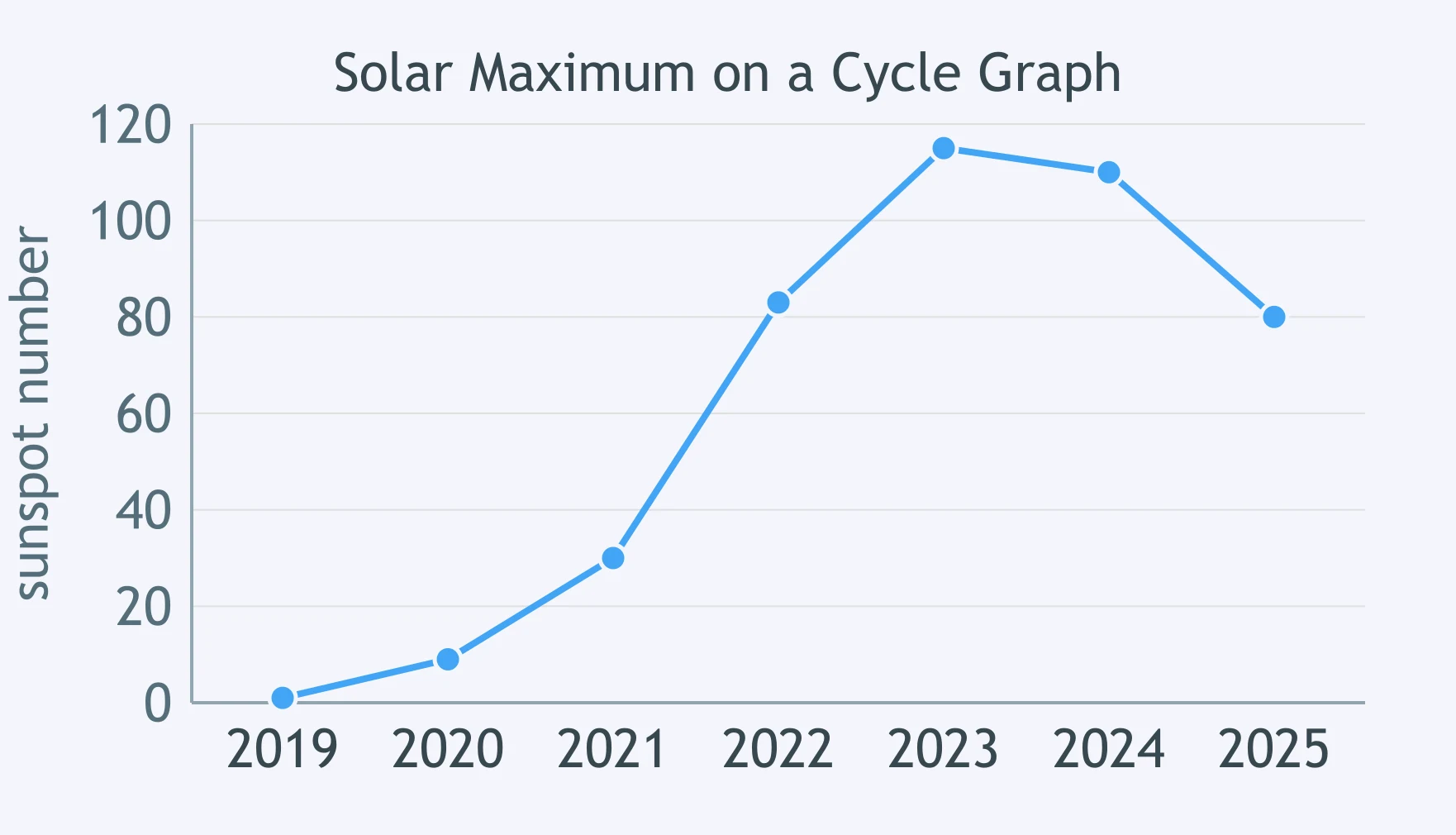
Use the line graph. About how many years separate consecutive sunspot maxima shown on the graph?
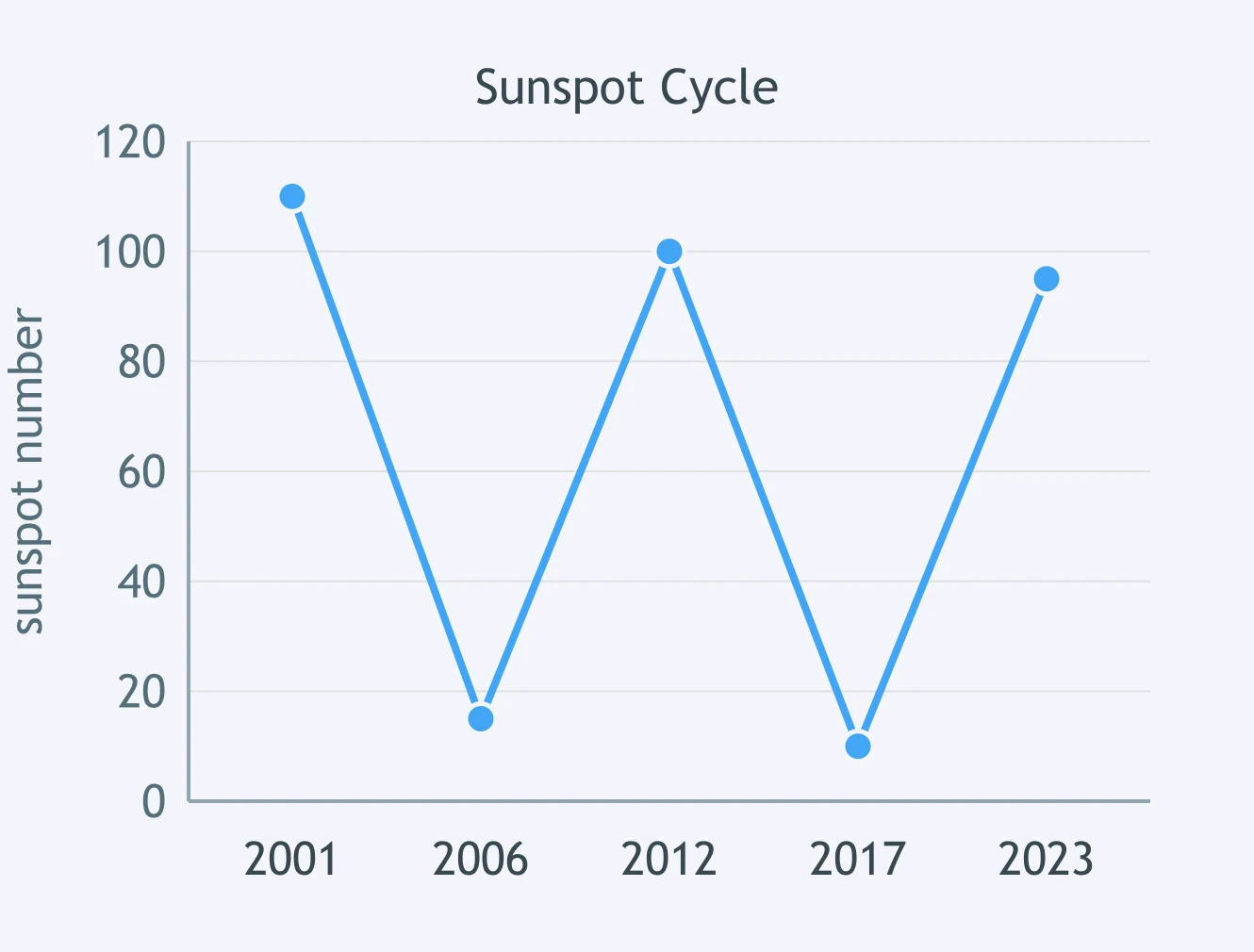
Use the line graph. At which labeled year is the sunspot number greatest?
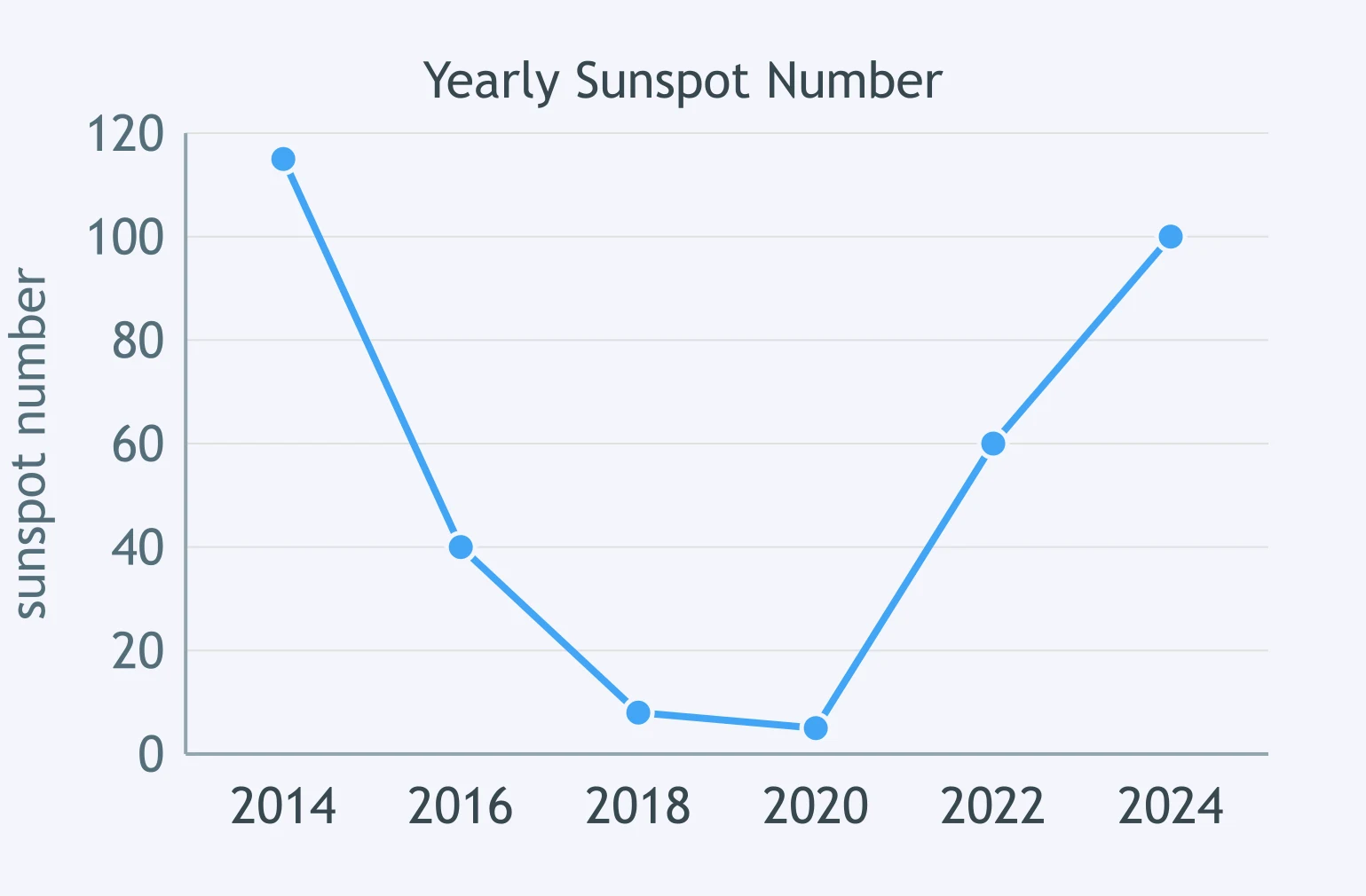
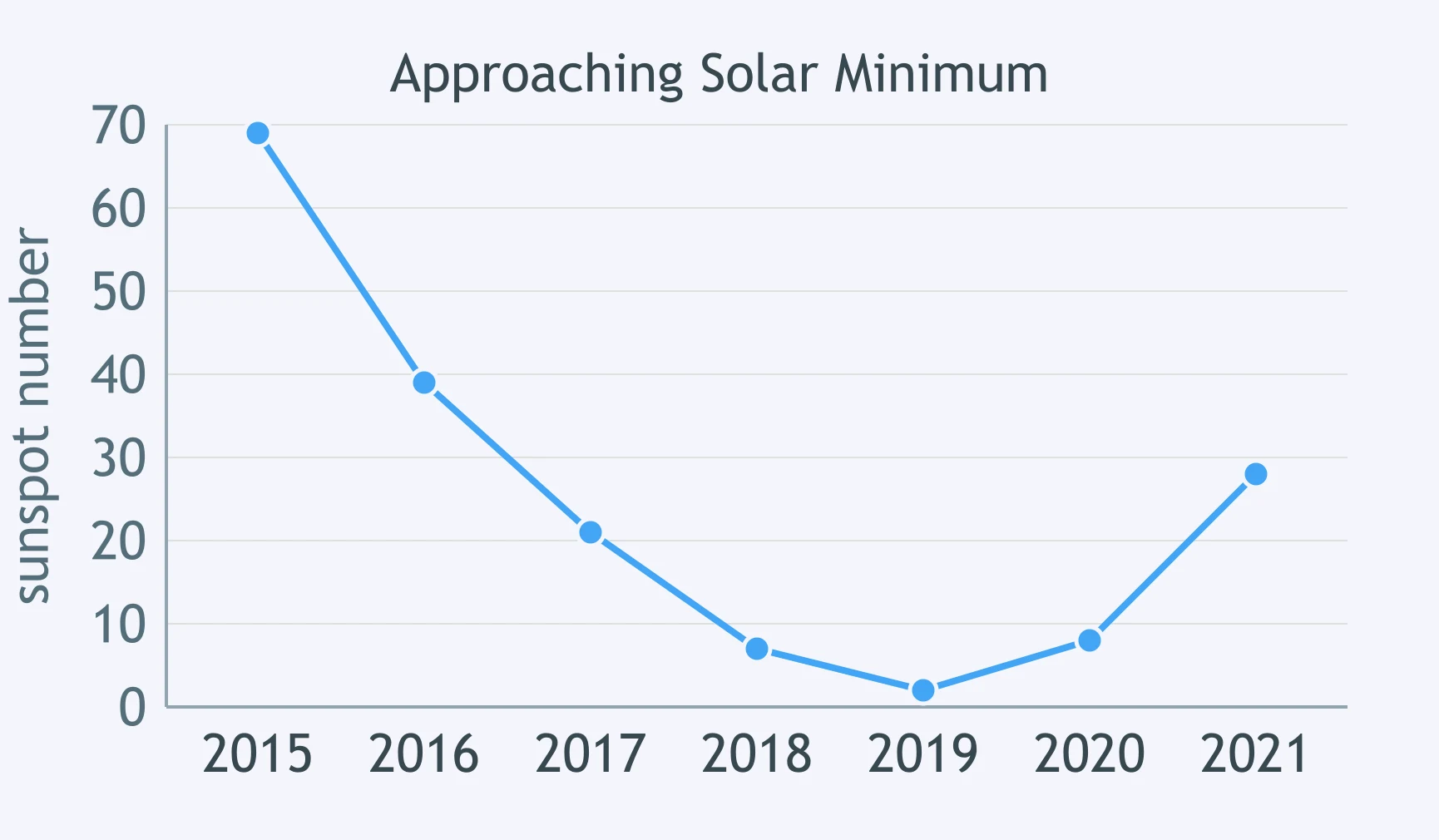
Use the line graph. Which labeled year shows solar minimum, the lowest sunspot number?
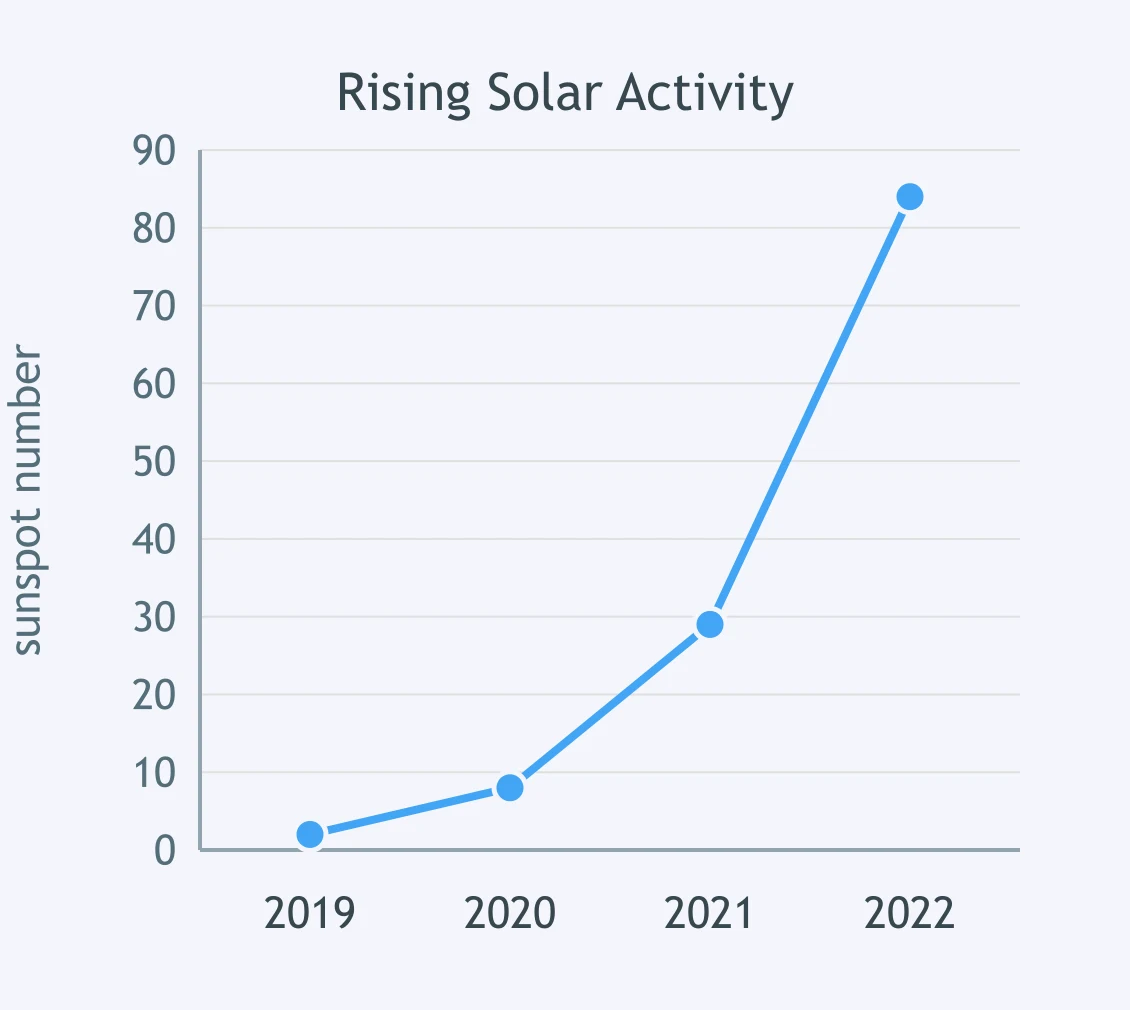
Use the line graph. From 2019 through 2022, what trend does the plotted sunspot number show?
Use the line graph. How many years separate the two solar minima shown?
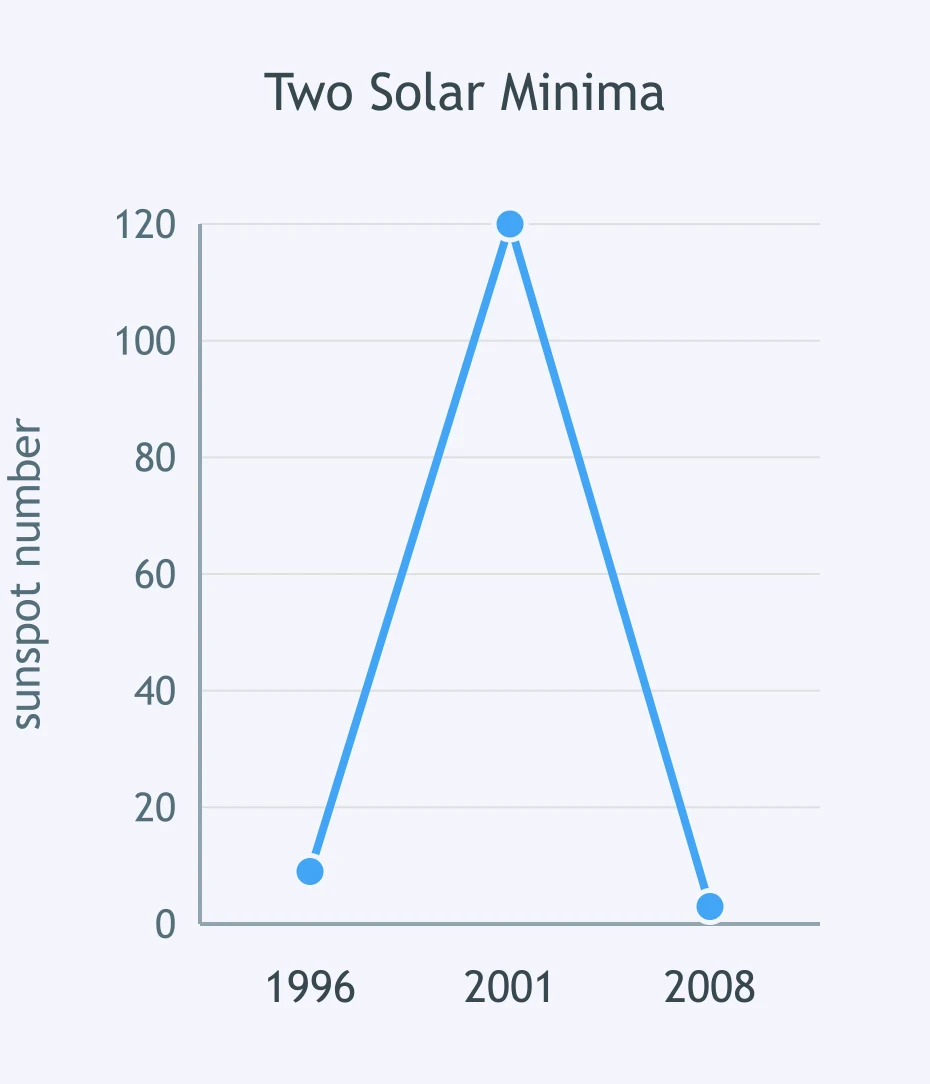
Use the line graph. Which labeled year best represents solar maximum?
The Sun's diameter is about 1,392,000 kilometers, and Earth's diameter is about 12,742 kilometers. About how many Earths fit side by side across the Sun?
A data table lists Sun volume as 1,412,000 trillion km³ and Earth volume as 1.083 trillion km³. About how many Earth volumes fit inside the Sun?
A photosphere spectrum finds about 90.965% hydrogen atoms and 8.889% helium atoms. Which statement best describes the Sun's photosphere composition?
Crack the passcode before the zombies get in.
Answer, then swat bugs for bonus points.
Race through questions at your own speed.
Same question on every screen. Fastest wins.

Pick a tile, answer, hit bonuses and steals.
The H-R Diagram
25 questions