Loading
by BlastRoom
Students trace how stars form, change, and end differently depending on mass.
#earth_space_science
40 questions
One question set, multiple game modes. Tap any game to see it in action. Not sure which to pick?
Answer to place stones and capture territory.
Outrun the snow together.
Earn blasts, then hunt the other team.
Answer to earn energy, then climb.

The class blasts through walls together.
Bid on mystery lots. Most money wins.
Sell tours. Nice, standard, or a total scam.

Answer, restock, and serve the rush.
More correct answers pulls the rope your way.
Answer, then shoot down the alien wave.
Answer, then tap to leap the frozen ridge.
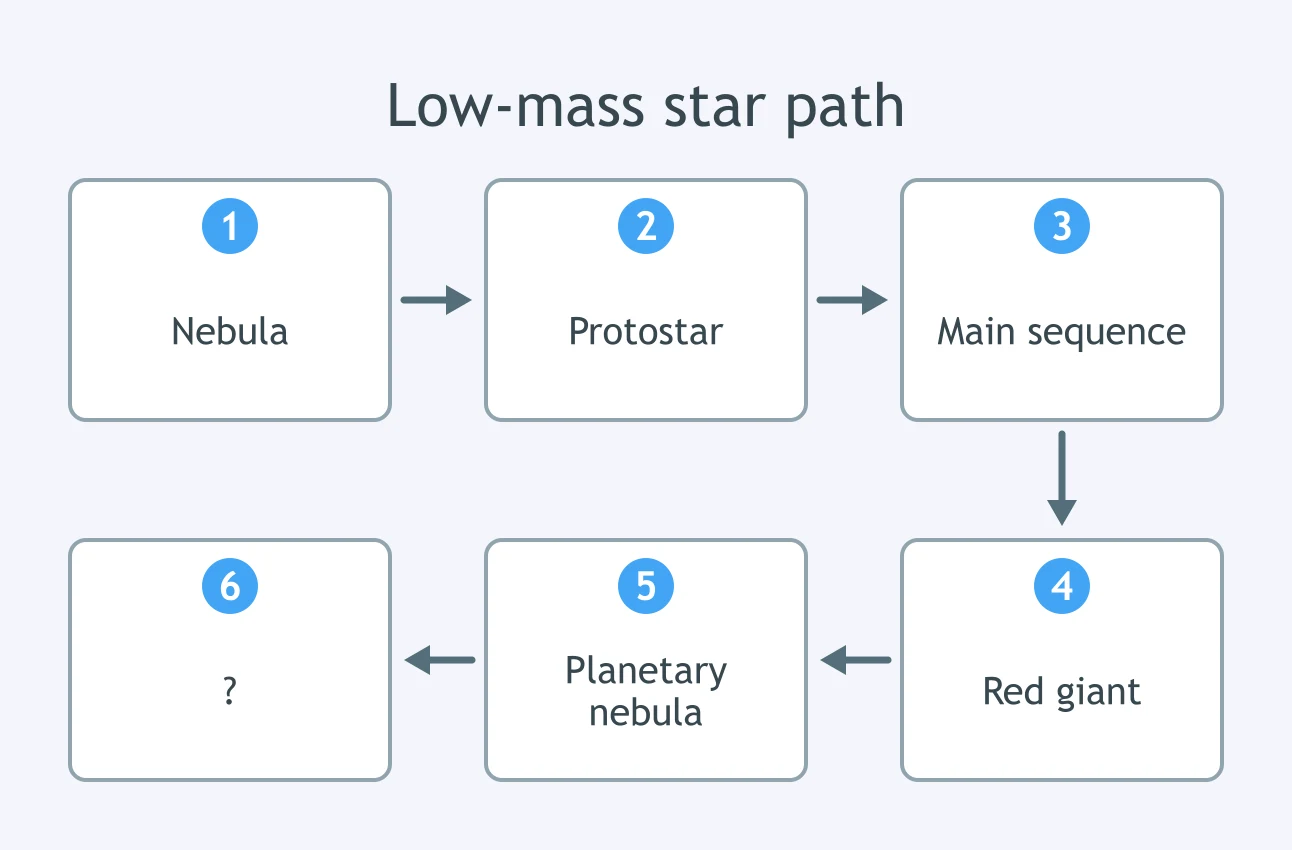
A flow figure for a one-solar-mass star shows Nebula → Protostar → Main sequence → Red giant → Planetary nebula → ___. What belongs in the final box?
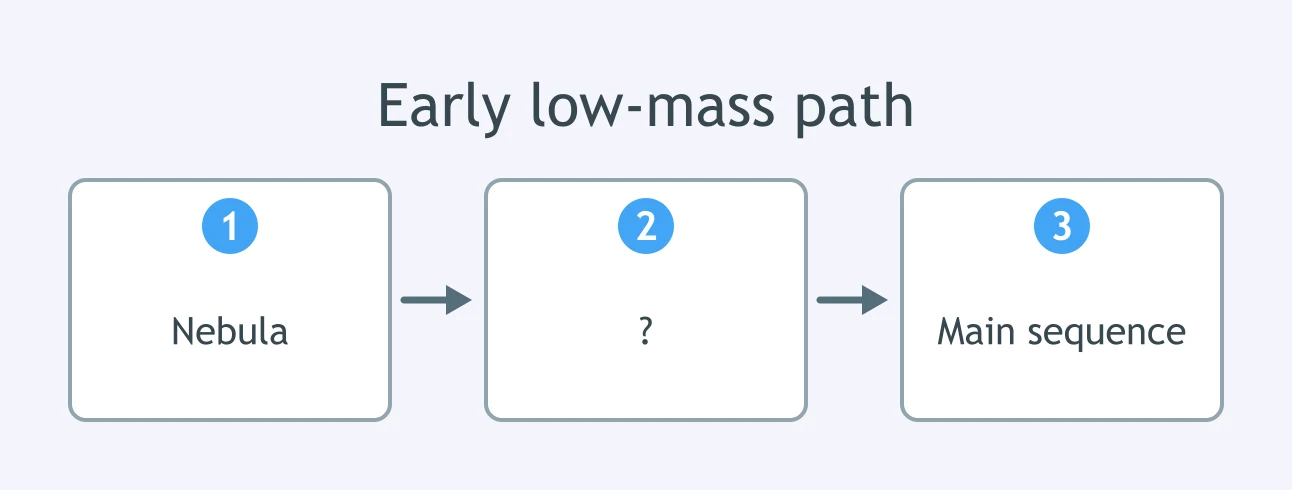
In a low-mass star path, box 1 is Nebula and box 3 is Main sequence. What stage belongs in box 2?
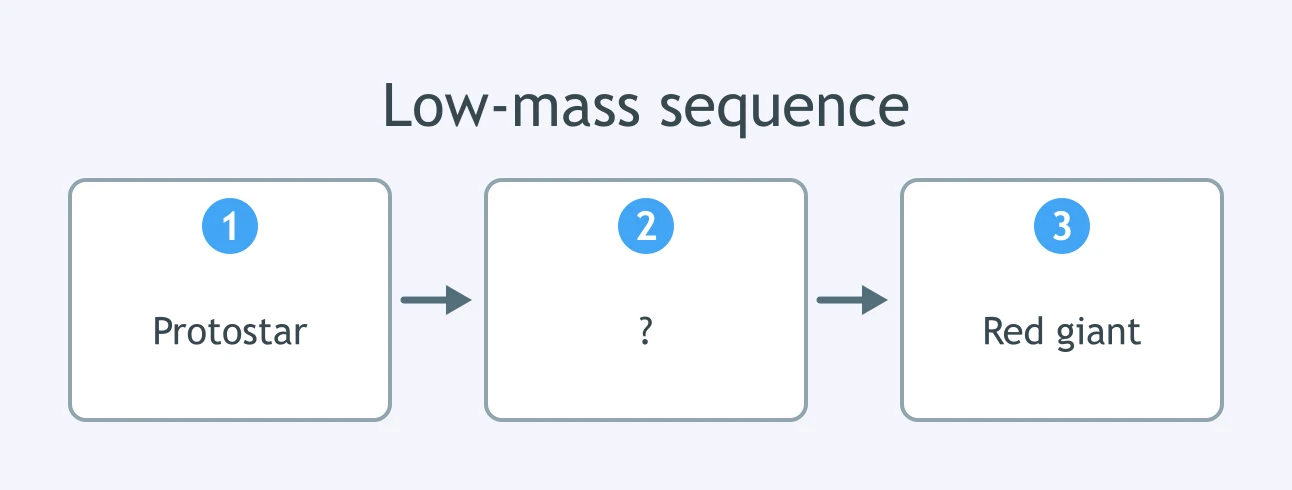
A low-mass star flow shows Protostar → ___ → Red giant. Which stage fills the blank?
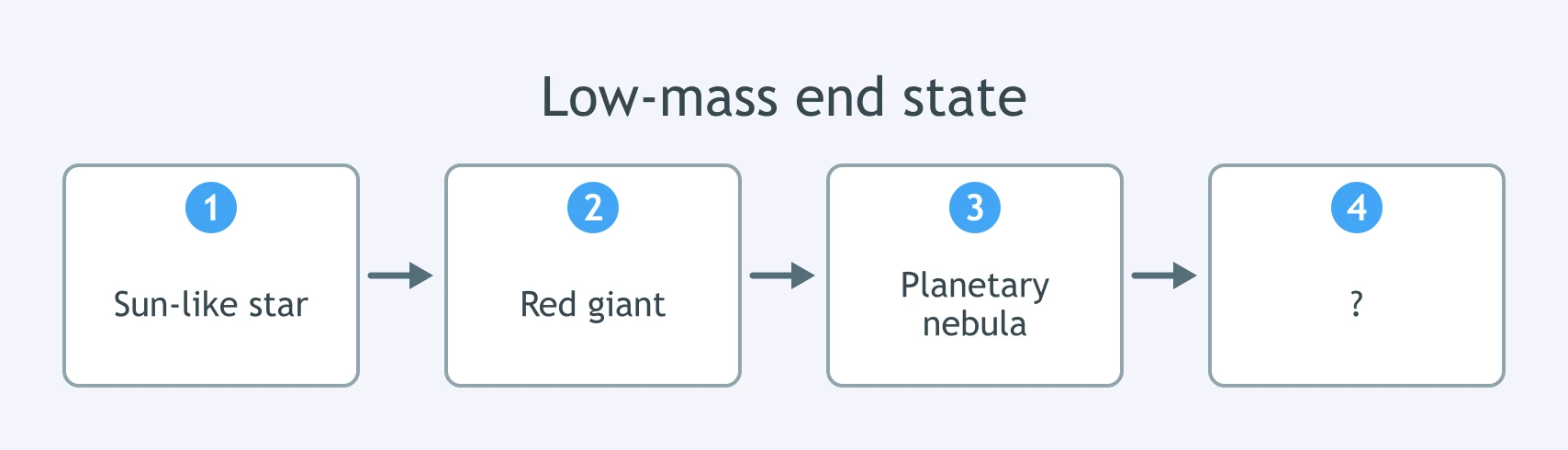
A figure shows Main sequence → Red giant → ___ → White dwarf for a Sun-like star. What stage is missing?
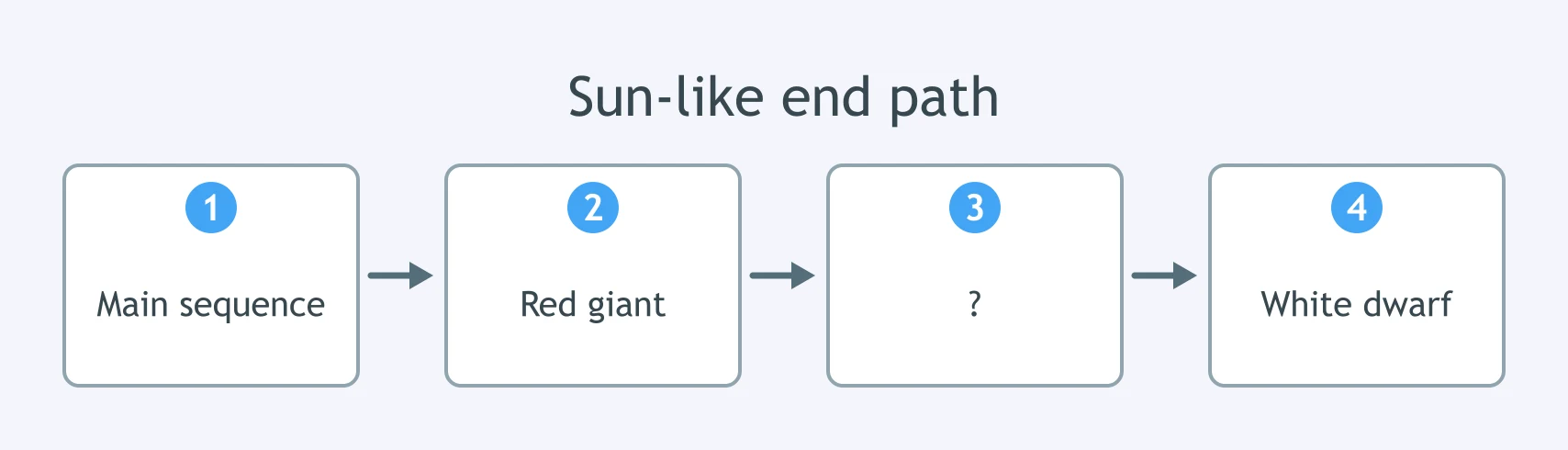
A Sun-like star has used much of its core hydrogen, so its core contracts while its outer layers expand and cool. What stage follows the main sequence?
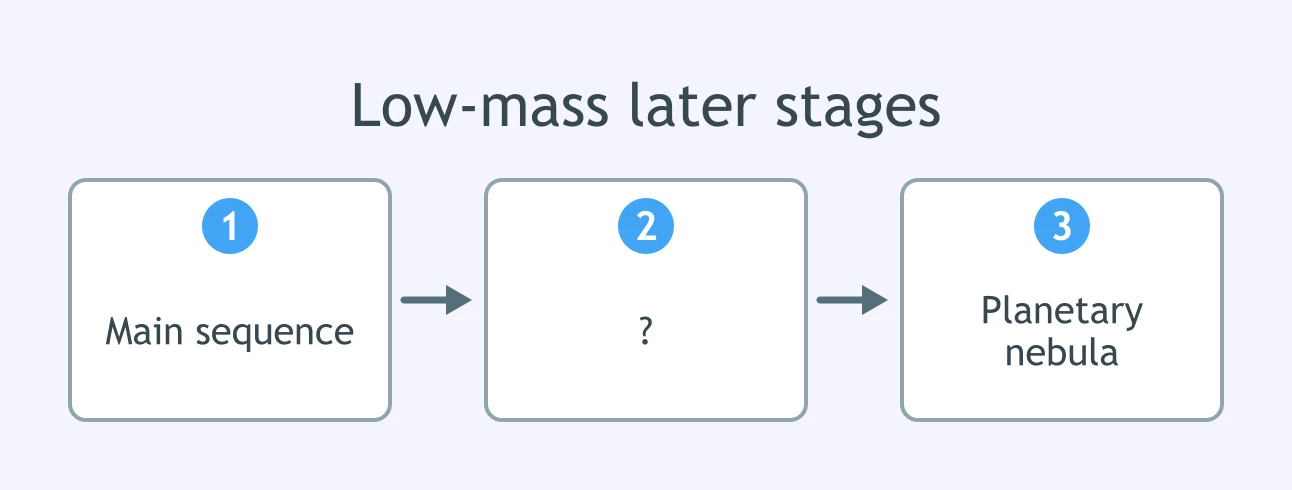
The figure shows Planetary nebula → ___ for a low-mass star. What compact remnant ends this path?
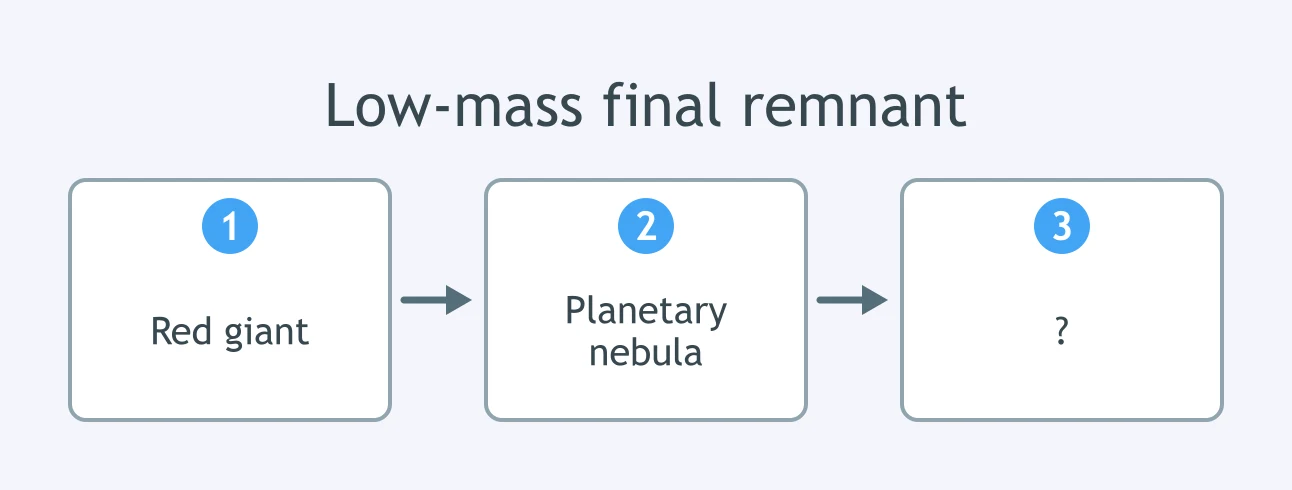
A low-mass star has become a red giant and then ejects its outer layers. Which stage is produced before the white dwarf is exposed?
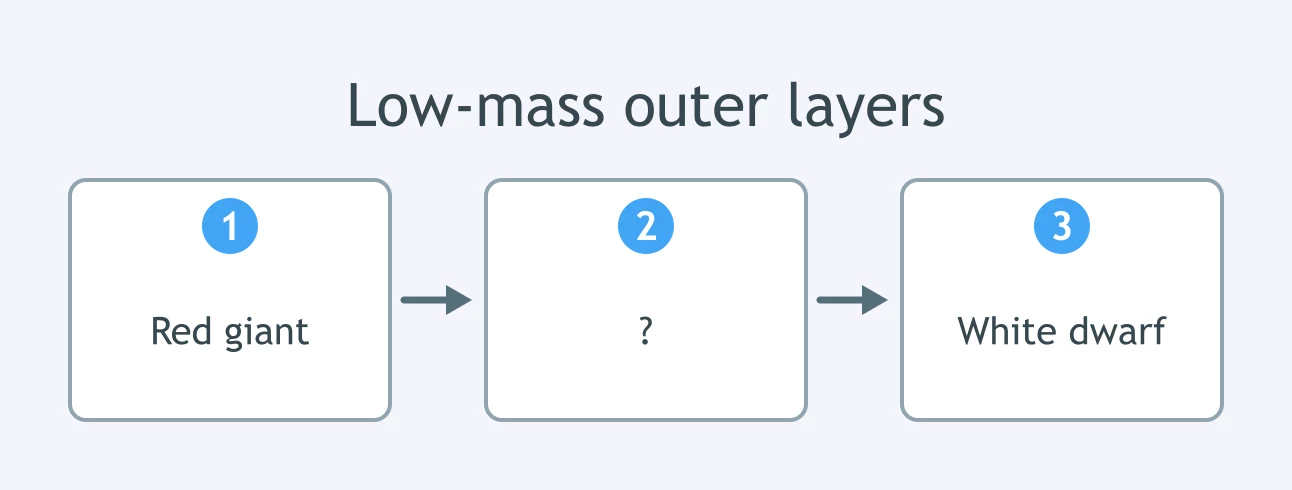
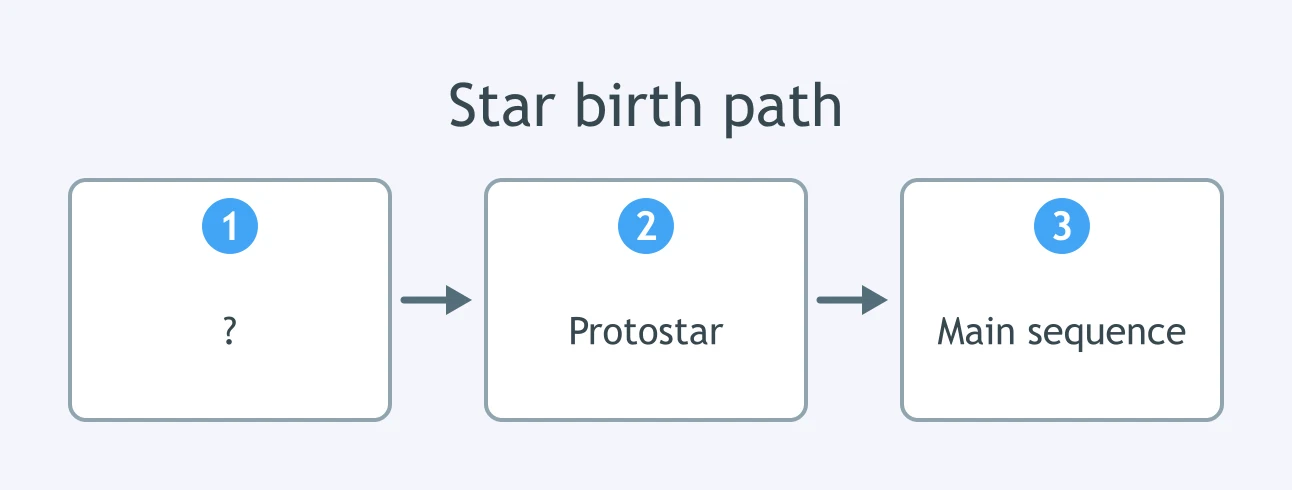
A low-mass star sequence begins ___ → Protostar → Main sequence. What first stage supplies the gas and dust?
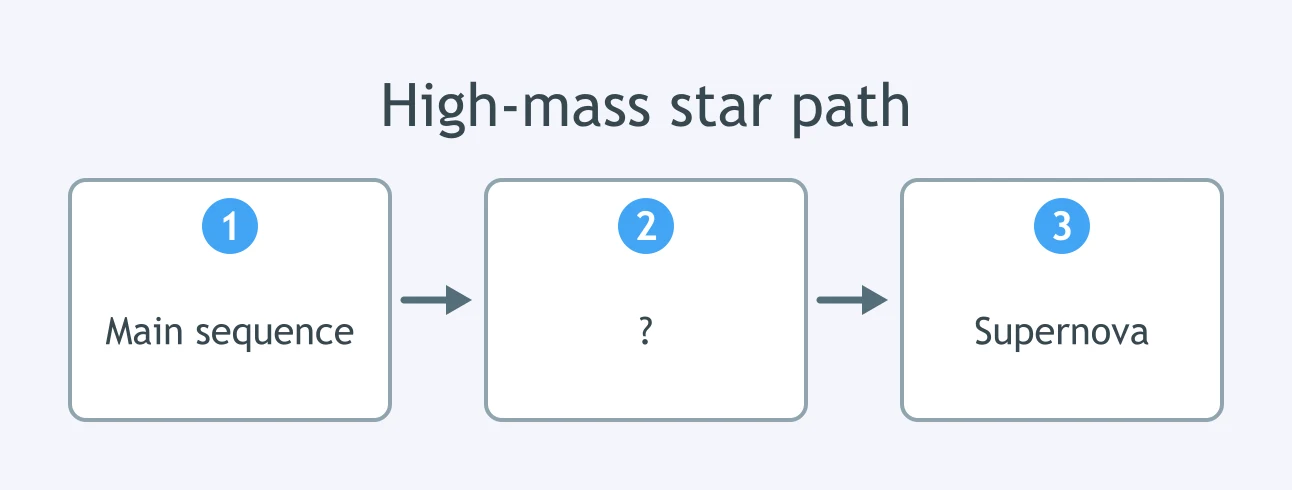
A massive-star figure shows Main sequence → ___ → Supernova. Which stage fills the blank?
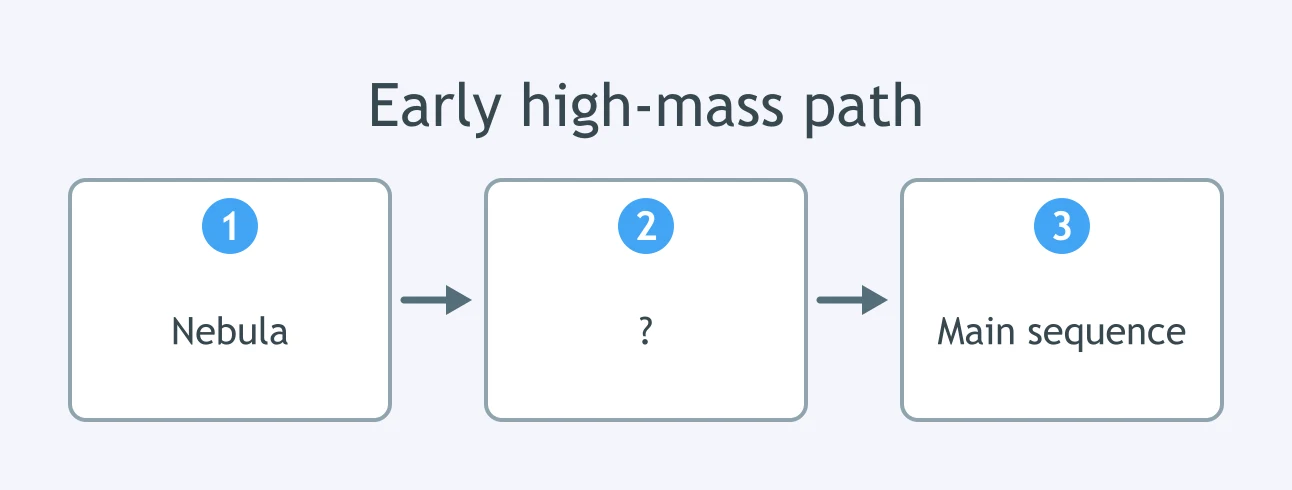
A high-mass star flow starts Nebula → ___ → Main sequence. What forms as gas contracts before stable fusion?
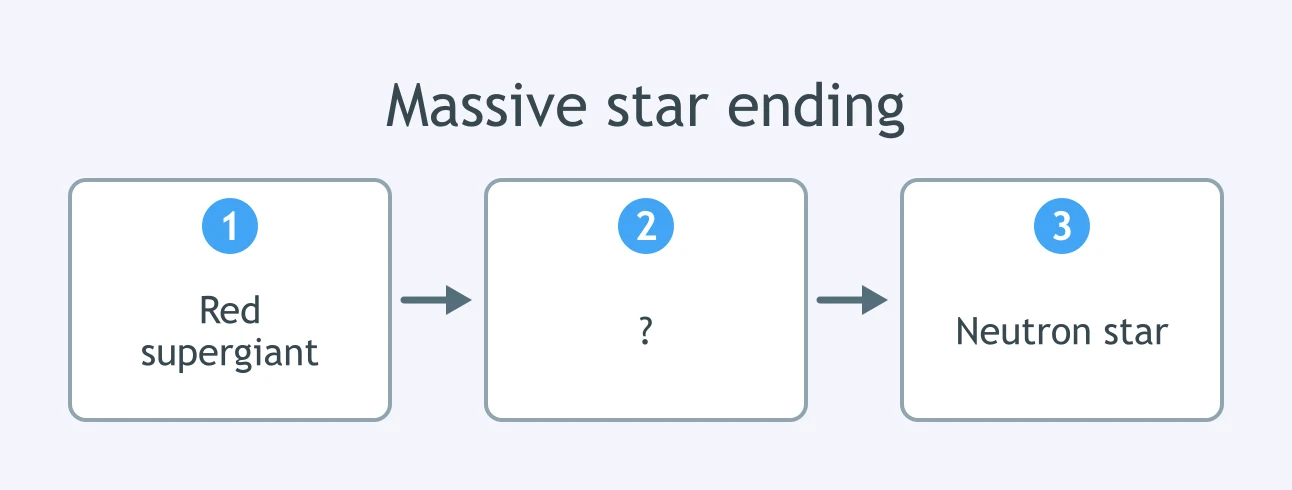
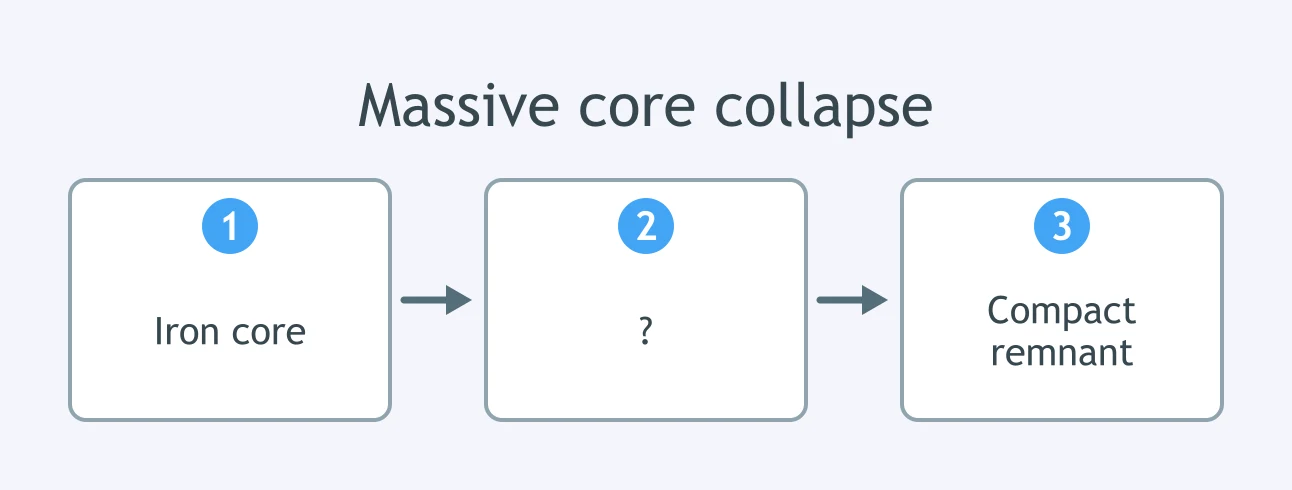
A high-mass path shows Red supergiant → ___ → Neutron star. What event belongs in the blank?
A massive-star sequence shows Nebula → Protostar → Main sequence → Red supergiant → ___. What explosive stage comes next?
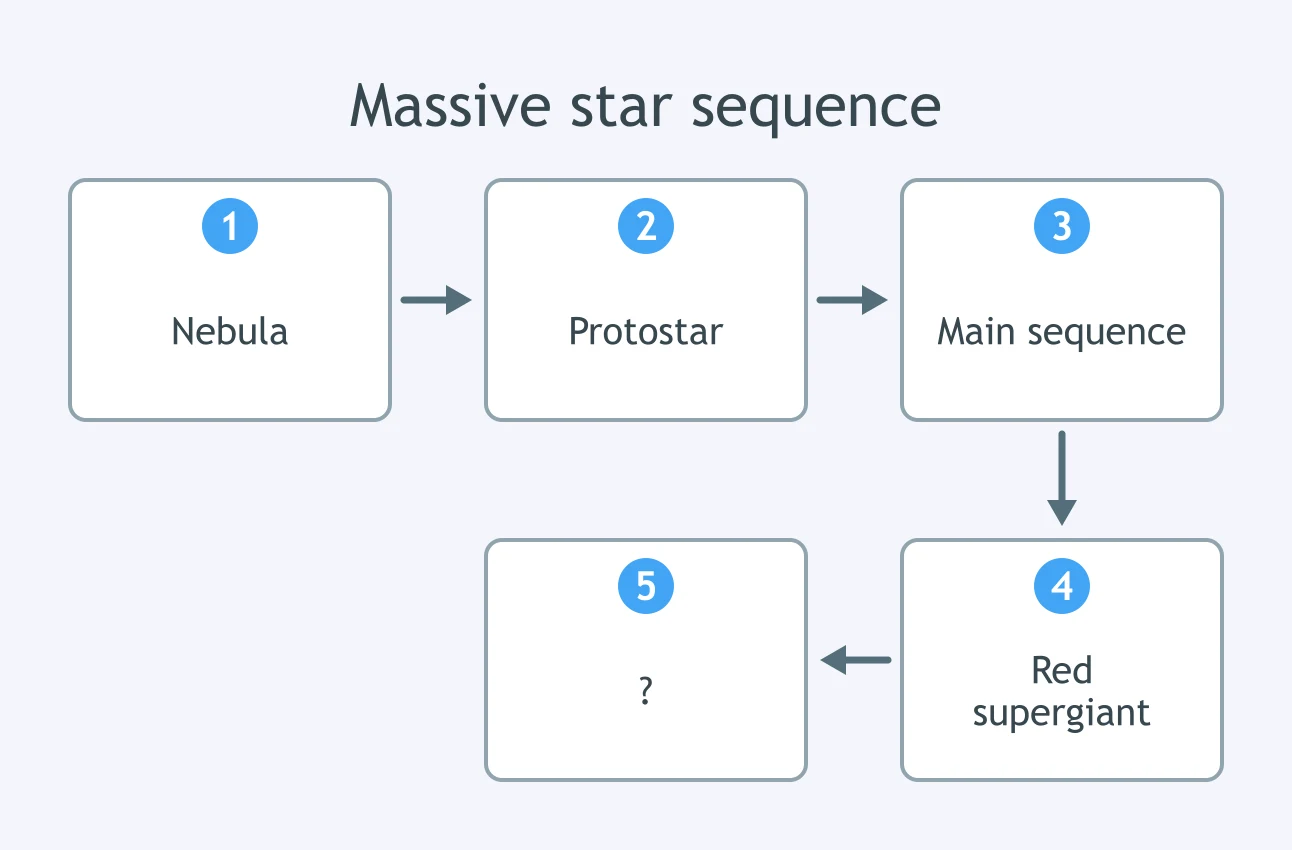
A high-mass star's core has become iron, and fusion no longer releases energy to support it. What happens next in its life cycle?
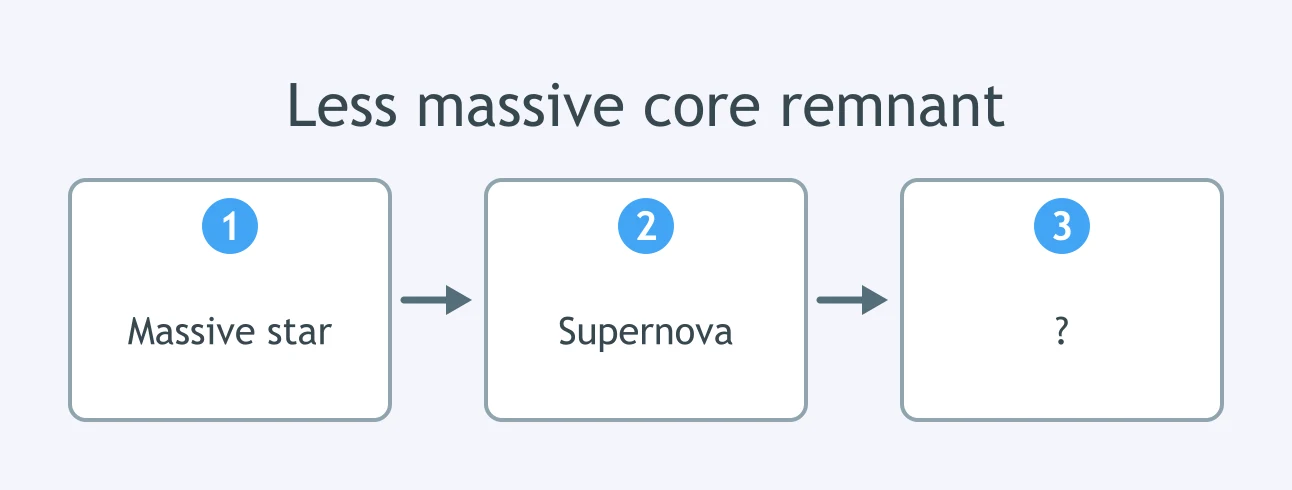
A flow shows Supernova → ___ for a massive star with a less massive remnant core. What compact object fills the blank?
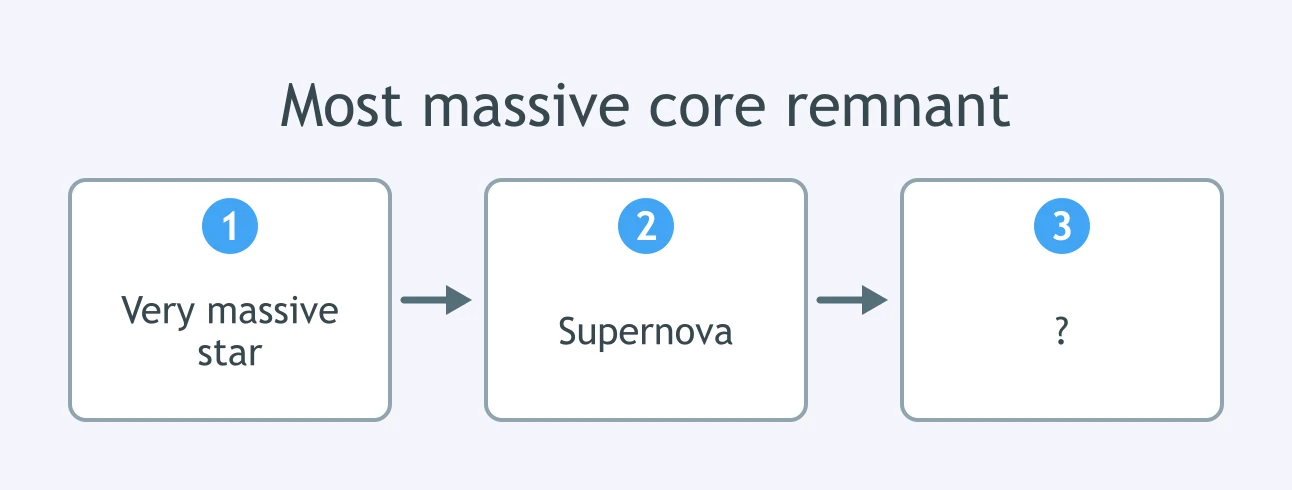
A flow shows Supernova → ___ for the most massive remnant core. Which end state fills the blank?
A massive star leaves the main sequence and fuses heavier elements while its outer layers expand and cool. Which stage has it entered?
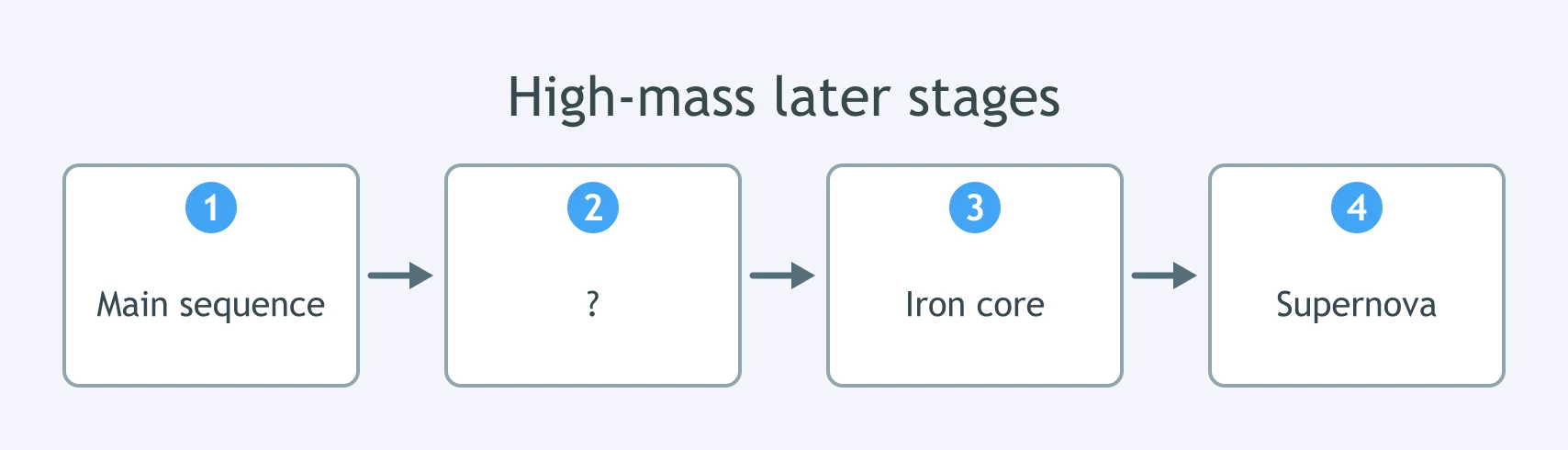
A one-solar-mass star sheds its outer layers instead of exploding as a core-collapse supernova. Why does it never reach core collapse?
A main sequence star has a mass about 25 times the Sun and its core remains very massive after a supernova. Which remnant is most likely?
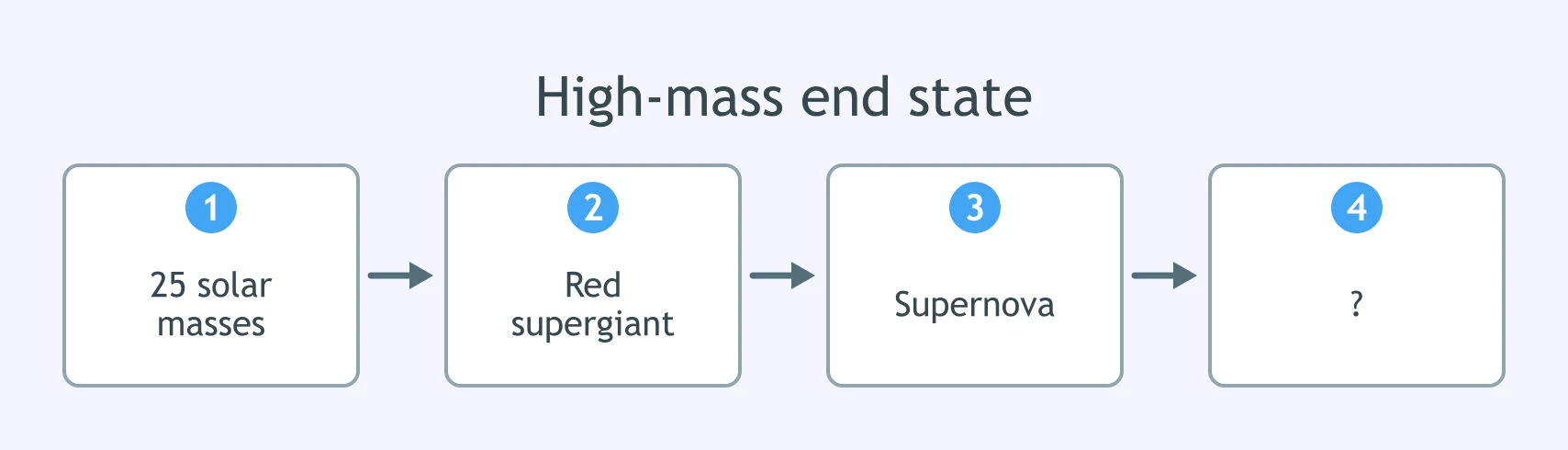
A high-mass star explodes, and its leftover core collapses to a ball only about 20 km across but stops short of becoming a black hole. What remnant forms?
A star like the Sun forms a planetary nebula at the end of its giant stage. What will the exposed core become?
Two stars form in a nebula, and Star A gathers far more gas and becomes high mass. Compared with a Sun-like star, its likely ending includes what event?
A 0.6-solar-mass main sequence star will not make an iron-core collapse. Which final stellar remnant fits its low mass?
A massive star's remnant core is too massive for neutron pressure to support it. Which end state is predicted?
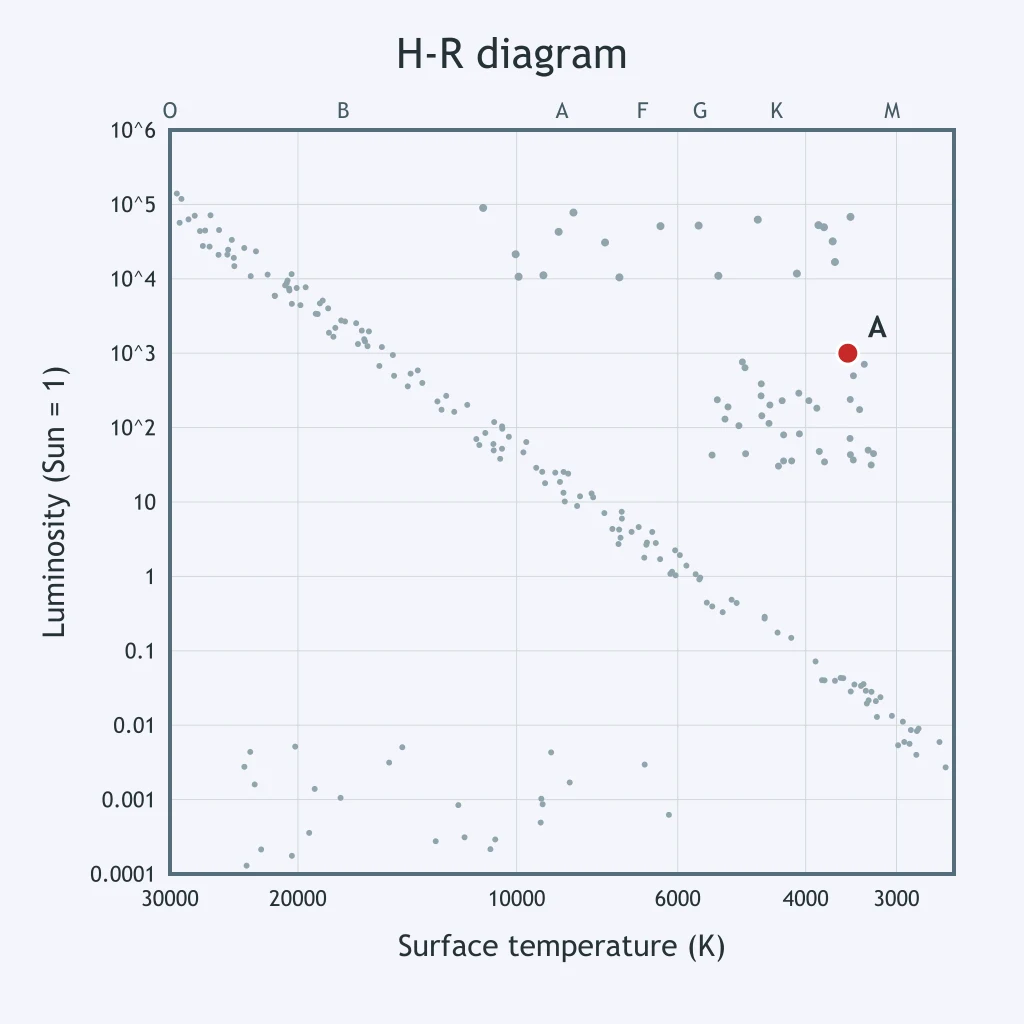
Use the H-R diagram. Which evolutionary stage is marked by star A?
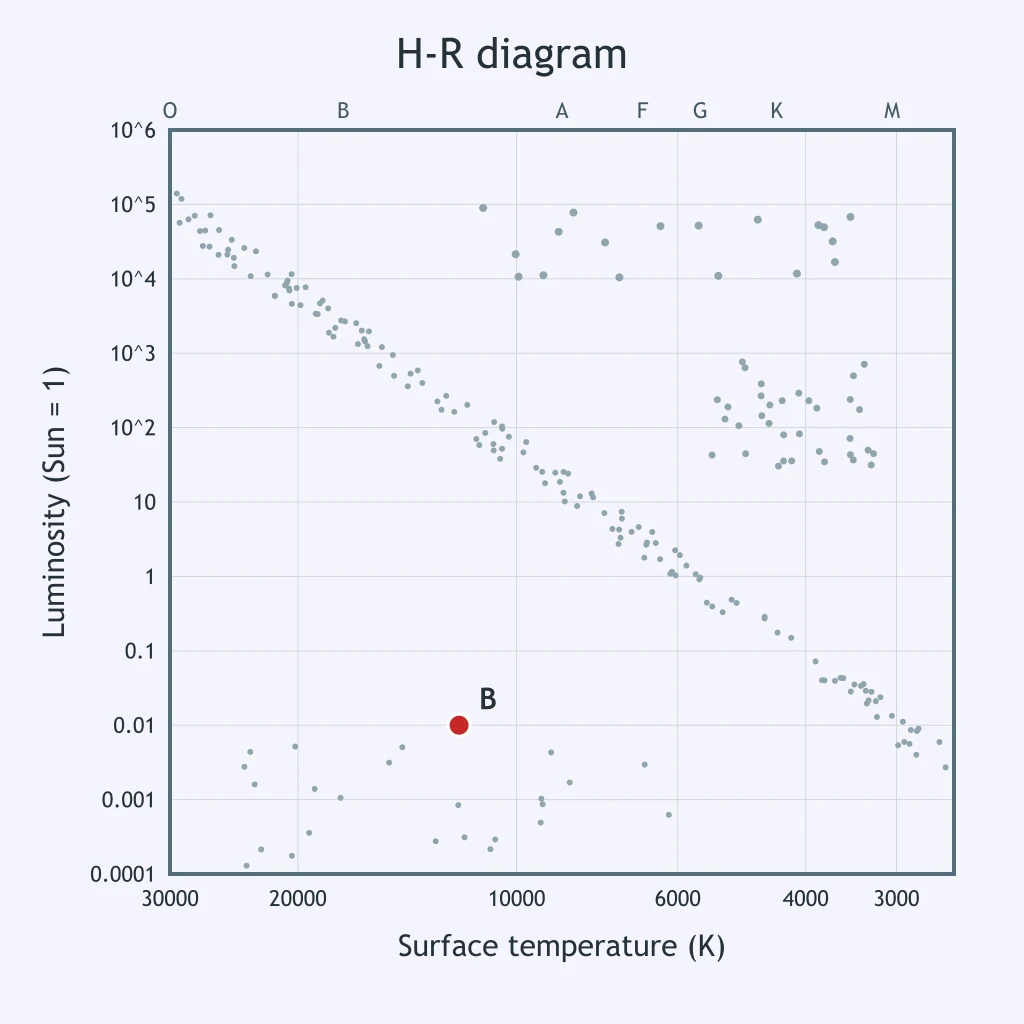
Use the H-R diagram. What type of star is marked by star B?
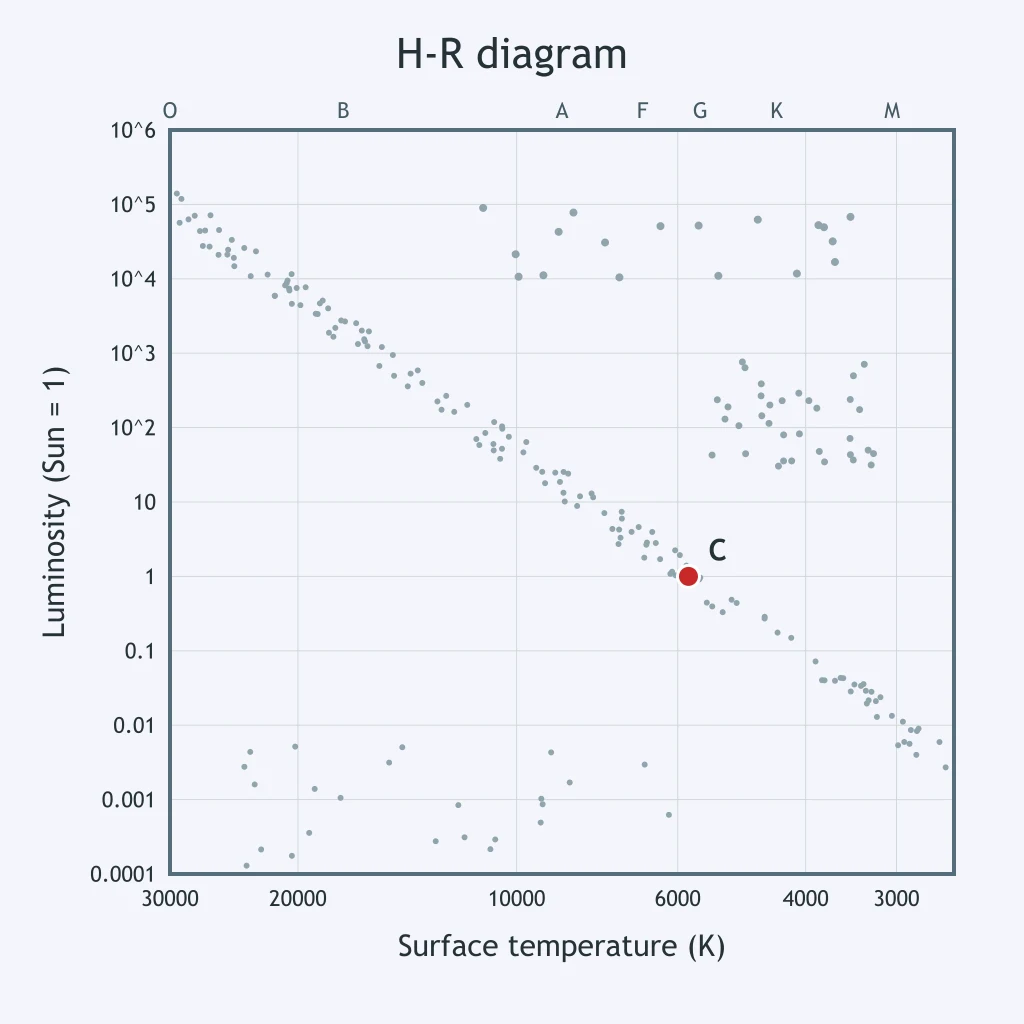
Use the H-R diagram. What stage is star C?
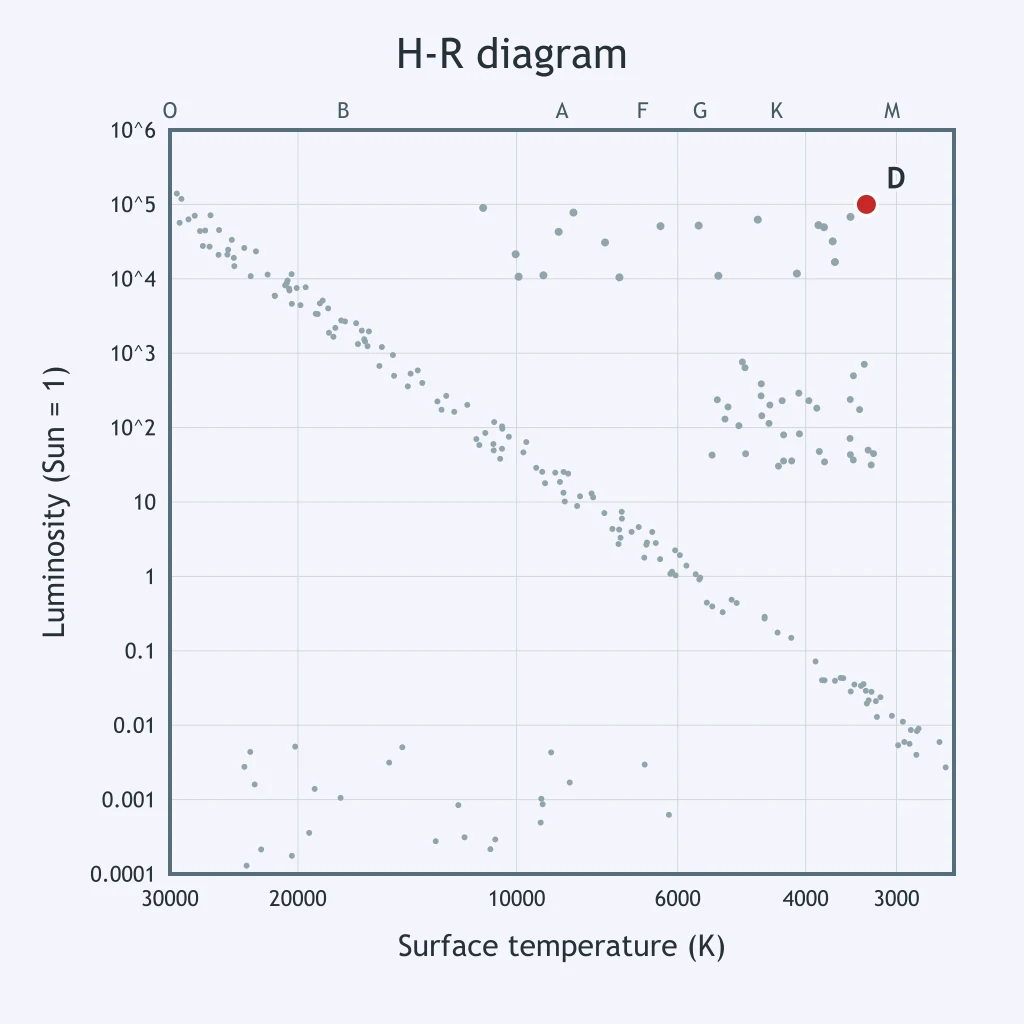
Use the H-R diagram. What stage is star D?
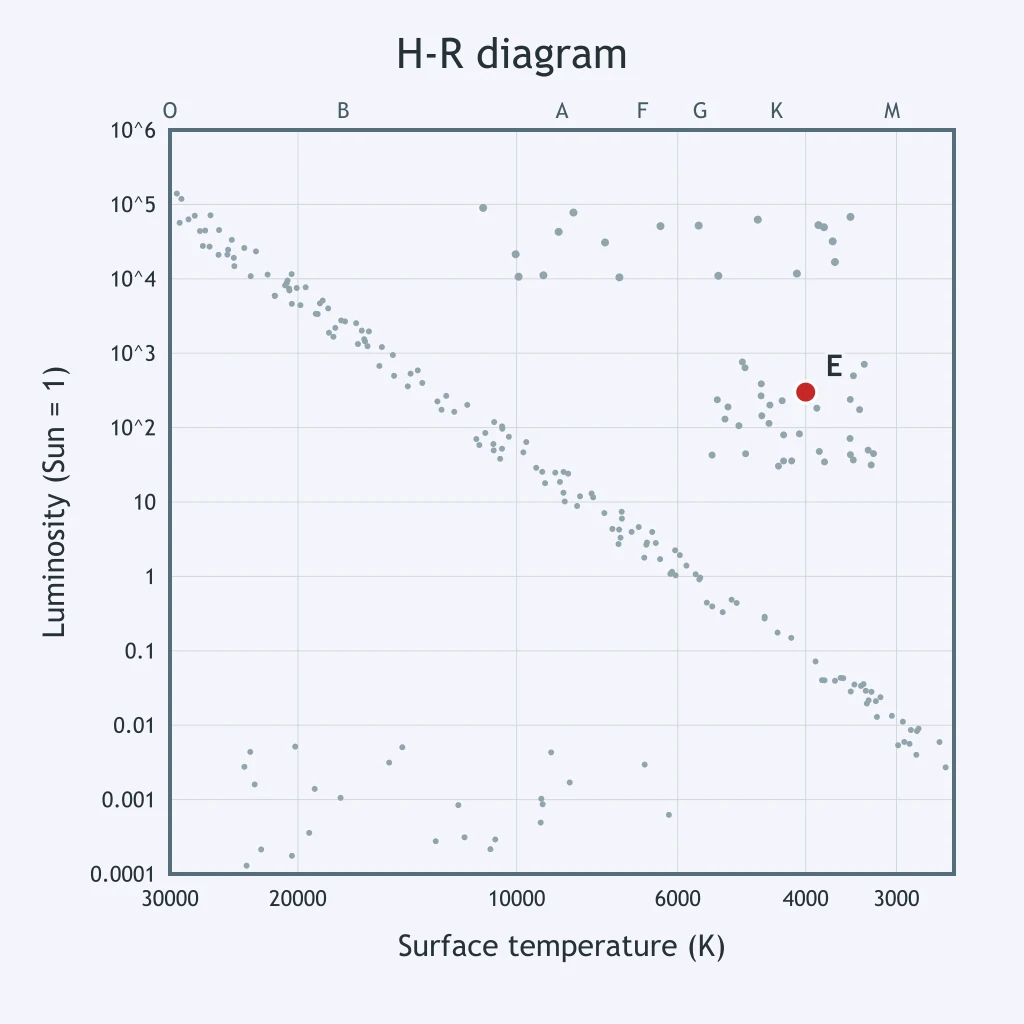
Use the H-R diagram. Which stage does star E represent?
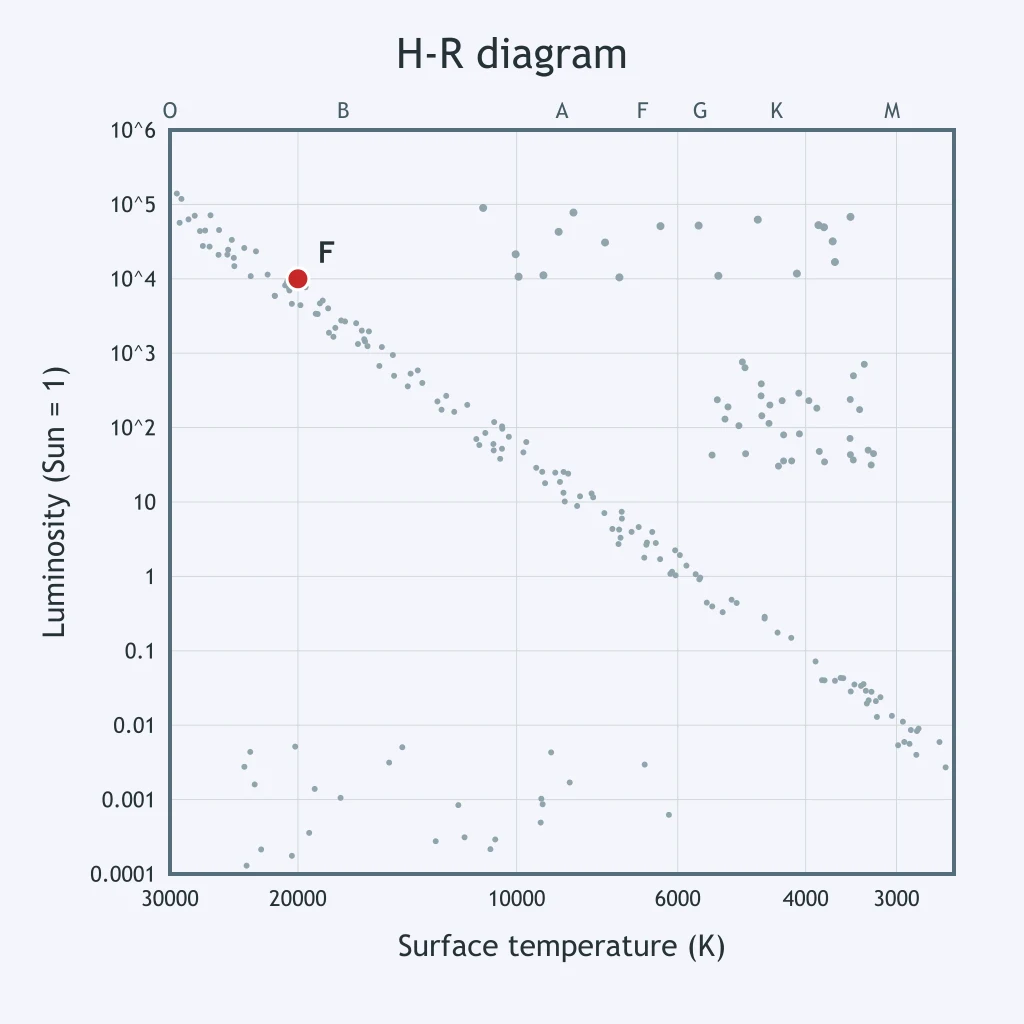
Use the H-R diagram. Which stage is star F?
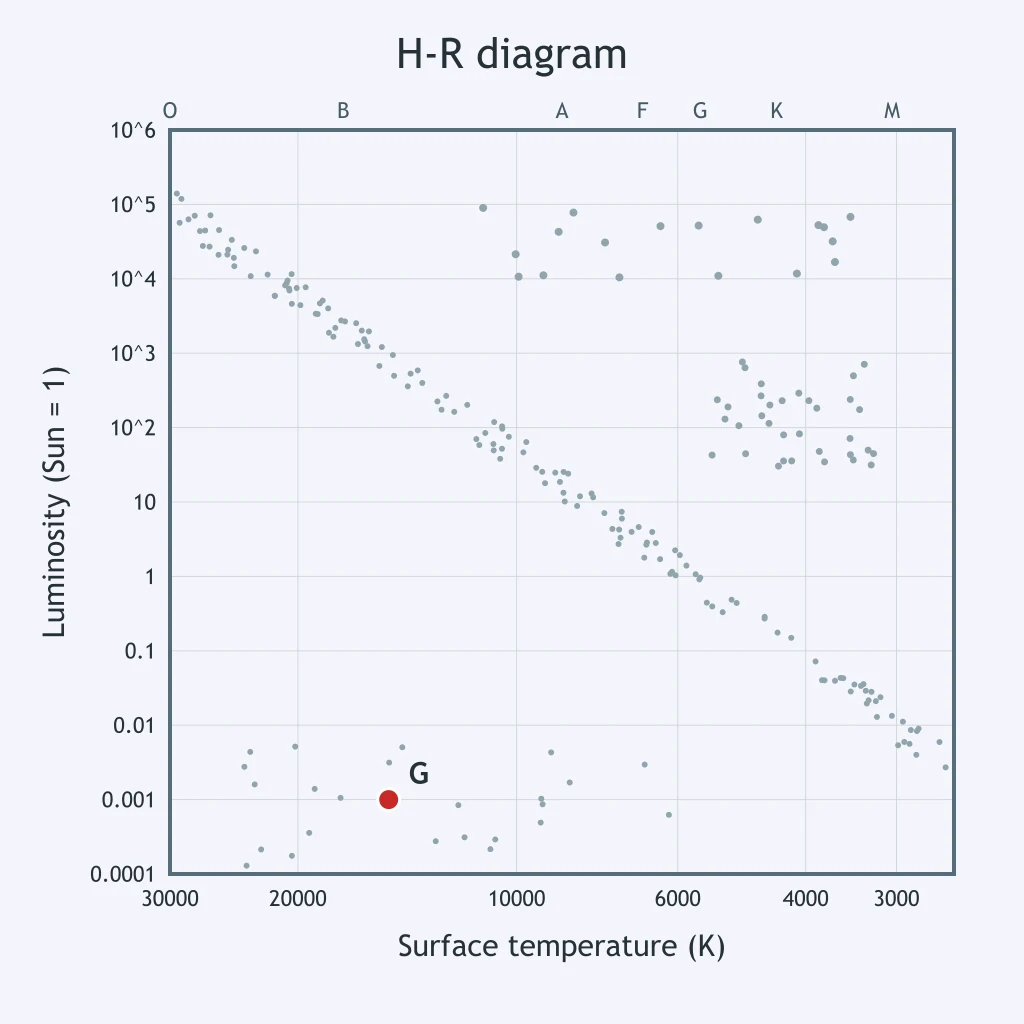
Use the H-R diagram. What type of star is G?
A cold cloud of gas and dust contracts under its own gravity until its center reaches about 15,000,000 °C. What begins at that point?
A dense clump inside a nebula is contracting and heating, but its core is not yet hot enough for nuclear fusion. What is this object called?
Two protostars form in the same nebula, but one gathers much more gas. What property mainly sends them onto different life-cycle paths?
A forming star is shrinking before the main sequence. What force pulls nebular gas inward to make the protostar hotter and denser?
A protostellar core reaches fusion temperature and the object becomes stable for millions or billions of years. What life-cycle stage begins?
An observed object is a compact, Earth-sized hot core that slowly cools and has no ongoing fusion. What remnant is it?
A spinning object only about 16 kilometers across sends radio pulses at a steady rate as its beam sweeps past Earth. What is the object?
Astronomers detect an unseen compact object because nearby gas heats up and emits X-rays as it falls inward; not even light escapes the object. What is it?
An expanding shell of hot gas and dust surrounds the site where a massive star exploded and enriched interstellar space. What object is being observed?
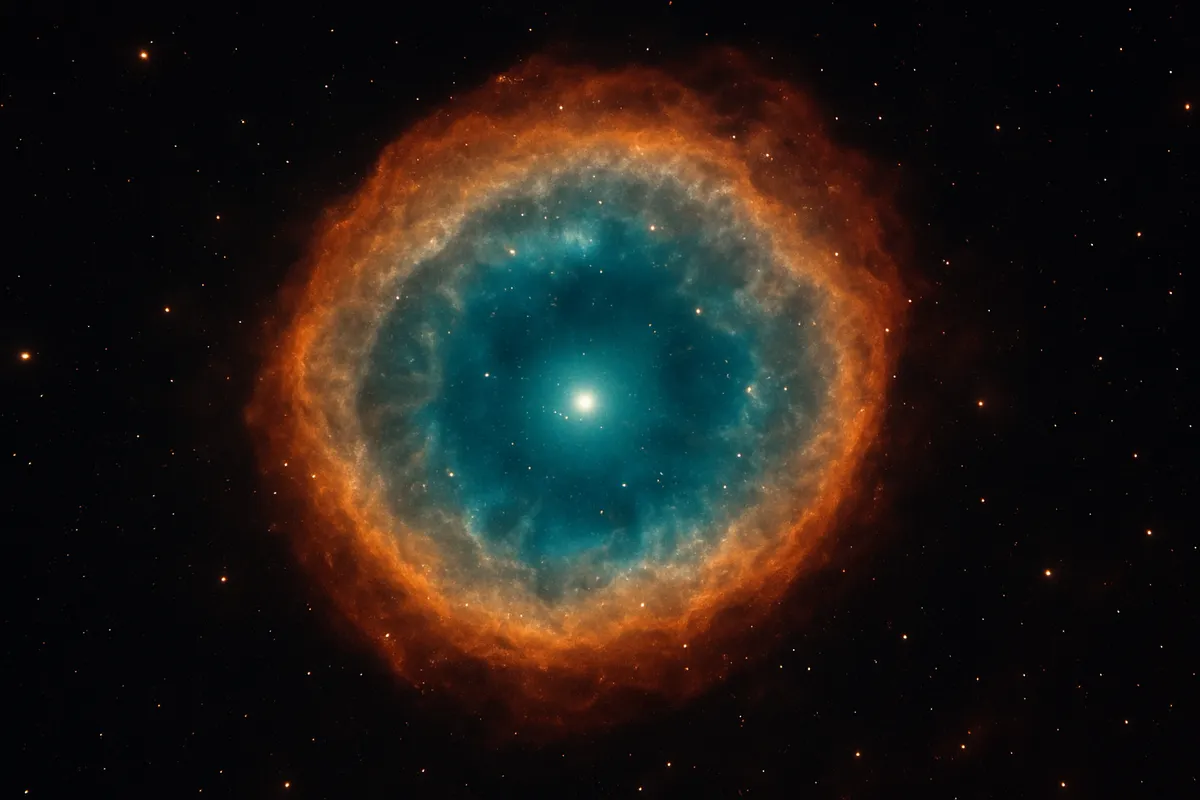
A glowing shell of gas surrounds a dying Sun-like star, with a white dwarf forming at the center. What stage is the shell?
Crack the passcode before the zombies get in.
Answer, then swat bugs for bonus points.
Race through questions at your own speed.
Same question on every screen. Fastest wins.

Pick a tile, answer, hit bonuses and steals.
25 questions