Loading
by BlastRoom
Compare the terrestrial planets by size, composition, atmospheres, surfaces, rotation, and day length.
#earth_space_science
40 questions
One question set, multiple game modes. Tap any game to see it in action. Not sure which to pick?
Answer to place stones and capture territory.
Outrun the snow together.
Earn blasts, then hunt the other team.
Answer to earn energy, then climb.

The class blasts through walls together.
Bid on mystery lots. Most money wins.
Sell tours. Nice, standard, or a total scam.

Answer, restock, and serve the rush.
More correct answers pulls the rope your way.
Answer, then shoot down the alien wave.
Answer, then tap to leap the frozen ridge.
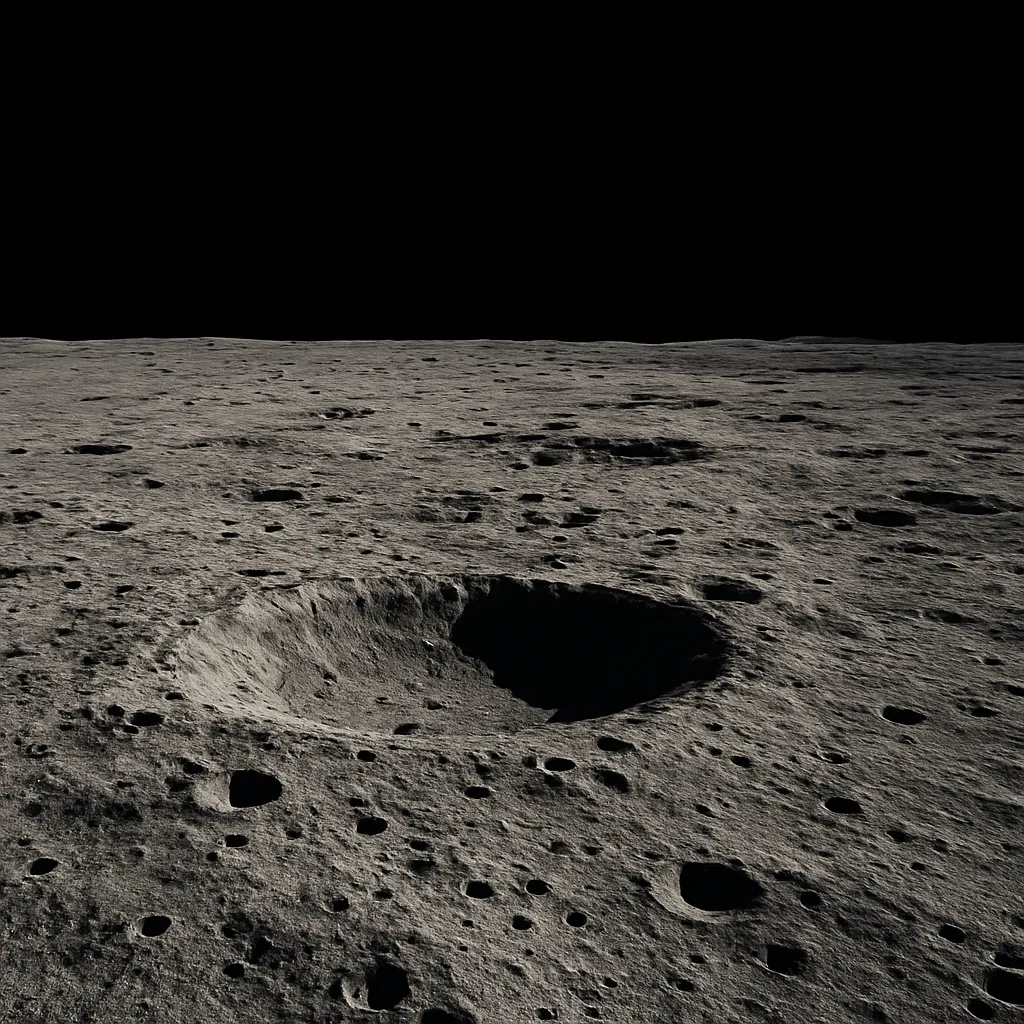
The image shows a heavily cratered gray world with sharp crater rims, almost no atmosphere, and a diameter of about 4,879 km. Which planet is shown?
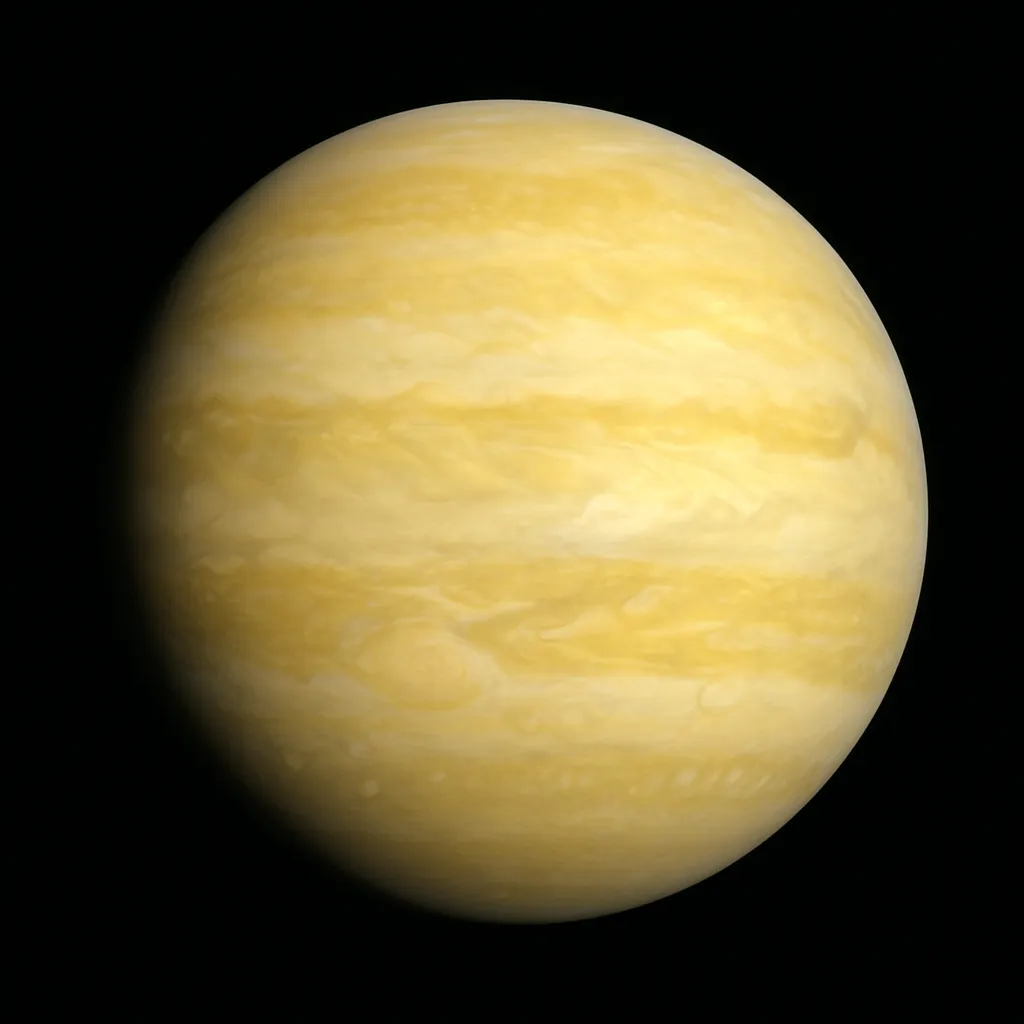
A globe in the image is wrapped in bright yellow-white clouds that hide the surface, and its diameter is about 12,104 km. Which planet is shown?
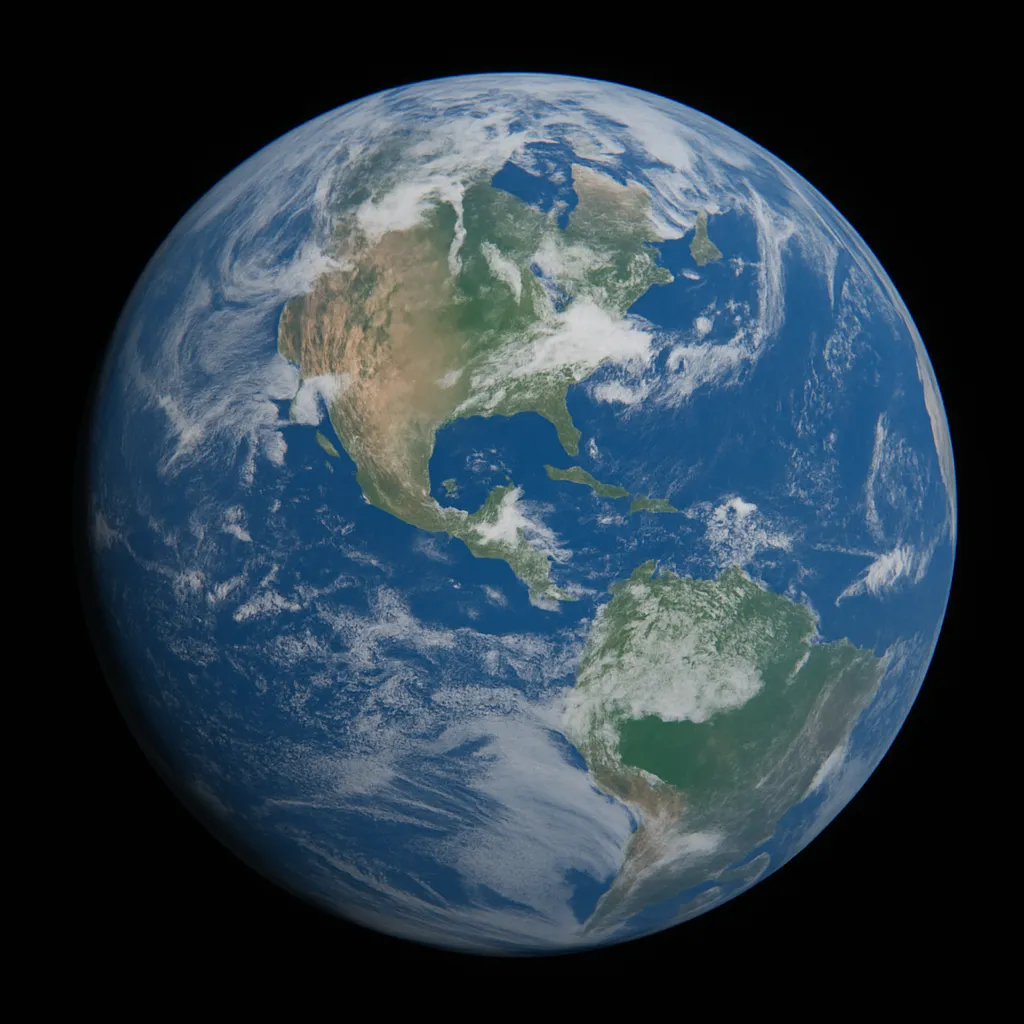
The image shows a blue-and-white terrestrial planet with oceans, continents, and cloud bands, and a diameter near 12,756 km. Which planet is shown?
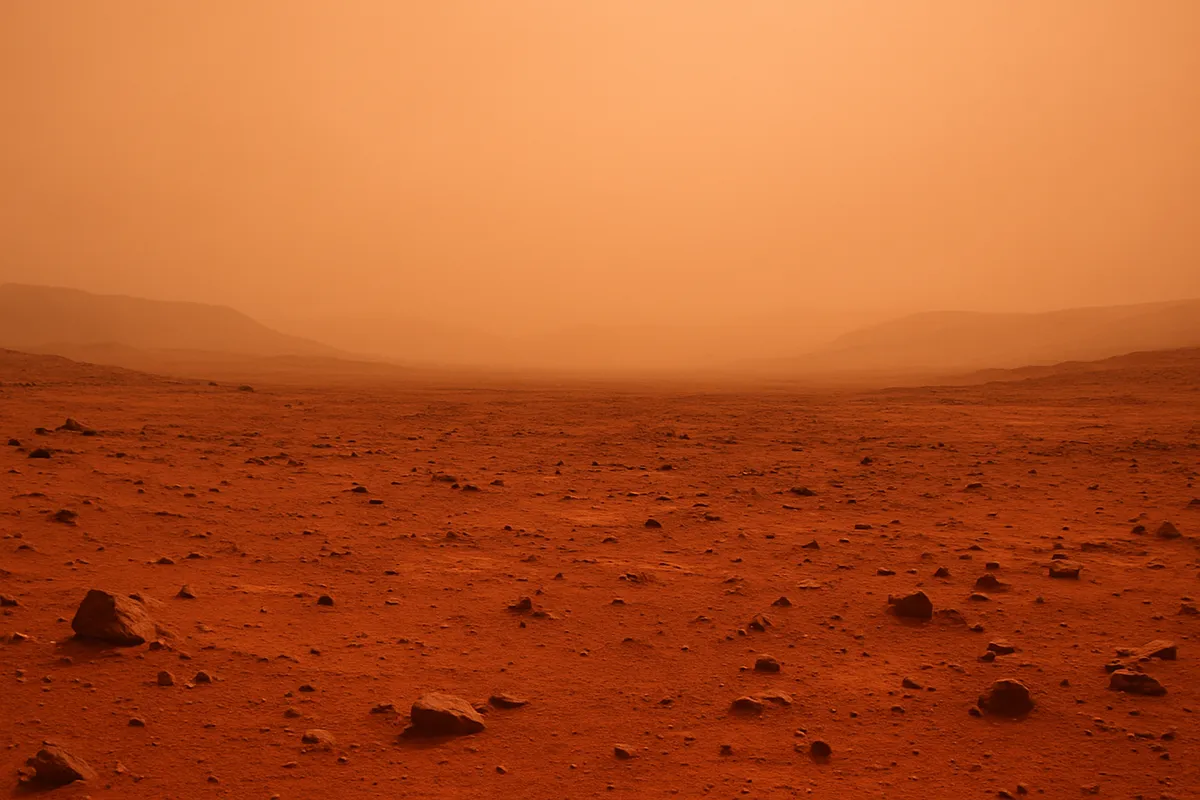
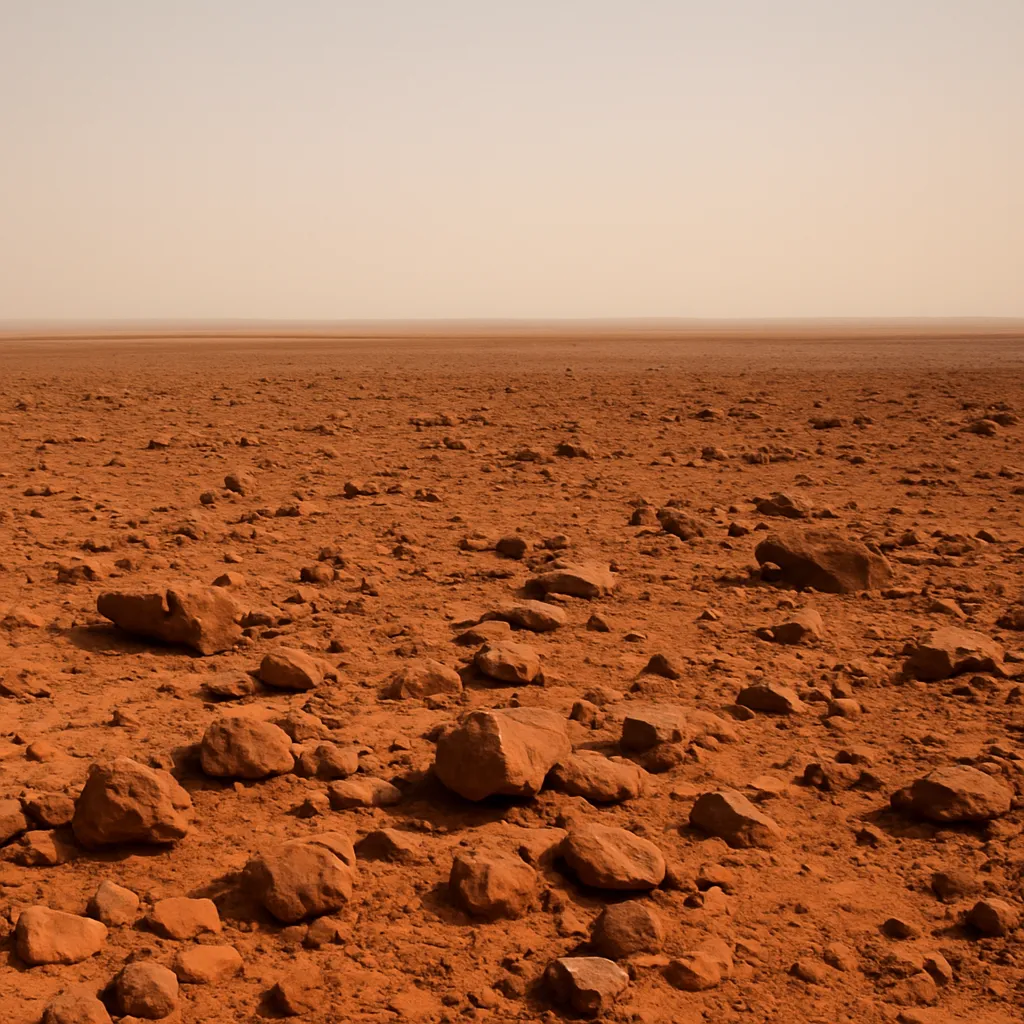
The image shows a rusty red rocky surface under a thin dusty sky, with a planet diameter of about 6,780 km. Which planet is shown?
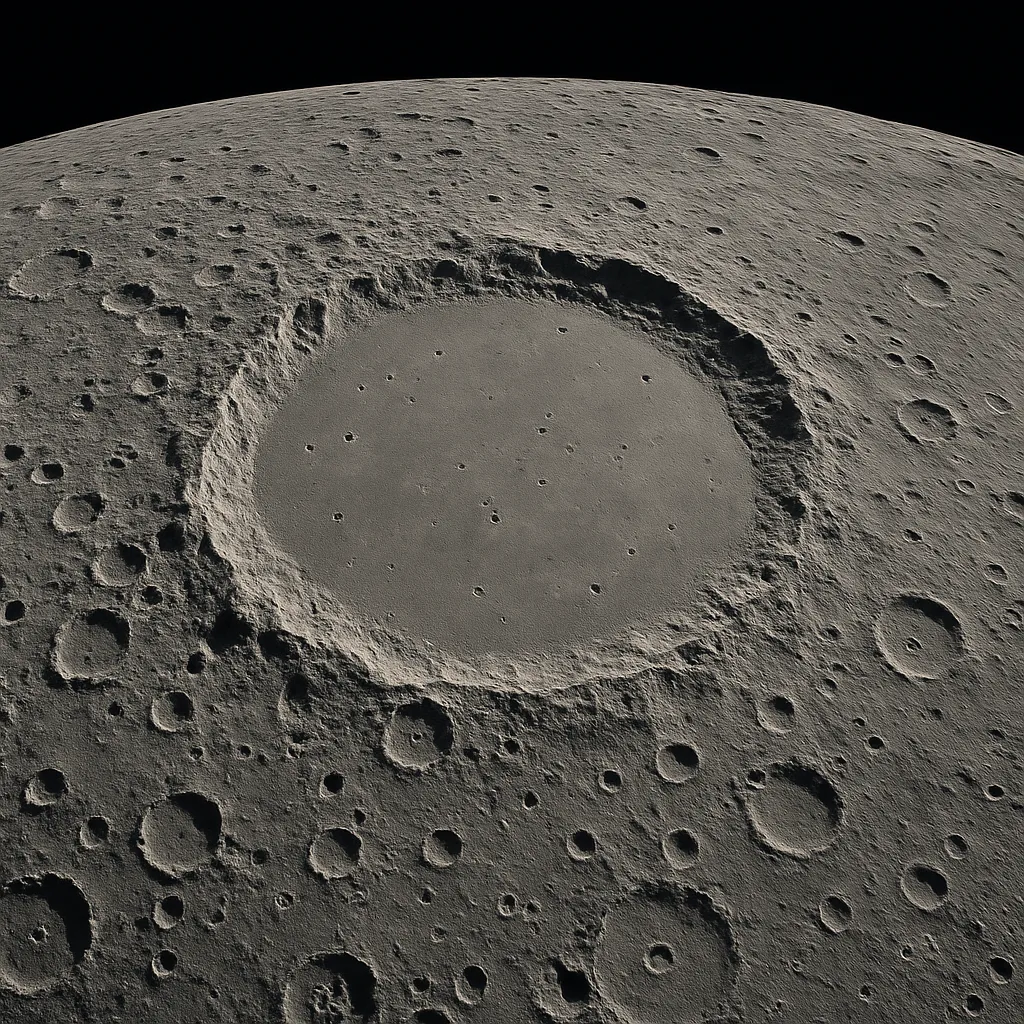
An uncaptioned image shows a broad circular impact basin on a gray, heavily cratered planet with almost no atmosphere. Which terrestrial planet is shown?
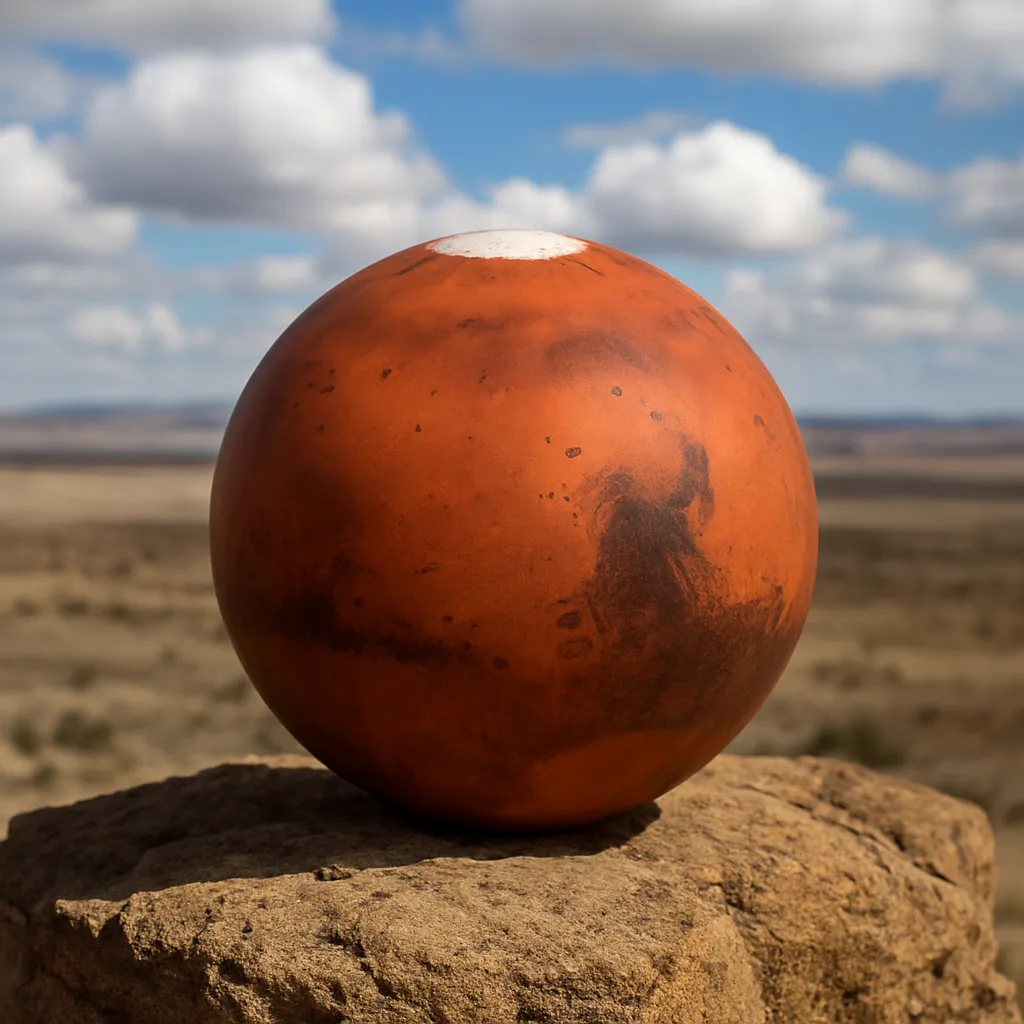
The image shows a rusty globe with a white polar cap and a giant canyon system cutting across one hemisphere. Which planet is shown?
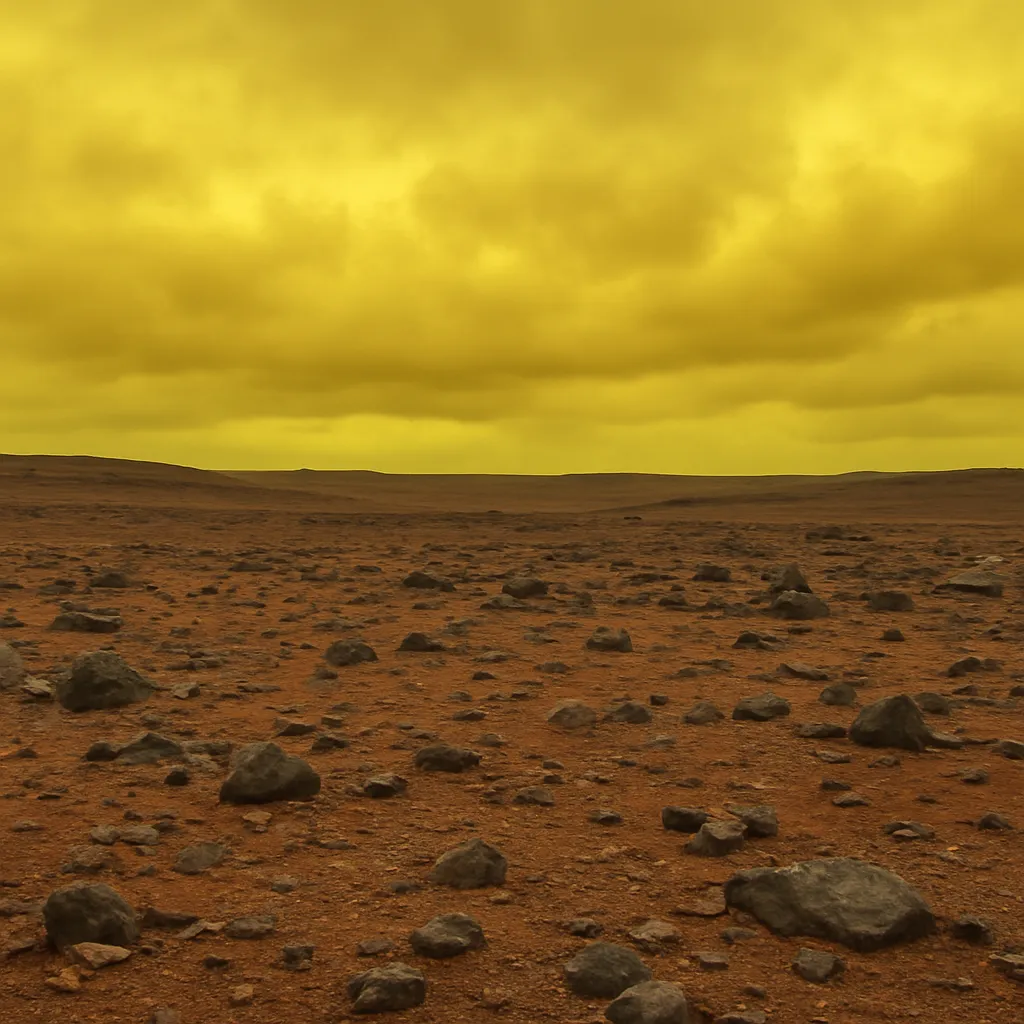
A lander view shows a dim rocky plain beneath a sulfur-yellow sky and dense clouds, with no liquid water visible. Which planet's surface is shown?
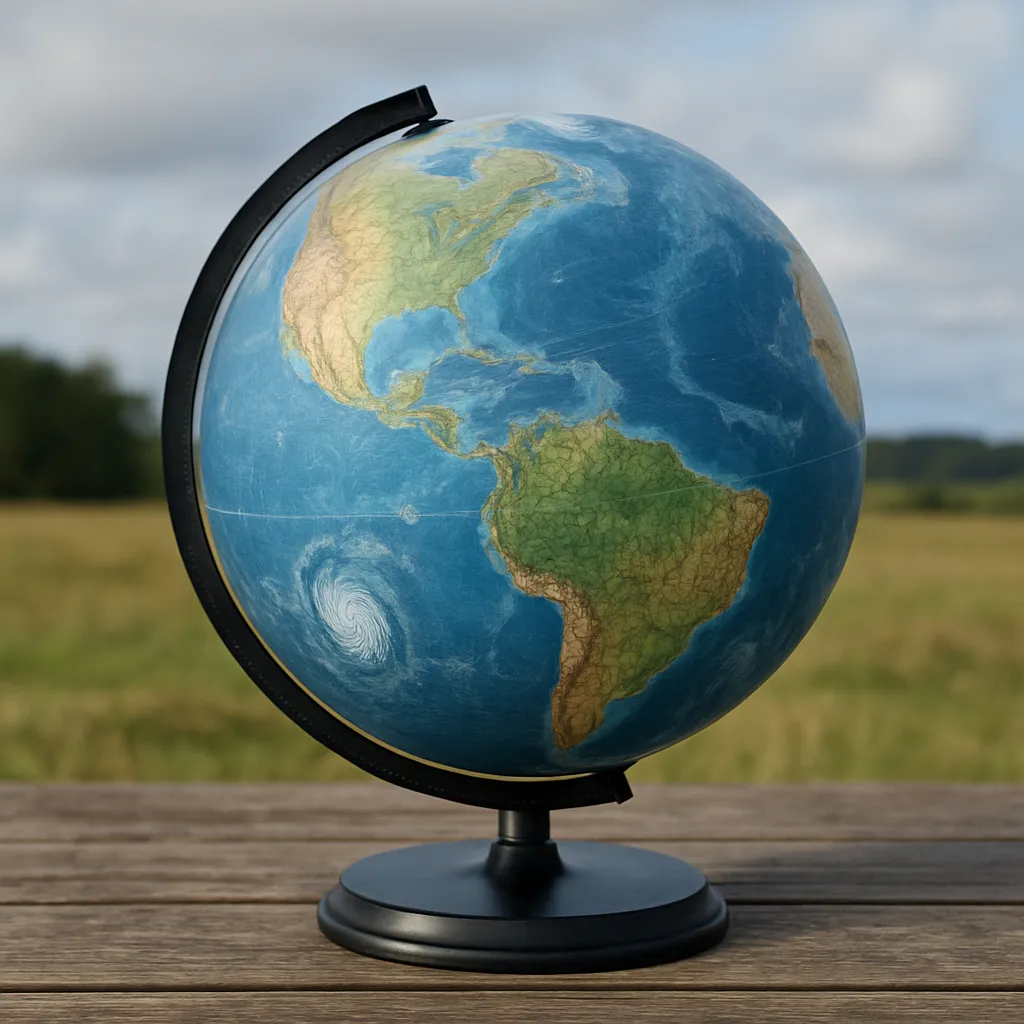
The image shows a terrestrial globe with blue oceans, brown-green land, and large white storm systems. Which planet is shown?
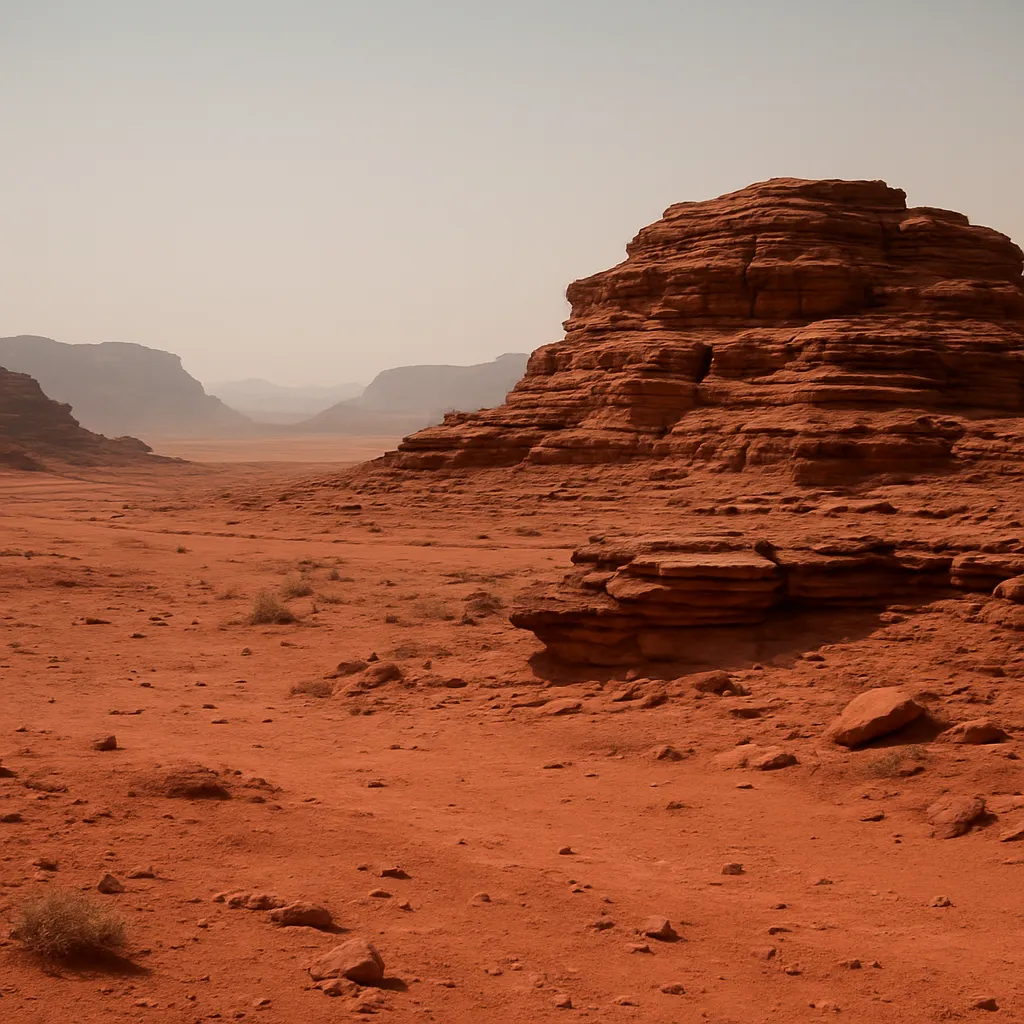
An uncaptioned scene shows red dust, layered sedimentary rocks, and a thin hazy atmosphere on a cold desert planet. Which planet is shown?
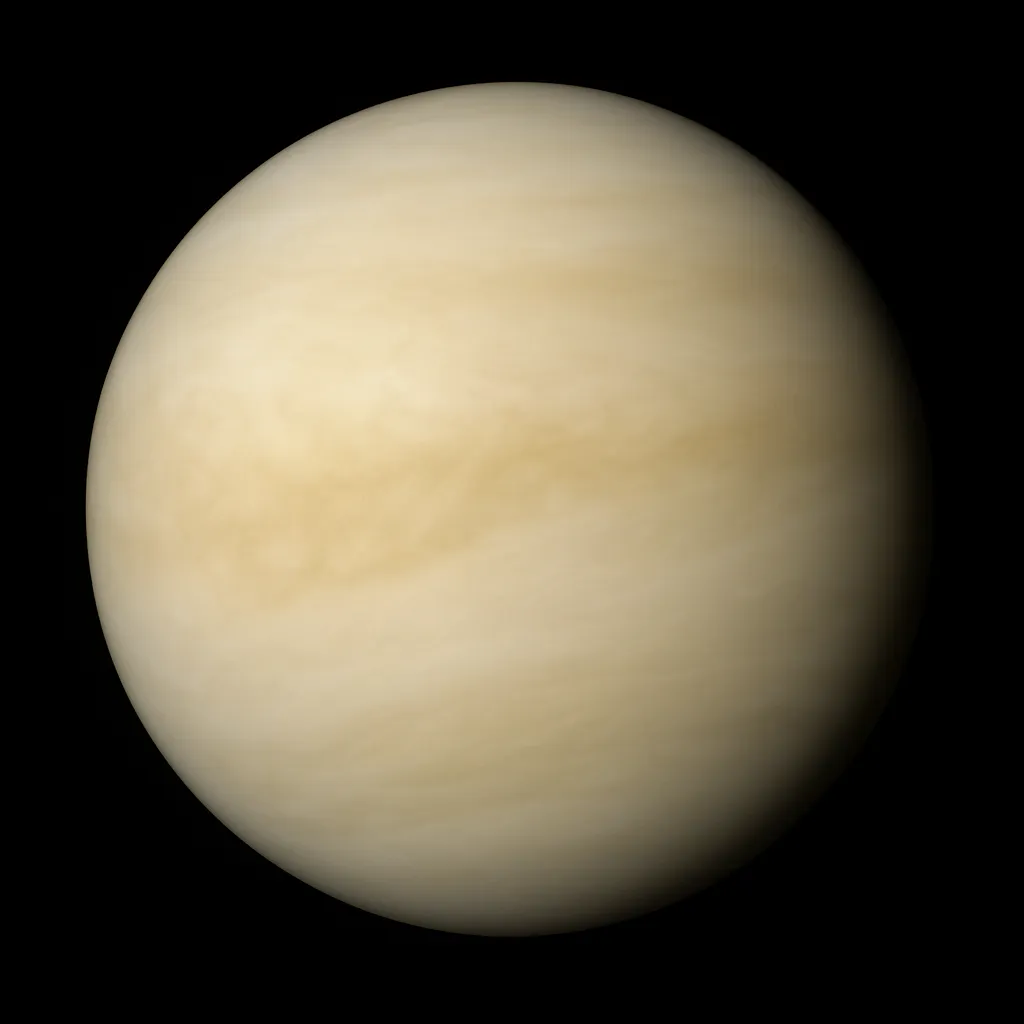
A globe in the image has unbroken pale yellow cloud cover, so no craters, oceans, or continents are visible from space. Which planet is shown?
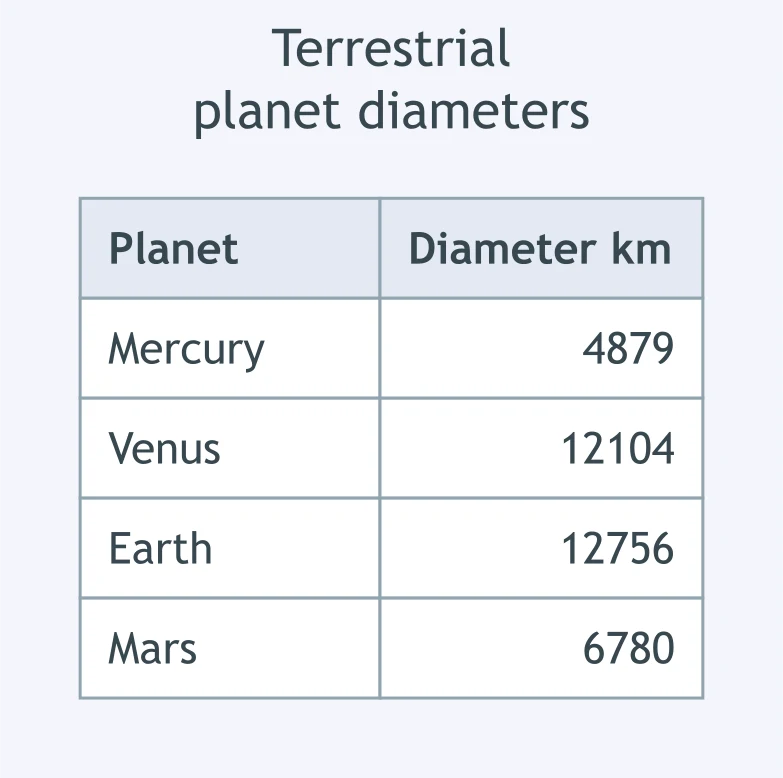
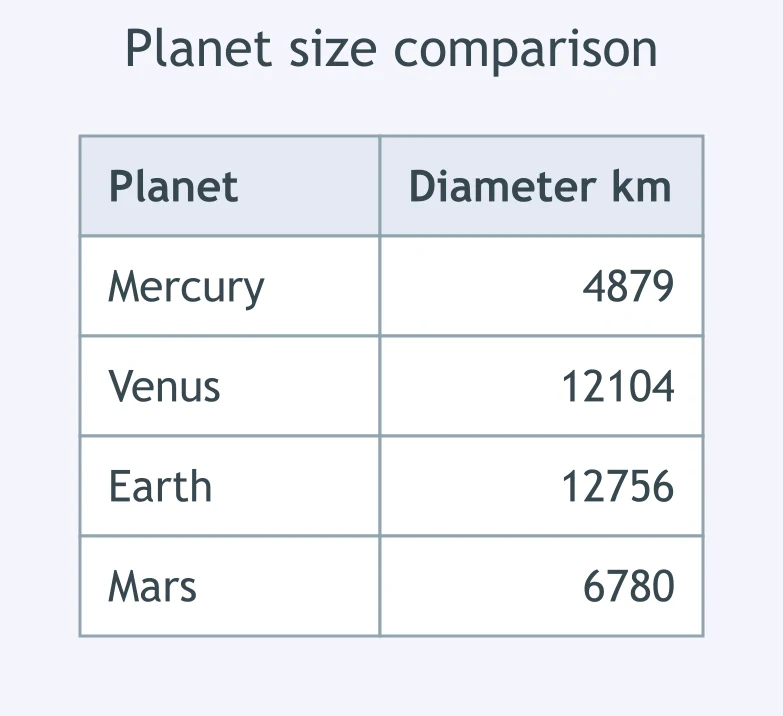
Use the table. Which terrestrial planet has the greatest diameter?
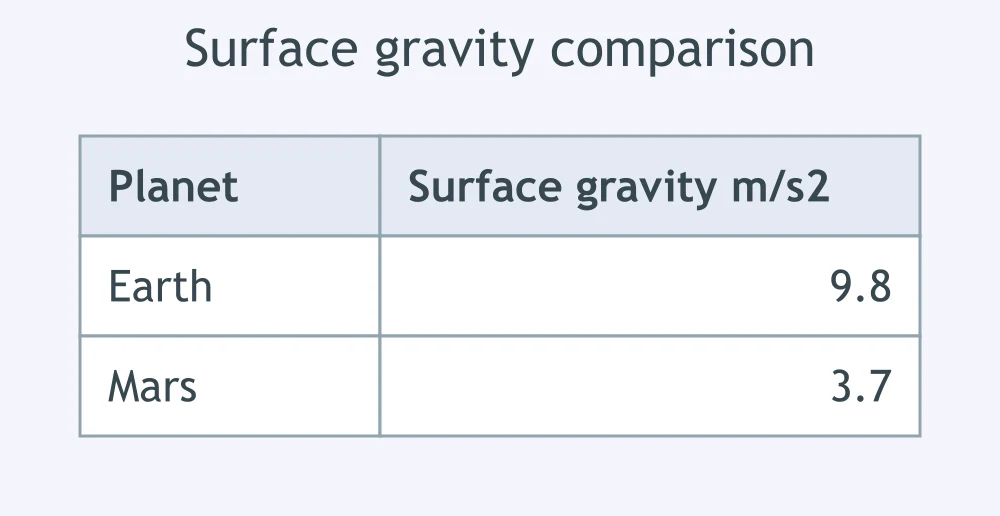
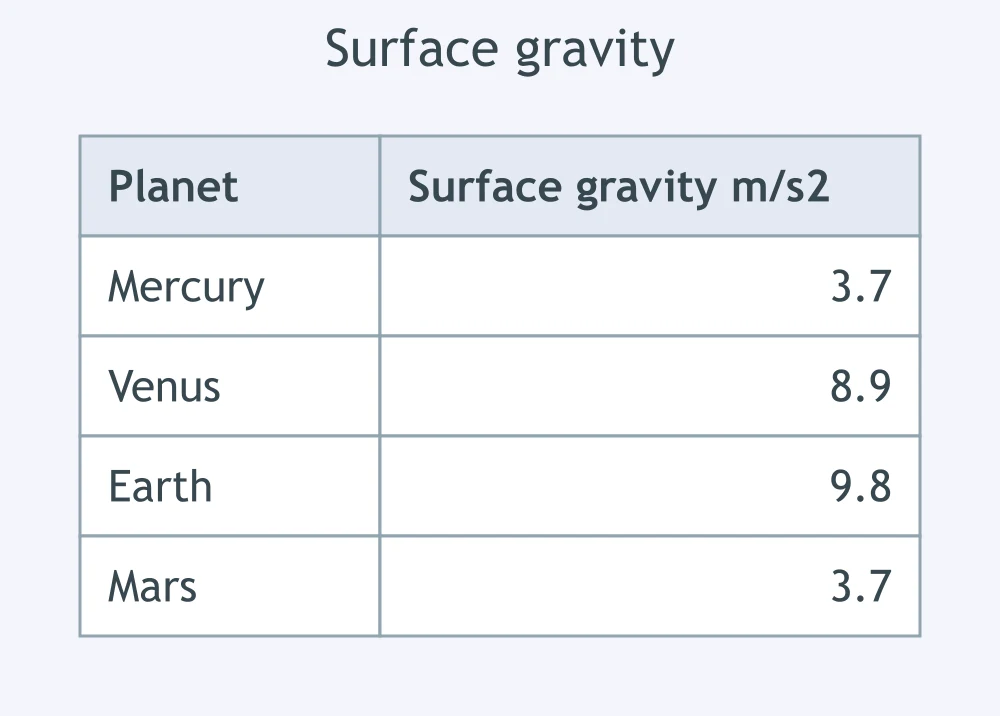
Use the gravity table for Earth and Mars. What would a 60 kg astronaut standing on Mars have?
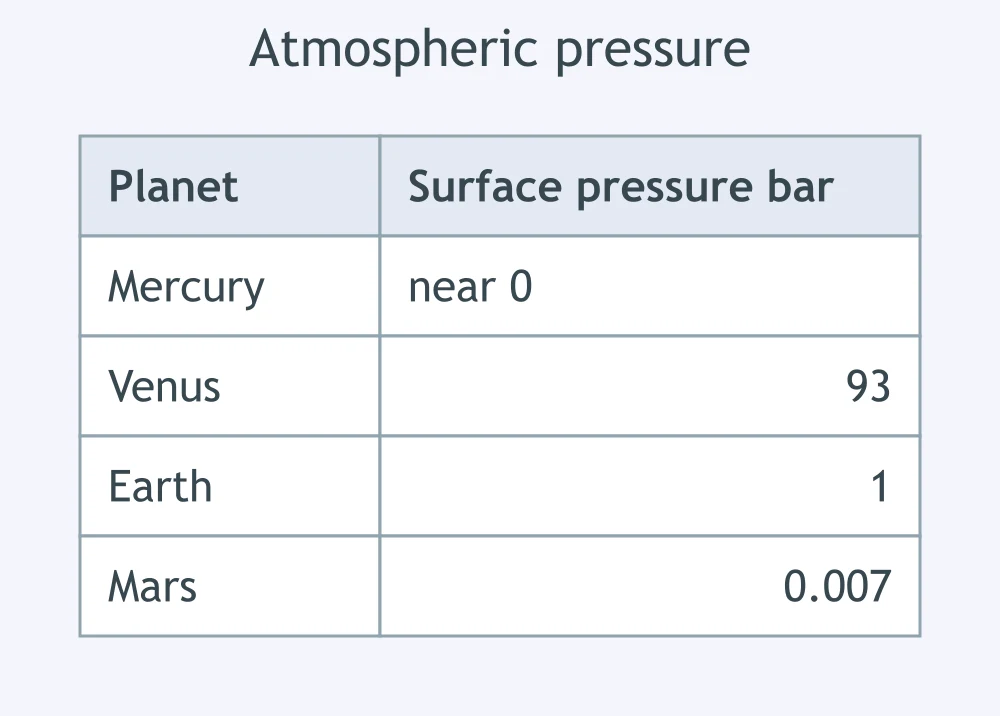
Use the surface-pressure table. A lander needs the strongest pressure-resistant hull on which terrestrial planet?
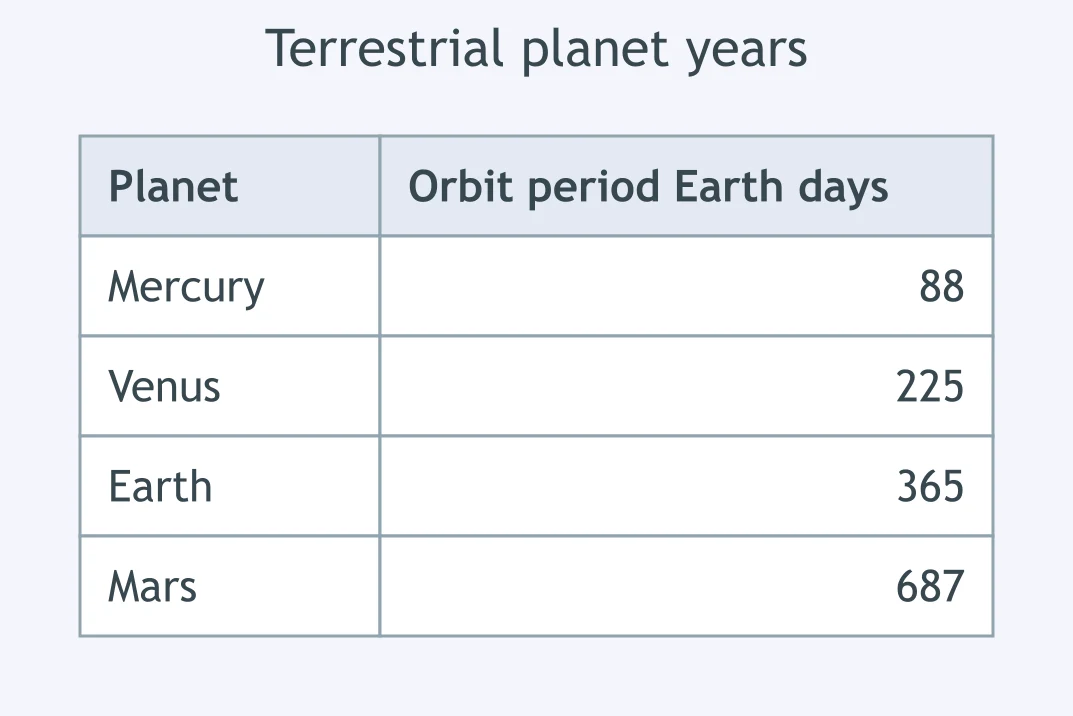
Use the orbit-period table. Which planet completes the most orbits around the Sun in one Earth year?
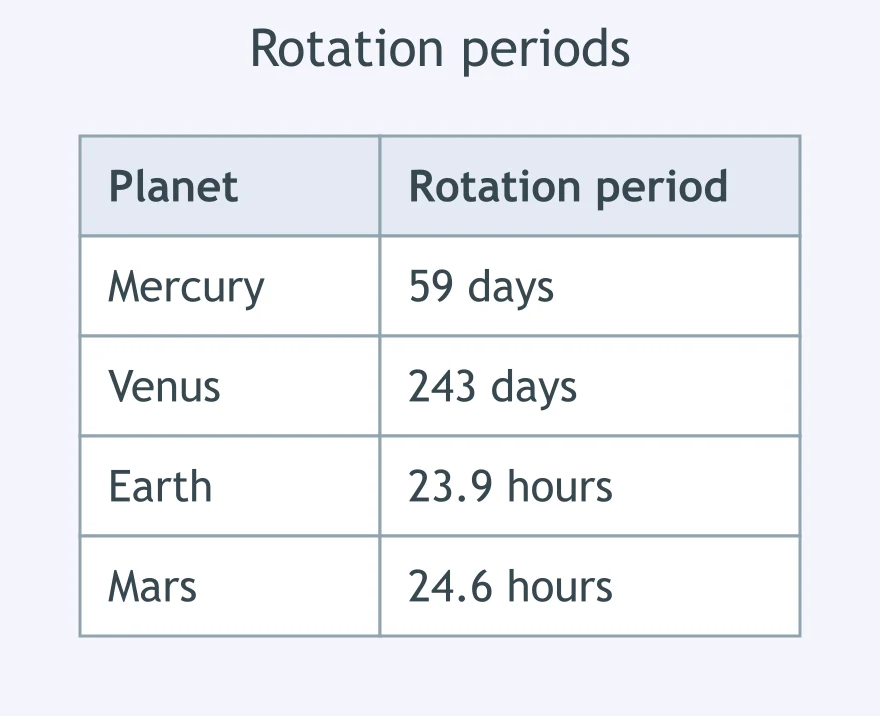
Use the rotation table. Which pair of terrestrial planets has the most similar rotation periods?
Use the diameter table. Which planet is about half Earth's diameter?
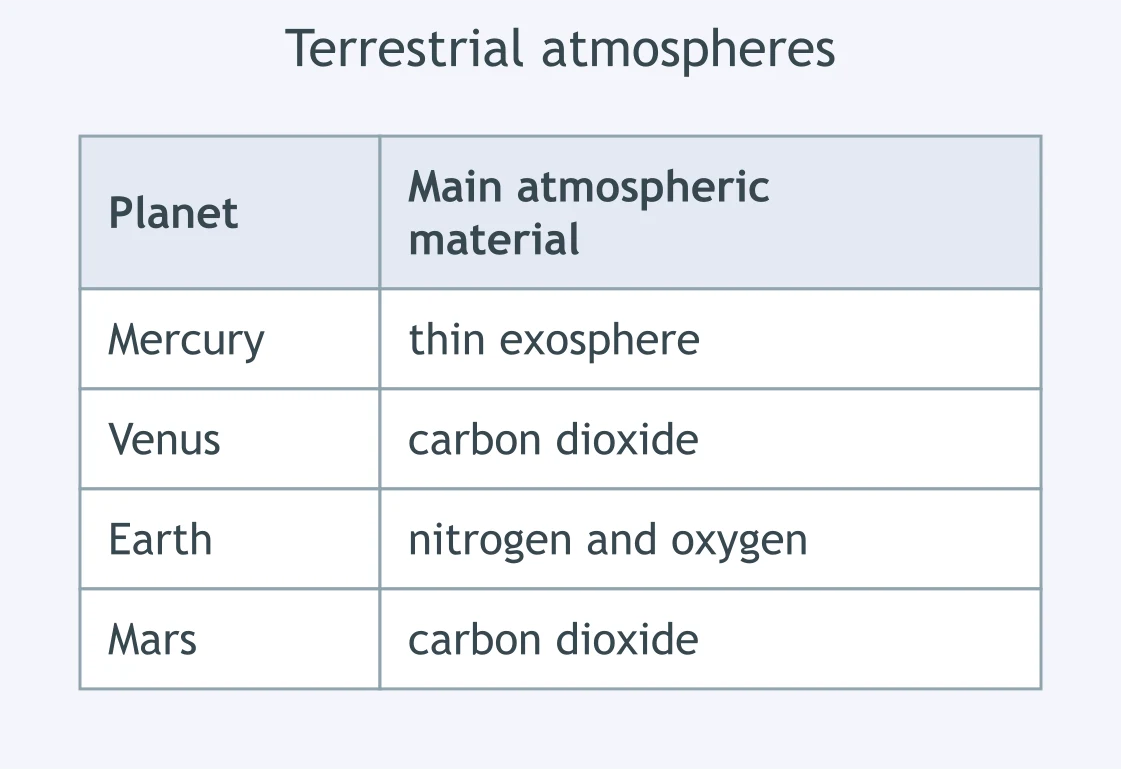
Use the atmosphere table. Which two terrestrial planets have atmospheres dominated by carbon dioxide?
Use the gravity table. A backpack would have the same weight on which two terrestrial planets?
Venus is hotter than Mercury even though Mercury is closer to the Sun. What feature of Venus explains this?
Mercury has days near 430 °C and nights near -180 °C. What best explains such a large temperature range?
Why can liquid water not remain stable for long on most of the Martian surface today?
What atmospheric condition helps Earth keep moderate surface temperatures and long-lasting liquid water?
A Venus probe must survive about 467 °C temperatures and pressure about 93 times Earth's sea-level pressure. What causes that environment?
Mars often has a red, hazy sky and planet-wide dust storms. What makes that possible?
Mercury keeps sharp craters for billions of years. What condition helps preserve them?
In the image, bright rays spread outward from a sharp crater on a gray airless surface. What process produced the rays?
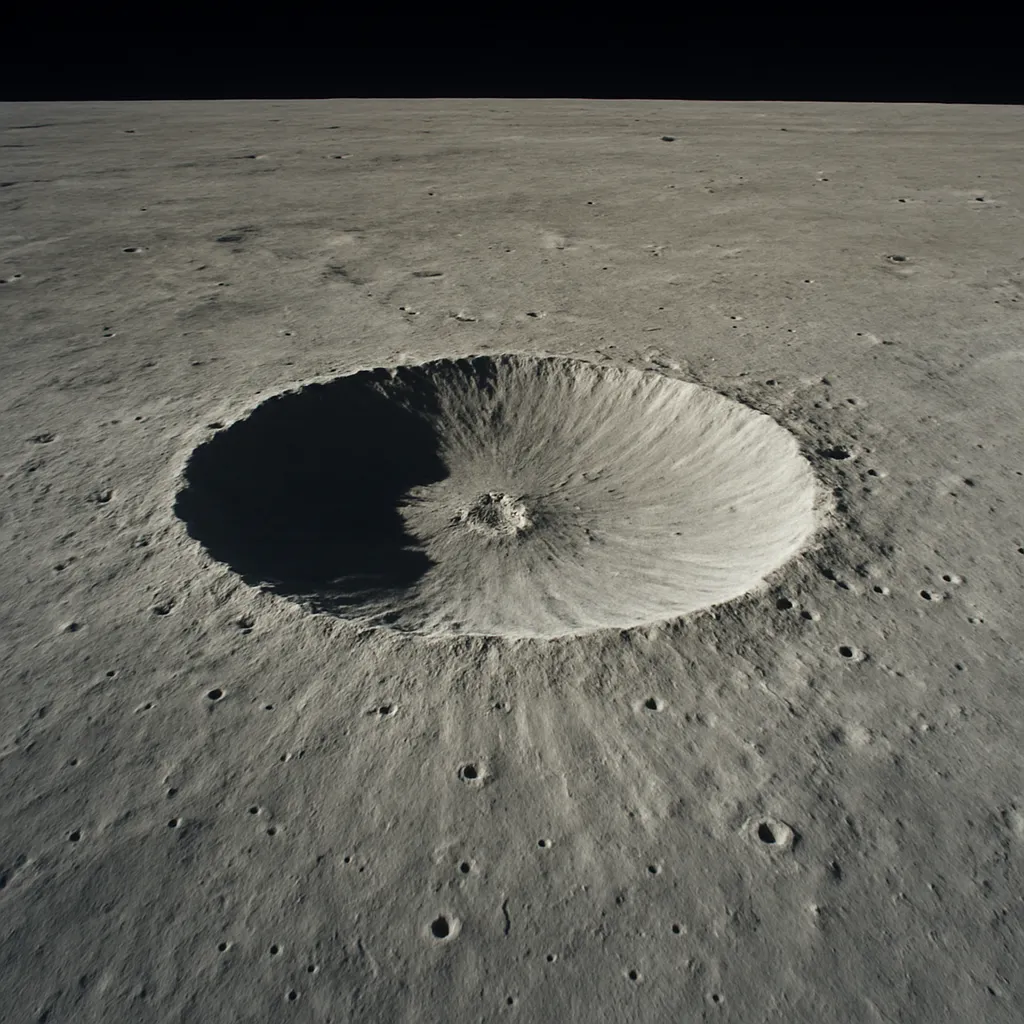
Long cliffs on Mercury cut across older craters and plains. What process most likely formed these scarps?
Olympus Mons is a huge, broad shield volcano on Mars with no nearby folded mountain belt. What process built it?
Valles Marineris is a canyon system thousands of kilometers long on Mars. A leading explanation starts with what process?
A Martian surface has dry river valleys, deltas, and lakebeds, but no present rivers. What do those features indicate?
The image shows a flat-topped, steep-sided dome on a rocky Venus-like plain. What process most likely formed it?
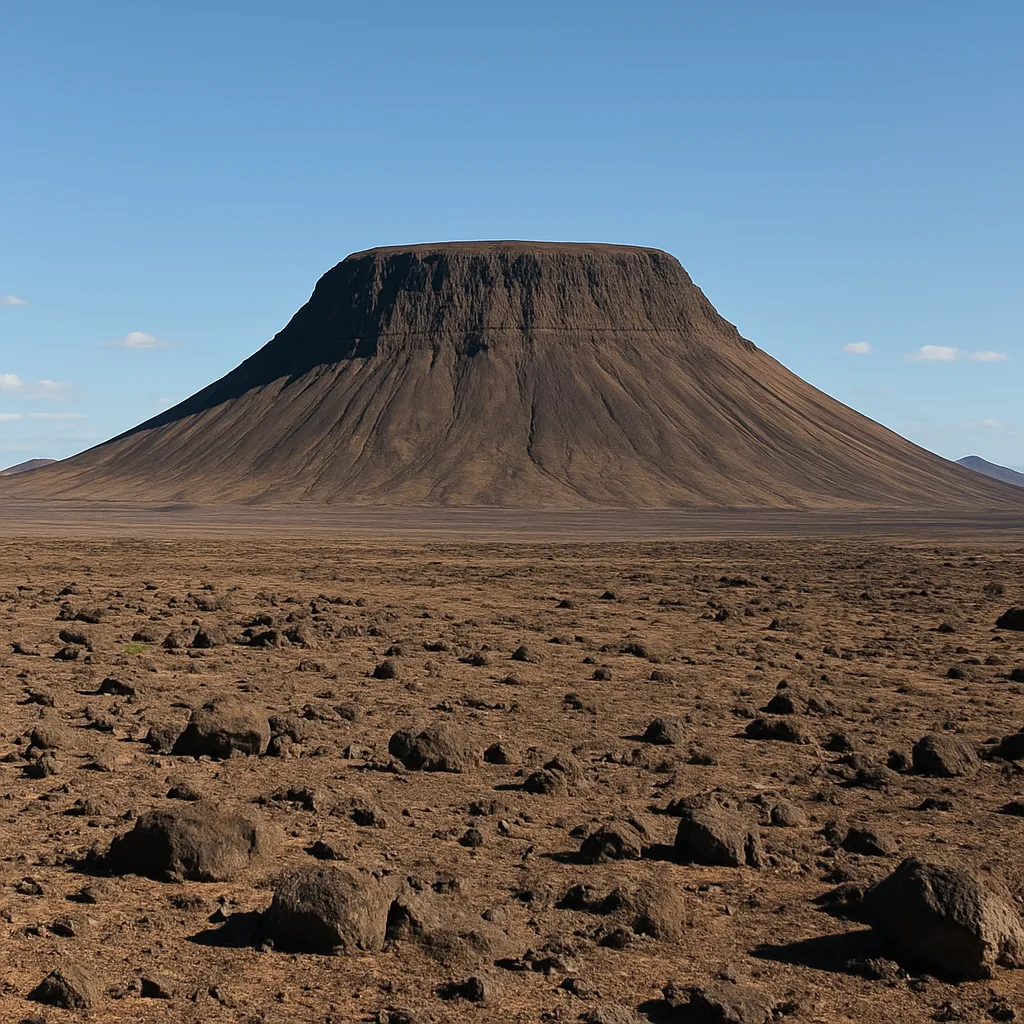
A terrestrial planet shows active ocean trenches, volcanic arcs, and young crust at mid-ocean ridges. Which planet's surface process is being described?
Venus has far fewer impact craters than the Moon-like surface of Mercury. What does that suggest about Venus's surface?
One rotation of Venus takes 243 Earth days, while one orbit around the Sun takes 225 Earth days. What does this mean?
Venus rotates backward compared with Earth. If you could watch sunrise from its surface, where would the Sun rise?
Earth's axis is tilted about 23.4° relative to its orbit. What does this tilt mainly cause?
Mars has an axial tilt near 25° and a year of 687 Earth days. Compared with Earth, what should Mars have?
Mercury's solar day is 176 Earth days, while its year is 88 Earth days. How do these compare?
Mercury's rotation axis is tilted less than 0.1° relative to its orbit. What is the expected effect on seasons?
A terrestrial planet rotates once every 24.6 hours and has an axial tilt of about 25°, both close to Earth's values. Which planet is it?
Crack the passcode before the zombies get in.
Answer, then swat bugs for bonus points.
Race through questions at your own speed.
Same question on every screen. Fastest wins.

Pick a tile, answer, hit bonuses and steals.
30 questions