Loading
by BlastRoom
Read solar-system diagrams and data to explain its structure and formation.
#earth_space_science

25 questions
One question set, multiple game modes. Tap any game to see it in action. Not sure which to pick?
Answer to place stones and capture territory.
Outrun the snow together.
Earn blasts, then hunt the other team.
Answer to earn energy, then climb.

The class blasts through walls together.
Bid on mystery lots. Most money wins.
Sell tours. Nice, standard, or a total scam.

Answer, restock, and serve the rush.
More correct answers pulls the rope your way.
Answer, then shoot down the alien wave.
Answer, then tap to leap the frozen ridge.
Which solar-system feature does the band of small bodies on the orbit diagram represent?
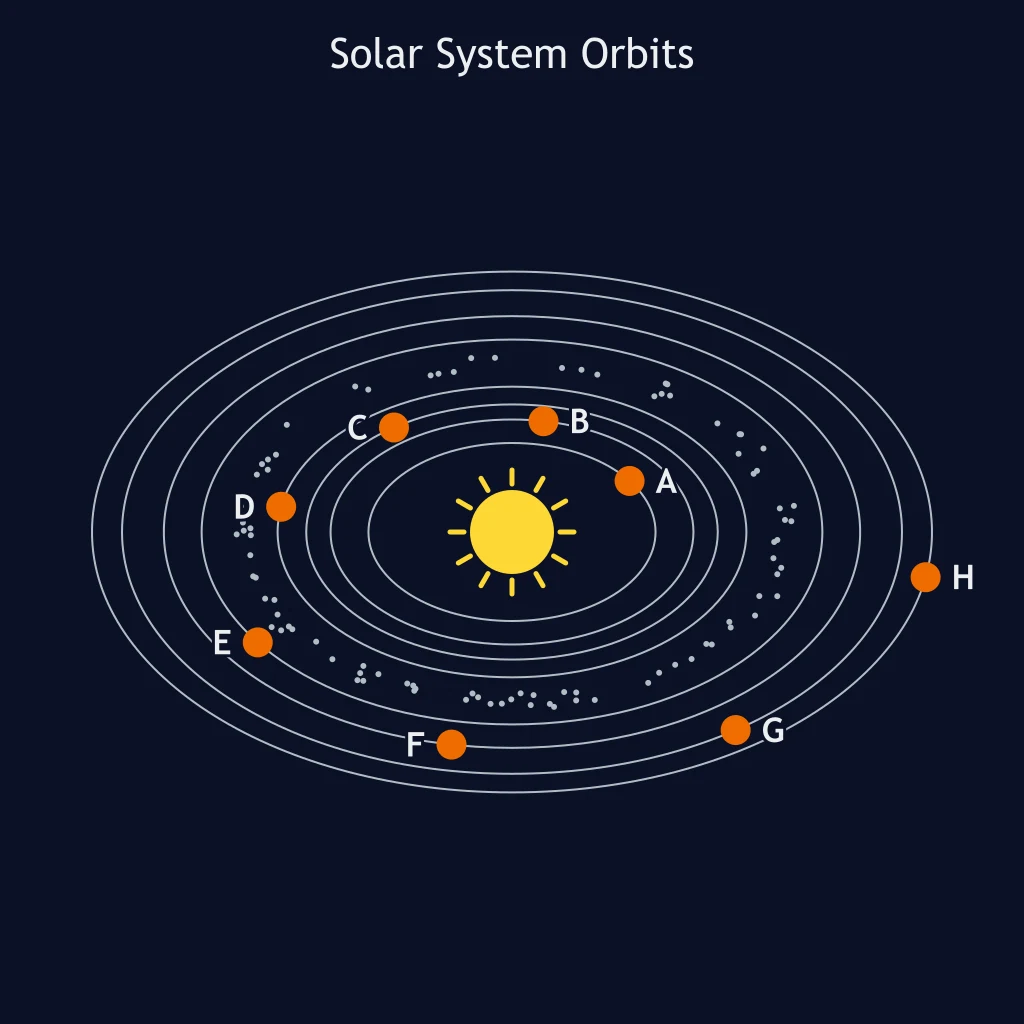
The orbit diagram shows the orbits of the eight planets. Which region does the band of small bodies drawn on it represent?
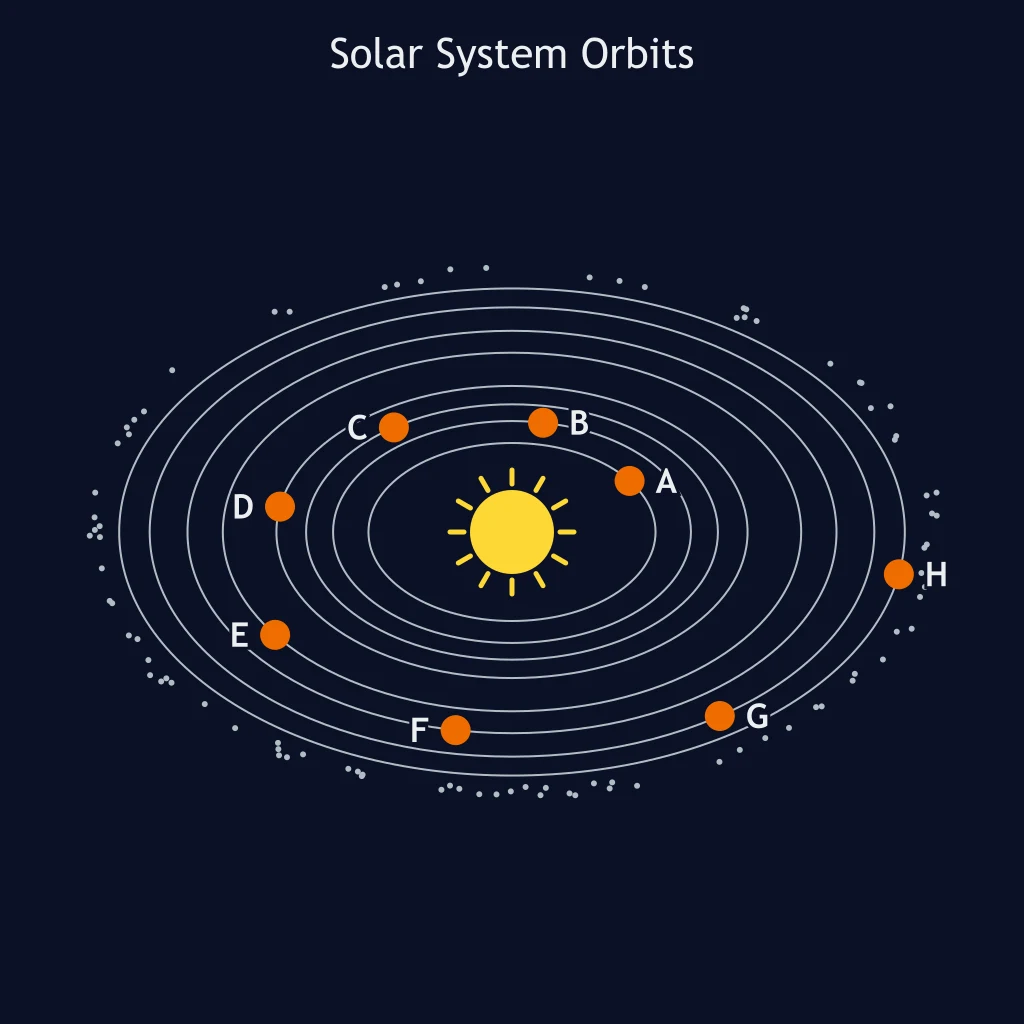
In the orbit diagram, planet C is the third orbit outward from the Sun. Which planet is C?
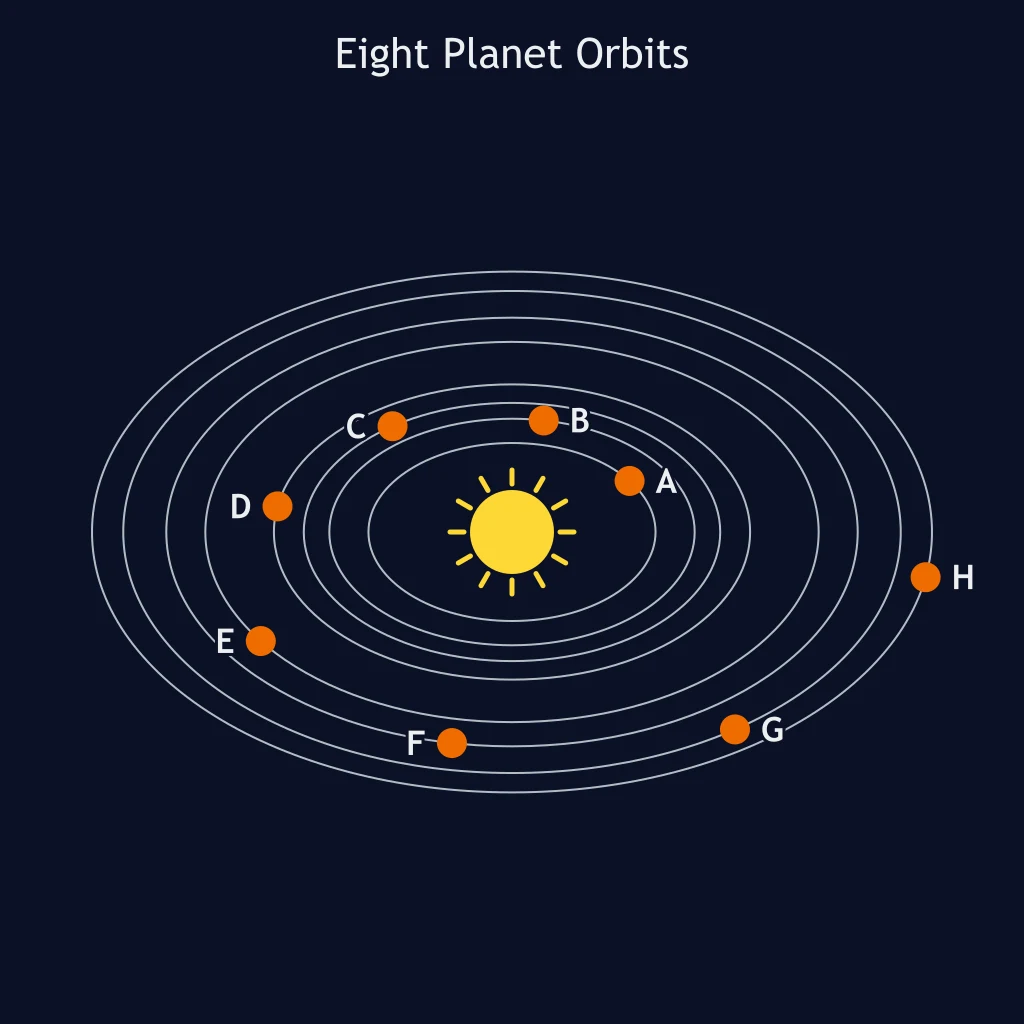
The diagram shows the first four planet orbits labeled A-D. Which group do A-D represent?
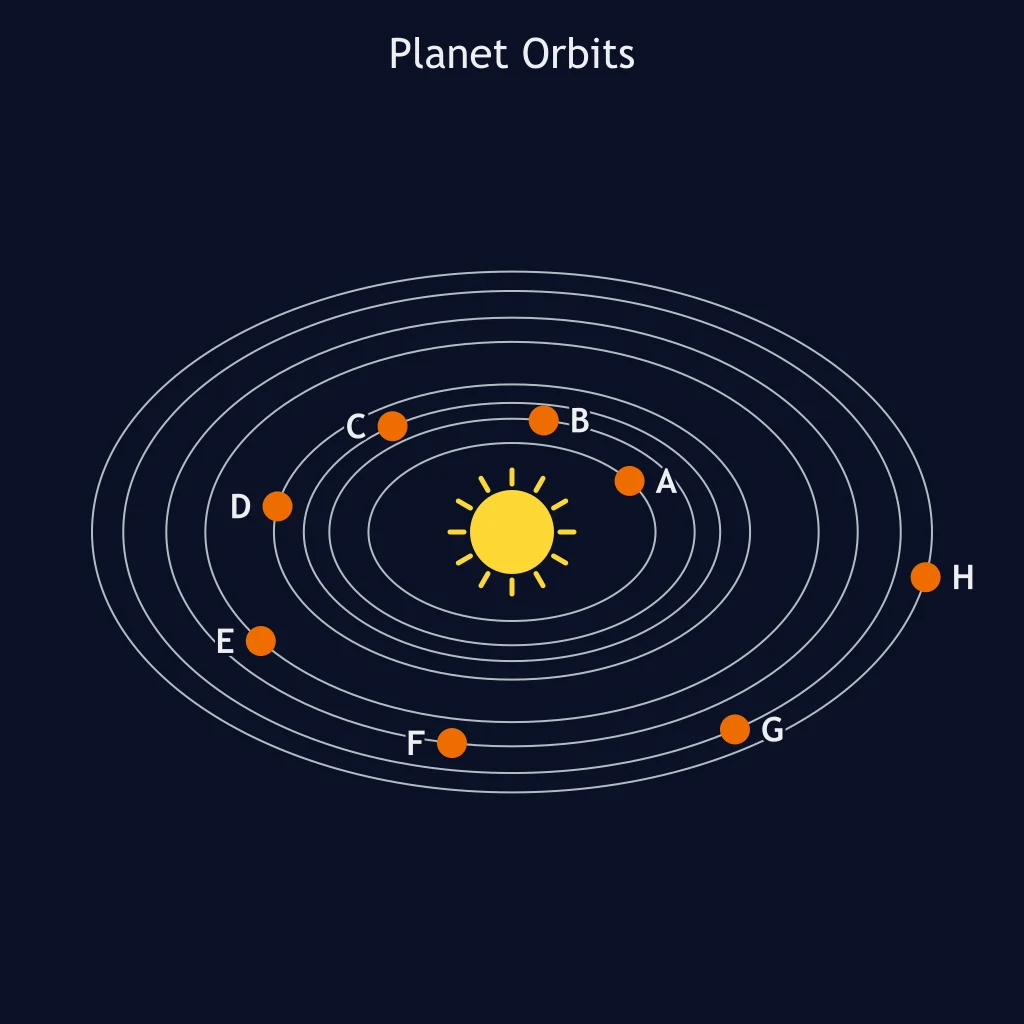
On the diagram, planet E is on the first orbit outside the band of small bodies. Which planet is E?
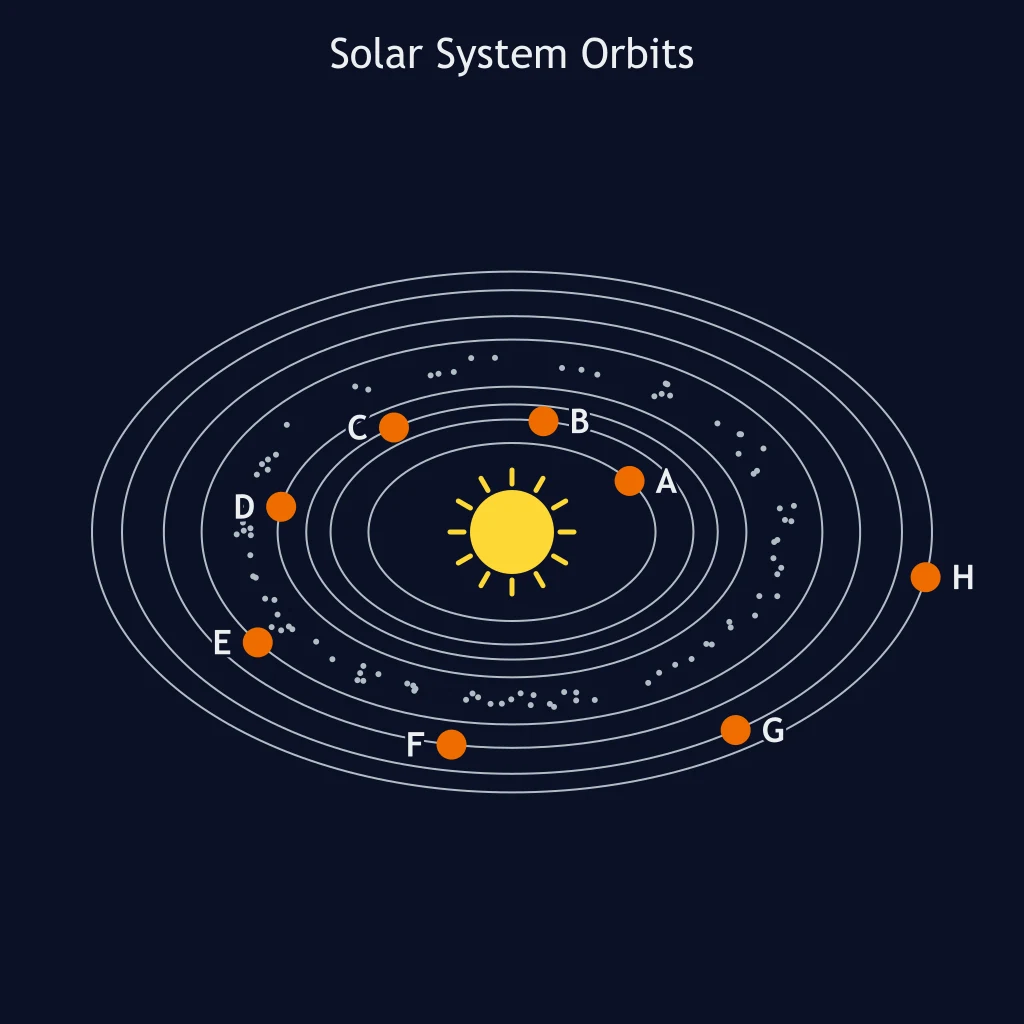
A distant spherical shell of icy bodies surrounds the flat planetary orbits and the Kuiper Belt. Which region is this shell?
Use the orbit diagram's dimensions. Which term best describes the path of object P?
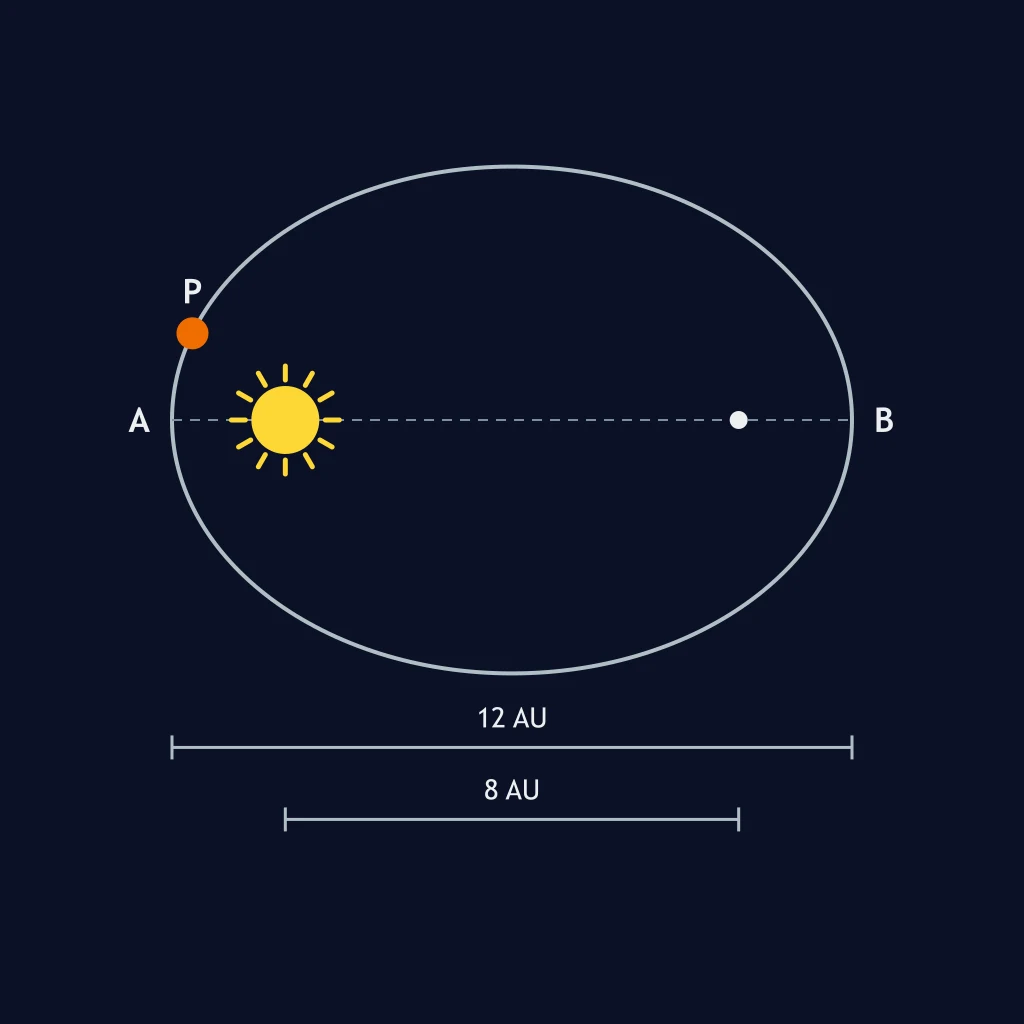
Use the data table. What classification fits planet P?
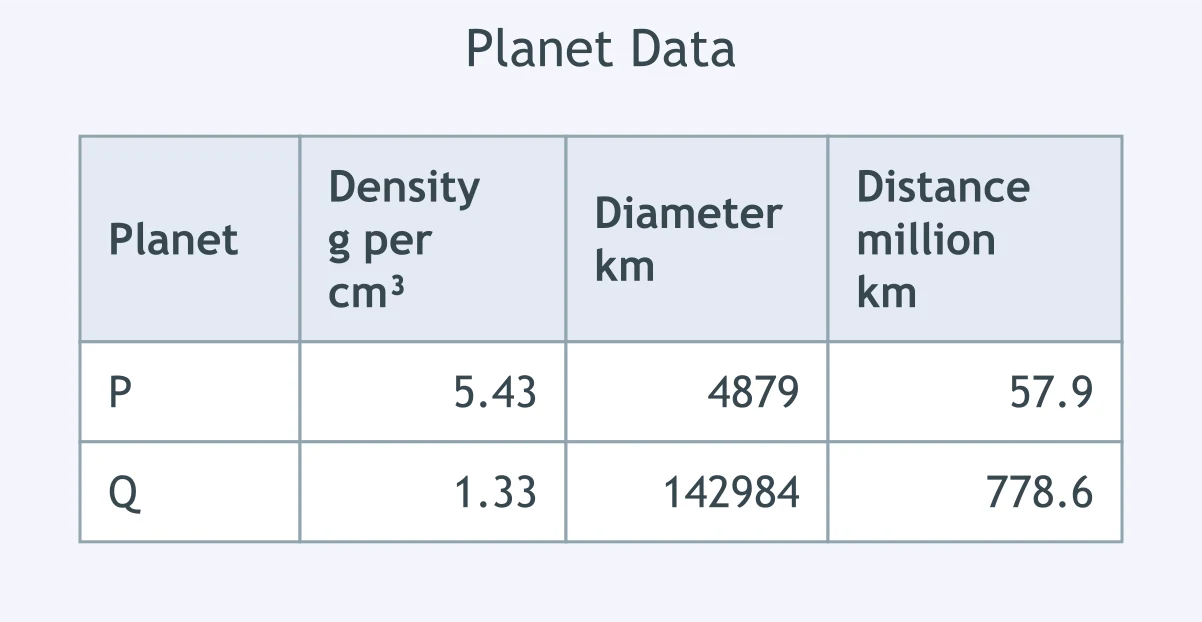
Use the table comparing planets Q and R. What does Q's data indicate?
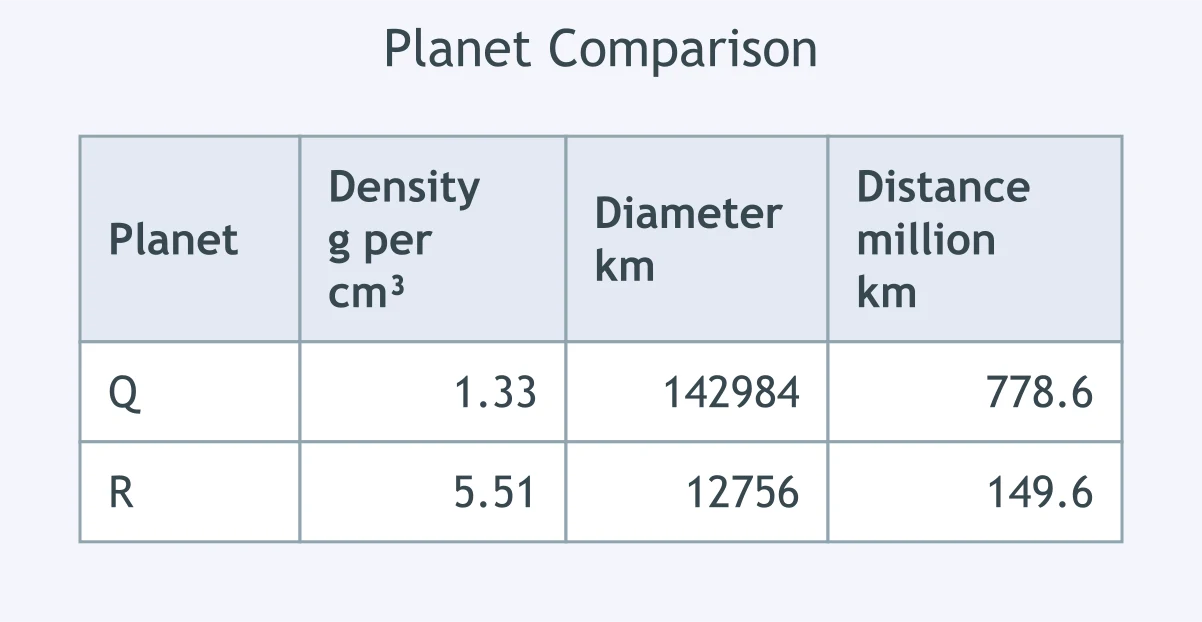
Use the data table. Which classification matches planet S?
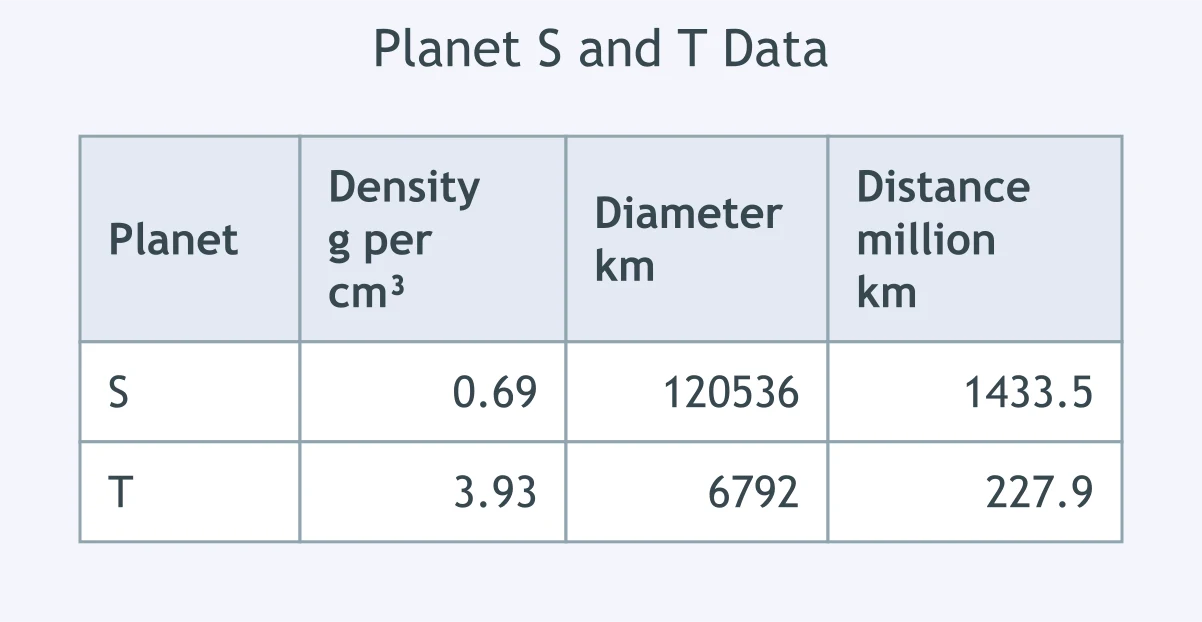
In the table, which listed planet is most clearly terrestrial?
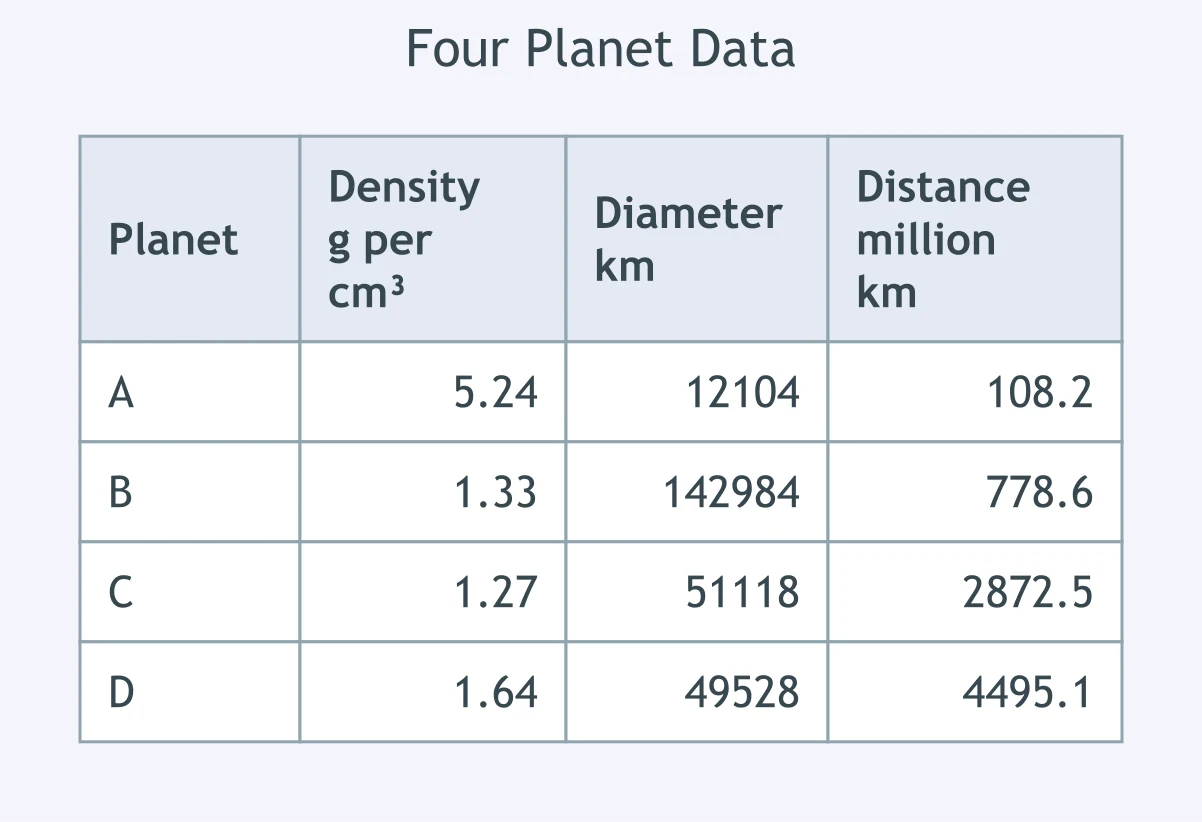
Use the table. Which pair of listed planets belongs to the terrestrial group?
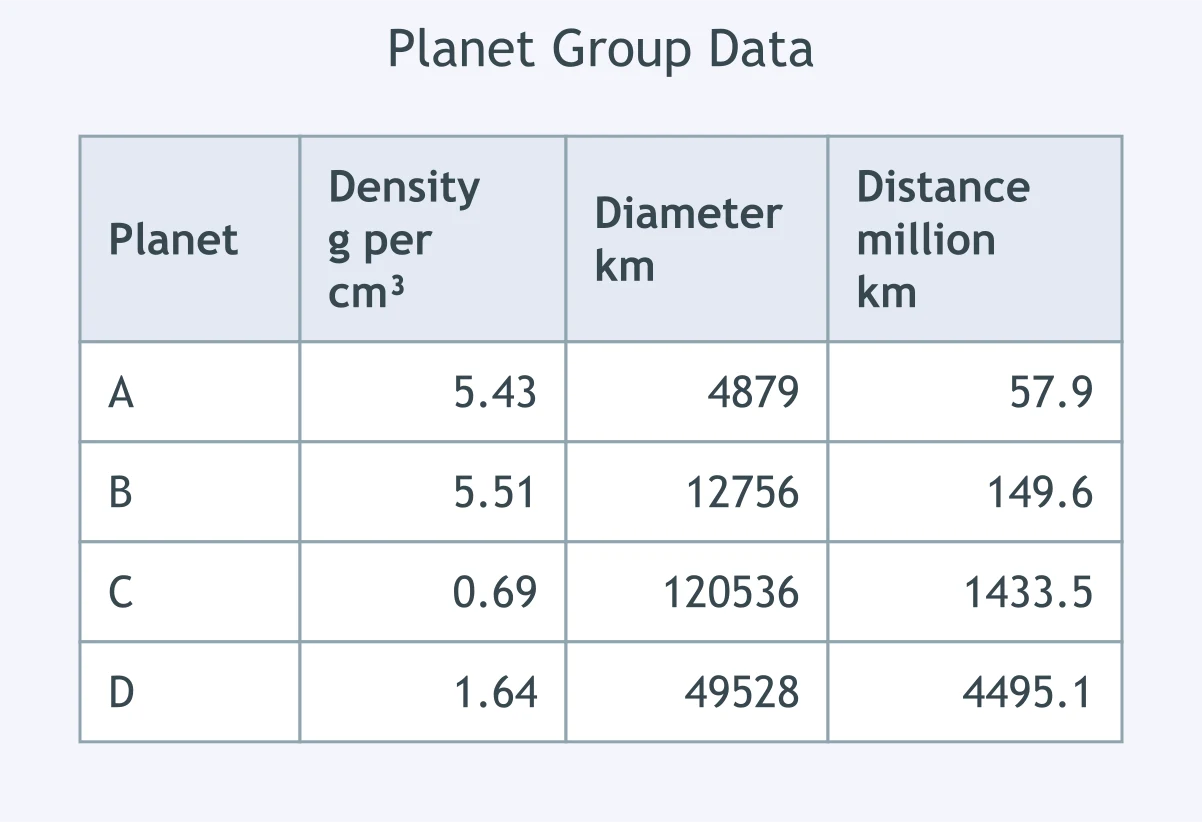
Use the table. Which group fits planet N?
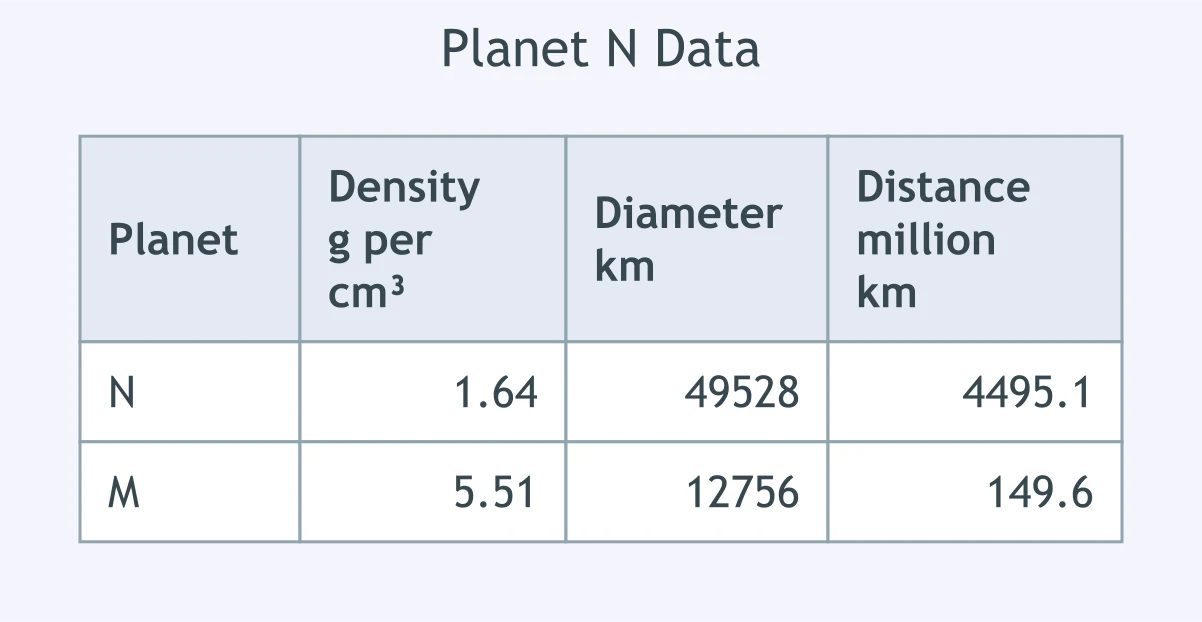
Nearly all planets orbit the Sun in the same direction and nearly the same plane. Which formation idea does that pattern support?
Why does the rocky-inner and gas/ice-outer pattern support formation in a solar nebula with a hot young Sun?
Meteorites contain primitive rocky material left from early planet formation. Why are they useful evidence?
Young stars are often observed with flattened disks of gas and dust. Why does that observation matter for the solar system?
In a forming disk, dust grains collide, stick, and grow into planetesimals. Which process is being described?
Use the table. How does Mars's orbit compare with Earth's?
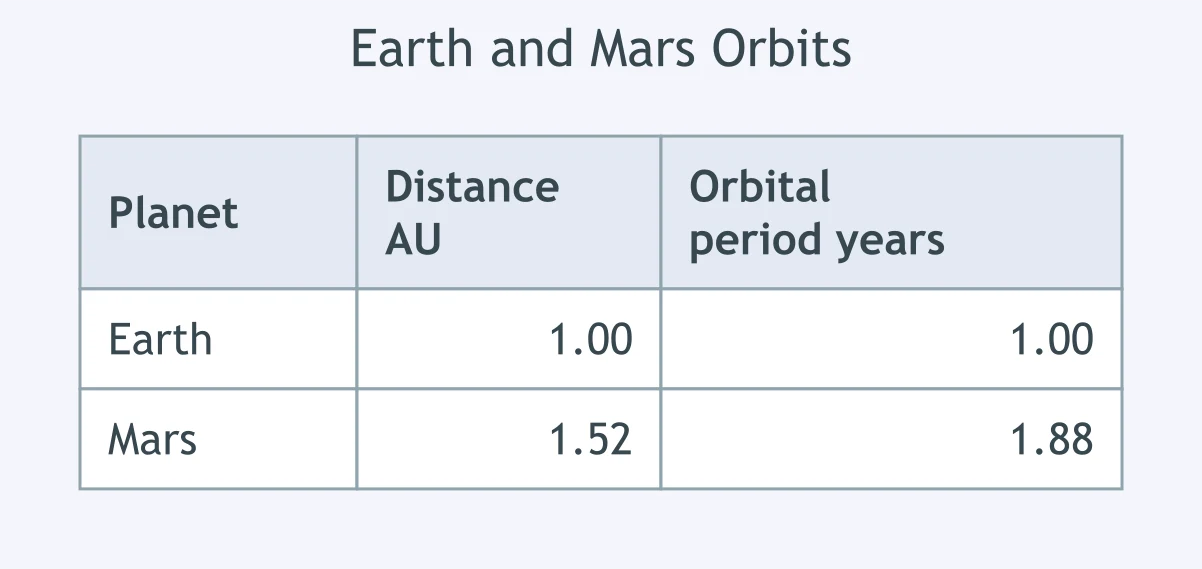
Jupiter orbits at 5.20 AU with an 11.86-year period, while Saturn orbits at 9.58 AU with a 29.45-year period. What pattern does this show?
Use the table of four planets. Which planet has the longest orbital period?
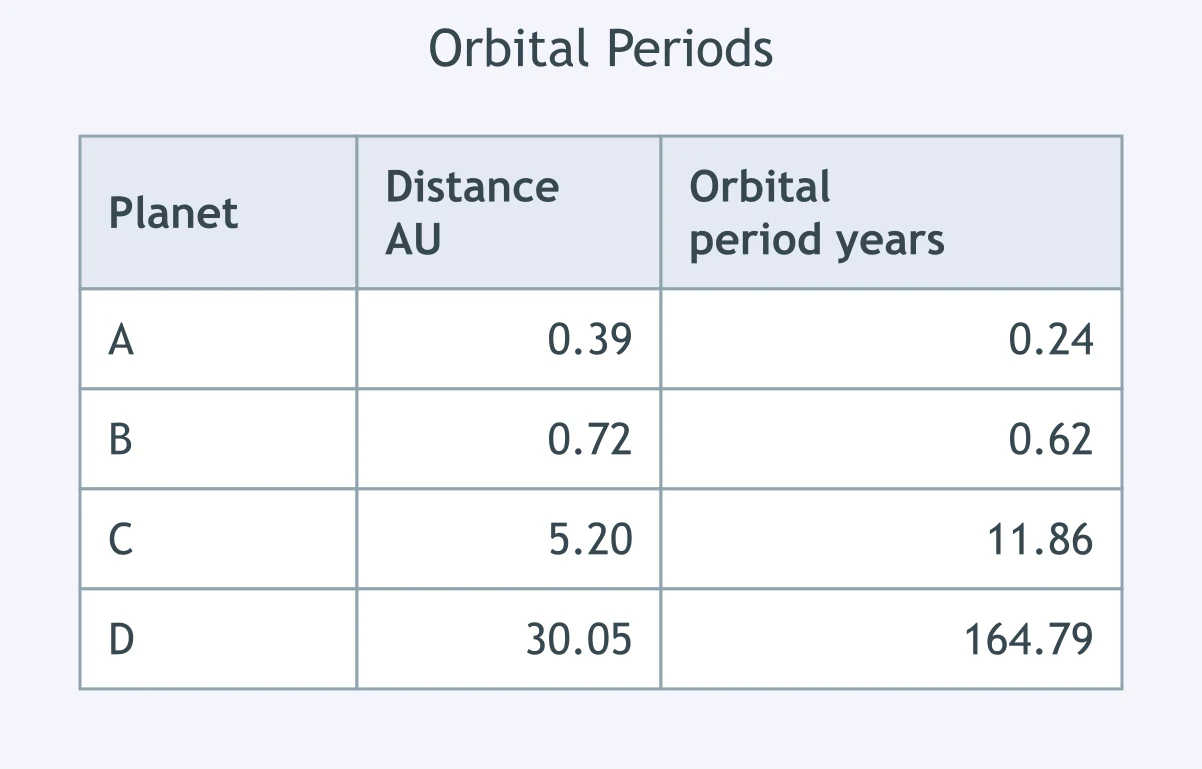
Mars's orbital period is 1.881 years and Mercury's is 0.2408 years. What is to one decimal place?
The Sun contains about 99.8% of the solar system's mass. What does this explain about planet motion?
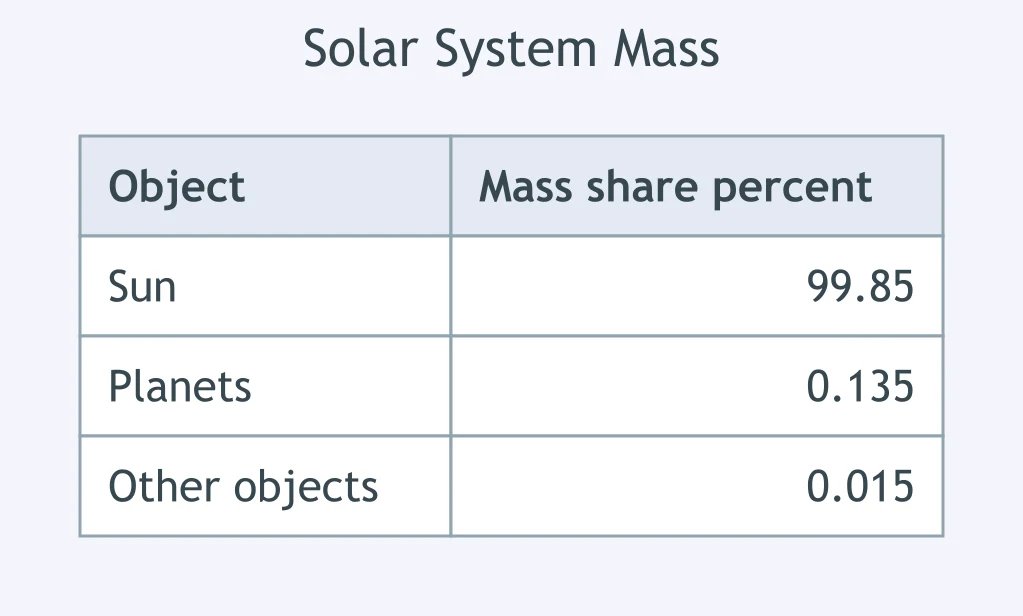
A student builds a 1,000-gram mass model of the solar system, giving each object its true share of the total mass. About how many grams should the Sun get?
Use the mass-share table. Which statement best follows from the data?
Crack the passcode before the zombies get in.
Answer, then swat bugs for bonus points.
Race through questions at your own speed.
Same question on every screen. Fastest wins.

Pick a tile, answer, hit bonuses and steals.
40 questions