Loading
by BlastRoom
Practice reading Moon-phase diagrams, sequences, causes, and observing times.
#earth_space_science
50 questions
One question set, multiple game modes. Tap any game to see it in action. Not sure which to pick?
Answer to place stones and capture territory.
Outrun the snow together.
Earn blasts, then hunt the other team.
Answer to earn energy, then climb.

The class blasts through walls together.
Bid on mystery lots. Most money wins.
Sell tours. Nice, standard, or a total scam.

Answer, restock, and serve the rush.
More correct answers pulls the rope your way.
Answer, then shoot down the alien wave.
Answer, then tap to leap the frozen ridge.
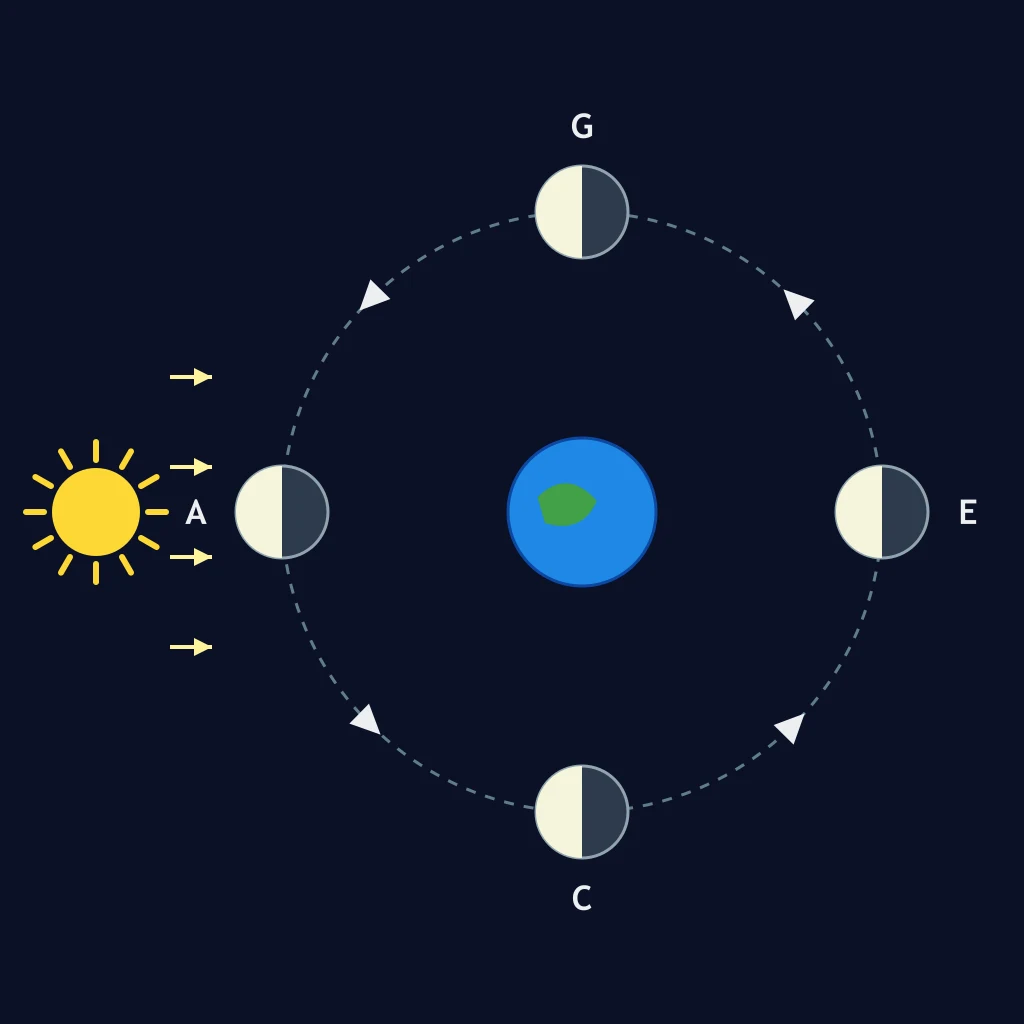
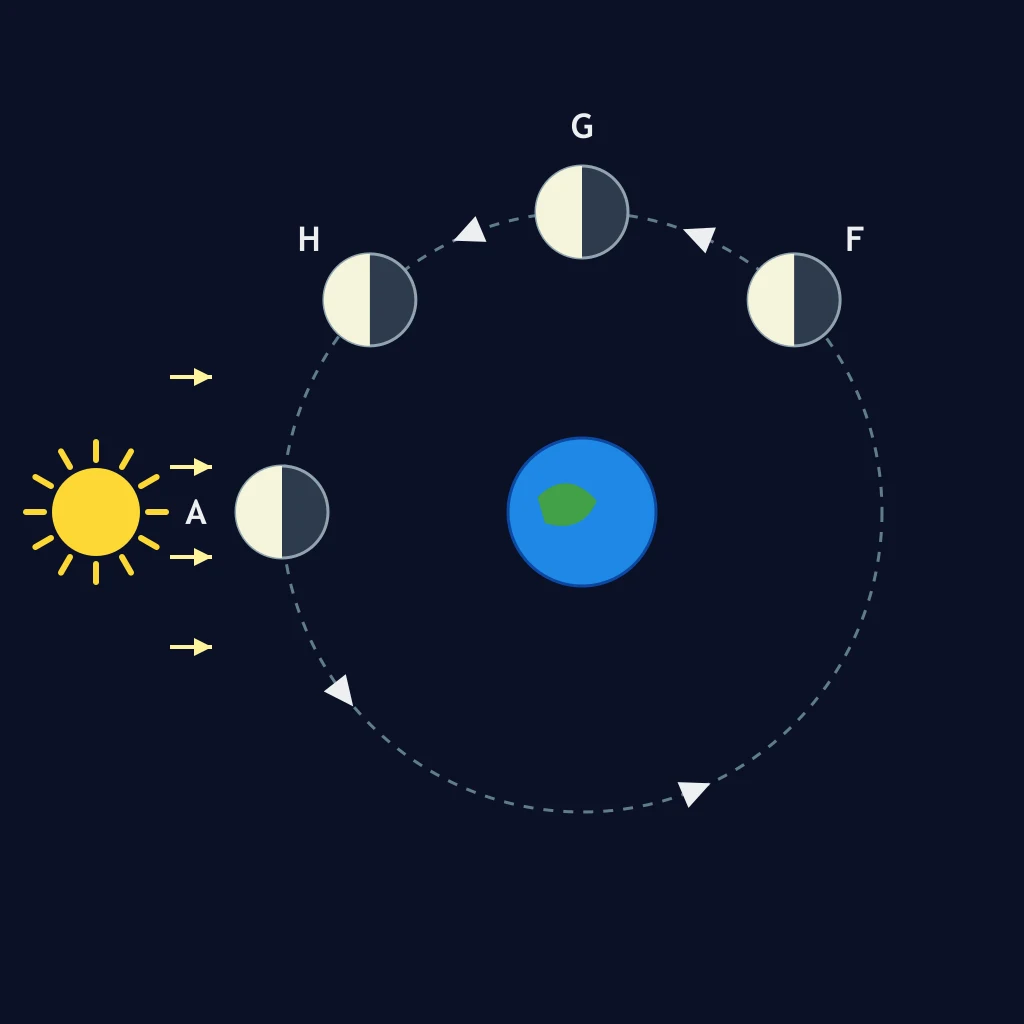
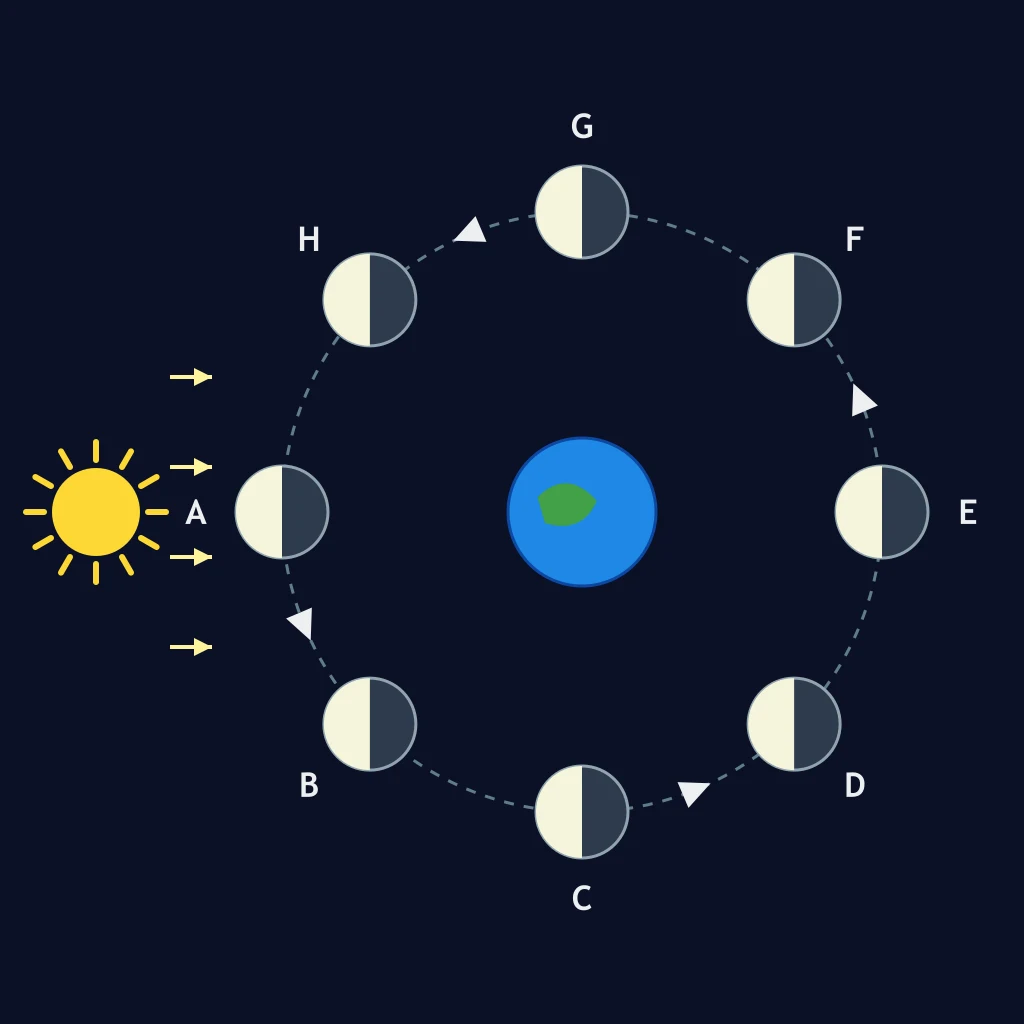
In the overhead Sun-Earth-Moon model, the Moon is at letter A. Which phase would observers on Earth see?
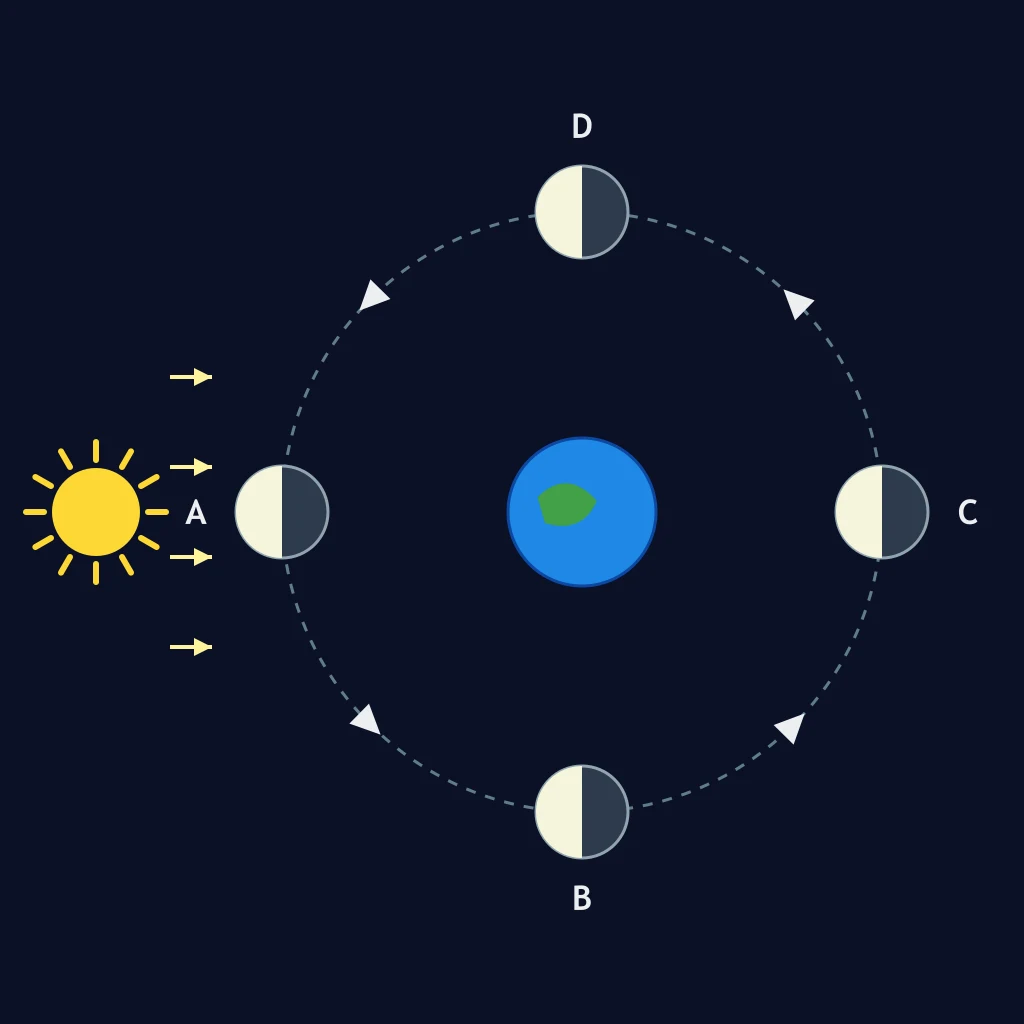
In the overhead model, the Moon is at letter B. Which phase is seen from Earth?
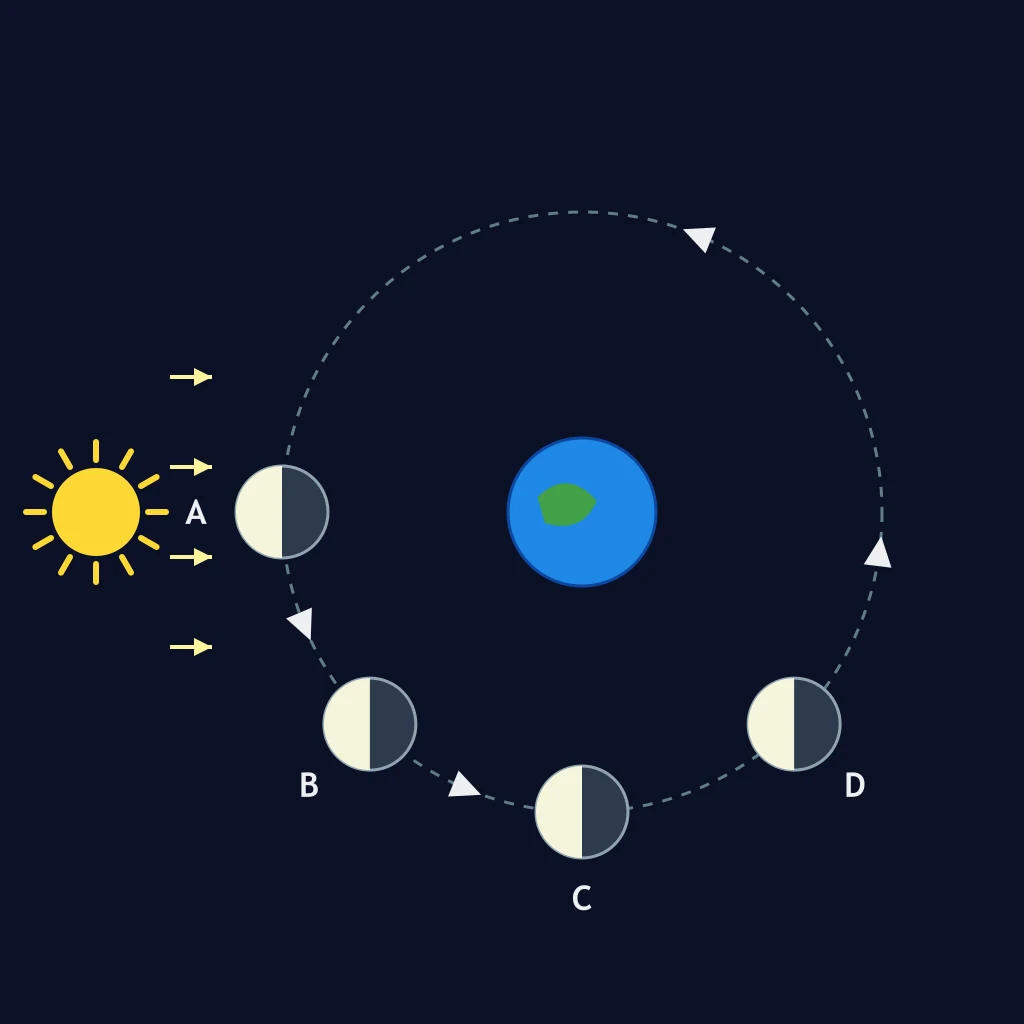
Read the overhead orbital model and identify the Moon phase at letter C.
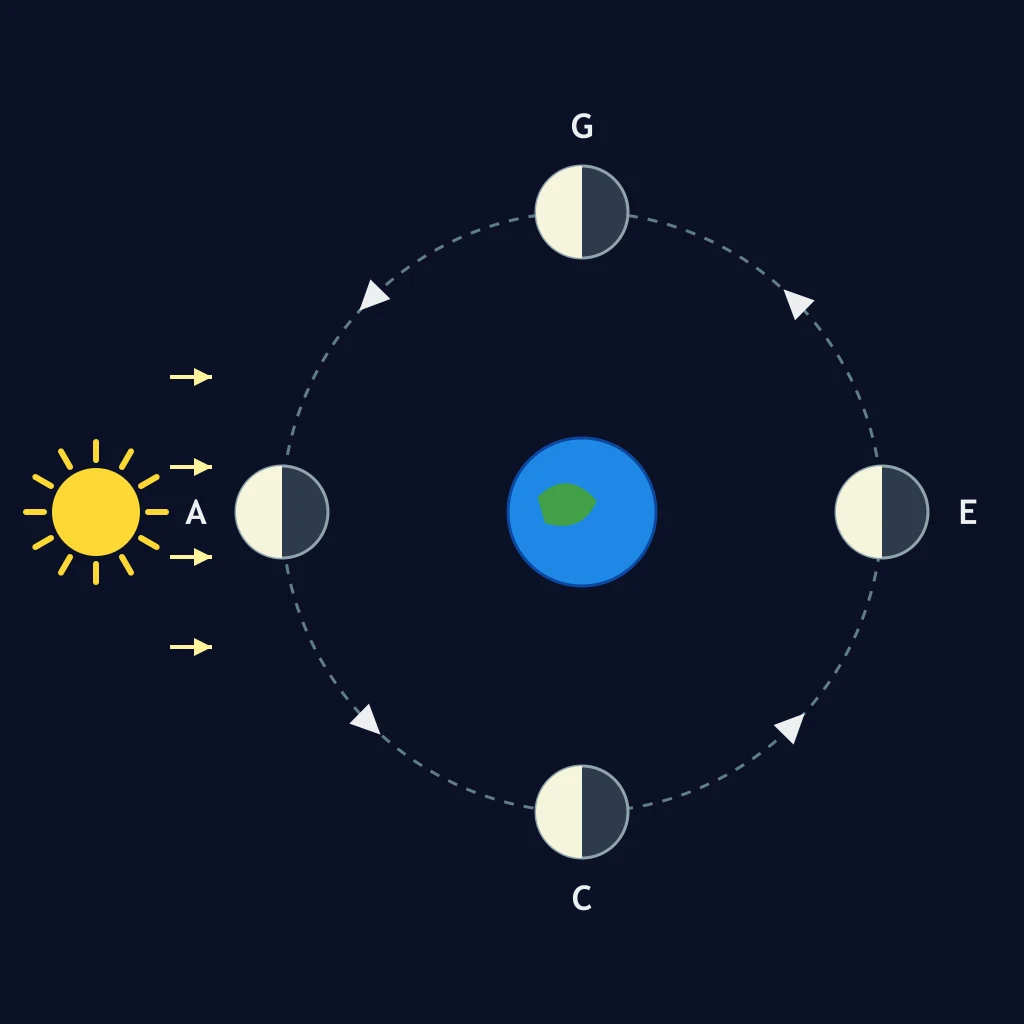
In the overhead model, the Moon is at letter D. What phase is visible from Earth?
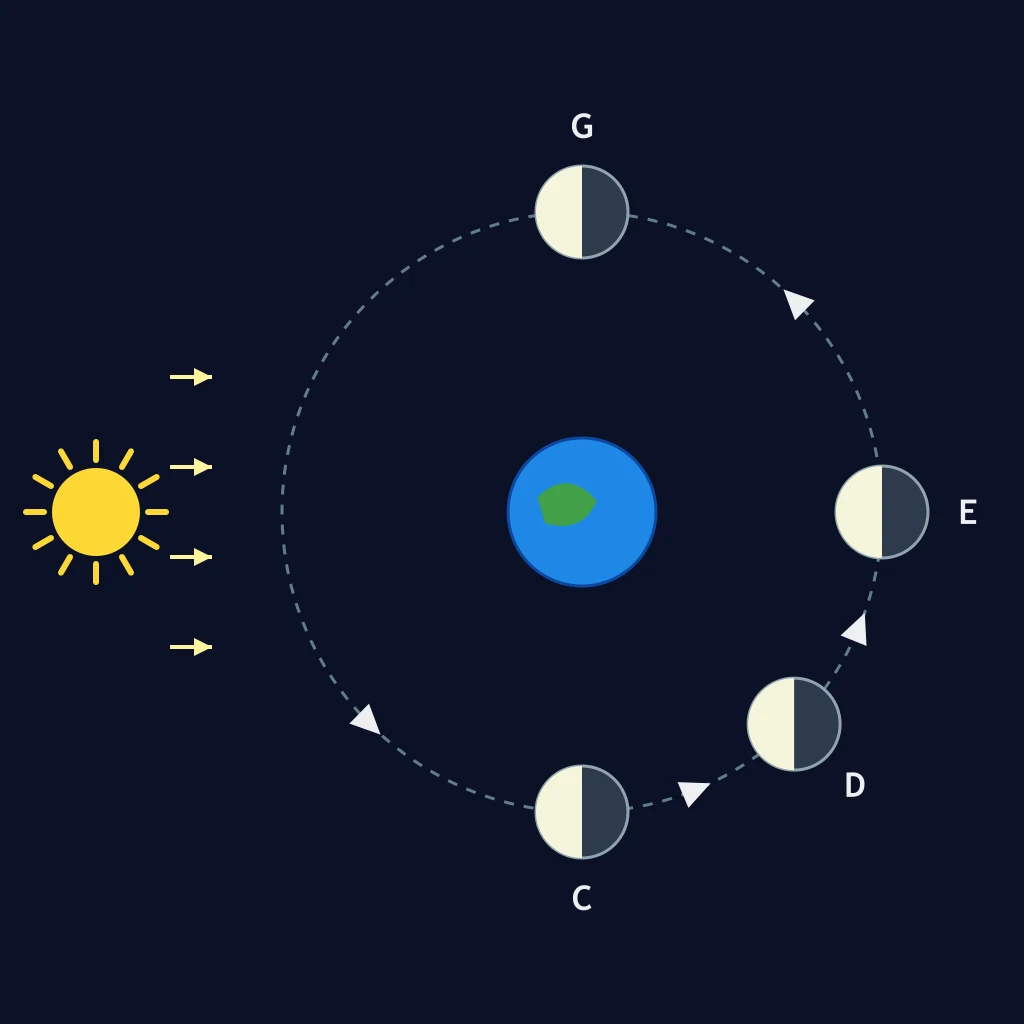
In the overhead model, the Moon is at letter E. Which phase do observers on Earth see?
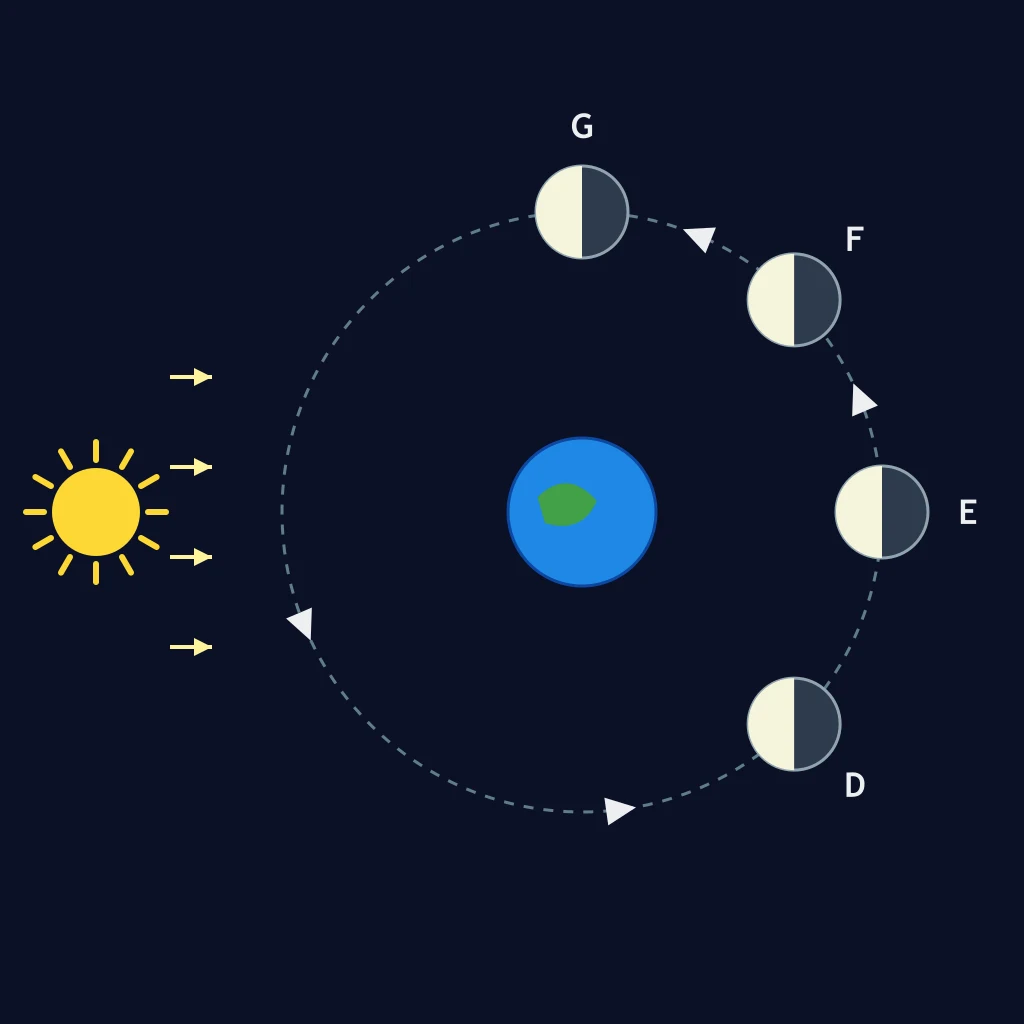
In the overhead orbit diagram, which phase is shown at letter F?
Use the overhead model to identify the phase at letter G.
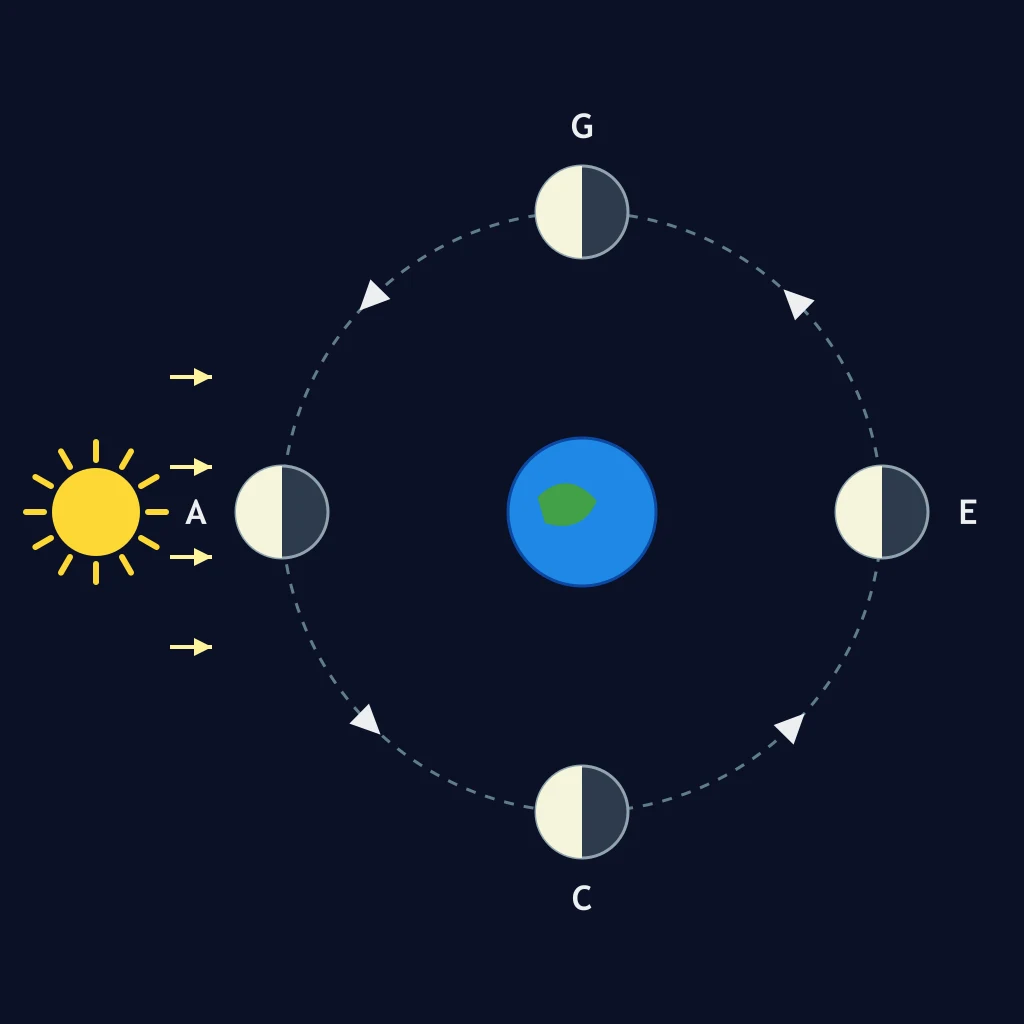
In the overhead model, which phase is visible when the Moon is at letter H?
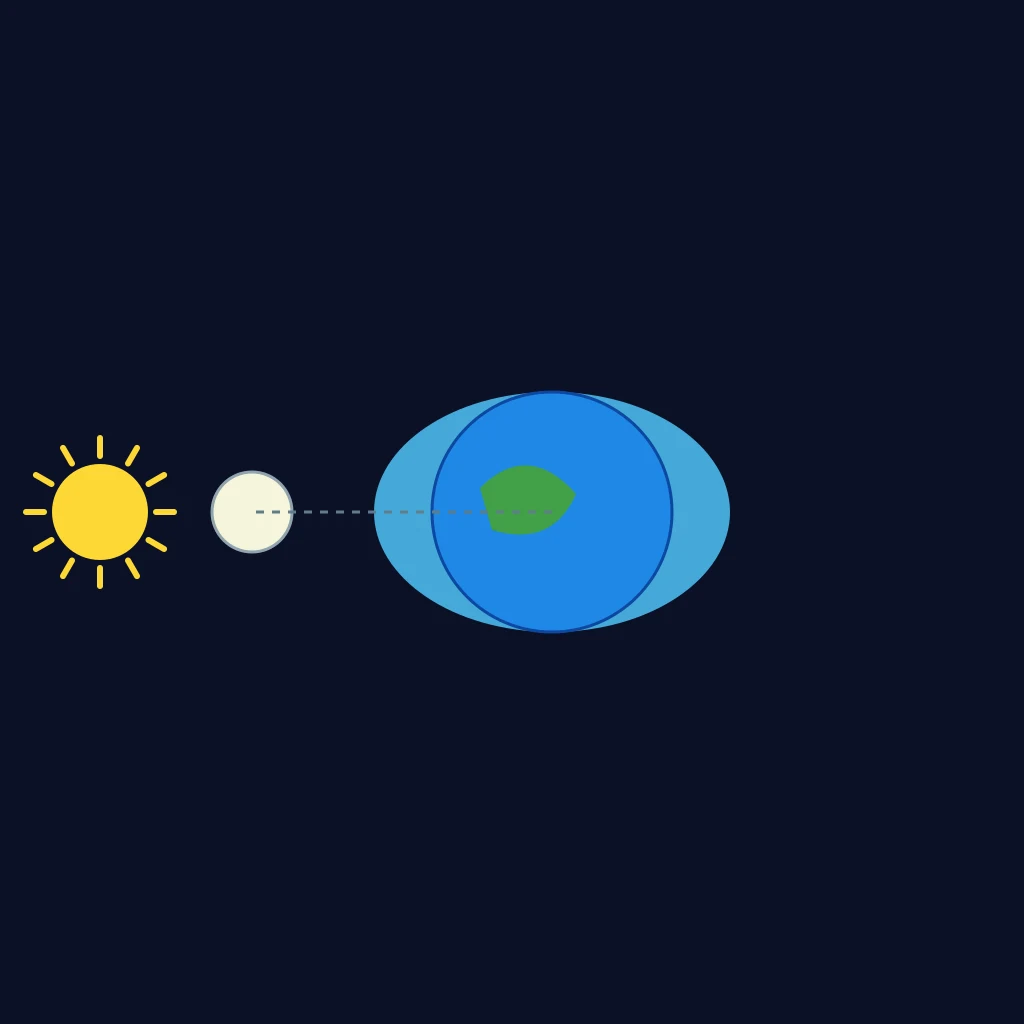
Use the figure of the Sun, Earth, and Moon. Which type of tide does this alignment produce?
Read the overhead Sun-Earth-Moon diagram. At letter C, what phase would be seen from Earth?
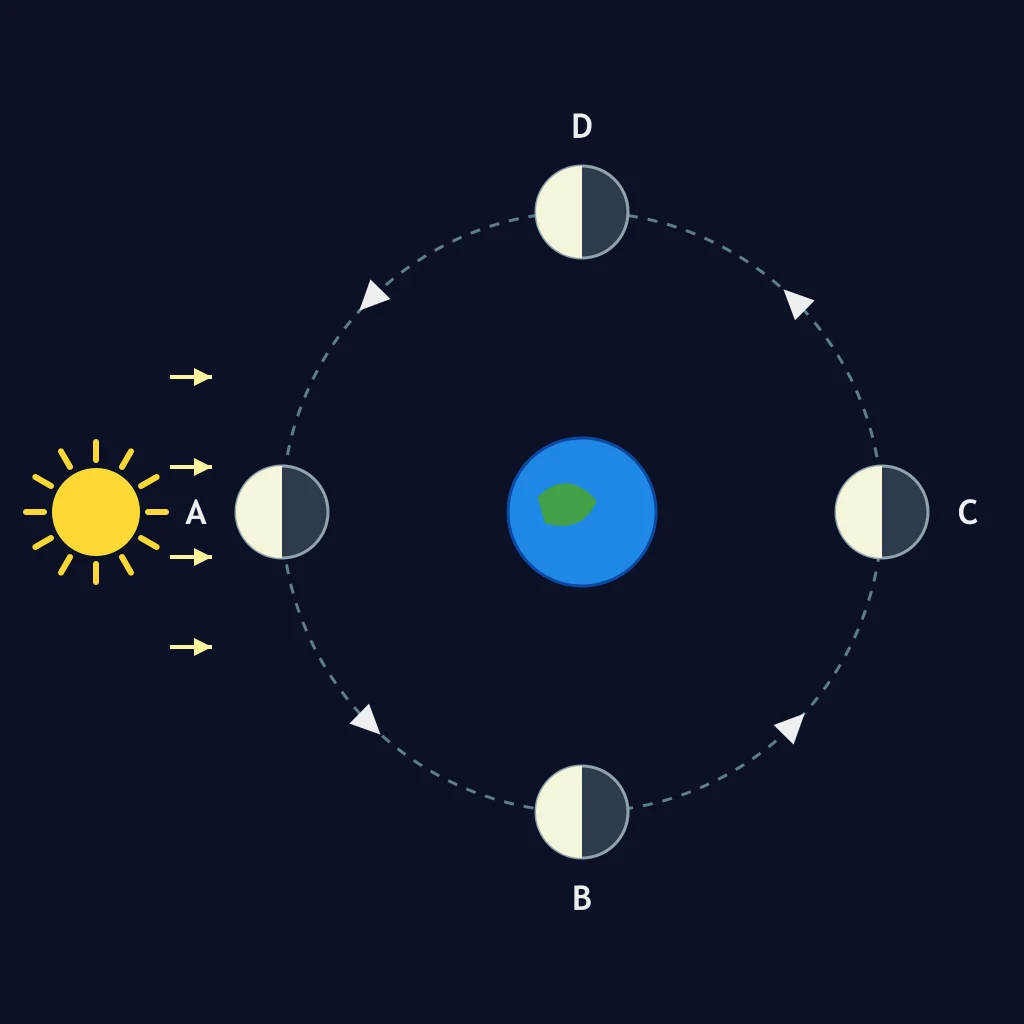
In this orbital model, which phase is visible when the Moon is at letter B?
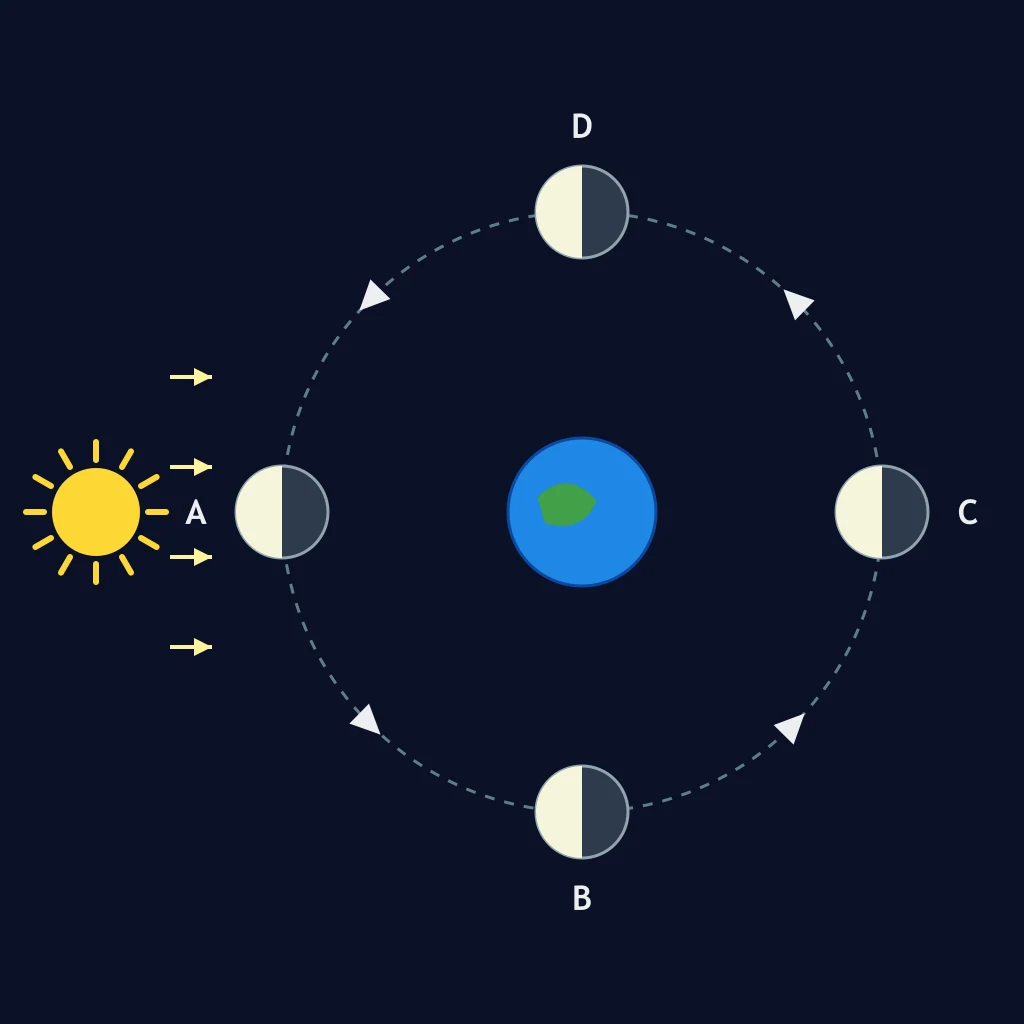
In the overhead diagram, what phase is shown when the Moon is at letter D?
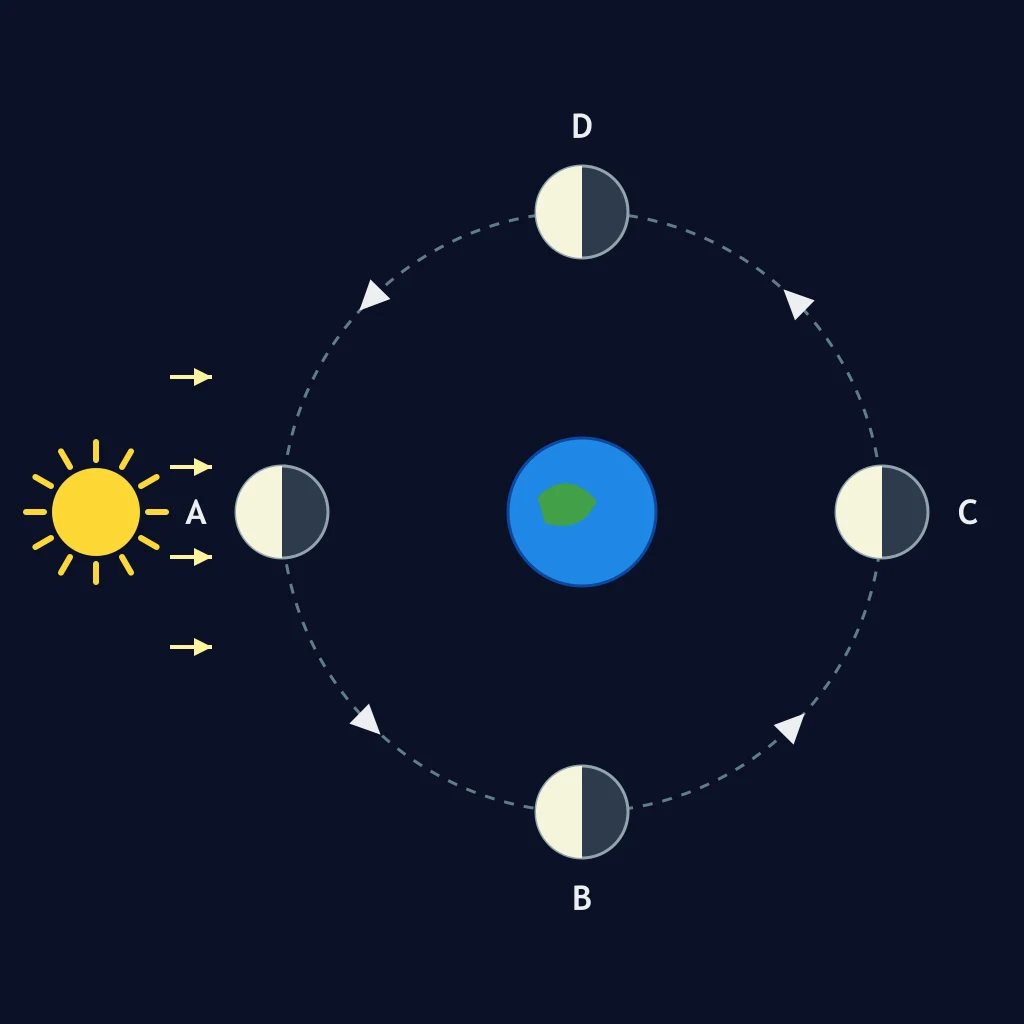
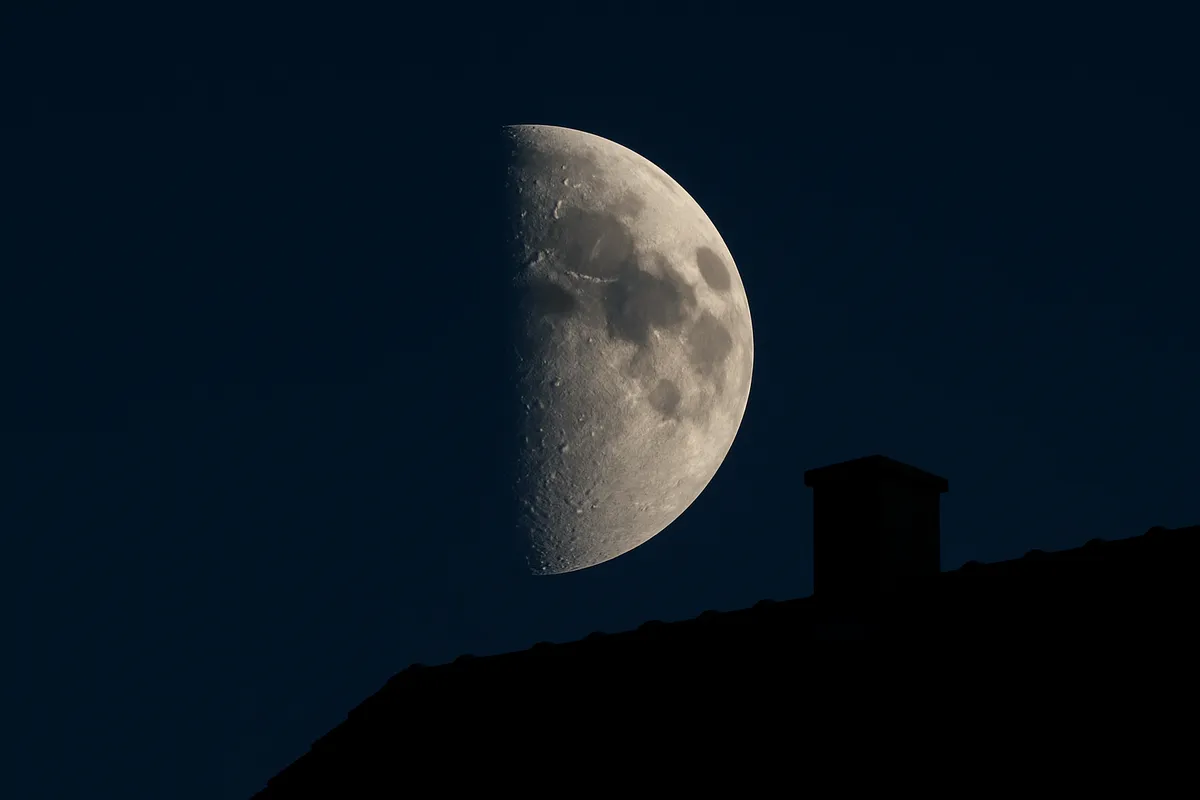
From a U.S. location, read the Earth-view Moon disc. Which phase is shown?

The Earth-view disc shows the Moon as seen from a U.S. location. Which phase is shown?
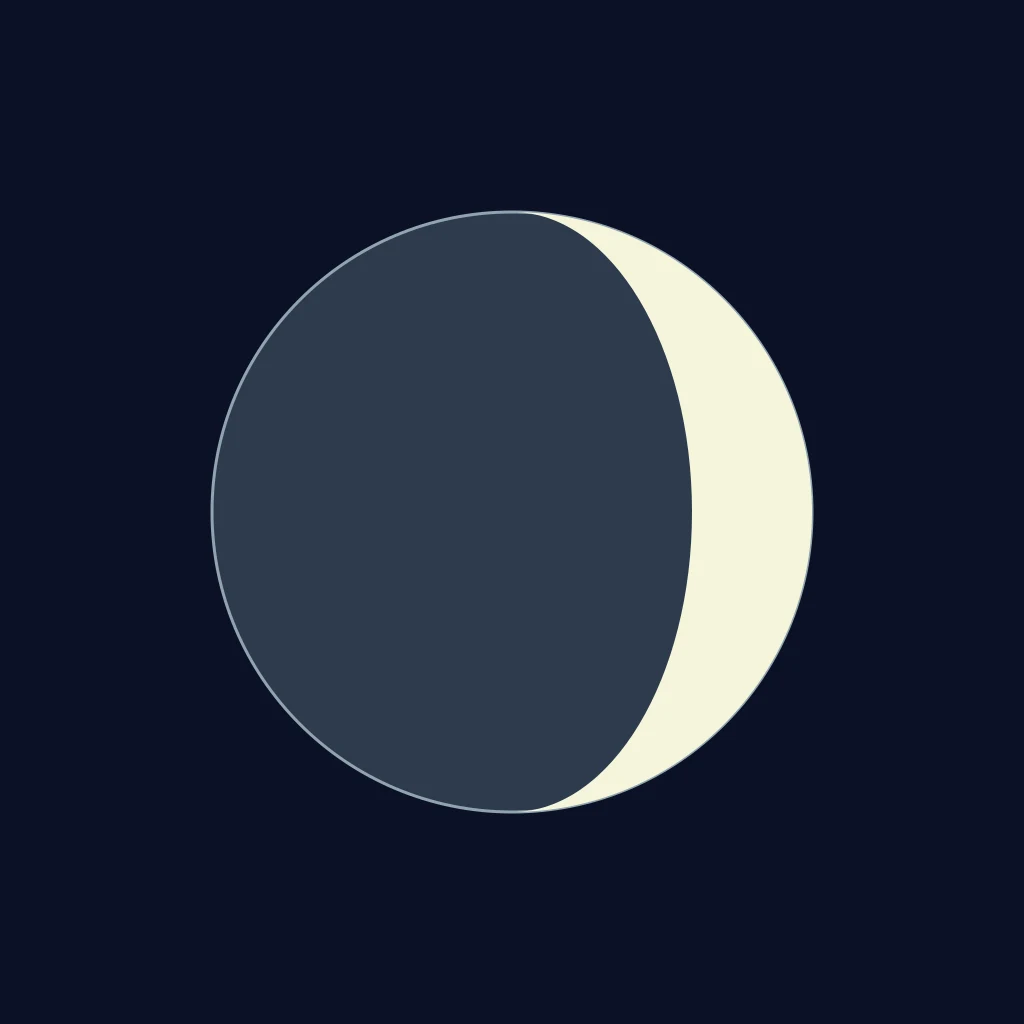
Look at the Earth-view Moon disc. What phase does it show?

Read the Earth-view disc from a U.S. sky view. Which phase is represented?

The Earth-view disc shows the Moon as seen from a U.S. location. Which phase is shown?

Read the Earth-view Moon disc. Which phase is shown?

From a U.S. location, identify the phase shown by the Earth-view disc.
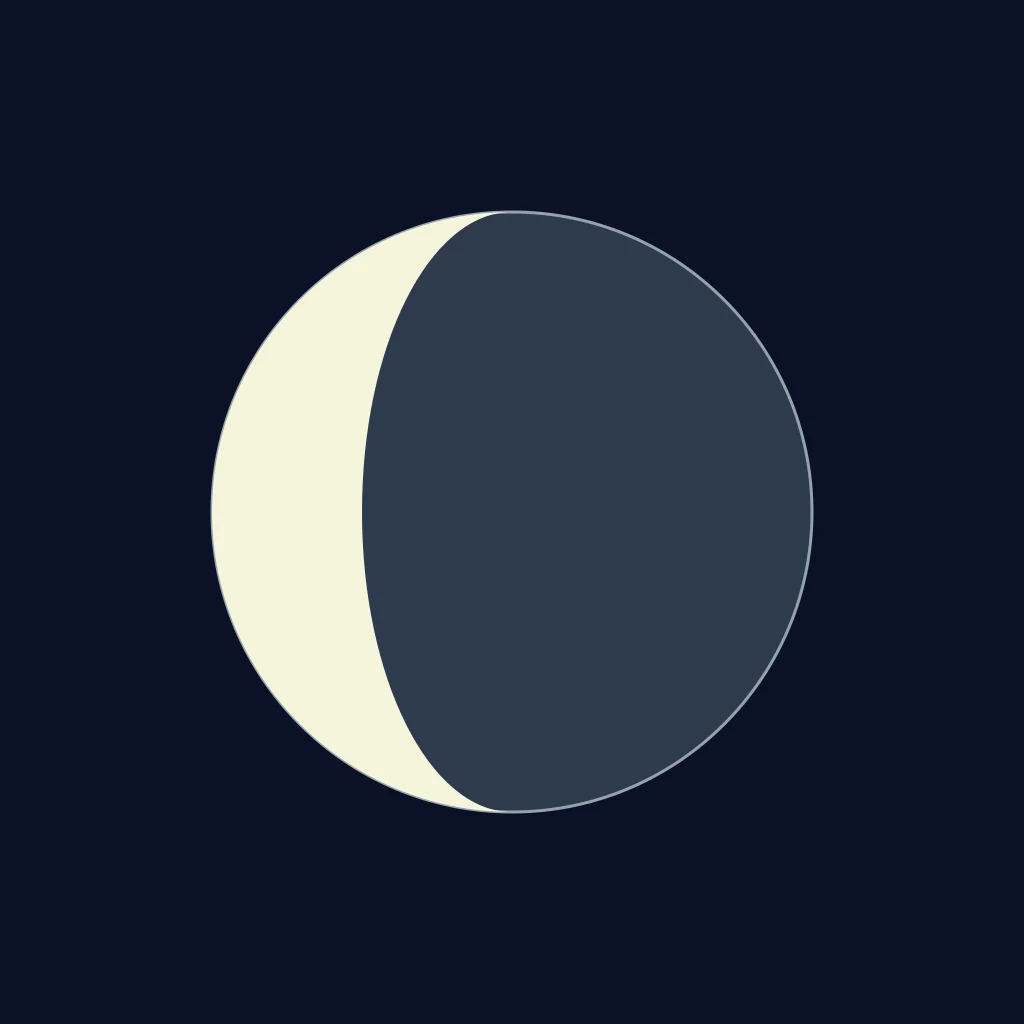
The Earth-view disc shows the Moon as seen from a U.S. location. Which phase is shown?

Use the Earth-view disc to name the Moon phase shown.

From a U.S. location, read the Earth-view disc. Which phase is shown?
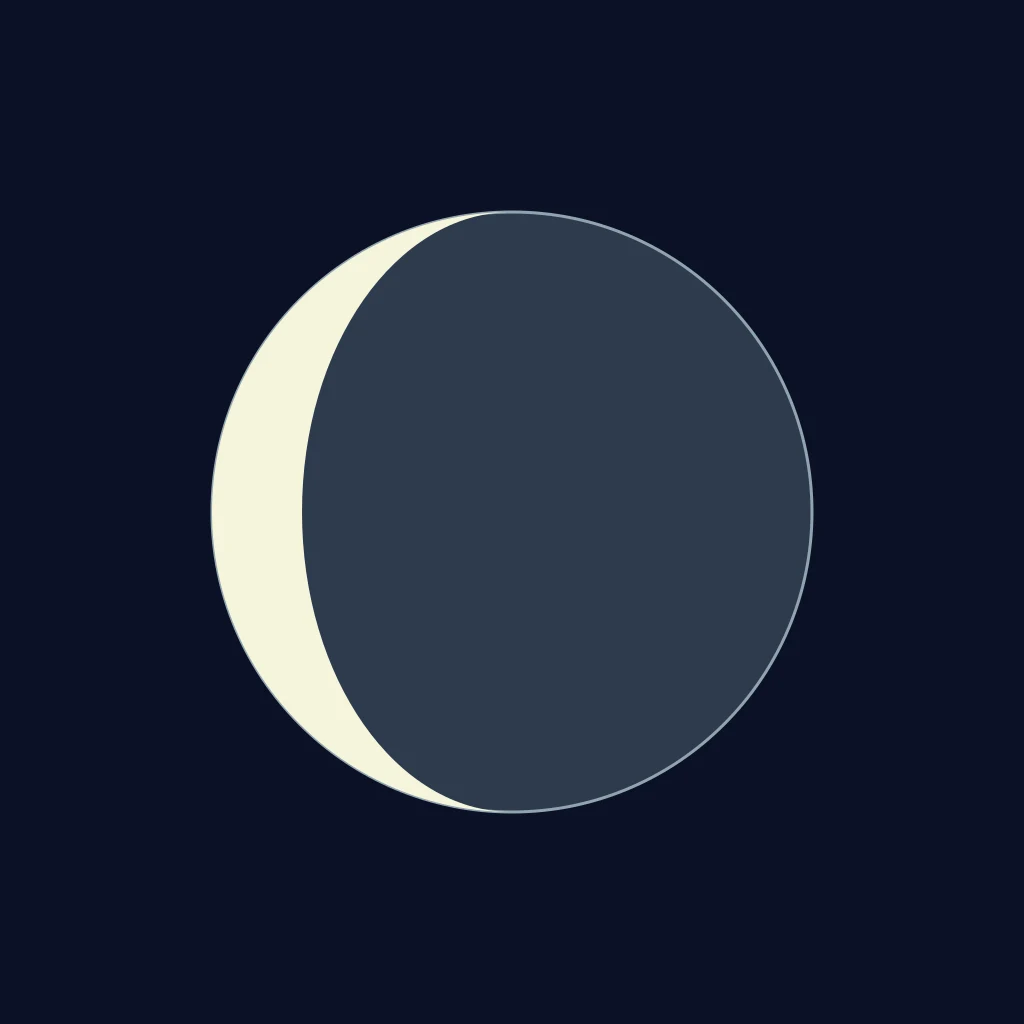
Starting from the phase shown, which phase will be seen about seven nights later?

The figure shows tonight's Moon. About seven nights from now, which phase comes next?

Use the disc sketch for tonight. About seven nights later, what phase should the student expect?

The model shows tonight's Moon at letter A. About 14 to 15 nights later, which phase should be visible?
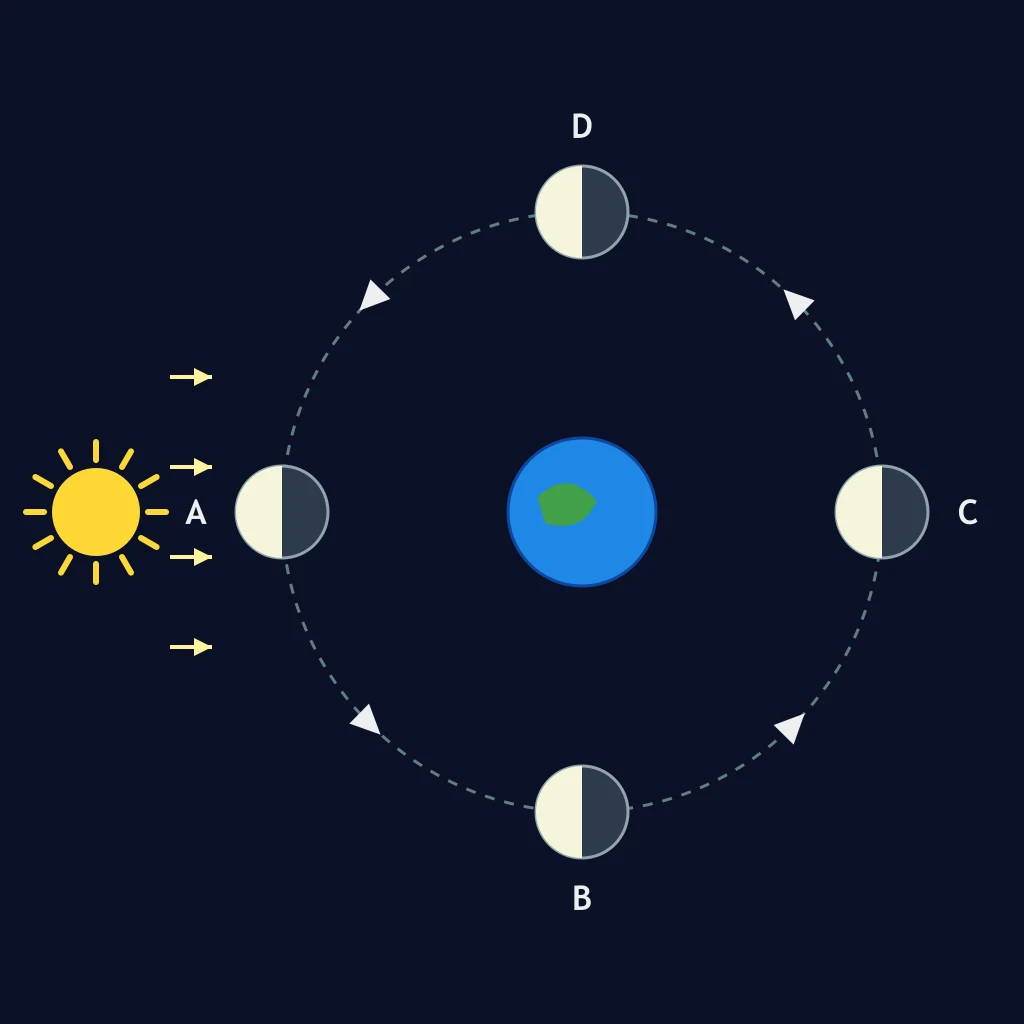
Starting with the phase shown in the disc, which phase should be visible about seven nights later?

The disc shows tonight's Moon from a U.S. location. About three to four nights later, which phase is most likely?

The disc shows tonight's Moon. About three to four nights later, which phase should follow?

Starting from the phase shown, what phase is expected about one week later?

Compare the two Moon discs sketched three nights apart from left to right. What trend is shown?
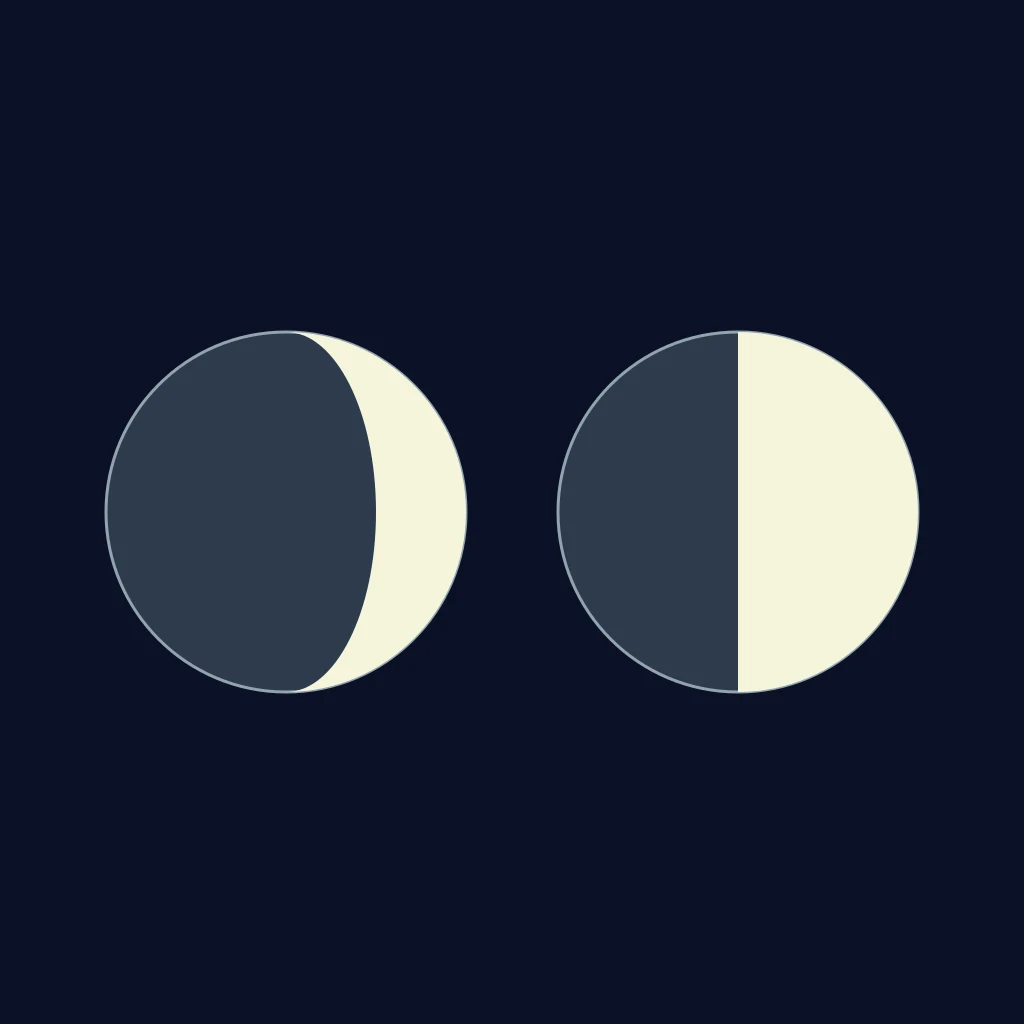
The two Earth-view sketches are in time order from left to right. What is happening to the Moon's phase?
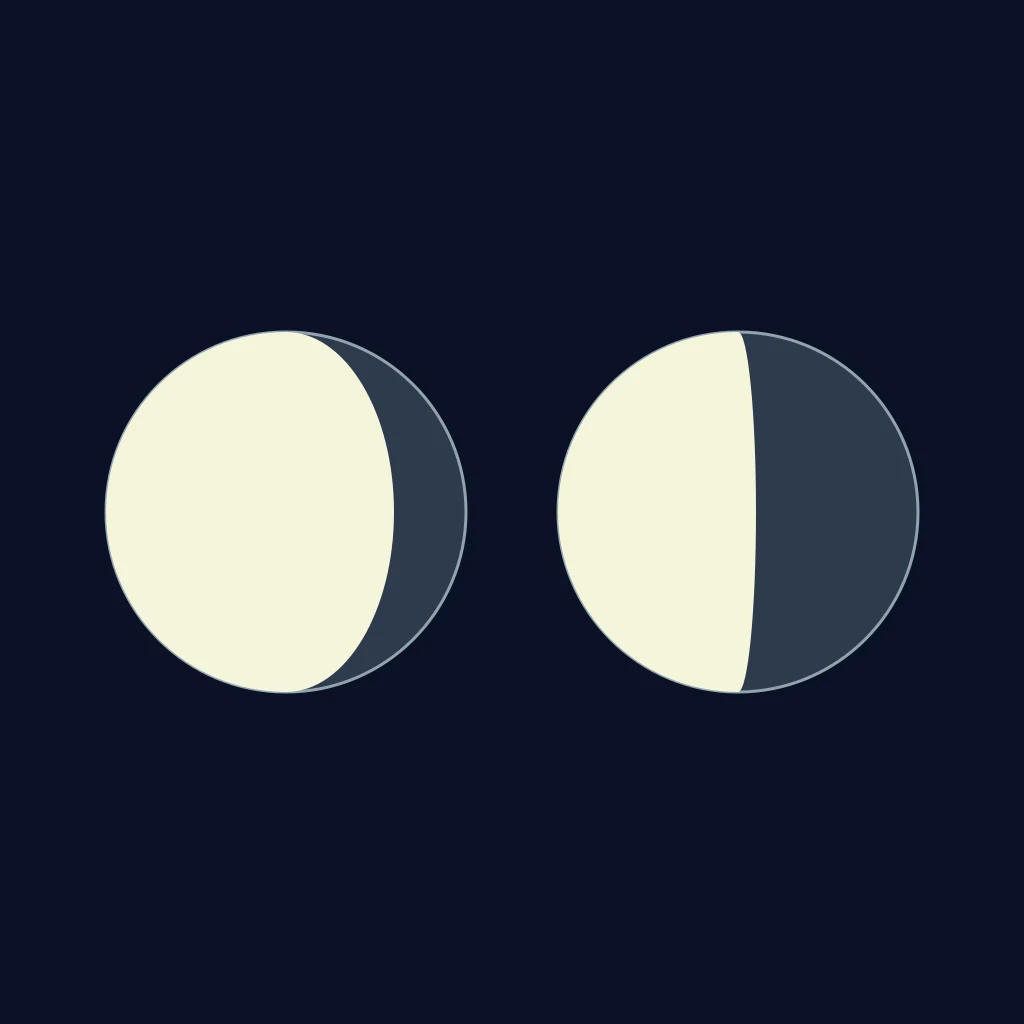
A student drew the two discs in order on nights several days apart. Which description fits the change?
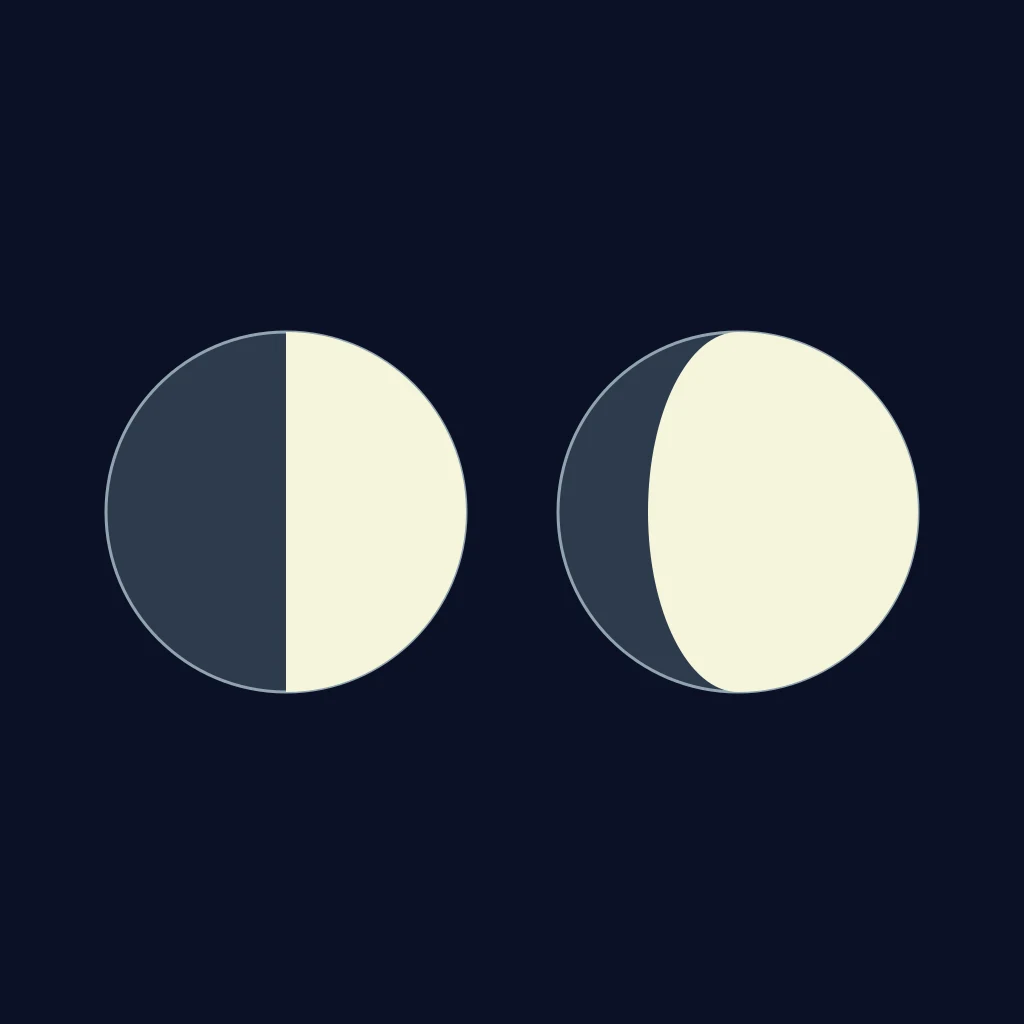
Two Moon sketches from the same U.S. observer are shown in time order. What do they show?
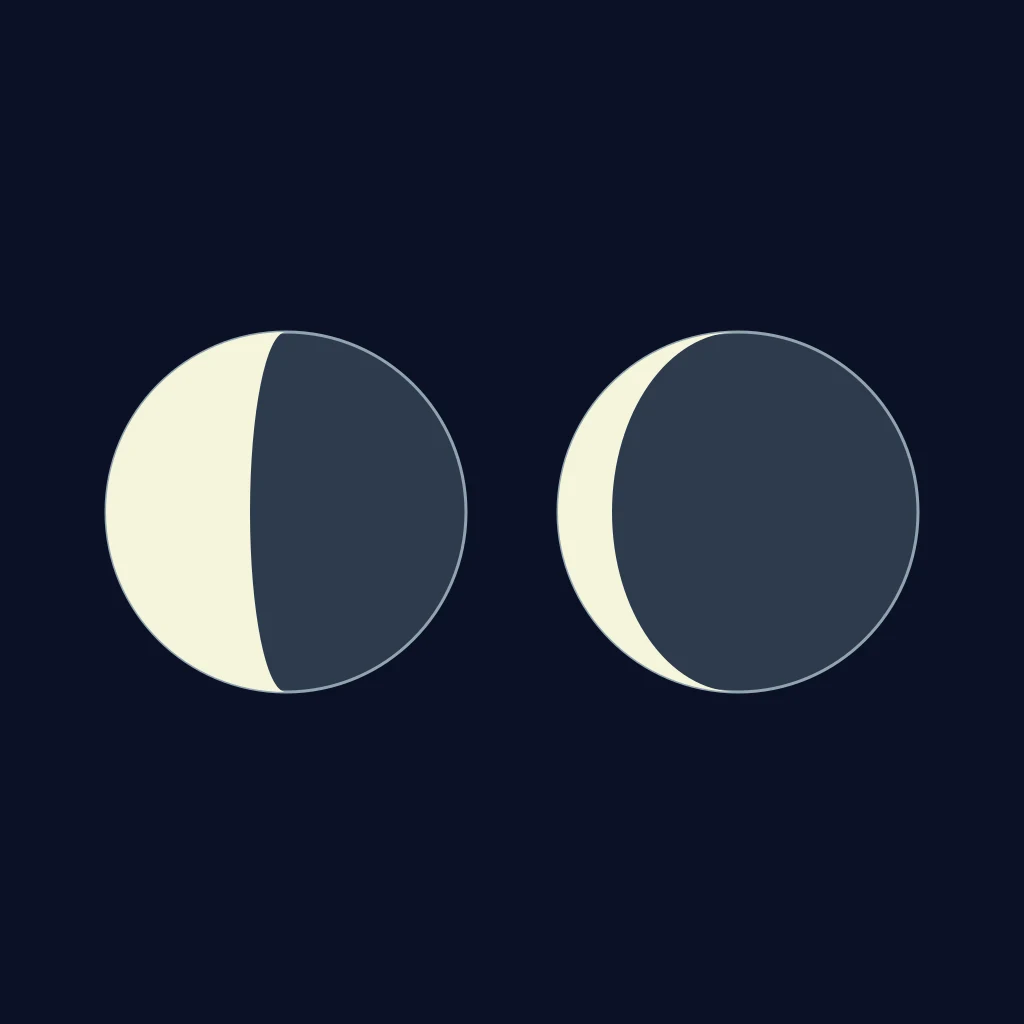
The paired sketches show the Moon on two different nights. How should the change be described?
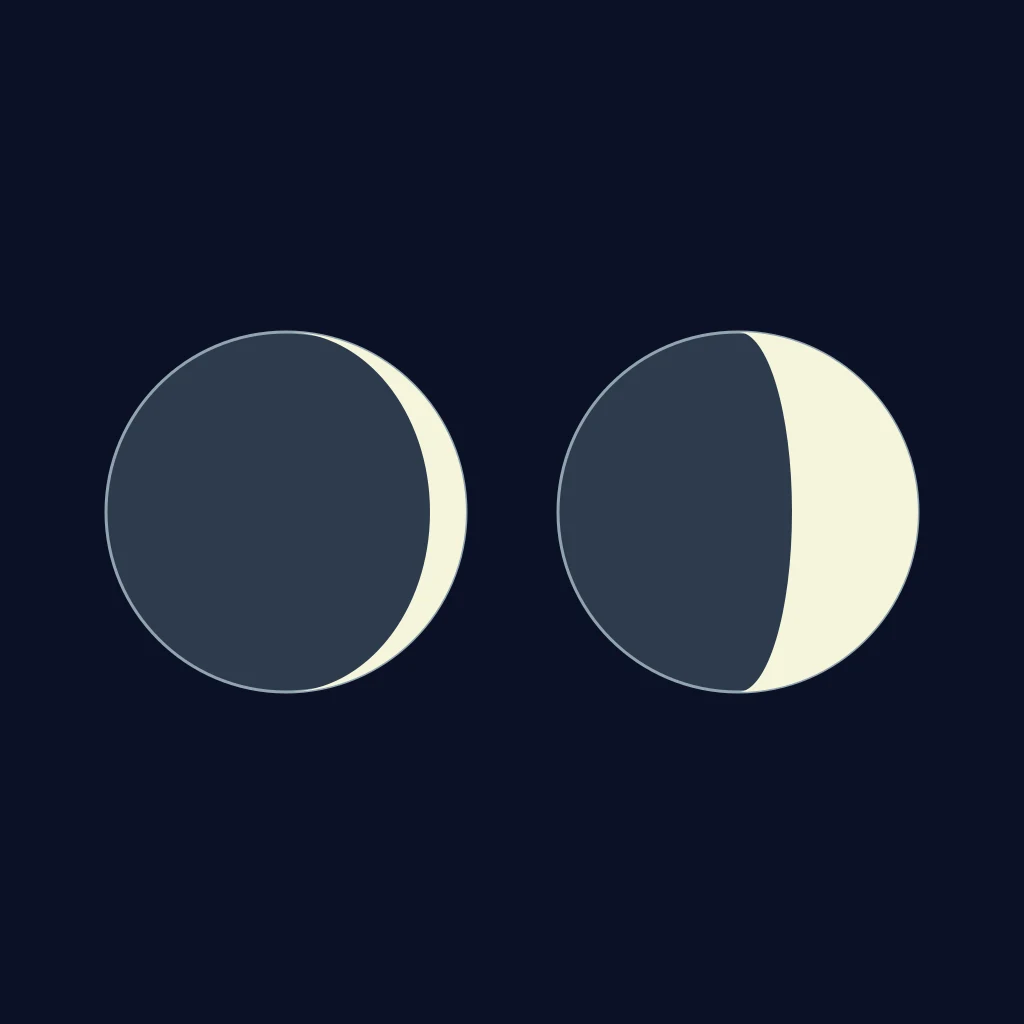
Look at the two discs drawn in chronological order. Which statement describes the phase change?

The figure shows two sketches from the same observer, several nights apart. What trend do they show?
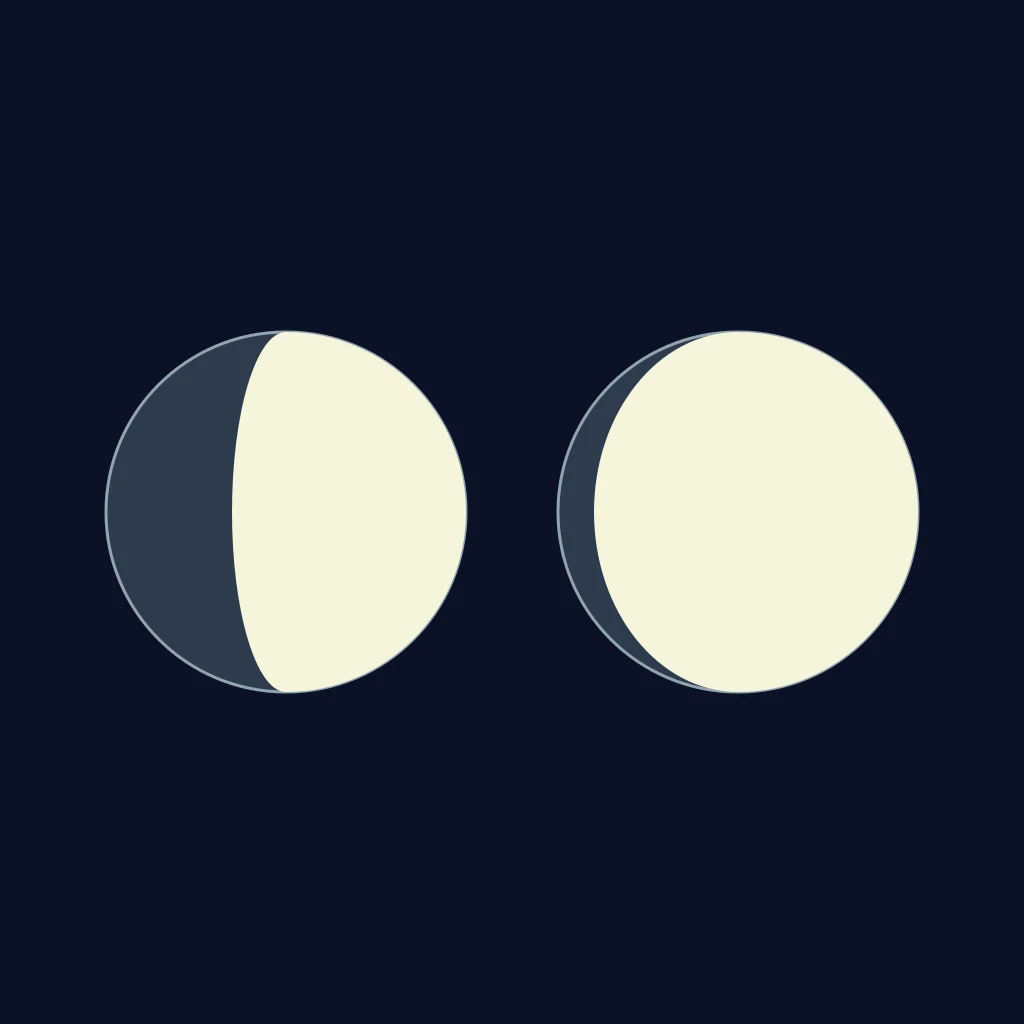
The model shows sunlight striking half of the Moon at every orbital position. What causes the phases seen from Earth?
The figure shows the Moon's shadow reaching Earth at new moon. Why does this not happen at every new moon?
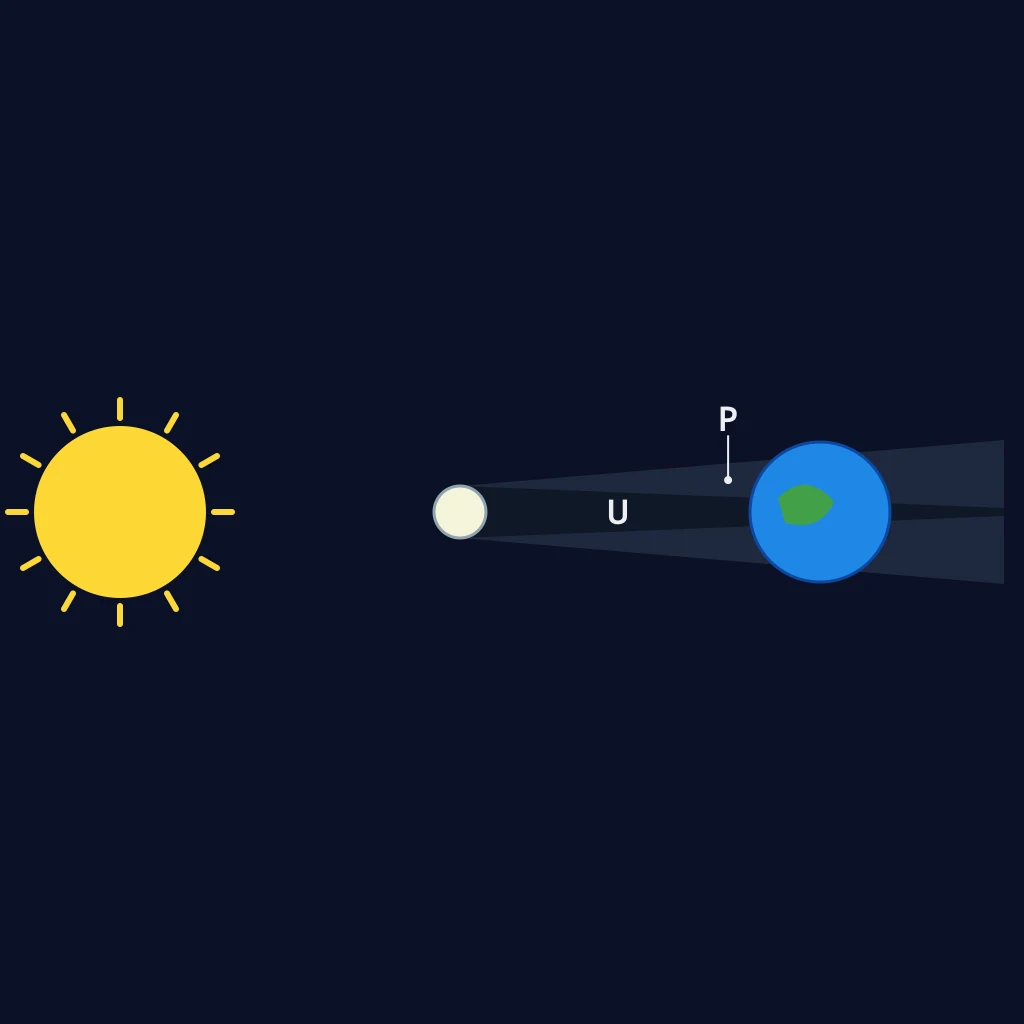
The figure shows Earth between the Sun and Moon with a shadow cone. Which event uses Earth's shadow, unlike ordinary phases?
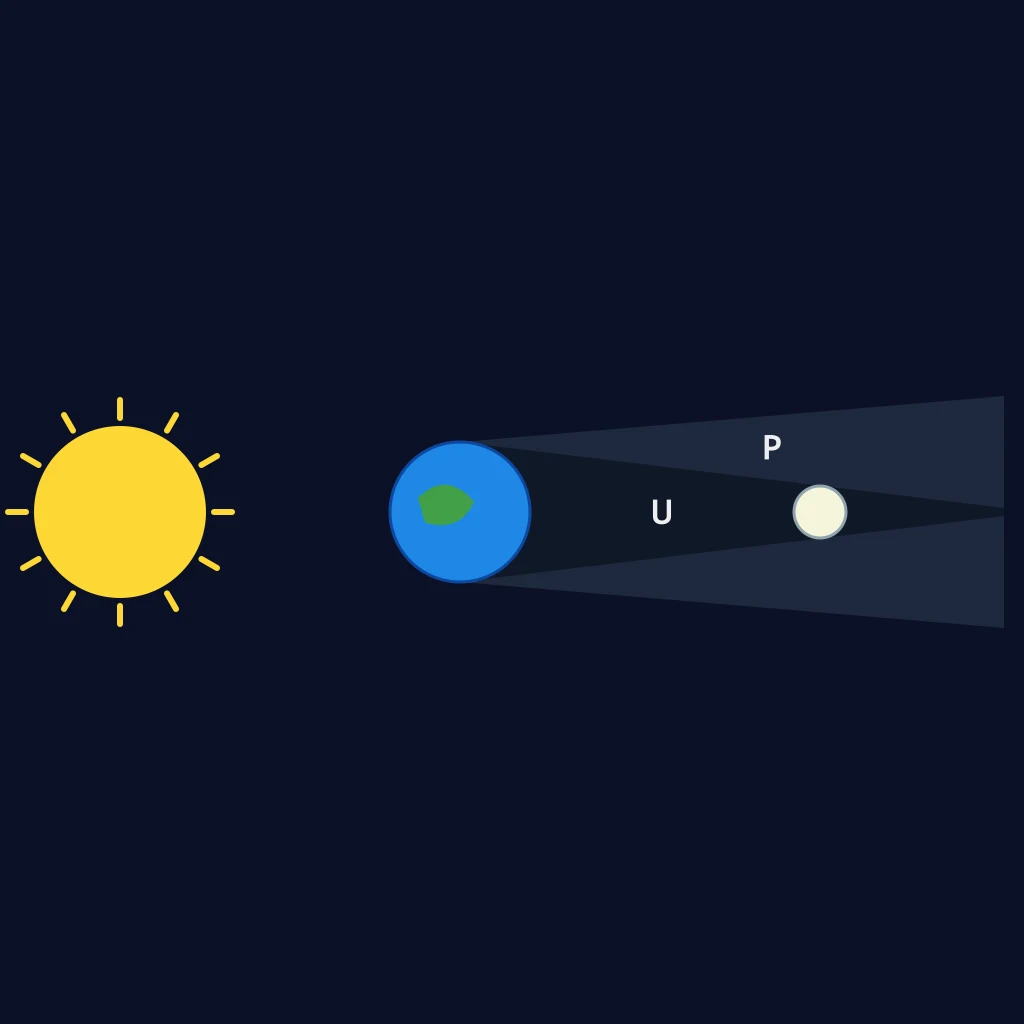
The phase cycle shown repeats from one new moon to the next in about how much time?
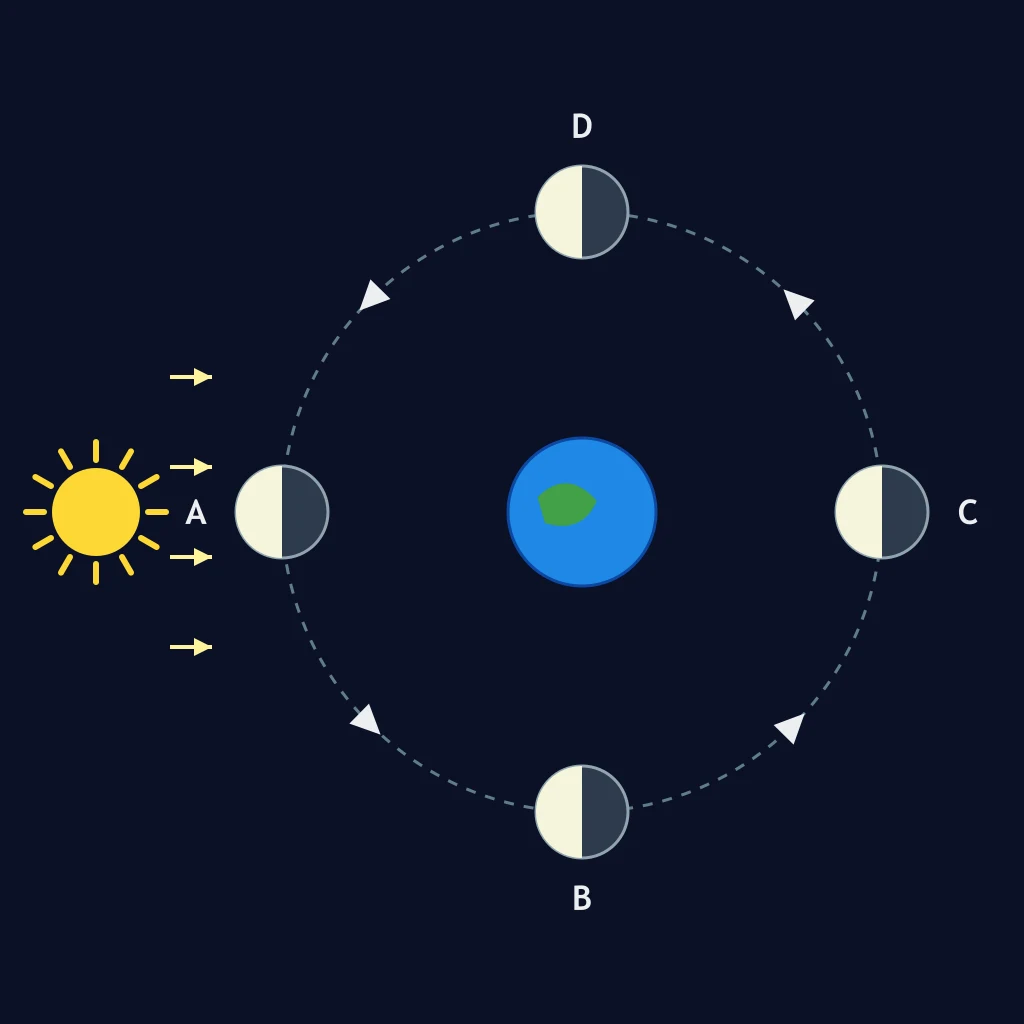
The Moon orbits Earth in about 27.3 days, but the phase cycle is about 29.5 days. What explains the difference?
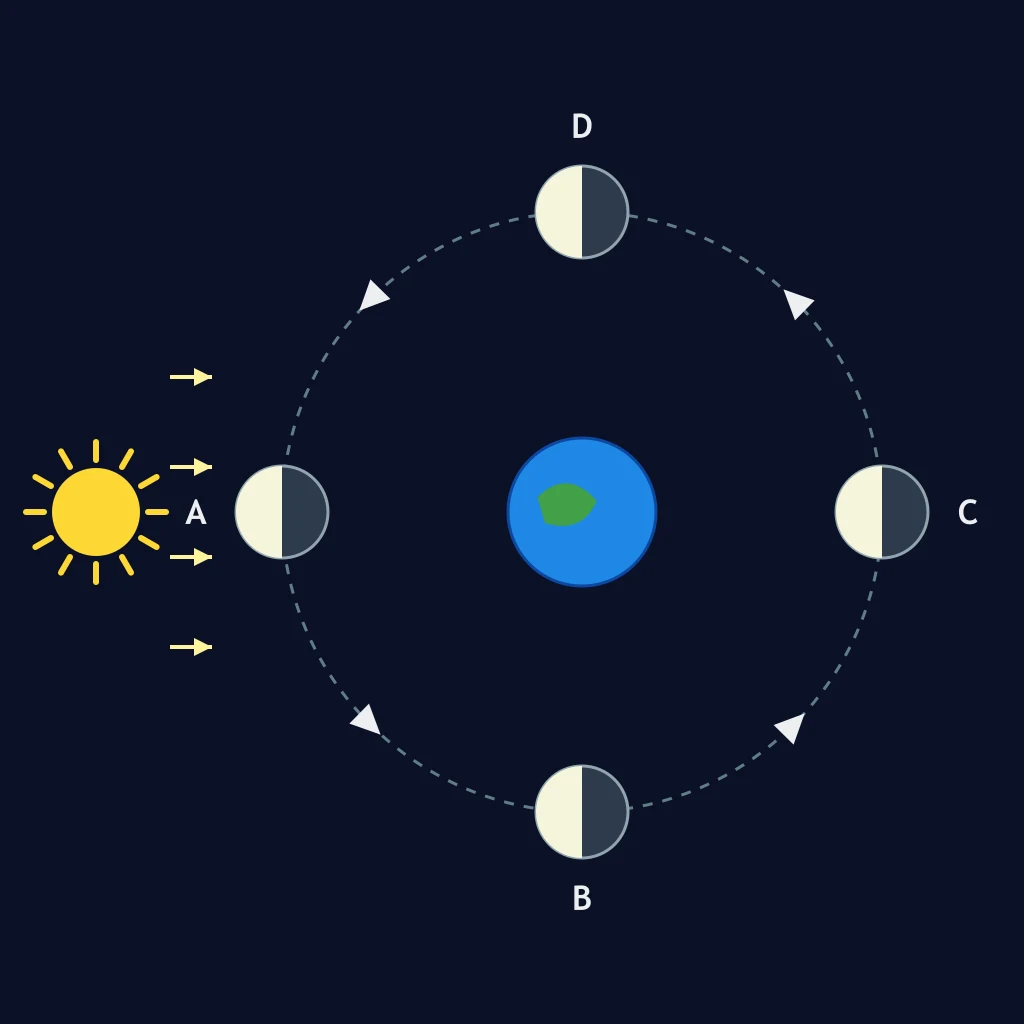
The figure shows the same half of the Moon lit by the Sun in space. What is moonlight?
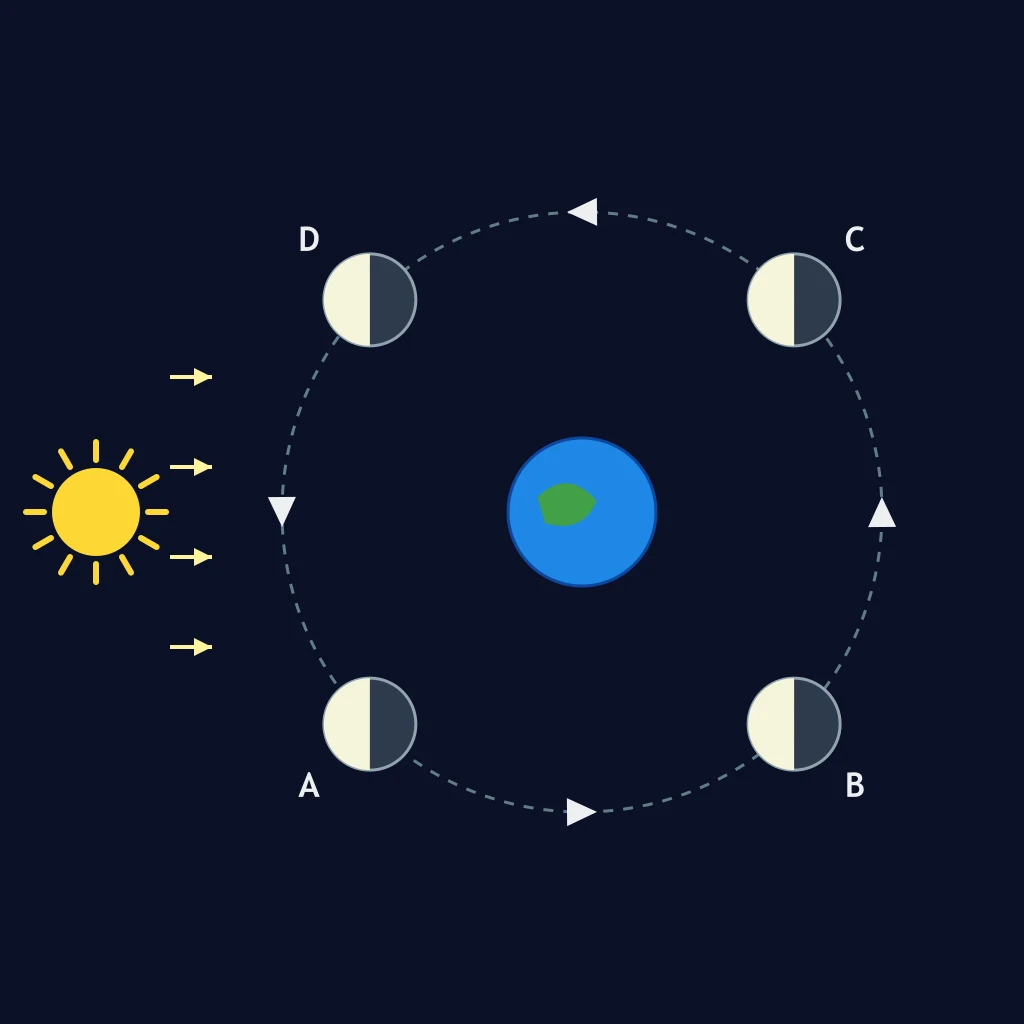
The diagram shows the Moon in four main phase positions. Which term names one full cycle of phases?
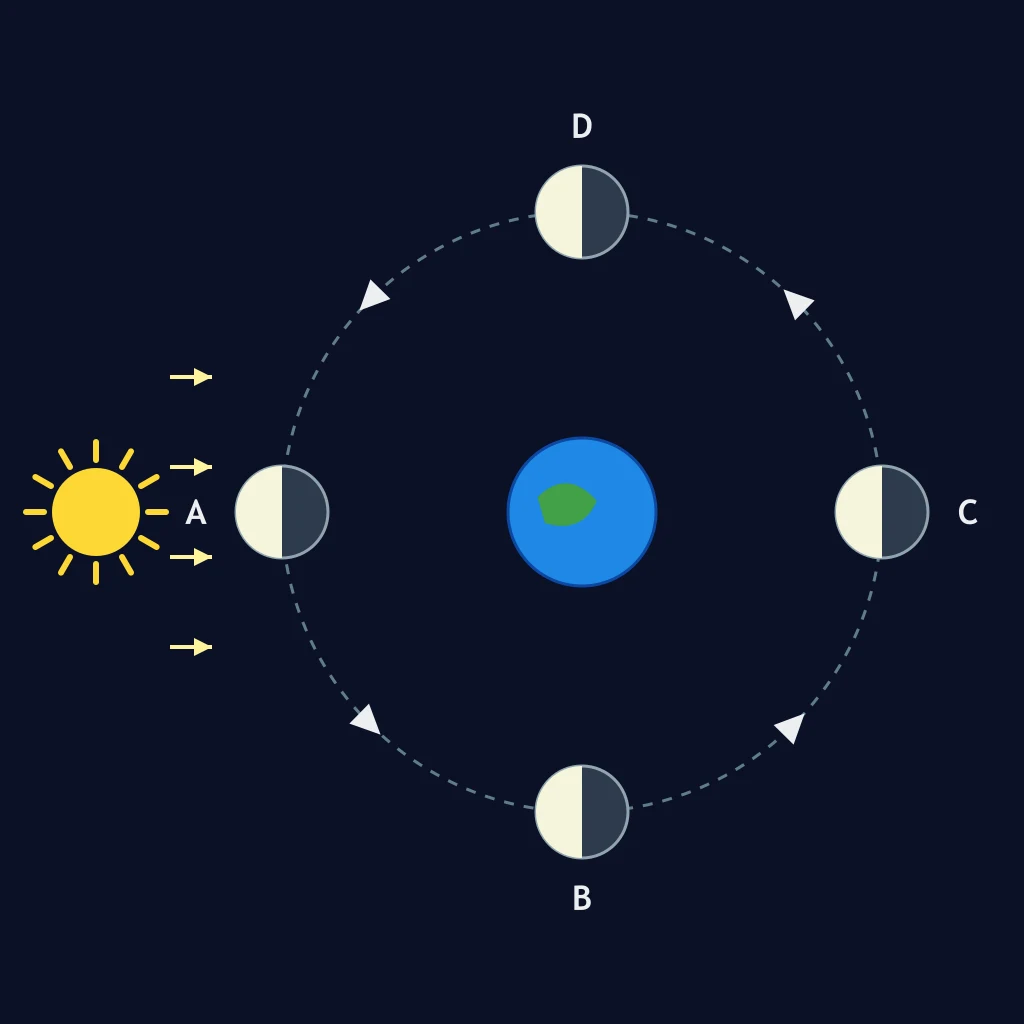
In the model, the Moon is always half lit, yet the Earth-view disc changes. Which statement best explains this?
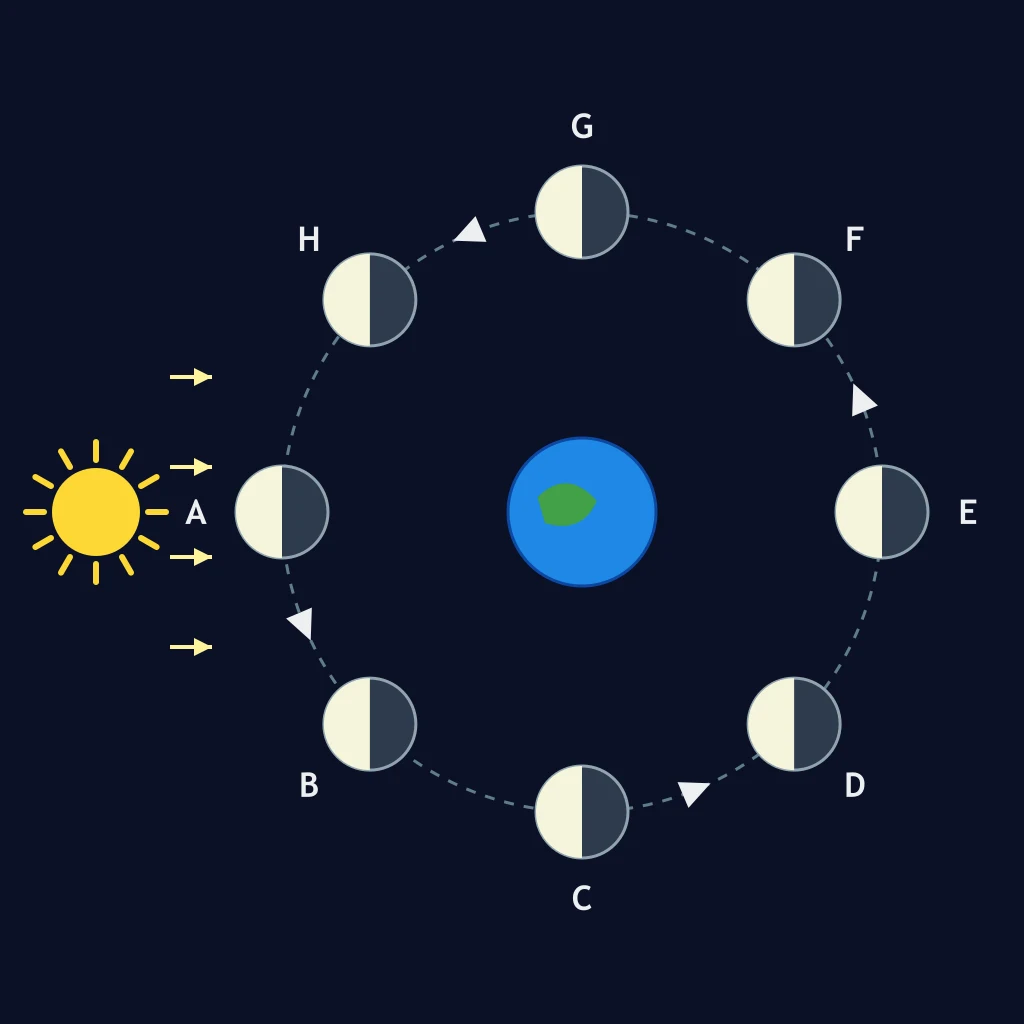
A Moon is high in the southern sky at sunset as seen from New York. Which phase matches that observation?
A Moon rises around sunset and sets around sunrise. Which phase fits that observing pattern?
A Moon is seen low in the western sky shortly after sunset. Which phase is most likely?
A half-lit Moon rises around midnight and is high before sunrise. Which phase is the observer seeing?
A thin Moon is seen low in the eastern sky before sunrise. Which phase best matches it?
Crack the passcode before the zombies get in.
Answer, then swat bugs for bonus points.
Race through questions at your own speed.
Same question on every screen. Fastest wins.

Pick a tile, answer, hit bonuses and steals.
25 questions