Loading
by BlastRoom
Students explain apparent celestial motion and compute time differences from longitude.
#earth_space_science
25 questions
One question set, multiple game modes. Tap any game to see it in action. Not sure which to pick?
Answer to place stones and capture territory.
Outrun the snow together.
Earn blasts, then hunt the other team.
Answer to earn energy, then climb.

The class blasts through walls together.
Bid on mystery lots. Most money wins.
Sell tours. Nice, standard, or a total scam.

Answer, restock, and serve the rush.
More correct answers pulls the rope your way.
Answer, then shoot down the alien wave.
Answer, then tap to leap the frozen ridge.
Stars watched through a whole night appear to drift across the sky. In which direction and at what angular rate is this apparent daily motion?
The Sun appears to rise in the east and set in the west each day because Earth rotates in which direction?
A star-trail camera shows one star moved about 45 degrees along its apparent path. About how long was the exposure?
At 9:00 PM a star is due south; by 11:00 PM, about where should it appear, ignoring horizon limits?
Which Earth motion mainly causes the apparent daily motion of the Sun, Moon, planets, and stars?
Earth turns 360 degrees in about 24 hours. About how many minutes does it take the sky to appear to turn 1 degree?
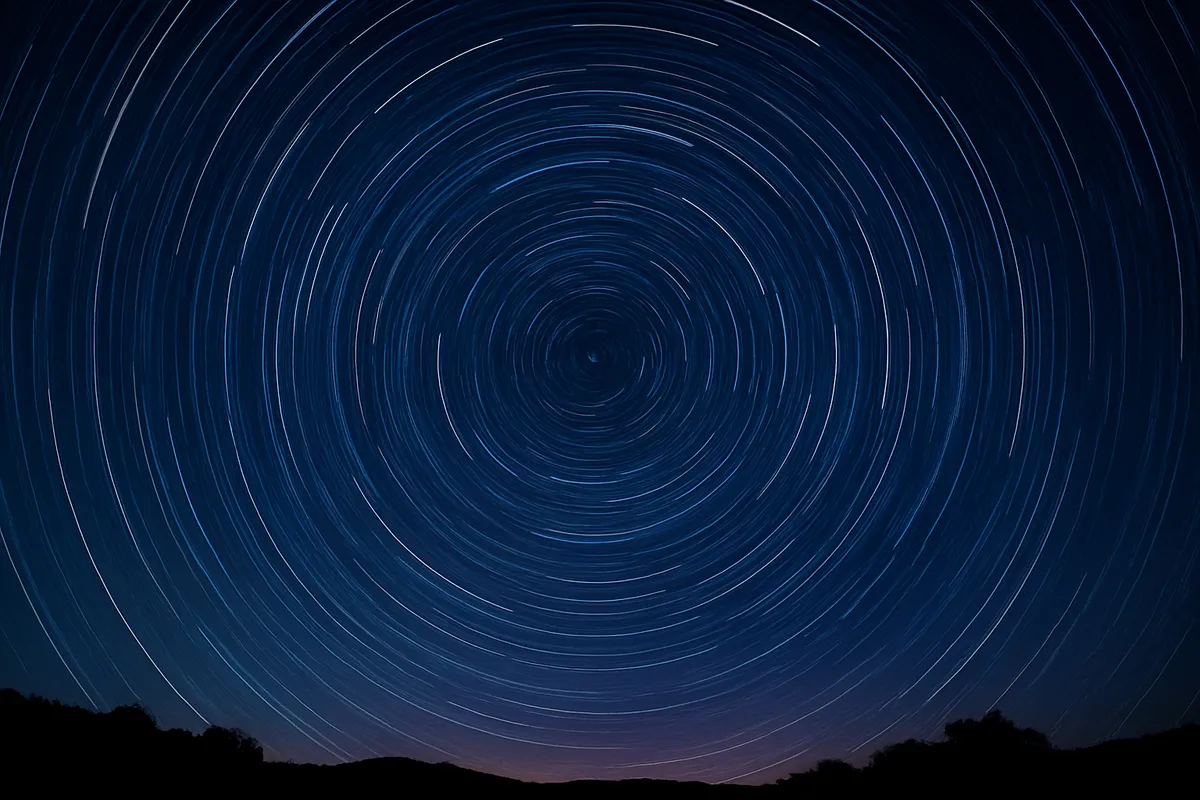
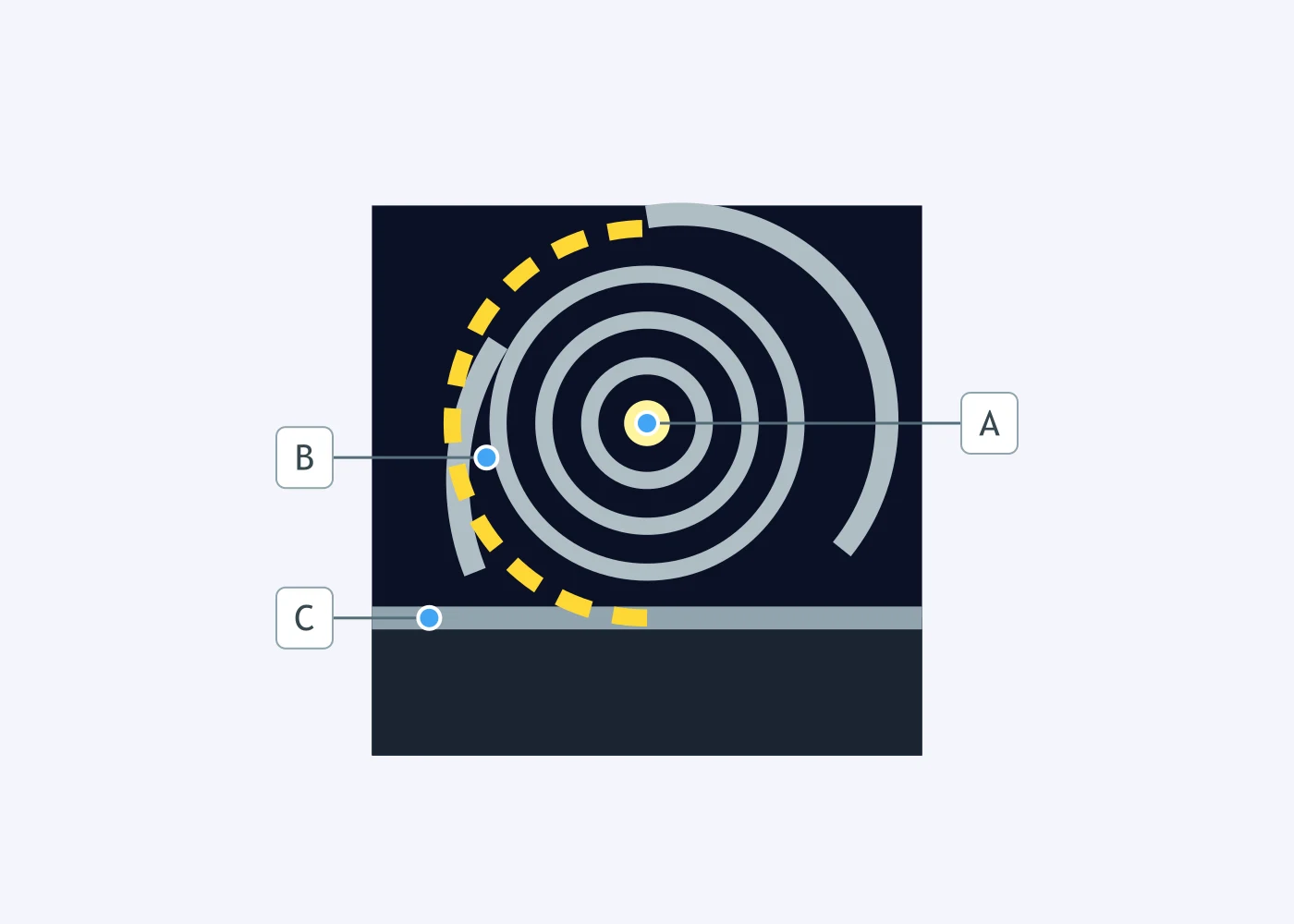
A labeled star-trail figure shows concentric arcs around point A in the northern sky. What is point A closest to?
In the star-trail figure, the arcs curve around Polaris rather than around Sirius. What does that show about Polaris?
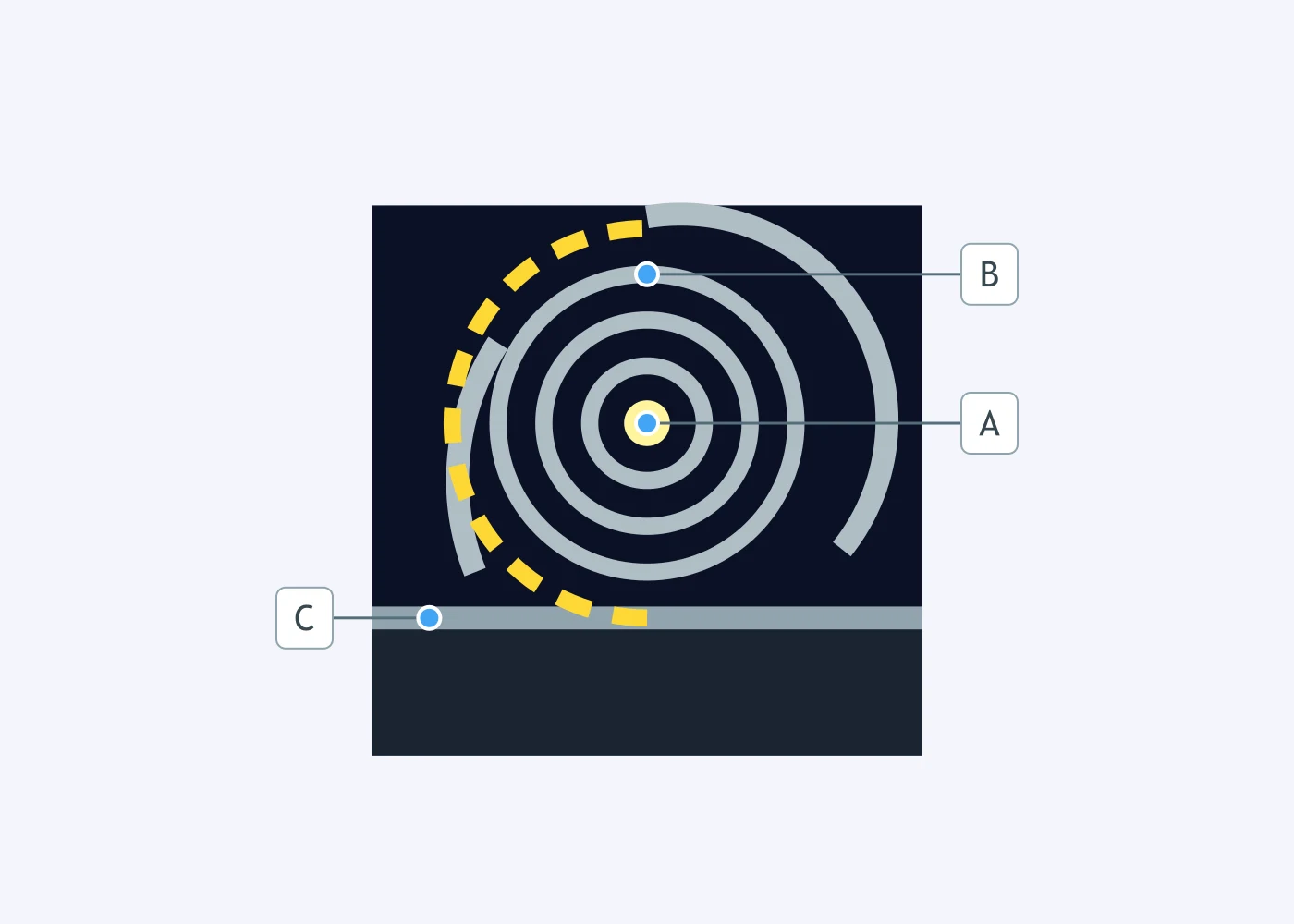
A 4-hour exposure pointed north shows trails centered on point P. About how many degrees of arc should a star trace in that time?
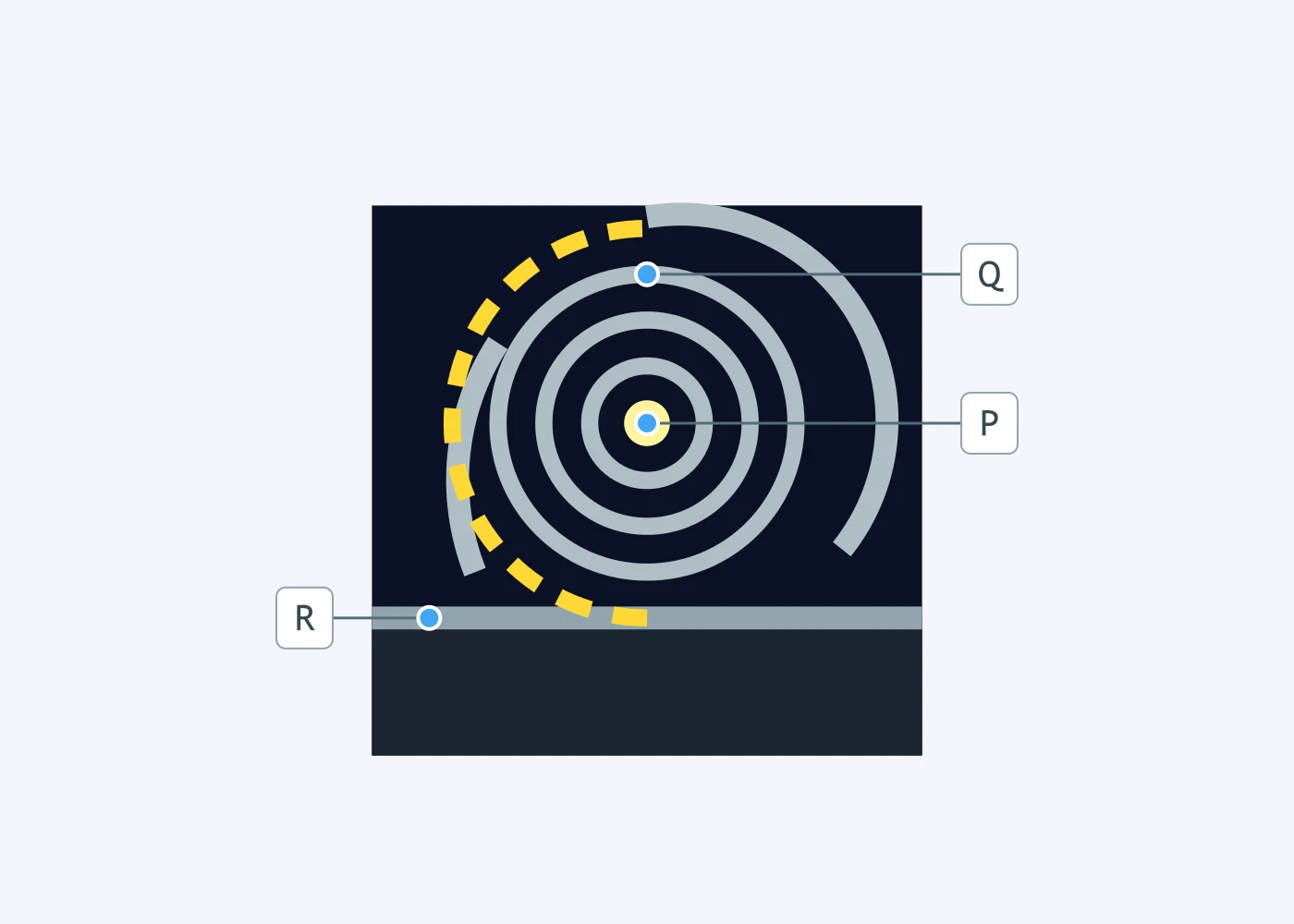
At a northern mid-latitude site, the fixed point in a star-trail photo is 40 degrees above the northern horizon. What is the site's approximate latitude?
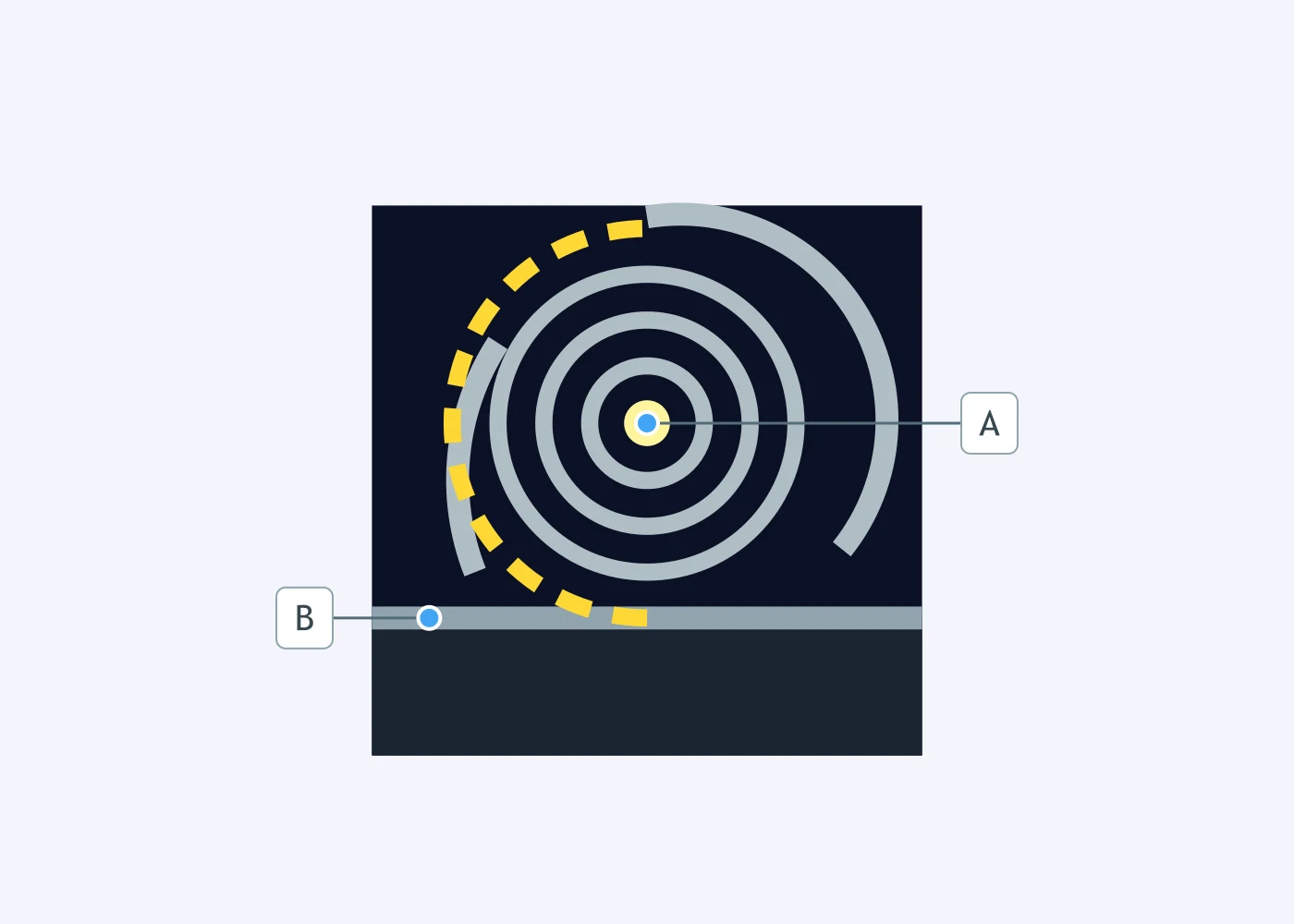
If a star-trail photo from the Northern Hemisphere shows trails as complete circles that never dip below the horizon, what term describes those stars?
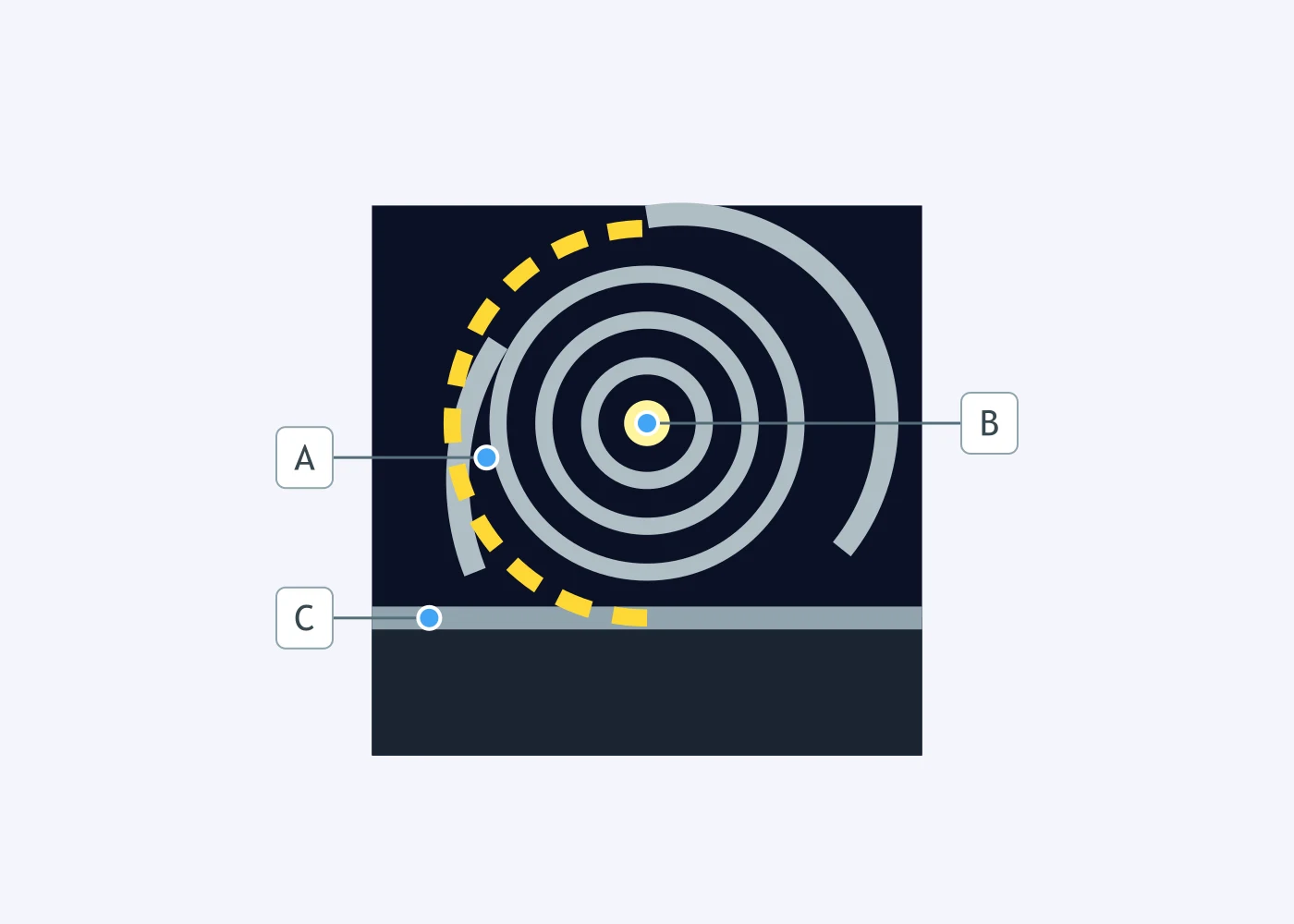
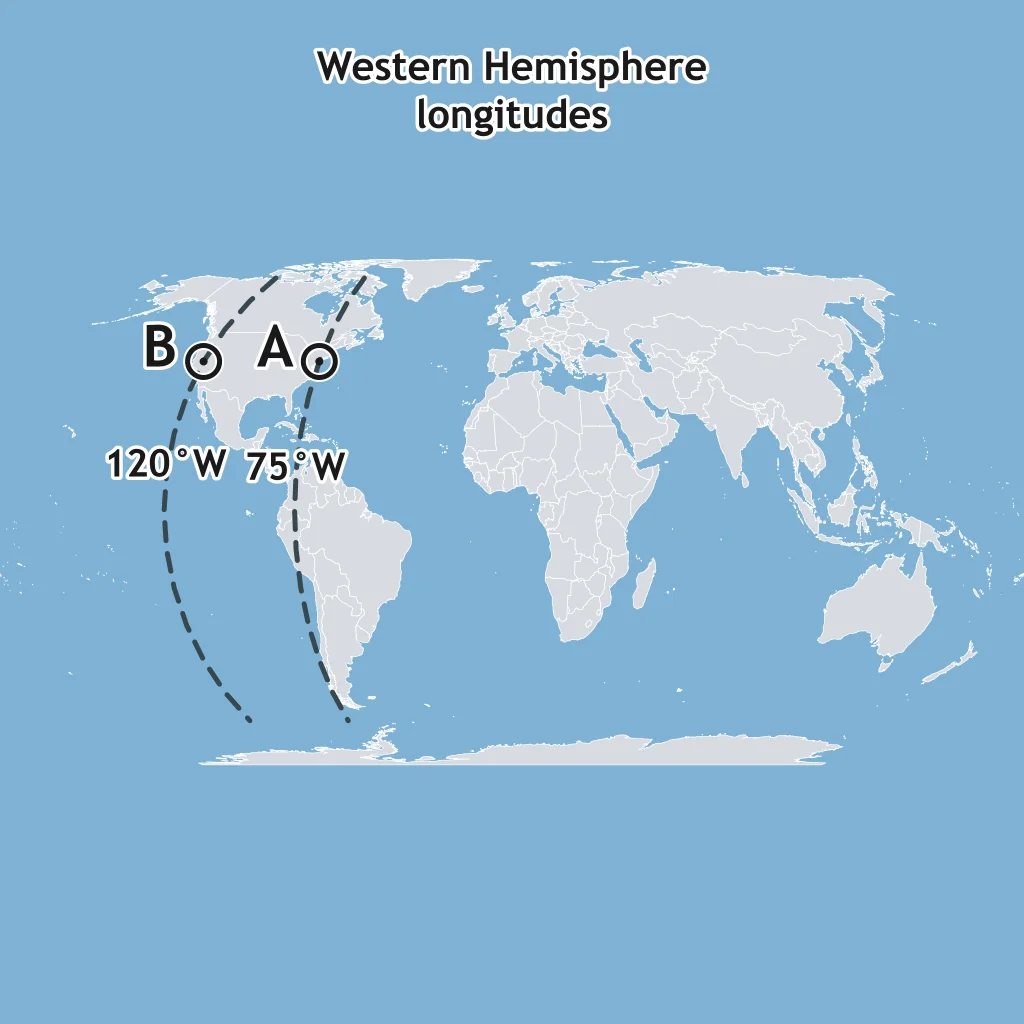
Use the longitudes on the map. If Greenwich is 10:00 AM standard time, what is city B's standard time?
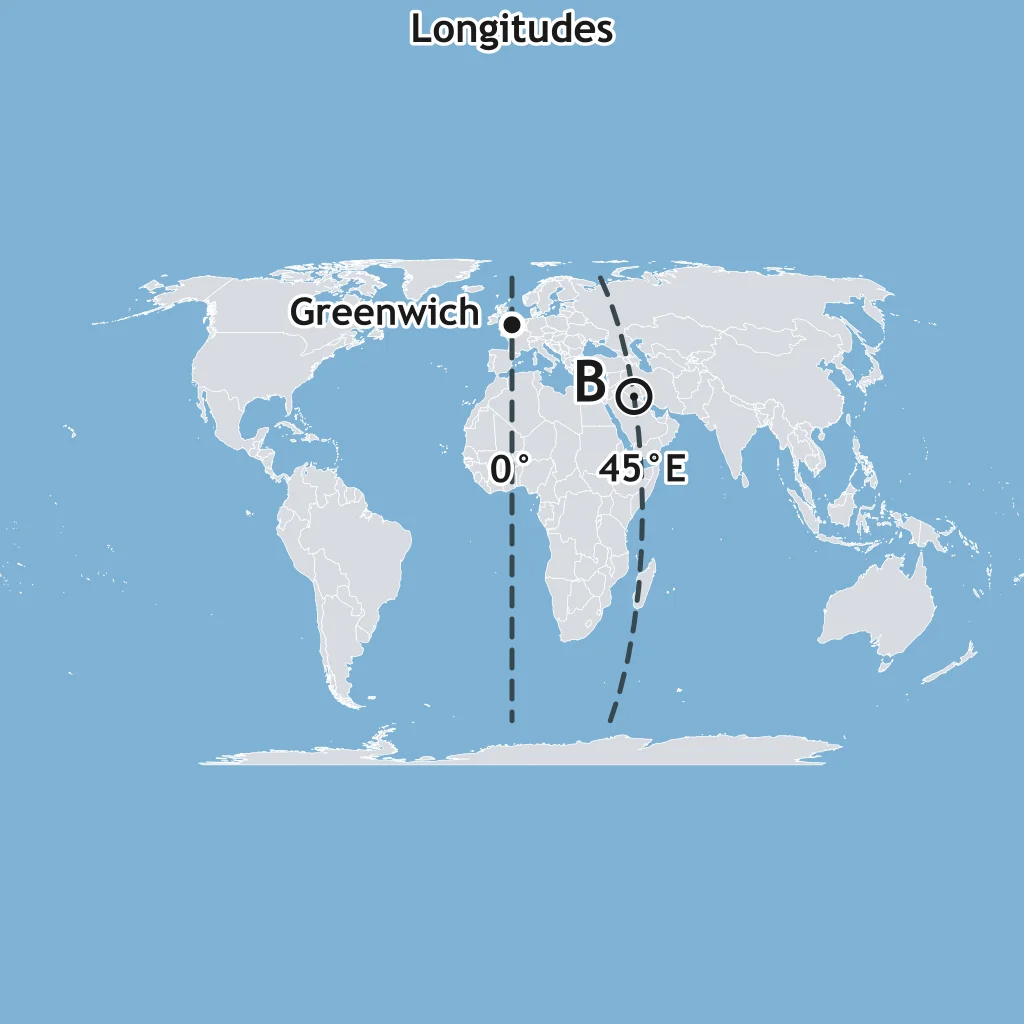
Use the map. When city A's standard clock reads 3:00 PM, what should city B's standard clock read?
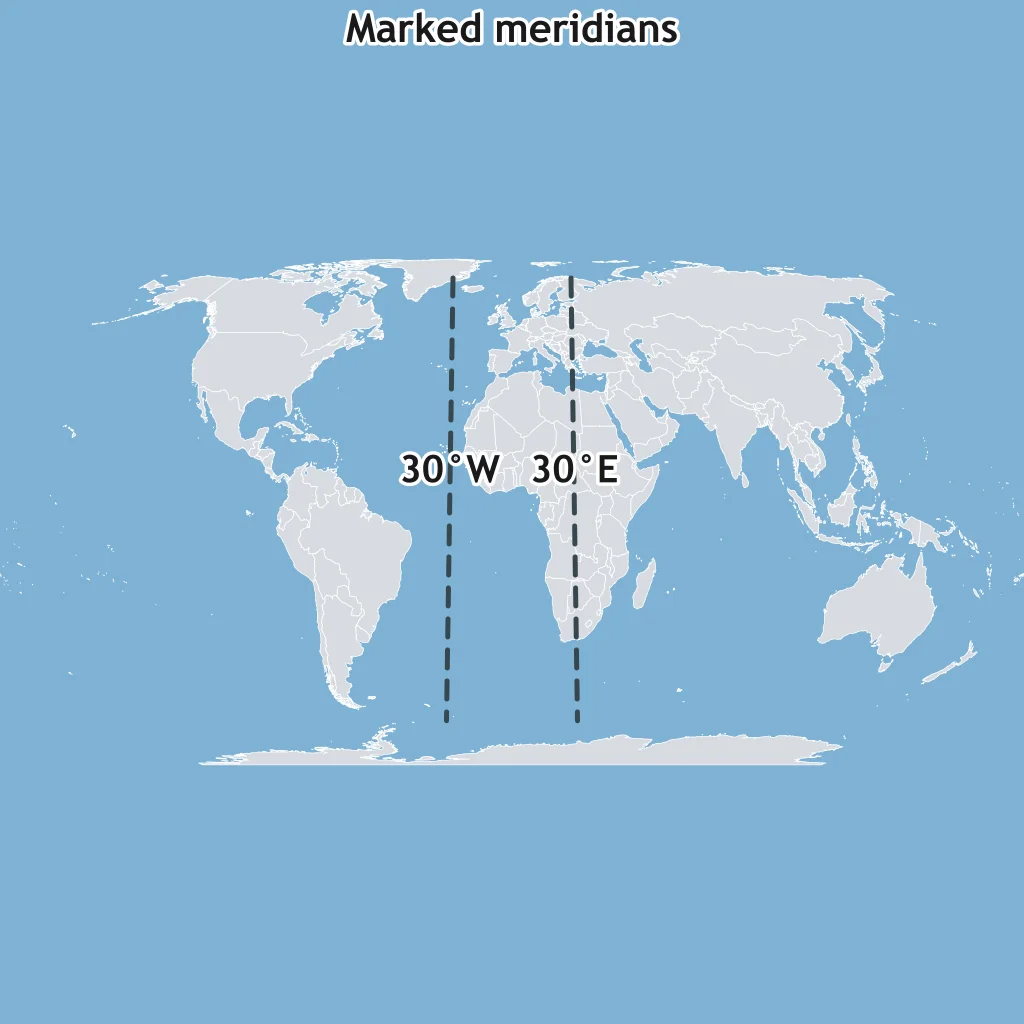
Use the map. How many hours apart are the standard times at the two marked meridians?
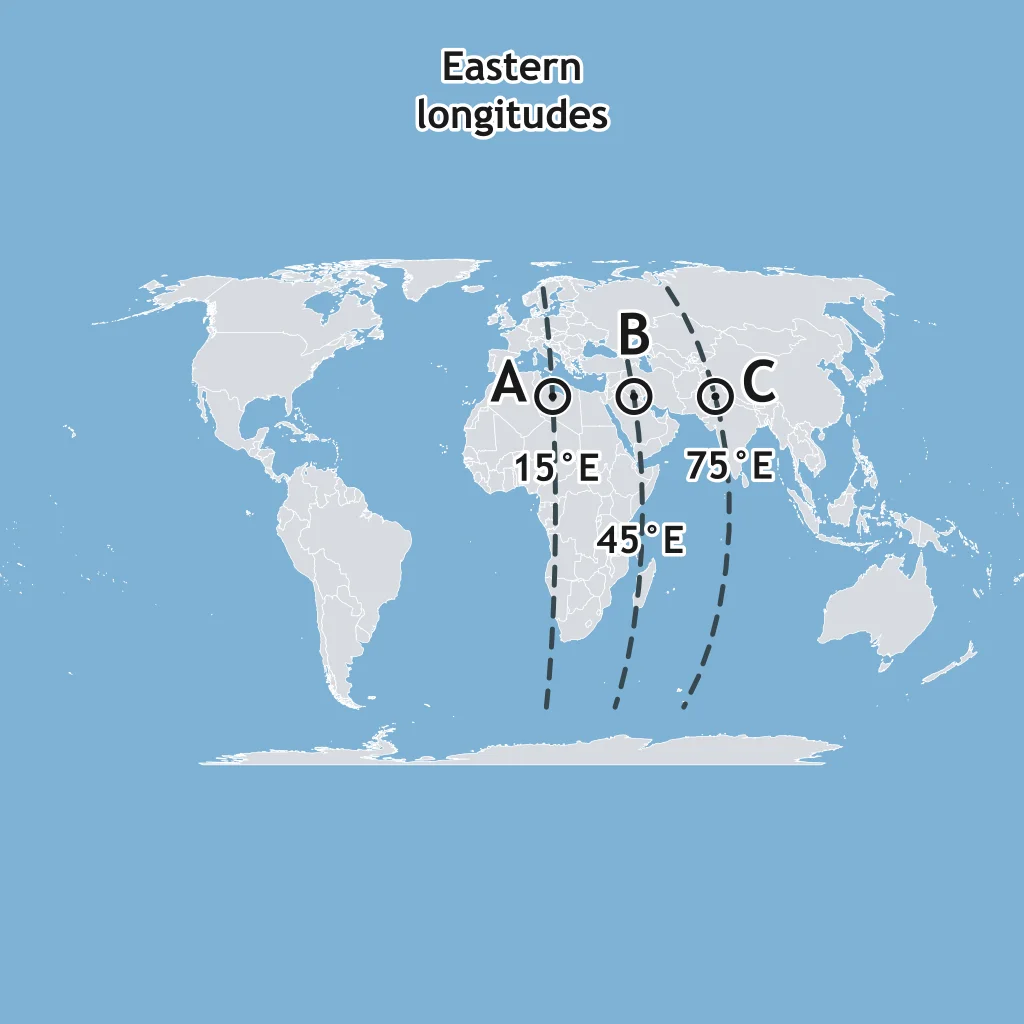
The map marks cities A, B, and C in eastern longitudes. At the same moment, which city has the latest standard time?
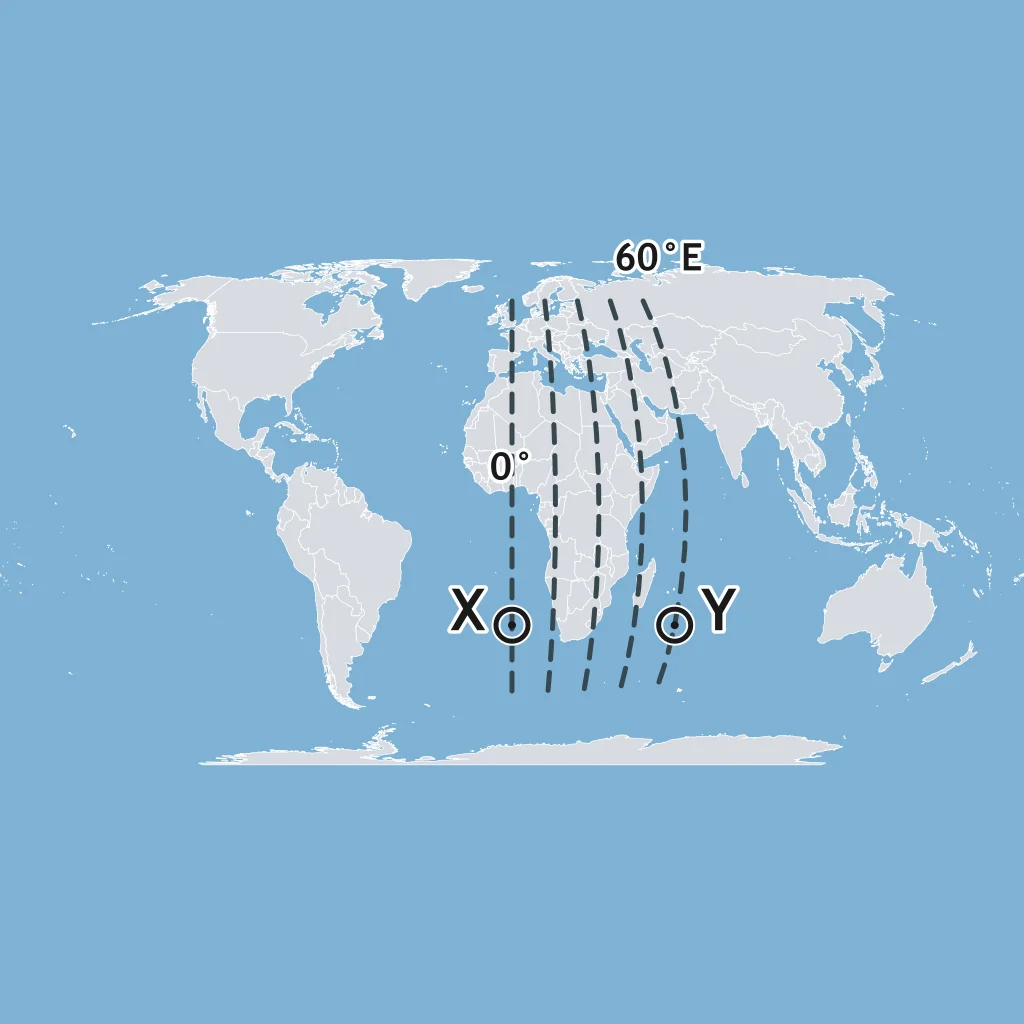
Use the map. A ship sails east from point X to point Y. How should the ship's clocks change to keep standard time?
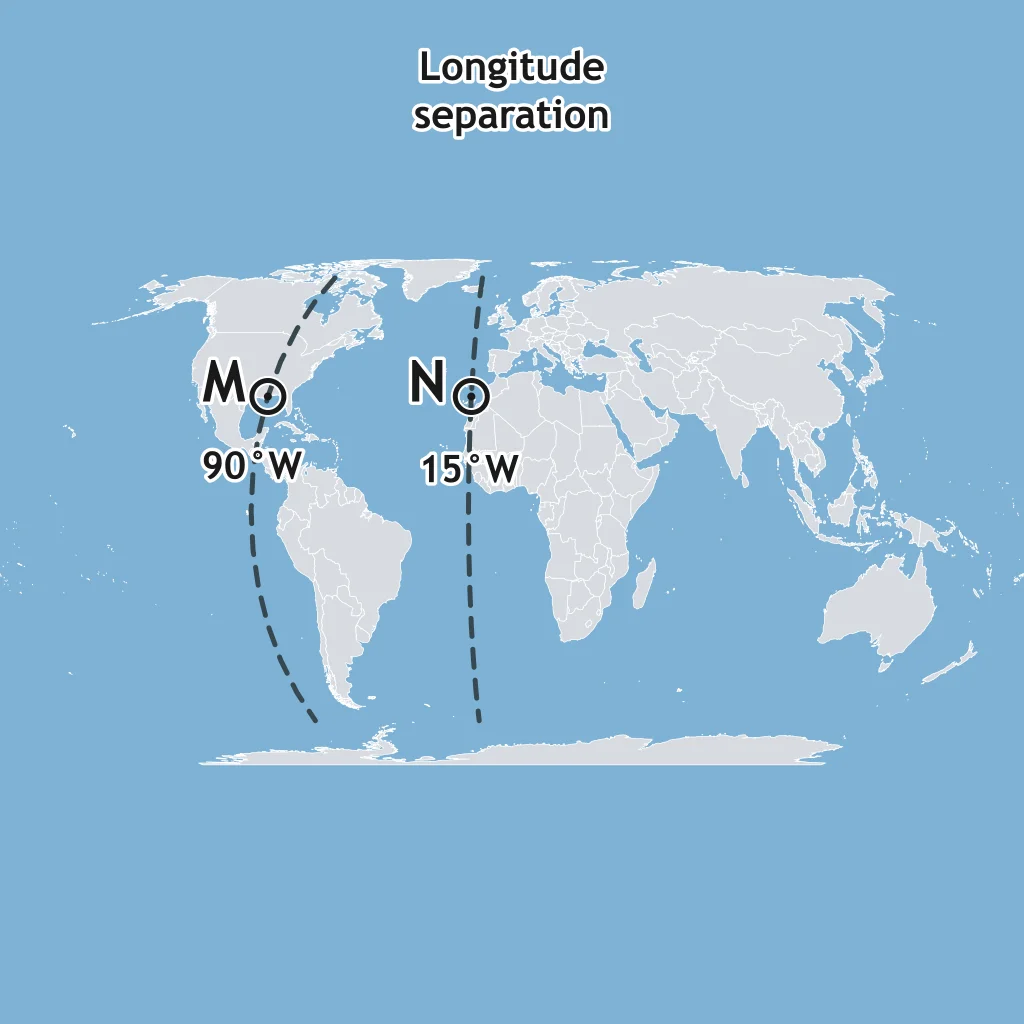
Use the map. How many standard time zones separate points M and N?
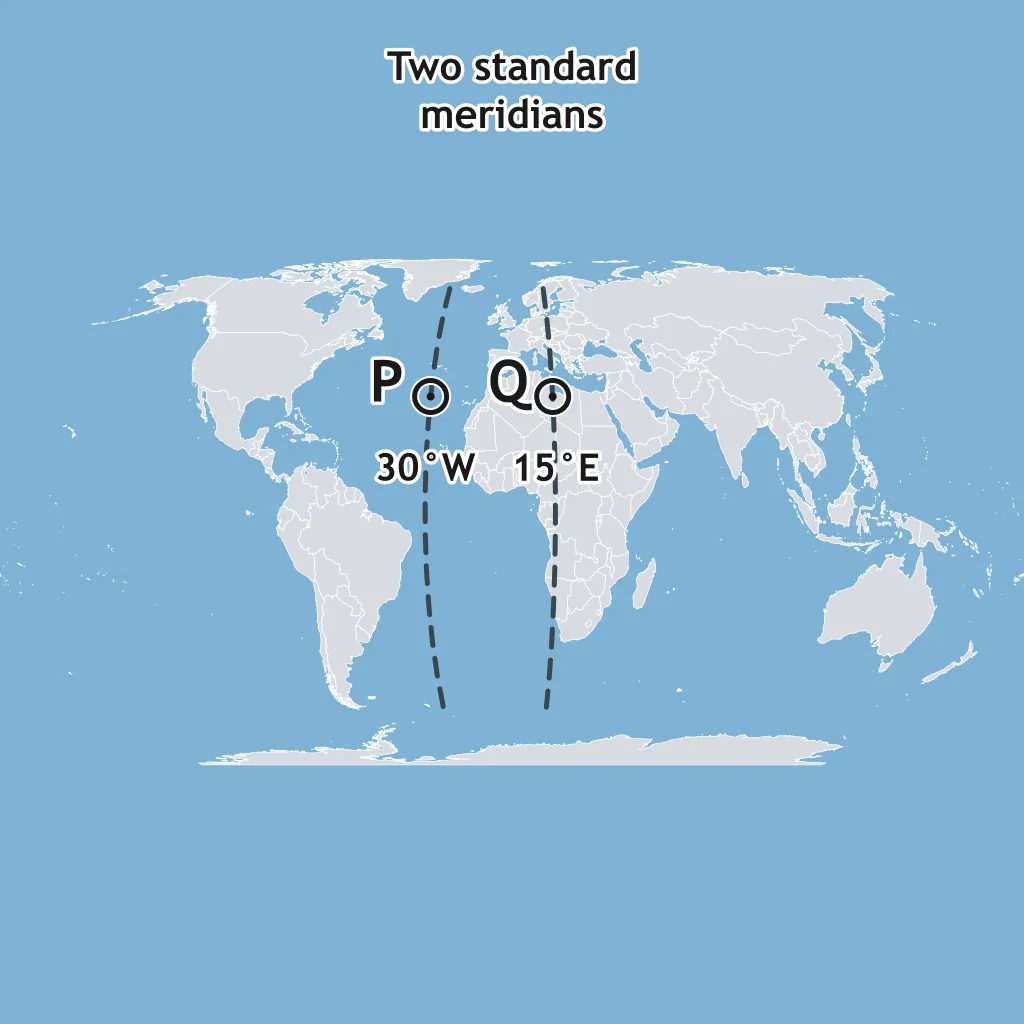
Use the map. If point P is 8:00 AM standard time, what standard time is point Q?
A traveler flying west across the Pacific crosses the International Date Line near 180 degrees longitude. What happens to the calendar date?
A ship crosses the International Date Line eastward from Asia toward the Americas. What calendar change should the crew make?
A town is 6 degrees west of its time zone's standard meridian. In standard time, when will local mean solar noon occur relative to 12:00 clock time?
During daylight saving time, a town on the center meridian of its time zone will have local solar noon closest to what clock time, ignoring the equation of time?
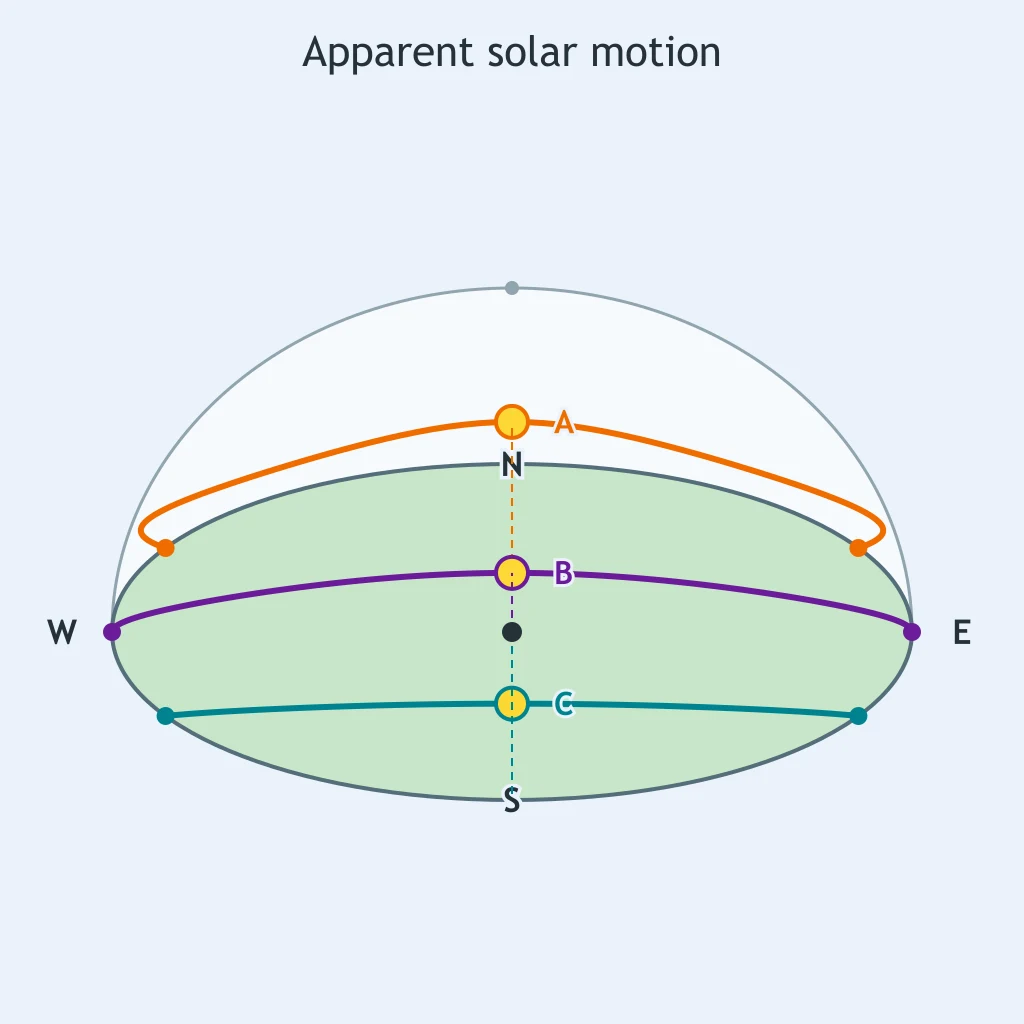
Use the Sun-path diagram for a Northern Hemisphere site. Which path best represents an equinox day?
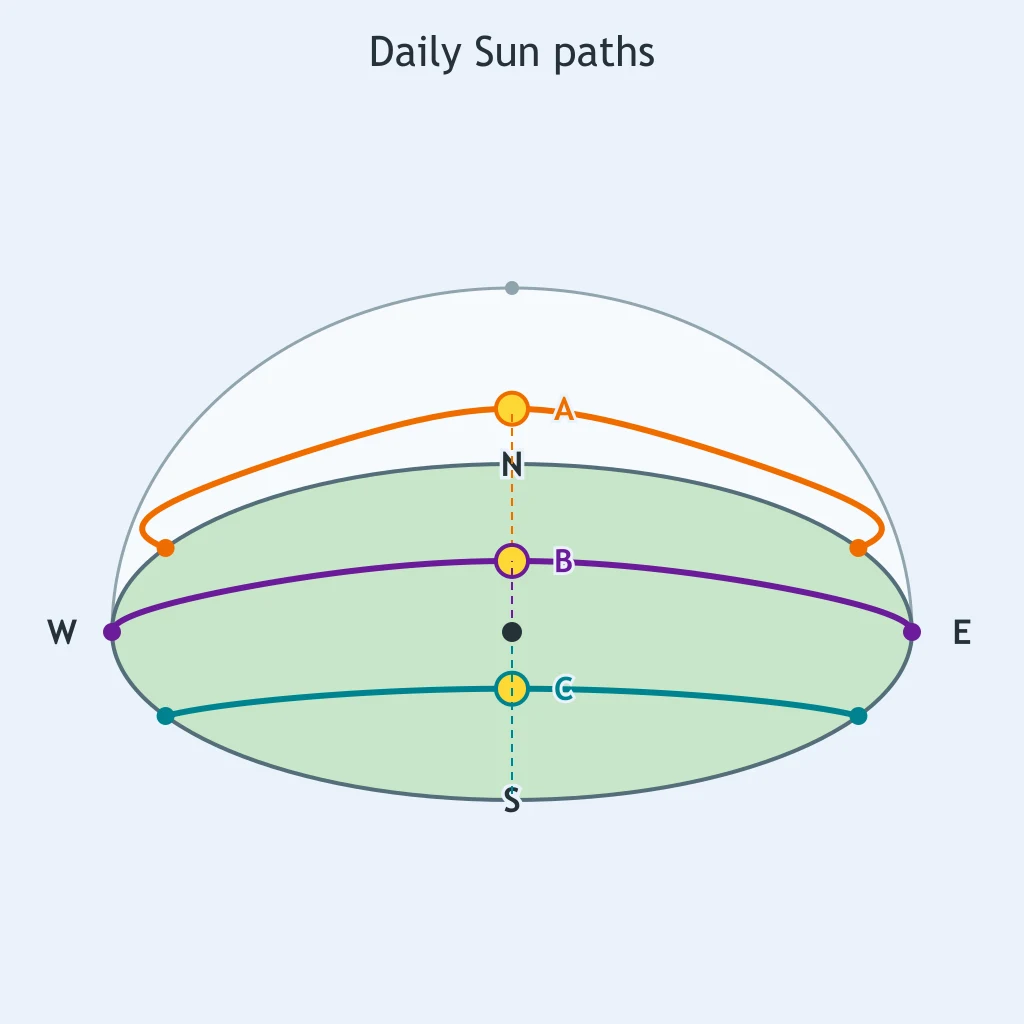
Use the Sun-path diagram. Which path shows the longest daylight interval at this Northern Hemisphere site?
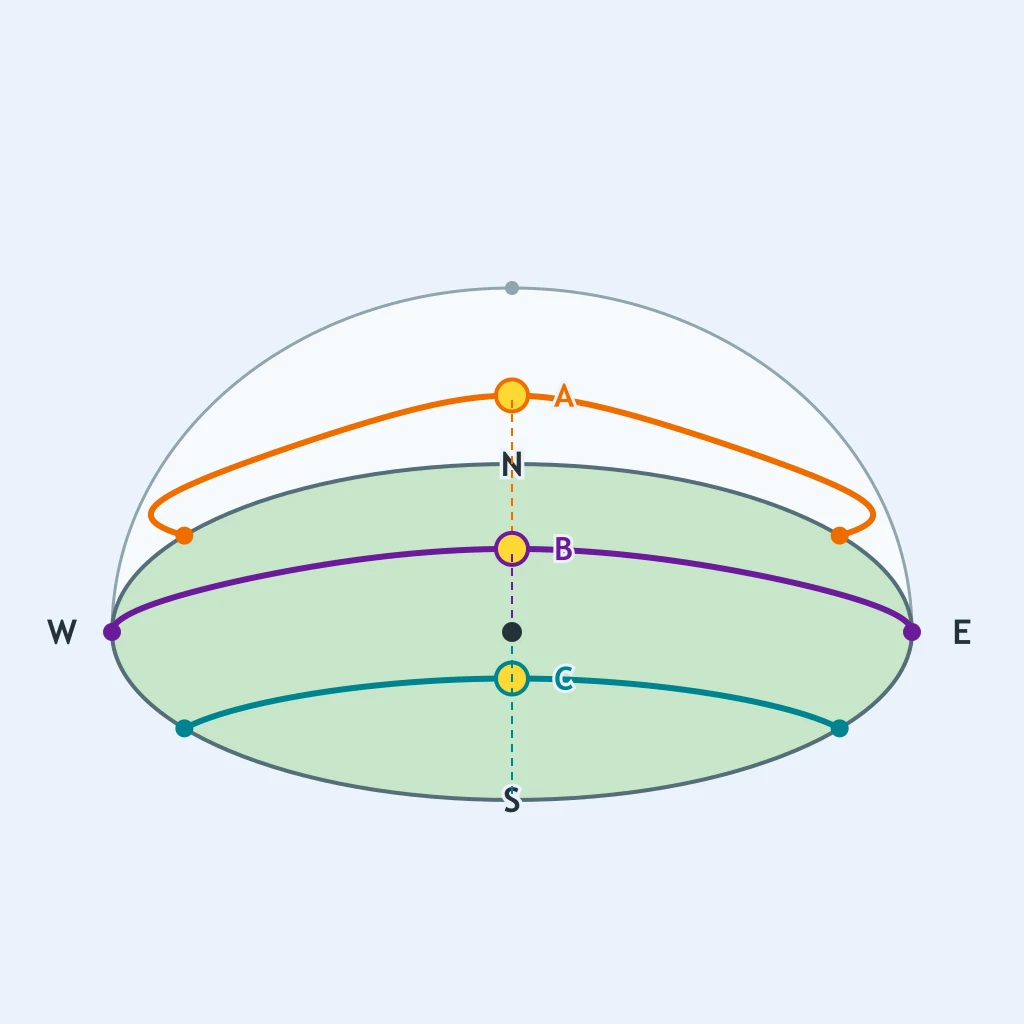
The diagram shows three daily Sun paths for a Northern Hemisphere site. Which path has the lowest noon altitude and the shortest daylight?
Crack the passcode before the zombies get in.
Answer, then swat bugs for bonus points.
Race through questions at your own speed.
Same question on every screen. Fastest wins.

Pick a tile, answer, hit bonuses and steals.
50 questions