Loading
by BlastRoom
NASA-verified practice on eclipse alignments, phases, shadows, and totality: https://science.nasa.gov/moon/eclipses/ and https://science.nasa.gov/eclipses/geometry/
#earth_space_science
25 questions
One question set, multiple game modes. Tap any game to see it in action. Not sure which to pick?
Answer to place stones and capture territory.
Outrun the snow together.
Earn blasts, then hunt the other team.
Answer to earn energy, then climb.

The class blasts through walls together.
Bid on mystery lots. Most money wins.
Sell tours. Nice, standard, or a total scam.

Answer, restock, and serve the rush.
More correct answers pulls the rope your way.
Answer, then shoot down the alien wave.
Answer, then tap to leap the frozen ridge.
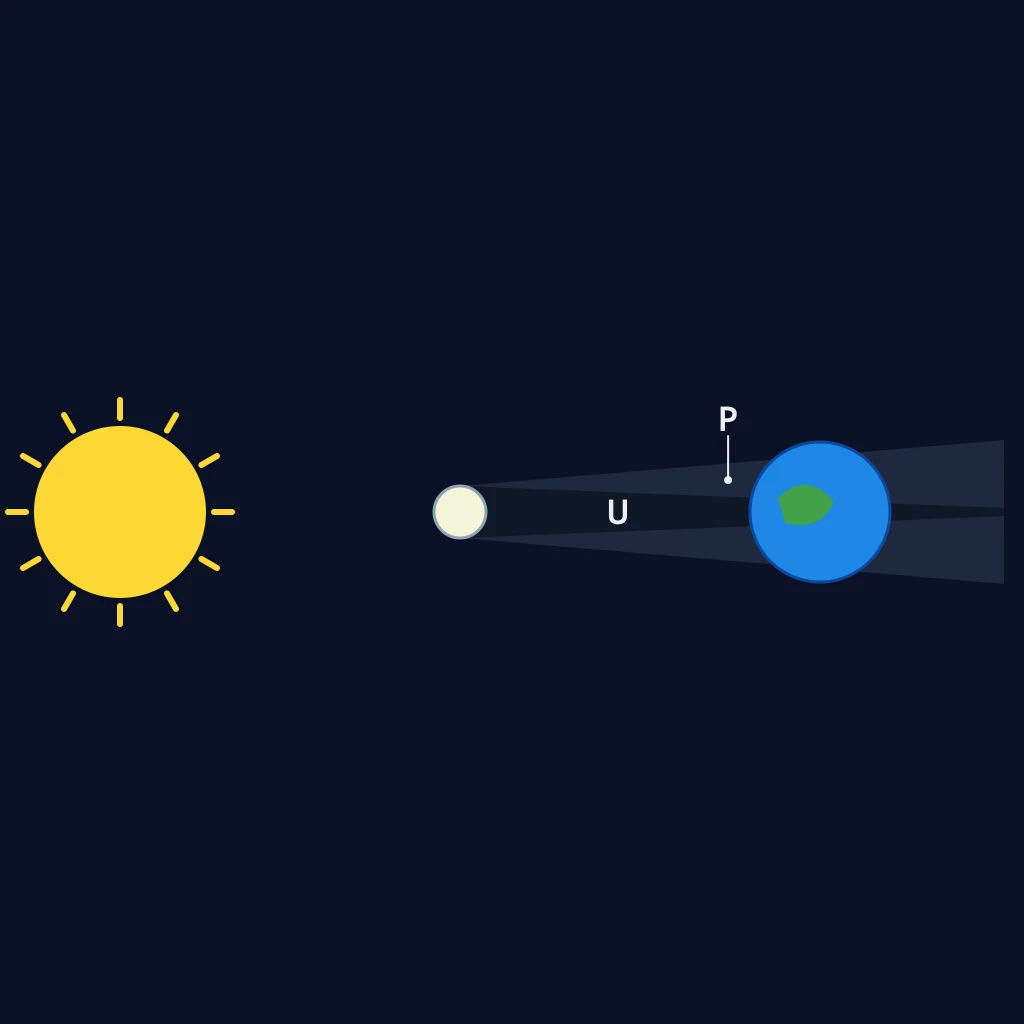
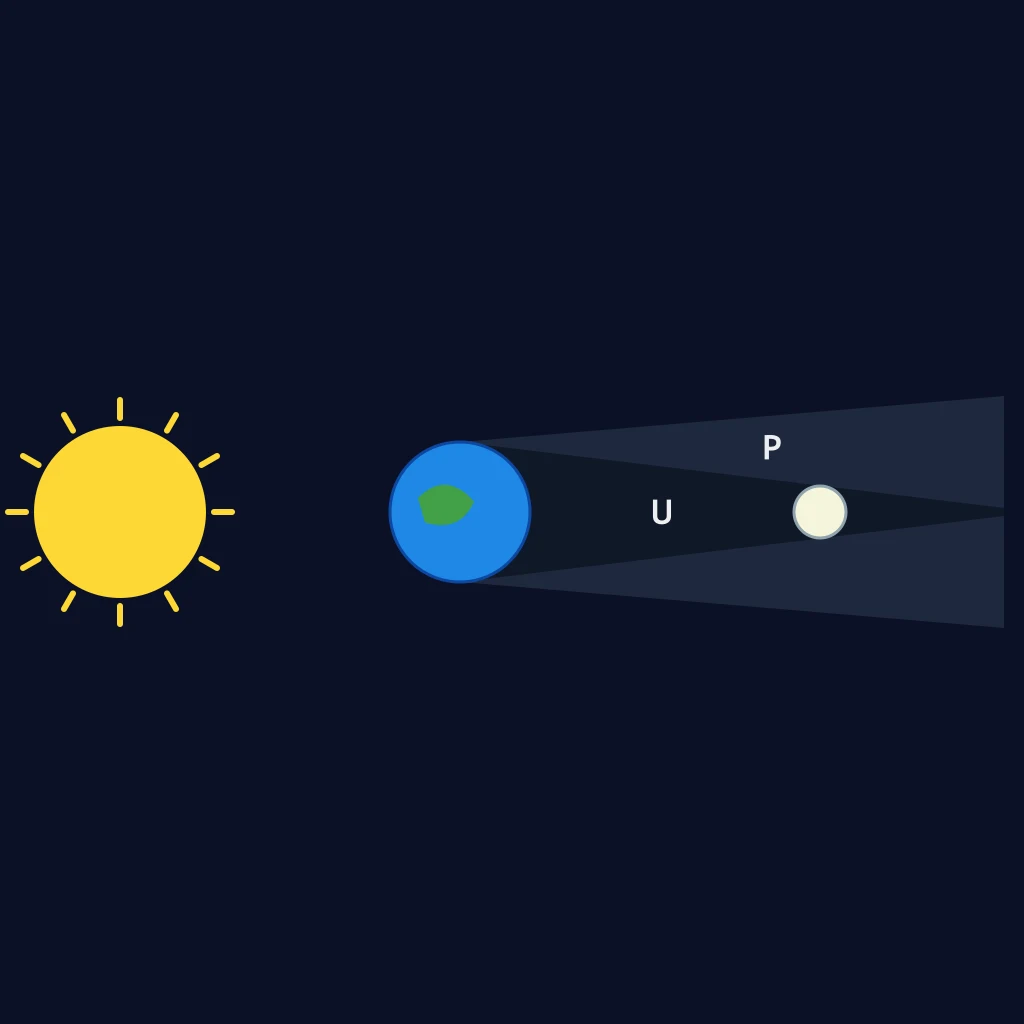
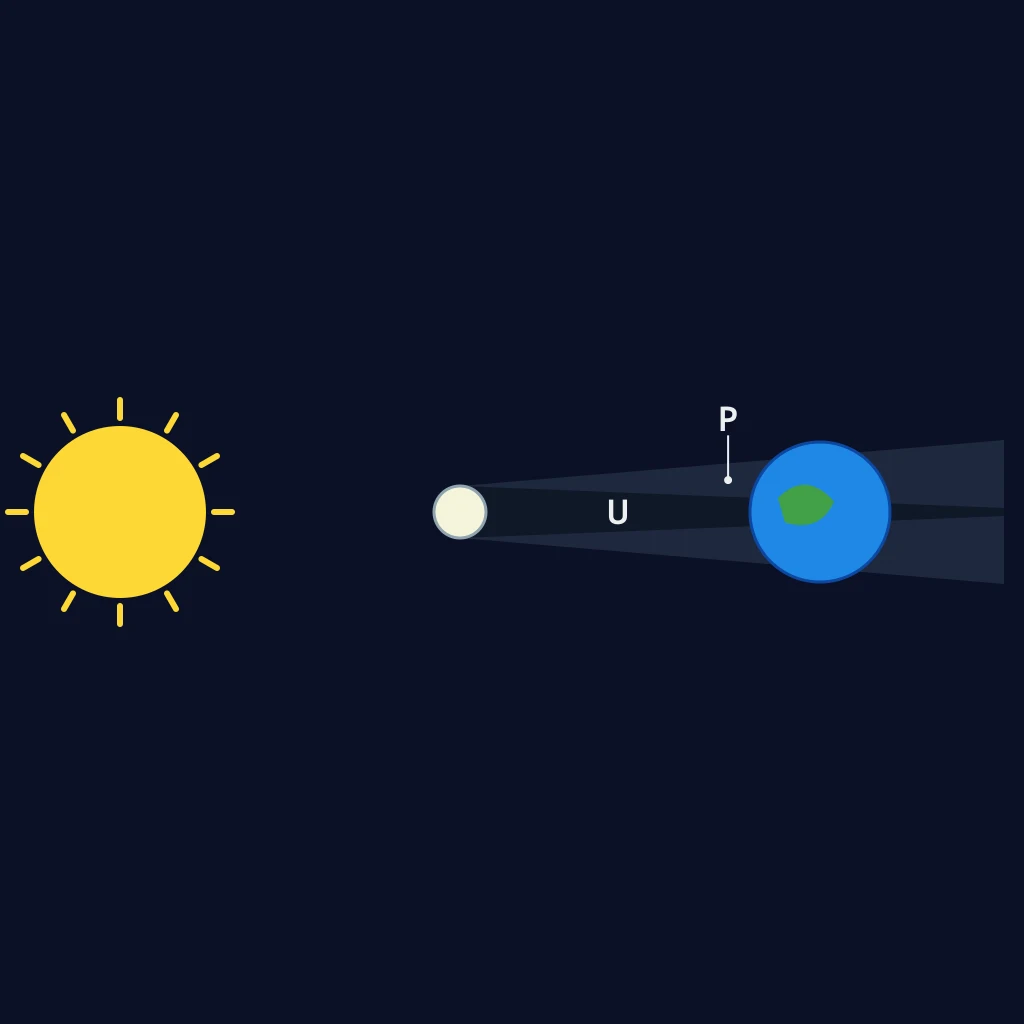
Use the alignment figure. Which event is shown?
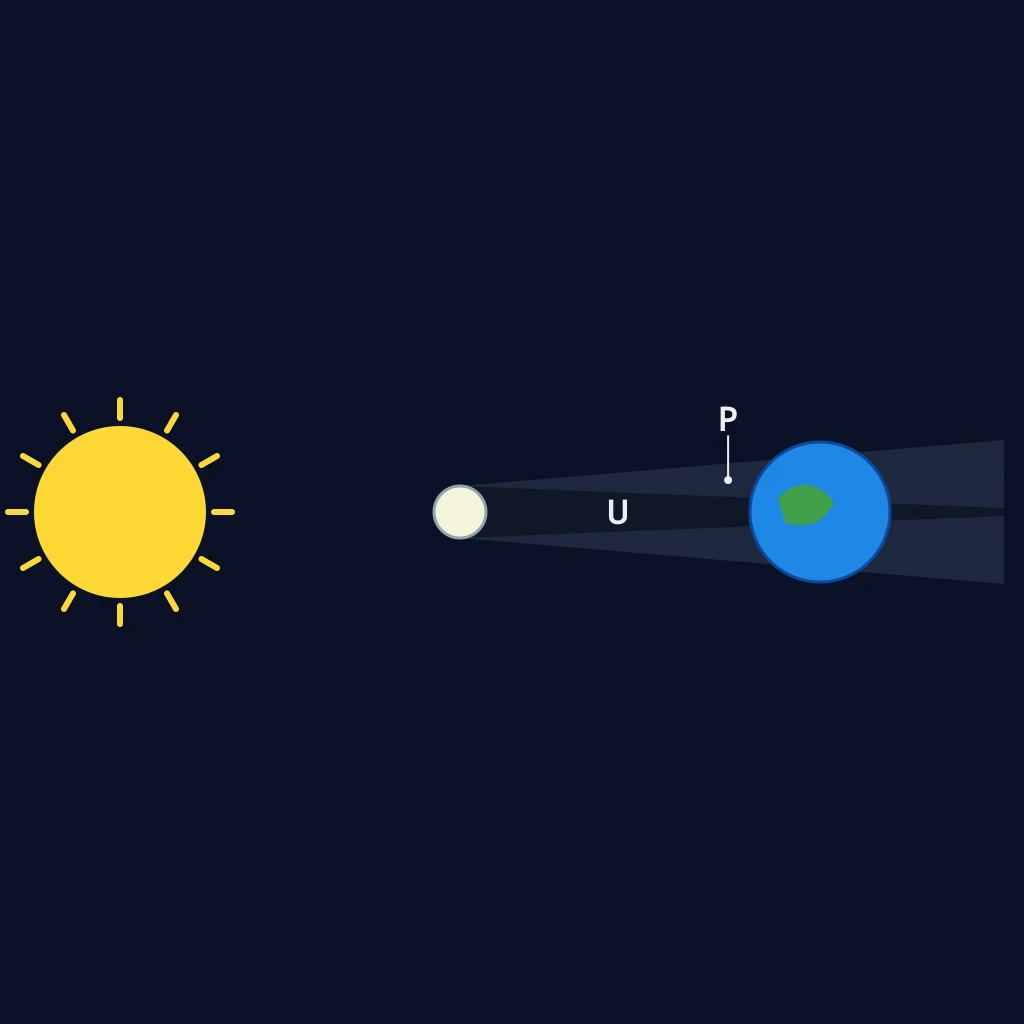
What event does the alignment figure show?
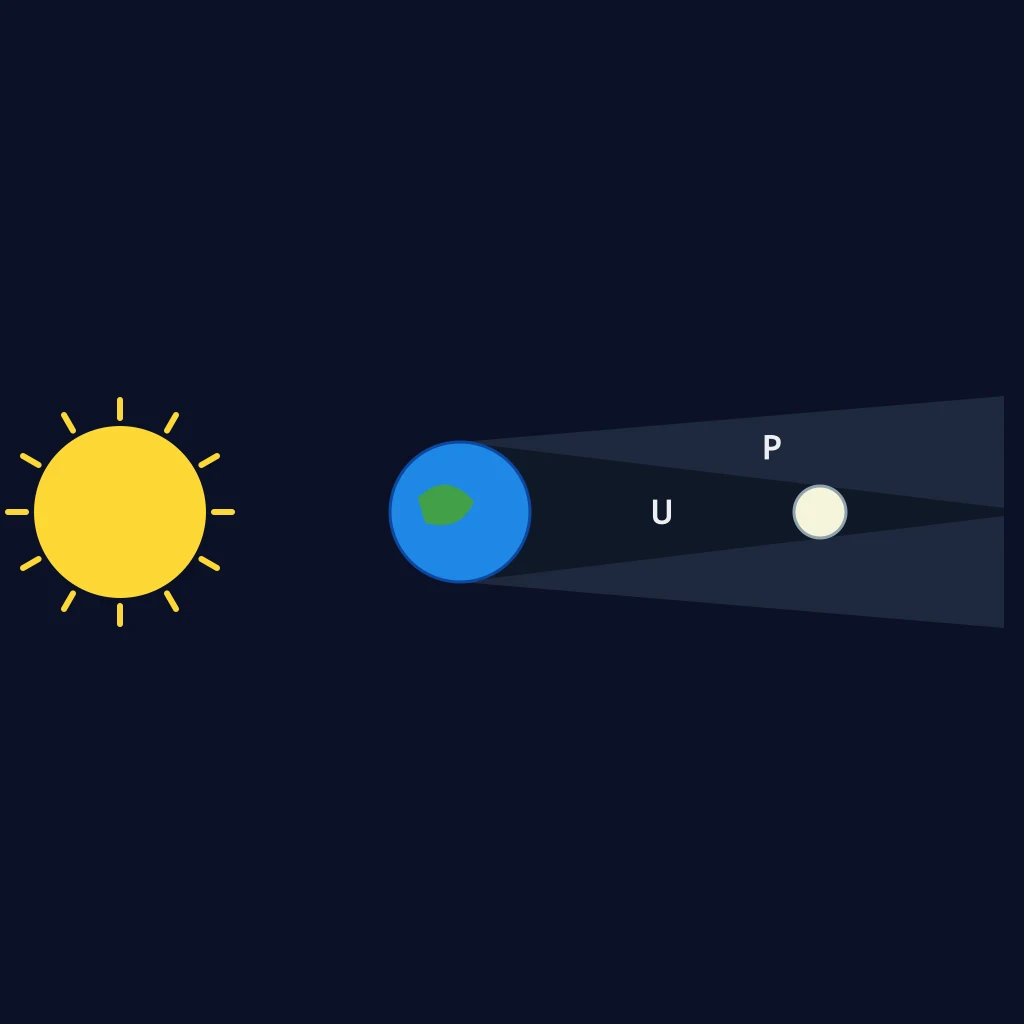
Use the alignment figure. What would people see from the places on Earth where the darkest part of the shadow falls?
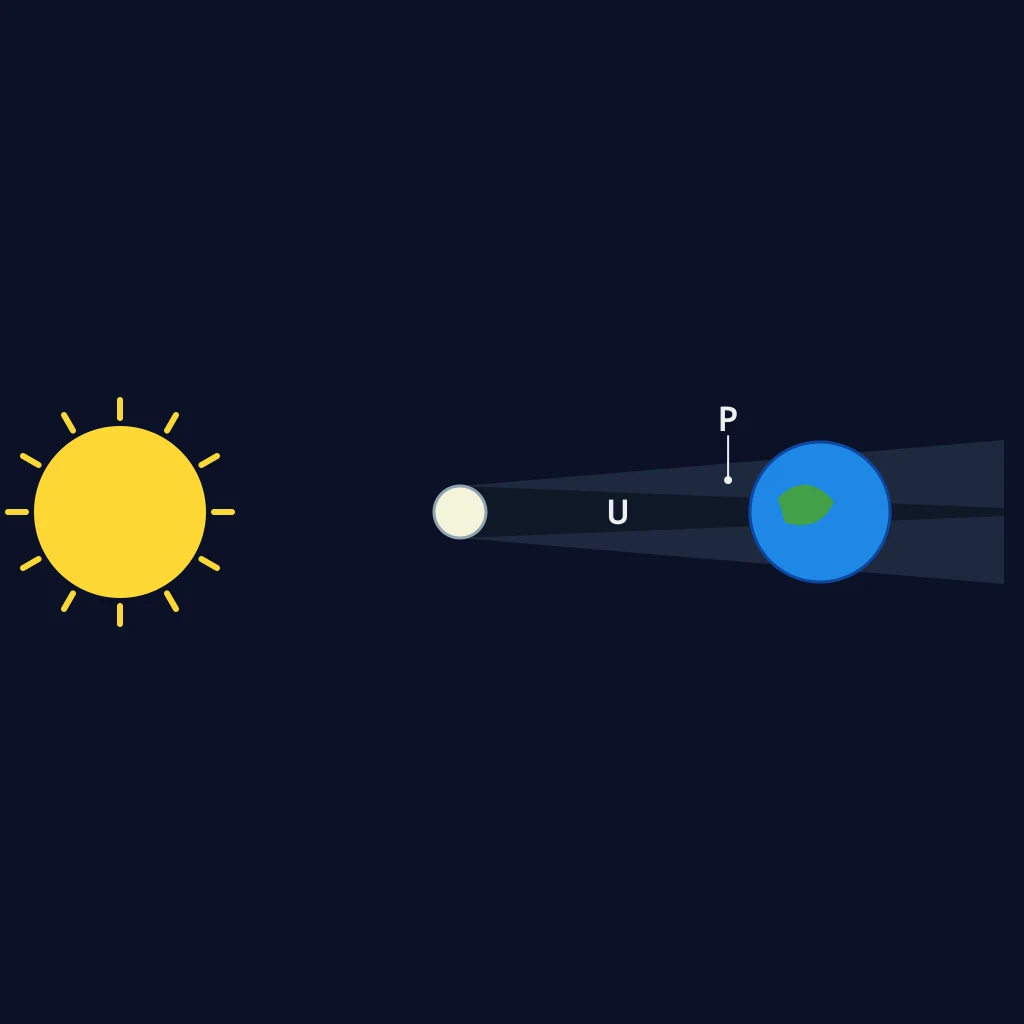
Use the alignment figure. Which event is represented?
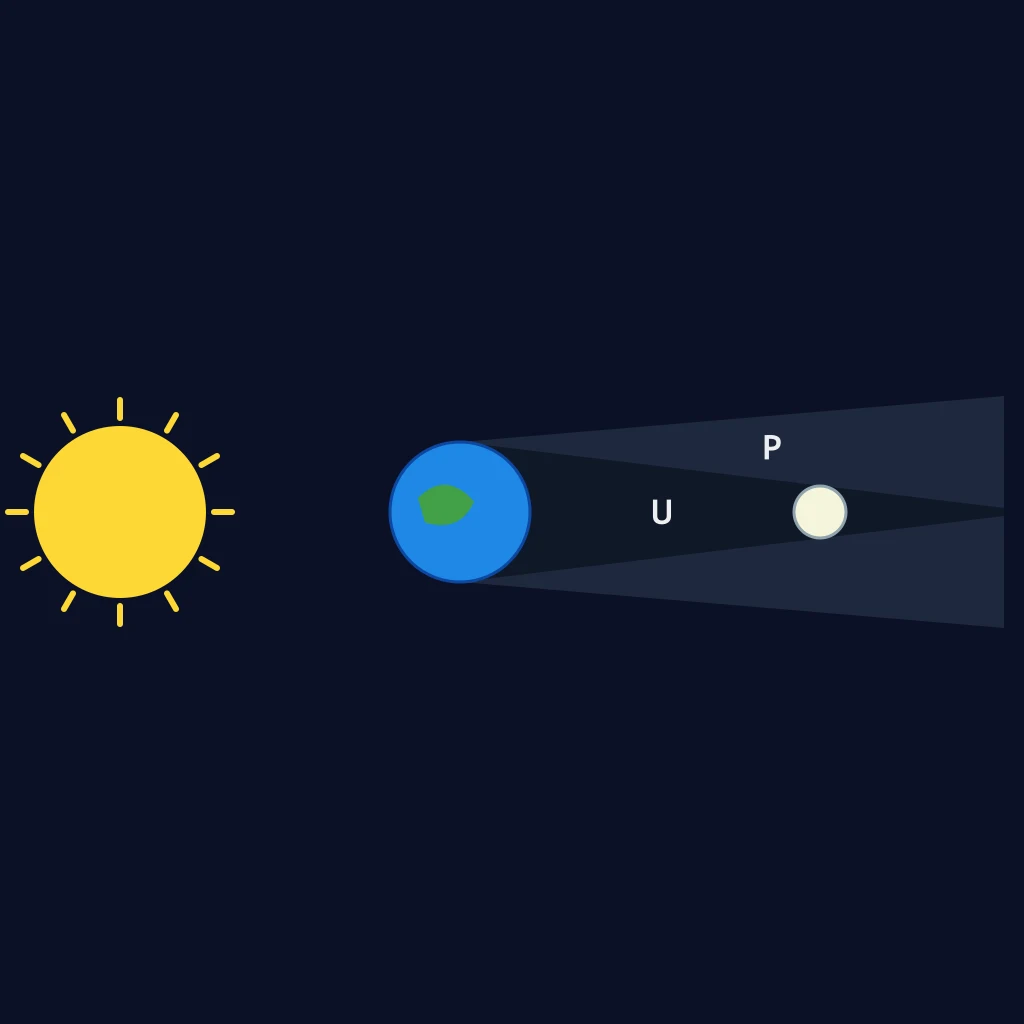
During some solar eclipses, the Moon is near the far point in its orbit, so its disk looks too small to fully cover the Sun. What type of eclipse results?
A total solar eclipse is visible only along a narrow path a few hundred kilometers wide. From how much of Earth can a total lunar eclipse be seen at the same time it is happening?
Along the path of a rare hybrid solar eclipse, Earth's curvature brings some locations into the Moon's umbra while other locations along the same path fall just short of it. What do observers see as the eclipse moves along that path?
An observer in the small dark part of the Moon's shadow on Earth looks up during the eclipse. What does that observer see?
A student is located in the Moon's lighter outer shadow on Earth during a solar eclipse. What view should the student report?
On the solar-eclipse shadow diagram, a town lies outside both the umbra and penumbra. What would people in that town see?
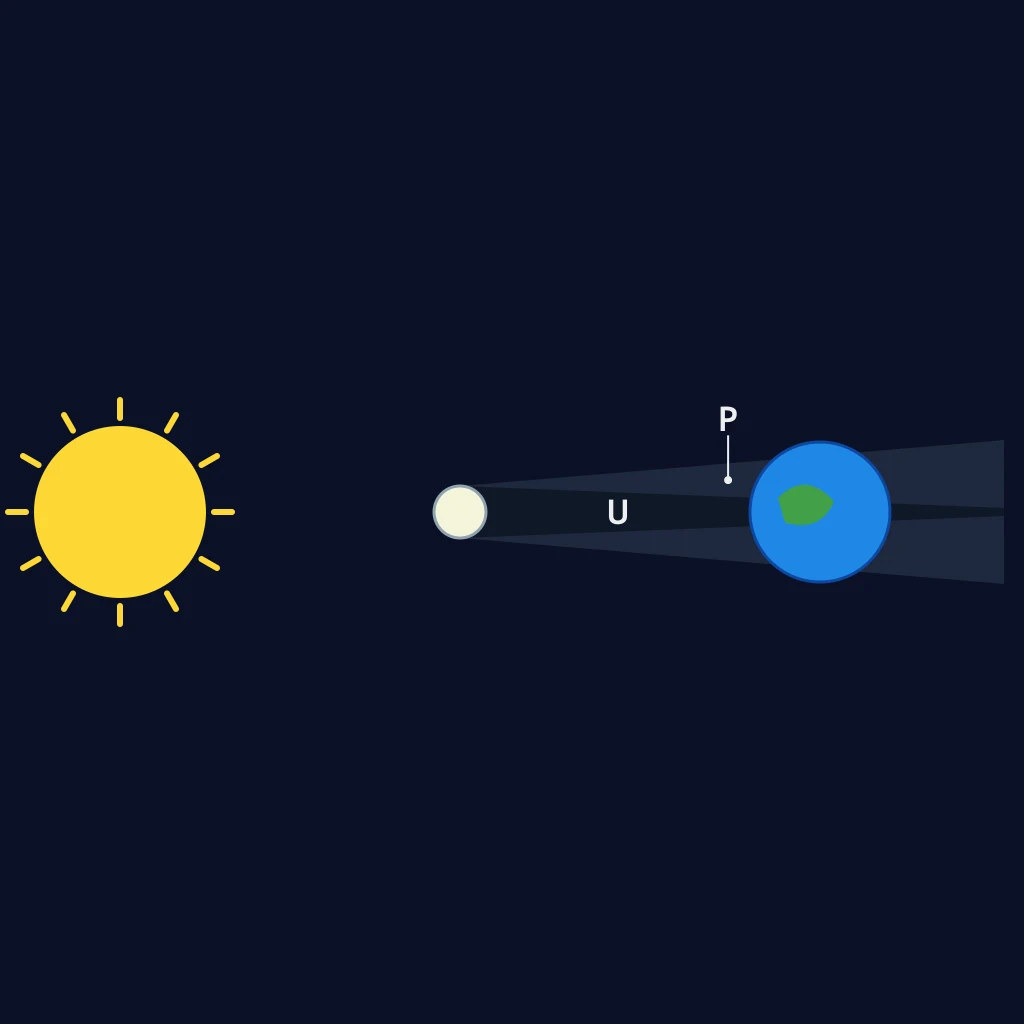
The Moon is drawn fully inside Earth's umbra. From the Moon's near side, what would Earth do to the Sun?
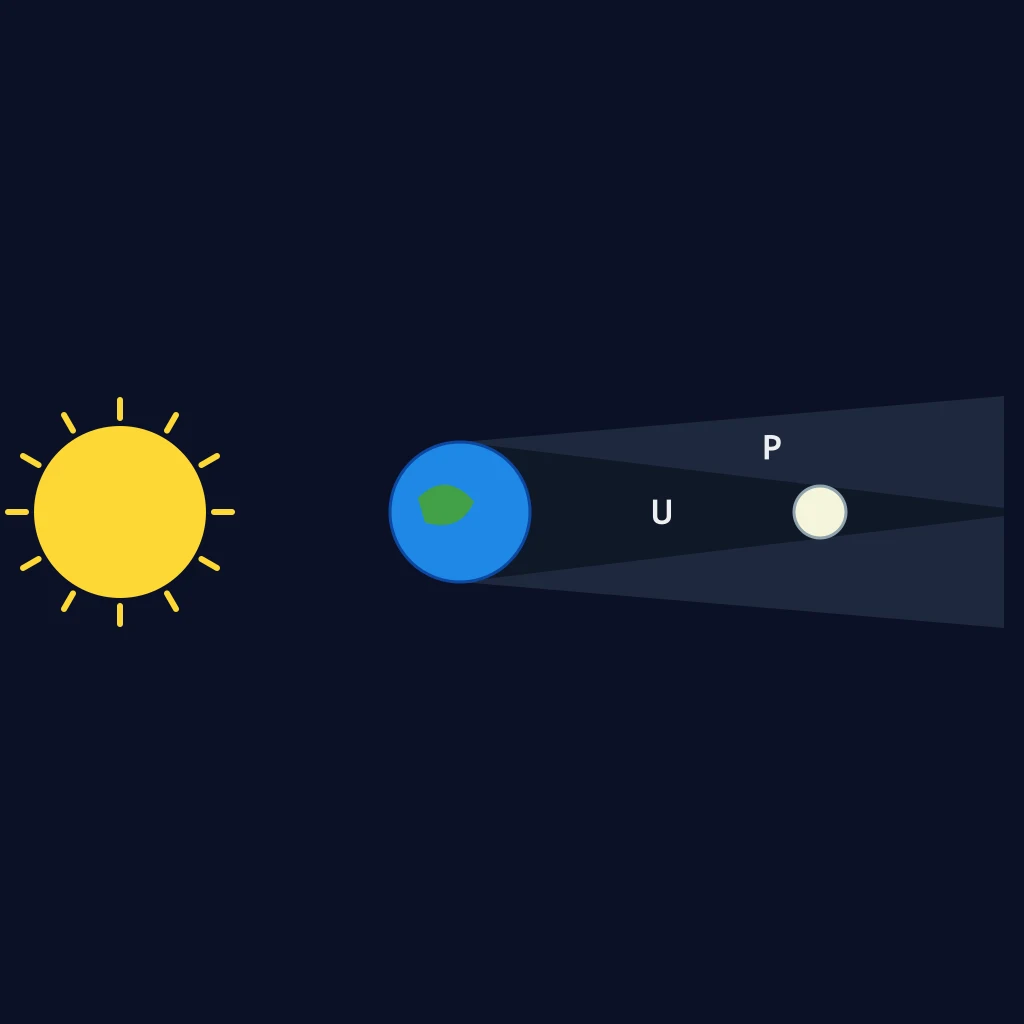
Suppose only part of the Moon entered Earth's umbra (U), while the rest stayed in the penumbra (P). What would observers on Earth see?
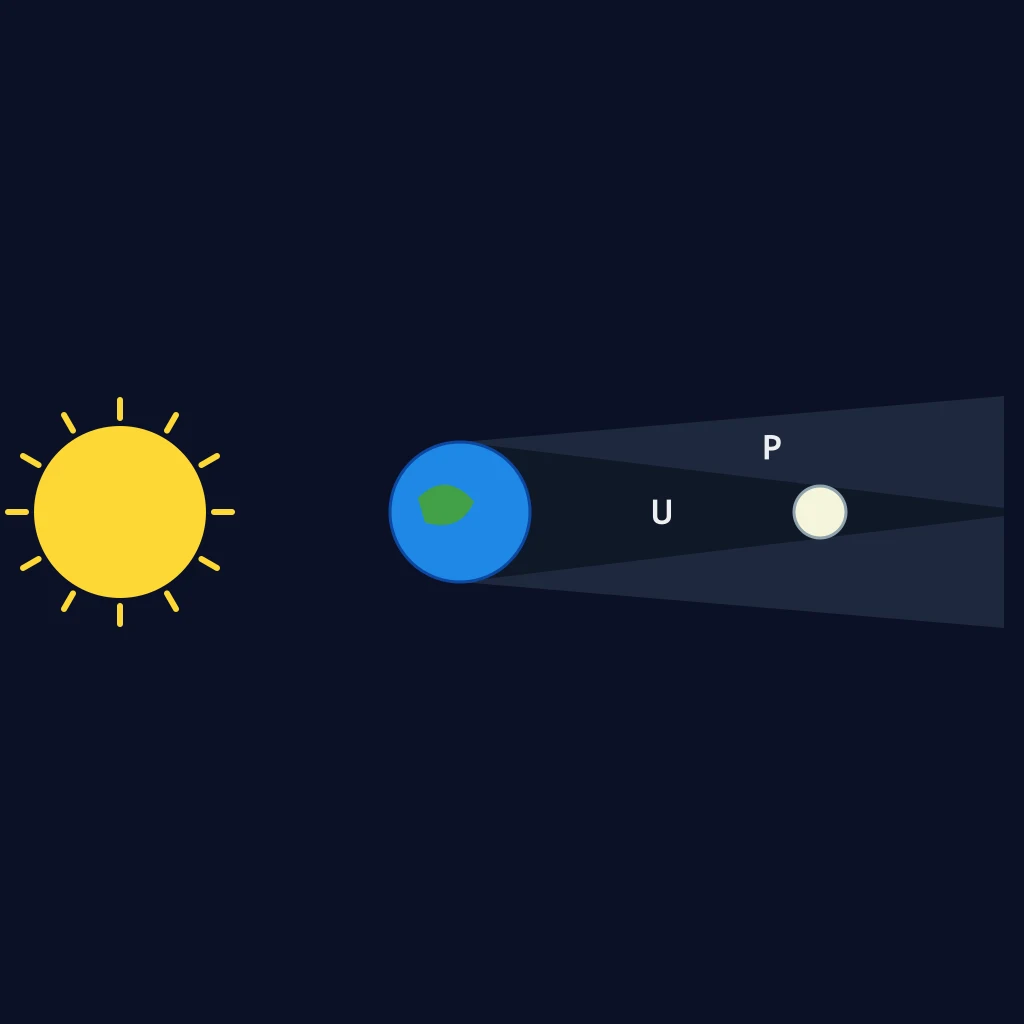
Suppose the Moon passed through only Earth's penumbra (P) and missed the umbra (U). Which observation would best match?
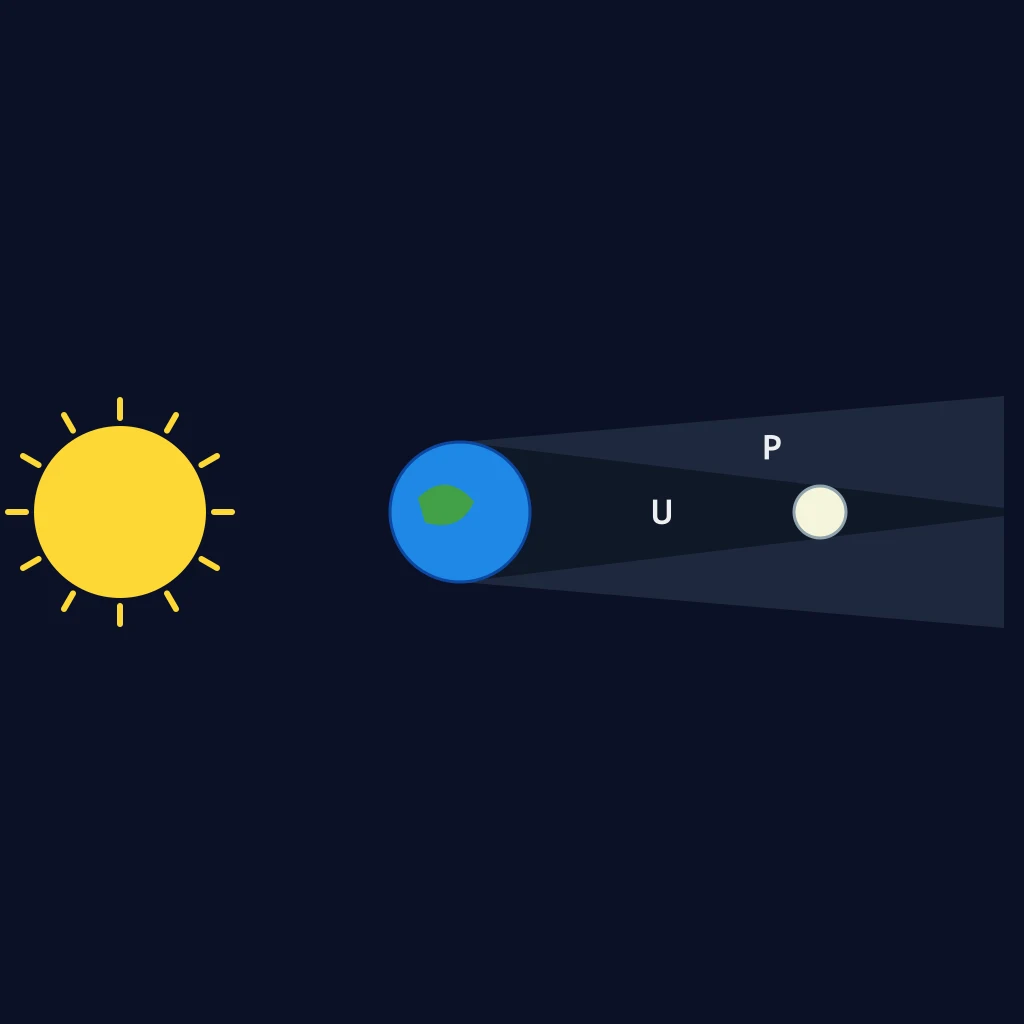
The Moon's orbit is tilted about 5 degrees to the ecliptic. Why is there not a solar eclipse at every new moon?
Why is there not a lunar eclipse at every full moon?
For either eclipse type, what must happen in addition to the Moon being new or full?
If the Moon's orbit lay exactly in the ecliptic plane, what would happen much more often?
Eclipses can happen only when the Sun lines up with one of the two nodes of the Moon's orbit. About how often does this alignment, called an eclipse season, come around?
Use the eclipse alignment figure. Which lunar phase is required for this alignment?
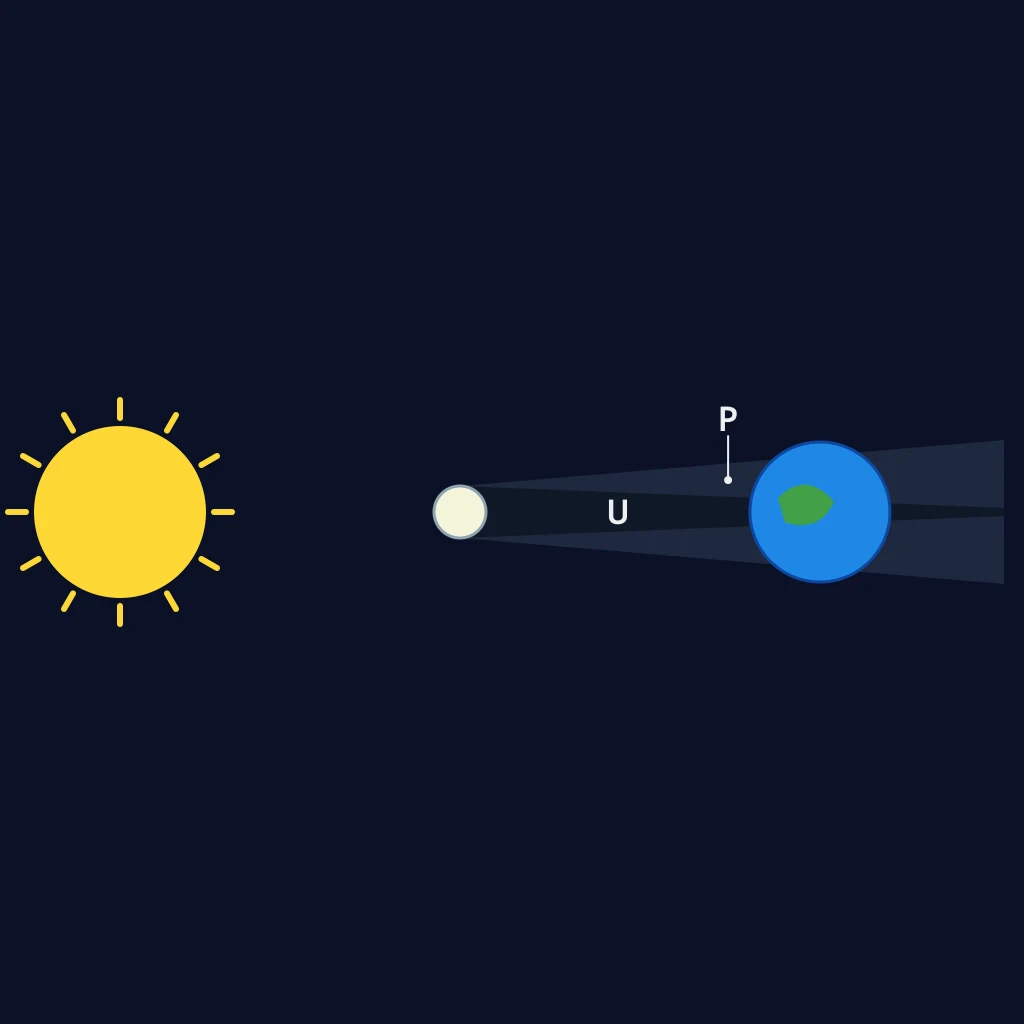
Use the eclipse alignment figure. Which lunar phase is required for this alignment?
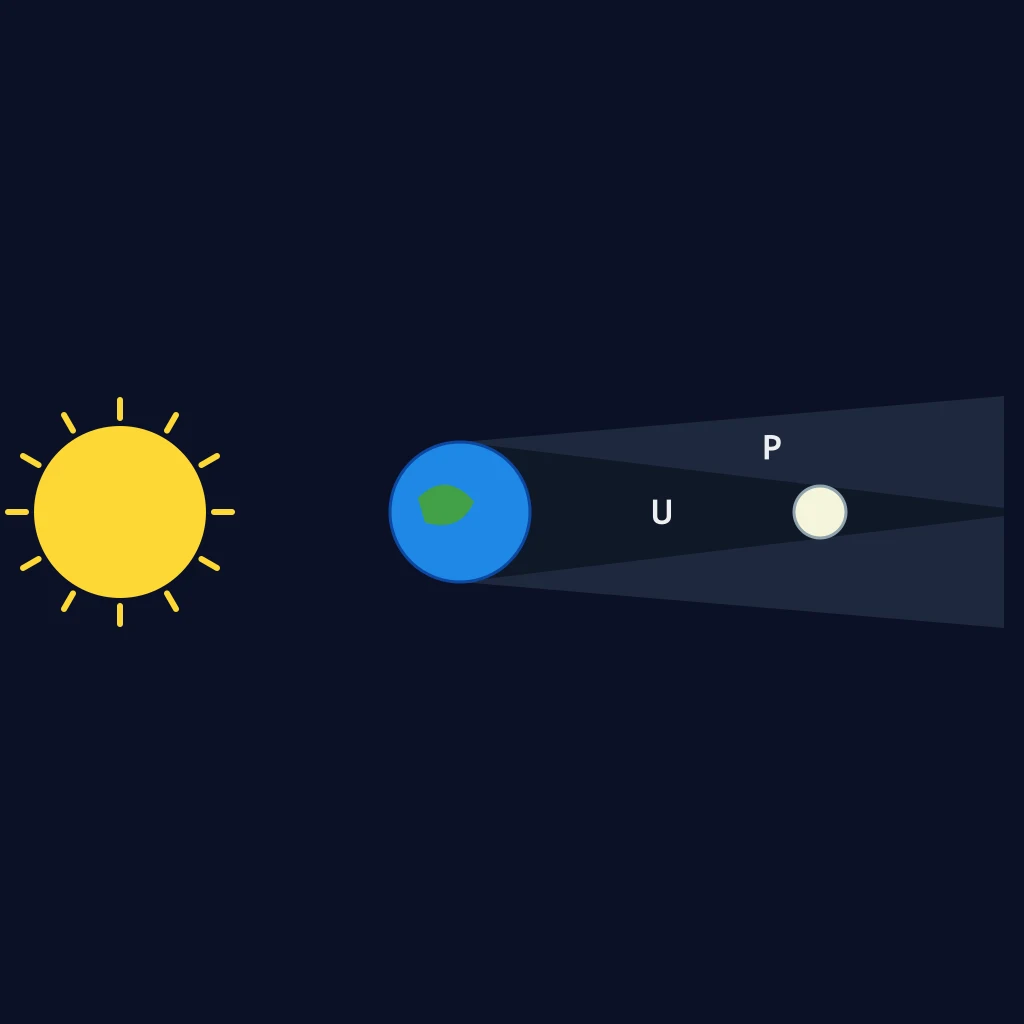
Look at the eclipse figure. What phase would the Moon have for observers on Earth at this moment?
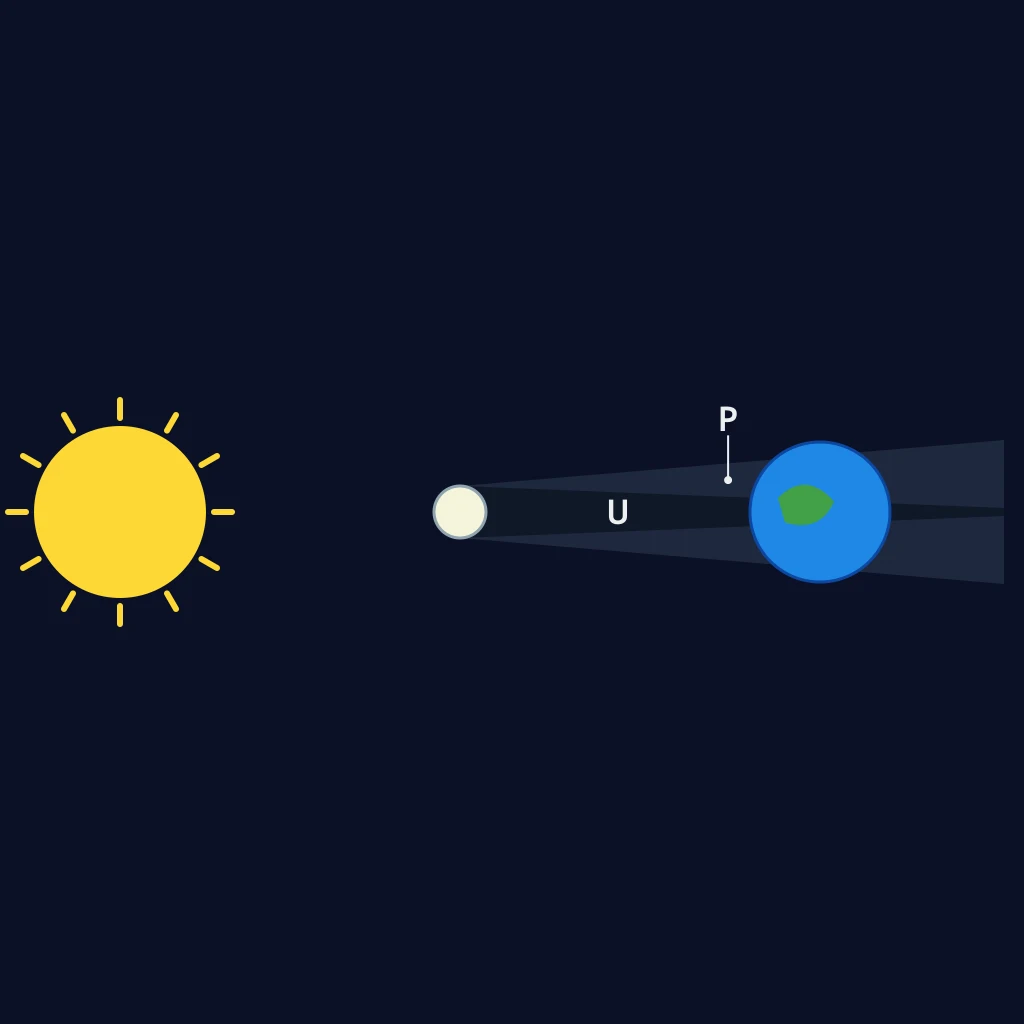
Look at the eclipse figure. What phase must the Moon be in for this alignment to happen?
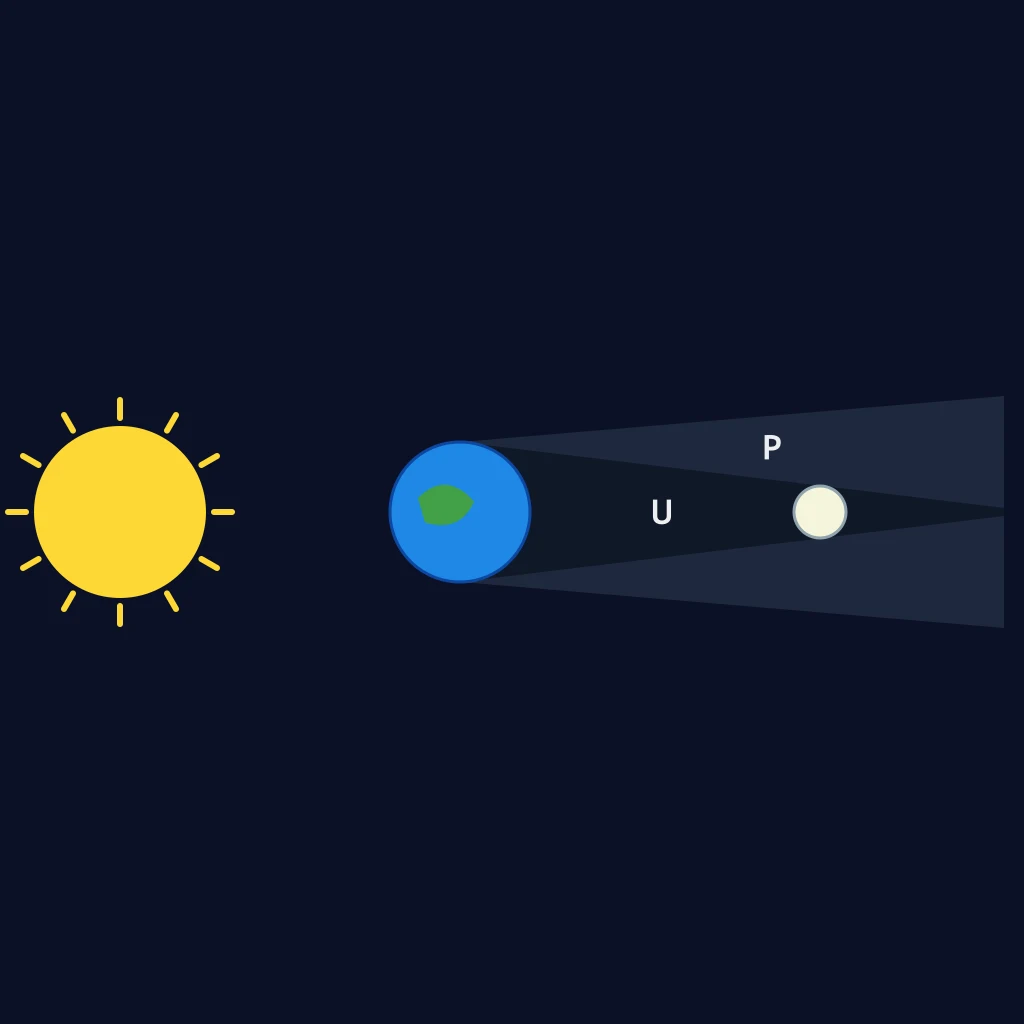
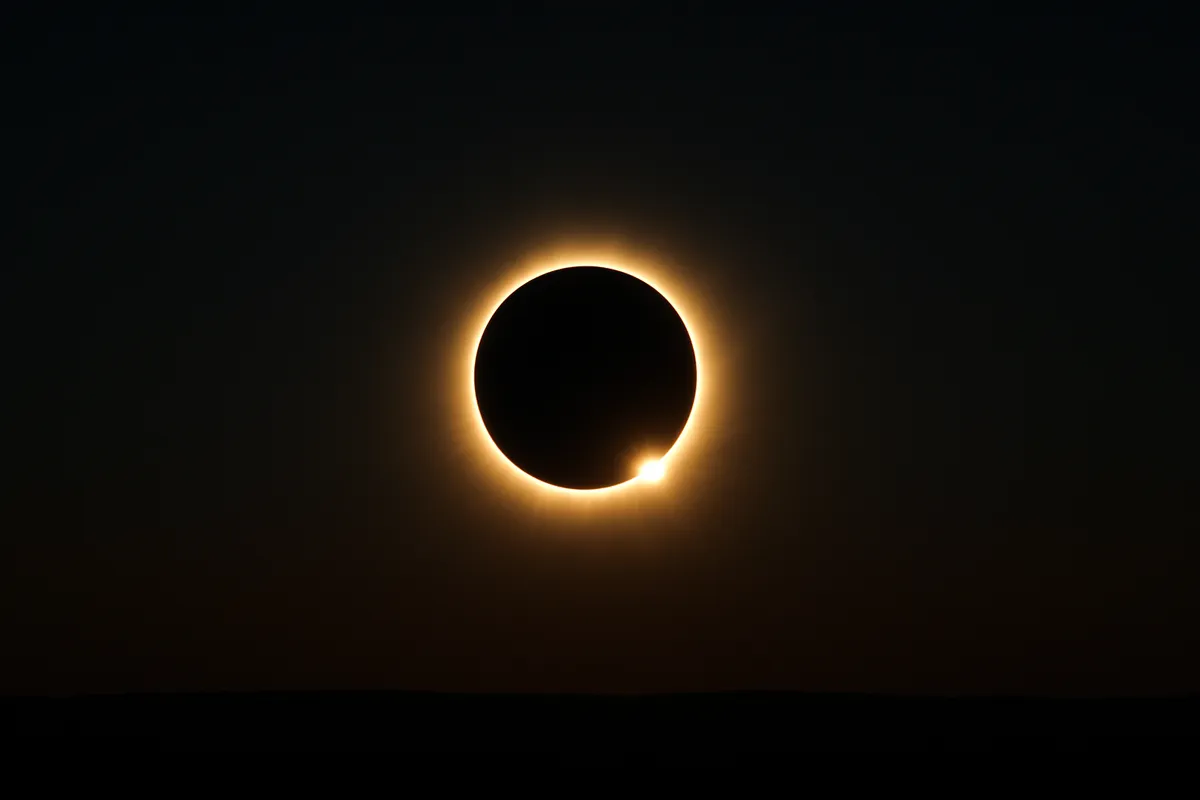
During totality in a solar eclipse, the Moon covers the Sun's bright disk. What outer solar layer may become visible?
During totality in a lunar eclipse, the Moon often looks copper red instead of vanishing. What causes that color?
A person in the path of totality during a solar eclipse sees brief twilight while nearby people see only a partial eclipse. Why is the total view so limited?
Crack the passcode before the zombies get in.
Answer, then swat bugs for bonus points.
Race through questions at your own speed.
Same question on every screen. Fastest wins.

Pick a tile, answer, hit bonuses and steals.
40 questions