Loading
by BlastRoom
Missouri to Fort Sumter: every compromise that held, until none did.
#united_states_history

30 questions
One question set, multiple game modes. Tap any game to see it in action. Not sure which to pick?
Answer to place stones and capture territory.
Outrun the snow together.
Earn blasts, then hunt the other team.
Answer to earn energy, then climb.

The class blasts through walls together.
Bid on mystery lots. Most money wins.
Sell tours. Nice, standard, or a total scam.

Answer, restock, and serve the rush.
More correct answers pulls the rope your way.
Answer, then shoot down the alien wave.
Answer, then tap to leap the frozen ridge.
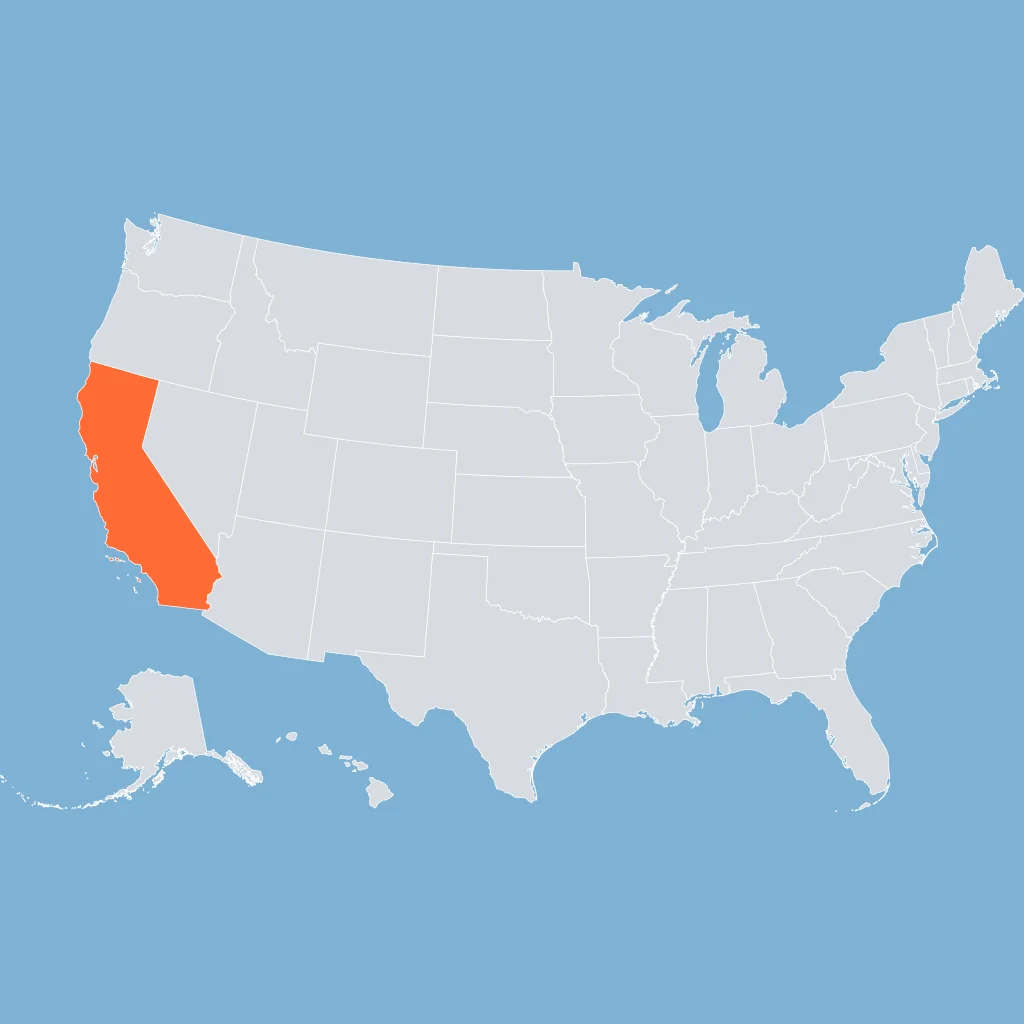
The state shaded on the map applied for admission after the 1849 gold rush and entered the Union in 1850 as a free state. Which state is shaded?
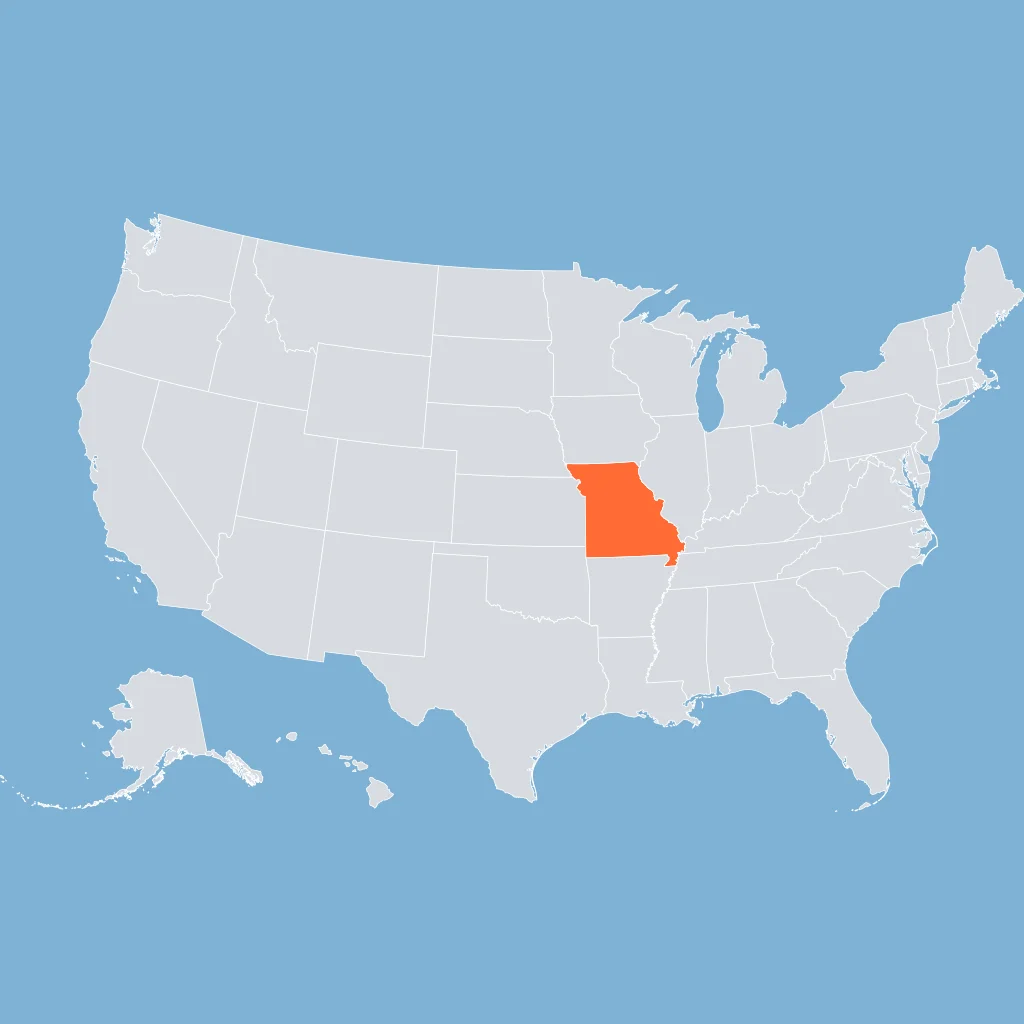
The state shaded on the map asked to enter the Union in 1819 and was admitted in 1821 with slavery permitted. Which state had been admitted just before it, in 1820, so that the two sections would stay evenly matched in the Senate?
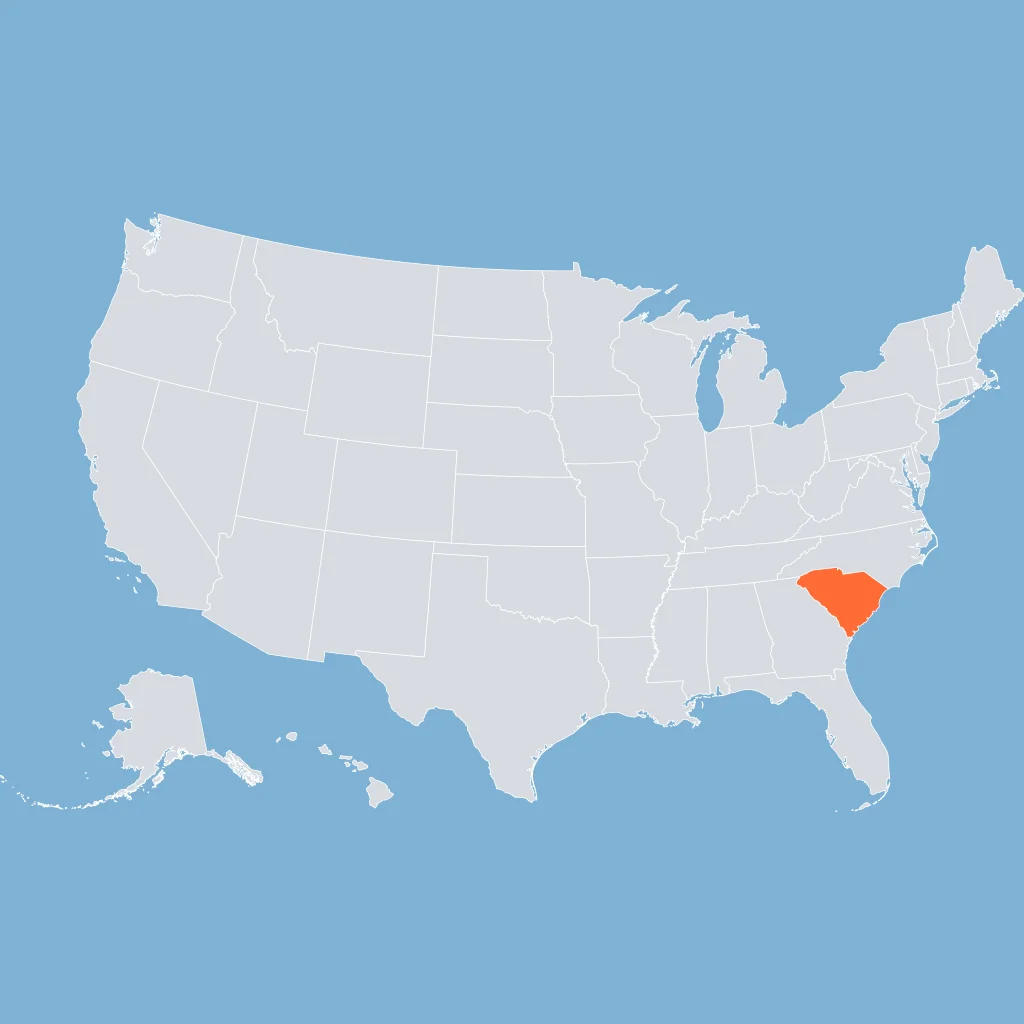
The state shaded on the map was the first to adopt an ordinance of secession, in December 1860. A small federal garrison held an island fort in its main harbor until Confederate batteries opened fire in April 1861. Which fort was it?
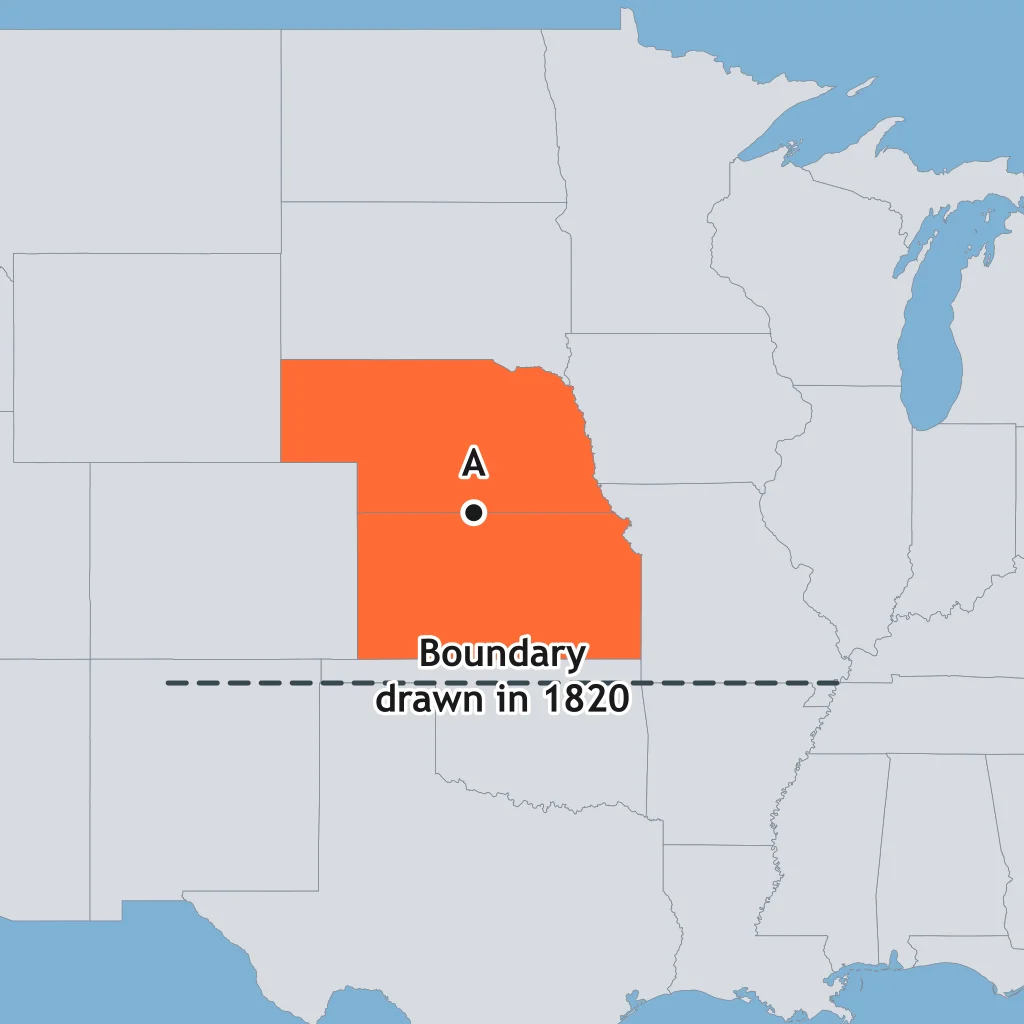
Under the boundary agreed in 1820, slavery was barred in the Louisiana Purchase lands north of 36 degrees 30 minutes and allowed south of it. In which of these would slavery have been permitted?
The dashed line is the boundary drawn in 1820, north of which slavery was barred in these lands. In 1854 Congress organized the shaded area A and let its settlers decide the slavery question by vote. Why did northerners call that act a betrayal?
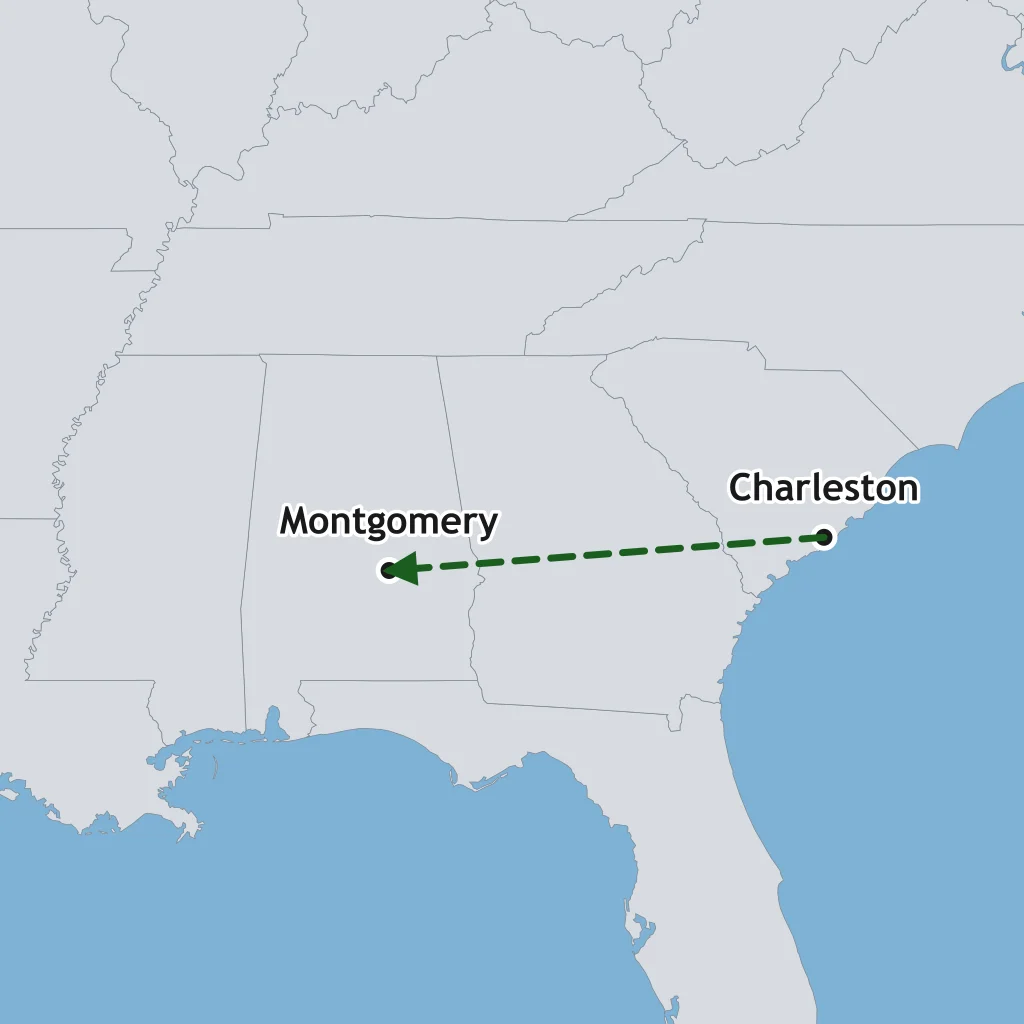
The arrow runs from the city where South Carolina adopted the first ordinance of secession to the city where delegates of the seceded states met in February 1861. What did the delegates do in that second city?
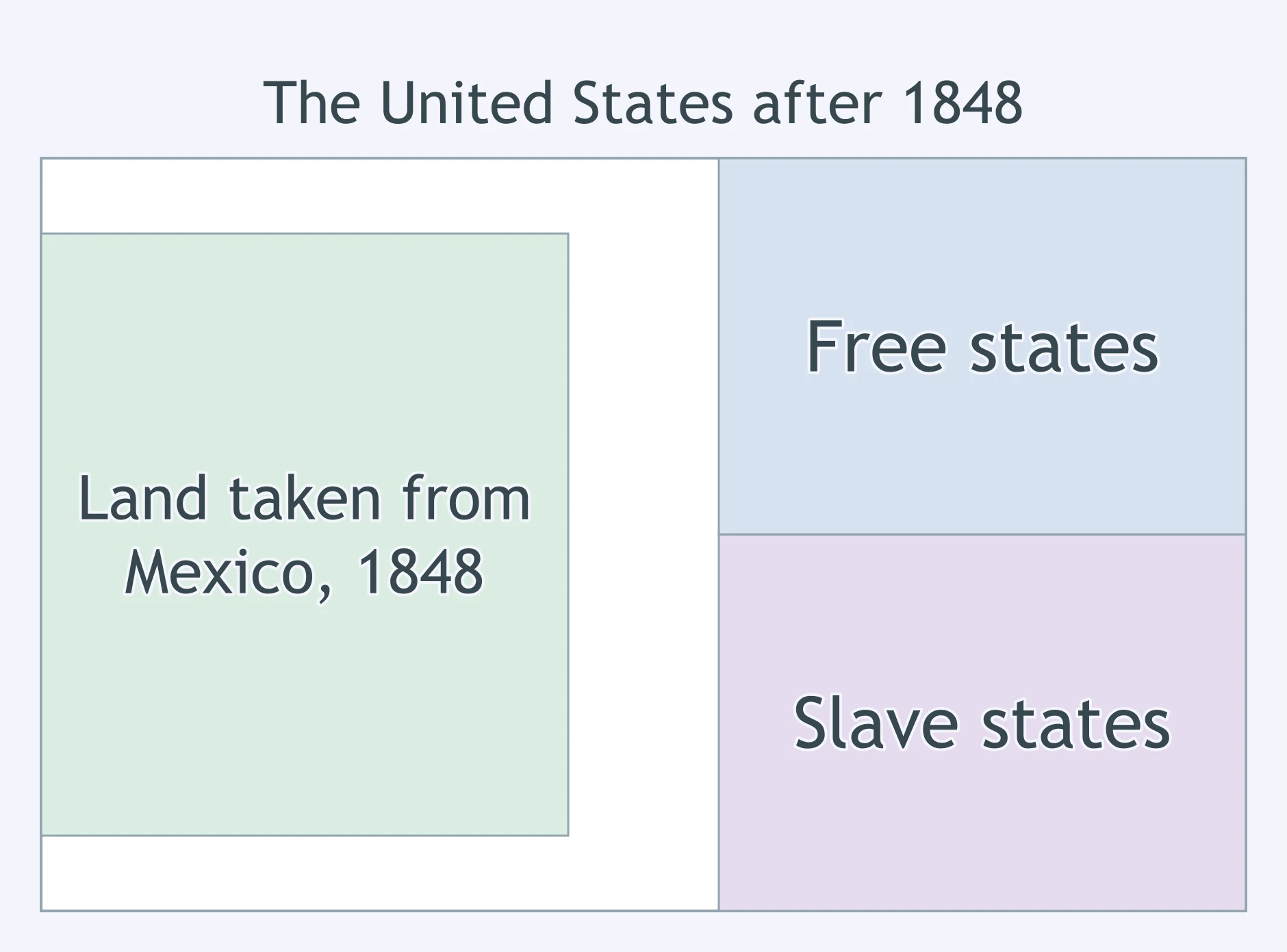
In 1848 the Senate held fifteen free-state and fifteen slave-state delegations. The map shows the land just taken from Mexico lying west of both sections. Why did the question of that land's status set off a crisis?
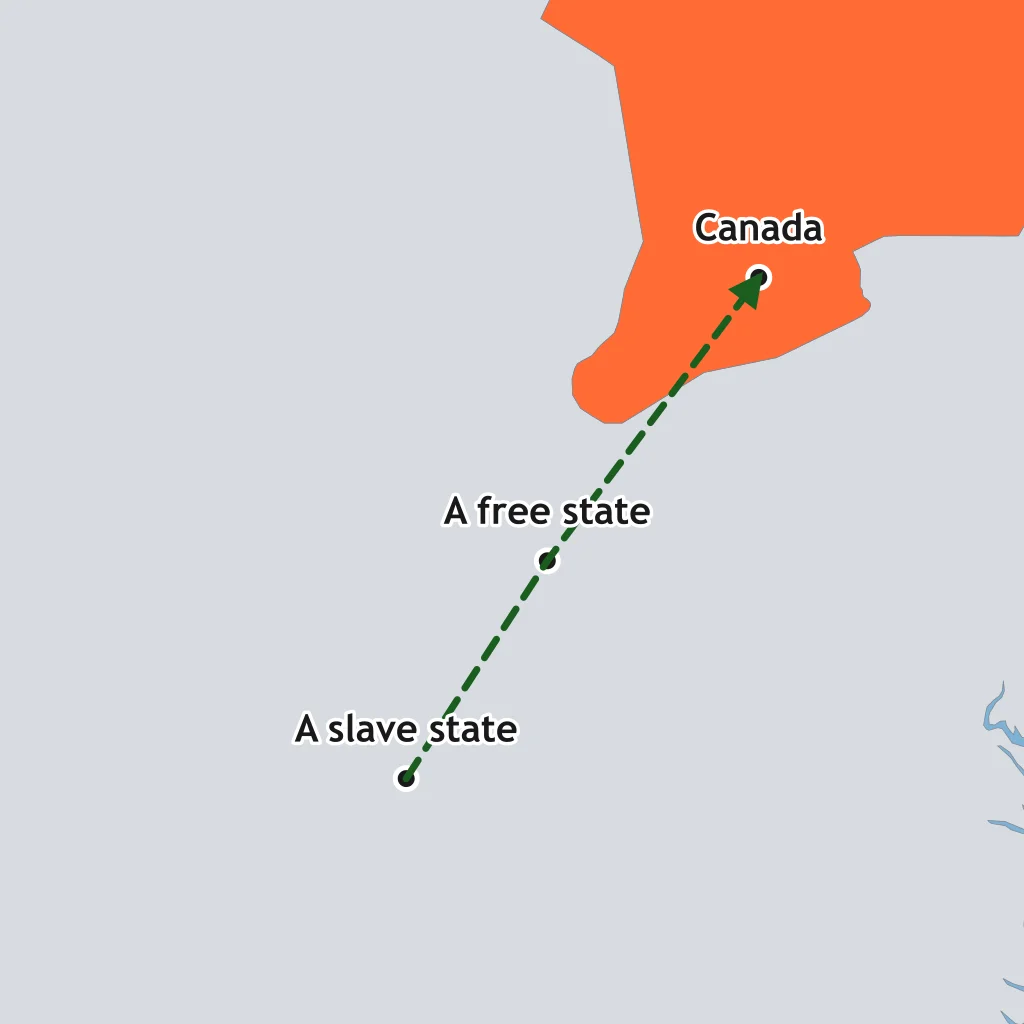
The arrow traces the path many people escaping slavery took after 1850: north out of a slave state, through a free state, and on to the shaded country at the top of the map. Why did the Fugitive Slave Act push so many to keep going?
Put these in the order they happened: the Kansas-Nebraska Act; the Wilmot Proviso; the Dred Scott decision; the Compromise of 1850.
Put these in order: John Brown's raid on Harpers Ferry; the caning of Charles Sumner in the Senate chamber; the Lincoln-Douglas debates; South Carolina's ordinance of secession.
Douglas's bill organizing Kansas and Nebraska passed in May 1854. Put what followed in order: rival settler governments in Kansas; the Republican Party's first presidential campaign; the caning of Charles Sumner.
Which of these had already happened by the time Lincoln was elected in November 1860?
Order these elections and rulings: the election of James Buchanan; the Dred Scott decision; the Lincoln-Douglas debates; the election of Abraham Lincoln.
Put in order: Lincoln's inauguration; the firing on Fort Sumter; the formation of the Confederacy; Virginia's ordinance of secession.
Under the 1850 fugitive slave law a federal commissioner was paid ten dollars for ruling that an accused person be handed to the claimant and five dollars for ruling against the claim. How did many northern states respond?
Douglas's 1854 act canceled the 1820 restriction and let settlers in the new territories vote slavery up or down. The Whig Party broke apart over it and antislavery Democrats split from their leaders. What new party formed that year?
The Dred Scott ruling held that Congress had no power to bar slavery from a federal territory. At Freeport in 1858 Lincoln pressed Douglas on what that left of popular sovereignty. What was Douglas's answer?
In October 1859 John Brown and a small band seized the federal armory at Harpers Ferry, hoping to arm enslaved people across the region. No general rising came, and US marines under Colonel Robert E. Lee took the engine house. What followed?
In May 1856, days after Senator Charles Sumner's speech attacking slavery in Kansas and mocking a South Carolina senator, Representative Preston Brooks beat him unconscious with a cane at his Senate desk. What happened to Brooks?
Harriet Beecher Stowe's novel of 1852 followed enslaved characters pursued under the new fugitive slave law, and it sold more than 300,000 copies in the United States in its first year. What effect did it have?
In November 1860 four candidates split the vote. Lincoln took under 40 percent of the popular vote and a clear majority of the electoral college, and his name did not appear on the ballot in most southern states. What followed before the year was out?
Lincoln told South Carolina he would send provisions only, no arms and no troops, to the fort in Charleston harbor. Confederate batteries opened fire on 12 April 1861 and the garrison surrendered. What did Lincoln do next, and what did it cause?
The Compromise of 1850 admitted California as a free state and settled the Texas boundary. What did it do about slavery in the District of Columbia?
The Compromise of 1850 organized the Utah and New Mexico territories. On what basis were those two territories to settle the slavery question?
The Compromise of 1850 settled Texas's disputed claim to land reaching into New Mexico. What did Texas get in return for giving up that claim?
The Court in Dred Scott v. Sandford held that Congress could not bar slavery from a federal territory. On what constitutional ground did Chief Justice Taney rest that holding?
In 1846 David Wilmot attached a rider to a military appropriations bill during the war with Mexico. What did the rider propose, and what became of it?
Accepting his party's Senate nomination in June 1858, Lincoln said: 'A house divided against itself cannot stand. I believe this government cannot endure, permanently half slave and half free.' What position does that take?
The Fugitive Slave Act of 1850 declares that 'all good citizens are hereby commanded to aid and assist in the prompt and efficient execution of this law.' What did that require of people living in the free states?
In his inaugural address on 4 March 1861 Lincoln said: 'I have no purpose, directly or indirectly, to interfere with the institution of slavery in the States where it exists. I believe I have no lawful right to do so.' What position does this take?
Crack the passcode before the zombies get in.
Answer, then swat bugs for bonus points.
Race through questions at your own speed.
Same question on every screen. Fastest wins.

Pick a tile, answer, hit bonuses and steals.
Lincoln, Emancipation and the Home Fronts
30 questions