Loading
by BlastRoom
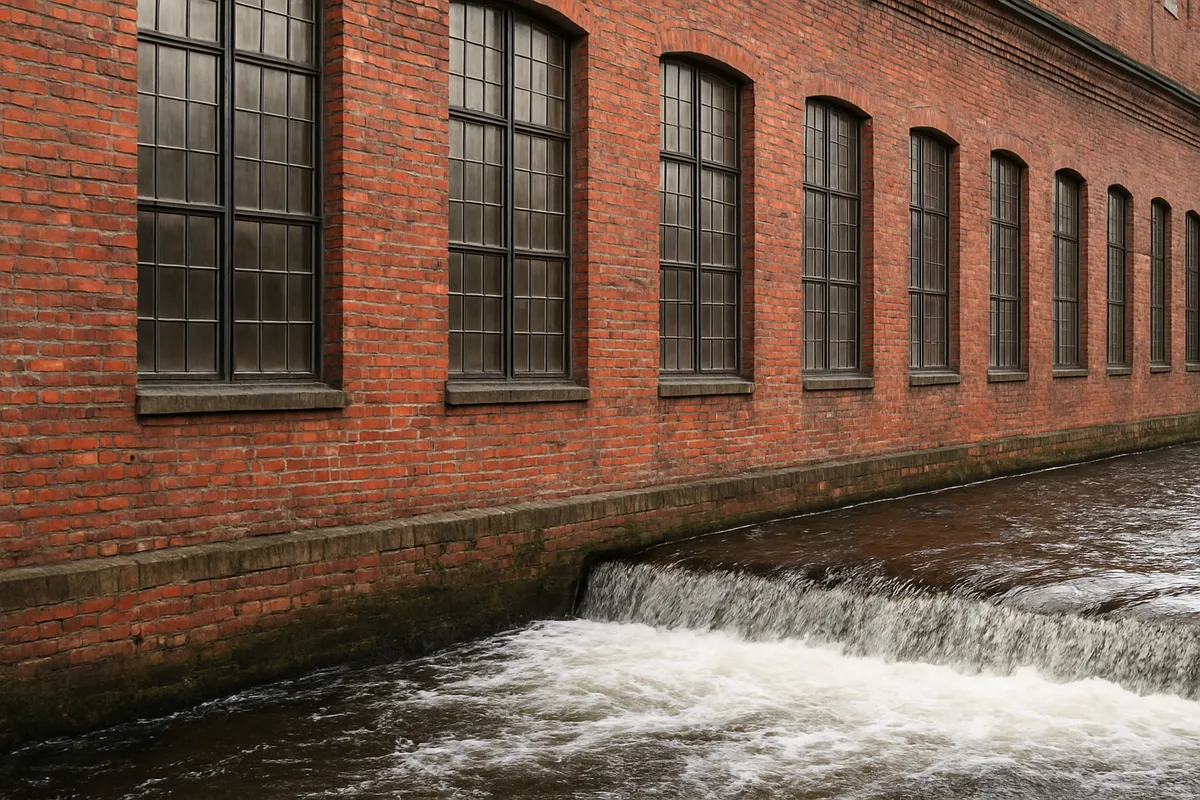
Mills, machines, canals and the people who came to work them.
#united_states_history
25 questions
One question set, multiple game modes. Tap any game to see it in action. Not sure which to pick?
Answer to place stones and capture territory.
Outrun the snow together.
Earn blasts, then hunt the other team.
Answer to earn energy, then climb.

The class blasts through walls together.
Bid on mystery lots. Most money wins.
Sell tours. Nice, standard, or a total scam.

Answer, restock, and serve the rush.
More correct answers pulls the rope your way.
Answer, then shoot down the alien wave.
Answer, then tap to leap the frozen ridge.
In 1793 a British-trained mechanic who had memorized Arkwright's machinery opened a mill on the Blackstone River at Pawtucket, Rhode Island. What technology did Samuel Slater bring to the United States?
In 1814 the Boston Manufacturing Company's Waltham factory took in raw cotton at one door and sent finished cloth out the other, weaving by machine as well as spinning. Which machine made the weaving step possible?
Federal armories and arms contractors filed each musket part to a single pattern, so any lock fit any gun and an unskilled worker could assemble a weapon from bins of parts. What is this manufacturing method called?
In 1807 Robert Fulton's Clermont ran the roughly 150 miles up the Hudson from New York City to Albany in about 32 hours, against the current. Which transport improvement had Fulton made practical?
Which transport improvement of the 1830s to 1850s moved heavy freight quickly over land, could be built where no river or canal ran, climbed grades that boats could not, and kept working in winter when canal water froze?
In May 1844 Samuel F. B. Morse sent the message 'What hath God wrought' from Washington to Baltimore in moments. What invention carried it?
Before 1825 wheat grown in Ohio reached the Atlantic coast by floating down the rivers to New Orleans. After New York State's canal linked Buffalo to Albany, that grain moved east across the state instead. What resulted?
By the 1850s railroad companies strung telegraph wire beside their tracks and reported where each train was before letting the next one onto a stretch of single track. What problem did this arrangement solve?
A blight destroyed Ireland's potato crop from 1845, and more than a million Irish reached American ports over the following decade, most of them arriving with almost no money. What resulted in the northern cities where they landed?
In February 1834 about 800 women walked out of the Lowell mills and paraded through the town, and a larger turnout shut several mills down in 1836. What prompted these walkouts?
By the late 1850s Irish immigrants held a large share of the jobs in the Lowell mills, and far fewer New England farm women worked there than in the 1830s. What best explains the change?
The Embargo Act of 1807 and then the War of 1812 kept most British cloth out of American markets for several years. What resulted in New England?
Northern cities took in tens of thousands of newcomers a year in the 1830s and 1840s without extending sewers, water lines or housing to match. What resulted?
Between 1815 and 1850 canal and river freight became cheap while hauling goods overland by wagon stayed costly. What resulted for the regions the cheap water routes connected?
Arrivals from the German states climbed steeply after 1848, and Germans became the largest immigrant group of the 1850s, many moving inland to farms and trades in Ohio, Wisconsin and Missouri. What best explains the surge?
The United States had roughly 100 miles of canal in 1816. By 1840 it had more than 3,300 miles, most of it dug after 1825. What best explains this pattern?
About 7 percent of Americans lived in a town or city of 2,500 or more in 1820. By 1860 about 20 percent did. What does this show, and where was the growth fastest?
In the 1830s roughly eight of every ten workers in the Lowell textile mills were young unmarried women, most of them from New England farms, and they lived in company boardinghouses. What does this show?
In 1842 the highest court in Massachusetts reversed the criminal conspiracy convictions of Boston bootmakers who had agreed not to work in any shop that hired non-members. What did Commonwealth v. Hunt establish?
In 1845 women working in the Lowell mills founded an association, elected Sarah Bagley its president, and carried thousands of signatures on petitions to the Massachusetts legislature. What were they demanding?
In 1844 mobs in Philadelphia attacked Irish neighborhoods and burned two Catholic churches after a quarrel over which version of the Bible would be read in the public schools. What does this episode illustrate?
The American Party won offices in several states in the mid-1850s on a program aimed at the recent wave of immigrants. What did the party demand?
In 1860 the free states held roughly 1.3 million industrial wage earners while the slave states held about 110,000. What does this measure show about the two regions?
In 1860 roughly seven of every eight foreign-born residents of the United States lived in the free states rather than the slave states. Which explanation best fits that distribution?
By 1860 northern rail lines linked inland cities to each other and to eastern ports as a network, while southern lines mostly ran from farming districts to a single port, often on gauges that did not match. What accounts for the difference?
Crack the passcode before the zombies get in.
Answer, then swat bugs for bonus points.
Race through questions at your own speed.
Same question on every screen. Fastest wins.

Pick a tile, answer, hit bonuses and steals.
Slavery in the Antebellum South
30 questions