Loading
by BlastRoom
Doubling the country, and the case that gave the Court its power.
#united_states_history
25 questions
One question set, multiple game modes. Tap any game to see it in action. Not sure which to pick?
Answer to place stones and capture territory.
Outrun the snow together.
Earn blasts, then hunt the other team.
Answer to earn energy, then climb.

The class blasts through walls together.
Bid on mystery lots. Most money wins.
Sell tours. Nice, standard, or a total scam.

Answer, restock, and serve the rush.
More correct answers pulls the rope your way.
Answer, then shoot down the alien wave.
Answer, then tap to leap the frozen ridge.
The 1803 purchase from France roughly doubled the size of the United States. Which river had formed the country's western boundary until then?
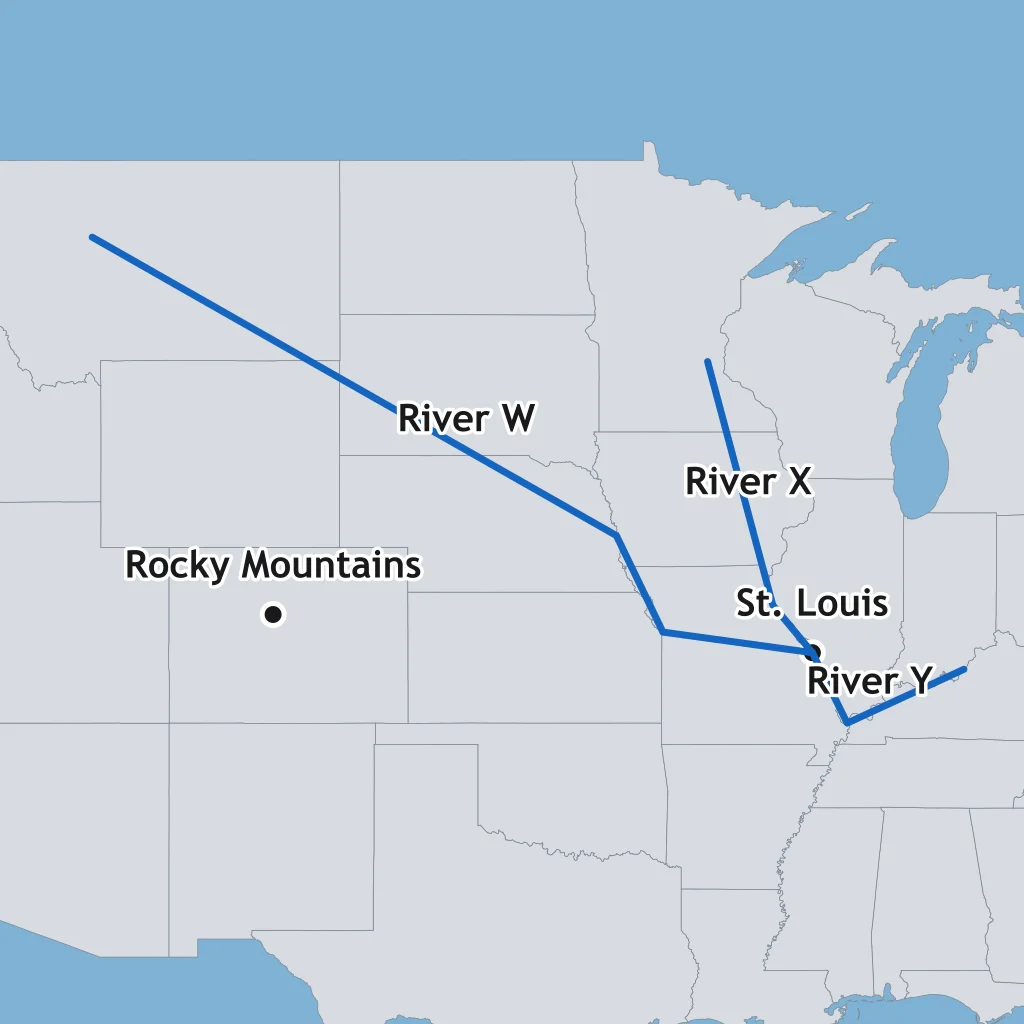
Lewis and Clark set out from near St. Louis in May 1804. Which labeled river did they follow upstream?
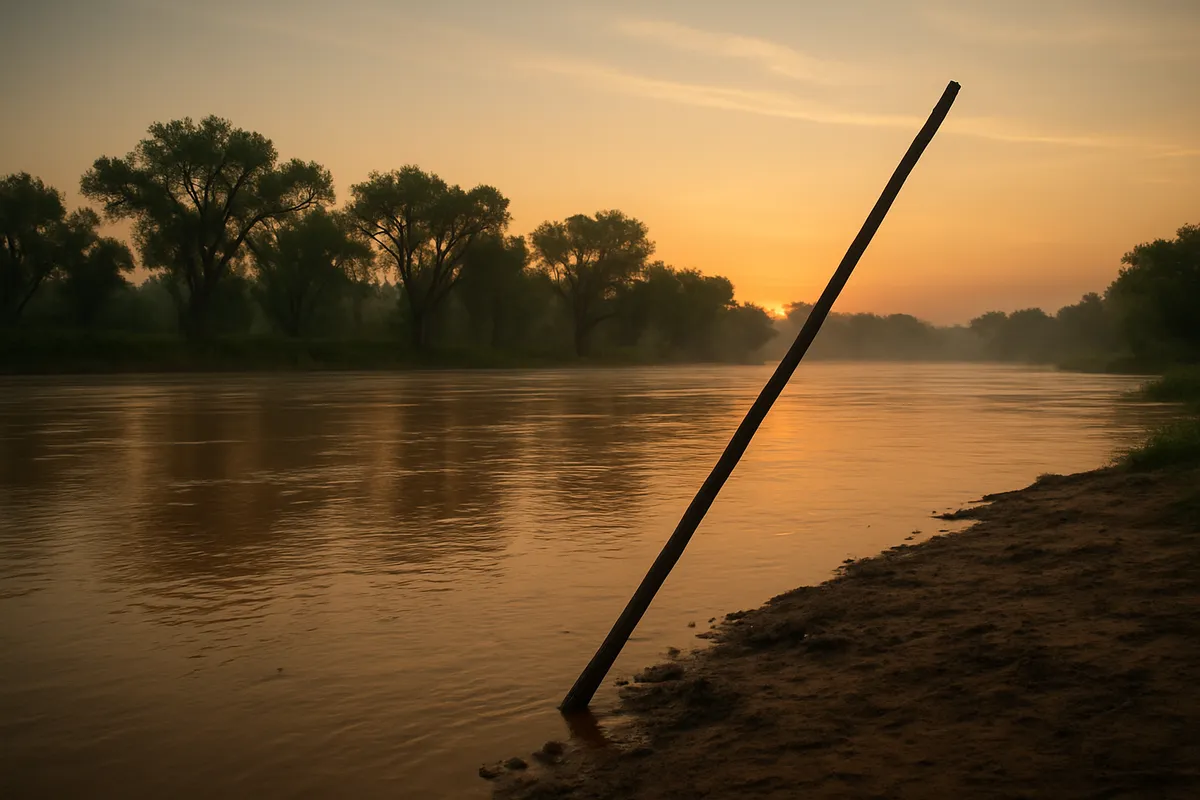
In 1802 Spanish officials closed the right of deposit at the port at the mouth of the Mississippi, and Jefferson sent envoys to Paris to buy it. Which port was it?
Setting out from St. Louis in 1804, Lewis and Clark followed which river upstream for the long first stage of the journey west?
After crossing the Rocky Mountains, Lewis and Clark followed which river down to the Pacific?
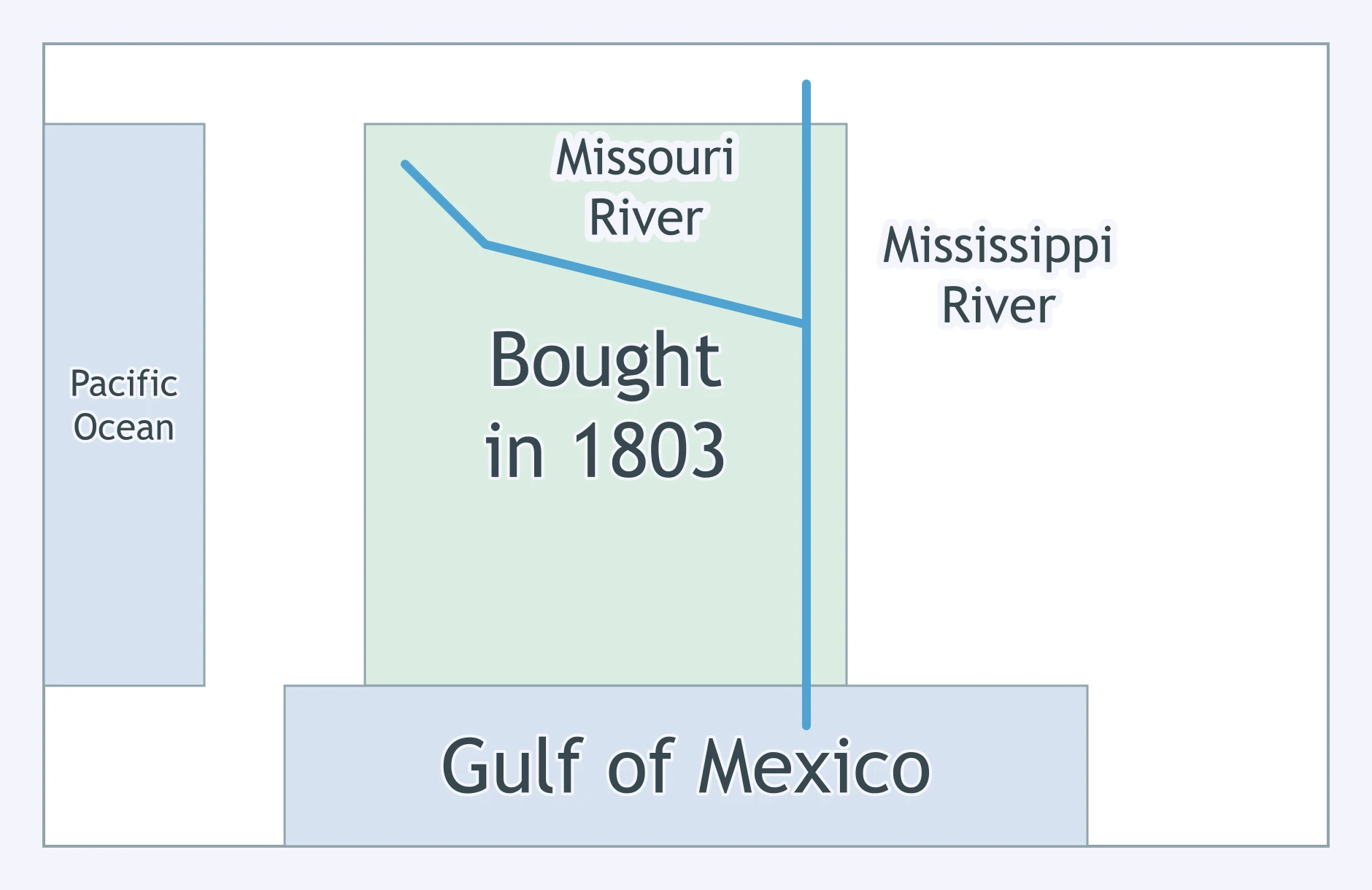
Look at the map. The green area labeled "Bought in 1803" is the territory the United States bought from France. Which labeled feature did that territory NOT reach?
The treaty signed in Paris in 1803 handed the United States France's whole claim west of the Mississippi, roughly doubling the country's size. About how much did the United States agree to pay for it?
In the election of 1800 Jefferson and Aaron Burr each received 73 electoral votes, so no candidate held a majority for president. Which body then chose the president, on the thirty-sixth ballot in February 1801?
The tie of 1800 exposed a flaw: each elector cast two undifferentiated votes, so a party's candidate for vice president could tie its candidate for president. Which amendment fixed this in 1804?
A Lemhi Shoshone woman joined the expedition at Fort Mandan with her husband, Toussaint Charbonneau, and later interpreted for the party when it needed horses from the Shoshone, whose leader was her brother. Who was she?
In December 1807, after British and French seizures of American ships and the impressment of American sailors, Congress passed the Embargo Act at Jefferson's request. What did that law do?
Jefferson and Treasury Secretary Albert Gallatin cut federal spending, shrank the army and navy, and repealed the internal taxes the Federalists had imposed. Which tax did that repeal end?
William Marbury asked the Supreme Court to order delivery of his commission. The Court instead held that the section of the Judiciary Act of 1789 letting it hear such a case directly clashed with Article III and could not stand. What did that establish?
The Judiciary Act of 1801 created new circuit judgeships that Adams filled before leaving office. In 1802 the new Congress repealed the act and abolished those courts. What became of the judges who sat on them?
Livingston and Monroe were sent to Paris to buy one port and the land around it, and came home with a treaty for the whole territory. What did American control of that port give farmers in the Ohio and Tennessee valleys?
The French army sent to retake Saint-Domingue was destroyed by fighting and yellow fever, and war with Britain was about to resume in Europe. What did Napoleon then do with France's Louisiana holding?
The Embargo Act kept American ships in port through 1808. What happened in New England, where shipping, shipbuilding and the carrying trade were the region's business?
Congress repealed the embargo days before Jefferson left office in March 1809 and replaced it with a narrower law. What did the Non-Intercourse Act do?
The expedition reached St. Louis again in September 1806 carrying journals, maps and descriptions of hundreds of plants, animals and Native nations. Besides the maps, what did the United States gain from the journey?
Chief Justice John Marshall wrote in 1803 that 'a law repugnant to the constitution is void, and that courts, as well as other departments, are bound by that instrument.' What does that sentence establish?
In his first inaugural address in March 1801, after one of the bitterest elections yet held, Jefferson told the country: 'We are all republicans: we are all federalists.' What was he arguing?
Writing to Senator John Breckinridge in August 1803, Jefferson said: 'The constitution has made no provision for our holding foreign territory, still less for incorporating foreign nations into our Union.' What problem was he naming?
Jefferson had argued for years that the federal government holds only the powers the Constitution names, yet he pressed the Senate to ratify a treaty buying a territory the document nowhere mentions. What best describes that tension?
In March 1801 John Adams handed the presidency to Jefferson, the leader of the party that had just defeated his own. What made that handover significant for the young republic?
Put these events of Jefferson's first term in order, earliest first.
Crack the passcode before the zombies get in.
Answer, then swat bugs for bonus points.
Race through questions at your own speed.
Same question on every screen. Fastest wins.

Pick a tile, answer, hit bonuses and steals.
Manifest Destiny and Westward Expansion
30 questions