Loading
by BlastRoom
A cumulative review of lab safety, equipment, variables, measurement, density, and Earth Science data displays.
#earth_space_science
40 questions
One question set, multiple game modes. Tap any game to see it in action. Not sure which to pick?
Answer to place stones and capture territory.
Outrun the snow together.
Earn blasts, then hunt the other team.
Answer to earn energy, then climb.

The class blasts through walls together.
Bid on mystery lots. Most money wins.
Sell tours. Nice, standard, or a total scam.

Answer, restock, and serve the rush.
More correct answers pulls the rope your way.
Answer, then shoot down the alien wave.
Answer, then tap to leap the frozen ridge.
A class rule says unused reagent must go into the labeled waste container, not back into its stock bottle. What hazard does that prevent?
Students are mixing dilute acid in beakers. What hazard is reduced by wearing splash goggles instead of regular eyeglasses?
Before using a burner, a student ties back long hair and secures loose sleeves. What hazard does this rule reduce?
A chemical splashes on a student's sleeve and skin. Which SDS section should the teacher check first for treatment steps?
A lab rule forbids mouth pipetting, even with harmless-looking liquids. What hazard does this rule prevent?
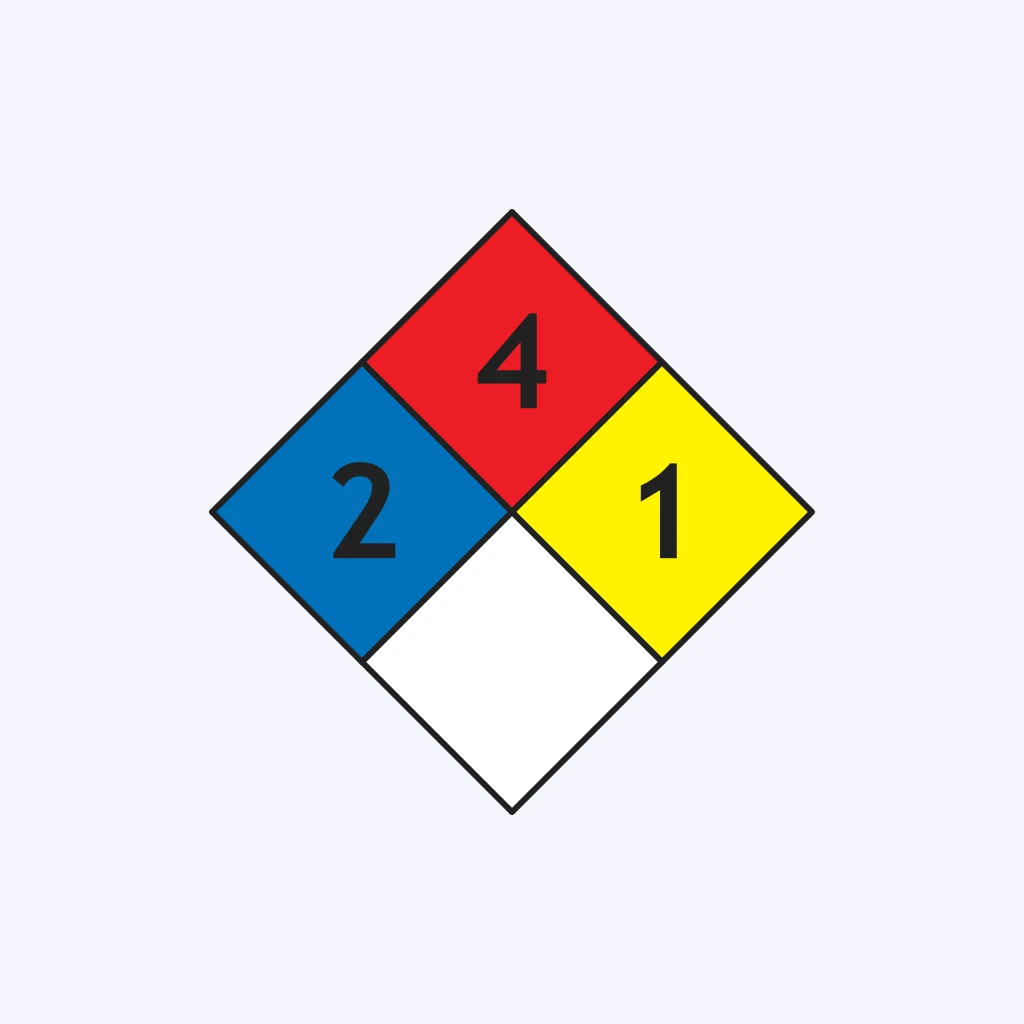
Use the NFPA diamond. Which numbered hazard category is rated highest?
A teacher says waste acid may not go down the sink unless the disposal directions allow it. What problem can that prevent?
A student needs the mass of a basalt sample to the nearest 0.1 g. What instrument should be used?
A pebble's volume is needed, but its shape is irregular. What lab tool best measures the water displaced by the pebble?
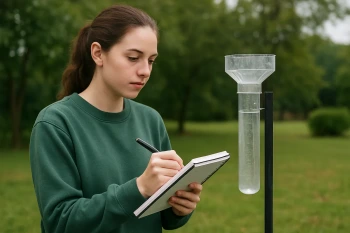
A weather station must record wind speed during a cold front passage. What instrument belongs at the station?
A field notebook tracks whether air pressure is rising before clear weather arrives. What instrument provides that pressure reading?
A team estimates stream discharge by measuring channel width and water velocity. What equipment pair best fits those tasks?
A student wants to inspect tiny mineral grains and cleavage surfaces in a sandstone sample. What tool is most useful?
A team must measure the distance along a stream channel between two sampling stakes. What tool should they carry?
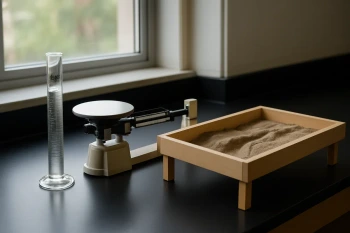
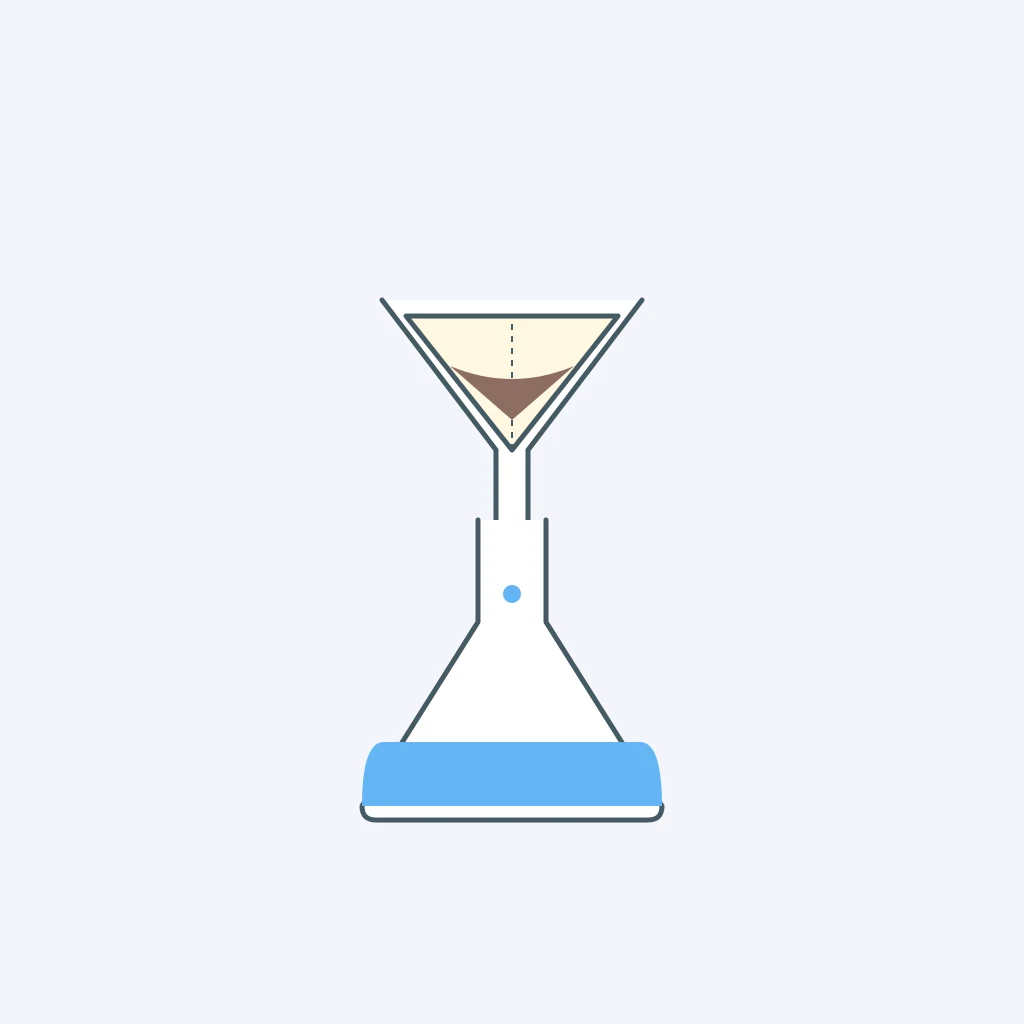
Look at the apparatus diagram. What task is the setup designed to do?
A lamp heats black soil and tan soil for 15 minutes while distance from the lamp stays the same. What is the independent variable?
A team tests whether soil moisture affects infiltration by timing how long 100 mL of water takes to pass through each soil column. What is the dependent variable?
Limestone chips are placed in vinegar to model acid rain weathering. What control setup should be included?
A stream-table test varies vegetation cover to see how much sediment erodes. What condition should be kept constant?
A group repeats a mineral-density measurement five times and averages the results. Why is this better than one trial?
Students compare upstream and downstream sediment size, but they collect only the largest pebbles they can see. What is the main source of error?
A student asks whether darker soil heats faster under a lamp. What is a testable hypothesis?
Air bubbles cling to a rock during water displacement, making the measured volume too large. What happens to the calculated density?
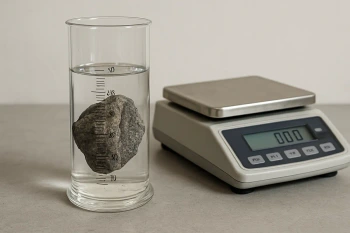
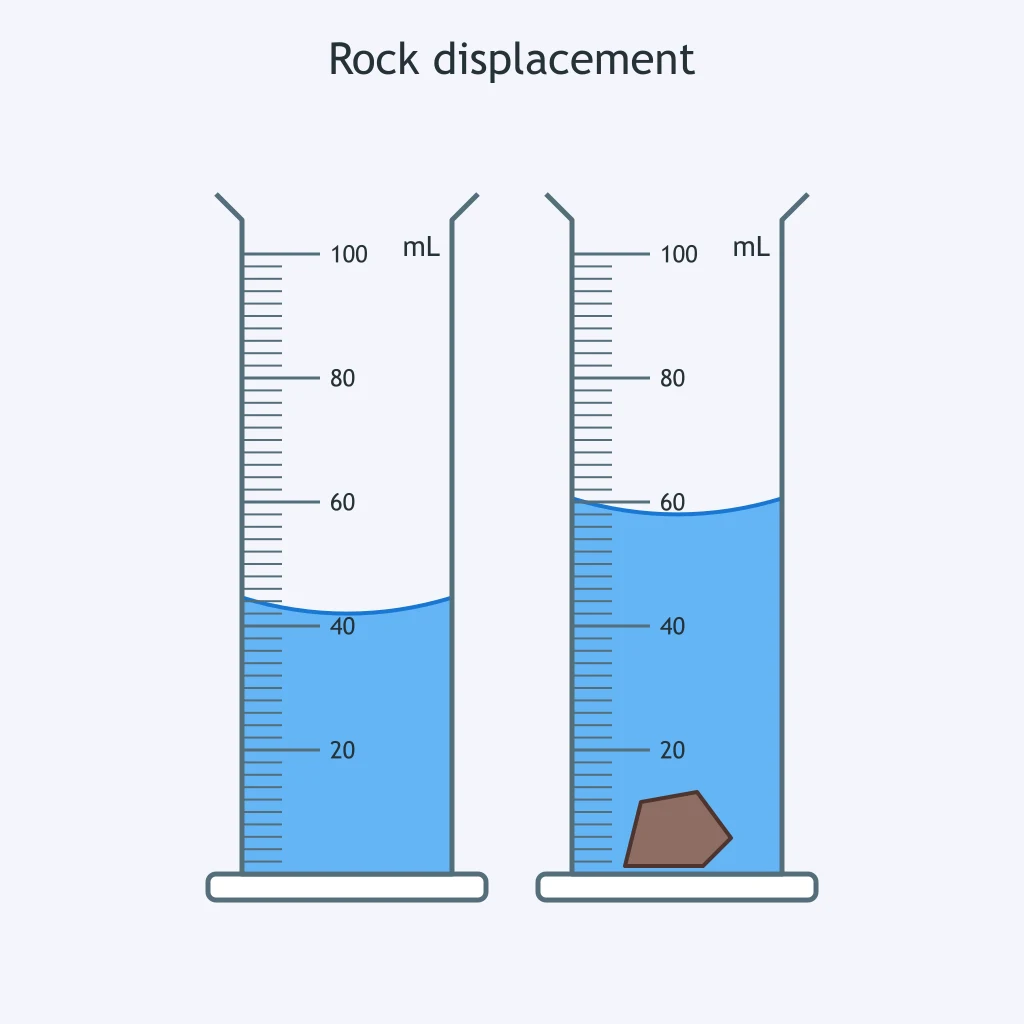
A rock is lowered into the water as shown. What volume does the rock displace?
A mineral has a mass of 54 g and a volume of 18 cm³. What is its density?
A rock has a density of 2.7 g/cm³ and a volume of 15 cm³. What is its mass?
A student measures quartz density as 2.80 g/cm³. The accepted value is 2.70 g/cm³. What is the percent deviation, rounded to the nearest tenth?
A thermometer reads -3 °C before sunrise and 5 °C at noon. What is the temperature change?
A sediment core begins at the 2.0 cm mark on a ruler and ends at the 14.6 cm mark. What length should be recorded?
A lab rule says to read a graduated cylinder at eye level with the meniscus, not from above the bench. What error does this rule reduce?
Two rock samples have the same mass. Sample A has a volume of 20 cm³, and Sample B has a volume of 40 cm³. Which sample is less dense?
A team wants to know whether slope angle affects runoff speed. They test a 10-degree ramp covered in gravel against a 30-degree ramp covered in sand, then compare runoff times. What problem affects this comparison?
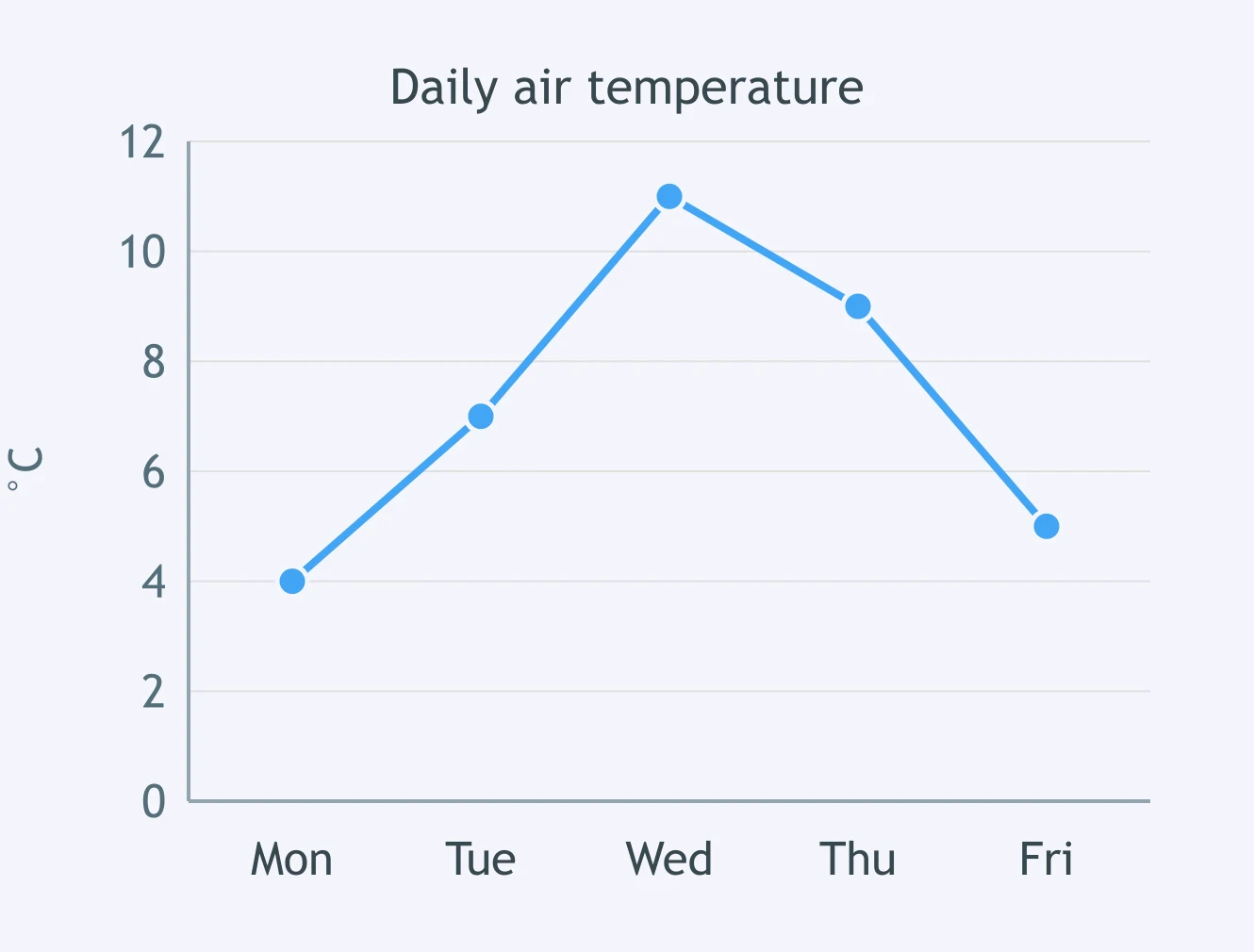
Use the line graph. Which day had the highest air temperature?
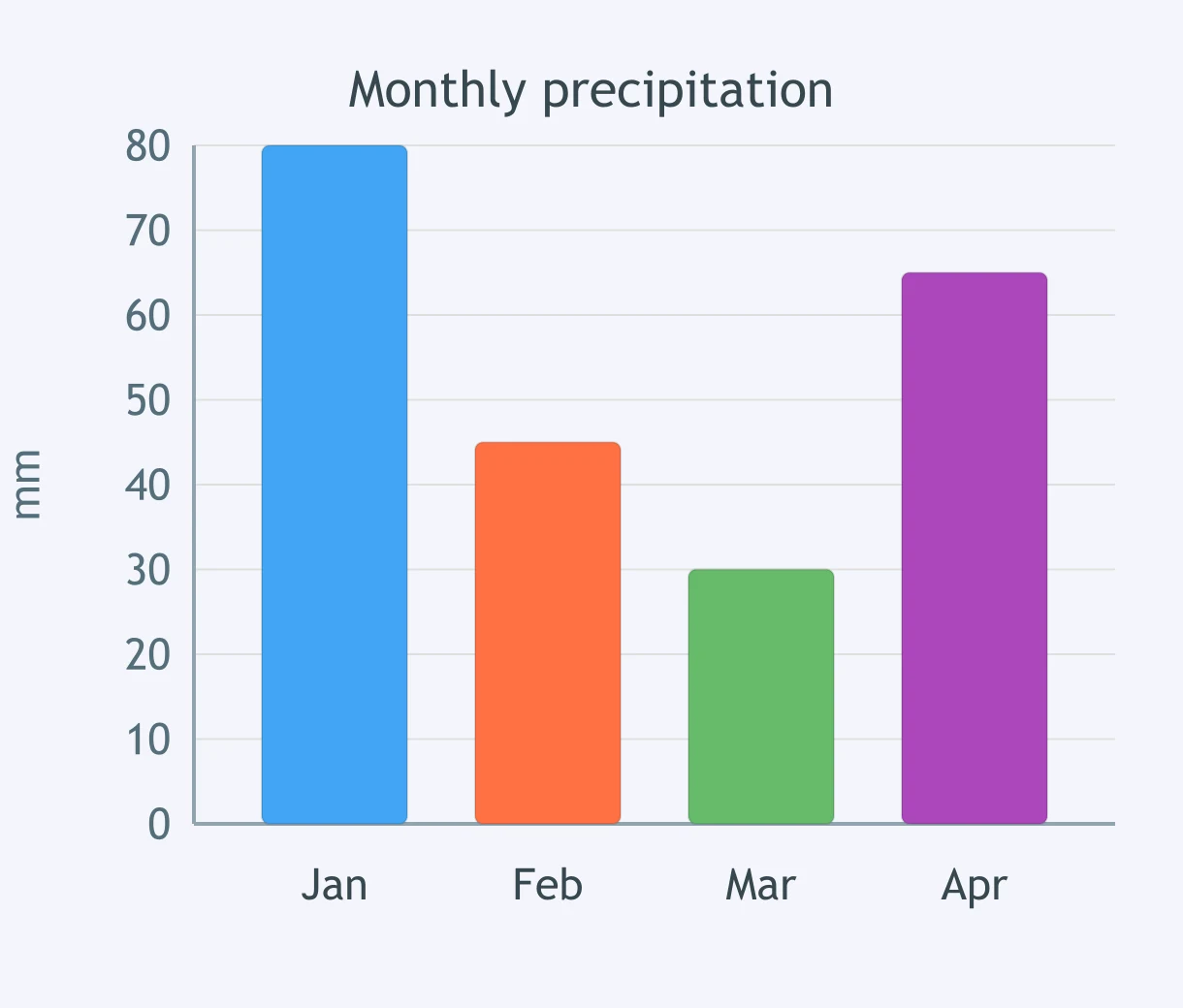
Use the precipitation bar graph. Which month had the least precipitation?
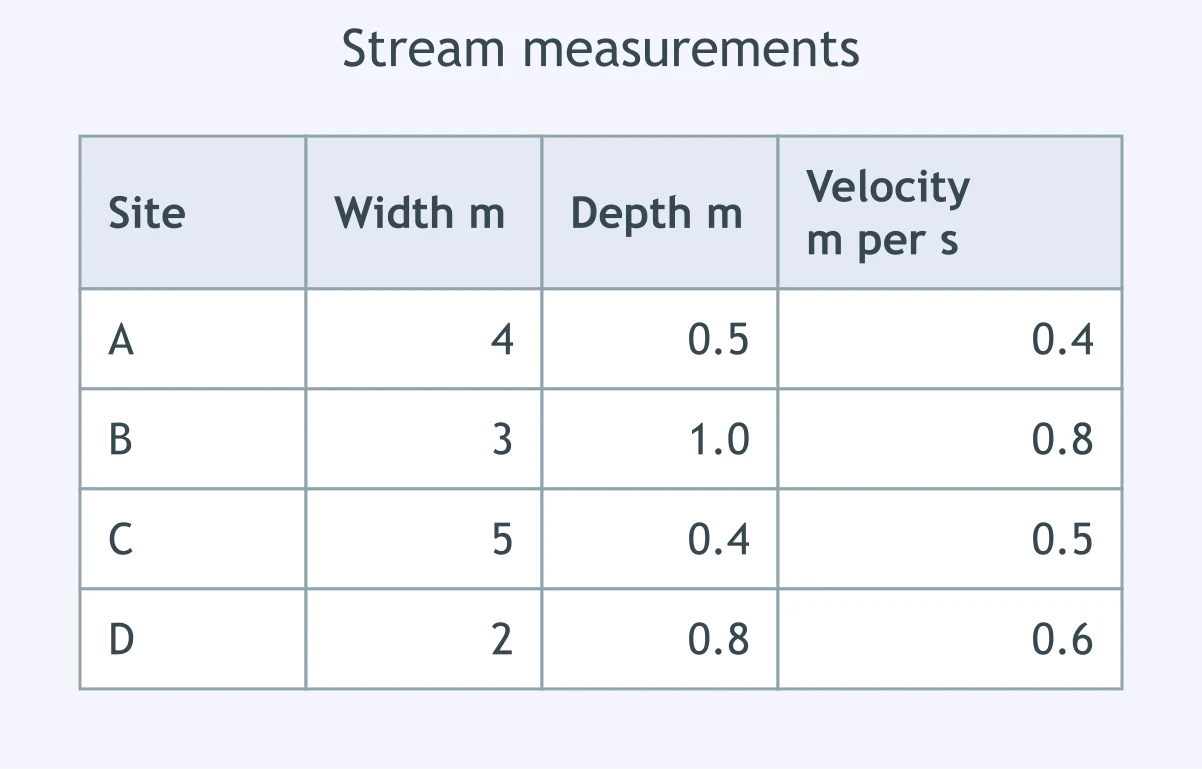
Use the stream data table. At which site is discharge greatest?
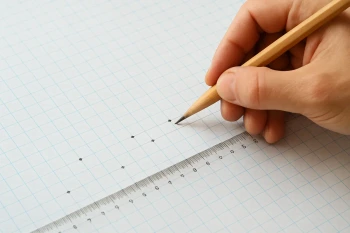
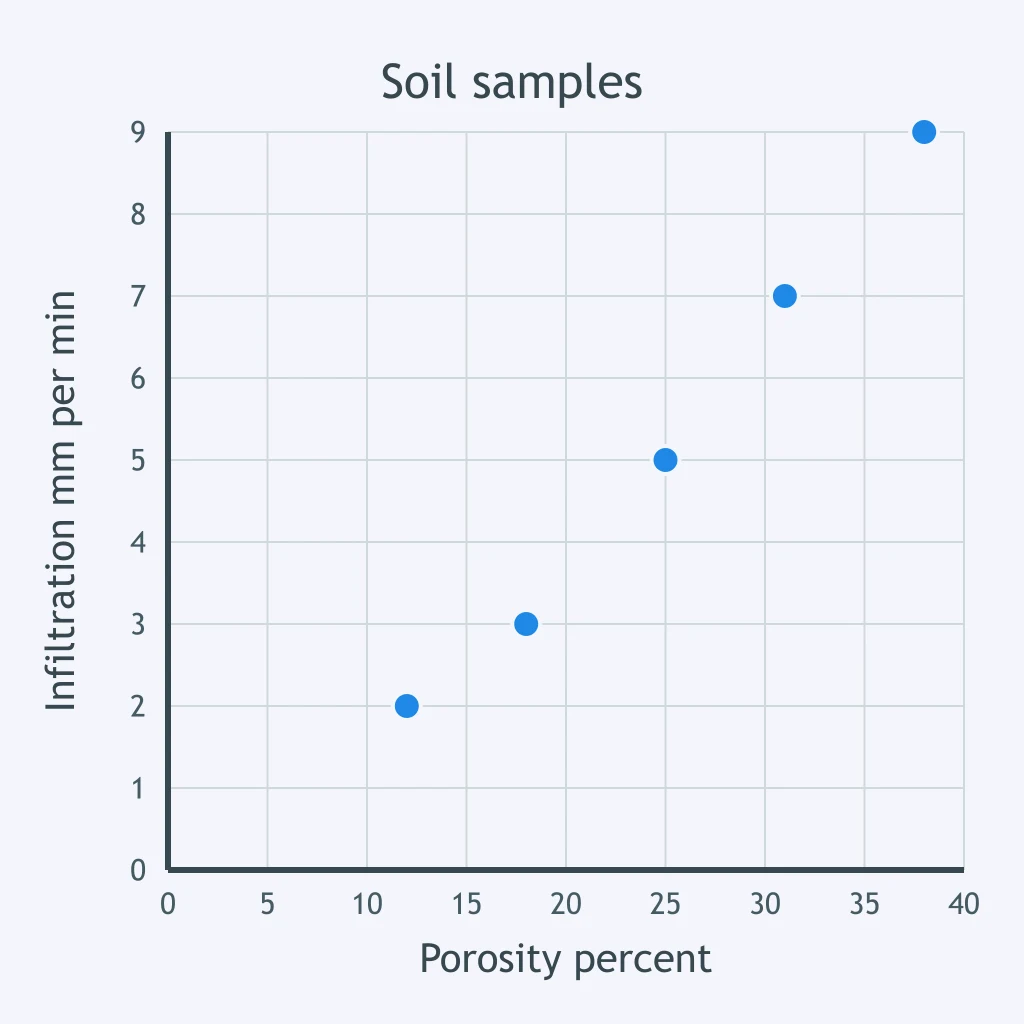
Use the scatter plot of soil samples. What pattern does the plot show?
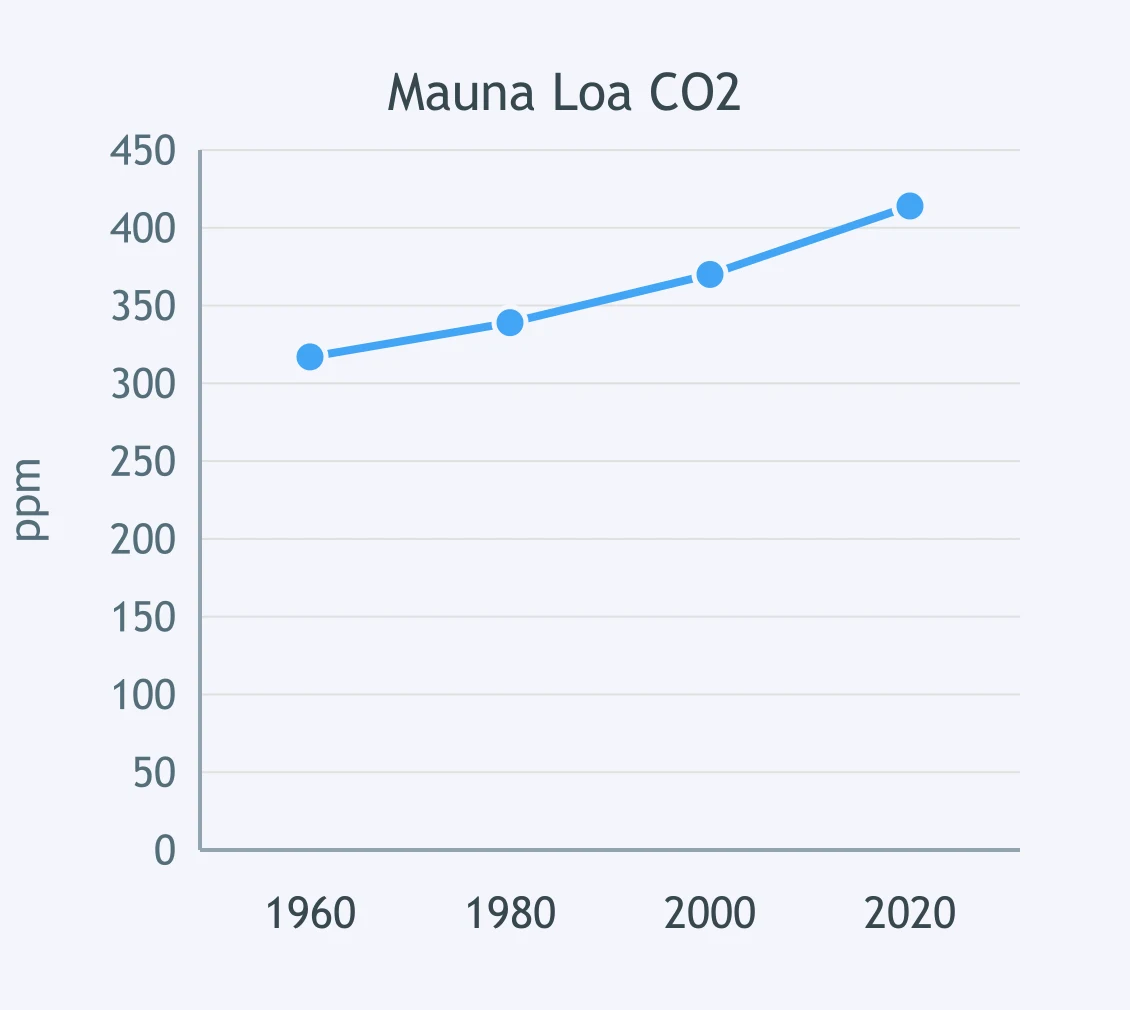
Use the Mauna Loa CO₂ line graph. What trend does the record show from 1960 to 2020?
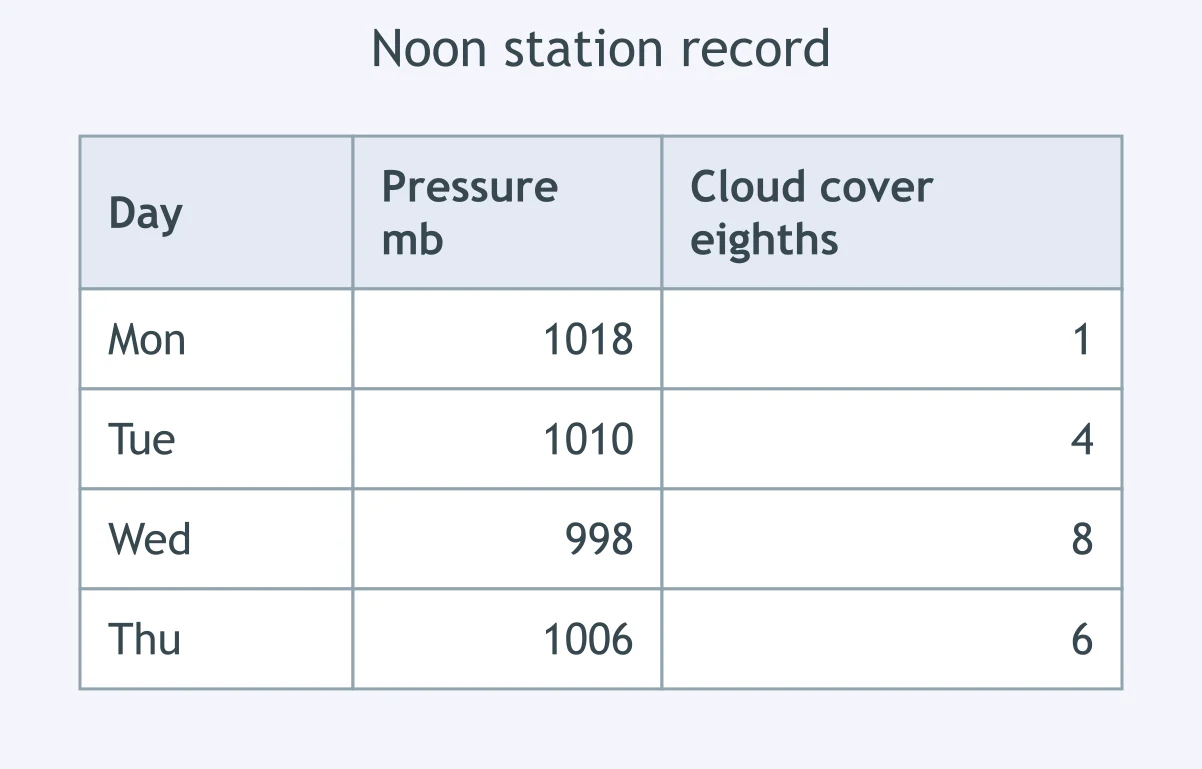
Use the station record table. Which day had the lowest air pressure?
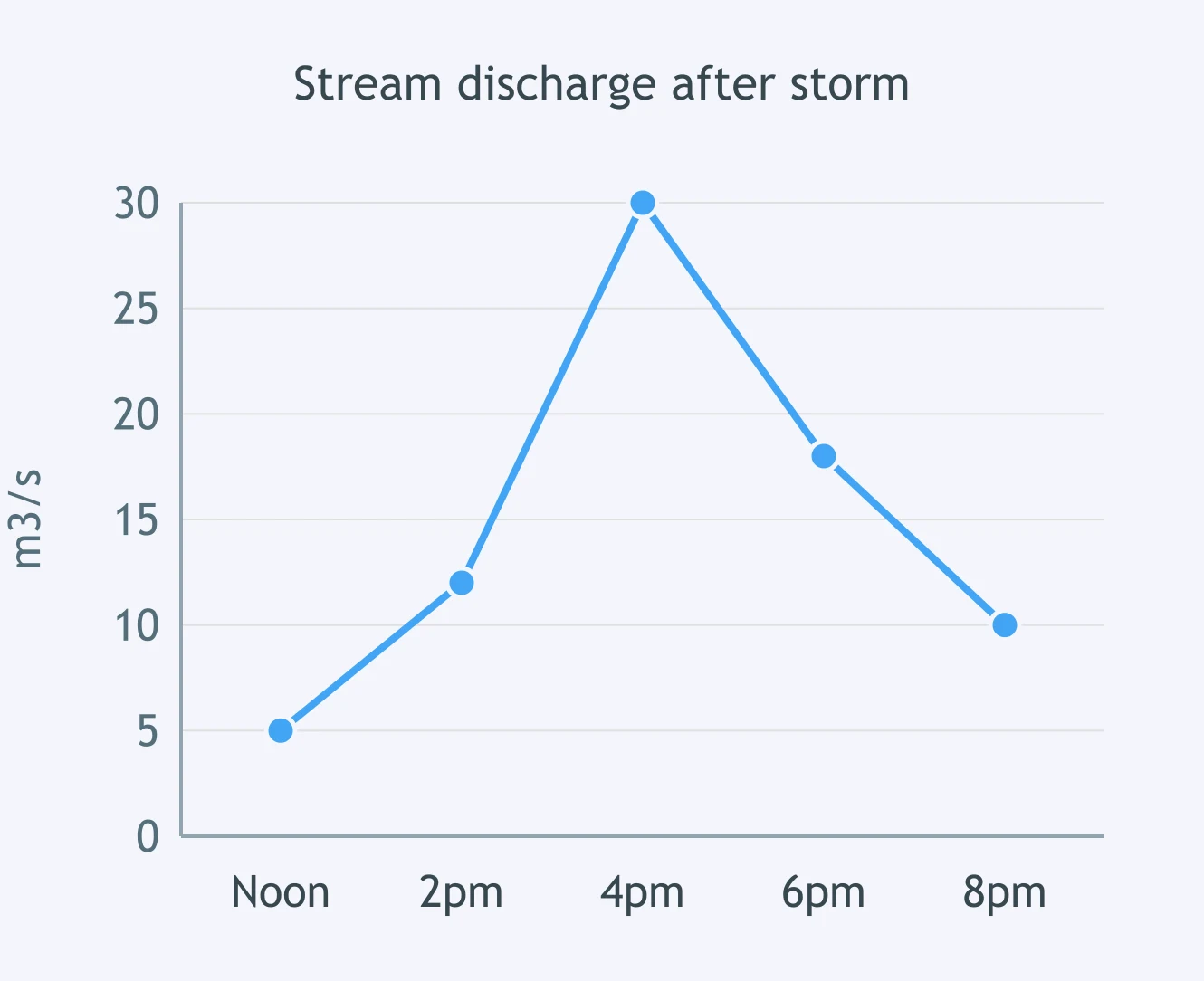
Use the hydrograph. When did stream discharge peak after the storm began at noon?
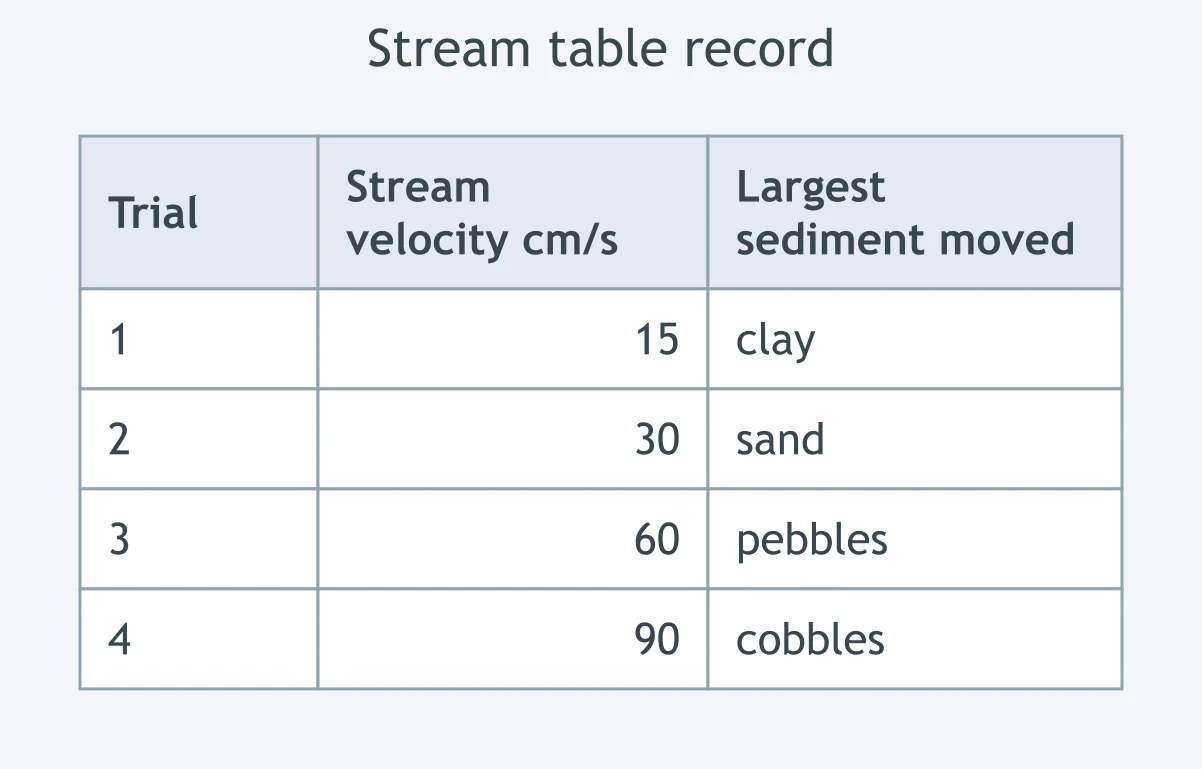
Use the stream-table record. What pattern connects flow velocity and the largest sediment moved?
Crack the passcode before the zombies get in.
Answer, then swat bugs for bonus points.
Race through questions at your own speed.
Same question on every screen. Fastest wins.

Pick a tile, answer, hit bonuses and steals.
Latitude and Longitude
60 questions