Loading
by BlastRoom
Controlled investigations use variables, controls, evidence, and error checks to support conclusions.
#earth_space_science
30 questions
One question set, multiple game modes. Tap any game to see it in action. Not sure which to pick?
Answer to place stones and capture territory.
Outrun the snow together.
Earn blasts, then hunt the other team.
Answer to earn energy, then climb.

The class blasts through walls together.
Bid on mystery lots. Most money wins.
Sell tours. Nice, standard, or a total scam.

Answer, restock, and serve the rush.
More correct answers pulls the rope your way.
Answer, then shoot down the alien wave.
Answer, then tap to leap the frozen ridge.
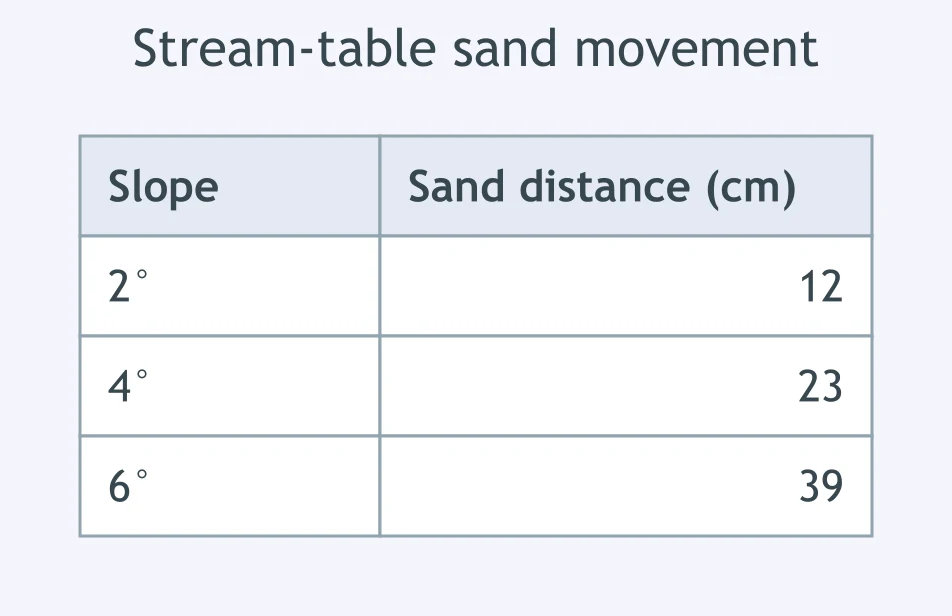
Students test how stream-table slope affects how far sand travels, using the same sand mass, water flow, and run time at 2°, 4°, and 6°. What is the independent variable?
A lab tests how water temperature affects the density of seawater samples while salinity stays at 35 g/L. What variable is being changed on purpose?
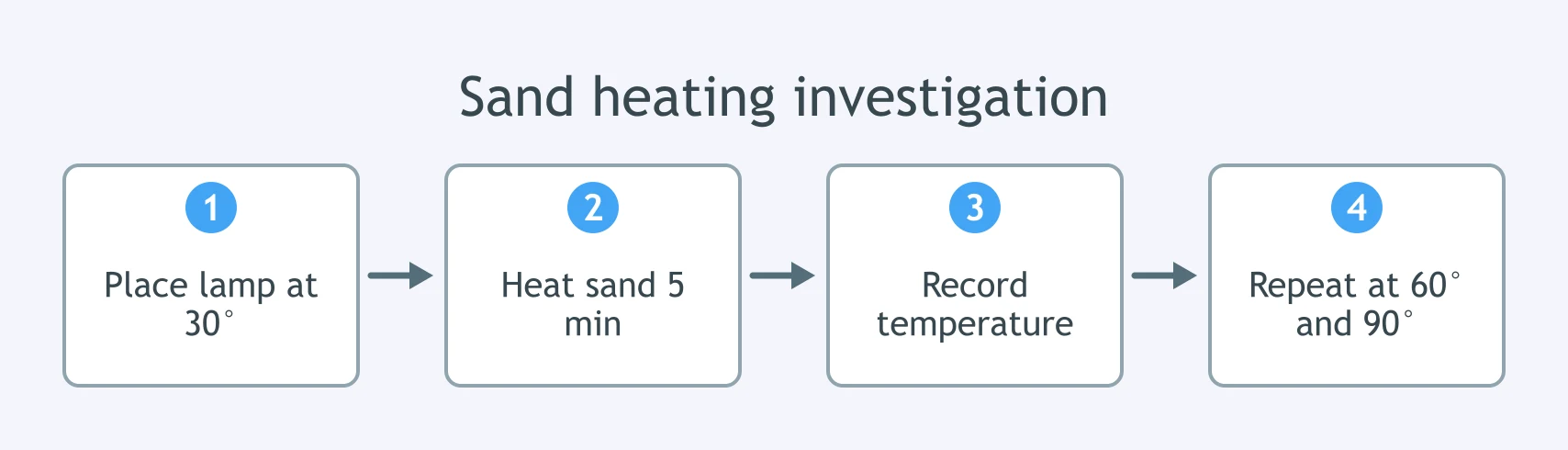
Use the investigation sequence. What independent variable is tested in the sand-heating experiment?
Students add 0 g, 10 g, 20 g, and 30 g of salt to equal volumes of water, then use a balance and cylinder to calculate density. What is the independent variable?
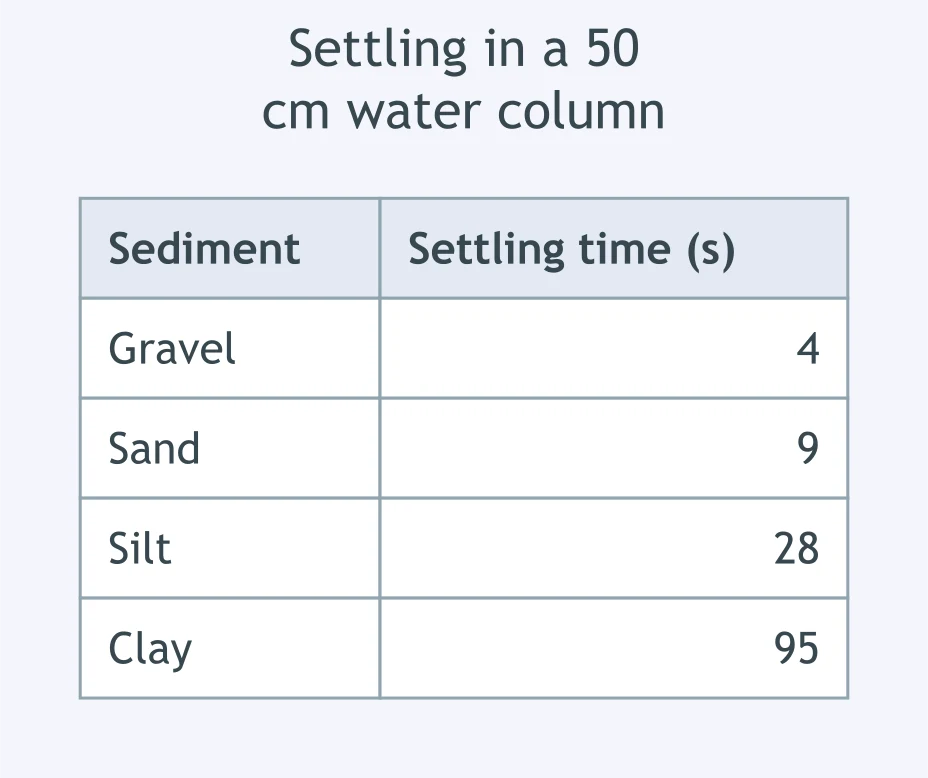
A class times how long clay, silt, sand, and gravel take to settle through the same 50 cm water column. What factor is varied?
A soil lab pours water through filters with pore diameters of 0.5 mm, 1.0 mm, and 2.0 mm and records flow rate. What is the independent variable?
Students compare how black, gray, and white rock chips warm under the same lamp for 10 minutes. What independent variable is being tested?
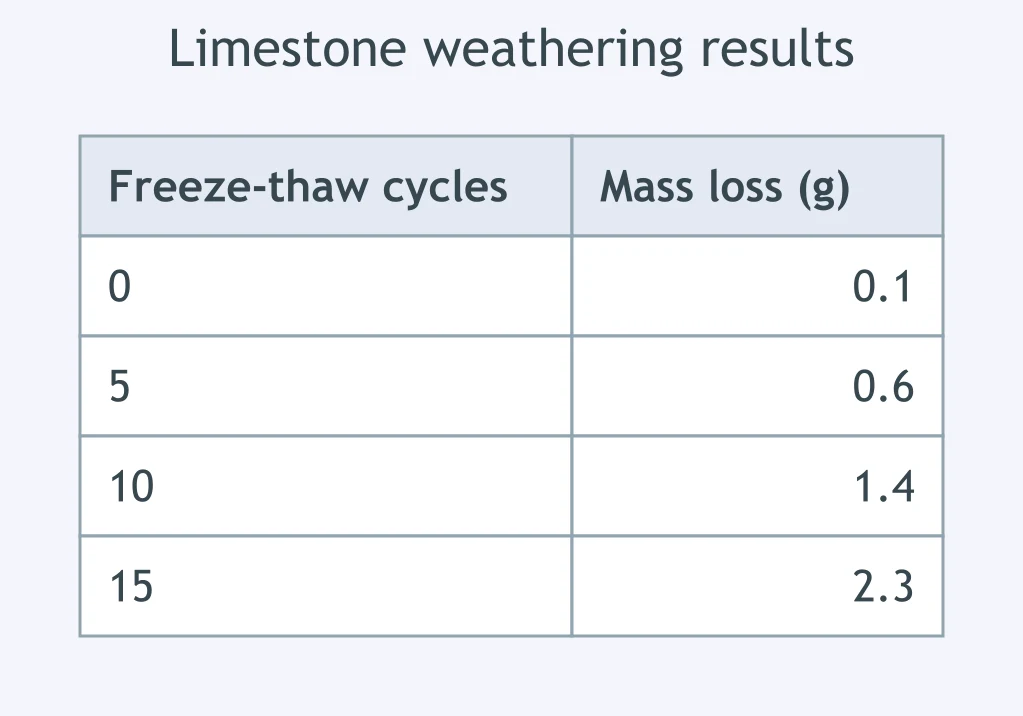
A weathering lab freezes and thaws limestone pieces 0, 5, 10, and 15 times, then measures mass loss on a triple beam balance. What is the independent variable?
Gravel, sand, and silt are each dropped into identical cylinders to time settling. What quantity should be held constant across the trials?
A class grows salt crystals at 5 °C, 20 °C, and 35 °C. To make temperature the only planned difference, what should be kept the same?
Students estimate stream velocity by timing floats over a marked course at three sites. What must be the same at every site?
A crater lab drops marbles from 20 cm, 40 cm, and 60 cm into a sand tray. What should remain constant?
A class compares nighttime cooling with clear, partly cloudy, and cloudy skies. What control makes the temperature readings comparable?
Students tumble rounded and angular quartz grains to compare abrasion. What should be held constant during both trials?
A class compares equal-size columns of sandy soil, loam, and clay with the same water volume. The testable statement is:
Students place equal masses of rock salt in water at 10 °C, 25 °C, and 40 °C and record dissolving time. The investigation can test whether:
A runoff model uses identical trays of grass-covered soil, bare soil, and gravel under the same simulated rain. The testable claim is:
A lab places equal-mass limestone chips in solutions with pH 4, pH 6, and pH 8, then measures mass after one hour. What claim can it test?
A student records water temperature in identical cups after 0, 15, 30, and 45 minutes of direct sunlight. The investigation can test whether:
A student measures stream discharge once each afternoon for one week and reports it as the stream's yearly average. What weakens the conclusion most?
A mineral hardness lab scratches sample A with a fingernail and sample B with a steel nail, then compares the results. What is the main flaw?
To compare soil drainage, a student pours 200 mL into sand and 100 mL into clay, then times each column. What flaw most affects the result?
A student compares heating of black and white rocks, but places the black rock under a lamp and the white rock in shade. What invalidates the comparison?
A limestone-acid lab runs one trial at each pH and claims the exact trend is proven. What improvement would most strengthen the conclusion?
After one unusually hot day, a student concludes the local climate has changed. What is the main problem with this reasoning?
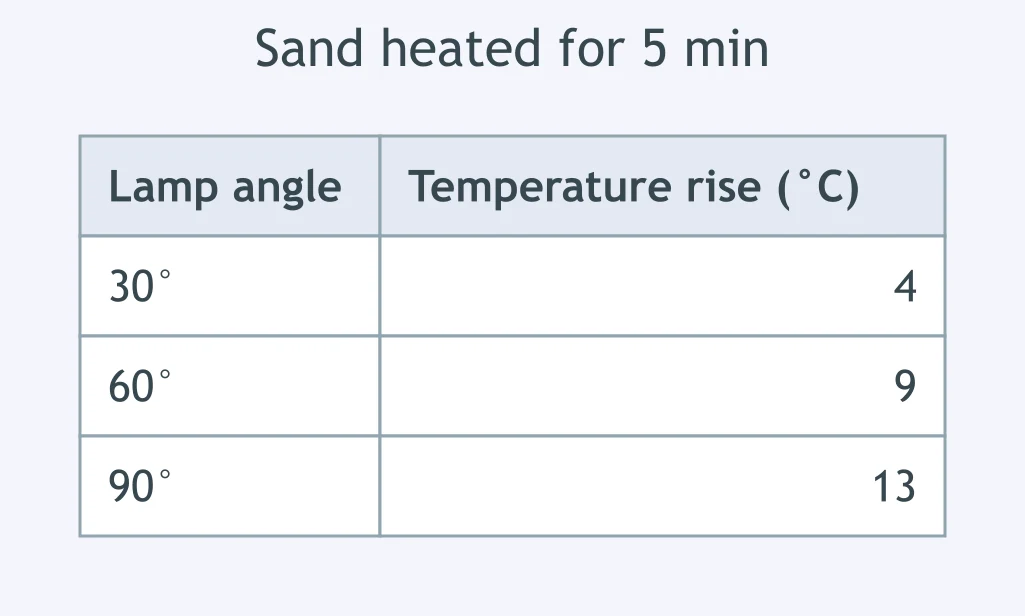
Use the results table. What conclusion about the soil columns is supported by the filtration data?
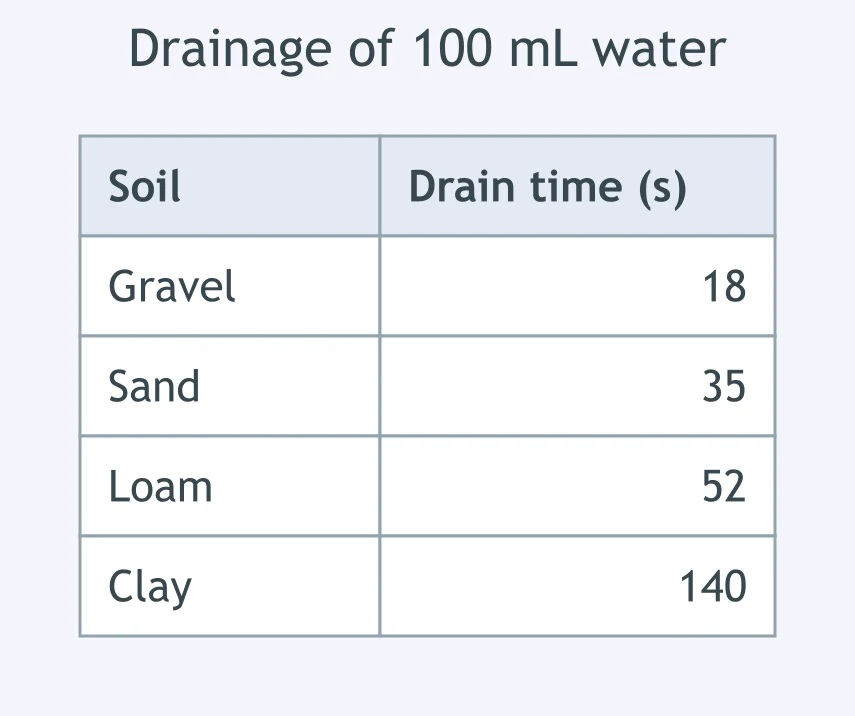
Use the data table for the sand-heating lab. What conclusion is best supported?
Use the stream-table results. What relationship does the table support?
Use the settling-time table. What conclusion is supported by the data?
Use the weathering results. What conclusion is supported by the table?
Crack the passcode before the zombies get in.
Answer, then swat bugs for bonus points.
Race through questions at your own speed.
Same question on every screen. Fastest wins.

Pick a tile, answer, hit bonuses and steals.
30 questions