Loading
by BlastRoom
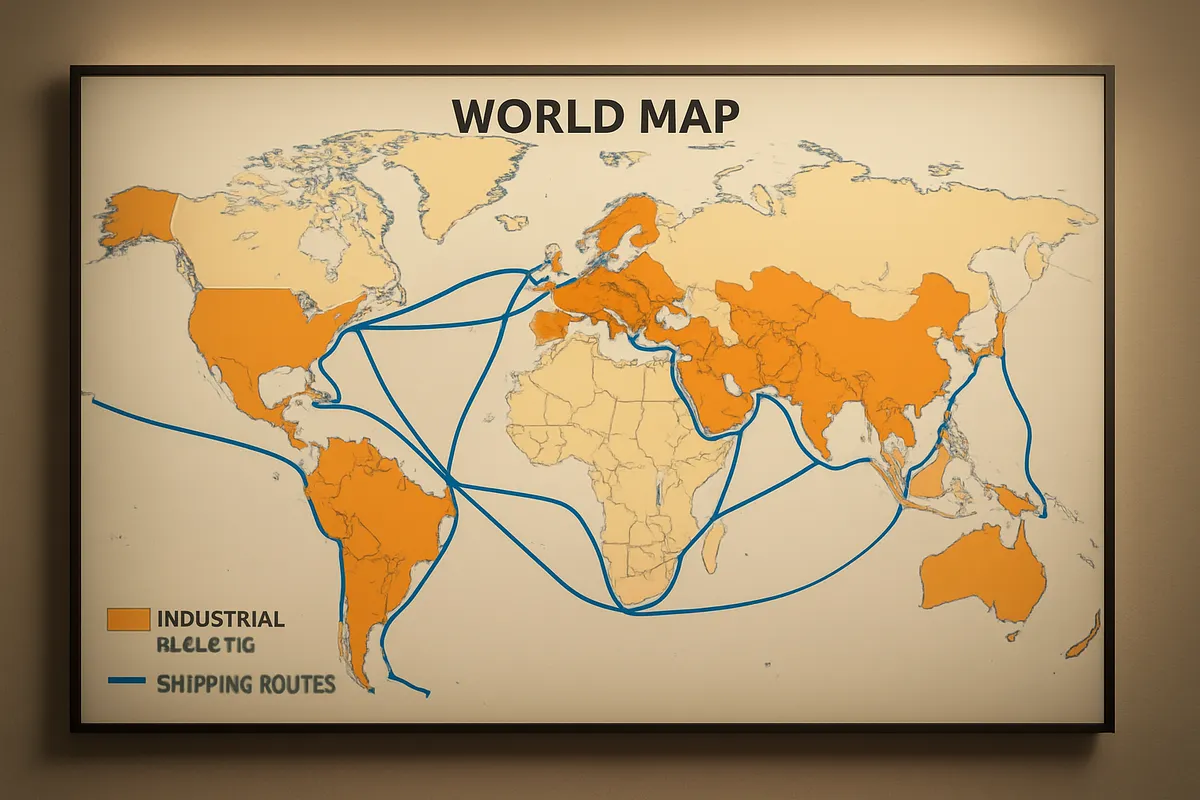
A mixed review across industry, sectors, development measures, theories and trade.
#us_hs_human_geography
65 questions
One question set, multiple game modes. Tap any game to see it in action. Not sure which to pick?
Answer to place stones and capture territory.
Outrun the snow together.
Earn blasts, then hunt the other team.
Answer to earn energy, then climb.

The class blasts through walls together.
Bid on mystery lots. Most money wins.
Sell tours. Nice, standard, or a total scam.

Answer, restock, and serve the rush.
More correct answers pulls the rope your way.
Answer, then shoot down the alien wave.
Answer, then tap to leap the frozen ridge.
What combination best explains Britain's early lead in industrialization in the late 1700s?
Early mills using water wheels clustered along fast streams. After steam engines became reliable, what location change became possible?
A household spinning cloth at home is replaced by wage workers operating machines in one building. What production change is shown?
Why did coalfield regions such as northern England and the Ruhr become major industrial districts?
Canals and railroads lowered the cost of moving coal, iron, and finished goods. How did that affect industrialization?
Skilled mechanics from Britain start textile mills in New England using familiar machinery designs. What type of diffusion is shown?
Which industry led much of the first wave of factory growth in Britain in the late 1700s?
Before steam power, why did many early British textile mills locate in hilly valleys such as those of the Pennines?
A new steel process spreads first among major industrial cities and later to smaller towns connected to them by rail. What diffusion pattern is described?
Manchester's mills benefited from nearby coal, an urban workforce, and Liverpool's port for imported cotton. What did that combination encourage?
What is a common criticism of Weber's least cost theory of industrial location?
Copper ore loses much weight when smelted, so shipping ore is costlier than shipping refined metal. A smelter should locate where?
A soft-drink bottler adds water and heavy glass bottles to a small amount of syrup, so the finished product is much bulkier than its inputs. What location is favored?
Cargo moves from oceangoing ships to rail and trucks at a port terminal before heading inland. What industrial advantage does the port provide?
A garment plant finds wage savings in one region exceed the extra cost of shipping cloth and clothing. What move would Weber's model predict?
Several biotech firms cluster near the same university, specialized lawyers, suppliers, and trained workers. What benefit explains the cluster?
Factories leave an old district because land prices, traffic delays, and wages have risen too much. What process is occurring?
In Weber's locational triangle, a factory compares two input sources and one market. What cost is minimized first?
A software support office sends its product digitally and needs few bulky inputs. What location trait does it have?
A bakery sells fresh bread to a metropolitan area each morning, and long delivery times spoil the product. What location best reduces cost and waste?
Logging, mining, and commercial fishing take materials directly from nature. What sector is this?
A factory turns steel and parts into farm machinery. What sector is the factory in?
A hospital, a hotel, and a trucking company mainly sell services rather than make goods. What sector are they in?
A firm designs software, analyzes data, and manages research information for clients. What sector describes that work?
A cabinet of top executives sets long-term policy for a multinational firm. What sector is this high-level decision work?
Steel and automobile plants close across a manufacturing region, and employment shifts away from factory work. What process is shown?
A city loses textile mills but gains jobs in restaurants, logistics, finance, and health care. What broad economic shift is occurring?
An assembly line makes standardized cars in large runs with specialized tasks. What production system does this describe?
A region's factory output stays high, but robots and offshore suppliers replace many jobs. What does this help explain?
Older industrial cities from the Great Lakes to western Pennsylvania lost many steel and auto jobs after the 1970s. What U.S. region label fits?
A country reports the market value of final goods and services produced inside its borders in one year. What measure is this?
A country counts income earned by its residents and firms, including income from abroad, and excludes income sent home by foreign-owned firms. What measure is this?
A development index combines life expectancy, education, and income per person. What is it?
An inequality statistic of 0 means perfect income equality and 1 means one household receives all income. What statistic is this?
An index compares reproductive health, empowerment, and labor-force participation by gender. What is it?
Two countries have the same GNI per capita, but one has most income controlled by a small elite. What limitation is exposed?
Economists convert incomes using local prices so a dollar-equivalent income reflects what people can buy in each country. What adjustment is this?
Street vending, unpaid family labor, and unregistered repair work are often not fully counted in national accounts. What measurement problem does this create?
Country A and Country B have similar incomes, but A has longer schooling and life expectancy. What measure will most directly show A's advantage?
A Lorenz curve bows far from the line of equality, showing income concentrated among fewer households. What happens to the Gini coefficient?
A country lowers maternal mortality and increases women's seats in parliament and labor participation. What index would improve most directly?
A measure estimates the biologically productive land and water needed to support a population's consumption and absorb waste. What is it?
A model says countries move from traditional society through takeoff to high mass consumption. Who proposed this stage model?
A framework divides the global economy into core, semi-periphery, and periphery positions. Who developed this world-systems approach?
A theory locates factories by minimizing transport and labor costs, with agglomeration as a possible saving. Who is associated with it?
In Rostow's model, investment rises, manufacturing expands quickly, and growth becomes self-sustaining. What stage is this?
A theory argues low-income countries can be kept poor because they supply cheap resources and labor to wealthy economies. What theory is this?
In world-systems theory, countries with advanced industries, high wages, and power over trade rules occupy what position?
In world-systems theory, countries that industrialize but still depend on core markets and may exploit poorer areas occupy what position?
Rostow's final stage describes widespread consumer spending on durable goods and services. What stage is it?
A critique says Rostow assumes all countries can repeat the path of early industrializers while ignoring colonial and trade relationships. What theory offers that critique?
A country mostly exports raw materials to core markets and has limited high-value manufacturing. Wallerstein would place it where?
Dependency theory is commonly associated with the argument that satellite regions are underdeveloped by ties to metropolitan centers. Which author is linked to that argument?
A policy adviser says poor countries should liberalize markets, build infrastructure, industrialize, and eventually resemble today's rich countries. What framework is closest?
Two countries can both make wheat and phones, but each specializes in the good it produces at lower opportunity cost. What principle supports trade?
Neighboring countries remove many tariffs among members while keeping trade policies toward outsiders. What arrangement is this?
A company hires an outside firm to run payroll and customer service while keeping production in-house. What business practice is this?
A U.S. firm moves assembly work from Ohio to Vietnam but still owns the factory. What practice is this?
A coastal zone offers tax breaks, streamlined customs, and duty-free component imports to attract export factories. What is it?
Cotton grown in India, fabric woven in Bangladesh, design done in Italy, and sales managed in the United States form what?
Small batches, flexible machinery, quick design changes, and subcontracting replace a single standardized assembly line. What production pattern is this?
Assembly plants along the U.S.-Mexico border import components duty-free and export finished goods. What development strategy do they show?
A country joins a regional free trade agreement. What is the most direct intended effect for its exporting firms?
A city plan links poverty reduction, clean water, and climate action to the 17 goals adopted by the United Nations in 2015. What agenda is it using?
A retailer maps emissions from raw materials, factory energy, shipping, use, and disposal before redesigning a product. What sustainability approach is this?
World-Systems Theory, Dependency Theory and Core-Periphery
35 questions
Trade and the World Economy: Comparative Advantage and Trade Blocs
35 questions

Outsourcing, Special Economic Zones, Post-Fordism and the New International Division of Labor
35 questions
Sustainable Development, Ecological Footprint and the Sustainable Development Goals
30 questions
The Models and Theories of Human Geography
Crack the passcode before the zombies get in.
Answer, then swat bugs for bonus points.
Race through questions at your own speed.
Same question on every screen. Fastest wins.

Pick a tile, answer, hit bonuses and steals.
70 questions