Loading
by BlastRoom
A mixed review across the second half of the course.
#us_hs_human_geography
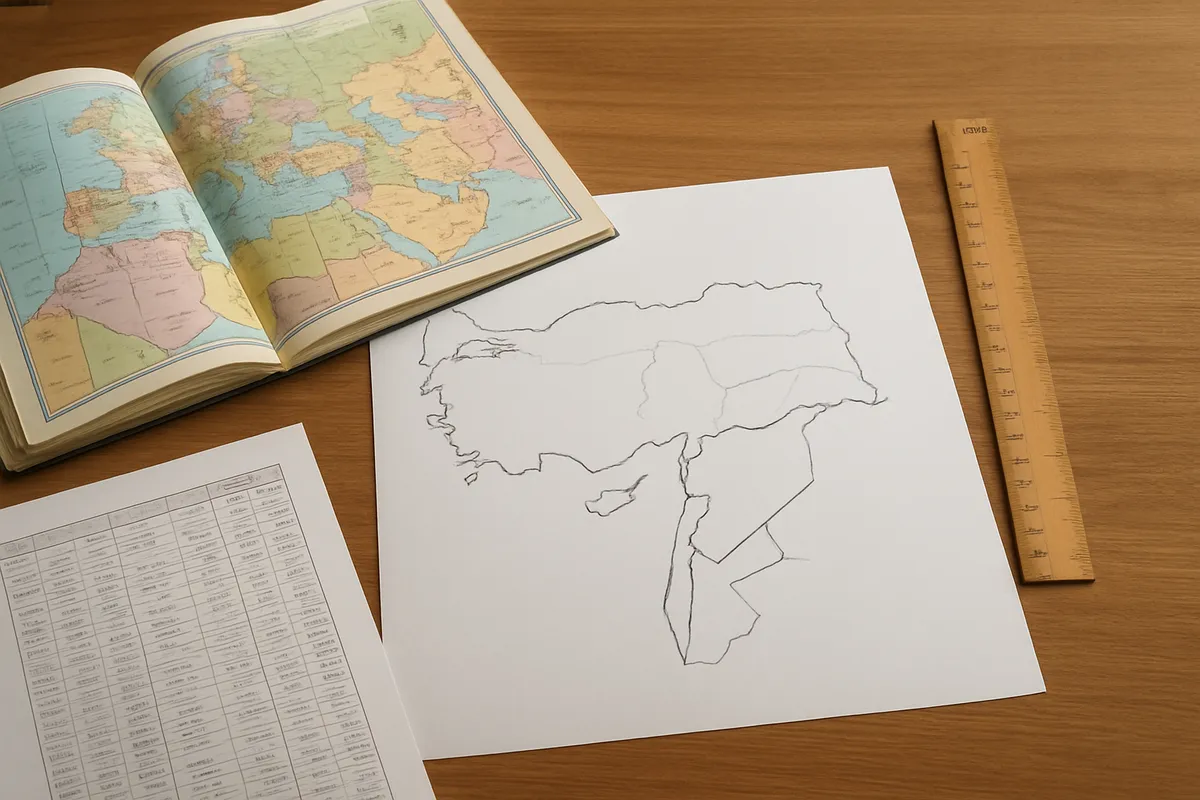
80 questions
One question set, multiple game modes. Tap any game to see it in action. Not sure which to pick?
Answer to place stones and capture territory.
Outrun the snow together.
Earn blasts, then hunt the other team.
Answer to earn energy, then climb.

The class blasts through walls together.
Bid on mystery lots. Most money wins.
Sell tours. Nice, standard, or a total scam.

Answer, restock, and serve the rush.
More correct answers pulls the rope your way.
Answer, then shoot down the alien wave.
Answer, then tap to leap the frozen ridge.
The Kurds share a cultural identity across parts of Turkey, Iraq, Iran, and Syria but do not control a sovereign state of their own. What term names this situation?
A state has internationally recognized borders, a permanent population, and a government that makes laws without a higher authority inside its territory. What concept is being described?
Japan is often used in human geography as a state whose political borders closely match one dominant national culture. What category does that example illustrate?
India contains many large language, religious, and ethnic communities under one sovereign government. What type of state does that describe?
Arabic-speaking peoples share a cultural identity across many sovereign countries in North Africa and Southwest Asia. What term describes this group?
A distant empire settles and rules a territory, directs its economy, and extracts resources for the benefit of the ruling power. What process is this?
A former colony is politically independent, but its exports, loans, and trade routes remain dominated by its former ruler. What relationship is being described?
A national group argues that its people should choose their own political status and government. What principle supports that claim?
Nauru is a sovereign country with very small land area and population. What political-geography term fits it?
Indonesia is a sovereign state made up of thousands of islands separated by water. What state shape does this illustrate?
A border was set before major settlement expanded into the area, and later communities grew around it. What boundary type is this?
A border is drawn to follow an existing language divide between neighboring populations. What boundary type is this?
Outside powers draw a boundary through the territory of local ethnic groups during colonial rule. What boundary type is being described?
A former wall no longer marks a legal border, but its route still shapes streets and neighborhoods. What kind of boundary is it?
A state border follows a straight line of latitude across a desert. What type of boundary is it?
A border follows the crest of a mountain range between two states. What boundary category fits it?
Two states accept a treaty but disagree about what the phrase “main river channel” legally means. What kind of boundary dispute is this?
Two states agree on the treaty wording but argue over where surveyors should place the border markers on the ground. What dispute type is this?
Neighboring states argue over who may drill from an oil field that crosses their border. What kind of boundary dispute is this?
Under the law of the sea, a coastal state has special resource rights up to 200 nautical miles from its coast. What zone is this?
A national capital makes most laws, and provinces carry out policies with little independent authority. What system of government is this?
A constitution divides power between a national government and regional governments, each with protected authority. What system is this?
A national government gives a regional parliament authority over schools and health care while keeping defense for the center. What process is this?
A separatist movement, strong regional identity, and resentment of the capital all weaken state unity. What kind of force do these represent?
A shared school curriculum, national holidays, and a popular national team help citizens feel connected to one state. What force is this?
Member states in the European Union pool some authority over trade, currency, or regulation above the national level. What does this illustrate?
Several states agree that an armed attack on any one member will be treated as an attack on all of them. What type of supranational organization have they formed?
Mapmakers place most opposition voters into a small number of districts so the opposition wins fewer seats overall. What redistricting tactic is this?
Mapmakers split a voting group among many districts so it cannot form a majority in any of them. What redistricting tactic is this?
A region keeps its own language policy and local legislature inside a larger state, but it is not fully sovereign. What political unit is this?
Farmers clear forest, burn vegetation for ash, plant crops for a few years, and then let the plot recover. What agricultural system is this?
Herders move their animals seasonally to find pasture and water in dry regions. What agricultural system is this?
Small farms in monsoon Asia use heavy labor, irrigation, and flooded paddies to grow a staple grain mainly for family and local use. What system is this?
A large tropical estate grows bananas or sugarcane for export using hired labor. What type of agriculture is this?
Farmers in lands with hot, dry summers and mild, rainy winters grow grapes, olives, and citrus and raise sheep or goats. What agricultural region is this?
Farmers near a large city raise lettuce, berries, and vegetables for nearby supermarkets and restaurants. What type of farming is this?
Humans began domesticating plants and animals and shifted from foraging to settled farming during which agricultural change?
Maize was first domesticated in which major agricultural hearth?
After 1492, potatoes, maize, horses, cattle, and diseases moved between the Americas and Afro-Eurasia. What process was this?
High-yield seeds, irrigation, fertilizer, and pesticides greatly increased wheat and rice output in many countries after the mid-1900s. What was this change?
In the von Thunen model, dairying is closer to the market than grain farming. What explains that location?
In von Thunen’s model, extensive grain farming is farther from the market than market gardening. What assumption supports that pattern?
Land users compete hardest for central sites, so the price they will pay for land is highest near the market and falls with distance. What model concept describes this?
Refrigerated trucks let farmers ship fresh milk longer distances without spoilage. How would this affect von Thunen's dairy ring?
A farmer uses costly land near a city to grow flowers and fresh vegetables because sales per acre are high. What factor best explains the location?
A region plants one export crop over huge areas year after year. What risk is most directly linked to this pattern?
Fertilizer washes from farm fields into a bay, causing algal blooms and low-oxygen water. What consequence is this?
Ranchers and soybean growers burn and clear large parts of the Amazon to create pasture and cropland, reducing habitat and releasing stored carbon. What consequence of agriculture is this?
Dryland farmers and herders overuse fragile land until vegetation thins and soil productivity declines. What process is this?
Tractors, combines, and other machines let fewer workers cultivate larger farms. What broad agricultural change is this?
One city has far more people and influence than any other city in its country. What is that city called?
A country’s second-largest city is about one-half the size of the largest, the third about one-third, and the fourth about one-fourth. What pattern is this?
A theory explains towns as service centers for surrounding market areas, with higher-order services found in fewer, larger places. What theory is this?
A metropolitan area is a major command center for finance, law, media, and corporate decision-making across the global economy. What is it?
A city's population exceeds 10 million people. What urban category does it meet?
The share of a country’s population living in towns and cities rises over several decades. What process is occurring?
Households and businesses move from the central city to lower-density areas beyond it. What process is this?
A cluster of offices, malls, hotels, and entertainment grows near a freeway interchange outside the old downtown. What urban form is this?
A port city links inland producers to international shipping, finance, and migration routes. What city function does this describe?
Which pair of cities is most often ranked at the very top of the world city hierarchy?
A city is modeled as rings expanding outward from a central business district. Which urban model is being used?
High-income housing and industry extend outward in wedges along rail lines and major roads. Which urban model predicts that pattern?
A city has several separate centers, including an airport district, university district, and old downtown. Which model best fits?
A city model shows a strong CBD, a commercial spine leading to an elite residential sector, and poorer housing and squatter settlements toward the edge. Which model is this?
A city model centers on an old colonial port zone, with a government zone and Western commercial zone nearby and market gardening at the outer edge. Which model is this?
Lenders marked neighborhoods as too risky for mortgages, and many residents there were denied home loans. What practice was this?
Real estate agents encouraged owners to sell cheaply by warning that a neighborhood’s racial makeup was changing. What practice was this?
Higher-income residents renovate housing in a formerly lower-income urban neighborhood, raising rents and displacing some residents. What process is this?
A low-income urban neighborhood has few full-service grocery stores and limited access to fresh food. What term describes it?
Low-density subdivisions and shopping centers spread outward, making daily travel highly car-dependent. What urban pattern is this?
In Rostow’s model, investment in infrastructure and factories increases and industrial growth accelerates rapidly. What stage is this?
A country mainly exports raw materials, has lower wages, and depends on core countries for capital and markets. In world-systems theory, what is it?
A development index combines life expectancy, education, and income into one measure. What index is this?
A statistic reports the total income earned by a country's residents and businesses divided by its population. What measure is this?
A measure compares reproductive health, empowerment, and labor-market participation for women and men. What development measure is this?
A theory says factories locate where shipping, wages, and clustering with other firms add up to the lowest total expense. Whose theory is this?
Copper smelting removes heavy waste from ore, so firms often locate near mines to reduce shipping weight. What industry type is this?
Factories in northern Mexico import components, assemble goods, and export many finished products to the United States. What are these factories called?
A government creates a district with tax breaks, lighter regulations, and easy importing of parts to attract export manufacturers. What is it?
A coffee cooperative sells through a program that sets minimum prices and labor standards for producers. What trade approach is this?
World-Systems Theory, Dependency Theory and Core-Periphery
35 questions
Trade and the World Economy: Comparative Advantage and Trade Blocs
35 questions

Outsourcing, Special Economic Zones, Post-Fordism and the New International Division of Labor
35 questions
Sustainable Development, Ecological Footprint and the Sustainable Development Goals
30 questions
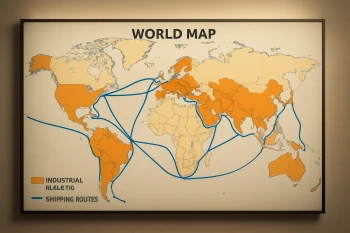
Industrial and Economic Development: Mixed Review
Crack the passcode before the zombies get in.
Answer, then swat bugs for bonus points.
Race through questions at your own speed.
Same question on every screen. Fastest wins.

Pick a tile, answer, hit bonuses and steals.
65 questions