Loading
by BlastRoom
Growing without spending the future, and how that is measured.
#us_hs_human_geography
30 questions
One question set, multiple game modes. Tap any game to see it in action. Not sure which to pick?
Answer to place stones and capture territory.
Outrun the snow together.
Earn blasts, then hunt the other team.
Answer to earn energy, then climb.

The class blasts through walls together.
Bid on mystery lots. Most money wins.
Sell tours. Nice, standard, or a total scam.

Answer, restock, and serve the rush.
More correct answers pulls the rope your way.
Answer, then shoot down the alien wave.
Answer, then tap to leap the frozen ridge.
A national plan aims to meet today's needs for jobs, housing, and energy without reducing the ability of future generations to meet their own needs. What idea is guiding the plan?
A city caps groundwater pumping below estimated annual recharge, even though factories want more water this year. What principle best explains the cap?
A government compares how much productive land and water residents' consumption requires before setting reduction targets. What tool is it using?
A factory redesigns packaging so materials can be reused and less solid waste reaches landfills. Which development idea is most directly shown?
A national plan rejects a project with high short-term profits because it would leave severe cleanup costs to children and grandchildren. What idea is being applied?
A port city evaluates a new industrial zone by jobs created, pollution controls, and effects on nearby neighborhoods. What framework is it using?
A fishery lowers its catch before a stock collapse is certain because scientists warn the loss could be hard to reverse. What principle is this?
A country invests in efficient public transit so growth uses less fuel per commuter while keeping access to jobs. What goal is most central?
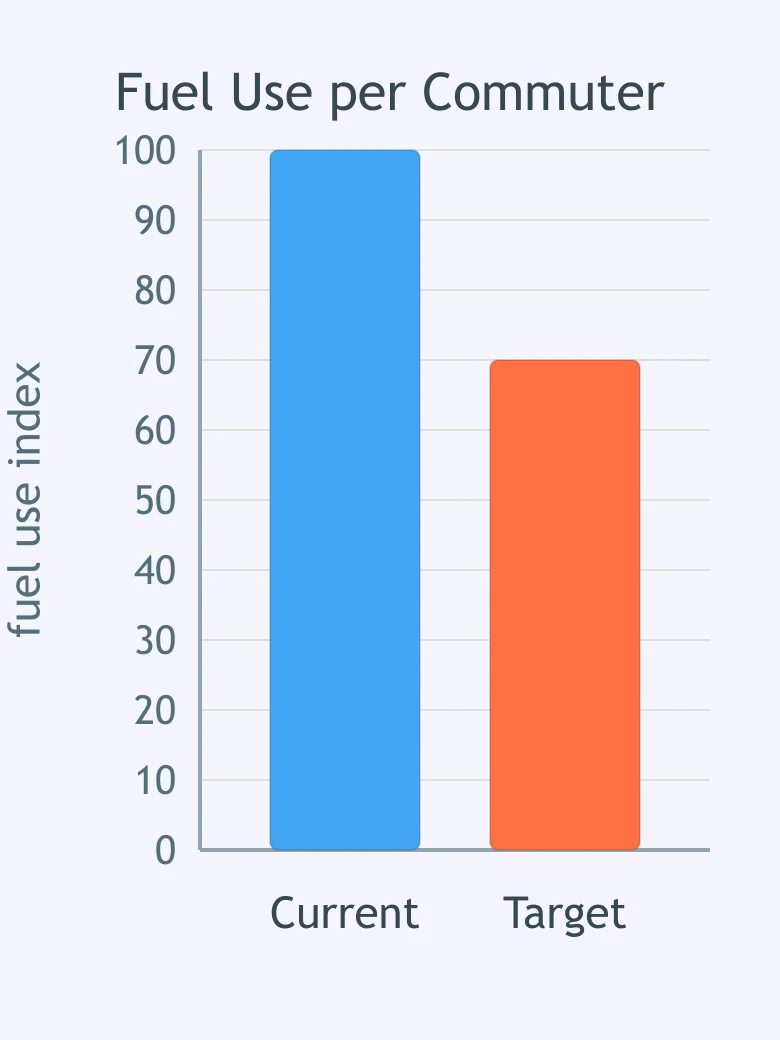
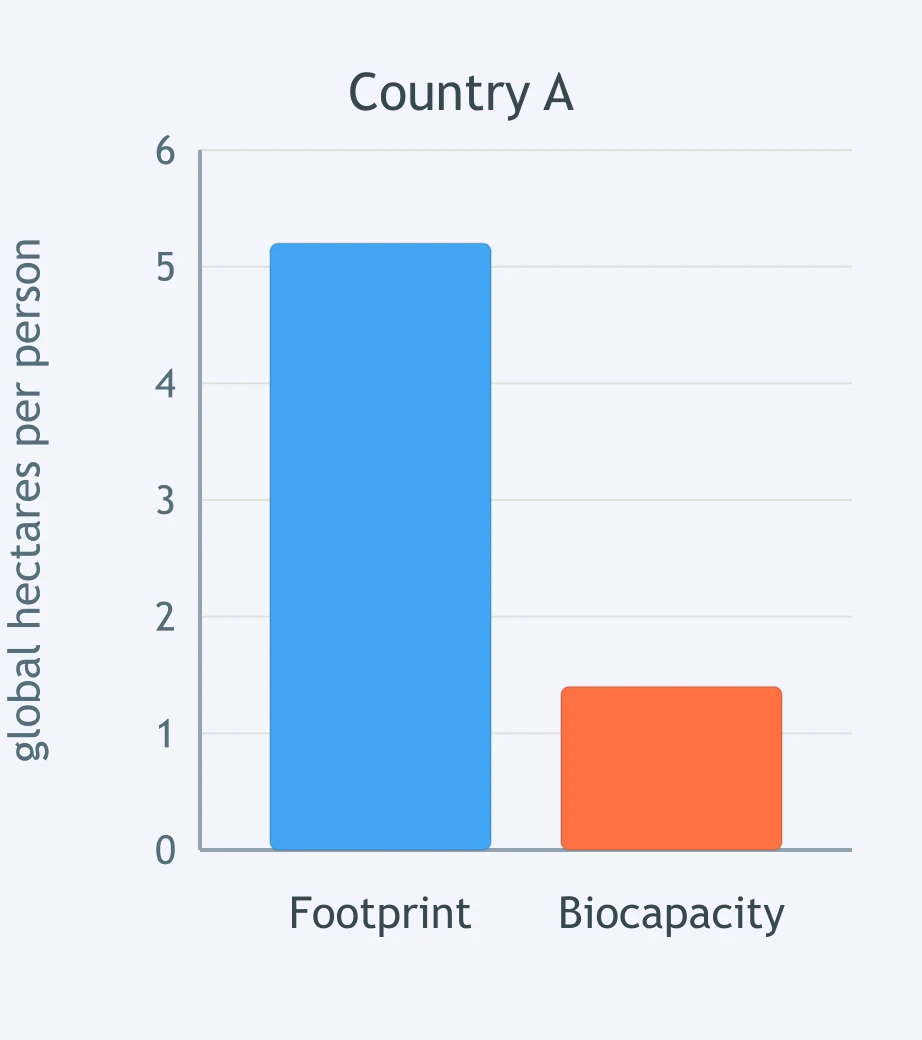
Use the bar graph for Country A. What does the relationship between the bars indicate?
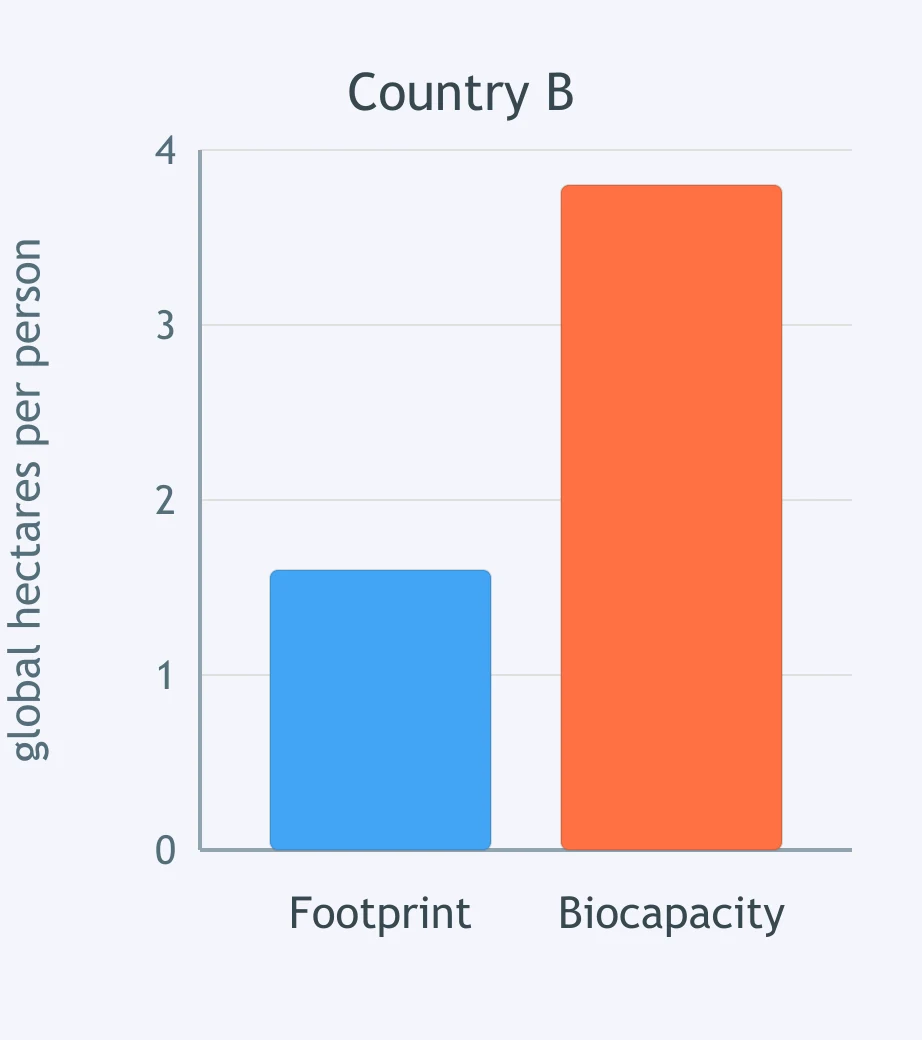
Use the footprint comparison for Country B. What is the best interpretation?
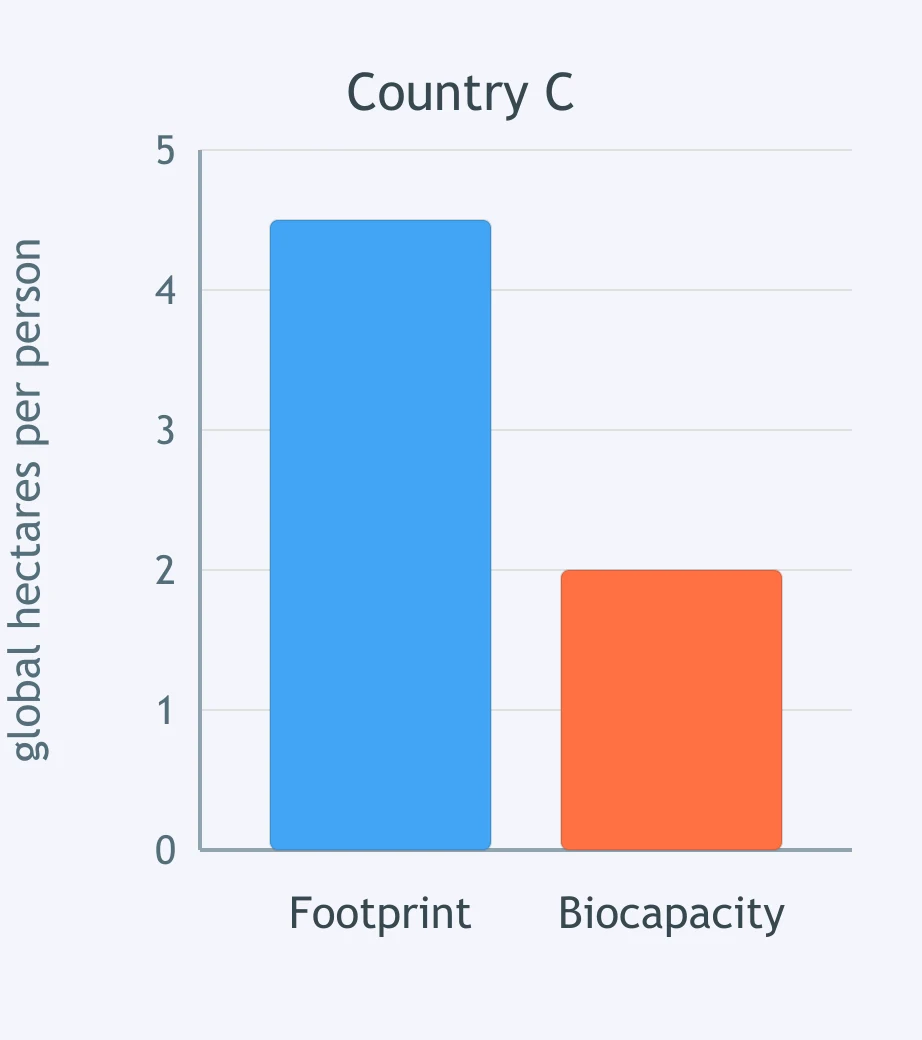
Read Country C's two bars. What condition do they most clearly show?
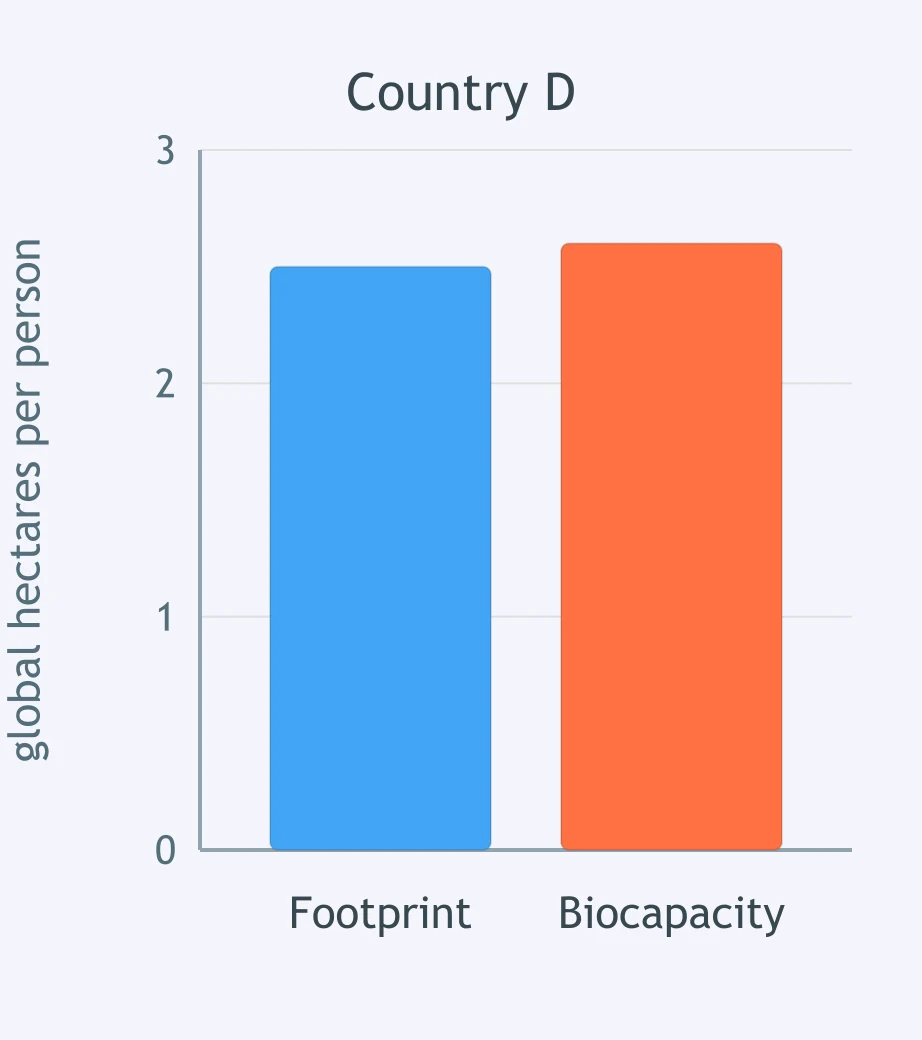
Use the graph for Country D. What conclusion is best supported by the graph alone?
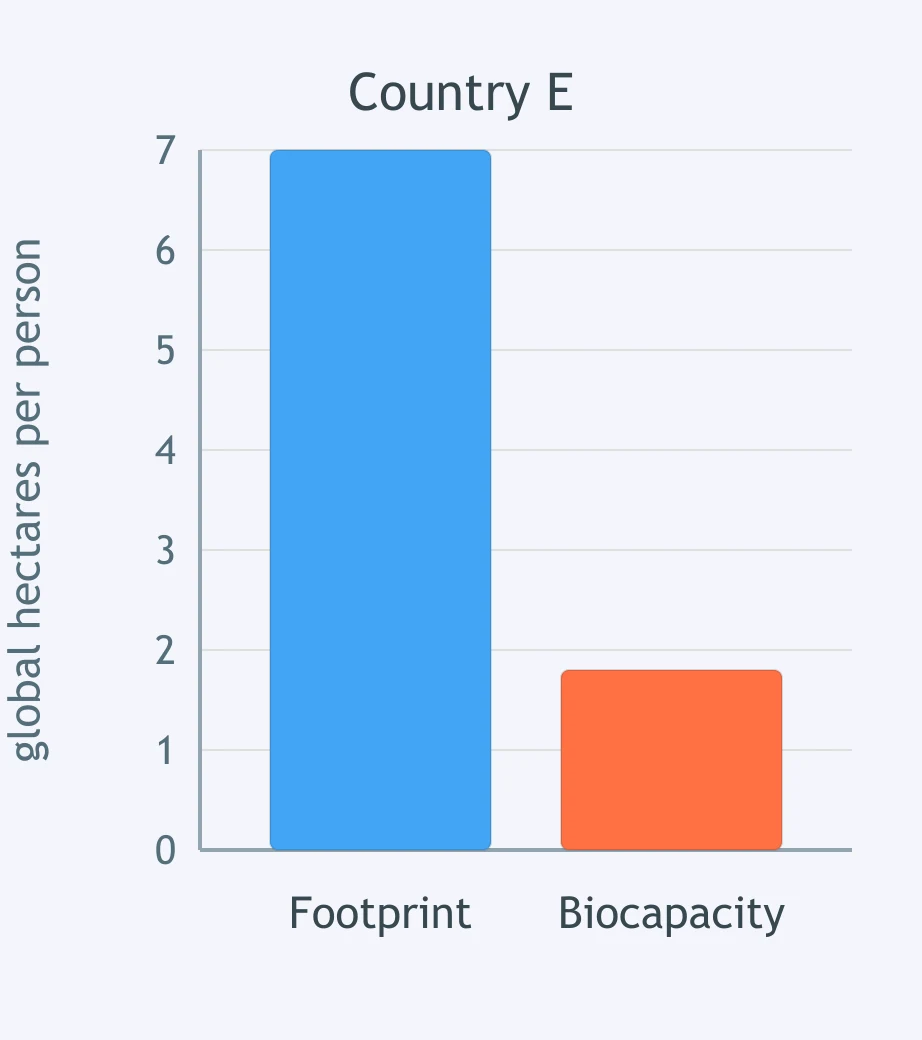
The graph compares footprint and biocapacity for Country E. What does it show about average consumption?
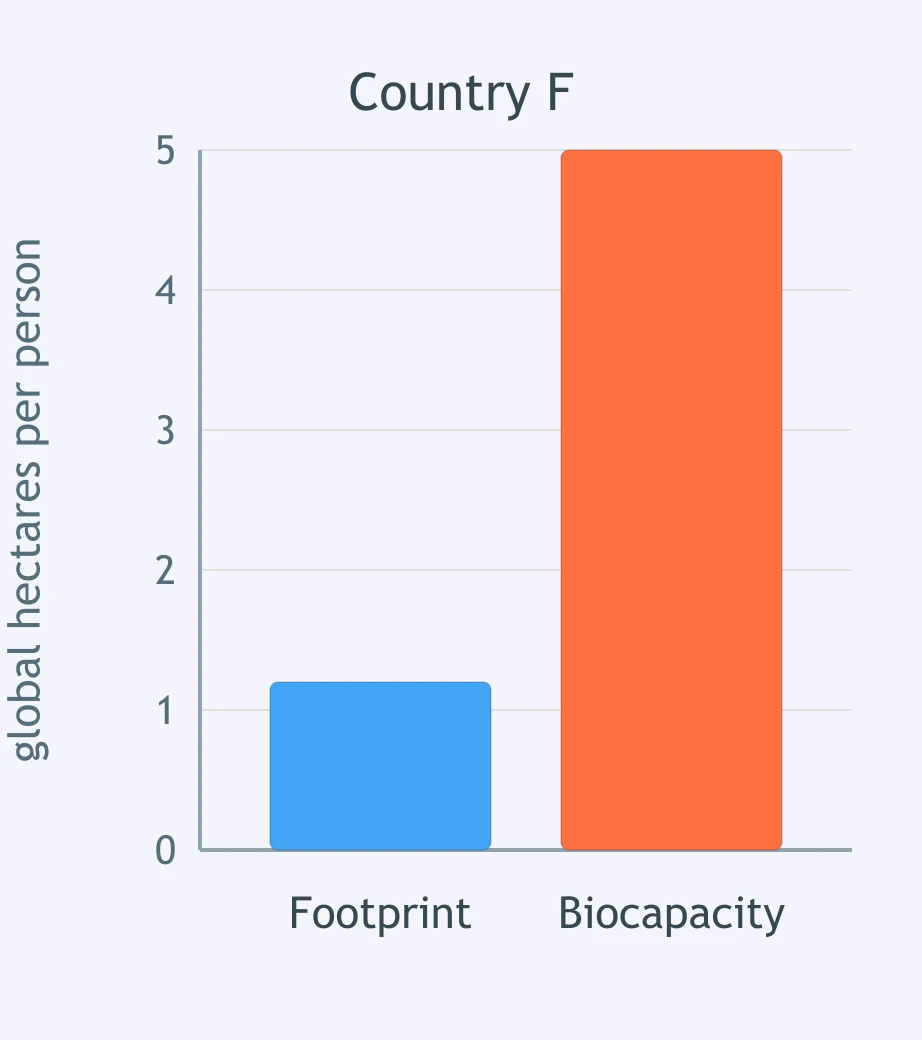
Use the graph for Country F. What statement best fits the graph?
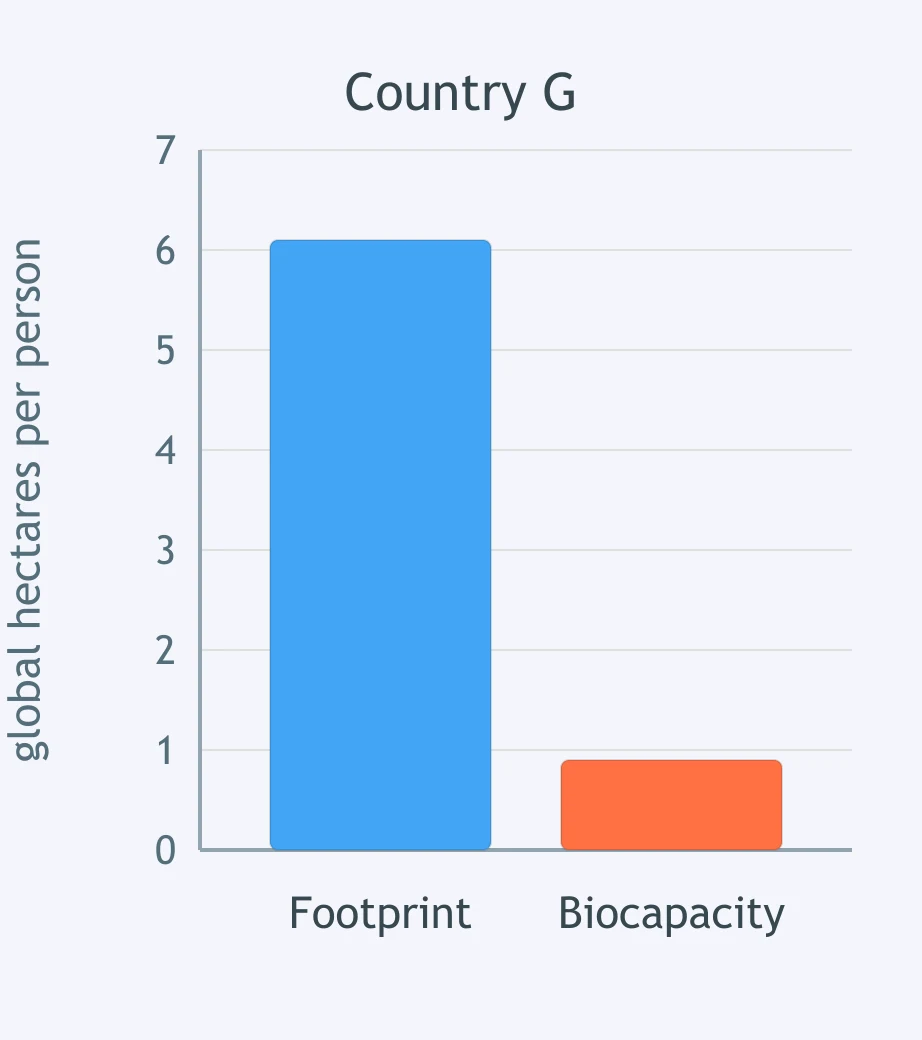
A planner studies the graph for Country G. What risk does the graph identify?
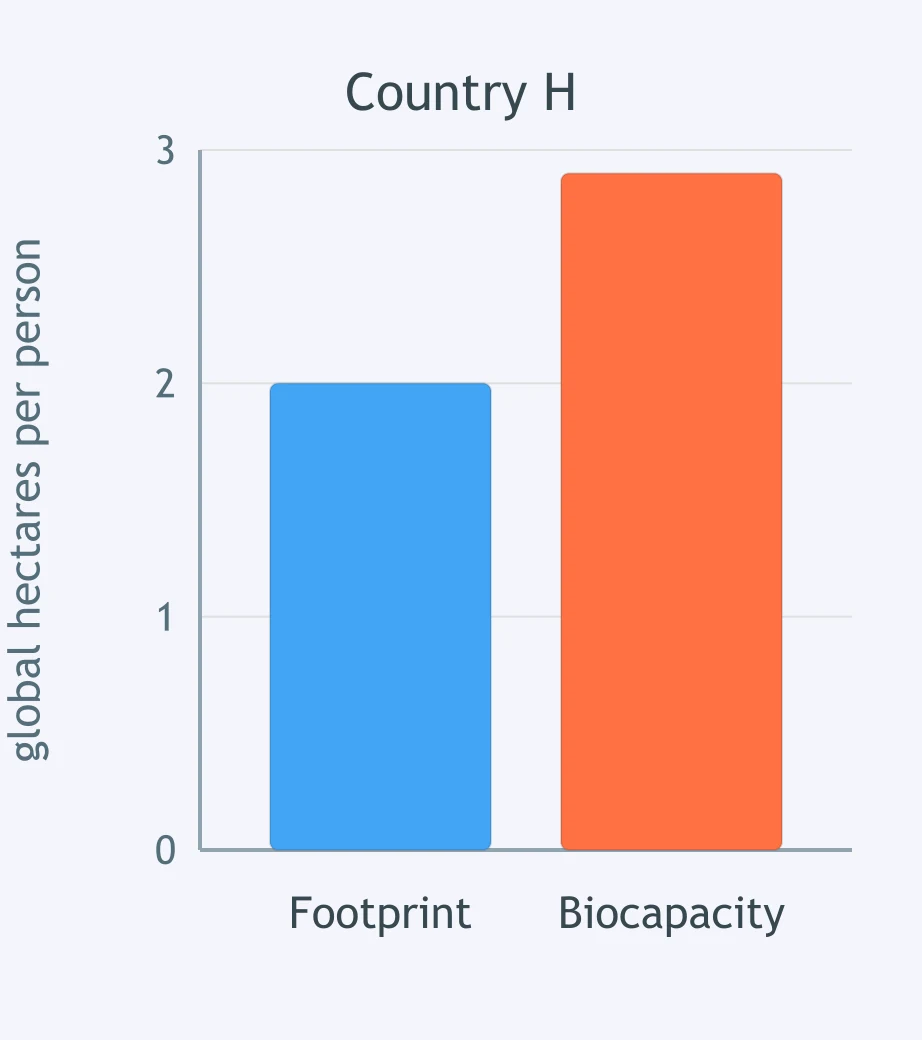
Use the graph for Country H. What does it suggest about resource demand?
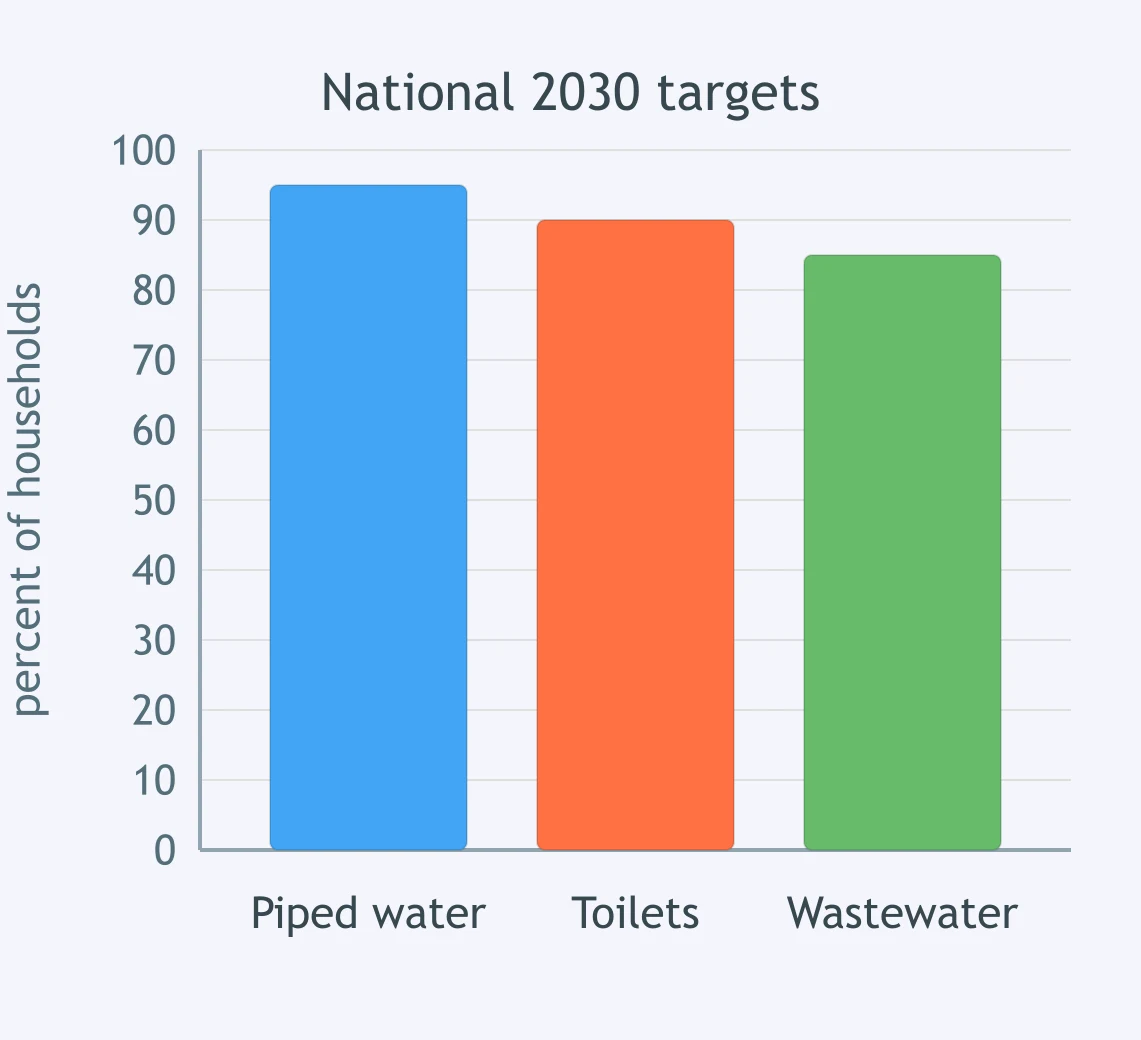
A national 2030 target expands piped household supply, toilets, and wastewater treatment. Which Sustainable Development Goal does it serve?
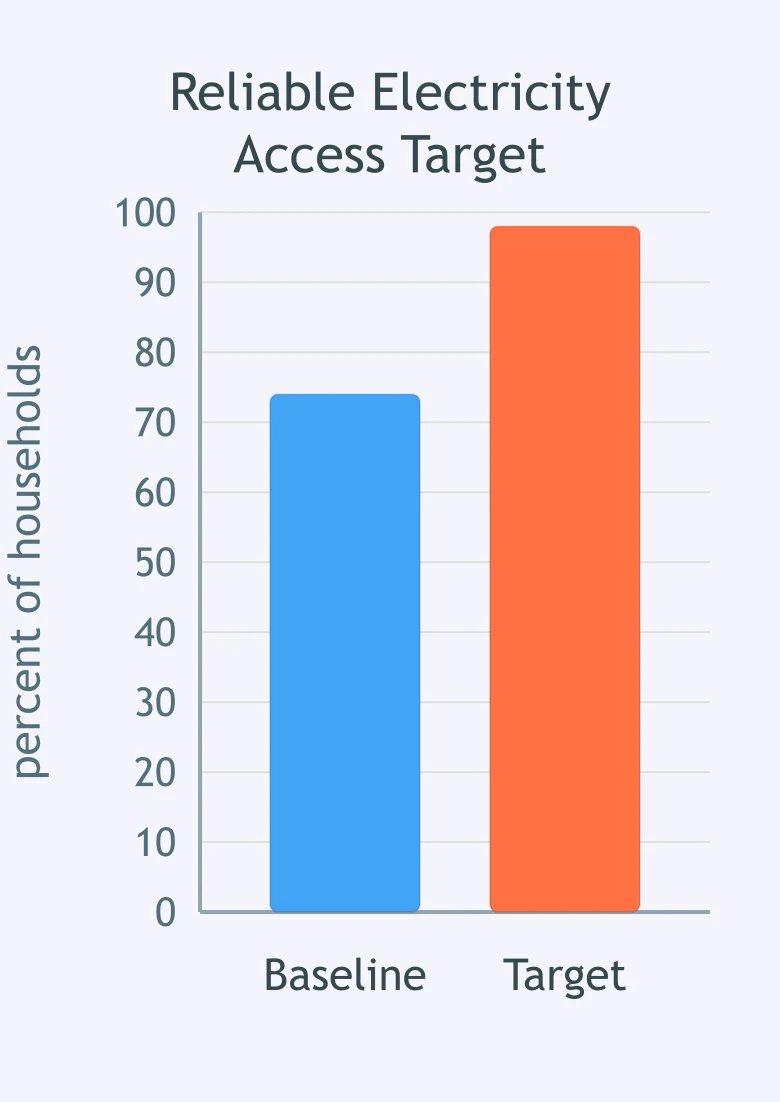
A government sets targets for cheaper household electricity, more solar generation, and reliable grid connections. Name the SDG.
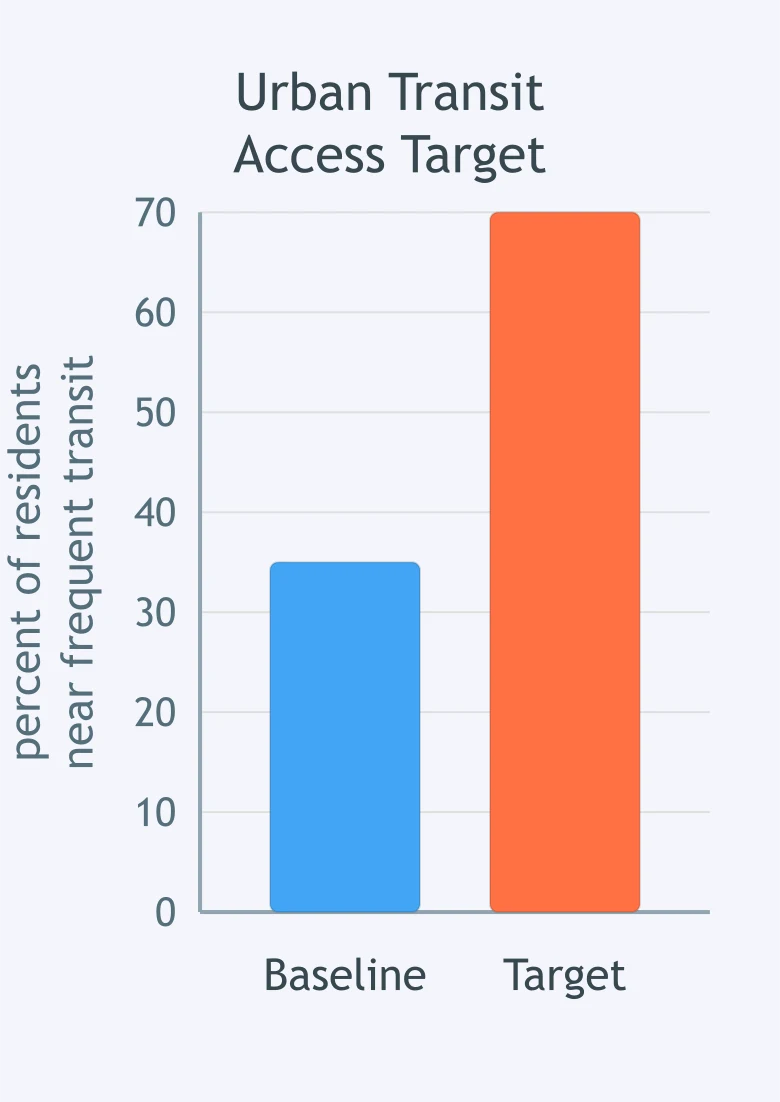
A plan funds bus rapid transit, safe housing upgrades, and more public green space in fast-growing metro areas. Which SDG is the closest match?
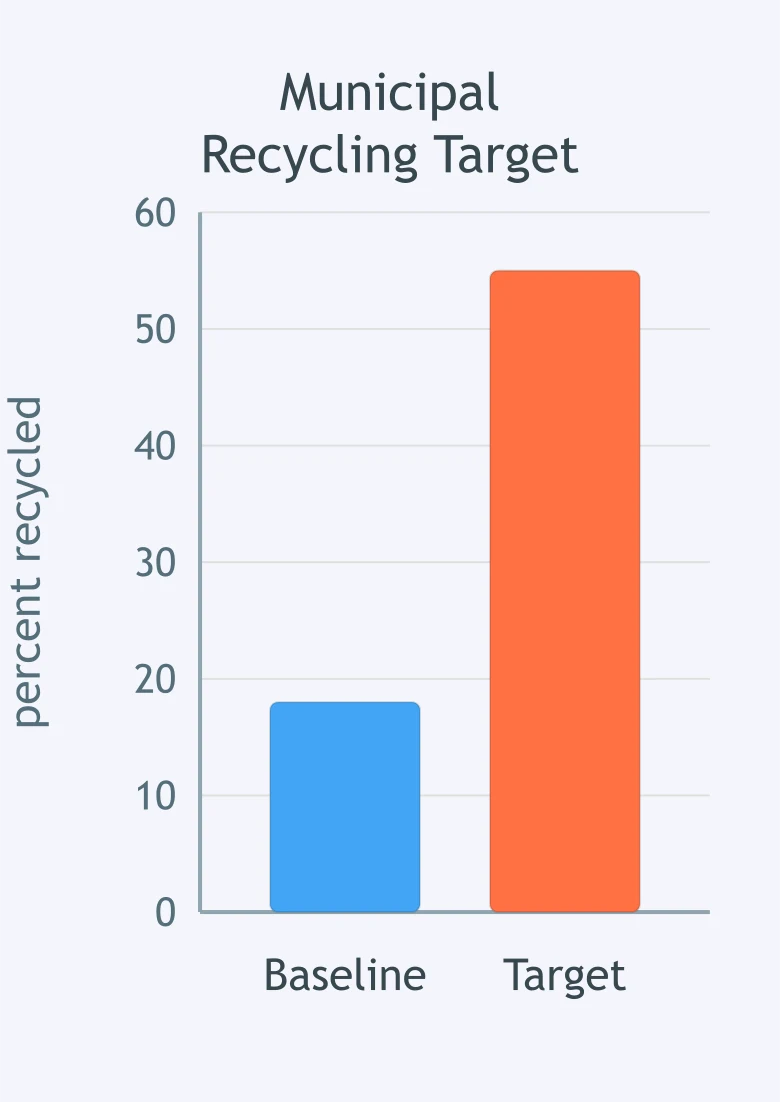
A national target cuts food waste, raises recycling rates, and requires firms to report material use. Which SDG does this most directly support?
A country's 2030 plan sets emissions cuts, climate-risk mapping, and school lessons on adaptation. Which SDG is targeted?
A coastal state expands marine protected areas, controls illegal fishing, and reduces plastic entering bays. Which SDG fits the plan?
A country sets targets for reforestation, wildlife habitat protection, and restoring degraded soils. Which SDG is most directly involved?
A dam will supply low-carbon electricity but flood farms and move several villages. Which group bears most of the project's social cost?
A resort project promises jobs and tax revenue but would increase water use and damage nearby coral. Under the triple bottom line, the coral damage counts against which pillar?
A mine for battery minerals supports electric-vehicle production but risks toxic runoff into streams. Which policy would most directly cut the runoff while the mine keeps operating?
A biofuel program reduces oil imports, but farmers clear forest and plant fuel crops instead of food crops. Which Sustainable Development Goal is most directly threatened by replacing food crops?
A highway to a special economic zone may attract factories, but it cuts across wetlands. Which change would most reduce its environmental cost?
A city retires old diesel buses to improve air quality, but fares rise during the transition. Which group is most likely to be hurt in the short term?
Upstream farms on a river take more and more water for irrigation, leaving too little for downstream wetlands and fishing communities. What concept does this overuse of a shared resource illustrate?
Rostow's Stages of Economic Growth
25 questions
World-Systems Theory, Dependency Theory and Core-Periphery
35 questions
Trade and the World Economy: Comparative Advantage and Trade Blocs
35 questions

Outsourcing, Special Economic Zones, Post-Fordism and the New International Division of Labor
35 questions
Industrial and Economic Development: Mixed Review
Crack the passcode before the zombies get in.
Answer, then swat bugs for bonus points.
Race through questions at your own speed.
Same question on every screen. Fastest wins.

Pick a tile, answer, hit bonuses and steals.
65 questions