Loading
by BlastRoom
A five-stage ladder of development, and the argument against it.
#us_hs_human_geography
25 questions
One question set, multiple game modes. Tap any game to see it in action. Not sure which to pick?
Answer to place stones and capture territory.
Outrun the snow together.
Earn blasts, then hunt the other team.
Answer to earn energy, then climb.

The class blasts through walls together.
Bid on mystery lots. Most money wins.
Sell tours. Nice, standard, or a total scam.

Answer, restock, and serve the rush.
More correct answers pulls the rope your way.
Answer, then shoot down the alien wave.
Answer, then tap to leap the frozen ridge.
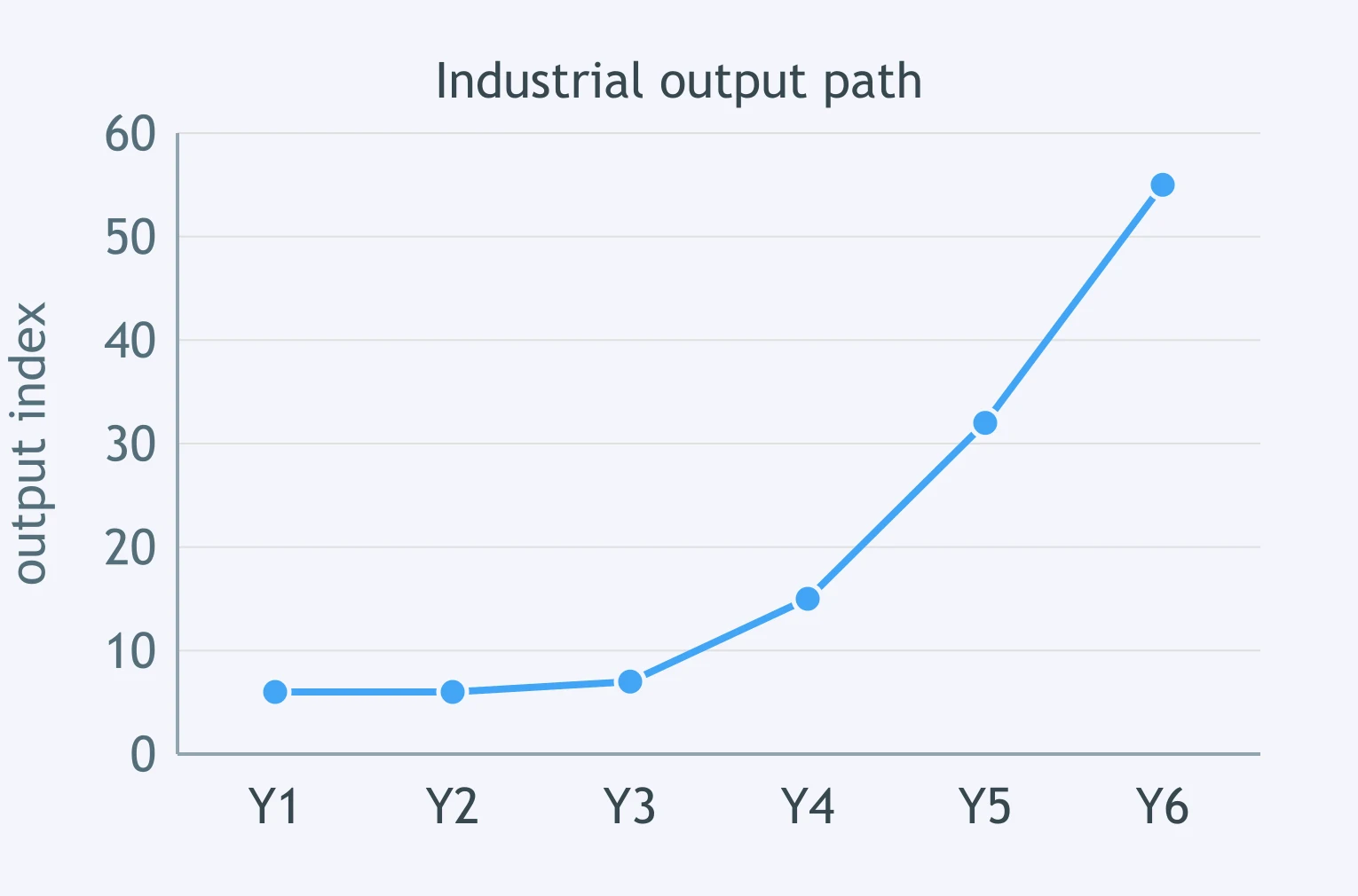
The graph shows output turning sharply upward as rail lines carry ore to new steel mills and savings are reinvested in factories. Which Rostow stage fits?
The curve rises slowly while commercial farms, roads, and ports expand, but factory employment is still a small share of work. Which Rostow stage is shown?
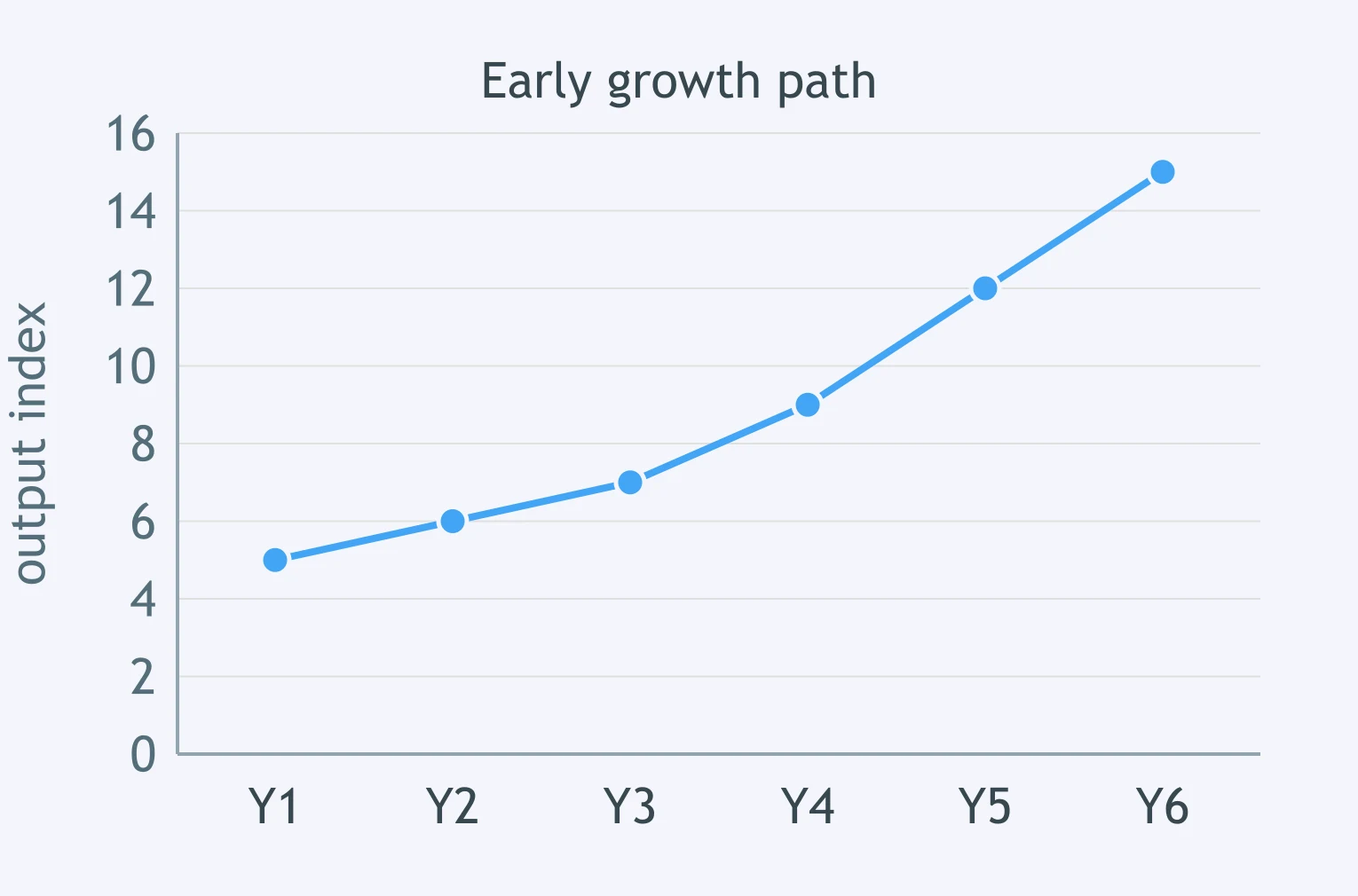
The graph remains low and nearly flat as most people farm for subsistence with limited technology and little surplus for investment. Which Rostow stage fits?
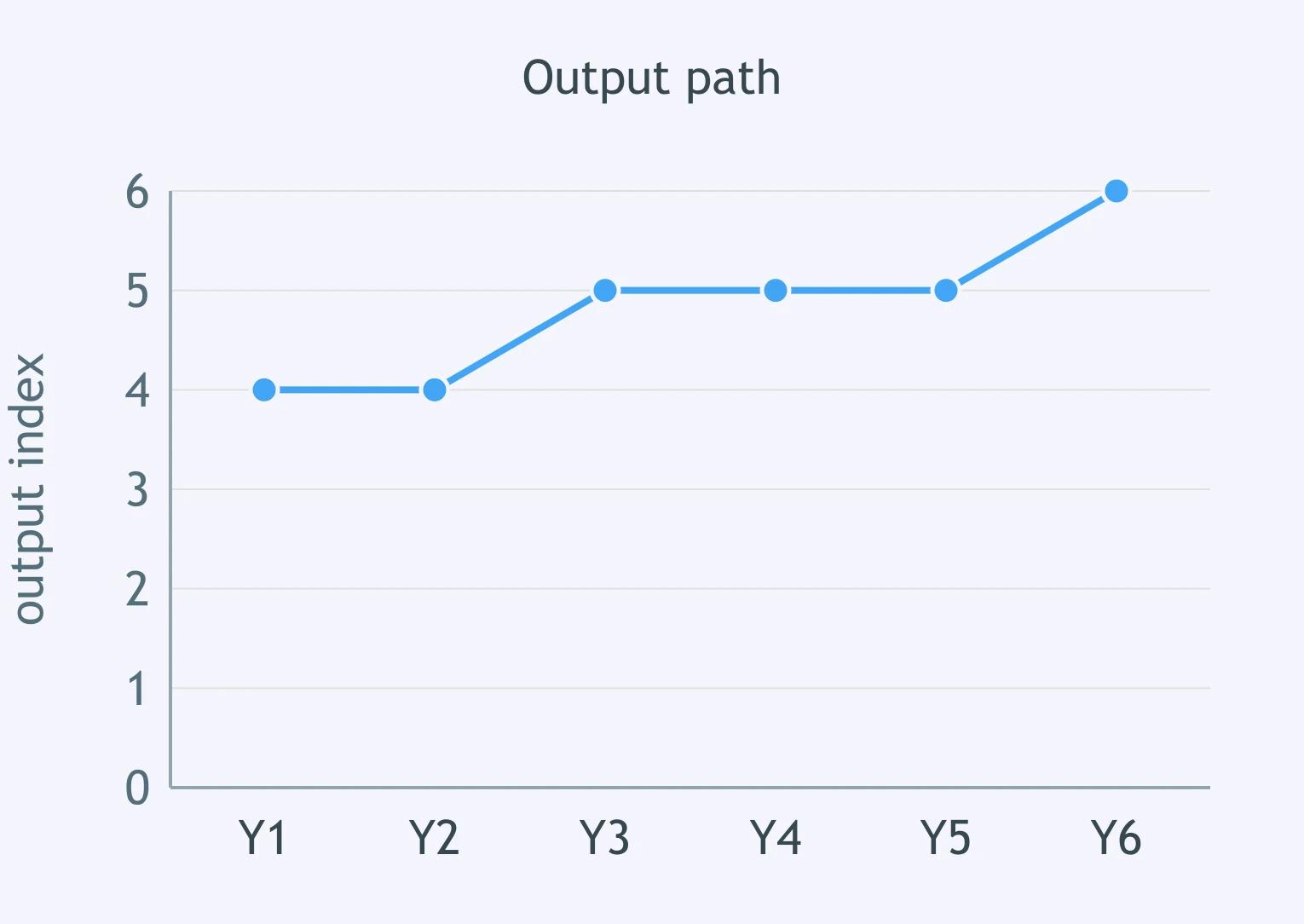
After earlier industrial growth, the curve keeps climbing as technology spreads into chemicals, machinery, and consumer goods. Which stage is this country entering?
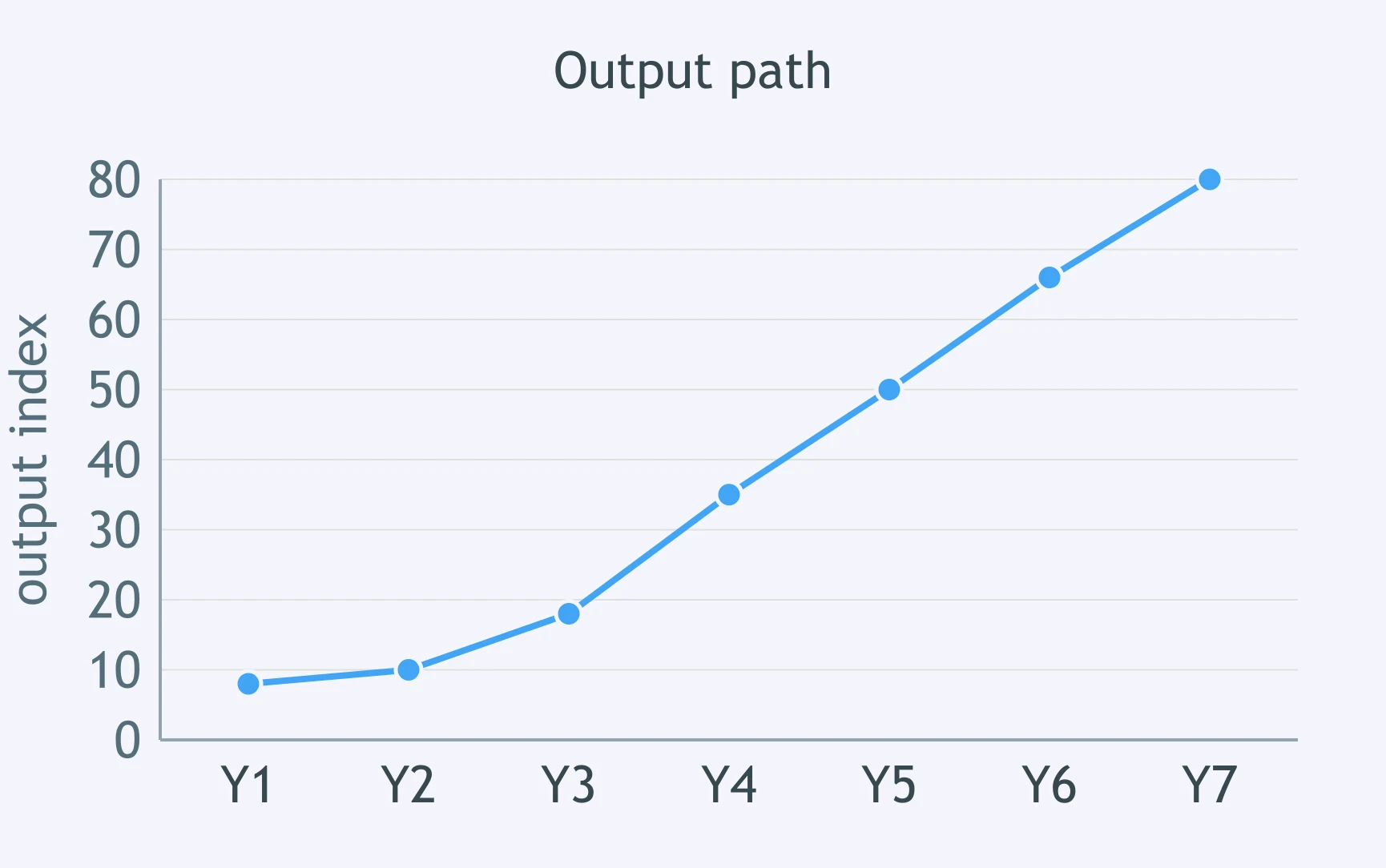
The graph is high and flatter while services dominate employment and households routinely buy cars, appliances, and leisure goods. Which stage fits?
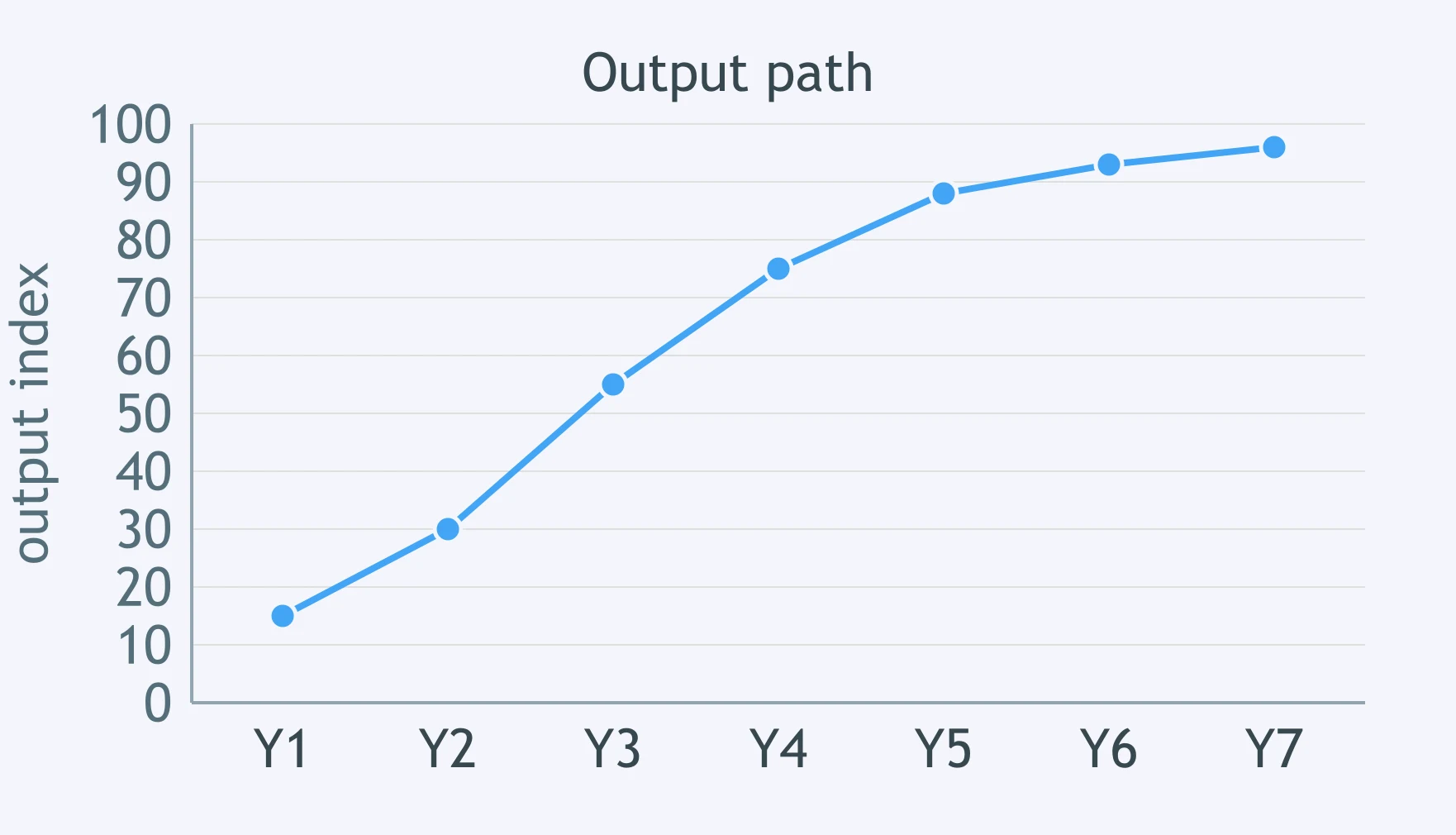
A country builds power plants and railways, expands secondary-sector jobs rapidly, and raises domestic investment above earlier levels. Which Rostow stage fits?
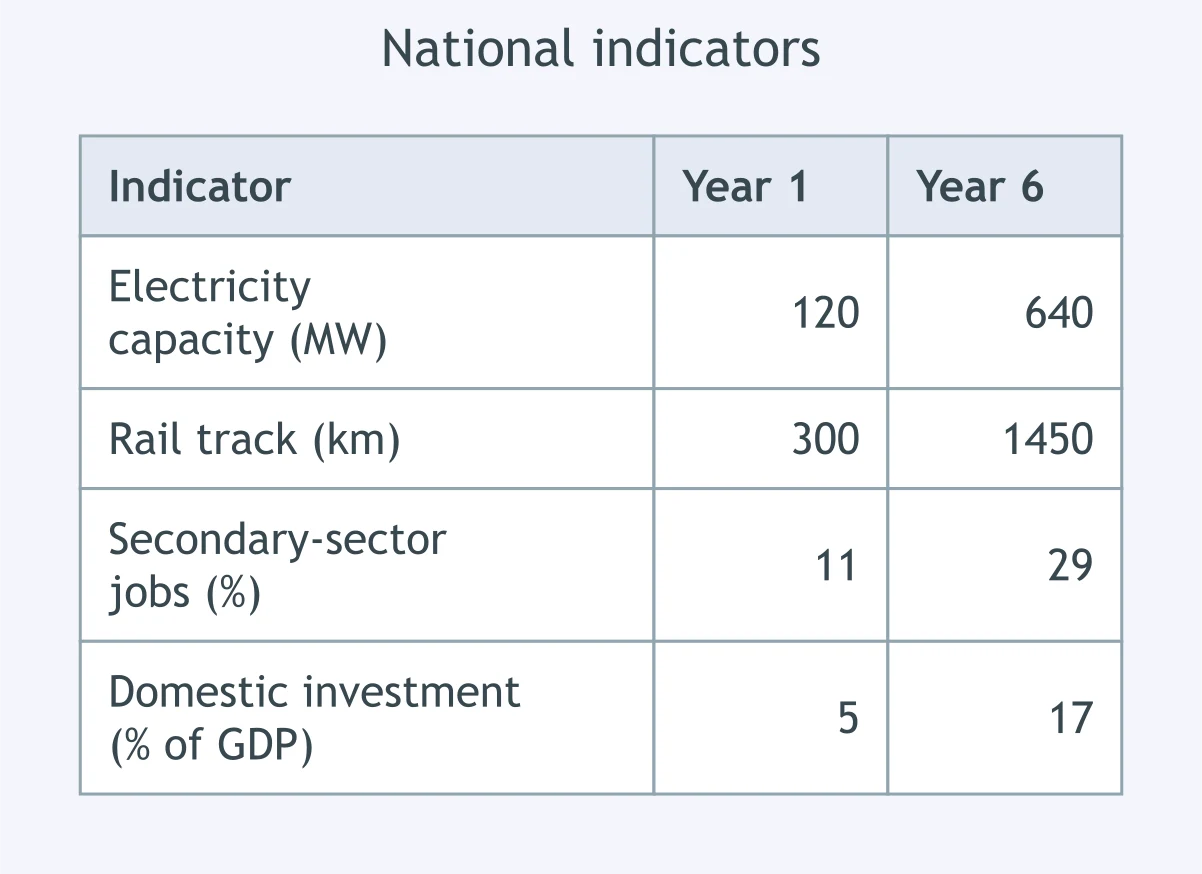
A country has improved schools, banks, roads, and commercial farms, but most exports are still raw materials and factories are not yet growing quickly. Which stage fits?
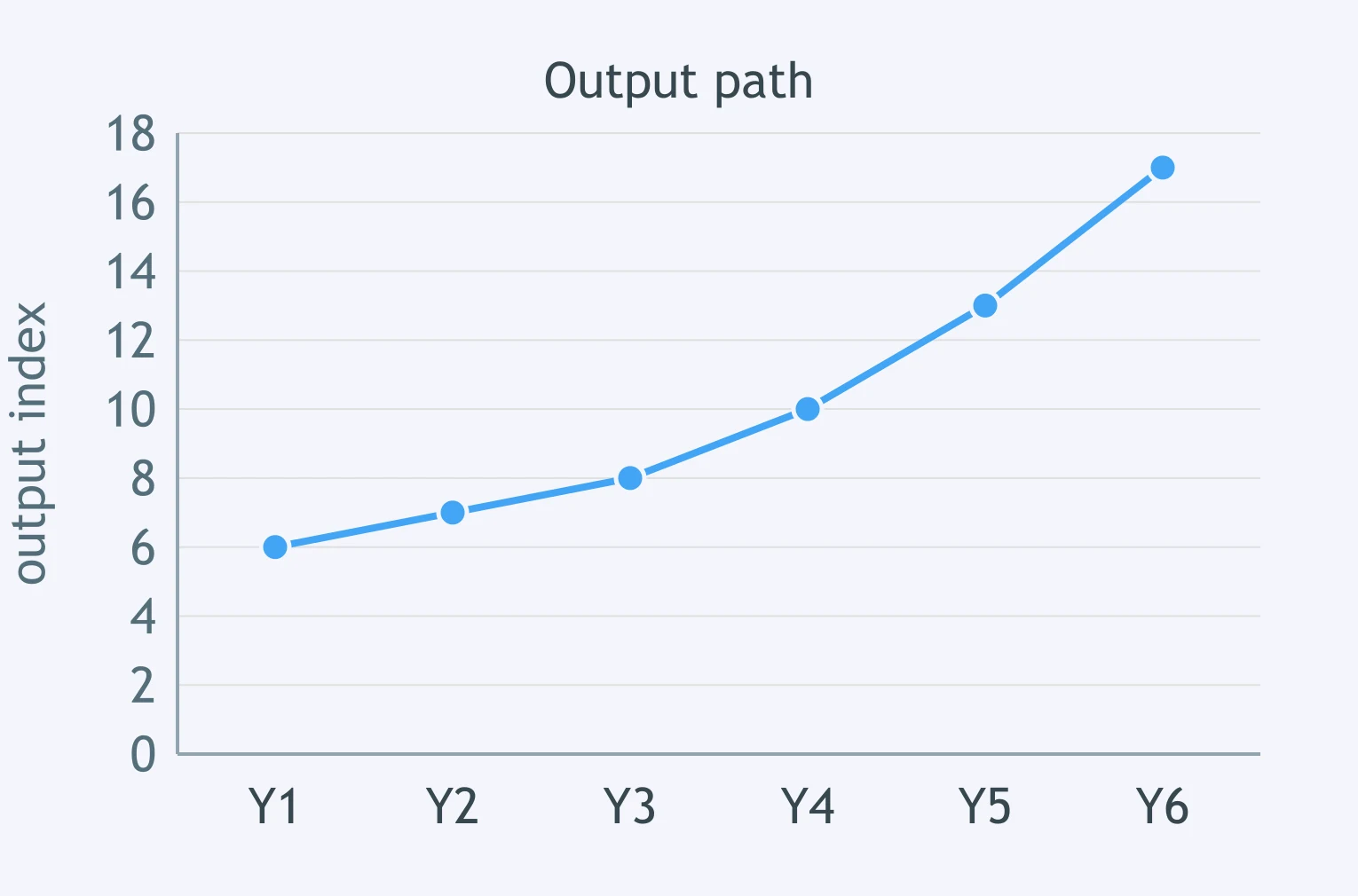
A country now makes its own machines, shifts exports from textiles to cars and electronics, and uses modern methods in many industries. Which stage fits?
A country has very low productivity, most labor in the primary sector, and wealth tied to land rather than manufacturing or services. Which Rostow stage fits?
On the graph, the economy shifts from a long slow path to a steep rise as leading industries expand and investment accelerates. Name the stage.
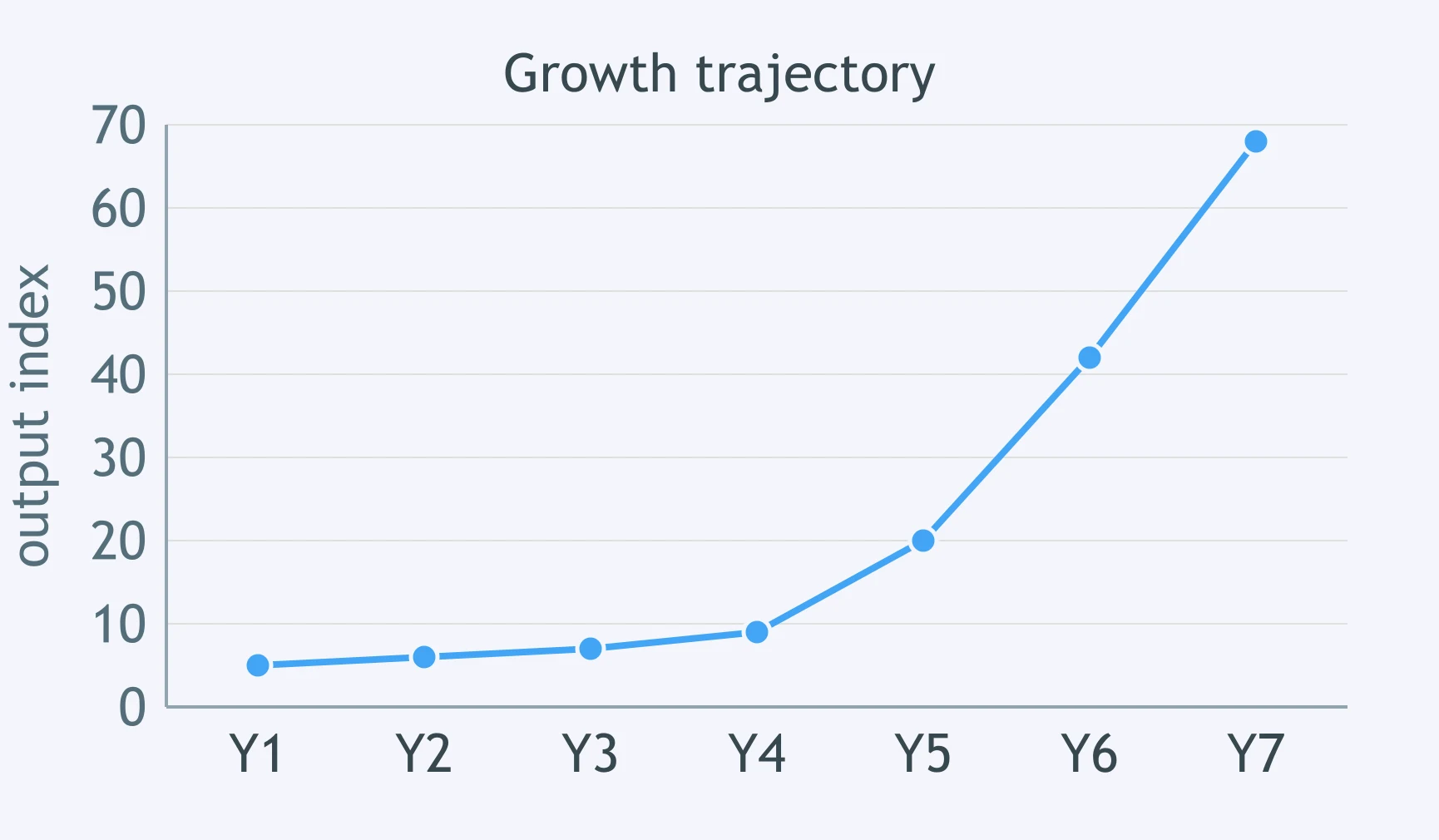
Commercial farming spreads, roads and ports are built, and a new business elite invests in production before broad factory growth begins. Name the stage.
The figure shows continued growth after the first industrial surge, while technology spreads into many sectors and imports of capital goods fall. Name the stage.
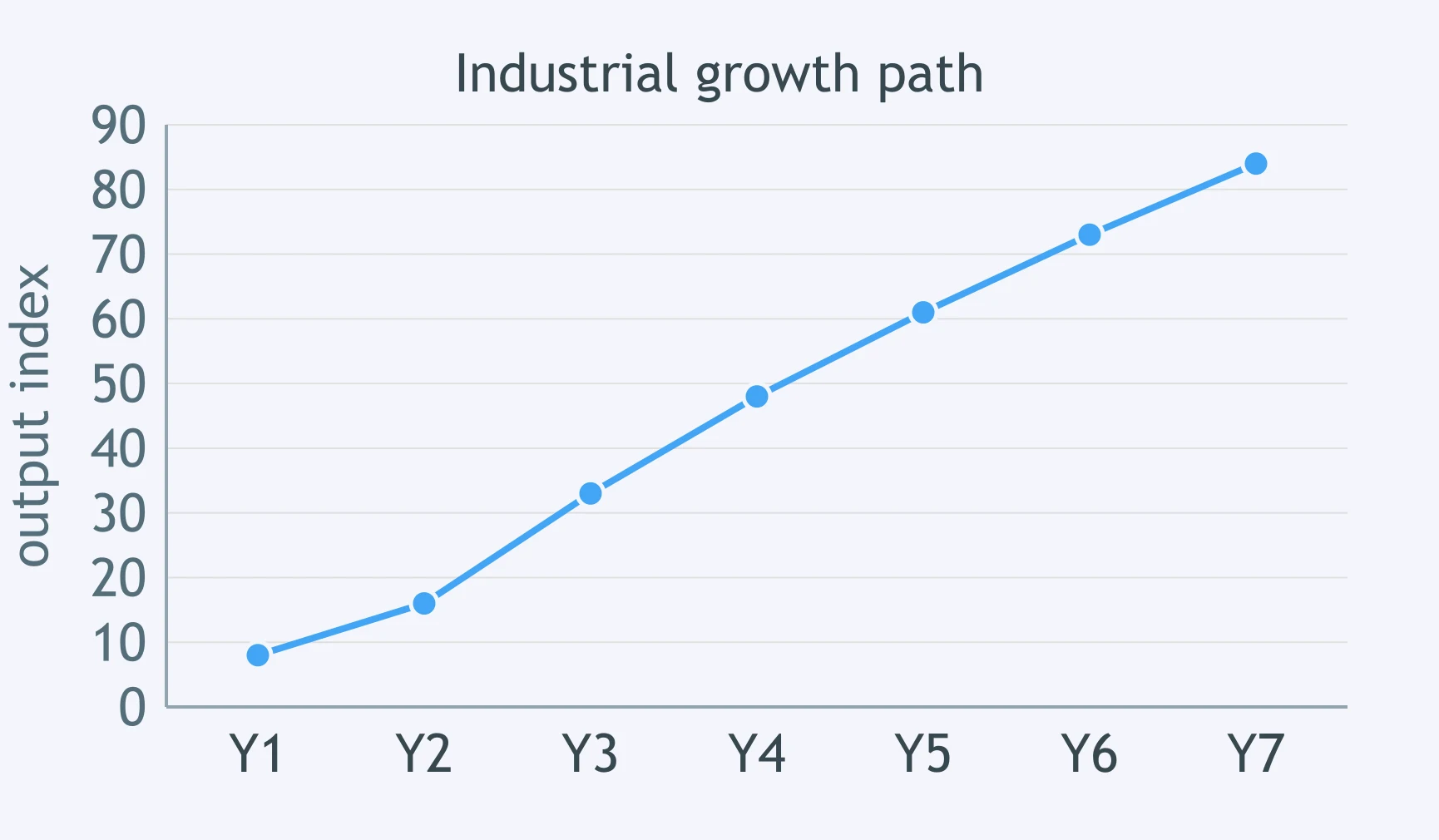
The curve is high and stable as the economy emphasizes services, welfare spending, and household purchases of durable goods. Name the stage.
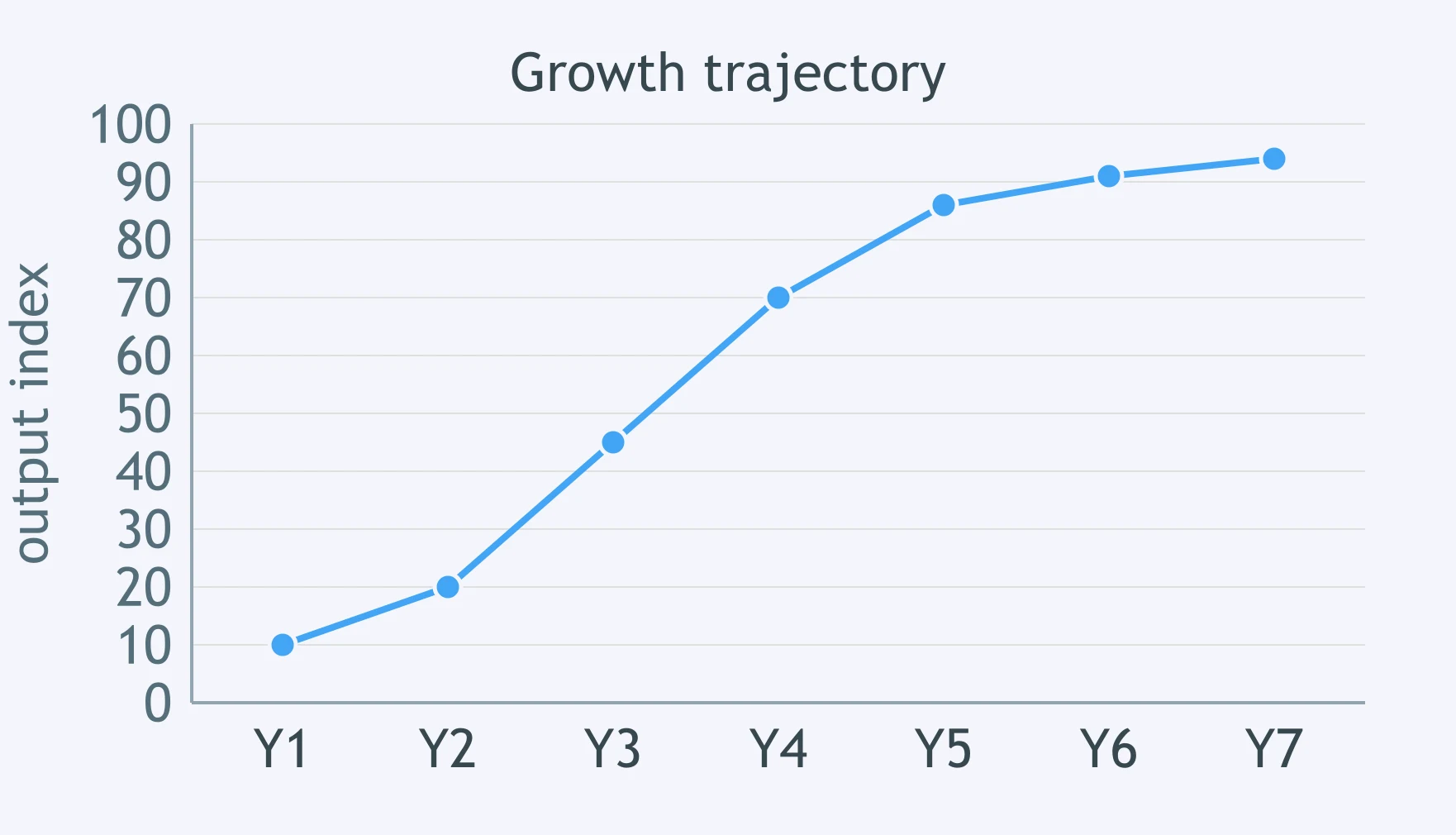
In Rostow's model, which stage comes directly before the age of high mass consumption?
Investment rises, a few leading industries grow quickly, and their gains begin to pull the rest of the economy forward. Name the stage.
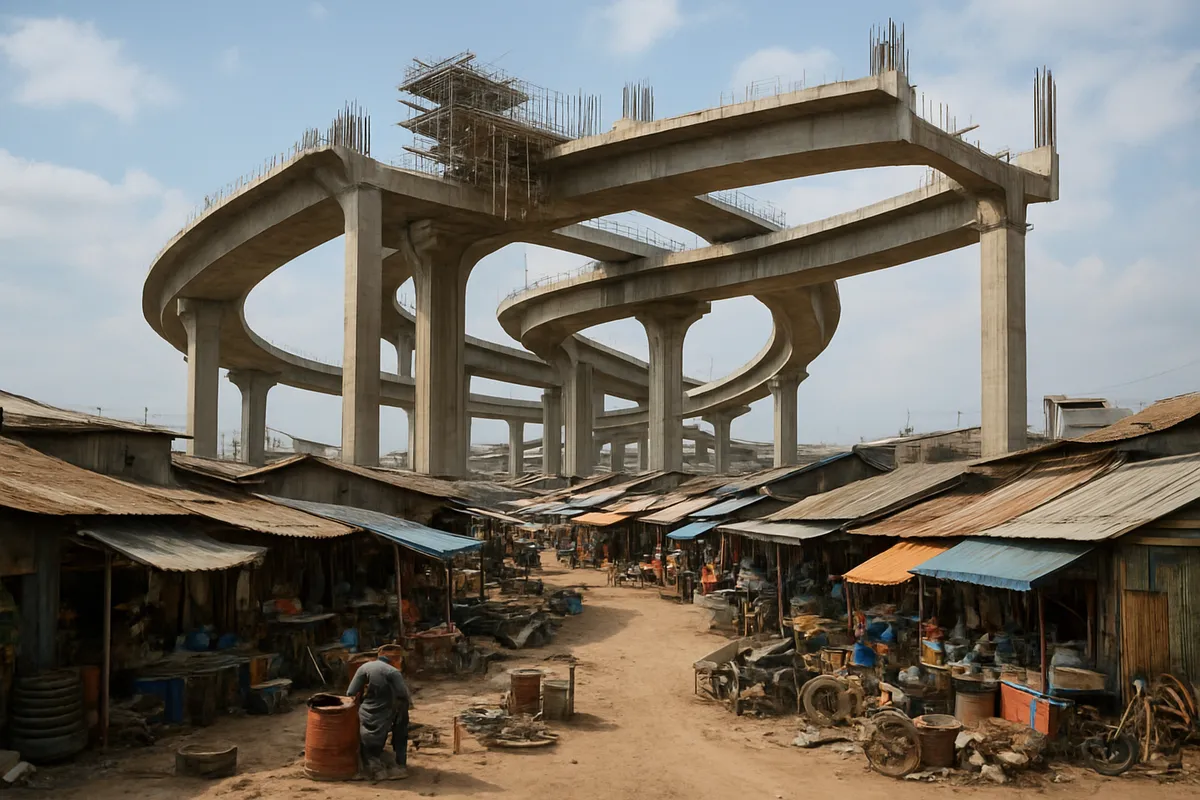
Rostow drew his sequence mainly from Western industrial states' history. Which criticism follows most directly?
A poor country exports raw materials to core firms, and profits and decision-making stay abroad. Which criticism of Rostow fits this evidence?
Rostow's endpoint uses high industrial output and household purchasing as signs of success. Which criticism targets that endpoint?
A petroleum exporter gains high income without broad manufacturing or a large diversified industrial base. Which criticism of Rostow does this support?
Britain industrialized when no other country had factories, but today's poorer countries must compete with established industrial powers. Which criticism of Rostow does this support?
A country's GDP per person rises while income remains highly concentrated and health services lag. Which criticism of Rostow follows?
Rostow explains poverty as incomplete internal progress, while another framework explains it through core exploitation of periphery regions. Which framework is the contrast?
A framework argues former colonies stay poor because trade and investment patterns keep them reliant on richer states. Which framework contrasts with Rostow here?
Design and profits stay in core countries while labor-intensive assembly moves to semi-peripheral export zones. Which account best contrasts with Rostow's ladder?
Dependency theorists said loans, trade rules, and foreign firms kept poorer states reliant on rich ones. To break that reliance, many Latin American states built factories to make goods they had imported. Which policy is this?
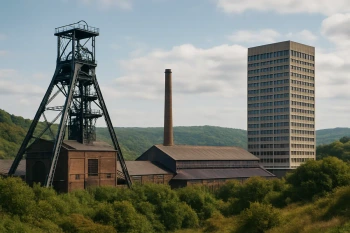
Economic Sectors and the Shift Between Them
35 questions
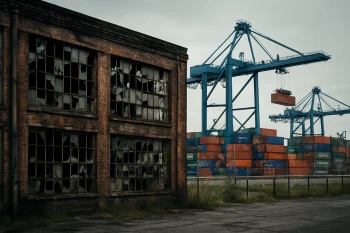
Agglomeration, Break-of-Bulk and Deindustrialization
30 questions
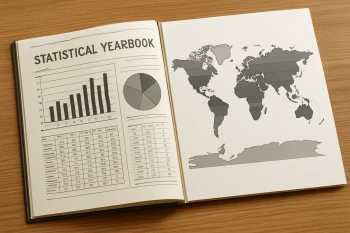
Measures of Development: GDP, GNI, HDI and Sectoral Structure
35 questions
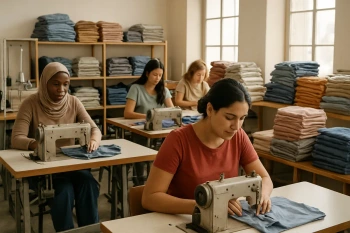
Measuring Gender Inequality: GII, Gini and Women in Development
30 questions
World-Systems Theory, Dependency Theory and Core-Periphery
35 questions
Crack the passcode before the zombies get in.
Answer, then swat bugs for bonus points.
Race through questions at your own speed.
Same question on every screen. Fastest wins.

Pick a tile, answer, hit bonuses and steals.