Loading
by BlastRoom
End-of-unit mixed review covering gravity and orbits, solar system scale data, the Sun and historical models, and weight against mass.
#us_grade_8_science
20 questions
One question set, multiple game modes. Tap any game to see it in action. Not sure which to pick?
Answer to place stones and capture territory.
Outrun the snow together.
Earn blasts, then hunt the other team.
Answer to earn energy, then climb.

The class blasts through walls together.
Bid on mystery lots. Most money wins.
Sell tours. Nice, standard, or a total scam.

Answer, restock, and serve the rush.
More correct answers pulls the rope your way.
Answer, then shoot down the alien wave.
Answer, then tap to leap the frozen ridge.
A probe coasts past Jupiter with its engines off, and its path curves sharply before it heads away again. What best explains the curve?
Mercury circles the Sun in 88 days, while Neptune takes about 165 Earth years. What does this difference show about the Sun's gravitational pull?
If the Sun's gravity stopped acting on Earth, Earth would move off in a straight line instead of continuing to curve around the Sun.
Moons A and B have equal mass and orbit the same planet. Moon A is 200,000 km from the planet and Moon B is 800,000 km from it. What is true of the planet's pull?
A comet speeds up as it swings in close to the Sun and slows down again as it heads back out. What causes the change in speed?
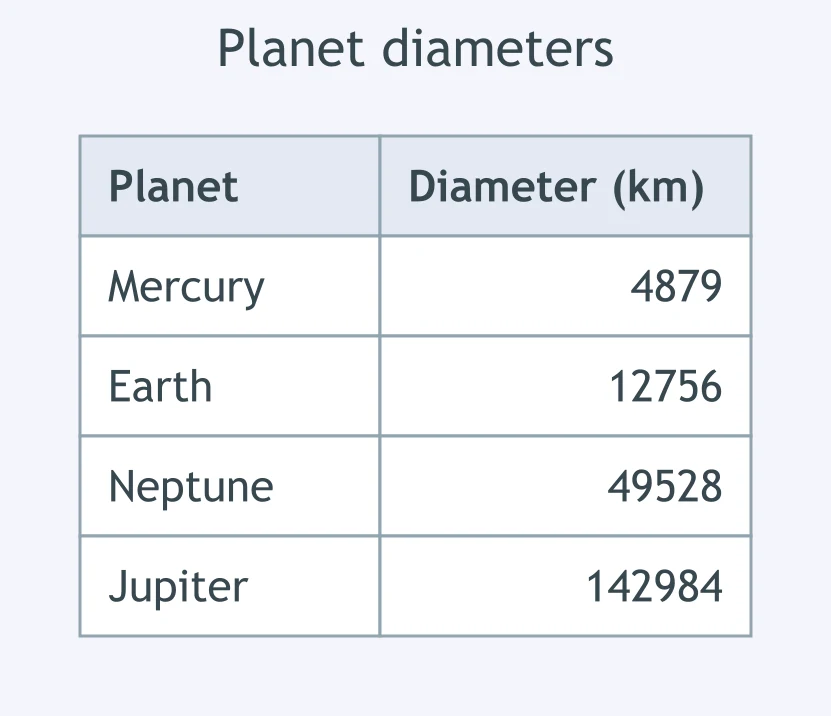
Use the table of planet diameters. About how many times wider than Earth is Jupiter?
A table lists distance and orbital period: Mercury 0.39 AU, 88 days; Earth 1.00 AU, 365 days; Jupiter 5.2 AU, 4,333 days. Pluto orbits at 39 AU. What is the best prediction for its period?
One planet has a solid rocky surface, a thin atmosphere and a small diameter. Another is far larger, made mostly of hydrogen and helium, with no solid surface. Which labels fit them, in order?
One astronomical unit equals the average distance from Earth to the Sun. Mars orbits at 1.52 AU. What does that value tell you about Mars?
A small icy body arrives from beyond Neptune, grows a glowing tail as it nears the Sun, then loops back out on a long orbit. What kind of object is it?
Watching the Sun safely by projection, a student sees dark patches on the bright disk that steadily shift across it over several days. What do the patches show?
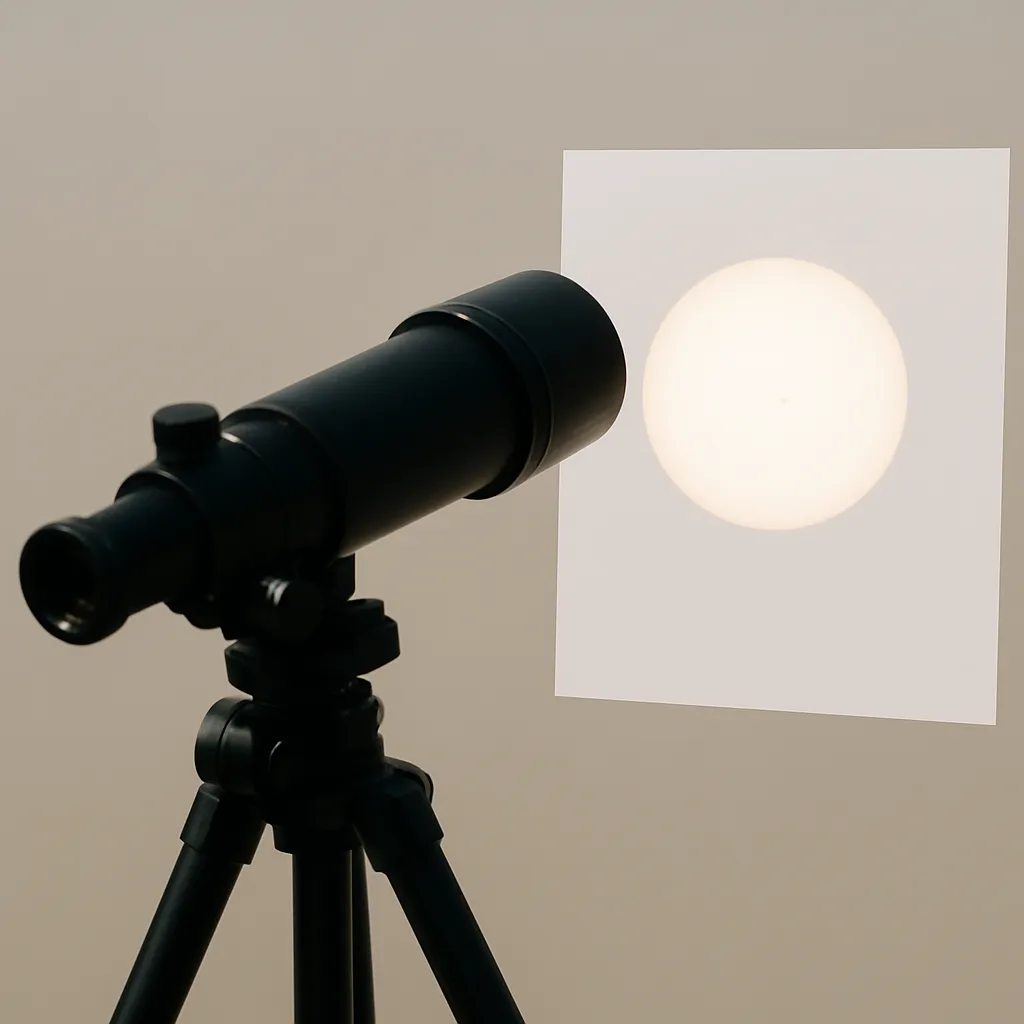
The light that leaves the Sun and reaches our eyes comes from its visible surface layer, called the ___.
In the Sun's core, hydrogen nuclei join together to form helium and release enormous amounts of energy. What is this process called?
For centuries astronomers added extra circles to Earth-centered orbits to explain the backward loop Mars traces against the stars. Which model accounts for that loop more simply?
Through a telescope, Venus shows a full cycle of phases and its apparent size changes greatly over the year. What does this observation support?
A rock's mass becomes smaller when it is carried from Earth to the Moon.
A 6 kg rock is carried from Earth, where the gravitational field strength is 9.8 N/kg, to the Moon, where it is 1.6 N/kg. Which pair describes the rock on the Moon?
An astronaut floats inside a space station circling Earth a few hundred kilometers above the surface. Why does she float?
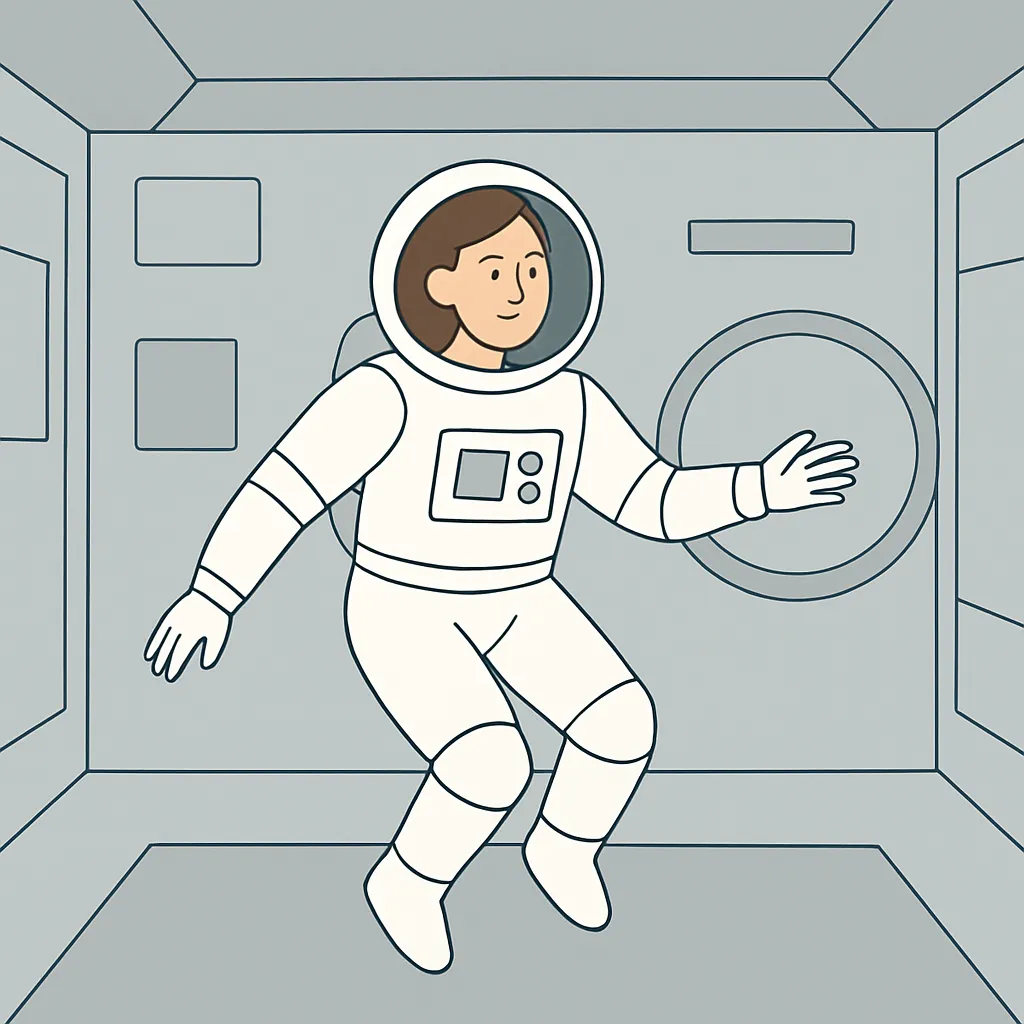
A probe has a mass of 250 kg. On Jupiter the gravitational field strength is 24.8 N/kg. What is the probe's weight there?
A student says that a bag of sand "weighs 5 kg". Which correction uses mass and weight properly for the bag on Earth?
Crack the passcode before the zombies get in.
Answer, then swat bugs for bonus points.
Race through questions at your own speed.
Same question on every screen. Fastest wins.

Pick a tile, answer, hit bonuses and steals.
Stars, Galaxies and the Universe Review
40 questions