Loading
by BlastRoom
End-of-unit mixed review covering star properties, stellar life cycles, galaxies, cosmic distance and the origin of the universe.
#us_grade_8_science
40 questions
One question set, multiple game modes. Tap any game to see it in action. Not sure which to pick?
Answer to place stones and capture territory.
Outrun the snow together.
Earn blasts, then hunt the other team.
Answer to earn energy, then climb.

The class blasts through walls together.
Bid on mystery lots. Most money wins.
Sell tours. Nice, standard, or a total scam.

Answer, restock, and serve the rush.
More correct answers pulls the rope your way.
Answer, then shoot down the alien wave.
Answer, then tap to leap the frozen ridge.
Star A and Star B have the same surface temperature, but Star A gives off 400 times more light. What does this tell you about Star A?
Betelgeuse glows deep red, while Rigel glows blue-white. Which star has the hotter surface, and why?
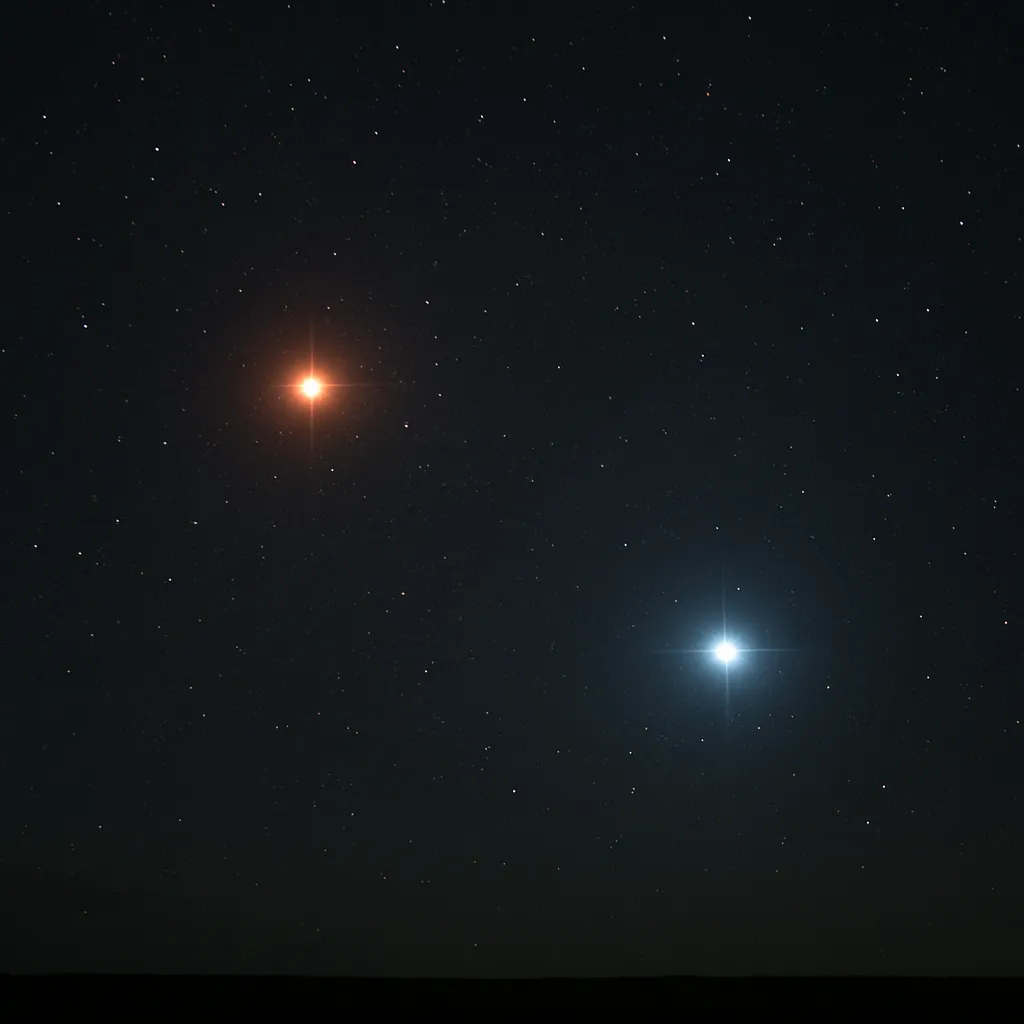
Two stars have the same absolute magnitude. One lies 5 light-years from Earth and the other 500 light-years away. Which one looks brighter in Earth's sky?
A catalog lists Sirius at apparent magnitude -1.5 and Polaris at apparent magnitude 2.0. Which star appears brighter from Earth?
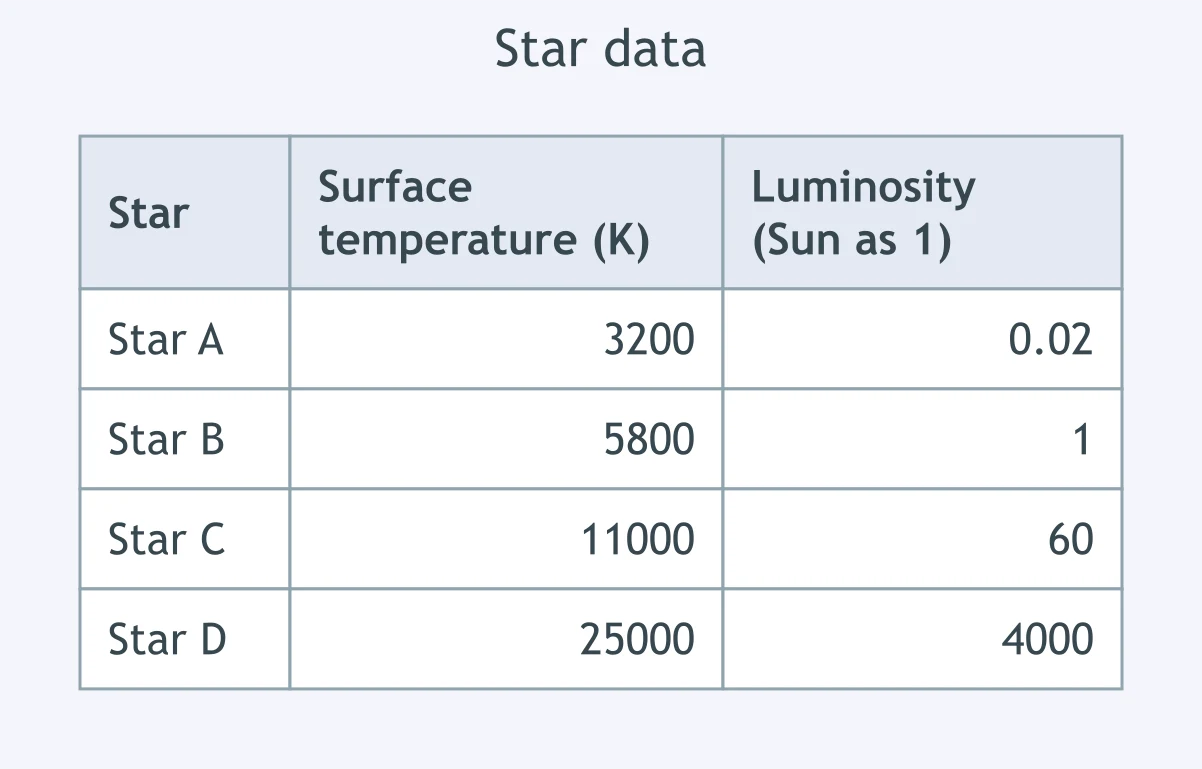
Use the star data table. Which listed star has the coolest surface, so it would appear reddest?
An astronomer measures a star's surface temperature as about 5,800 K. What color does that star appear?
A student says a star's luminosity means how bright the star looks from Earth. Which correction matches how astronomers use the term?
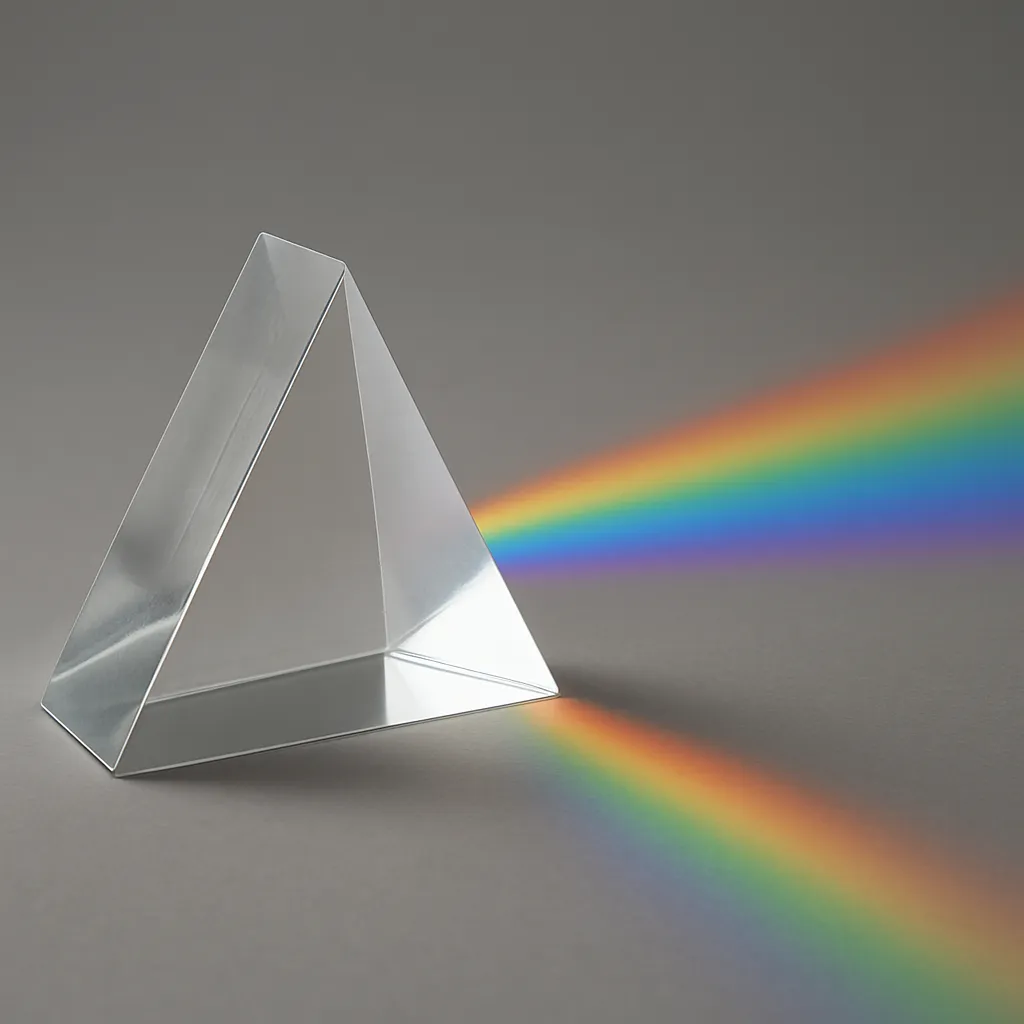
Starlight sent through a spectroscope spreads into a colored band crossed by dark lines at fixed wavelengths. What do those lines let astronomers work out?
Aldebaran is a cool orange-red star that gives off hundreds of times as much light as the Sun. Sirius B is a hot white star that gives off about 1/20 as much light as the Sun. Which is larger in actual diameter?
On a Hertzsprung-Russell diagram most stars fall along one broad diagonal band running from hot bright stars down to cool dim ones. What is that band called?
Gravity pulls a cold cloud of gas and dust together, and its center heats up over millions of years. What begins once that center is hot and dense enough?
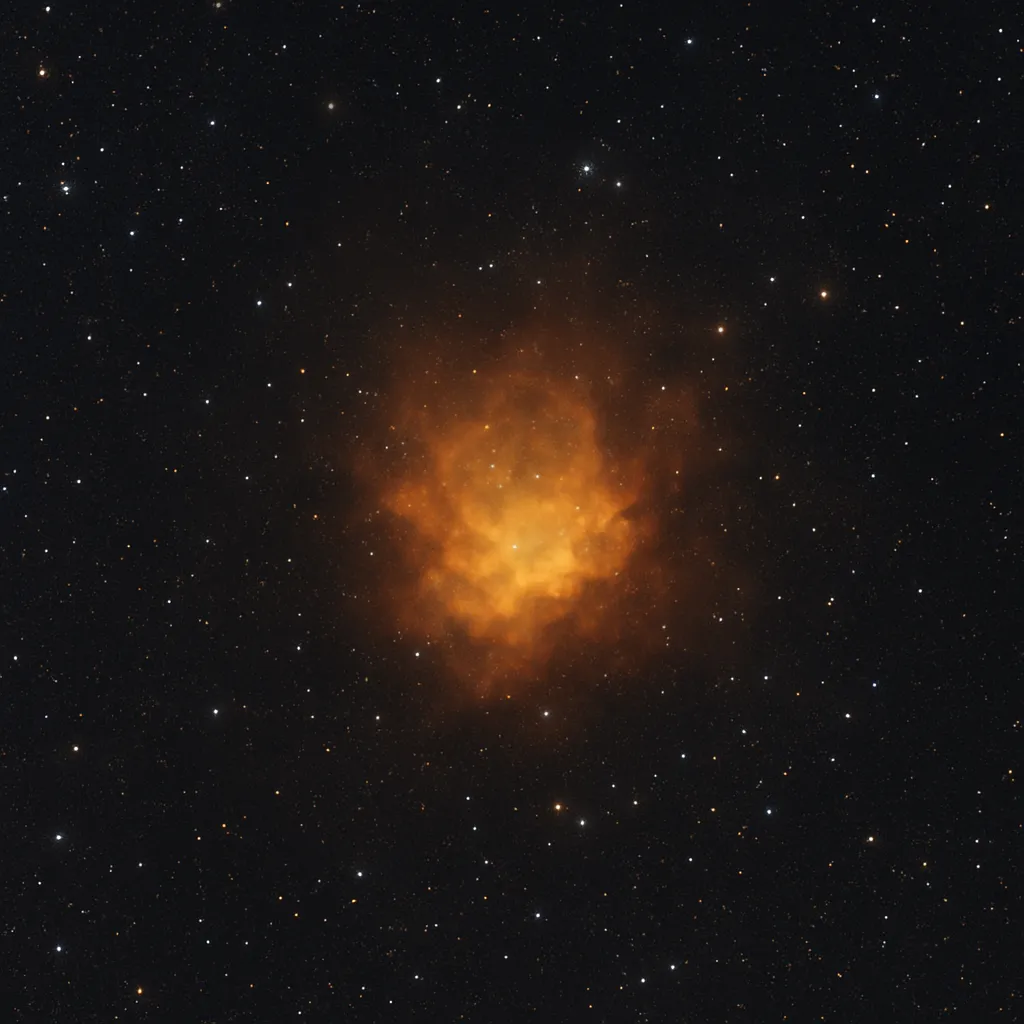
The Sun has used up most of the hydrogen in its core. What is the next stage in its life?
A red giant of about one solar mass drifts off its outer layers and leaves behind a hot core roughly the size of Earth. What is that leftover core called?
After a massive star explodes, its crushed remnant holds about two solar masses in a ball roughly 20 kilometers across. What is that object?
The core left behind when a very massive star explodes holds more than three solar masses, and nothing halts its collapse. What forms?
A Sun-like star has finished its red giant stage. What happens immediately after that stage?
Stars spend most of their lifetimes on the main sequence, fusing hydrogen into helium in their cores.
Star P has 10 times the Sun's mass and Star Q has half the Sun's mass. Which star will use up its core hydrogen first?
A galaxy has a flat disk with arms of gas, dust and hot young blue stars winding out from a bright central bulge that has no bar. Which type is it?
A galaxy is a smooth, rounded ball of mostly old reddish stars, with almost no gas or dust and very few new stars forming. Which type is it?
A small galaxy close to the Milky Way has no symmetry or clear outline, holds plenty of gas and dust, and shows clumps of hot young stars. Which type is it?
On a clear dark night the Milky Way appears as a hazy band of light stretching across the sky. Why does our galaxy look like a band?
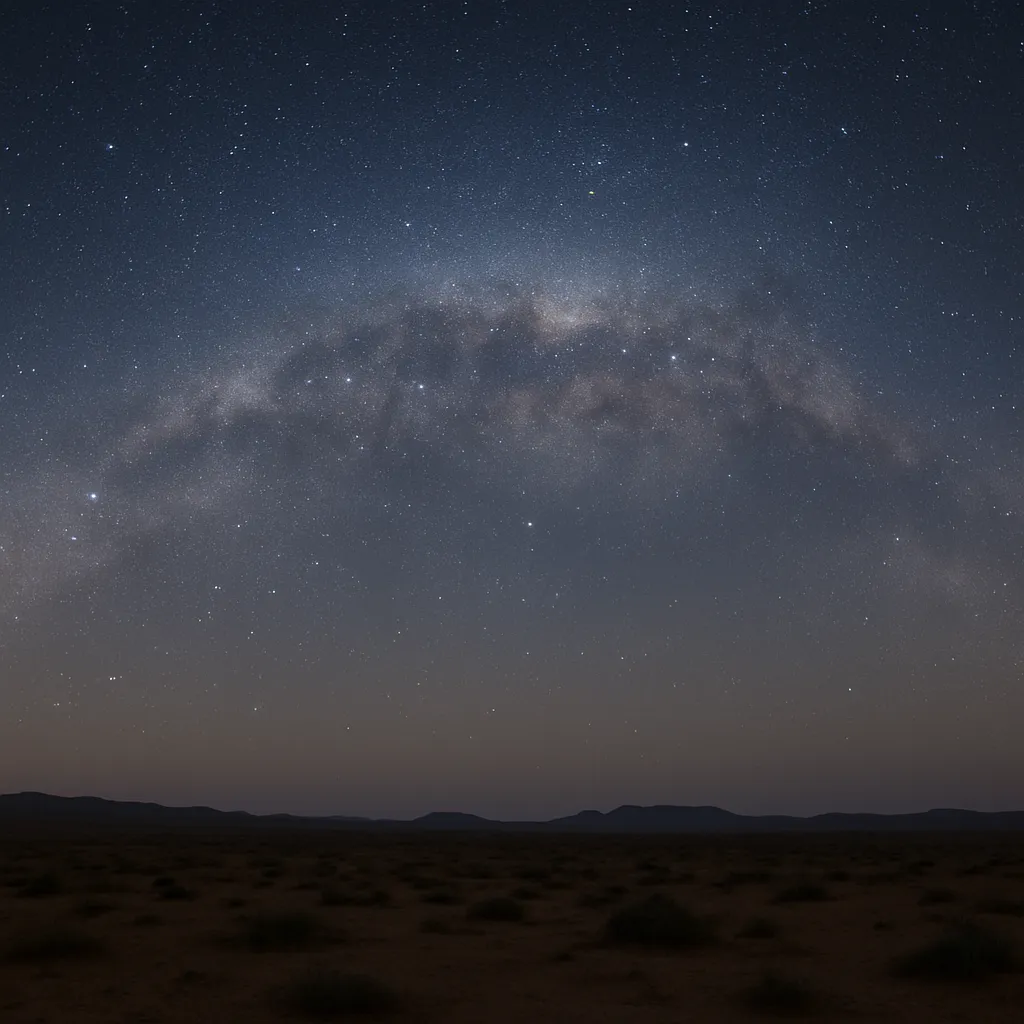
Where does the Sun sit inside the Milky Way?
A student is putting these in order from smallest to largest: galaxy, solar system, star, universe. Which order is correct?
The Milky Way is the only galaxy in the universe.
The stars, gas and dust of a galaxy stay bound together as one system for billions of years instead of drifting apart. What holds them together?
An astronomer reports that a star is 60 light-years away. What does that measurement describe?
Sunlight takes about 8 minutes to reach Earth. If the Sun stopped shining at this instant, when would people on Earth see the sky go dark?
The Andromeda galaxy lies 2.5 million light-years from Earth. When did the light now entering an astronomer's telescope leave that galaxy?
One light-year is about 9.5 trillion kilometers. About how far away is a star that lies 4 light-years from Earth?
Light travels about 300,000 kilometers every second. How far does light travel in 5 seconds?
Why do astronomers give the distances between stars in light-years rather than in kilometers?
A spacecraft moving at 60,000 km/h would need roughly 75,000 years to reach the nearest star, 4.2 light-years away. What does this comparison show?
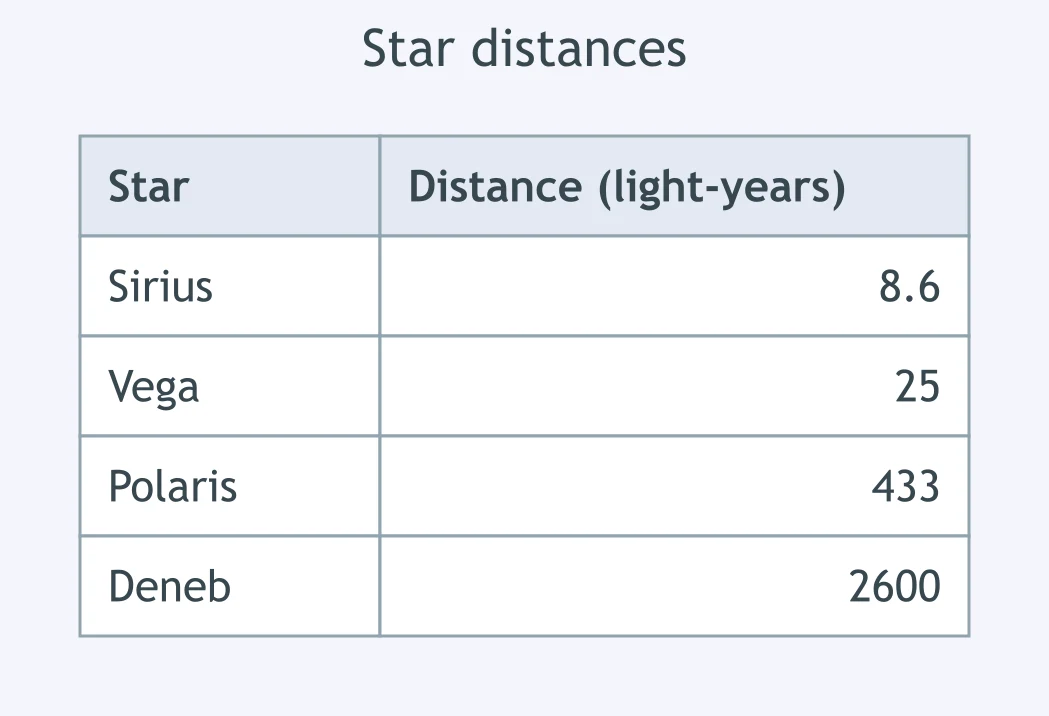
Use the distance table. Light from which listed star has been traveling the longest before reaching Earth?
Light from almost every distant galaxy arrives stretched toward longer, redder wavelengths, and the shift is greater for galaxies that are farther away. What does this show?
Detectors find a faint microwave glow coming from every direction in the sky at almost exactly the same temperature. What do astronomers conclude it is?
Astronomers on Earth see almost every distant galaxy moving away from the Milky Way. What would an astronomer living in a distant galaxy see?
According to the Big Bang model, what was the universe like about 13.8 billion years ago?
Surveys of gas across the universe find it is about 75 percent hydrogen and 25 percent helium by mass, with very little of anything else. How does this support the Big Bang model?
As the universe expands, the space between distant galaxies stretches.
Crack the passcode before the zombies get in.
Answer, then swat bugs for bonus points.
Race through questions at your own speed.
Same question on every screen. Fastest wins.

Pick a tile, answer, hit bonuses and steals.
The Solar System and Gravity Review
20 questions