Loading
by BlastRoom
Read before-and-after weight graphs to decide whether matter was conserved.
#conservation_of_matter#us_grade_5_science
20 questions
One question set, multiple game modes. Tap any game to see it in action. Not sure which to pick?
Answer to place stones and capture territory.
Outrun the snow together.
Earn blasts, then hunt the other team.
Answer to earn energy, then climb.

The class blasts through walls together.
Bid on mystery lots. Most money wins.
Sell tours. Nice, standard, or a total scam.

Answer, restock, and serve the rush.
More correct answers pulls the rope your way.
Answer, then shoot down the alien wave.
Answer, then tap to leap the frozen ridge.
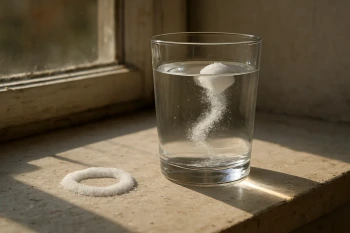
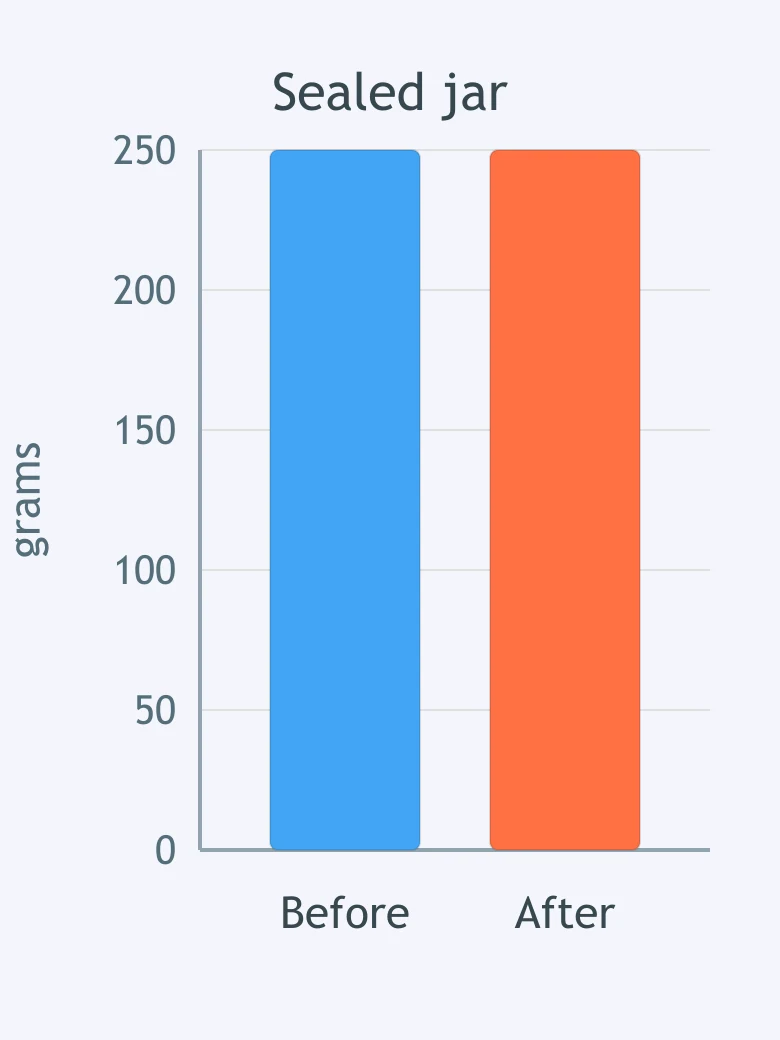
A class sealed sugar and water in a jar and weighed it before and after the sugar dissolved. Look at the bar graph. What do the measurements show?
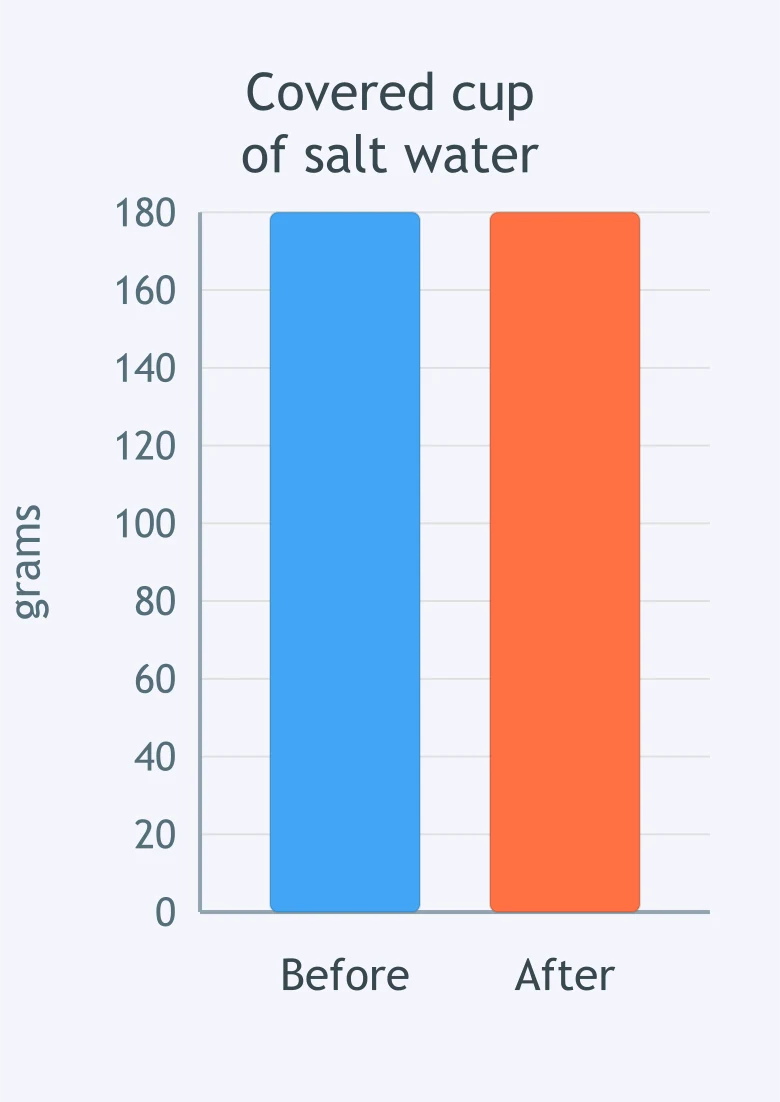
A cup holding water and a spoon of salt was covered and weighed, then weighed again after the salt dissolved. Use the bar graph. How much did it weigh after?
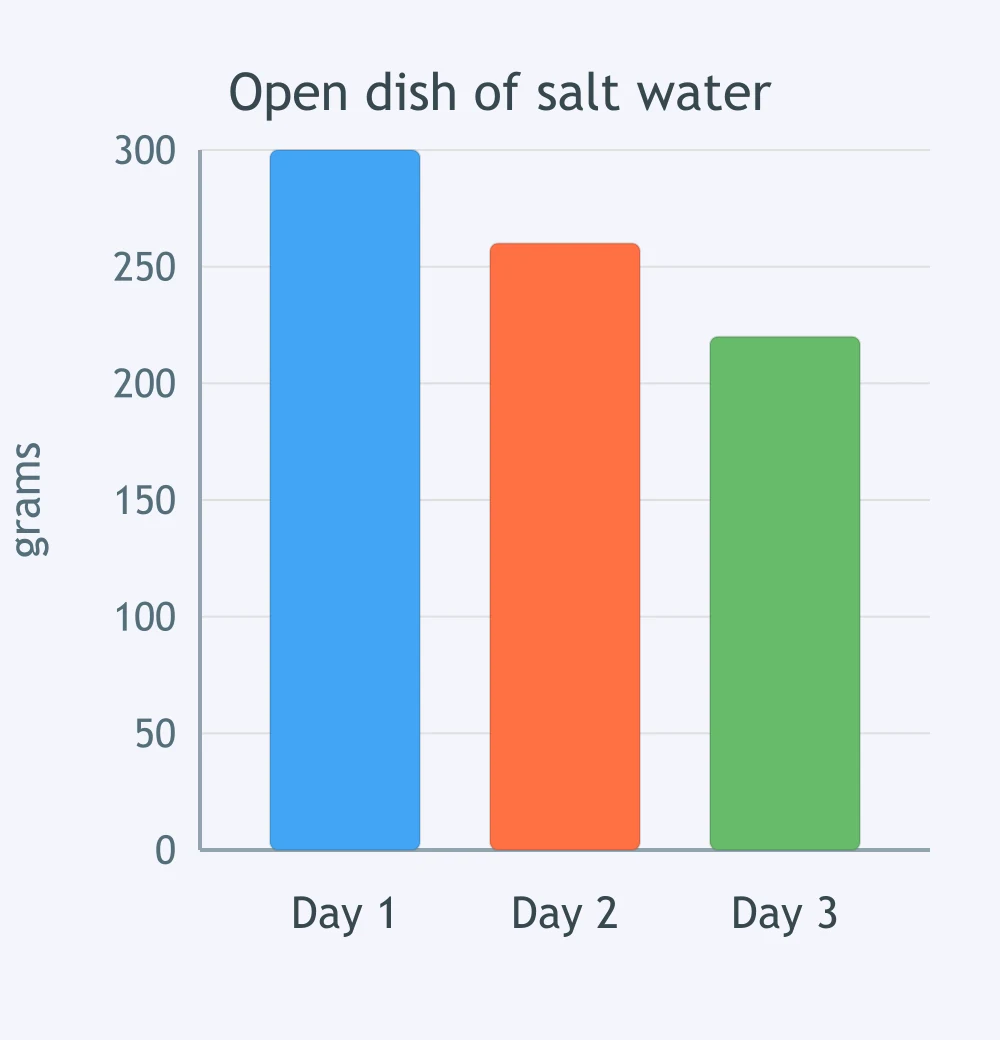
An open dish of salt water sat in a sunny window and was weighed on three days. Use the bar graph. Why did the weight go down?
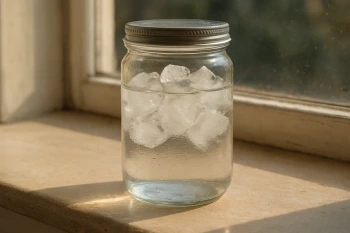
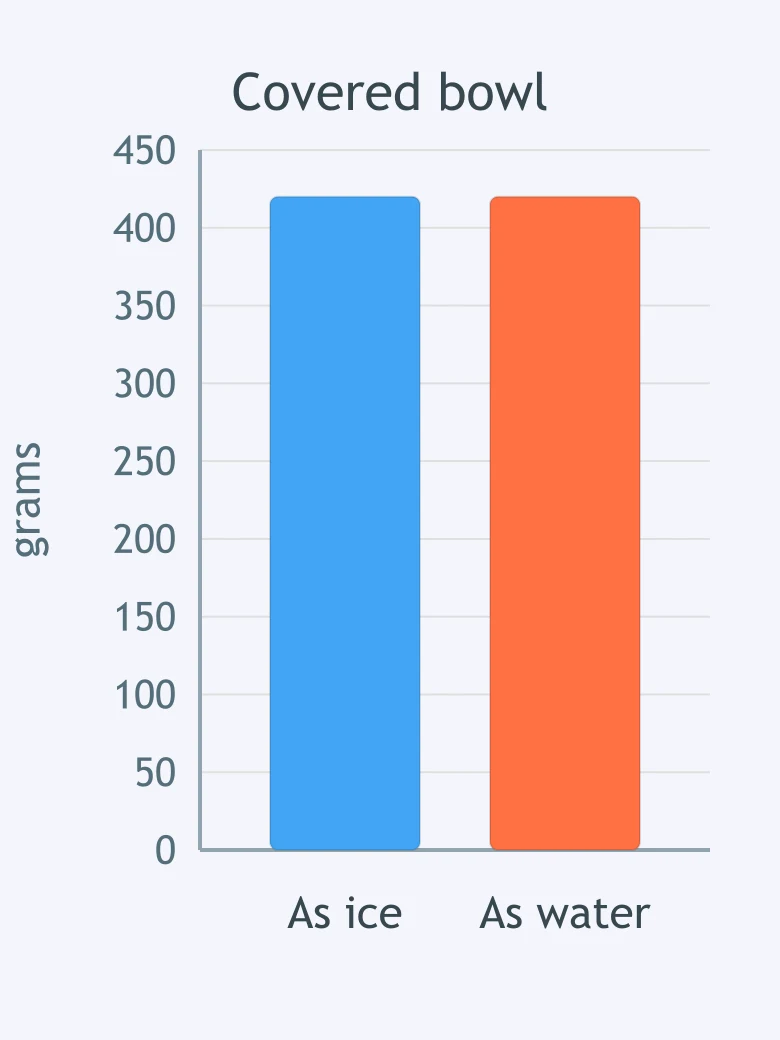
A covered bowl of ice was weighed, then weighed again after all the ice melted into water. Use the bar graph. What happened to the total weight?
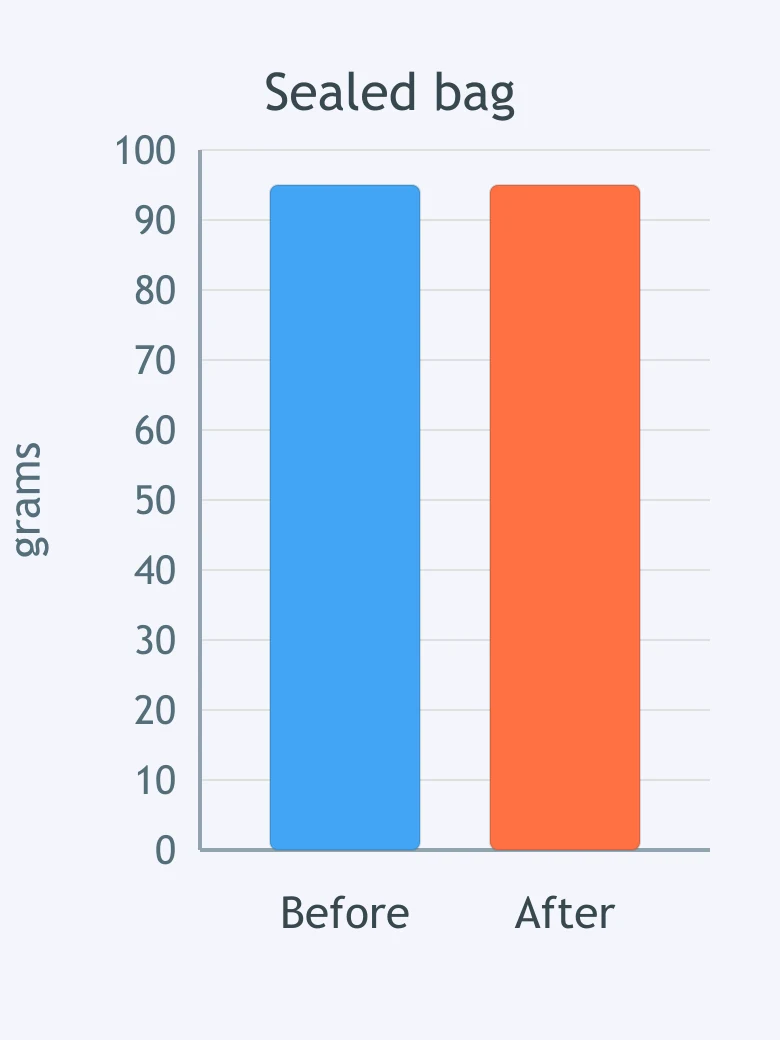
Baking soda and vinegar were sealed in a plastic bag. The bag puffed up with gas and bubbled. Use the bar graph. What does it show about the matter?
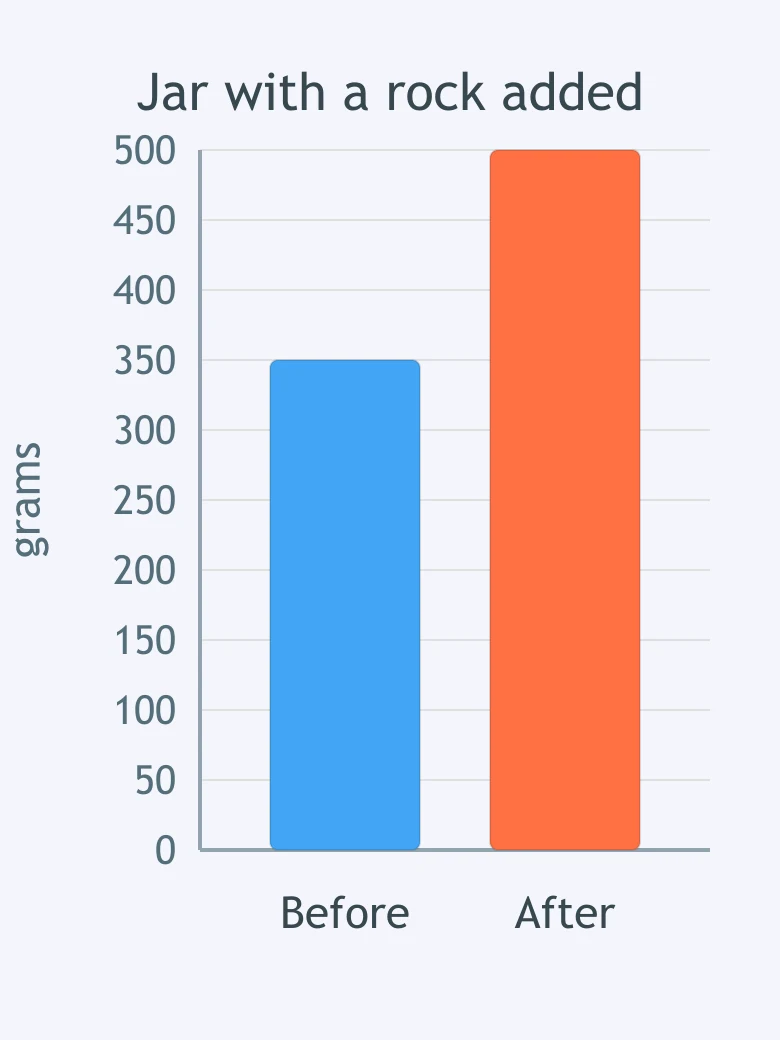
A sealed jar of water was weighed. A rock was then dropped in and the jar was sealed and weighed again. Use the bar graph. How much did the rock weigh?
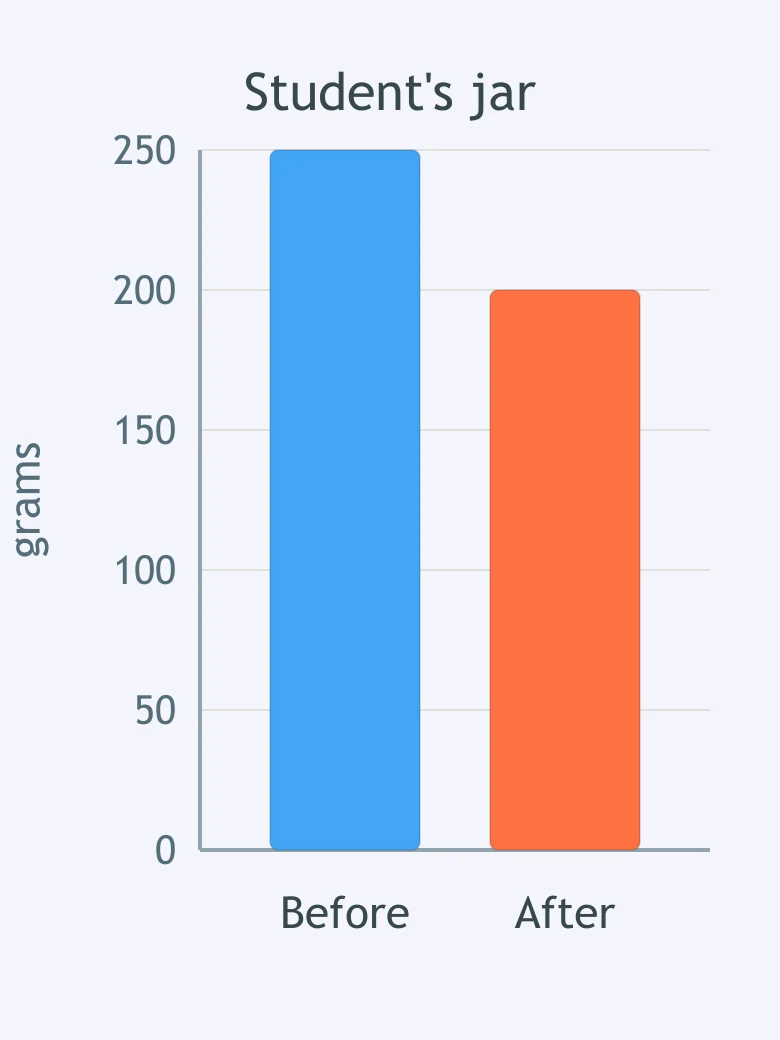
A student stirred sugar into an unsealed jar of water and weighed it before and after, never covering the jar. Use the bar graph. What most likely explains the drop in weight?
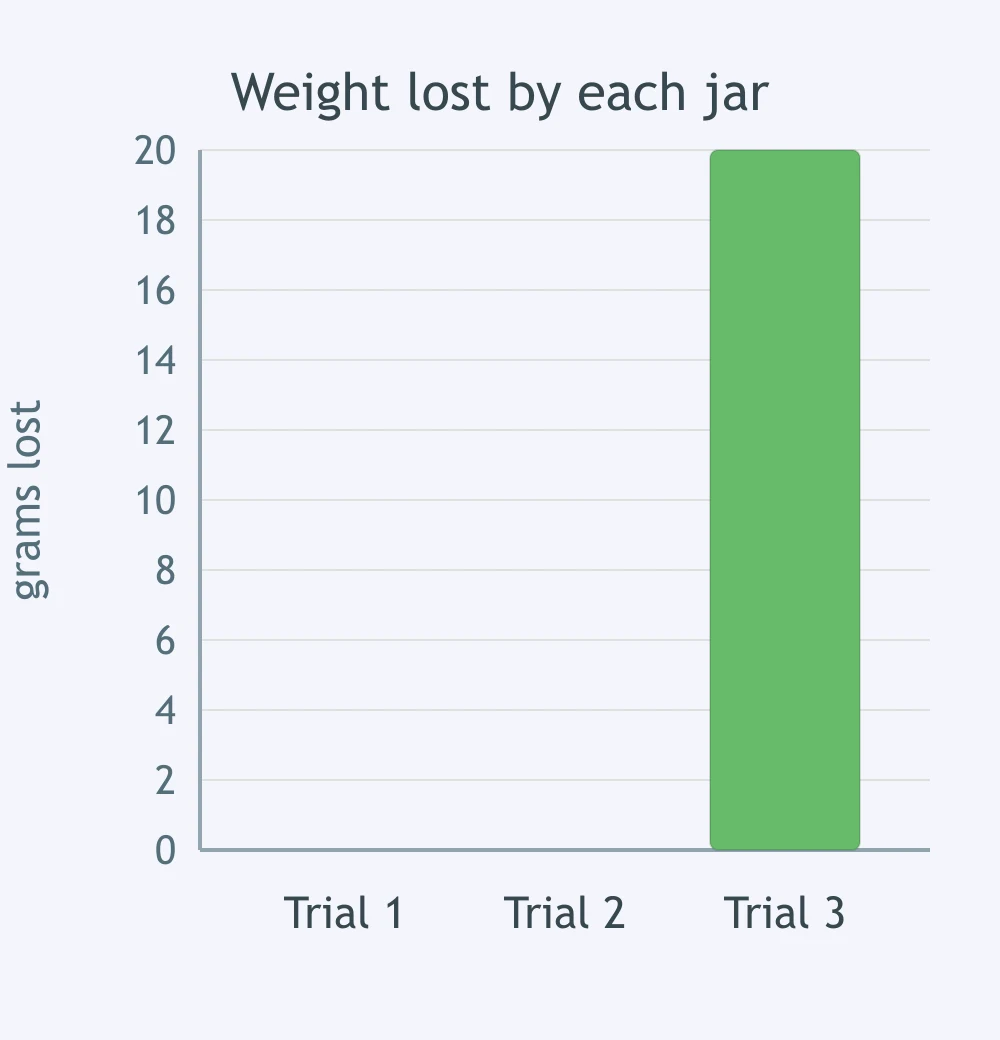
Three sealed jars of sugar water were weighed before and after dissolving. Use the graph of weight lost. Which trial should the class check for a leak?
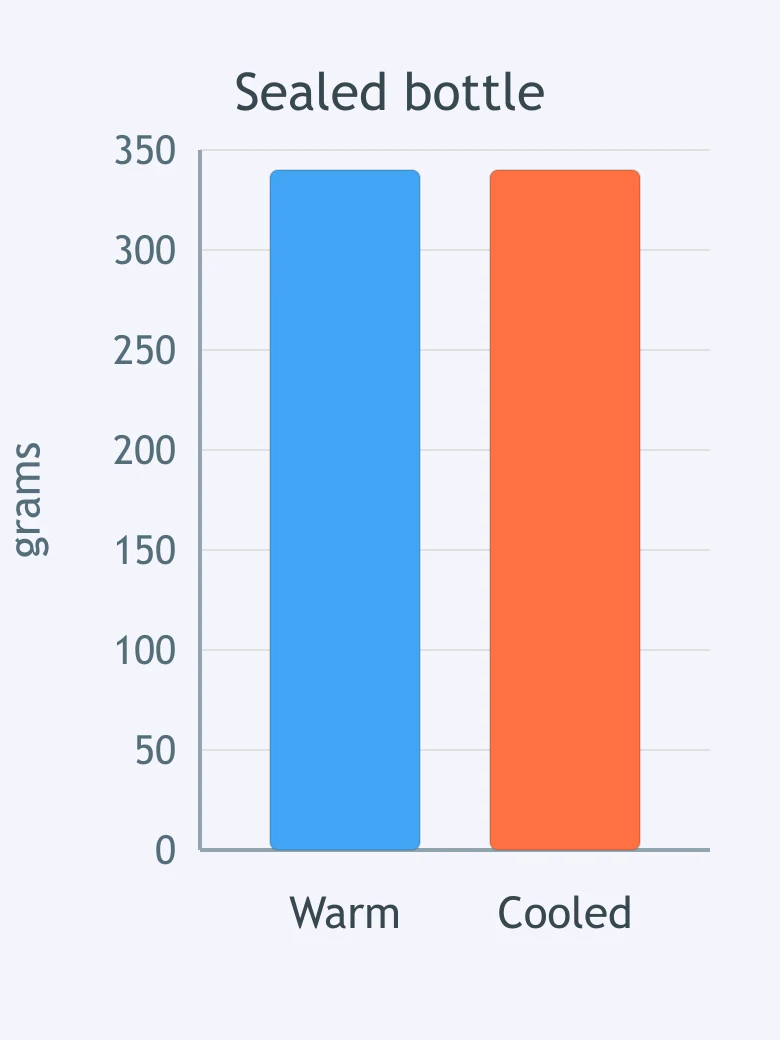
A sealed bottle of warm water was weighed, then put in a refrigerator and weighed again once it was cold. Use the bar graph. What do the two bars show about the matter in the bottle?
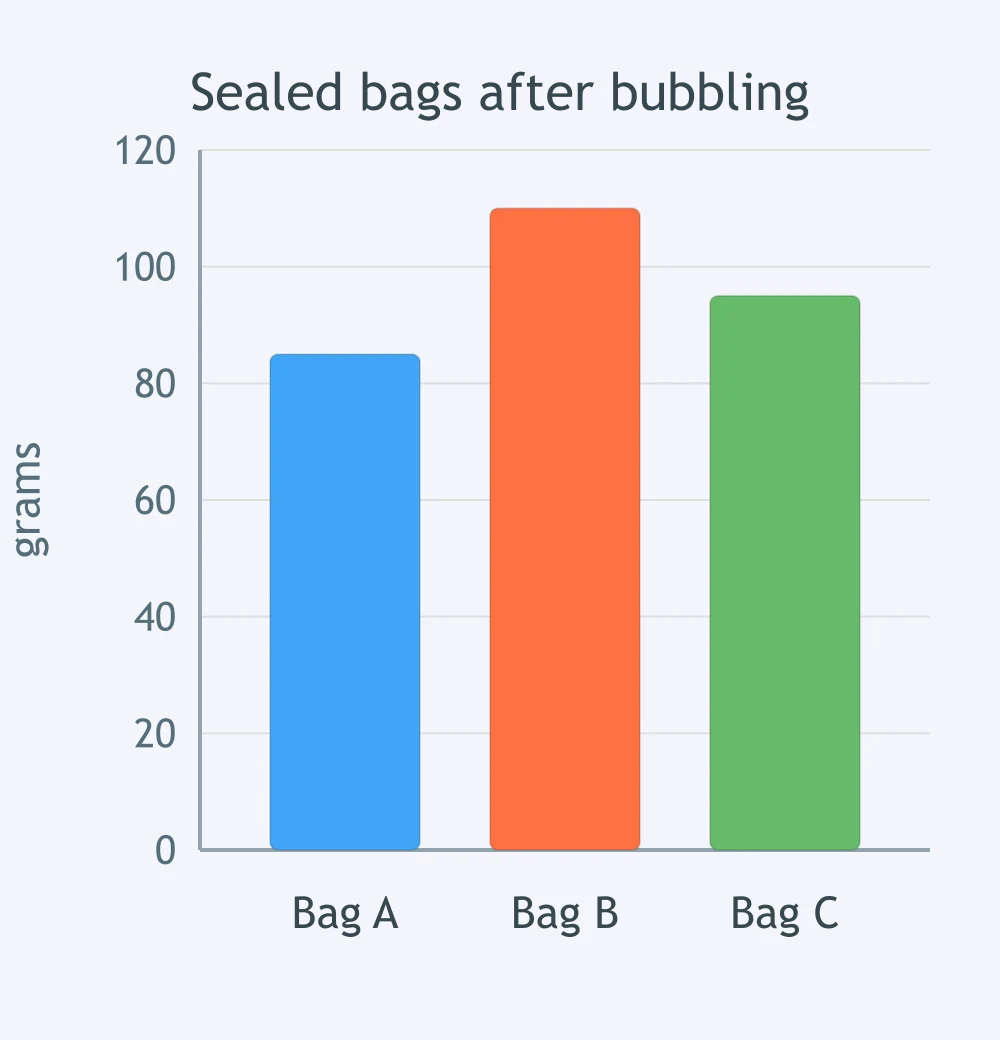
Three sealed bags of baking soda and vinegar were weighed after the bubbling inside them had stopped. Use the bar graph. How much did bag B weigh?
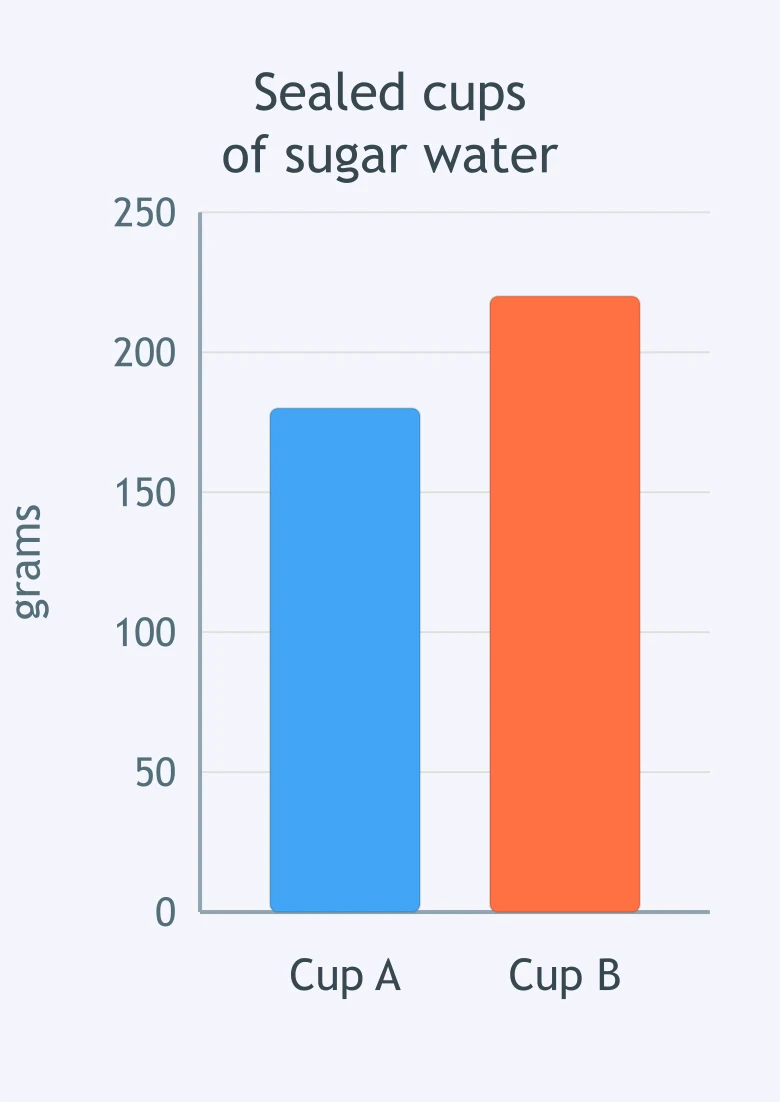
Two sealed cups of sugar water were weighed after all the sugar had dissolved. Use the bar graph. How much did cup B weigh?
Gas that escapes from an open container has no weight, so the container's weight does not change.
Melting an ice cube inside a sealed bag changes the state of the matter but not its total weight.
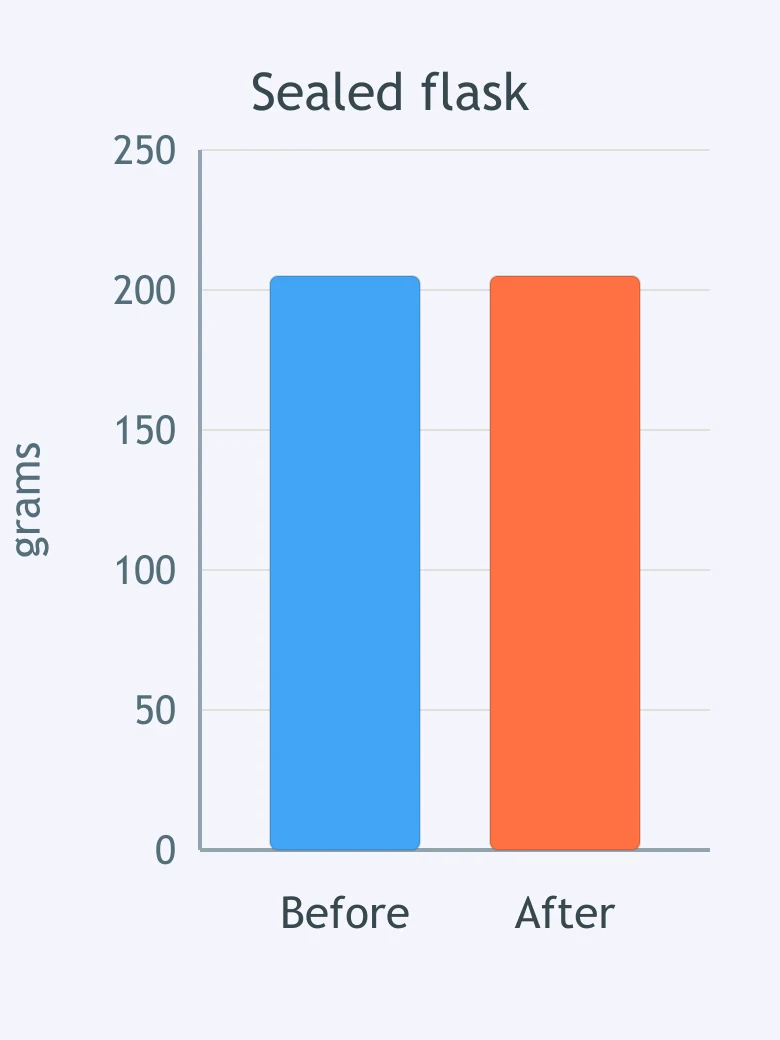
A sealed flask of warm water was weighed, then weighed again after it cooled and drops formed inside. Use the bar graph. What does the data show?
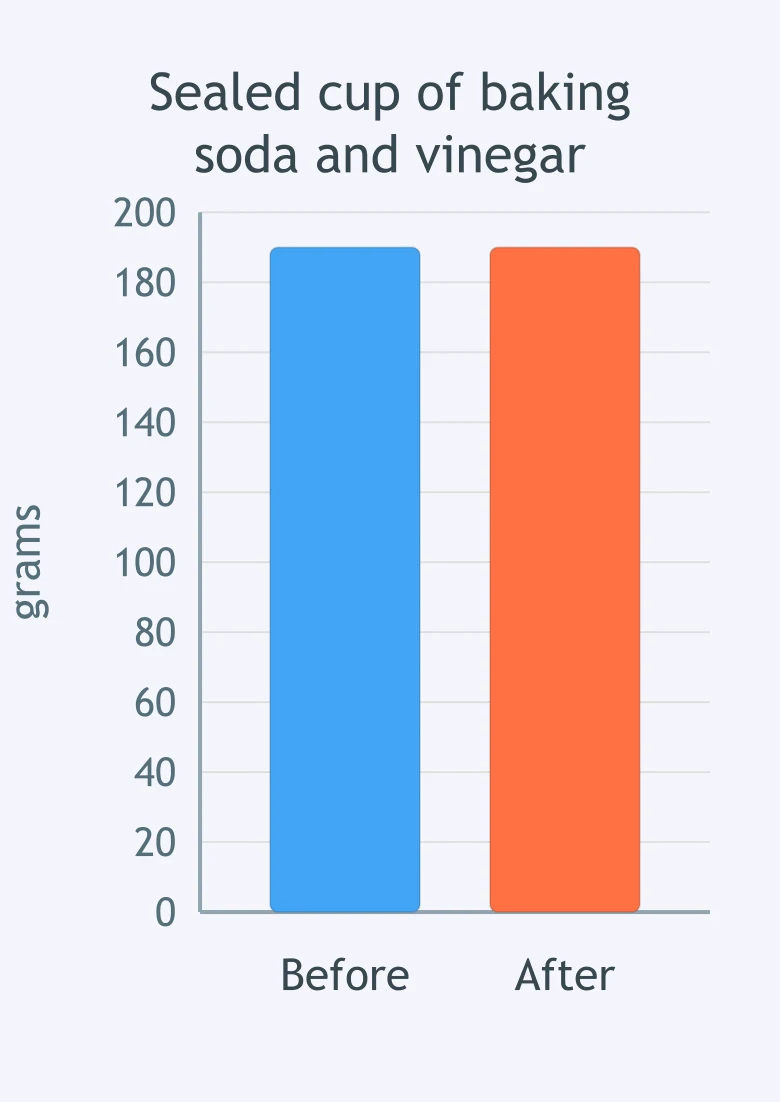
A sealed cup of baking soda and vinegar was weighed before and after the two were mixed and bubbled. Use the bar graph. What do the two bars show about the total amount of matter?
One class weighed a sealed jar and an open jar that held the same kind of wet sponge. Only the open jar's weight changed. What explains the difference?
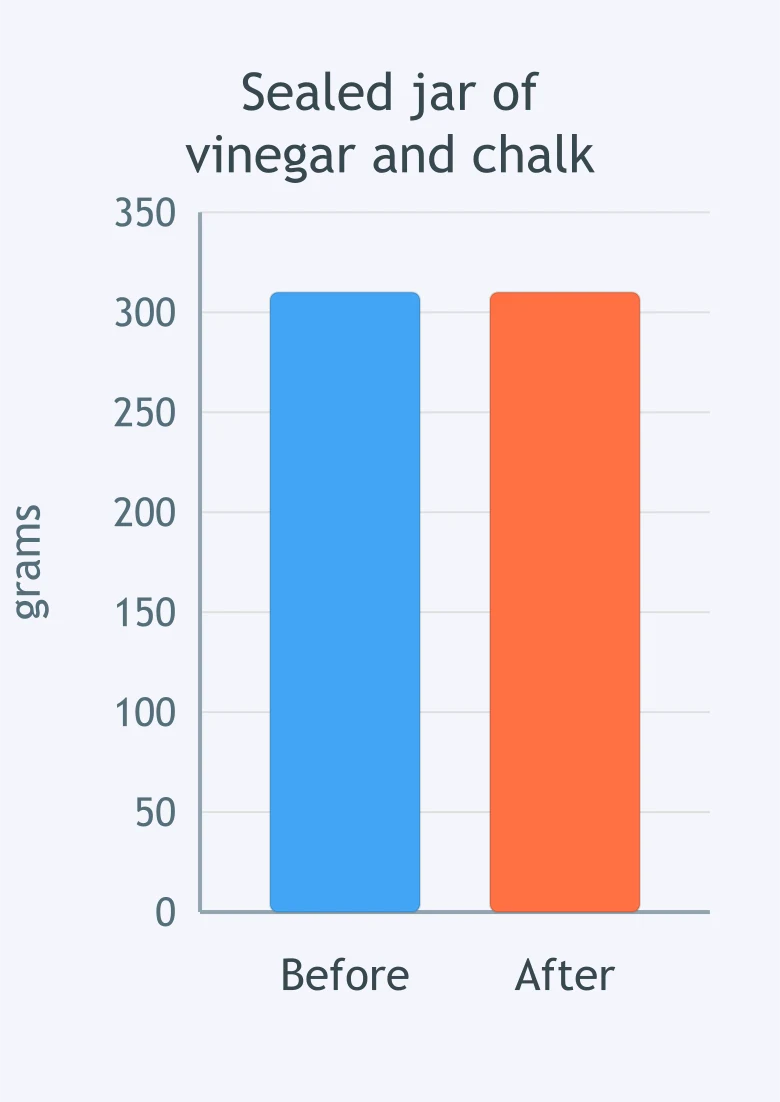
A sealed jar of vinegar and a lump of chalk was weighed, then weighed again after the chalk had finished fizzing. Use the bar graph. What do the two bars show about the matter in the jar?
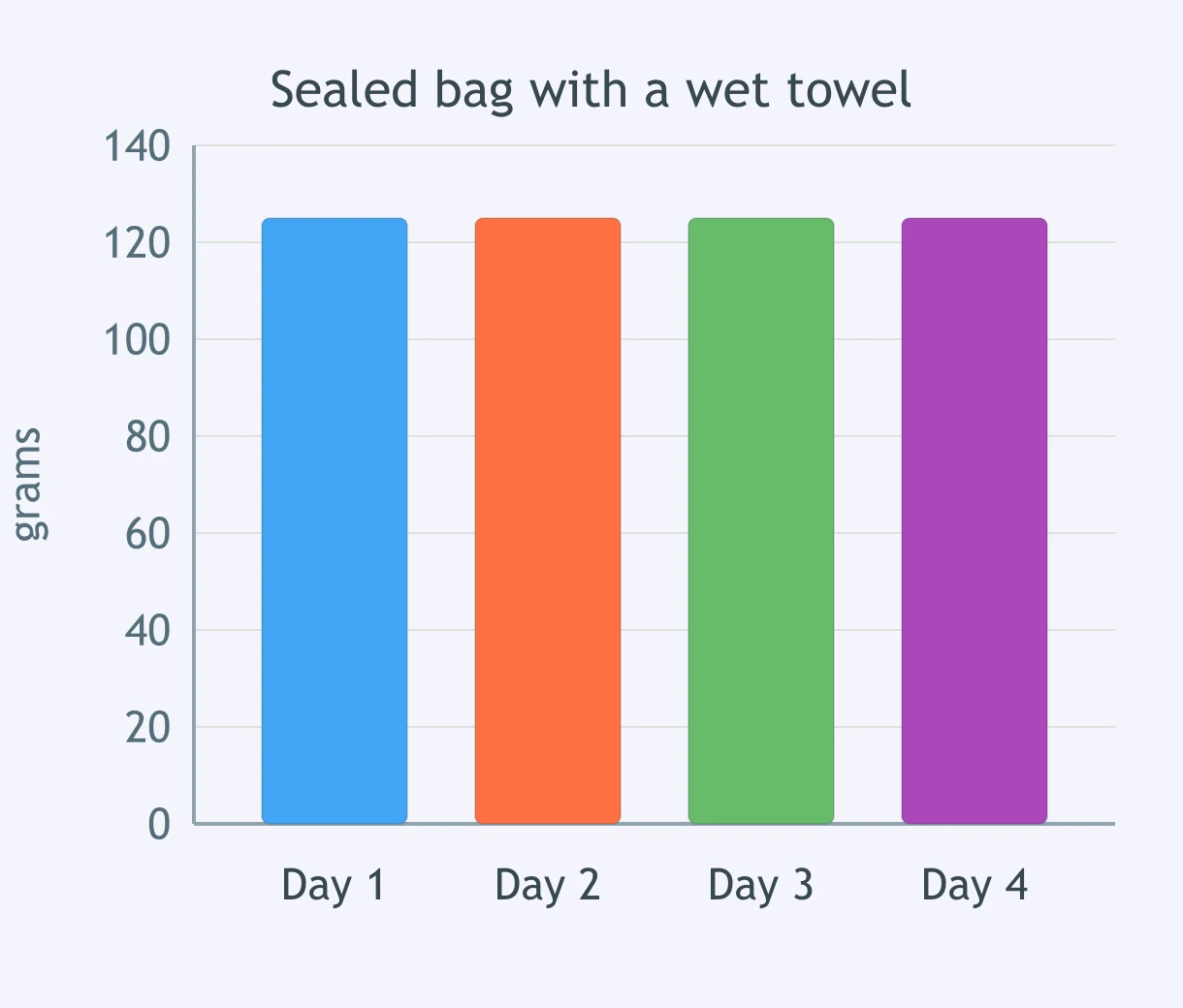
A sealed bag holding a wet paper towel was weighed on four days in a row. Use the bar graph. How much did it weigh on day 4?
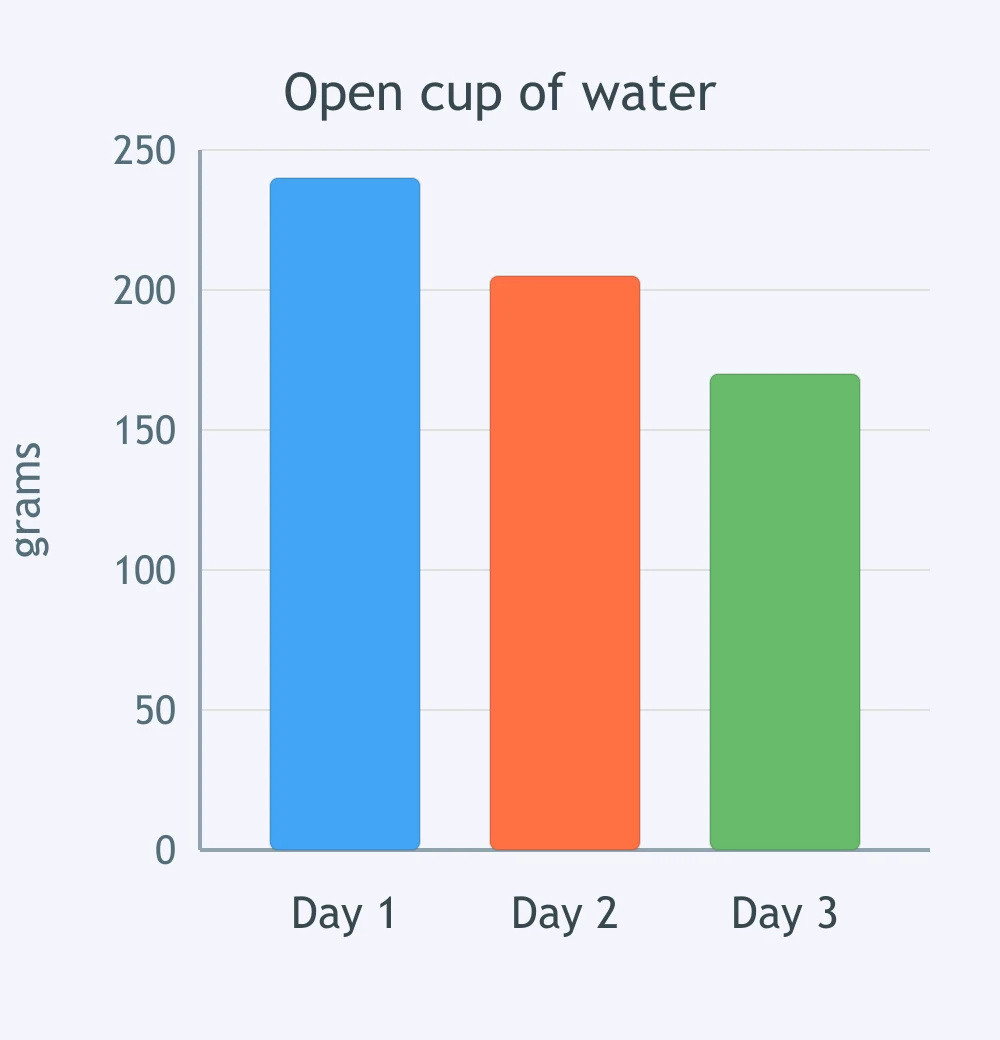
An open cup of water was left on a shelf and weighed on three days. Use the bar graph. What does the drop in weight show?
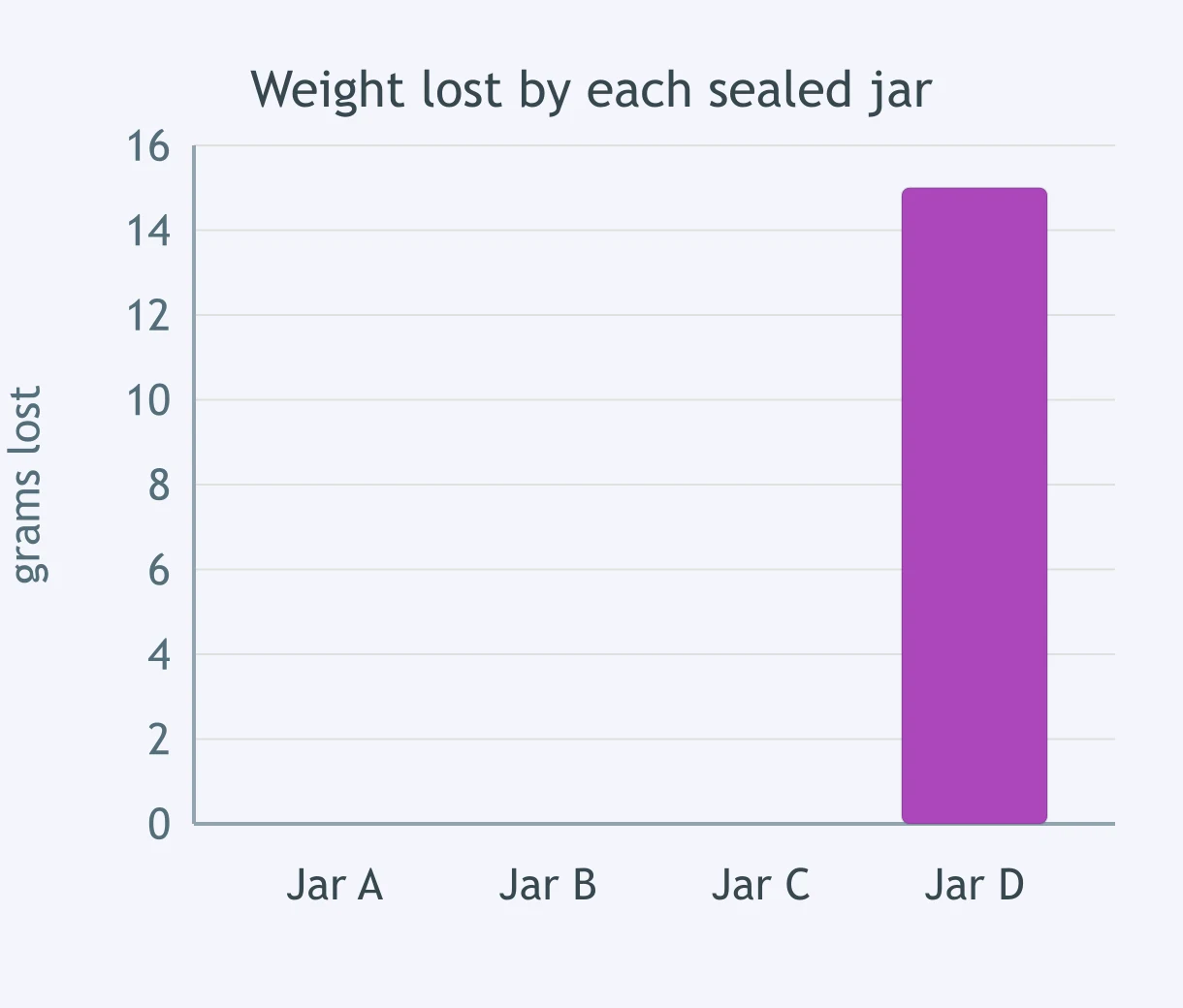
Four sealed jars of sand and water were weighed before and after being shaken. Use the graph of weight lost by each jar. Which jar should the class check for a leak?
Crack the passcode before the zombies get in.
Answer, then swat bugs for bonus points.
Race through questions at your own speed.
Same question on every screen. Fastest wins.

Pick a tile, answer, hit bonuses and steals.
Material Properties: Conductivity and Magnetism
20 questions