Loading
by BlastRoom
Apply relative dating principles to geologic cross sections.
#earth_space_science
50 questions
One question set, multiple game modes. Tap any game to see it in action. Not sure which to pick?
Answer to place stones and capture territory.
Outrun the snow together.
Earn blasts, then hunt the other team.
Answer to earn energy, then climb.

The class blasts through walls together.
Bid on mystery lots. Most money wins.
Sell tours. Nice, standard, or a total scam.

Answer, restock, and serve the rush.
More correct answers pulls the rope your way.
Answer, then shoot down the alien wave.
Answer, then tap to leap the frozen ridge.
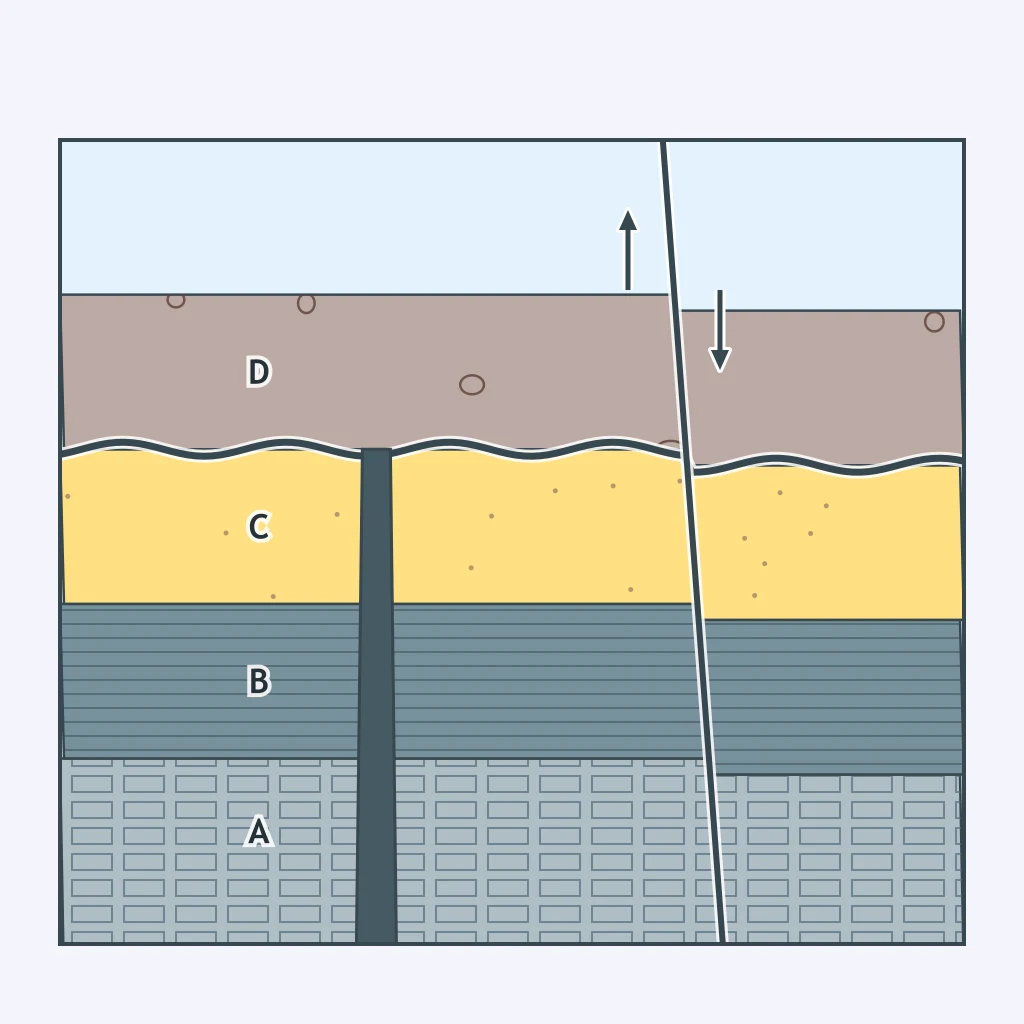
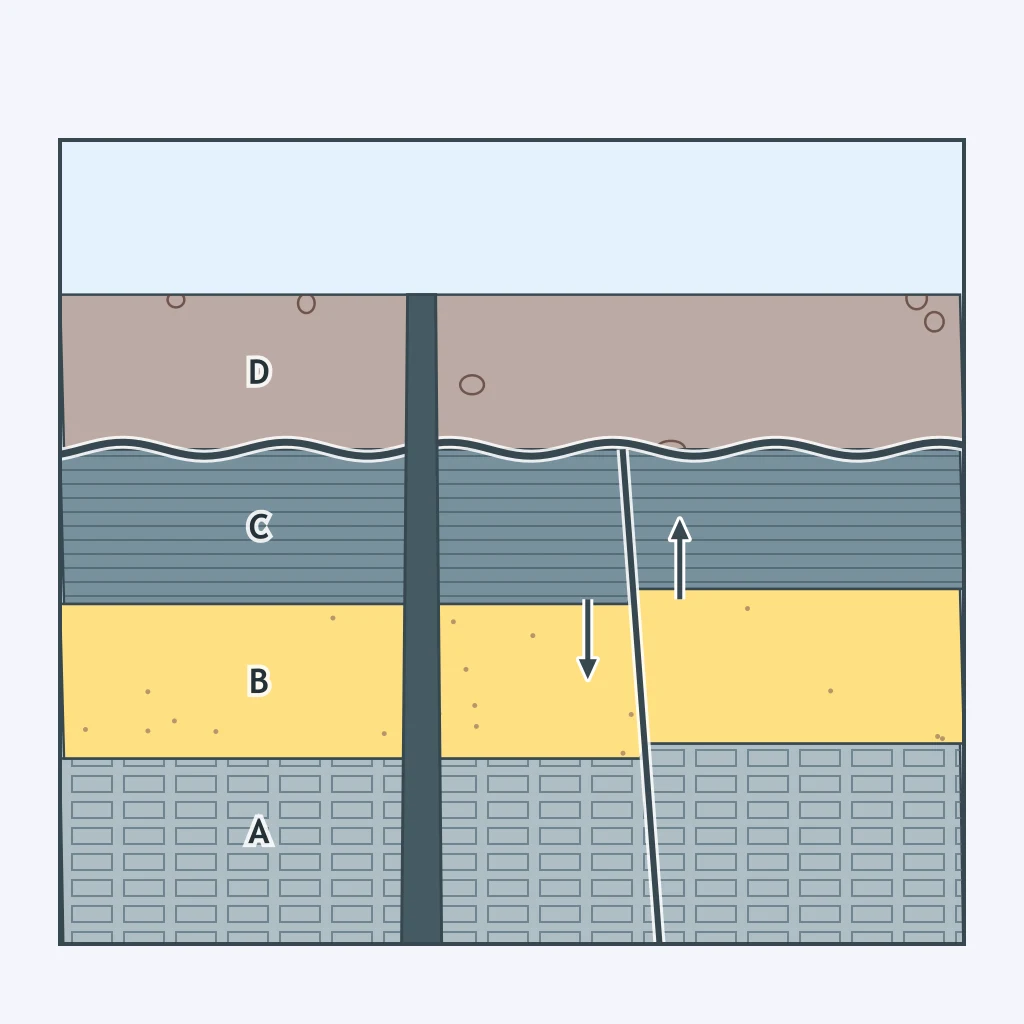
Layer A is below B and C, and a dike cuts A-C. A wavy erosion surface cuts off the dike, layer D covers that surface, and a fault cuts D. What is oldest to youngest?
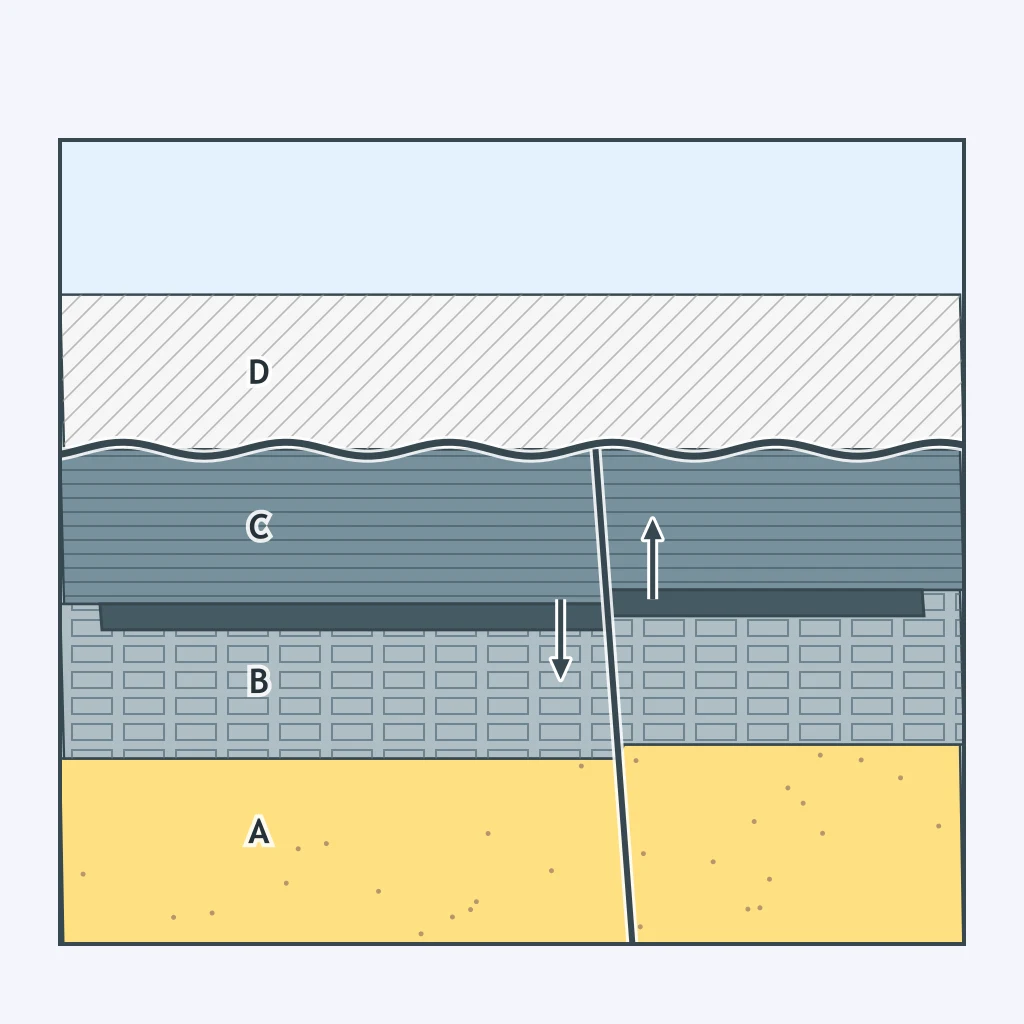
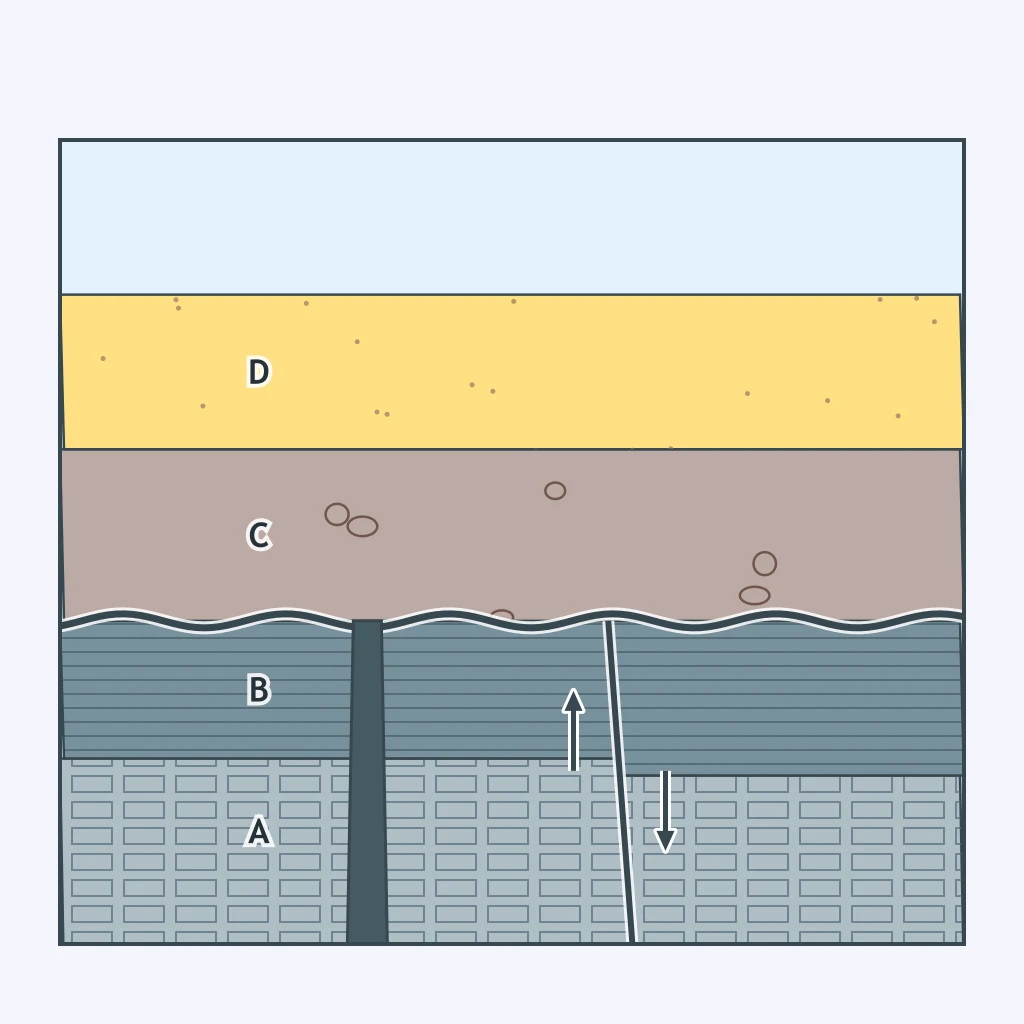
A sill lies between layers B and C, a fault offsets A-C, an unconformity cuts off the fault, and D was deposited on the surface. What order is oldest to youngest?
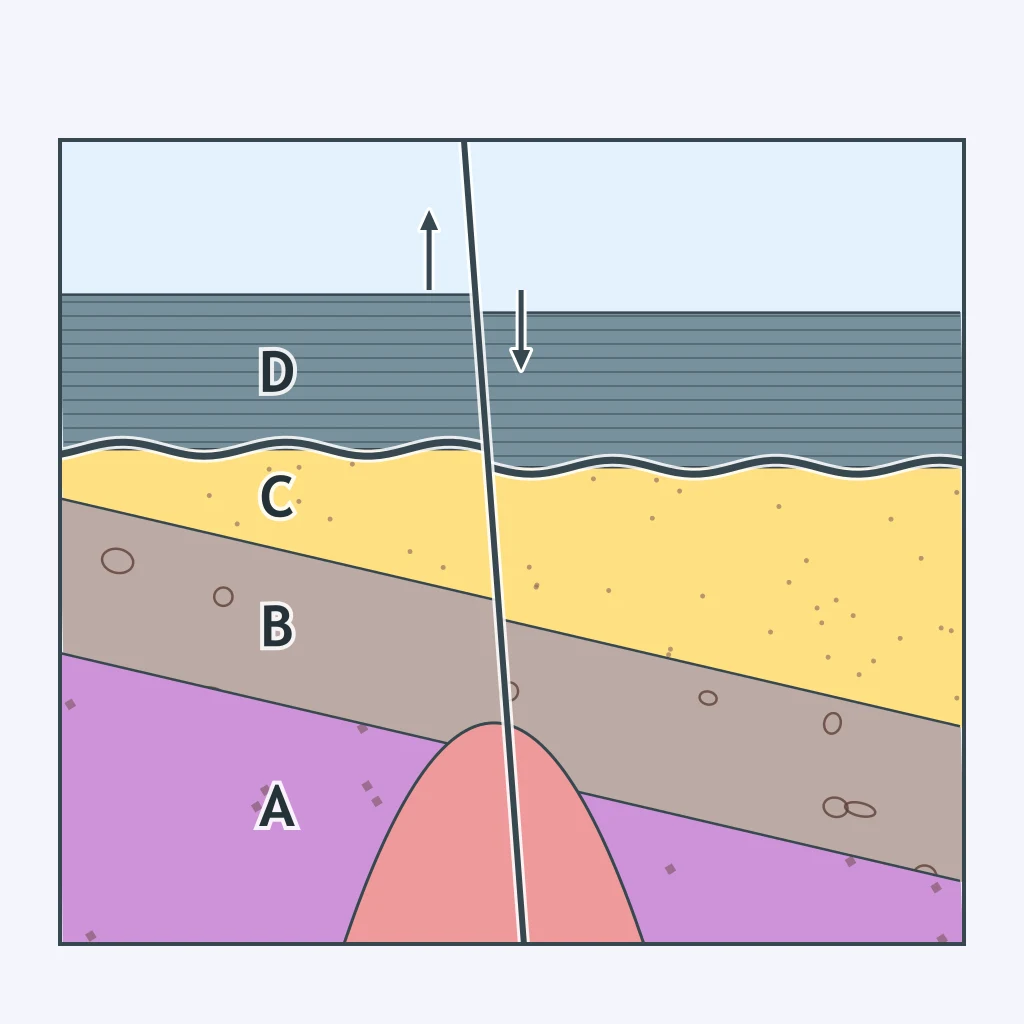
The cross section shows layers A-D, a batholith, and a fault. Radiometric dating shows the batholith is younger than layer D. What happened first to last?
Coal A, shale B, and limestone C are cut by a fault. Erosion makes an unconformity, sandstone D covers it, and a dike cuts D. Which sequence is oldest to youngest?
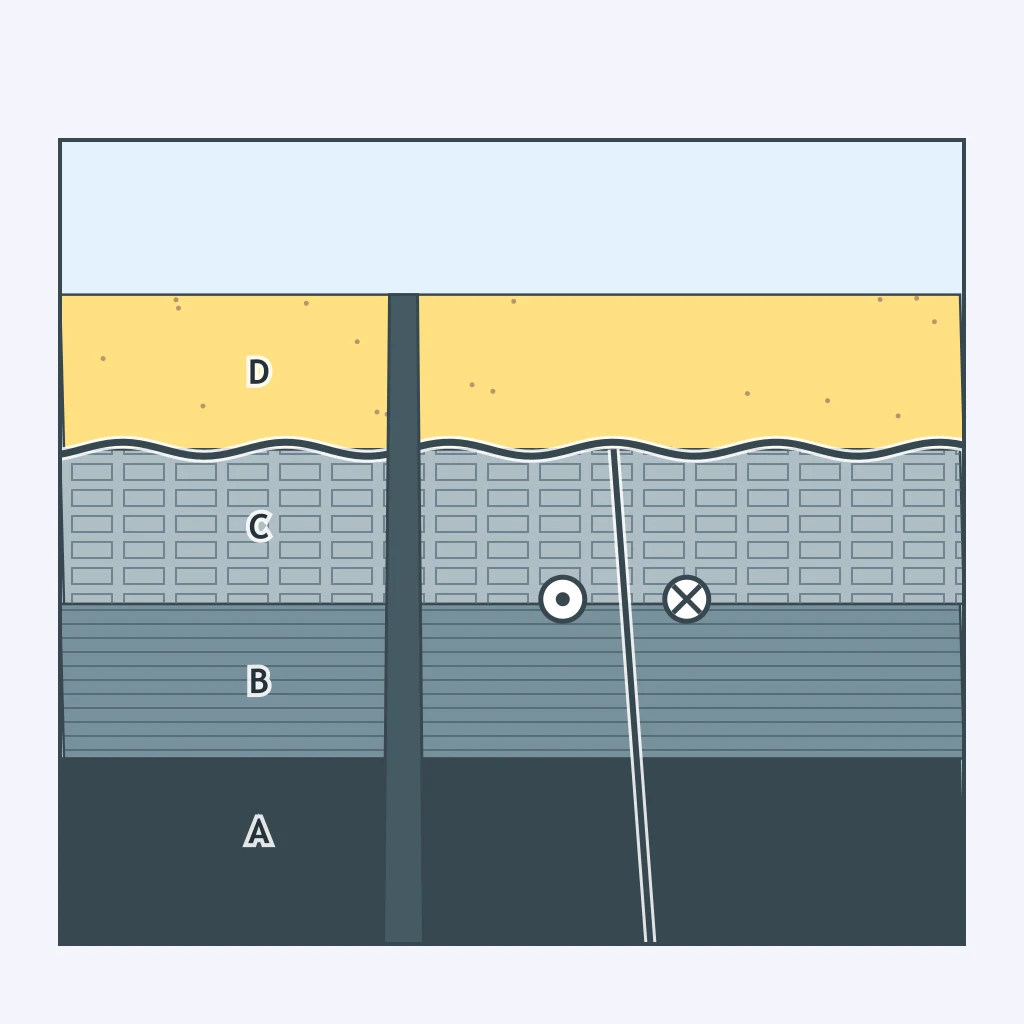
The cross section shows layers A-D, a dike, a fault, and an unconformity. What is the correct order?
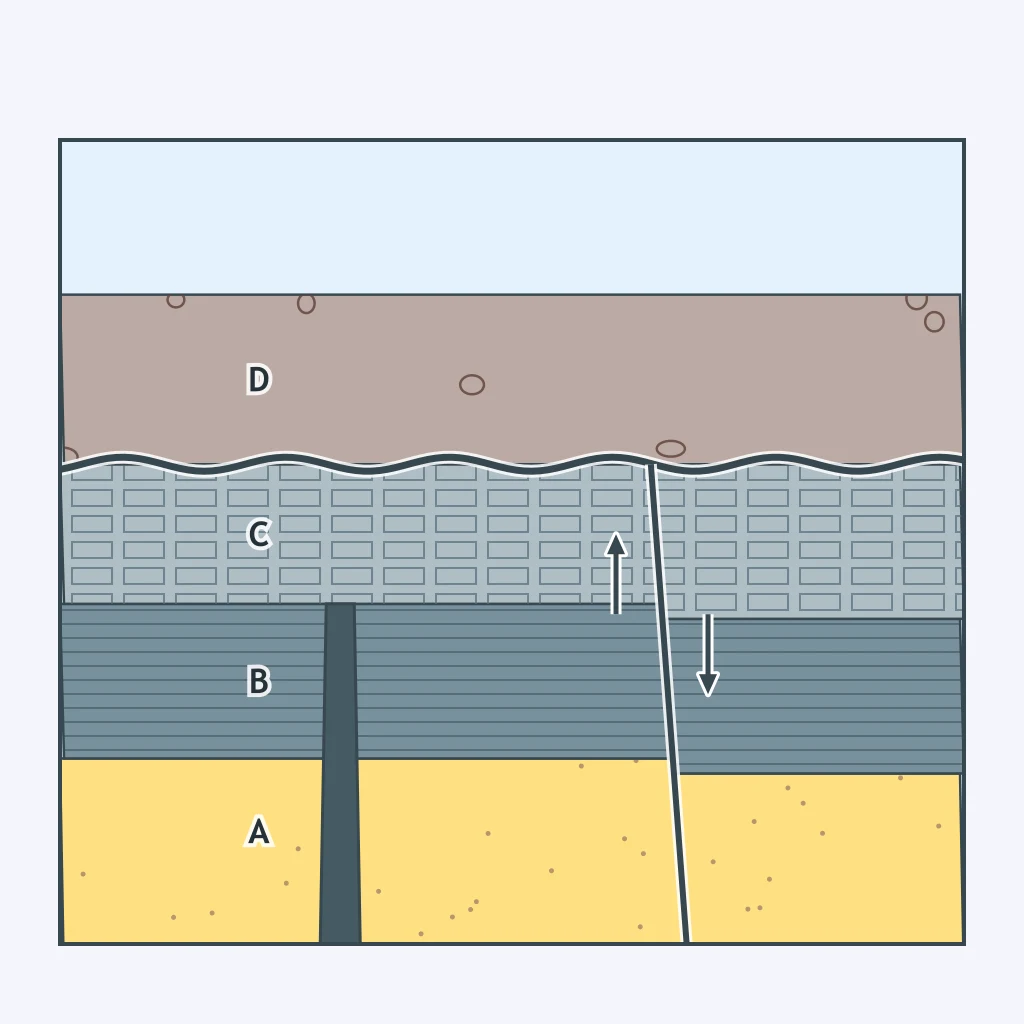
A fault offsets layers A and B but stops below an unconformity. Layers C and D lie flat above it, and a dike cuts all layers. What is oldest to youngest?
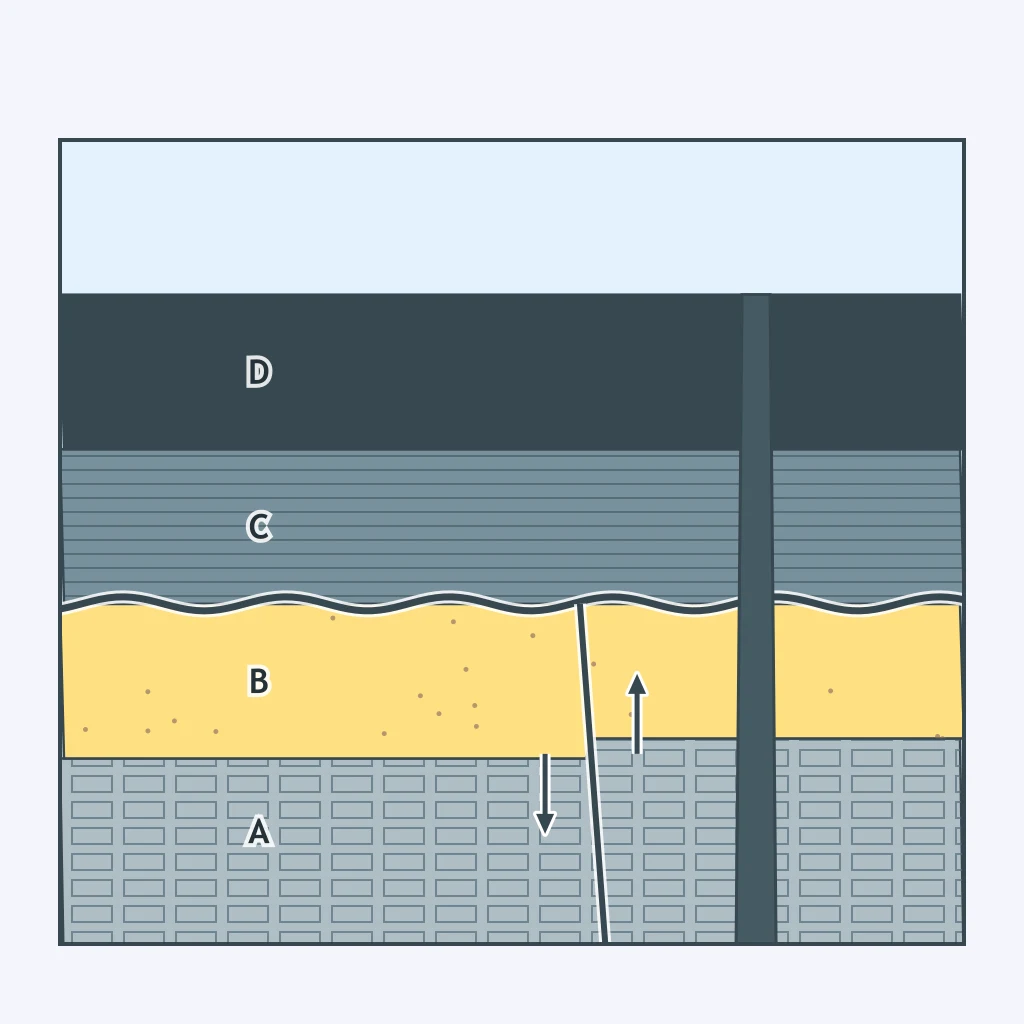
Basalt C lies above shale B and below sandstone D. A dike cuts A-D, and later a fault offsets A-D. Layer E covers an unconformity. Which order is oldest to youngest?
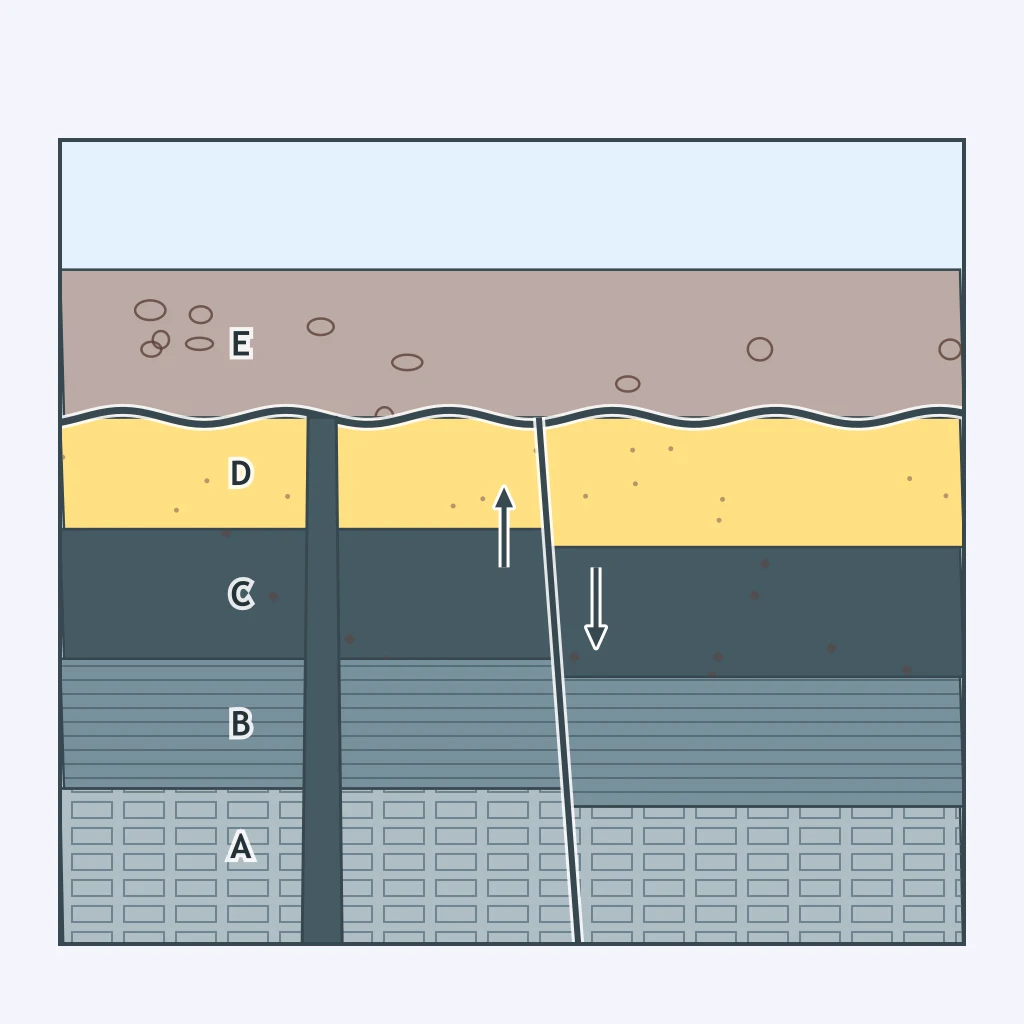
Layers A-C were deposited, folded, and eroded. Layer D rests on the unconformity. A dike cuts D, and later a fault cuts every layer. What sequence is oldest to youngest?
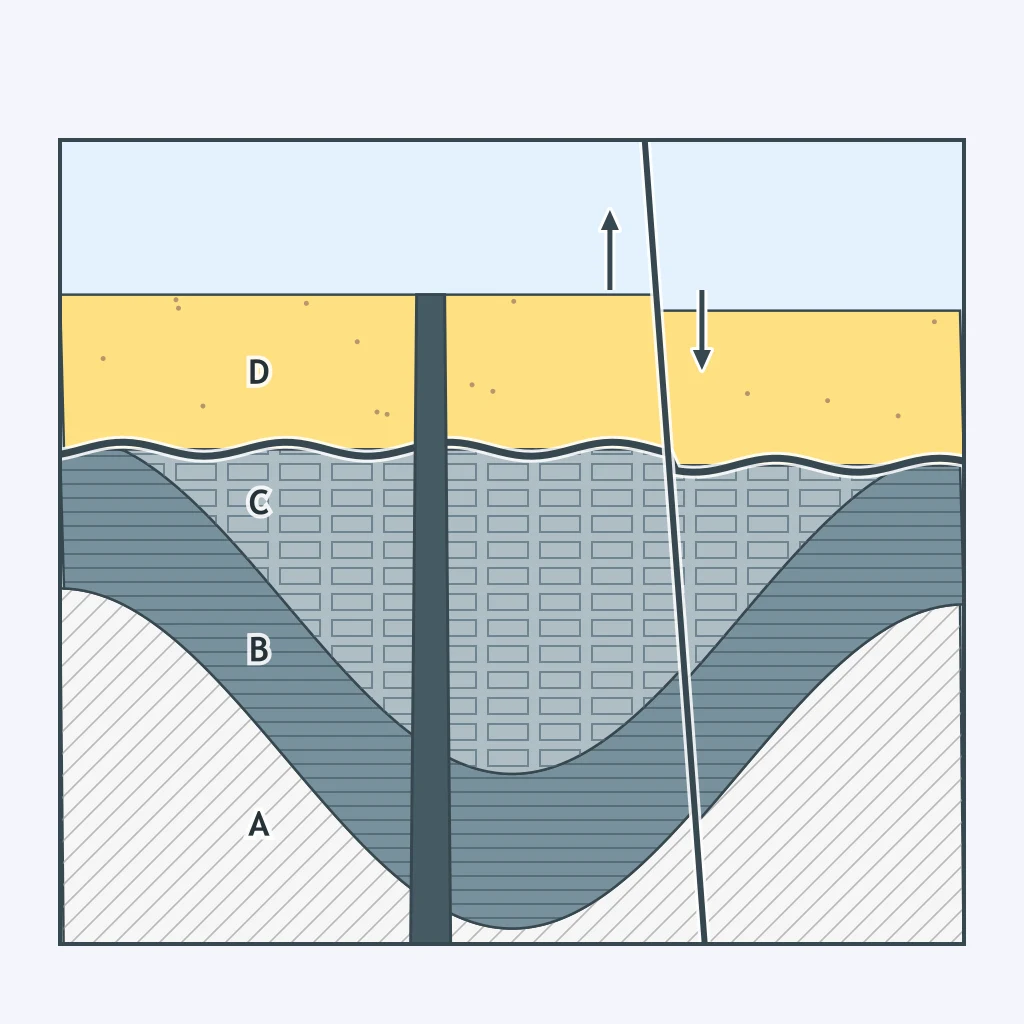
In the cross section, the dike formed before the fault. What is the order of events, oldest to youngest?
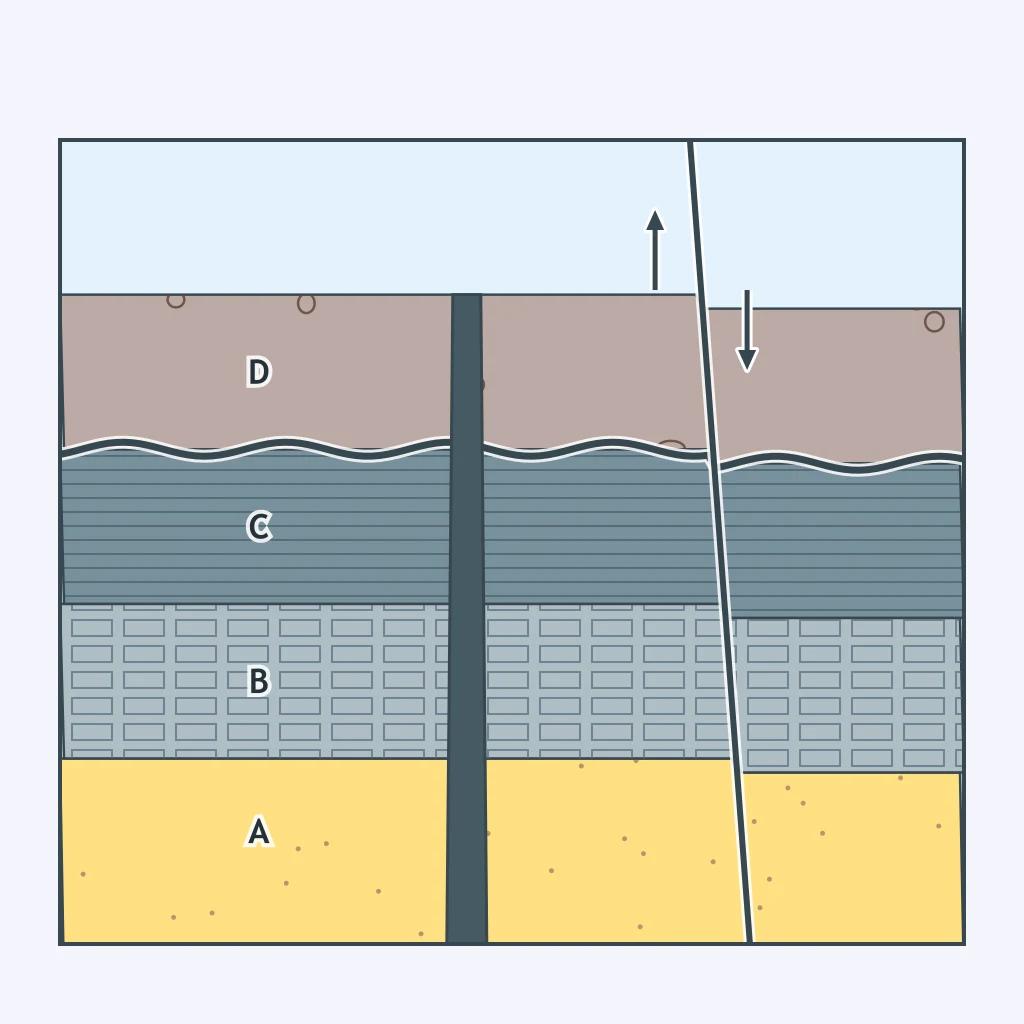
Limestone A, shale B, and sandstone C are overlain by D across an unconformity. A dike cuts A-D, and later a fault cuts A-D. Which order fits?
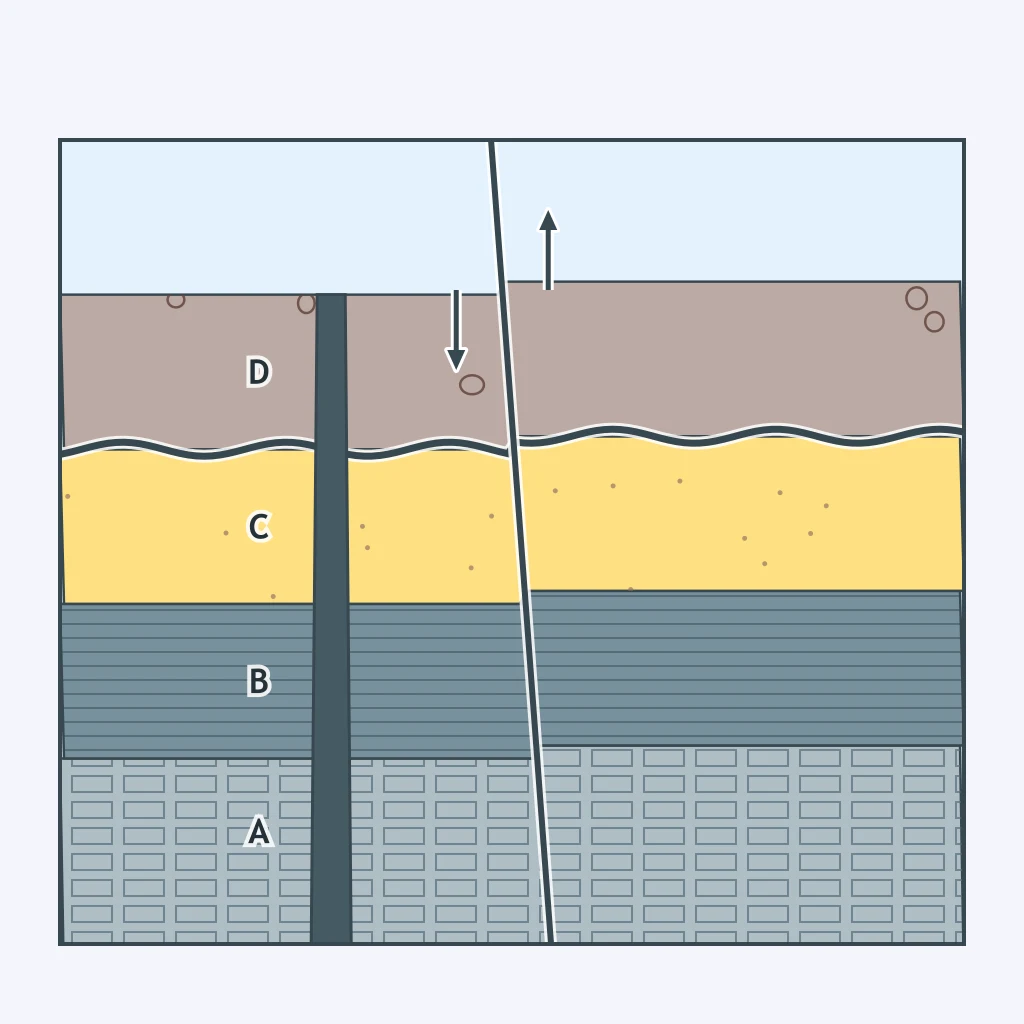
A basalt dike cuts only layers A and B and ends at an unconformity. Layers C-E lie above it, and the fault offsets C-E. What is oldest to youngest?
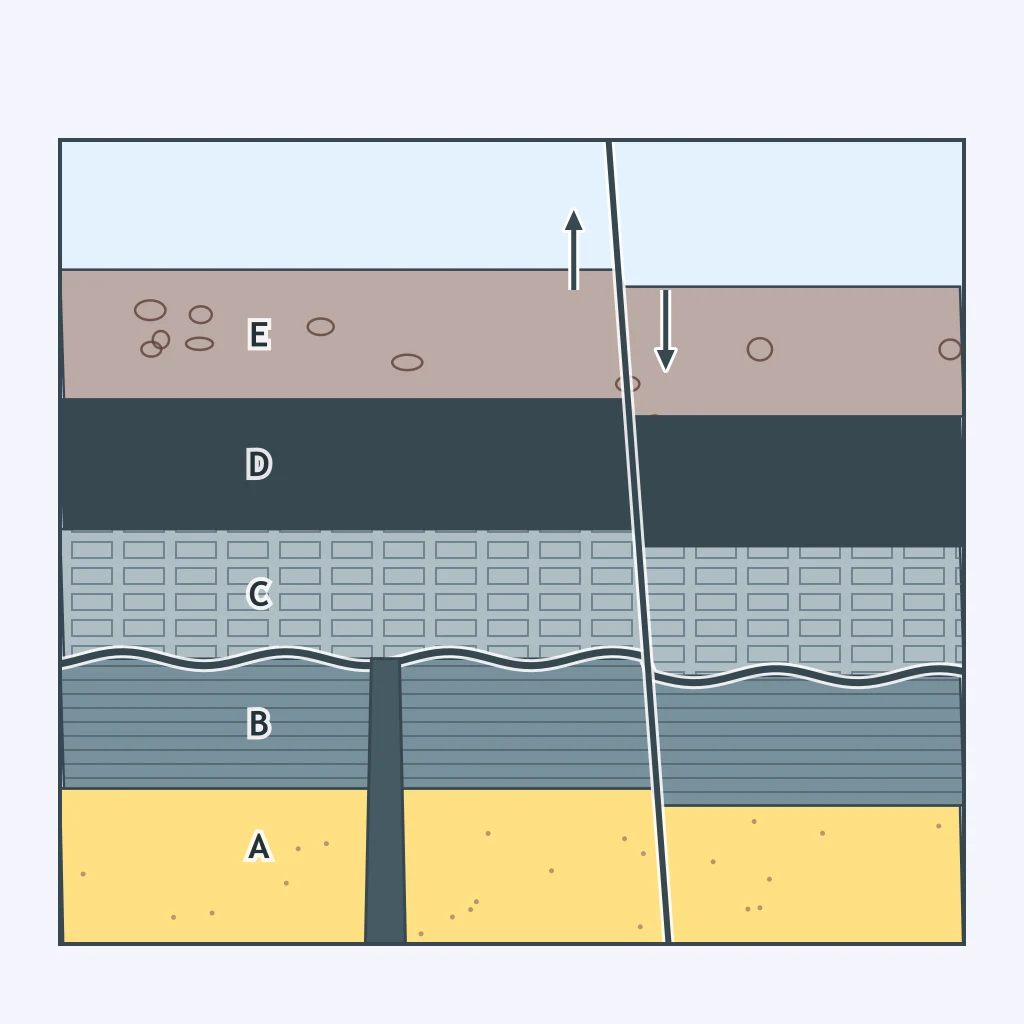
A dike cuts layers A-D, and later a fault offsets A-D. An unconformity truncates both, and layer E is unbroken above it. Which order is oldest to youngest?
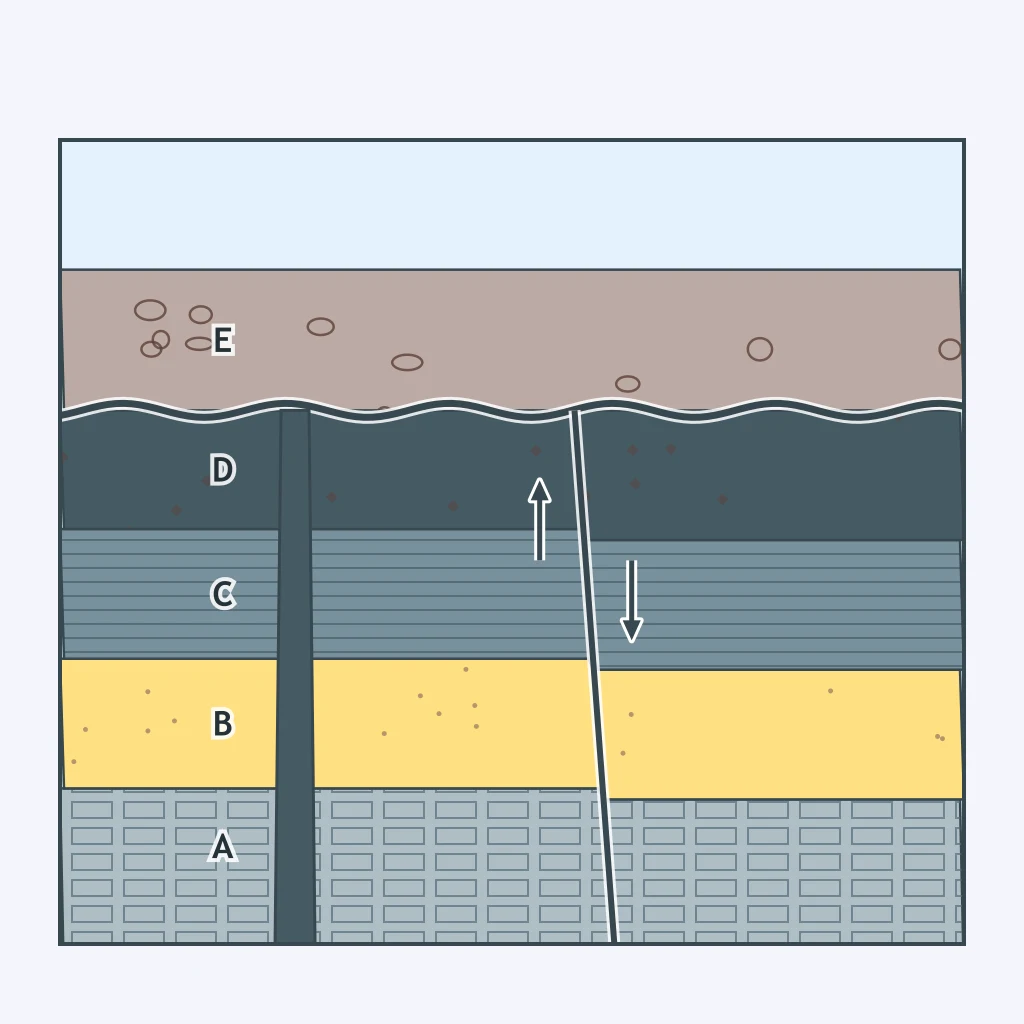
The figure shows layer A below layer B below layer C. Which principle establishes that A is older than C?
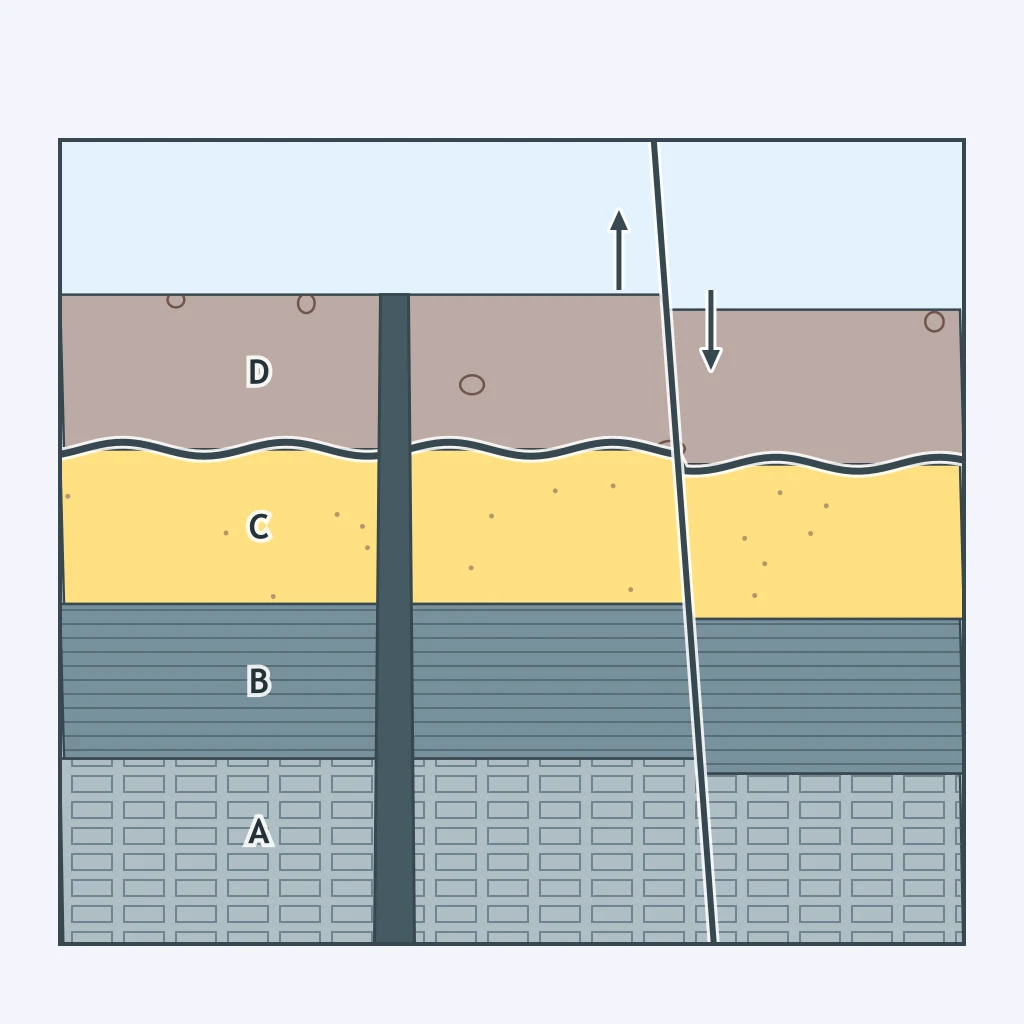
A granite dike crosses layers A, B, and C in the figure. Which principle shows the dike is younger than those layers?
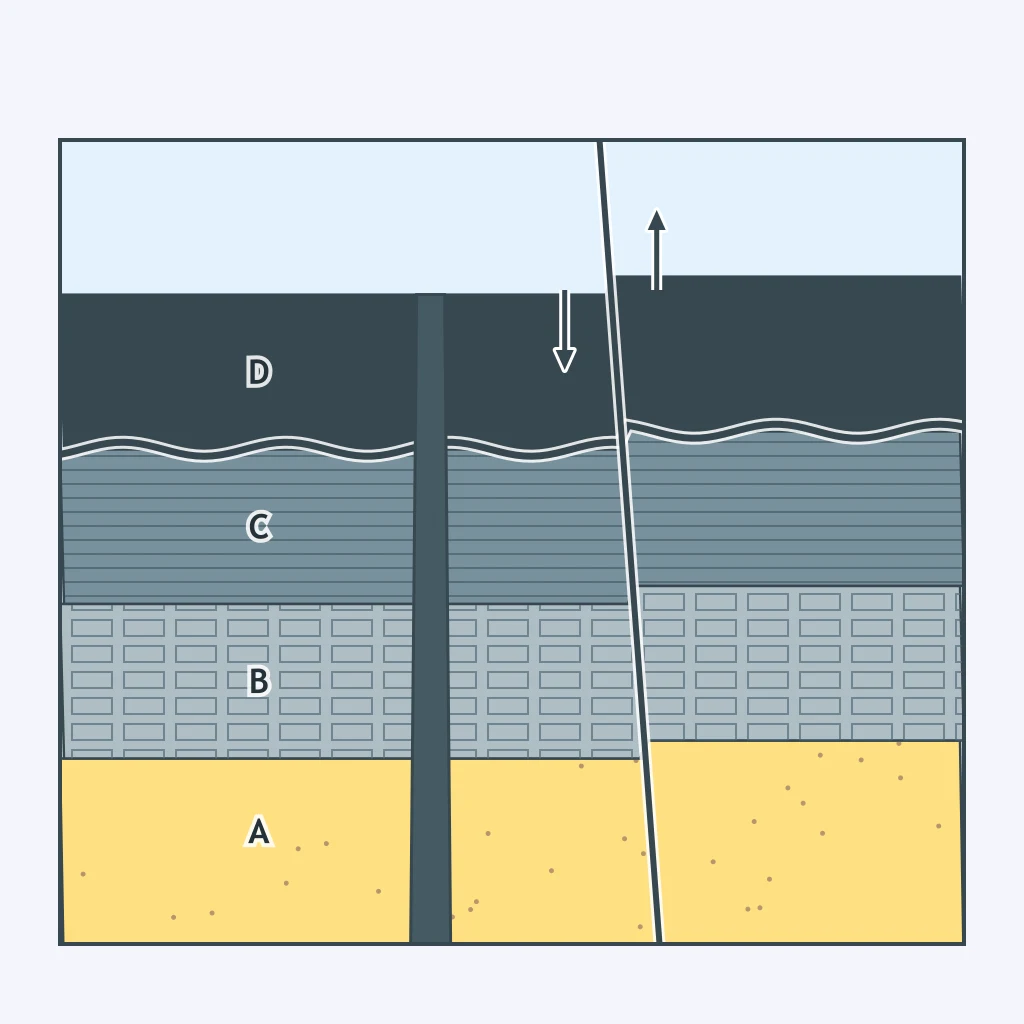
Tilted layers A-C lie below flat layer D. Which principle shows A-C were deposited before they were tilted?
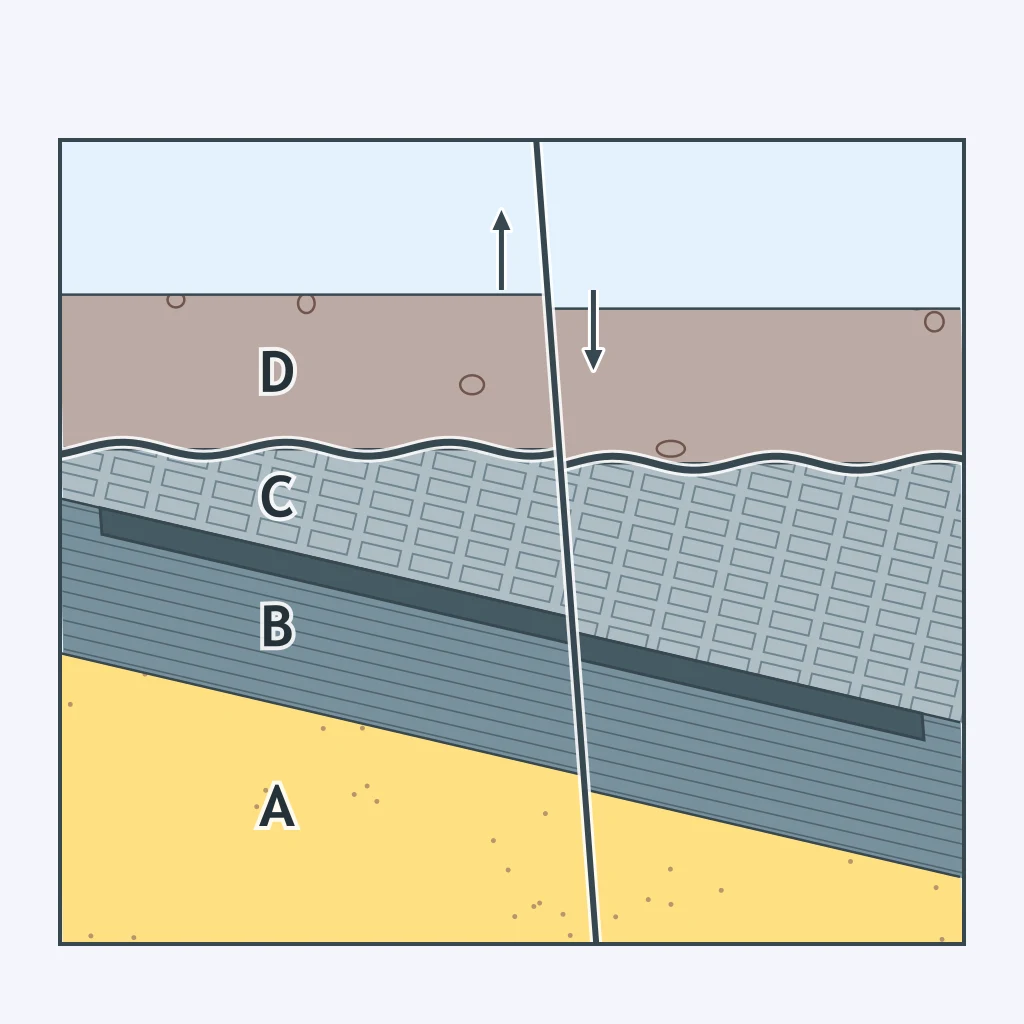
Pebbles of limestone A are enclosed inside conglomerate D above the unconformity. Which principle shows A is older than D?
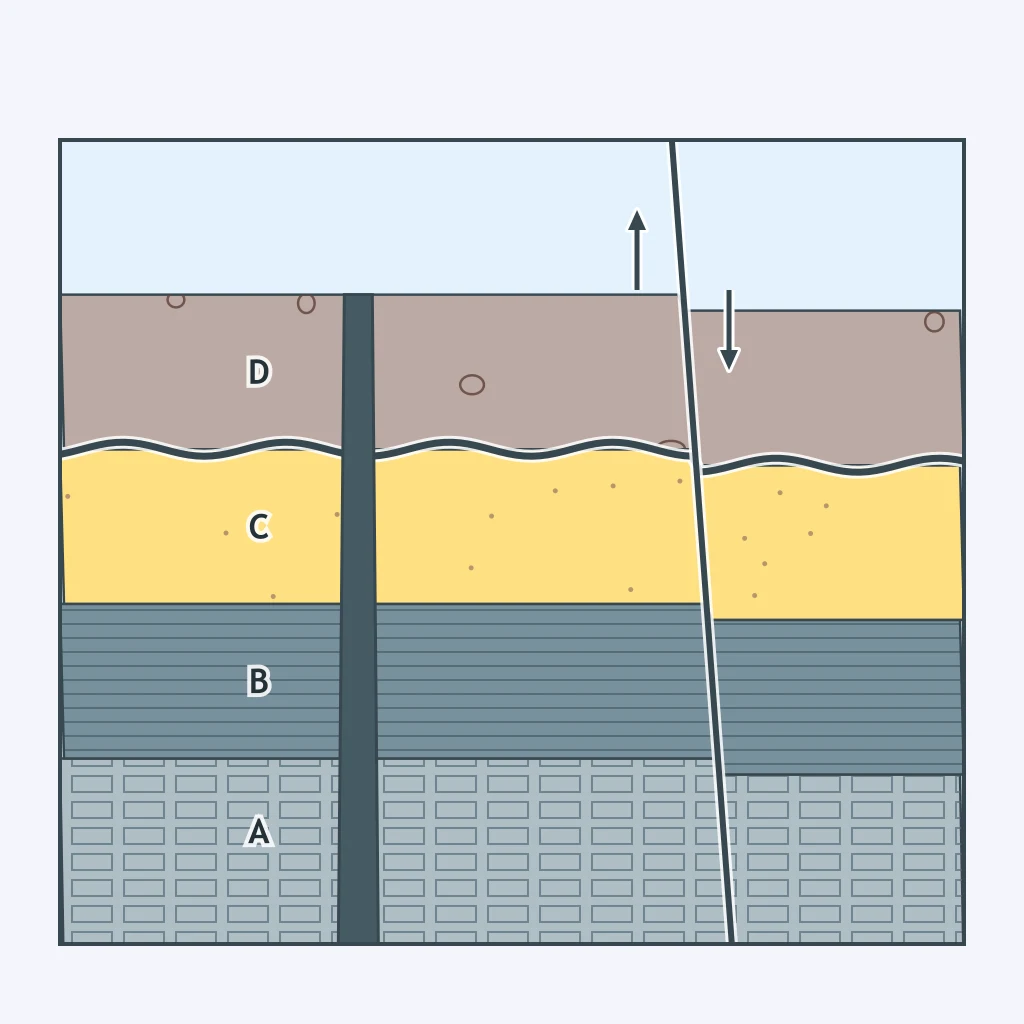
A fault cuts layers A-D but does not cut layer E above the unconformity. Which principle places the fault after A-D?
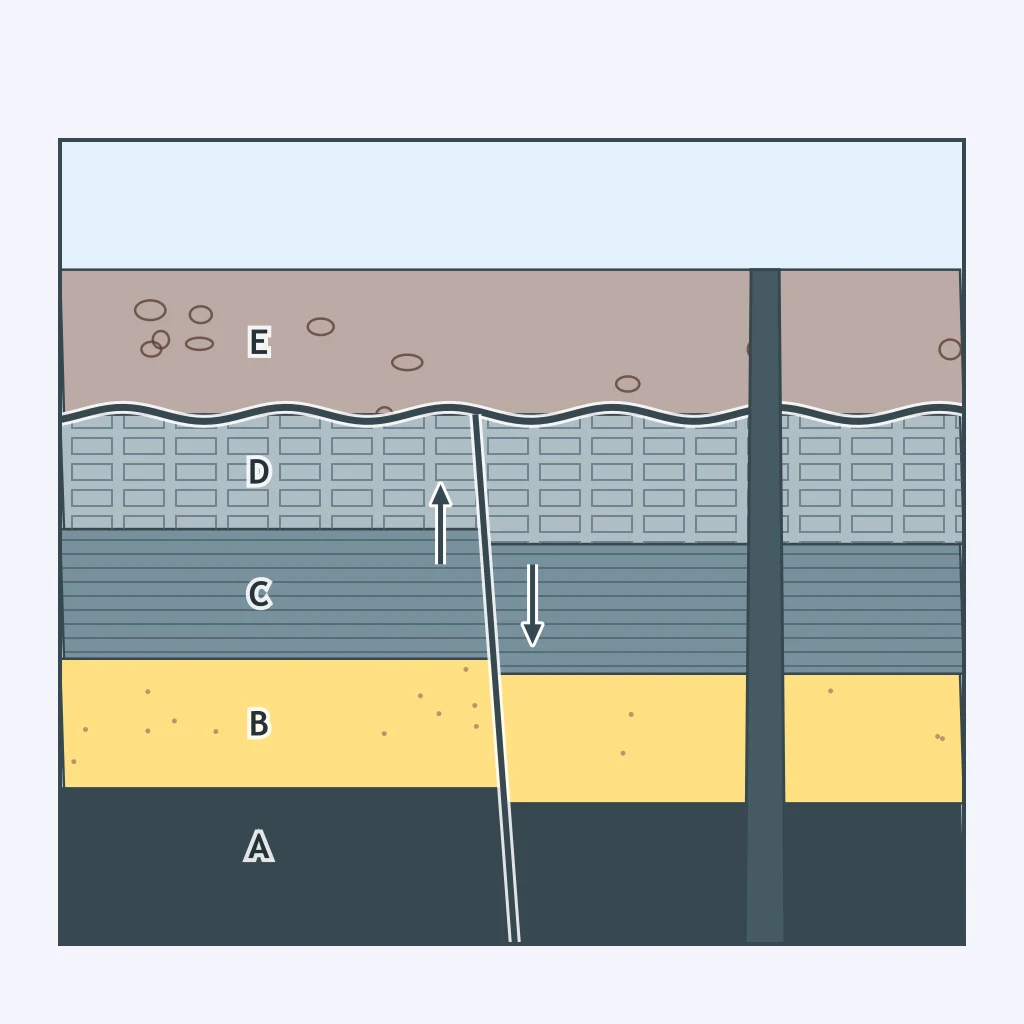
A wavy surface separates eroded layers A-C from layer D. Which relative dating idea identifies that surface as missing time?
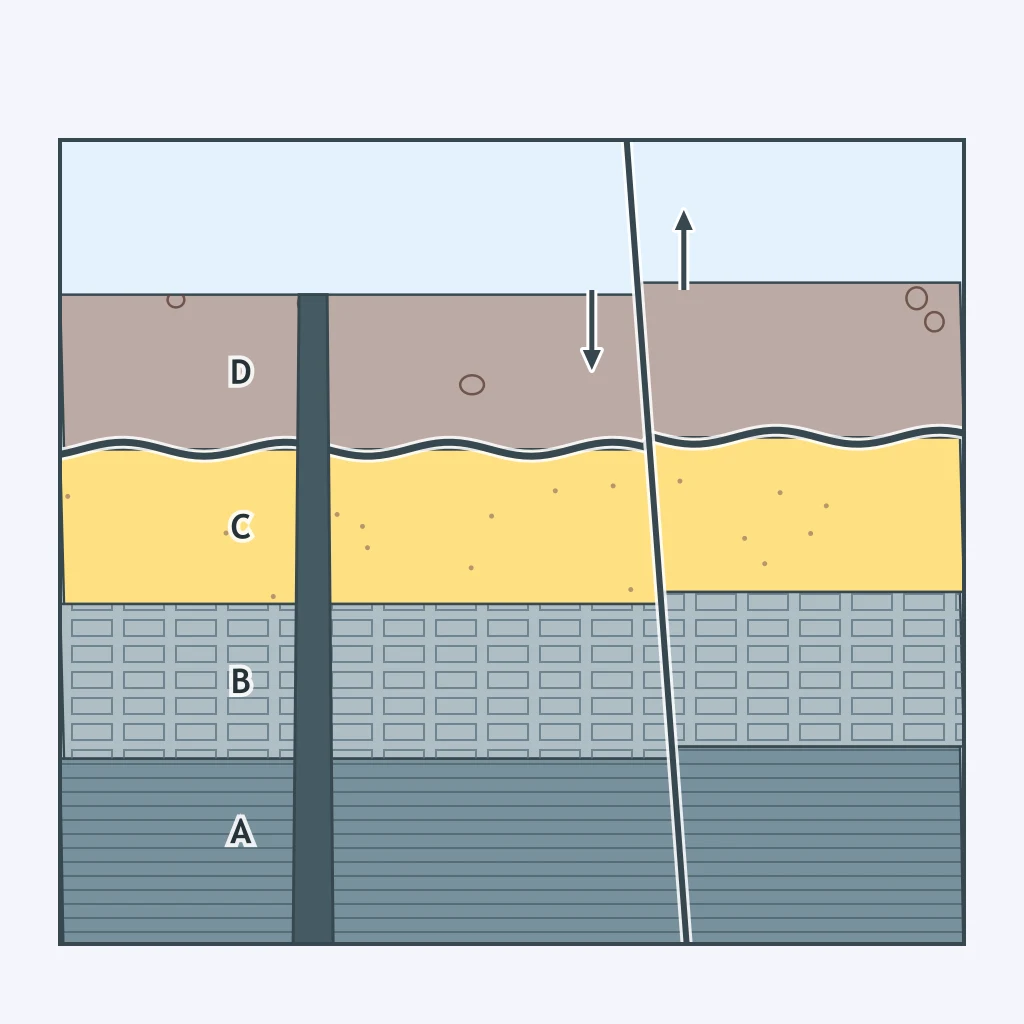
The basalt sill baked both layer B below and layer C above. Which principle supports the sill being younger than both layers?
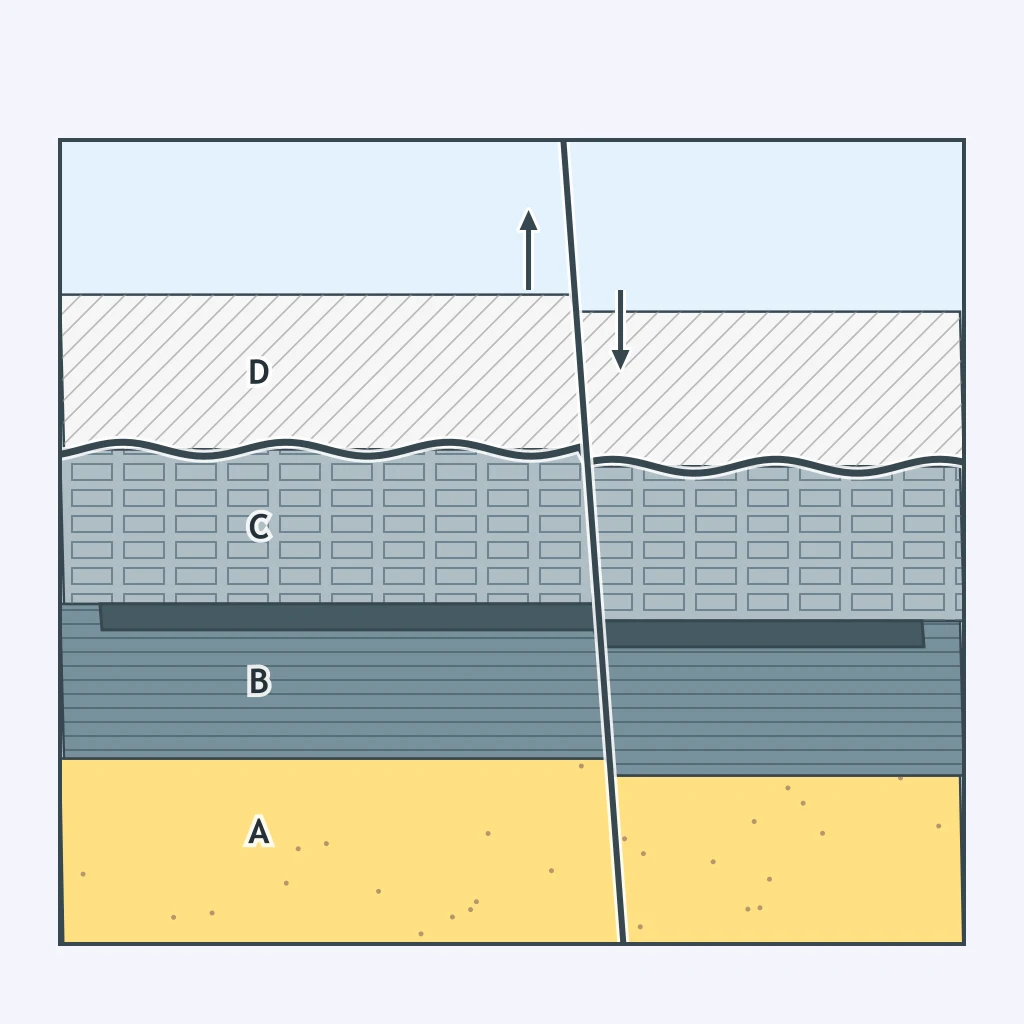
Layer D lies directly on an eroded surface above older layers A-C. Which principle explains why D is younger than A-C?
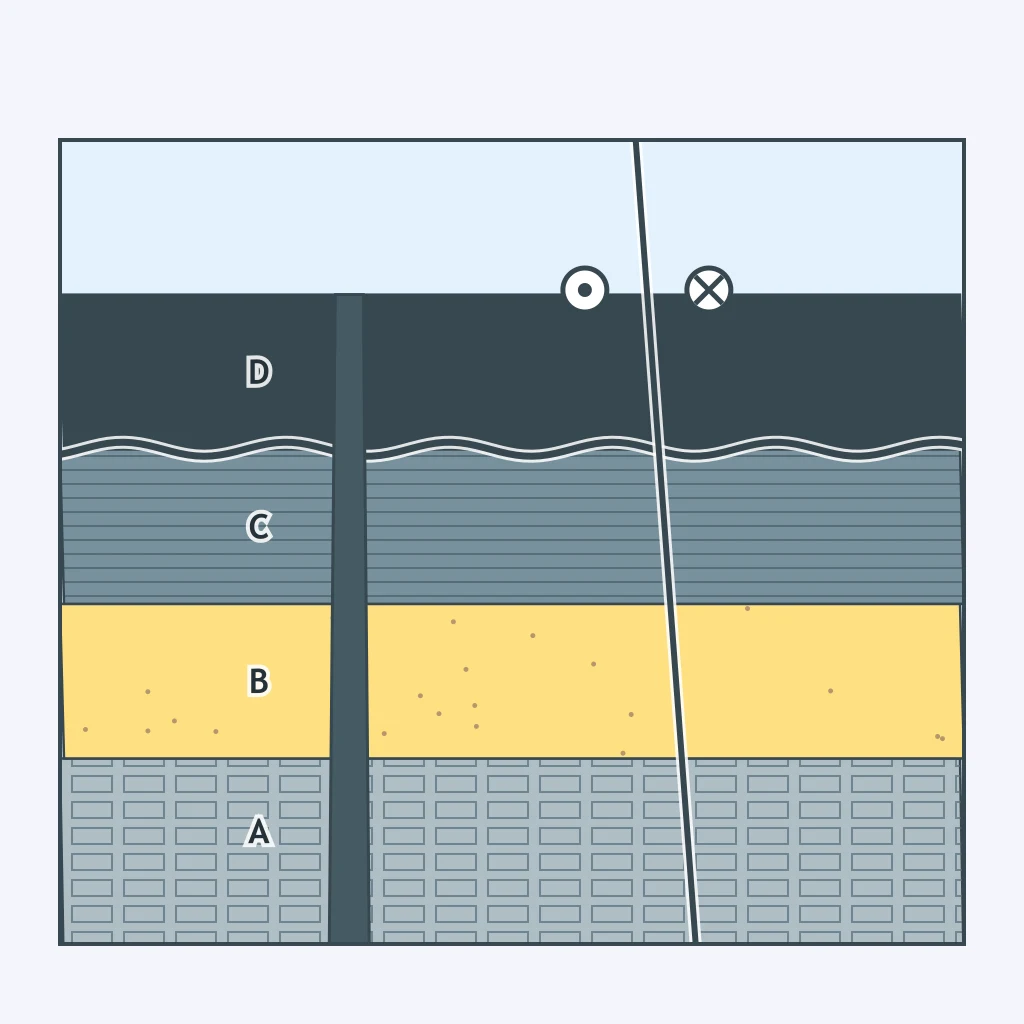
The dike contains small fragments of shale B. Which principle shows the shale fragments are older than the dike?
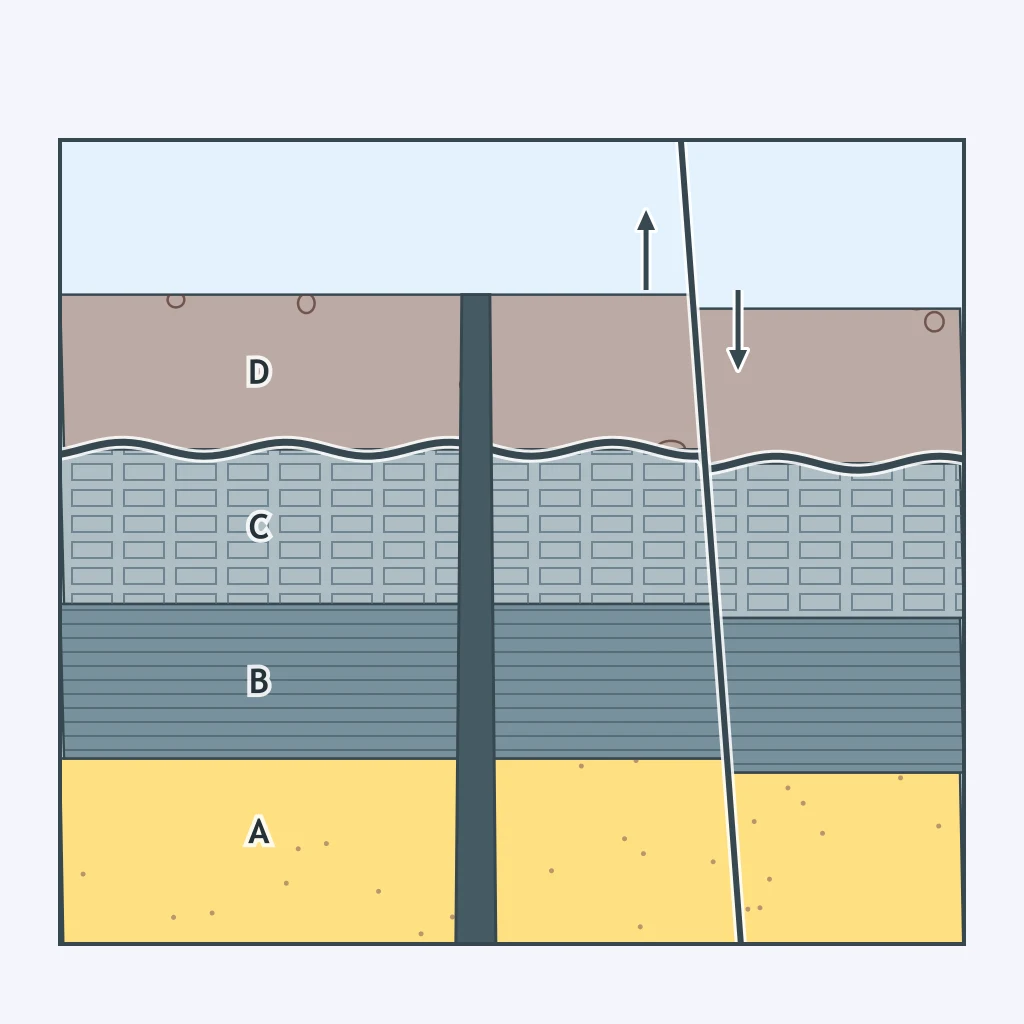
A fault is cut off by the unconformity and layer E above is not offset. Which principle shows E was deposited after faulting ended?
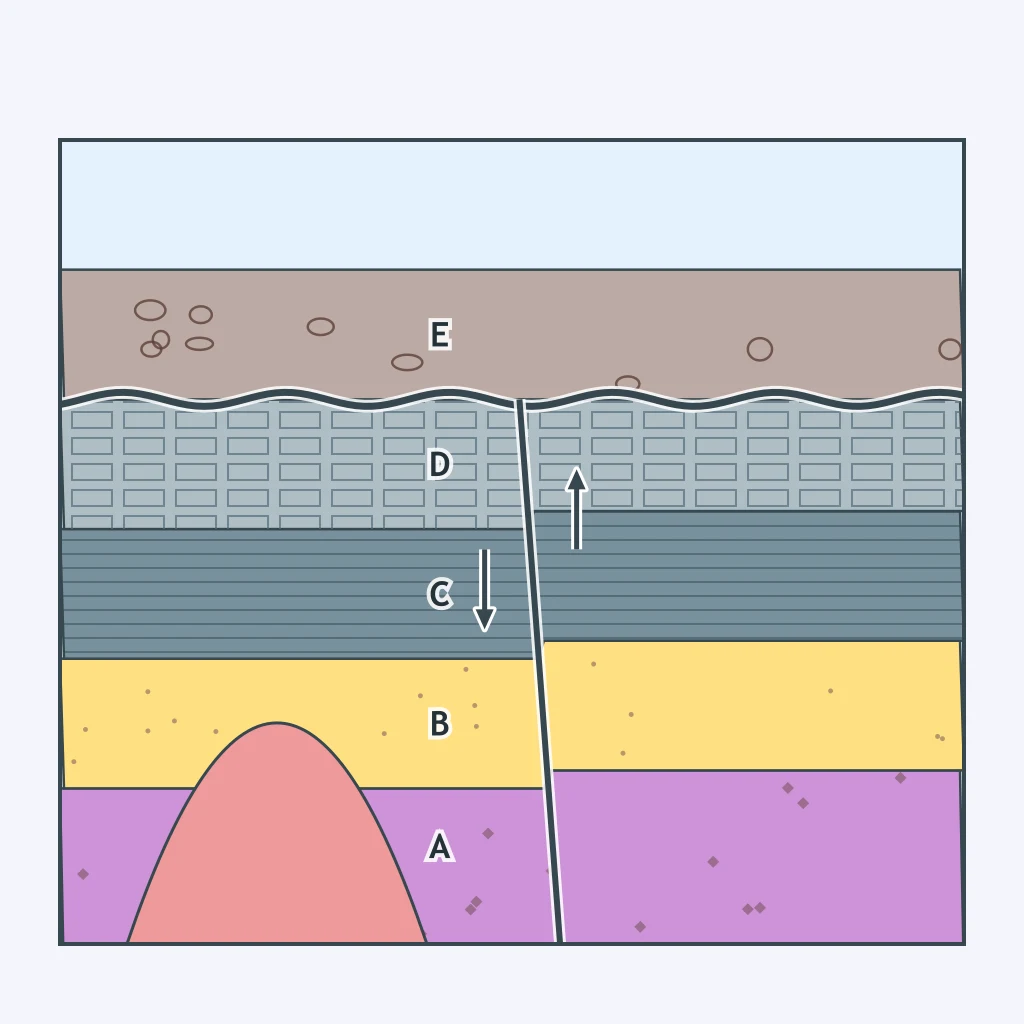
Basalt C lies between shale B and sandstone D; both contacts above and below C are baked. Is C an intrusion or a buried lava flow?
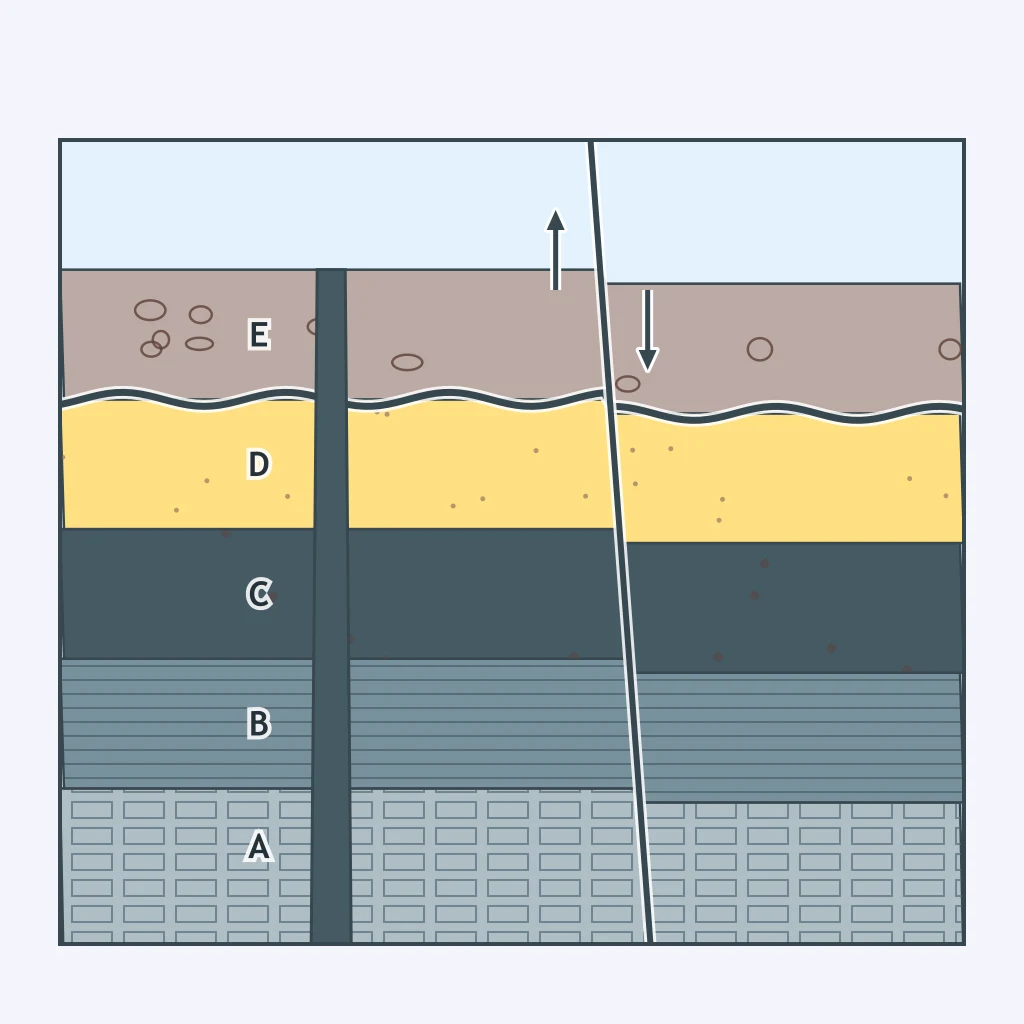
Basalt C bakes shale B below it, but sandstone D above C is not baked. What does that contact evidence show about C?
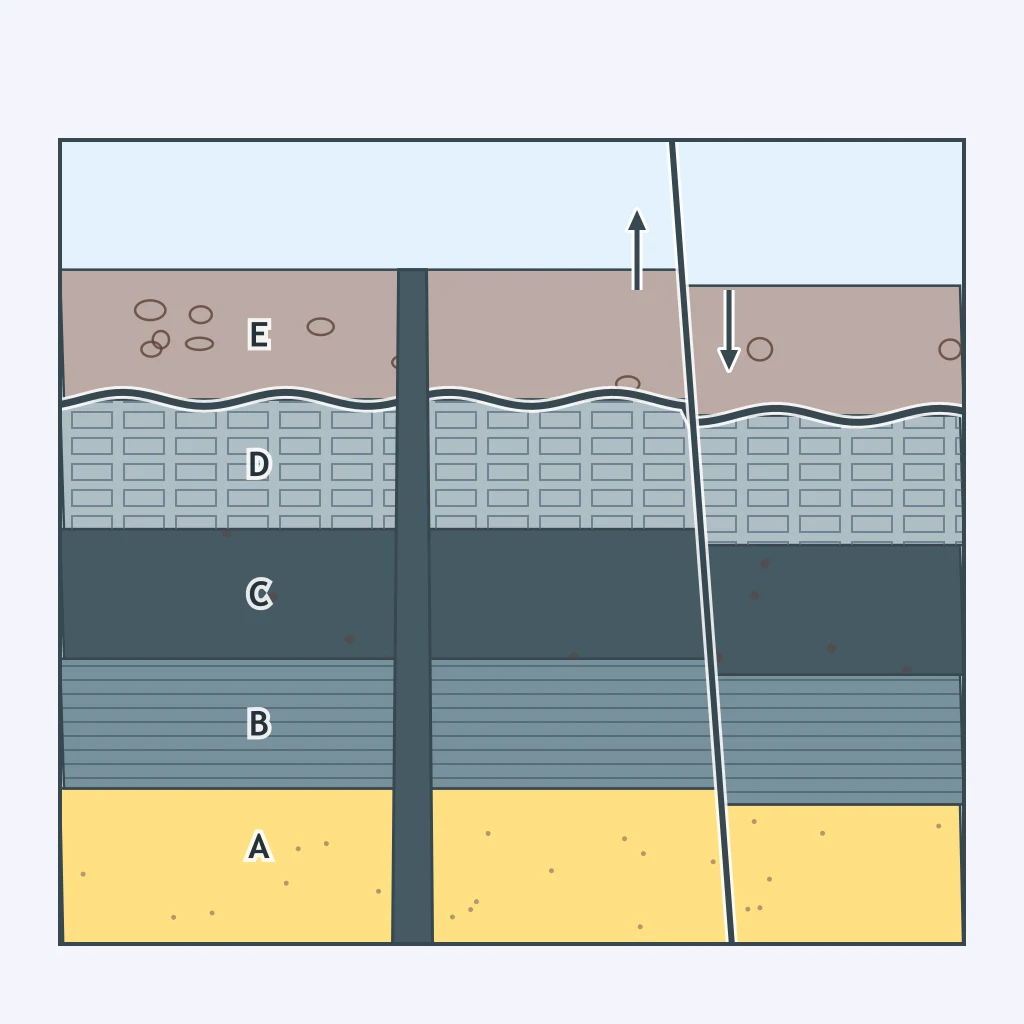
Basalt layer C lies between layers B and D. The rock directly above and below it shows contact metamorphism. What relative-age interpretation fits?
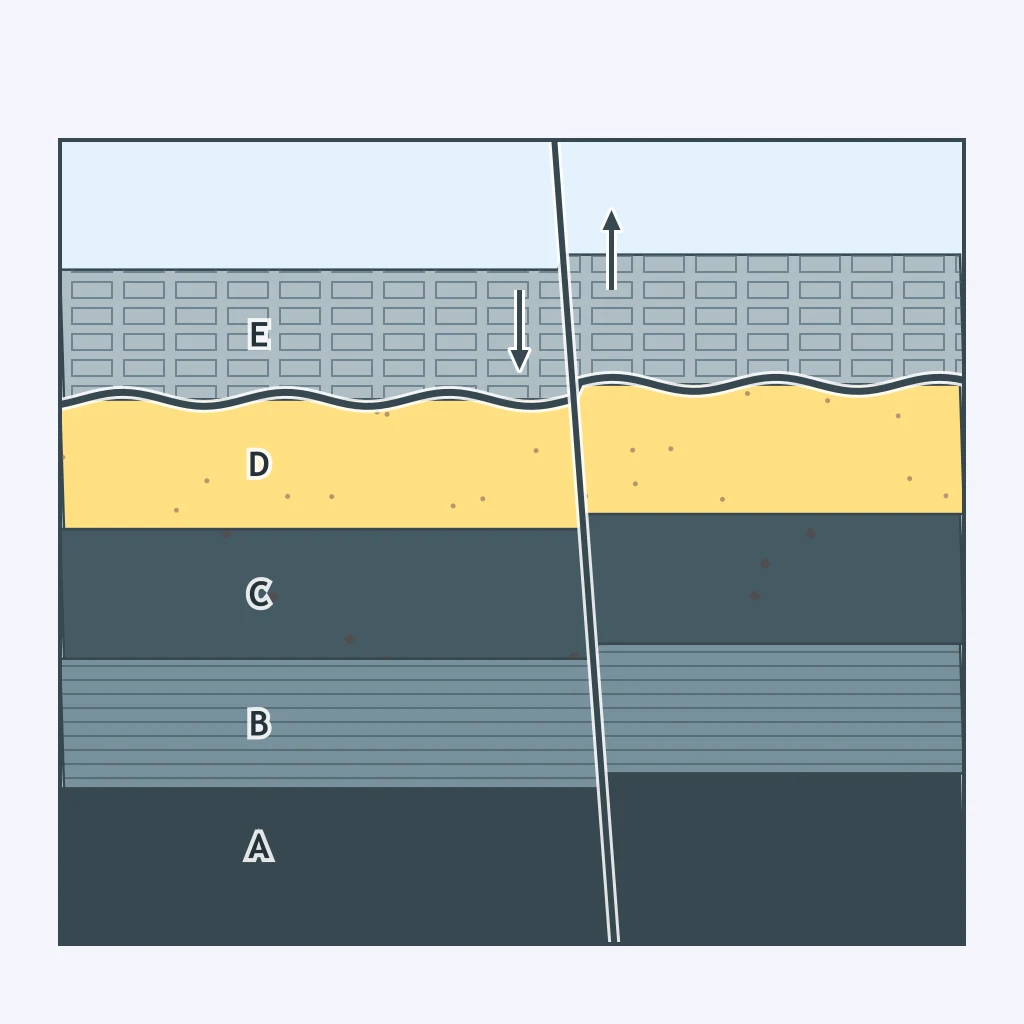
Only the rock below basalt layer B is baked; layer C above B has an unbaked contact. What is the best interpretation of B?
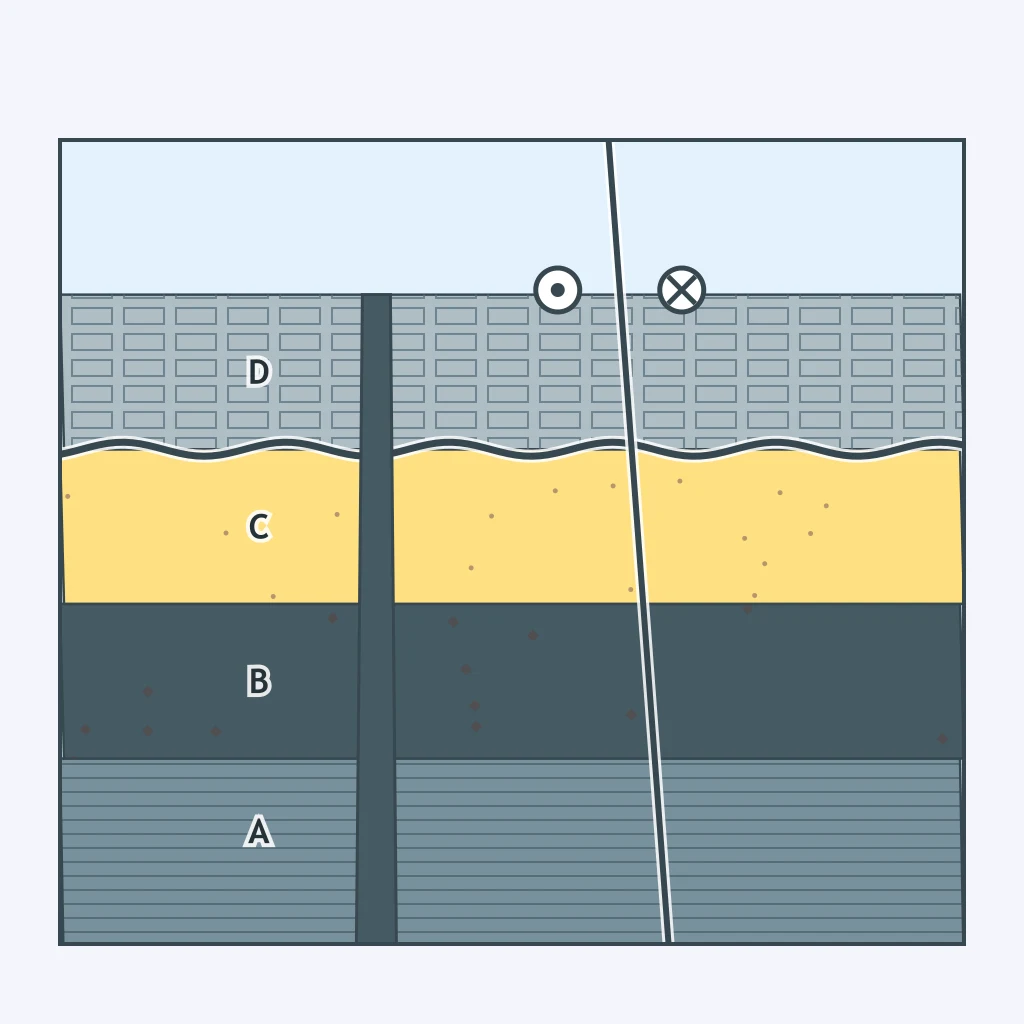
Basalt C touches shale B and limestone D; B and D are both altered right at the contact. What does this show about C?
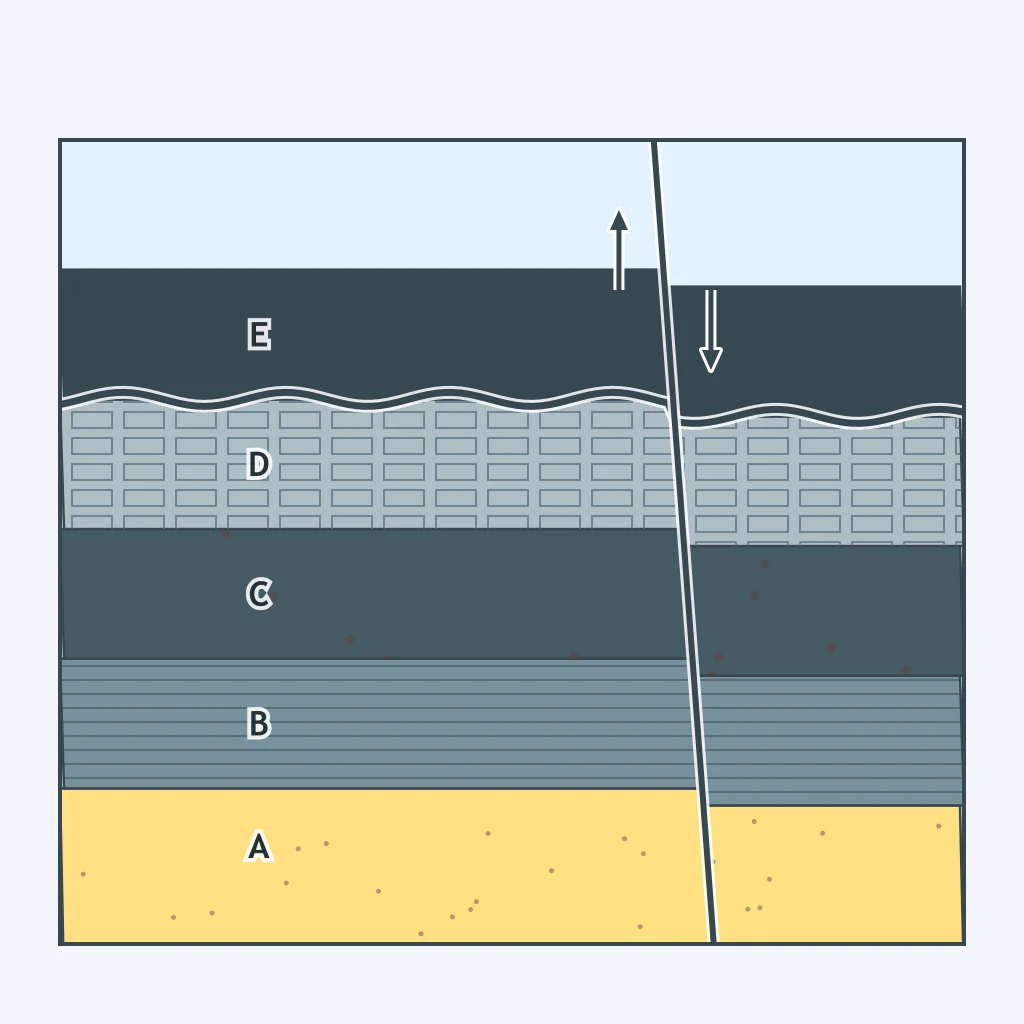
A basalt sheet between A and C baked A but did not bake C. Which sequence best fits the evidence?
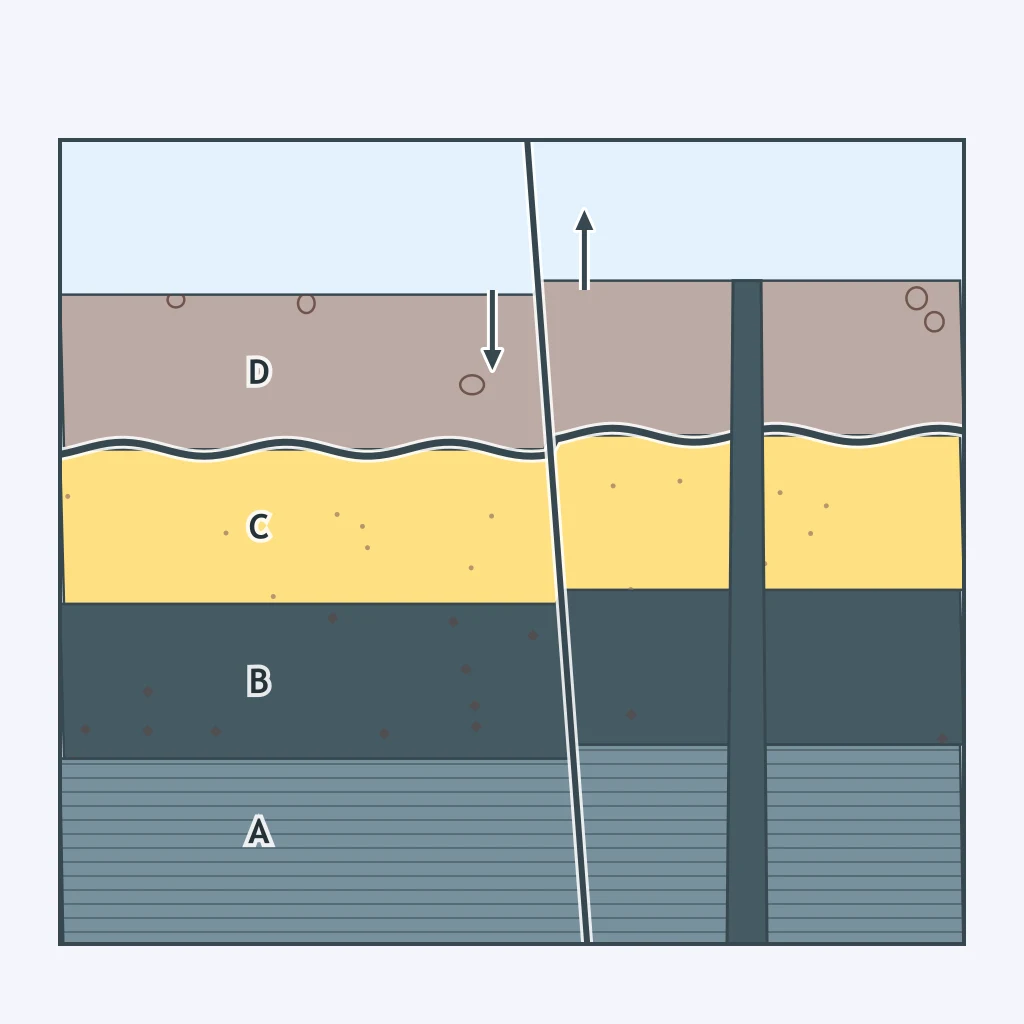
A dark igneous sheet lies along the bedding and bakes the layers above and below it. What is the best relative-dating conclusion?
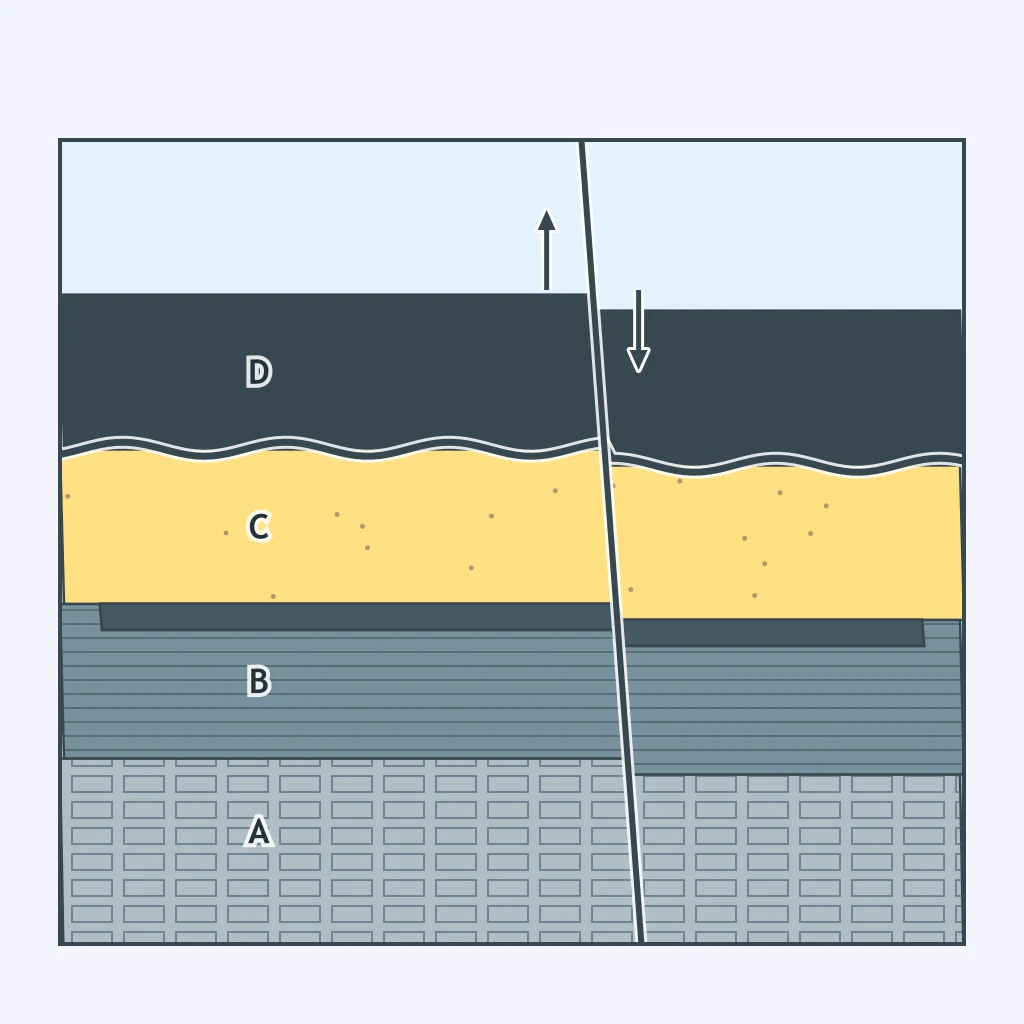
Basalt B is between sedimentary layers; only its lower contact has baked shale. How should B be classified in the sequence?
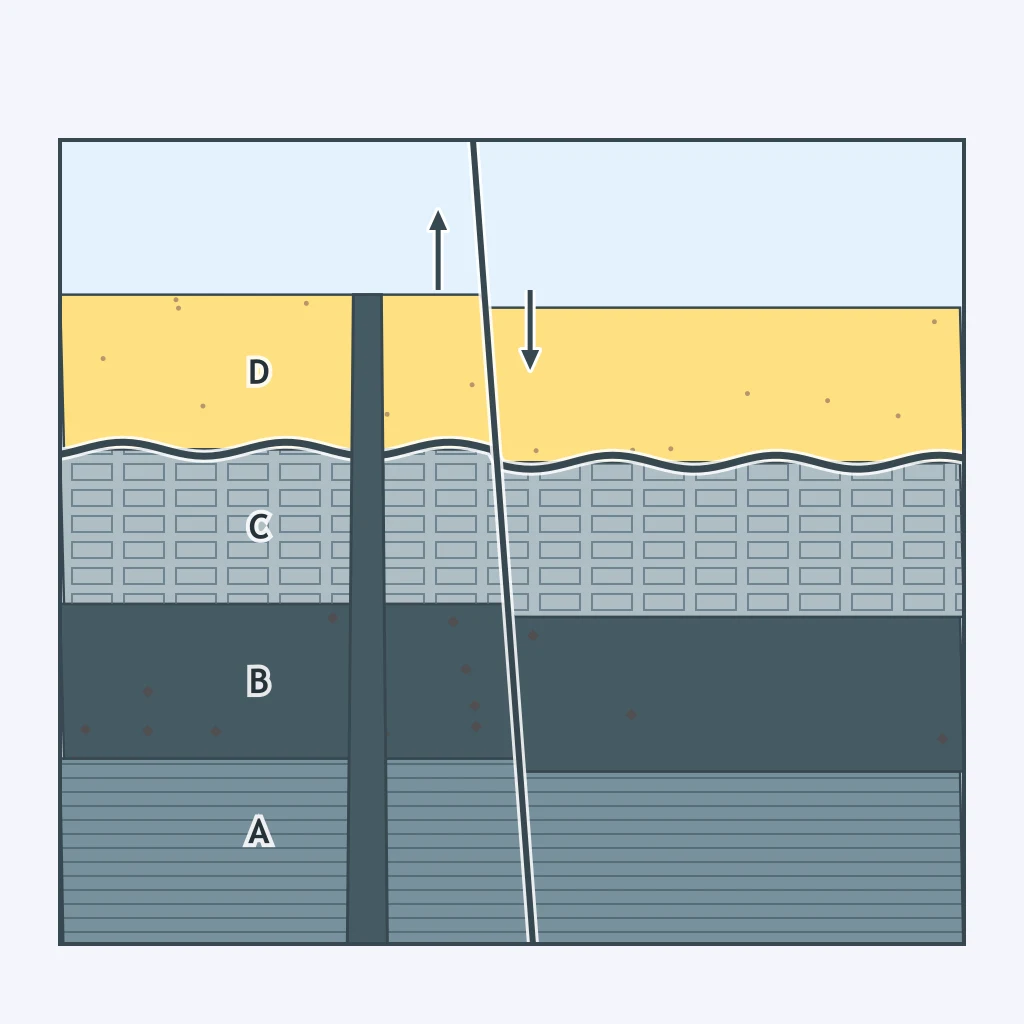
The wavy surface under layer D cuts across older beds. What does that surface represent?
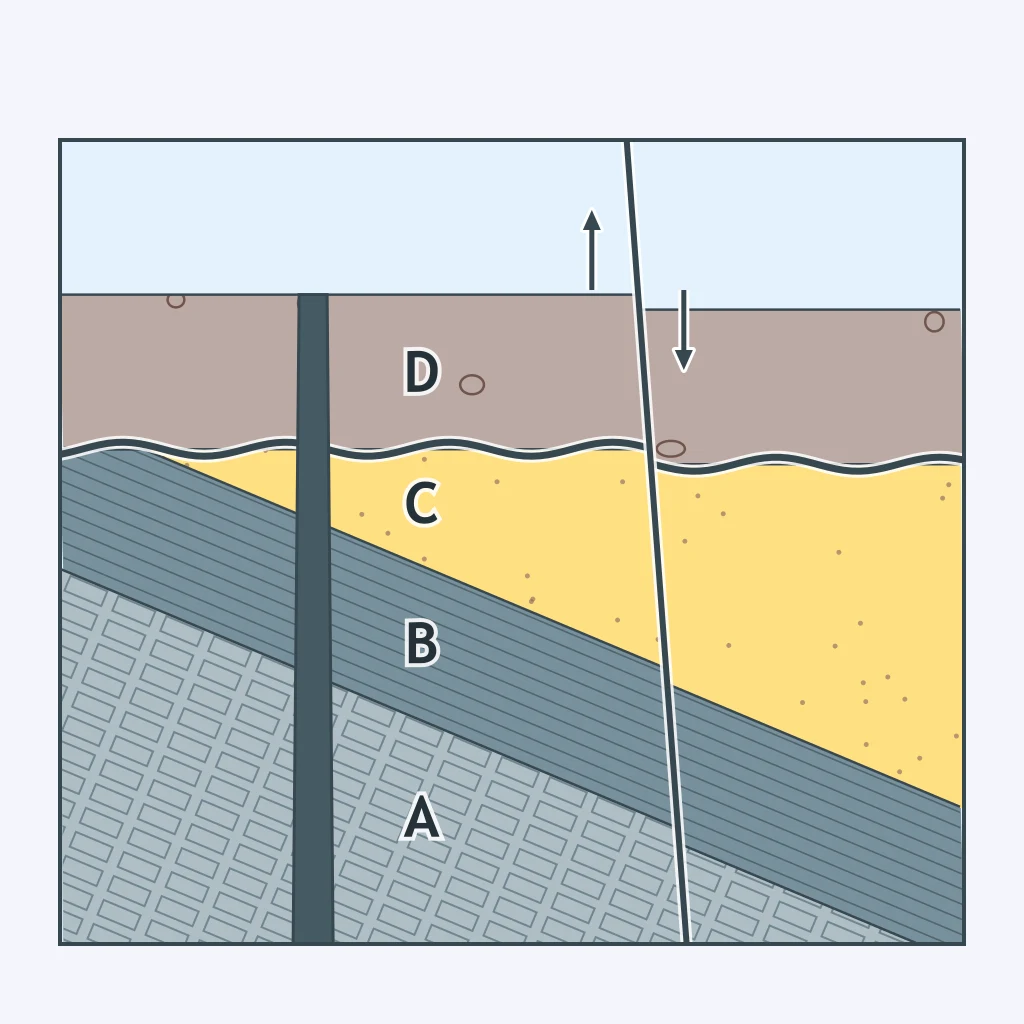
Tilted layers A-C are truncated and overlain by flat D. What kind of feature is the contact below D?
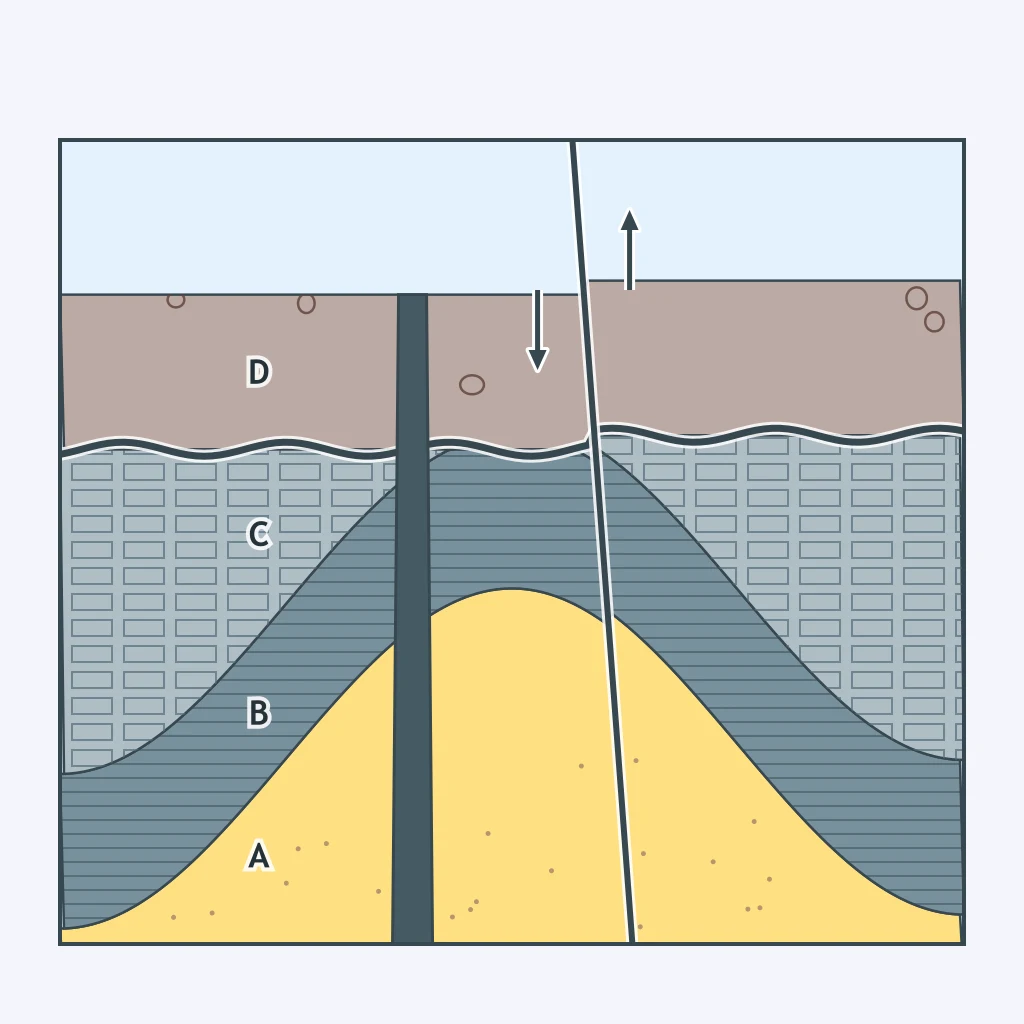
Layer E rests on a wavy surface that truncates a fault in layers A-D. What does the surface show?
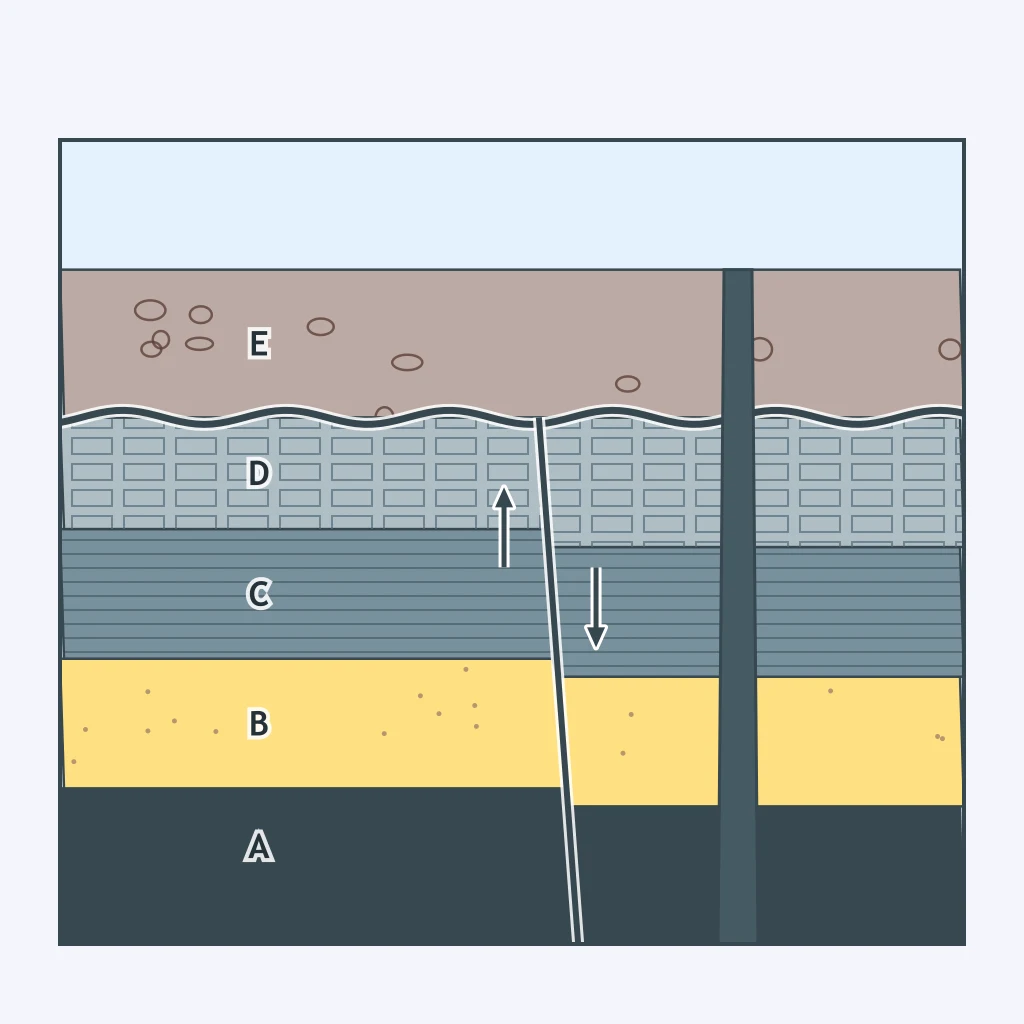
A flat layer D lies above an irregular erosional surface on older parallel beds A-C. What relative dating term names that gap?
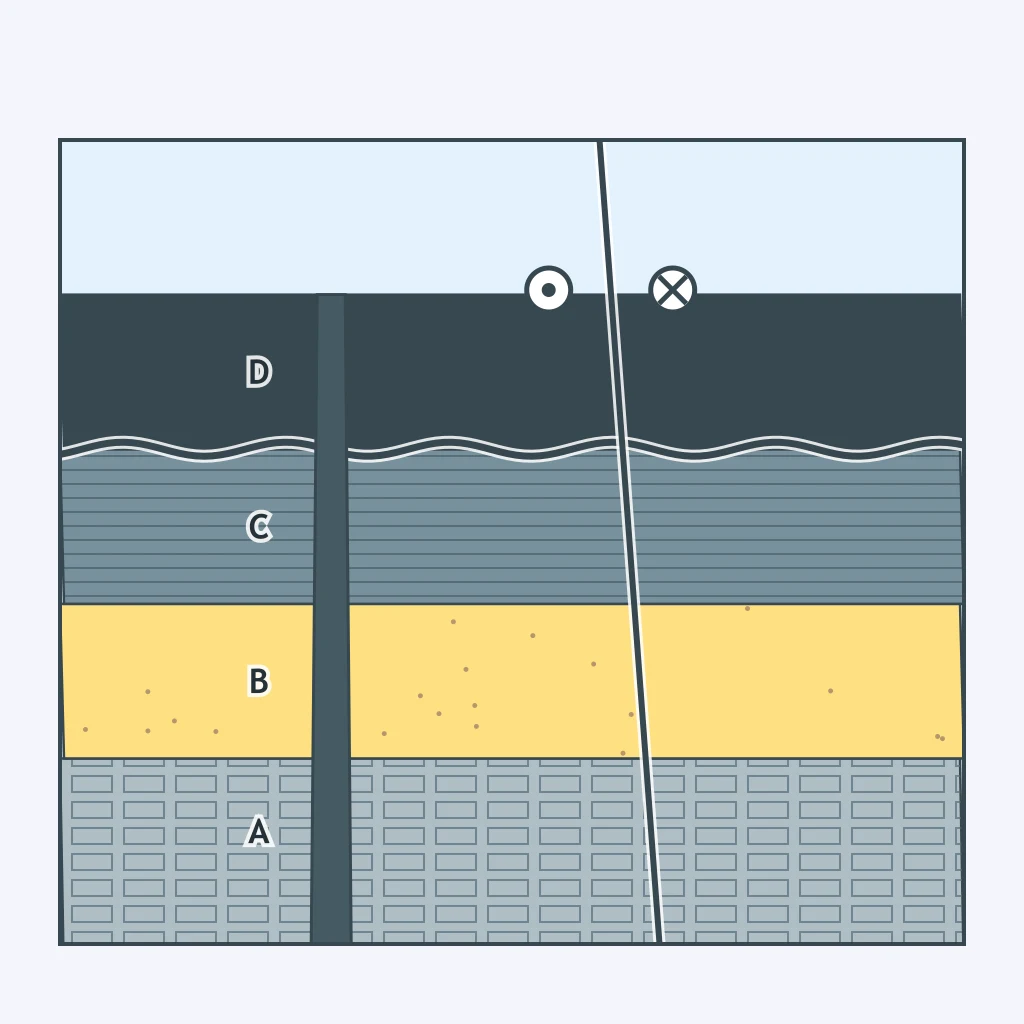
The cross section shows layer C eroded before conglomerate D was laid down. What is the event represented by the wavy contact?
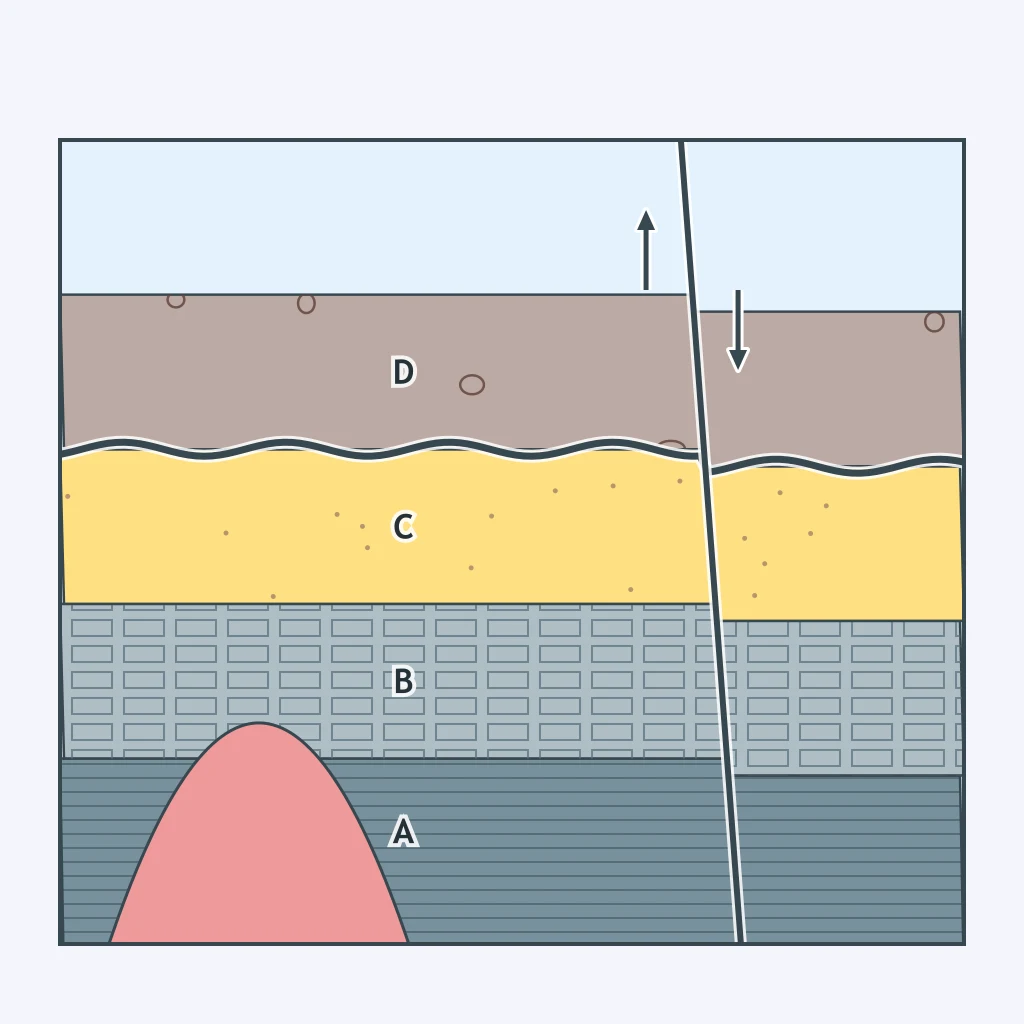
A fault below layer D ends at a wavy surface, and D is not offset. What does the wavy surface represent in the sequence?
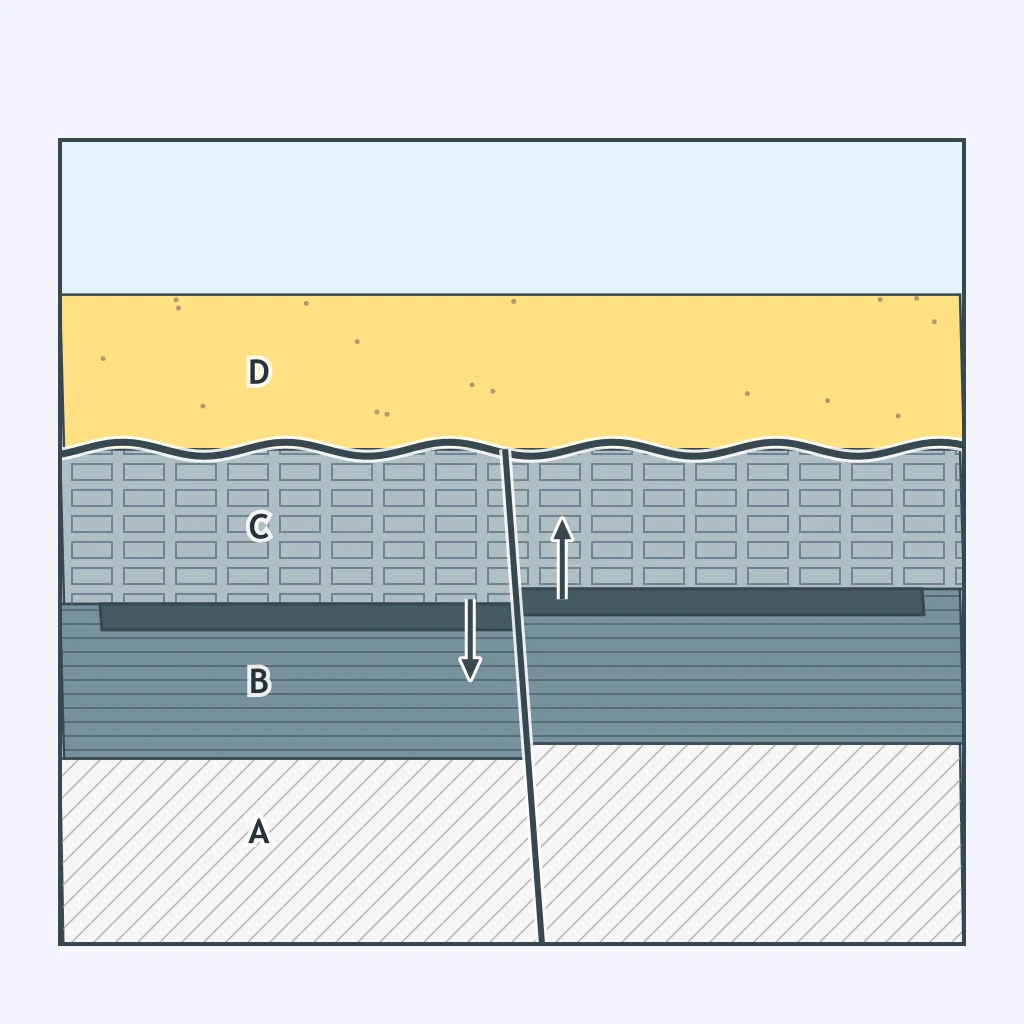
Layers A-C are folded, cut by a dike, and then eroded before layer D is deposited. What does the erosion surface record?
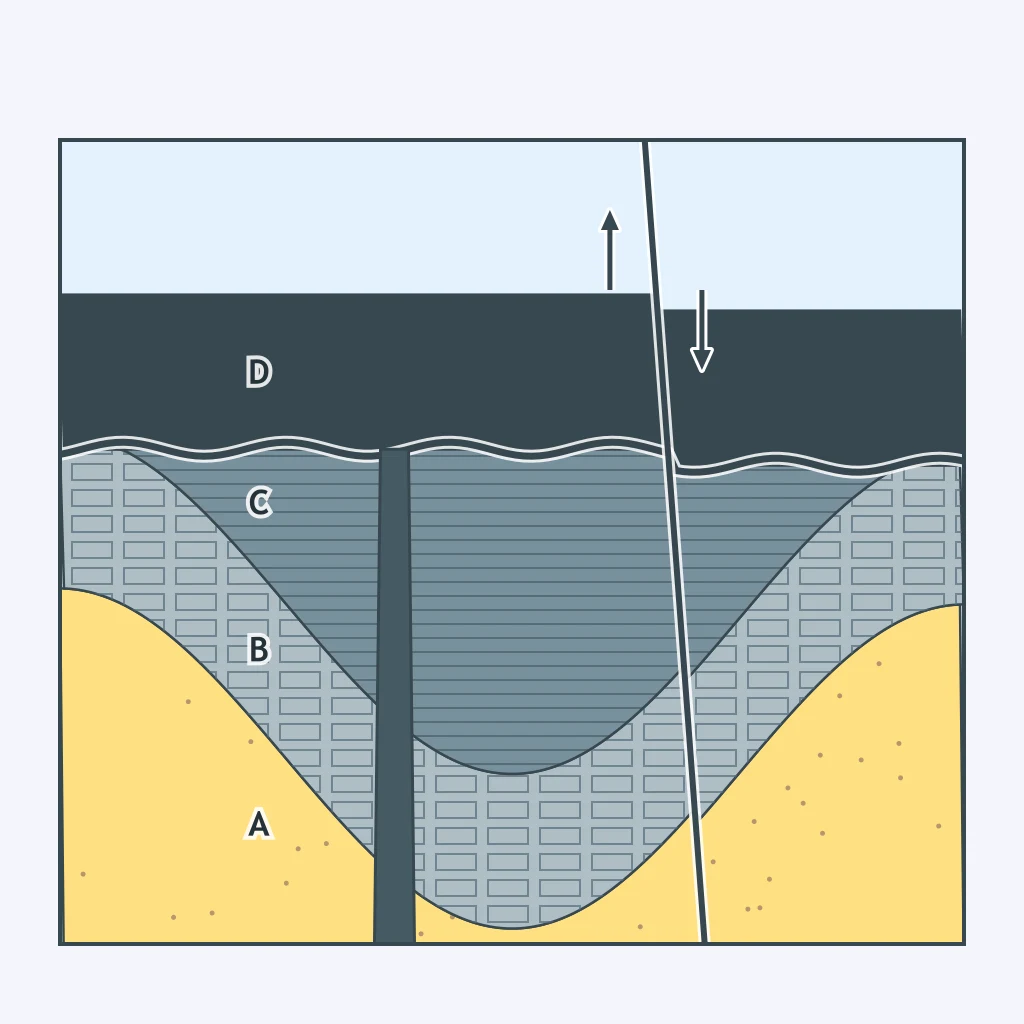
At the wavy contact, pieces of limestone B occur in conglomerate D above it. What does that unconformity show?
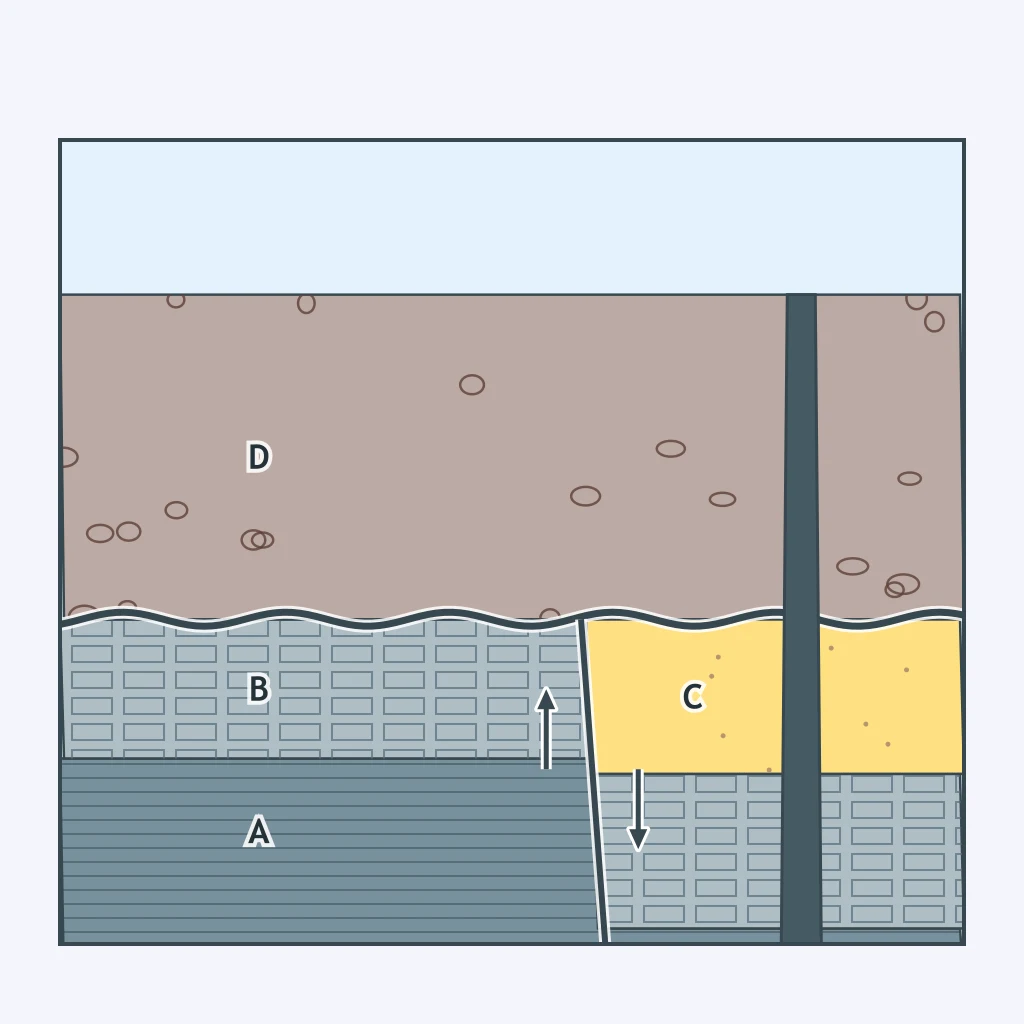
A dike cuts layer C but is covered by uncut layer D. Which is younger: the dike or layer D?
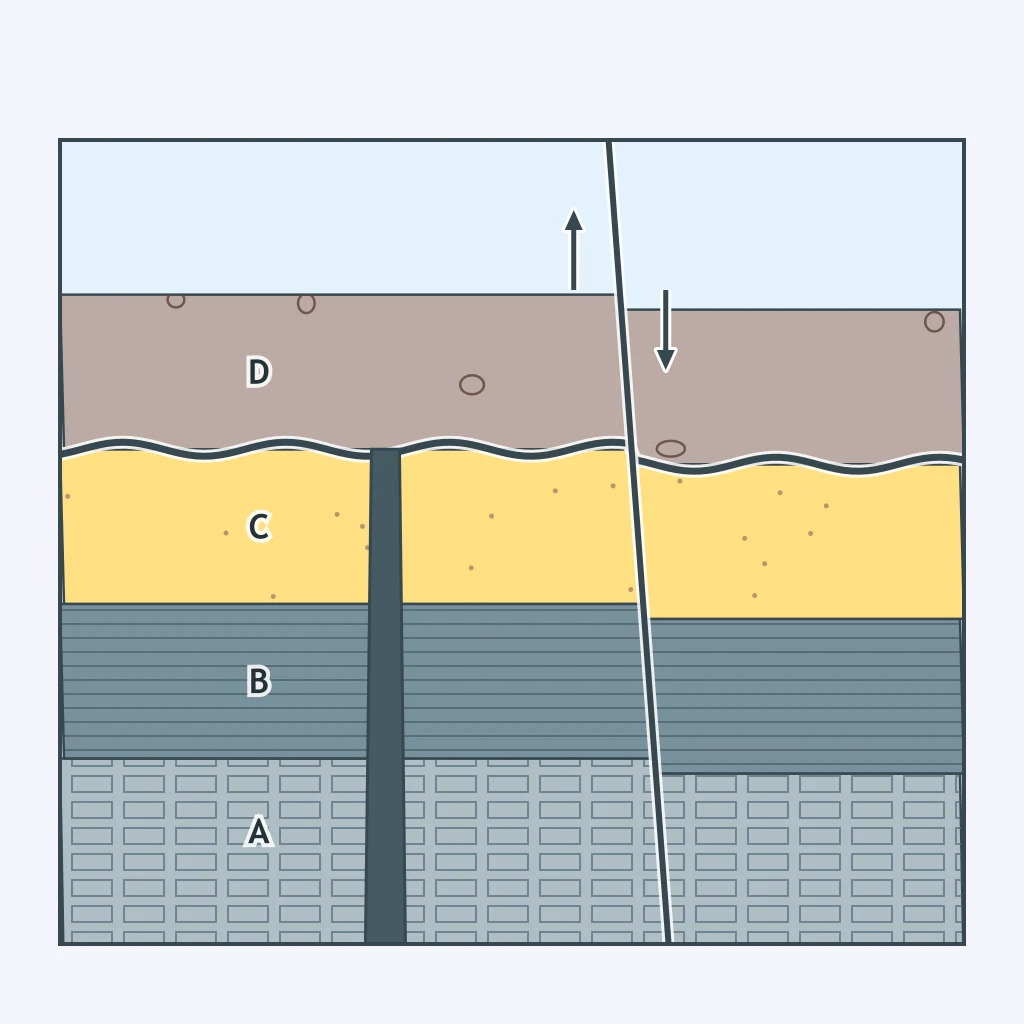
The fault offsets layers A-C but does not offset layer D above the unconformity. Which is older, the fault or D?
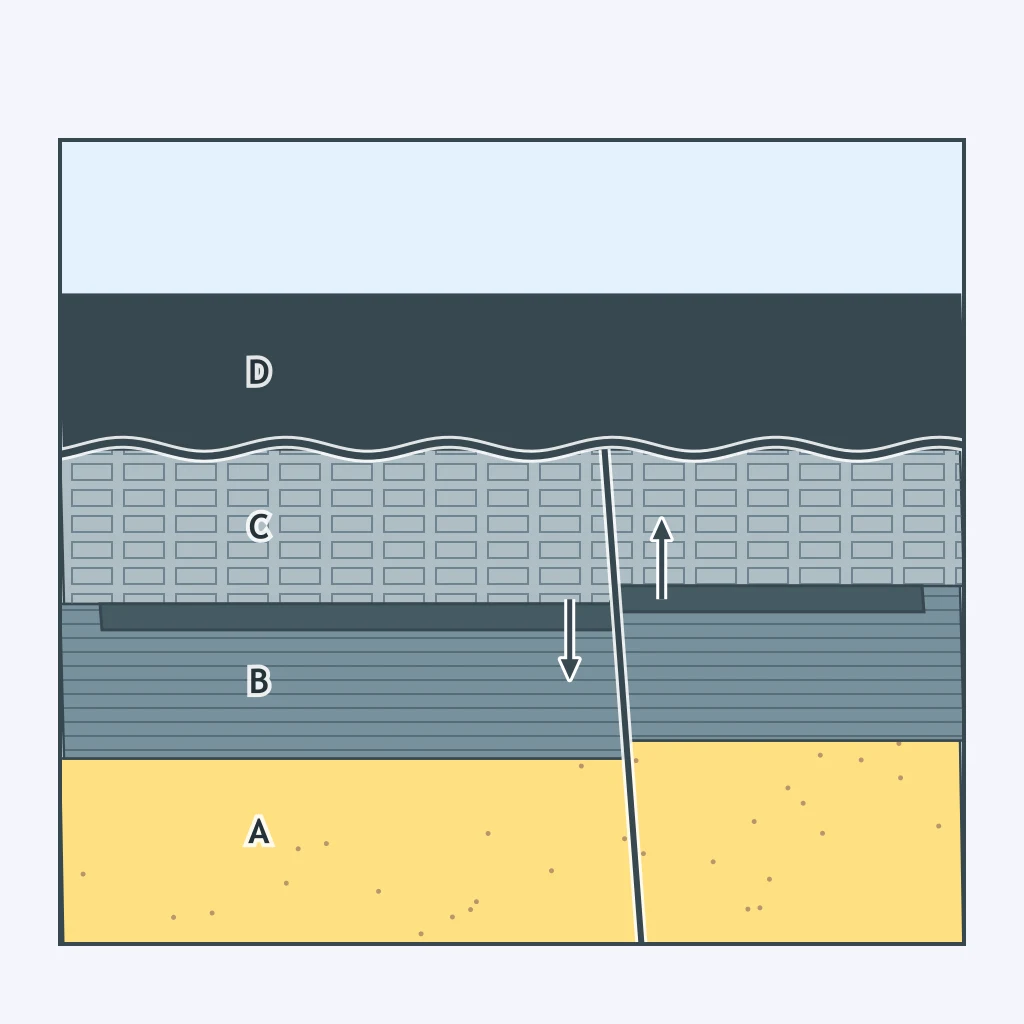
Layer B contains fragments of layer A. Which feature is older, layer A or layer B?
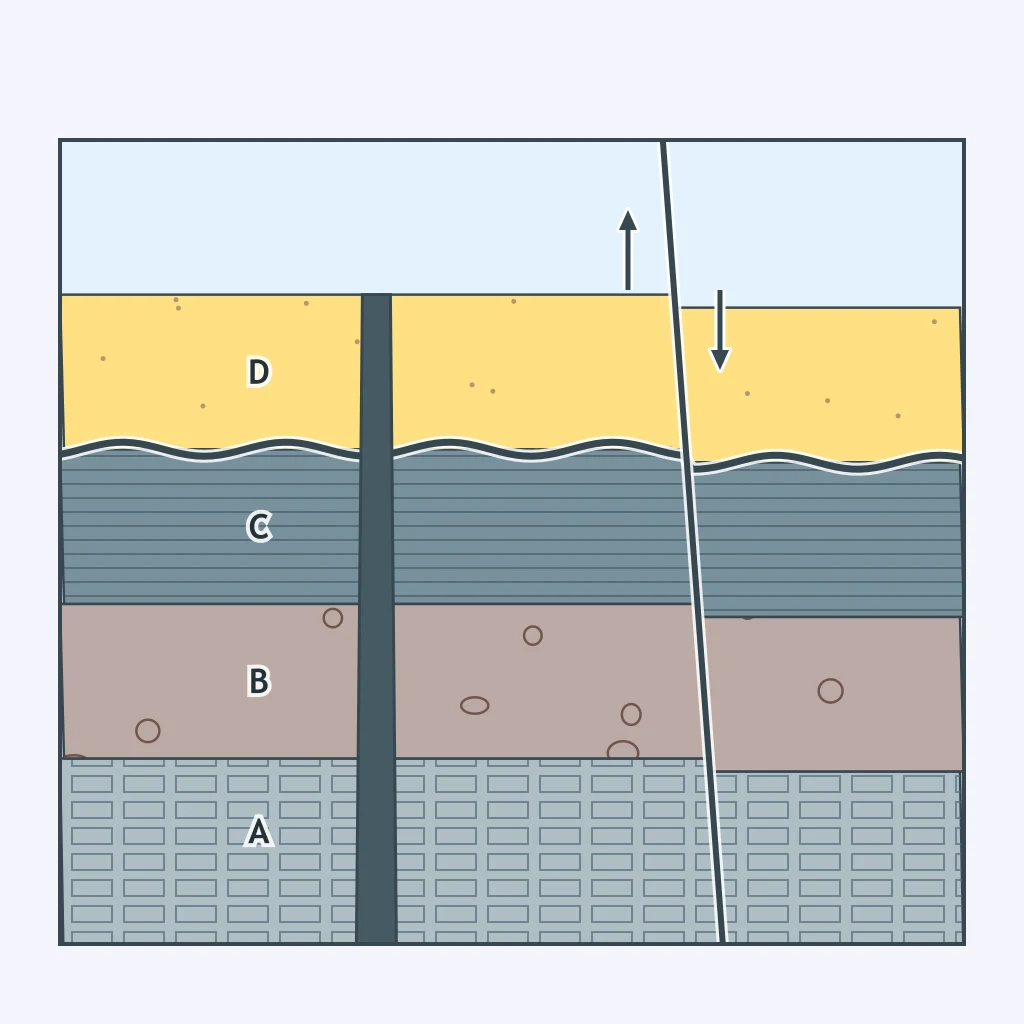
A batholith cuts layers A and B, and a fault cuts the batholith. Which is younger, the batholith or the fault?
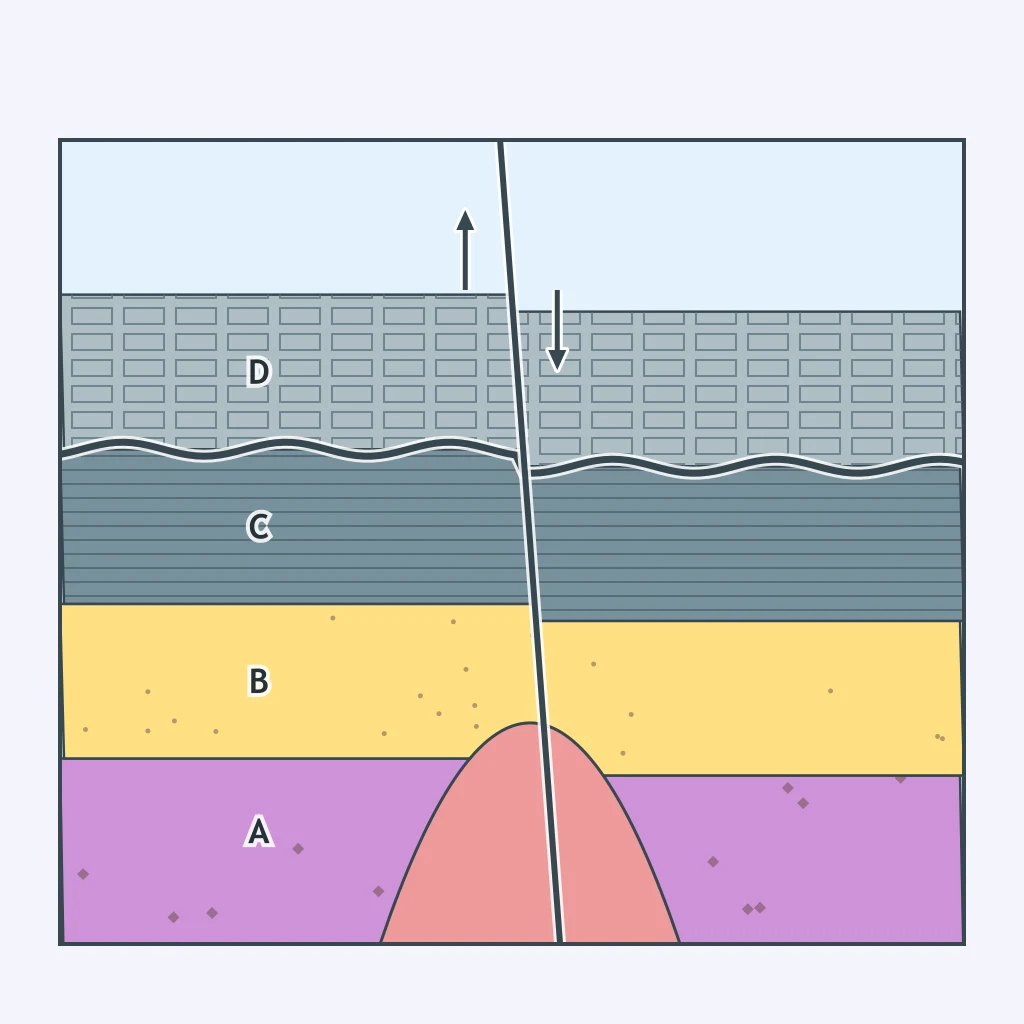
Layer E lies above a wavy unconformity, while dike X ends below that surface. Which is younger, layer E or dike X?
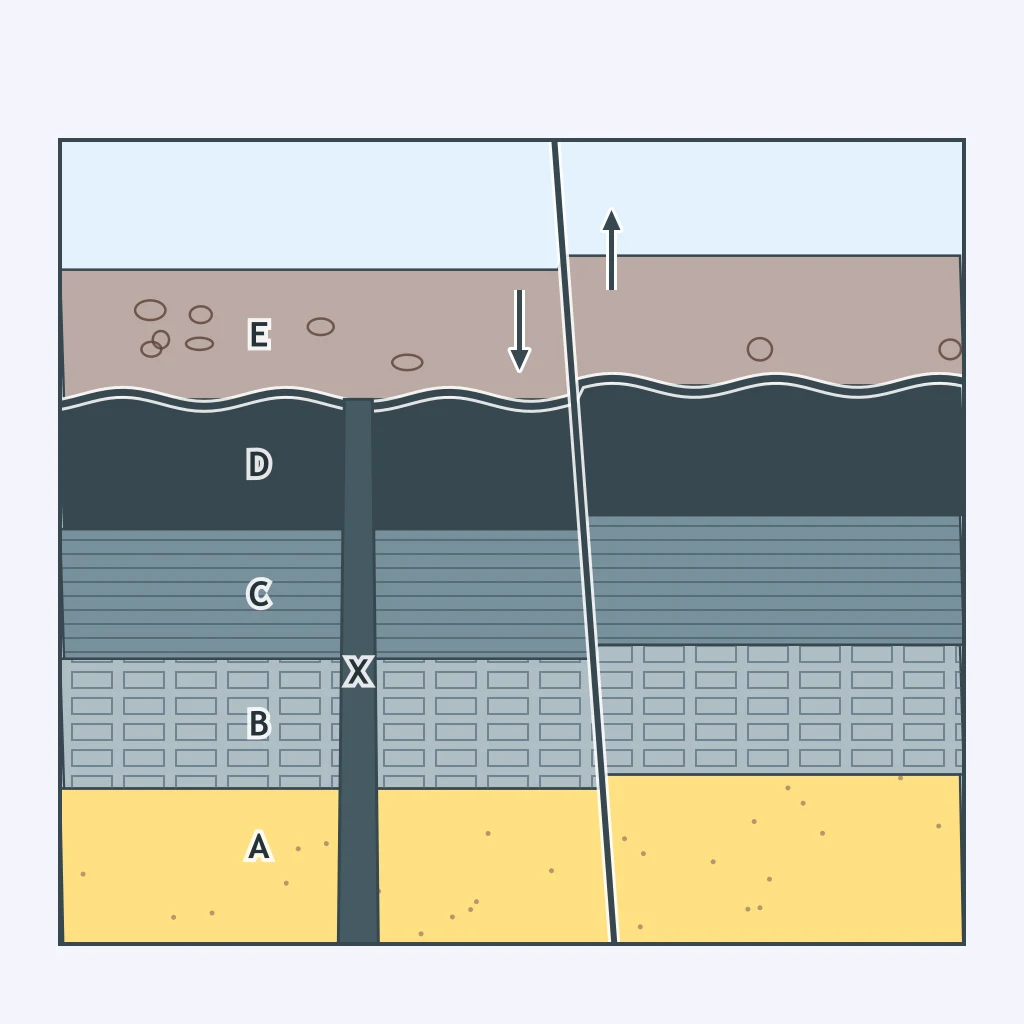
Sill X bakes shale B above it and sandstone A below it, and dike Y cuts the sill. Which igneous feature is younger?
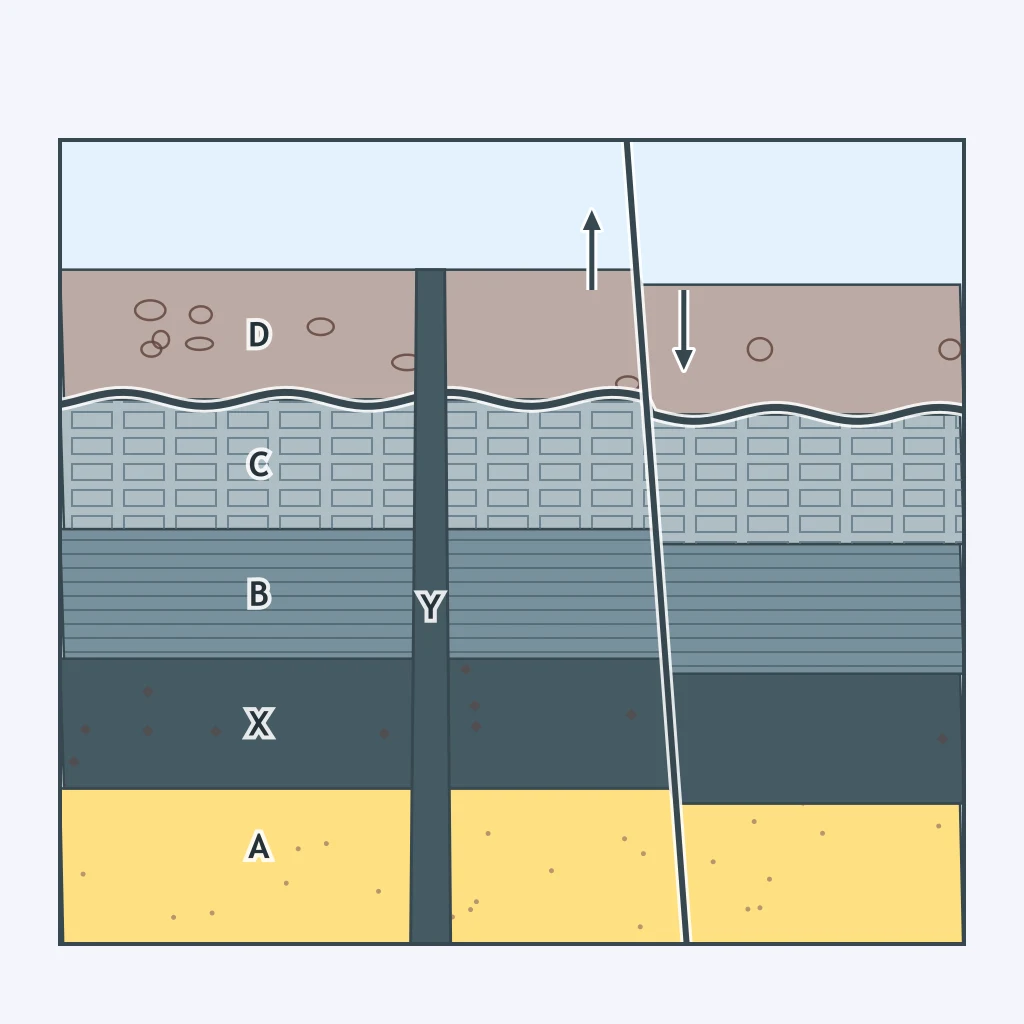
Layer C is below layer D, and both are cut by the same fault. Which rock layer is older, C or D?
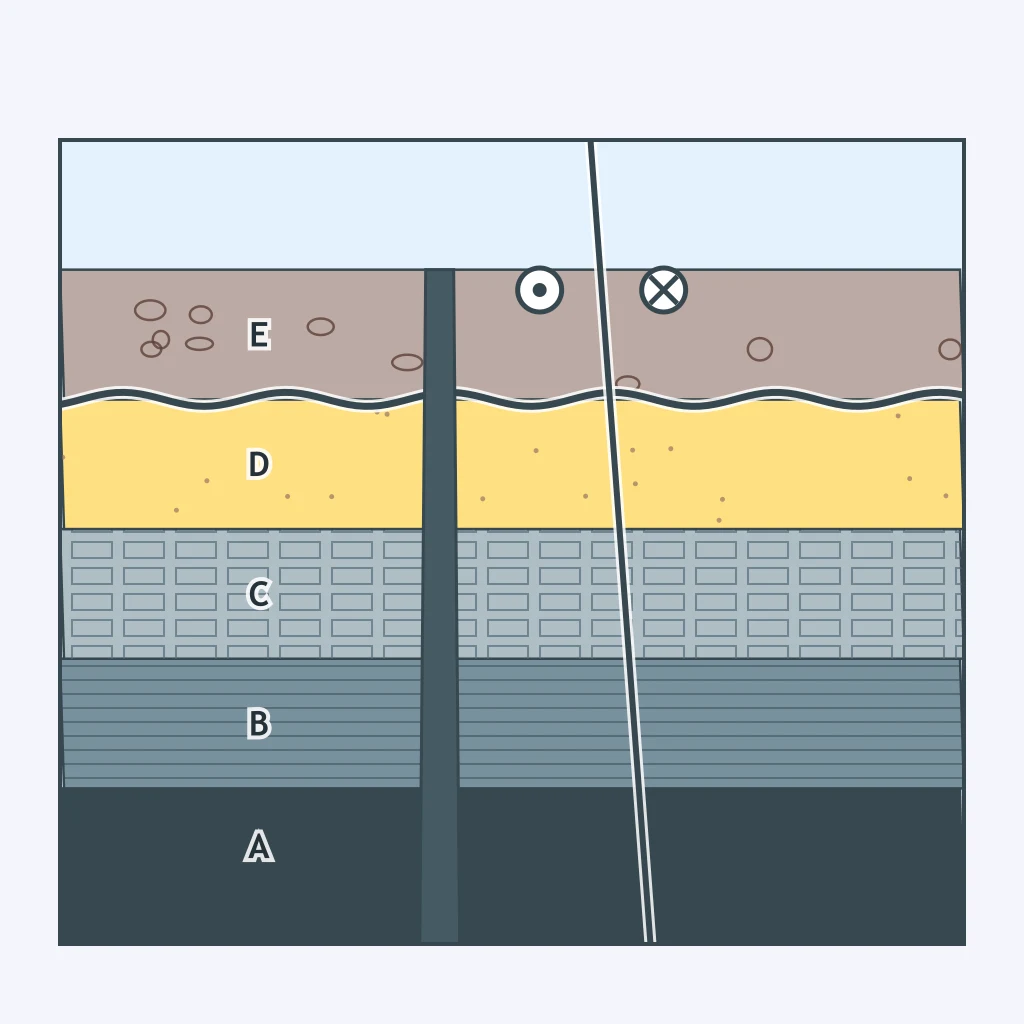
A normal fault cuts limestone A, but conglomerate C above an unconformity contains fragments of A and is not faulted. When did the fault form?
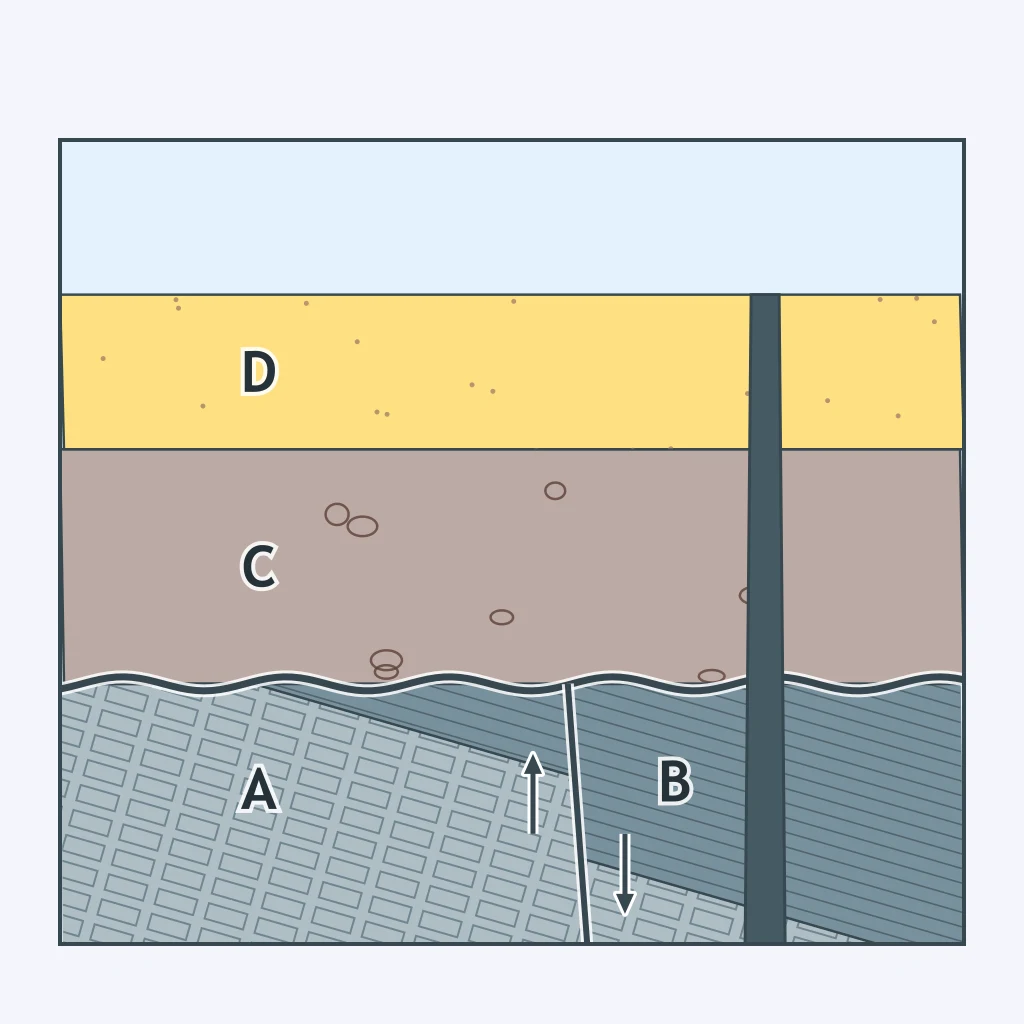
Conglomerate D contains clasts from layer B. Use the cross section. Which event happened last?
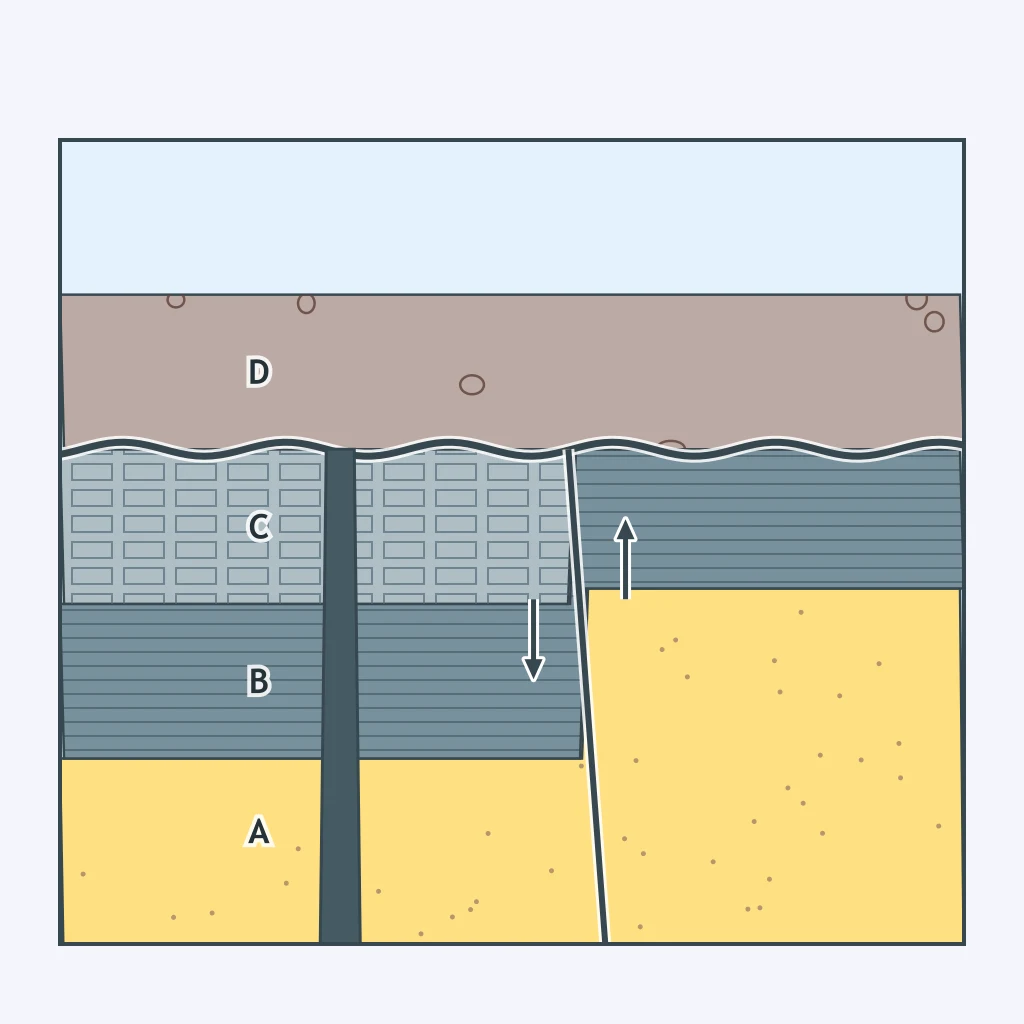
A reverse fault cuts layers A-C; erosion exposes pieces of C that become inclusions in layer D. Where does the fault belong in the sequence?
A fault and a dike both cut layers A and B, but layer C covers them across an unconformity and contains dike fragments. Which is youngest?
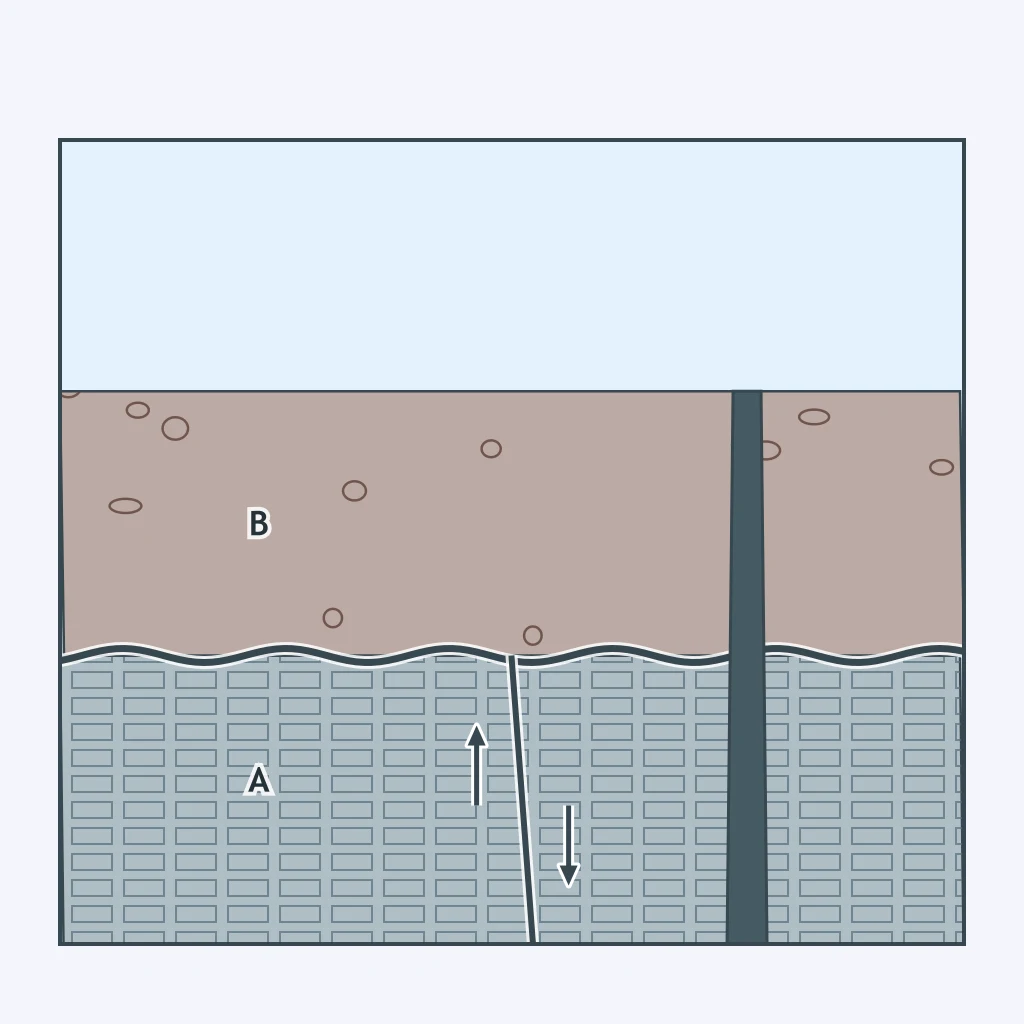
Layer A is cut by a fault, layer B covers the fault on an unconformity, and B includes pieces of A. What is the correct placement of faulting?
Crack the passcode before the zombies get in.
Answer, then swat bugs for bonus points.
Race through questions at your own speed.
Same question on every screen. Fastest wins.

Pick a tile, answer, hit bonuses and steals.
Radioactive Dating
50 questions