Loading
by BlastRoom
Interpret faults, intrusions, contacts, and unconformities in geologic cross sections.
#earth_space_science
40 questions
One question set, multiple game modes. Tap any game to see it in action. Not sure which to pick?
Answer to place stones and capture territory.
Outrun the snow together.
Earn blasts, then hunt the other team.
Answer to earn energy, then climb.

The class blasts through walls together.
Bid on mystery lots. Most money wins.
Sell tours. Nice, standard, or a total scam.

Answer, restock, and serve the rush.
More correct answers pulls the rope your way.
Answer, then shoot down the alien wave.
Answer, then tap to leap the frozen ridge.
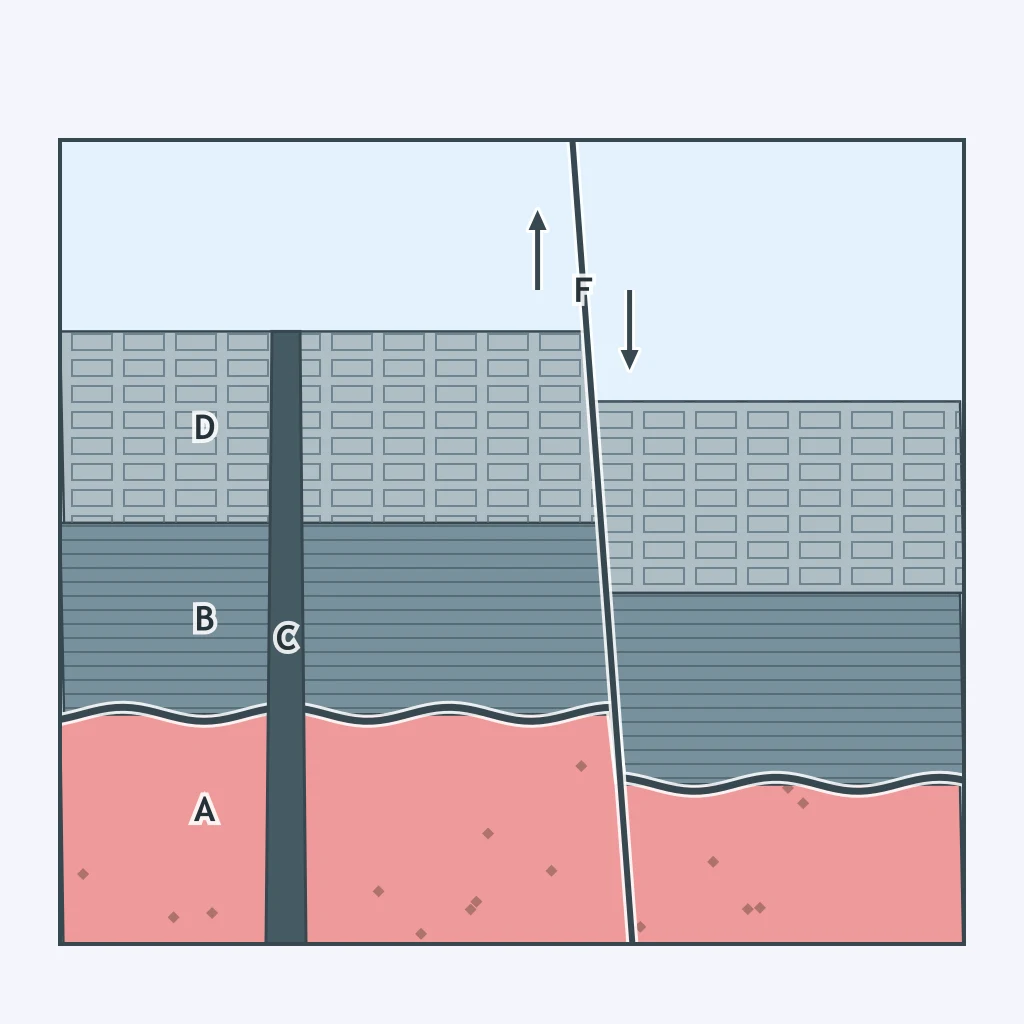
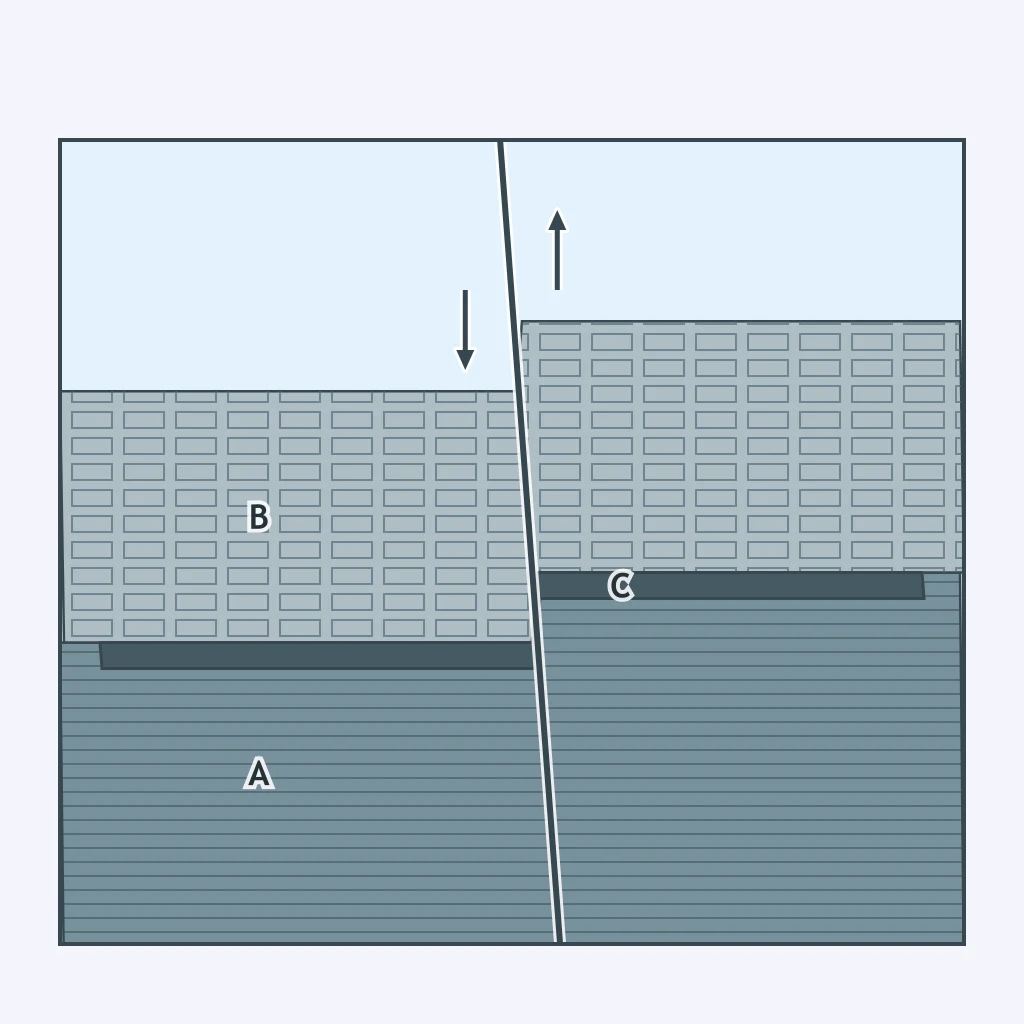
The section shows granite A with an uneven weathered top, overlain by flat shale B. Dike C and fault F cut the rocks elsewhere in the section. What does the A-B contact record?
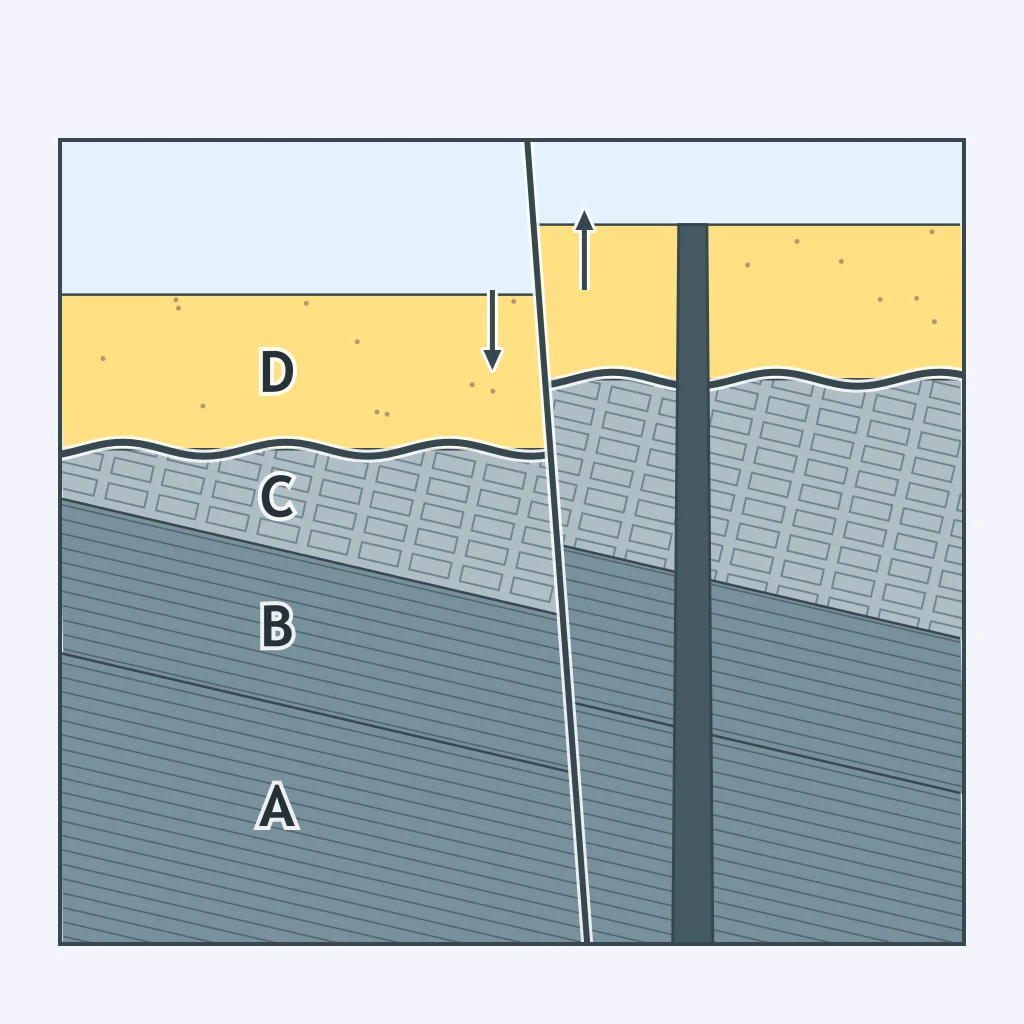
Tilted beds A-C are cut off by a nearly horizontal sandstone D. What event is recorded at the contact between C and D?
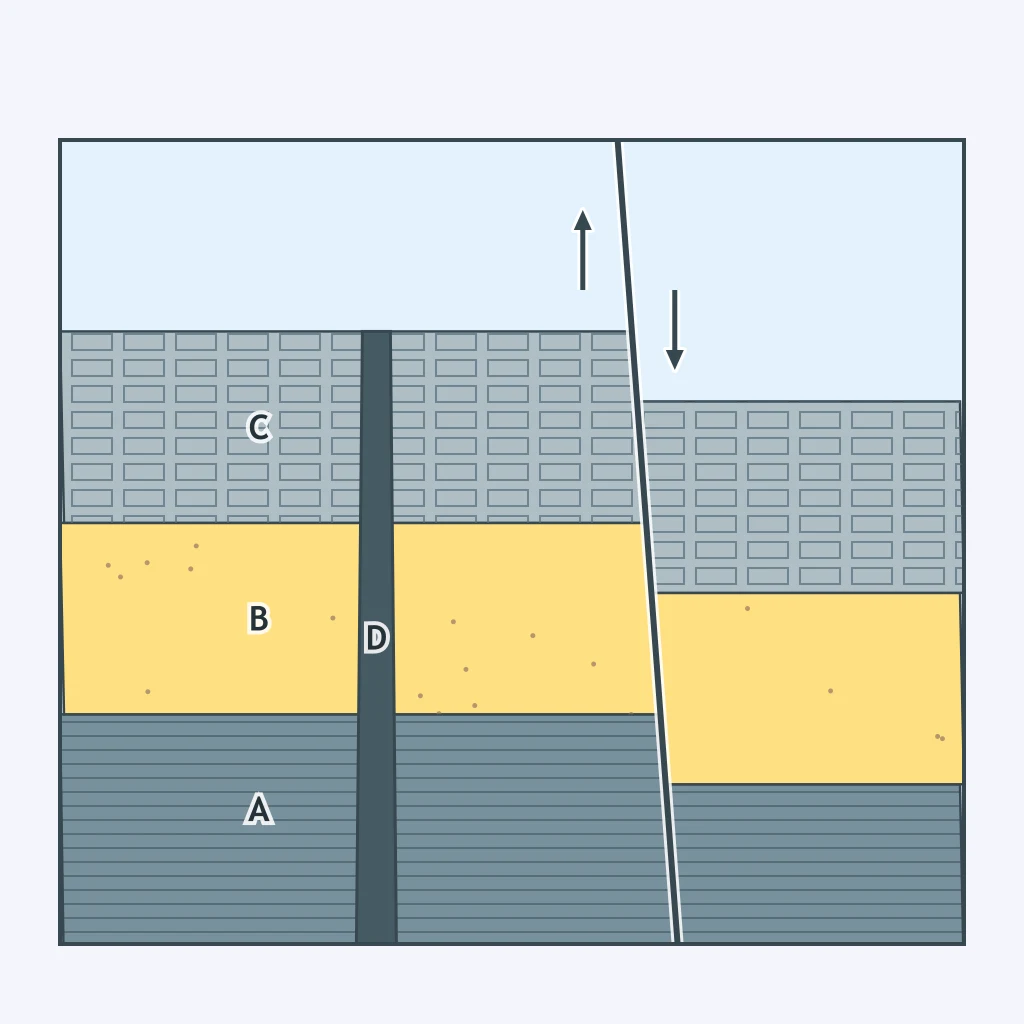
A dark dike D cuts shale A and sandstone B, and both rocks are baked along the dike. What does that contact show?
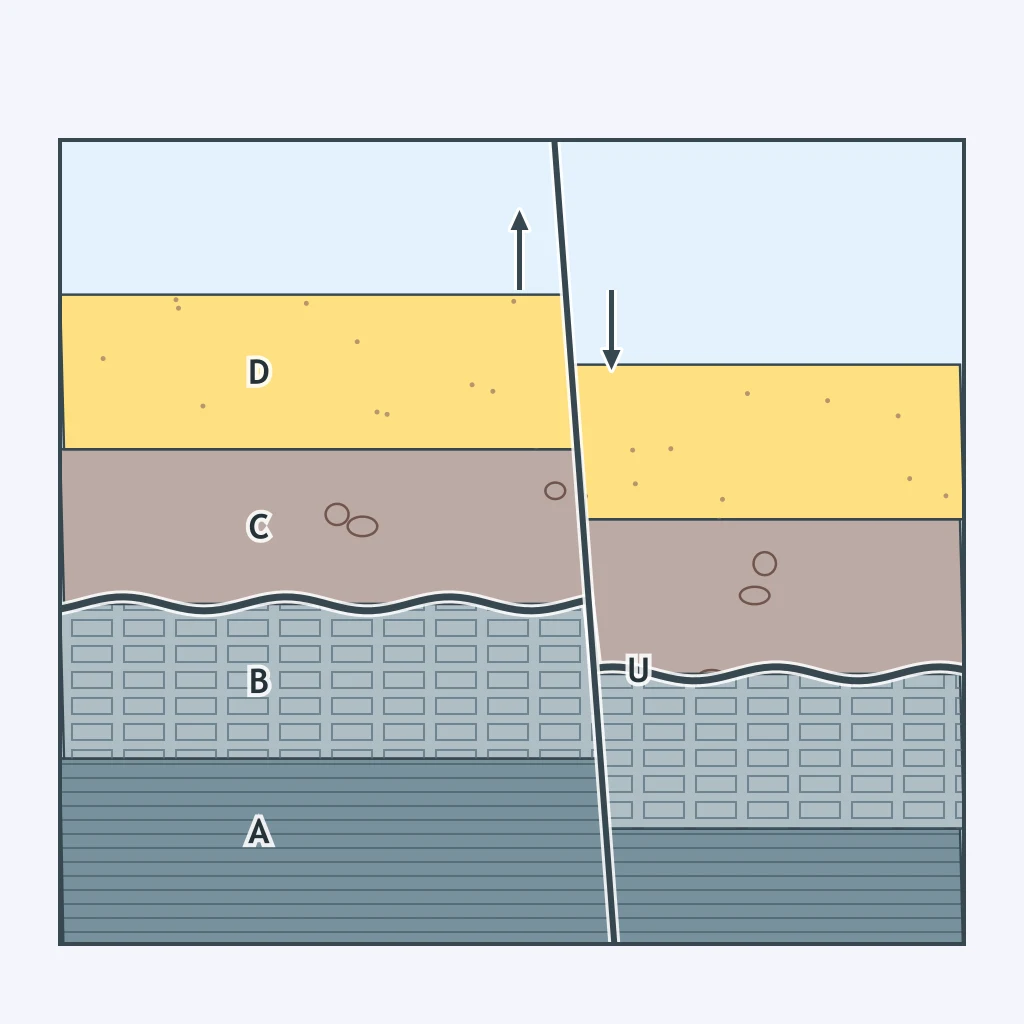
At contact U, conglomerate C lies on eroded limestone B and contains rounded pieces of B. What does U record?
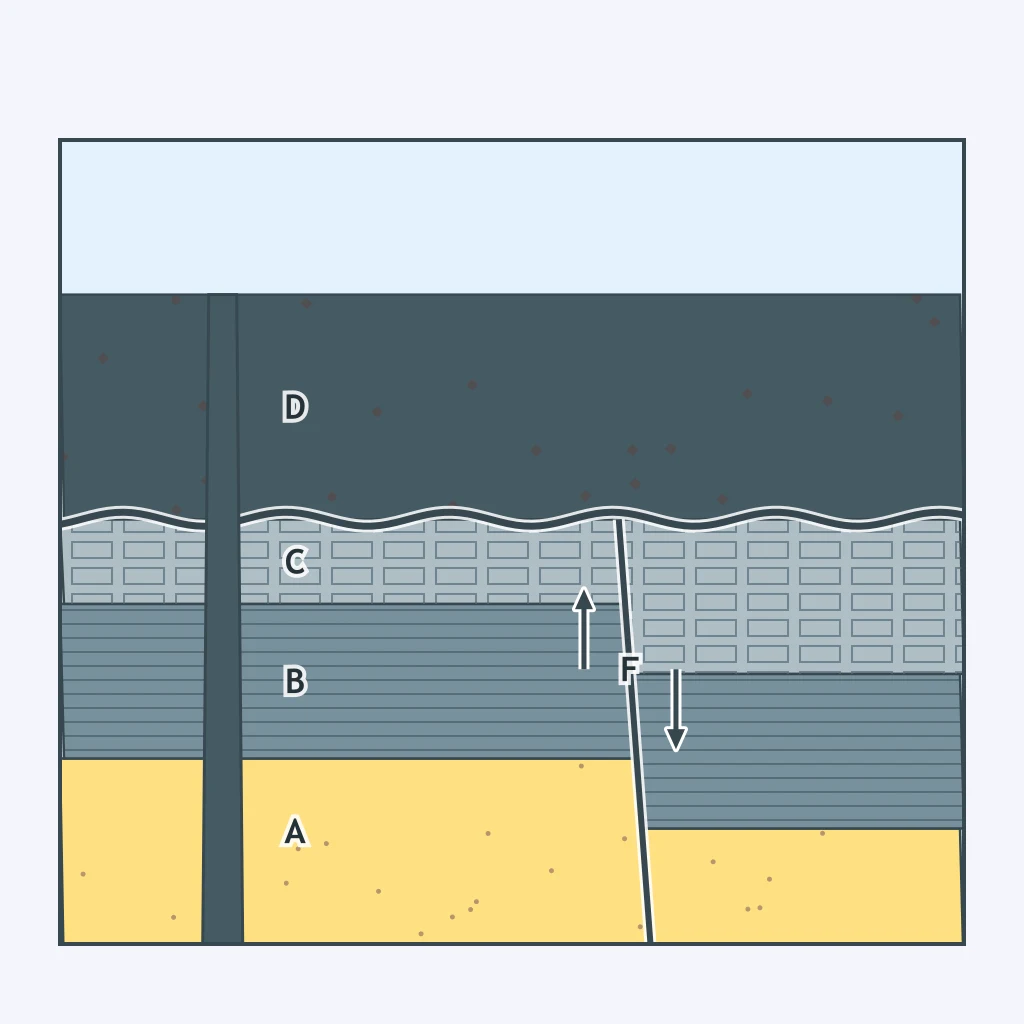
In the cross section, fault F offsets beds A-C, and lava D lies across the top of the fault. What does the base of D record?
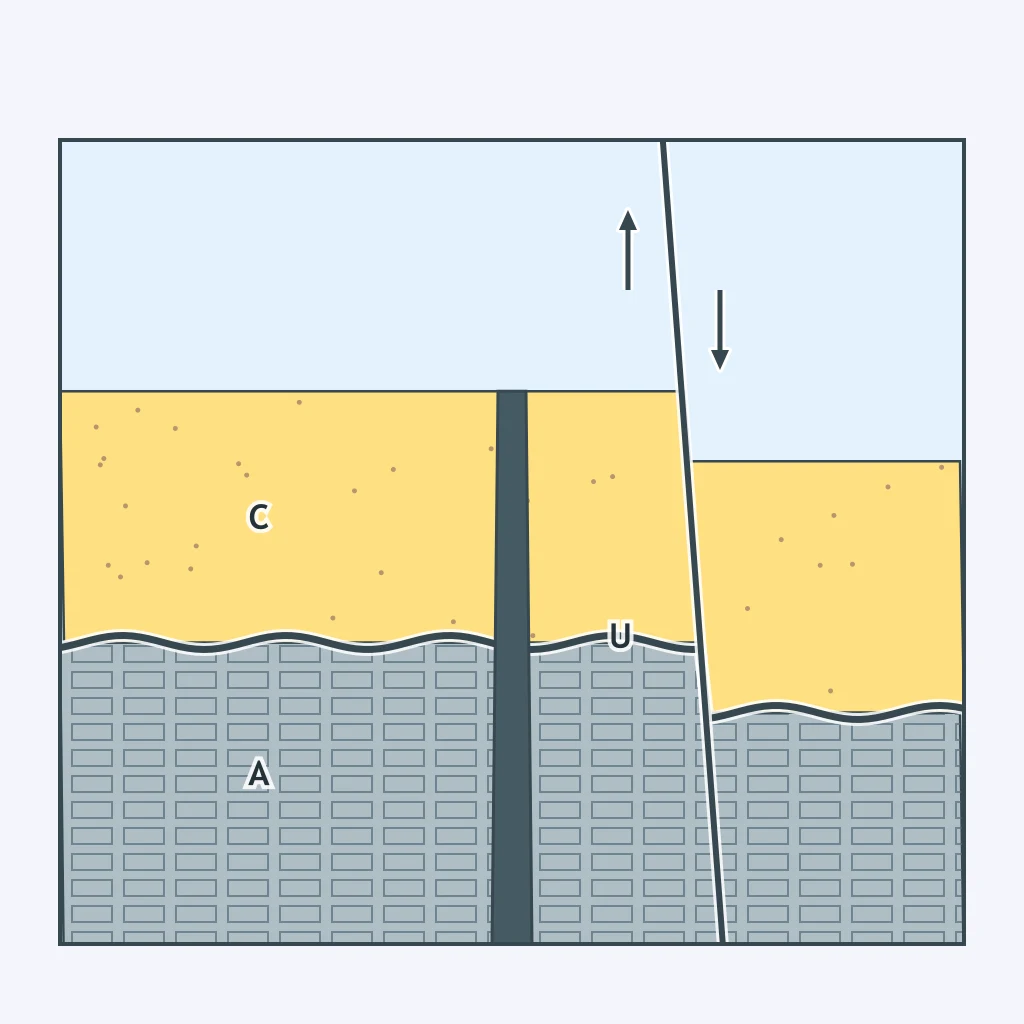
Parallel limestone A and sandstone C are separated by a wavy surface U, and fossils expected between them are absent. What does U record?
A sill C lies along the A-B bedding plane, and both A and B are baked at the contact. What does that contact record?
A U-shaped channel cuts mudstone A and is filled by gravel B below sandstone C. What does the A-B contact record?
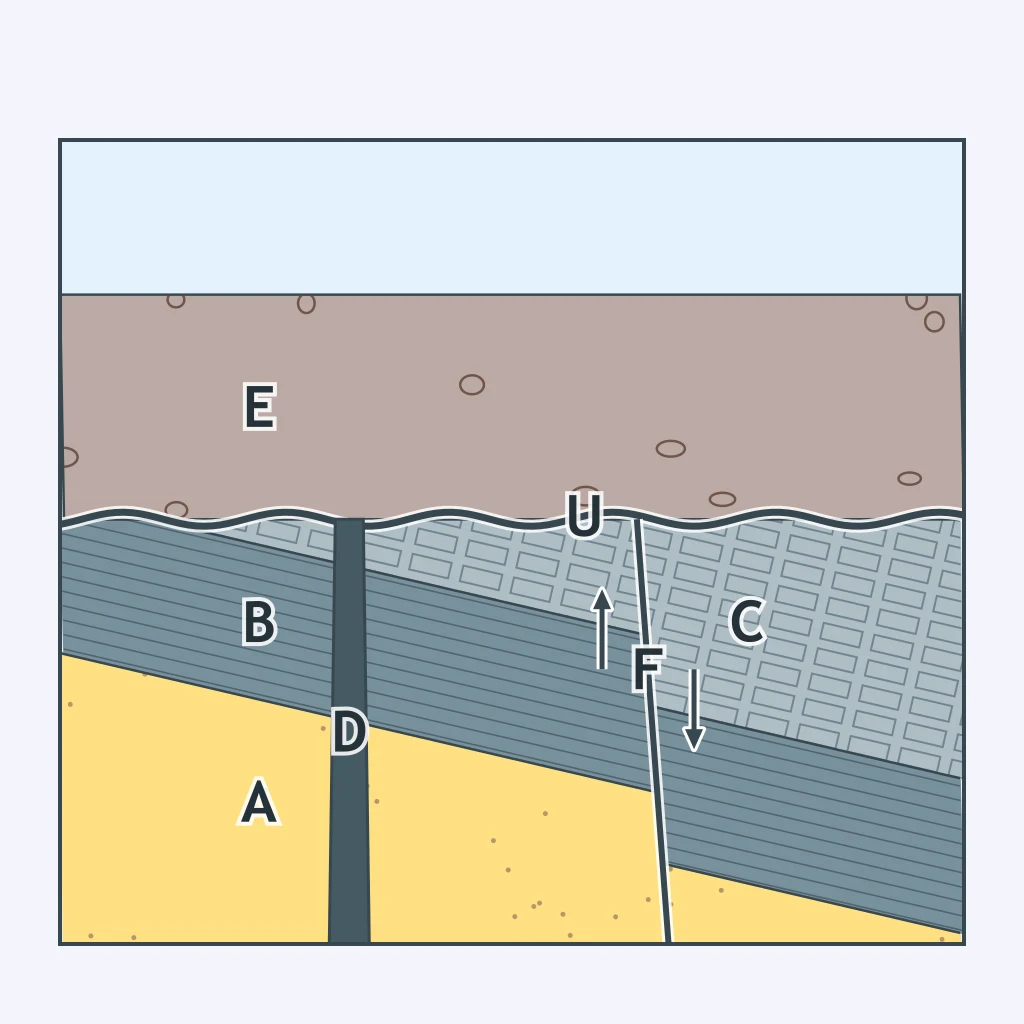
The cross section shows tilted beds A, B, and C, dike D, fault F, erosion surface U, and bed E. Below the part shown, fault F cuts and offsets dike D. Which sequence lists the units and events from oldest to youngest?
In the cross section, granite A was eroded before the beds above it were deposited. Sill D intrudes C but not E. What order fits?
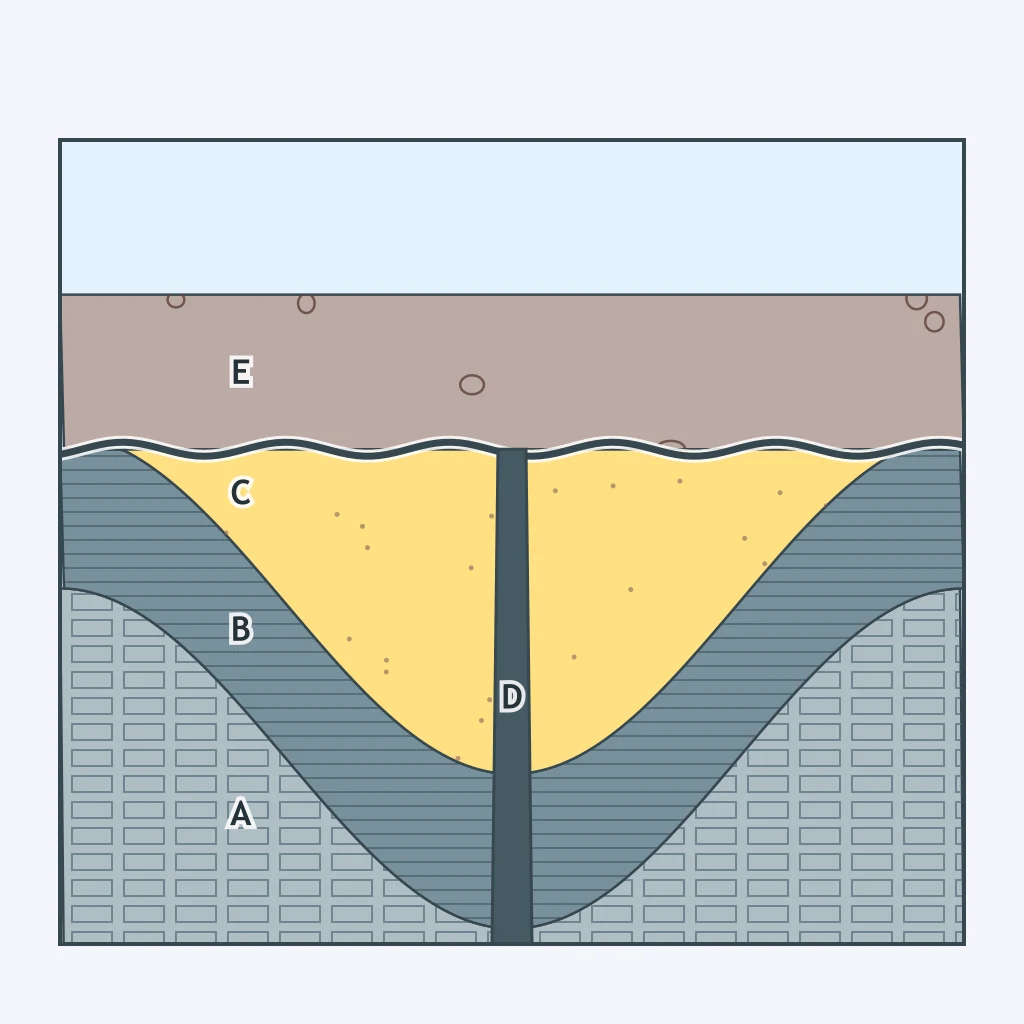
The cross section shows folded layers A, B, and C, dike D, and flat layer E. What is the oldest-to-youngest order?
The cross section shows sandstone A, shale B, conglomerate C, fault F, and dike D. Which order of events, oldest first, is correct?
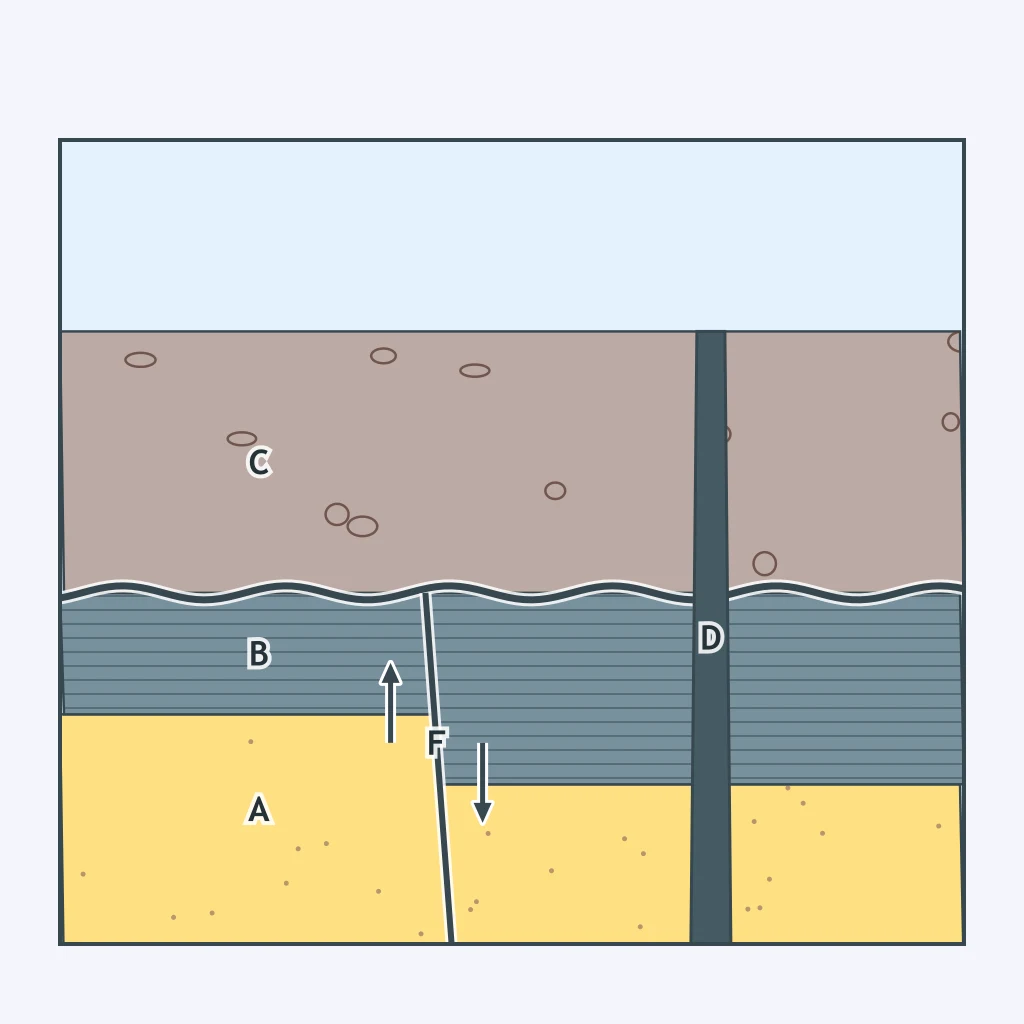
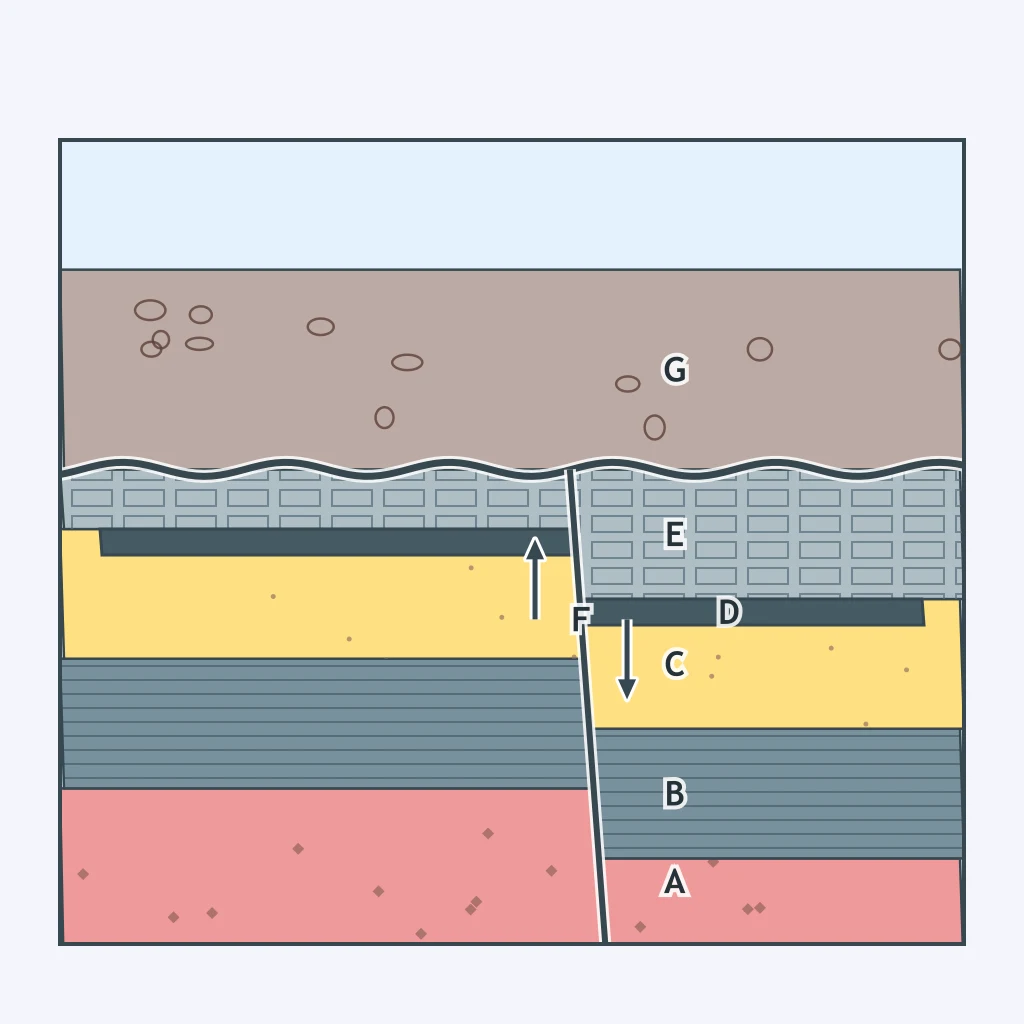
The cross section shows tilted beds A, B, and C, bed D, dike E, fault F, and bed G. Dike E formed before fault F. What sequence is oldest to youngest?
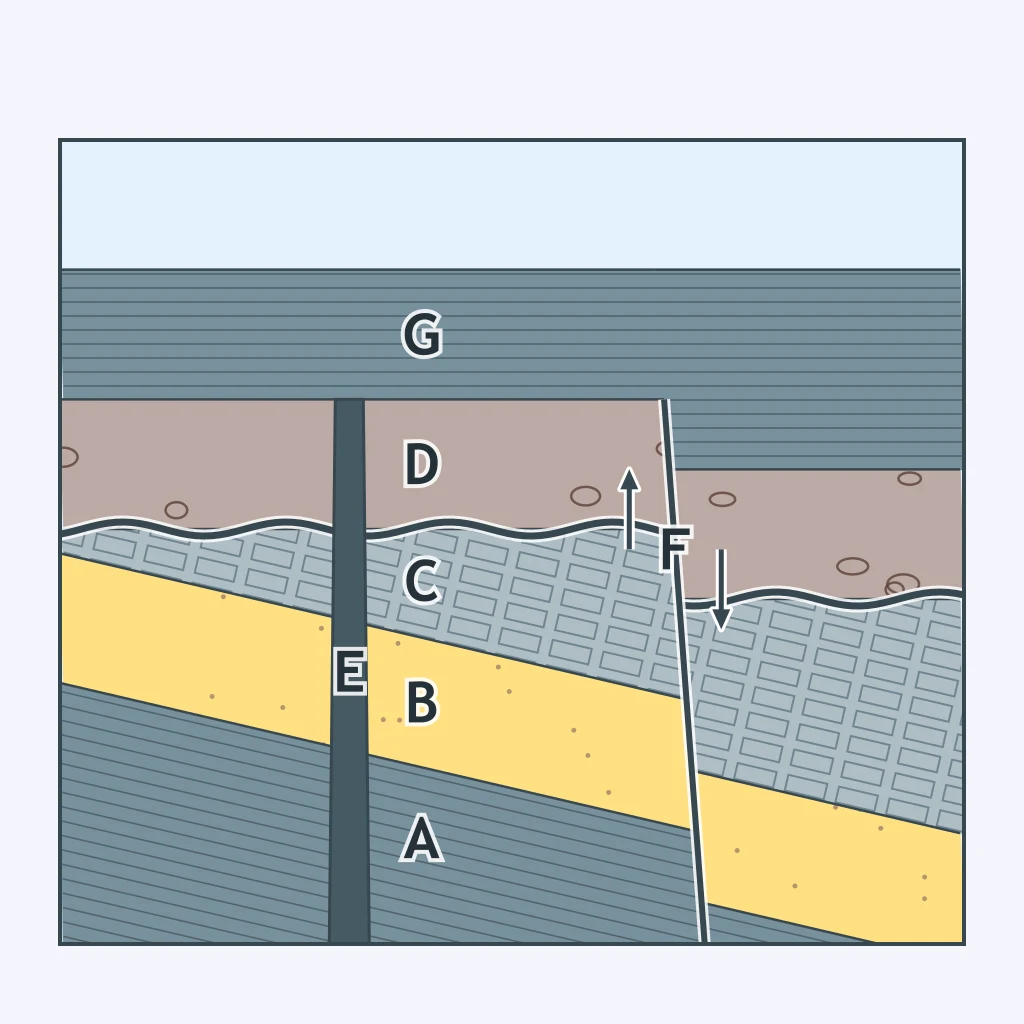
The cross section shows basement G, beds A and B, dike C, beds D and E, and fault F. What order is correct?
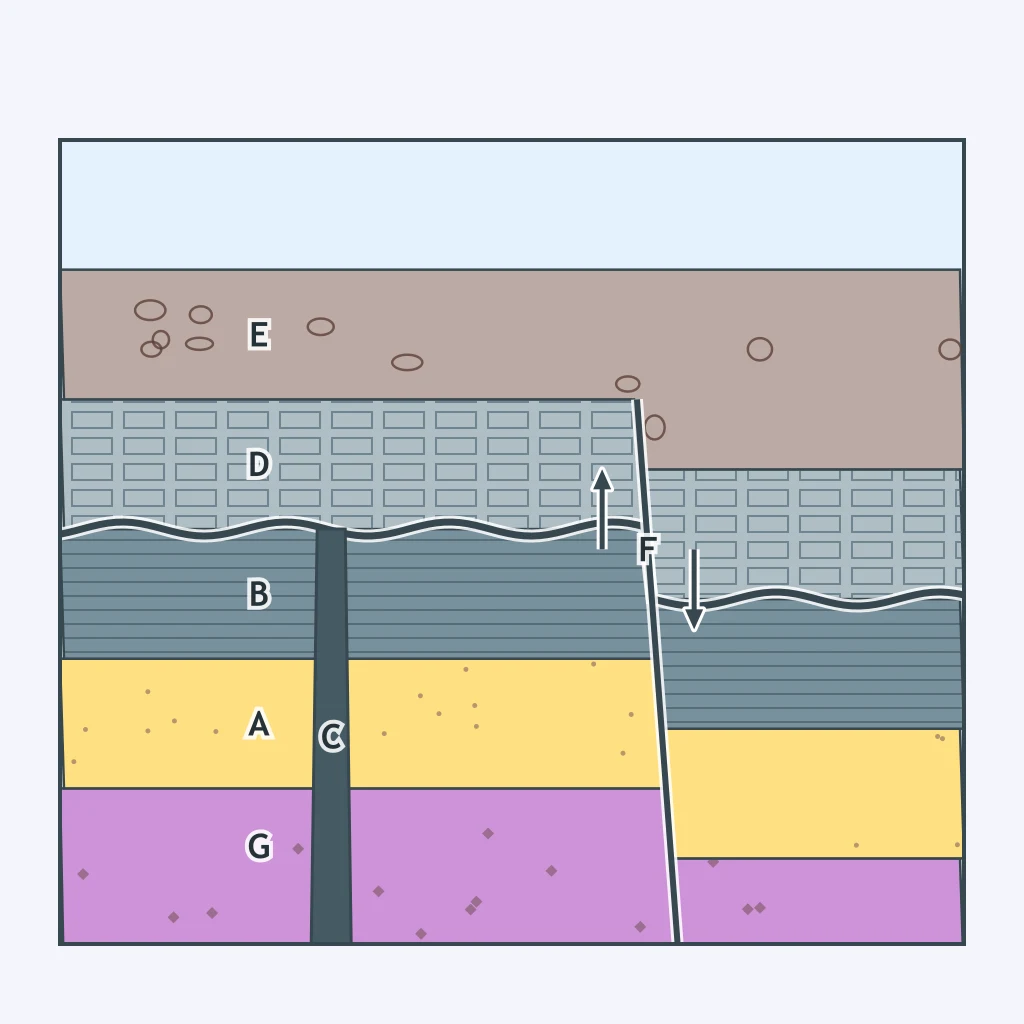
Reverse fault F offsets beds A-C. Dike D formed after the fault. An erosion surface cuts off the fault and the dike, and bed E covers that surface. What event order fits the section?
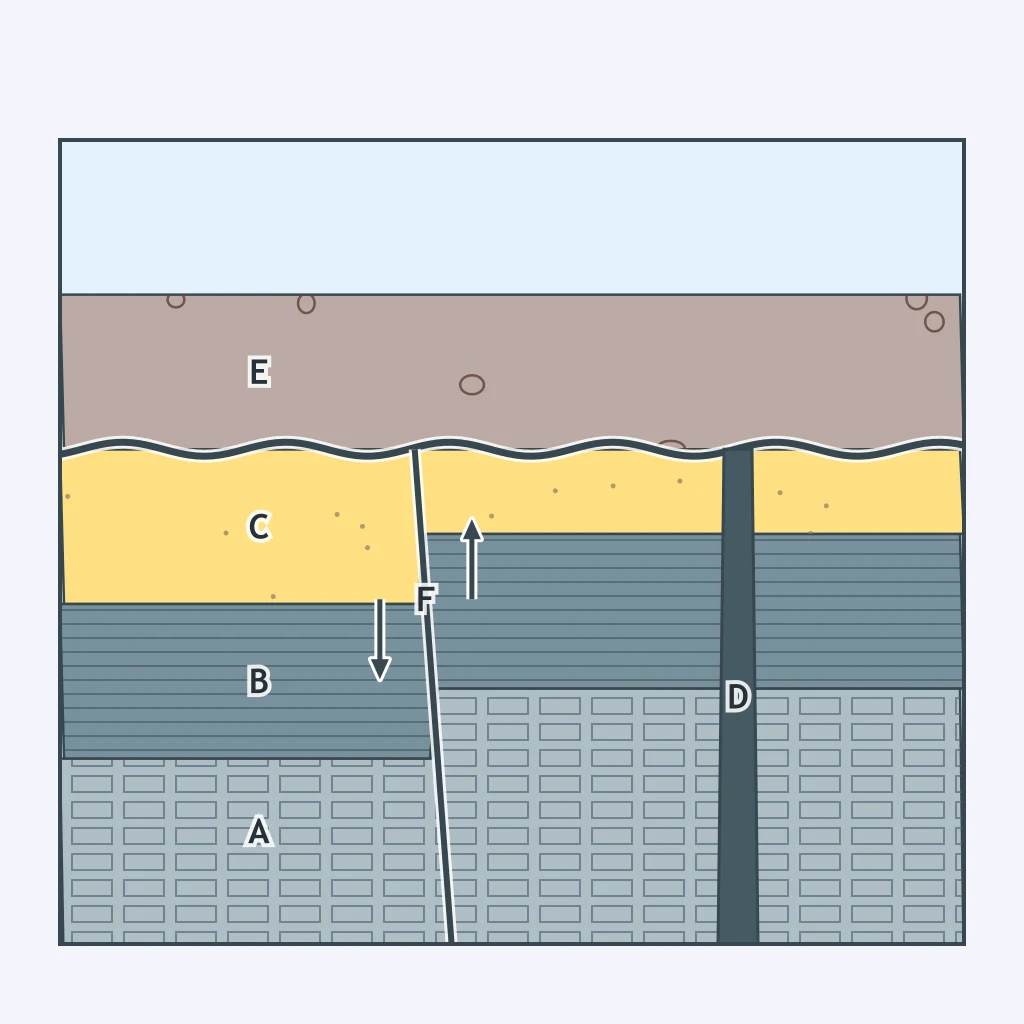
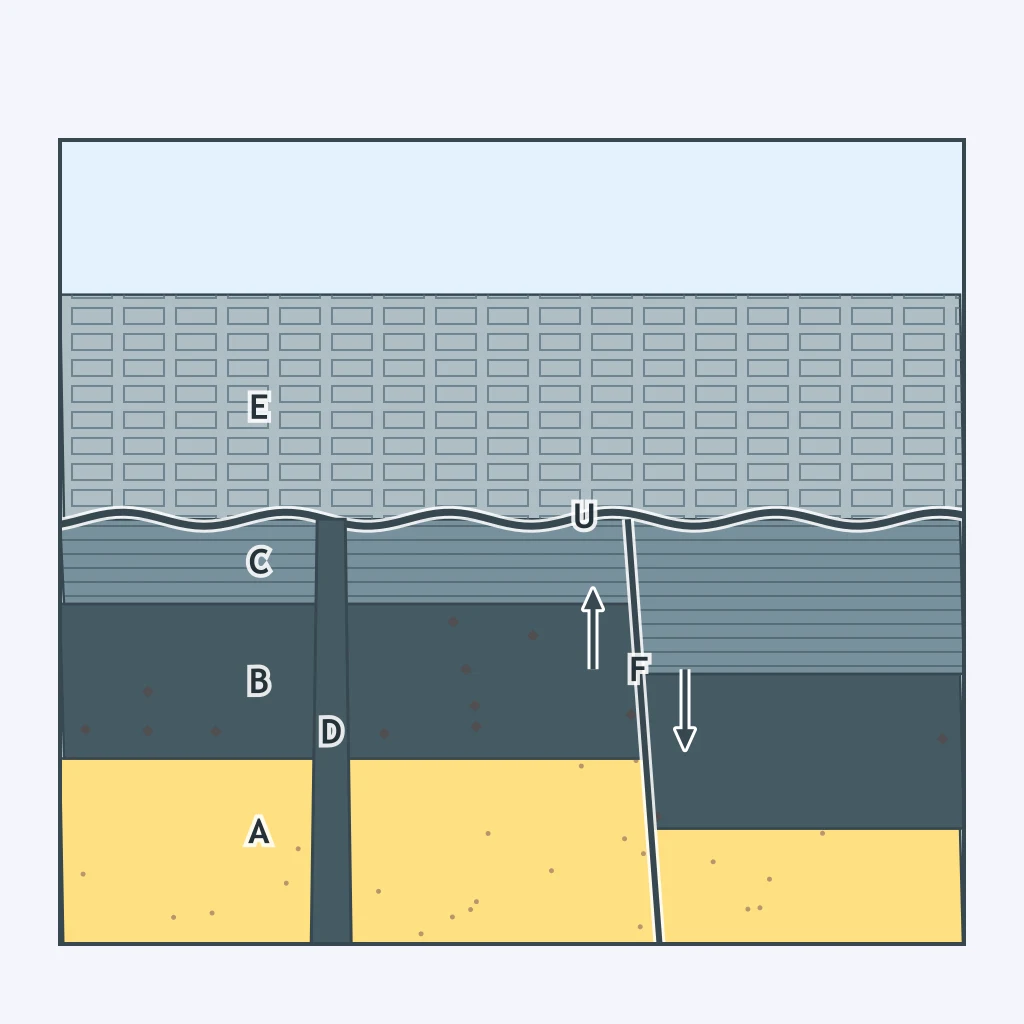
Lava flow B lies between sedimentary beds A and C. Dike D cuts A-C, and fault F moved after the dike formed. Both stop at unconformity U, and bed E lies on U. What order is oldest to youngest?
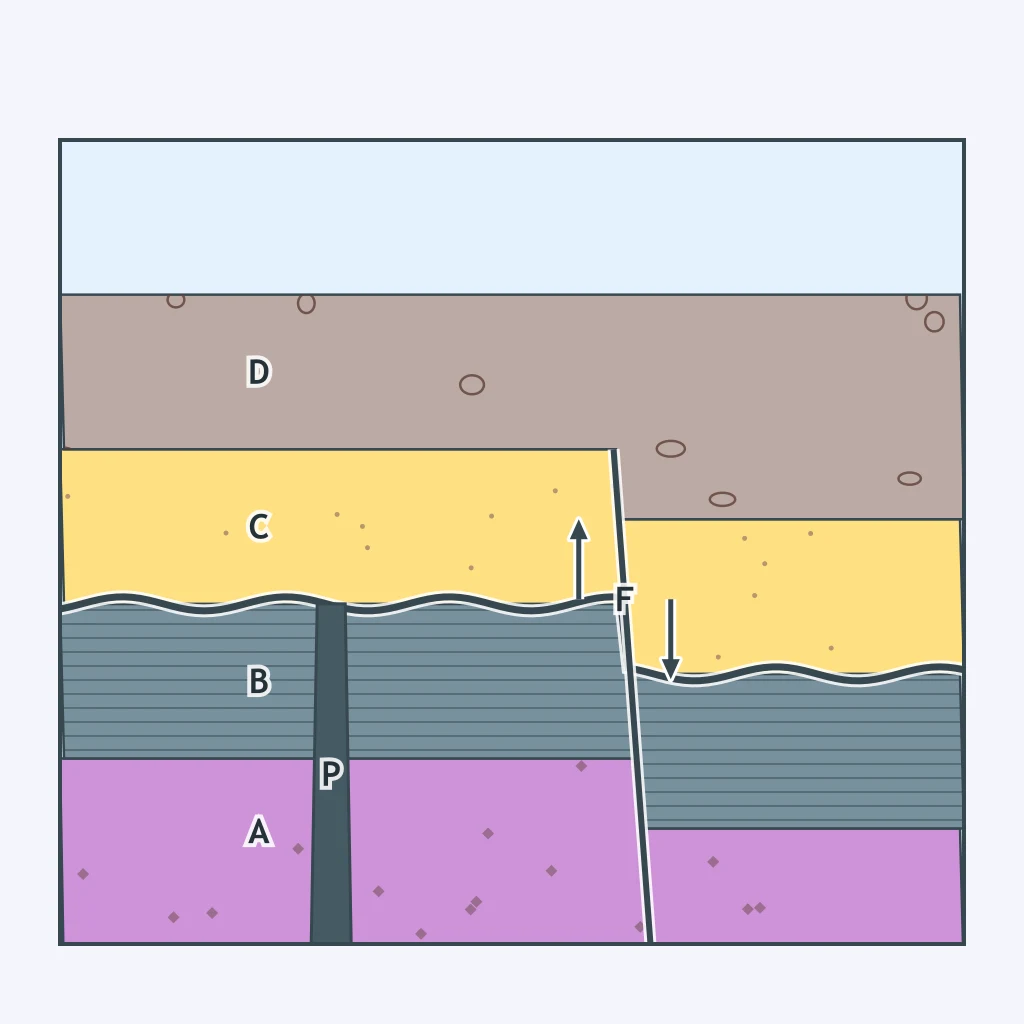
The cross section shows units A to D, igneous intrusion P, and fault F. Intrusion P contains xenoliths of unit A. What order is correct?
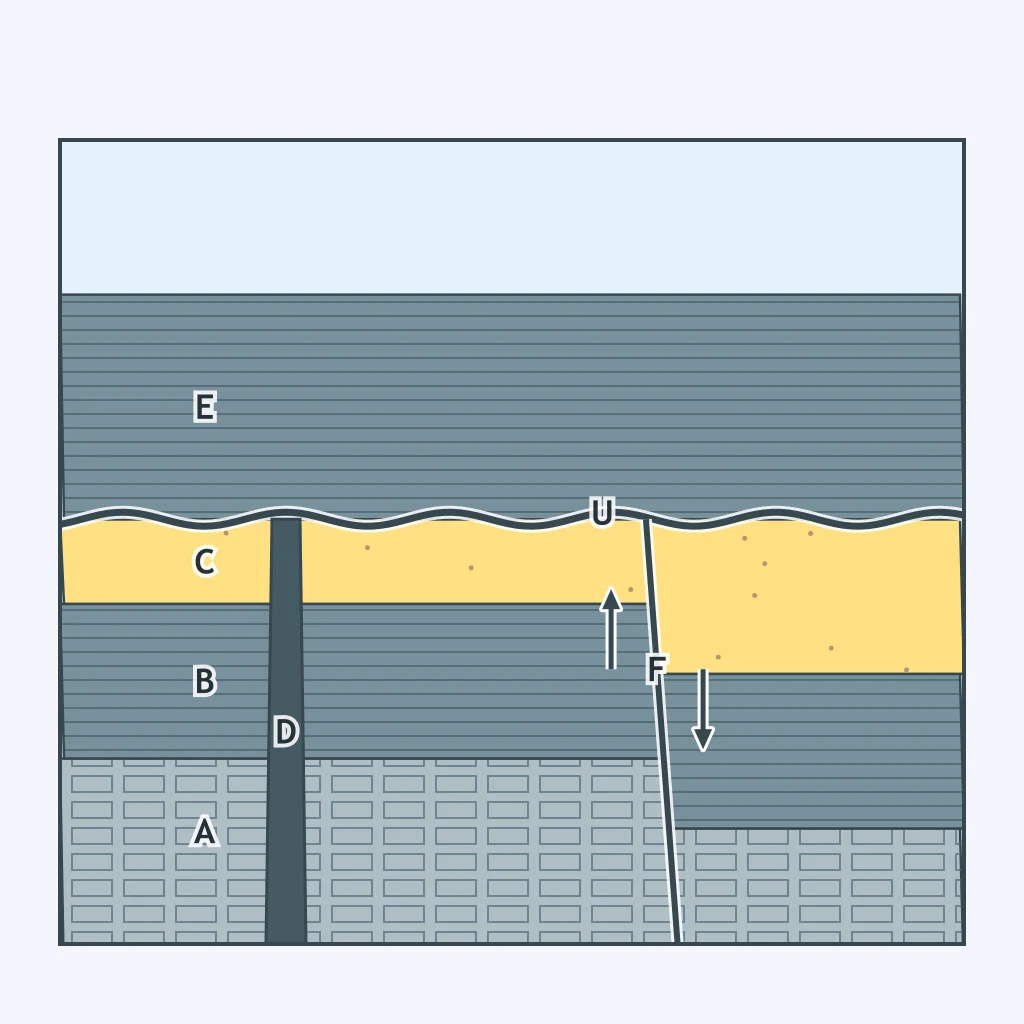
Horizontal beds A-C are offset by fault F. Dike D formed after the fault. Erosion surface U cuts off both, and bed E lies on U. What order is best?
Bed B is lower on the right side of a fault plane that dips right. In this cross section, what fault motion is shown?
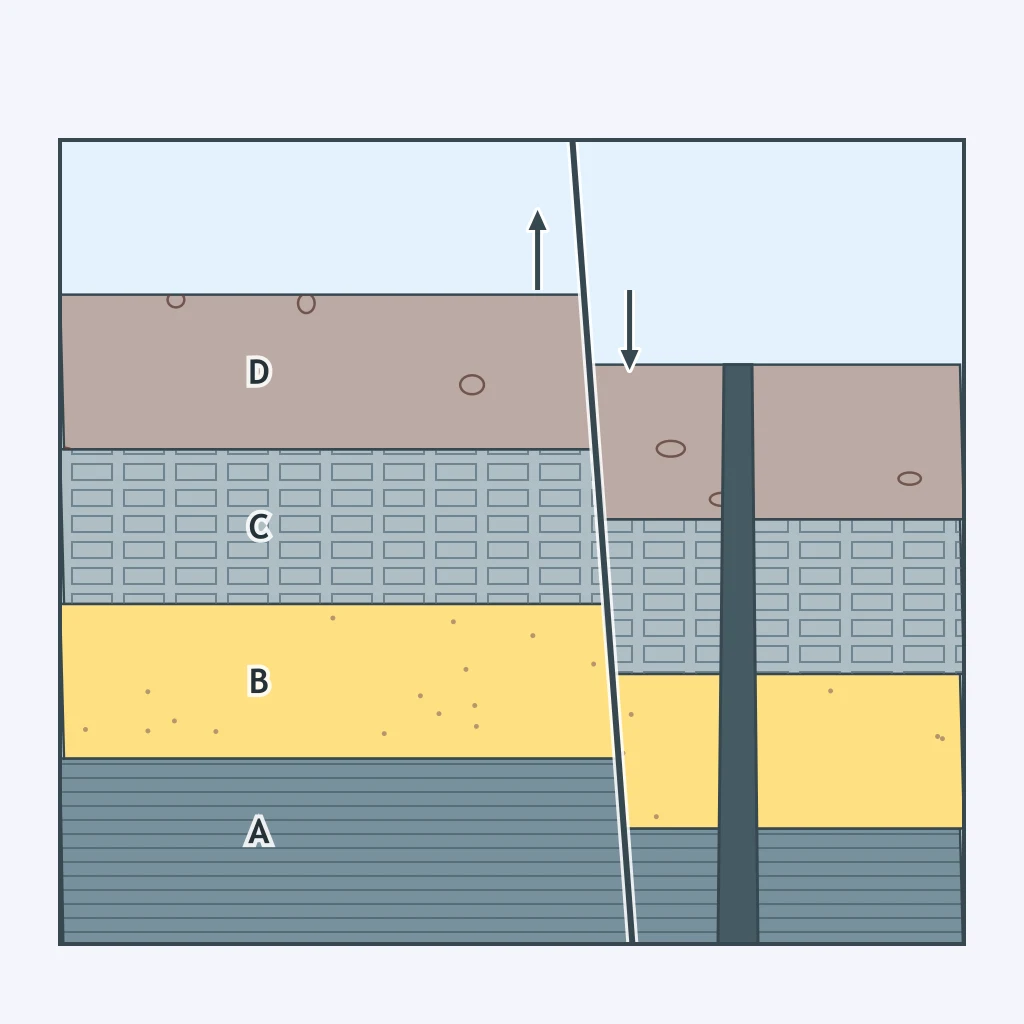
A marker bed is higher on the hanging-wall side of a dipping fault, and layers are shortened across the fault. What fault type is shown?
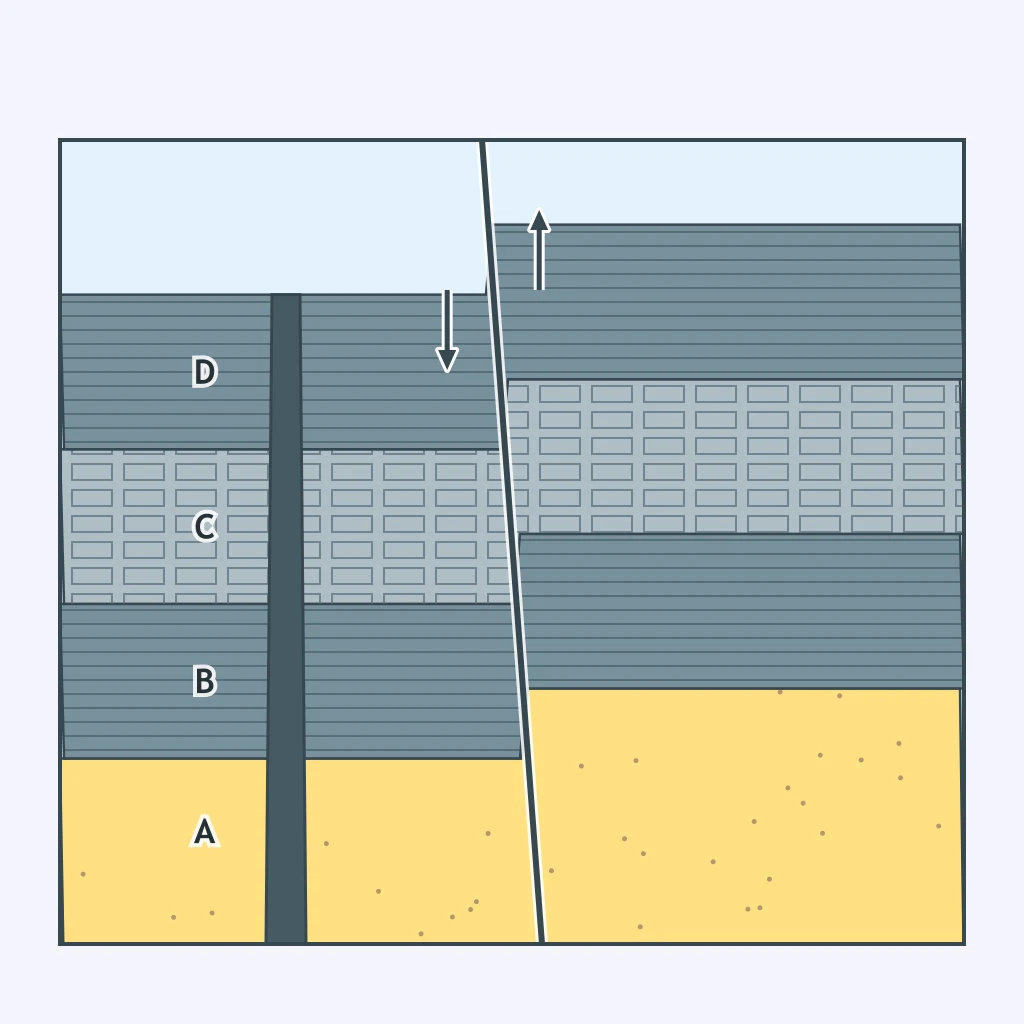
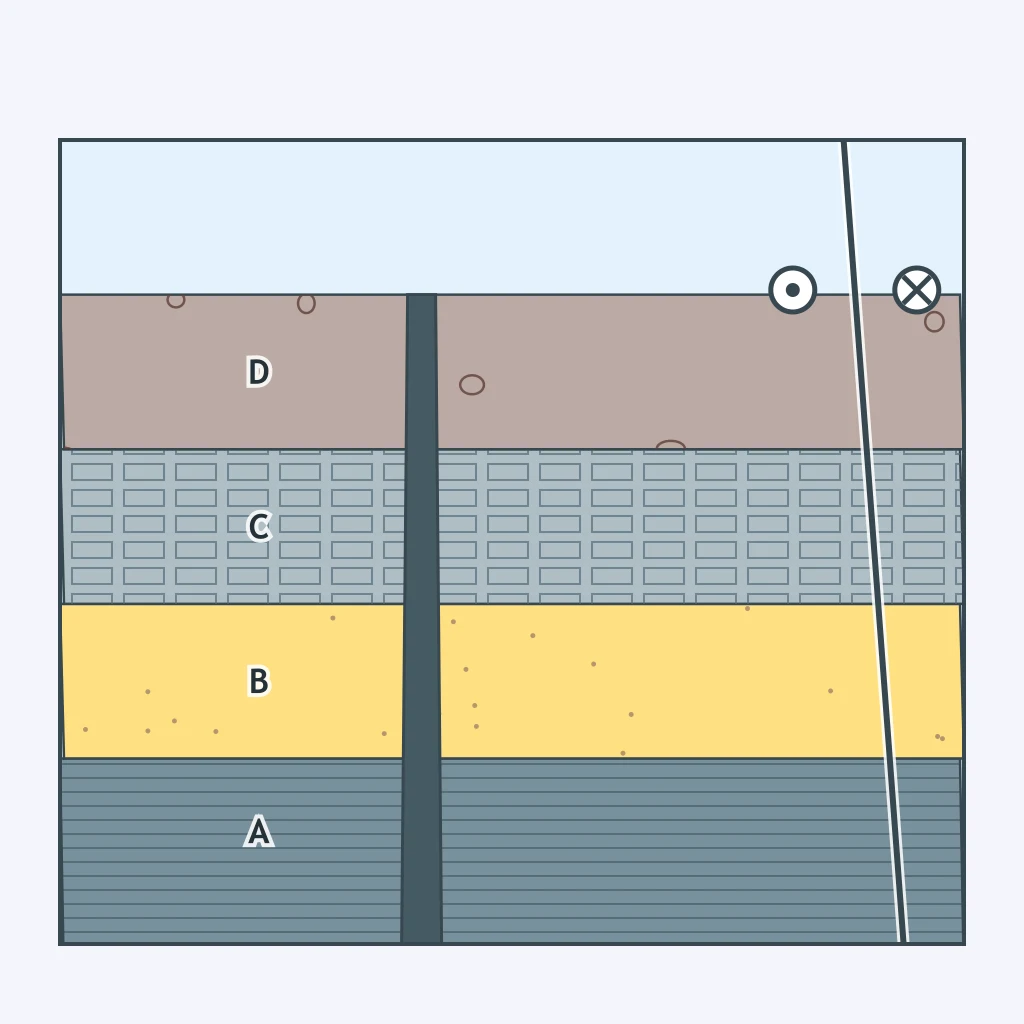
In this cross section, a dot marks a block moving toward the viewer and an X marks a block moving away. What motion does the fault show?
Bed A is the oldest unit in this folded section. What fold style is shown?
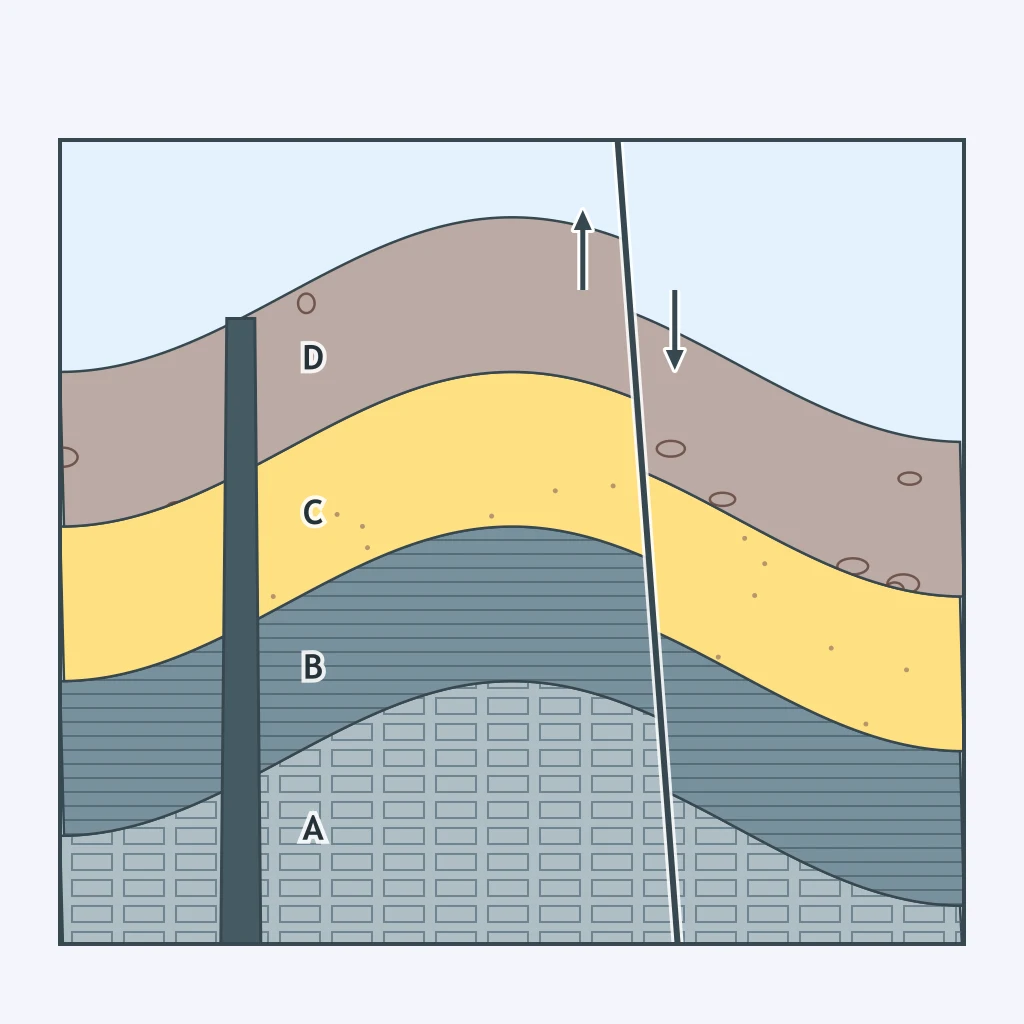
Bed A is the oldest unit in this folded section. What fold style does the section show?
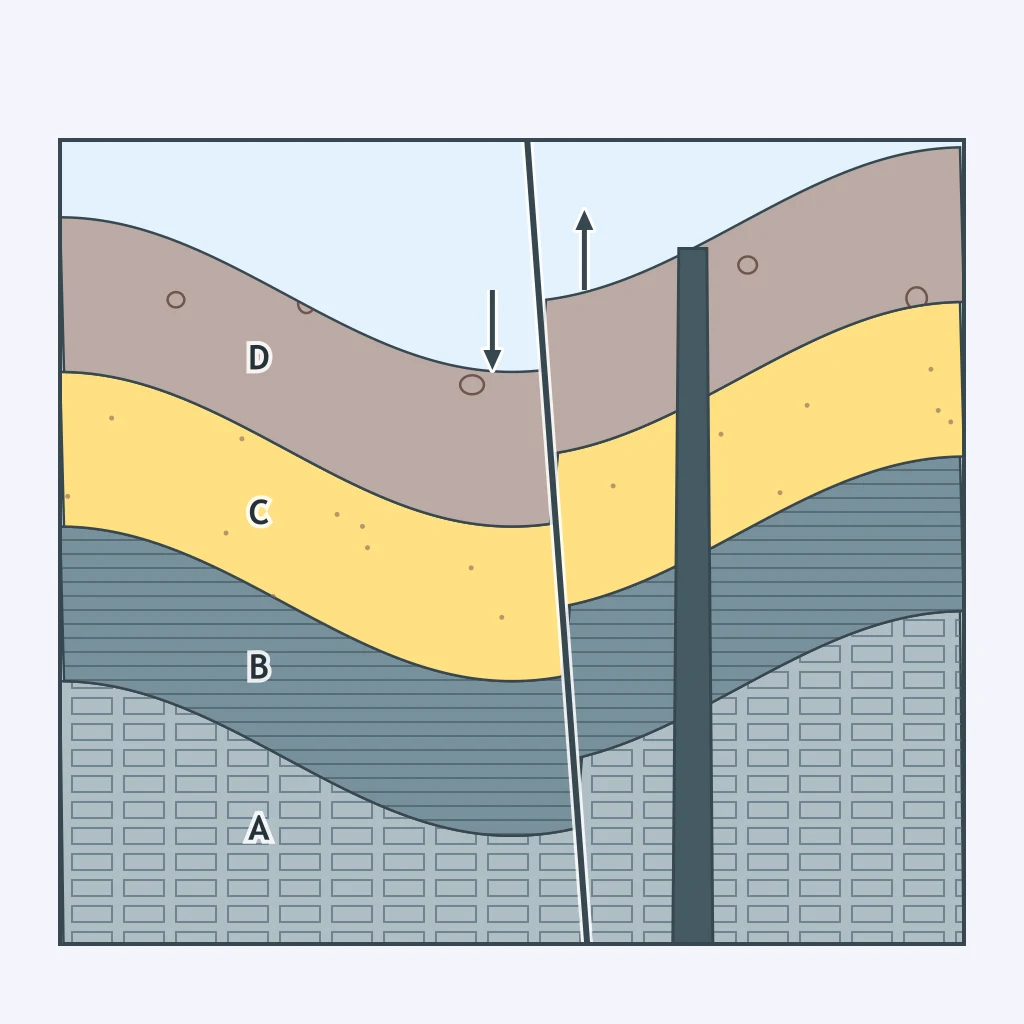
Bed A is the oldest unit in this section. What structure is shown?
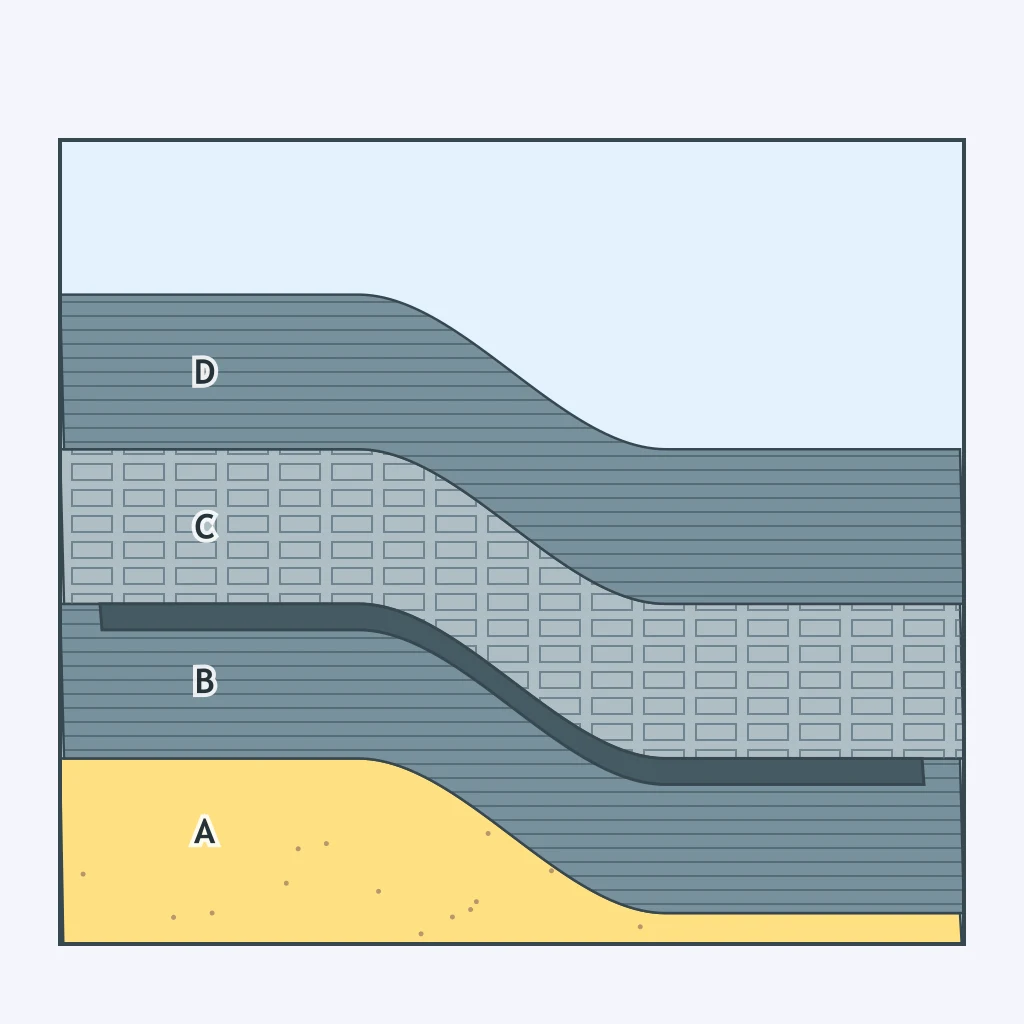
A low-angle fault places older limestone A on top of younger shale C. What structural interpretation best fits?
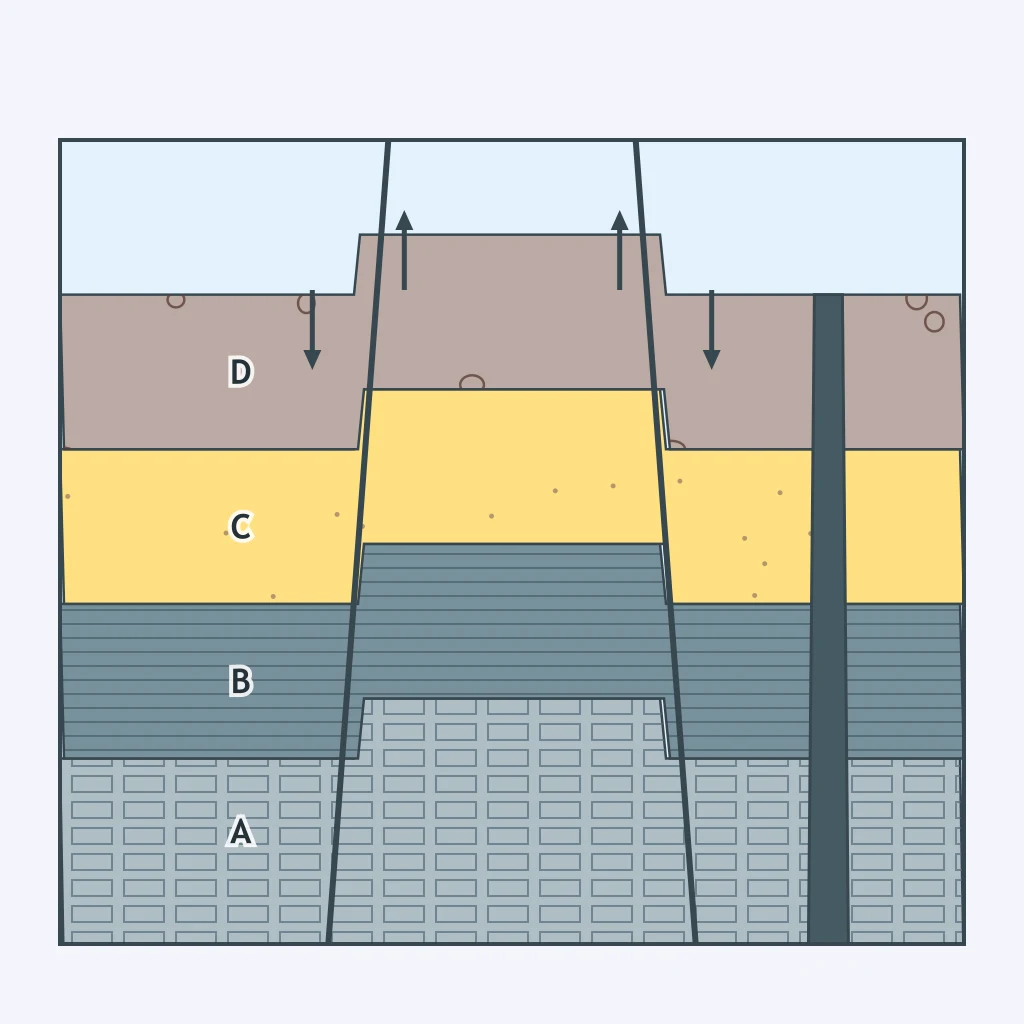
The cross section shows beds A through D cut by two normal faults. What structure is shown?
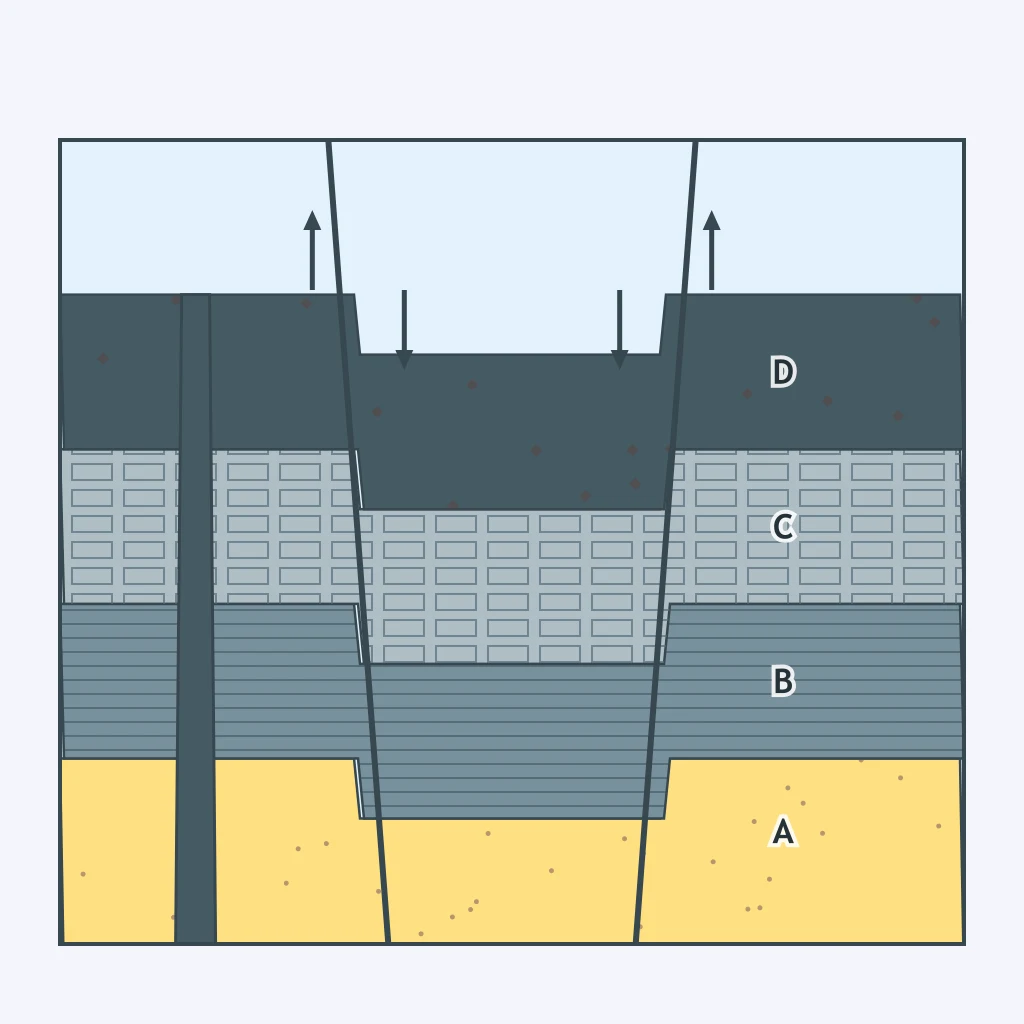
The cross section shows beds A through D cut by two normal faults. What structure is shown?
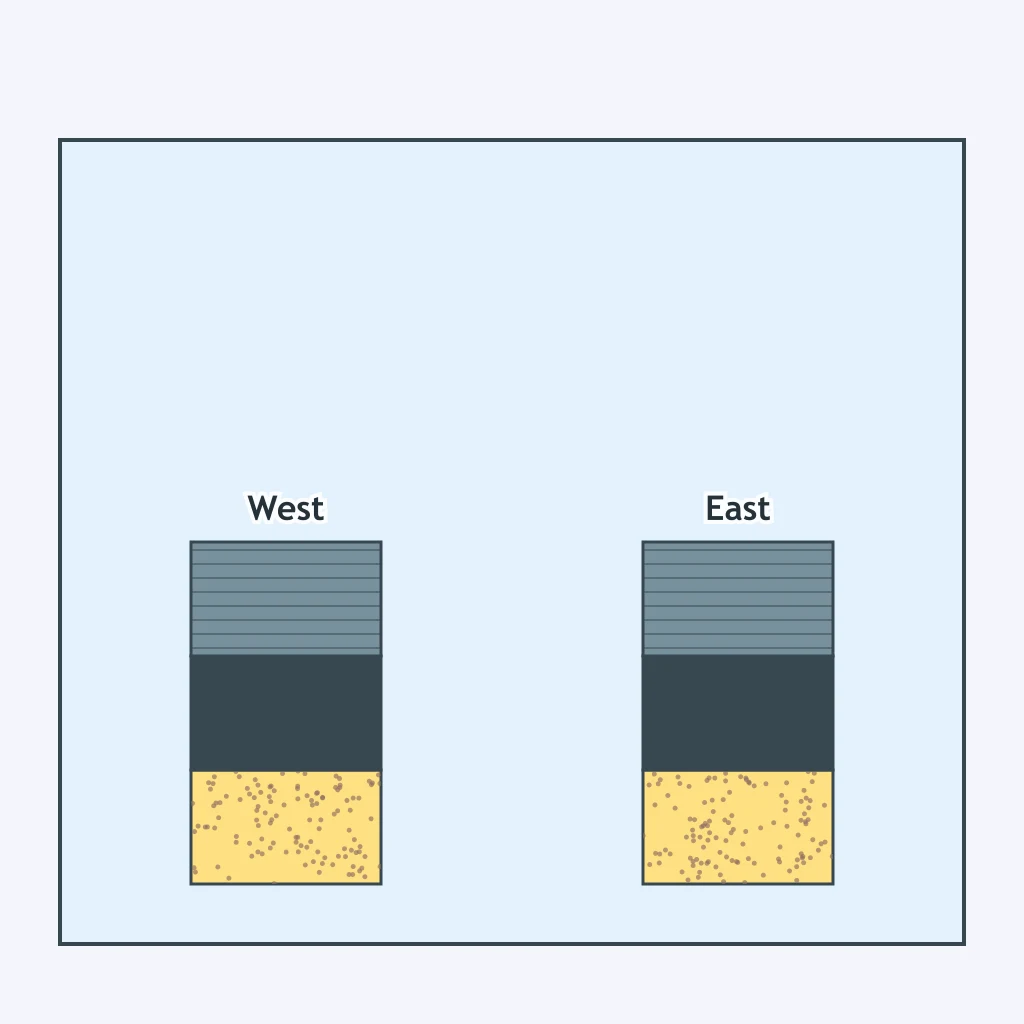
On both valley walls, a thin coal seam lies between sandstone below and shale above at the same elevation. What is the best correlation?
Across fault F, fossil-rich limestone B on the left matches a limestone on the right that is 80 m lower. What caused the offset?
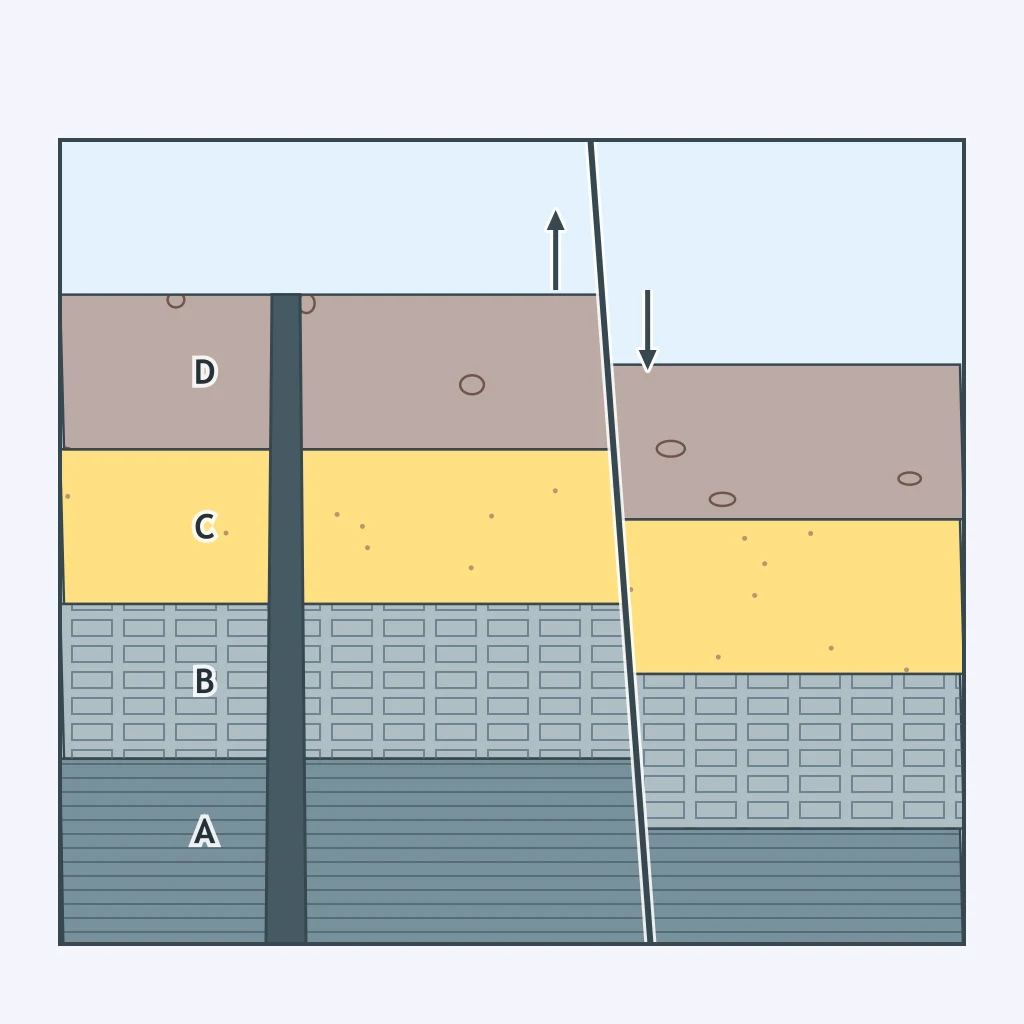
Unit A west of a valley and unit D east of it contain the same index fossil and are bracketed by shale below and sandstone above. How should they be correlated?
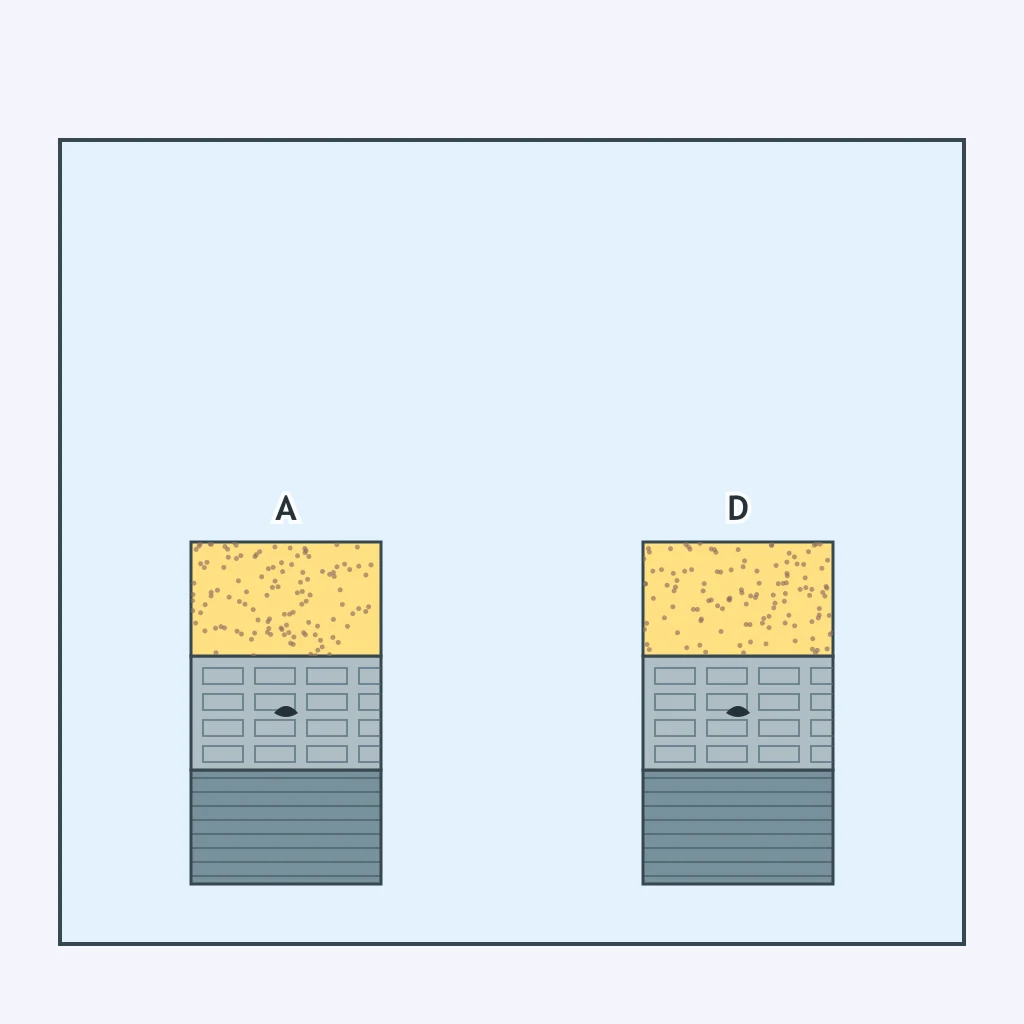
A sandstone bed appears on both limbs of an eroded anticline, with the same shale above it on each side. What is the best interpretation?
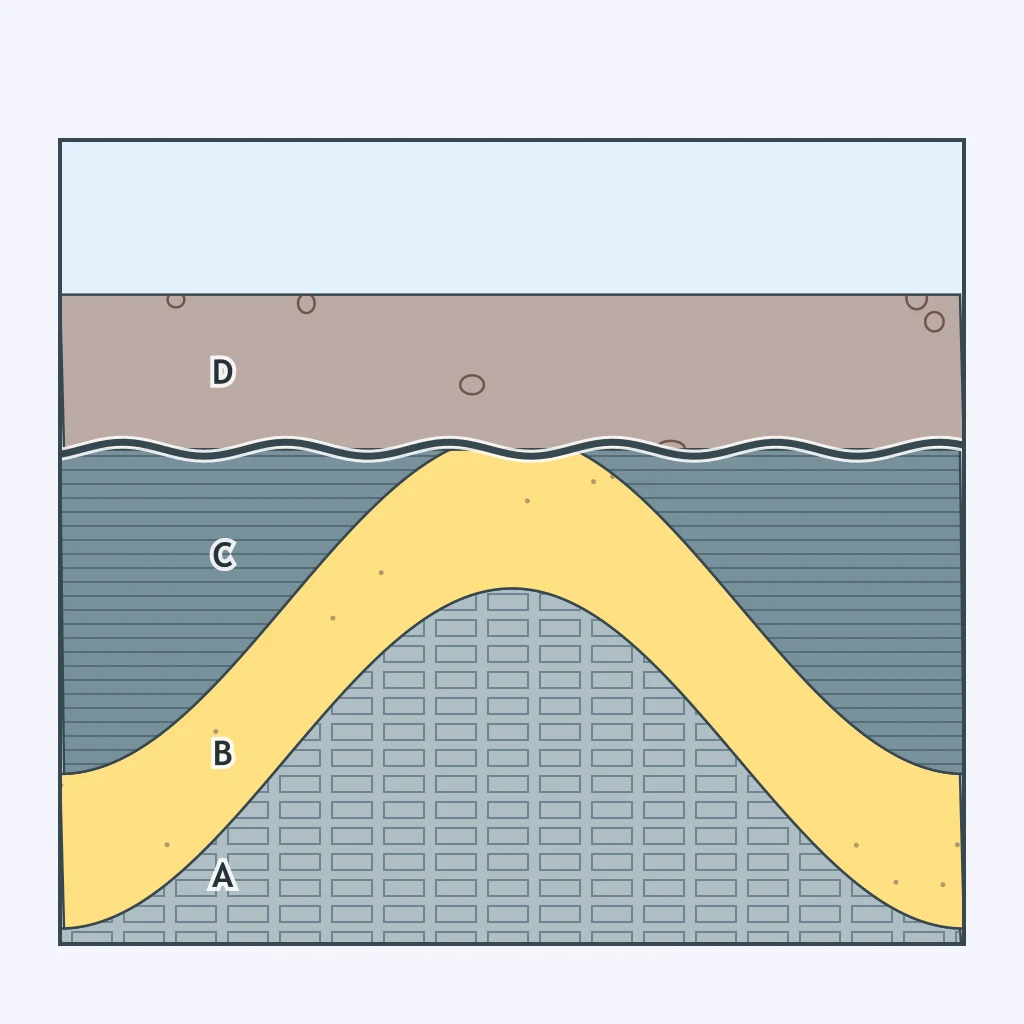
A dike cuts shale on both sides of a fault, but the two parts of the dike are offset 30 m along the fault. What correlation is best?
Bed B, a volcanic ash layer, lies below limestone C on both sides of the fault. What is the best correlation of bed B across the fault?
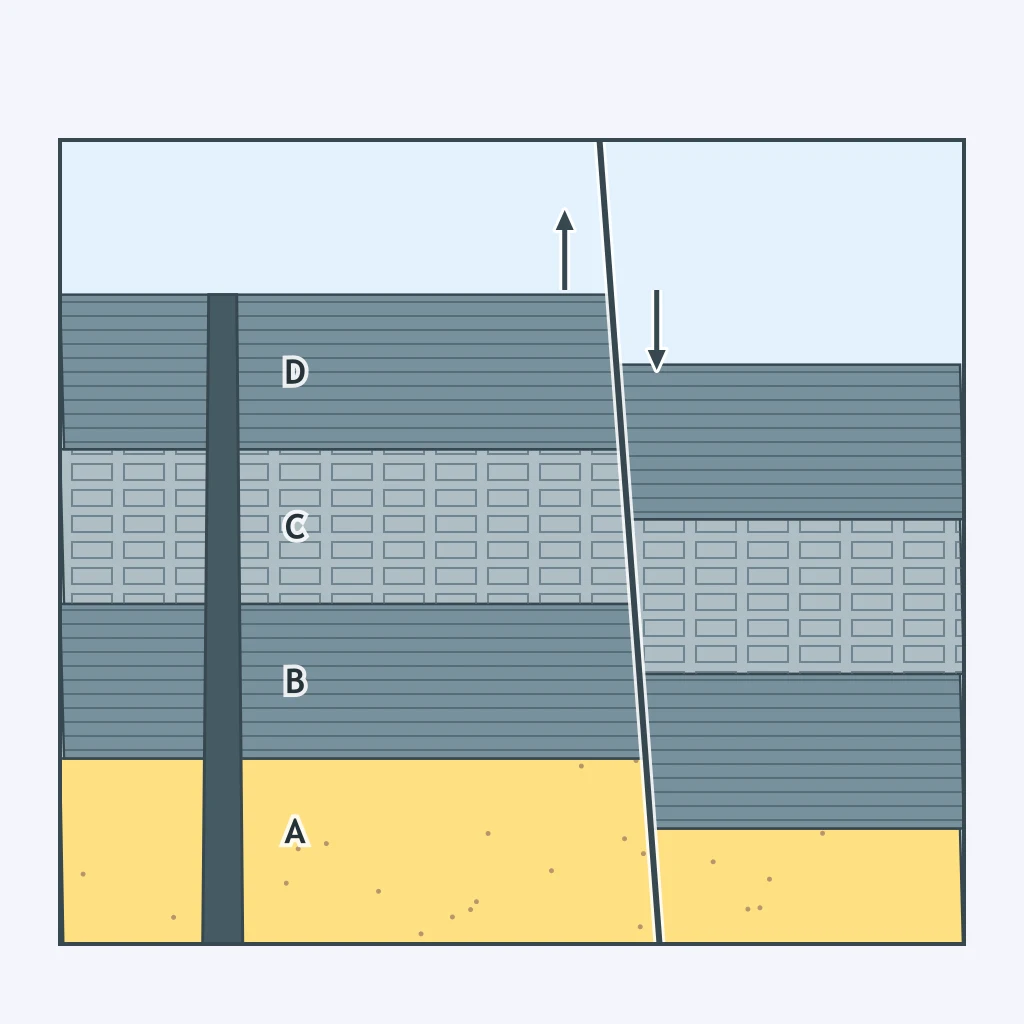
Two outcrops separated by a valley show limestone A over shale B over sandstone C in the same order. What principle supports matching the layers across the valley?
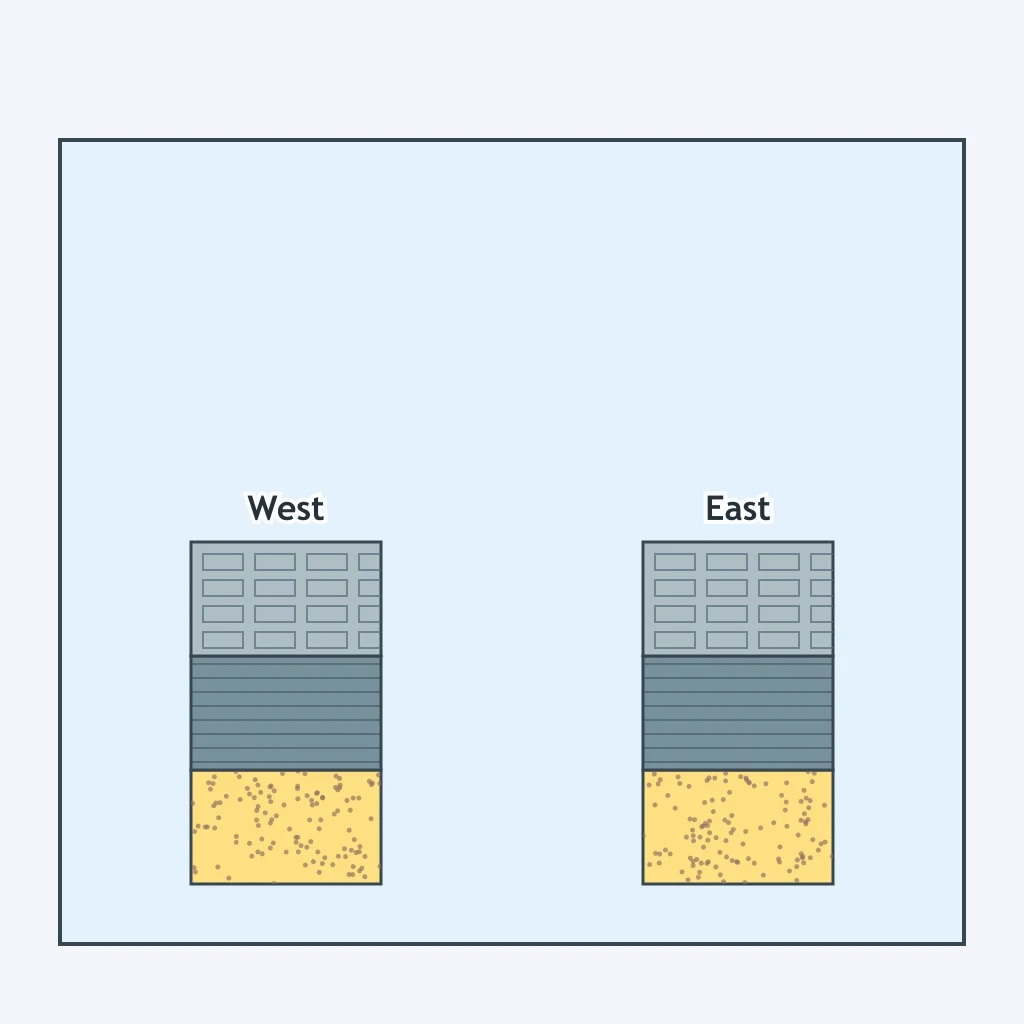
From bottom to top, the section shows conglomerate, sandstone, shale, then limestone with no unconformity. What environmental change is indicated?
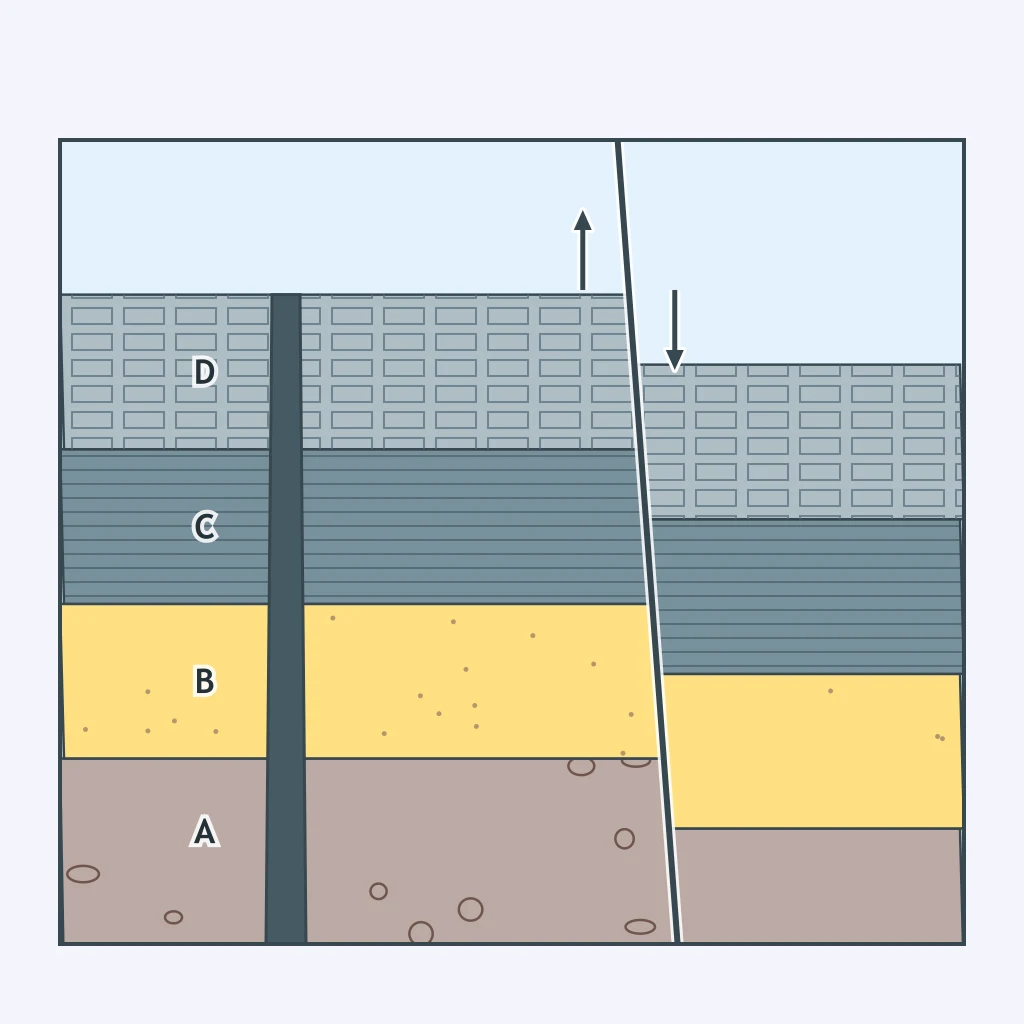
A conformable stack grades upward from limestone to shale to sandstone to conglomerate. What change does the section suggest?
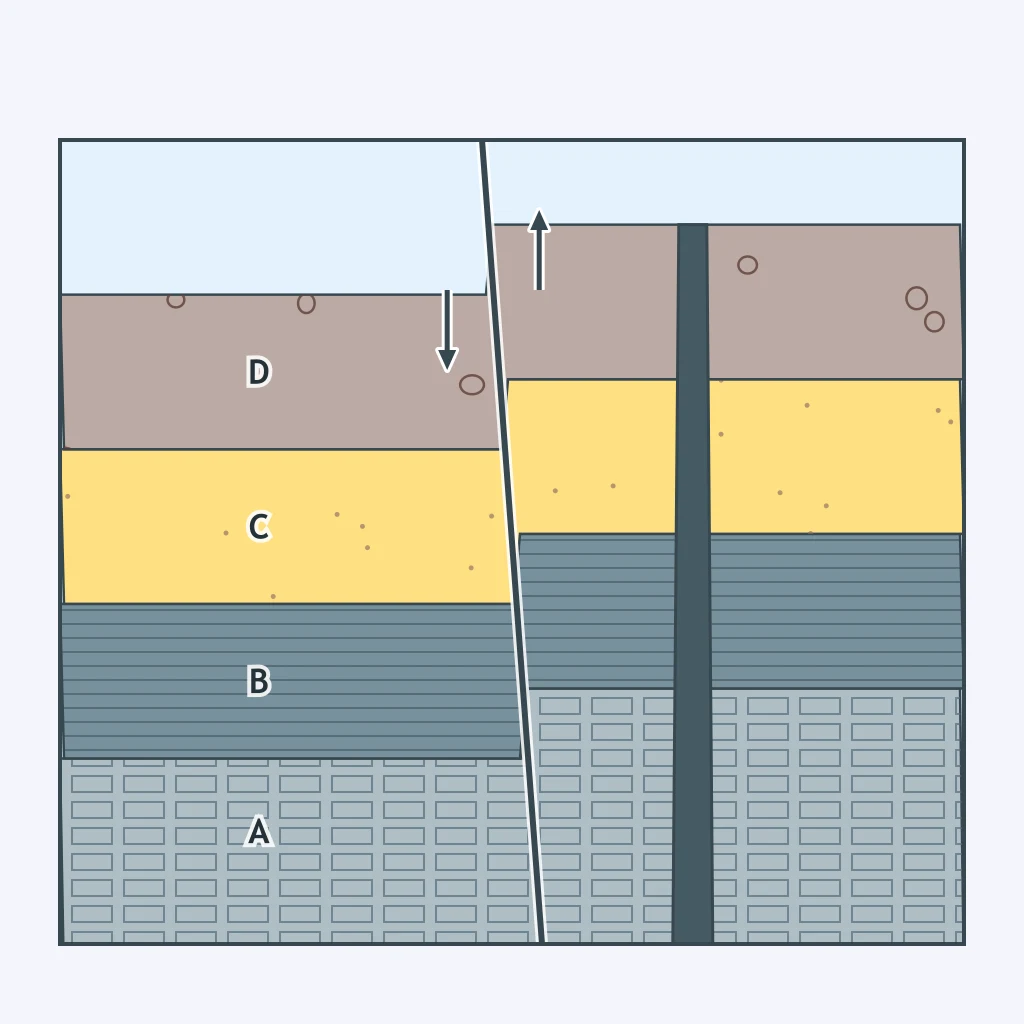
The vertical succession is marine shale, ripple-marked sandstone, rooted mudstone, then coal. What environment moved over the site?
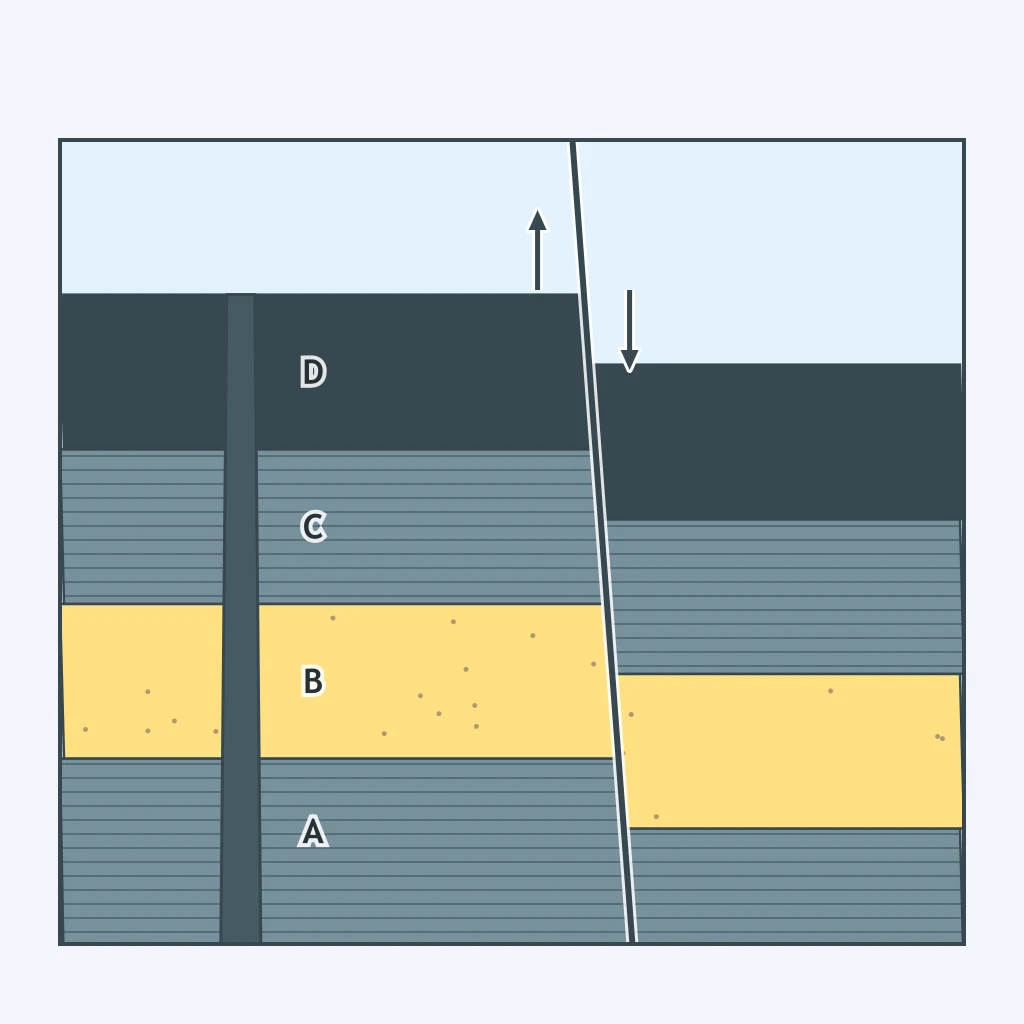
A section changes upward from channel conglomerate to cross-bedded sandstone to mudstone with root traces. What depositional trend is shown?
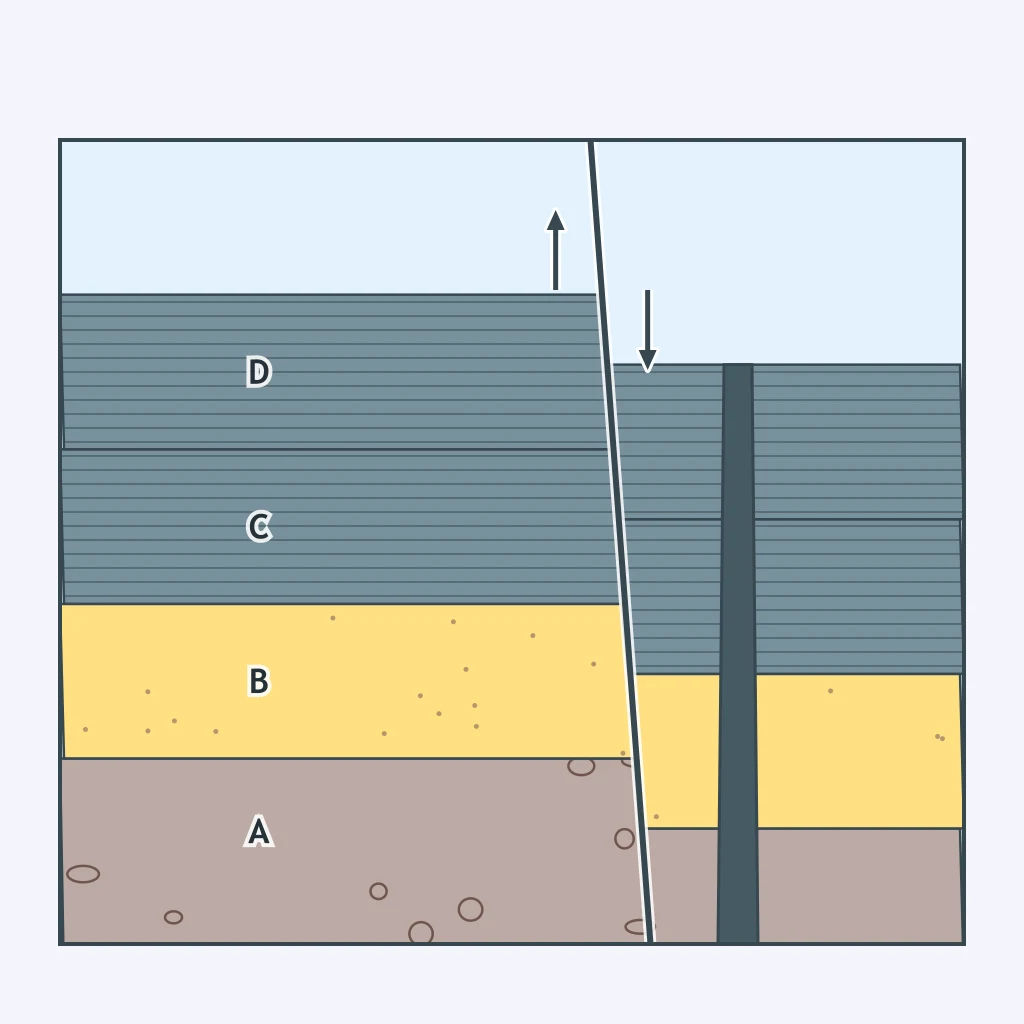
From bottom to top, quiet-water shale with marine fossils is overlain by beach sandstone and then pebble conglomerate. What does the succession show?
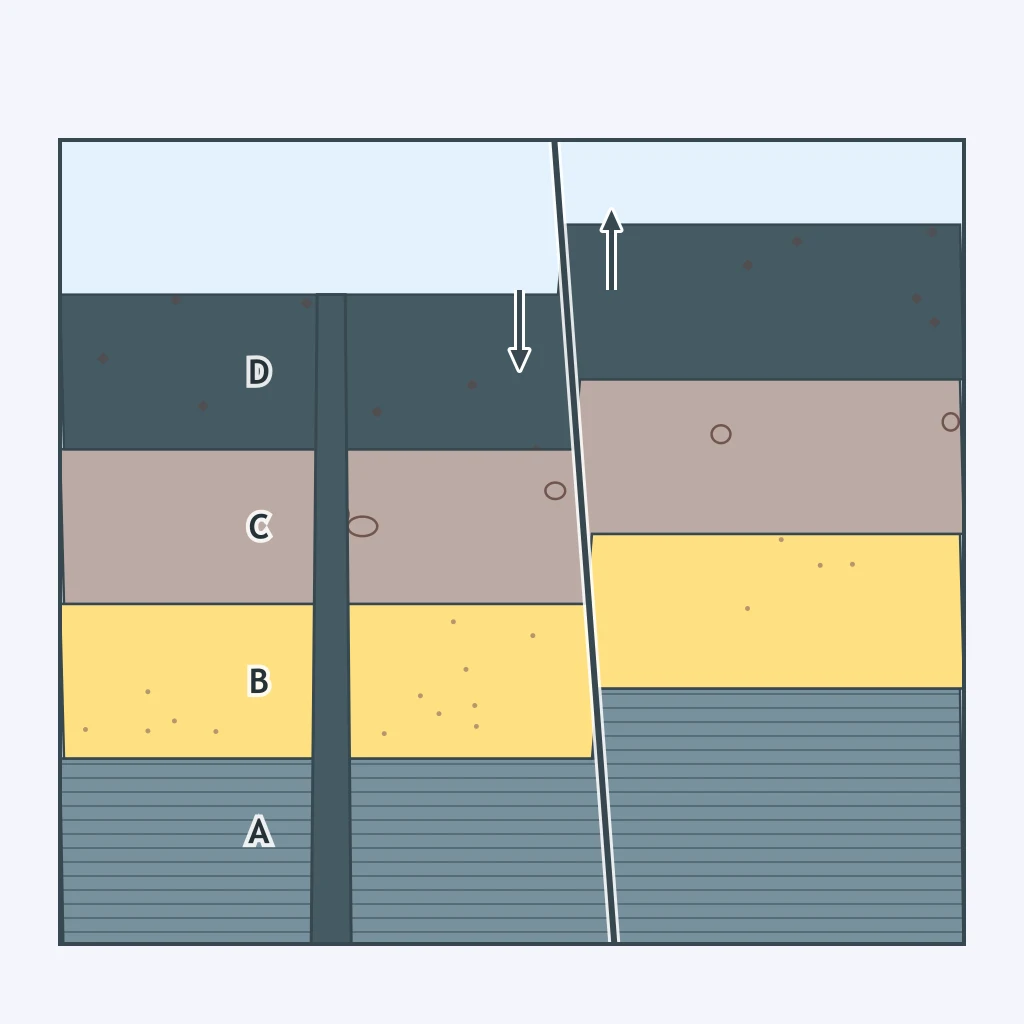
Below unconformity U, the youngest preserved ash bed is 360 Ma; above U, the oldest lava is 250 Ma. How much local rock record is missing?
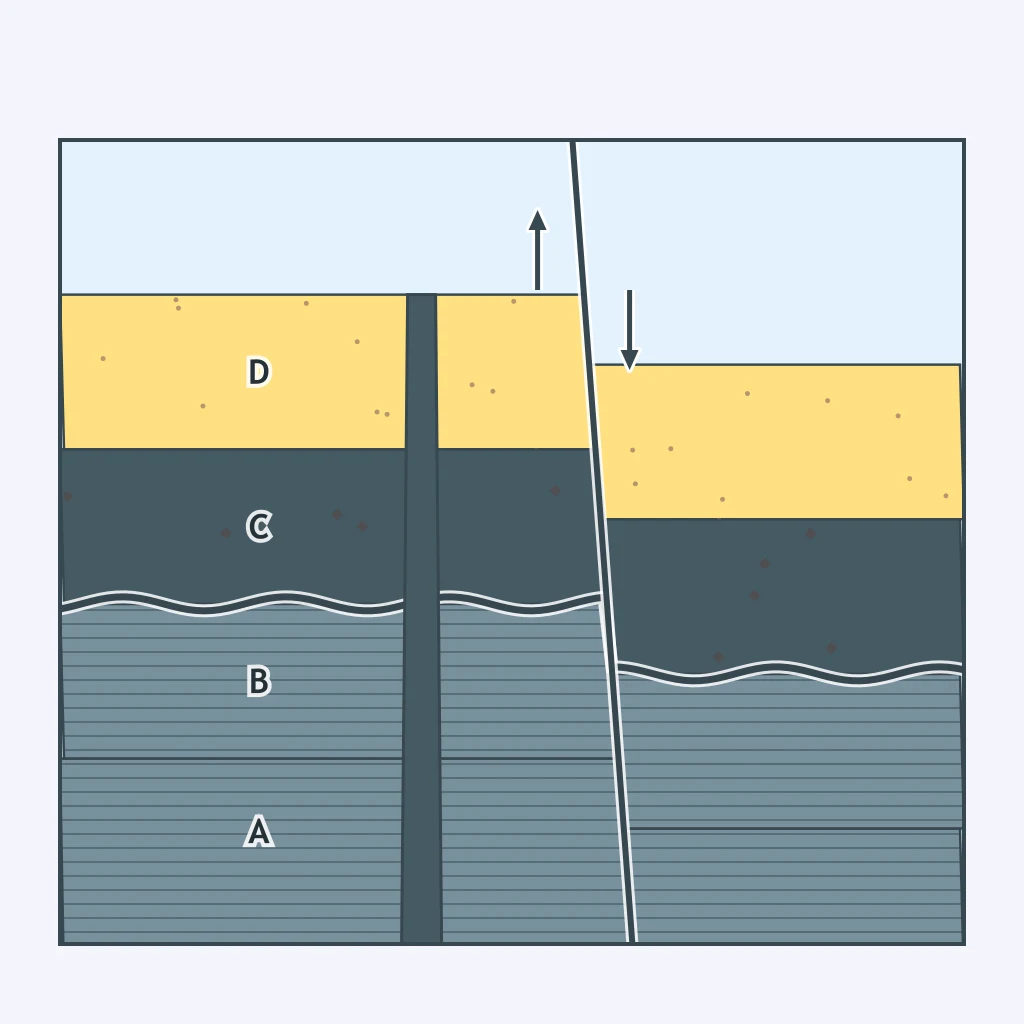
Crack the passcode before the zombies get in.
Answer, then swat bugs for bonus points.
Race through questions at your own speed.
Same question on every screen. Fastest wins.

Pick a tile, answer, hit bonuses and steals.
How Fossils Form
30 questions