Loading
by BlastRoom
Review relative dating, fossils, half-life calculations, the geologic time scale, and cross sections.
#earth_space_science
50 questions
One question set, multiple game modes. Tap any game to see it in action. Not sure which to pick?
Answer to place stones and capture territory.
Outrun the snow together.
Earn blasts, then hunt the other team.
Answer to earn energy, then climb.

The class blasts through walls together.
Bid on mystery lots. Most money wins.
Sell tours. Nice, standard, or a total scam.

Answer, restock, and serve the rush.
More correct answers pulls the rope your way.
Answer, then shoot down the alien wave.
Answer, then tap to leap the frozen ridge.
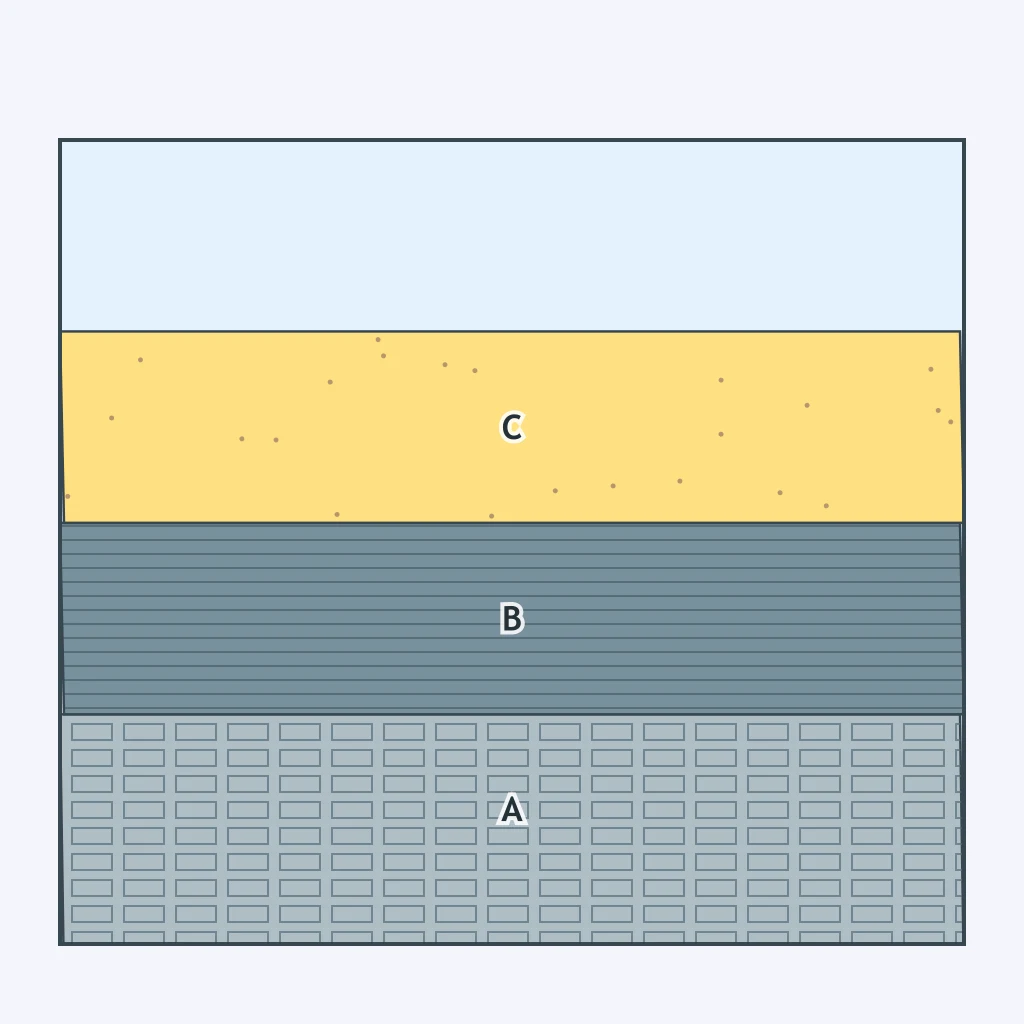
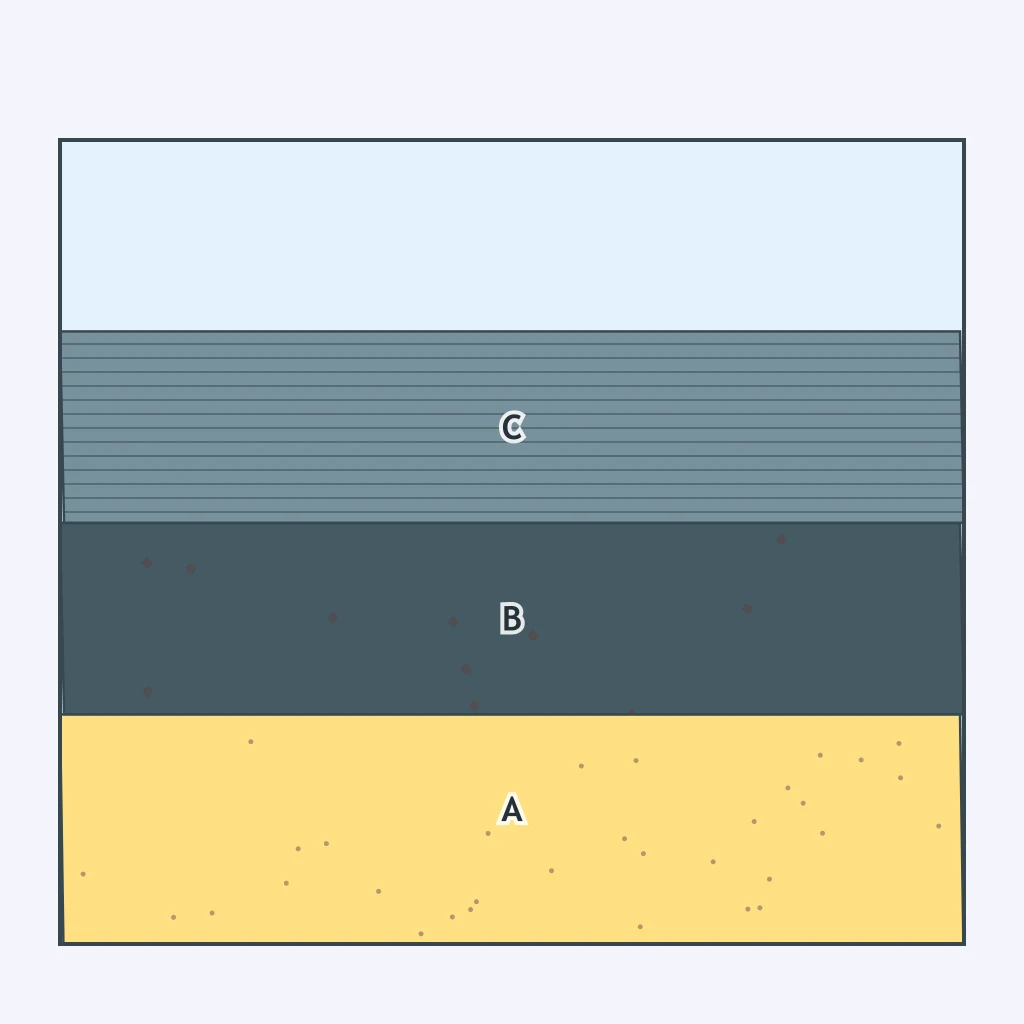
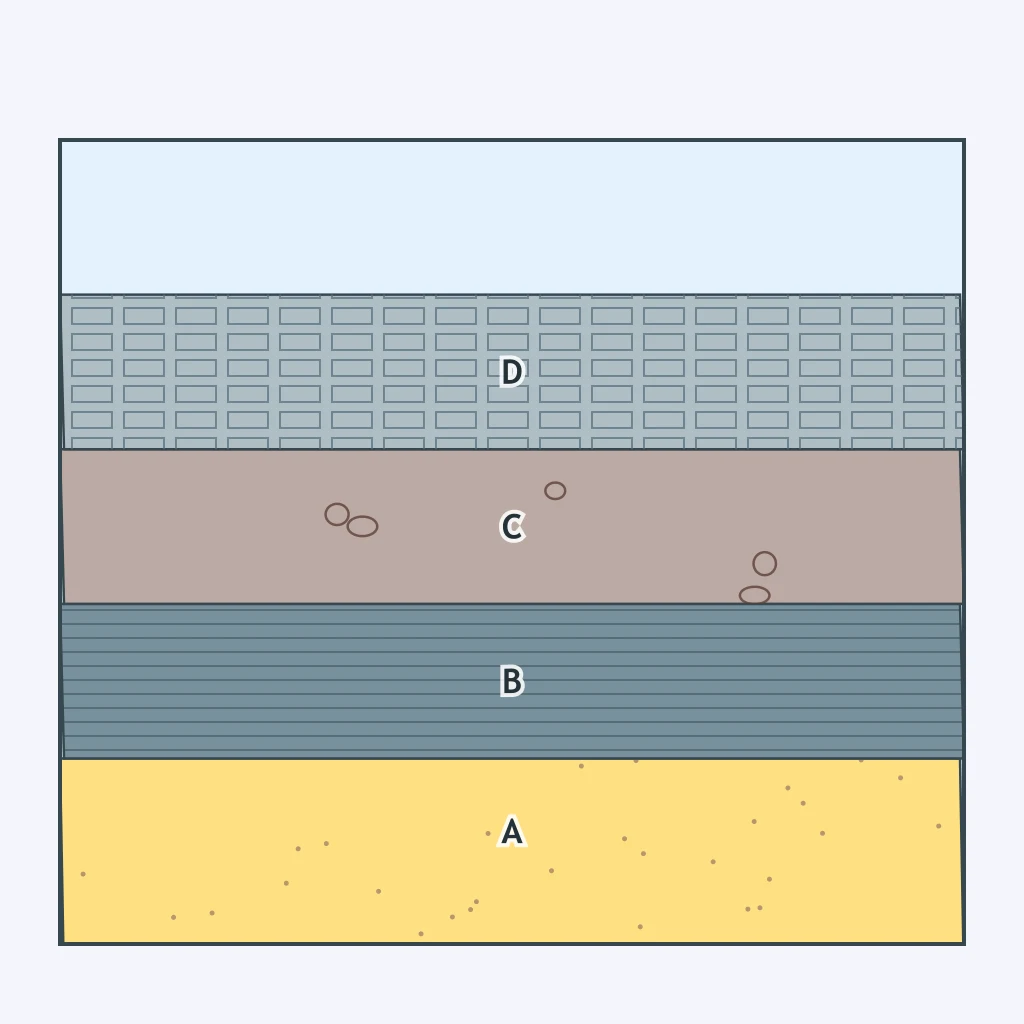
Use the cross section of three undisturbed sedimentary beds. Which lettered bed is oldest?
A set of sedimentary beds is now tilted 35°. What principle shows the beds were deposited before the tilting?
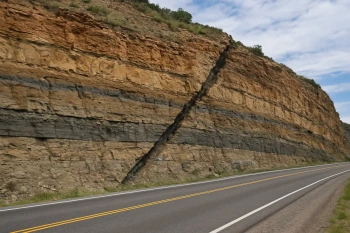
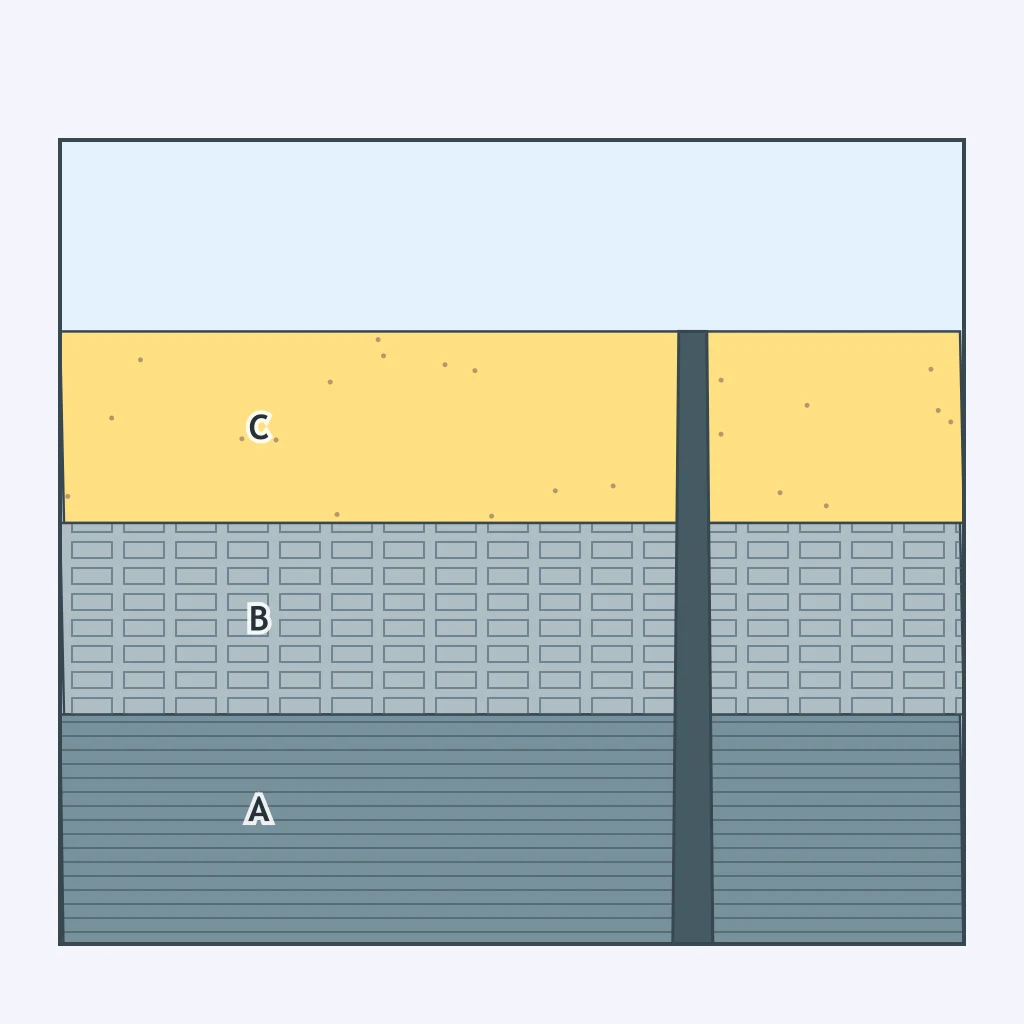
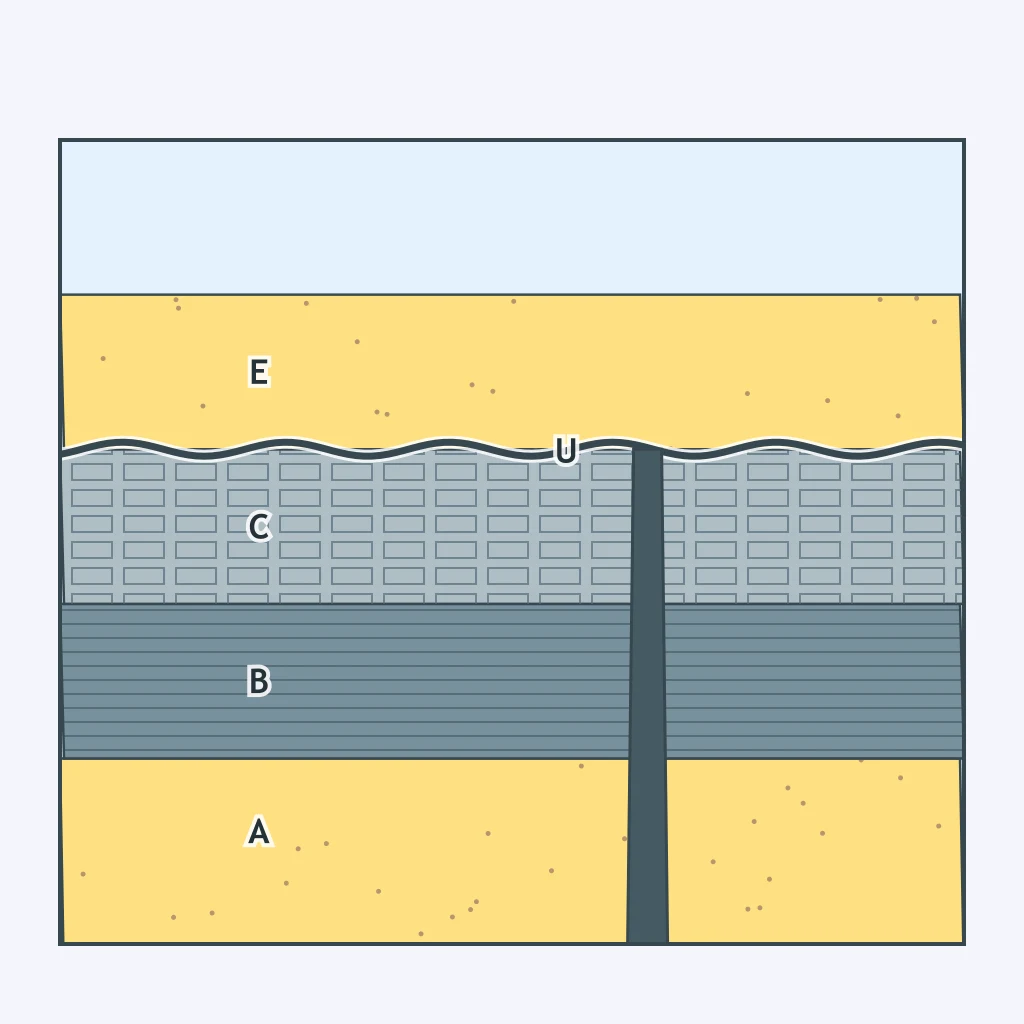
Use the cross section. A dark dike cuts layers A, B, and C. What principle shows the dike is younger than those layers?
Rounded quartzite pebbles are enclosed inside a conglomerate bed. What principle shows the pebbles are older than the conglomerate?
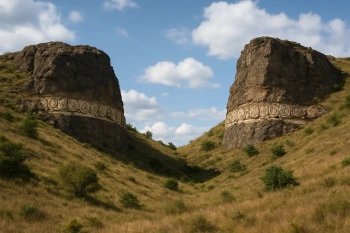
Two canyon walls have matching sandstone beds at the same height, separated by an eroded valley. What principle supports matching those beds?
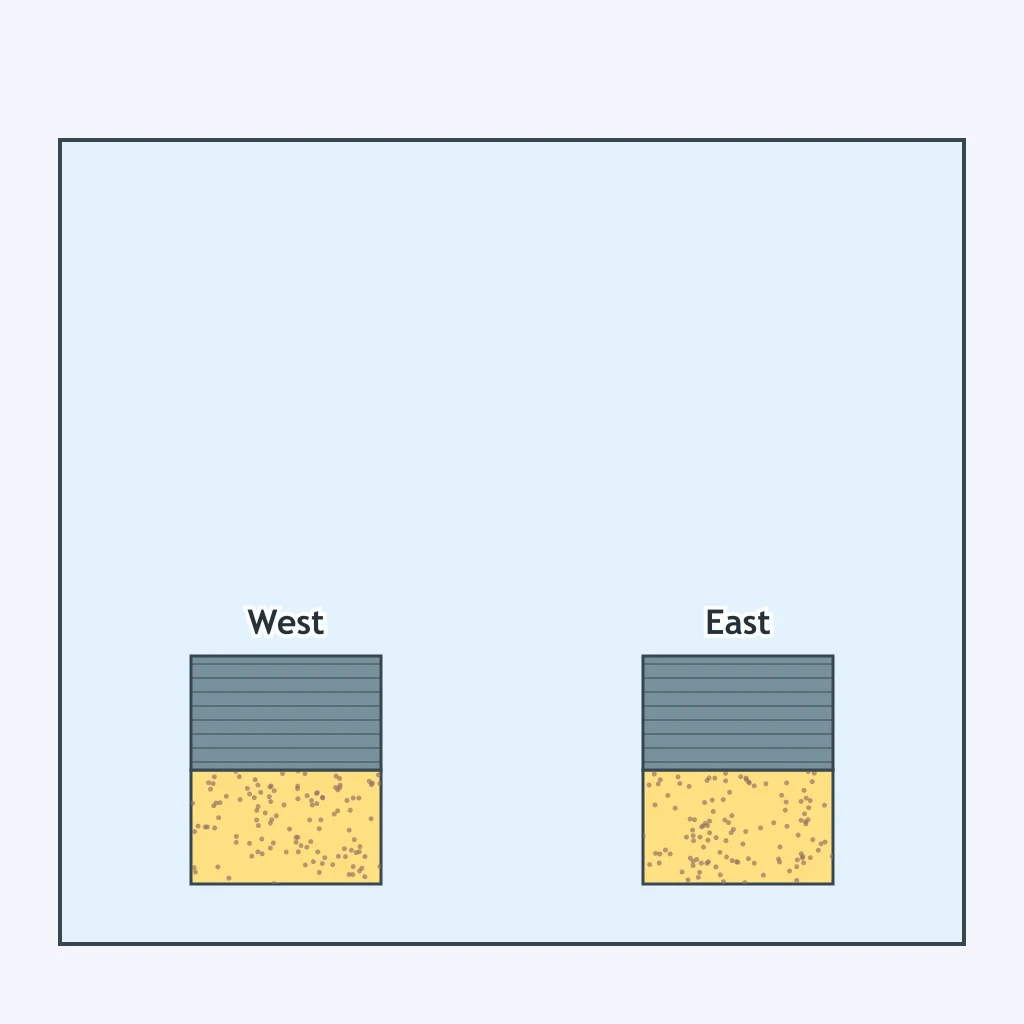
A sandstone layer is baked along its contact with a granite sill. Which feature must be younger?
A basalt flow lies between sandstone below and shale above in an undisturbed stack. Which principle places the basalt between them in age?
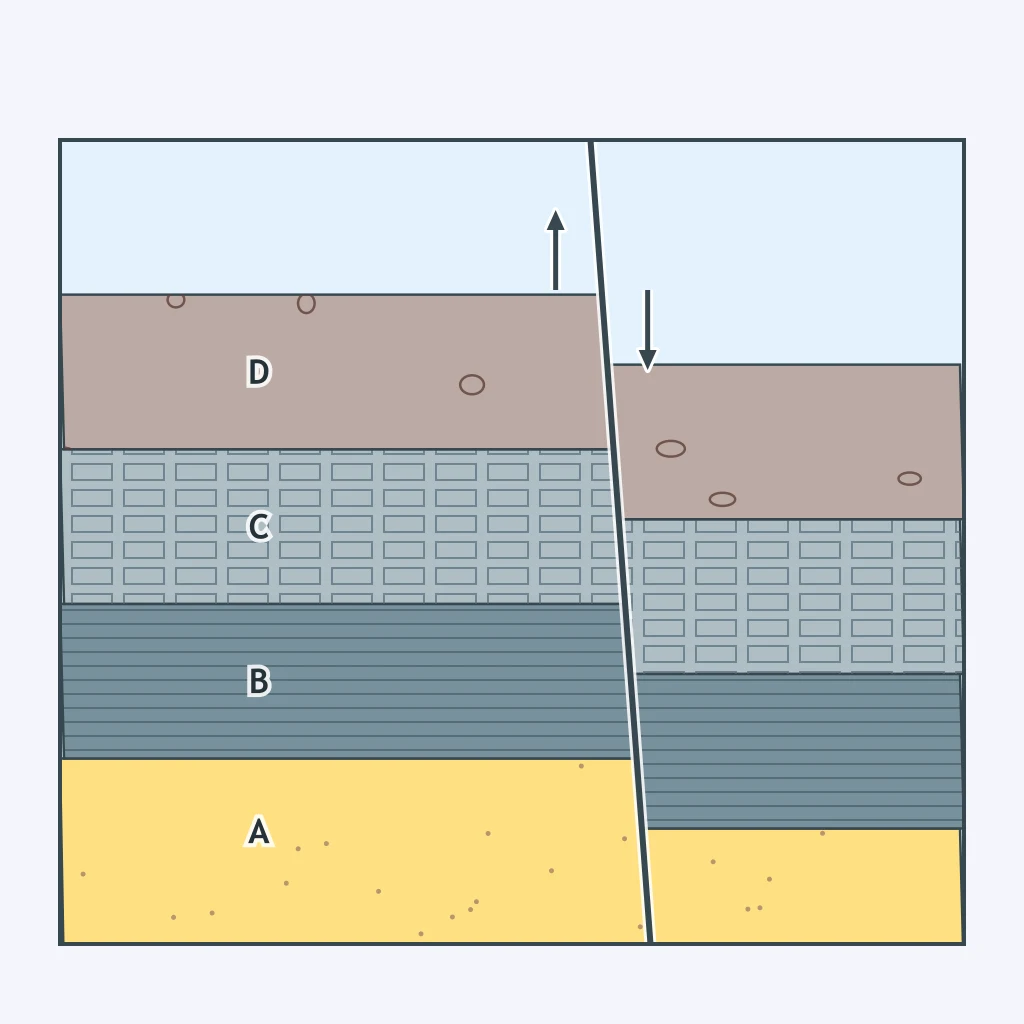
In the figure, a fault offsets layers A through D. Which principle shows the fault is younger than the offset layers?
Granite contains dark schist xenoliths. What is the relative age of the schist fragments?
A limestone bed is folded into an arch. What happened after the limestone was deposited?
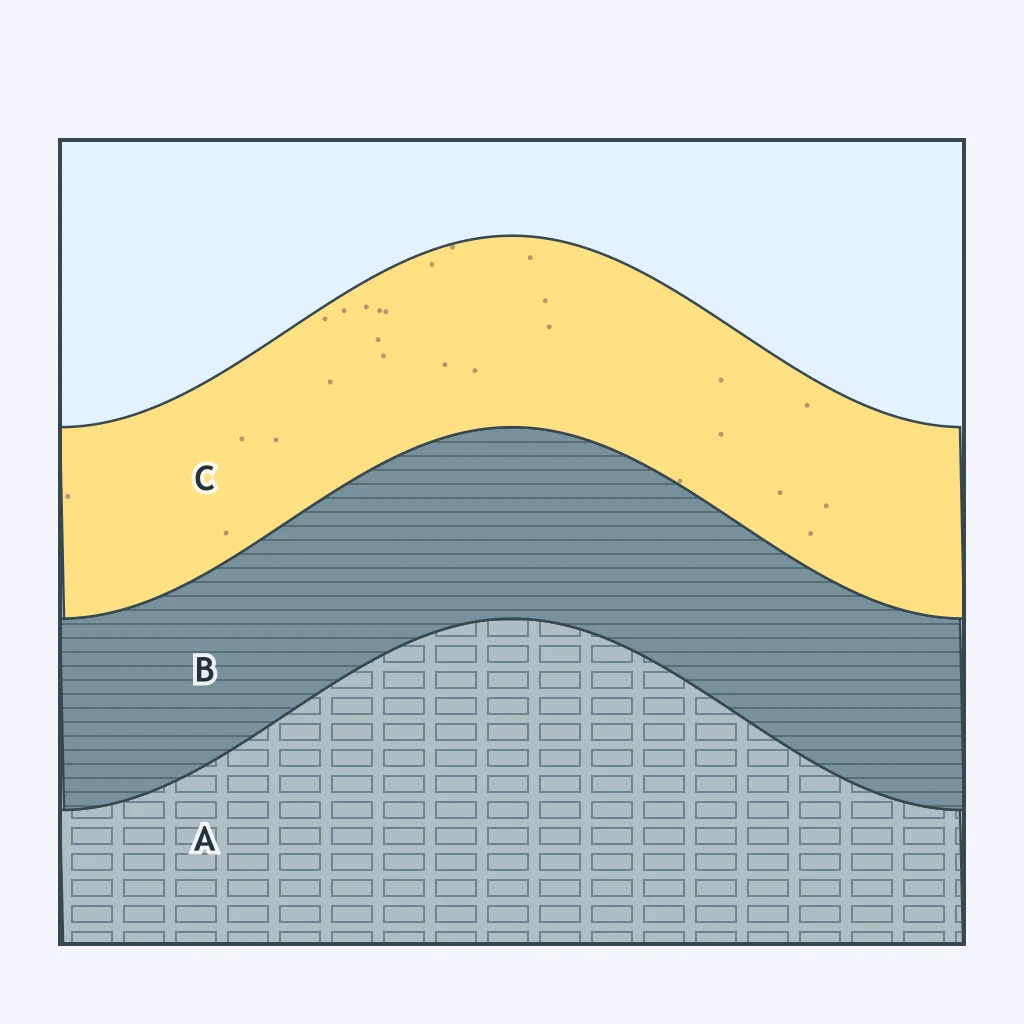
Use the cross section. Which event happened last?
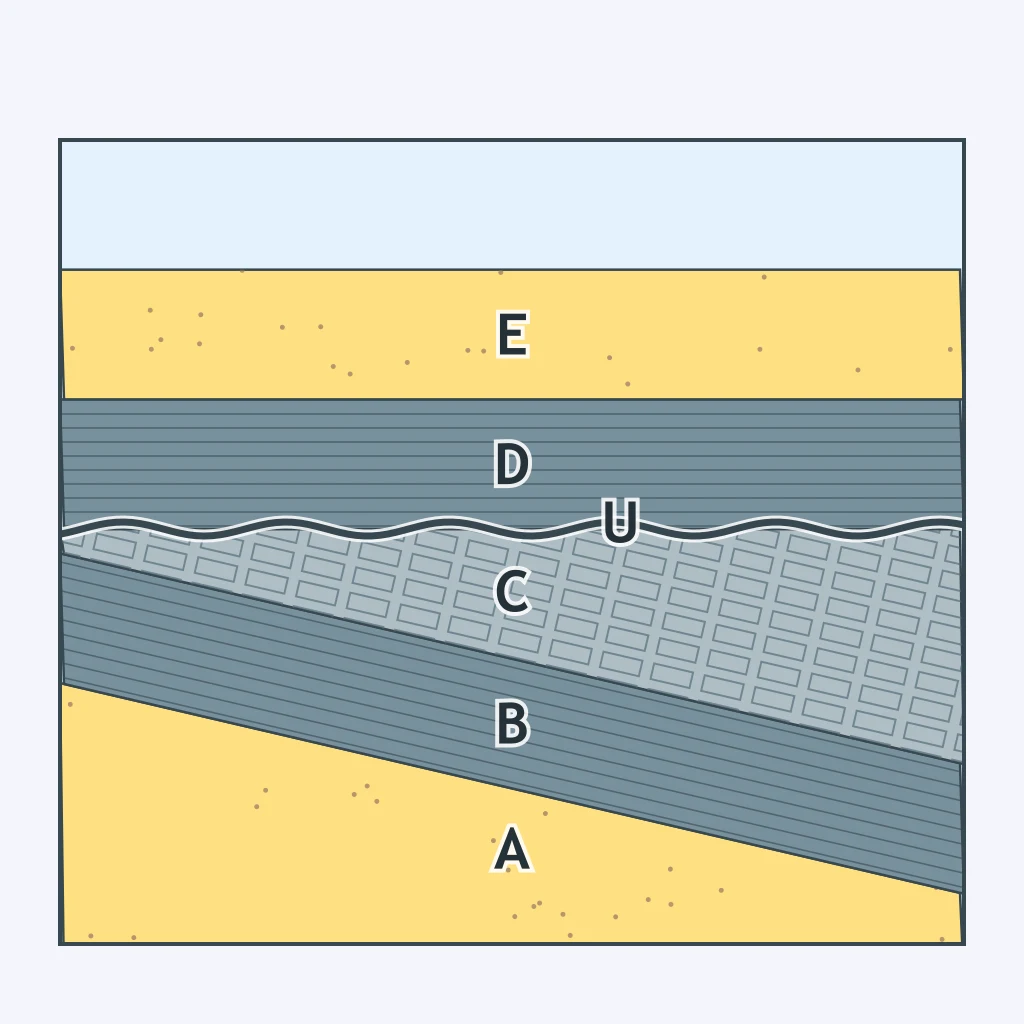
A normal fault cuts beds A through D but does not cut bed E above them. What happened after the fault formed?
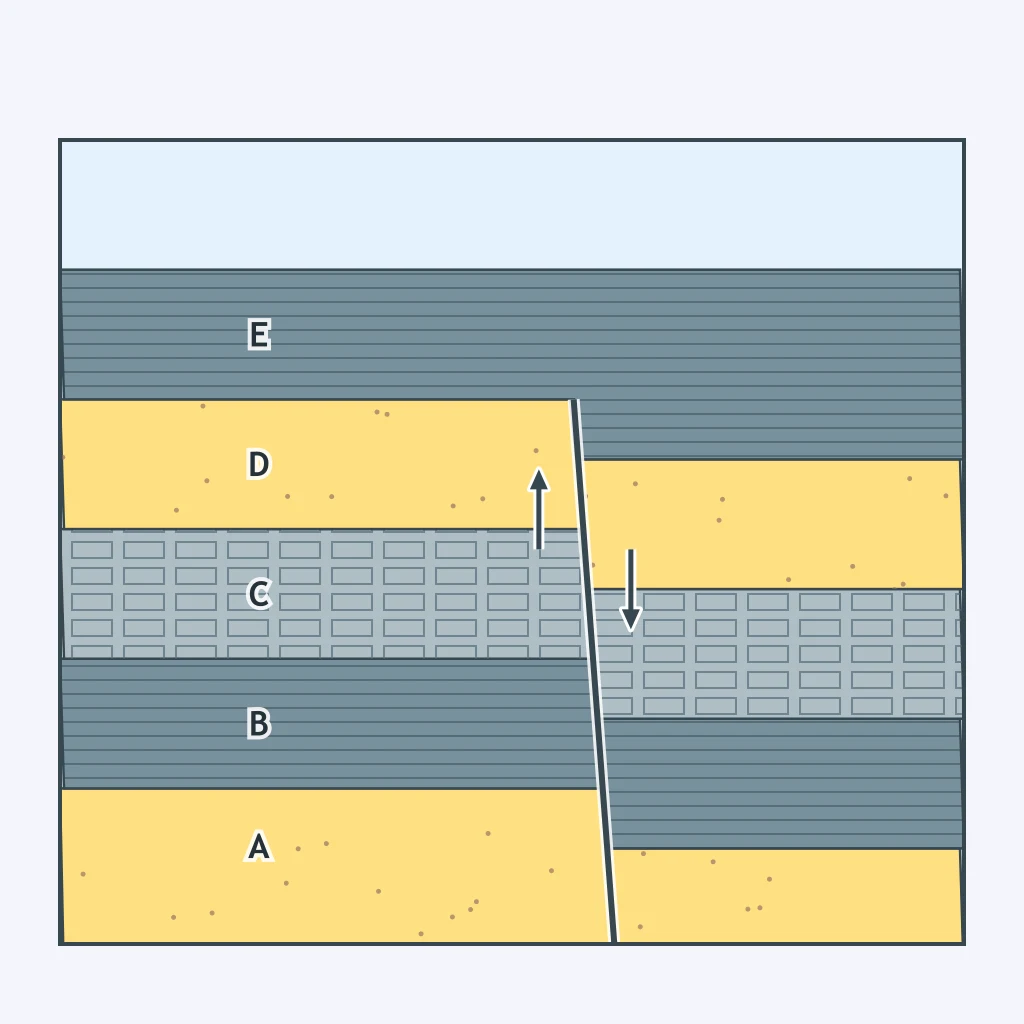
A dike cuts lower beds A-C and is truncated by surface U below top bed E. Which event occurred between the dike and bed E?
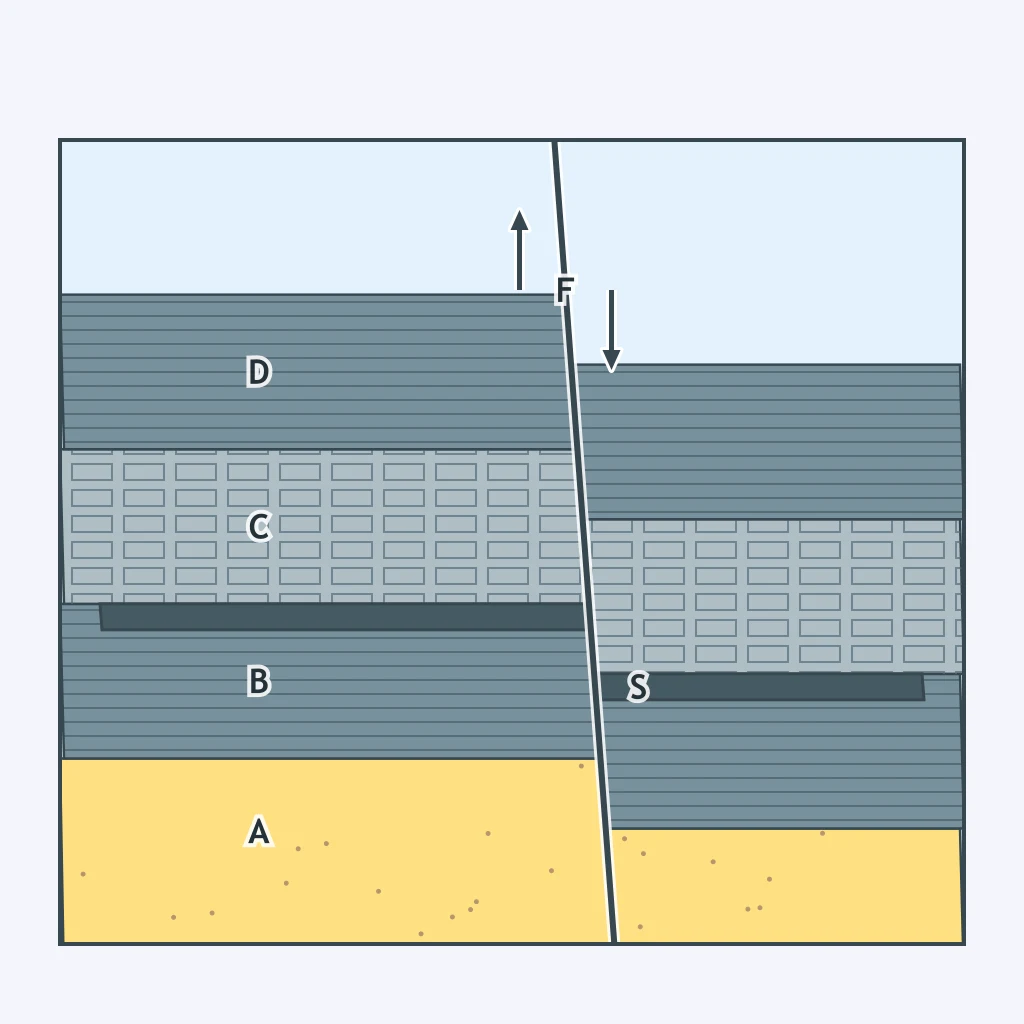
Use the cross section. Fault F cuts a sill S and beds A-D. Which event came last?
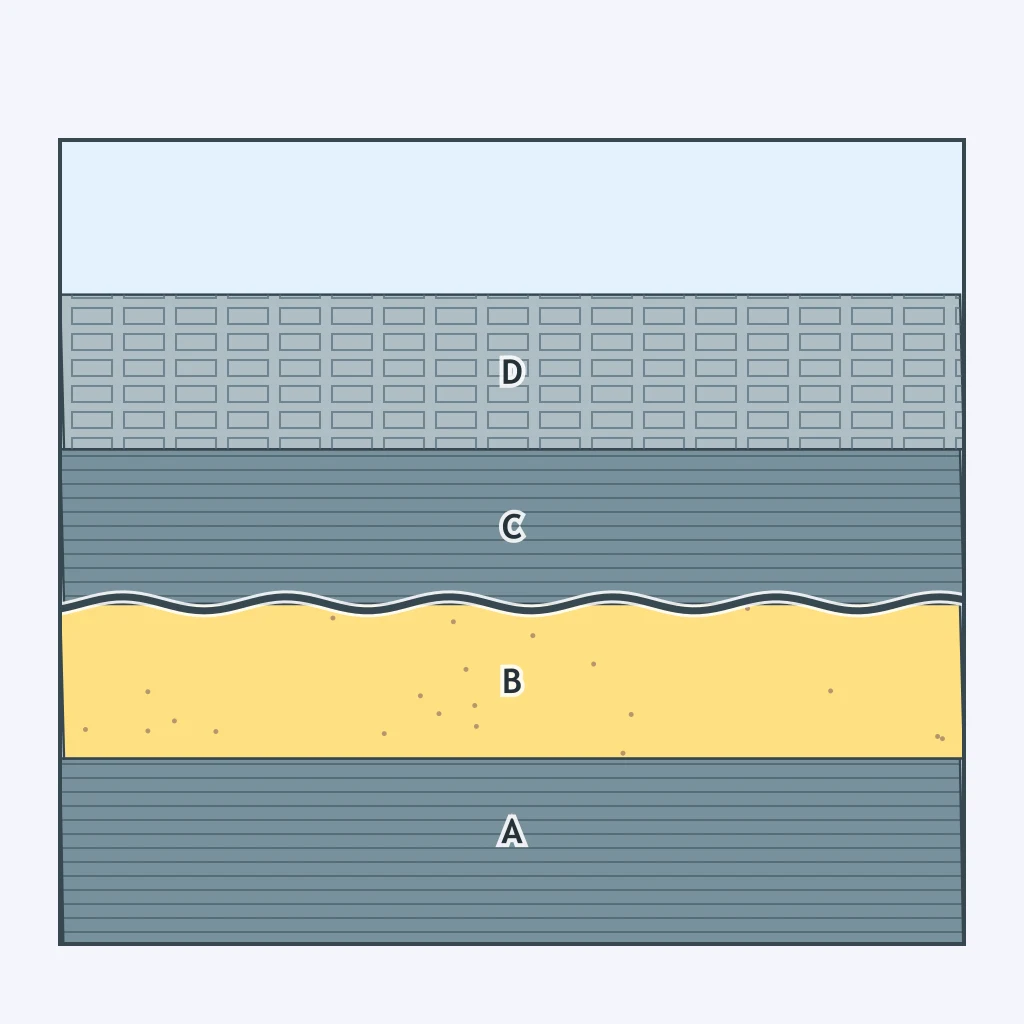
A cross section shows crystalline basement A eroded, then sandstone B deposited on top. What type of contact is the wavy surface between A and B?
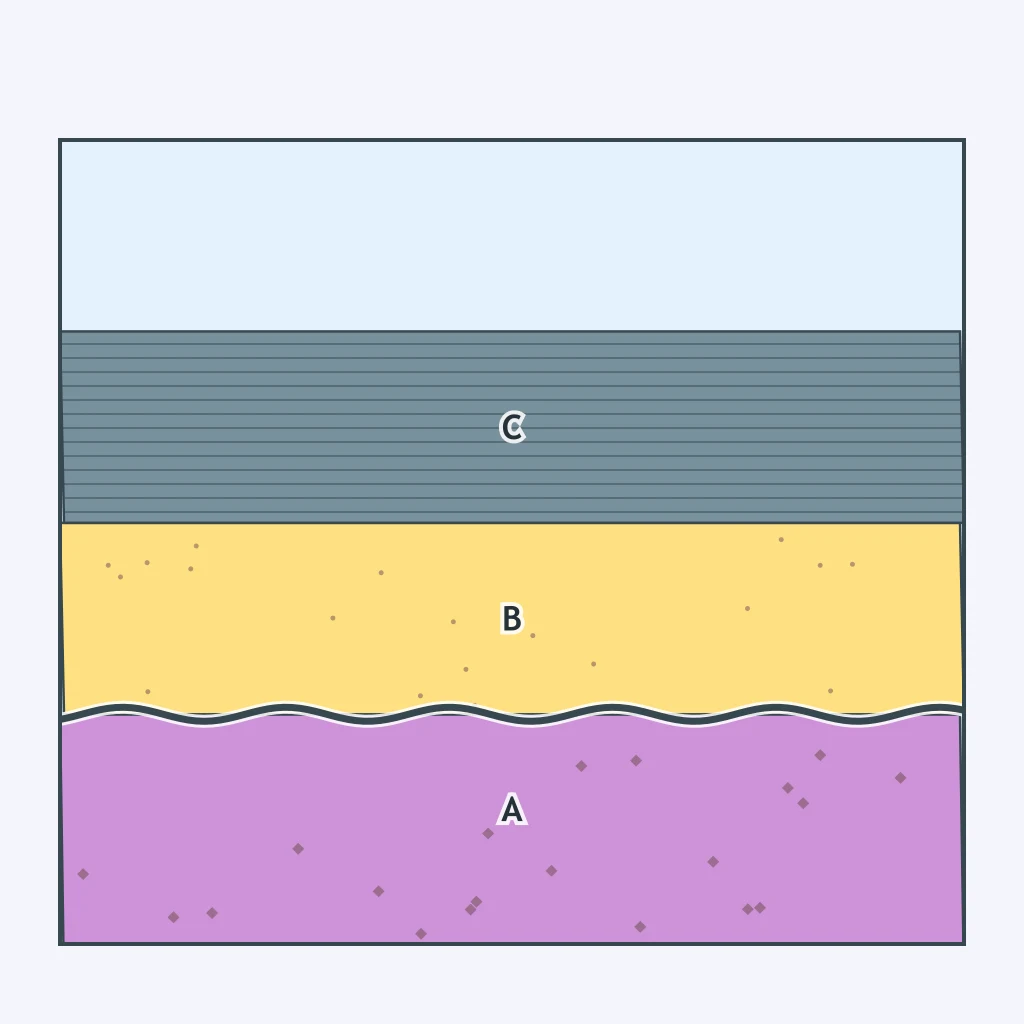
Tilted beds are cut by a wavy erosion surface and overlain by flat beds. What does that surface record?
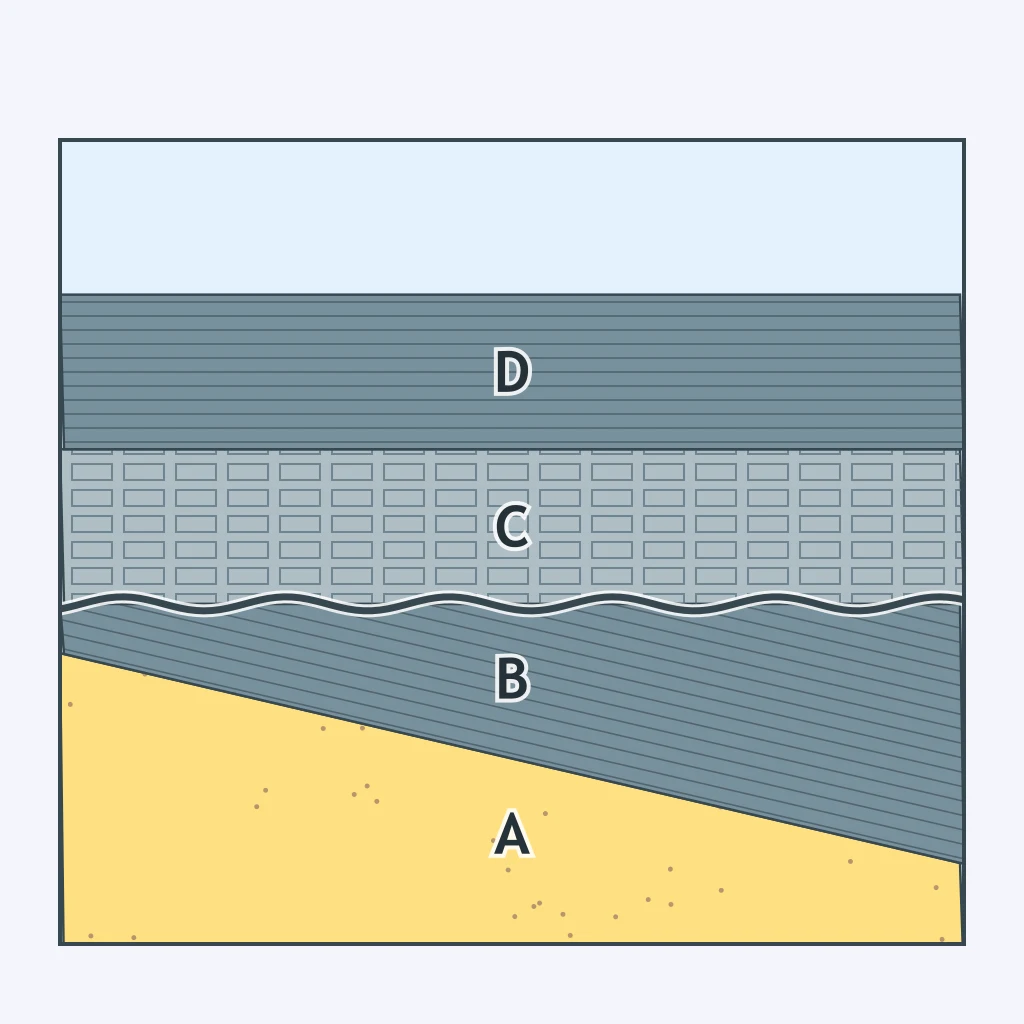
A dike cuts beds A and B, and bed C lies uncut across the top of them. Which event happened first?
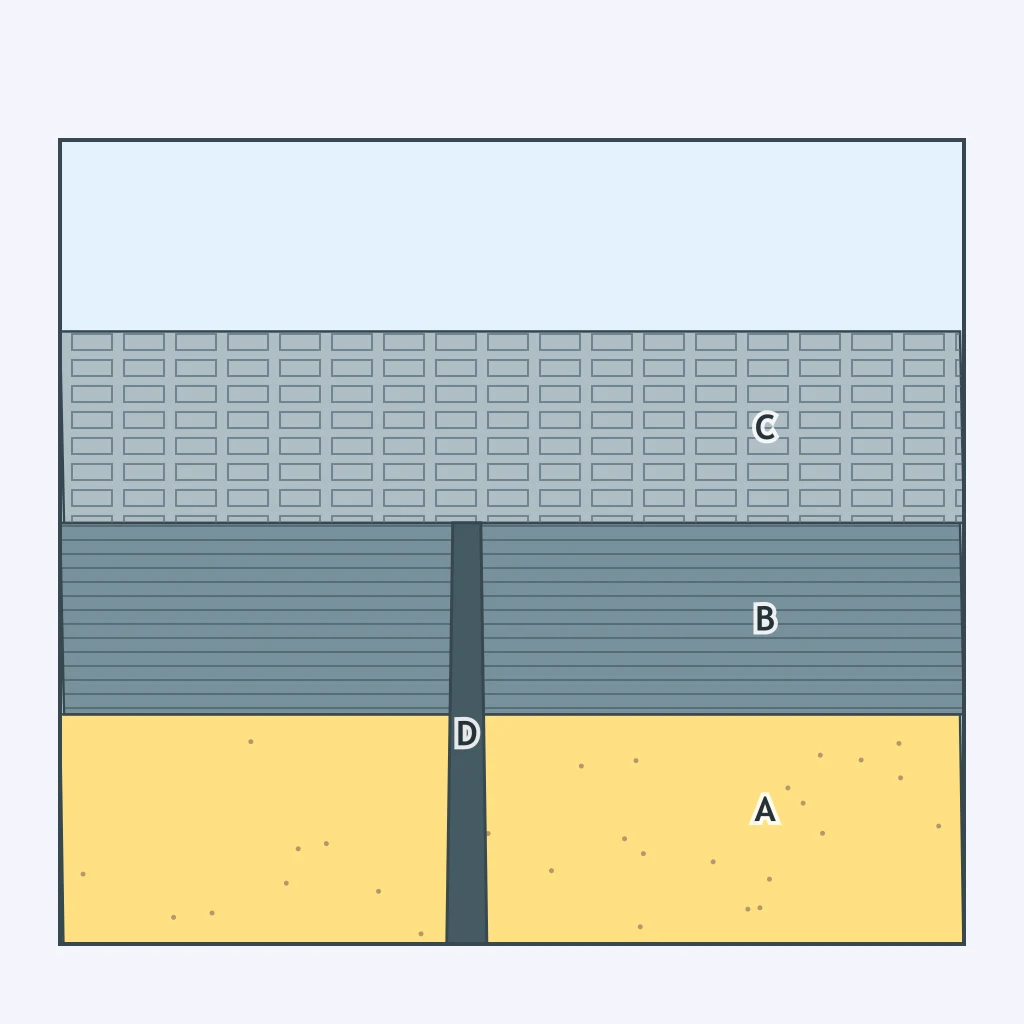
A fault cuts layers A-C but is cut off at erosional surface U below layer D. Which feature is youngest?
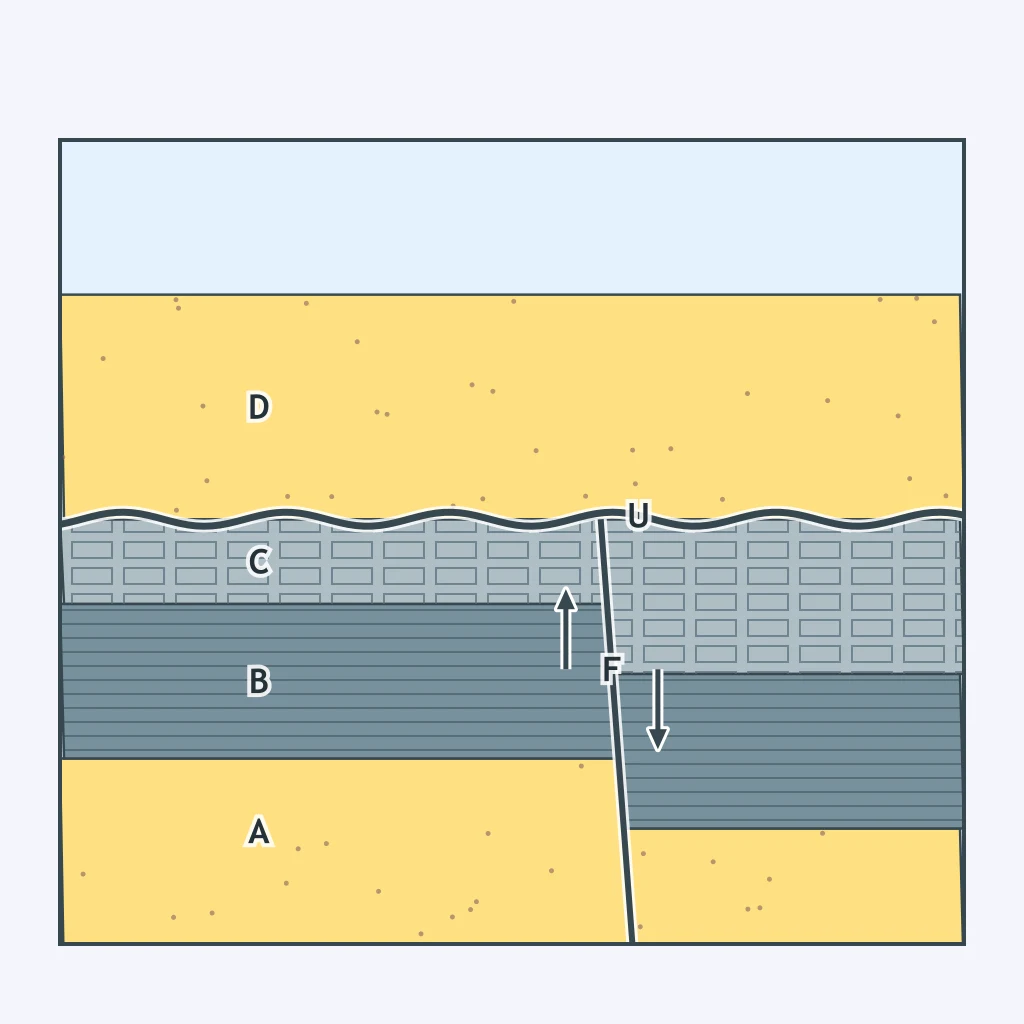
Layer C contains fragments eroded from layer B along its base. Which event occurred before C was deposited?
Parallel sandstone and shale are separated by a wavy erosion surface, with no tilting. What type of unconformity is that surface?
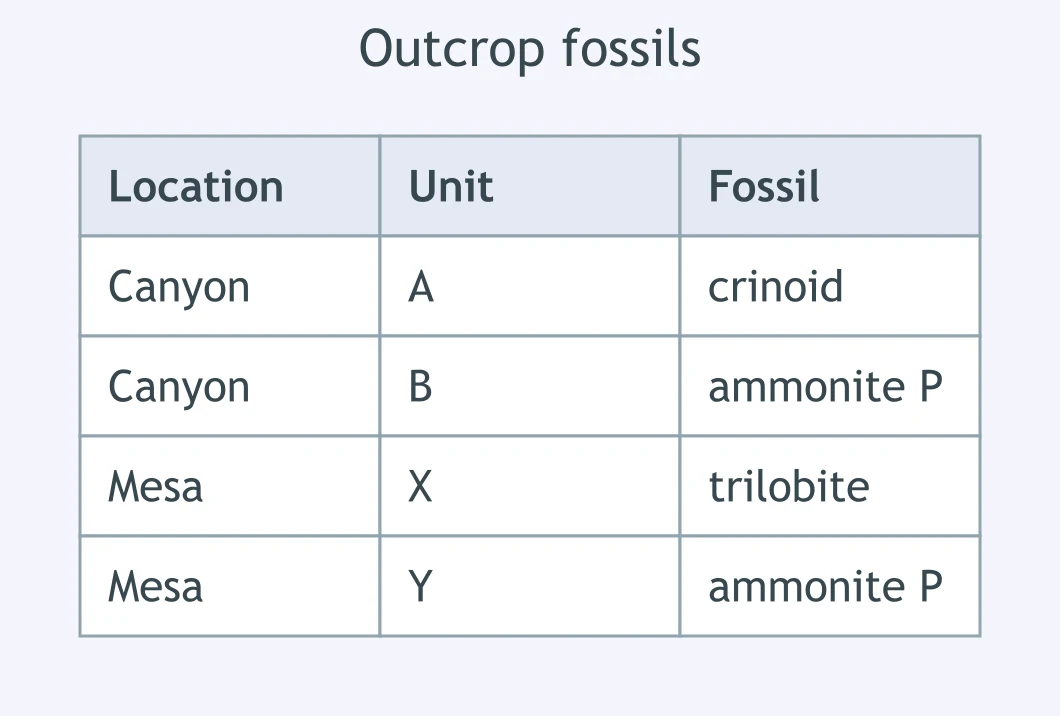
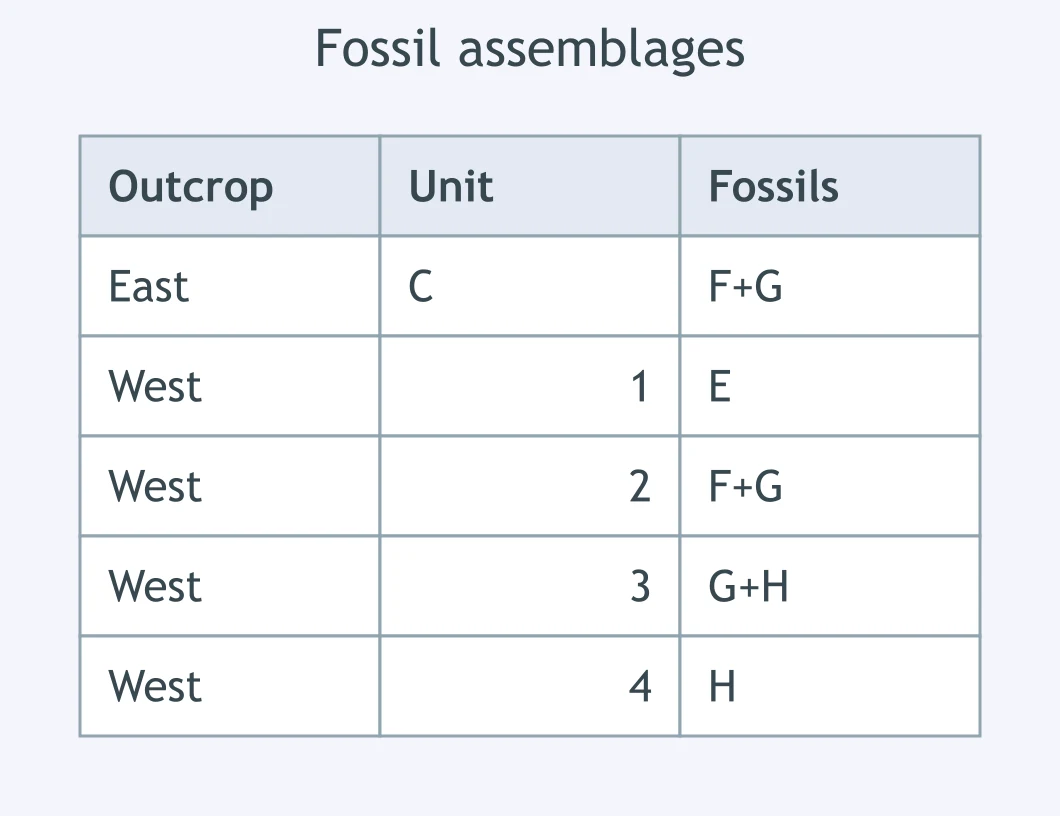
Use the table of fossils in two outcrops. Which two rock units correlate by the same index fossil?
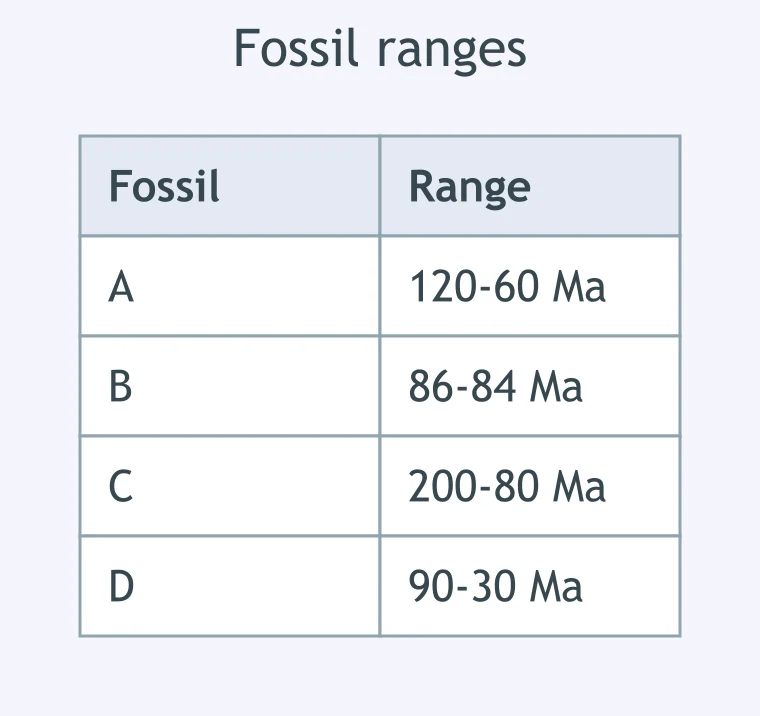
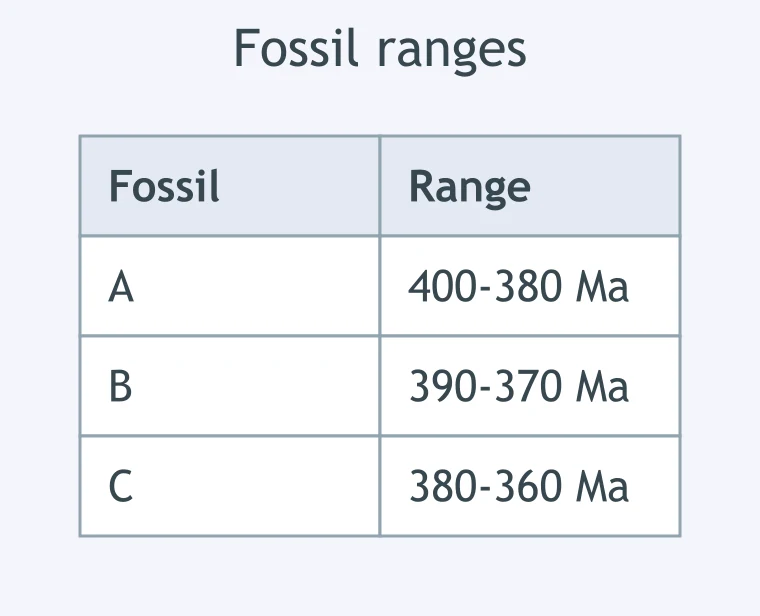
The table shows fossil ranges. Which fossil is the best index fossil for correlation?
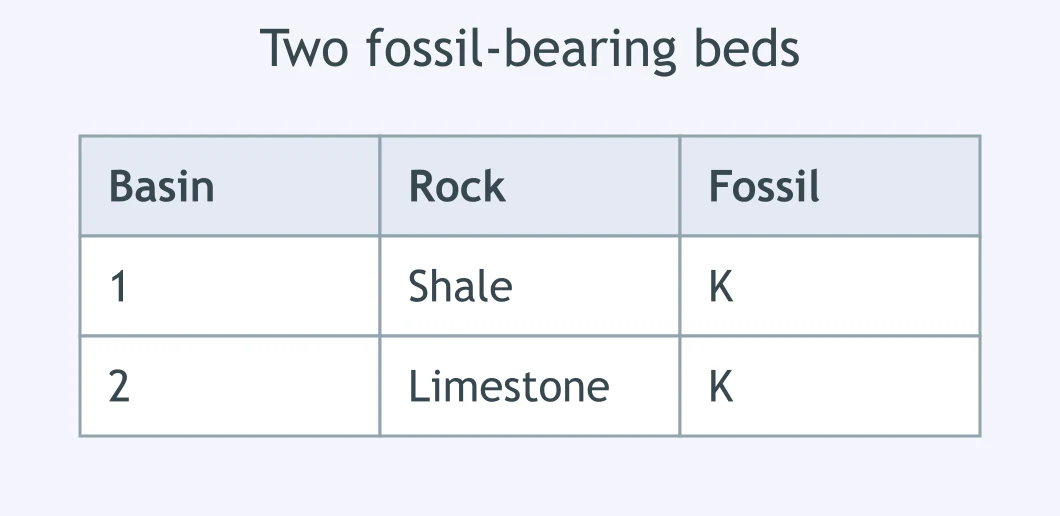
A shale in Basin 1 and a limestone in Basin 2 both contain short-ranged fossil K. What is the best conclusion?
Use the fossil-range table. A bed contains fossils A and B. What age range is most likely for the bed?
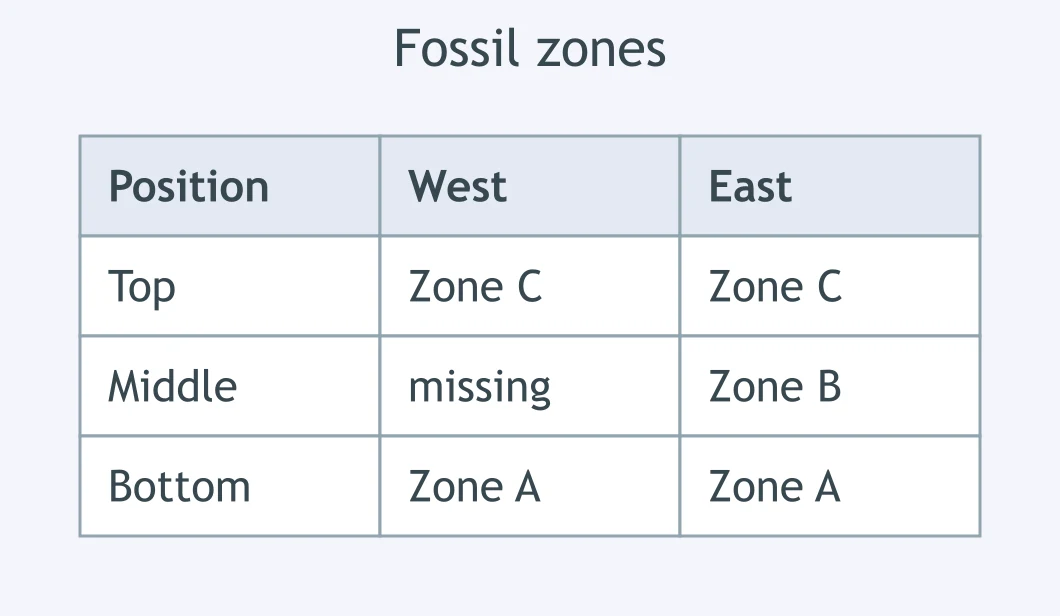
Use the two columns. Fossil zone B is present at East but missing at West between zones A and C. What does West most likely contain?
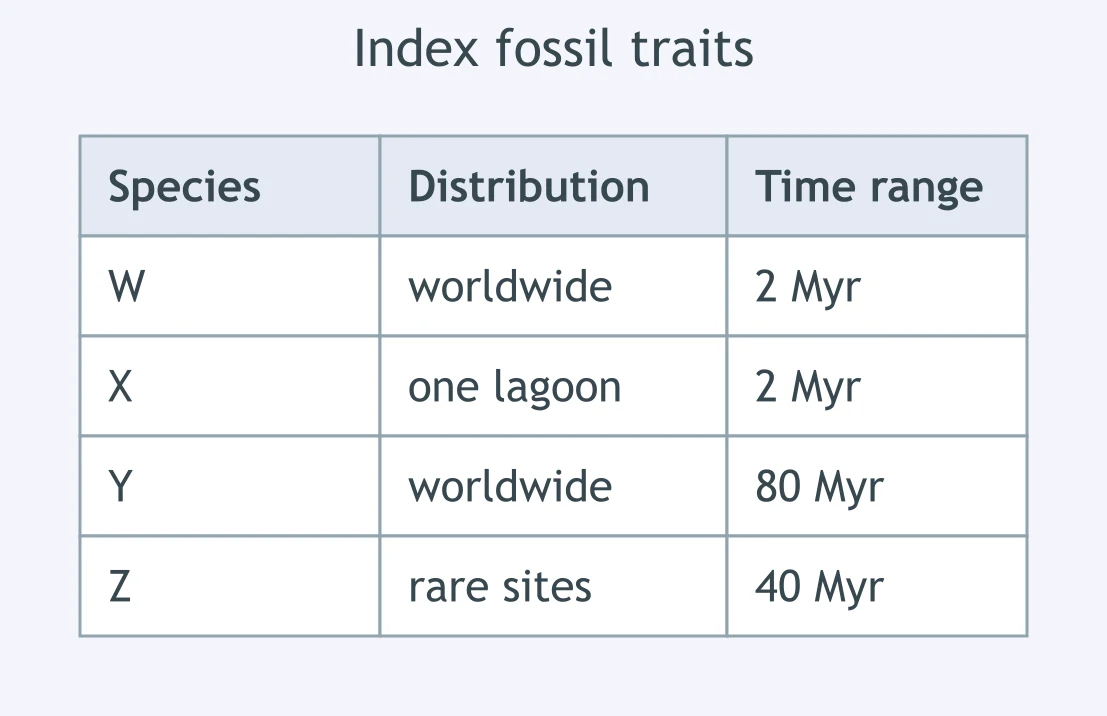
The table compares fossil traits. Which species has the best combination for an index fossil?
Use the table. Which western unit correlates with East unit C by fossil content?
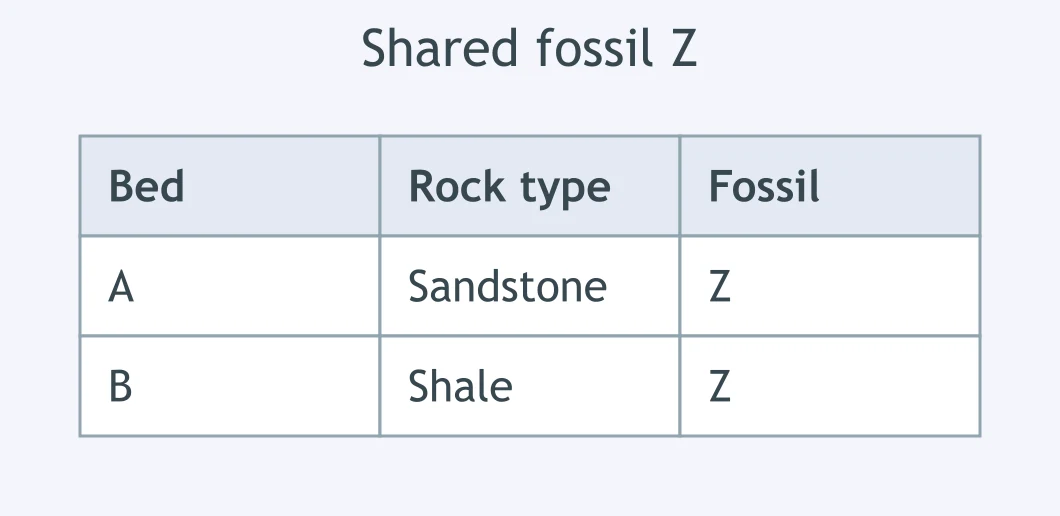
Two beds have different rock types but share short-ranged index fossil Z. What can geologists do with those beds?
Wood has 1/4 of its original carbon-14 remaining. Carbon-14 has a half-life of 5,730 years. About how old is the wood?
Use the decay data. A sample has 12.5% parent isotope remaining, and each half-life is 2,000 years. How old is it?
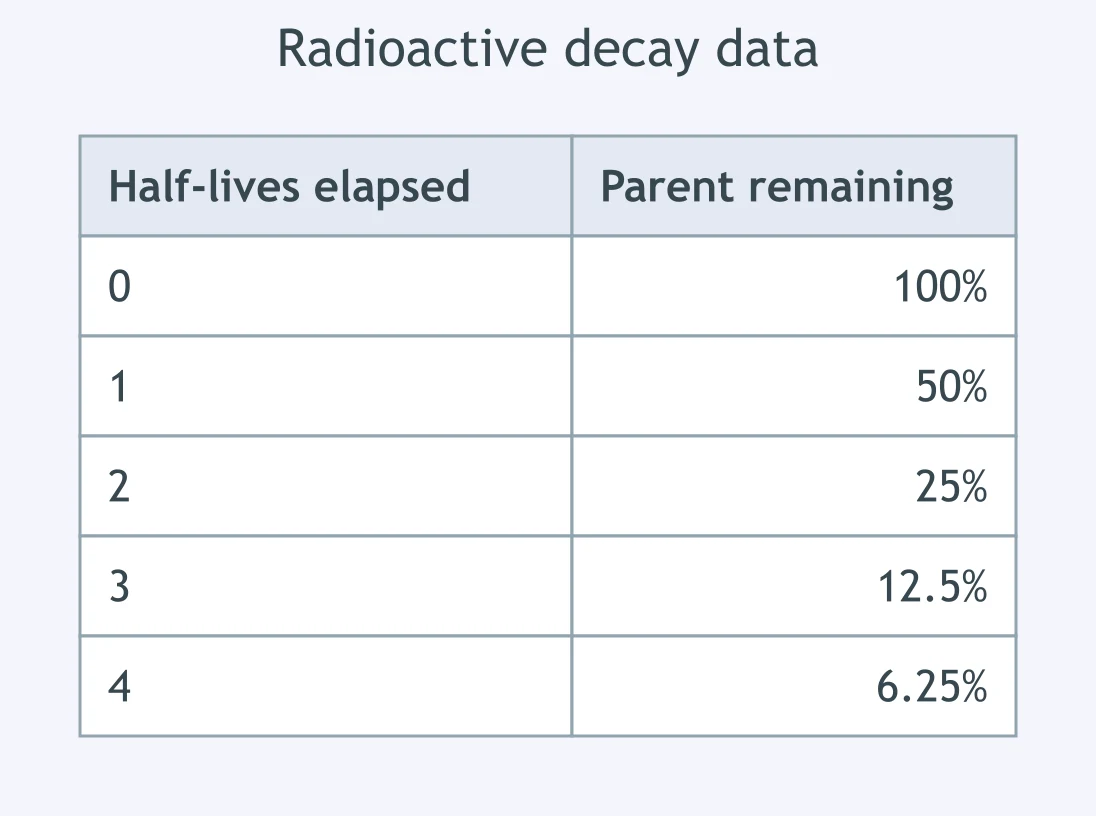
A mineral has 25% of its potassium-40 parent remaining. Potassium-40 has a half-life of 1.25 billion years. What is its age?
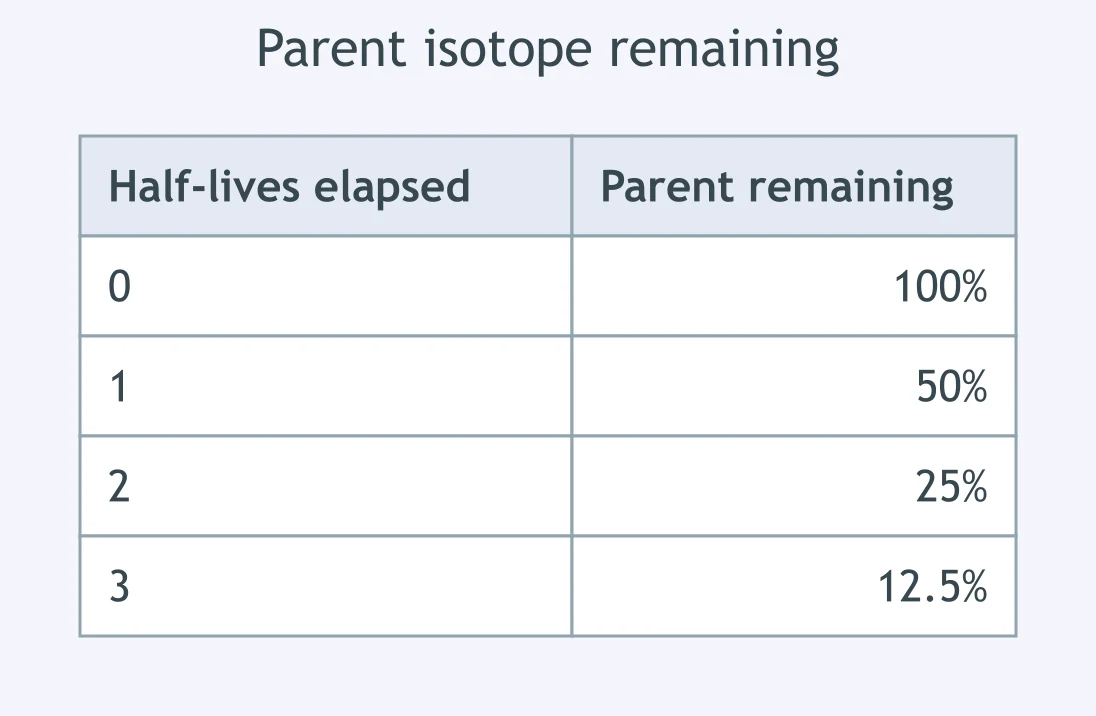
A zircon has equal amounts of uranium-238 parent and lead daughter, with no daughter initially. Uranium-238's half-life is 4.47 billion years. What age is indicated?
A sample has a parent-to-daughter ratio of 1:7 for uranium-235. Its half-life is 704 million years. What age is indicated?
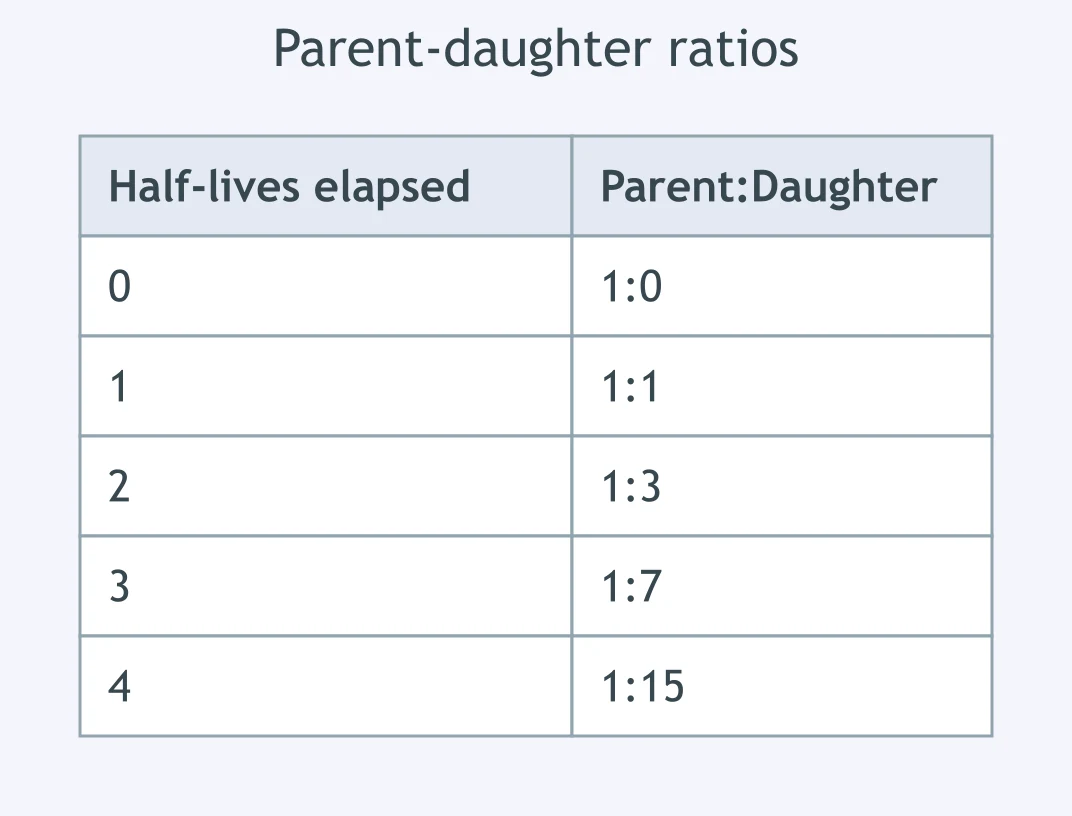
An isotope's half-life is 500 million years. A mineral began with 80 g of parent isotope and now has 10 g. How old is the mineral?
A lab warms, crushes, and wets a zircon crystal before dating it. What can the lab do to speed up the radioactive decay inside it?
Use the decay data. A bone has 6.25% of its carbon-14 remaining. Using a 5,730-year half-life, about how old is it?
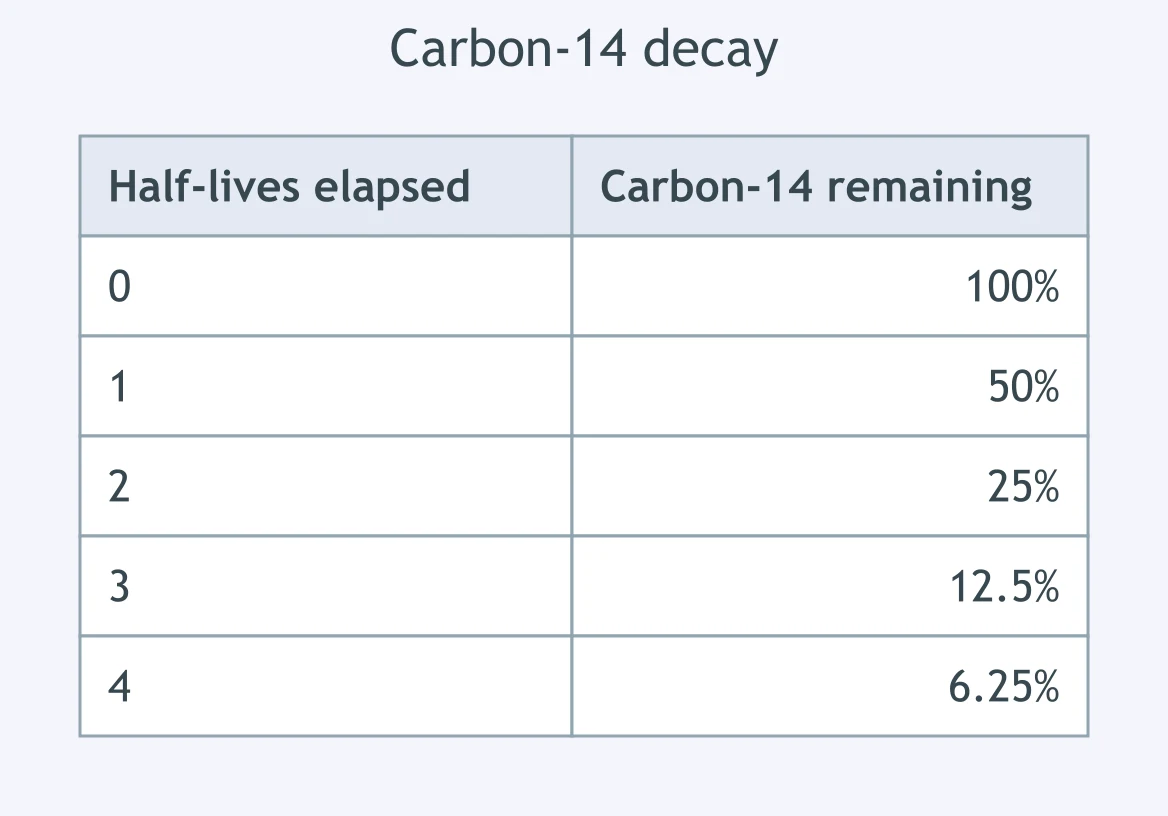
A volcanic mineral has 75% daughter isotope and 25% parent isotope. If the half-life is 80 million years, what is its age?
Use the decay curve. A sample plots at 12.5% parent remaining, and the isotope half-life is 200,000 years. What age is shown?
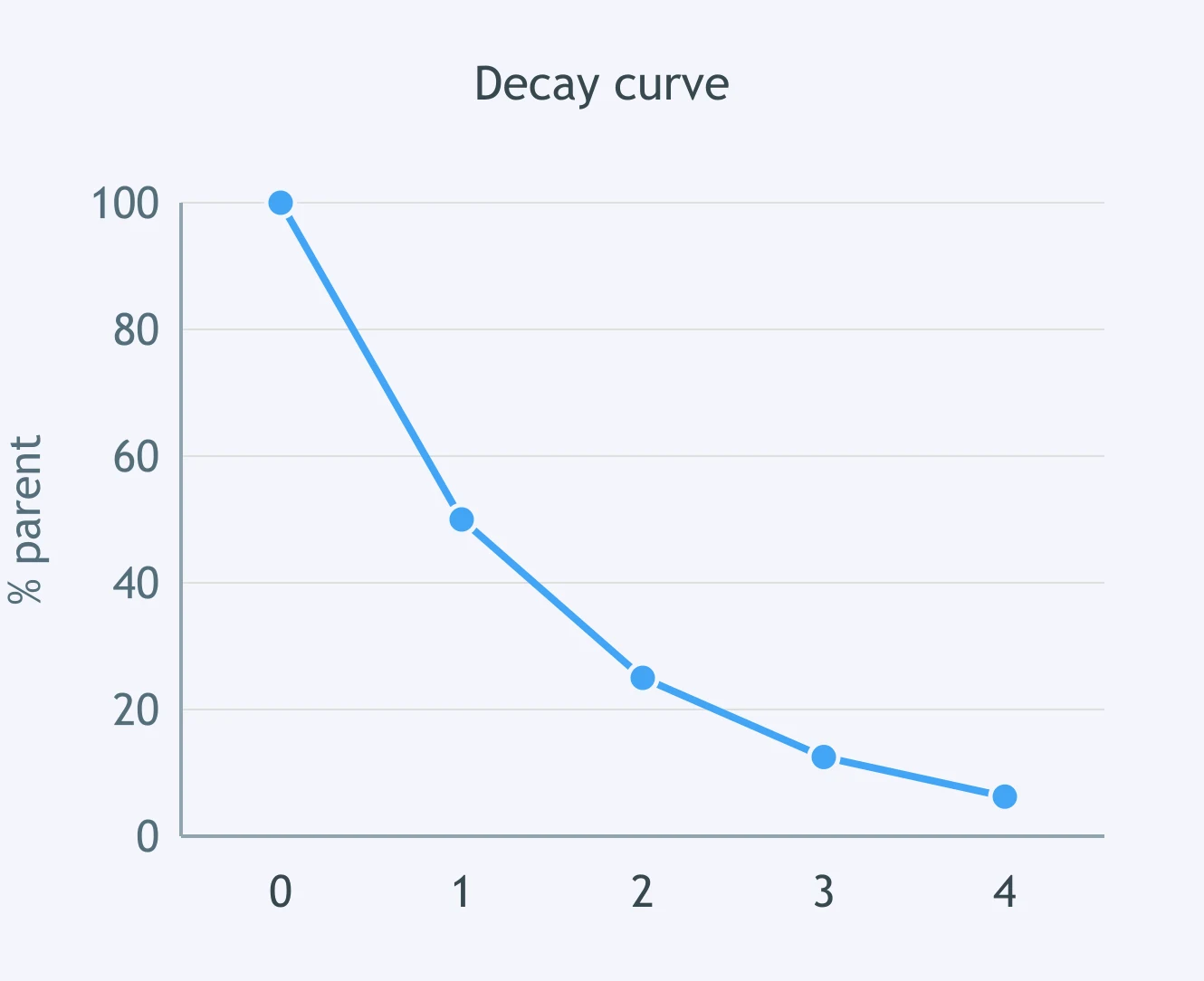
On the geologic time scale, what rank is larger than an era and is subdivided into eras?
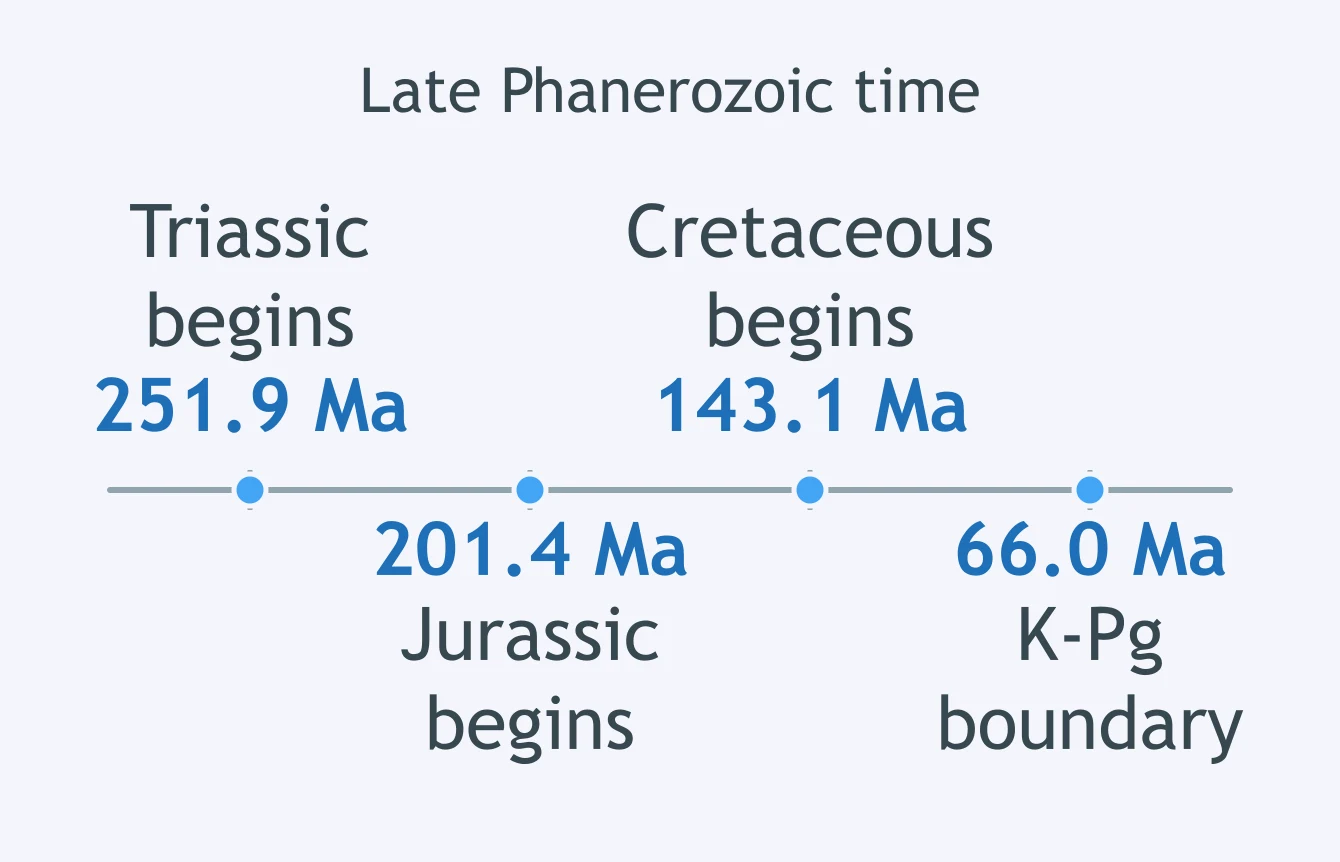
Triassic, Jurassic, and Cretaceous are periods shown together on the time scale. Which era contains them?
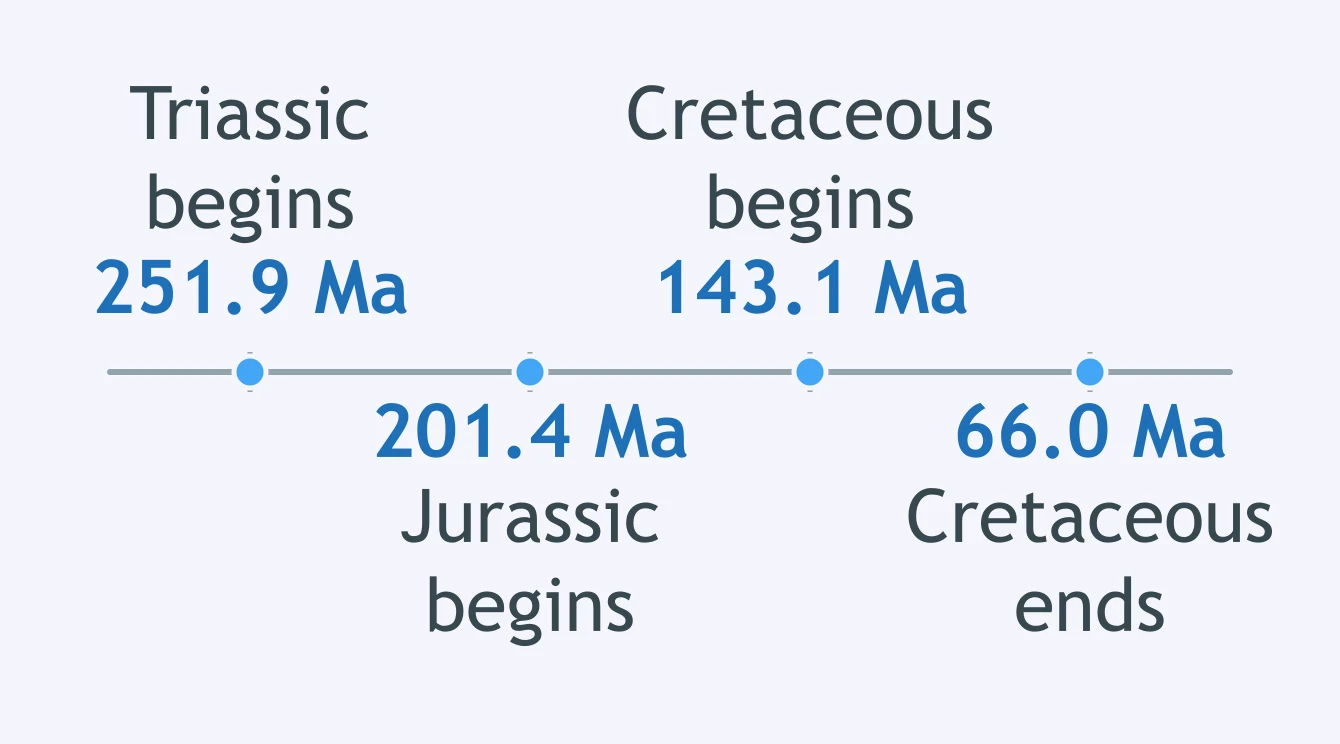
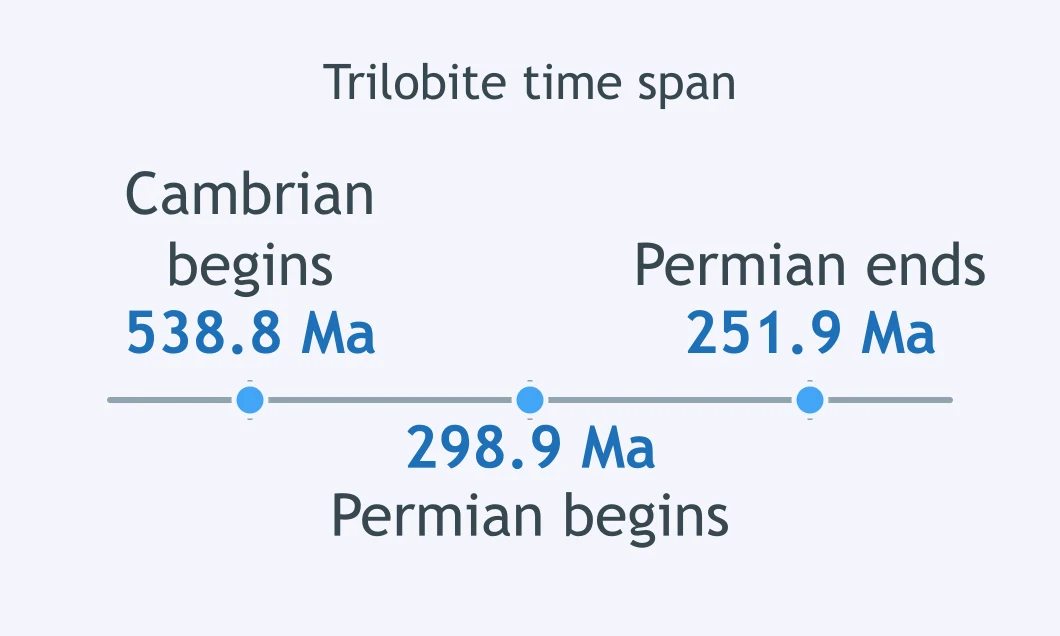
Trilobites appeared in the Cambrian and disappeared at the end of the Permian. In which era did they live?
The K-Pg boundary at about 66 million years ago marks the end of the Cretaceous. What era ended at that boundary?
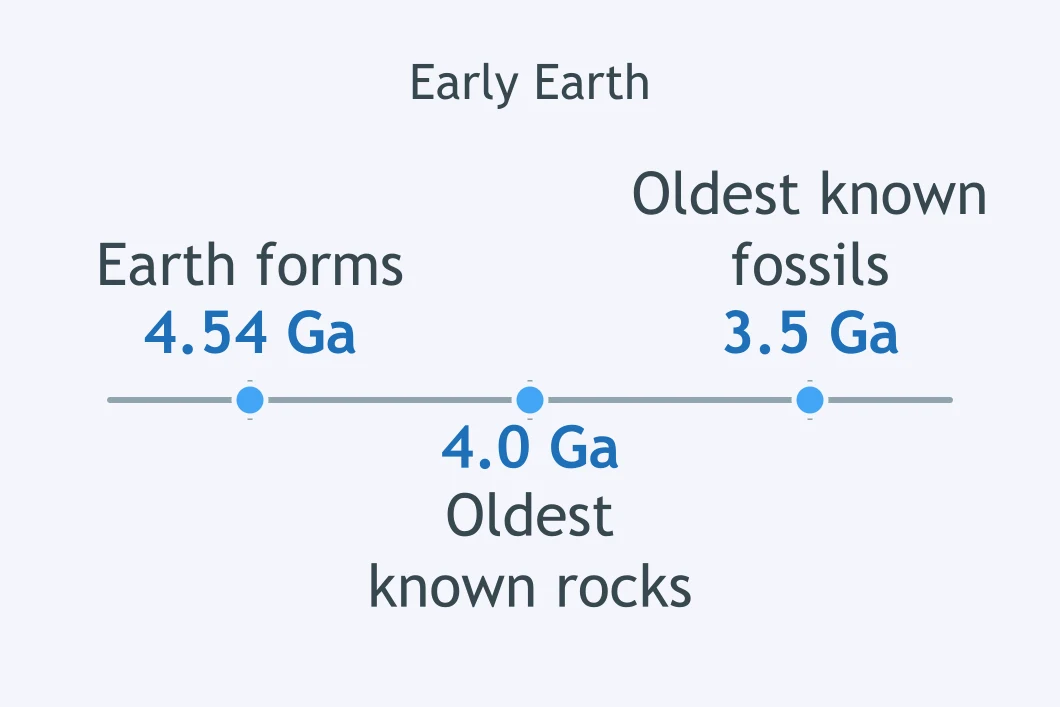
Earth formed about 4.54 billion years ago. On a time scale divided into eons, which eon includes Earth's formation?
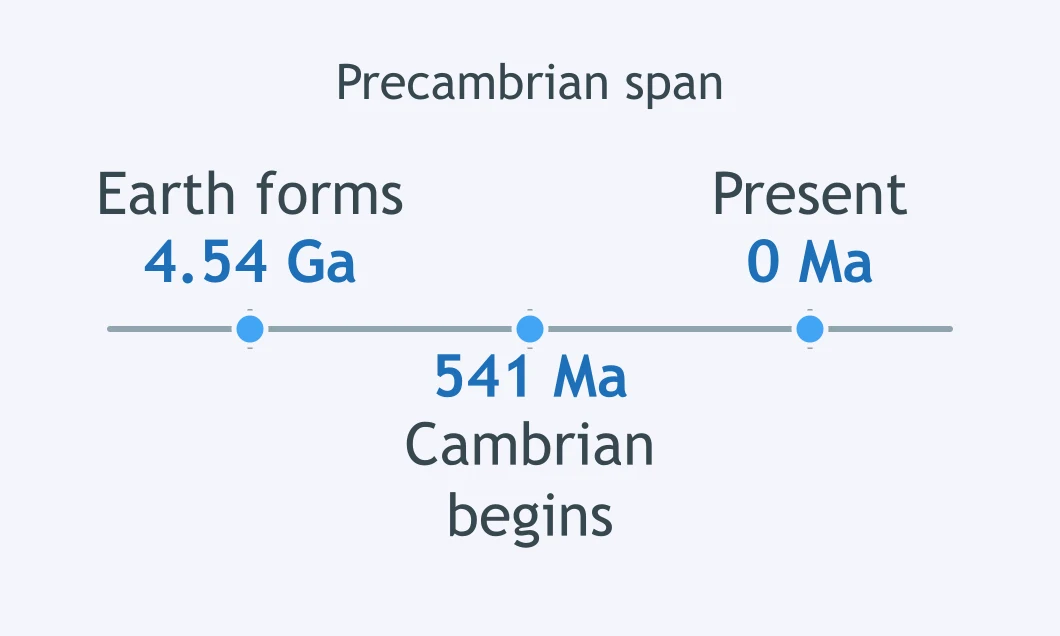
The Precambrian runs from Earth formation about 4.54 Ga to the start of the Cambrian near 541 Ma. About what share of Earth history is that?
Pleistocene and Holocene are epochs within the Quaternary. What rank is Quaternary on the geologic time scale?
In order from oldest to youngest, which sequence of Phanerozoic eras is correct?
A shale layer 12 meters thick accumulated at an average rate of 0.2 millimeters per year. About how long did deposition take?
A shoreline sandstone is 90 meters thick and represents 18 million years of deposition. What was the average accumulation rate?
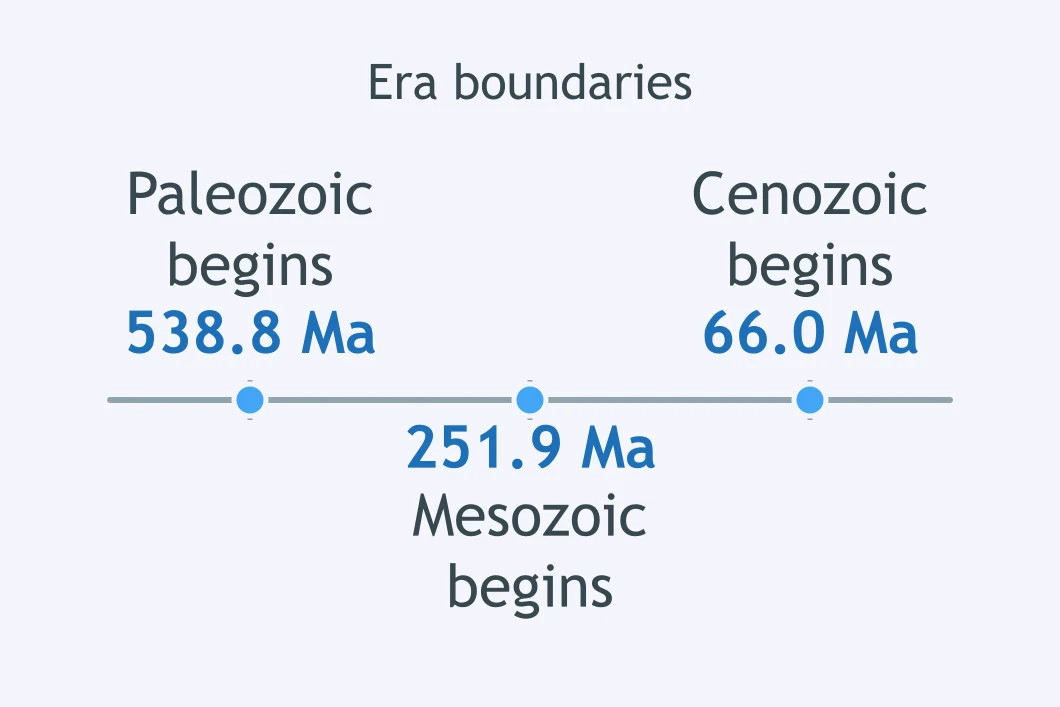
Use the era timeline. Which span is longer, Paleozoic or Mesozoic, and by about how much?
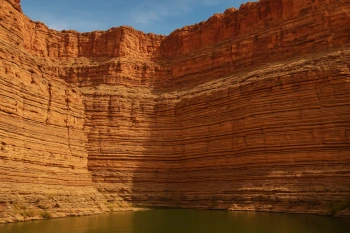
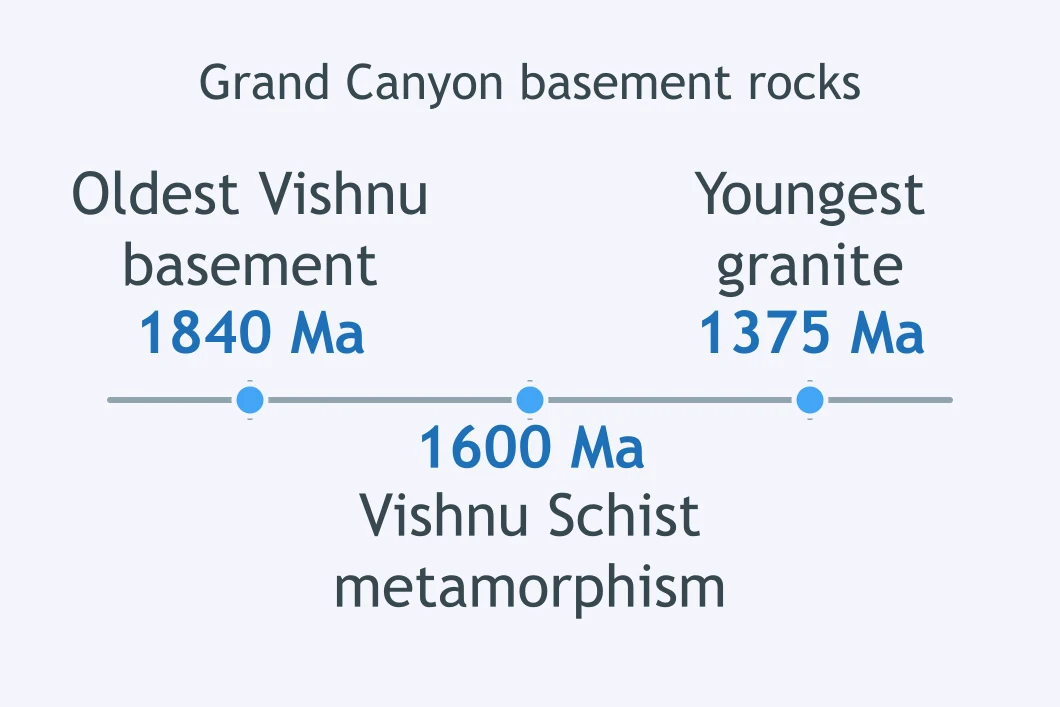
Vishnu Basement Rocks in Grand Canyon span from 1,840 Ma to 1,375 Ma. About how long is that rock record?
Crack the passcode before the zombies get in.
Answer, then swat bugs for bonus points.
Race through questions at your own speed.
Same question on every screen. Fastest wins.

Pick a tile, answer, hit bonuses and steals.
Precambrian and Paleozoic Earth
40 questions