Loading
by BlastRoom
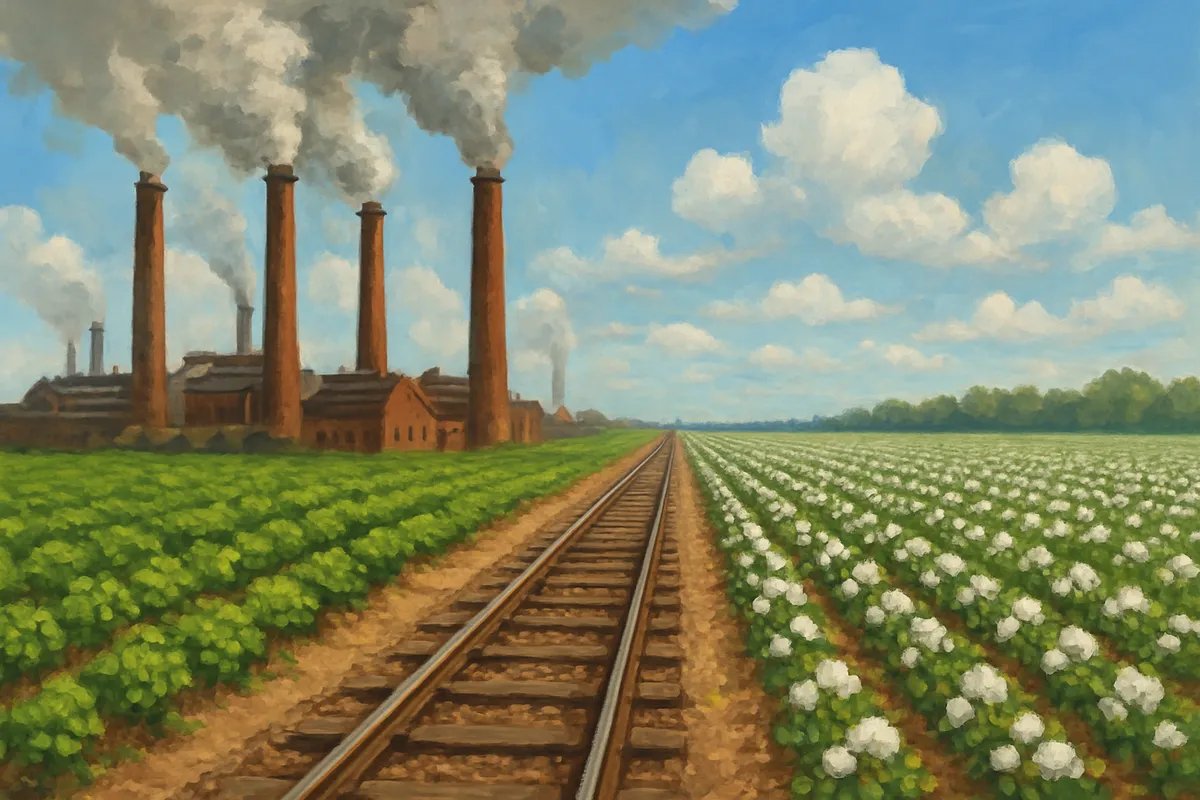
Compare the economies, labor systems, and interests of the North, South, and West before 1860.
#us_history#us_grade_8_social_studies
20 questions
One question set, multiple game modes. Tap any game to see it in action. Not sure which to pick?
Answer to place stones and capture territory.
Outrun the snow together.
Earn blasts, then hunt the other team.
Answer to earn energy, then climb.

The class blasts through walls together.
Bid on mystery lots. Most money wins.
Sell tours. Nice, standard, or a total scam.

Answer, restock, and serve the rush.
More correct answers pulls the rope your way.
Answer, then shoot down the alien wave.
Answer, then tap to leap the frozen ridge.
Use the table. Which section had the stronger industrial economy before the Civil War?
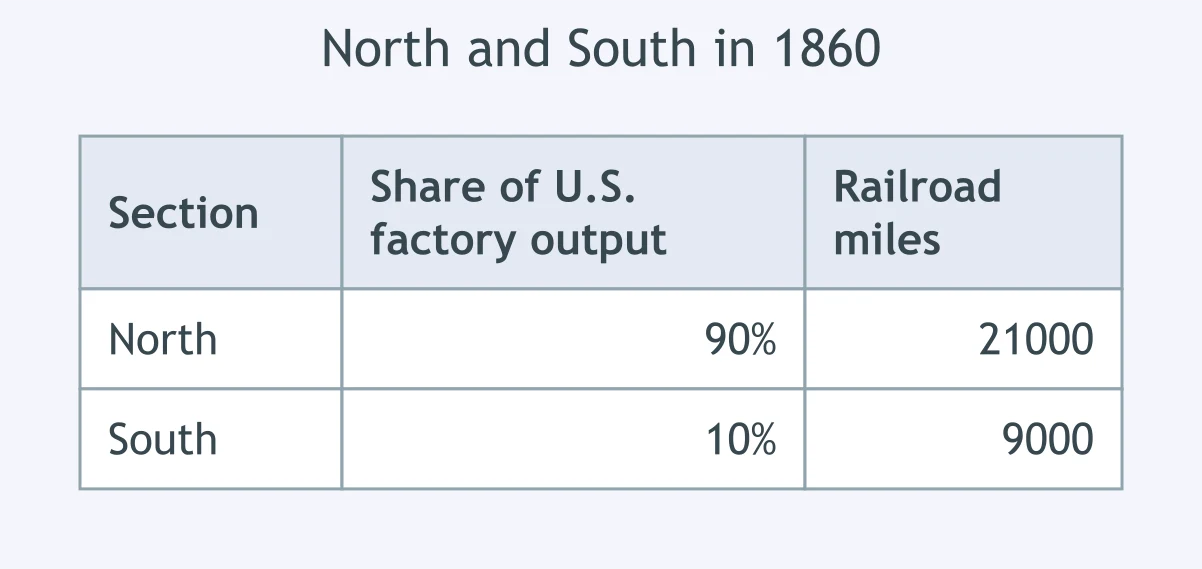
This section depended on cotton plantations, enslaved labor, and exports through river and coastal ports. Which section is described?
Settlers seeking affordable public land for family farms and routes to ship grain to markets were most tied to which section?
Use the comparison figure. Before 1860, which section of the United States does Section B describe?
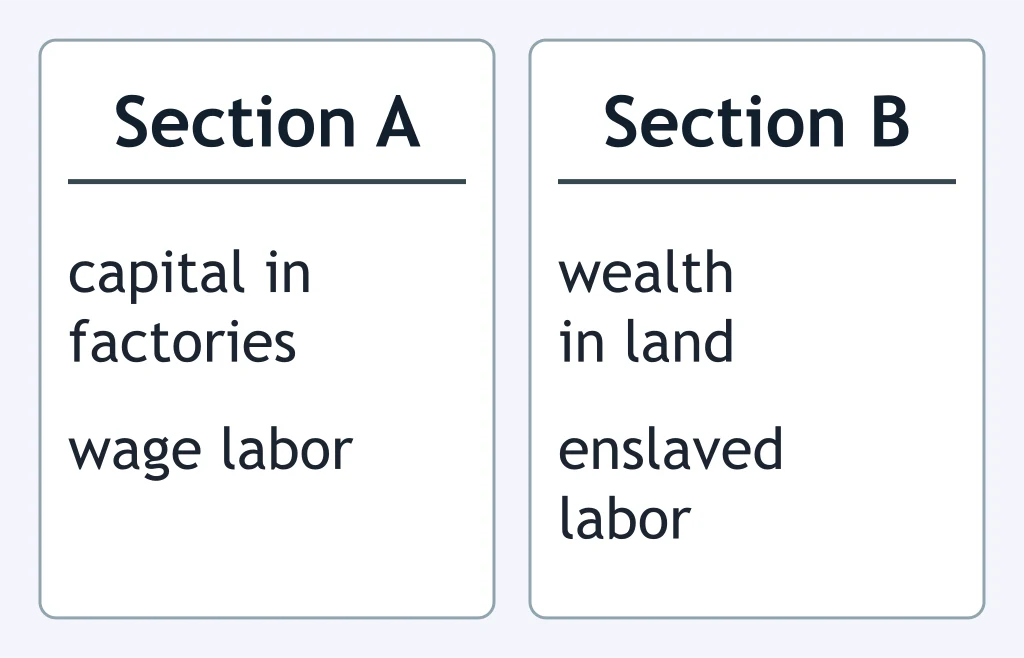
Merchants, textile mills, ironworks, immigrant labor, and dense port cities shaped the economy of which section before 1860?
Use the comparison figure. Before the Civil War, which section of the United States held the view shown for Section A?
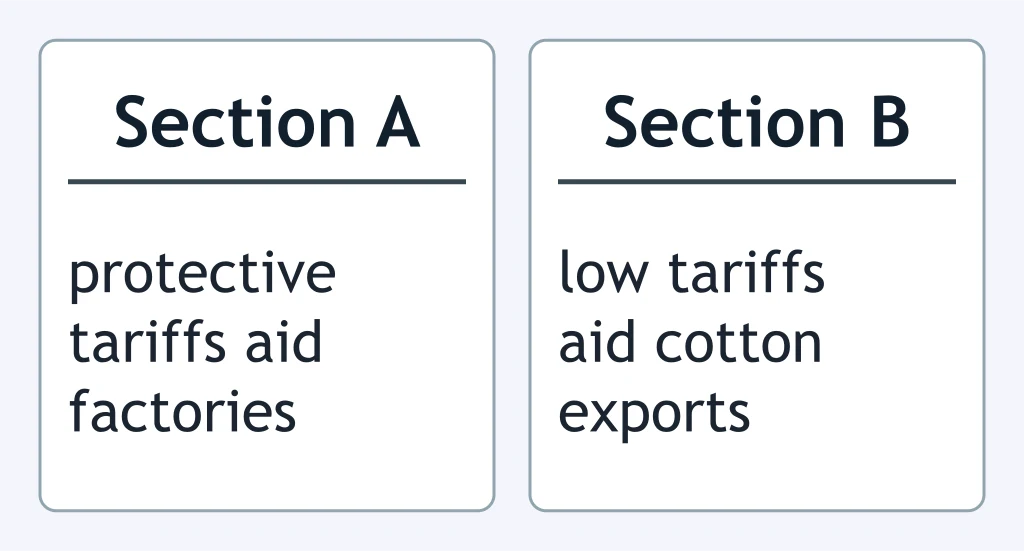
Planters who exported cotton and bought imported goods favored lower tariffs. Which section held this interest?
In debates over tariffs and public land in the 1820s and 1830s, both northern and southern leaders tried to win this section's votes. Which section was it?
Farmers in the interior wanted roads, canals, and railroads that carried crops to eastern markets. Which section gained most directly?
Manufacturers who wanted tariffs, banking, and a larger home market for factory goods usually came from which section?
Wage earners in shops, mills, and shipyards who could quit and look for other jobs fit which labor system?
Workers were held as property, bought and sold, and forced to grow cotton without wages. Which labor system fits this evidence?
Households clearing and working their own land in newly opened territories, with neighbors trading help at harvest, best fit which labor system before 1860?
Merchants supplied raw materials to rural families, who spun thread or stitched shoes at home for piece-rate pay, then returned the finished goods. Which labor system does this outwork arrangement fit?
Slaveholders rented out enslaved workers for a year at a time to other farms, businesses, or railroads in exchange for a fee paid to the owner. Which labor system relied on this hiring-out practice?
In 1820, Congress admitted Missouri and Maine at the same time, keeping the Senate evenly divided. What conflict was Congress managing?
The Kansas-Nebraska Act let settlers in new territories decide a key issue by popular vote, and rival settlers rushed into Kansas. What conflict intensified?
The Compromise of 1850 included a stricter Fugitive Slave Act, angering many northerners while pleasing slaveholders. Which sectional conflict did that law deepen?
Northern factory owners wanted a tax on imported goods, but southern cotton planters said it raised their costs. What sectional conflict did this create?
Western small farmers favored free-soil settlement, while southern planters wanted to bring enslaved workers west. What conflict is shown?
Crack the passcode before the zombies get in.
Answer, then swat bugs for bonus points.
Race through questions at your own speed.
Same question on every screen. Fastest wins.

Pick a tile, answer, hit bonuses and steals.

Dred Scott, Harpers Ferry and the Election of 1860
20 questions