Loading
by BlastRoom
Practice explaining slavery compromises from 1820 to 1854 and why they failed to settle sectional conflict.
#us_history#us_grade_8_social_studies
40 questions
One question set, multiple game modes. Tap any game to see it in action. Not sure which to pick?
A law admitted California as a free state, organized Utah and New Mexico, settled Texas claims, ended the DC slave trade, and strengthened fugitive-slave enforcement. What measure was it?
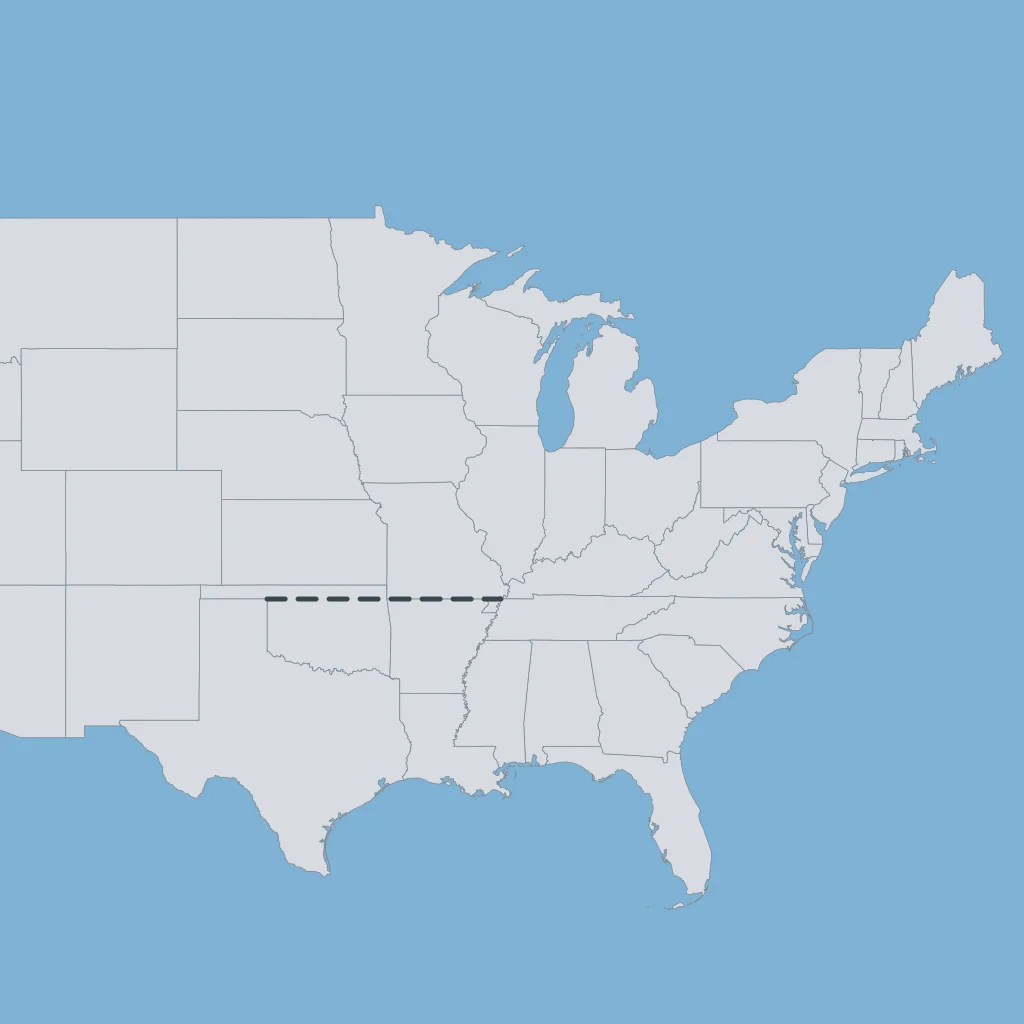
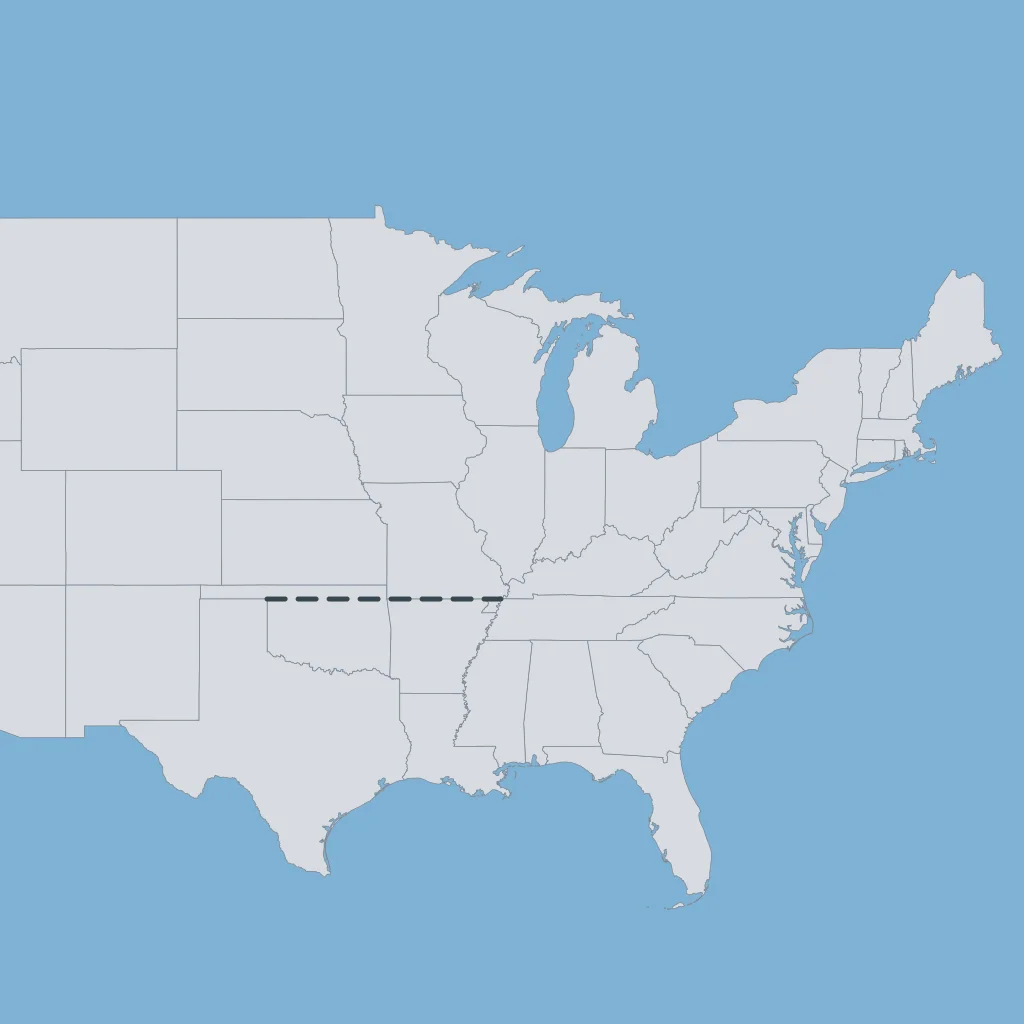
In 1820, Congress agreed to admit Maine as a free state and a new slave state. It also barred slavery in most Louisiana Purchase land north of the dashed line on the map (36°30′). What measure was it?
Which senator sponsored the 1854 law that let settlers vote on slavery and made the Missouri Compromise line inoperative?
A law required federal and local officials to help capture people claimed by slaveholders and punished anyone who helped them get away. What law was it?
Henry Clay's single omnibus bill on California and the Mexican Cession was defeated in the Senate, so Stephen Douglas broke it into separate bills to win passage. What package resulted?
Which Speaker of the House helped win passage of the Missouri Compromise in 1820 and later became known as the Great Compromiser?
A law used popular sovereignty in two new territories, and rival settlers soon fought over slavery in one of them. What act was it?
A statute let federal commissioners order people returned to those who claimed to own them and barred the accused from testifying at their own hearings. What statute was it?
President Zachary Taylor opposed a set of bills in Congress, but he died in office. The new president, Millard Fillmore, signed them. What package was it?
In 1854, Abraham Lincoln returned to politics and gave speeches against a new law that he said could spread slavery. What law was it?
The dashed line on the map is 36°30′. Under the Missouri Compromise, slavery was barred in most Louisiana Purchase land north of this line, except Missouri. What did this line try to do?
The Missouri Compromise admitted Maine and Missouri together. What problem was that pairing meant to solve in the Senate?
Under the Compromise of 1850, what did California's admission as a state decide about slavery there?
The Compromise of 1850 organized Utah and New Mexico territories. Which question did Congress leave for those territories to settle later?
The Compromise of 1850 made one change in Washington, DC, that pleased many antislavery Northerners. What was it?
Texas gave up claims to parts of New Mexico under the Compromise of 1850. What did Texas receive in return?
The Fugitive Slave Act of 1850 changed who could be drawn into capturing people accused of escaping slavery. What did it decide?
Under the Fugitive Slave Act, commissioners could issue certificates returning accused fugitives after summary hearings. What effect did this have?
The map shades present-day Kansas and Nebraska, and the dashed line is 36°30′. The Kansas-Nebraska Act declared the Missouri Compromise restriction inoperative and void. What did that provision decide?
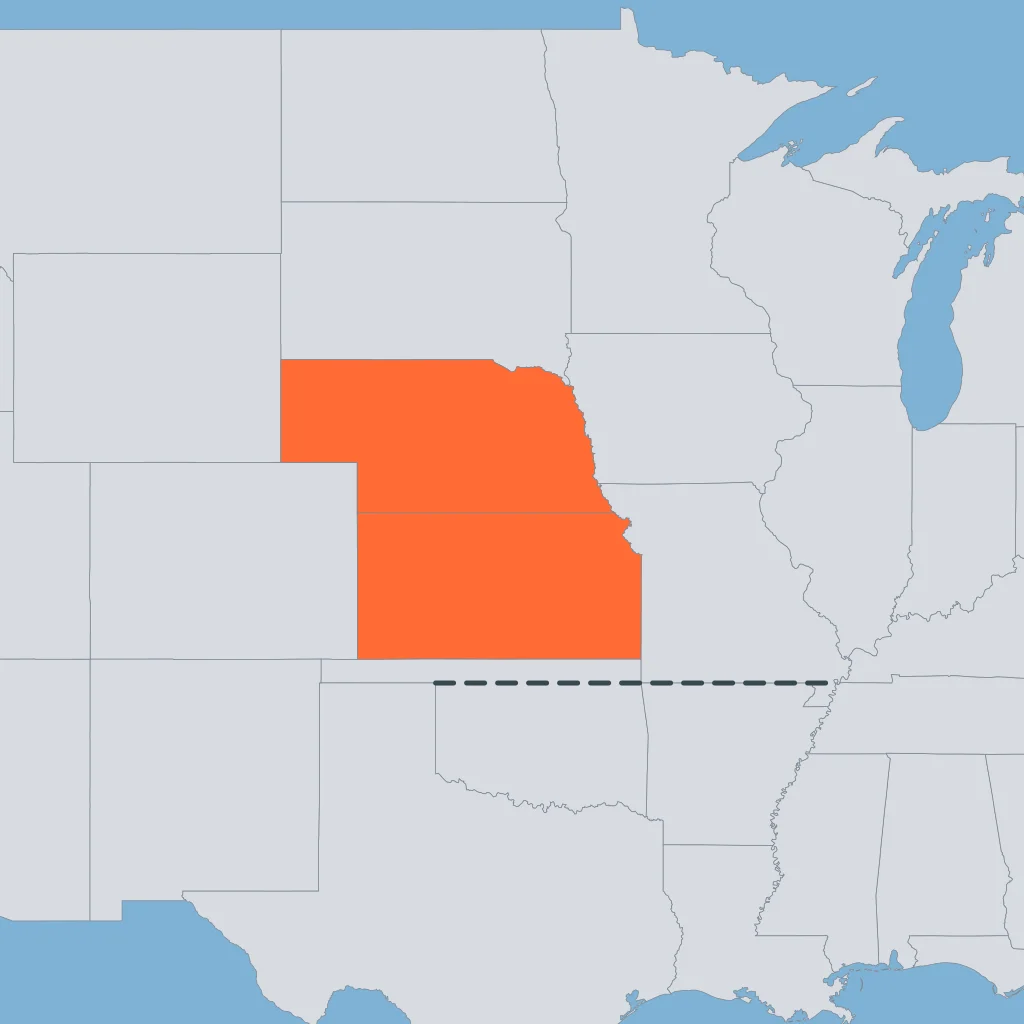
The Kansas-Nebraska Act let settlers "regulate their domestic institutions in their own way." What were voters in Kansas expected to decide?
The Missouri Compromise line applied only to Louisiana Purchase land. Why did that limit cause trouble after the war with Mexico?
Why did the Missouri Compromise fail to settle slavery permanently even though it set a geographic line?
Why did the Compromise of 1850 soon anger many Northerners despite calming the California crisis?
Why did popular sovereignty in Utah and New Mexico fail to end sectional conflict after 1850?
Why did the Fugitive Slave Act of 1850 anger many people in free states who had paid little attention to slavery before?
Why did the Fugitive Slave Act's fines and jail terms make it especially divisive in the North?
Why did newspapers in the 1850s call the territory "Bleeding Kansas" after the Kansas-Nebraska Act?
The map shades present-day Kansas and Nebraska, and the dashed line is 36°30′. Why did the 1854 repeal of this line outrage many antislavery Northerners?
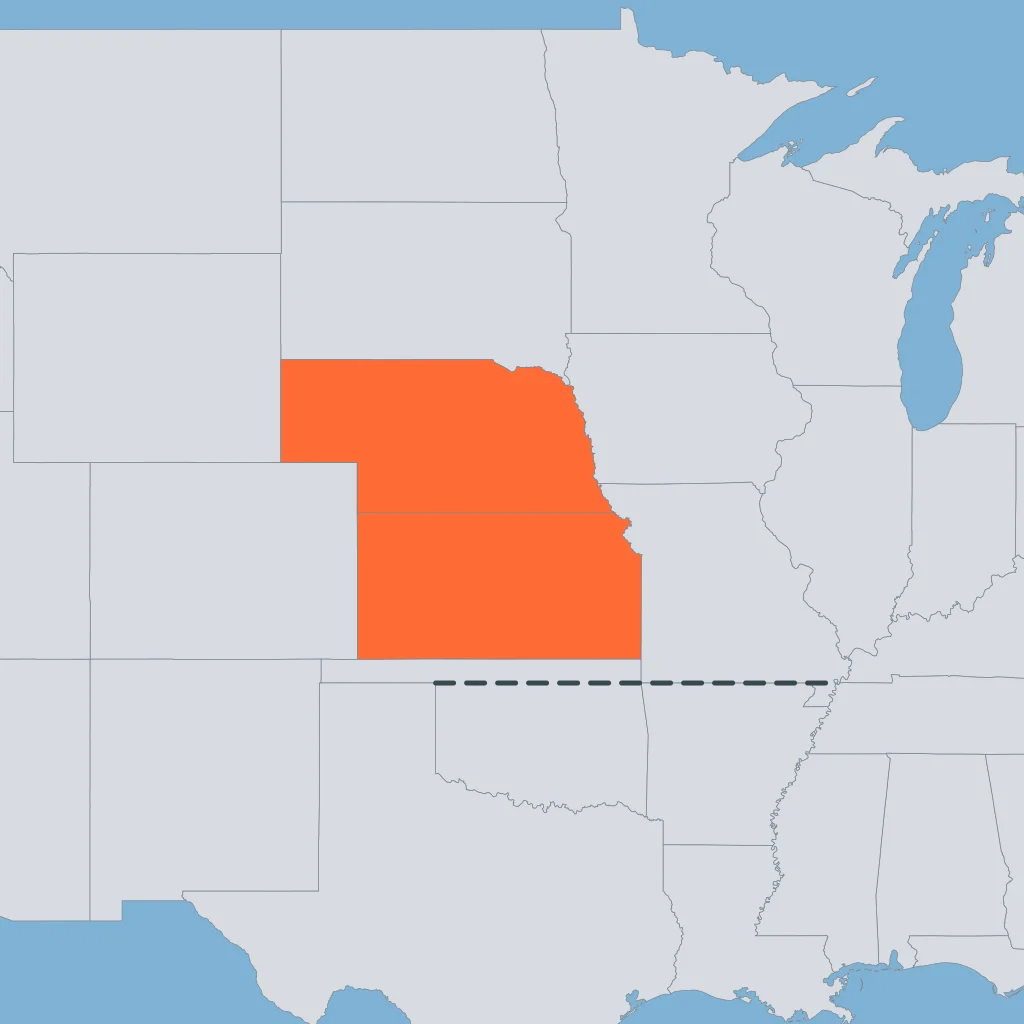
Popular sovereignty sounded like a compromise, but Kansas elections became bitter contests. Why did the plan fail there?
Why did the Kansas-Nebraska Act move the United States closer to civil war?
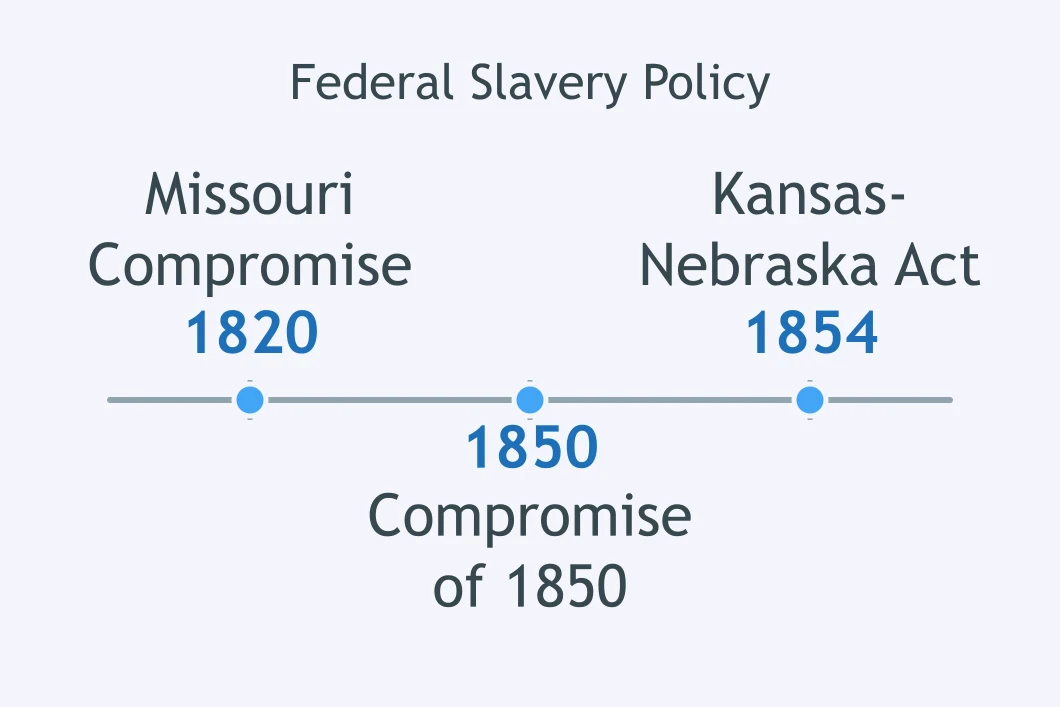
Use the timeline of slavery compromises. Which policy came earliest in the sequence?
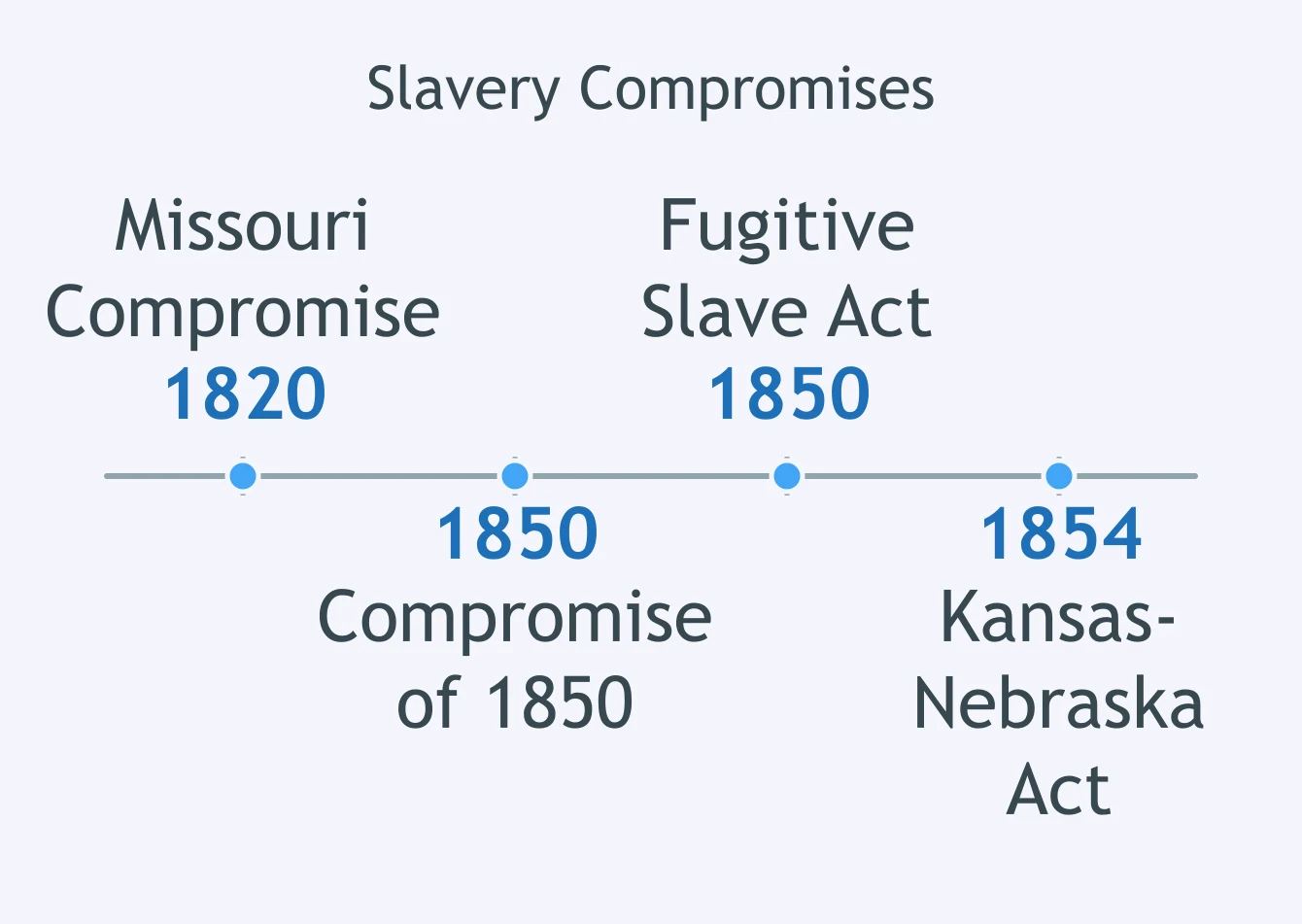
Use the timeline. What law came after the 1850 measures but before the Civil War began?
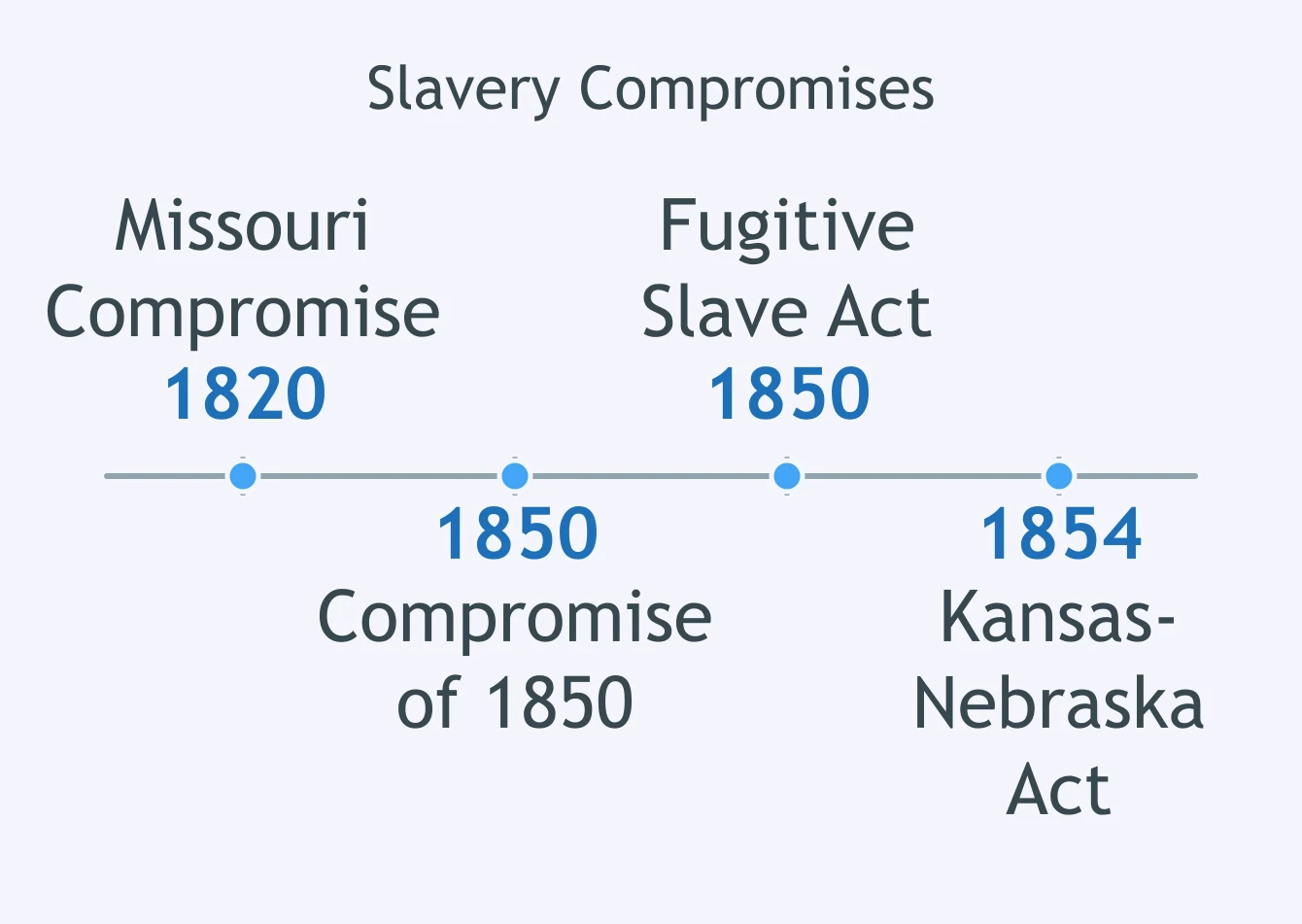
In 1820, Thomas Jefferson wrote that a fight in Congress over slavery woke him "like a fire bell in the night." What measure came out of that fight?
The 1820 agreement paired free and slave state admissions. What later measure admitted California as a free state without a slave-state partner?
Use the timeline. In what year did the Fugitive Slave Act take effect relative to California's admission as a free state?
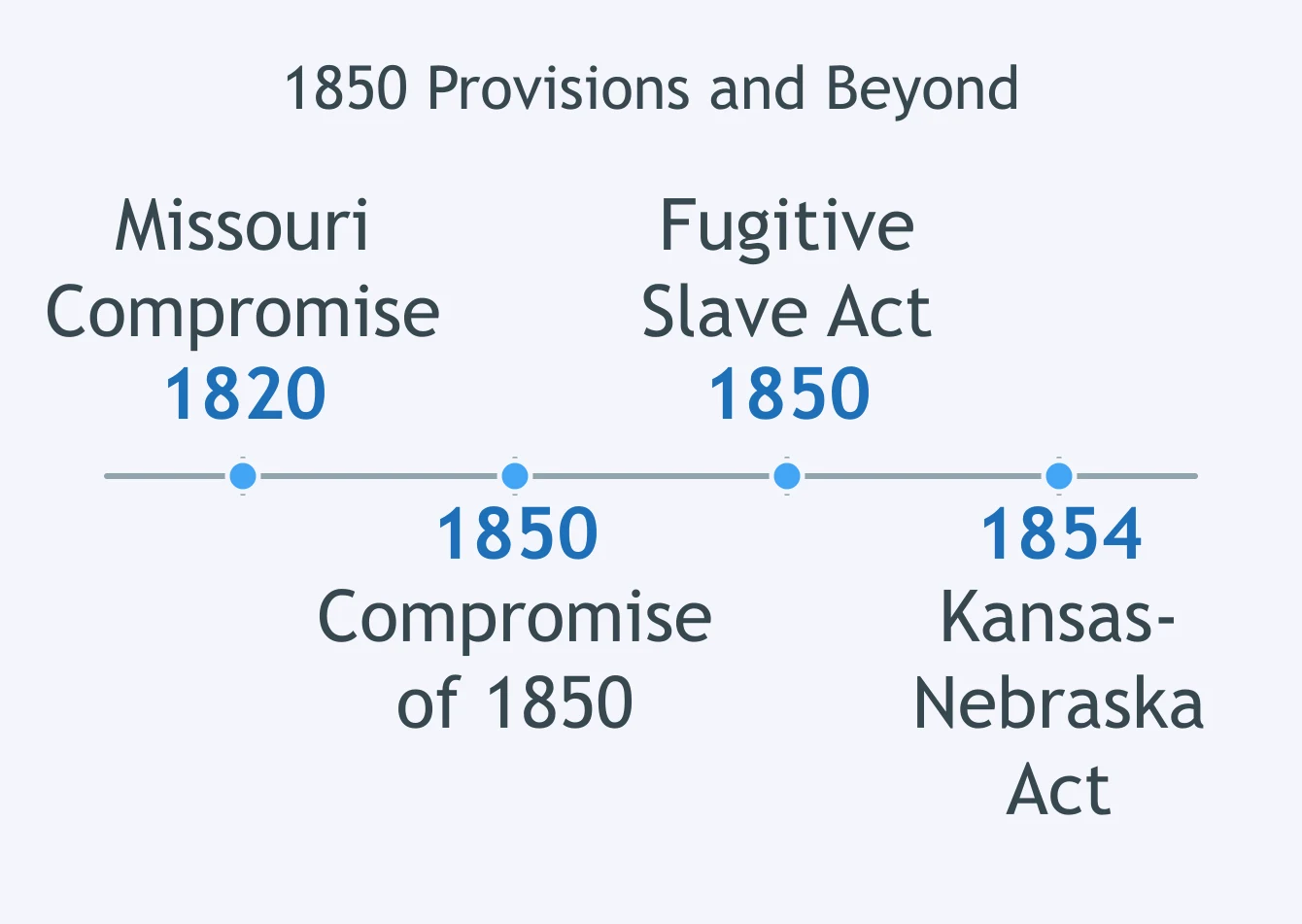
Use the timeline. What compromise stood between the Missouri Compromise and the Kansas-Nebraska Act?
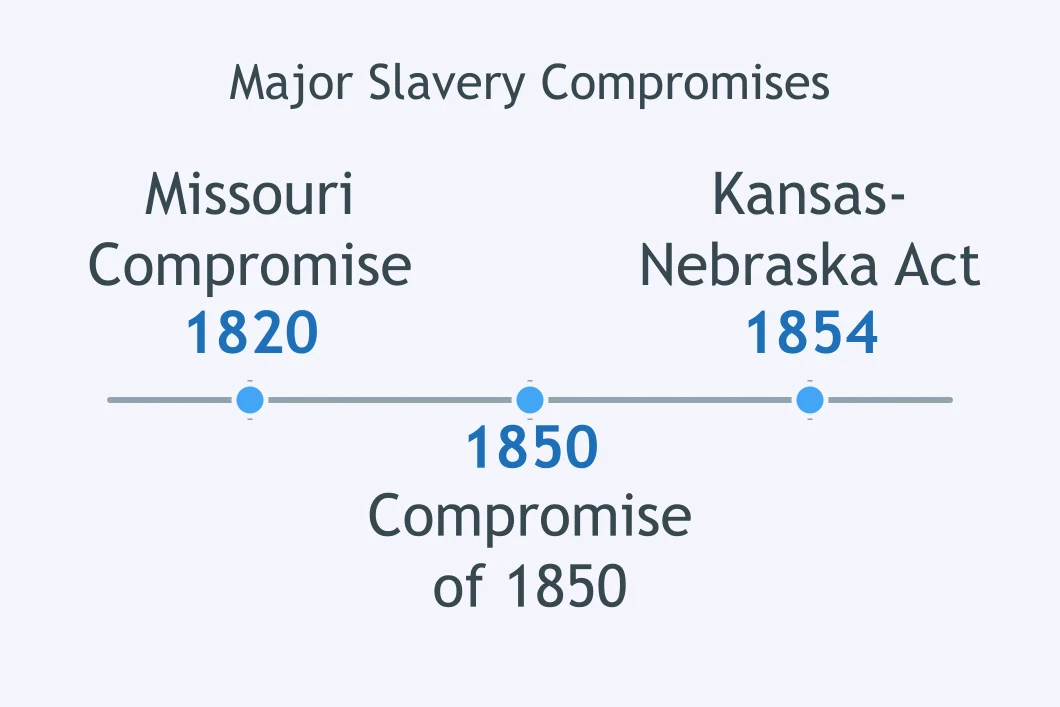
Compared with the Missouri Compromise, the Compromise of 1850 did not draw a new national latitude line. What method did it use in Utah and New Mexico?
Use the timeline. How many years stood between the Missouri Compromise's 36°30′ line and its repeal by the Kansas-Nebraska Act?
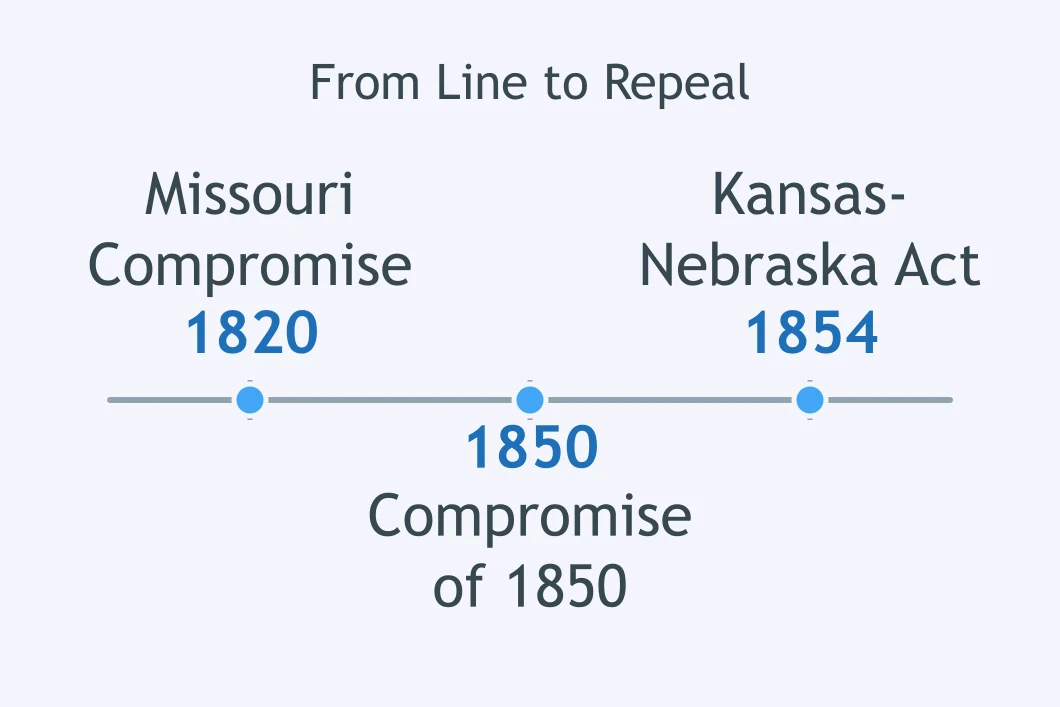
One crisis followed Missouri statehood and the Louisiana Purchase; another followed land gained from Mexico. What later measure addressed the Mexican Cession crisis?
Use the timeline. A student lists Missouri Compromise, Compromise of 1850, and Kansas-Nebraska Act in order. What change does the order show?
Crack the passcode before the zombies get in.

Pick a tile, answer, hit bonuses and steals.
Secession and the Outbreak of War
20 questions