Loading
by BlastRoom
Survivorship Curves and r/K Strategists for high school Environmental Science, on-level and AP. Covers AP Environmental Science Unit 3: Populations.
#environmental_science
25 questions
One question set, multiple game modes. Tap any game to see it in action. Not sure which to pick?
Answer to place stones and capture territory.
Outrun the snow together.
Earn blasts, then hunt the other team.
Answer to earn energy, then climb.

The class blasts through walls together.
Bid on mystery lots. Most money wins.
Sell tours. Nice, standard, or a total scam.

Answer, restock, and serve the rush.
More correct answers pulls the rope your way.
Answer, then shoot down the alien wave.
Answer, then tap to leap the frozen ridge.
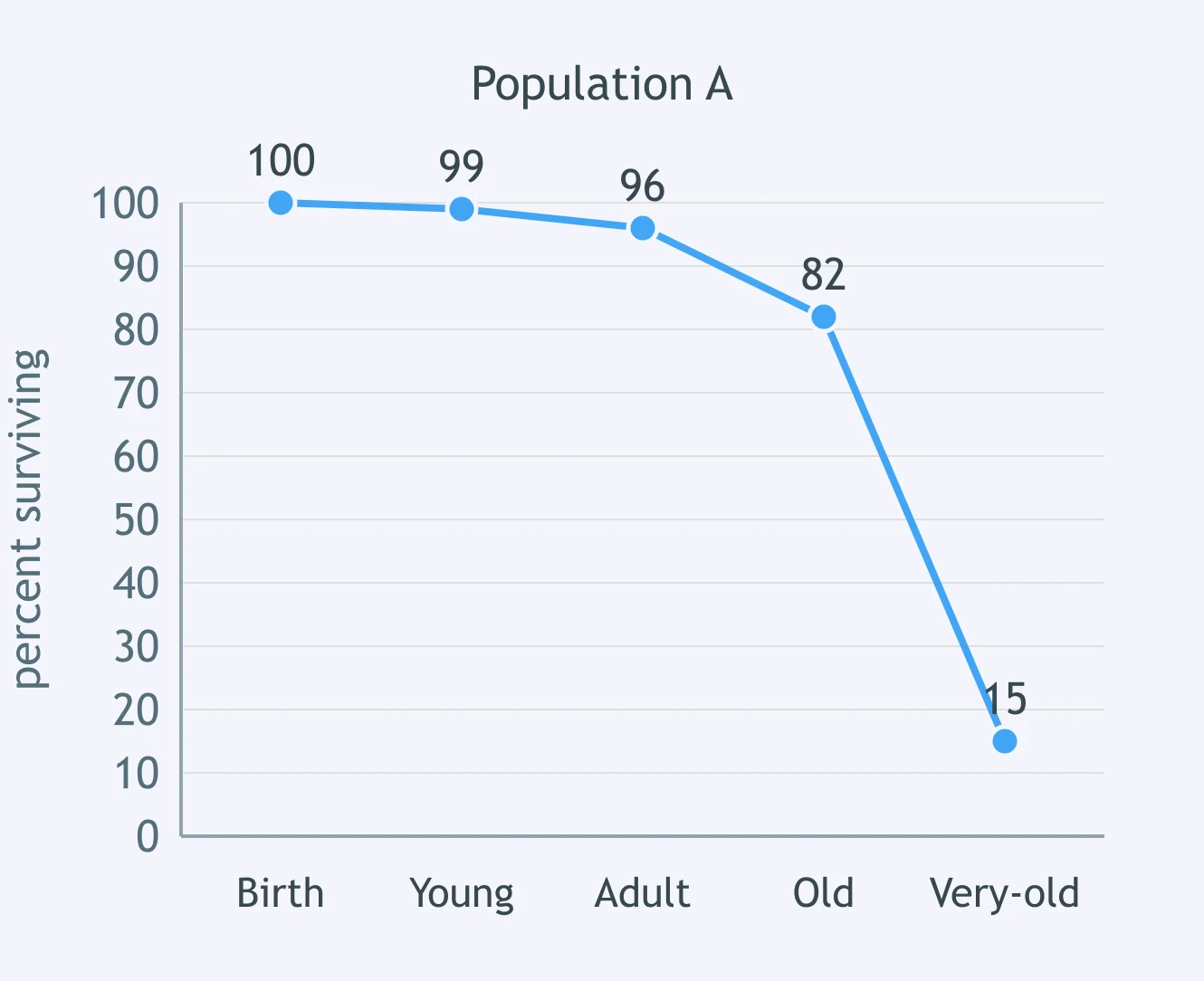
Use the survivorship graph for Population A. Which curve type does it show?
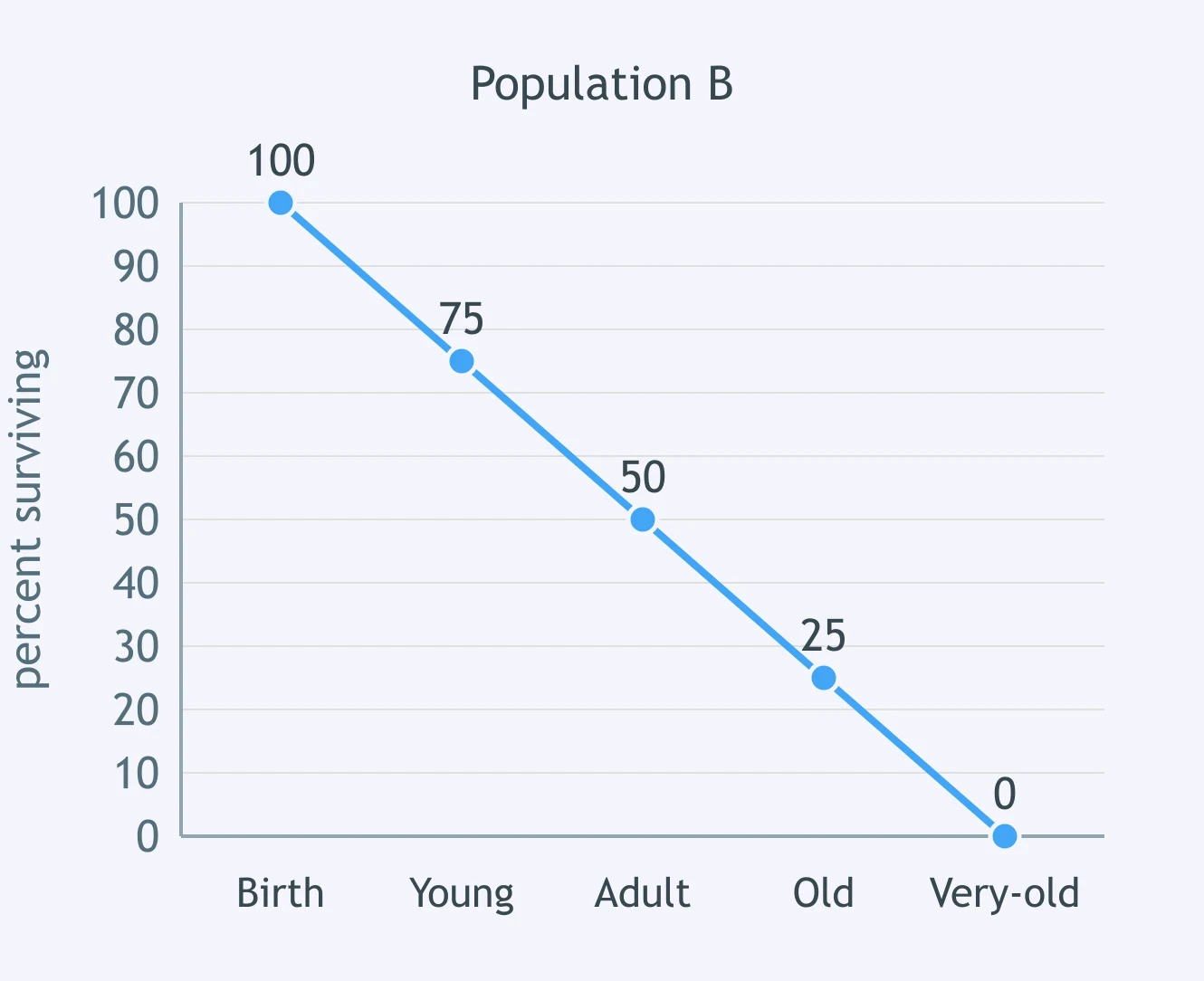
A field team graphed the percent of Population B surviving at each age interval. Identify its survivorship curve type.
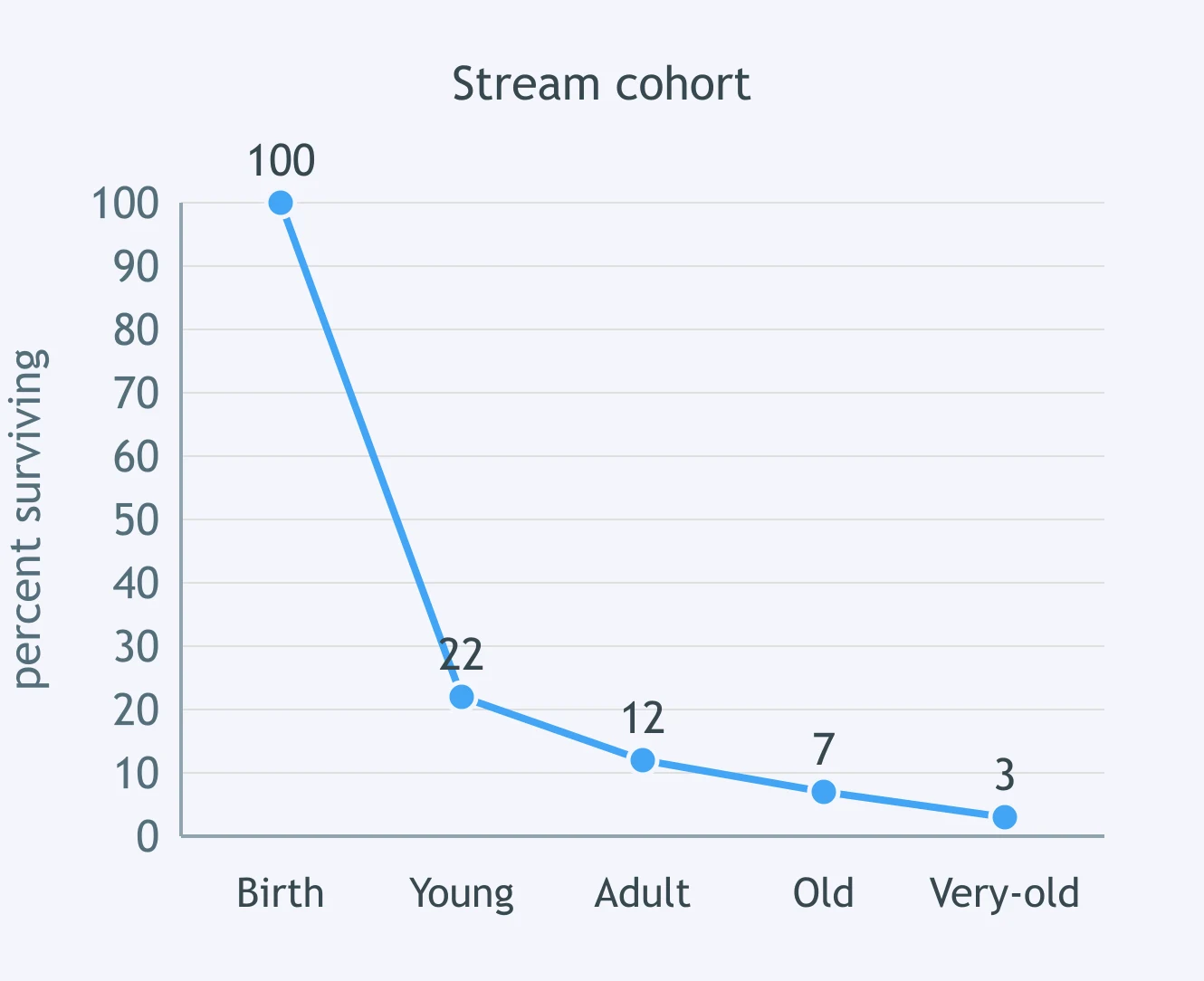
The graph shows survival in a cohort of stream organisms after a nearby construction project increased sediment runoff. Which survivorship curve type is shown?
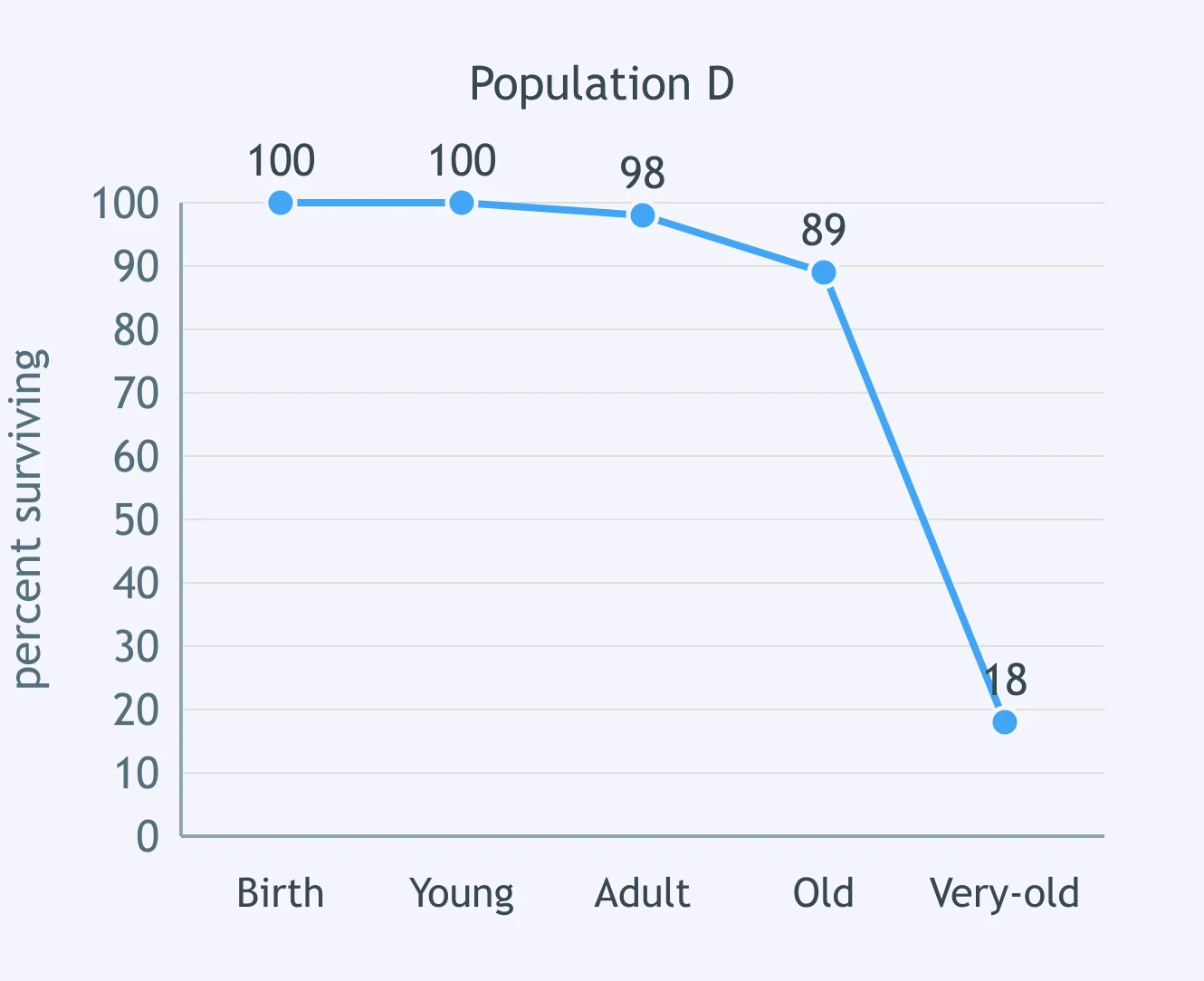
A wildlife biologist recorded the survival pattern shown for Population D. What type of survivorship curve is it?
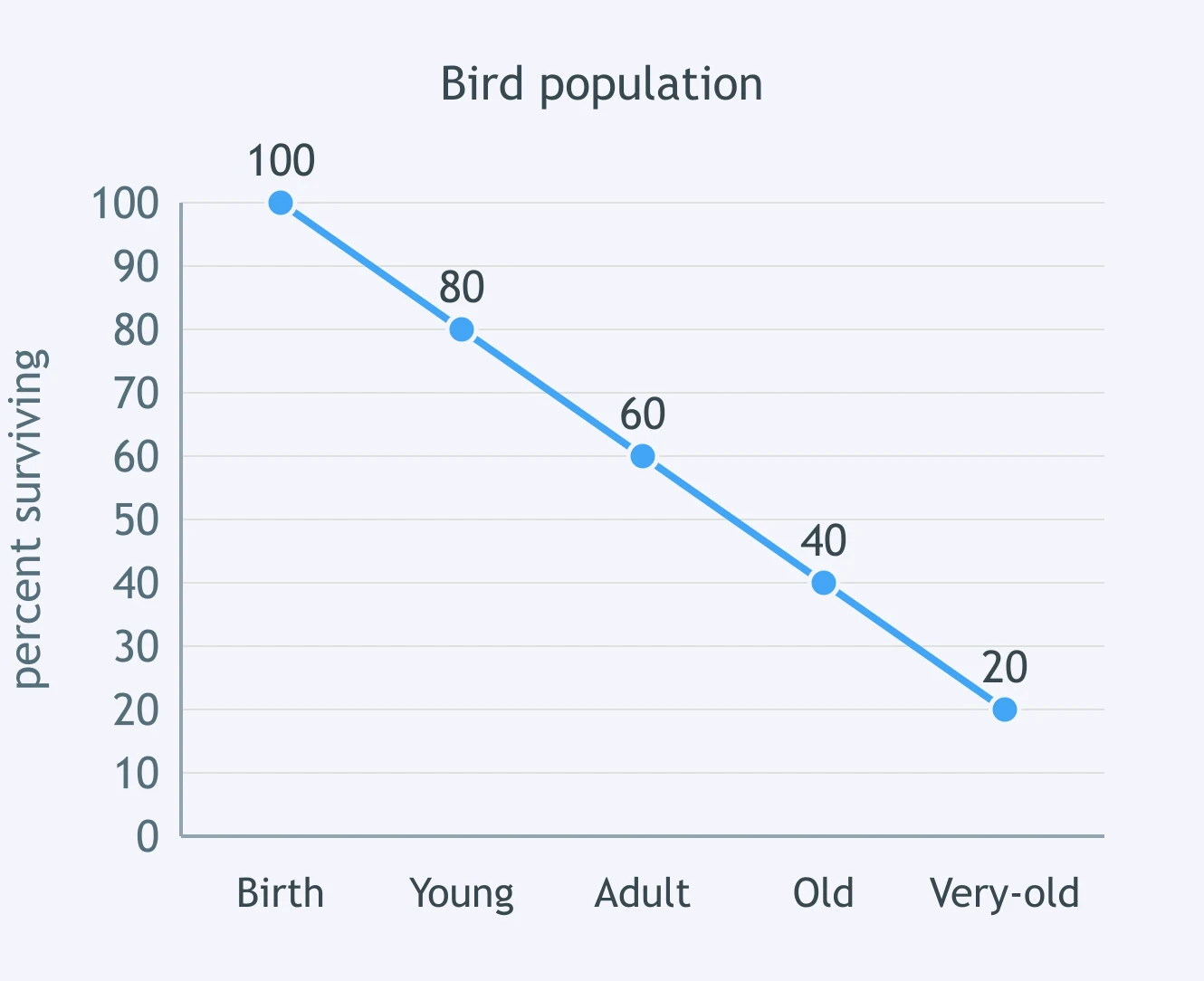
Read the graph of a bird population near a busy road. Which survivorship curve type best matches the plotted pattern?
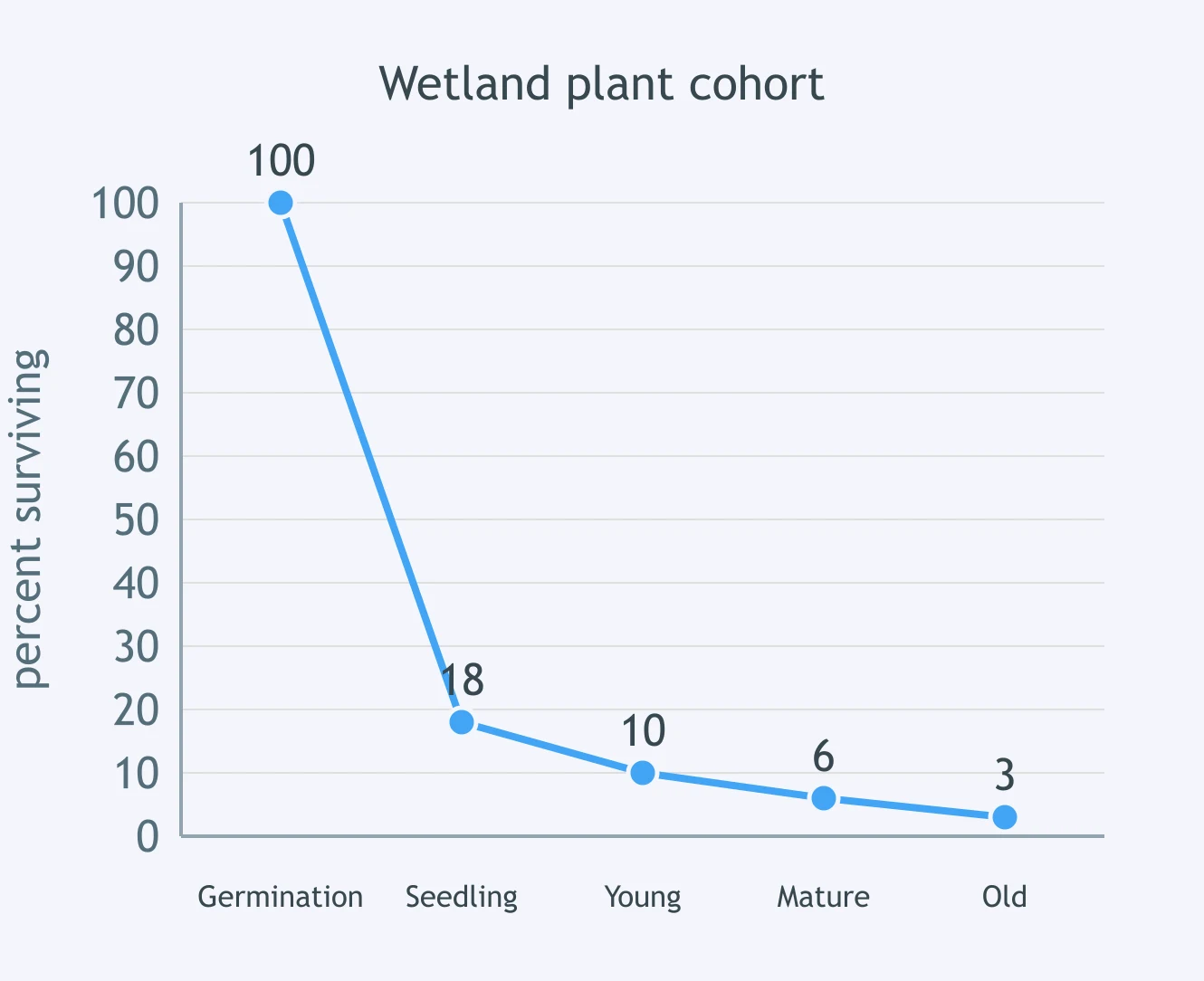
A restored wetland's annual plant cohort has the survival pattern shown. Which type of survivorship curve does the graph represent?
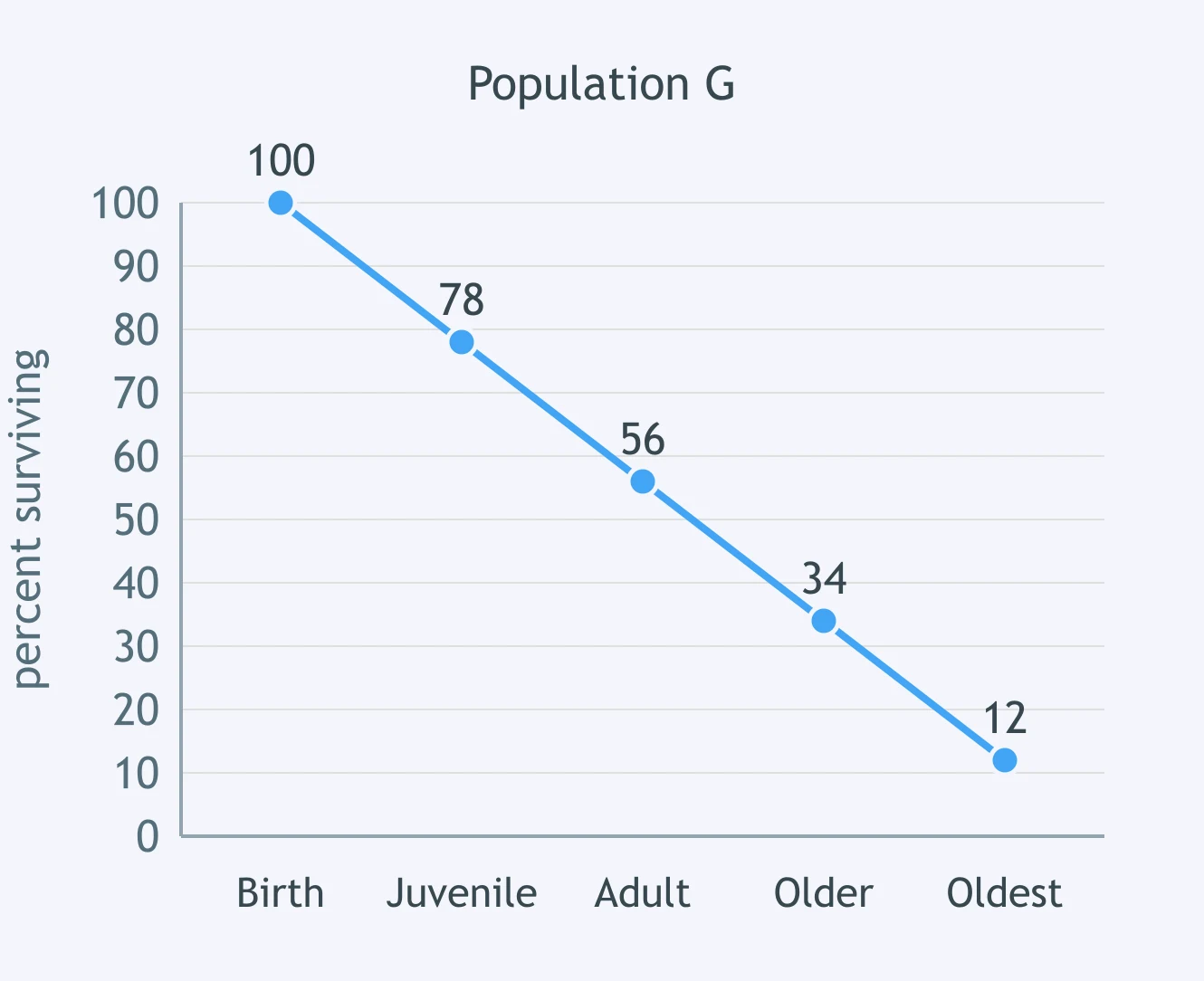
Which survivorship curve type is represented by the plotted survival of Population G?
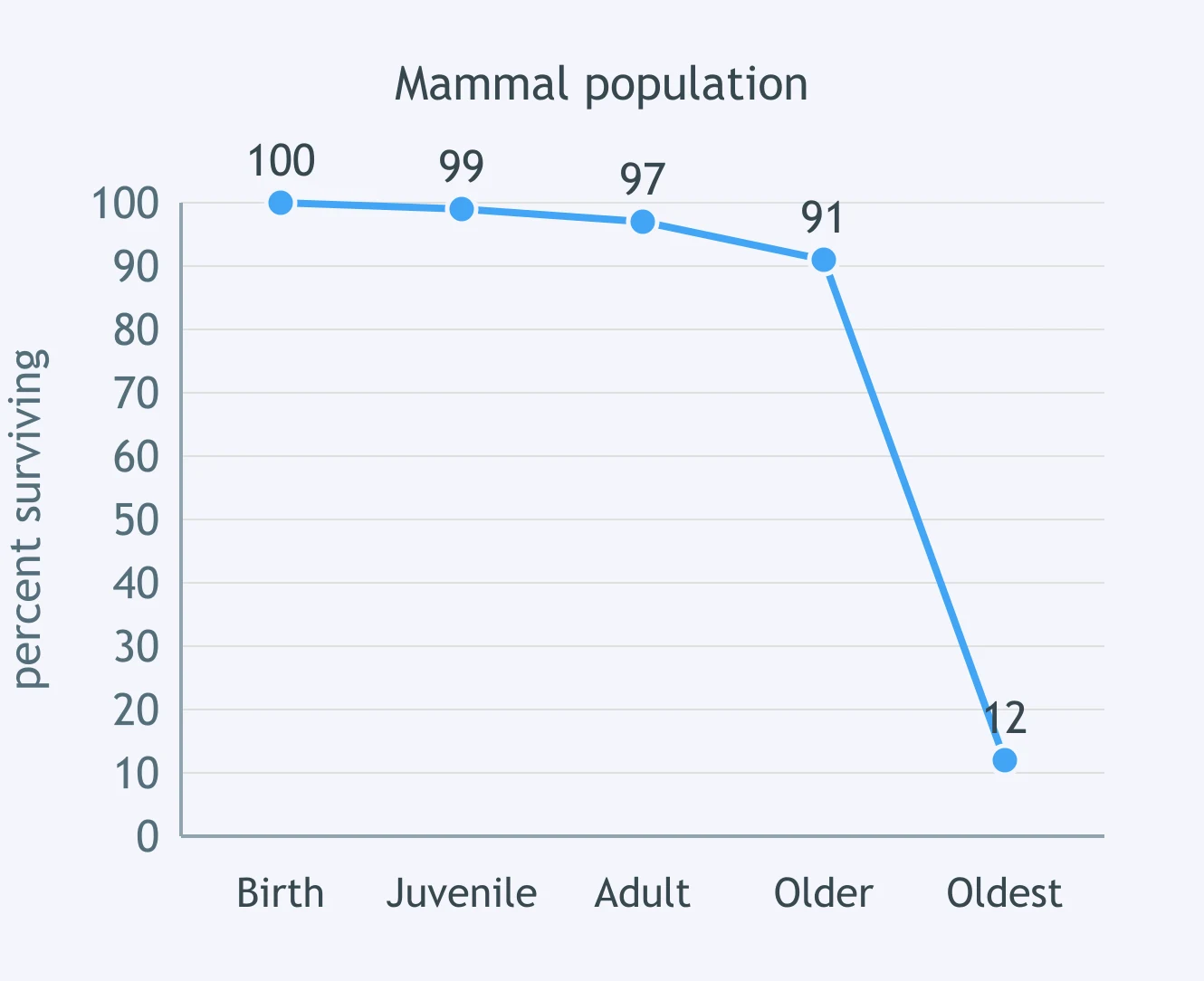
The graph tracks a large mammal population after habitat protection reduced early-life mortality. What survivorship curve type does the graph show?
A marine invertebrate releases thousands of larvae into open water and provides no parental care; most larvae die quickly. Which survivorship curve is most likely?
In a songbird population, an individual has about the same chance of dying during each year of life. Which survivorship curve best fits?
A large mammal produces one or two young at a time and protects them for years; most individuals survive until old age. Which curve fits this life history?
A tree releases many seeds after a forest edge is cleared, but only a small fraction of seedlings survive their first year. Which curve is most likely?
A small fish experiences similar predation risk as a juvenile, adult, and older individual. Which survivorship curve would an ecologist predict?
A species produces a few large offspring, matures late, and parents invest substantial energy in each young. Which survivorship curve is most consistent with these traits?
A mammal first reproduces at age 8, has one offspring every few years, and provides prolonged care. In the traditional r/K framework, how is it classed?
An insect matures within weeks, lays hundreds of eggs, and provides no care after laying them. In the traditional r/K framework, how is it classed?
A short-lived plant produces many small, wind-dispersed seeds soon after colonizing disturbed soil. In the traditional r/K framework, how is it classed?
A large herbivore has a long gestation period, reaches maturity slowly, and usually raises one young at a time. In the traditional r/K framework, how is it classed?
A fish releases thousands of eggs during one spawning event, and its offspring receive no parental care. In the traditional r/K framework, how is it classed?
A bird produces only a few chicks per nesting season and feeds and protects them until they can forage independently. In the traditional r/K framework, how is it classed?
After repeated land clearing, bare ground opens unpredictably across a landscape. Which life-history pattern is most favored among colonizing species?
In a stable forest where space and food are consistently limited, which reproductive pattern is most likely to persist under strong competition?
A roadside is scraped and replanted almost every year, repeatedly removing established vegetation. Which strategy best suits plants that recolonize it?
A protected reserve has stable resources, crowded nesting territories, and little year-to-year disturbance. Which strategy is most favored?
Seasonal flooding repeatedly scours a riverbank before plants can become established. Which life-history pattern gives a plant population the best chance to reoccupy the site?
Crack the passcode before the zombies get in.
Answer, then swat bugs for bonus points.
Race through questions at your own speed.
Same question on every screen. Fastest wins.

Pick a tile, answer, hit bonuses and steals.

Human Population Growth Through History
25 questions