Loading
by BlastRoom
Human Population Growth Through History for high school Environmental Science, on-level and AP. Covers AP Environmental Science Unit 3: Populations.
#environmental_science

25 questions
One question set, multiple game modes. Tap any game to see it in action. Not sure which to pick?
Answer to place stones and capture territory.
Outrun the snow together.
Earn blasts, then hunt the other team.
Answer to earn energy, then climb.

The class blasts through walls together.
Bid on mystery lots. Most money wins.
Sell tours. Nice, standard, or a total scam.

Answer, restock, and serve the rush.
More correct answers pulls the rope your way.
Answer, then shoot down the alien wave.
Answer, then tap to leap the frozen ridge.
Human numbers began a sustained rise about 10,000 years ago. What change most directly supported that rise?
A formerly nomadic group settles near fields and stores harvested grain for winter. Which development allows this community to support more people?
Early farming villages often had more infectious disease than hunter-gatherer bands. What best explains this?
A farming village builds irrigation channels that keep crops growing during a dry season. What population change can this food-system change support?
A community begins raising livestock as well as crops. Which result most directly helps explain a population increase?
During the Green Revolution, high-yield crop varieties were combined with irrigation, fertilizers, and pesticides. What change did this package most directly allow?
A city installs a protected drinking-water system and sewage collection. Which historical population change can follow most directly?
Widespread childhood vaccination becomes available while family size remains high. What is the most direct effect on population growth?
World population rose steeply from the 1800s onward. Which change contributed most directly to that acceleration?
In an industrializing city, water filtration and sewer systems reduce deaths from diarrheal disease. If birth rates stay high, what happens to natural increase?
A country enters the early demographic transition: mortality falls rapidly, but fertility remains high. What population pattern should result?
Why did advances in medicine contribute to twentieth-century population growth in many regions?
A country keeps a high total fertility rate while antibiotics reduce deaths from bacterial infections. Which demographic outcome is most likely?
Mechanized farming and fossil-fuel-powered transport expanded food distribution during industrialization. How could this support population growth?
In a population, infant mortality falls sharply while the average number of births per woman remains unchanged. Why can the total population grow faster?
A population rises from 10.0 million to 10.2 million in one year, then from 10.2 million to 10.3 million the next year. What changed?
A country's annual growth rate changes from 2% to 1% while its population continues increasing. What does the lower rate mean?
Births exceed deaths by 500,000 this year and by 300,000 next year. What does this pattern show?
Look at the annual population-growth-rate graph. Which statement best describes the trend?
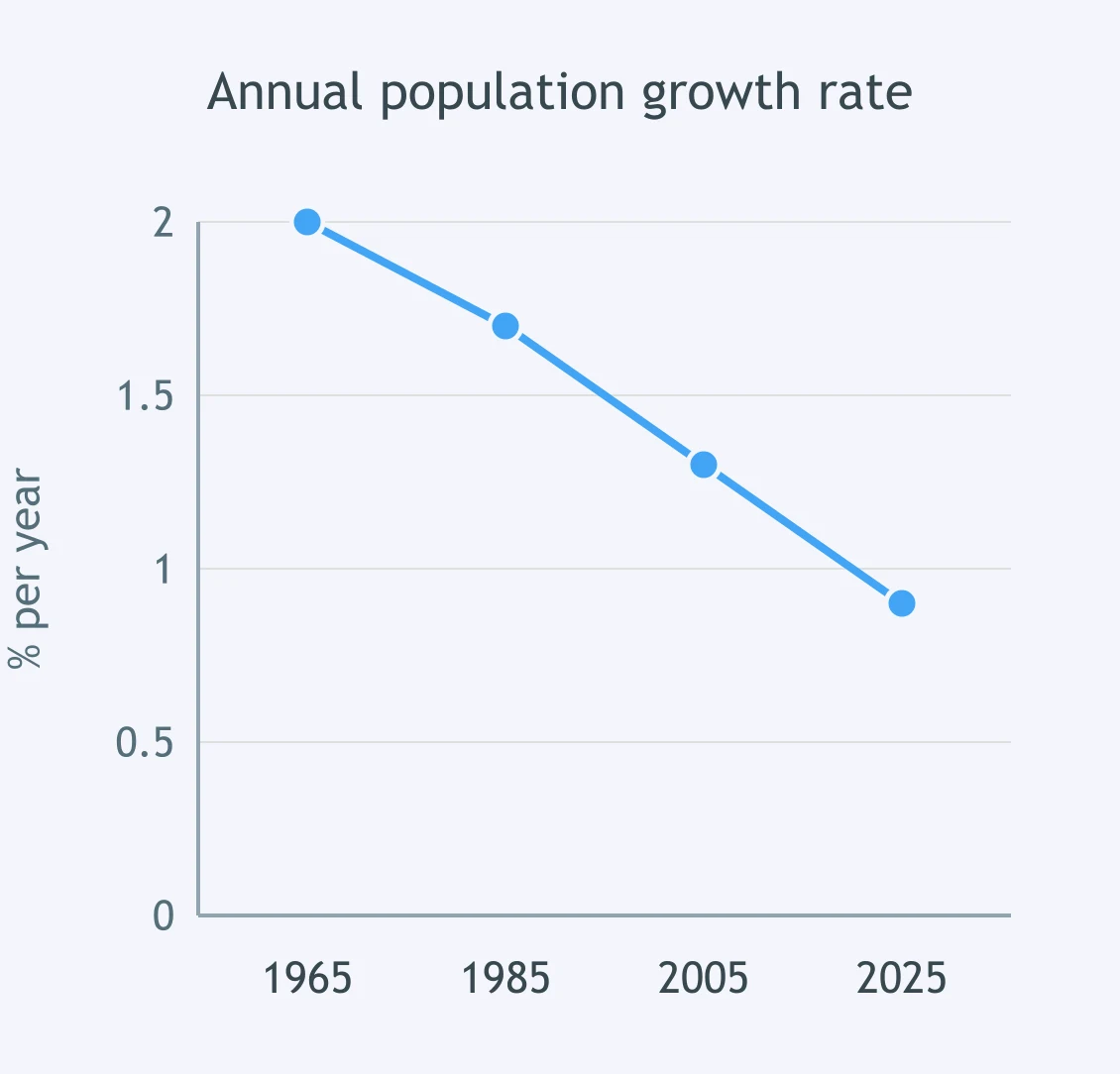
A population's annual growth rate falls from 2% to 1%. Using the rule of 70, how does its approximate doubling time change?
A country has a total fertility rate below replacement, yet its total population still rises. What best explains this?
A country has below-replacement fertility, an older age structure, and almost no net migration. Which total-population trend is most likely over time?
A country's birth and death rates are equal, but it receives 200,000 more immigrants than emigrants in a year. Why does its population grow?
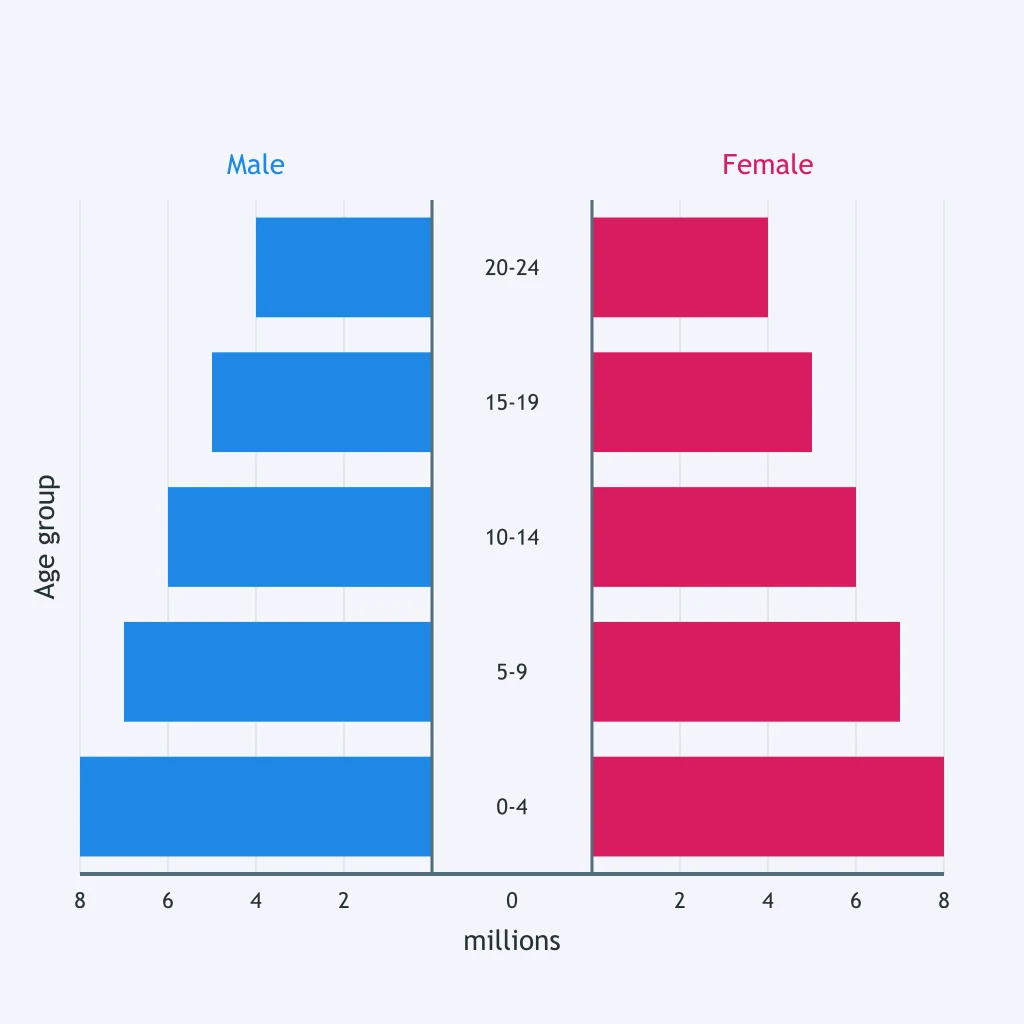
Look at the age-structure diagram. If this population reaches replacement fertility now, what can its broad base still cause?
Country A has 100 million people growing at 1% per year. Country B has 10 million people growing at 5% per year. Which adds more people in one year?
Crack the passcode before the zombies get in.
Answer, then swat bugs for bonus points.
Race through questions at your own speed.
Same question on every screen. Fastest wins.

Pick a tile, answer, hit bonuses and steals.
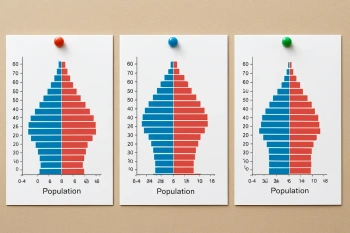
Age Structure Diagrams
20 questions