Loading
by BlastRoom
Why people move, what gets in the way, and the laws that describe the pattern.
#us_hs_human_geography
40 questions
One question set, multiple game modes. Tap any game to see it in action. Not sure which to pick?
Answer to place stones and capture territory.
Outrun the snow together.
Earn blasts, then hunt the other team.
Answer to earn energy, then climb.

The class blasts through walls together.
Bid on mystery lots. Most money wins.
Sell tours. Nice, standard, or a total scam.

Answer, restock, and serve the rush.
More correct answers pulls the rope your way.
Answer, then shoot down the alien wave.
Answer, then tap to leap the frozen ridge.
A fungal disease ruins crops for several seasons in a farming county, and many households leave for a city. In the migration decision, how is the crop disease classified?
Engineers move after firms in a distant metro area advertise higher pay and many open positions. In the migration decision, how are those jobs classified?
Rents rise sharply in a family's home city, so the family moves to a smaller town. In the migration decision, how are the rising rents classified?
A nurse relocates after a hospital in another state offers a signing bonus and stable employment. In the migration decision, how is the hospital offer classified?
A mill closes in a small town, and laid-off workers move away to look for work. In the migration decision, how is the mill closure classified?
A student moves after receiving a full scholarship from a university in another region. In the migration decision, how is the scholarship classified?
Families leave a neighborhood after repeated threats from armed groups make daily life unsafe. In the migration decision, how are the threats classified?
A religious minority moves toward a city whose laws protect worship and community schools. In the migration decision, how are those protections classified?
A new military government arrests organizers who campaigned for opposition parties, and many activists flee. What kind of migration factor is driving them out?
A region loses workers after wages fall and factories cut payrolls for several years. What kind of migration factor is described?
Repeated storm surges flood coastal homes, pushing residents to resettle inland. What kind of migration factor is described?
Rapid population growth divides family farms into plots too small to support each household, so young adults leave. What kind of factor is this?
Civil war forces households to leave towns where rival armed groups fight for control. What kind of migration factor is described?
Workers depart after regional mines close and the local unemployment rate rises. What kind of factor is described?
A volcanic eruption covers farmland with ash, and farm families relocate. What kind of migration factor is described?
A region's population is aging quickly, and the growing number of elderly residents creates demand that draws caregivers from elsewhere. What kind of factor is the aging population?
A migrant with a job offer across the border cannot get the required visa and stops before reaching the destination. What does the visa barrier represent?
Migrants headed to a distant capital find steady factory work in a smaller city along the route and settle there. What does the smaller city represent?
A winter storm closes the only mountain pass on a migrant route, raising travel costs and delaying the trip. What does the closed pass represent?
A family traveling toward a large metro area stops in a transit town where relatives offer housing and job leads, then stays. What does the town represent?
A dangerous sea crossing and high smuggler fees prevent many refugees from reaching a farther safe country. What do the crossing and fees represent?
At a regional bus hub, recruiters offer legal seasonal work, so migrants choose that town instead of their original destination. What does the hub represent?
A student moving toward a national capital accepts admission to a college in a mid-route city and remains there. What does the mid-route city represent?
Records from an industrial town show most arrivals came from nearby counties rather than faraway regions. What Ravenstein law does this pattern illustrate?
Many rural families first move to a small town, then later to a regional city, and only some continue to the capital. What Ravenstein law fits this sequence?
Of the migrants who travel hundreds of miles, most head for the country's largest port city. What Ravenstein law is illustrated?
After workers move from Region A to Region B, records show a smaller stream of workers moving from Region B back to Region A. What law is shown?
Farm counties lose a higher share of residents to migration than established city neighborhoods. What Ravenstein law does this pattern illustrate?
Census data for a fast-growing city show newcomers are mostly working-age adults, not young children or older retirees. What Ravenstein law fits?
As rail lines expand and factories grow, the total volume of migration between towns rises. What Ravenstein law does this illustrate?
Short moves between nearby towns are mostly made by women, while longer labor moves are mostly made by men. What Ravenstein law fits this pattern?
A survey finds most migrants cite wages and jobs more often than climate, age structure, or family size. What Ravenstein law is illustrated?
Under the gravity model, Pair A has two 1-million-person cities 50 miles apart; Pair B has two 1-million-person cities 100 miles apart. What is predicted?
Under the gravity model, Pair A links 4 million and 1 million people at 200 miles; Pair B links 1 million and 1 million at 100 miles. What is predicted?
Under the gravity model, two cities of 3 million and 2 million are 60 miles apart, while another 3-million and 2-million pair is 120 miles apart. What is predicted?
Under the gravity model, Pair A has 6 million and 2 million people at 300 miles; Pair B has 3 million and 2 million at 150 miles. What is predicted?
Two cities of 3 million people each lie 150 miles apart. One city's population doubles while nothing else changes. Under the gravity model, what happens to the predicted interaction between them?
A planner can either double one city's population or halve the distance to its partner city. Under the gravity model, which change raises predicted interaction more?
Under the gravity model, one origin city of 1 million compares two destinations: 9 million people at 300 miles and 1 million people at 100 miles. What is predicted?
Under the gravity model, Pair A has two 2-million-person cities 80 miles apart; Pair B has 4 million and 2 million people 160 miles apart. What is predicted?
Crack the passcode before the zombies get in.
Answer, then swat bugs for bonus points.
Race through questions at your own speed.
Same question on every screen. Fastest wins.

Pick a tile, answer, hit bonuses and steals.
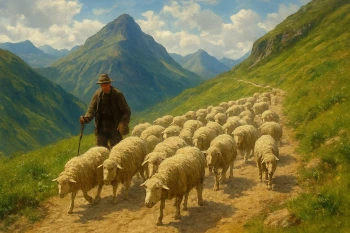
Voluntary Migration: Chain, Step, Transhumance and Guest Workers
35 questions