Loading
by BlastRoom
Uses public-domain works including Shakespeare's Sonnets by William Shakespeare (1609), Leaves of Grass by Walt Whitman (1855), and Fog by Carl Sandburg (1916).
#us_grade_8_english

20 questions
One question set, multiple game modes. Tap any game to see it in action. Not sure which to pick?
A 1609 Shakespeare poem opens, "Shall I compare thee to a summer's day? / Thou art more lovely and more temperate." What form is the whole poem?
Coleridge's "The Rime of the Ancient Mariner" (1798): "The Wedding-Guest sat on a stone: / He cannot choose but hear; / And thus spake on that ancient man, / The bright-eyed Mariner." What form fits this stanza?
Whitman's "Song of Myself" (1855): "I celebrate myself, and sing myself, / And what I assume you shall assume, / For every atom belonging to me as good belongs to you." What form is this?
Matsuo Bashō's "Old Pond" (1686) has three short units: "Furu ike ya / kawazu tobikomu..." and ends with water's sound. What form is it?
Anonymous "Barbara Allen" (1765): "In Scarlet town, where I was born, / There was a fair maid dwellin', / Made every youth cry Well-a-way! / Her name was Barbara Allen." What form fits this stanza?
Shelley's "Ozymandias" (1818): "Near them, on the sand, / Half sunk a shattered visage lies, whose frown, / And wrinkled lip, and sneer of cold command..." What form is the whole poem?
Lazarus's "The New Colossus" (1883) ends, "I lift my lamp beside the golden door!" Which feature identifies it as a sonnet?
Anonymous "Sir Patrick Spens" (1765): "The king sits in Dunfermline town, / Drinking the blude-red wine: / 'O whare will I get a skeely skipper / To sail this ship of mine?'" What feature marks its form?
Sandburg's "Fog" (1916) opens, "The fog comes / on little cat feet." Which feature identifies the poem's form?
In Japanese, Bashō's "Old Pond" (1686) has three line units about a frog and water. Which feature identifies the poem as a haiku?
Shakespeare's "Sonnet 29" (1609) begins, "When, in disgrace with fortune and men's eyes." Which feature of its lines supports the sonnet form?
In Shelley's "Ozymandias" (1818), a shattered statue stands near words boasting, "Look on my Works, ye Mighty, and despair!" How does sonnet form shape the effect?
Dickinson's "Because I could not stop for Death" (1890): "Because I could not stop for Death – / He kindly stopped for me –." What does the ballad meter add?
Whitman's "When I Heard the Learn'd Astronomer" (1865) piles up "proofs, the figures" before the speaker looks at stars. How does free verse help?
Bashō's "Crow on a Bare Branch" (1680) presents a crow on a bare branch at autumn evening. What does the haiku form contribute?
Keats's "La Belle Dame sans Merci" (1820) opens, "O what can ail thee, knight-at-arms, / Alone and palely loitering?" How does the ballad form affect the poem?
Select the description of a sonnet.
Select the description of a ballad.
Select the description of free verse.
Select the description of a haiku.
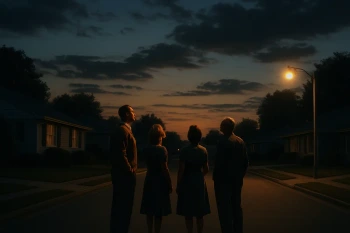
The Monsters Are Due on Maple Street: Acts, Scenes and Stage Directions
20 questions
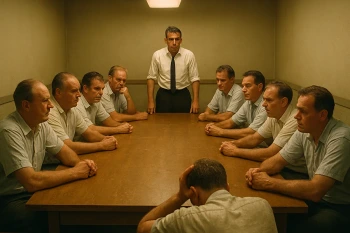
Twelve Angry Men: Evidence, Reasoning and Dramatic Structure
20 questions
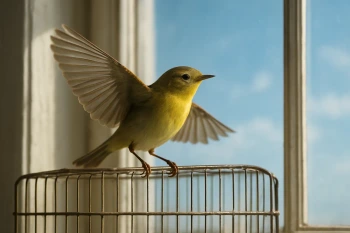
Dunbar: Extended Metaphor in "Sympathy" and "We Wear the Mask"
20 questions
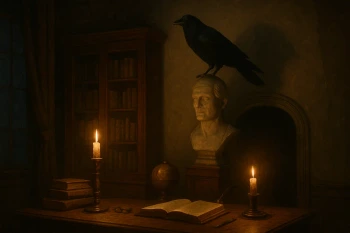
The Raven: Sound Devices, Meter and Mood
20 questions

The Crossover: A Novel in Verse
20 questions
Crack the passcode before the zombies get in.

Pick a tile, answer, hit bonuses and steals.