Loading
by BlastRoom
Questions analyze The Monsters Are Due on Maple Street by Rod Serling (1960).
#us_grade_8_english
20 questions
One question set, multiple game modes. Tap any game to see it in action. Not sure which to pick?
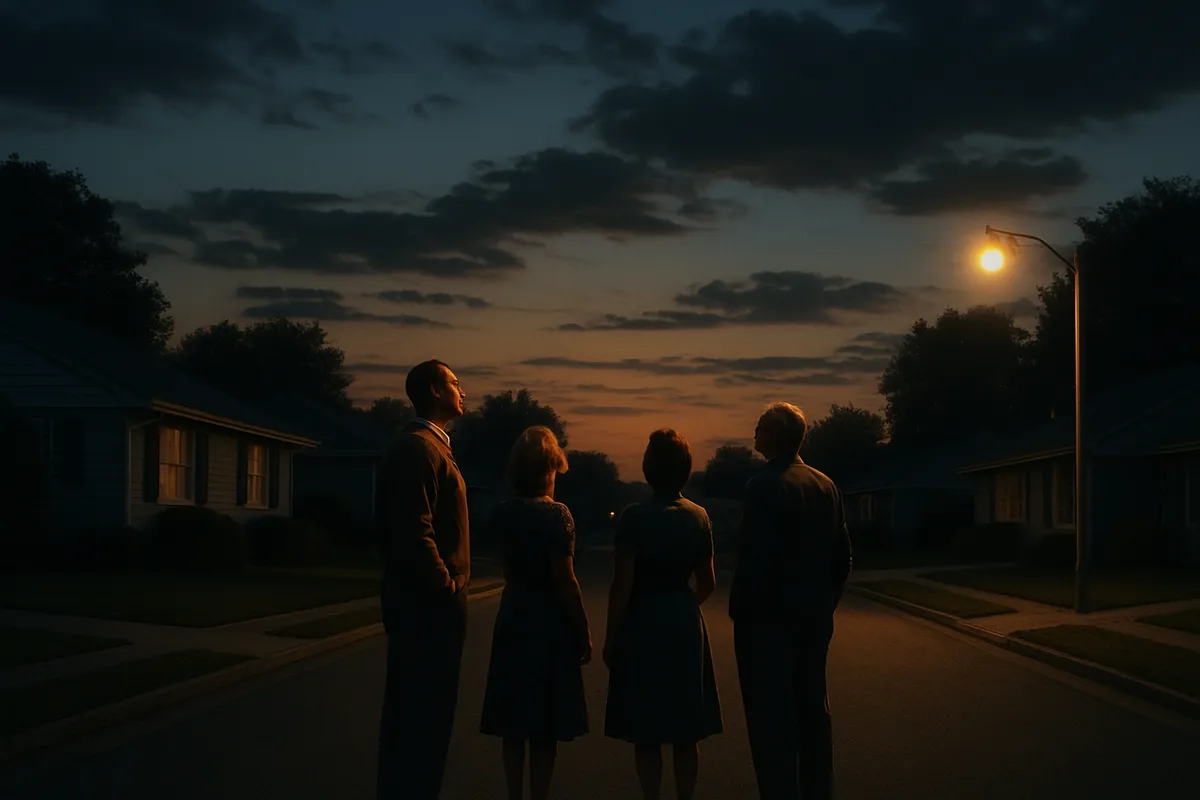
The opening direction presents Maple Street as a quiet, ordinary block before the strange flash. What does that staging tell the audience beyond any dialogue?
After the flash overhead, the teleplay shows phones, radios, lights, and cars failing at once. What does this direction add to the dramatic action?
A direction has Les Goodman's car start by itself while the neighbors watch. What does the audience learn from the stage action, not from speech?
Later directions place the neighbors in darkness, with lights flickering at different houses. What effect does the staging create?
A dark figure approaches; Charlie fires, and the figure is revealed as Pete Van Horn. What does the stage action show that talk alone could not?
Near the end, the camera leaves the fighting street and shows alien observers on a hill. What new understanding does that direction give the audience?
Tommy says aliens might send people ahead who look human. How does that exchange change the neighbors' suspicion?
Steve sarcastically suggests the neighbors set up a 'kangaroo court' to judge every suspect. What does this exchange do?
Neighbors mention Les Goodman standing outside late at night looking at the sky. How does that printed exchange affect suspicion?
After Charlie shoots Pete, he says Tommy knew what would happen. What is the effect of this exchange on the crowd?
When the neighbors bring up Steve's ham radio, how does that dialogue develop the action?
The teleplay opens with a narrator speaking directly to the audience about Maple Street before the action begins. What does this narration do?
Early on, Pete Van Horn leaves to see whether the next block has power. How does his exit help set up a later scene?
An act break can fall after Goodman's car starts and the crowd stares at him. Why is that a strong stopping point?
The play later jumps into night after the neighbors have watched Goodman. What does that break allow the drama to show?
The final break moves from Maple Street's violence to aliens explaining the method. Why does the play end with that shift?
The closing narration says conquest need not come with “bombs,” but with “thoughts, attitudes, prejudices.” What meaning does it state?
The narrator says “prejudices can kill and suspicion can destroy.” How does that line interpret Pete Van Horn's death?
The closing calls scapegoating “fallout all of its own.” In context, what does “fallout” mean?
The narrator says these dangers cannot be confined to “The Twilight Zone.” What meaning does the ending state?
Crack the passcode before the zombies get in.

Pick a tile, answer, hit bonuses and steals.

Dunbar: Extended Metaphor in "Sympathy" and "We Wear the Mask"
20 questions