Loading
by BlastRoom
Trace the triangular trade, the Middle Passage, and the plantation economy it supplied.
#world_history
30 questions
One question set, multiple game modes. Tap any game to see it in action. Not sure which to pick?
Answer to place stones and capture territory.
Outrun the snow together.
Earn blasts, then hunt the other team.
Answer to earn energy, then climb.

The class blasts through walls together.
Bid on mystery lots. Most money wins.
Sell tours. Nice, standard, or a total scam.

Answer, restock, and serve the rush.
More correct answers pulls the rope your way.
Answer, then shoot down the alien wave.
Answer, then tap to leap the frozen ridge.
Use the route map. What did ships usually carry on the leg from Europe to the West African coast?
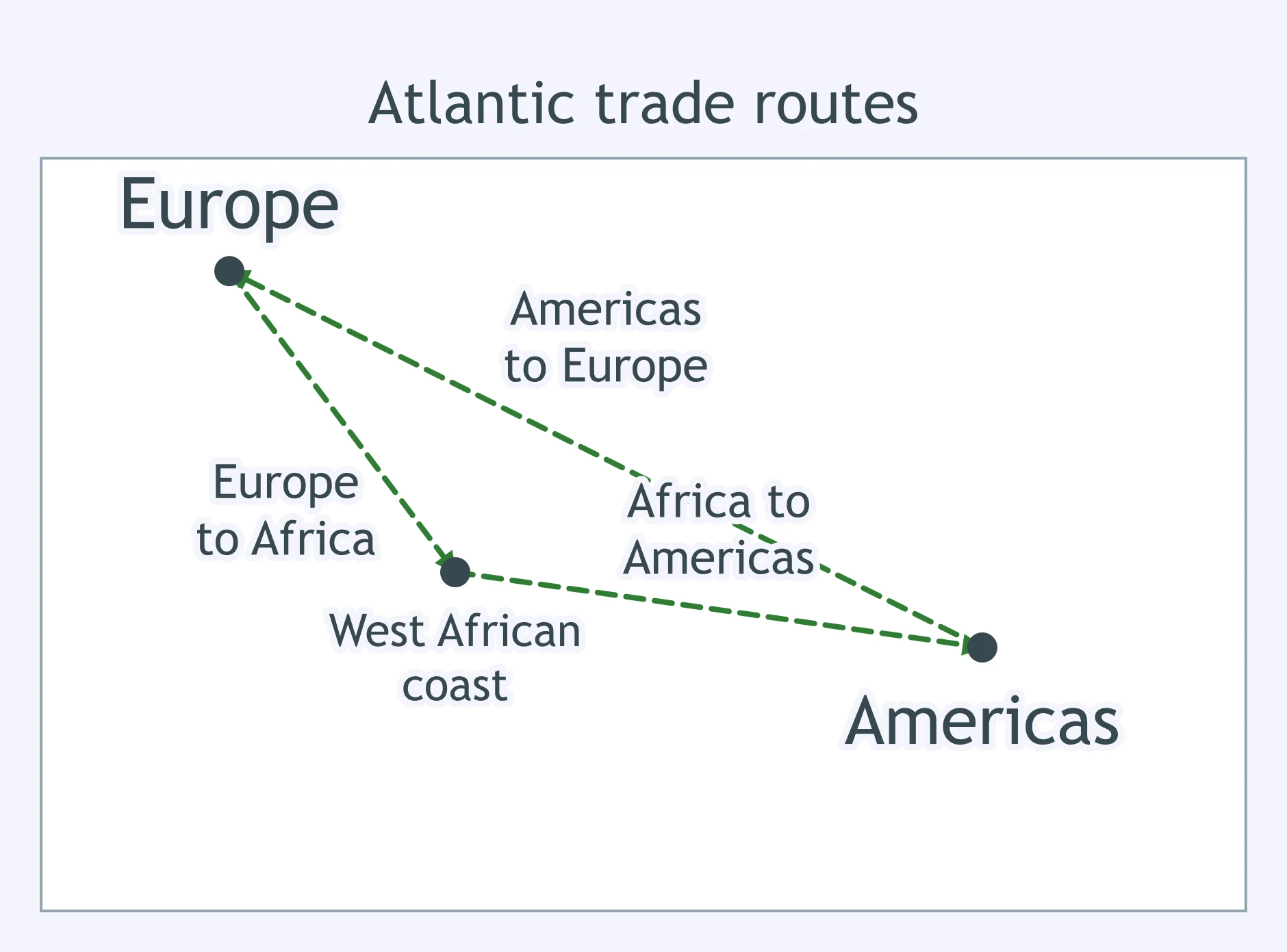
Use the route map. Which term names the forced crossing from the West African coast to the Americas?
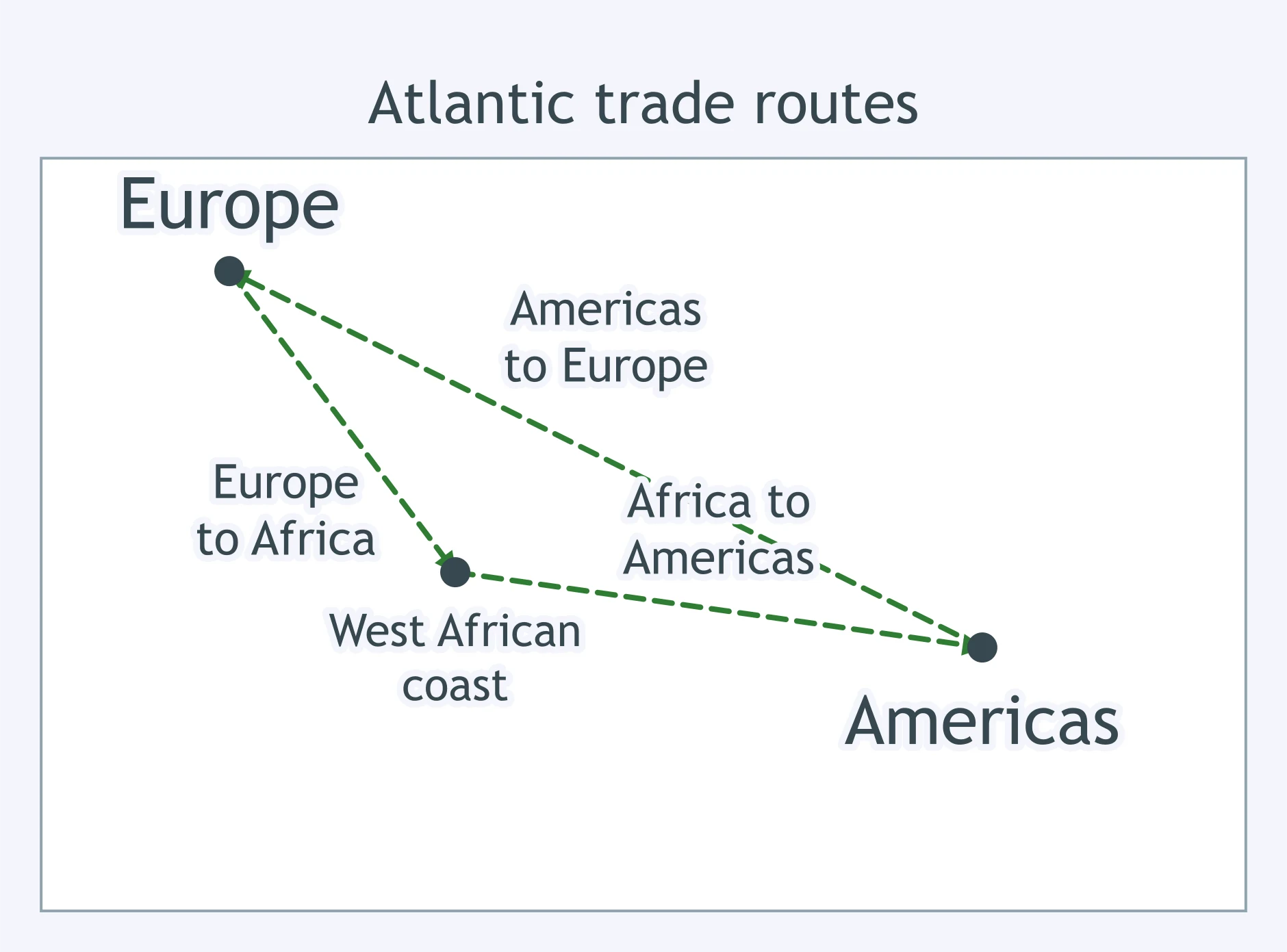
Use the route map. What cargo most often moved on the leg from the Americas back to Europe?
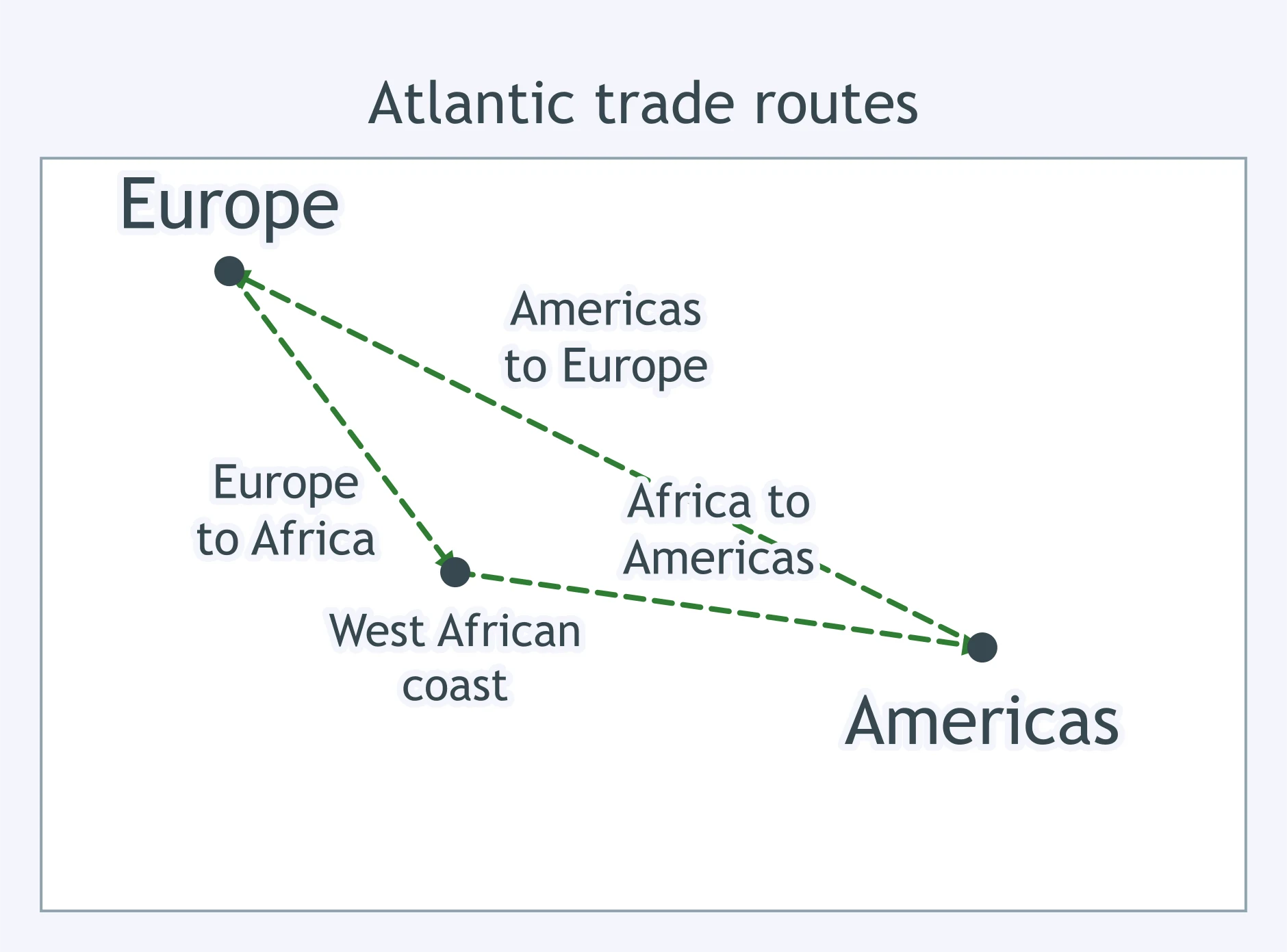
Study the map. Which description best matches the arrow leaving the West African coast?
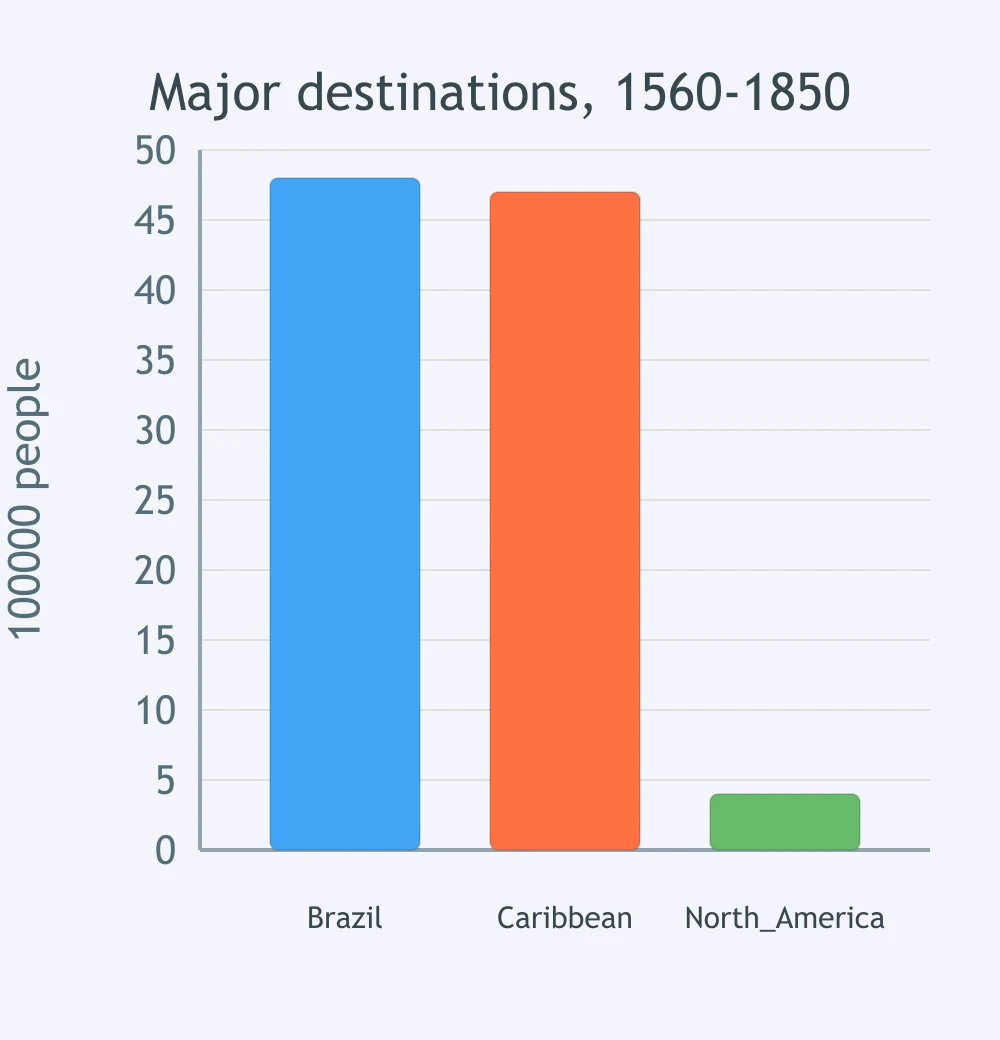
Read the bar graph. Which destination shown received the largest number of enslaved people who survived the crossing?
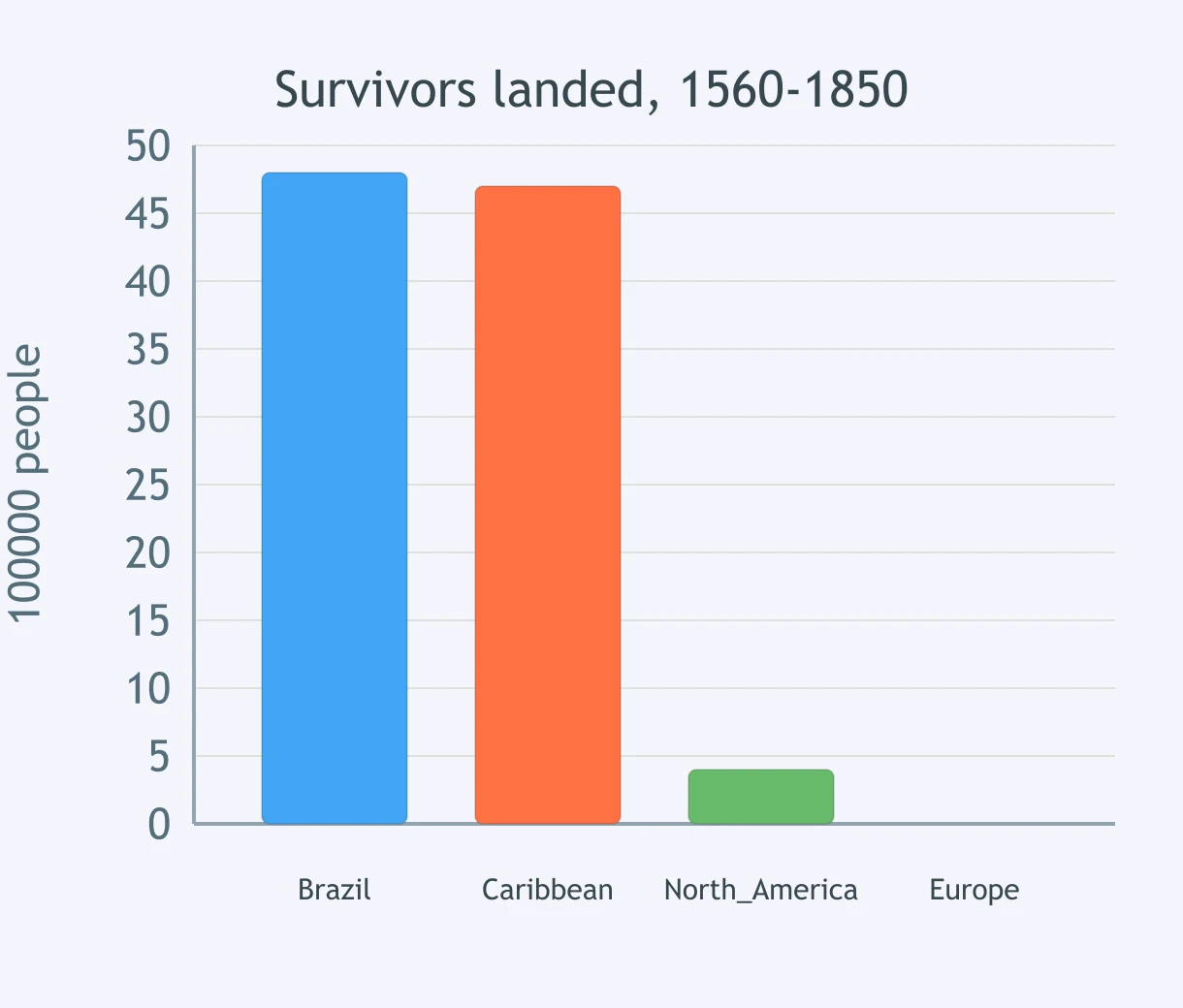
Read the bar graph. About how many enslaved people who survived the Middle Passage arrived in North America?
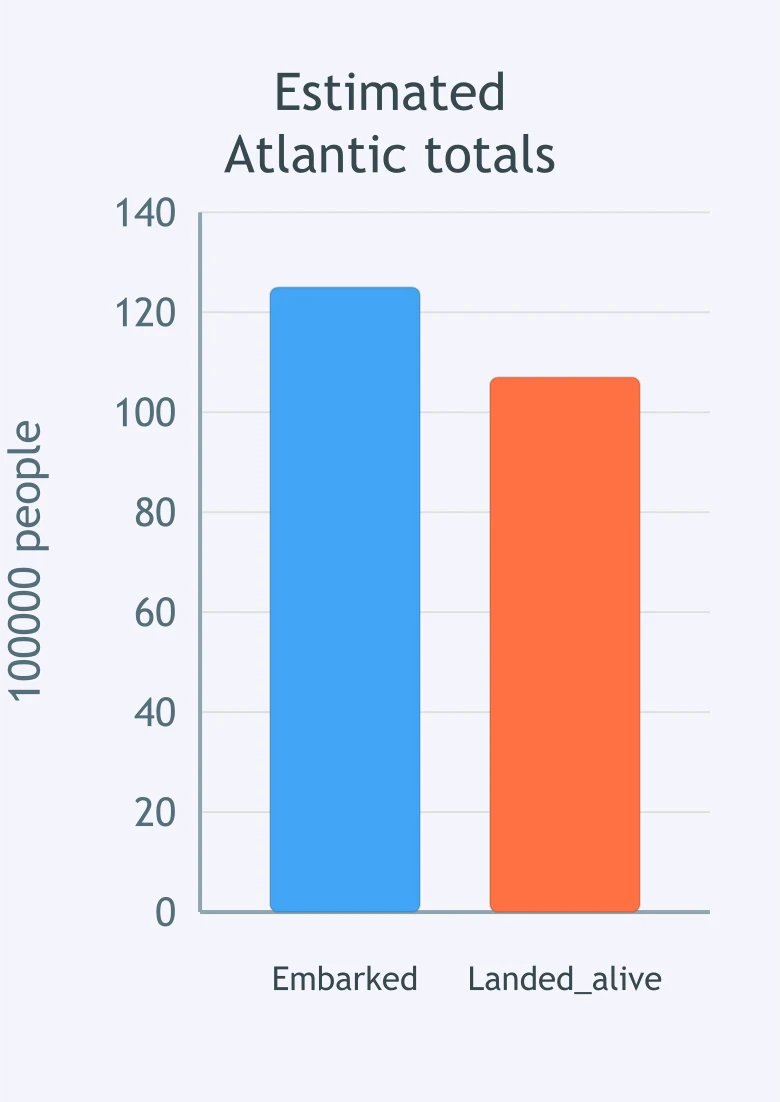
Use the graph. Which estimate is closest to the difference between people embarked and people landed alive?
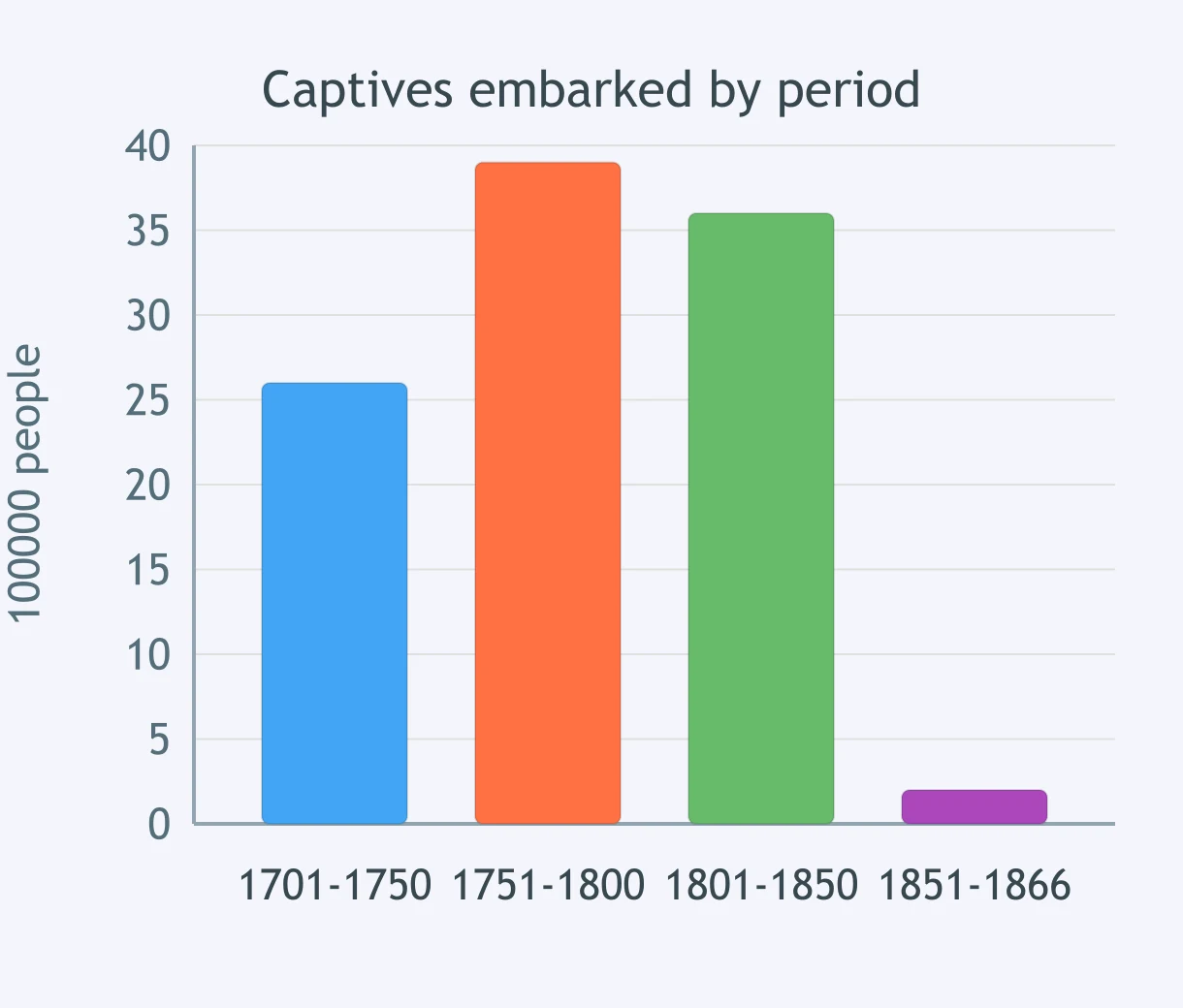
Use the bar graph. In which period shown did the largest number of captives embark from Africa?
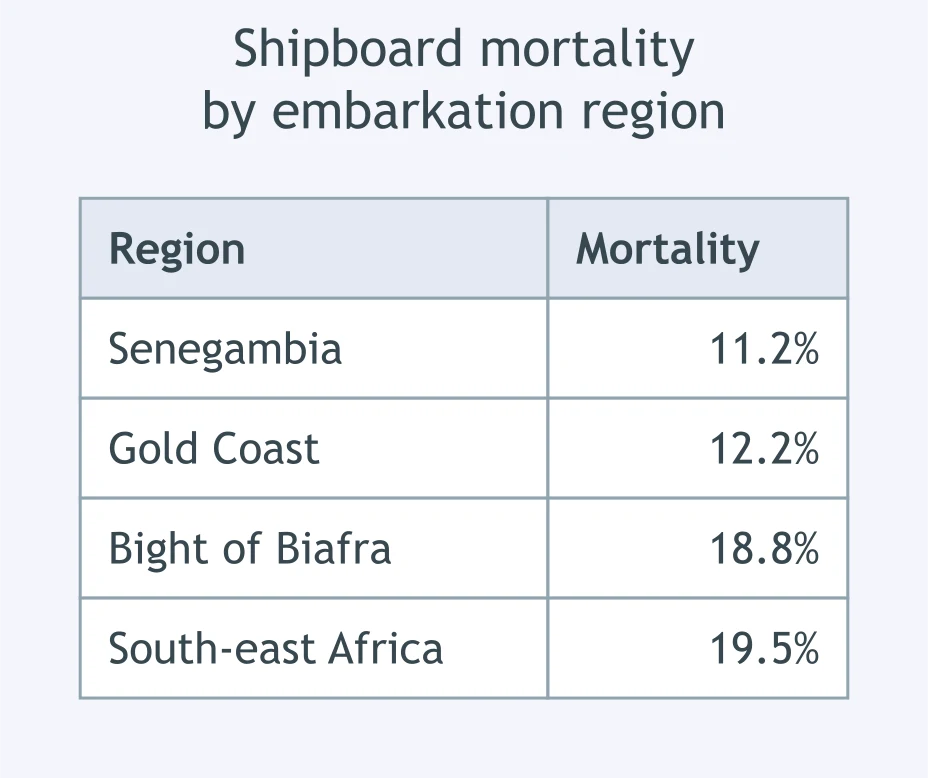
Read the table. Which listed embarkation region had the highest shipboard mortality rate?
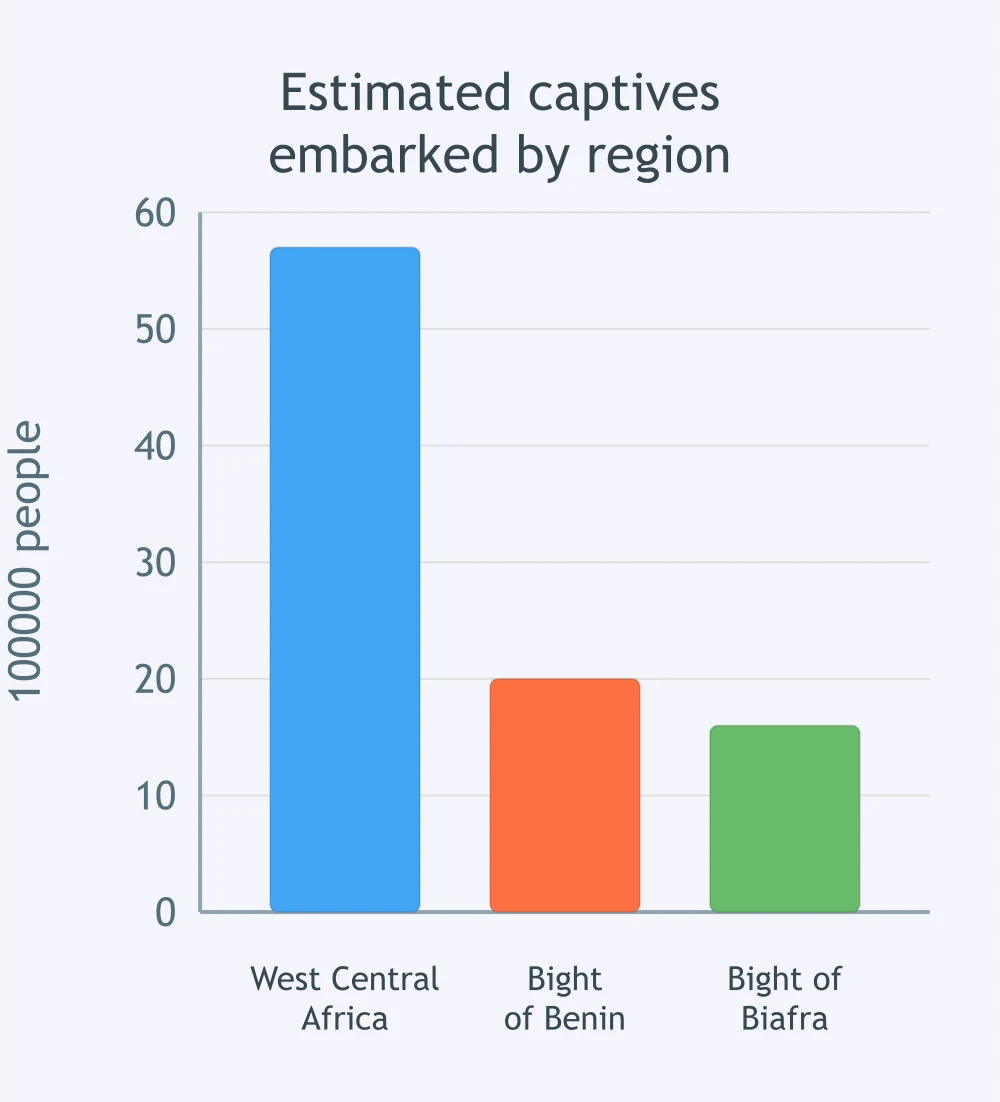
Use the graph. Which statement best summarizes the African departure regions shown?
About how long did a typical Middle Passage crossing from West Africa to the Americas take, though routes varied?
Across the trade as a whole, what share of people put aboard slave ships died before landing?
Which condition made the Middle Passage deadly for captives held below deck?
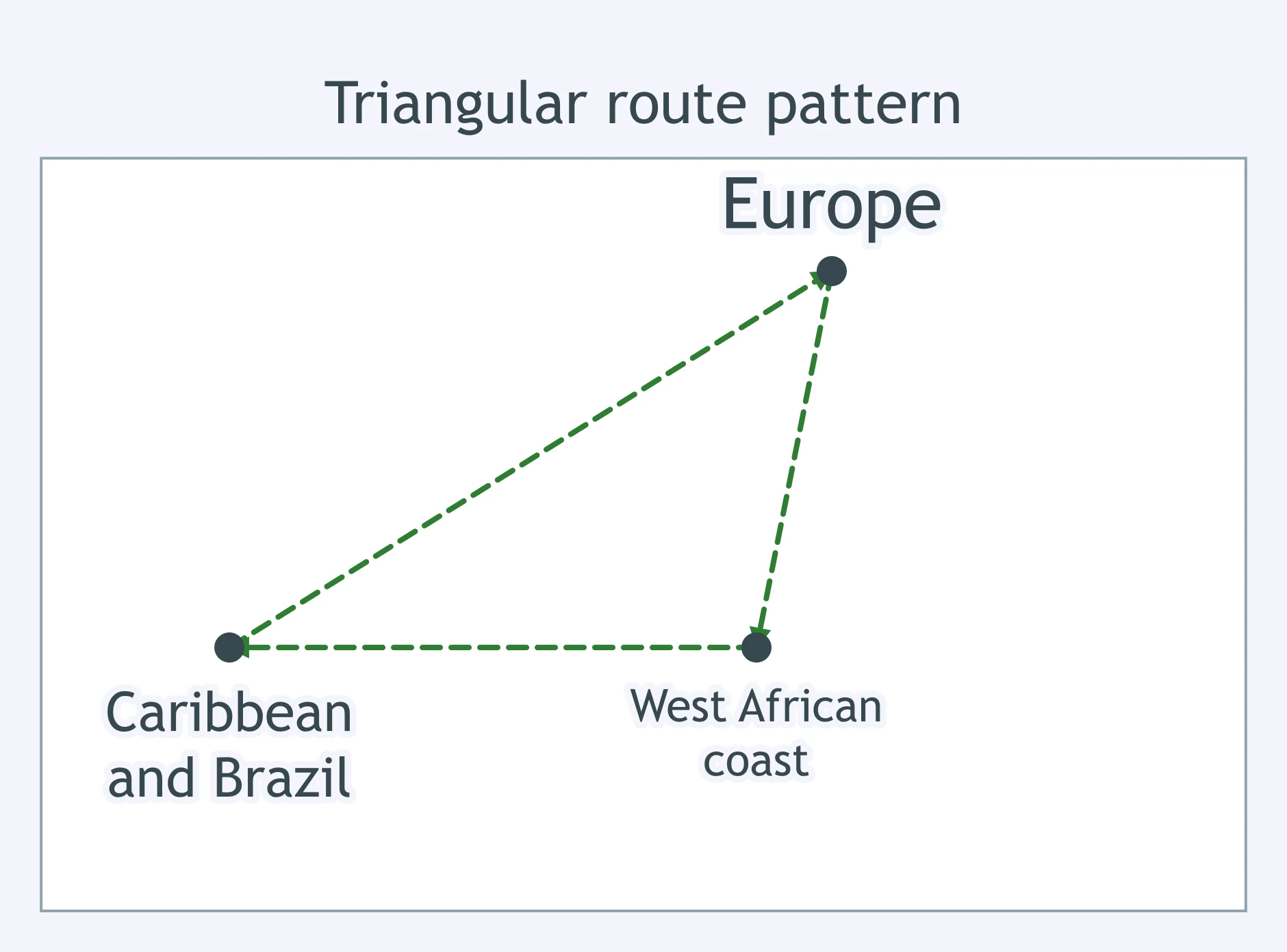
Why was the crossing called the “Middle” Passage in triangular trade?
What form of resistance did captives carry out on some slave ships?
After survivors reached an American port, what usually happened next?
European traders rarely conquered far inland to seize captives themselves. How was the coastal trade usually supplied?
Elmina and Cape Coast were part of a chain of fortified trading posts on which coast?
Which goods did European merchants commonly exchange on the African coast for captives?
What was the Royal African Company’s role after its 1672 charter?
Which process most often produced captives sent to the coast?
Before boarding ships, where were captives often held near the African coast?
Which of these destinations received a larger share of enslaved Africans than all of Spanish America?
Why did U.S. plantations expand after the legal end of U.S. Atlantic imports in 1808?
Which plantation crop most strongly drove early large-scale Atlantic slave trading to Brazil and the Caribbean?
In this unit, what was a plantation?
Which region pair received the overwhelming majority of people carried across the Atlantic?
Which effect did the Atlantic slave trade have on parts of Africa?
Britain passed its abolition act in 1807, and the United States ban took effect in 1808. What did those laws target?
After Brazil began suppressing the trade around 1850, which destination still received the last reported transatlantic slave expedition?
Crack the passcode before the zombies get in.
Answer, then swat bugs for bonus points.
Race through questions at your own speed.
Same question on every screen. Fastest wins.

Pick a tile, answer, hit bonuses and steals.
Ming and Qing China and Tokugawa Japan
30 questions