Loading
by BlastRoom
The oil embargo, gas lines, and the decade when high inflation and high unemployment arrived together.
#united_states_history
25 questions
One question set, multiple game modes. Tap any game to see it in action. Not sure which to pick?
Answer to place stones and capture territory.
Outrun the snow together.
Earn blasts, then hunt the other team.
Answer to earn energy, then climb.

The class blasts through walls together.
Bid on mystery lots. Most money wins.
Sell tours. Nice, standard, or a total scam.

Answer, restock, and serve the rush.
More correct answers pulls the rope your way.
Answer, then shoot down the alien wave.
Answer, then tap to leap the frozen ridge.
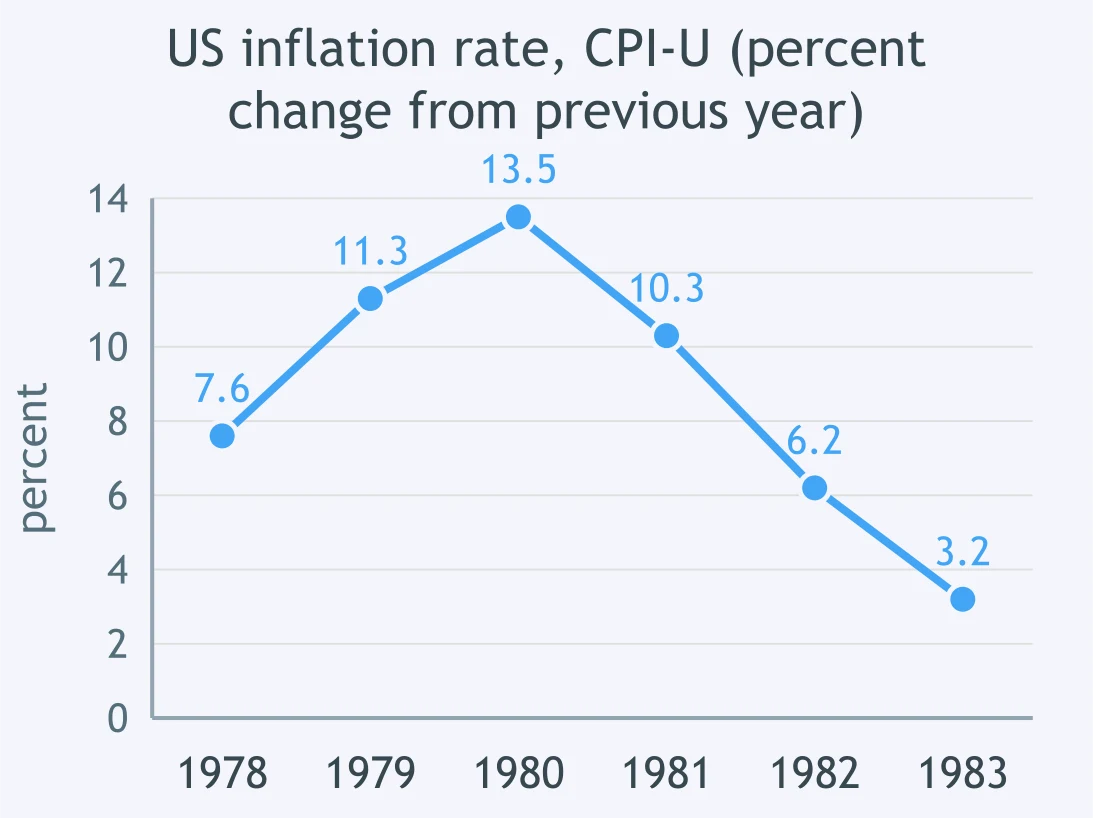
The line chart gives the annual US inflation rate (CPI-U, percent change from the year before) for 1978 to 1983. By how many percentage points did the rate fall between its highest year and 1983?
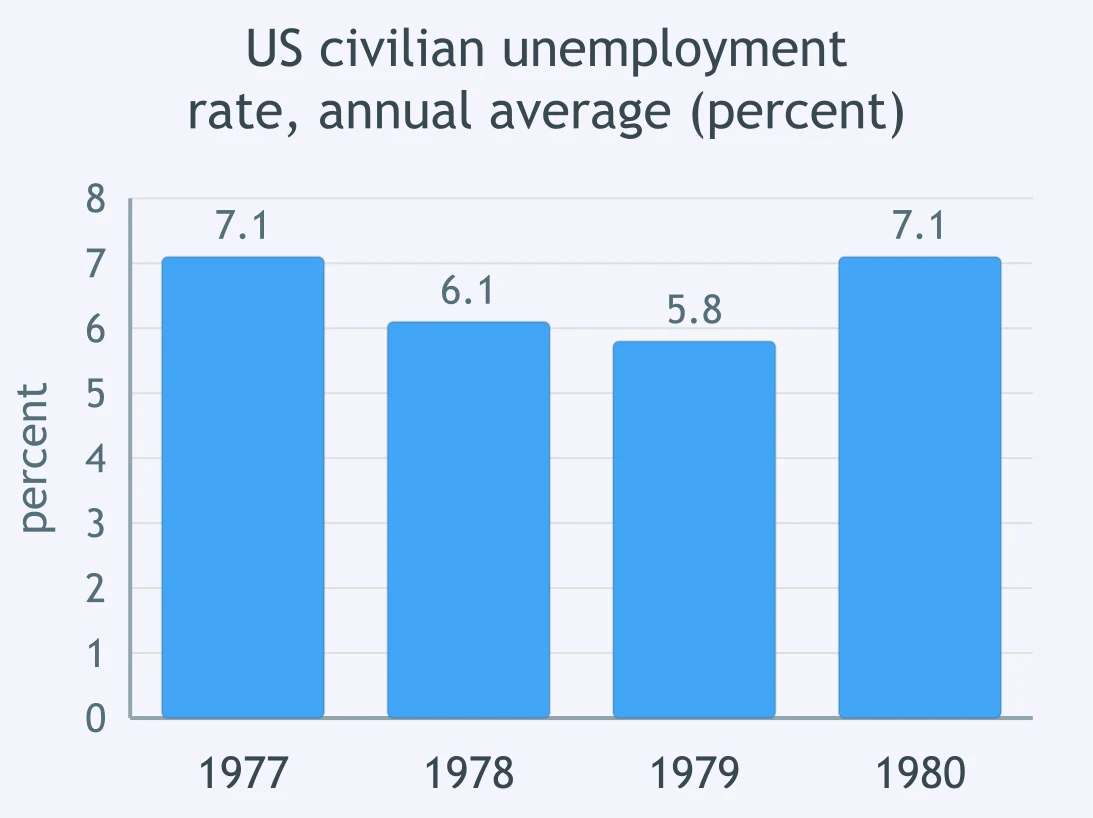
The bar chart gives the US civilian unemployment rate, annual average, for 1977 to 1980. By how many percentage points did the rate fall between 1977 and 1979?
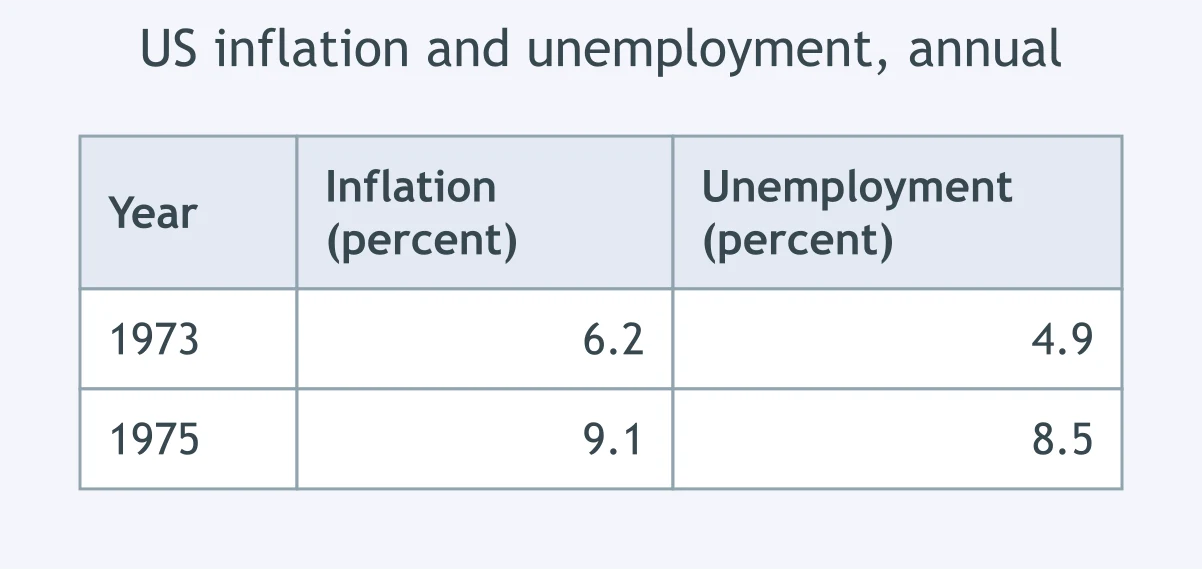
The misery index for a year is that year's inflation rate added to its unemployment rate. Use the table. What was the misery index for 1980?
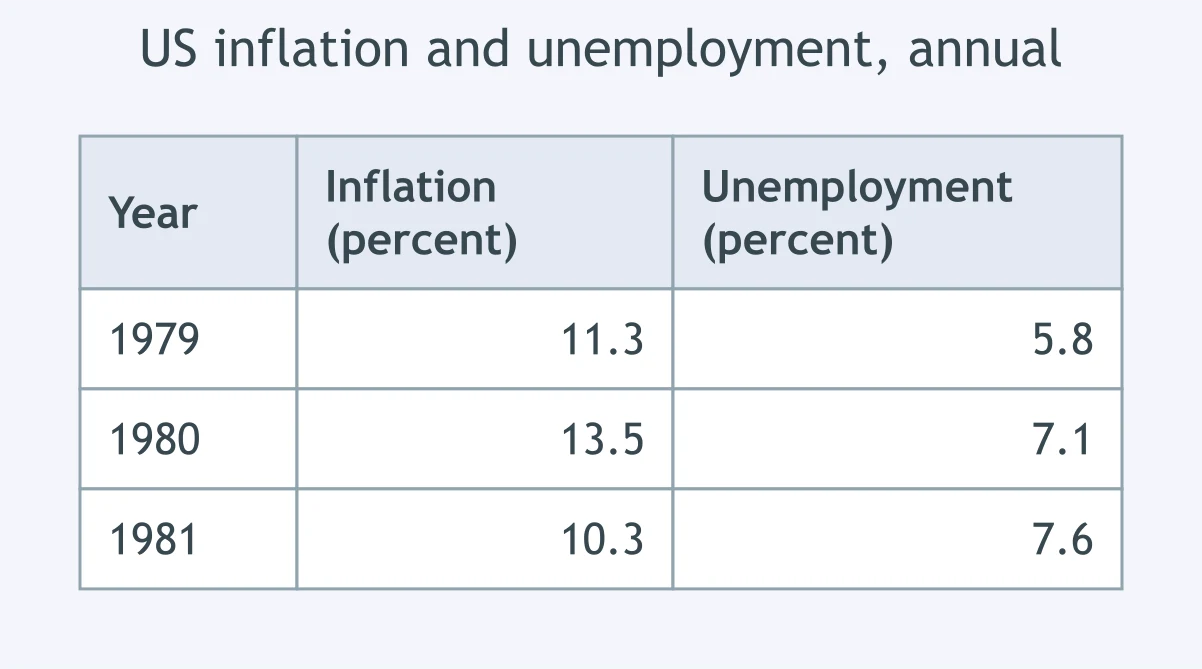
The line graph plots the US civilian unemployment rate, annual average, from 1979 to 1983. Between which pair of consecutive years does the line climb most steeply?
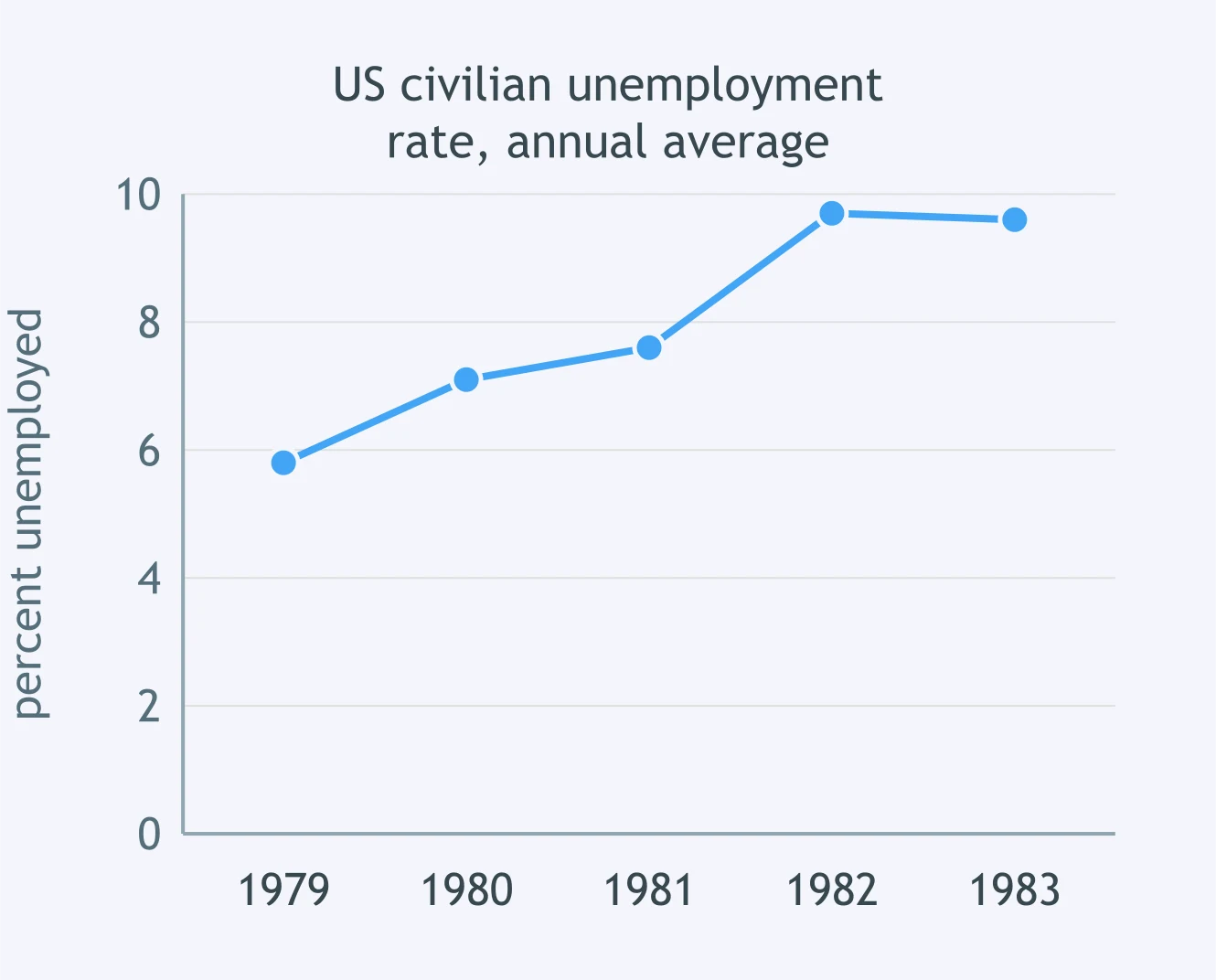
The bar chart gives the US misery index, the inflation rate added to the unemployment rate, for three years. By how many points did it rise between 1978 and 1980?
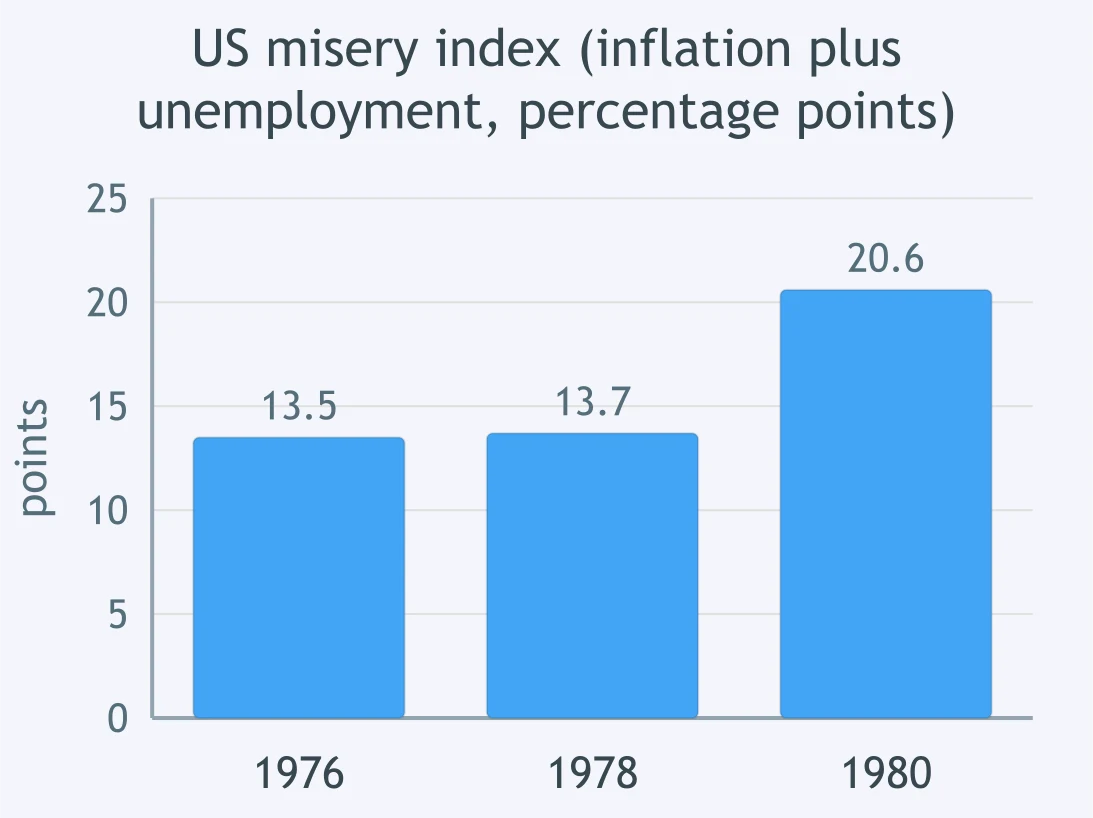
Use the table of US inflation and unemployment for 1973 and 1975. Which statement about the two years is accurate?
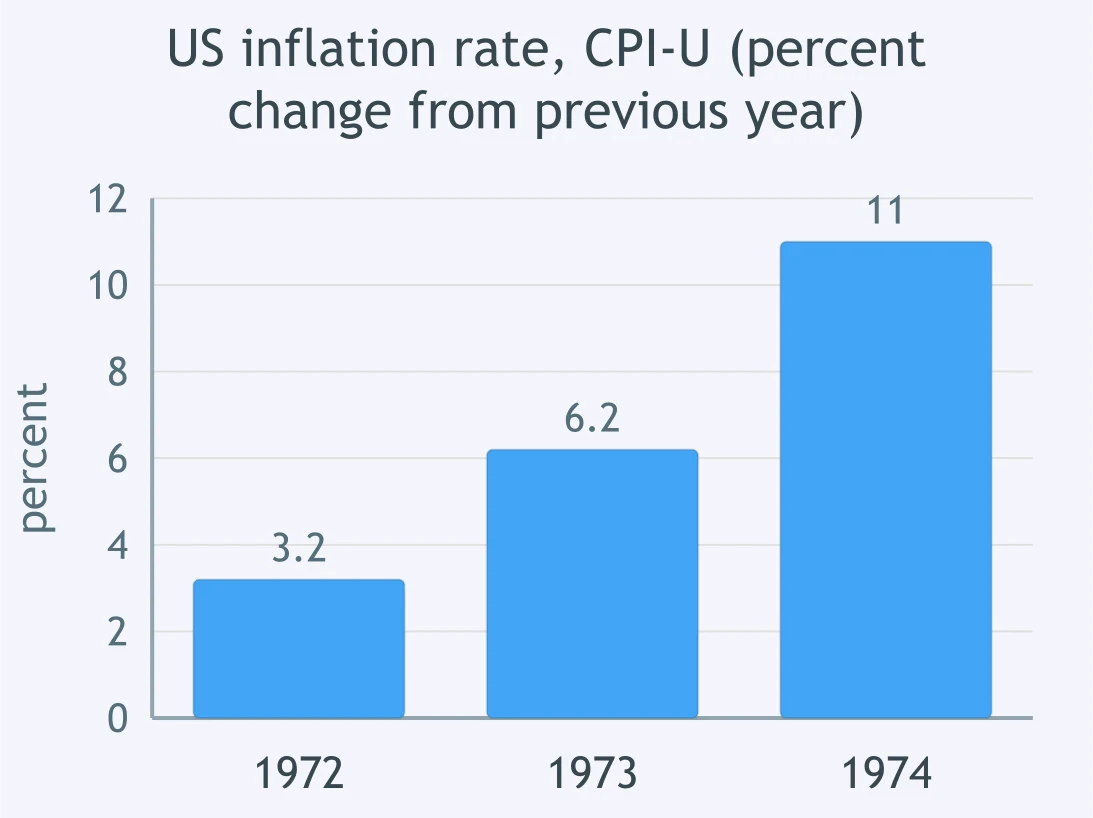
The bar chart gives the annual US inflation rate (CPI-U), in percent change from the previous year. By how many percentage points did the rate rise between the first and last years shown?
Which organization, founded in 1960 by oil-exporting states, set the sharply higher posted crude prices of 1973 and 1974?
In August 1971 Nixon ended the dollar's convertibility into gold. Which international monetary arrangement, set up in 1944, rested on that convertibility?
Which cabinet department did Congress create in 1977 to pull scattered federal energy programs into one agency?
Which 1978 package of five statutes, signed by President Carter, set conservation rules and began lifting price controls on natural gas?
Who became chairman of the Federal Reserve in 1979 and drove interest rates to record highs to break inflation?
A revolution in 1979 cut one country's oil exports and set off a second price shock for American consumers. Which country was it?
The October 1973 embargo was a response by Arab oil producers to American resupply of Israel during the war fought that month.
In January 1974 Congress set a national maximum highway speed of 55 miles per hour, and states had to enforce it to keep federal highway money. What was the stated purpose?
During the shortage some states let drivers buy gasoline only on odd-numbered dates if their license plate ended in an odd number, and on even dates otherwise. What was this meant to do?
Nixon froze wages and prices in August 1971 and the controls were then phased out during 1973 and 1974. What happened to inflation as they came off?
The Federal Reserve held interest rates very high through 1981 and 1982. What did the country see in 1982?
Between October 1973 and January 1974 the posted price of a barrel of crude rose from about $2.90 to $11.65. What did this do inside the American economy?
The Energy Policy and Conservation Act of 1975 created the Strategic Petroleum Reserve and set corporate average fuel economy rules. What did those rules require of automakers?
In the 1970s, rising gasoline prices pushed American buyers away from small, fuel-efficient cars and toward larger, heavier ones.
In 1980 US consumer prices rose 13.5 percent while unemployment averaged 7.1 percent. Economists had long expected that one of these could only be high if the other was low. What did 1980 show?
In 1974 consumer prices rose 11.0 percent, unemployment climbed from 4.9 to 5.6 percent, and total output shrank. Which term names that combination?
In 1982 unemployment averaged 9.7 percent while consumer prices still rose 6.2 percent. In an ordinary downturn, what had economists expected prices to do as unemployment climbed?
US consumer prices rose 11.0 percent in 1974 and 9.1 percent in 1975, while unemployment averaged 5.6 percent in 1974 and 8.5 percent in 1975. Which statement describes the change?
Crack the passcode before the zombies get in.
Answer, then swat bugs for bonus points.
Race through questions at your own speed.
Same question on every screen. Fastest wins.

Pick a tile, answer, hit bonuses and steals.
Reagan and the Conservative Resurgence
30 questions