Loading
by BlastRoom
Practice calculating buoyant force and predicting floating, sinking, and neutral buoyancy.
#physics
30 questions
One question set, multiple game modes. Tap any game to see it in action. Not sure which to pick?
Answer to place stones and capture territory.
Outrun the snow together.
Earn blasts, then hunt the other team.
Answer to earn energy, then climb.

The class blasts through walls together.
Bid on mystery lots. Most money wins.
Sell tours. Nice, standard, or a total scam.

Answer, restock, and serve the rush.
More correct answers pulls the rope your way.
Answer, then shoot down the alien wave.
Answer, then tap to leap the frozen ridge.
Use the force diagram for a block hanging motionless under water. What does the spring scale read?
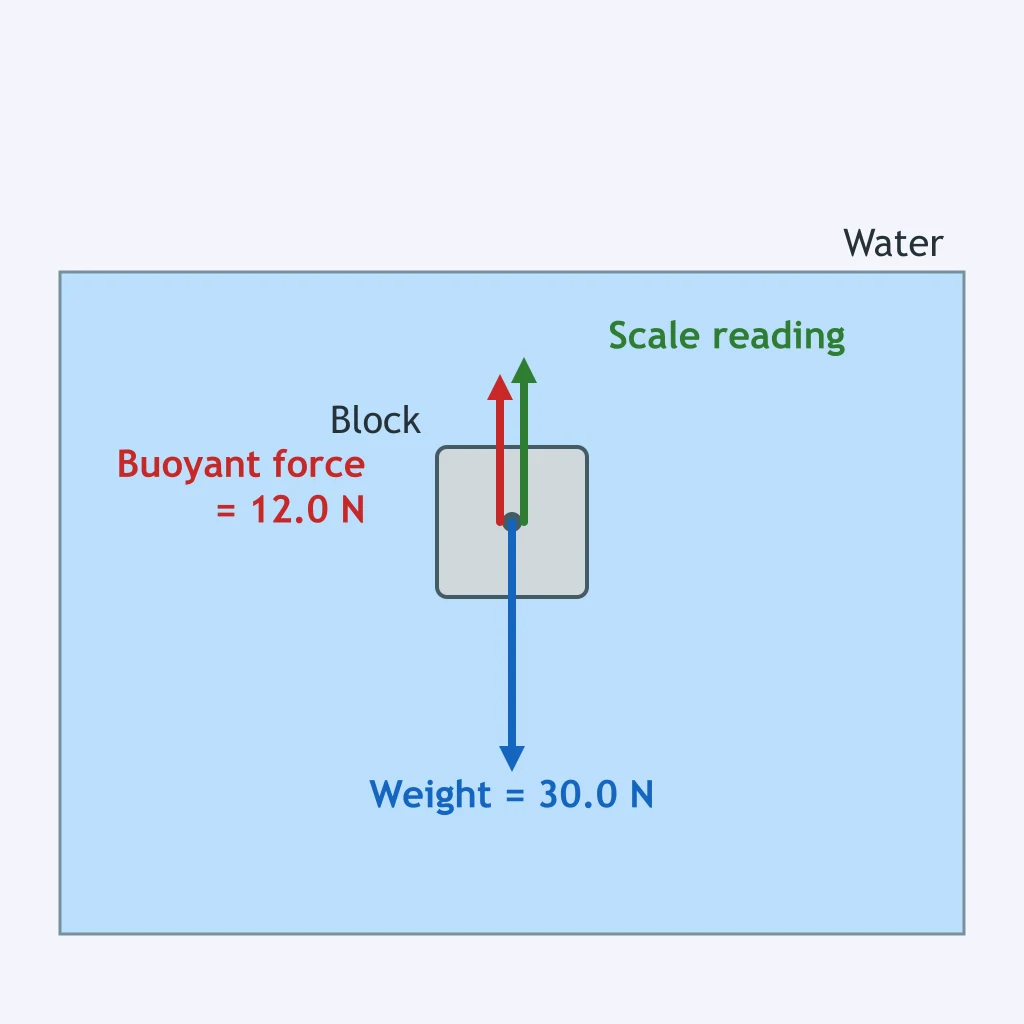
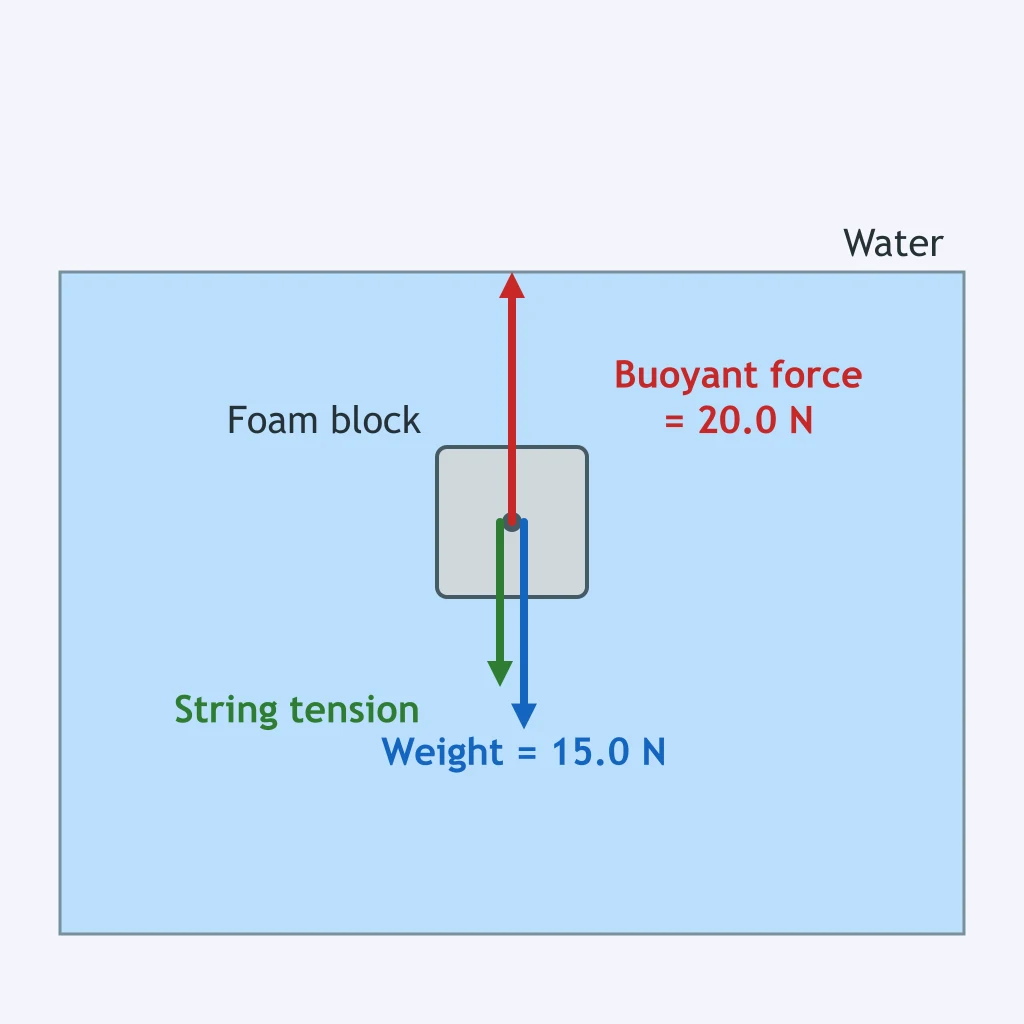
Use the force diagram for a foam block held fully submerged at rest by a lower string. What is the string tension?
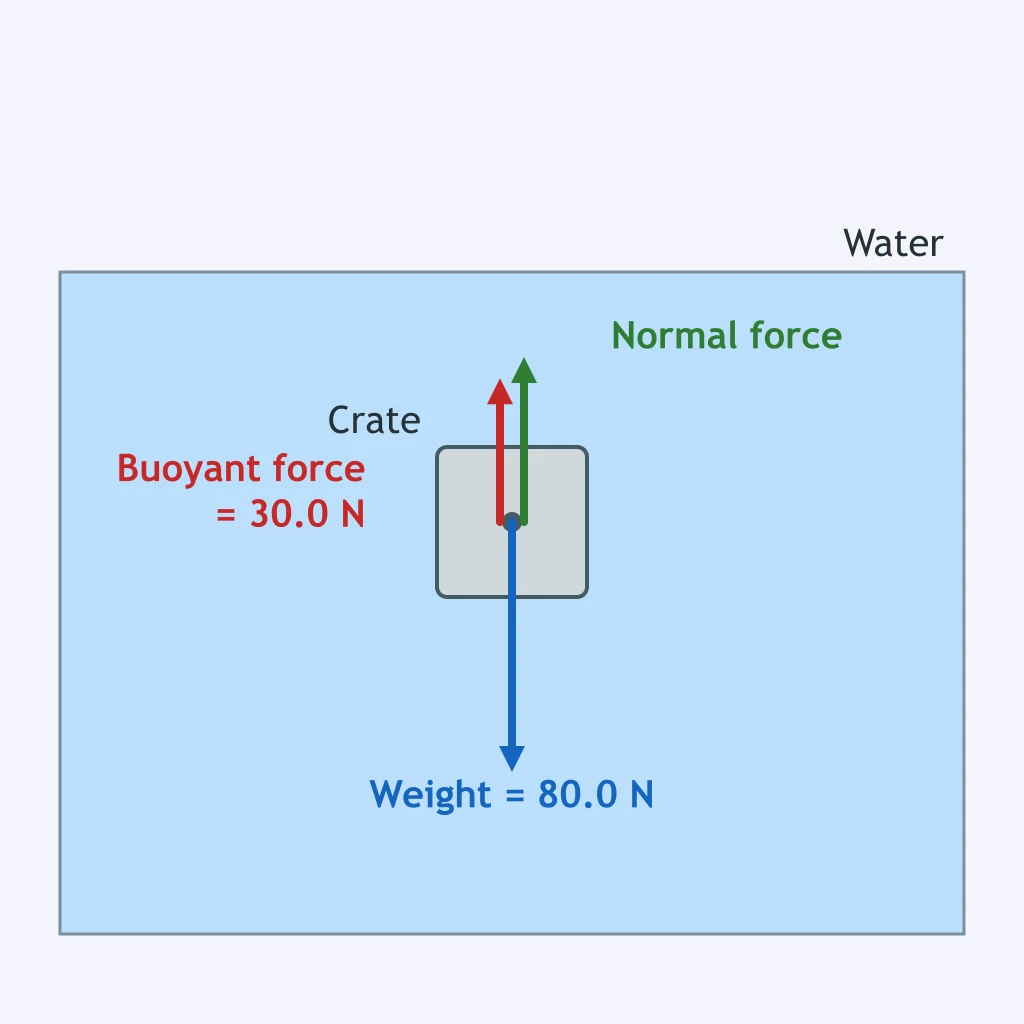
Use the diagram for a crate fully submerged and resting on the tank floor. What normal force does the floor exert on the crate?
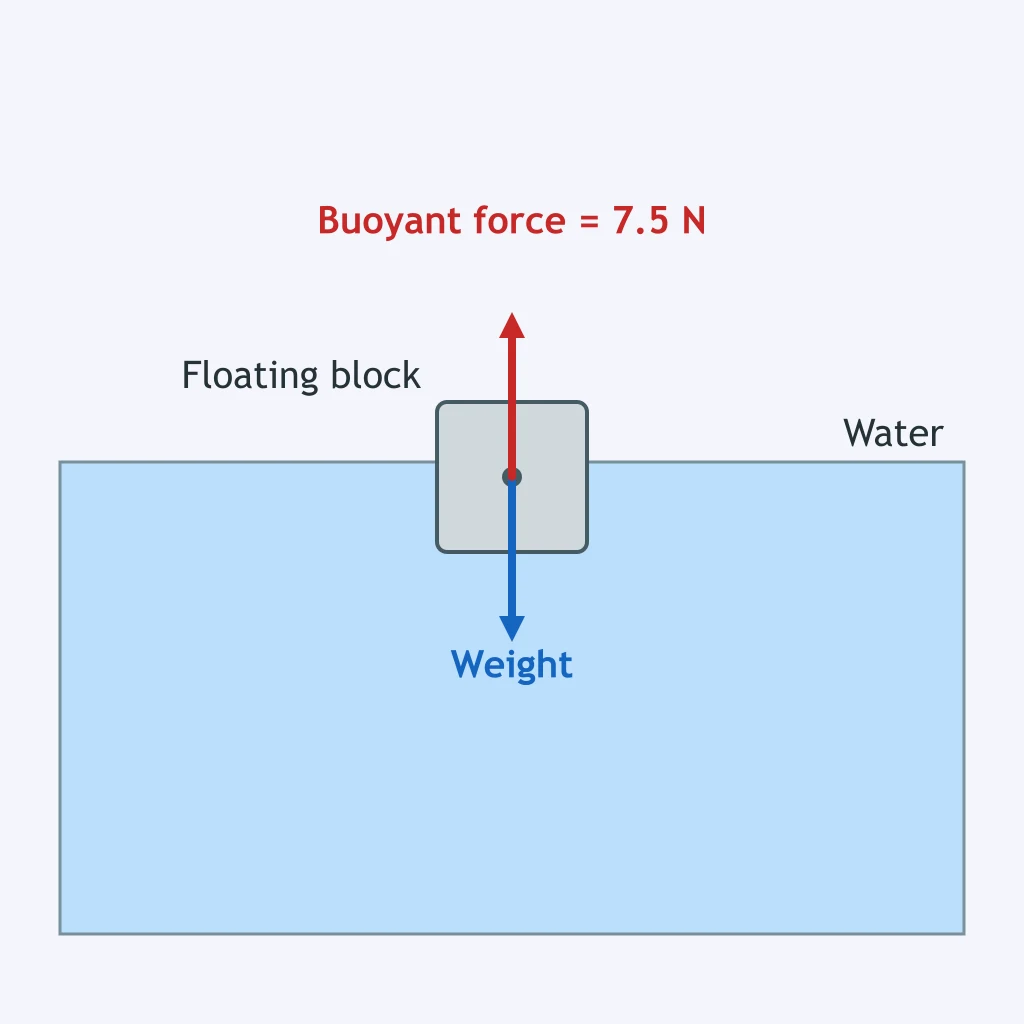
Use the diagram for a block floating at rest. The buoyant force is labeled, and the weight is unknown. What is the block's weight?
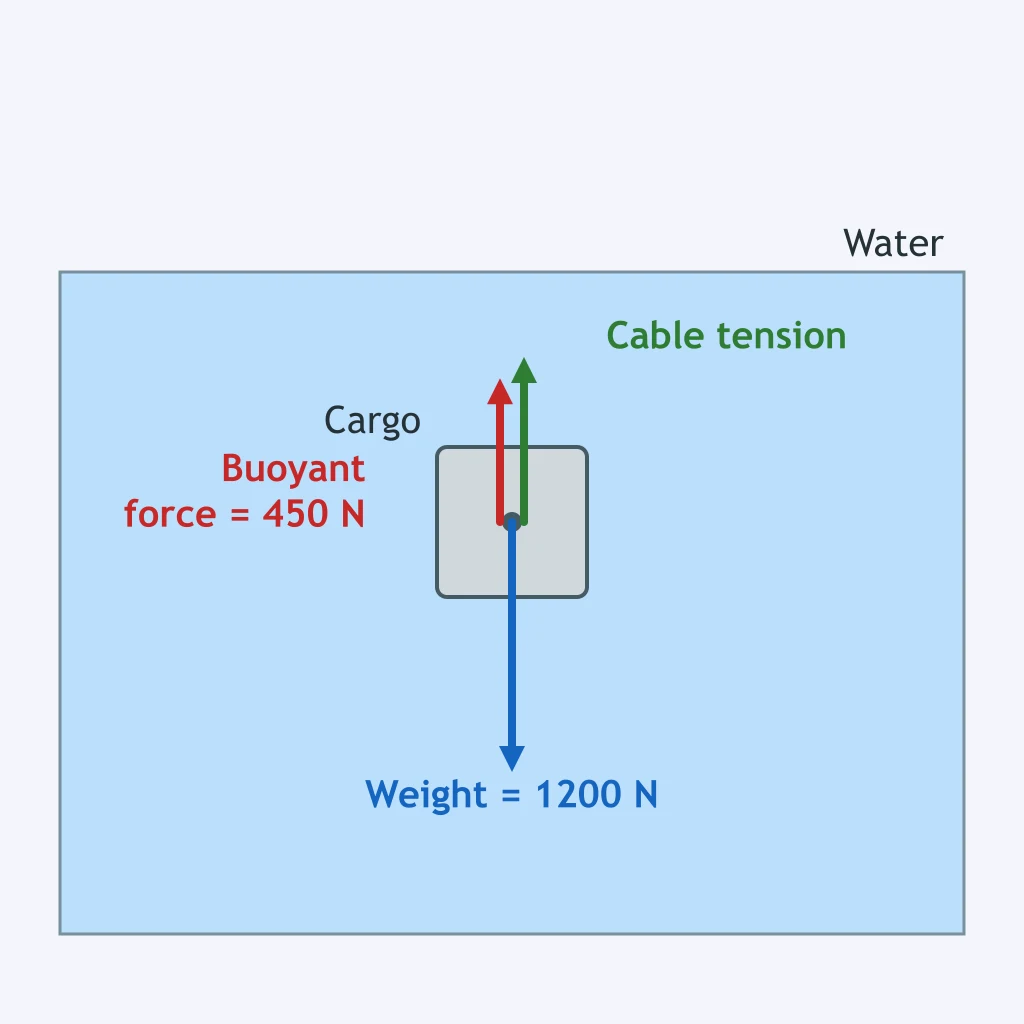
Use the force diagram for underwater cargo held motionless by a crane cable. What is the cable tension?
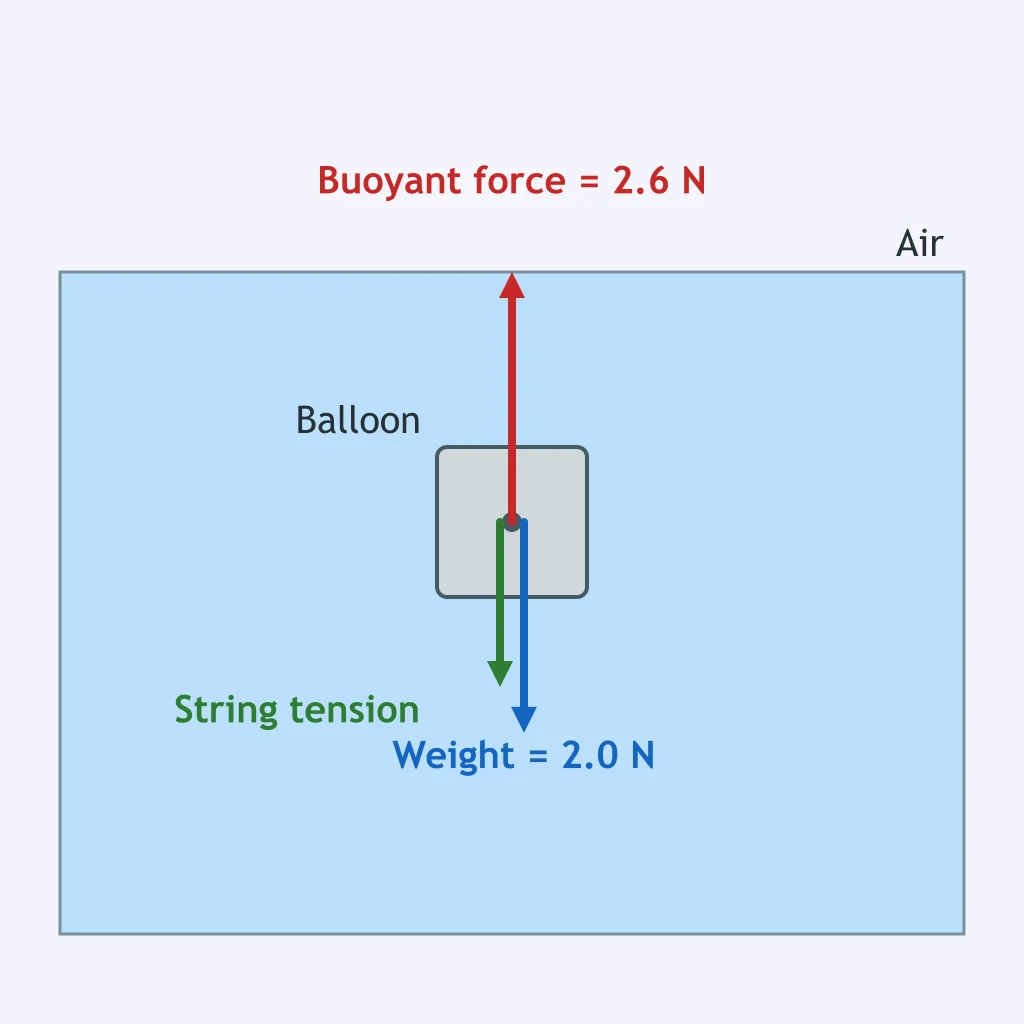
Use the force diagram for a helium balloon tied by a string and at rest in air. What is the string tension?
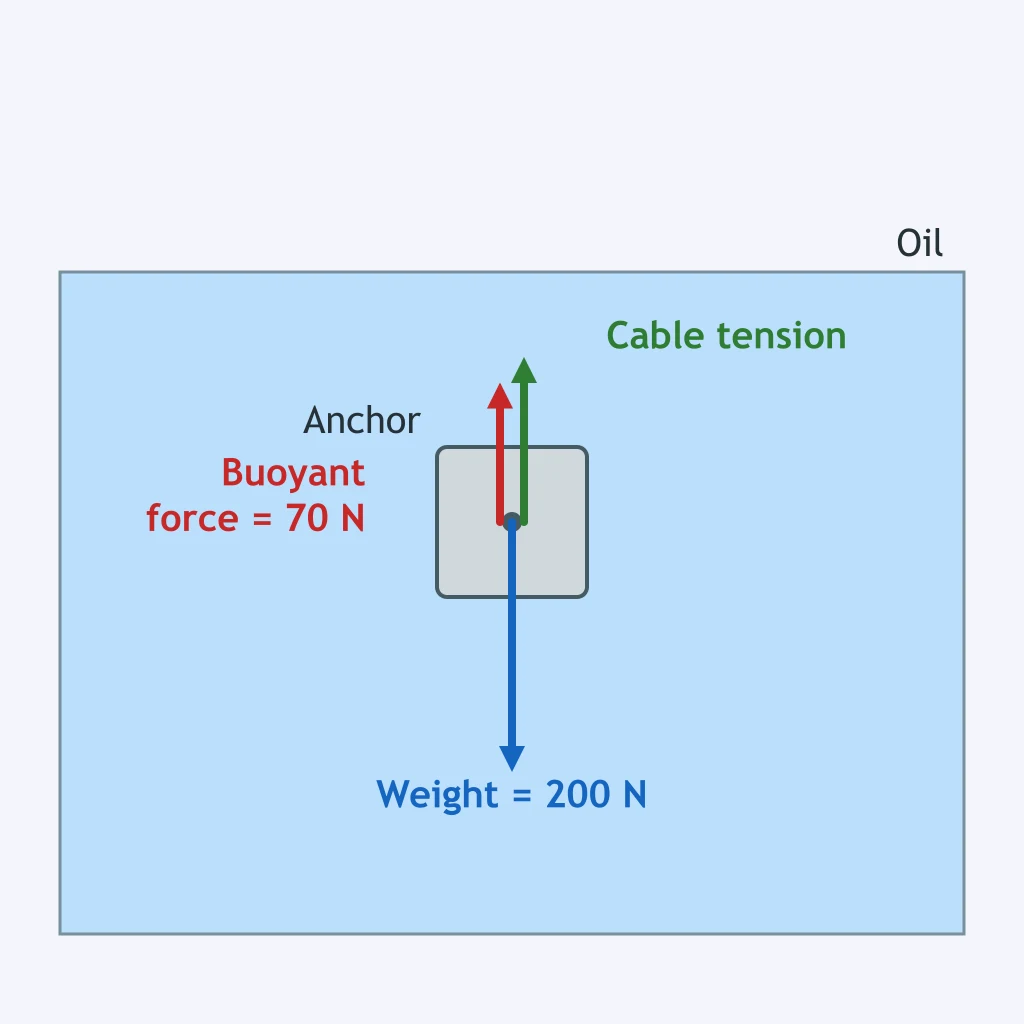
Use the force diagram for an anchor hanging at rest in oil. What is the cable tension?
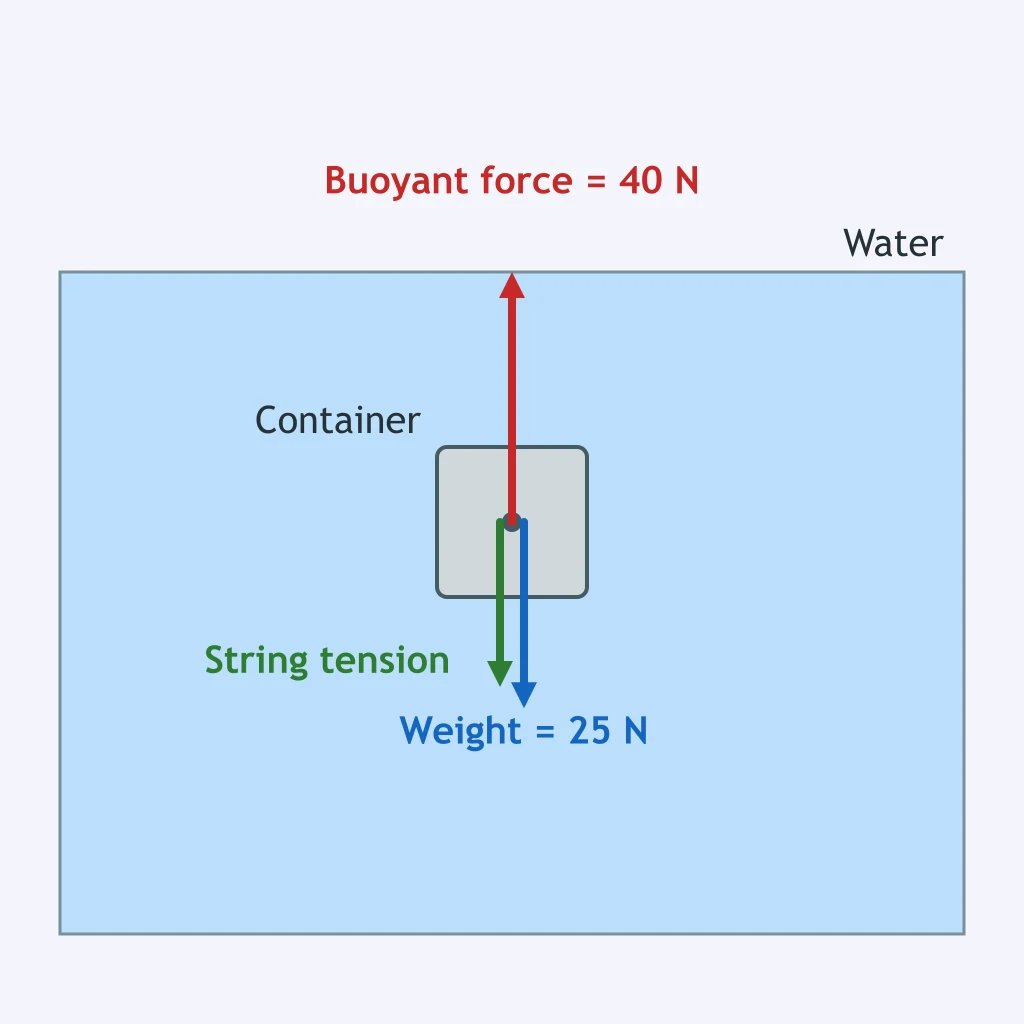
Use the force diagram for a sealed plastic container held underwater at rest by a bottom string. What is the string tension?
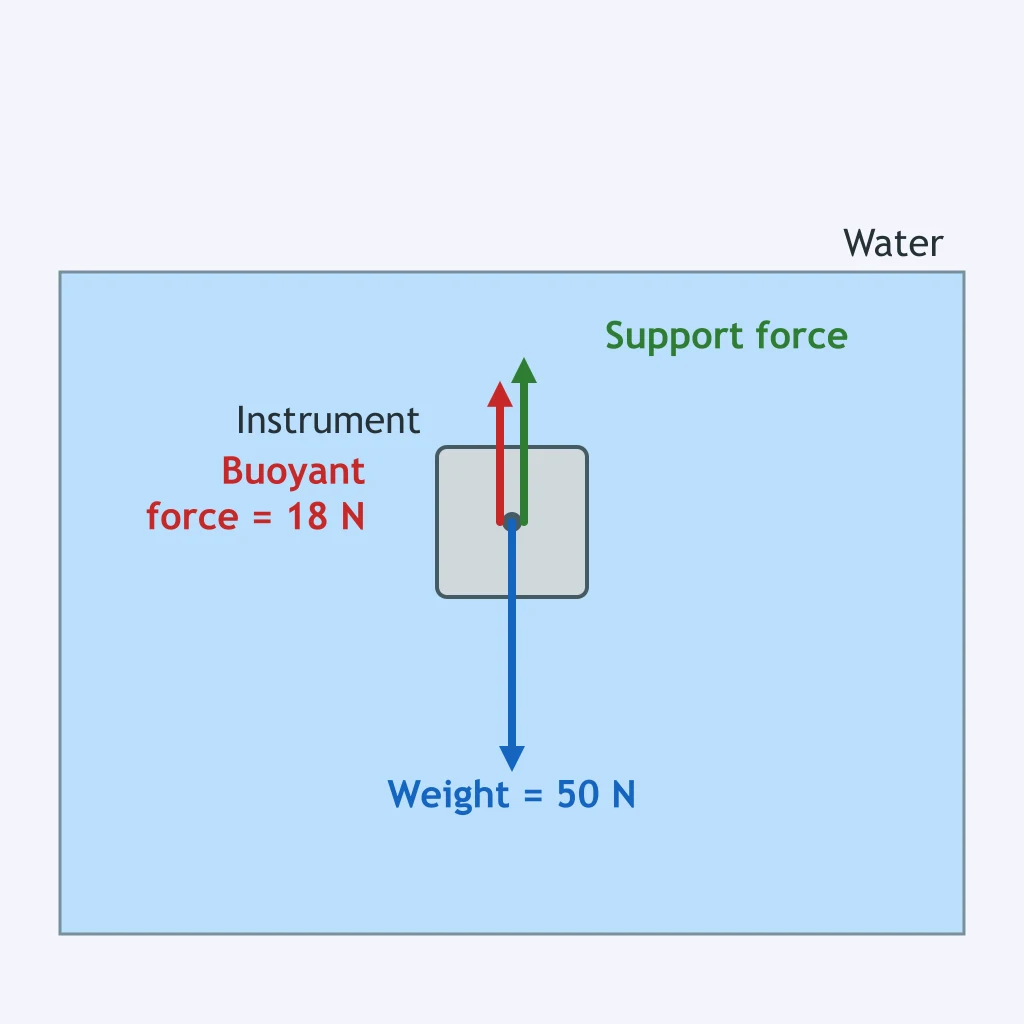
Use the force diagram for a submerged instrument supported at rest by a scale. What upward support force does the scale provide?
Use the overflow-can diagram; its cylinder reading is the displaced water volume. Water density is 1000 kg/m³, g = 9.8 m/s², and 1 cm³ = 1×10⁻⁶ m³. What is the buoyant force?
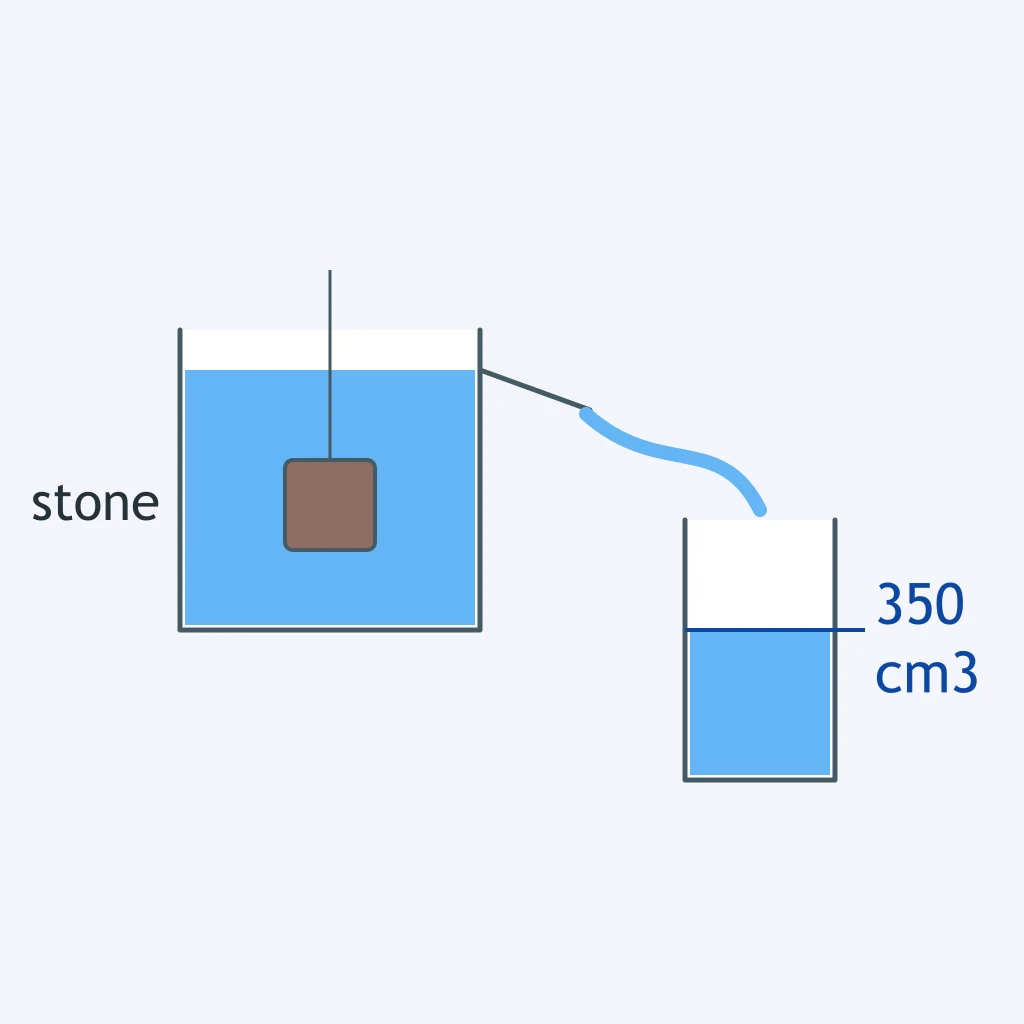
Use the overflow-can diagram; the collected liquid volume is the displaced volume. Oil density is 800 kg/m³, g = 9.8 m/s², and 1 cm³ = 1×10⁻⁶ m³. What is the buoyant force?
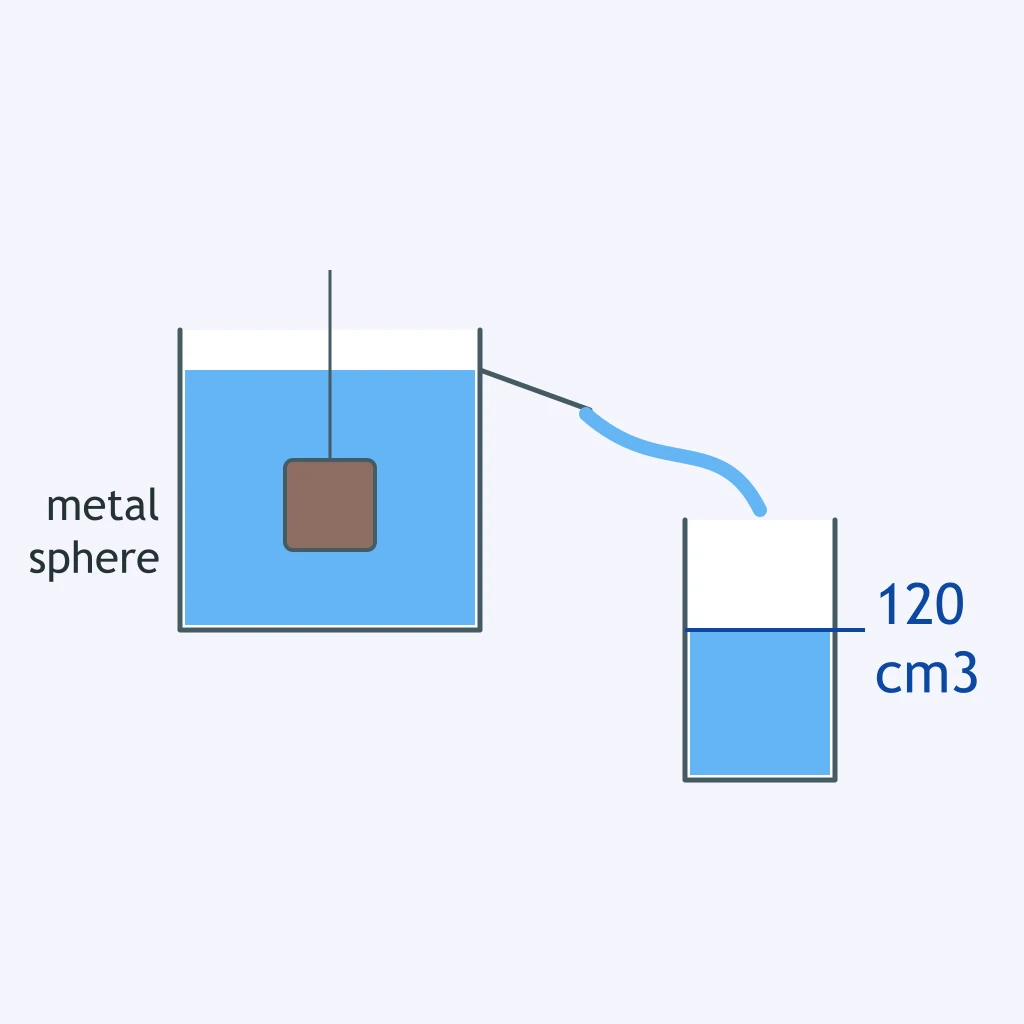
Use the overflow-can diagram for a fully submerged object in salt water. Salt-water density is 1030 kg/m³, g = 9.8 m/s², and 1 cm³ = 1×10⁻⁶ m³. What buoyant force acts on it?
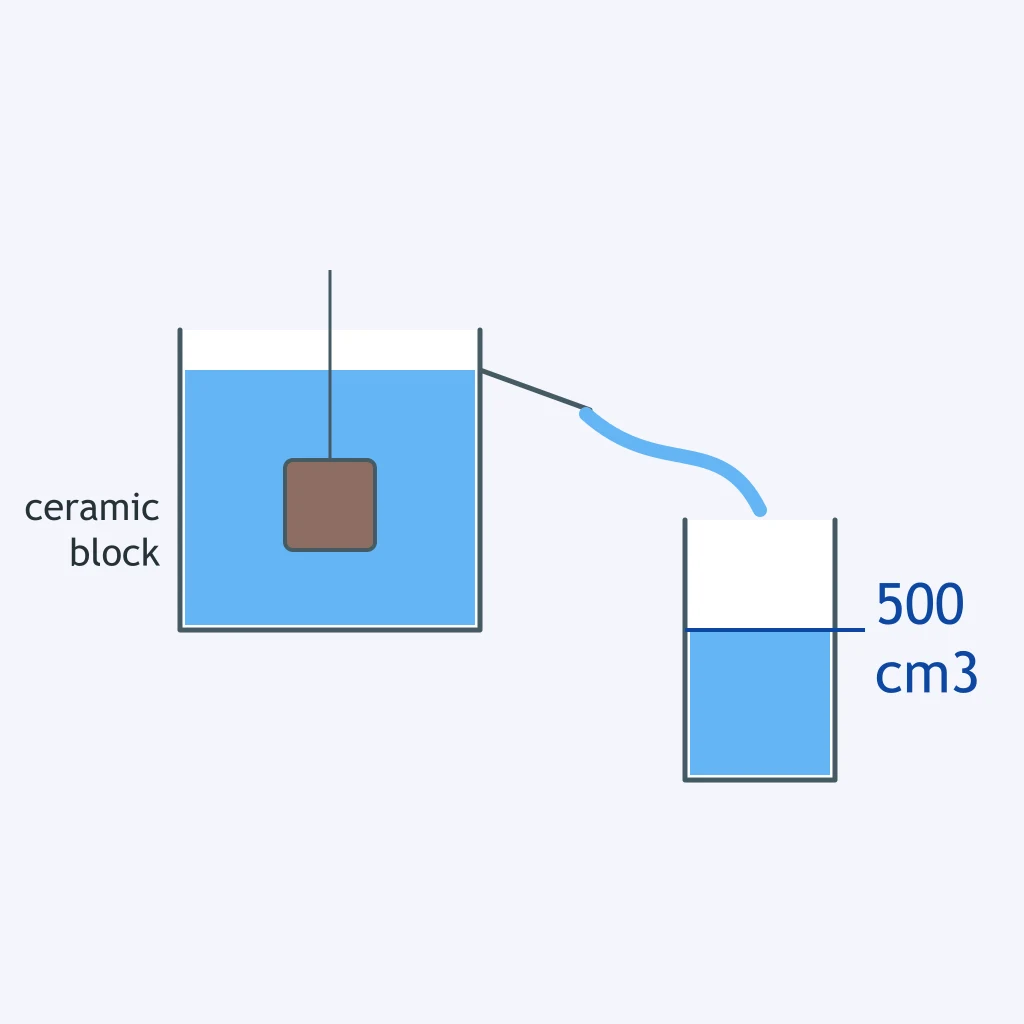
Use the overflow-can diagram for a small object fully submerged in glycerin. Glycerin density is 1260 kg/m³, g = 9.8 m/s², and 1 cm³ = 1×10⁻⁶ m³. What is the buoyant force?
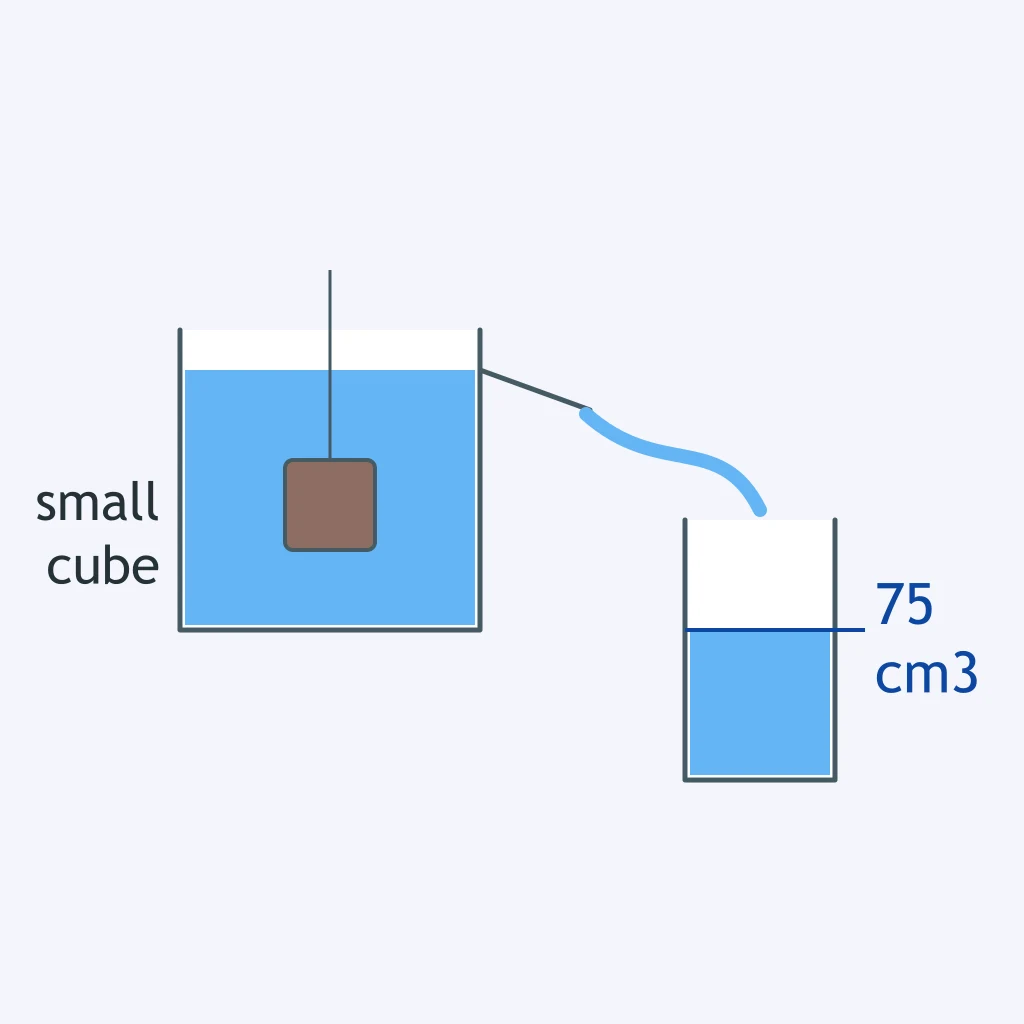
Use the overflow-can diagram for a fully submerged object in ethanol. Ethanol density is 790 kg/m³, g = 9.8 m/s², and 1 cm³ = 1×10⁻⁶ m³. What buoyant force acts on the object?
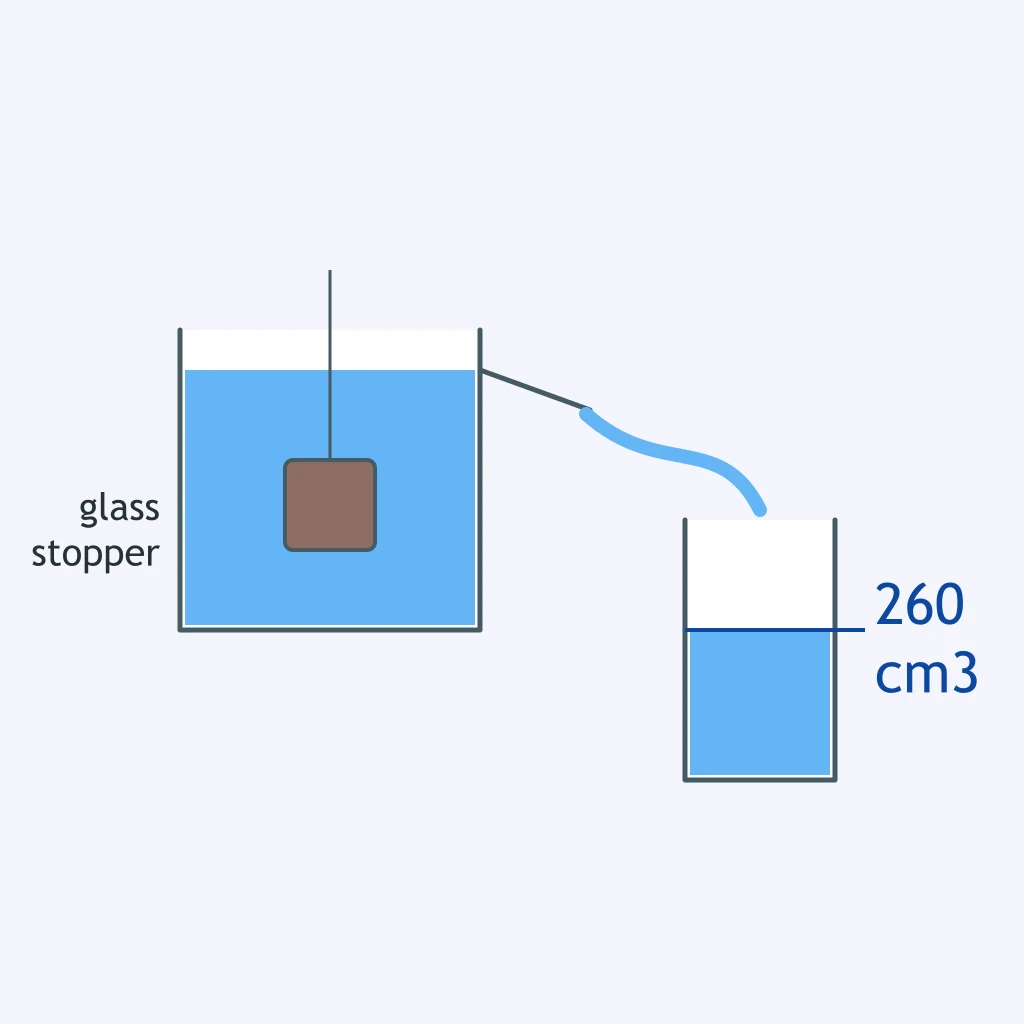
A sealed canister of volume 2.5×10⁻³ m³ is held completely below the surface of fresh water. The water density is 1000 kg/m³ and g = 9.8 m/s². What is the buoyant force?
An aluminum cylinder of volume 1.20×10⁻³ m³ is fully submerged in oil of density 850 kg/m³. Use g = 9.8 m/s². What buoyant force acts on the cylinder?
A glass sphere of volume 400 cm³ is fully submerged in seawater of density 1025 kg/m³. Since 1 cm³ = 1×10⁻⁶ m³ and g = 9.8 m/s², what is the buoyant force?
A cube with side length 0.20 m is completely submerged in fresh water of density 1000 kg/m³. Use g = 9.8 m/s². What buoyant force acts on it?
A test sample of volume 3.0×10⁻⁴ m³ is fully submerged in mercury of density 13600 kg/m³. Use g = 9.8 m/s². What is the buoyant force?
A research sensor of volume 150 cm³ is completely submerged in alcohol of density 790 kg/m³. Since 1 cm³ = 1×10⁻⁶ m³ and g = 9.8 m/s², what is the buoyant force?
A solid block of average density 600 kg/m³ floats at rest in fresh water of density 1000 kg/m³. What fraction of the block's volume is below the waterline?
A raft with average density 450 kg/m³ floats in seawater of density 1025 kg/m³. What fraction of the raft's volume is below the surface?
A solid cube with average density 1200 kg/m³ is released at the surface of fresh water with density 1000 kg/m³. What happens?
A small probe has average density 1030 kg/m³ and is fully submerged in seawater of density 1030 kg/m³. If released from rest away from walls, what happens?
Ice with average density 917 kg/m³ floats in fresh water of density 1000 kg/m³. What fraction of the ice's volume is submerged?
A steel cube hangs fully submerged 0.50 m below a lake surface, then is lowered to 5.0 m below the surface. Treat the water as incompressible. What happens to the buoyant force?
Two solid cylinders have equal volume and are fully submerged at the same depth in the same oil. One is aluminum and one is brass. Which statement about their buoyant forces is correct?
Two sealed containers have the same mass, but their volumes are 0.001 m³ and 0.003 m³. Both are fully submerged in fresh water. Which container has the greater buoyant force?
A boat floats, then cargo is added and the boat floats lower in the water. Compared with before, what happens to the buoyant force on the boat+cargo system?
A rigid probe of fixed volume stays fully submerged as it is moved from fresh water to denser salt water at the same depth. What happens to the buoyant force?
Defining Simple Harmonic Motion (AP Physics 1)
40 questions
Period and Frequency of Oscillators (AP Physics 1)
30 questions
Analyzing Displacement-Time Graphs of Oscillators (AP Physics 1)
50 questions

Energy of a Simple Harmonic Oscillator (AP Physics 1)
30 questions
Density and Internal Structure (AP Physics 1)
40 questions
Crack the passcode before the zombies get in.
Answer, then swat bugs for bonus points.
Race through questions at your own speed.
Same question on every screen. Fastest wins.

Pick a tile, answer, hit bonuses and steals.