Loading
by BlastRoom
Read amplitude, period, phase, velocity and acceleration from oscillator graphs.
#physics
50 questions
One question set, multiple game modes. Tap any game to see it in action. Not sure which to pick?
Answer to place stones and capture territory.
Outrun the snow together.
Earn blasts, then hunt the other team.
Answer to earn energy, then climb.

The class blasts through walls together.
Bid on mystery lots. Most money wins.
Sell tours. Nice, standard, or a total scam.

Answer, restock, and serve the rush.
More correct answers pulls the rope your way.
Answer, then shoot down the alien wave.
Answer, then tap to leap the frozen ridge.
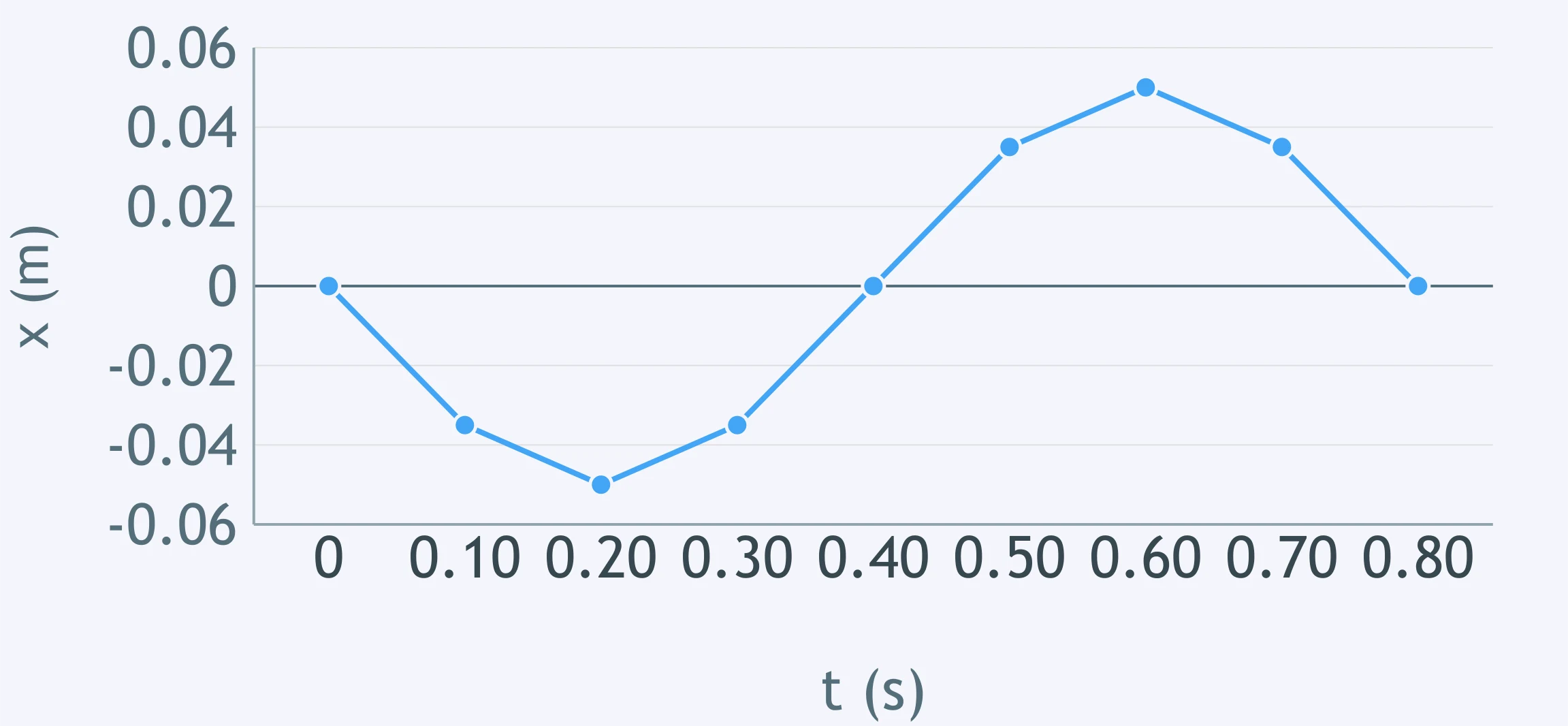
Use the displacement-time graph of the oscillator. What is the amplitude of the motion?
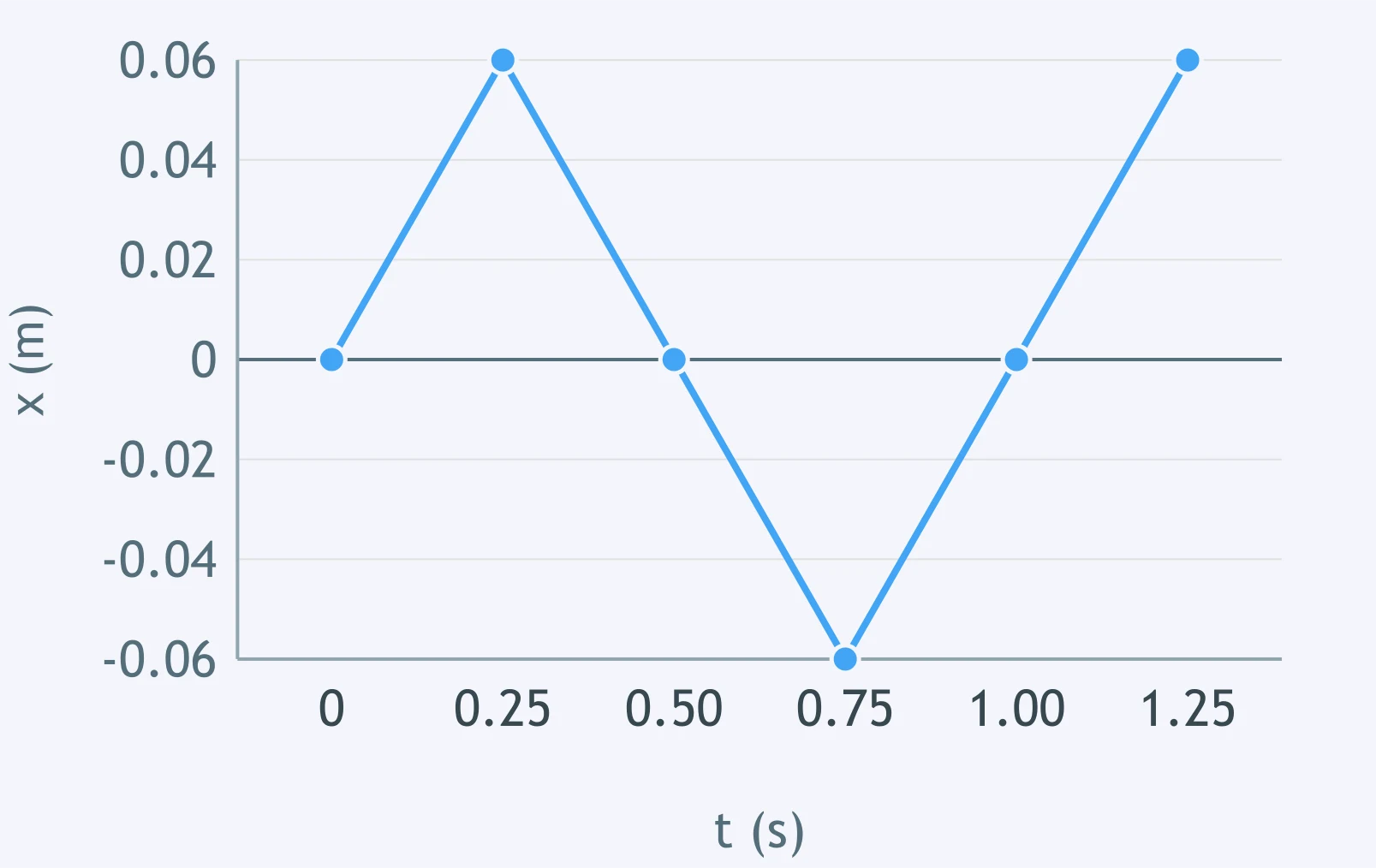
A cart oscillates along a track. From the displacement-time graph, what is the period of the motion?
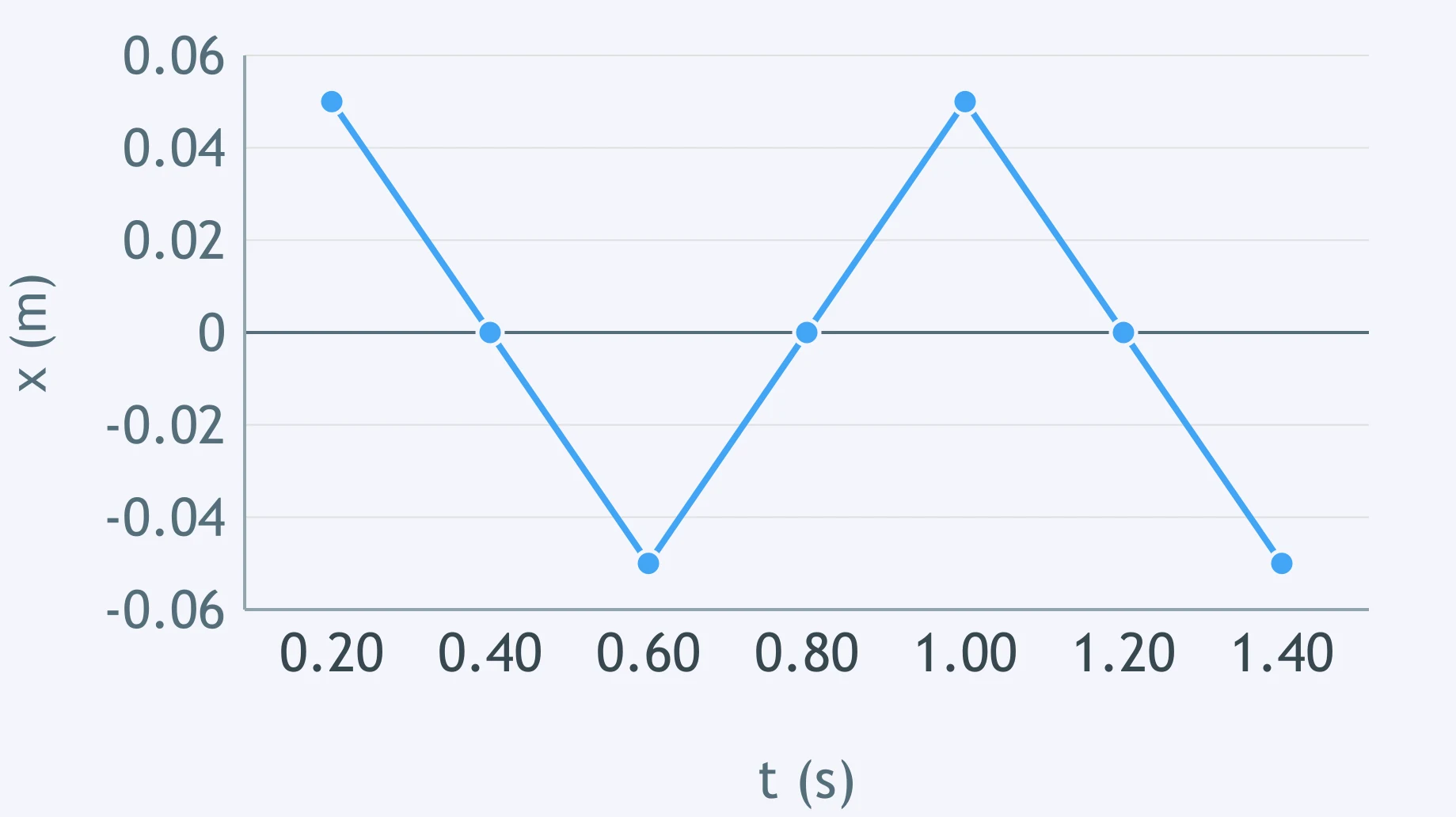
The graph shows one oscillator's displacement from equilibrium. What is the frequency of the oscillation?
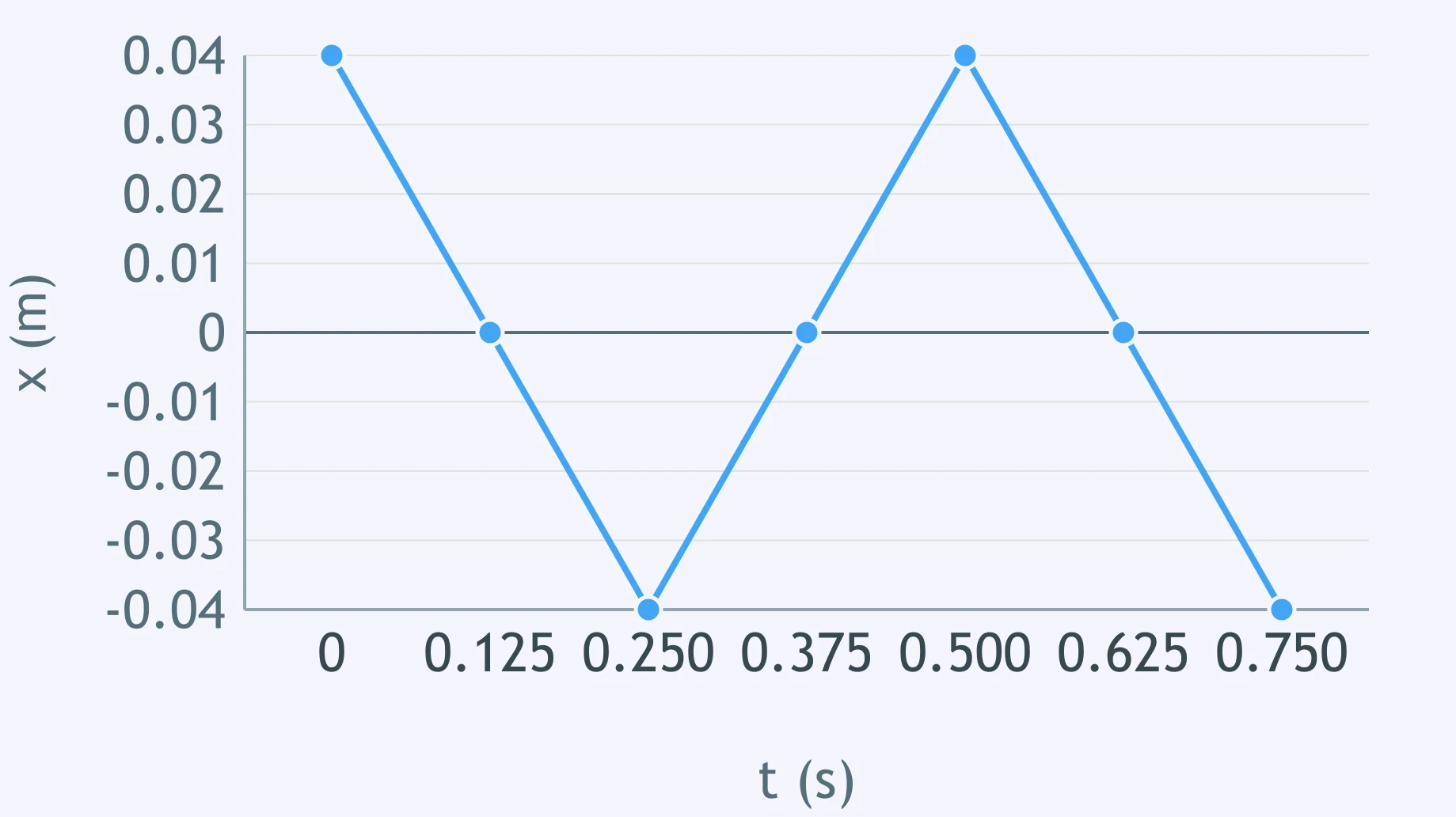
Use the displacement-time graph. What amplitude should be reported for this oscillator?
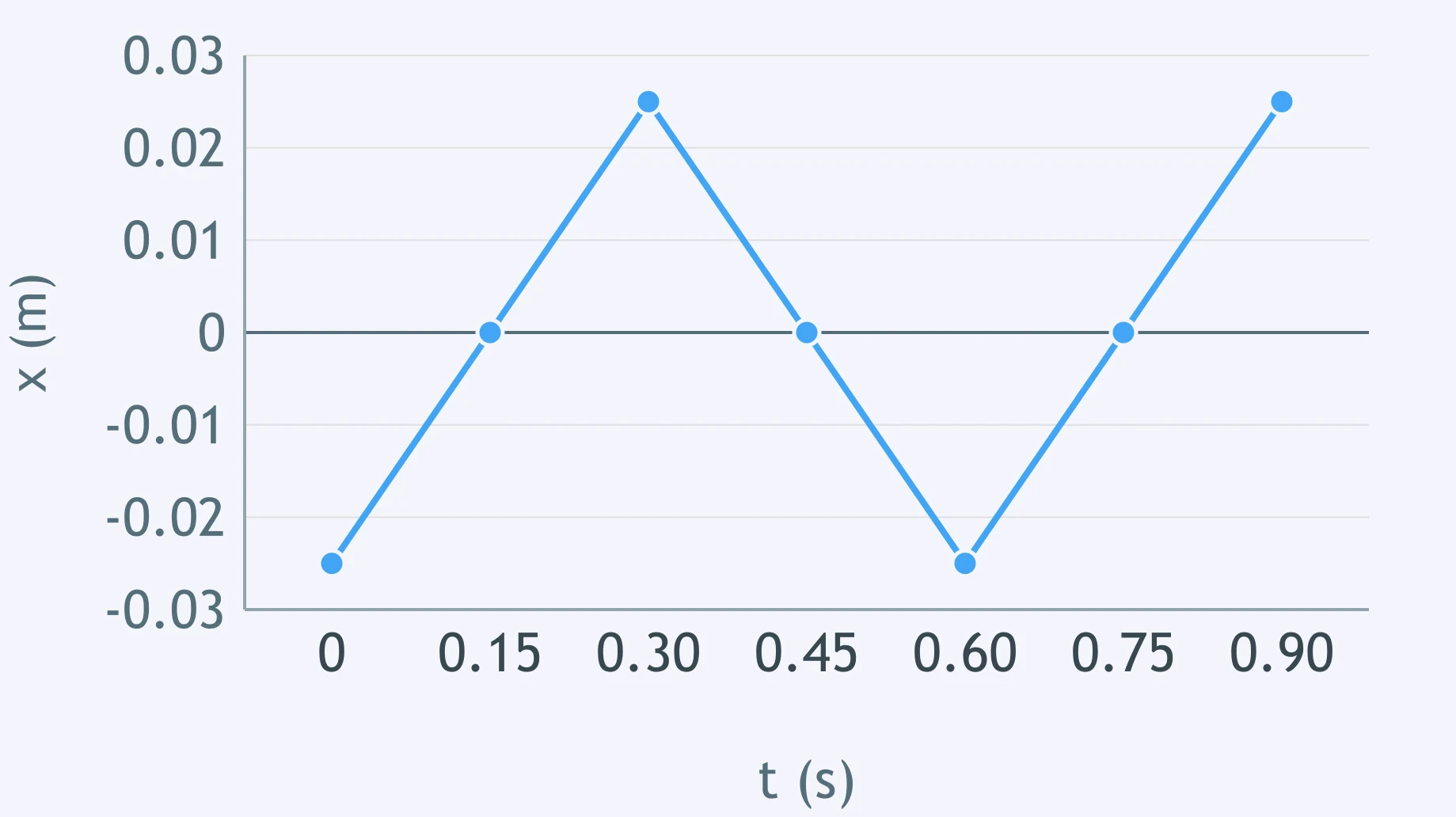
For the displacement-time graph shown, what is the period of the oscillator?
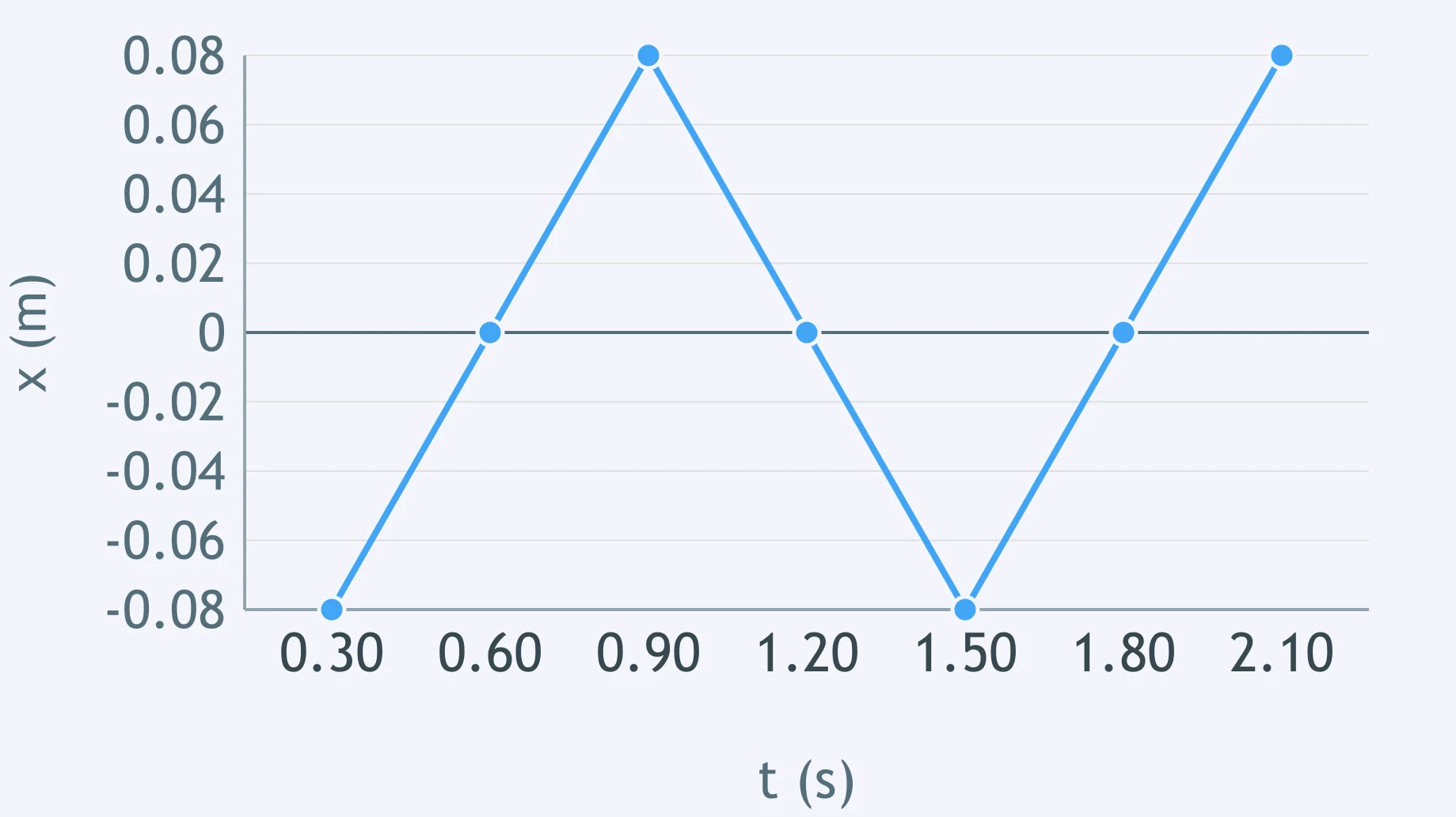
A mass-spring system has the displacement-time graph shown. What is its frequency?
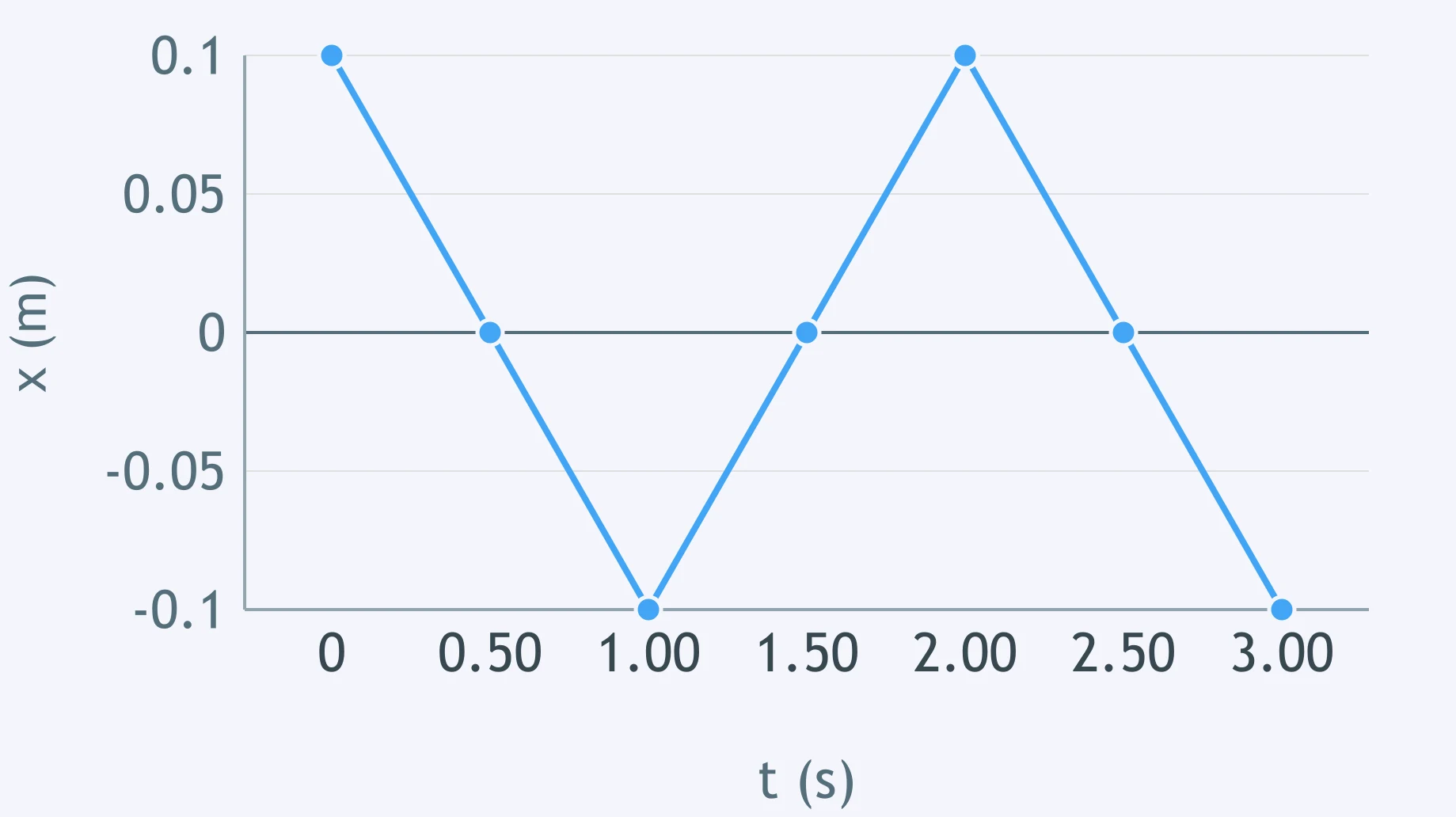
From the displacement-time graph, what is the period of this oscillator?
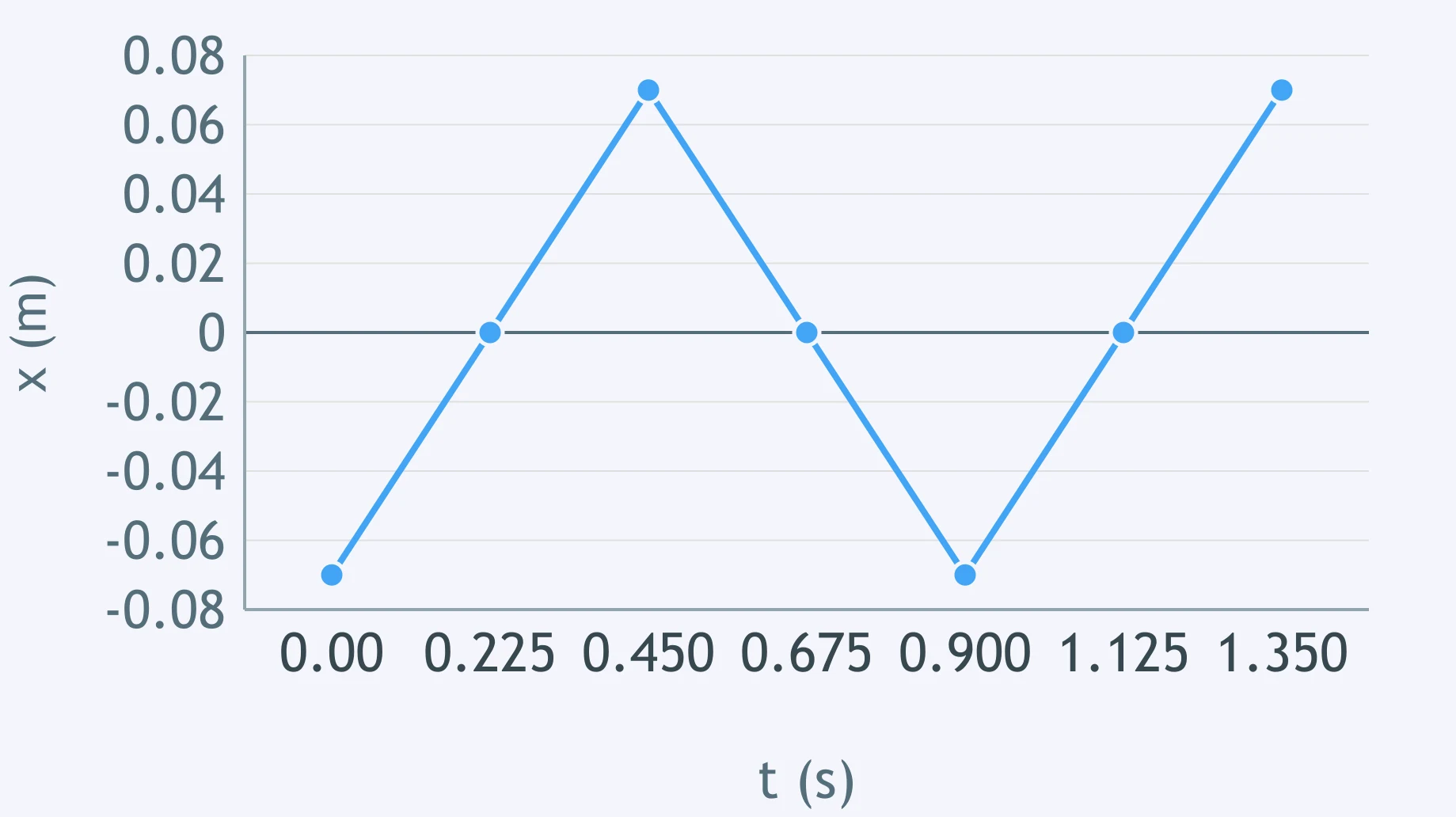
The graph shows displacement from equilibrium. What is the amplitude?
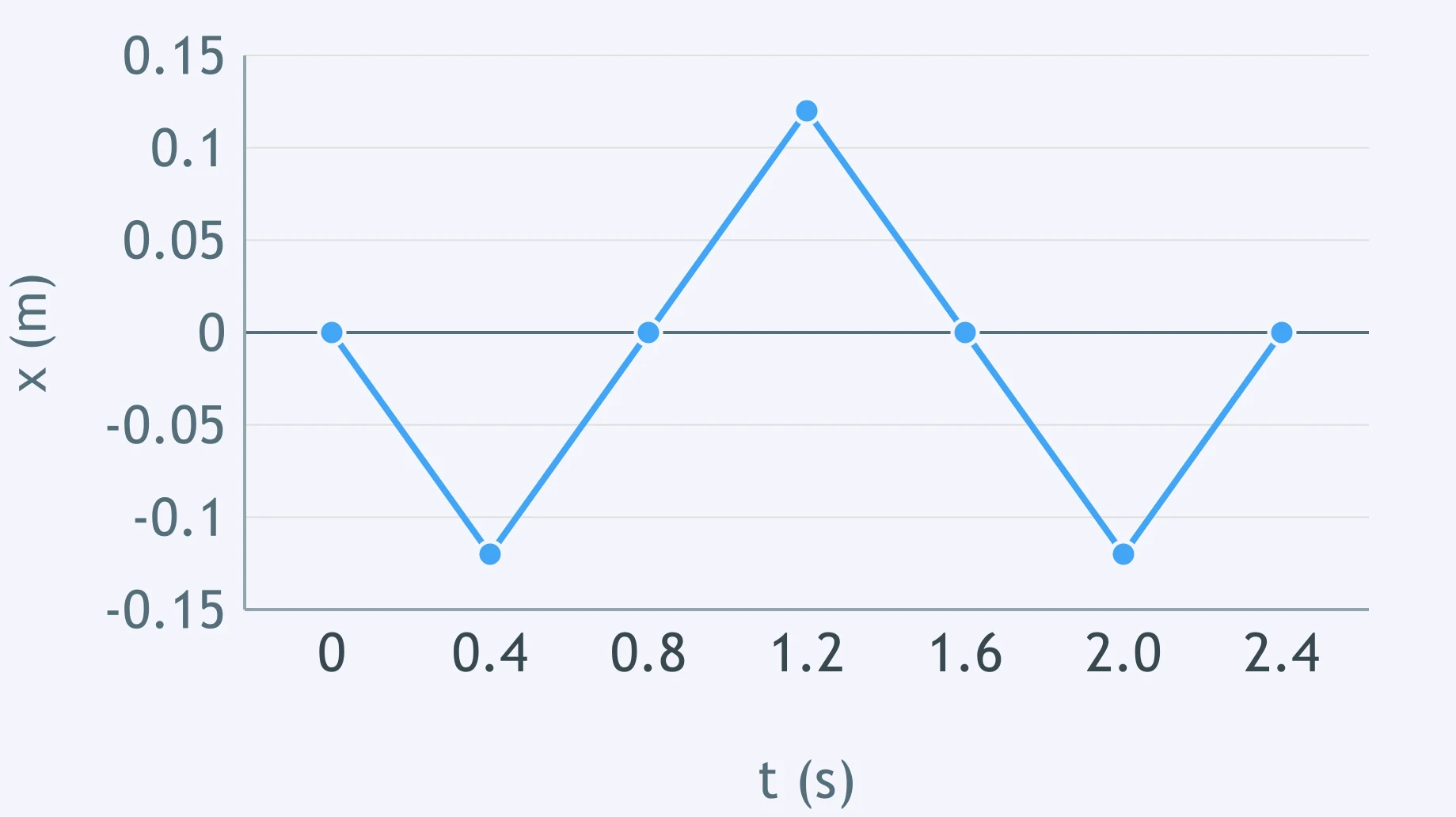
Use the displacement-time graph. What is the oscillation frequency?
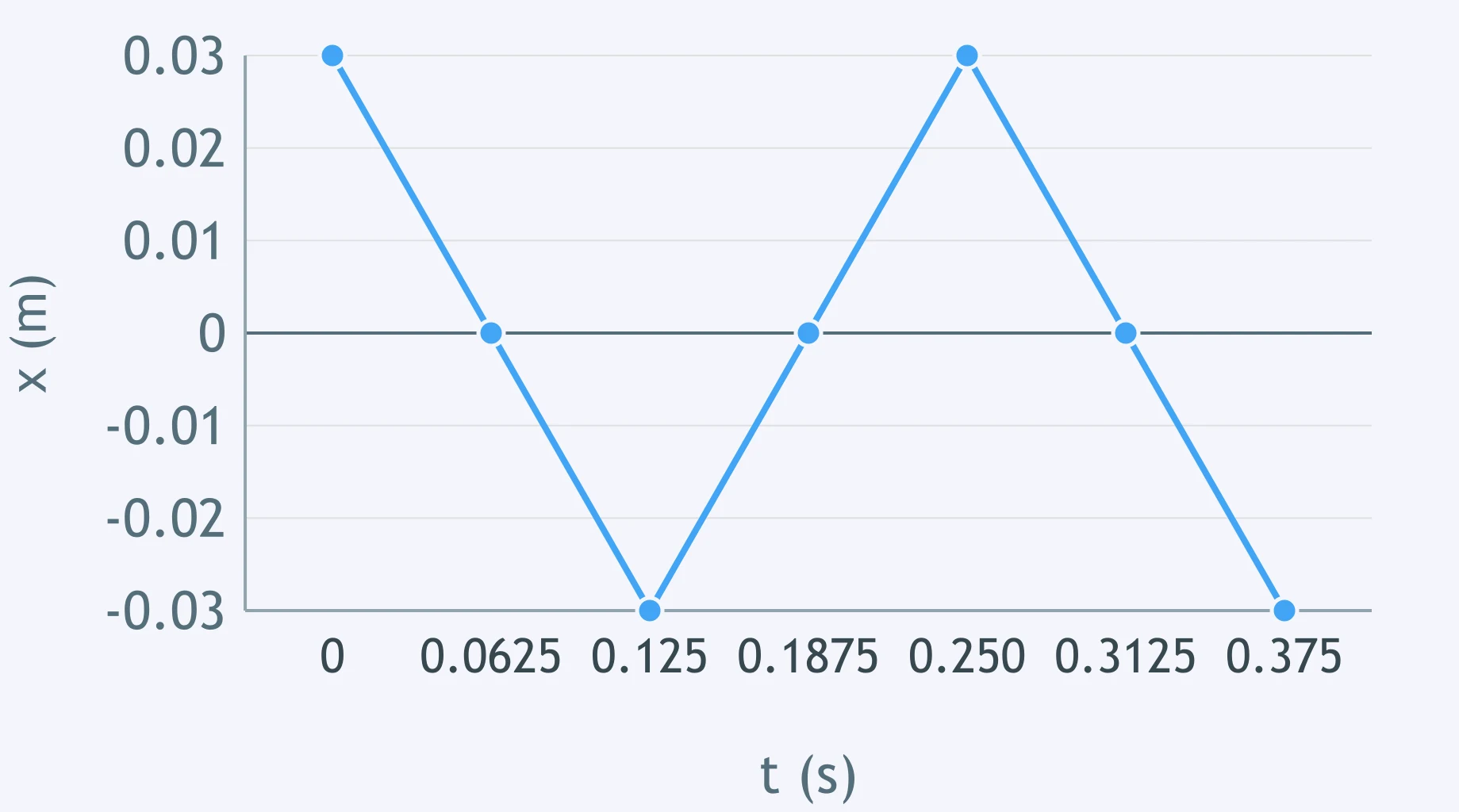
A pendulum's small-angle displacement is graphed against time. What is its period?
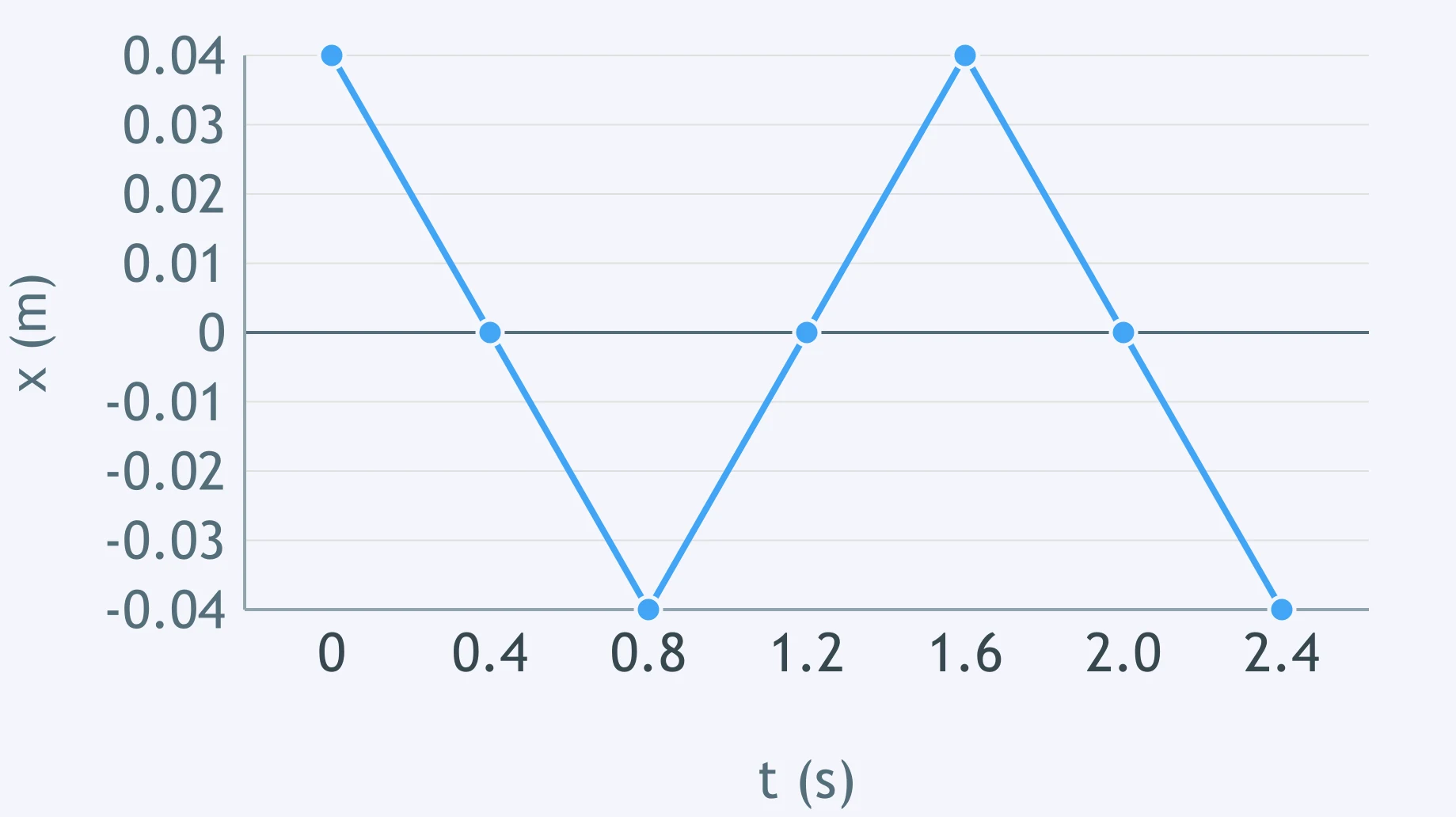
The displacement axis is in meters. What is the amplitude shown on the graph?
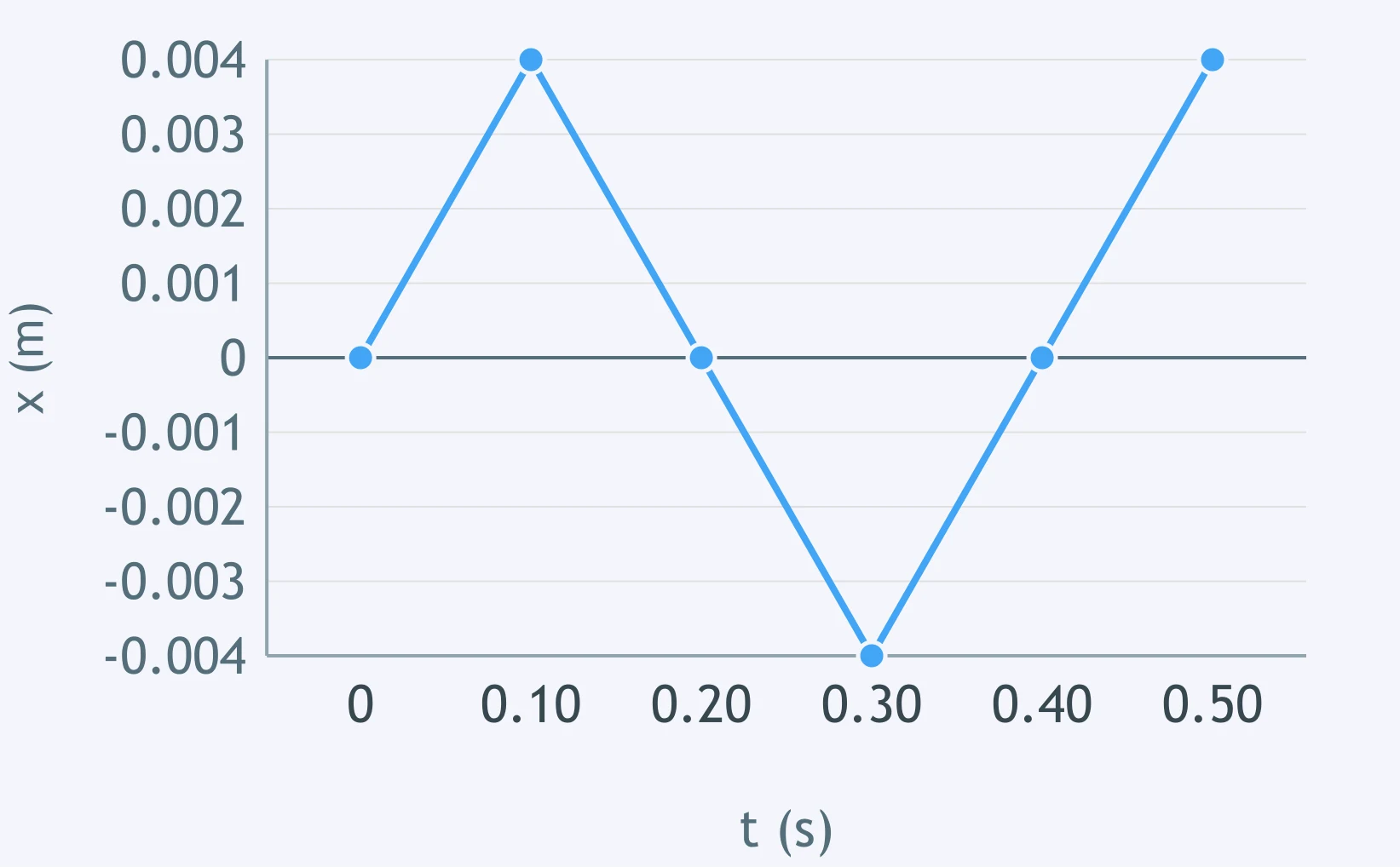
From the graph of displacement versus time, what is the frequency?
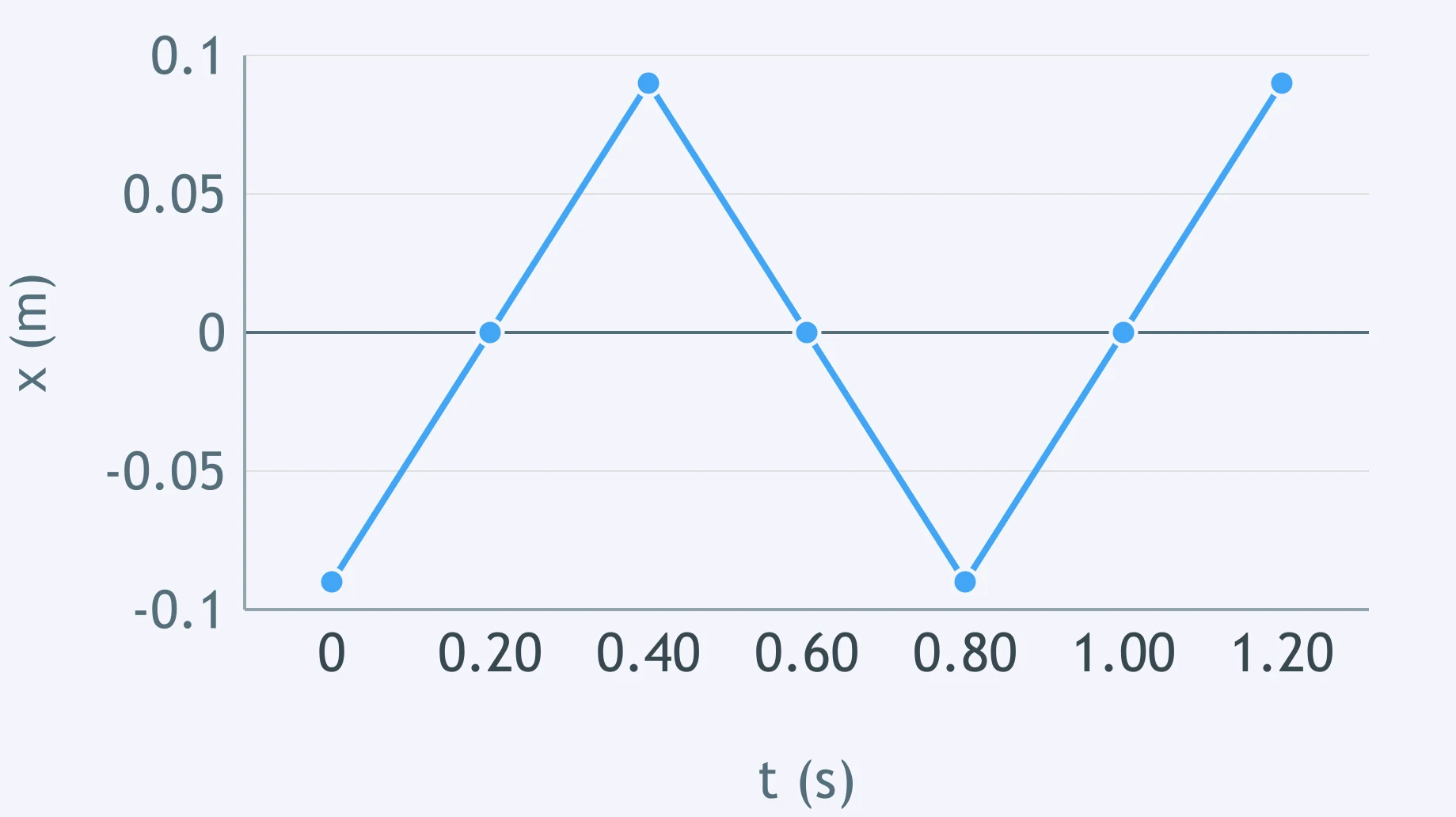
Use the graph to find the period of the oscillator.
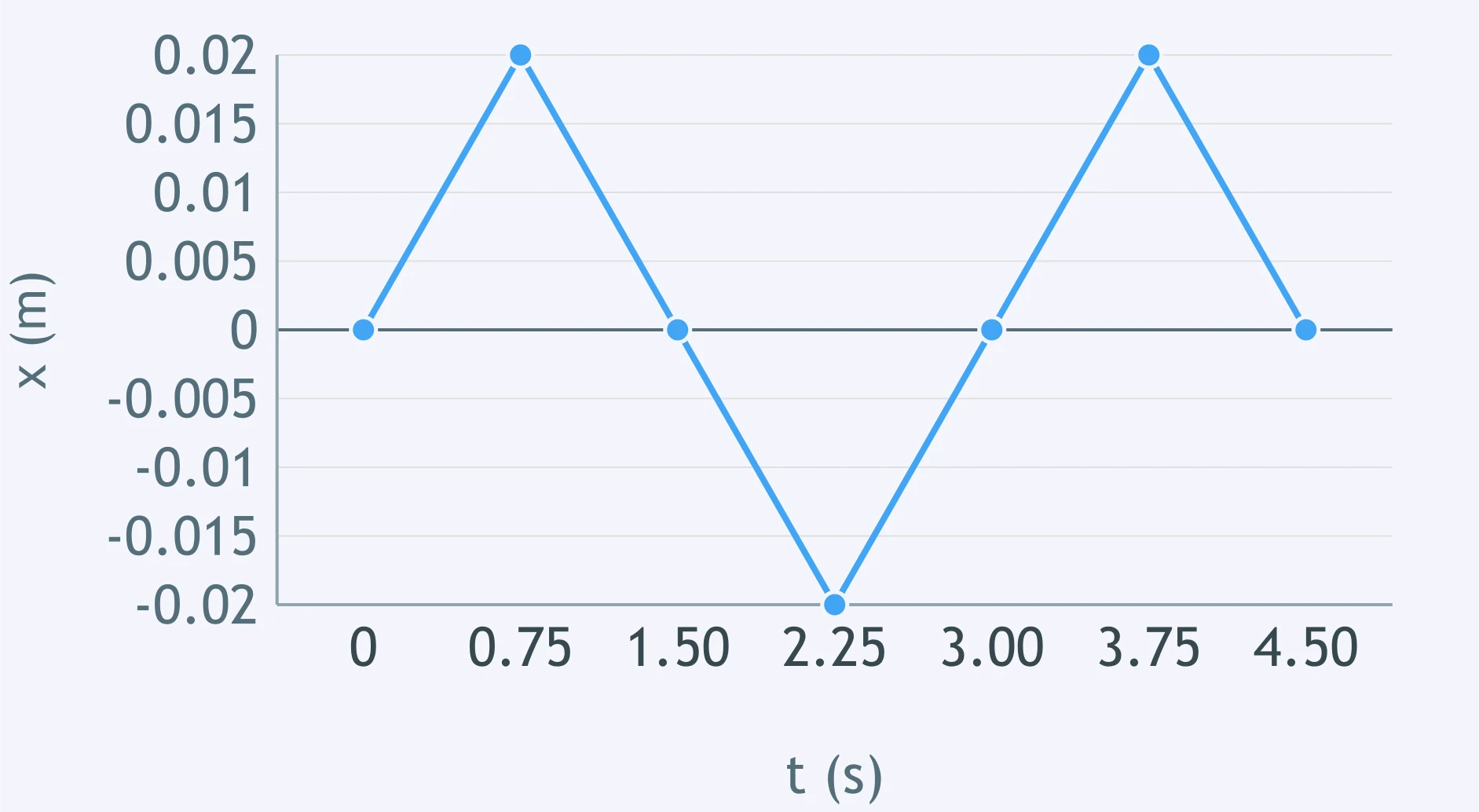
The graph shows displacement over time. What frequency matches the motion?
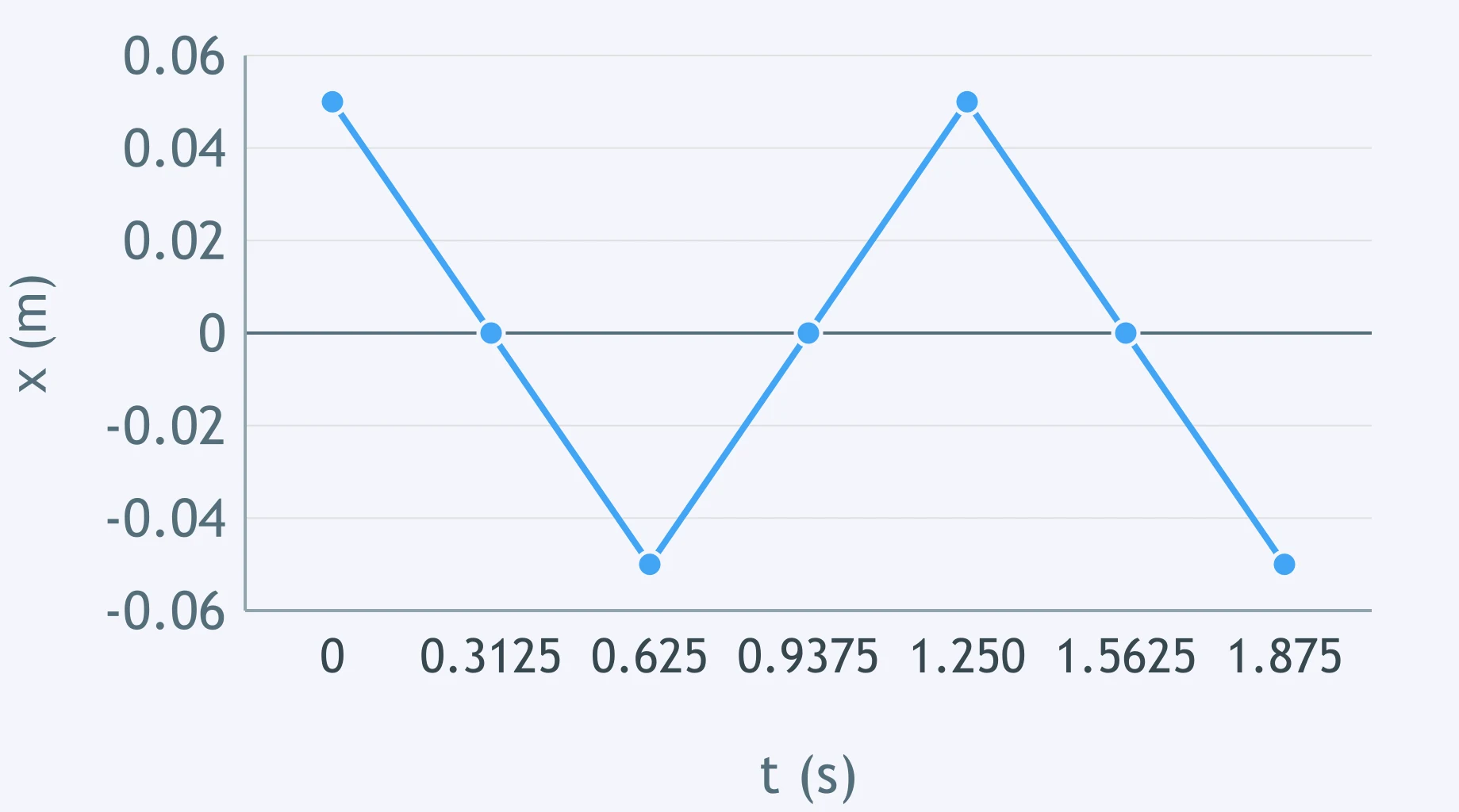
Displacement to the right is positive. At which marked instant is the cart moving fastest, and in which direction?
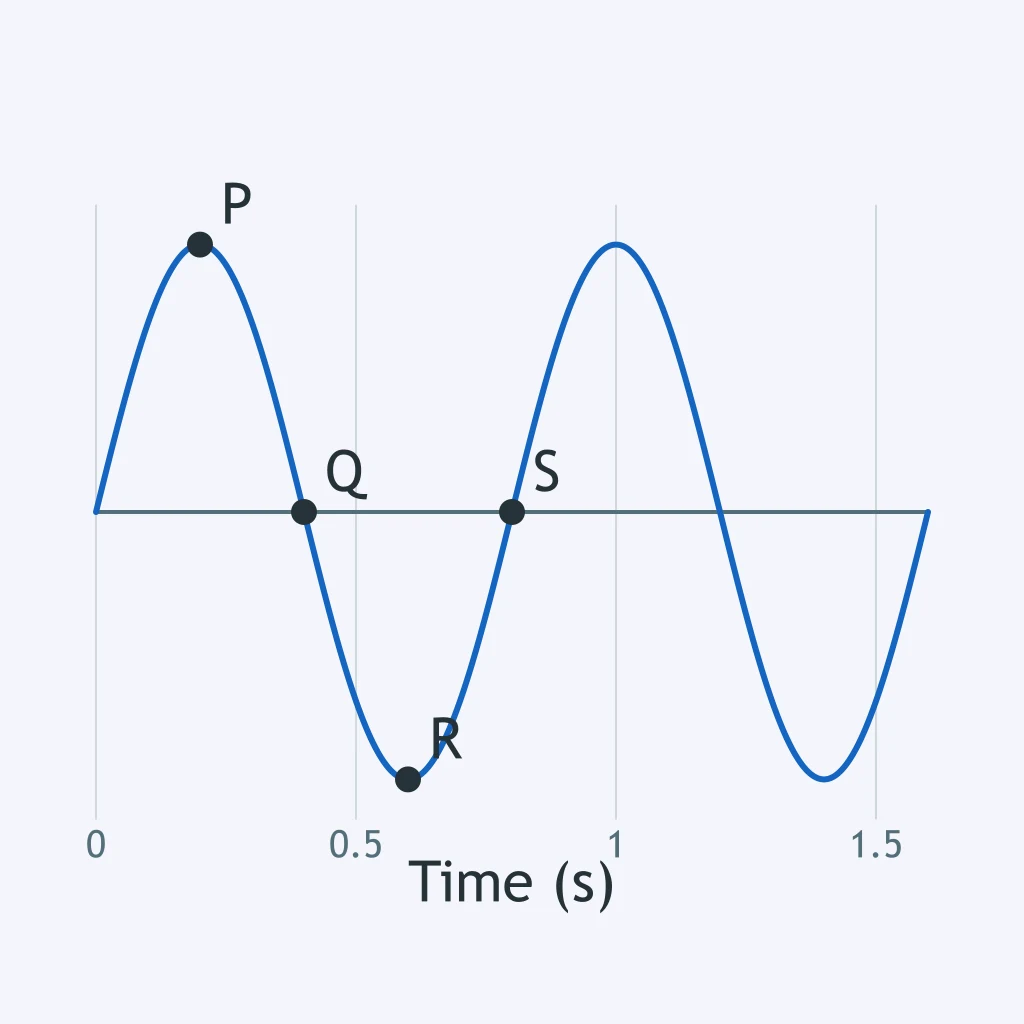
Positive displacement is upward. At which marked instants is the oscillator's velocity zero?
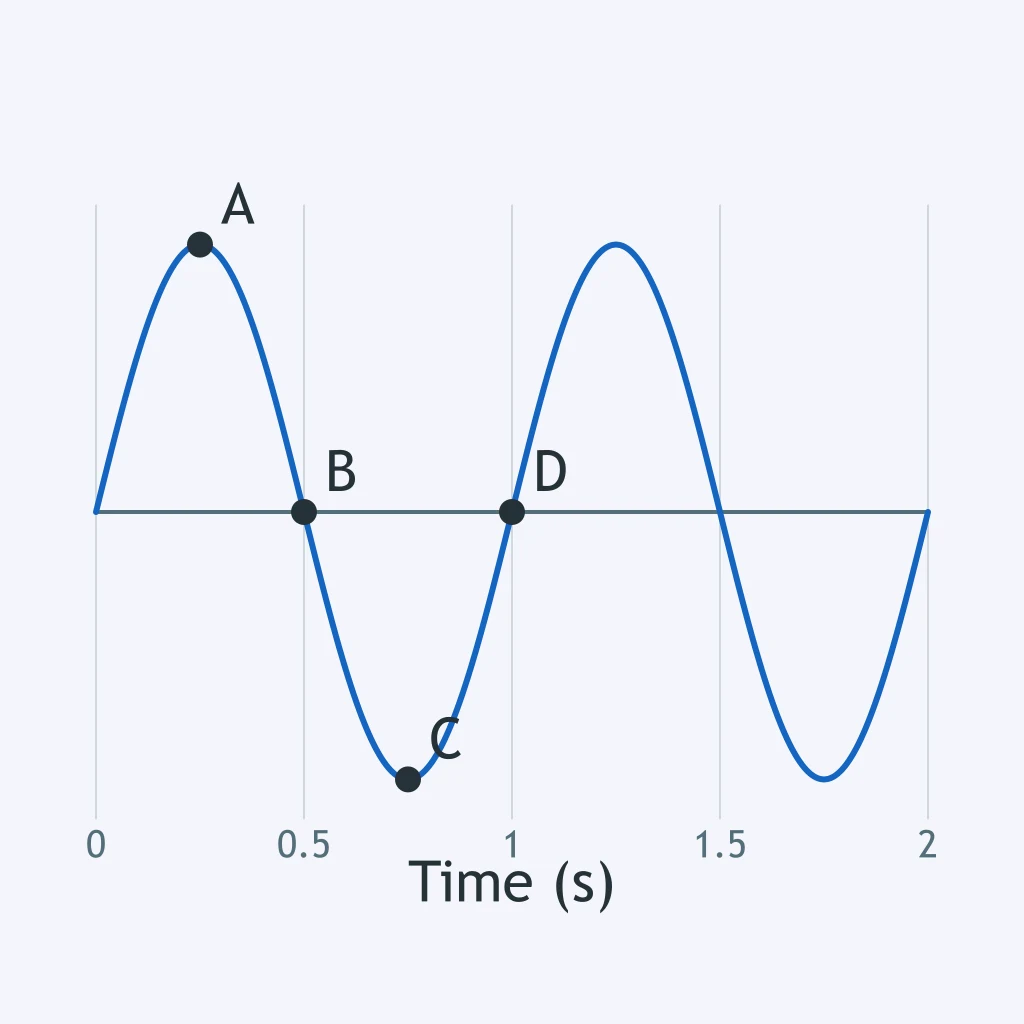
Rightward displacement is positive. At marked point M, what is the sign of the velocity?
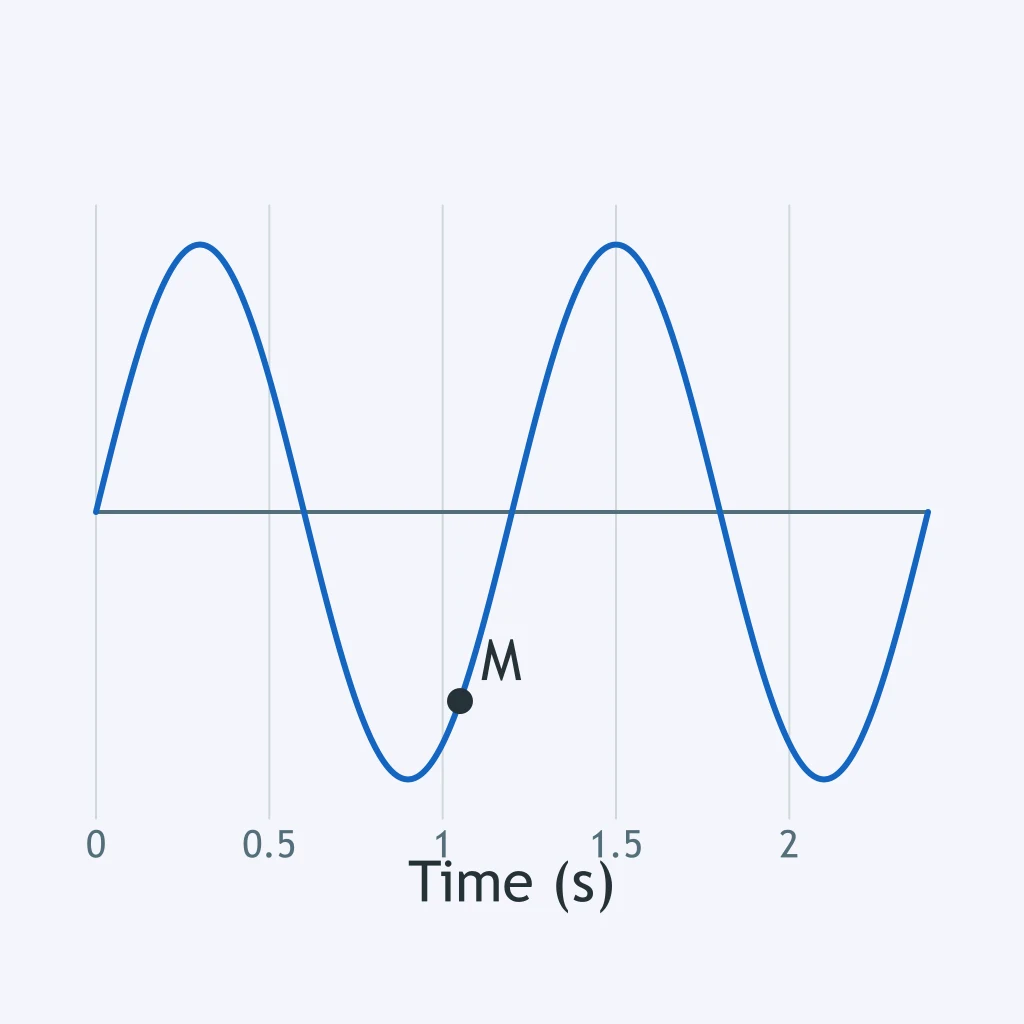
The graph marks four instants A, B, C and D. At which instants is the speed greatest?
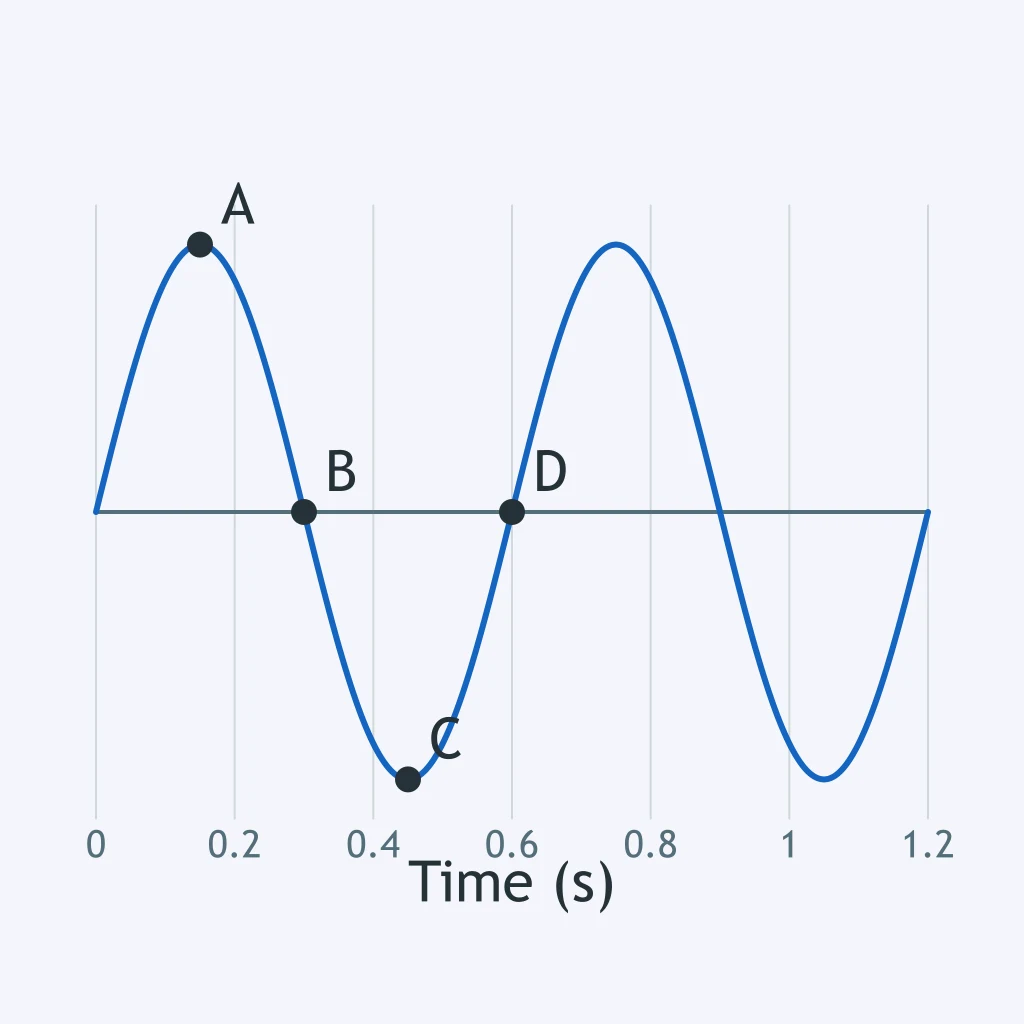
Displacement to the right is positive. At marked point N, what is the sign of the velocity?
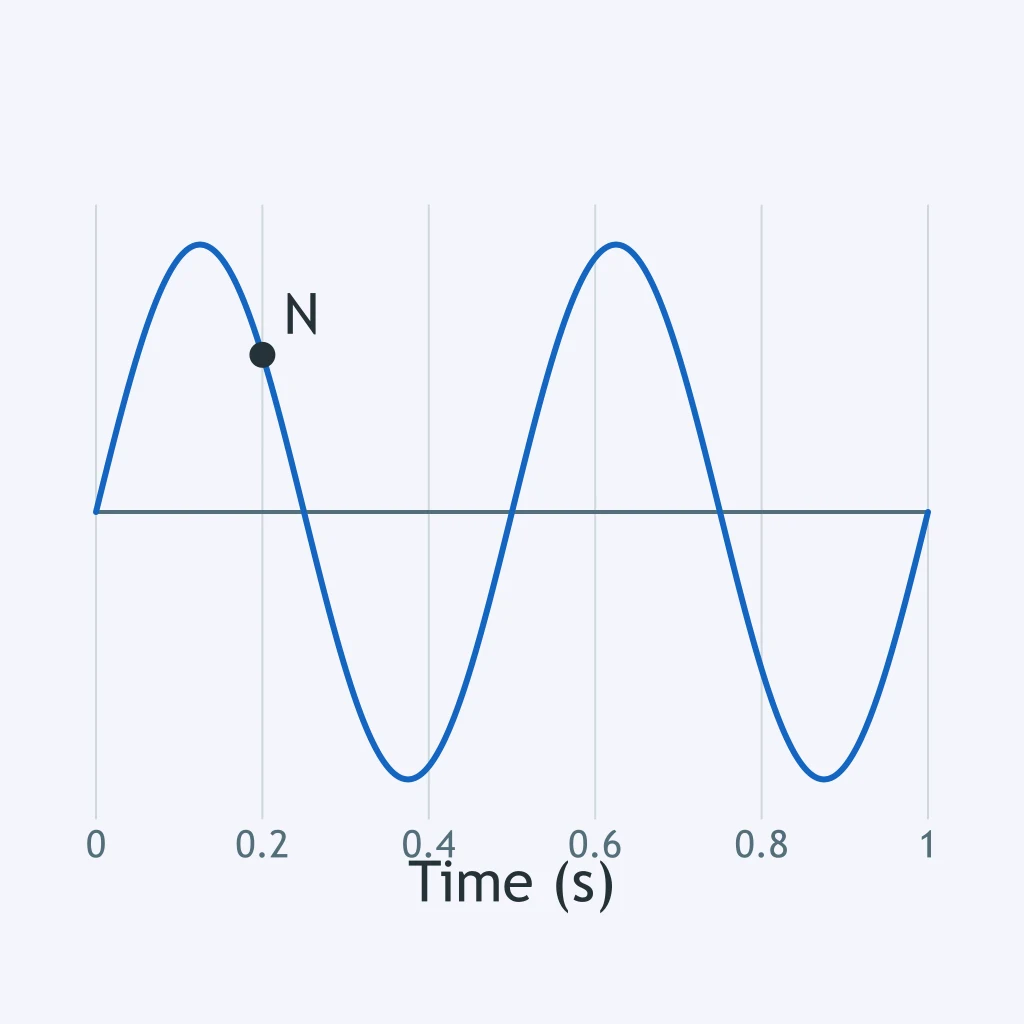
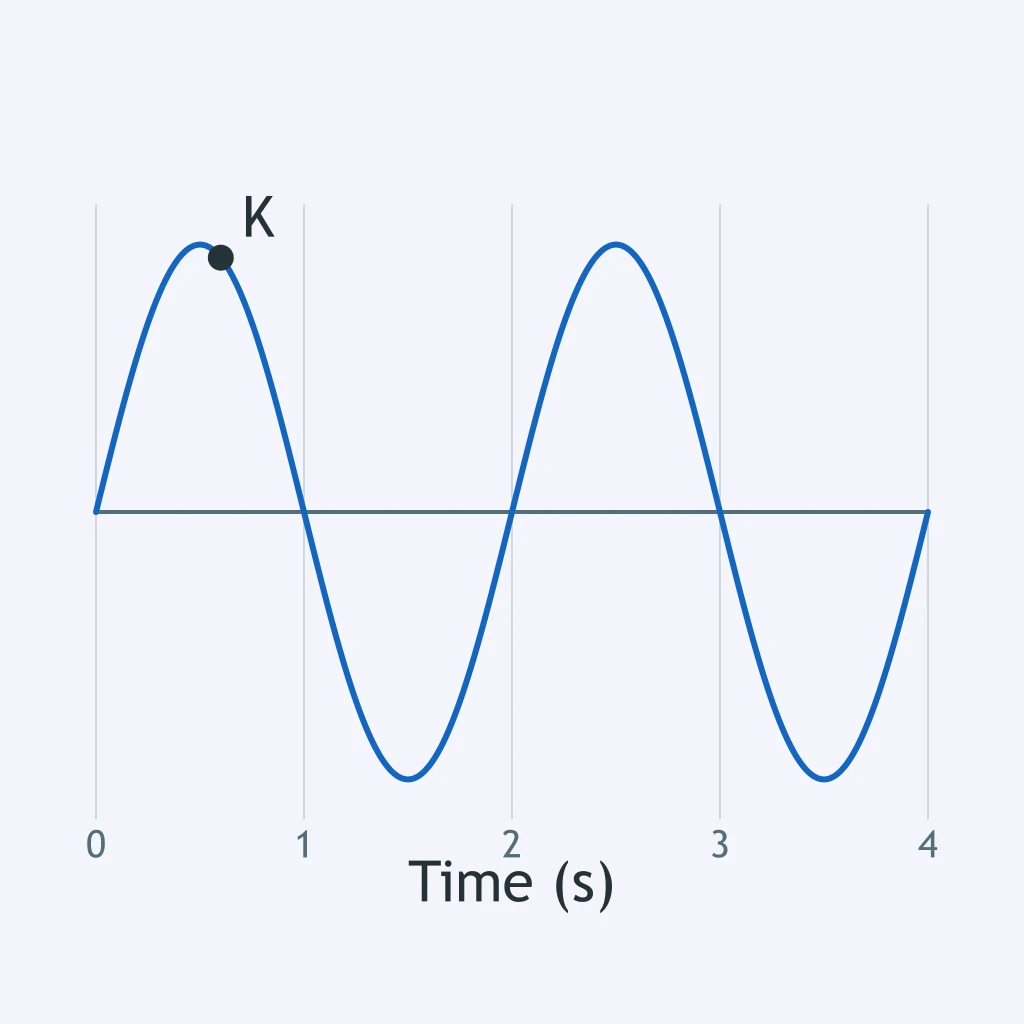
Positive displacement is to the right. At marked point K just after the positive peak, which statement is true?
Which marked instants show zero speed and the greatest acceleration magnitude?
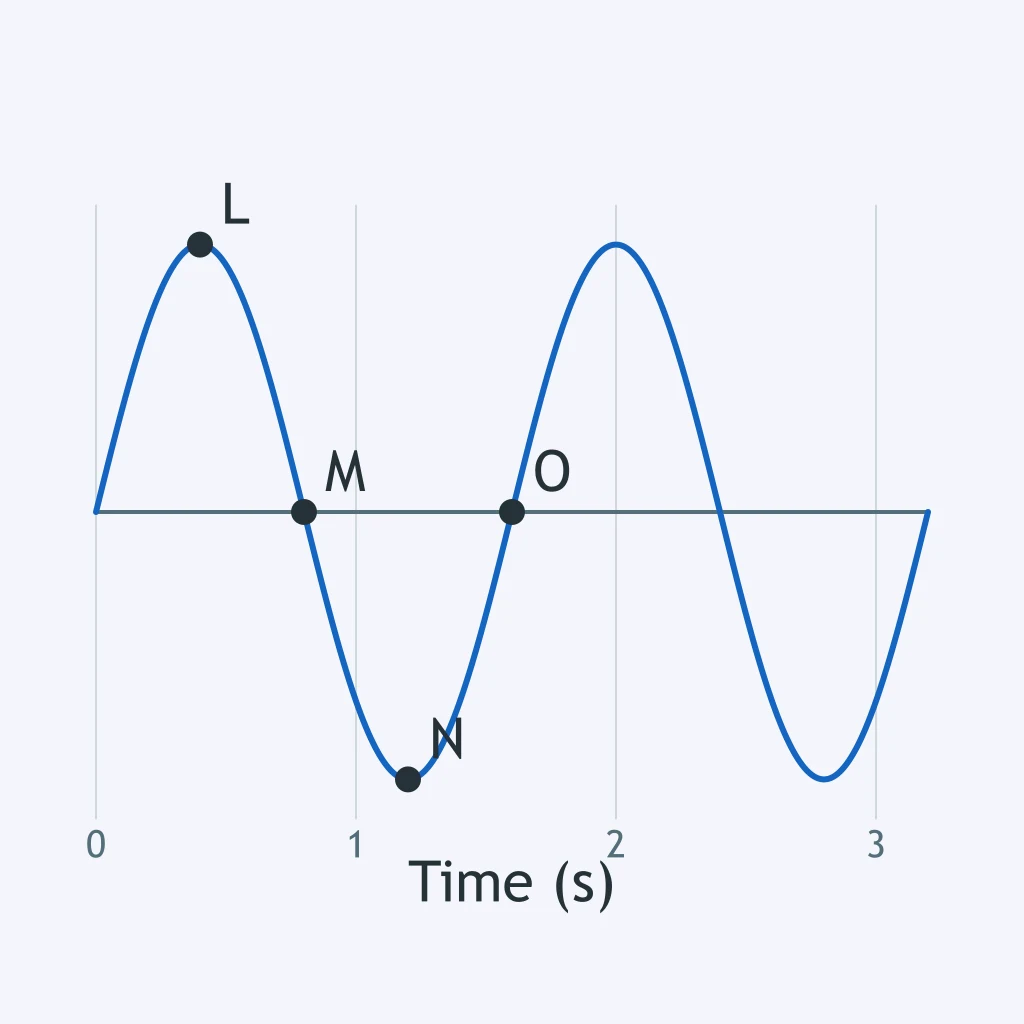
Positive displacement is rightward. Where is the cart moving fastest to the right?
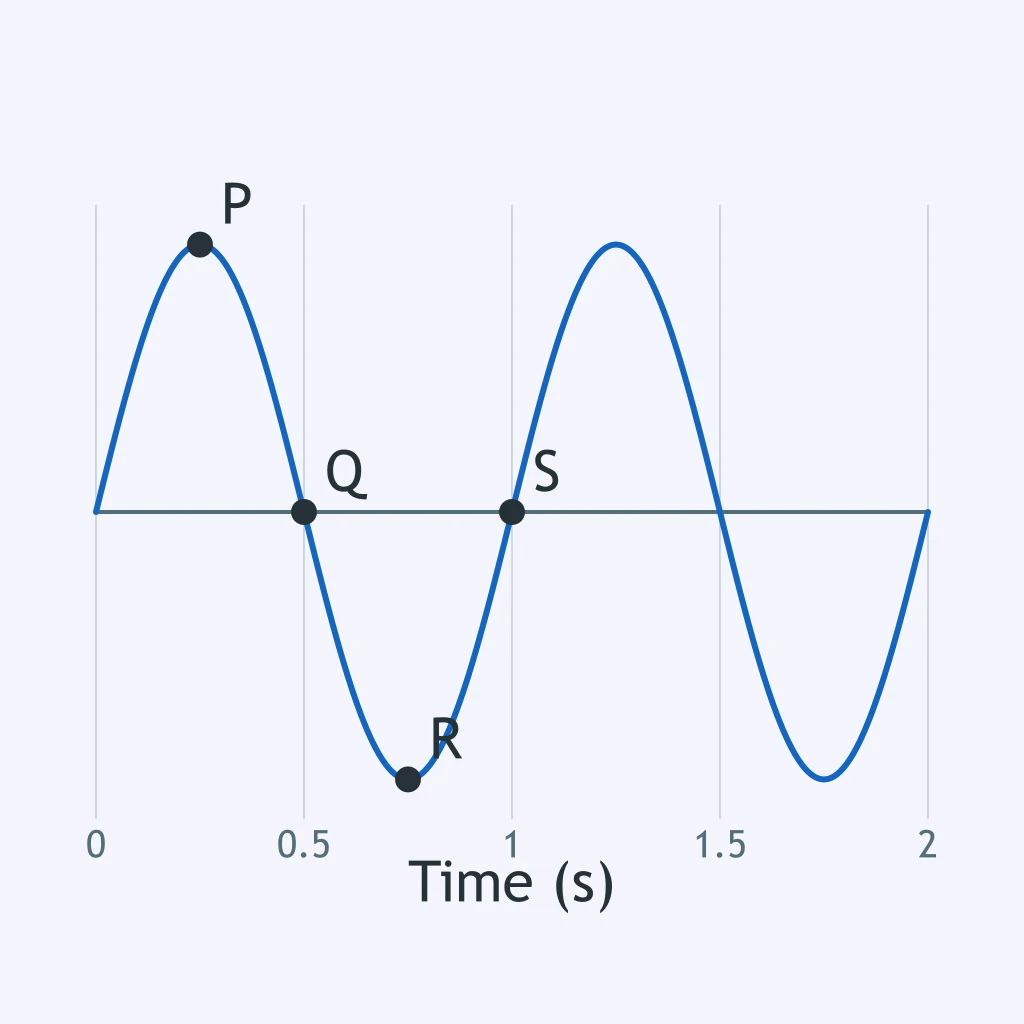
Displacement to the right is positive. At marked point T, what is the sign of the velocity?
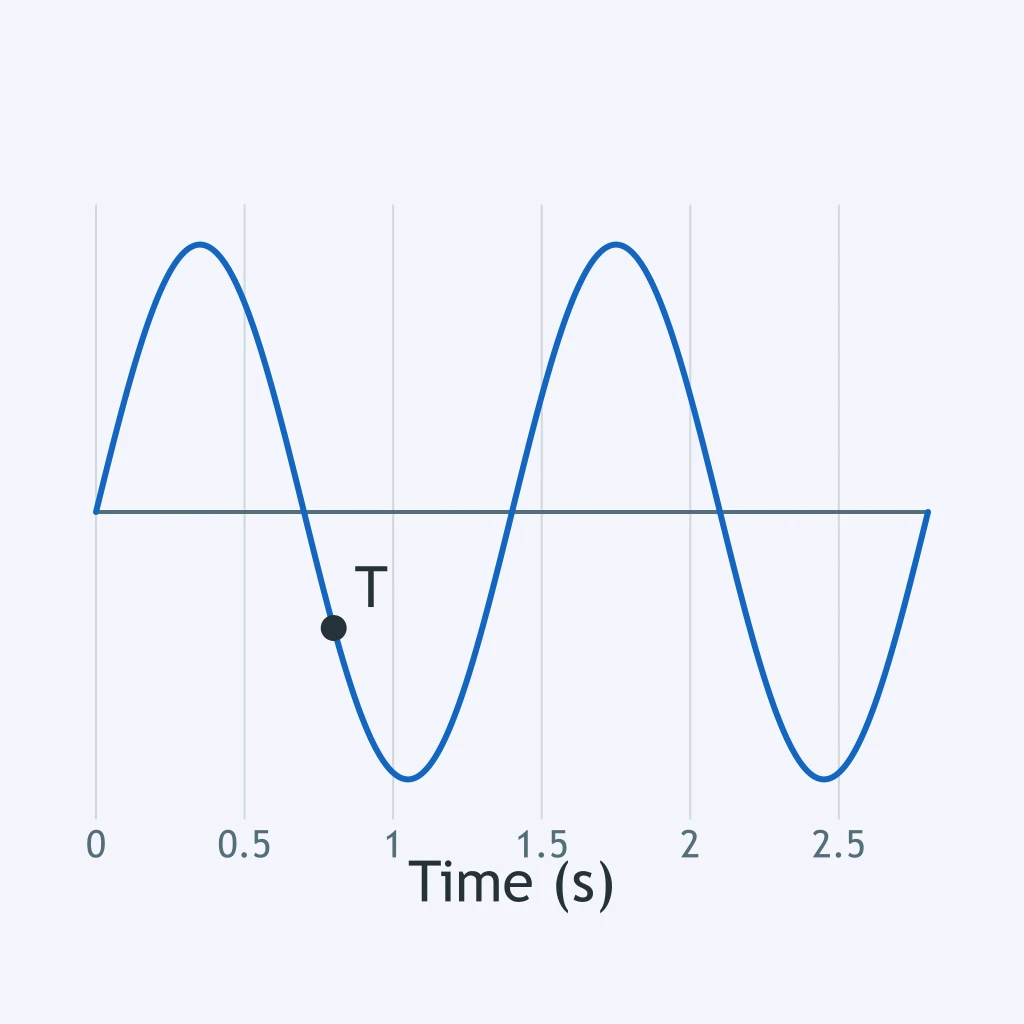
The same oscillator is marked at P and Q. At which point is the speed greater?
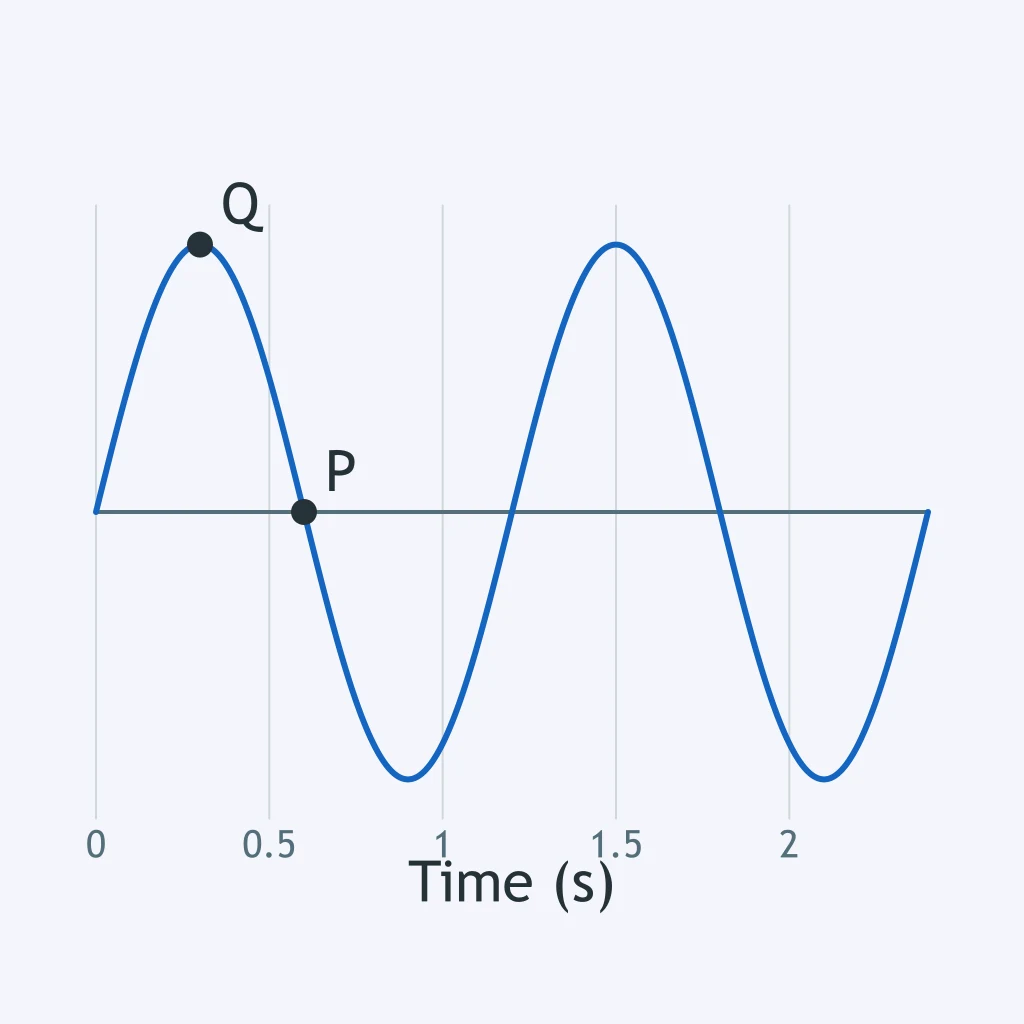
Upward displacement is positive. At which marked instant is the mass moving fastest upward?
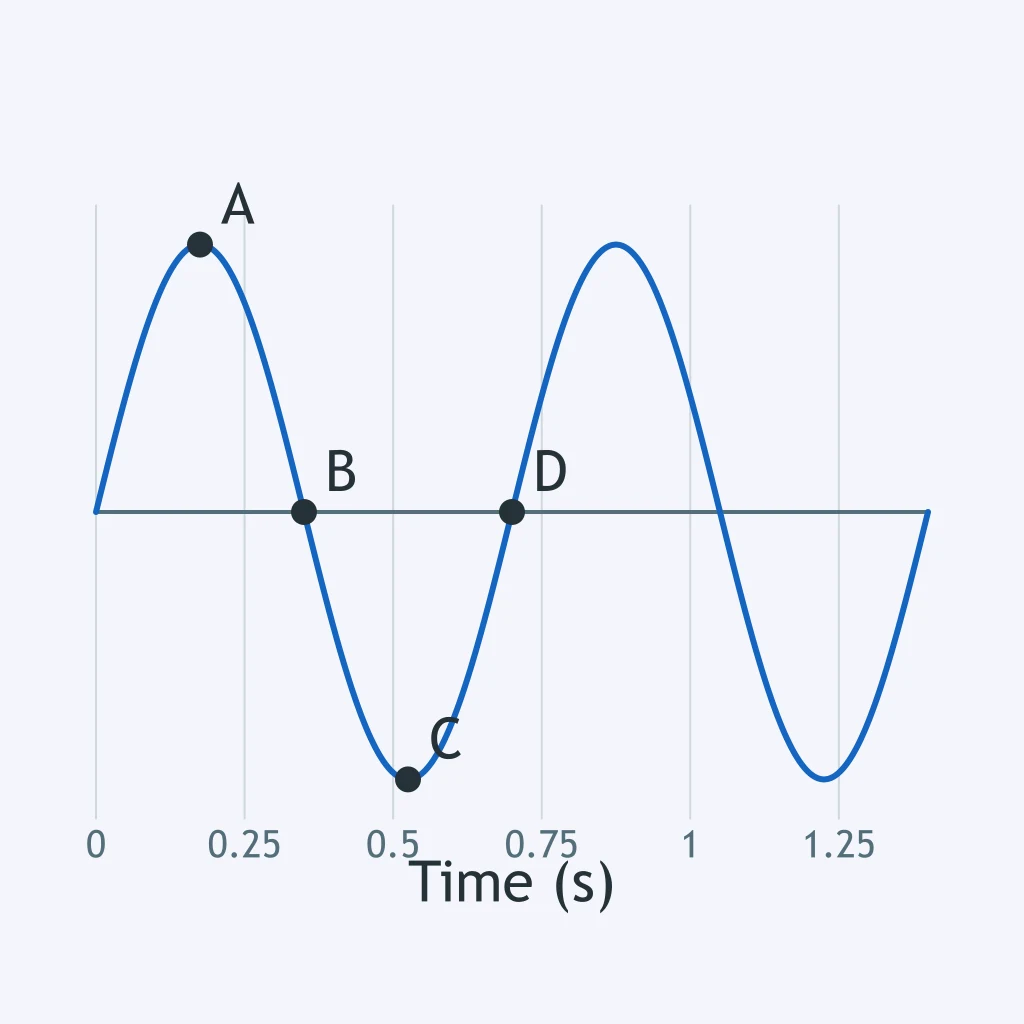
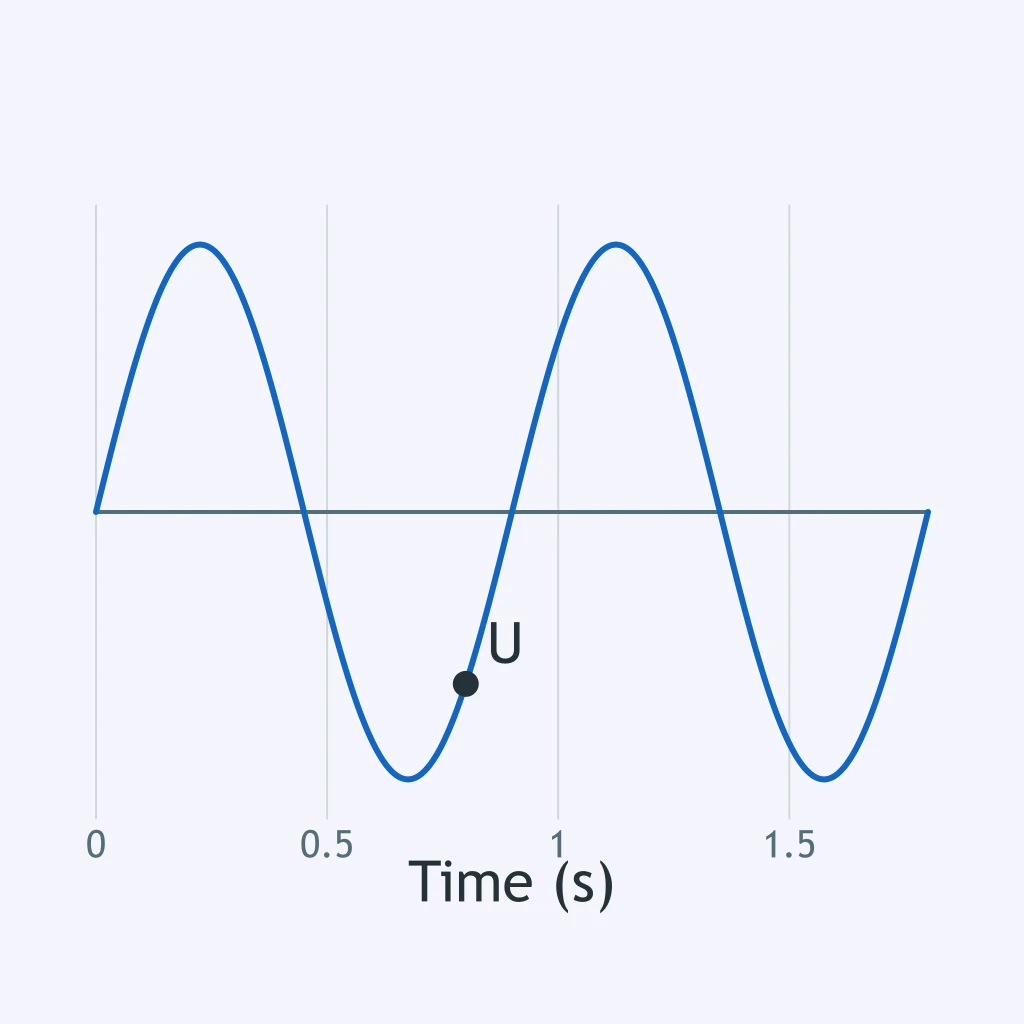
Rightward displacement is positive. At marked point U, what is the sign of the velocity?
Positive displacement is to the right. At point P the displacement is positive. What is the acceleration sign?
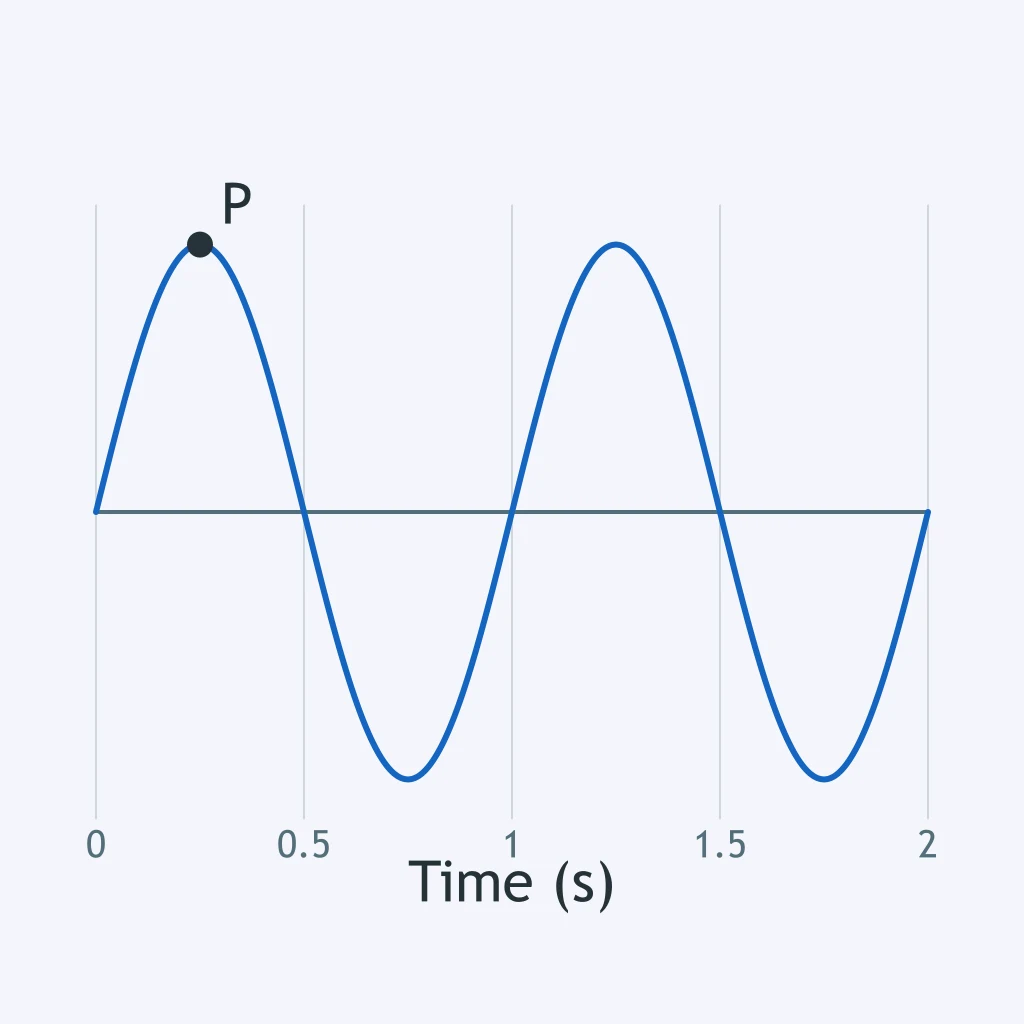
At marked point R the oscillator is at negative displacement. What is the acceleration sign?
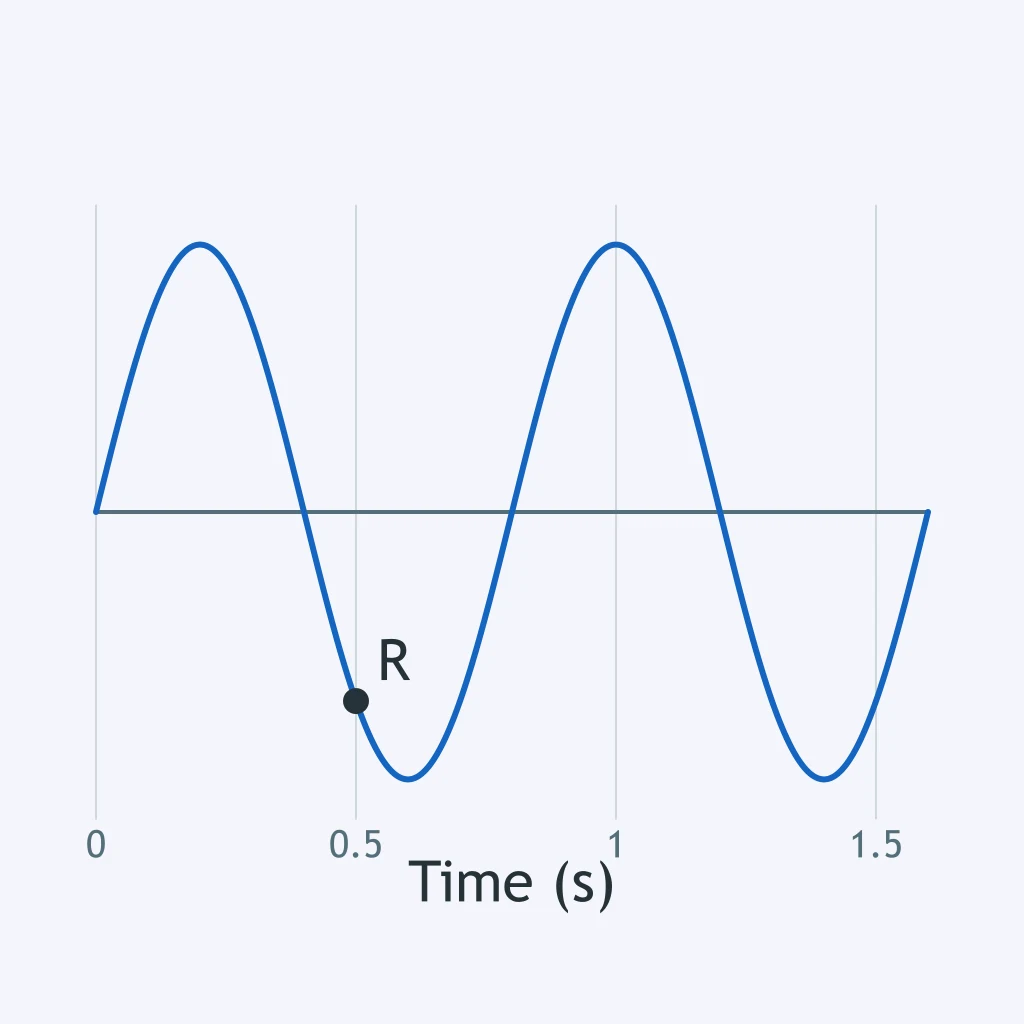
At which marked instants is the acceleration zero?
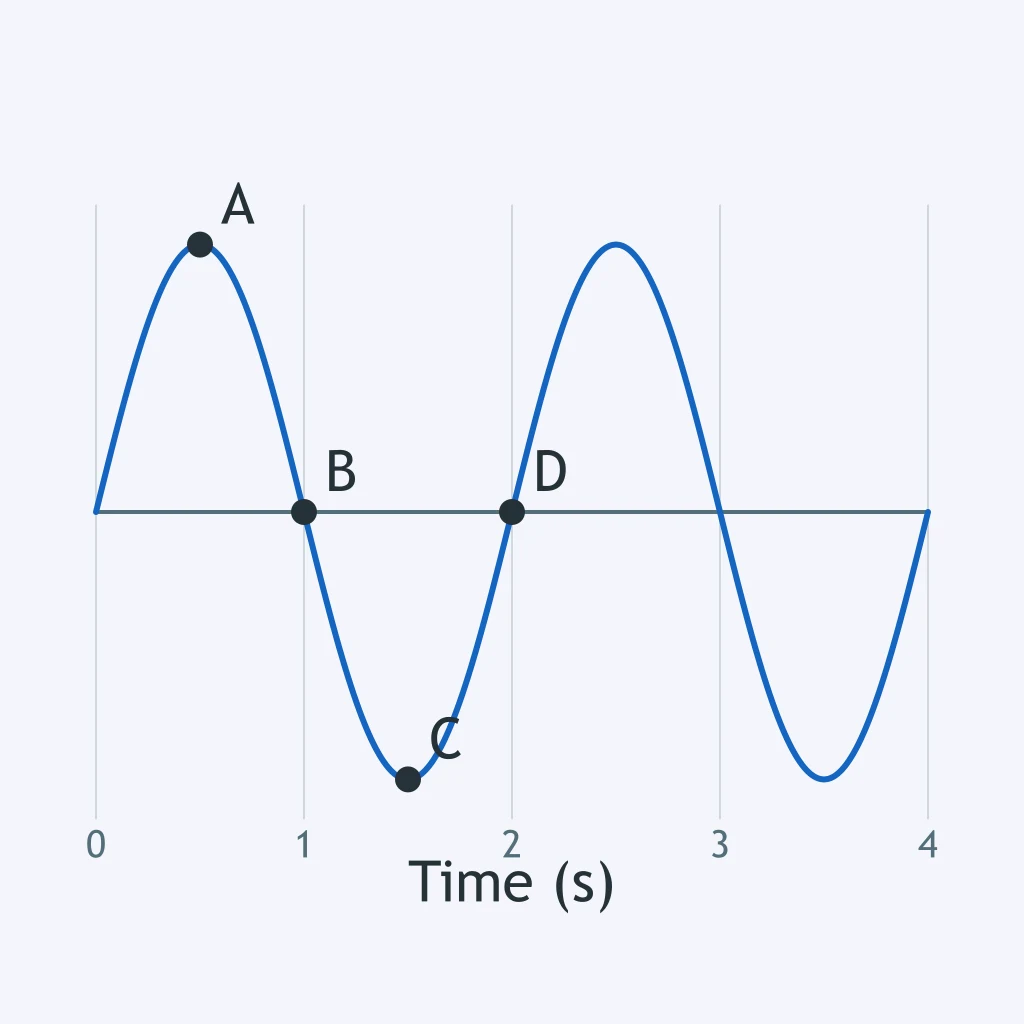
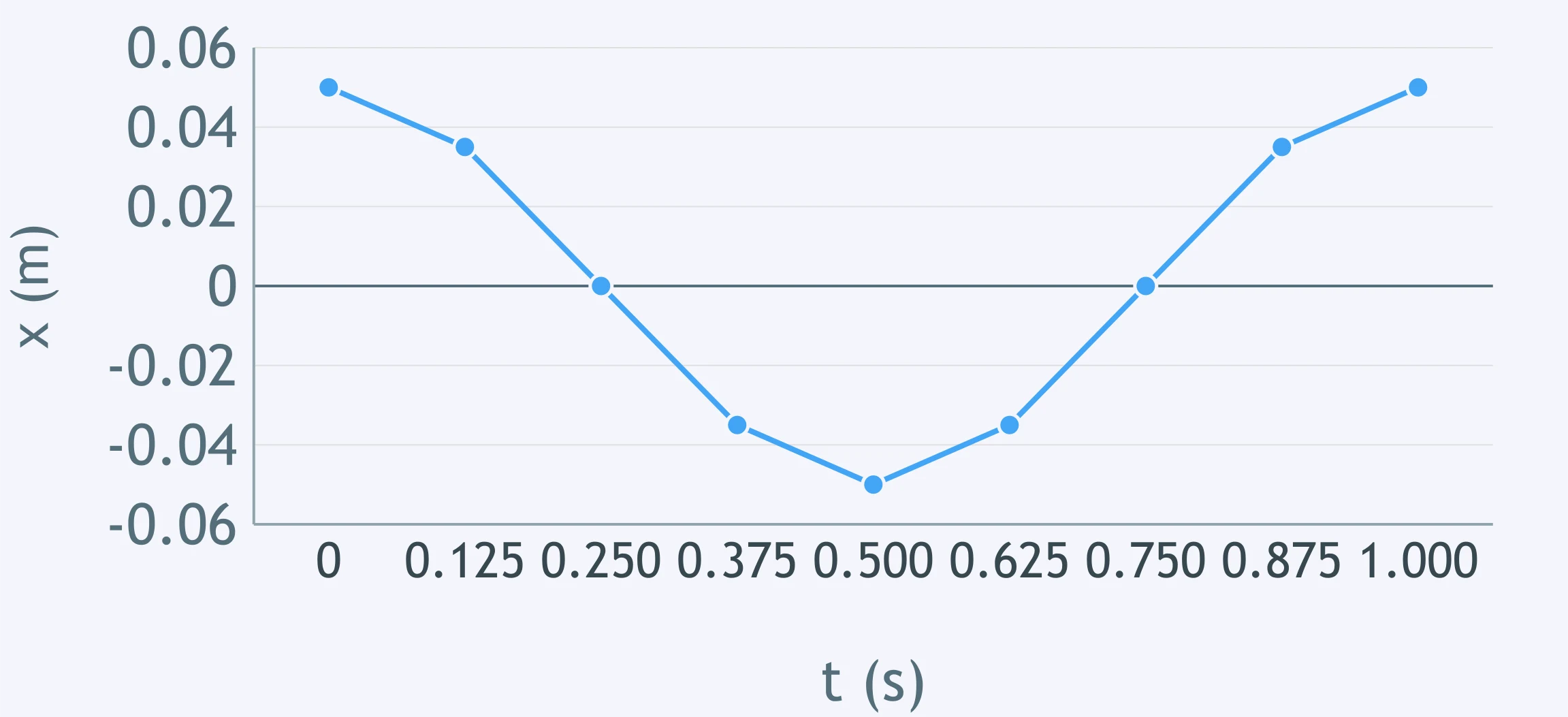
The displacement graph starts at maximum positive displacement. Which acceleration-time curve fits the same oscillator?
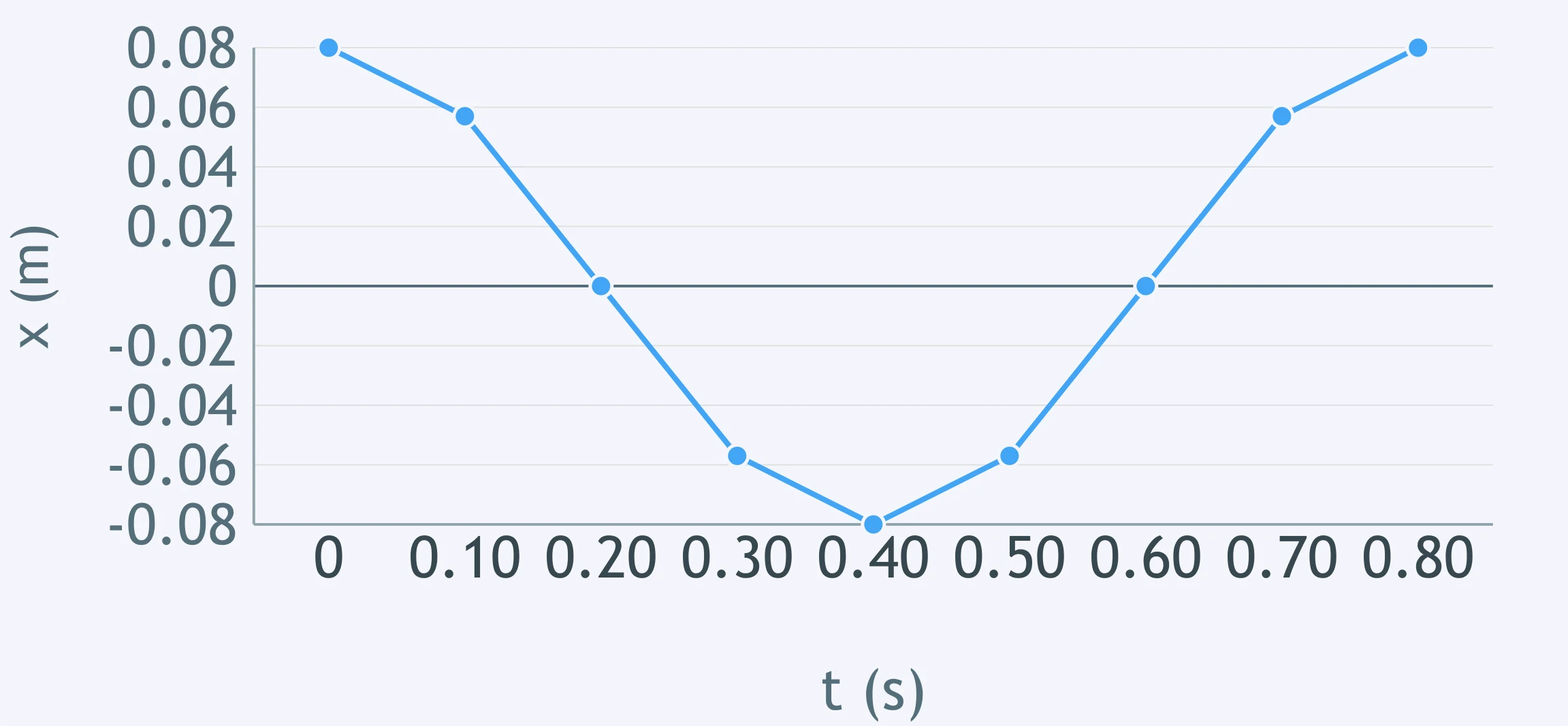
The displacement graph starts at a positive maximum. Which velocity-time description is correct?
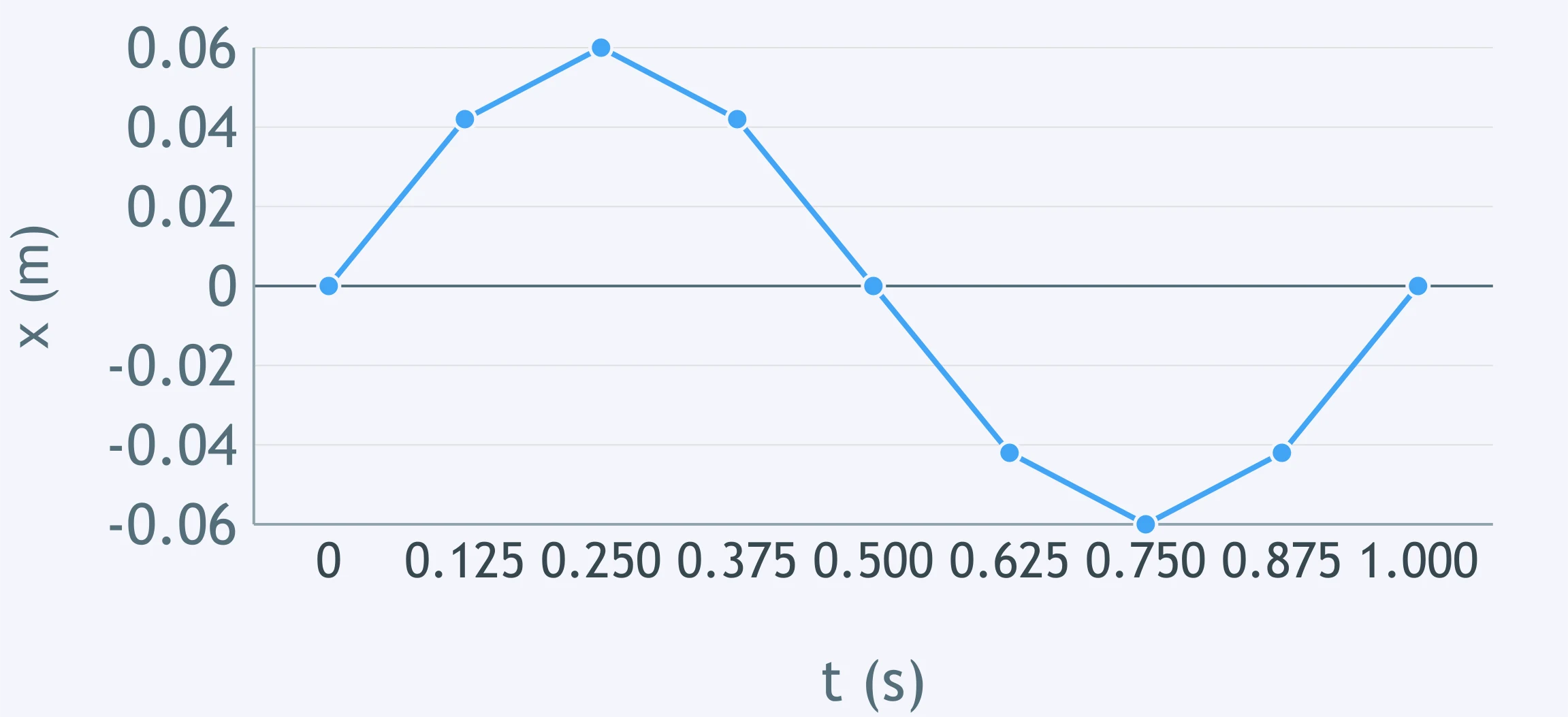
The graph starts at equilibrium with displacement increasing. Which acceleration-time description matches it?
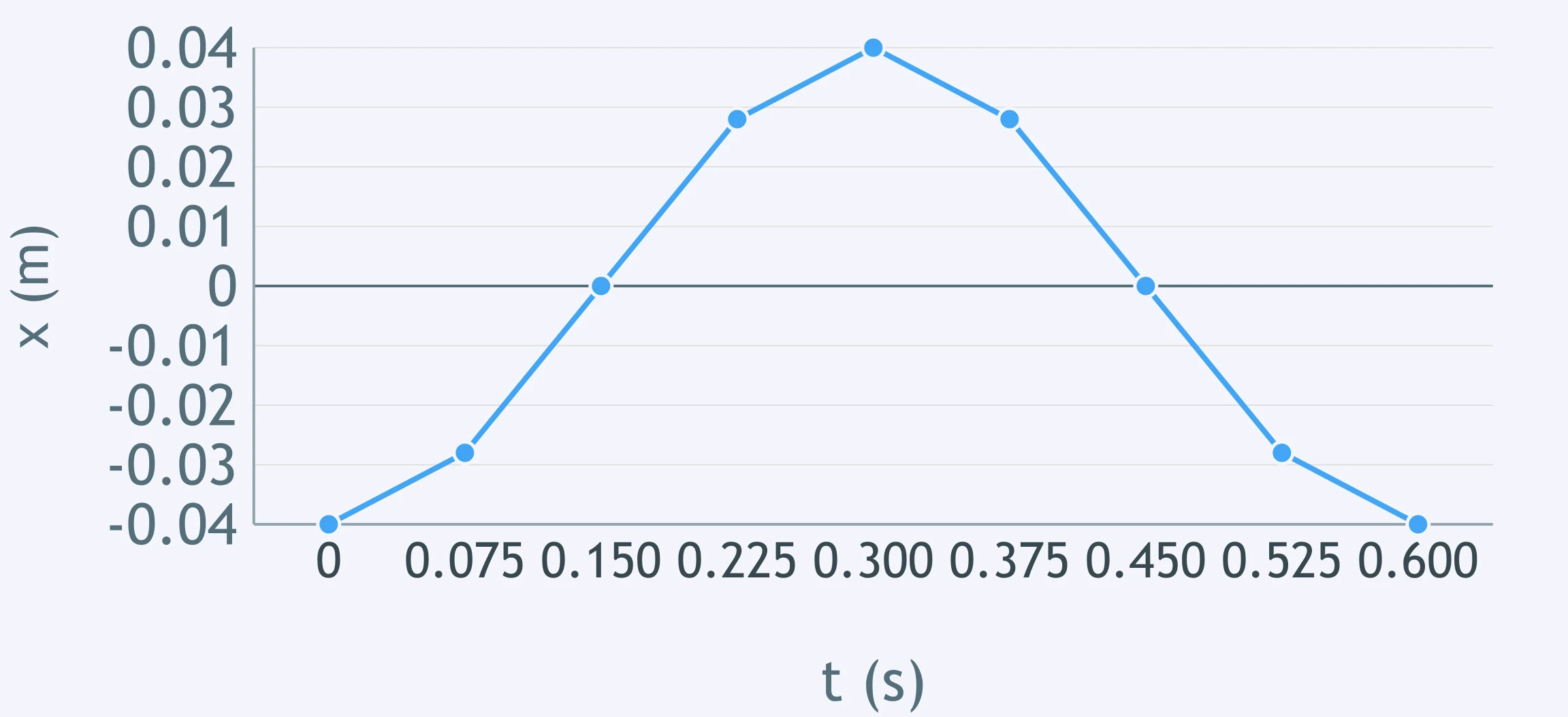
The oscillator starts at negative maximum displacement. Which velocity-time description fits?
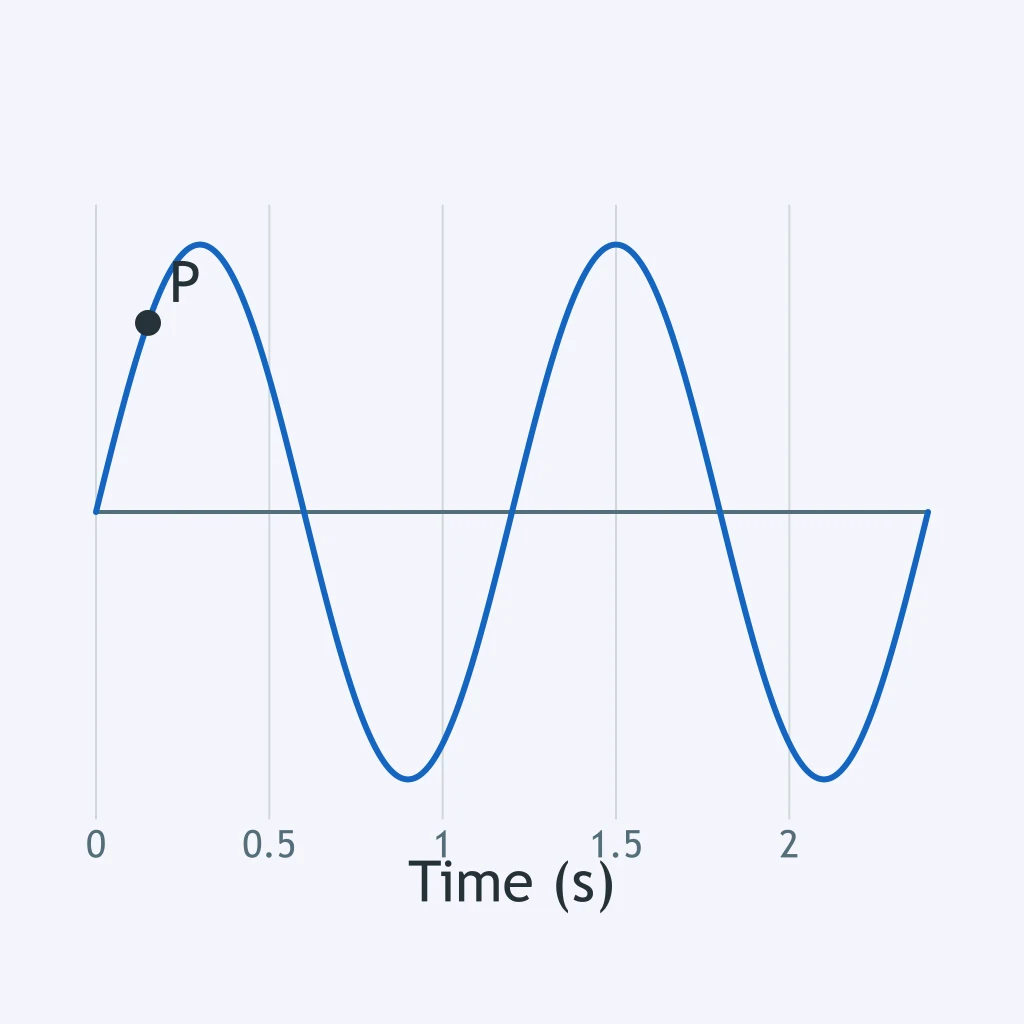
At point P, the curve is above zero and rising. Which signs are correct?
Which marked instants have the greatest acceleration magnitude?
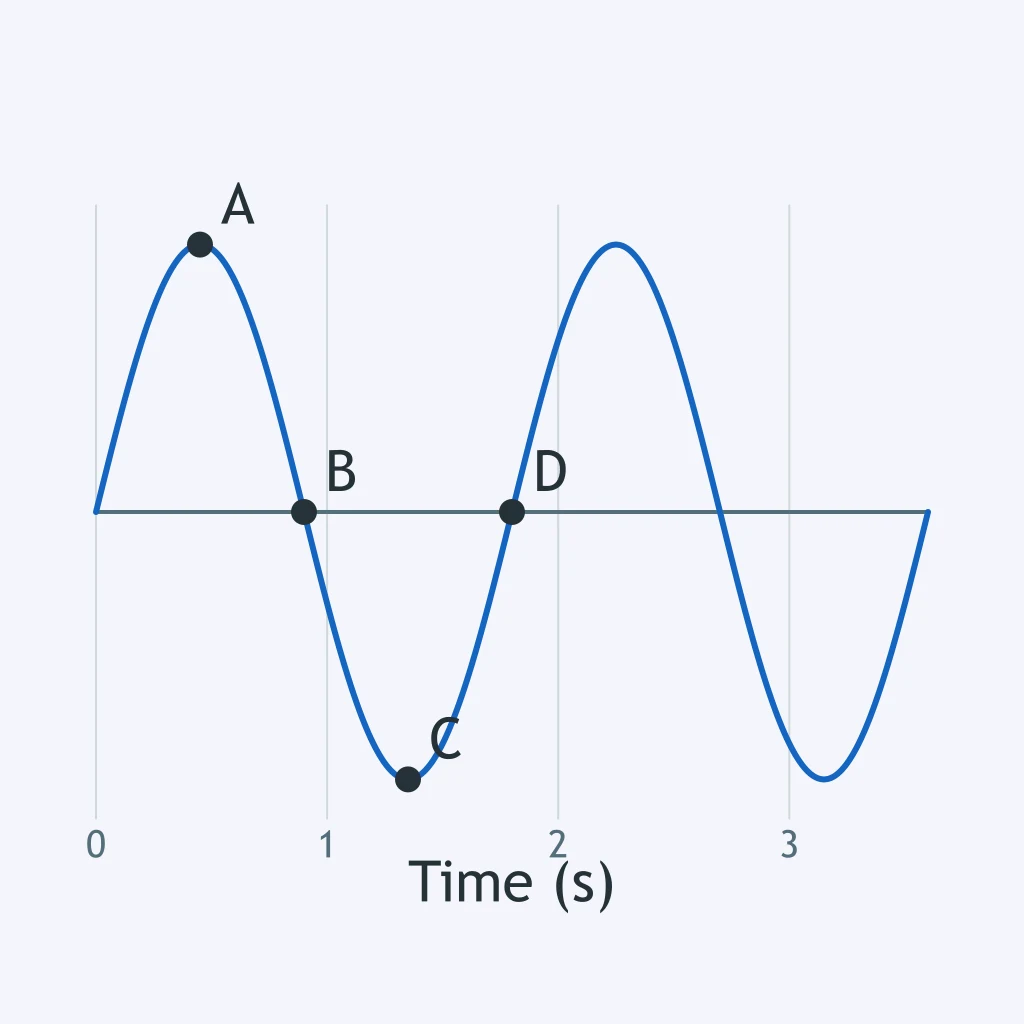
The displacement graph crosses equilibrium going downward at t = 0. Which velocity-time description is correct?
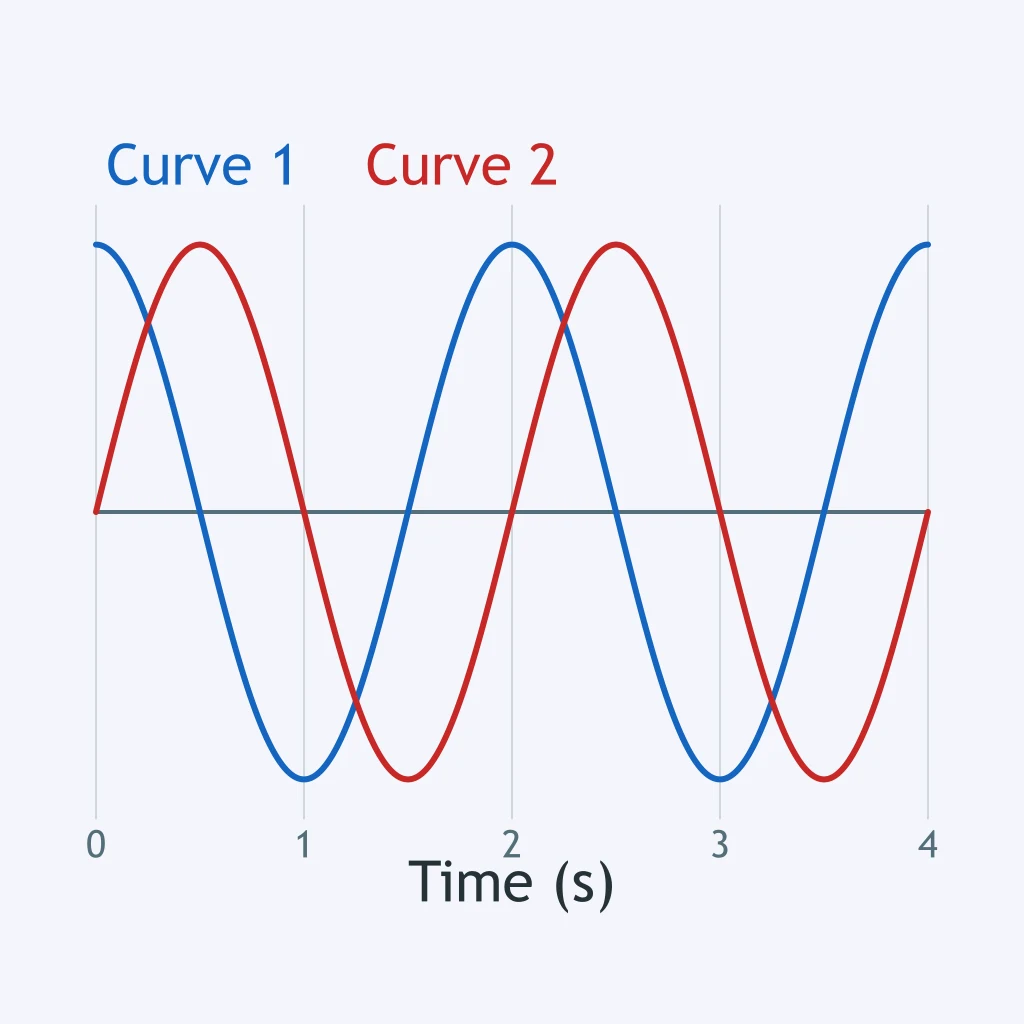
Two displacement curves have the same period. What is the phase relationship between them?
The graph shows curves A and B. Which statement about their phase is correct?
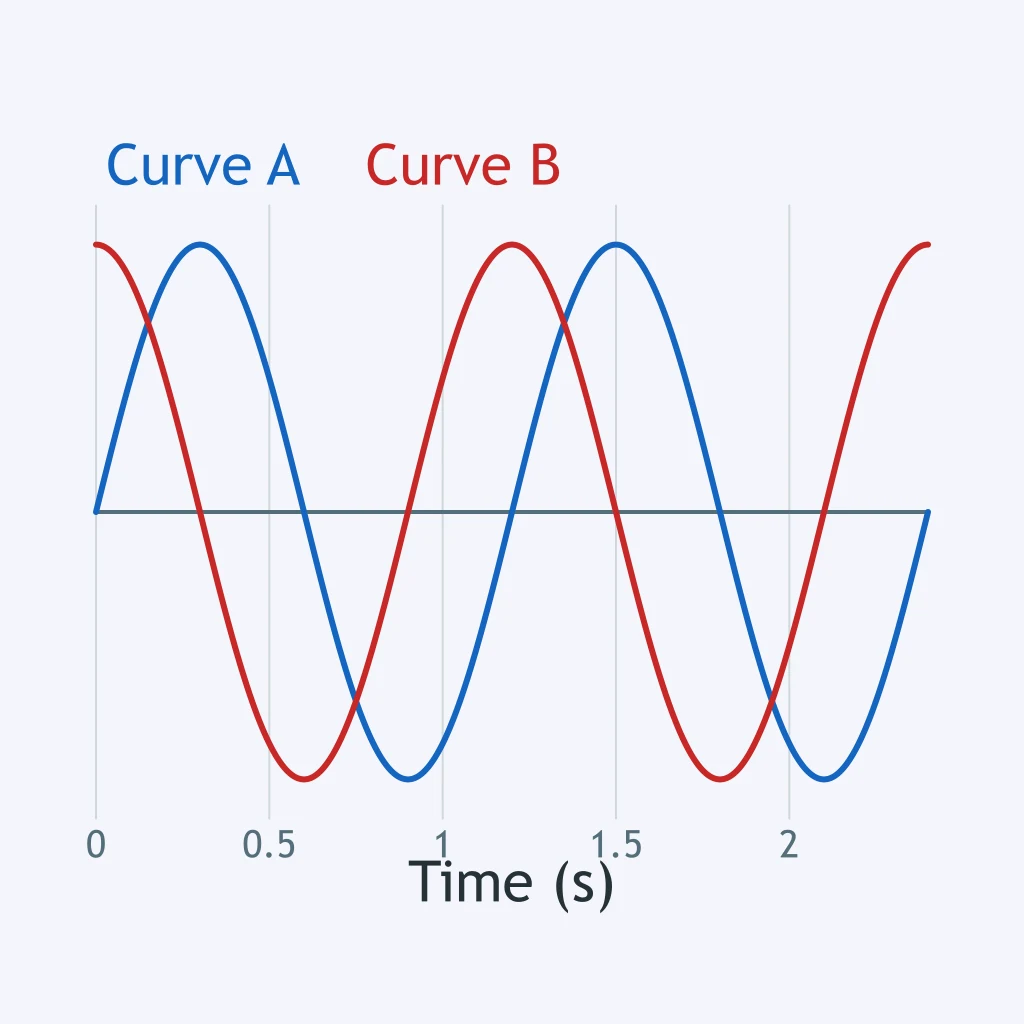
What phase relationship do the two displacement curves show?
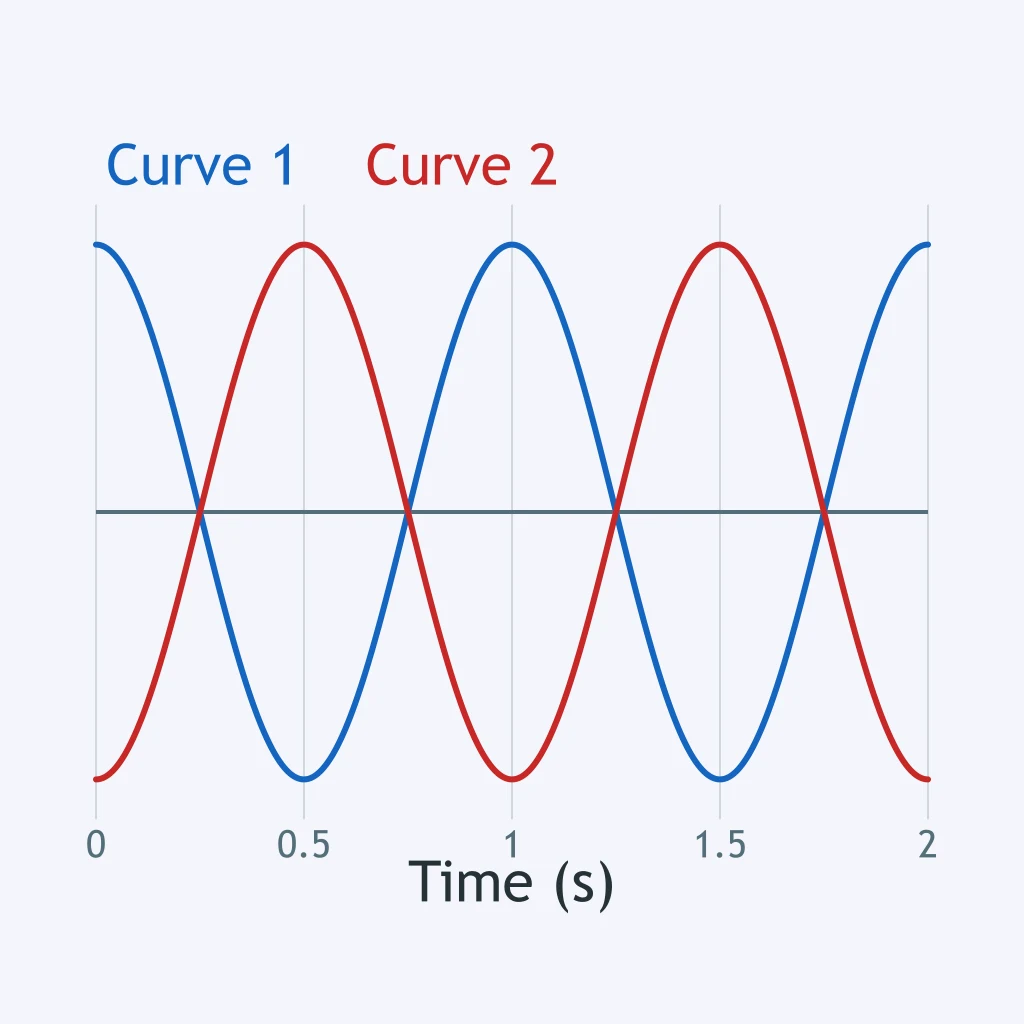
What is the phase relationship between the two oscillators' displacement curves?
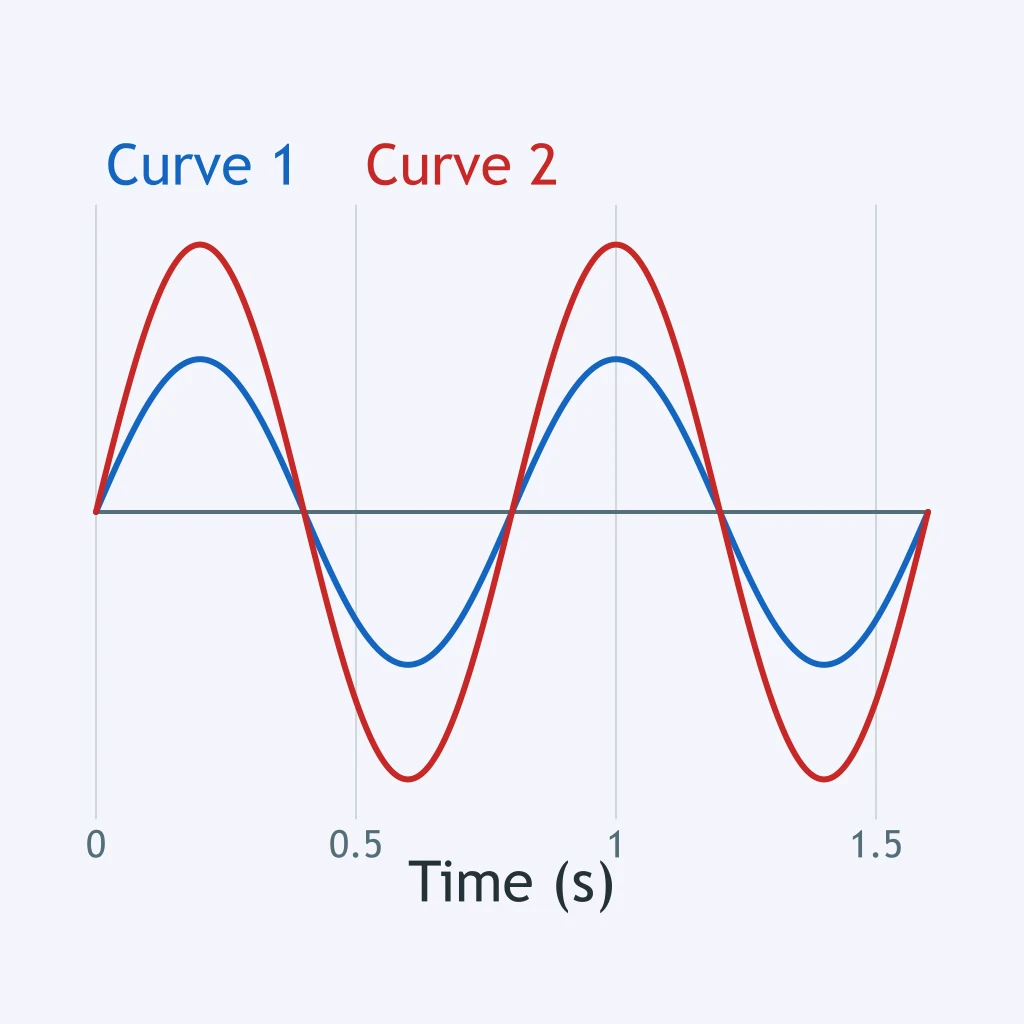
Two displacement curves have the same period. How does curve 2 compare with curve 1?
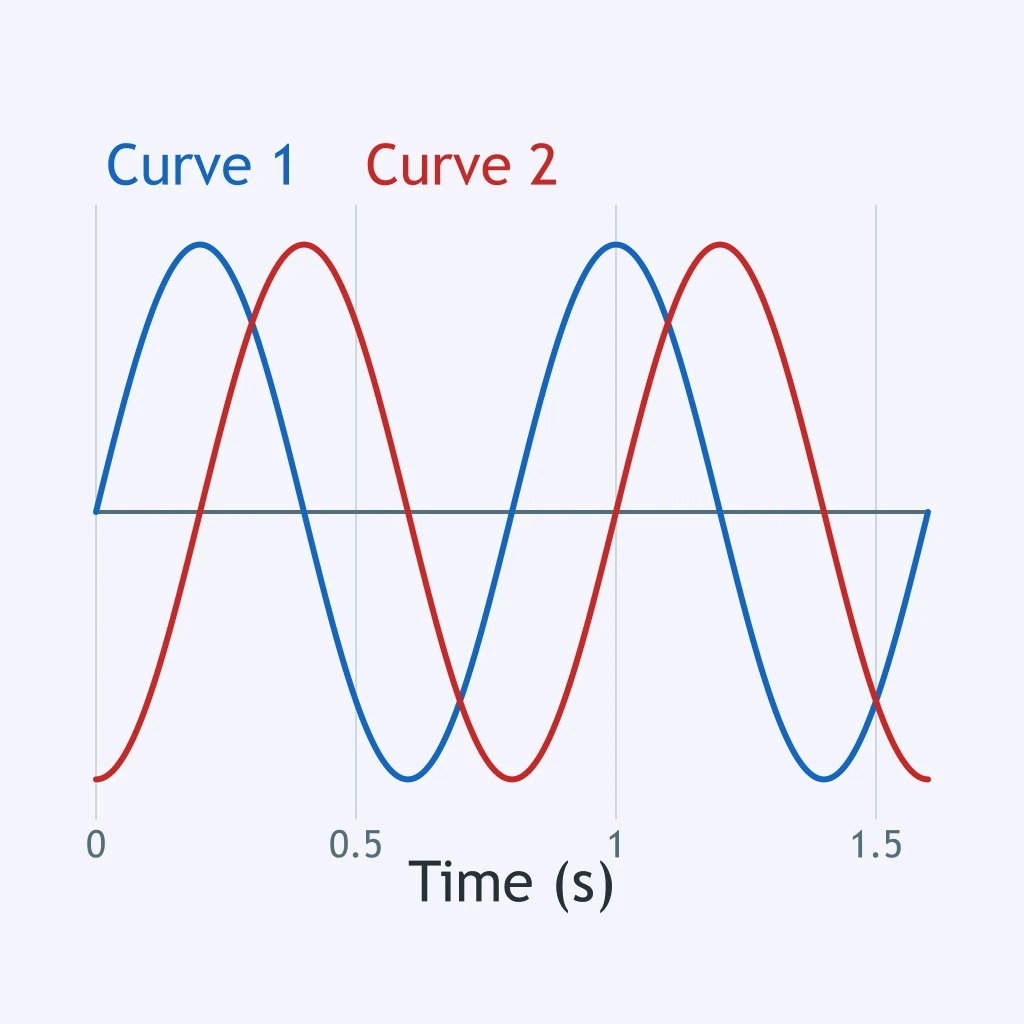
The graph shows two displacement curves with the same period. How does curve 2 compare with curve 1?
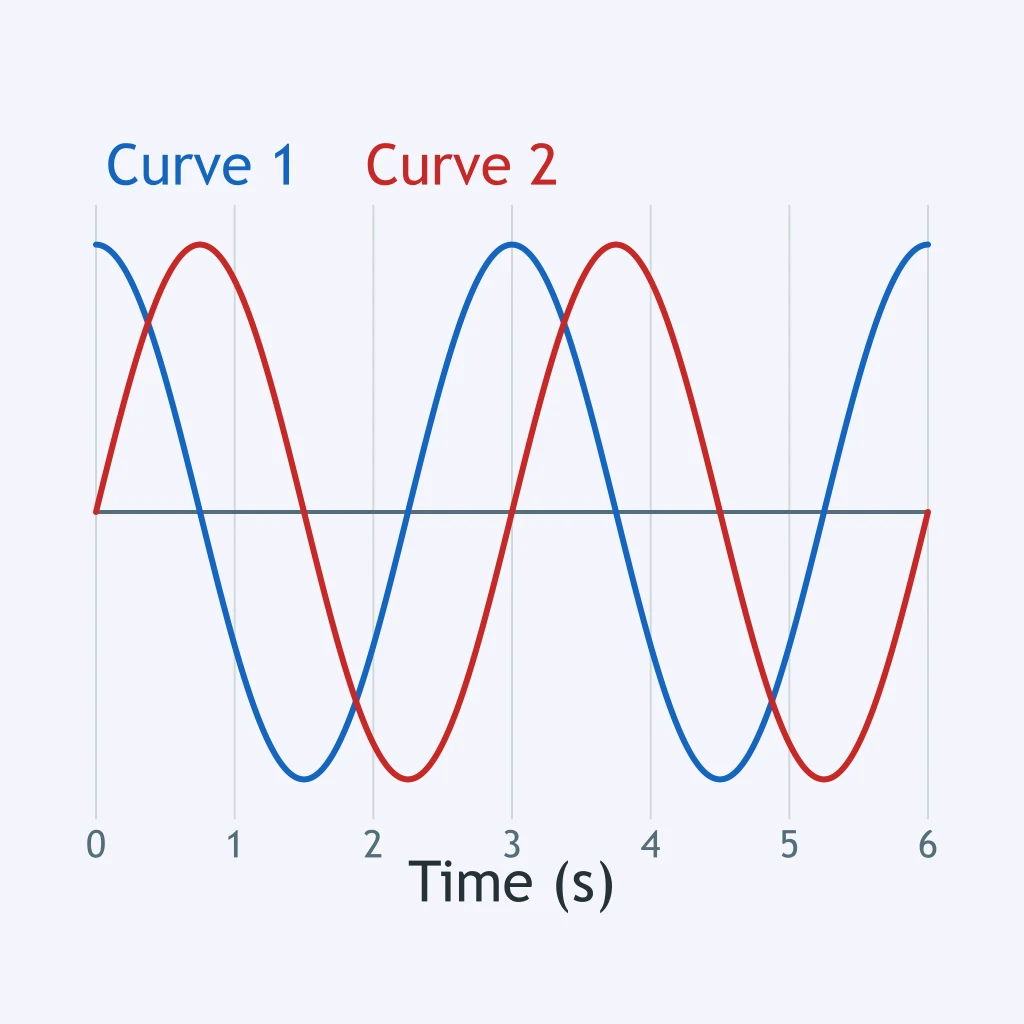
What is the phase difference between curves A and B?
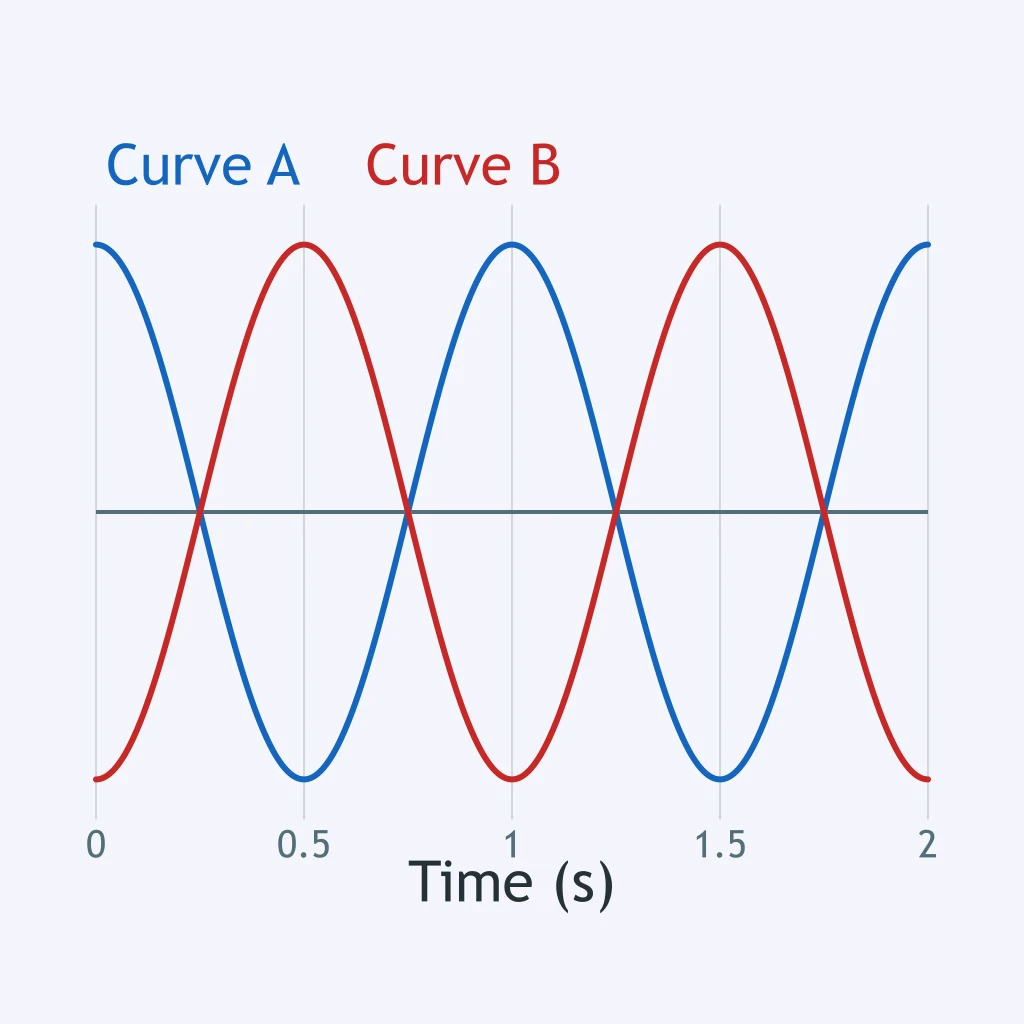
How do the phases of curve 1 and curve 2 compare?
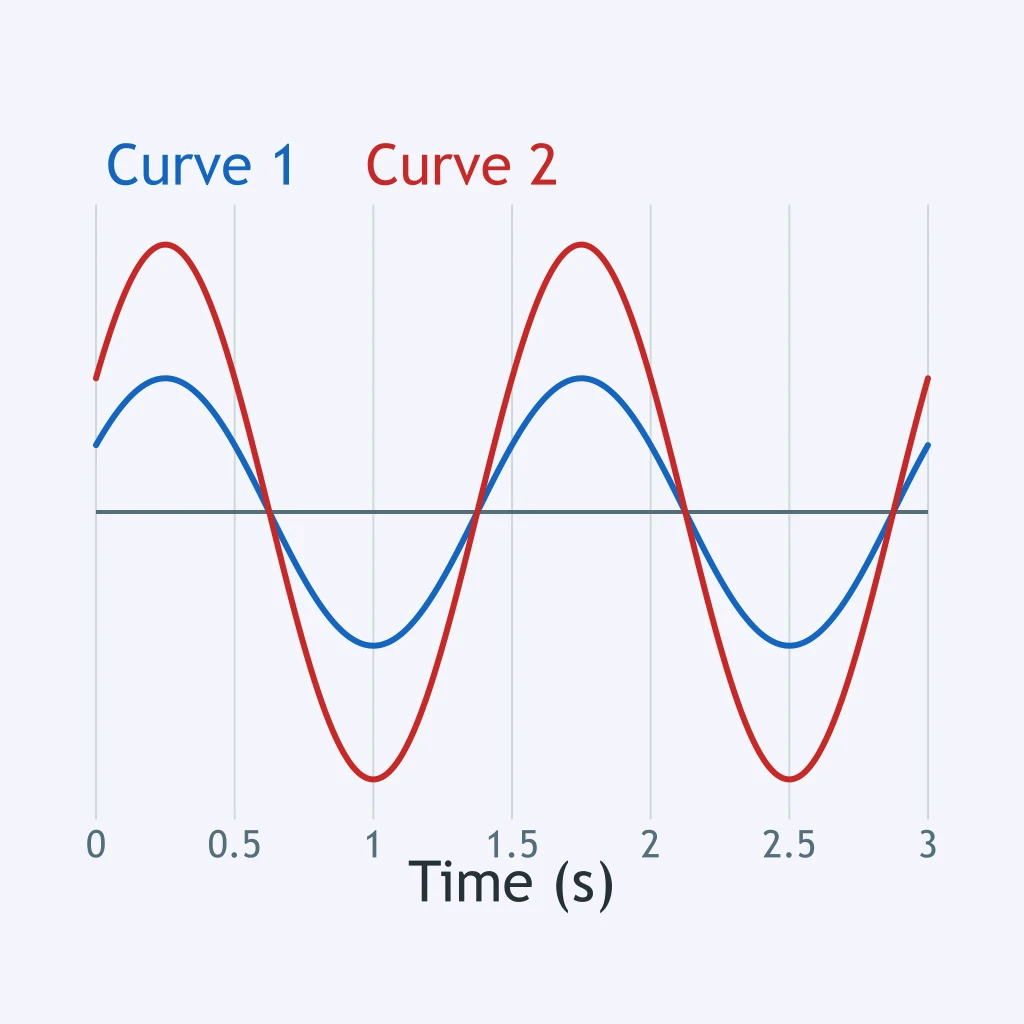
In general, what does a phase difference of one quarter of a period mean for two identical oscillators?
At a turning point of any simple harmonic motion, which statement is true?
When an oscillator passes through equilibrium in simple harmonic motion, what is true?
For an ideal mass-spring oscillator, what happens to the period if the amplitude is made larger while mass and spring constant stay the same?
What does a half-period phase difference mean for two equal-amplitude sinusoidal oscillators?
Which statement describes acceleration in simple harmonic motion?
Crack the passcode before the zombies get in.
Answer, then swat bugs for bonus points.
Race through questions at your own speed.
Same question on every screen. Fastest wins.

Pick a tile, answer, hit bonuses and steals.

Density and Internal Structure (AP Physics 1)
40 questions