Loading
by BlastRoom
Analyze circular and elliptical orbits using conservation of energy and angular momentum.
#physics

20 questions
One question set, multiple game modes. Tap any game to see it in action. Not sure which to pick?
Answer to place stones and capture territory.
Outrun the snow together.
Earn blasts, then hunt the other team.
Answer to earn energy, then climb.

The class blasts through walls together.
Bid on mystery lots. Most money wins.
Sell tours. Nice, standard, or a total scam.

Answer, restock, and serve the rush.
More correct answers pulls the rope your way.
Answer, then shoot down the alien wave.
Answer, then tap to leap the frozen ridge.
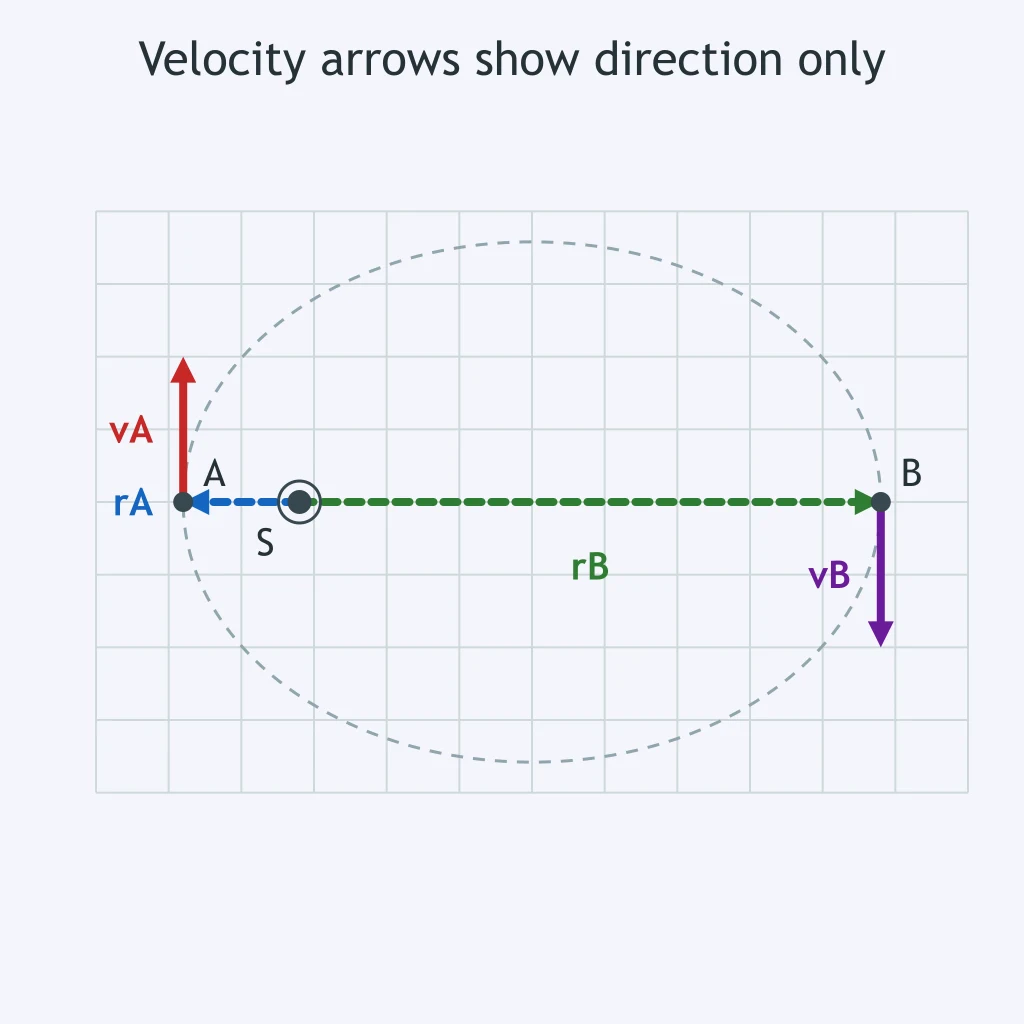
Use the figure: a comet is from the star at A and at B. At both points v is perpendicular to the star line, and gravity gives no torque. How do speed and angular momentum compare?
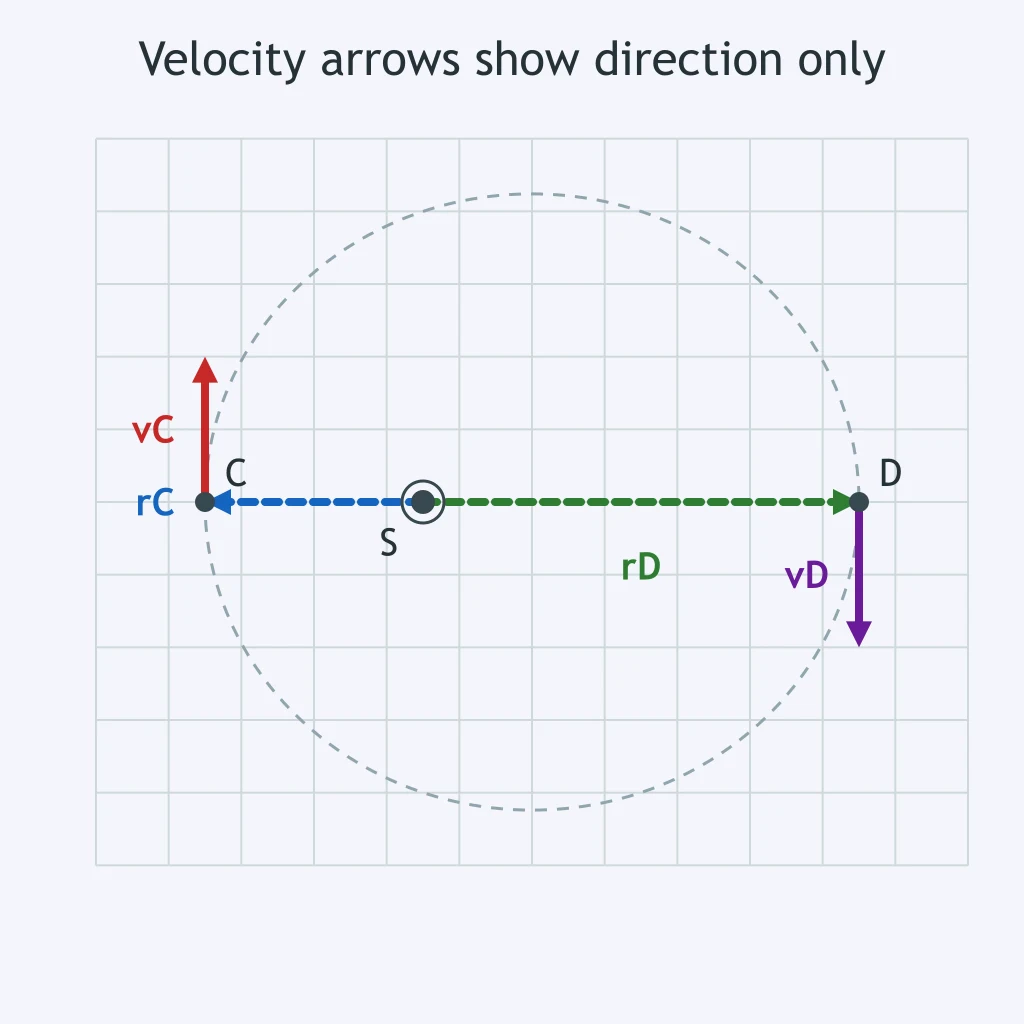
Use the figure: an asteroid has the same mass at C and D; C is from the star and D is . Velocities are perpendicular to the star line. Which energy comparison is correct?
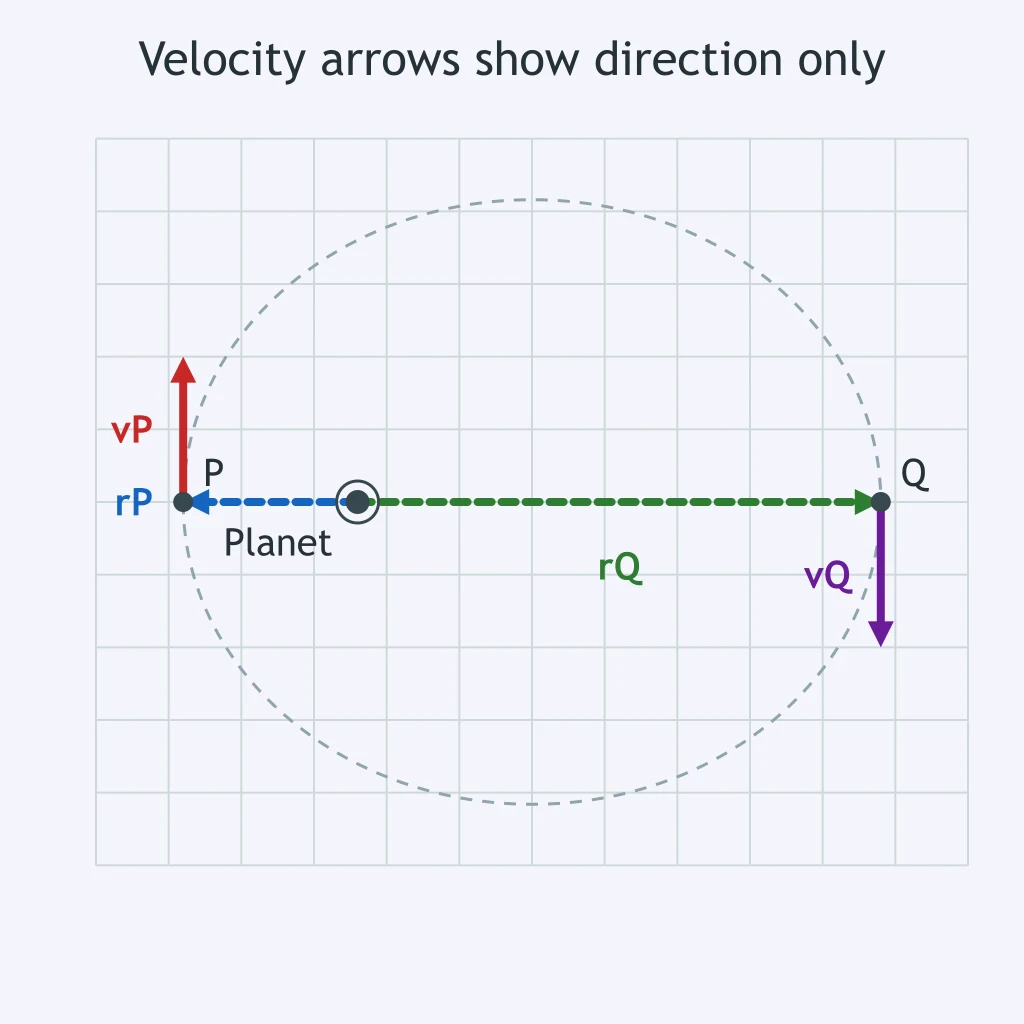
Use the figure: point P is from the planet and point Q is away. Each velocity is perpendicular to the radius line. If angular momentum is conserved, what is ?
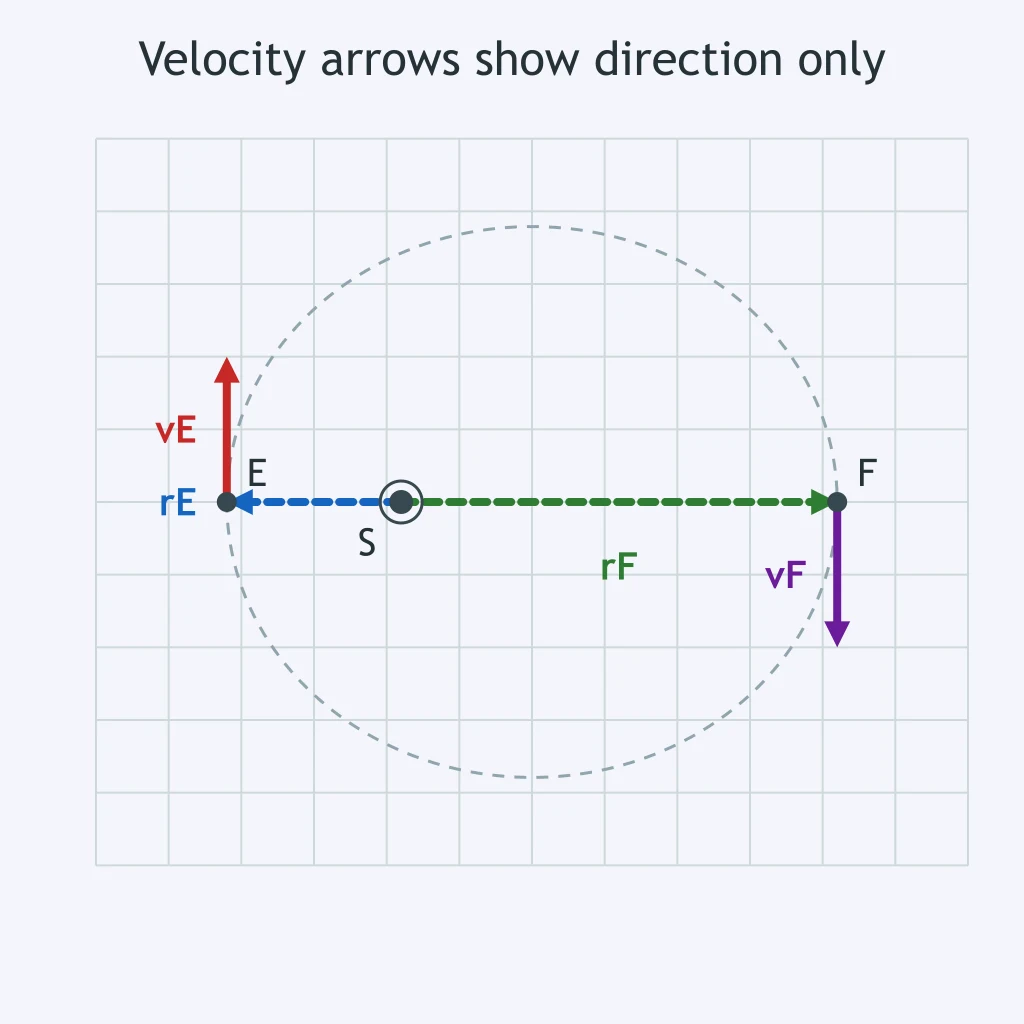
Use the figure: at E a probe is from the star and moving at . At F it is away. The velocity is perpendicular to the radius at both points. What is ?
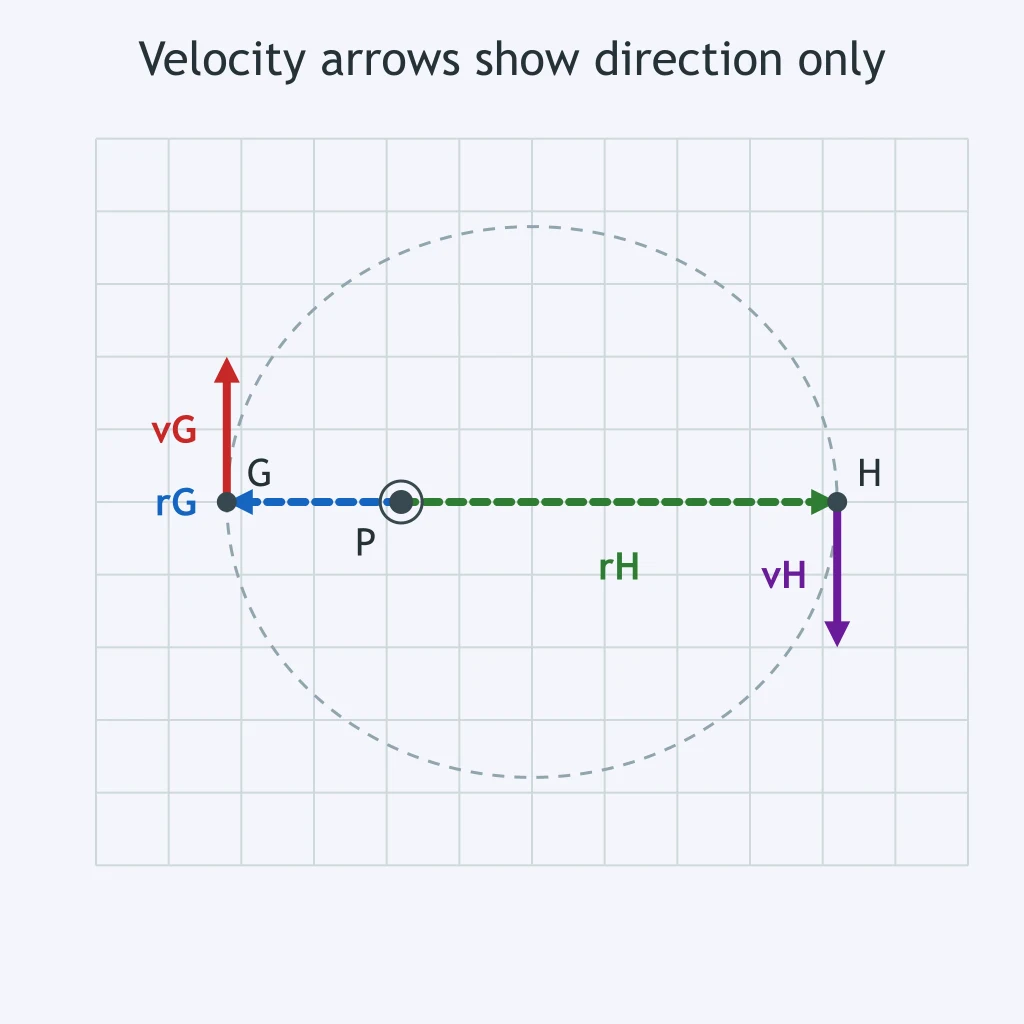
Use the figure: point G is from the planet and point H is away. The orbiting object's velocity is perpendicular to the radius at each point. Which statement is consistent with gravity alone?
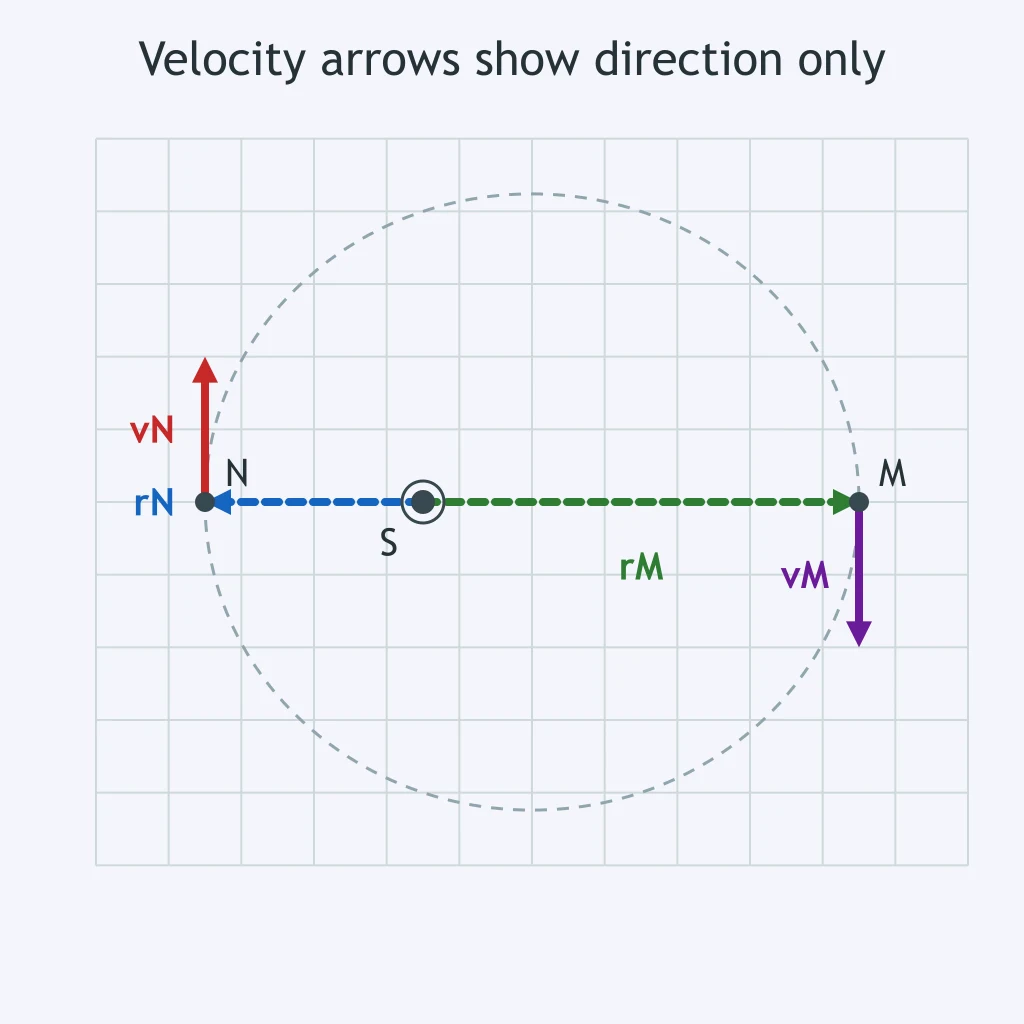
Use the figure: point N is from the star and point M is away. At which point are both the gravitational force magnitude and the orbital speed greater?
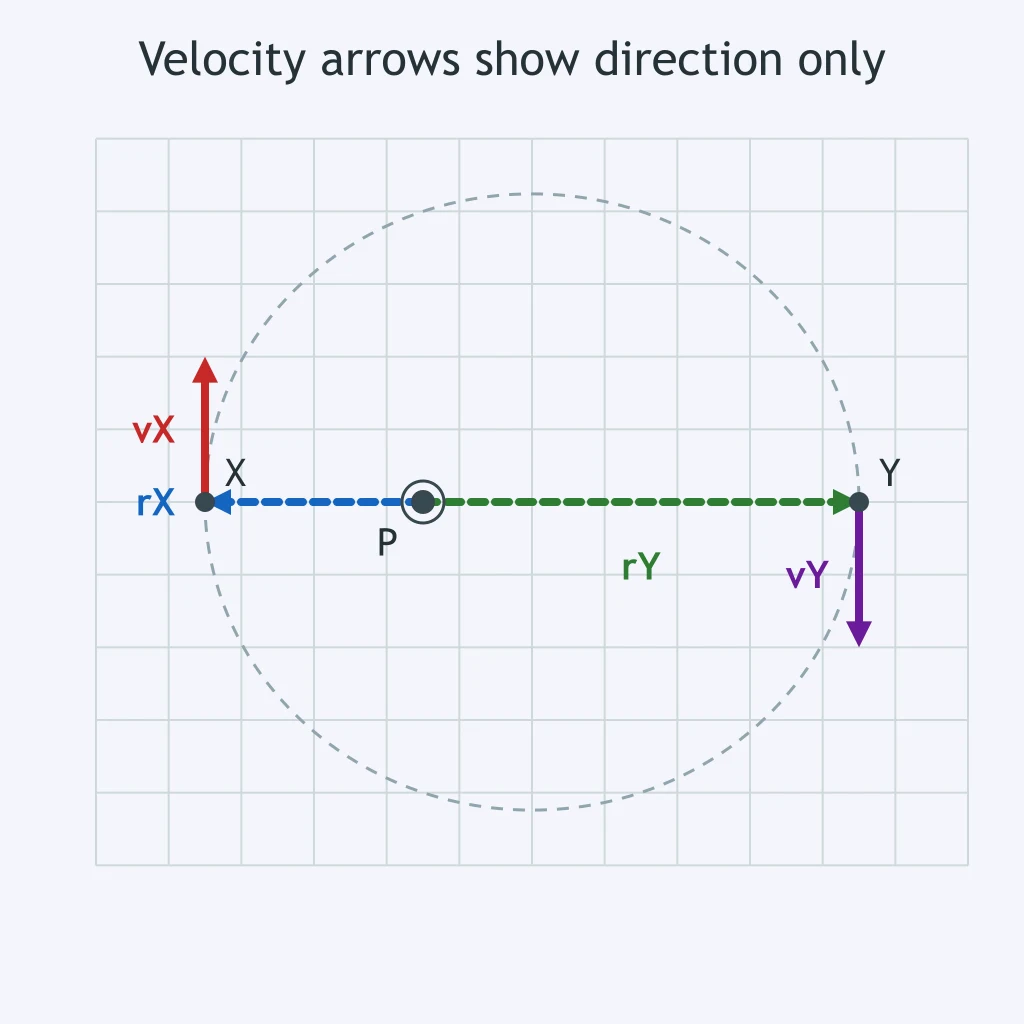
Use the figure: X is from the planet, and Y is away. At both points the velocity is perpendicular to the radius. If angular momentum is conserved, which relation must hold?
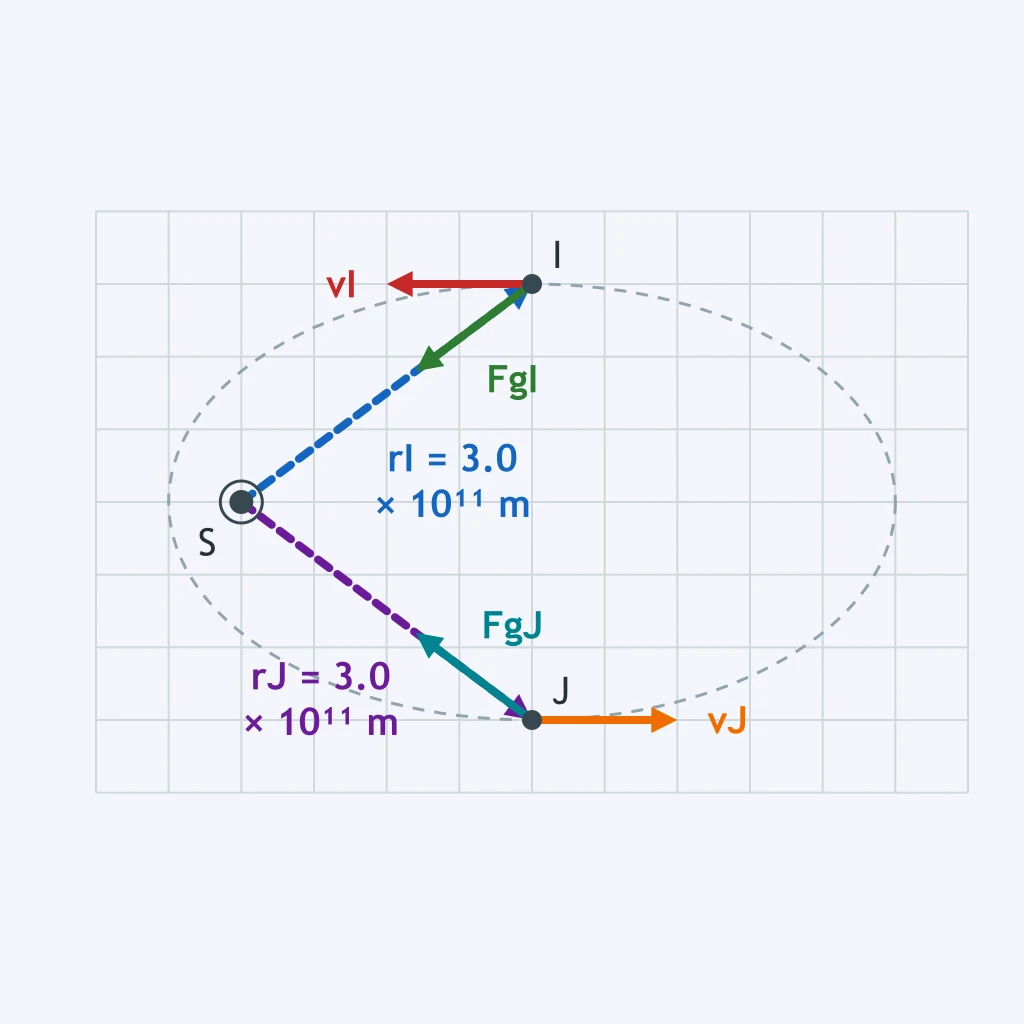
Use the figure: I and J are equal distances from the star on the same elliptical orbit. With no nonconservative work and no torque about the star, how do their speeds and angular momenta compare?
A satellite moves in a circular orbit of radius about Earth, mass . Take . What is its orbital speed?
A moon circles Mars at speed . Mars has mass , and . What is the circular orbital radius?
A planet follows a circular orbit of radius around a star of mass . Take . What is the orbital speed?
A satellite's circular orbital speed around Earth is . Earth's mass is , and . What orbital radius gives that speed?
A planet's angular momentum about the Sun stays constant during its elliptical orbit. What physical reason accounts for that?
Which statement is Kepler's second law, and what does it imply for speed on an elliptical orbit?
For a satellite, gravity is radial but velocity is usually not. Which torque statement about the central body's center is correct?
A comet sweeps out equal areas in equal time intervals as it orbits a star with only gravity acting. Which conservation law explains that area rule?
A comet moves from the far end of its elliptical orbit inward toward the Sun, with no engines or drag. Which statement describes its energy as it approaches?
After passing closest approach, a probe moves outward on its elliptical orbit with only gravity acting. What happens to its kinetic energy, gravitational potential energy, and total energy?
A satellite is in a circular orbit with U = -GMm/r and . What is its total mechanical energy E = K + U?
A comet gains of kinetic energy while falling inward, and no nonconservative work is done. What is the change in its gravitational potential energy?

Rotational Kinetic Energy and Work Done by a Torque (AP Physics 1)
30 questions

Angular Momentum and Angular Impulse (AP Physics 1)
30 questions

Conservation of Angular Momentum (AP Physics 1)
25 questions

Rolling Without Slipping (AP Physics 1)
25 questions

Defining Simple Harmonic Motion (AP Physics 1)
40 questions
Crack the passcode before the zombies get in.
Answer, then swat bugs for bonus points.
Race through questions at your own speed.
Same question on every screen. Fastest wins.

Pick a tile, answer, hit bonuses and steals.