Loading
by BlastRoom
Practice calculating and predicting oscillator period and frequency.
#physics
30 questions
One question set, multiple game modes. Tap any game to see it in action. Not sure which to pick?
Answer to place stones and capture territory.
Outrun the snow together.
Earn blasts, then hunt the other team.
Answer to earn energy, then climb.

The class blasts through walls together.
Bid on mystery lots. Most money wins.
Sell tours. Nice, standard, or a total scam.

Answer, restock, and serve the rush.
More correct answers pulls the rope your way.
Answer, then shoot down the alien wave.
Answer, then tap to leap the frozen ridge.
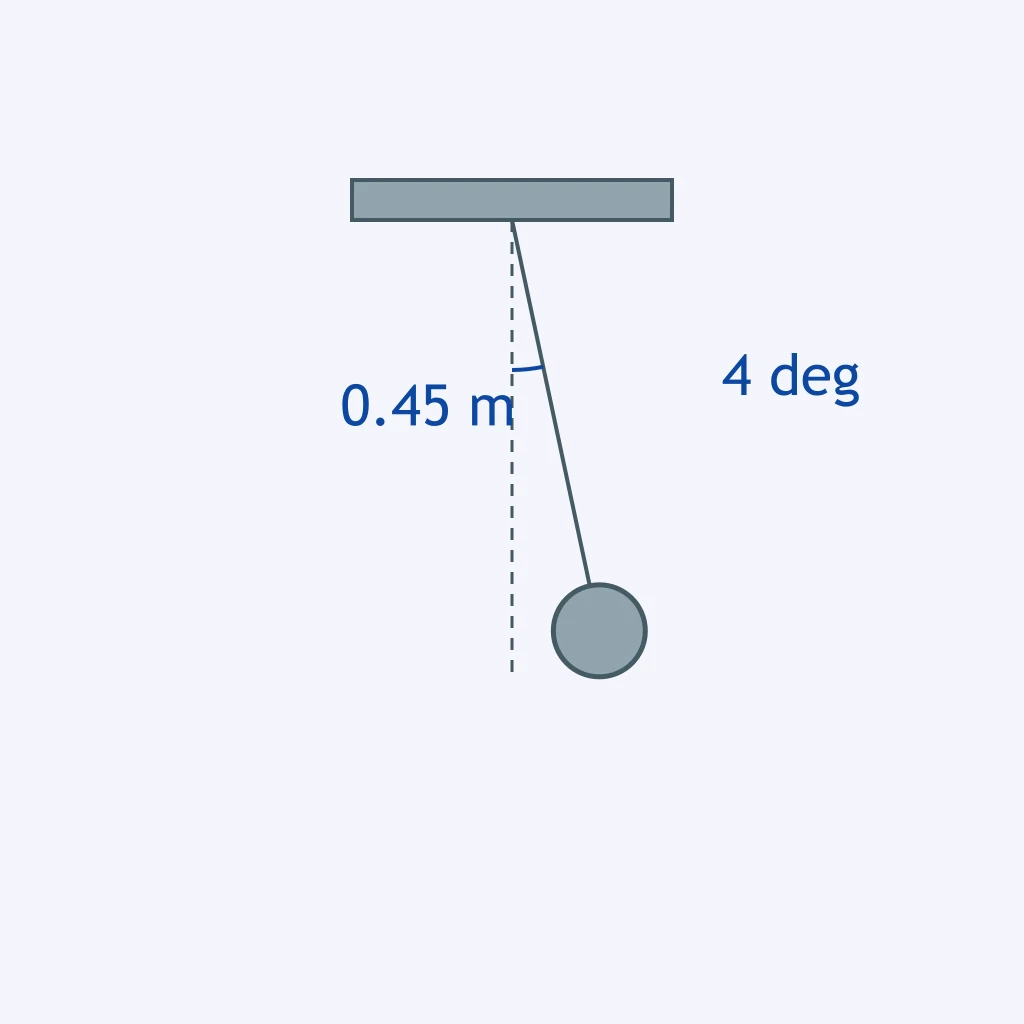
The diagram shows a simple pendulum released from a small angle. Take g = 9.8 m/s². What is the period of this pendulum?
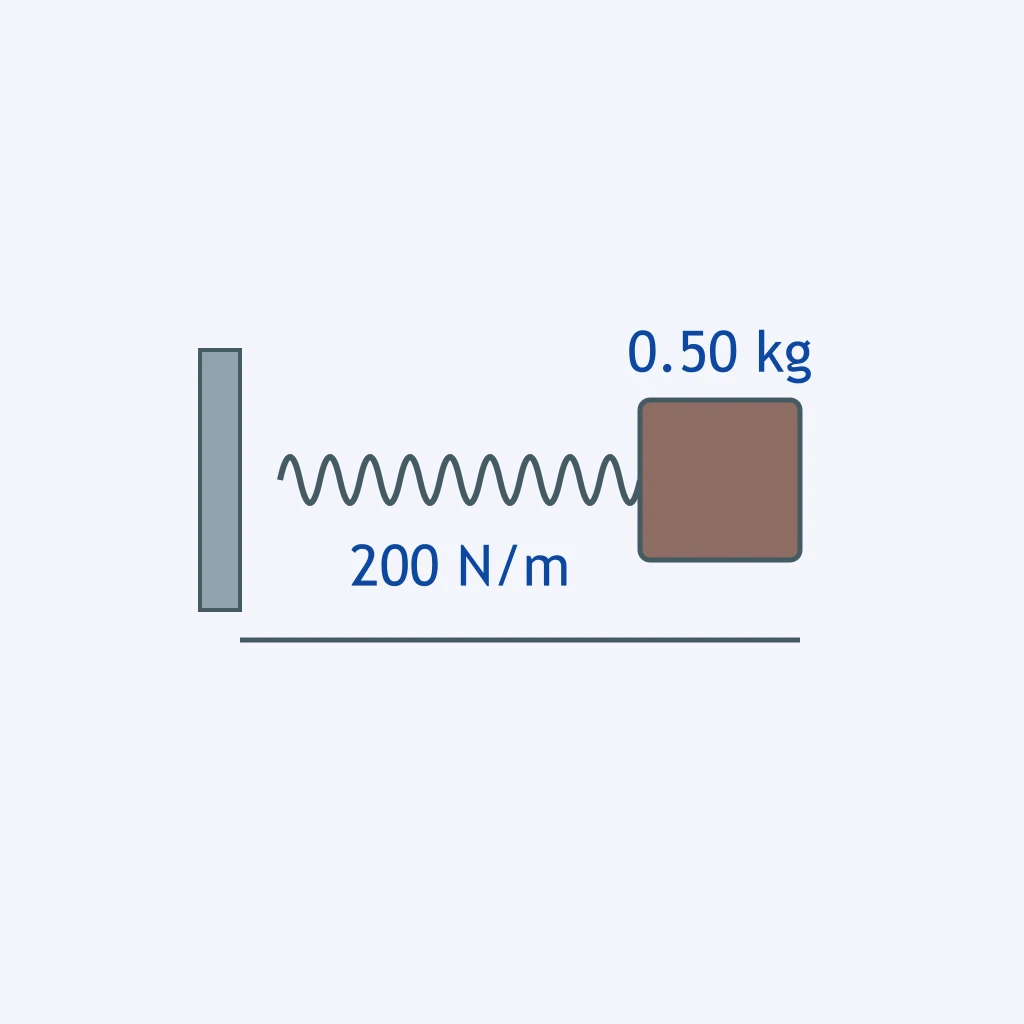
The diagram shows a block attached to a spring with spring constant 200 N/m. What is the period of the oscillation?
Use the pendulum diagram. The swing angle is small, and g = 9.8 m/s². What period should the pendulum have?
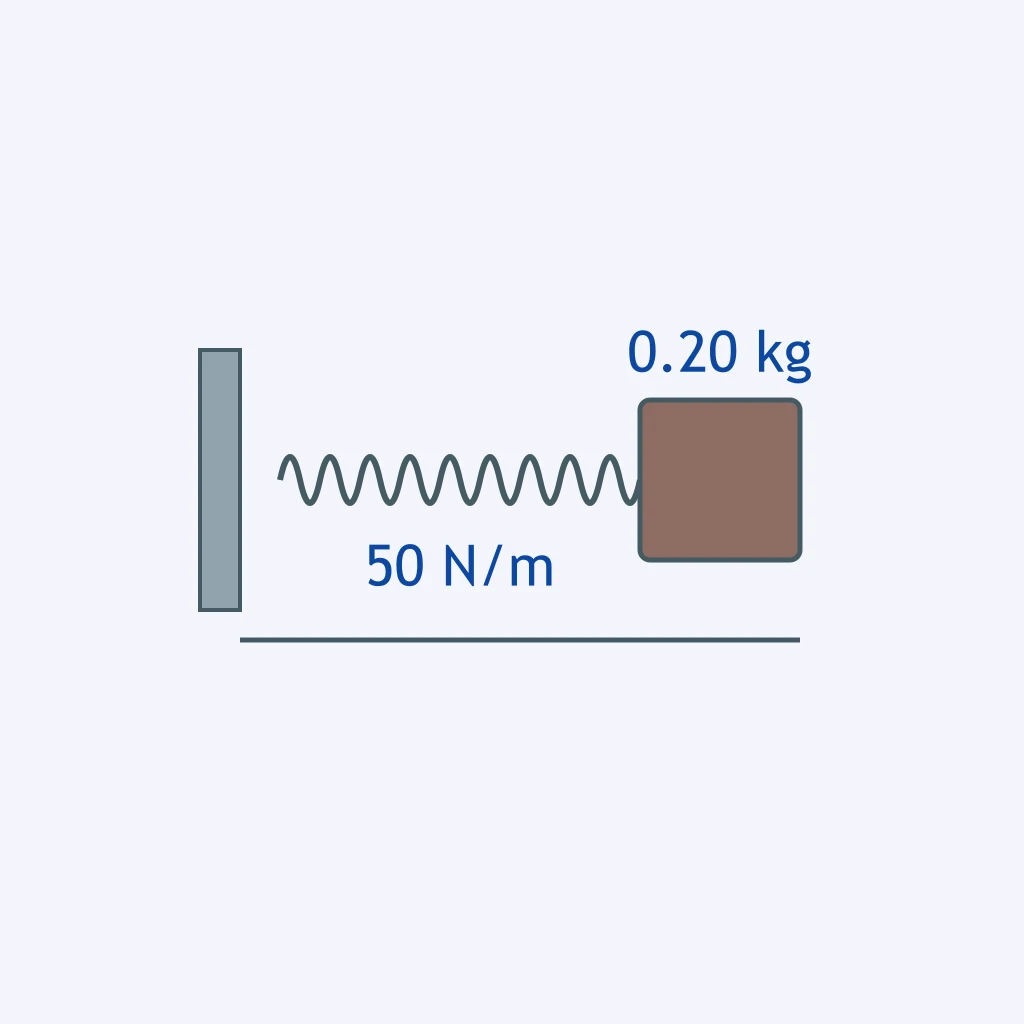
A spring setup has spring constant 50 N/m. Read the mass from the diagram. What is the period of the block's oscillation?
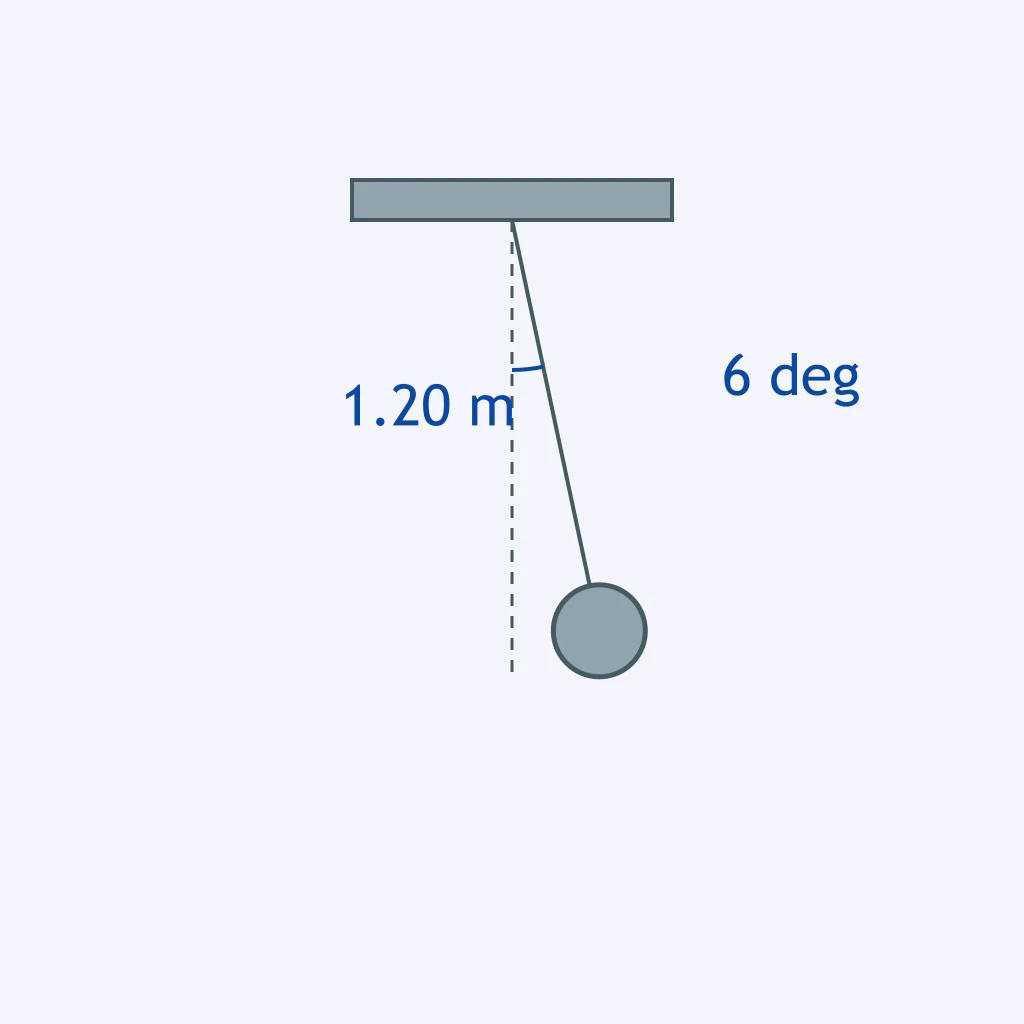
The diagram shows a small-angle pendulum in a lab. Take g = 9.8 m/s². What is its period?
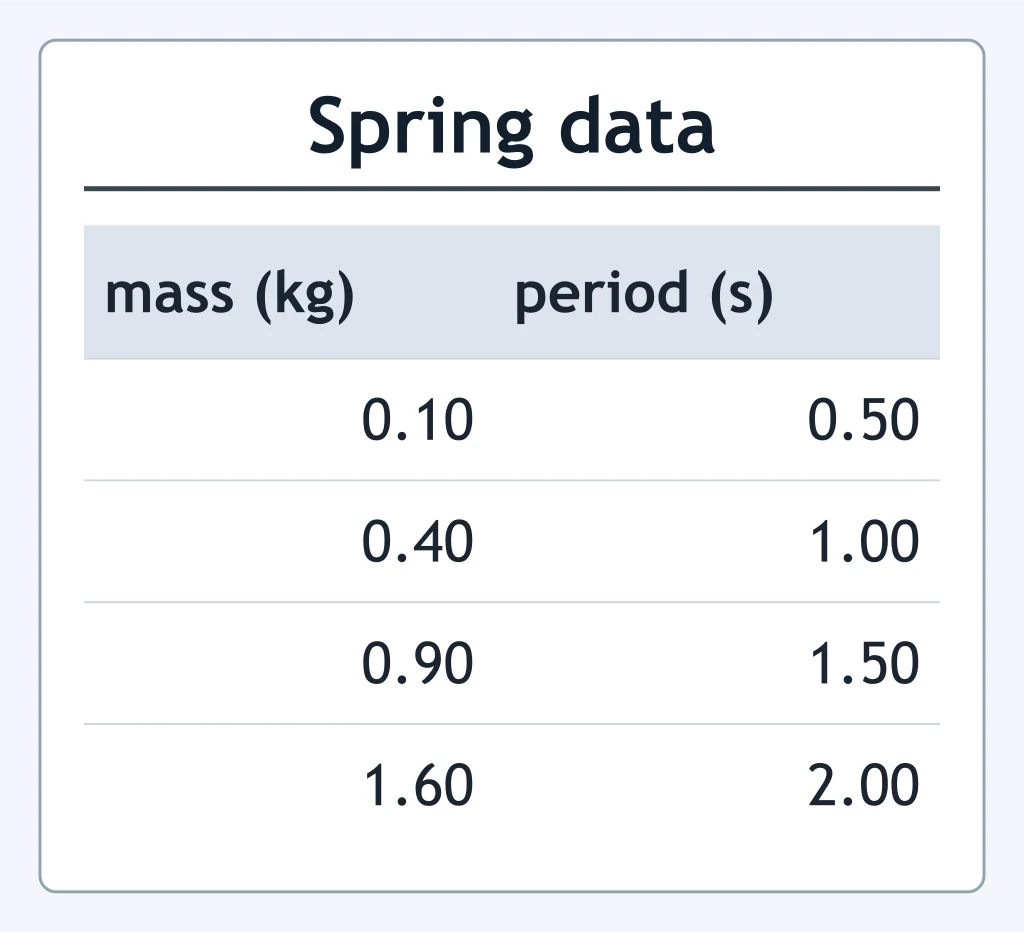
A class changes the hanging mass on the same spring and records the period each time. What relationship do the data show?
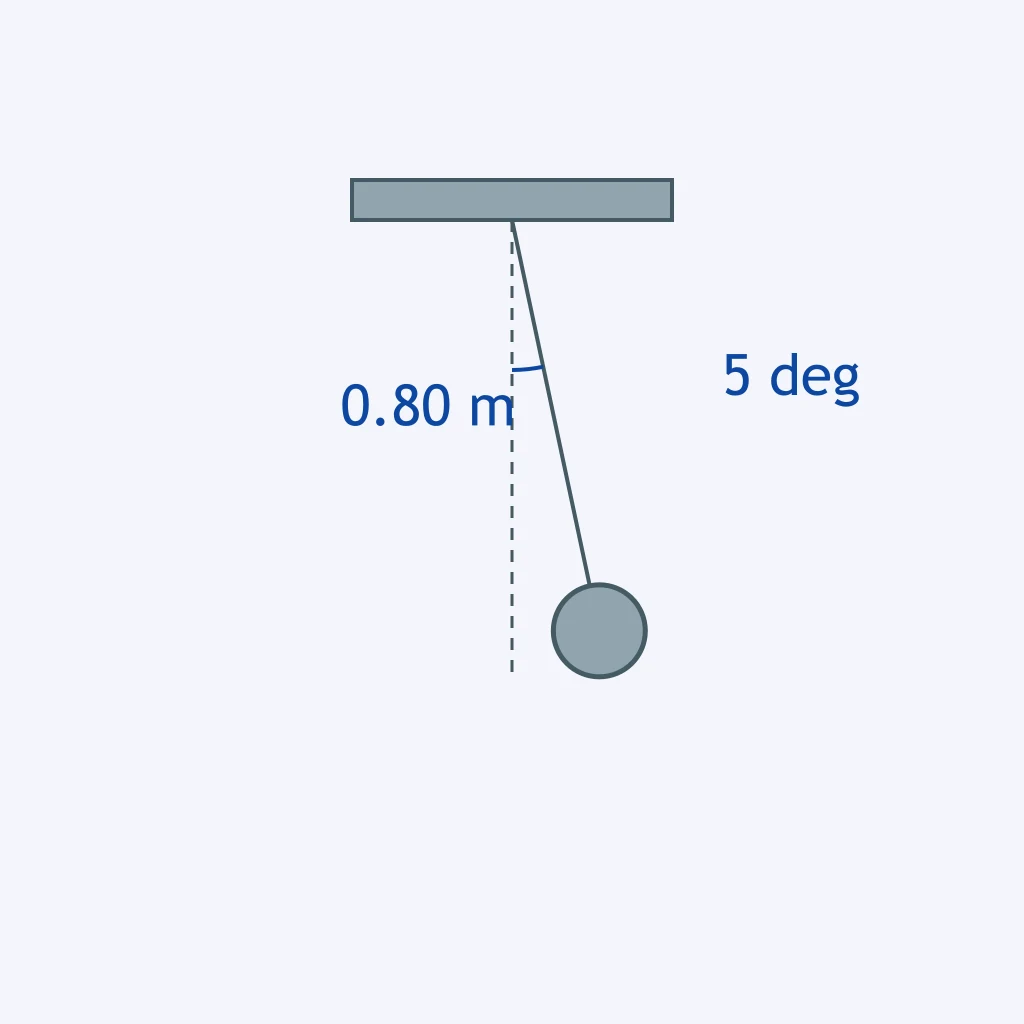
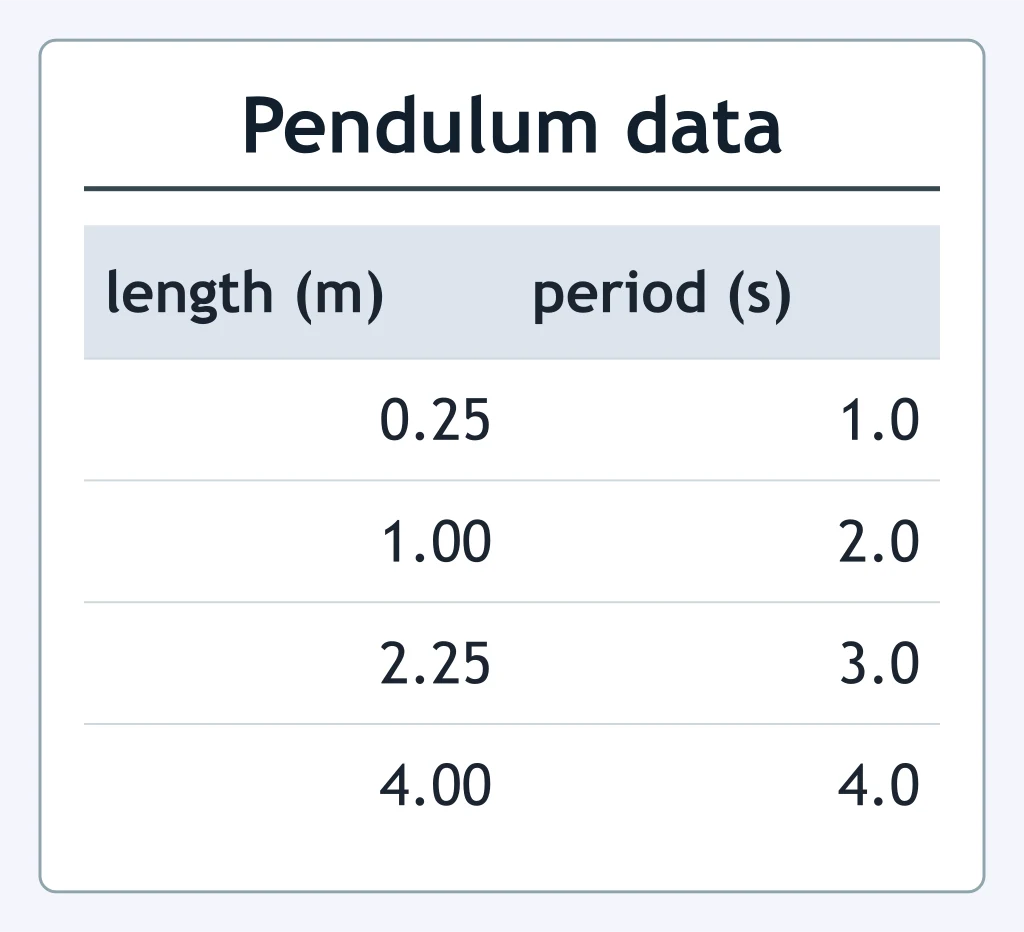
A class tests pendulums of different lengths but keeps the bob mass and release angle the same. What do the measurements show?
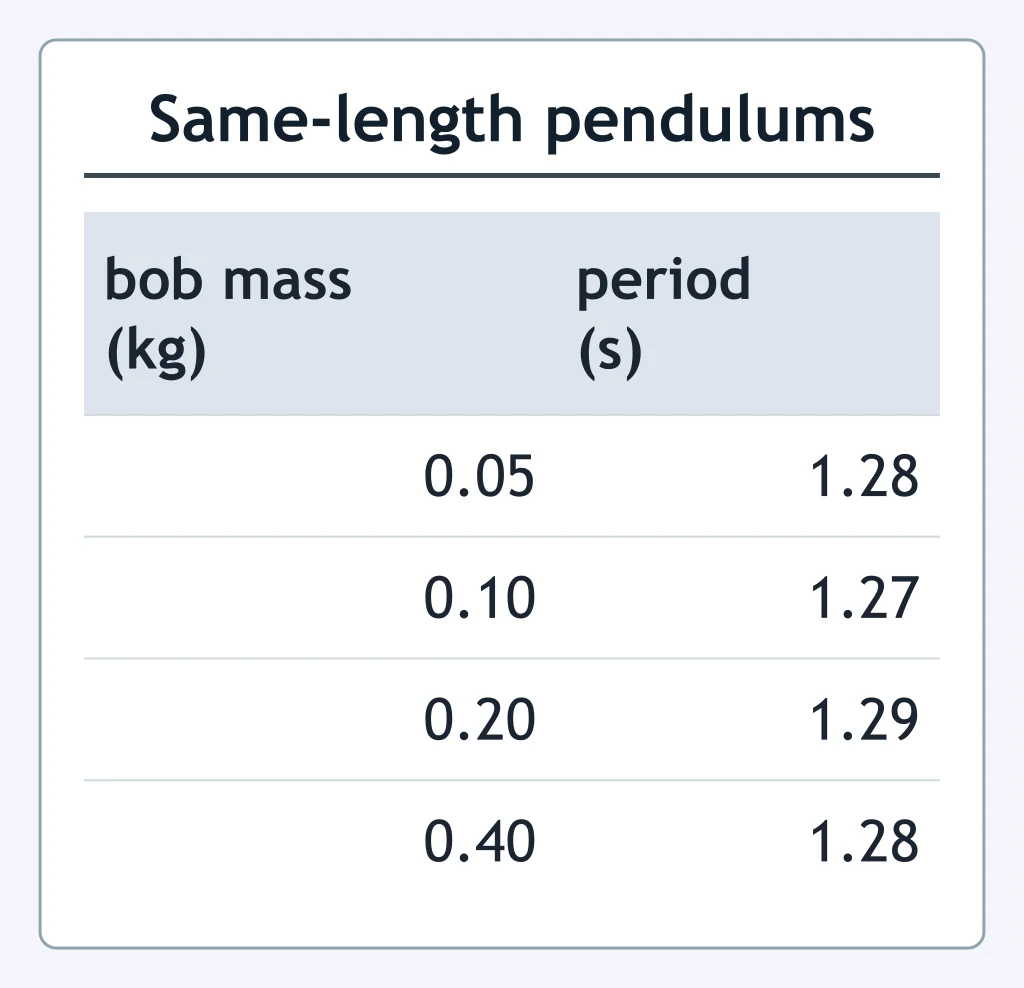
A class changes only the bob mass on pendulums with the same length and small release angle. What conclusion is best supported?
A 0.25 kg block on a frictionless surface is attached to a spring with k = 100 N/m. What is the period of the oscillation?
A 0.80 kg cart attached to a spring with k = 20 N/m oscillates horizontally. What is its frequency?
A 2.0 kg mass oscillates on a spring with spring constant 500 N/m. What is the angular frequency?
A 0.30 kg glider is attached to a spring with k = 75 N/m. What period will its small oscillations have?
A spring oscillator has m = 0.60 kg and k = 15 N/m. About how many full oscillations does it complete in 10 s?
A 0.20 kg mass on a spring has period 0.50 s. What is the spring constant?
A spring with k = 80 N/m oscillates with period 0.628 s. What mass is attached to the spring?
A 0.10 kg object attached to a spring with k = 40 N/m oscillates. What is its angular frequency?
A simple pendulum has length 1.50 m and swings through a small angle. Take g = 9.8 m/s². What is its frequency?
A small-angle pendulum has length 0.25 m. Take g = 9.8 m/s². What is its period?
What length should a small-angle pendulum have on Earth if its period is 2.00 s? Take g = 9.8 m/s².
A simple pendulum of length 0.90 m swings through a small angle. Take g = 9.8 m/s². What is its frequency?
A pendulum clock needs a period of 1.20 s for small swings. What length should the pendulum be? Take g = 9.8 m/s².
A simple pendulum is 2.40 m long and has a 0.50 kg bob. For a small swing, what is its period? Take g = 9.8 m/s².
A small-angle pendulum has length 0.60 m. Take g = 9.8 m/s². What is its angular frequency?
A mass on a spring is replaced by another mass four times as large, with the same spring constant. How do the period and frequency change?
A spring in an oscillator is replaced by a spring with four times the spring constant, while the mass stays the same. What happens?
A small-angle pendulum's length is cut in half, with g unchanged. What happens to its period?
A pendulum is moved from Earth, where g = 9.8 m/s², to the Moon, where g = 1.6 m/s², without changing its length. How does its period change?
A pendulum is released from 3° and then from 6°, both small angles, with the same length. What happens to the period?
Two pendulums have the same length, but one has a 0.20 kg bob and the other has a 0.80 kg bob. Both swing through 5°. Which statement is correct?
An ideal mass-spring oscillator is pulled 2.0 cm from equilibrium and released, then pulled 4.0 cm and released. The mass and spring are unchanged. How does the period change?

Conservation of Angular Momentum (AP Physics 1)
25 questions

Rolling Without Slipping (AP Physics 1)
25 questions

Orbits: Energy and Angular Momentum (AP Physics 1)
20 questions

Defining Simple Harmonic Motion (AP Physics 1)
40 questions
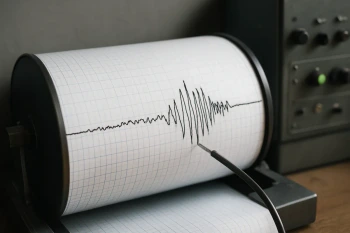
Analyzing Displacement-Time Graphs of Oscillators (AP Physics 1)
50 questions
Crack the passcode before the zombies get in.
Answer, then swat bugs for bonus points.
Race through questions at your own speed.
Same question on every screen. Fastest wins.

Pick a tile, answer, hit bonuses and steals.