Loading
by BlastRoom
Track elastic potential energy, kinetic energy, and speed in a frictionless mass-spring oscillator.
#physics

30 questions
One question set, multiple game modes. Tap any game to see it in action. Not sure which to pick?
Answer to place stones and capture territory.
Outrun the snow together.
Earn blasts, then hunt the other team.
Answer to earn energy, then climb.

The class blasts through walls together.
Bid on mystery lots. Most money wins.
Sell tours. Nice, standard, or a total scam.

Answer, restock, and serve the rush.
More correct answers pulls the rope your way.
Answer, then shoot down the alien wave.
Answer, then tap to leap the frozen ridge.
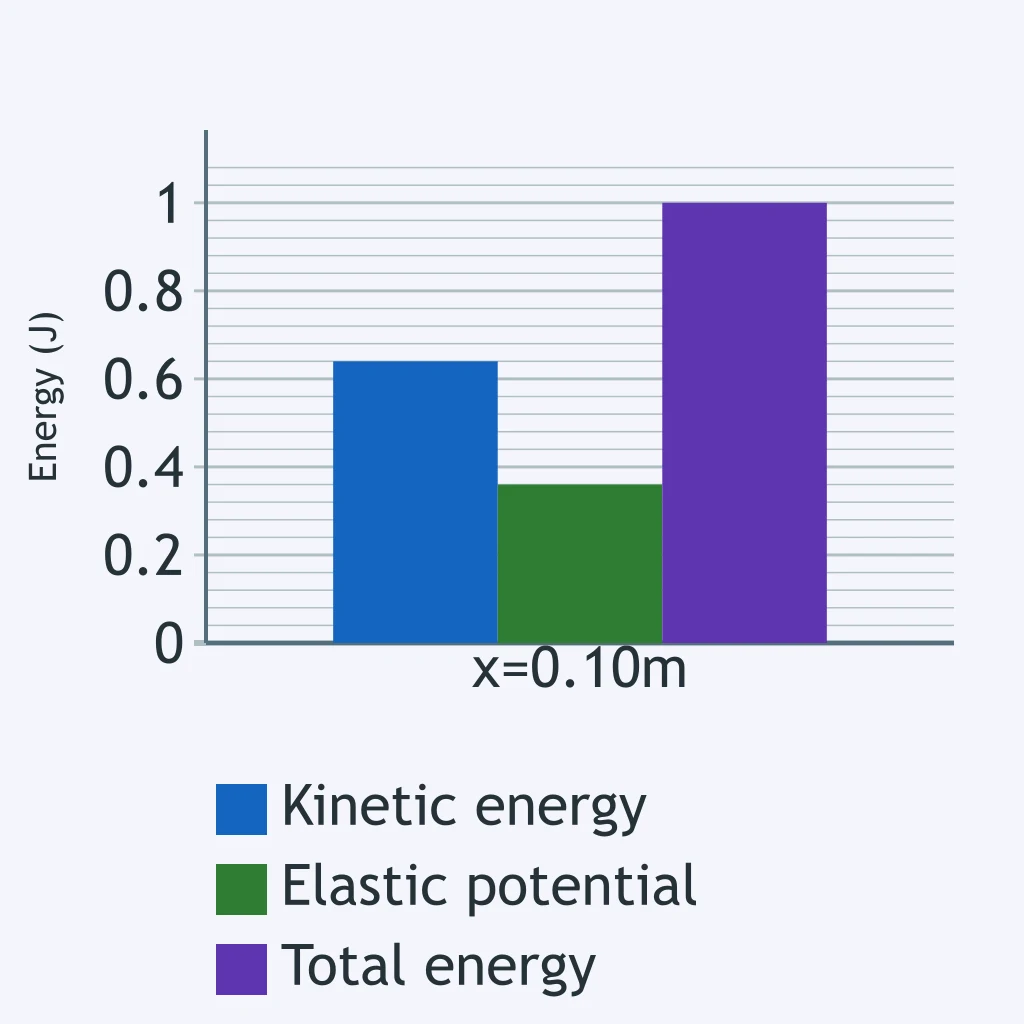
A 0.50 kg block on a 200 N/m spring oscillates without friction. The chart shows the energy split at a turning point. Later the block is halfway from that point to equilibrium. What are the bar heights then?
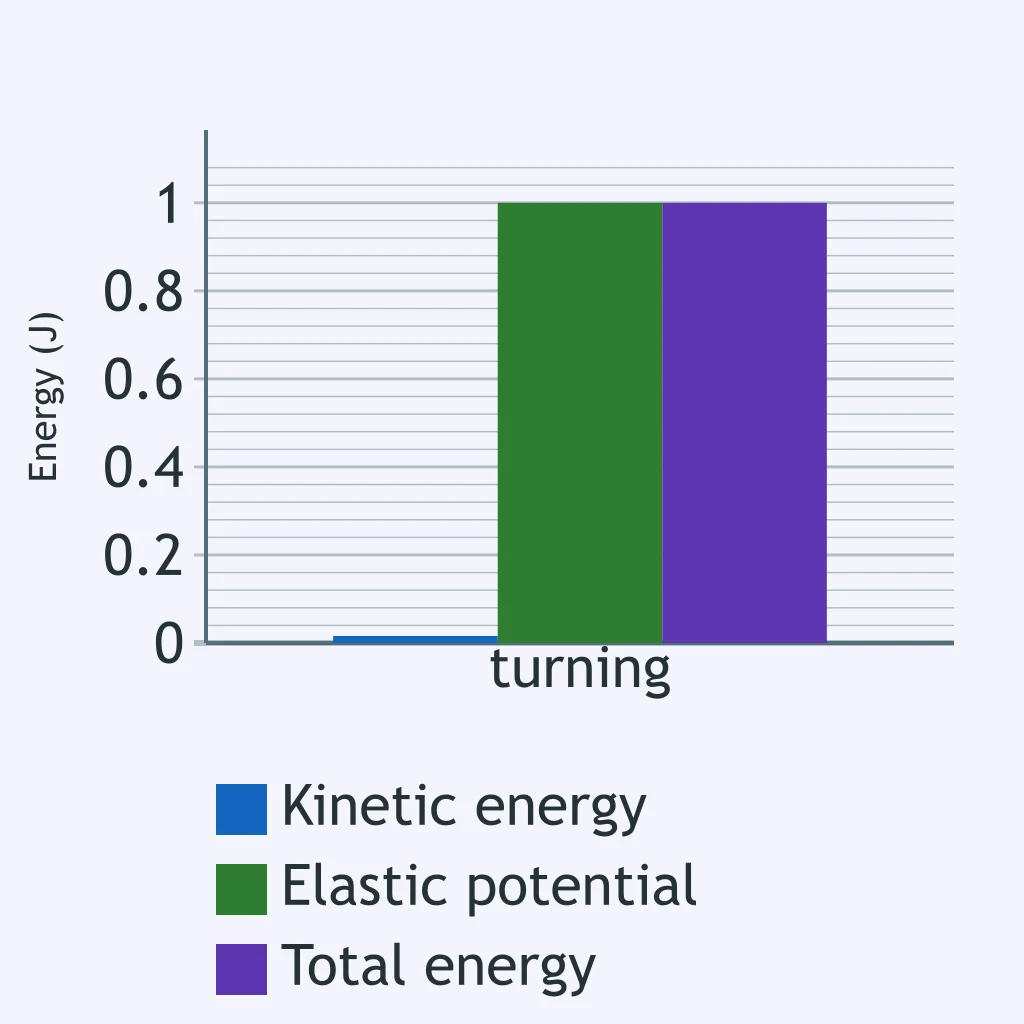
A 0.20 kg cart on a 50 N/m spring oscillates without friction. The chart shows the split as the cart crosses equilibrium. What split belongs at x = A/3?
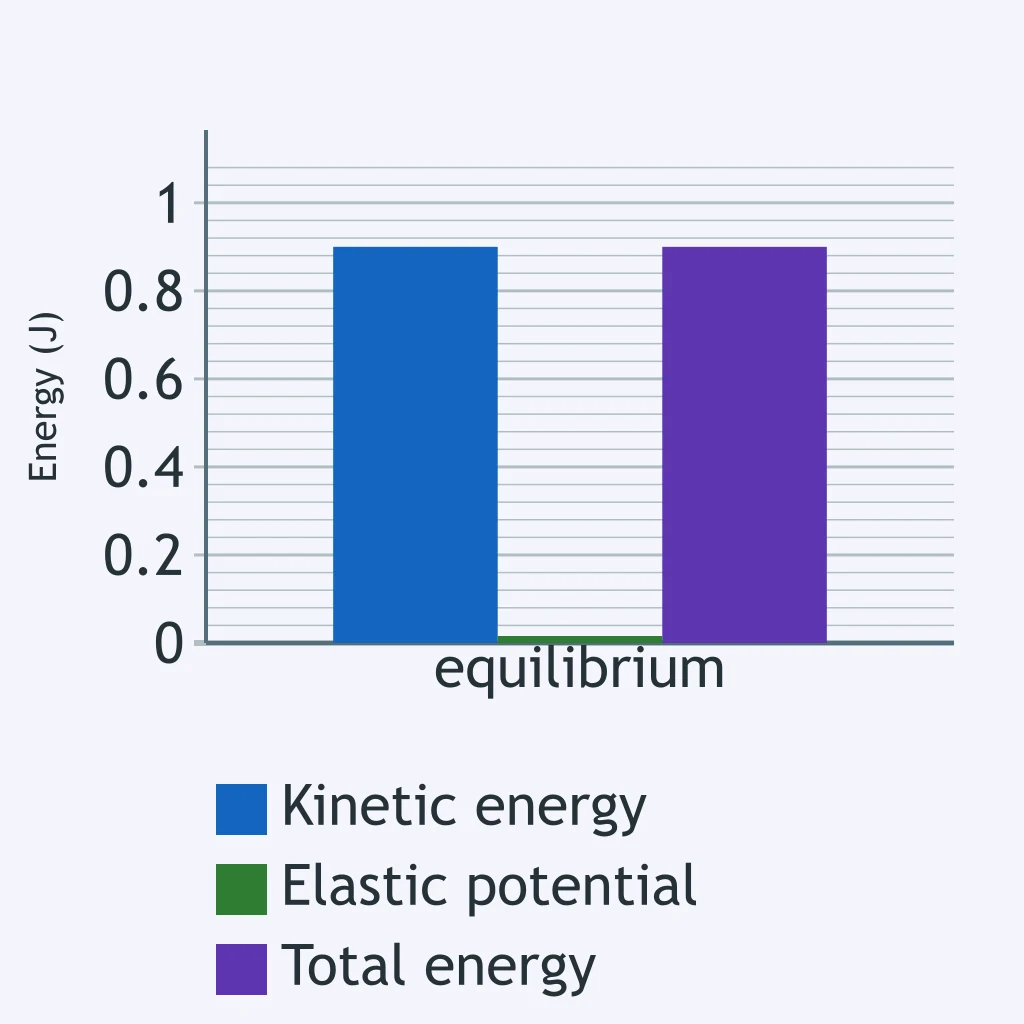
A 1.0 kg block on a 40 N/m spring oscillates without friction. The chart shows the split at x = +0.10 m. What split belongs when the block reaches x = +0.20 m?
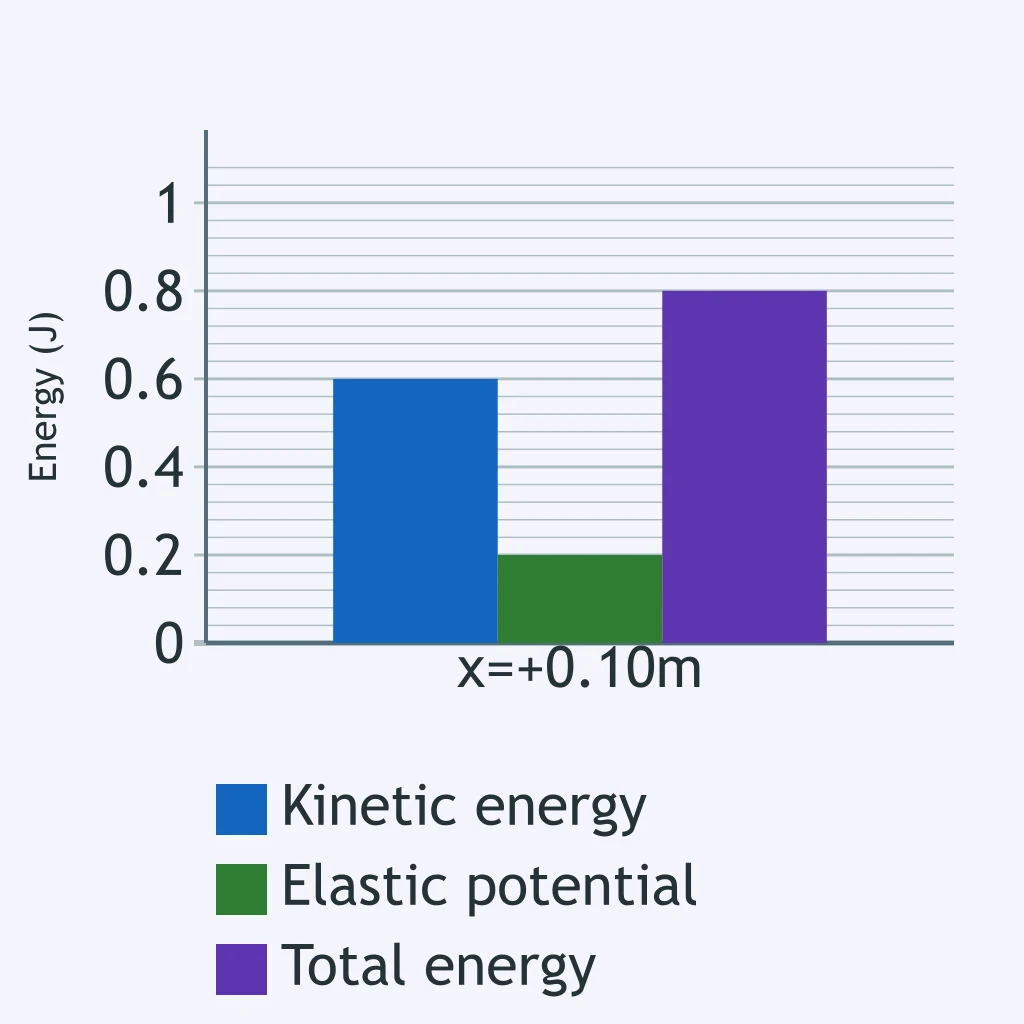
A 0.75 kg block on a 100 N/m spring oscillates without friction. The chart shows the split at a turning point. What split belongs at x = A/√2?
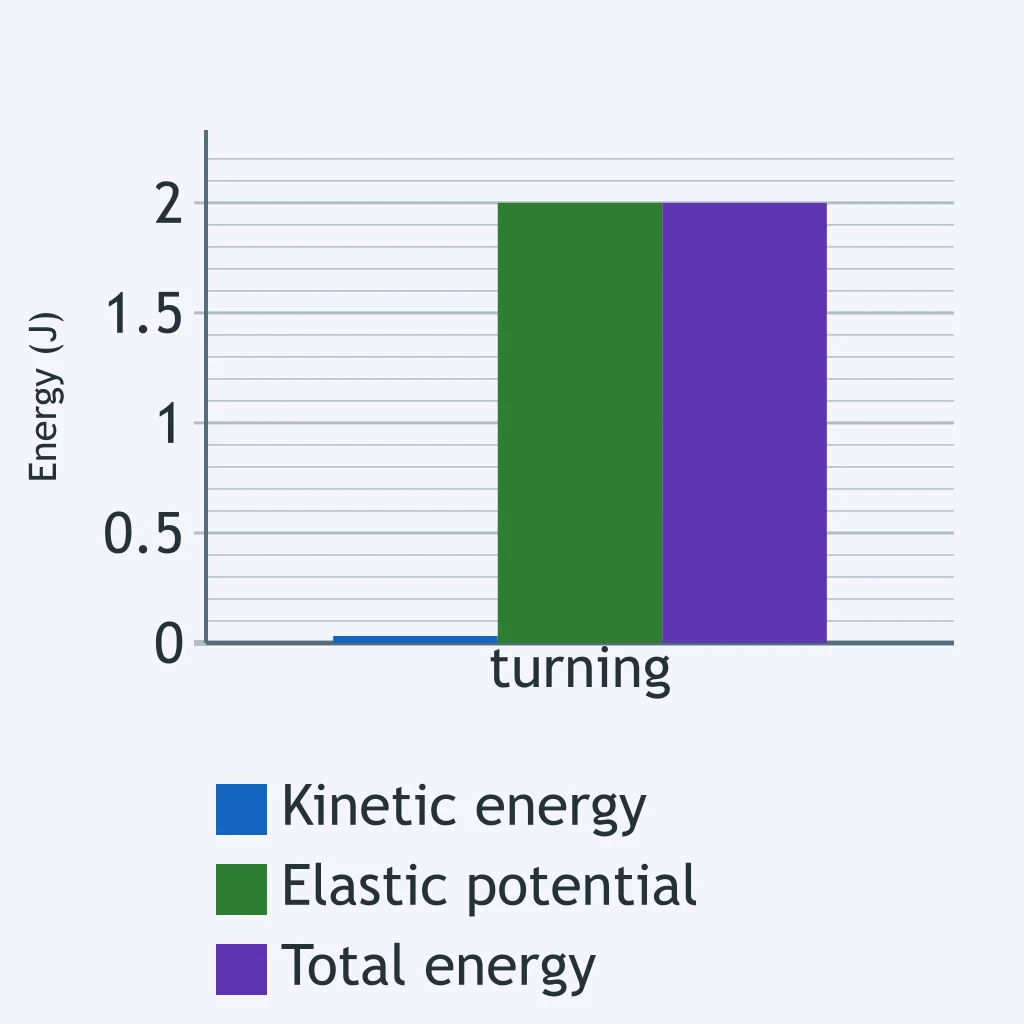
A 0.60 kg block on an 80 N/m spring oscillates without friction. The chart shows the split at x = 0.10 m. Which split belongs at x = 0.15 m?
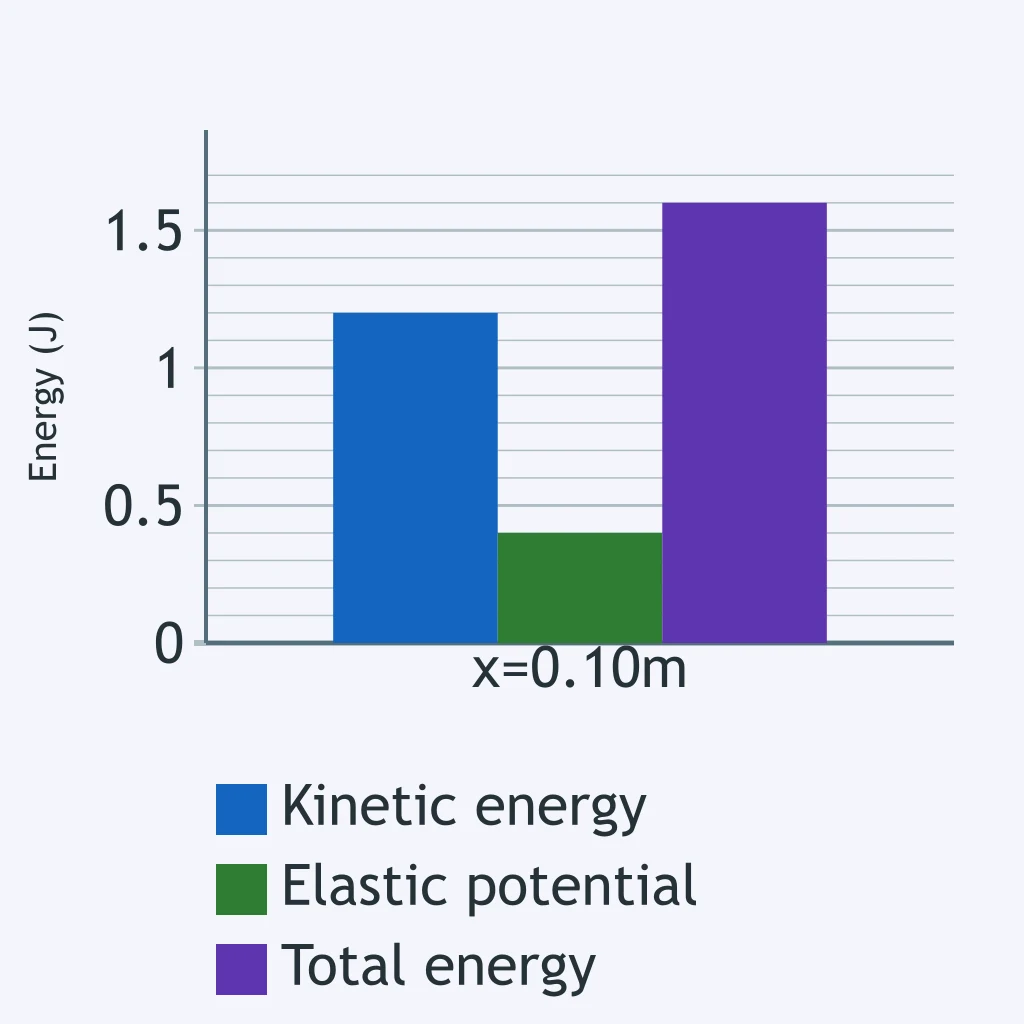
A 0.30 kg glider on a 60 N/m spring oscillates without friction. The chart shows the split at a turning point. Later it is halfway from equilibrium to that turning point. What is the split?
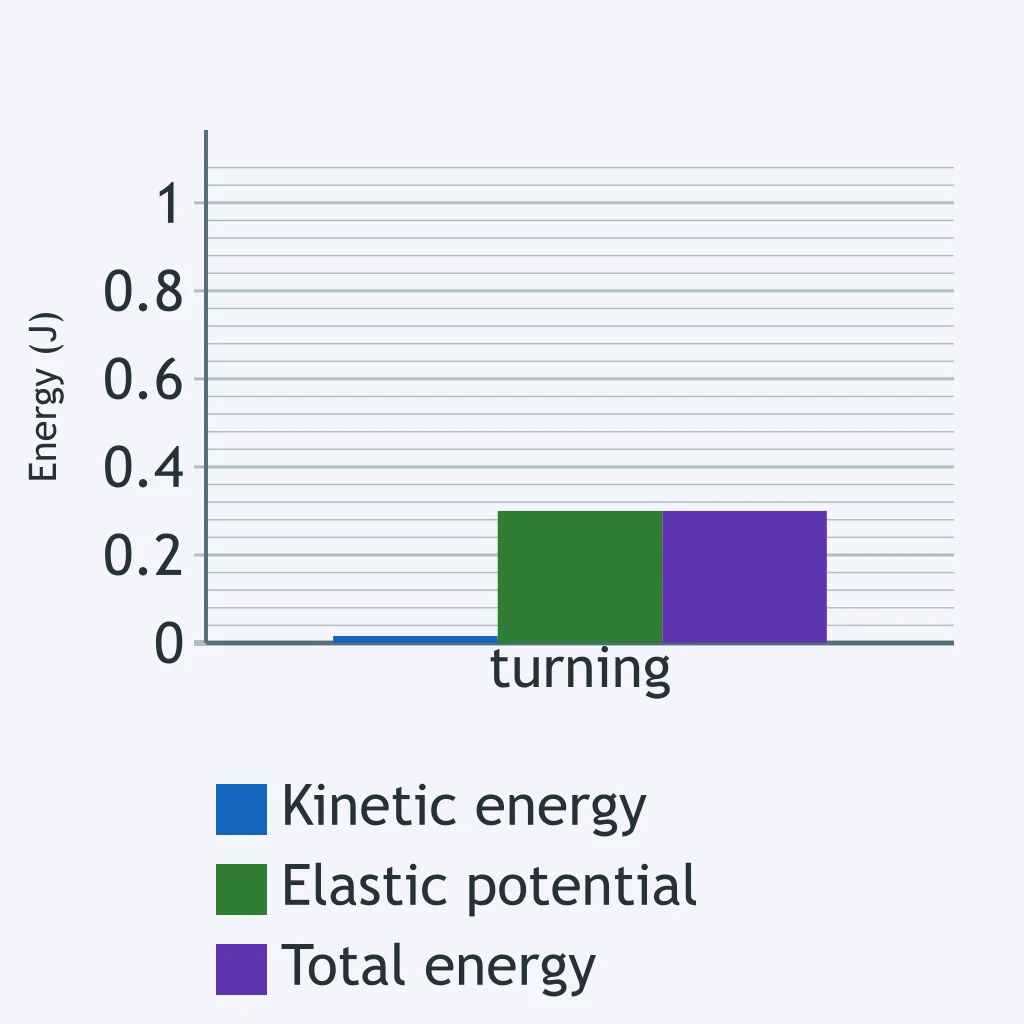
A 0.90 kg block on a 120 N/m spring oscillates without friction. The chart shows the split at x = +0.10 m. Which split belongs at x = -0.15 m?
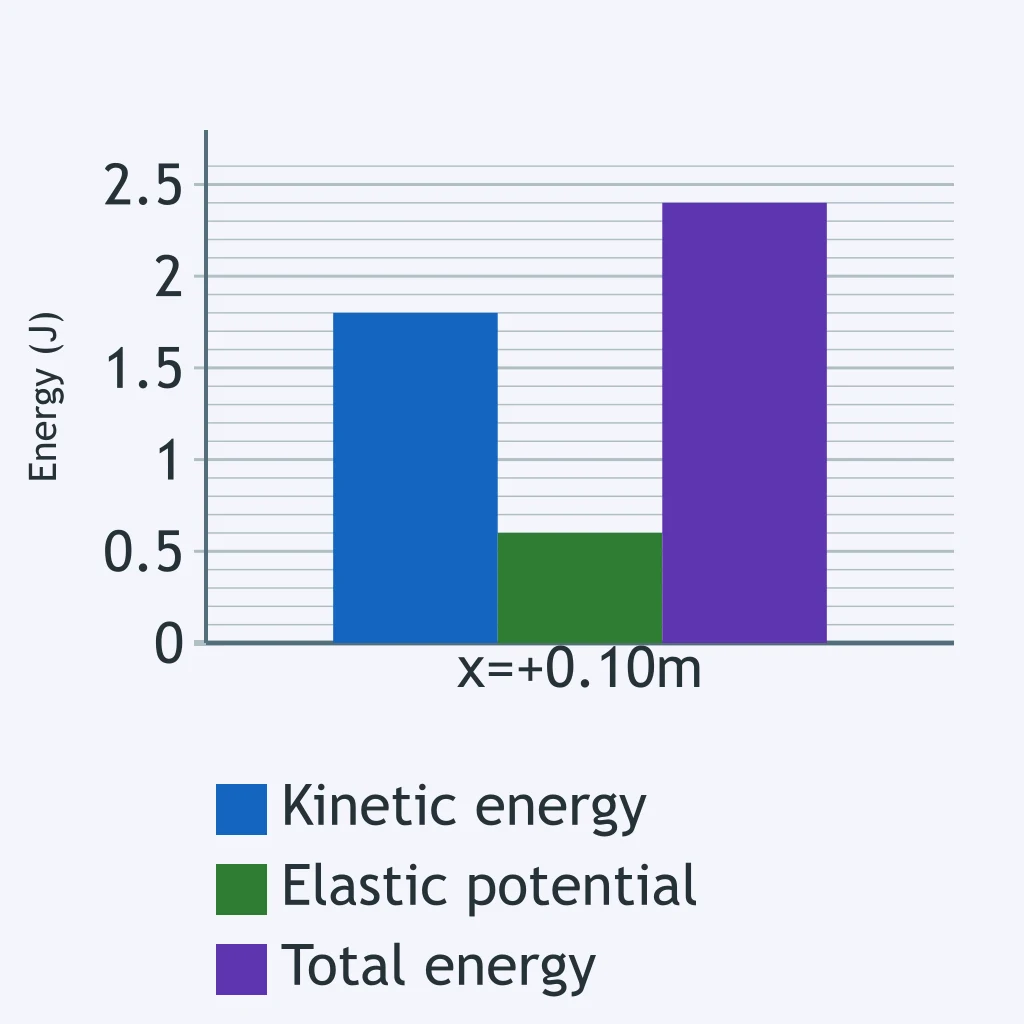
A 0.50 kg block on a 250 N/m spring oscillates without friction. The chart shows the split at equilibrium. If the amplitude is 0.10 m, what split belongs at x = 0.080 m?
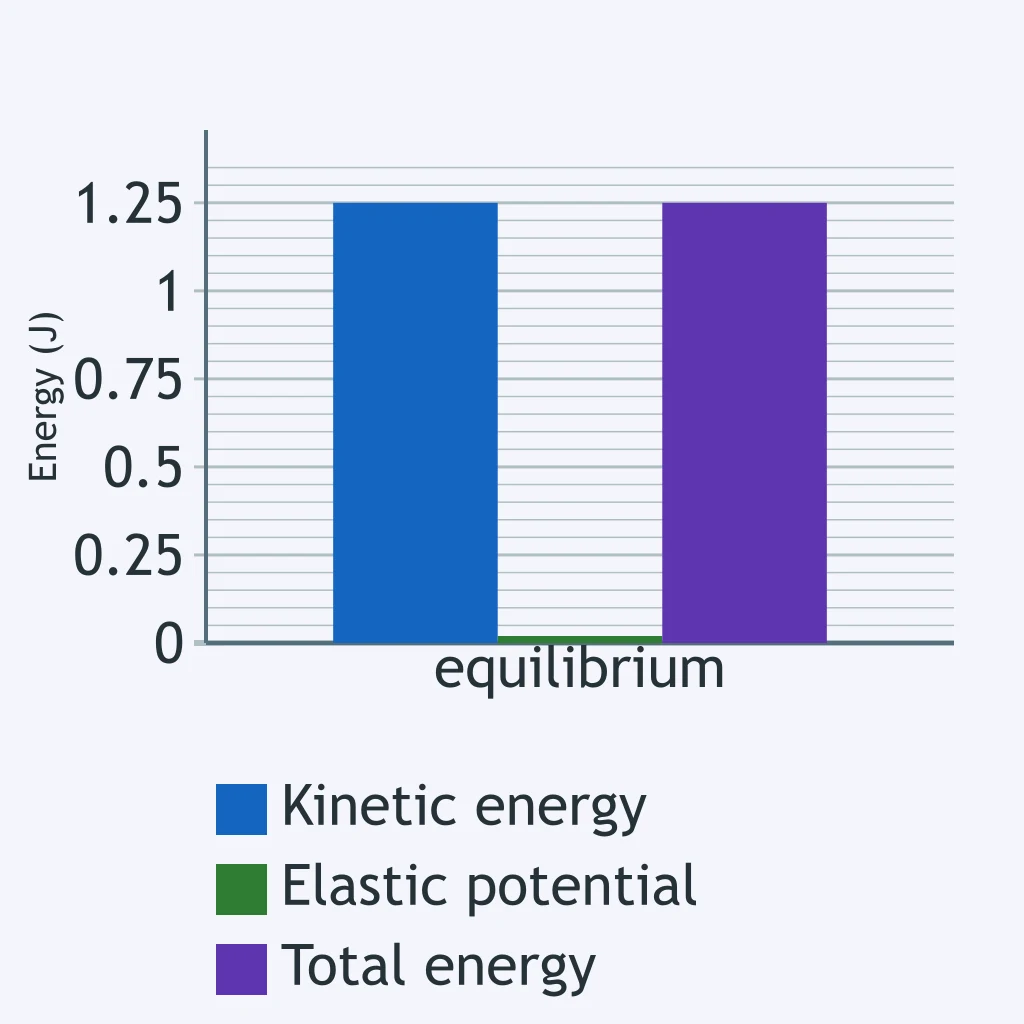
A 0.40 kg block on a 32 N/m spring oscillates without friction. The chart shows the split at a turning point. What split belongs when the block is one-fourth of the amplitude from equilibrium?
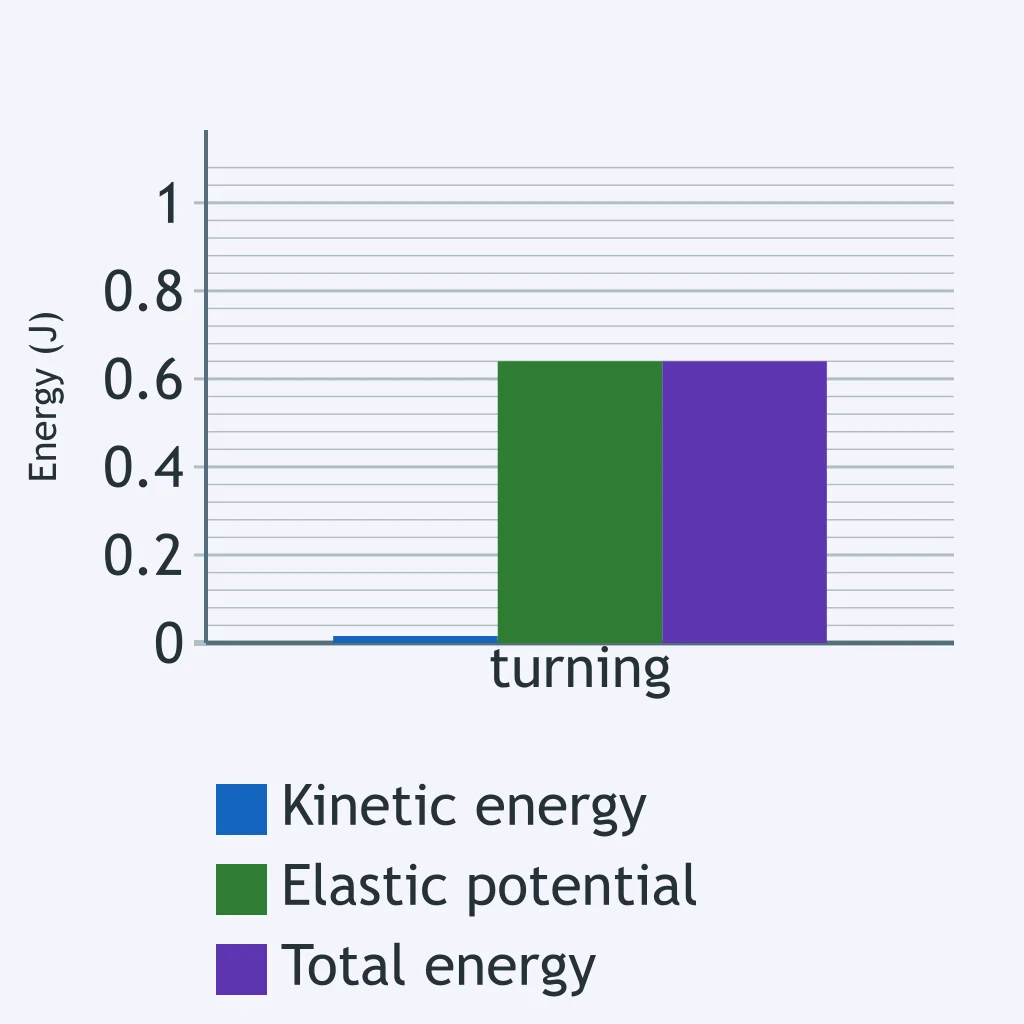
A 0.25 kg block on a 150 N/m spring oscillates without friction. The chart shows the split at x = 0.040 m. Which split belongs at x = 0.080 m?
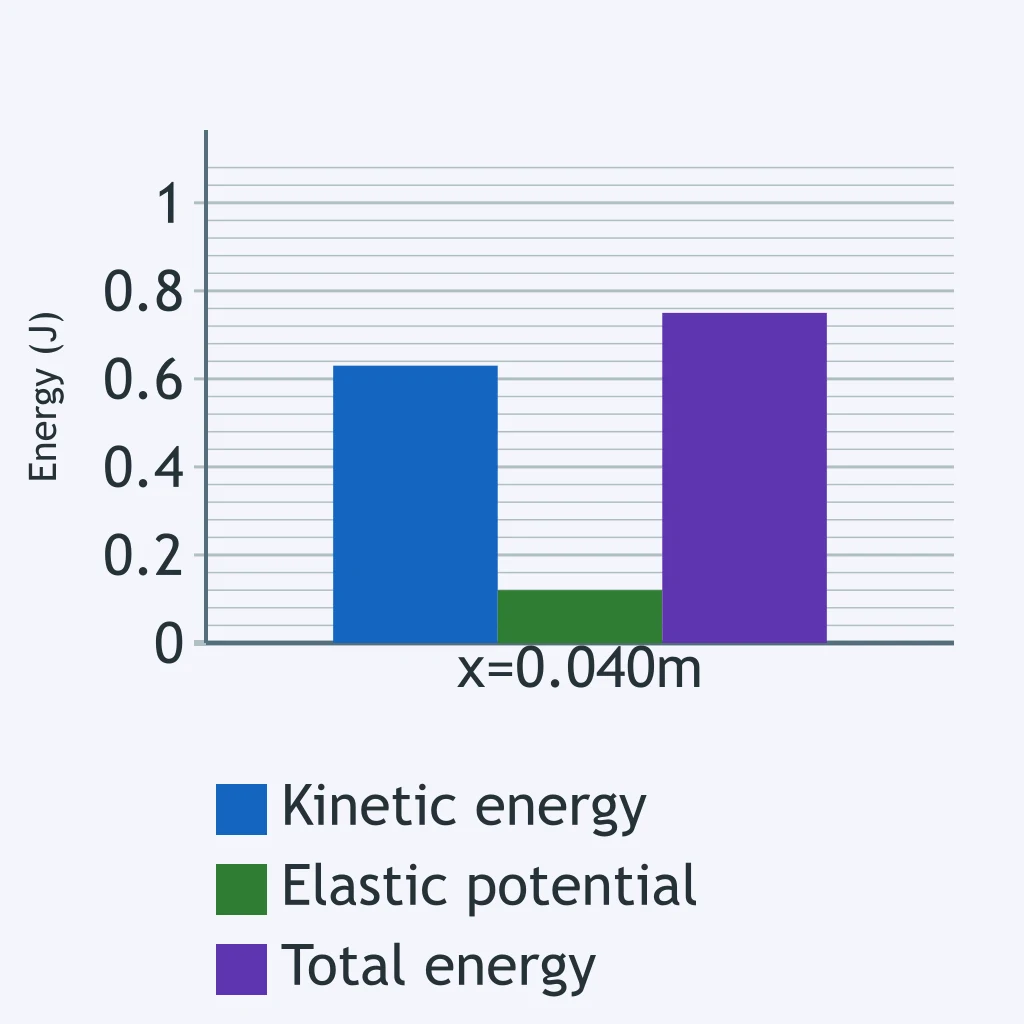
A 0.80 kg cart on a 90 N/m spring oscillates without friction. The chart shows the split at a turning point. What split belongs halfway from equilibrium to that turning point?
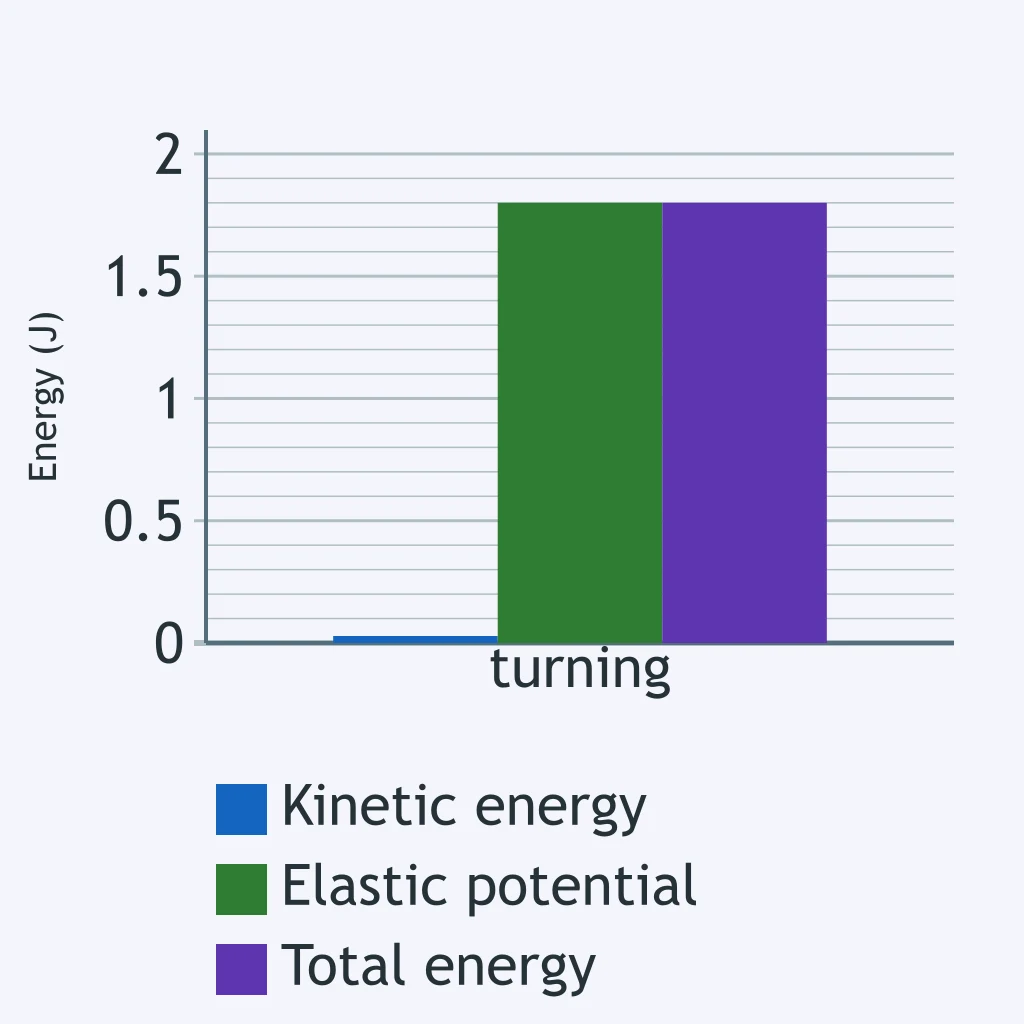
A 0.50 kg block on a 72 N/m spring oscillates without friction. The chart shows the split at x = 0.10 m. Which split belongs at x = 0.050 m?
A 0.50 kg glider on a frictionless track is attached to a 200 N/m spring and released from rest at an amplitude of 0.10 m. What is the greatest speed it reaches?
A 2.0 kg block oscillates on a 50 N/m spring with amplitude 0.20 m on a frictionless surface. What is its maximum speed?
A 0.25 kg sensor cart is attached to a 100 N/m spring and oscillates with amplitude 0.050 m. What maximum speed does the cart reach?
A 0.80 kg block oscillates on a 320 N/m spring with amplitude 0.15 m and negligible friction. What is the block's greatest speed?
A 1.2 kg cart oscillates on a 75 N/m spring with amplitude 0.40 m. What is the cart's maximum speed?
A 0.60 kg cart oscillates on a 24 N/m spring with amplitude 0.30 m. What is the greatest speed of the cart?
A 0.50 kg block oscillates on a 200 N/m spring with amplitude 0.10 m. How fast is it moving as it passes x = 0.050 m?
A 1.0 kg cart oscillates on an 80 N/m spring with amplitude 0.25 m. What is its speed at x = 0.15 m?
A 0.75 kg block oscillates on a 300 N/m spring with amplitude 0.12 m. What speed does it have at x = -0.060 m?
A 2.0 kg block oscillates on a 50 N/m spring with amplitude 0.30 m. How fast is the block moving at x = 0.20 m?
A 0.40 kg cart oscillates on a 160 N/m spring with amplitude 0.080 m. What speed does it have when x = 0.040 m?
A 1.5 kg block oscillates on a 60 N/m spring with amplitude 0.20 m. What is its speed as it passes x = -0.10 m?
A block oscillating on a spring is stopped, pulled out to twice its previous amplitude, and released again on the same frictionless surface. What changes?
A cart oscillates on a spring with fixed mass and amplitude. If the spring constant is doubled, which statement is correct?
Two blocks use the same spring and the same amplitude, but the second block has twice the mass. How do total energy, maximum speed, and period compare for the heavier block?
A mass-spring oscillator is reset to half its original amplitude with the same mass and spring constant. What happens compared with the original motion?
A block oscillates with the same mass and amplitude after its spring is replaced by one with four times the spring constant. What changes?
A cart oscillates on the same spring with the same amplitude, but its mass is replaced by a cart with one-fourth the mass. What happens?

Orbits: Energy and Angular Momentum (AP Physics 1)
20 questions

Defining Simple Harmonic Motion (AP Physics 1)
40 questions
Period and Frequency of Oscillators (AP Physics 1)
30 questions
Analyzing Displacement-Time Graphs of Oscillators (AP Physics 1)
50 questions
Density and Internal Structure (AP Physics 1)
40 questions
Crack the passcode before the zombies get in.
Answer, then swat bugs for bonus points.
Race through questions at your own speed.
Same question on every screen. Fastest wins.

Pick a tile, answer, hit bonuses and steals.