Loading
by BlastRoom
Questions explain big business growth and organized labor after 1877.
#us_history#us_grade_8_social_studies
20 questions
One question set, multiple game modes. Tap any game to see it in action. Not sure which to pick?
Answer to place stones and capture territory.
Outrun the snow together.
Earn blasts, then hunt the other team.
Answer to earn energy, then climb.

The class blasts through walls together.
Bid on mystery lots. Most money wins.
Sell tours. Nice, standard, or a total scam.

Answer, restock, and serve the rush.
More correct answers pulls the rope your way.
Answer, then shoot down the alien wave.
Answer, then tap to leap the frozen ridge.
A steel company owns iron mines, coke ovens, mills, and rail lines to control each step from raw material to finished rails. What business strategy is this?
An oil company buys most competing refineries in the same industry to reduce rivalry and expand market share. What strategy is this?
Stockholders in several competing companies hand their stock to one board, which then runs all the companies together. What business structure is this?
One corporation controls so much of a market that it can raise prices or block competitors for a long time. What term fits this power?
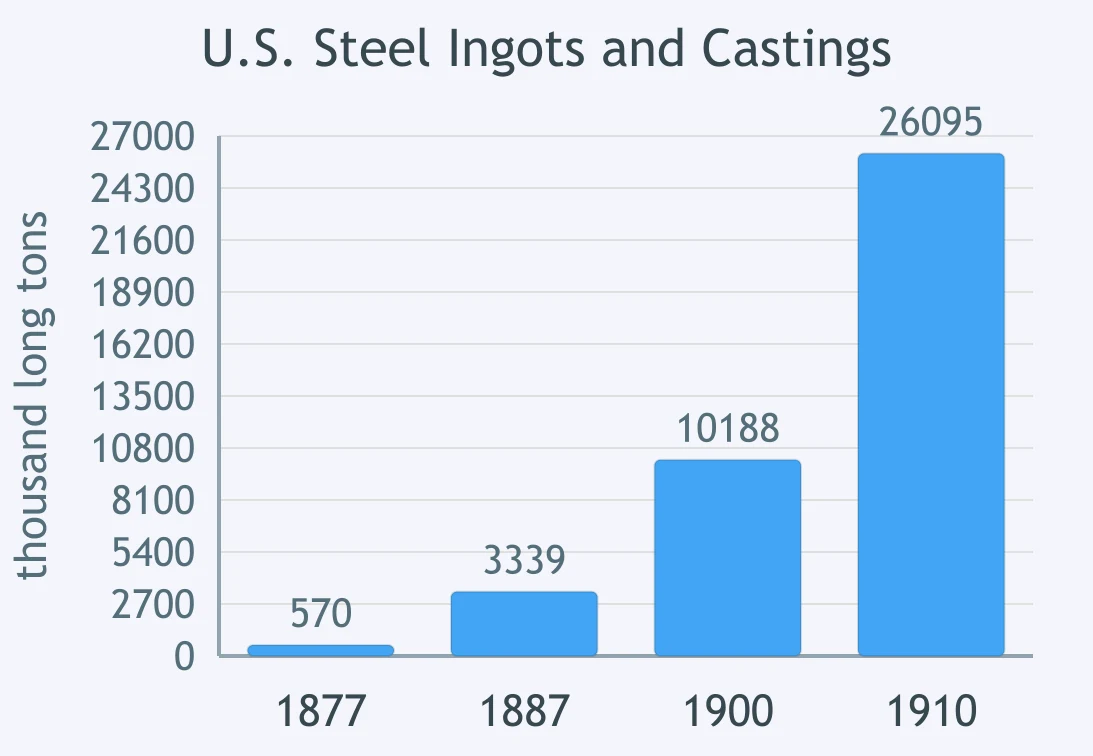
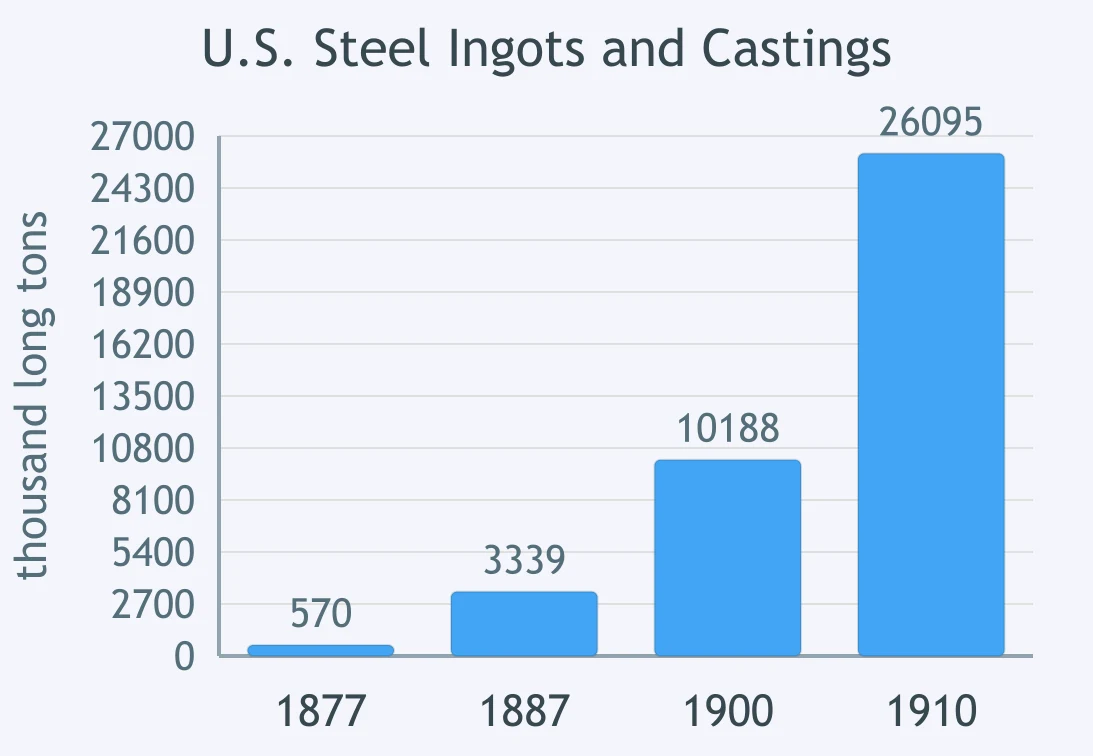
Use the steel production chart. A giant mill lowers its cost per rail by making many more rails with expensive machines. What advantage is shown?
Which industry was most closely associated with Andrew Carnegie's rise as a major business leader after 1877?
Which industry did John D. Rockefeller come to dominate in the late 1800s?
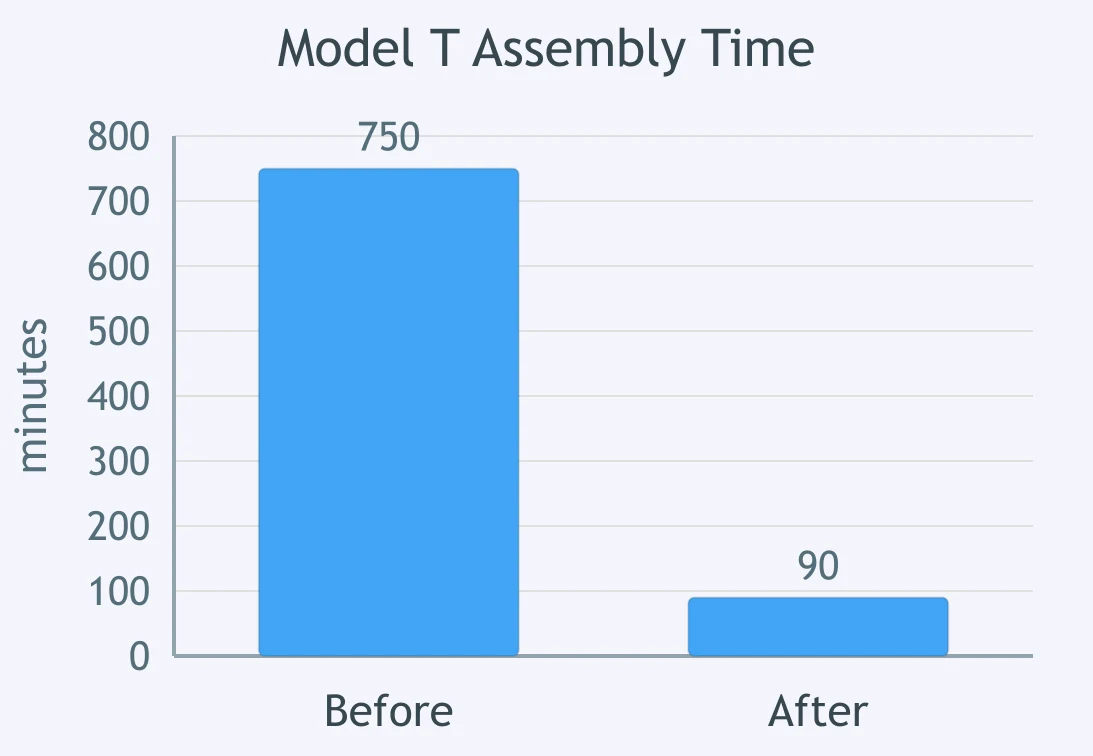
Use the assembly-time chart. Which manufacturing method best explains the sharp drop in Model T assembly time at Highland Park in 1913?
In 1901, J. P. Morgan helped combine Carnegie Steel with other firms into U.S. Steel. What business role did Morgan mainly represent?
A process blew air through molten iron to make steel faster in large mills. What industrial term names this process?
Workers organize together to negotiate wages, hours, and safety rules with employers. What group are they forming?
When workers stop working together to pressure an employer during a wage dispute, what union tactic are they using?
In the 1880s, which labor organization tried to include many kinds of producers across trades, races, and gender lines?
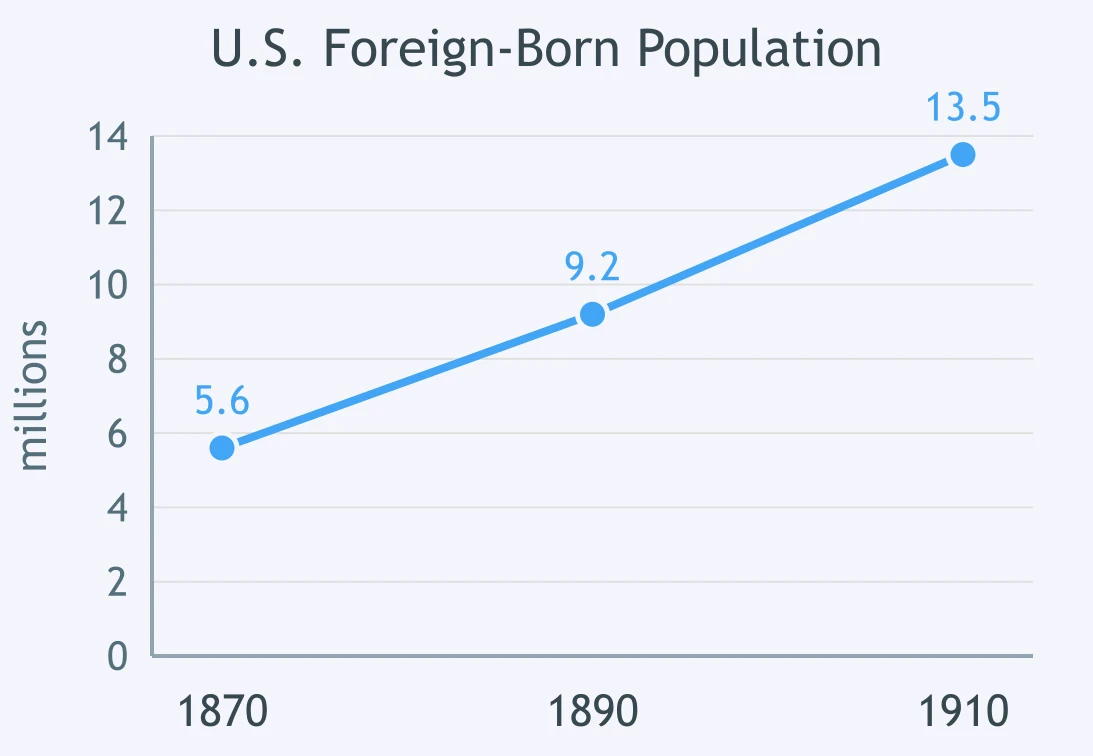
Use the foreign-born population chart. What labor-market effect did this trend have in many industrial cities?
Which 1911 New York disaster, in which locked exits trapped garment workers, led reformers to win new workplace safety laws?
Why did Congress pass the Sherman Antitrust Act in 1890?
In 1887, Congress created the Interstate Commerce Commission to oversee railroad rates and rebates. What larger change did this show?
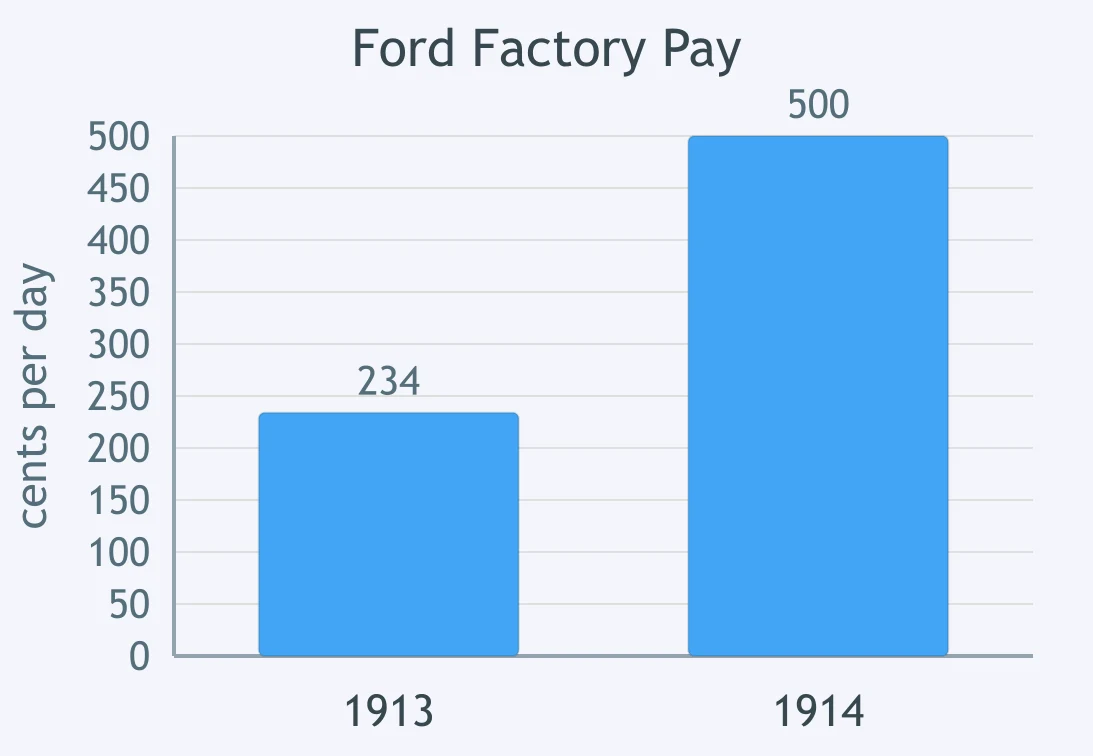
Use the Ford wage chart. Why did Ford raise daily pay at Highland Park in 1914?
Farmers angry about high railroad rates and rebates for big shippers organized and pushed states to regulate railroads in the 1870s. Which farm organization was this?
Use the steel production chart. What economic effect did rising steel output support after 1877?
Crack the passcode before the zombies get in.
Answer, then swat bugs for bonus points.
Race through questions at your own speed.
Same question on every screen. Fastest wins.

Pick a tile, answer, hit bonuses and steals.
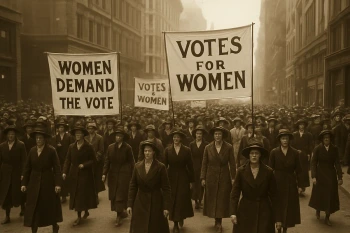
The Progressive Era
20 questions