Loading
by BlastRoom
Margin buying, overproduction, the crash, the banking collapse and what Hoover tried before the New Deal.
#united_states_history

25 questions
One question set, multiple game modes. Tap any game to see it in action. Not sure which to pick?
Answer to place stones and capture territory.
Outrun the snow together.
Earn blasts, then hunt the other team.
Answer to earn energy, then climb.

The class blasts through walls together.
Bid on mystery lots. Most money wins.
Sell tours. Nice, standard, or a total scam.

Answer, restock, and serve the rush.
More correct answers pulls the rope your way.
Answer, then shoot down the alien wave.
Answer, then tap to leap the frozen ridge.
Look at the graph of the United States unemployment rate. What was the rate in 1931?
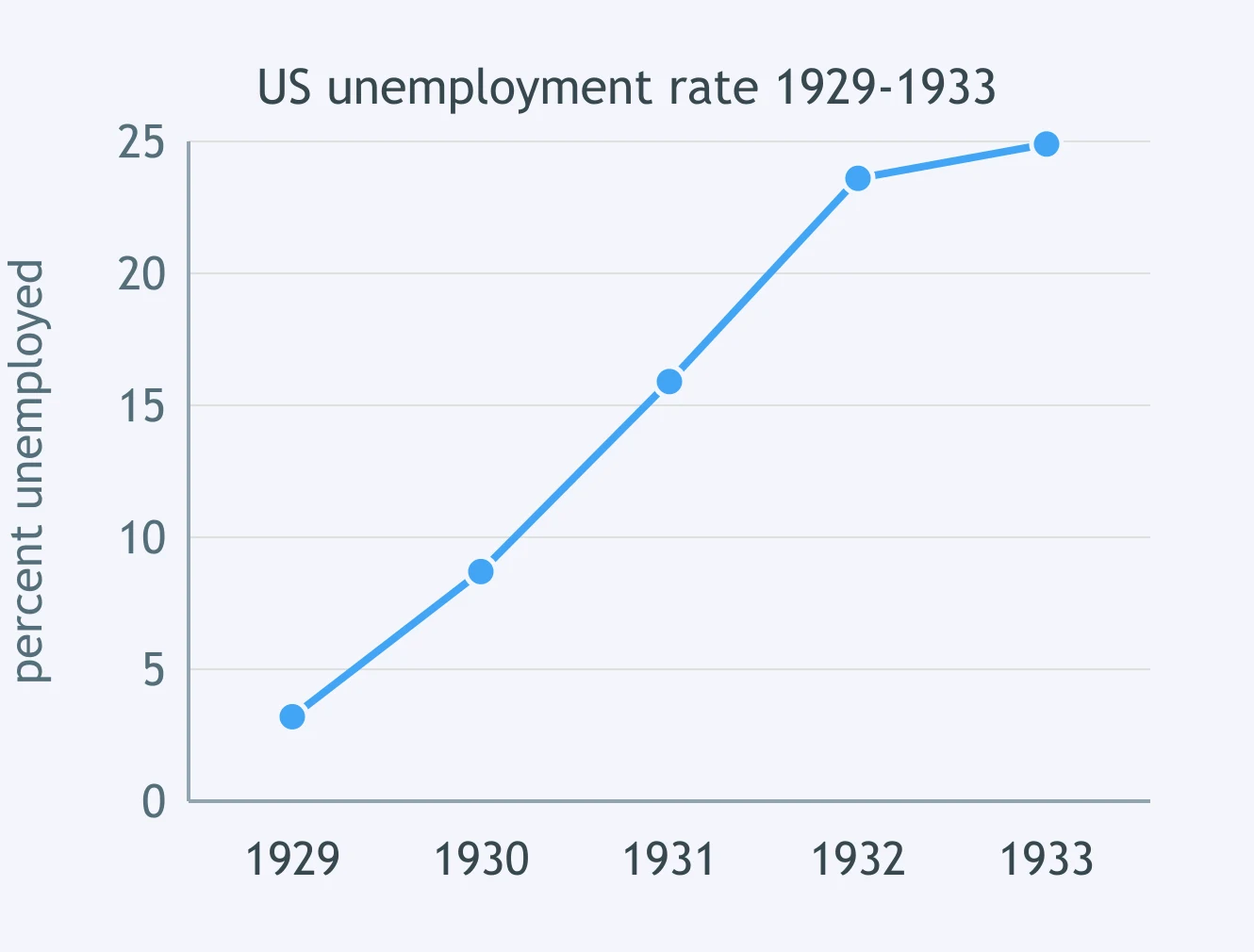
Use the graph of the United States unemployment rate. Between which two consecutive years did the rate rise by the smallest amount?
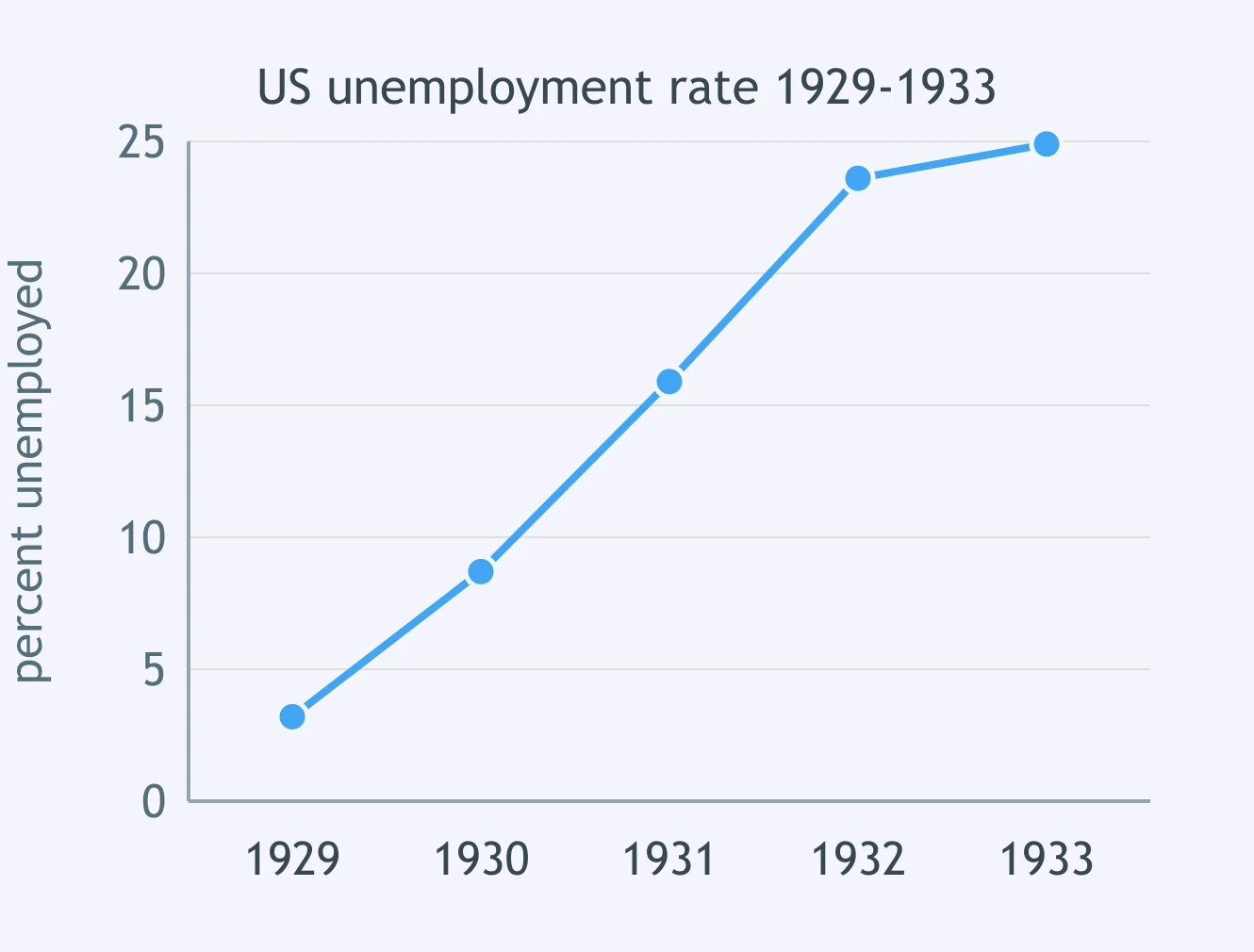
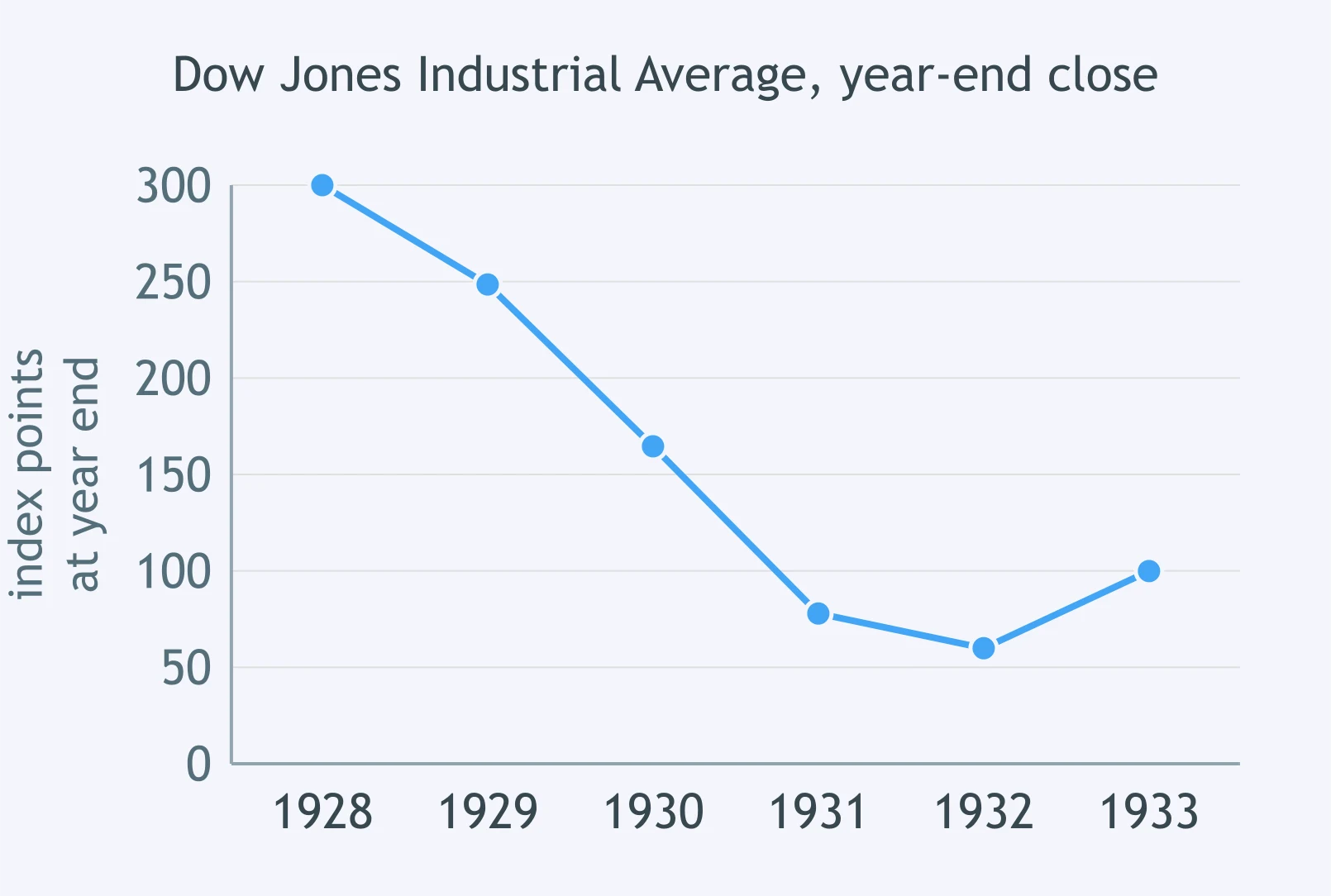
The graph shows the year-end closing value of the Dow Jones Industrial Average. In which year was the year-end close the lowest?
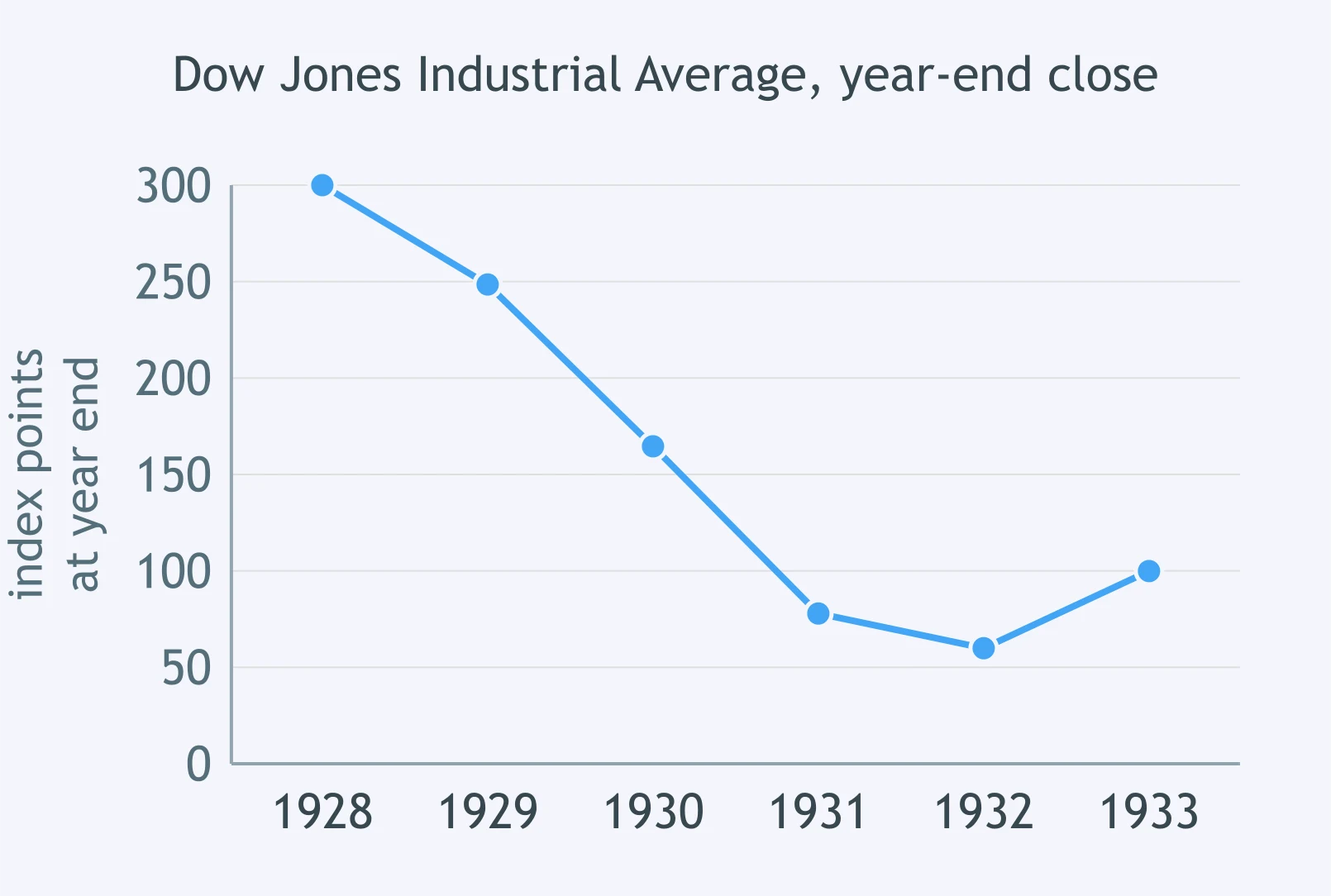
Use the graph of the Dow Jones Industrial Average. In which year did the year-end close first fall below 100?
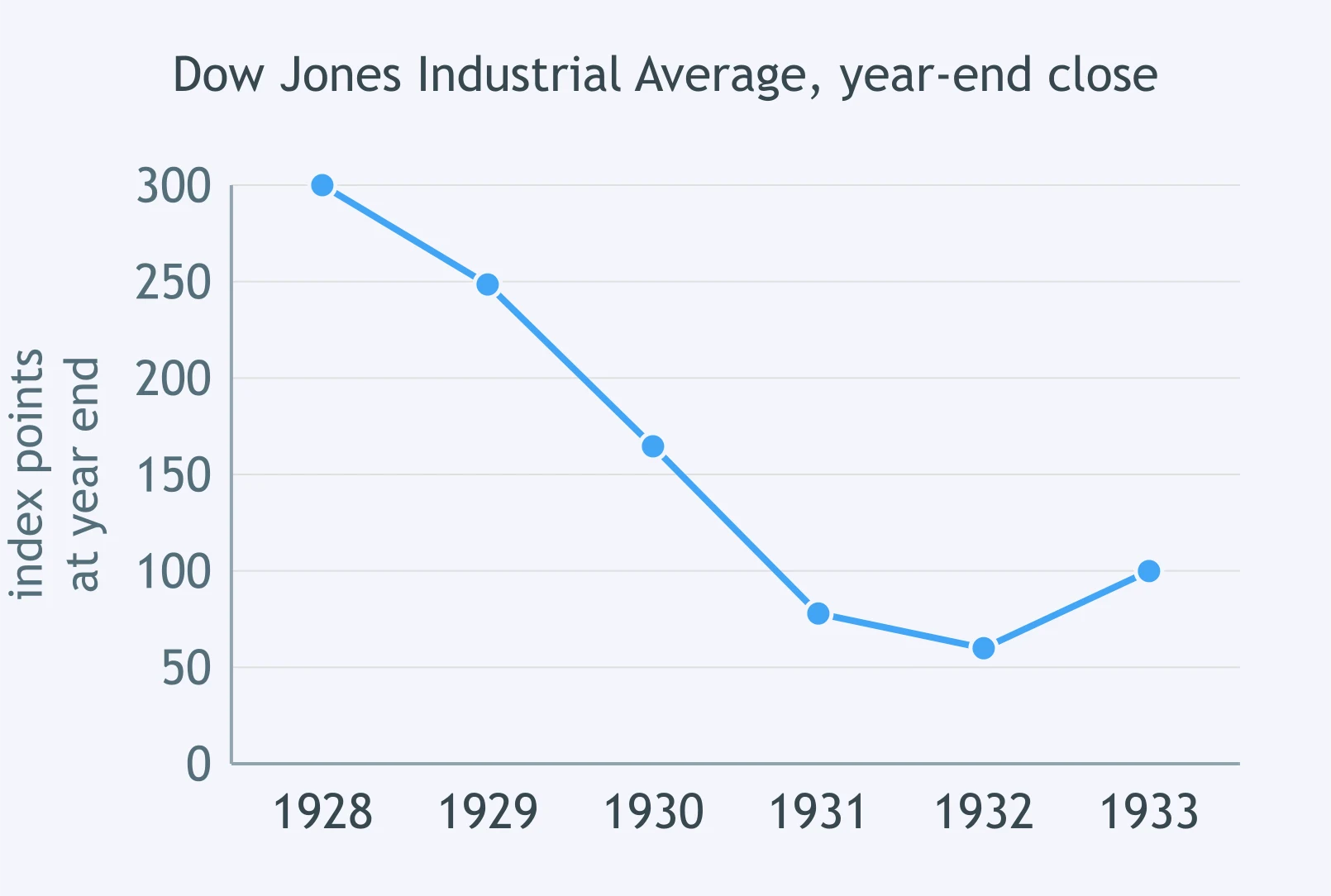
Use the graph of the Dow Jones Industrial Average. About how much of its year-end 1928 value had the index lost by the end of 1932?
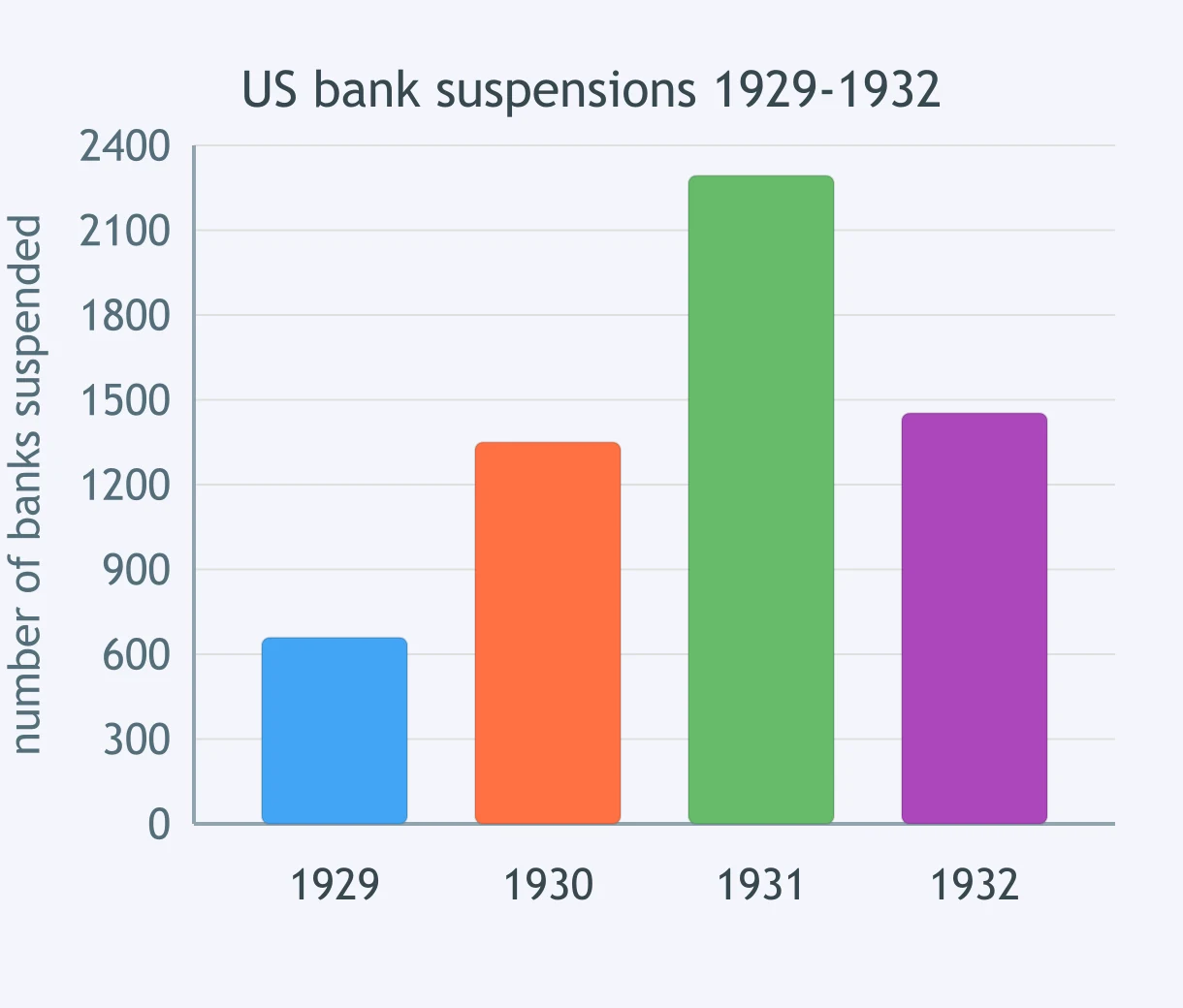
The bar graph shows the number of American banks that suspended operations each year. In which year were there the most suspensions?
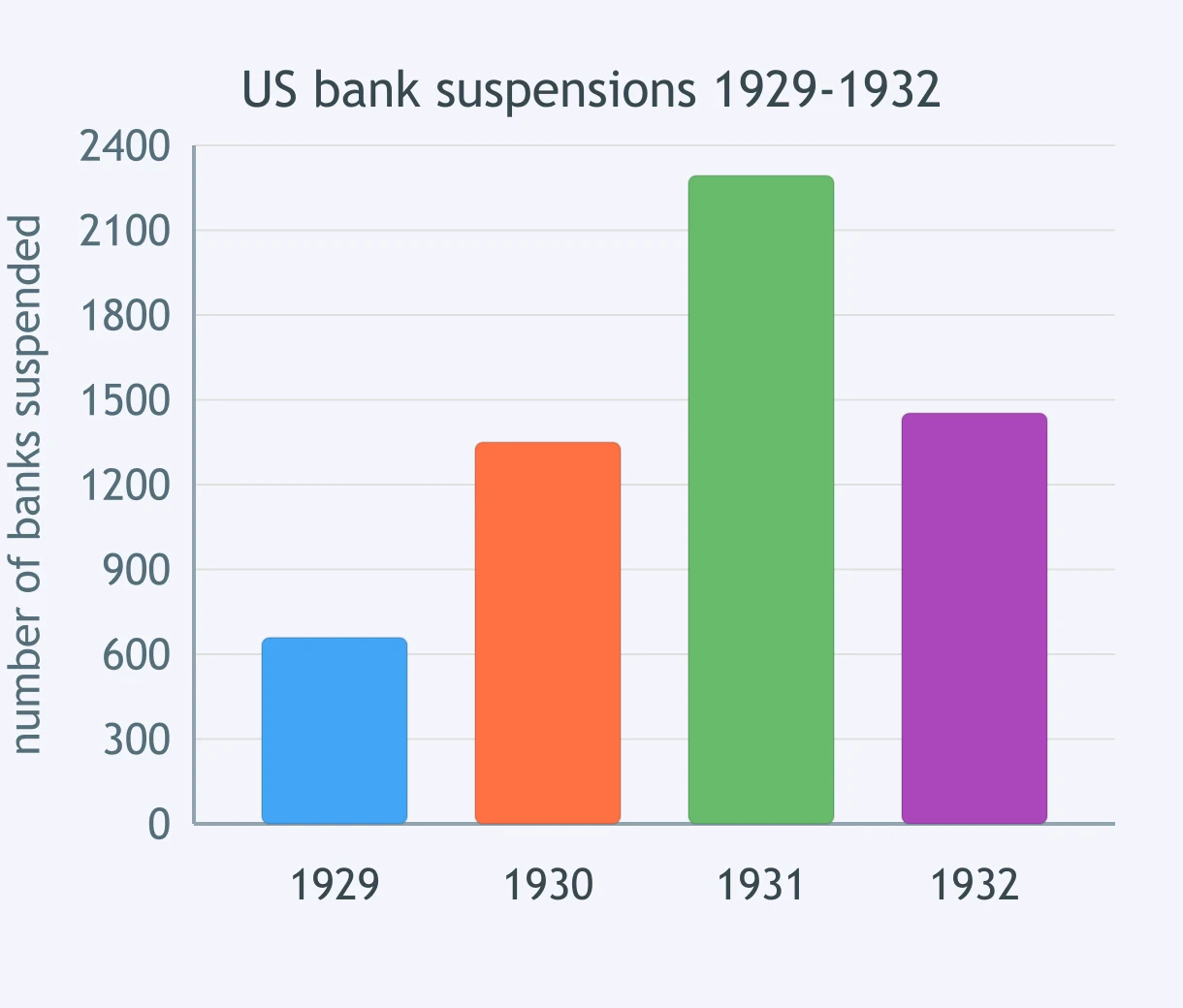
Use the bar graph of American bank suspensions. Compared with 1929, about how many banks suspended operations in 1930?
On October 24, 1929 nearly 13 million shares were dumped on the New York Stock Exchange, and a group of bankers pooled money to buy shares and steady prices. By what name is that day known?
Word spread that a city bank was in trouble, and depositors crowded its lobby to withdraw their savings all at once until the bank ran out of cash and closed. What is that event called?
By 1932 clusters of shacks built from scrap lumber, packing crates and tar paper stood on vacant land at the edges of many American cities, housing families who had lost their homes. What did people call these settlements?
In the summer of 1932 thousands of World War I veterans camped in Washington, DC to demand that Congress pay their service certificates at once rather than in 1945, and troops under General MacArthur cleared the camp. What were these marchers called?
In June 1930 Hoover signed a law raising import duties to among the highest levels in American history, despite a petition from more than 1,000 economists asking him to veto it. Which law was it?
In 1929 an investor paid $1,000 of his own cash and borrowed $9,000 from his broker to buy $10,000 of stock, with the shares pledged as security for the loan. What is this practice called?
Brokers had borrowed heavily from banks to finance their customers' margin loans. When prices collapsed in late 1929 and customers could not cover what they owed, what happened to the banks behind those loans?
Through the 1920s output per factory worker rose quickly while most workers' wages rose slowly. What followed as manufacturers turned out more goods than consumers could afford to buy?
A bank keeps only a fraction of its deposits as cash and lends the rest out at longer terms. What happens to such a bank, even a well-run one, if a large share of its depositors demand their money on the same day?
After the United States raised its tariffs in 1930, Canada and several European governments raised duties on American goods in return. What did this retaliation do to American farmers and manufacturers who sold abroad?
Wartime demand for American crops ended after 1918, yet farmers kept planting at wartime levels, so crop prices fell while mortgage payments stayed the same. What followed for many farm families through the 1920s?
By 1929 millions of families had bought cars, radios and furniture on installment plans, owing a fixed payment every month. What happened to those debts and to new orders once wages were cut and jobs disappeared?
Between 1929 and 1933 about a third of the nation's money supply disappeared as banks failed and lending stopped, and prices fell year after year. What did falling prices do to families and firms holding fixed debts?
In 1929 Congress gave a new federal board a $500 million fund to lend to farm cooperatives and to buy up surplus crops so that farm prices would hold. Which body was that?
In January 1932 Hoover backed a federal corporation, capitalized at $500 million and able to borrow much more, that lent to banks, railroads and insurance companies. What was it meant to accomplish?
In July 1932 Hoover signed an act letting the Reconstruction Finance Corporation lend $300 million to the states, along with much larger sums for construction. What was that state money for?
In July 1932 Hoover signed an act creating regional banks that lent to savings and loan associations so they could keep making home loans and slow the wave of foreclosures. Which act was it?
In June 1932, with the federal deficit widening, Hoover signed the largest peacetime tax increase to that date, sharply raising income, estate and corporate tax rates. What was that law chiefly meant to do?
Crack the passcode before the zombies get in.
Answer, then swat bugs for bonus points.
Race through questions at your own speed.
Same question on every screen. Fastest wins.

Pick a tile, answer, hit bonuses and steals.
FDR and the New Deal Programs
40 questions