Loading
by BlastRoom
Wilson's Fourteen Points, the terms the Treaty of Versailles imposed, and the Senate fight that kept the United States out of the League.
#united_states_history
25 questions
One question set, multiple game modes. Tap any game to see it in action. Not sure which to pick?
Answer to place stones and capture territory.
Outrun the snow together.
Earn blasts, then hunt the other team.
Answer to earn energy, then climb.

The class blasts through walls together.
Bid on mystery lots. Most money wins.
Sell tours. Nice, standard, or a total scam.

Answer, restock, and serve the rush.
More correct answers pulls the rope your way.
Answer, then shoot down the alien wave.
Answer, then tap to leap the frozen ridge.
On January 8, 1918 Woodrow Wilson set out American aims for the war of 1914-1918 in fourteen points delivered to Congress. What did the fourteenth and last point call for?
Wilson's thirteenth point concerned a nation partitioned out of existence in the 1790s. What did it call for?
During the war the Allies had made secret treaties among themselves dividing up territory. Wilson's first point answered that practice. How did it say peace terms should be reached?
Wilson's fifth point called for an adjustment of all colonial claims. What did it require of any such settlement?
Wilson's eighth point said that a wrong done to France by Prussia in 1871 should be righted. Which territory was he talking about?
Wilson's second point called for 'absolute freedom of navigation upon the seas.' What wartime practice was it aimed against?
Article 231 of the Treaty of Versailles required Germany to accept responsibility "for causing all the loss and damage" the Allies suffered in the war. What did that clause make legally possible?
The Covenant of the League of Nations was not a separate agreement: it was written into the Treaty of Versailles as Part I of the treaty itself. What did that mean for the United States Senate?
The treaty put the Saar Basin under League of Nations administration for fifteen years and handed its coal mines to France. What was to decide the Saar's future at the end of that period?
Germany fell behind on the deliveries of coal and timber the treaty's reparations clauses required. In January 1923 French and Belgian troops moved into the Ruhr, Germany's main industrial region. What did they go in to do?
The treaty permanently barred German troops and fortifications from the Rhineland and let Allied armies occupy the west bank of the Rhine for up to fifteen years. What did that give France?
The treaty stripped Germany of every overseas colony and placed them under the mandate system of Article 22 of the League Covenant. Who then governed them?
On November 19, 1919 the Senate voted 39 to 55 against ratifying the treaty with the Lodge reservations attached, then 38 to 53 against ratifying it without them. What did those two votes leave?
Wilson told Democratic senators to vote against any version carrying Henry Cabot Lodge's reservations. On March 19, 1920 the Senate voted 49 to 35 in favor of ratifying with those reservations. What happened to the treaty?
Article X of the League Covenant bound members "to respect and preserve as against external aggression" one another's territorial integrity and political independence. Why did Senator Henry Cabot Lodge insist on a reservation to it?
Senators William Borah of Idaho and Hiram Johnson of California were known during the treaty fight as irreconcilables. What was their position?
In September 1919 Wilson toured the country by train to build public pressure on the Senate. He collapsed after speaking at Pueblo, Colorado on September 25 and suffered a stroke on October 2. What followed?
The United States never ratified the Treaty of Versailles. How did it formally end its state of war with Germany?
The League of Nations began work in 1920 without the United States. What was the American relationship to the League after that?
Having stayed out of the League, the United States pursued arms limitation on its own terms. What did it do in 1921 and 1922?
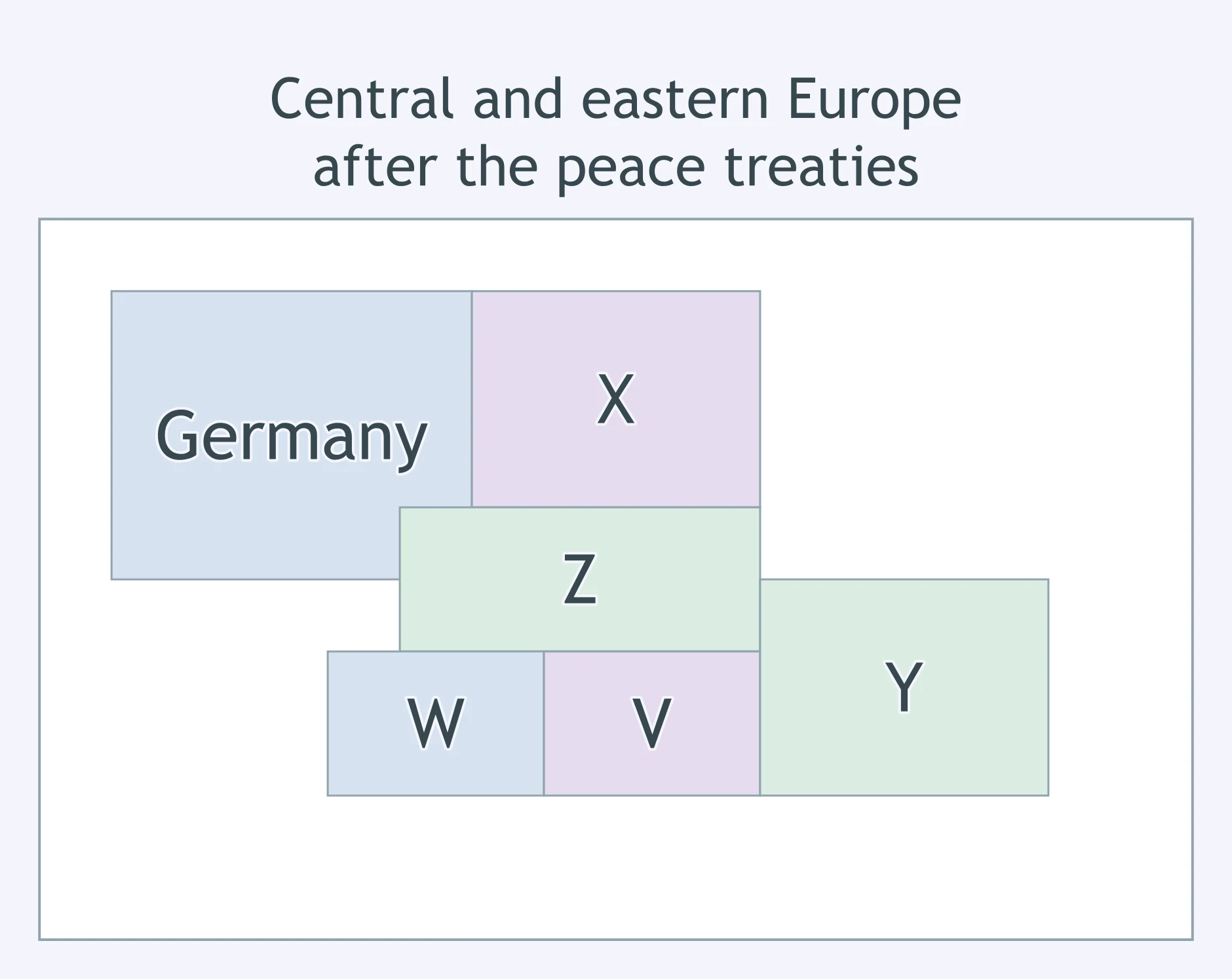
Use the map. Which country, labeled X, was put back on the map in 1919 out of land taken from Germany, Austria-Hungary and Russia?
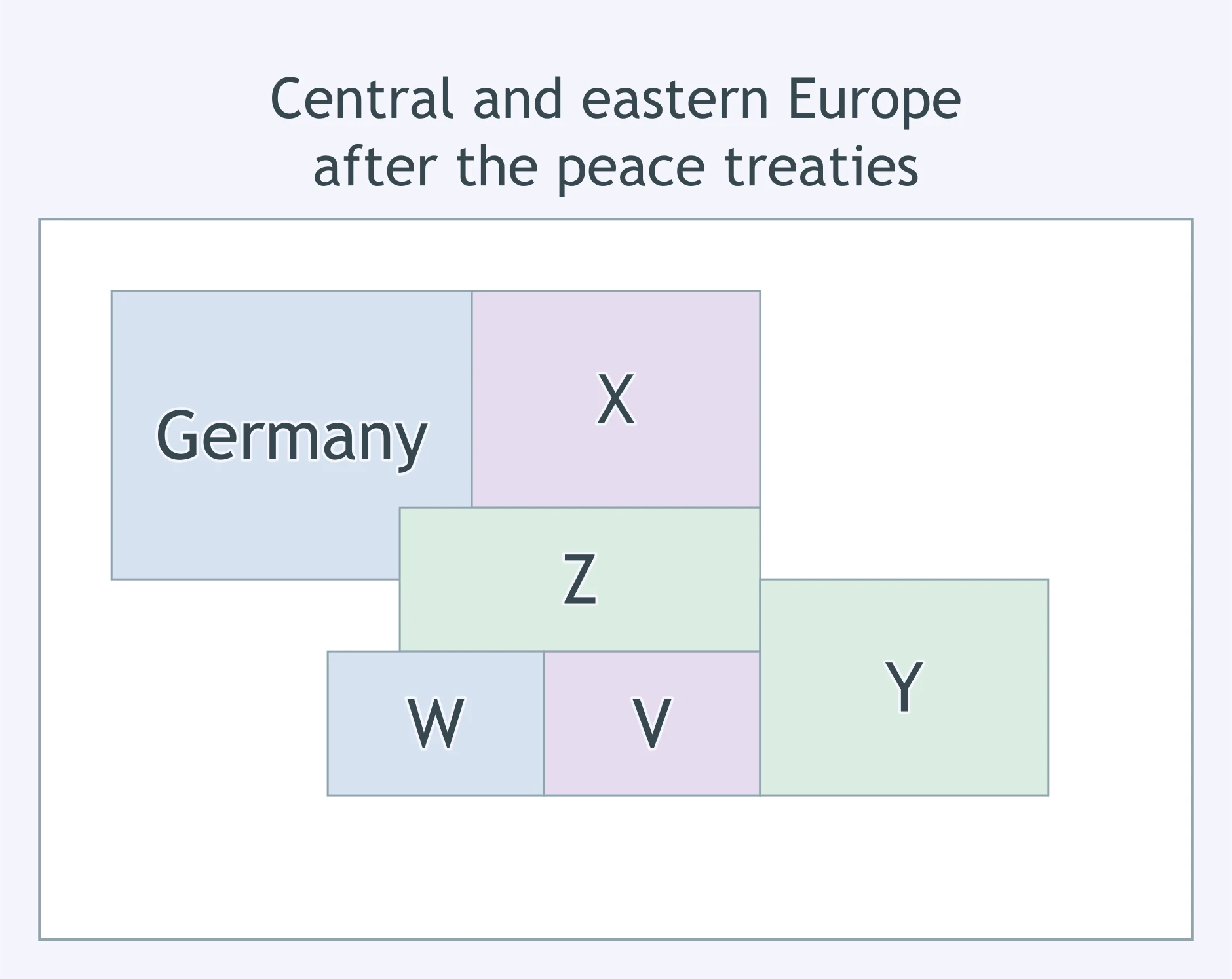
Use the map. Which state, labeled Z, was created in 1918 out of Bohemia, Moravia and Slovakia when Austria-Hungary broke apart?
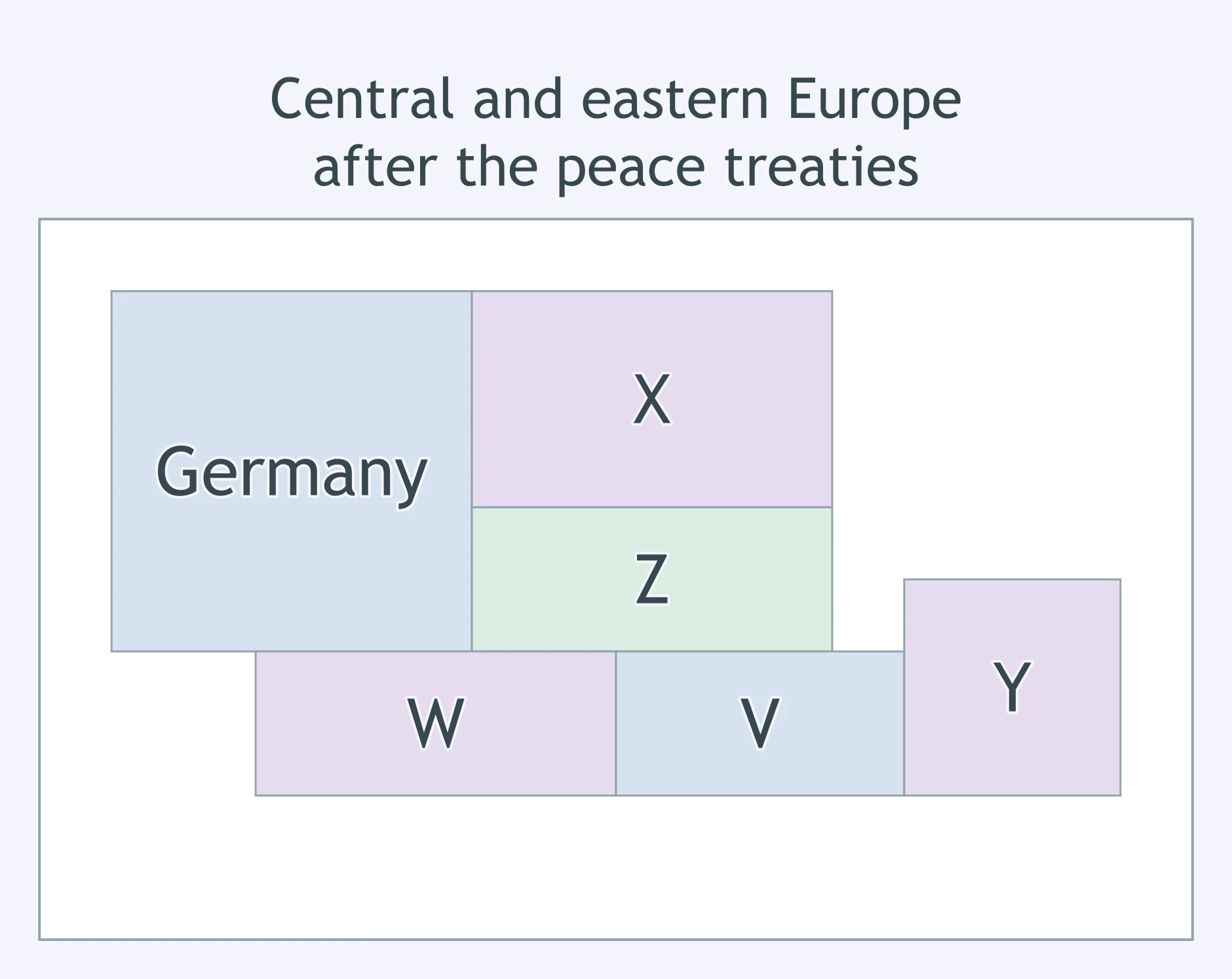
Use the map. Which small republic, labeled W, was all that remained of the German-speaking core of the old Habsburg empire and was forbidden by the peace settlement to unite with Germany?
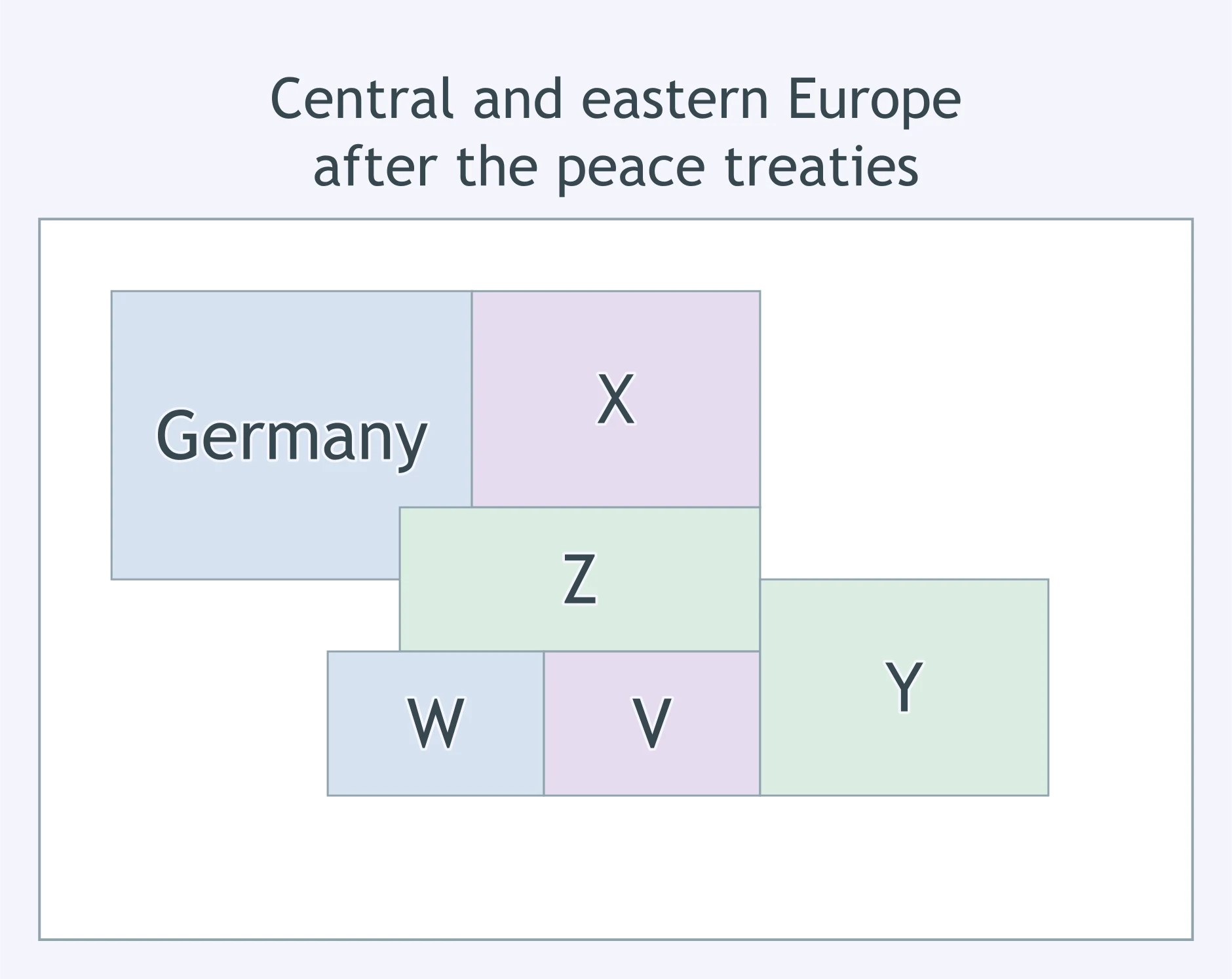
Use the map. Which country, labeled Y, roughly doubled in size under the peace settlement, gaining Transylvania from Hungary?
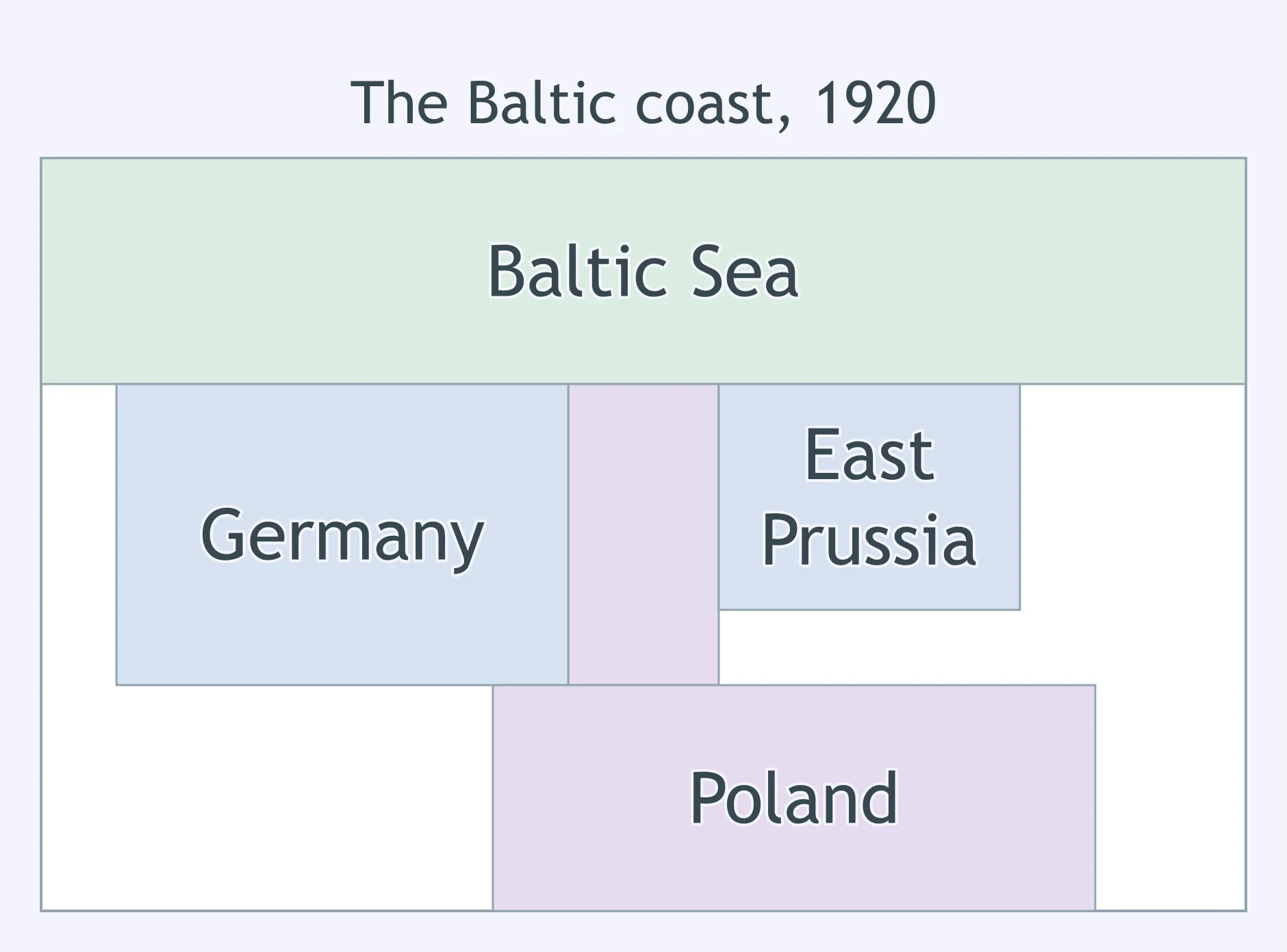
Which territory gave the rebuilt Polish state its own access to the sea and cut East Prussia off from the rest of Germany?
Crack the passcode before the zombies get in.
Answer, then swat bugs for bonus points.
Race through questions at your own speed.
Same question on every screen. Fastest wins.

Pick a tile, answer, hit bonuses and steals.

The Harlem Renaissance
25 questions