Loading
by BlastRoom
Trenches, machine guns, gas and tanks, and what the American Expeditionary Forces did after they reached France.
#united_states_history
25 questions
One question set, multiple game modes. Tap any game to see it in action. Not sure which to pick?
Answer to place stones and capture territory.
Outrun the snow together.
Earn blasts, then hunt the other team.
Answer to earn energy, then climb.

The class blasts through walls together.
Bid on mystery lots. Most money wins.
Sell tours. Nice, standard, or a total scam.

Answer, restock, and serve the rush.
More correct answers pulls the rope your way.
Answer, then shoot down the alien wave.
Answer, then tap to leap the frozen ridge.
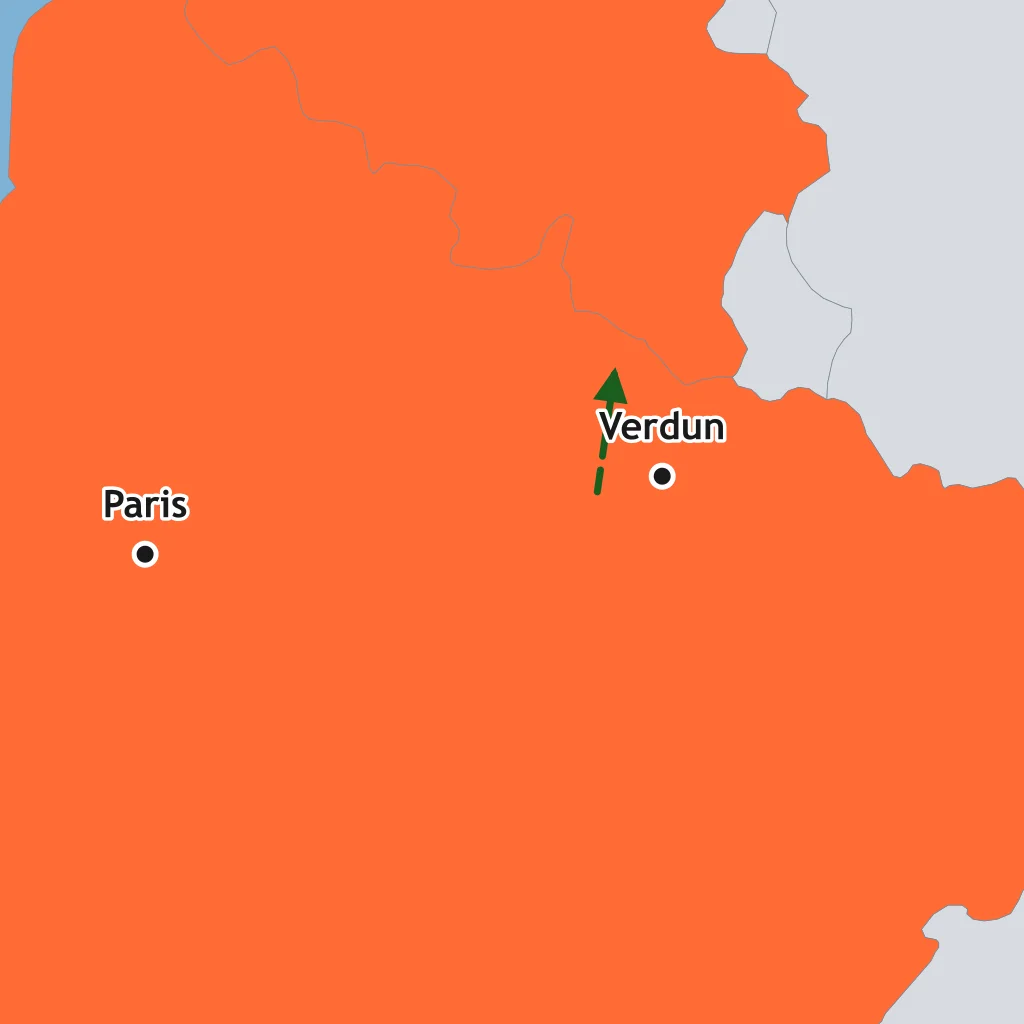
Read the map. The AEF's largest offensive opened on September 26, 1918 at the arrow, northwest of Verdun, and ran until the armistice. What is it called?
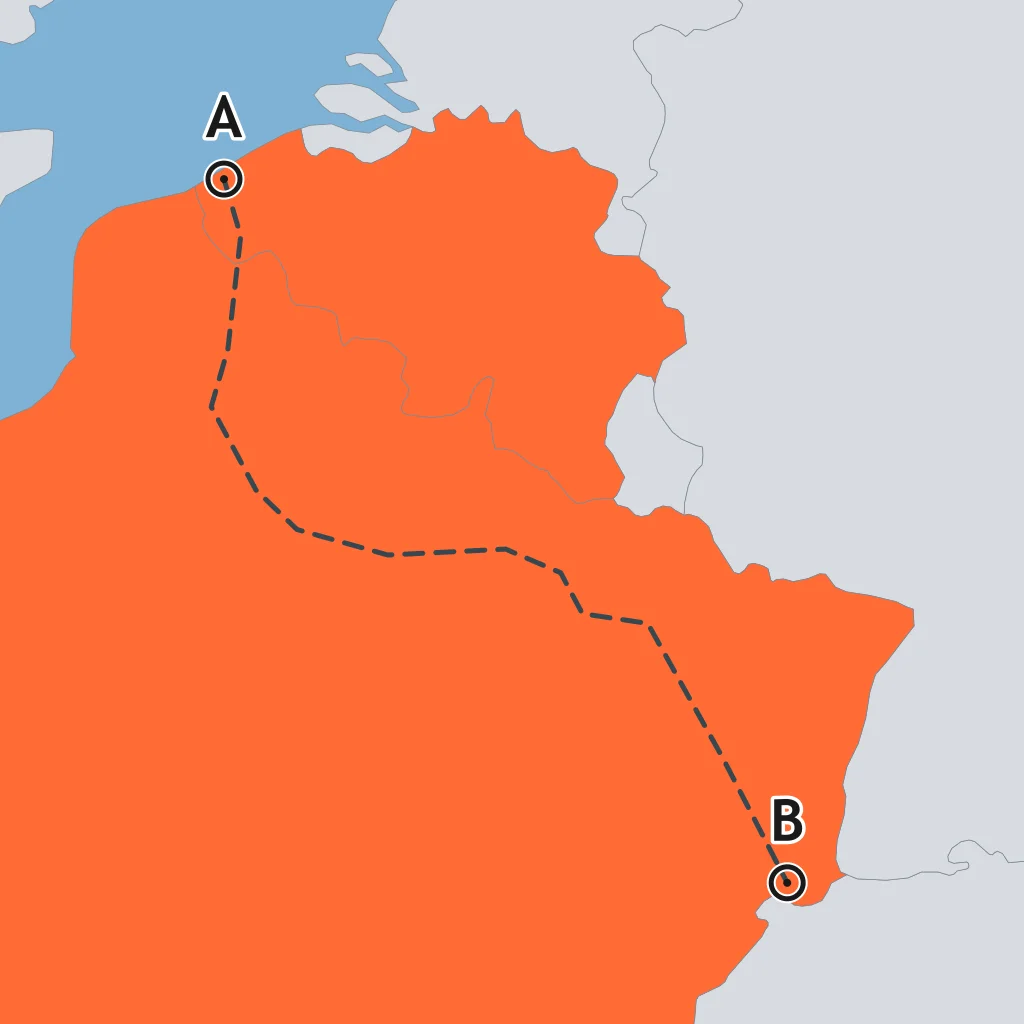
The unlabeled line on the map is the western front at the end of 1914. Neither end of it could be turned, because each rested on something an army could not march around. What did the ends marked A and B rest on?
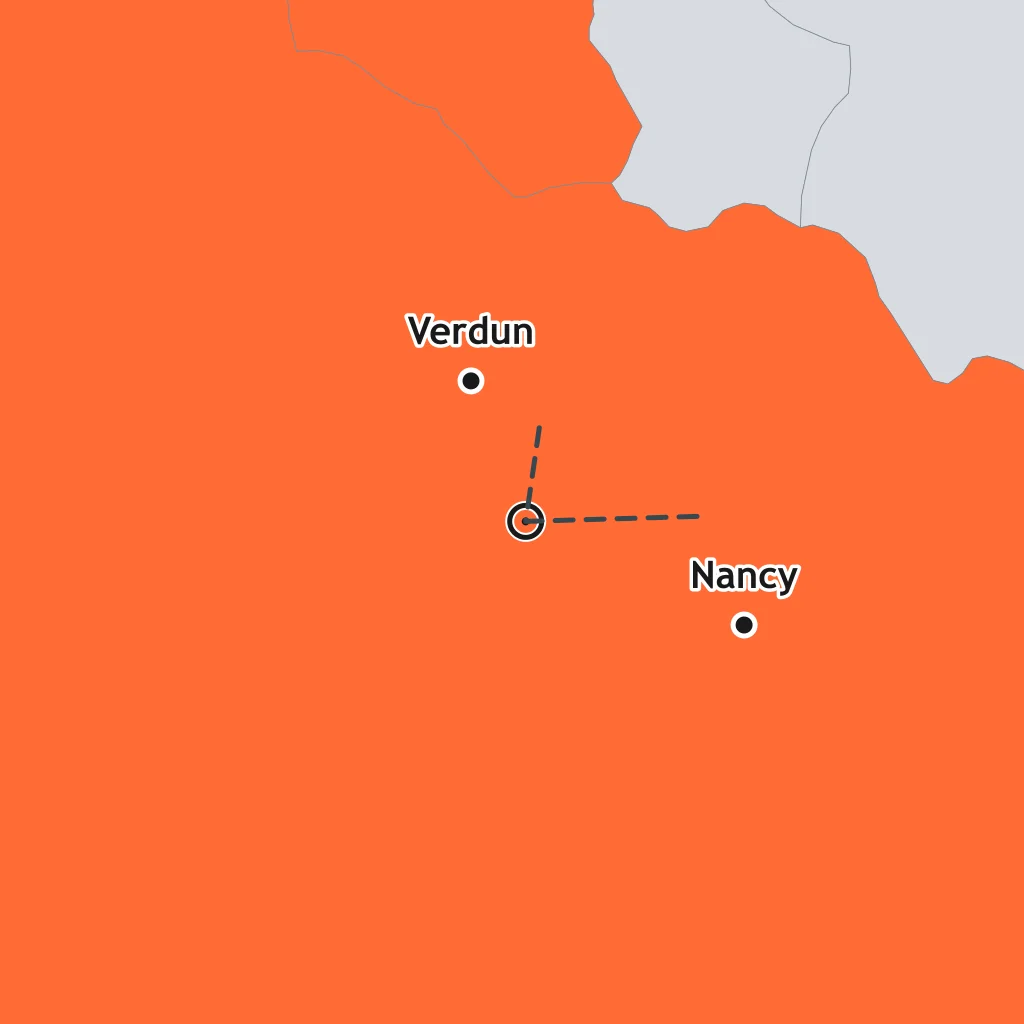
Read the map. In September 1918 the American First Army's first operation as an army of its own erased the triangular bulge in the German line drawn on the map, with its tip at the marked town. Which operation was it?
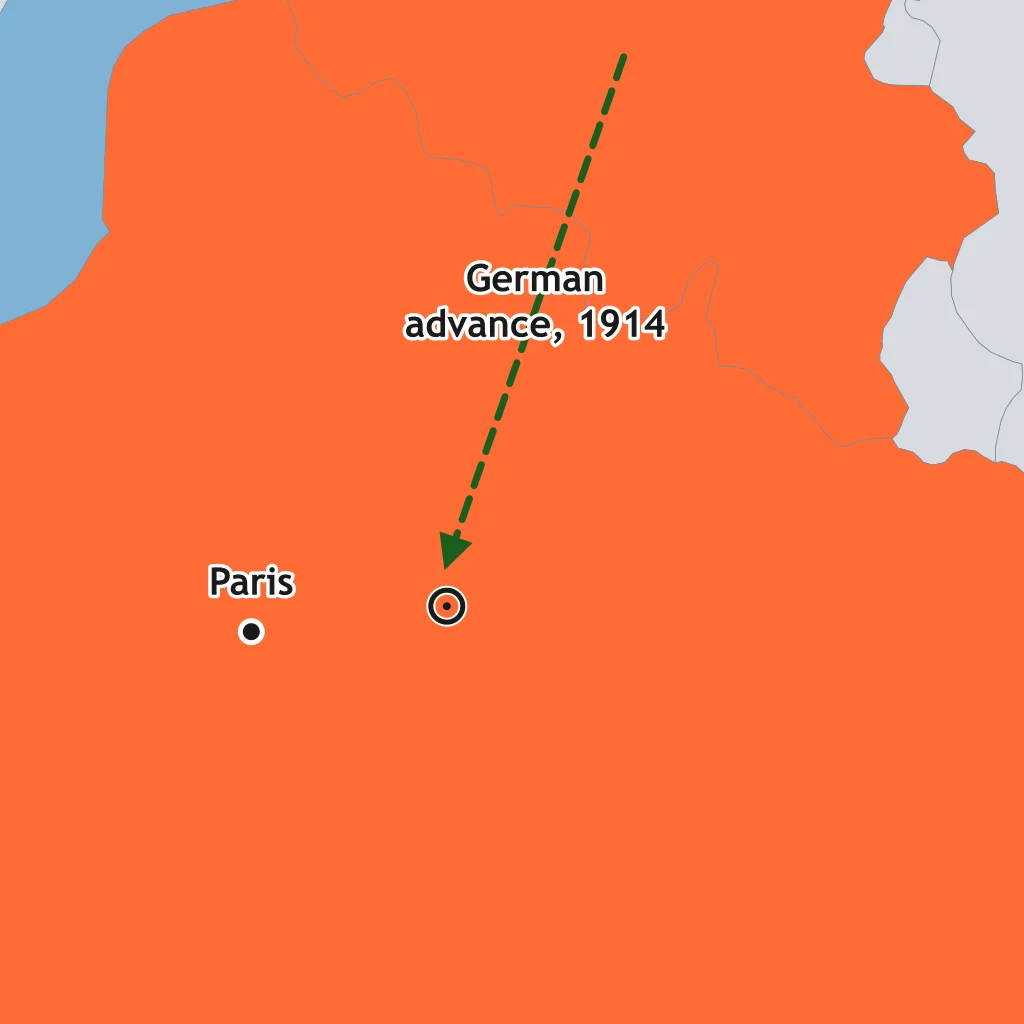
Read the map. The arrow shows the German advance of 1914. French and British armies halted it at the marked river east of Paris and drove the Germans back to dig in. Which river was it?
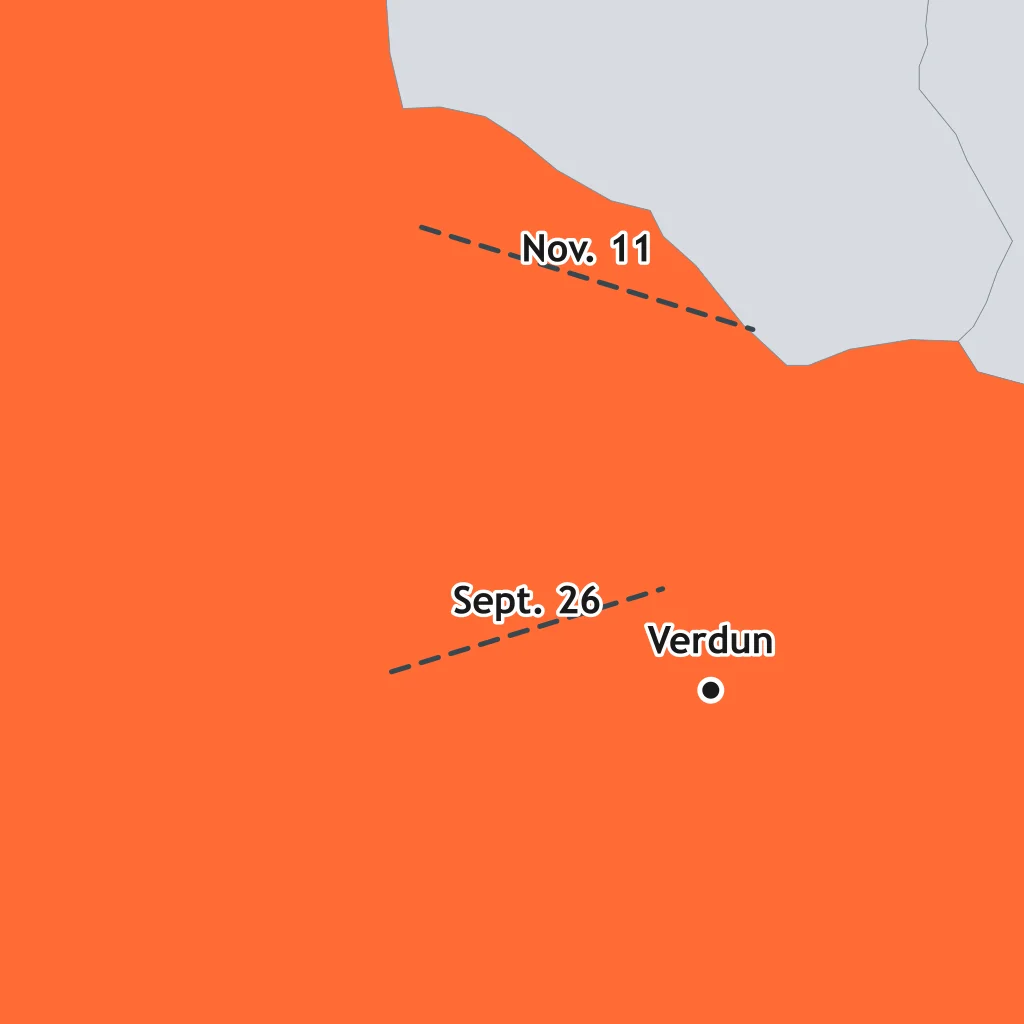
The two labeled lines show where the American front in this sector stood when the offensive opened on September 26, 1918, and at the armistice on November 11. What does the advance between them reflect about those 47 days of fighting?
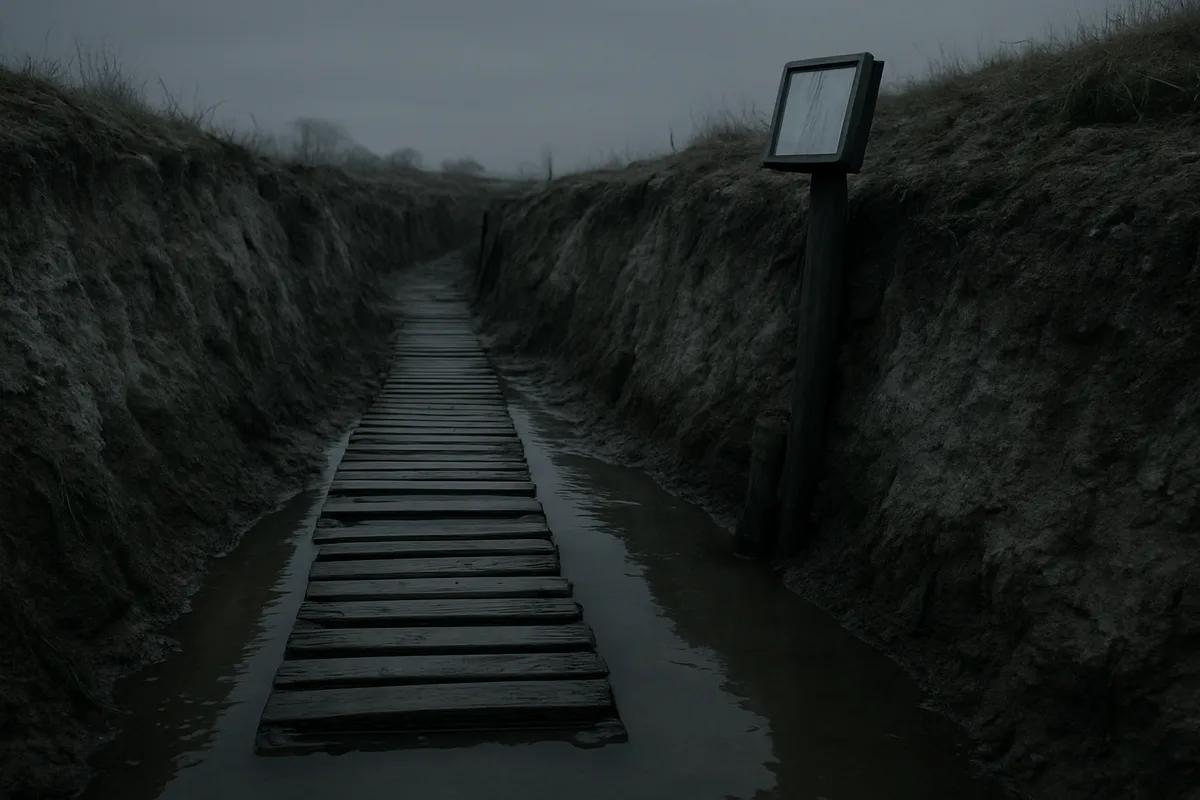
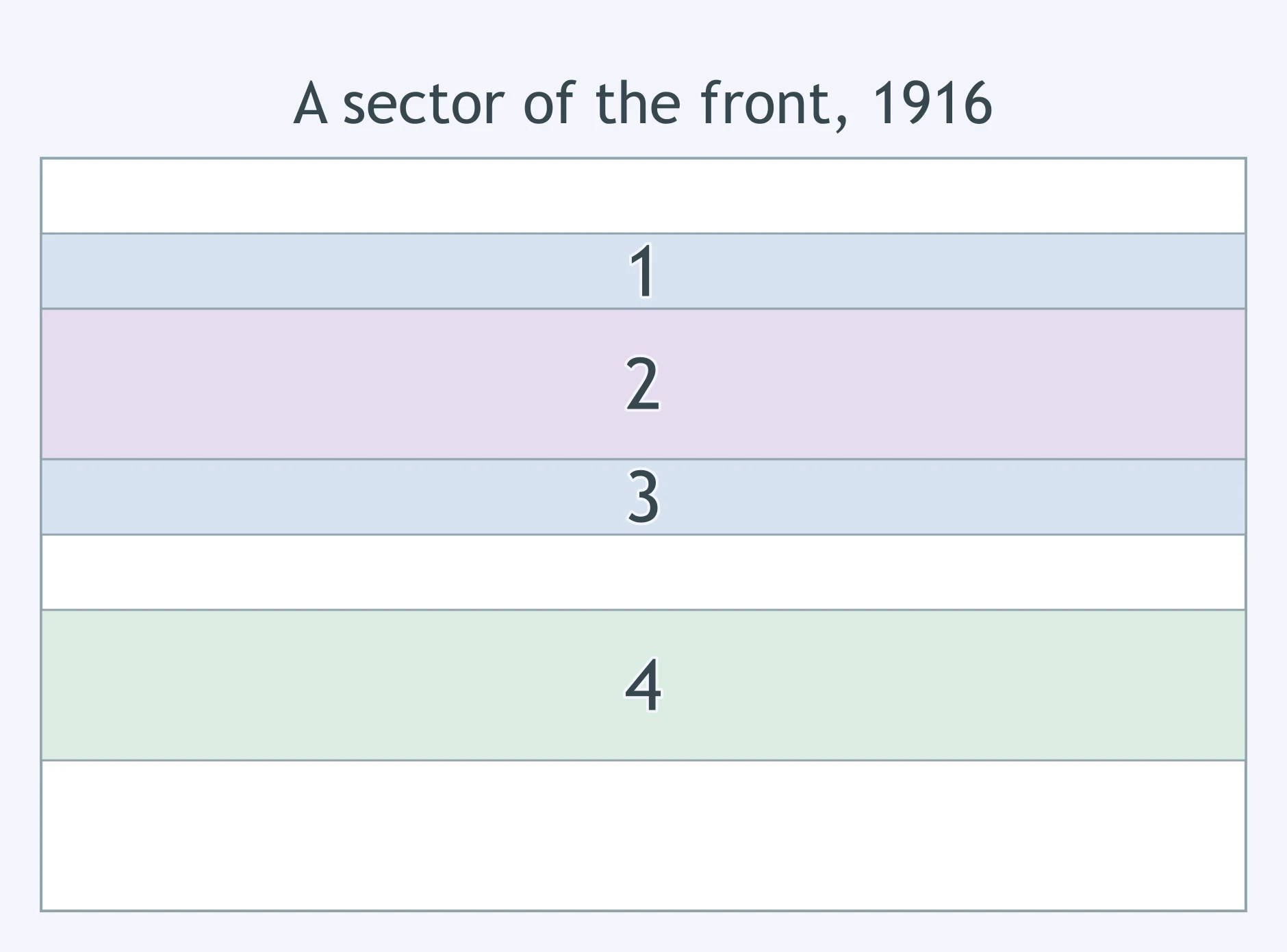
The diagram shows a sector of the front in 1916. Band 1 is the German front-line trench and band 3 is the Allied front-line trench. Attacking infantry had to cross band 2 in the open. What was band 2 called?
Germany's plan for a quick victory in the west failed when its advance was stopped in September 1914, and the two sides then tried and failed to outflank each other to the north. What did that produce by the end of 1914?
By the end of 1914 both armies faced each other from continuous lines of dug-in positions along the whole western front. What did the fighting there look like over the next three years?
What did both armies string in deep belts in front of their trenches so that attacking infantry would be held up in the open?
Behind the front-line trench each army dug support and reserve trenches linked by communication trenches. What did that depth do when an attack broke into the front trench?
Germany's 1914 war plan called for the bulk of its army to sweep through Belgium into northern France and defeat France quickly before turning east against Russia. What was that plan called?
Which weapon, more than any other, made attacking infantry cross open ground into a continuous sweeping stream of fire and so pushed both armies to dig in?
Which weapon appeared on a battlefield for the first time during the Battle of the Somme in September 1916?
Chlorine gas was released on a large scale for the first time at Ypres in April 1915, and within months both sides were issuing gas masks. What was poison gas's overall effect on the fighting?
What was the main military job of airplanes over the western front in the first years of the war?
Artillery fire caused a larger share of the casualties on the western front than any other weapon.
In the spring of 1917 German submarines were sinking Allied merchant ships faster than they could be replaced. Sailing merchantmen in groups screened by warships cut those losses sharply. What was this practice called?
The Selective Service Act, signed on May 18, 1917, was passed because the regular army was far too small for a war in Europe. What did the act do?
The British and French wanted American troops fed into their own divisions as replacements. General John J. Pershing refused, holding out for the American Expeditionary Forces to fight as a separate army. What did that insistence secure?
By the summer of 1918 roughly 250,000 American soldiers were landing in France every month. What problem did that flow of men solve for the Allies?
Most of the artillery and combat aircraft American troops used in France were built in the United States.
The Meuse-Argonne offensive committed about 1.2 million American troops over 47 days and cost more than 26,000 American lives. What does that scale show about the AEF by the autumn of 1918?
Which action in May 1918 was the first offensive operation carried out by an American division on the western front?
Which September 1918 attack was the first major offensive planned and carried out by an independent American First Army?
On what date did the fighting on the western front stop, when an armistice signed that morning took effect at 11 a.m.?
Crack the passcode before the zombies get in.
Answer, then swat bugs for bonus points.
Race through questions at your own speed.
Same question on every screen. Fastest wins.

Pick a tile, answer, hit bonuses and steals.

Versailles, the League and the Aftermath
25 questions