Loading
by BlastRoom
Breadlines, Hoovervilles, dust storms and the long road west.
#united_states_history
30 questions
One question set, multiple game modes. Tap any game to see it in action. Not sure which to pick?
Answer to place stones and capture territory.
Outrun the snow together.
Earn blasts, then hunt the other team.
Answer to earn energy, then climb.

The class blasts through walls together.
Bid on mystery lots. Most money wins.
Sell tours. Nice, standard, or a total scam.

Answer, restock, and serve the rush.
More correct answers pulls the rope your way.
Answer, then shoot down the alien wave.
Answer, then tap to leap the frozen ridge.
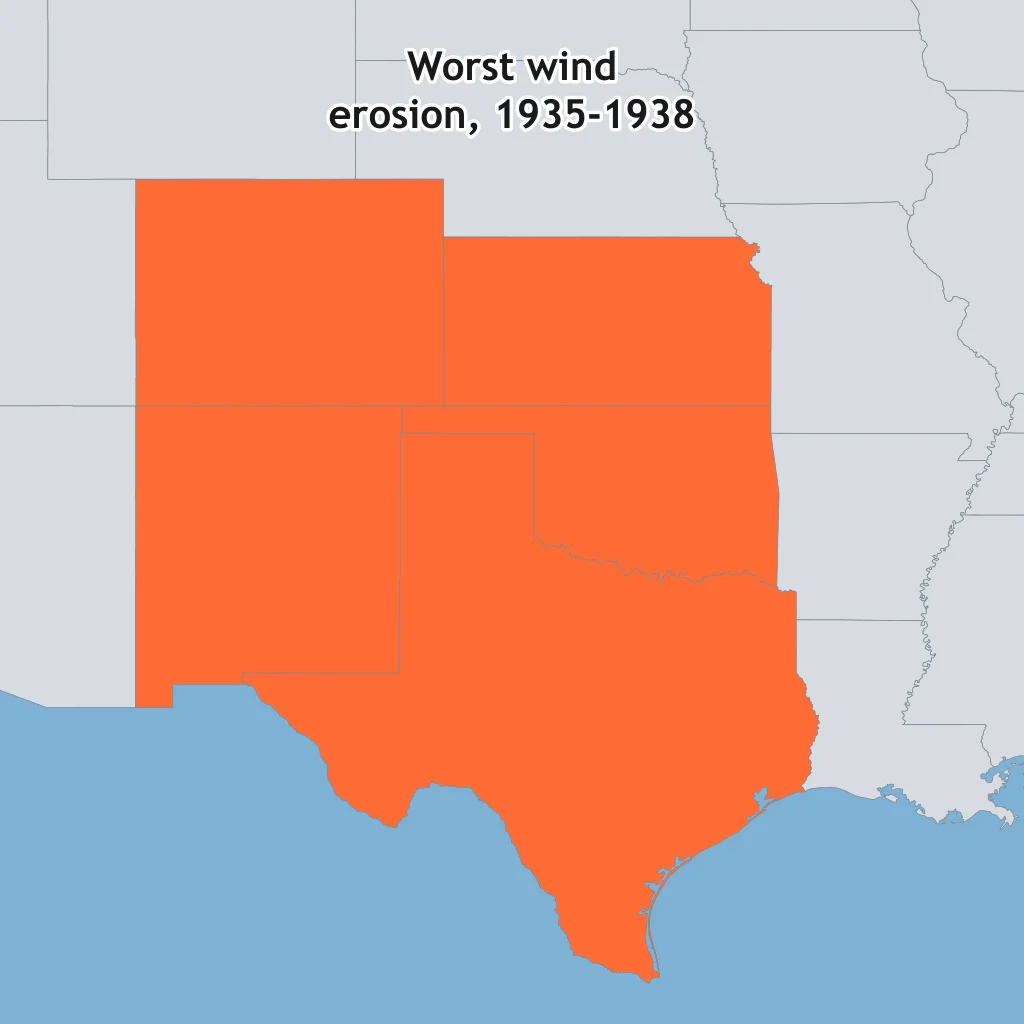
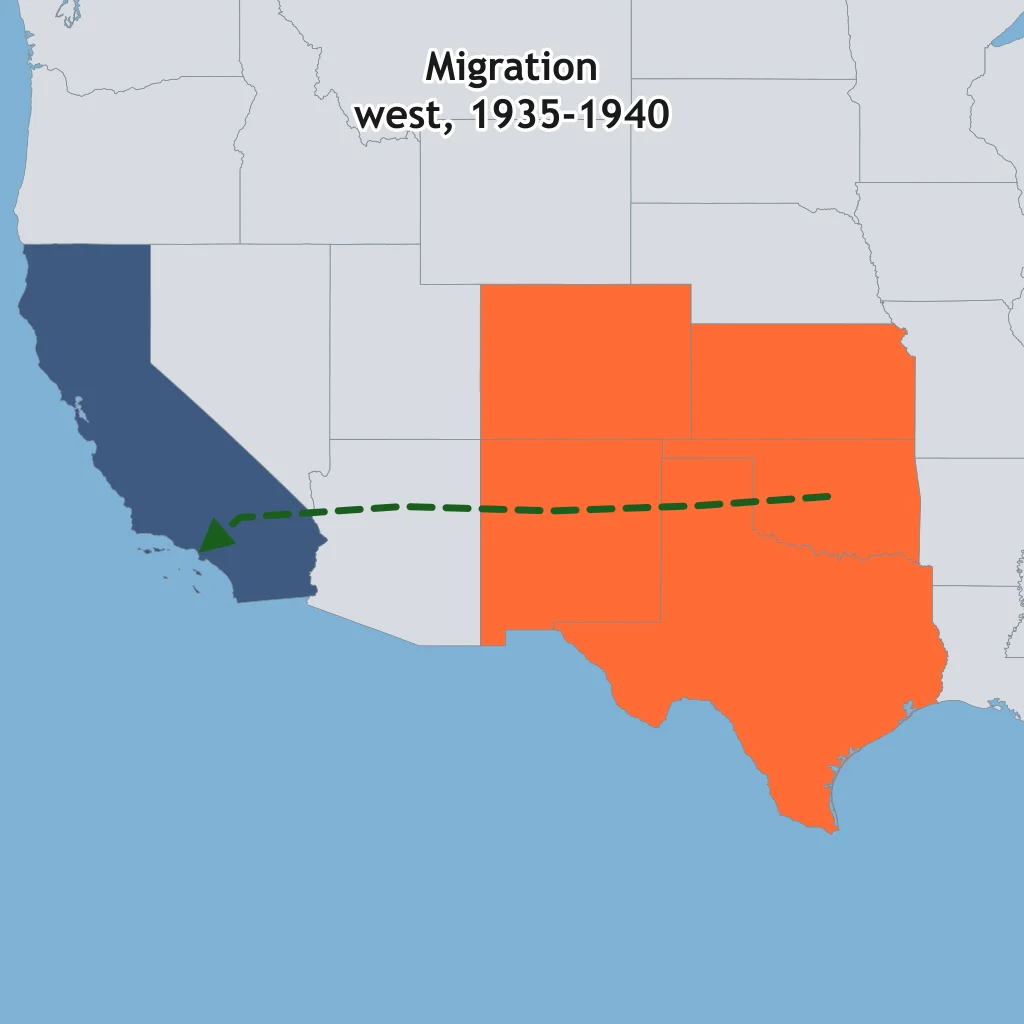
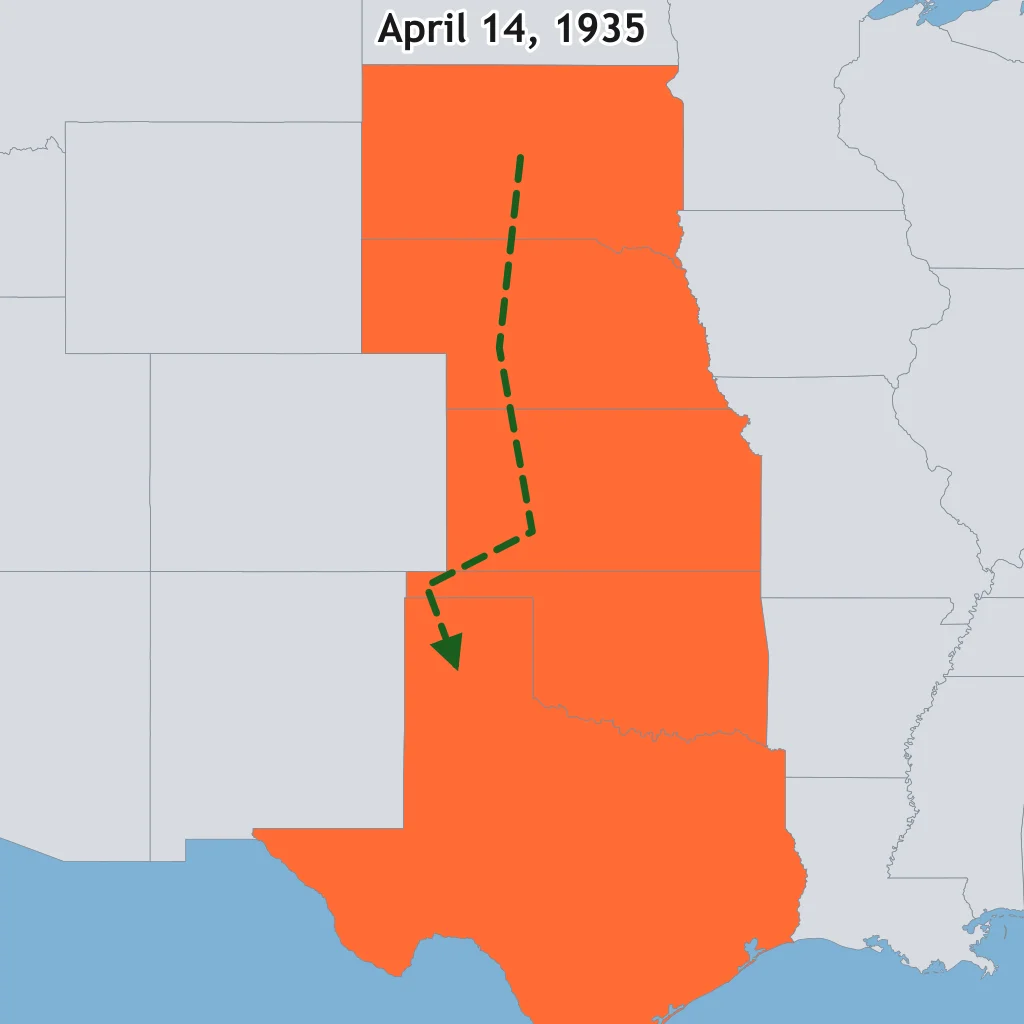
The map shades the five states that the worst wind erosion of the 1930s crossed. Which of these Great Plains states is NOT shaded?
The arrow on the map traces the highway that carried tens of thousands of Plains families from Oklahoma across to the California coast in the late 1930s. What was that highway called?
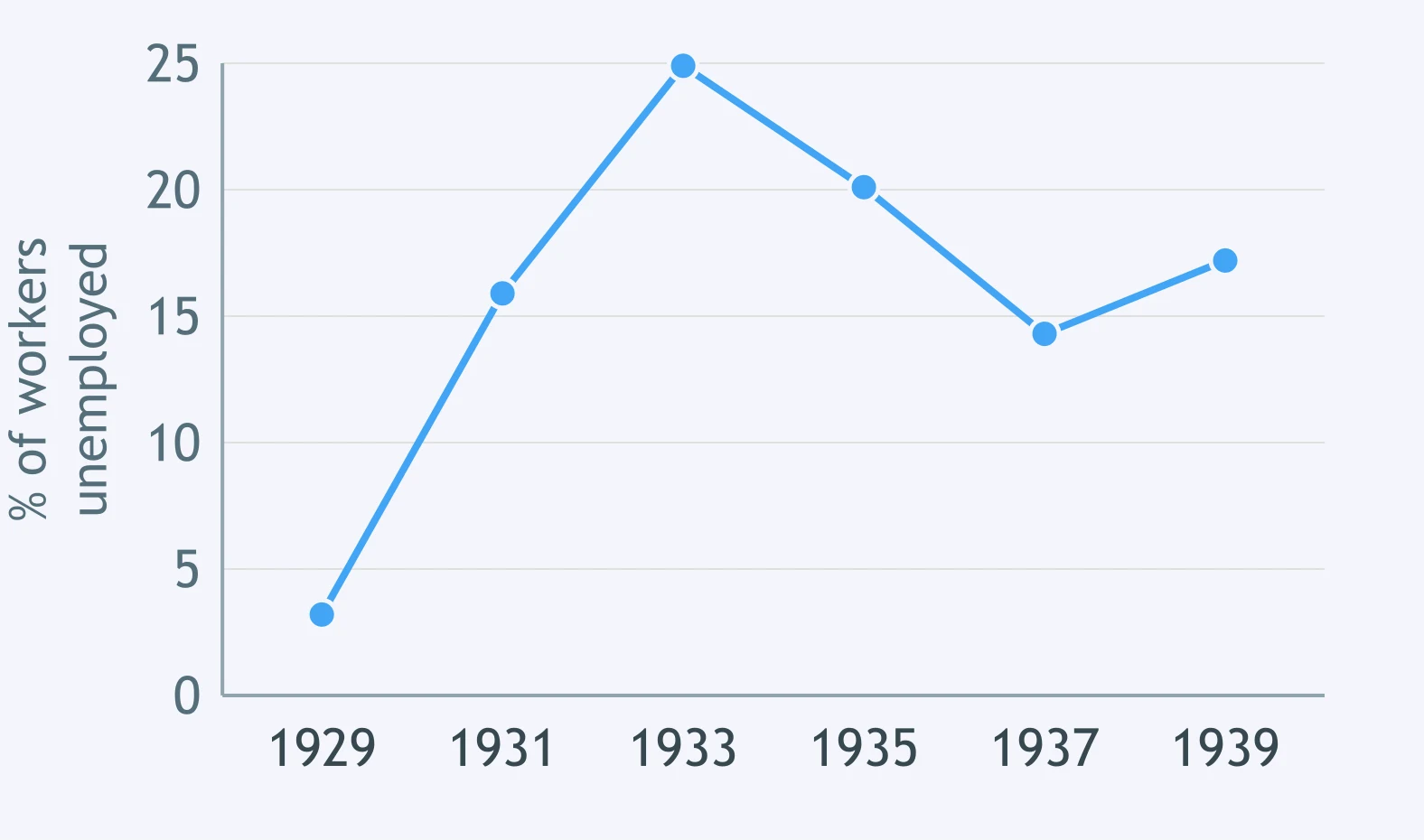
Look at the graph of the share of American workers who were out of work. In which year shown was unemployment at its highest?
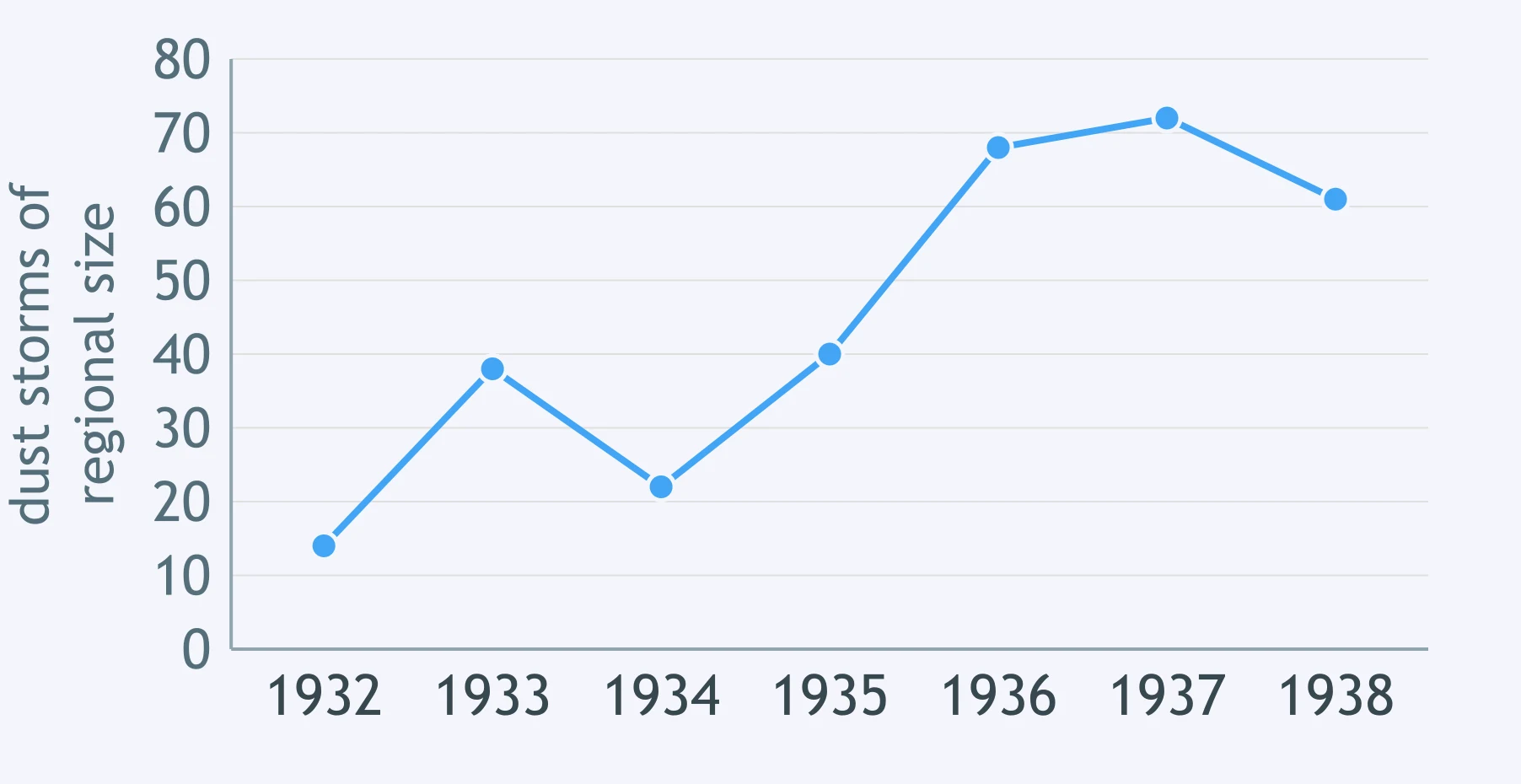
The graph counts the dust storms of regional size recorded on the southern Great Plains each year. In which year shown did the number of storms reach its peak?
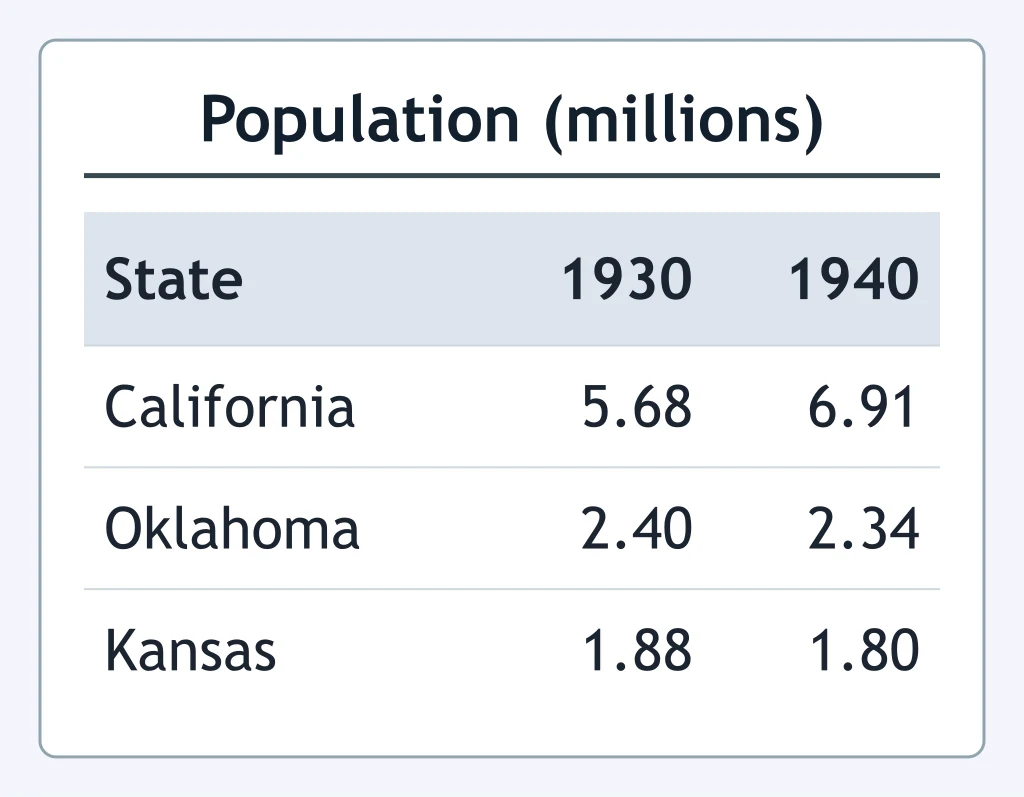
The table gives three states' populations at the 1930 and the 1940 census. Which state's population grew across the decade?
The arrow traces the path of the enormous dust cloud that rolled across the Plains on Sunday, April 14, 1935. Which way did it travel?
By 1932 clusters of shacks built from packing crates, tar paper and flattened tin stood on vacant ground at the edge of many American cities, housing families who had lost their homes. What did people call these settlements?
Every morning in New York and Chicago, hundreds of people stood in a long queue on the sidewalk outside a church or charity, waiting for a bowl of soup and a slice of bread. What was that queue called?
Out-of-work men who slept on park benches spread sheets of newspaper over themselves for warmth. What did people bitterly call the newspapers?
After the stock market crash of October 1929, savers who heard a rumor that their bank was in trouble crowded its doors, all demanding their deposits in cash on the same morning. What is this called?
Tens of thousands of teenagers left home in the early 1930s and hopped freight cars to look for work in another state, sleeping in rail yards along the way. What was this called?
A family that rented an apartment fell four months behind on the rent, and a deputy sheriff carried their furniture out to the sidewalk and changed the lock. What had happened to them?
In the summer of 1932 about 17,000 World War I veterans and their families camped in Washington, D.C., demanding that Congress pay their service bonus certificates at once rather than in 1945. What were they called?
California growers, sheriffs and neighbors used one word for the Plains families who arrived looking for farm work, whatever state they had actually come from. What was the word?
During and after World War I, high wheat prices led Plains farmers to plow up millions of acres of deep-rooted native grass. When the rains failed after 1930, what did the bare ground do?
The drought that settled over the southern Great Plains in the early 1930s lasted for most of the rest of the decade.
During the storms of the mid-1930s, children and elderly people on the Plains coughed up mud and filled the region's hospitals after breathing air thick with grit. What did doctors call the illness?
Blowing dust built up so much static electricity that Plains drivers dragged a chain from the back bumper of the car. What was the chain for?
By 1934 pastures on the Plains were buried in drifted soil and ranchers had no feed left for their herds. How did the federal government respond?
Congress created the Soil Conservation Service in 1935, weeks after a dust cloud reached Washington, D.C. What did its agents ask Plains farmers to start doing?
Wheat prices collapsed in the early 1930s while a farmer's mortgage payment stayed exactly the same each year. What did many Plains farmers do in response?
The dust storms of the 1930s stayed within the Plains states and never reached the East Coast.
A family from western Oklahoma reached California in 1937 carrying a handbill that advertised cotton picking, then found the pay far below what the handbill had promised. What best accounts for that?
A migrant family in the San Joaquin Valley in 1938 lived in a tent beside an irrigation ditch, with no clean water and no toilet. Why did camps like theirs spring up along the ditches?
Through the 1930s, city officials and relief agencies across the Southwest and Midwest pressed Mexican Americans onto trains bound for Mexico, and a majority of those sent were United States citizens. What was this campaign called?
In southern and midwestern cities in 1932, Black workers lost their jobs at a far higher rate than white workers and were turned away at some relief stations. What best accounts for that?
A tenant farmer in western Oklahoma was told in 1937 that the landowner had bought a tractor and no longer needed his family on the place. What best accounts for that?
Which 1939 novel follows the Joad family from a foreclosed Oklahoma farm along the highway west to the migrant camps of California?
Dorothea Lange photographed migrant families in California's farm valleys for a federal agency whose picture file became the best-known visual record of the decade. Which agency was it?
The federal government hired Pare Lorentz to make a 1936 documentary film about the plowing up of the grasslands and the storms that followed. What is the film called?
Crack the passcode before the zombies get in.
Answer, then swat bugs for bonus points.
Race through questions at your own speed.
Same question on every screen. Fastest wins.

Pick a tile, answer, hit bonuses and steals.
The Road to War: Dictators, Appeasement and Neutrality
30 questions