Loading
by BlastRoom
Tell nuclear processes apart and use mass defect to calculate released energy.
#physics
25 questions
One question set, multiple game modes. Tap any game to see it in action. Not sure which to pick?
Answer to place stones and capture territory.
Outrun the snow together.
Earn blasts, then hunt the other team.
Answer to earn energy, then climb.

The class blasts through walls together.
Bid on mystery lots. Most money wins.
Sell tours. Nice, standard, or a total scam.

Answer, restock, and serve the rush.
More correct answers pulls the rope your way.
Answer, then shoot down the alien wave.
Answer, then tap to leap the frozen ridge.
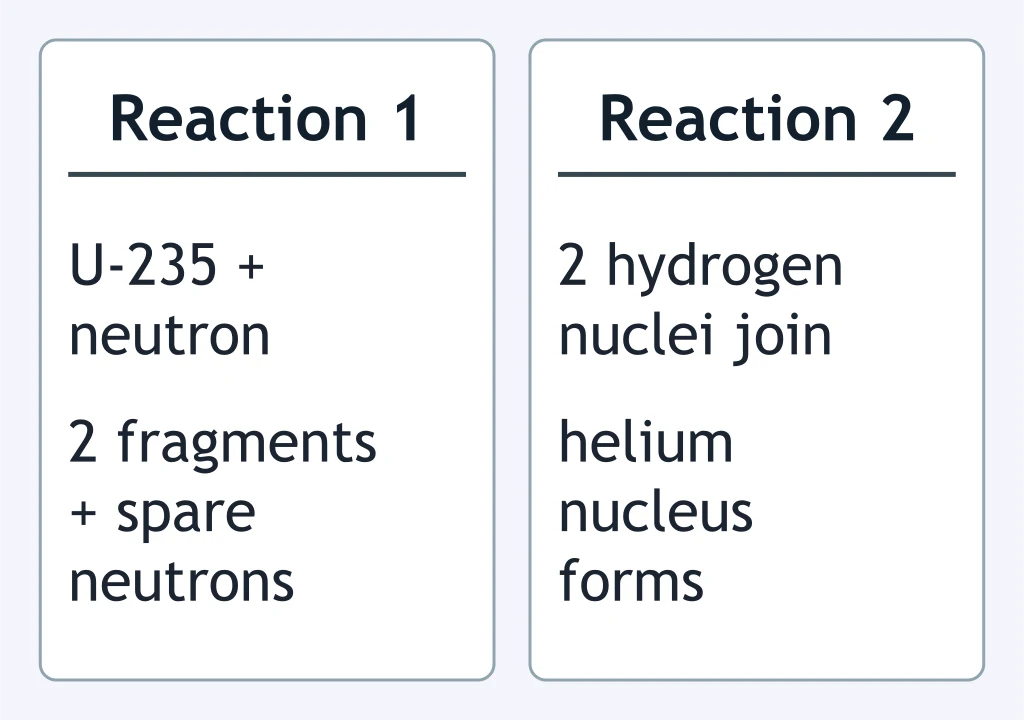
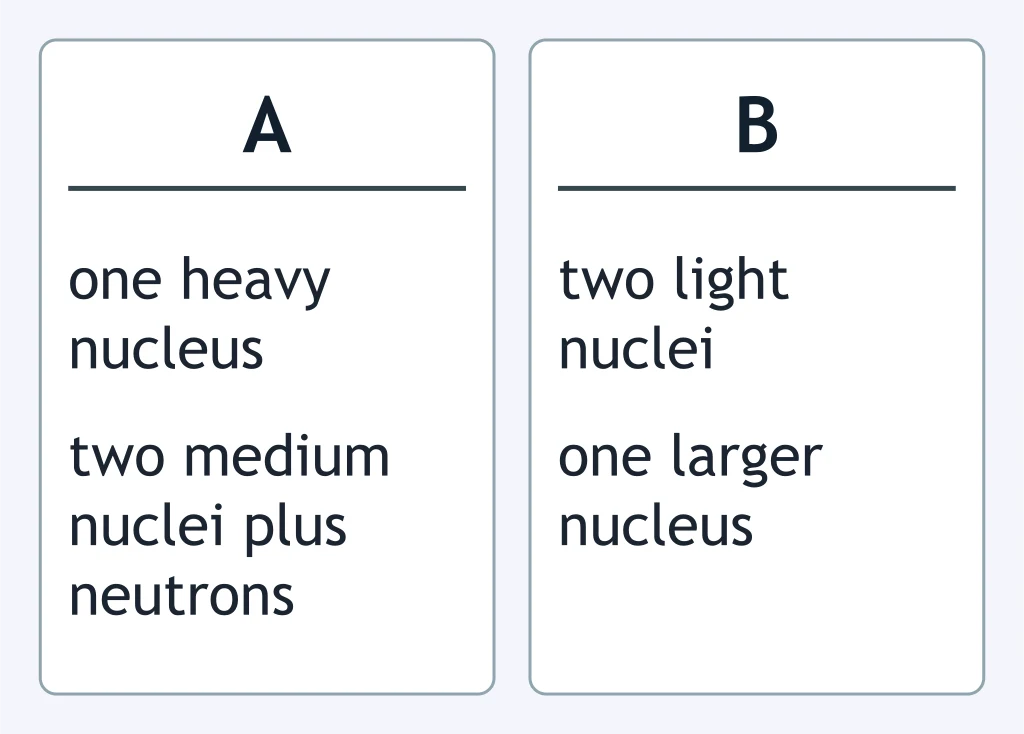
Use the comparison figure. Which statement matches the two reactions?
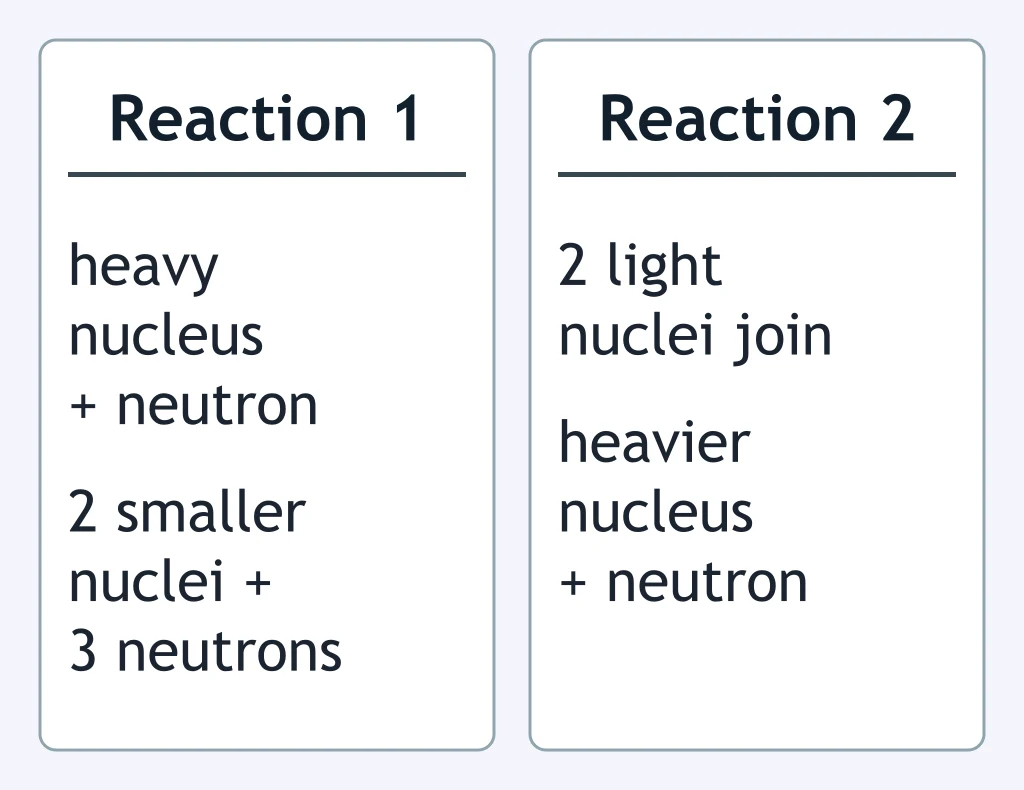
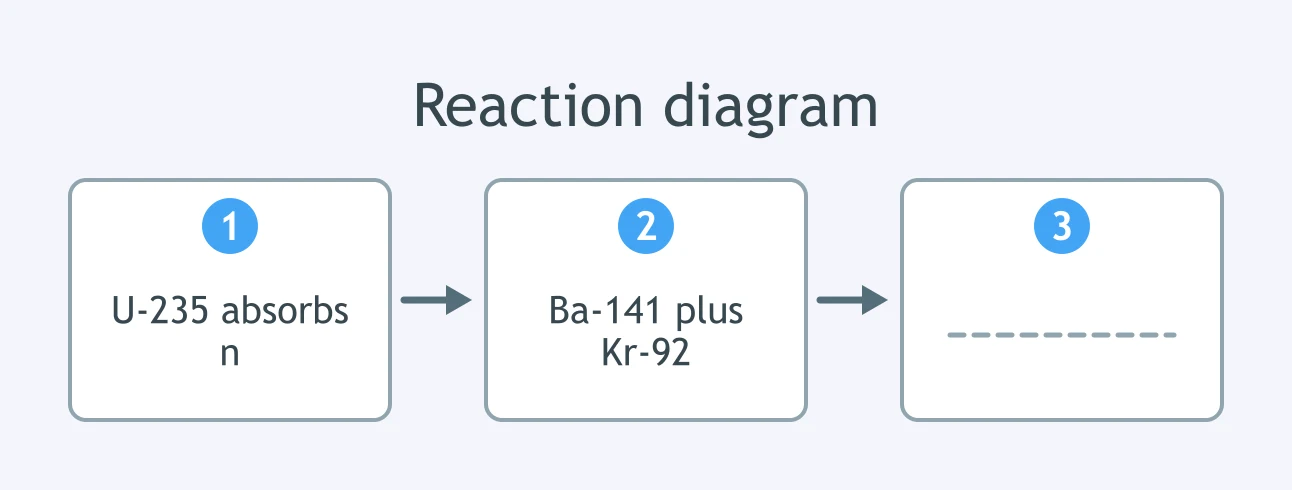
The figure shows (235,92)U absorbing a neutron and splitting, with the neutrons released left blank in stage 3. Which list gives all the products of this fission?
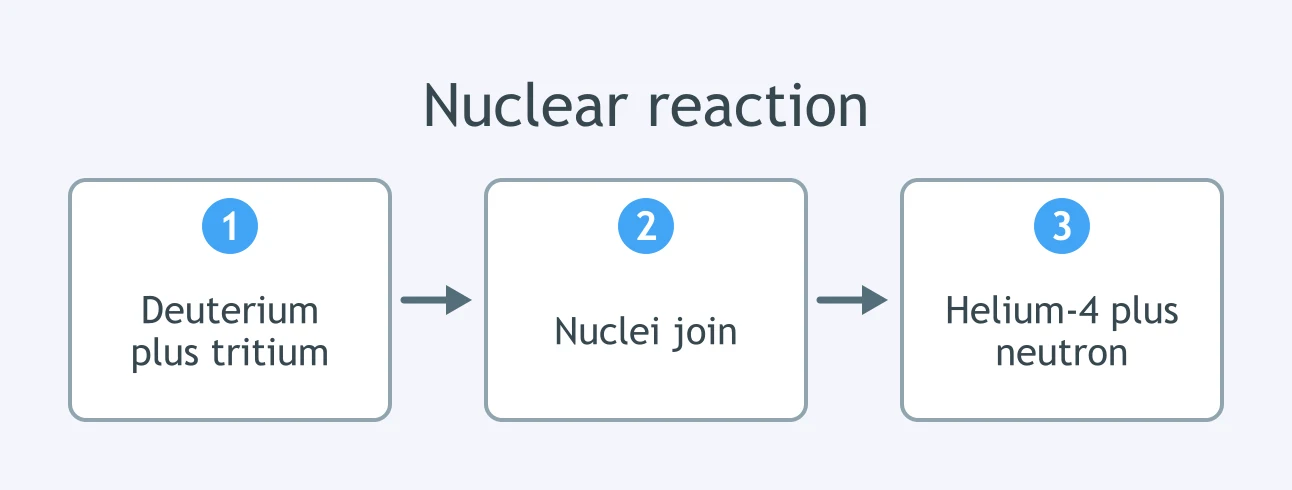
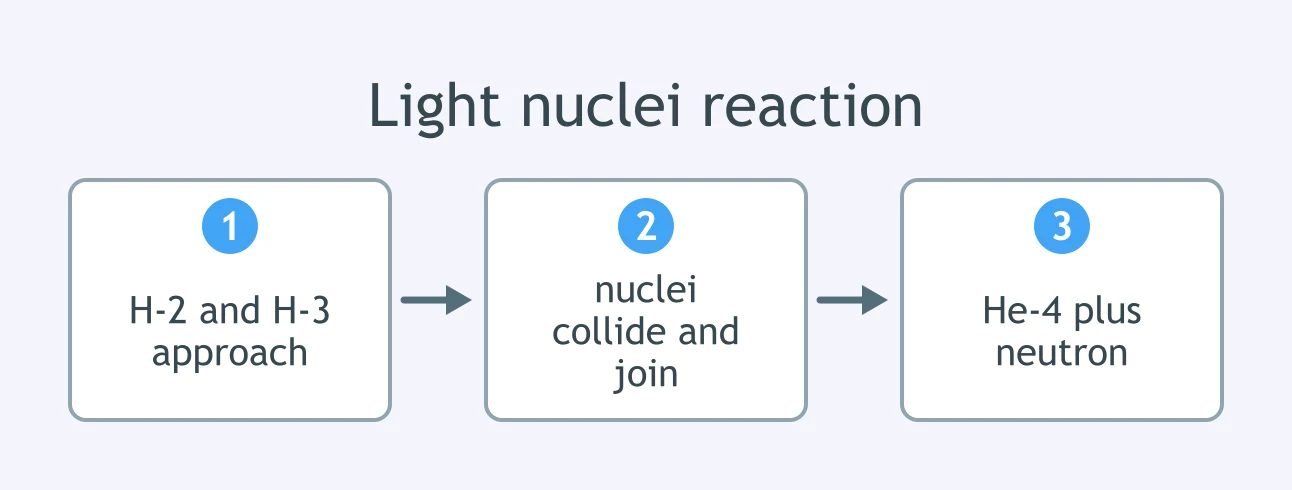
In the process figure, deuterium and tritium join to form helium-4 and a neutron. What process does the figure show?
Use the comparison figure. Which side shows a chain-reaction step that can release neutrons to start more splits?
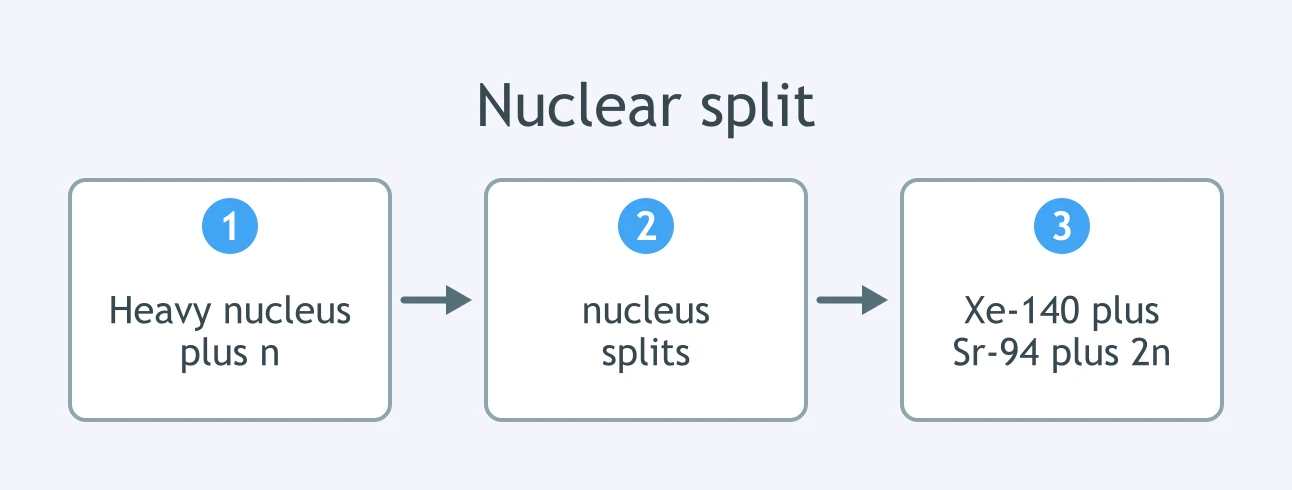
The figure shows a heavy nucleus splitting into xenon-140, strontium-94, and two neutrons. Which description fits the figure?
Look at the comparison figure. Which reaction joins small nuclei rather than splitting a large nucleus?
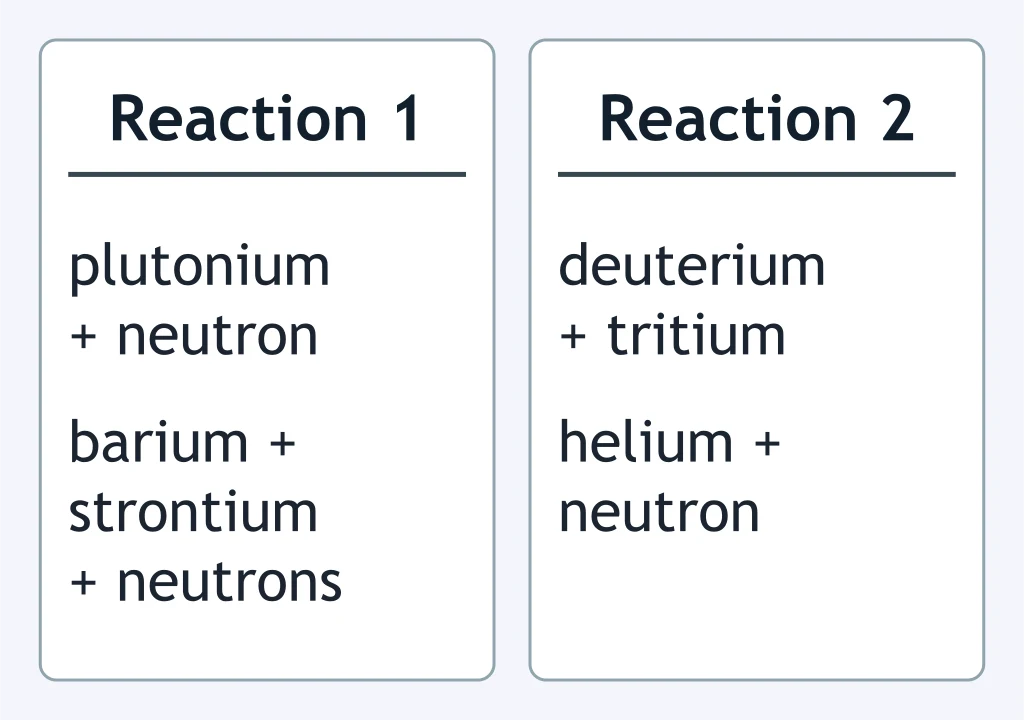
In the figure, side A shows one heavy nucleus becoming two medium nuclei, while side B shows two light nuclei becoming one nucleus. Which pairing is correct?
The process figure ends with helium-4 and a neutron after two hydrogen isotopes collide. Which statement reads the figure correctly?
In a nuclear reaction, the total mass of the products is kg less than the total mass of the reactants. Use m/s. How much energy is released?
A fission event has a mass defect of kg. With m/s, what energy is released?
The mass of the products in a fusion reaction is kg less than the mass of the reactants. Use m/s. What is the released energy?
A nuclear reaction converts kg of mass into energy. If m/s, how much energy is released?
During a reaction, the reactants have kg more mass than the products. Use m/s. What energy is released?
A tiny nuclear mass defect is kg. Using m/s, what energy corresponds to this lost mass?
The total mass after a nuclear reaction is kg lower than before the reaction. With m/s, find the energy released.
Balance the fission equation: (1,0)n + (235,92)U -> (141,56)Ba + (92,36)Kr + ? neutrons. How many neutrons are released?
Balance this equation: (1,0)n + (235,92)U -> (140,54)Xe + ? + 2(1,0)n. Which missing nuclide conserves mass number and charge?
A plutonium fission equation is (1,0)n + (239,94)Pu -> (144,56)Ba + (94,38)Sr + ? neutrons. How many neutrons are needed to balance it?
Find the missing product: (1,0)n + (235,92)U -> (97,40)Zr + ? + 2(1,0)n. Which nuclide keeps both totals conserved?
Which nuclear process happens on its own in an unstable nucleus, with nothing needing to strike it?
Which process is the main source of energy in the Sun and other main-sequence stars?
Fusion reactions on Earth require temperatures of many millions of kelvin. What must that thermal energy help overcome?
Which statement correctly connects nuclear fission to power reactors?
What does Einstein’s mass-energy relationship explain in a nuclear reaction with a mass defect?
When balancing a nuclear equation, what two totals must match on the reactant and product sides?
Crack the passcode before the zombies get in.
Answer, then swat bugs for bonus points.
Race through questions at your own speed.
Same question on every screen. Fastest wins.

Pick a tile, answer, hit bonuses and steals.
Time Dilation
25 questions