Loading
by BlastRoom
Classify Standard Model particles and connect gauge bosons to forces.
#physics
50 questions
One question set, multiple game modes. Tap any game to see it in action. Not sure which to pick?
Answer to place stones and capture territory.
Outrun the snow together.
Earn blasts, then hunt the other team.
Answer to earn energy, then climb.

The class blasts through walls together.
Bid on mystery lots. Most money wins.
Sell tours. Nice, standard, or a total scam.

Answer, restock, and serve the rush.
More correct answers pulls the rope your way.
Answer, then shoot down the alien wave.
Answer, then tap to leap the frozen ridge.
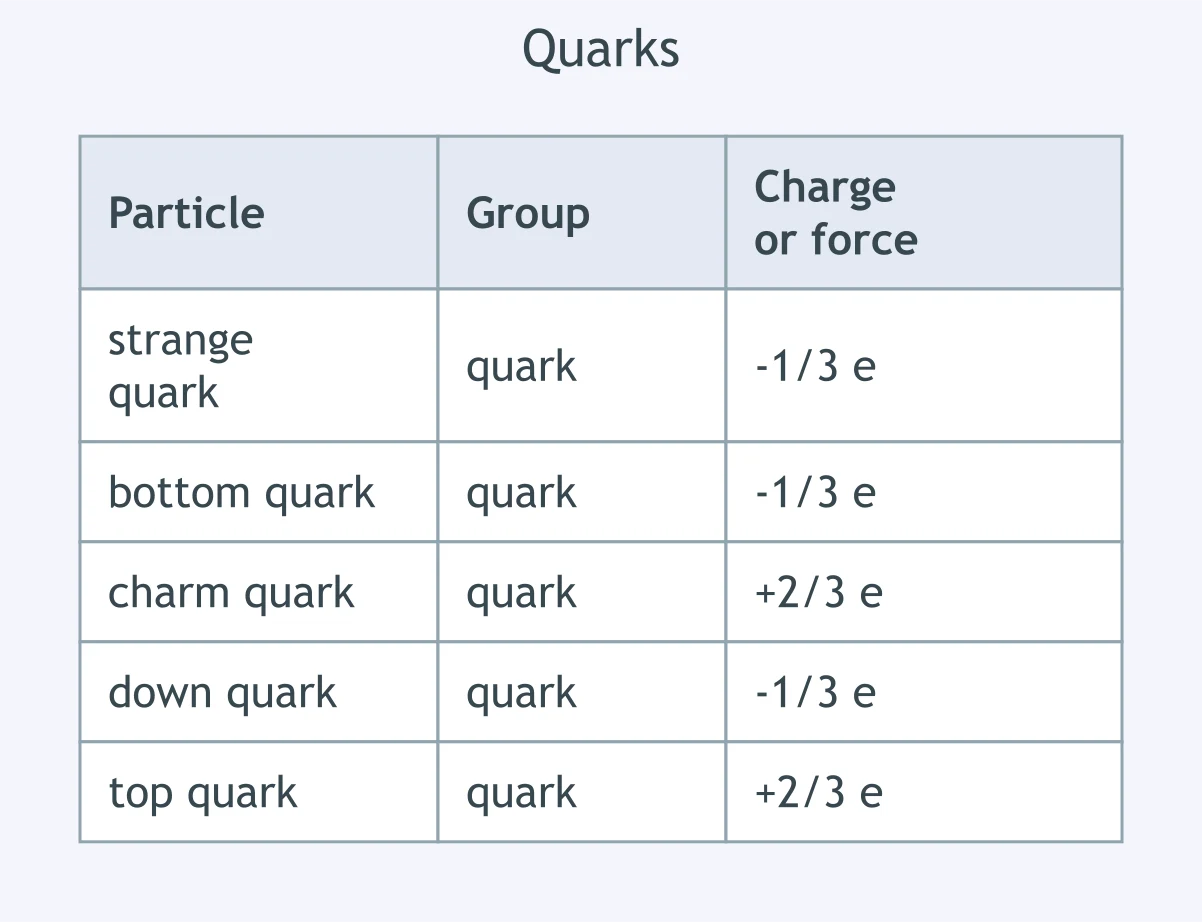
Read the Standard Model grid. What charge does the strange quark carry?
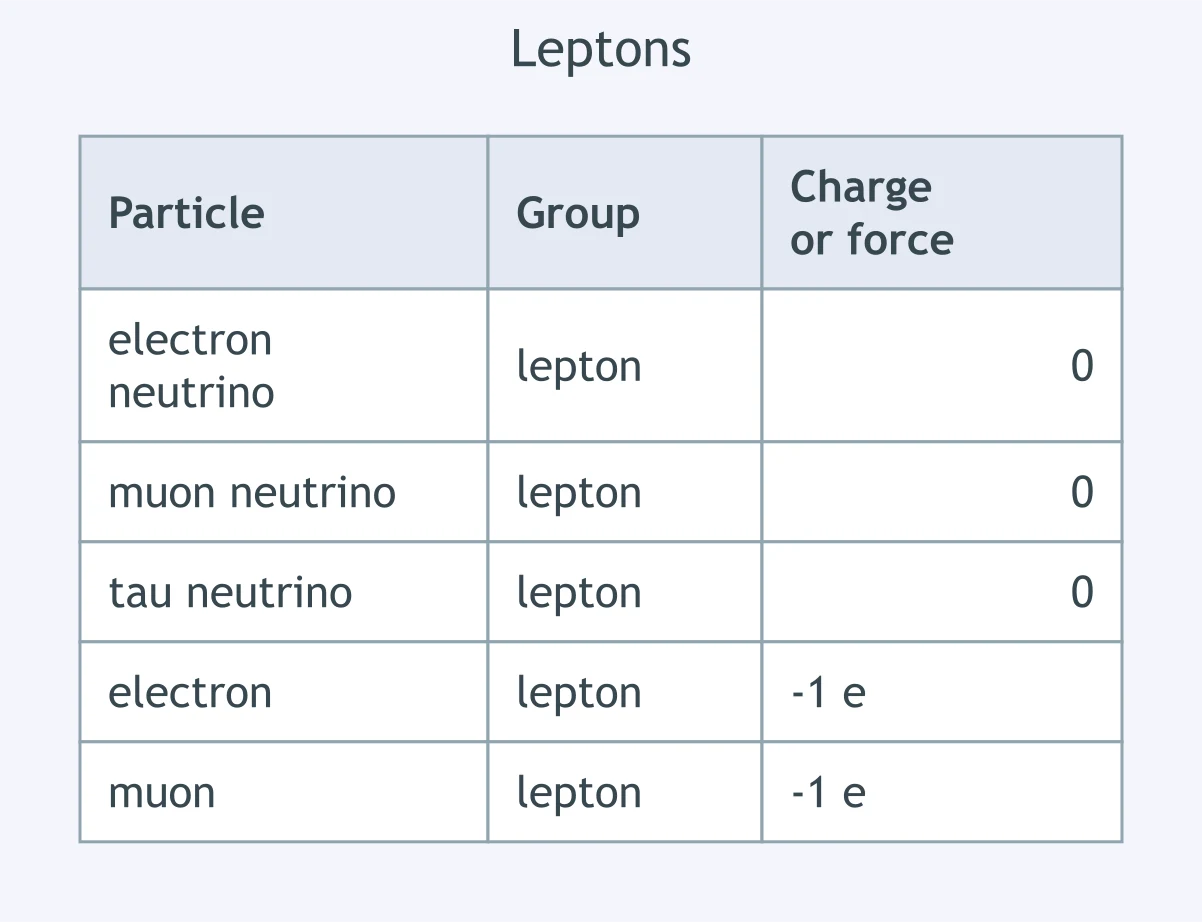
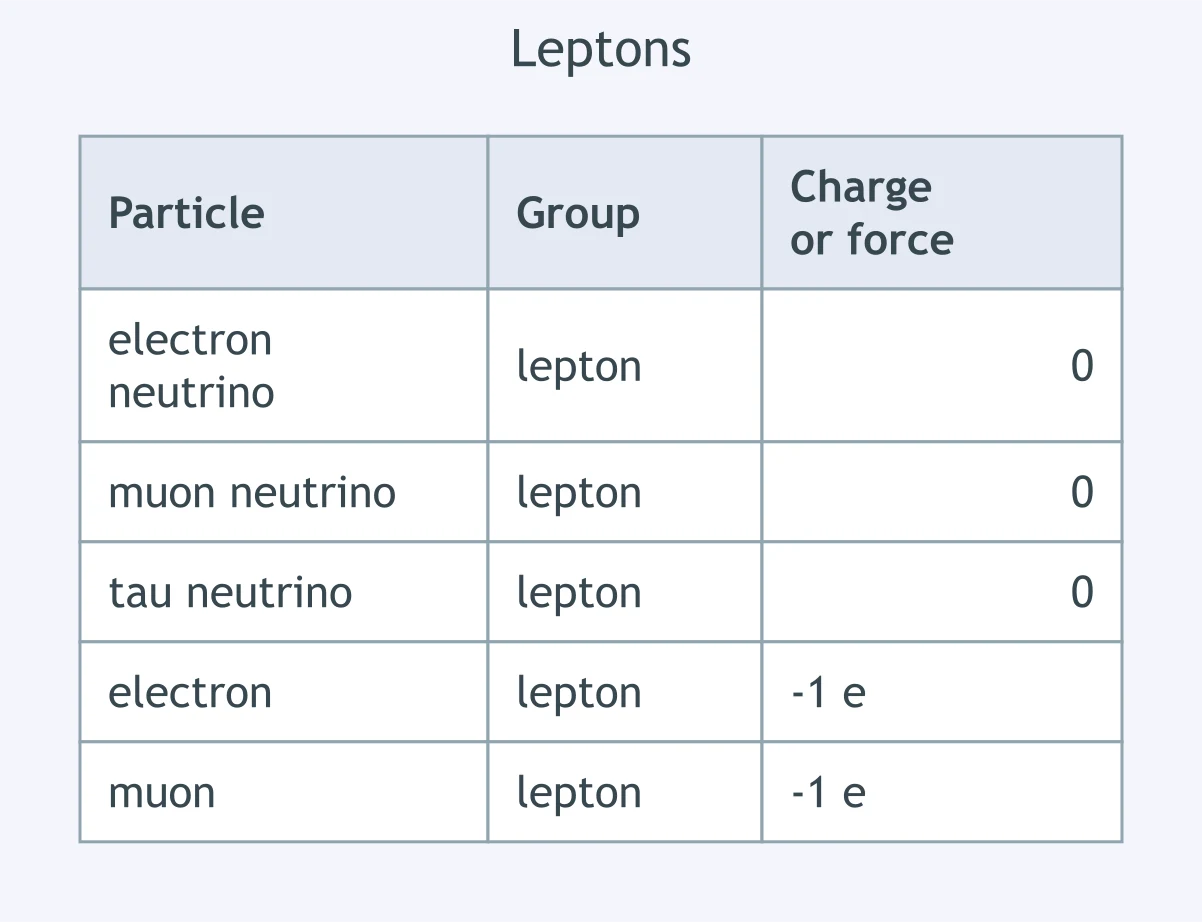
Use the grid. Which charge is listed for the electron neutrino?
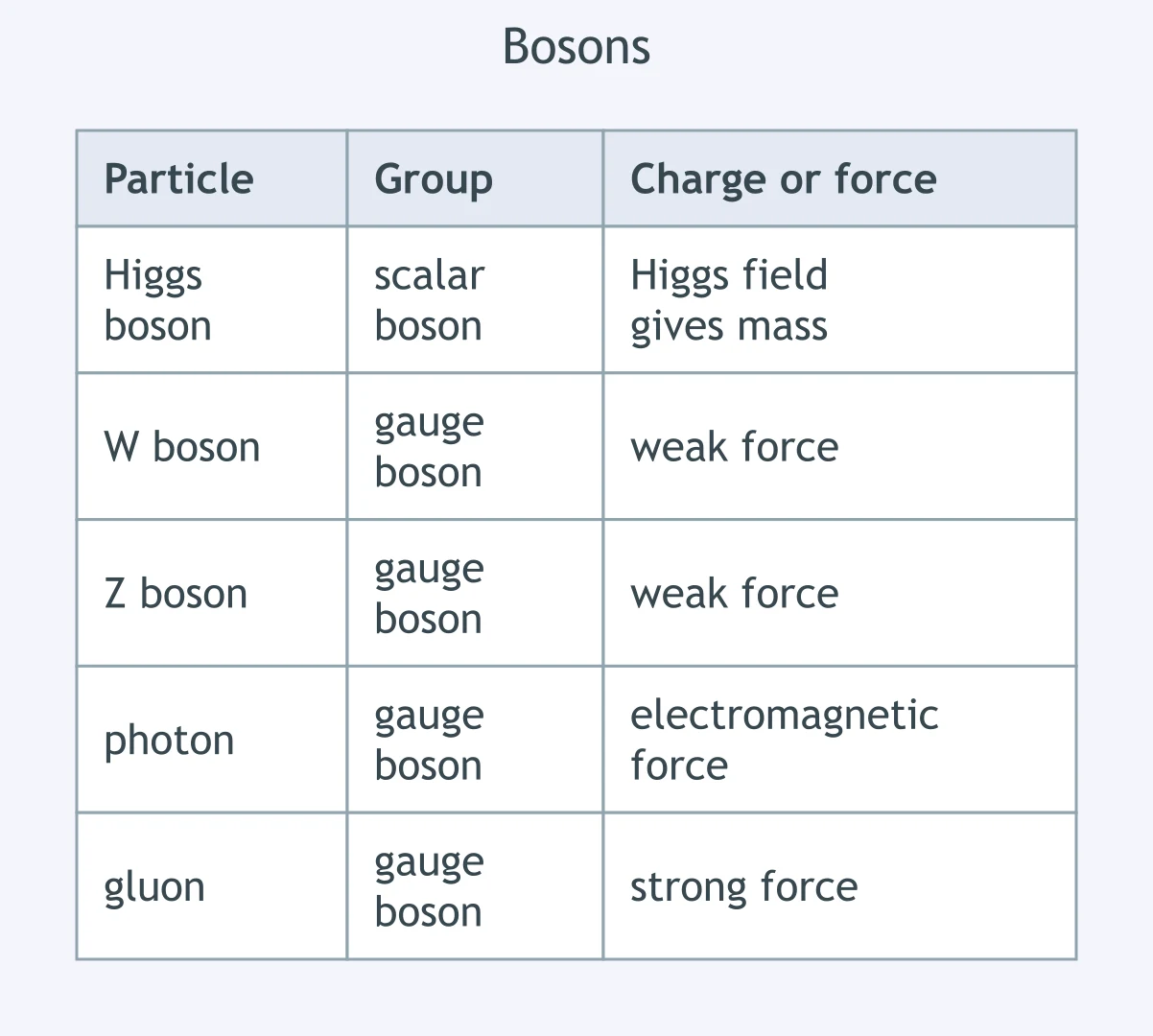
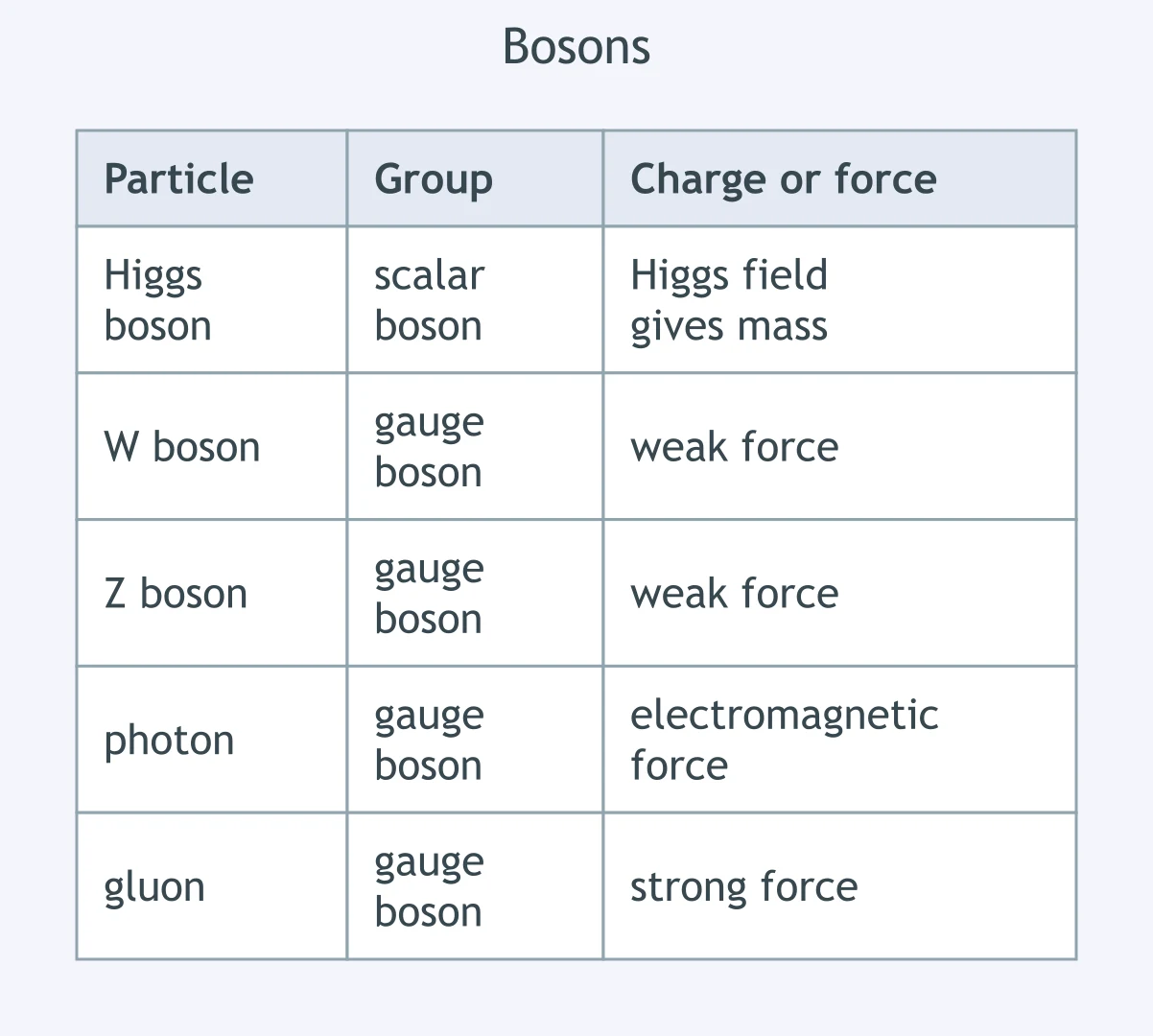
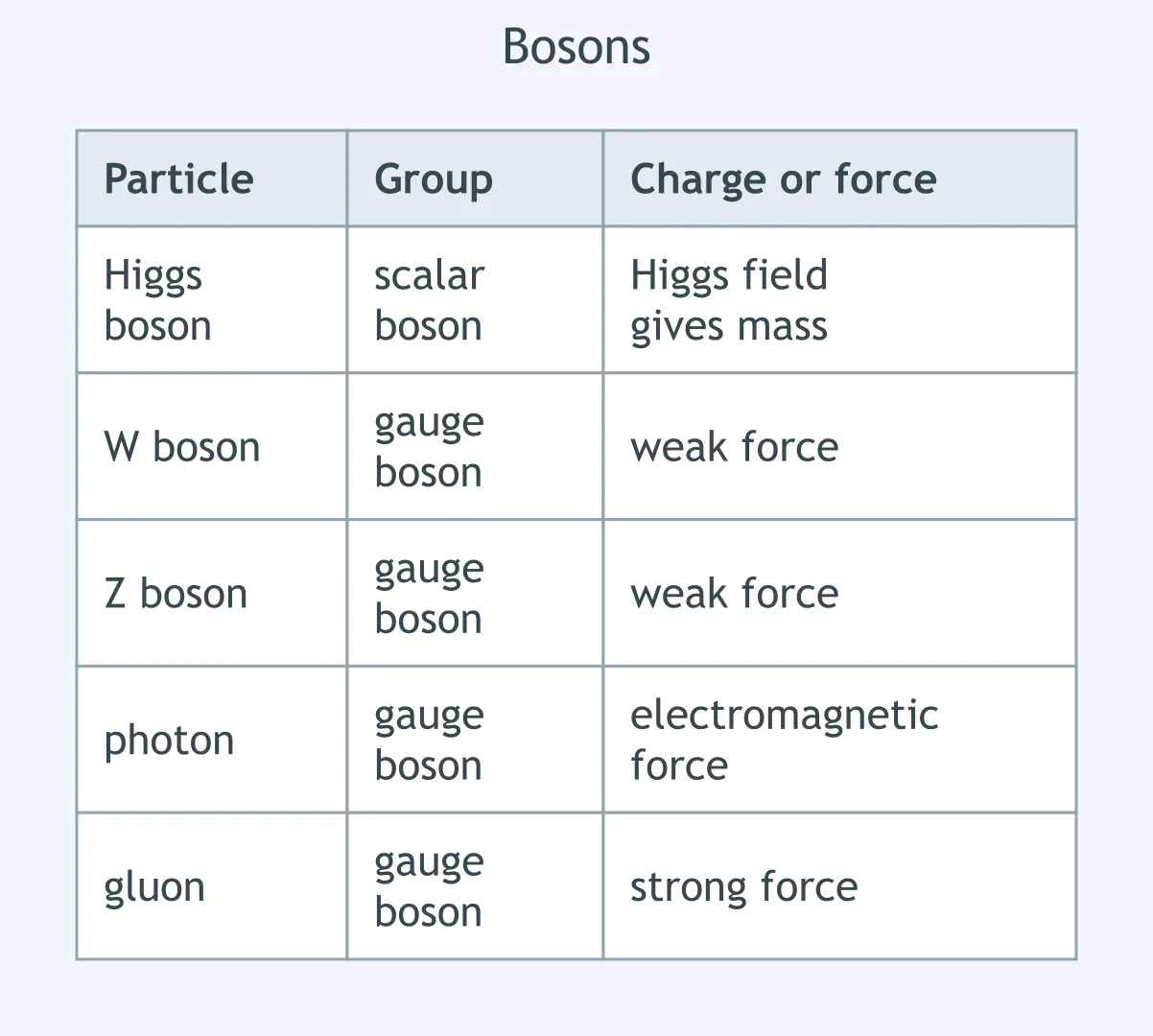
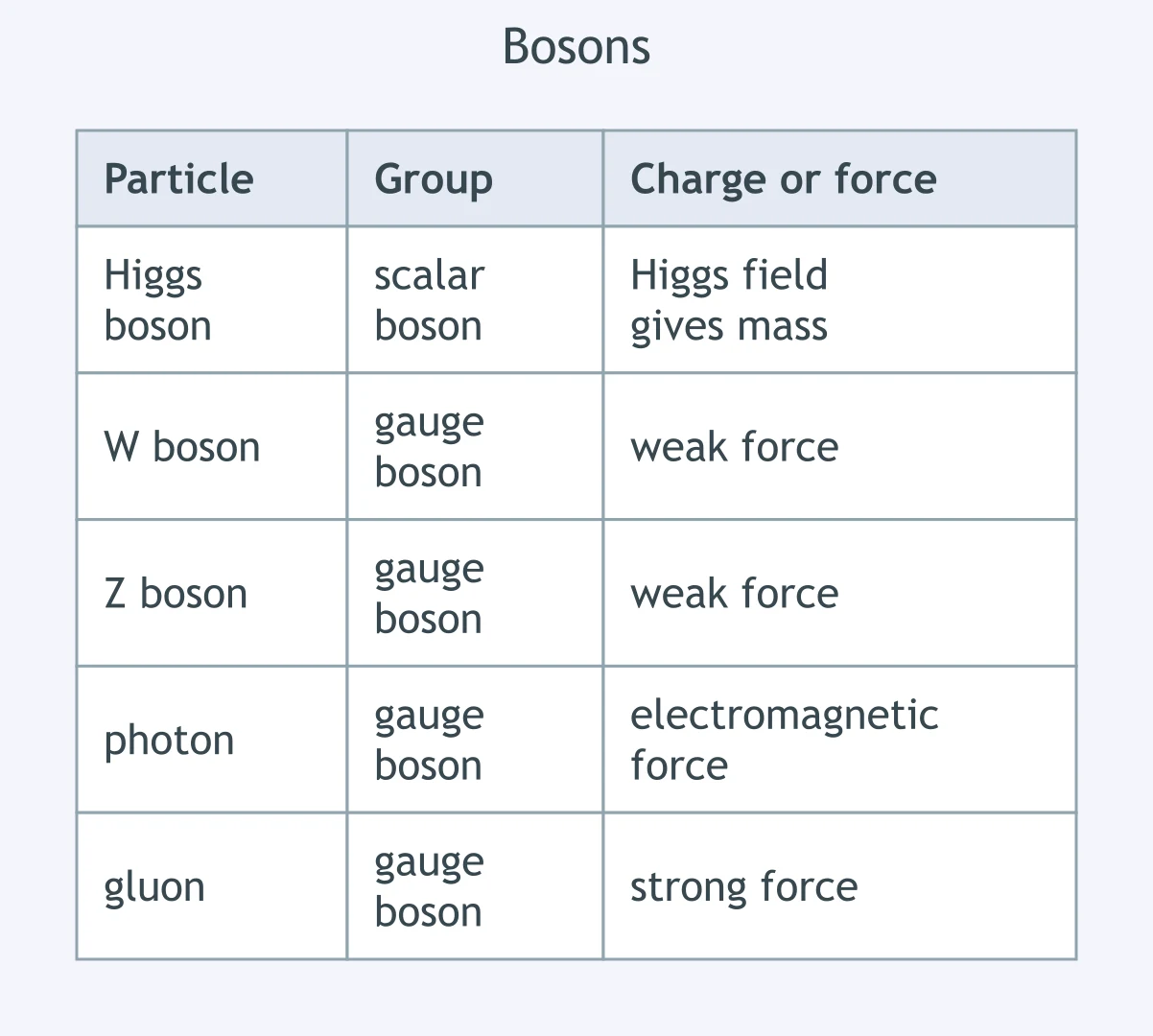
On the Standard Model grid, which force is paired with the photon?
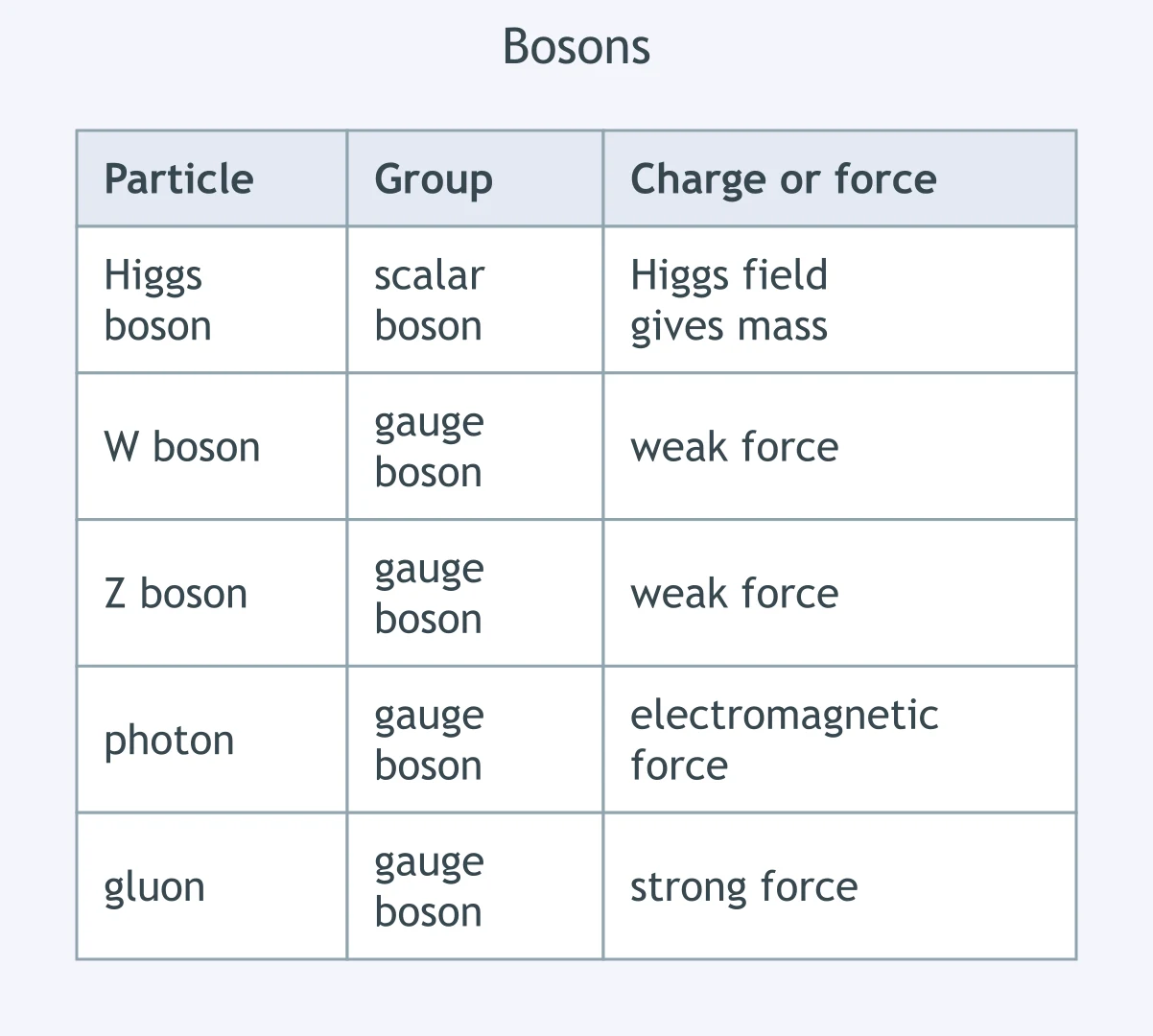
The grid separates the Higgs boson from the force-carrying gauge bosons. What group is shown for the Higgs boson?
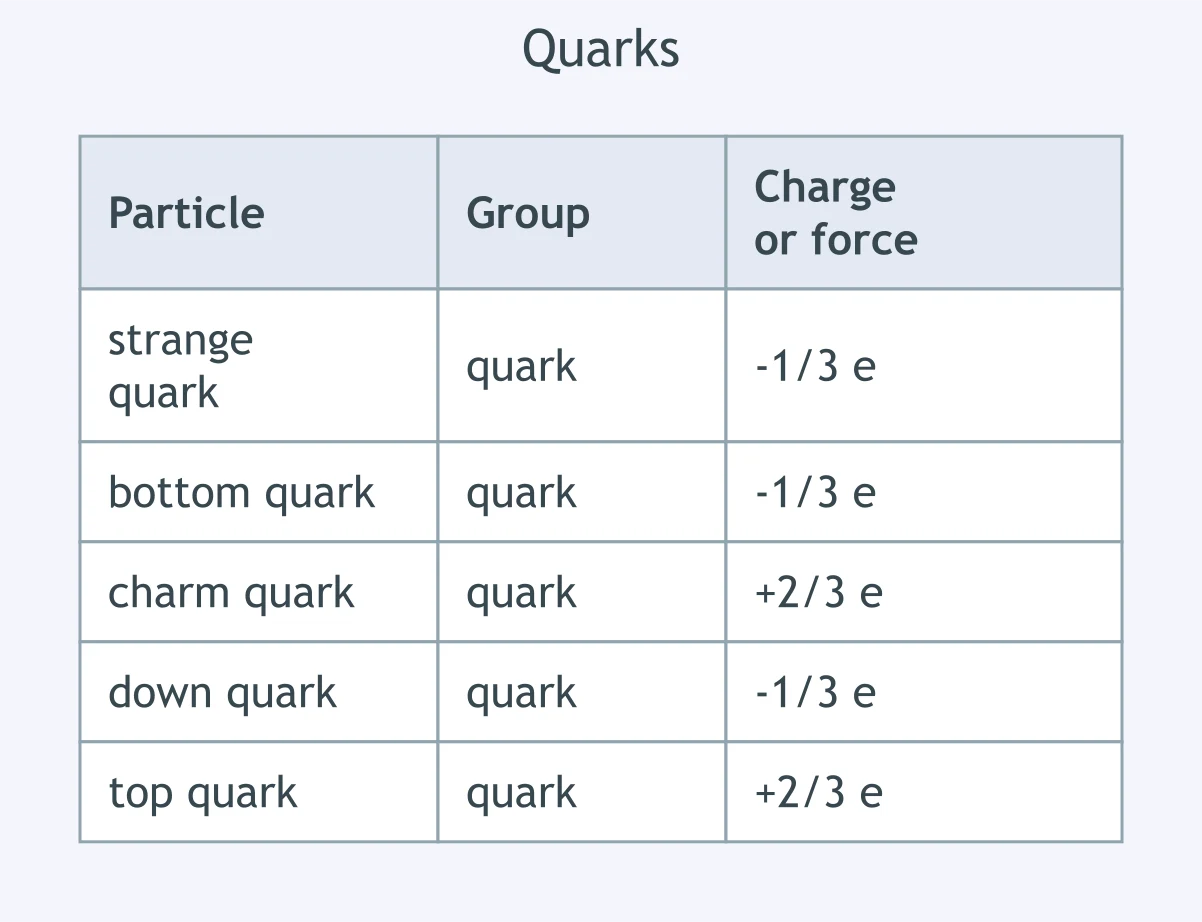
According to the grid, what charge does the bottom quark carry?
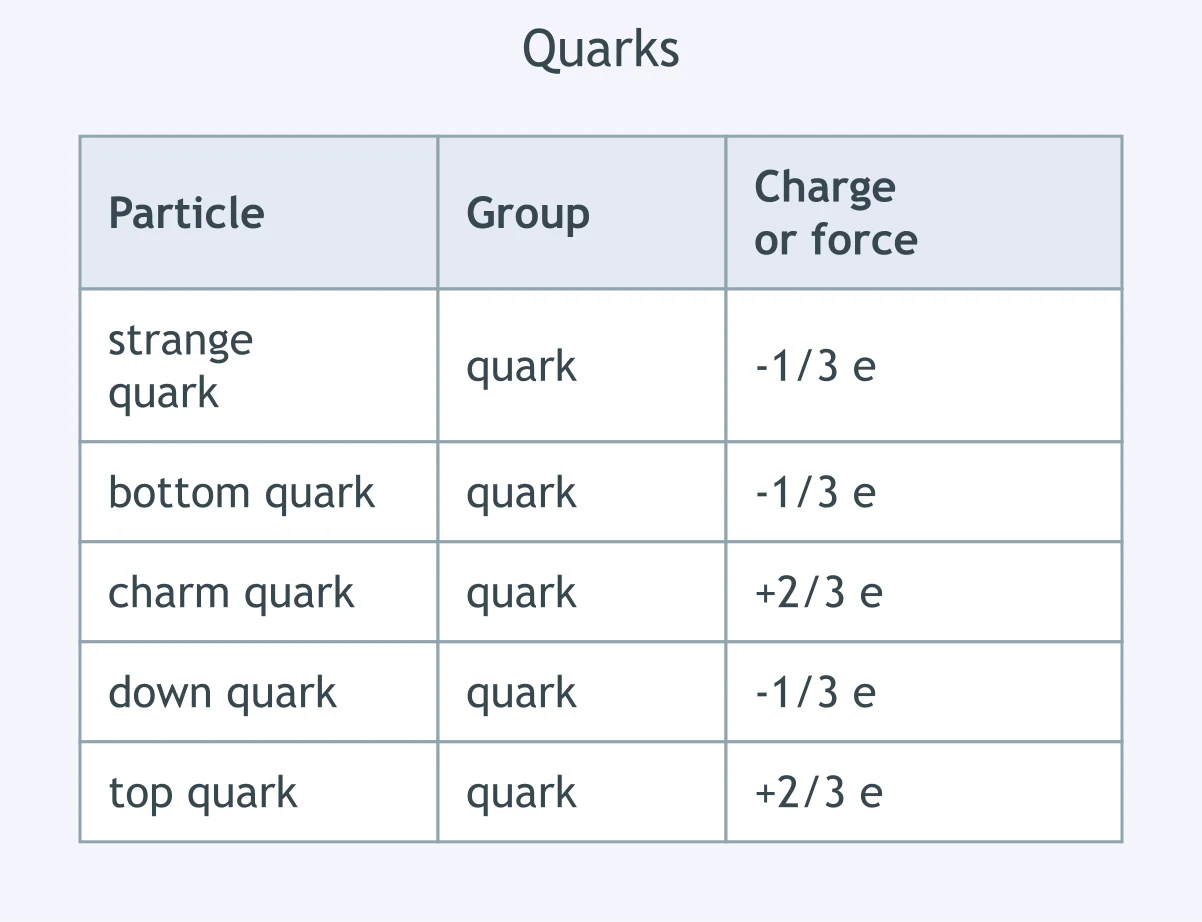
Find the muon in the grid. Which Standard Model family does it belong to?
Which force does the grid list for the gluon?
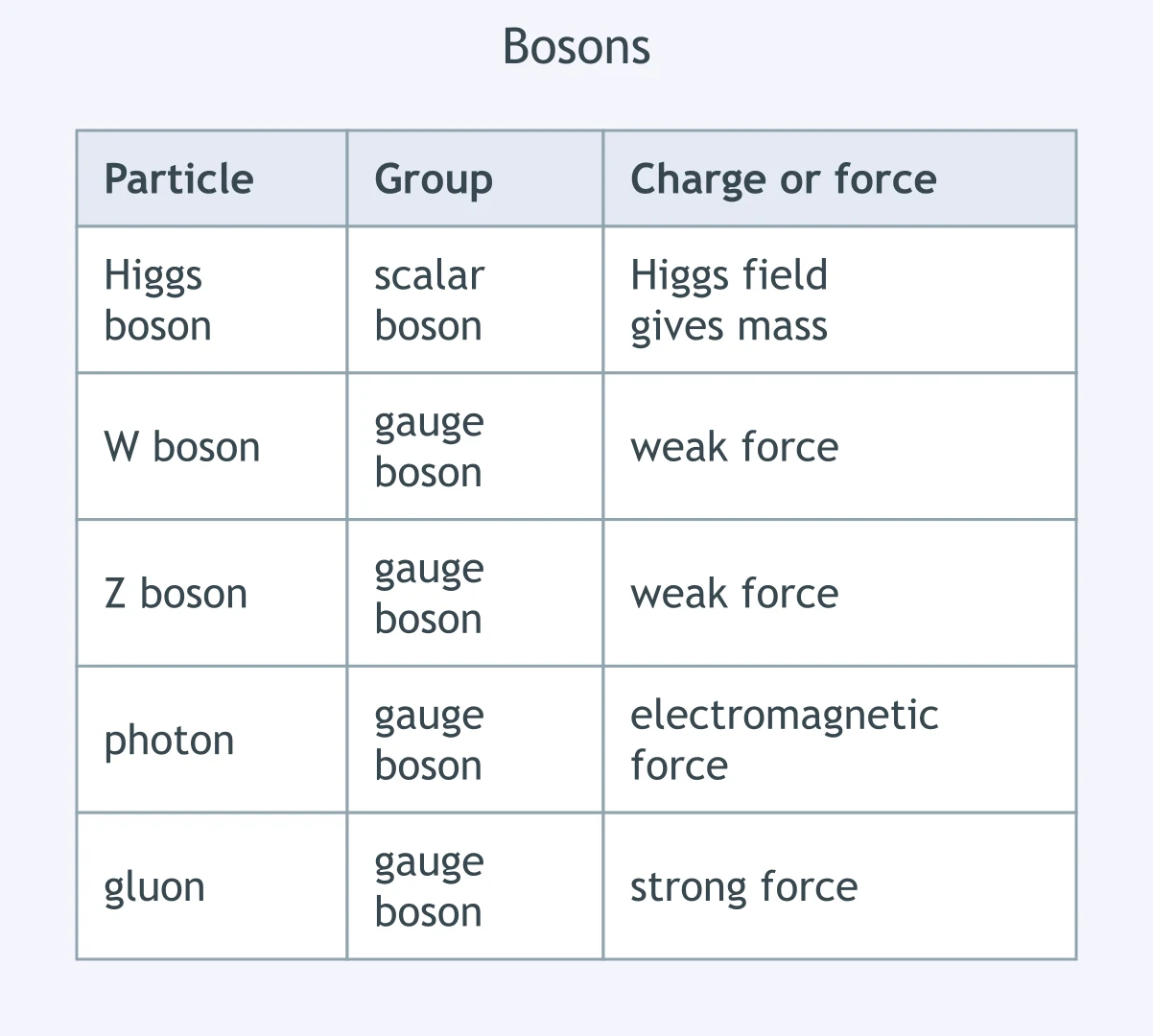
Look at the W boson row in the grid. Which force does it carry?
What charge is shown for the up quark in the Standard Model grid?
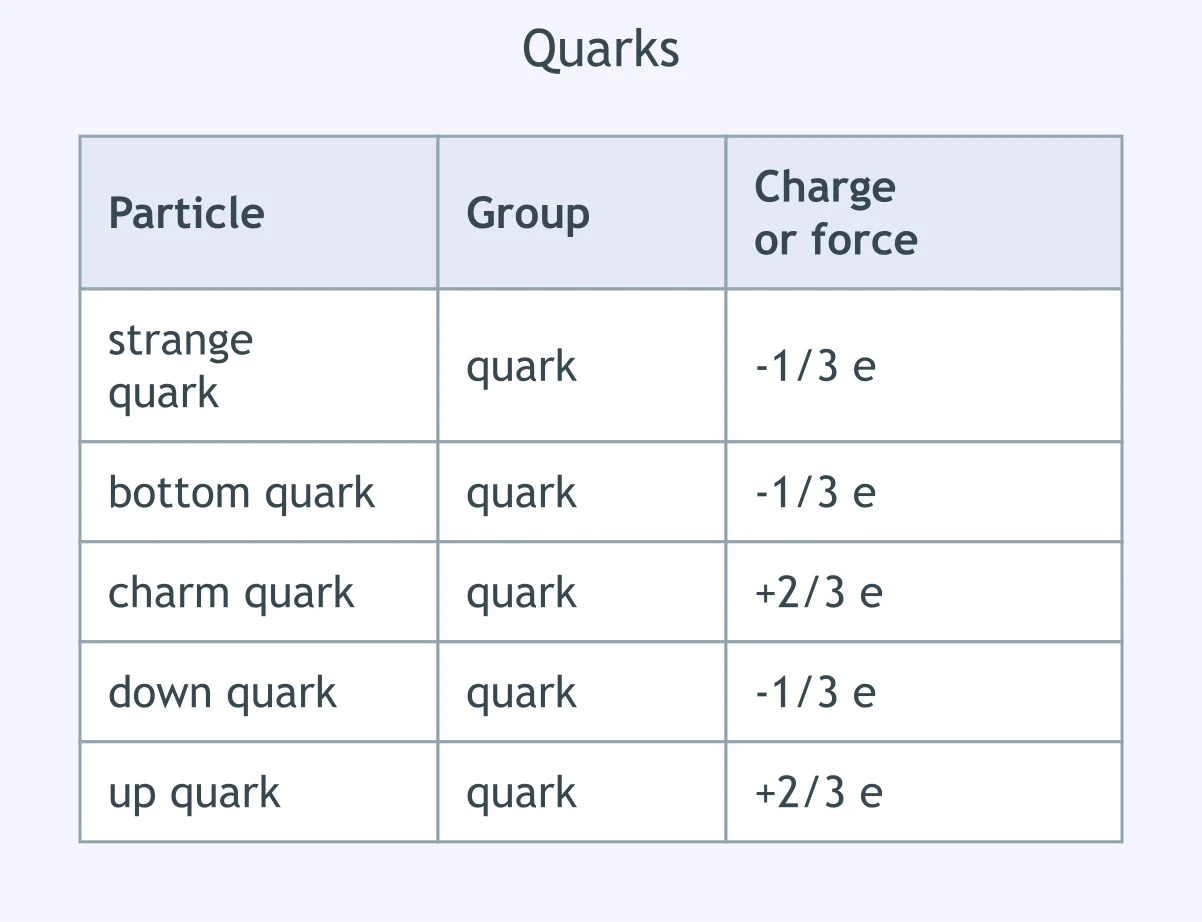
Read the tau neutrino row. What electric charge is listed?
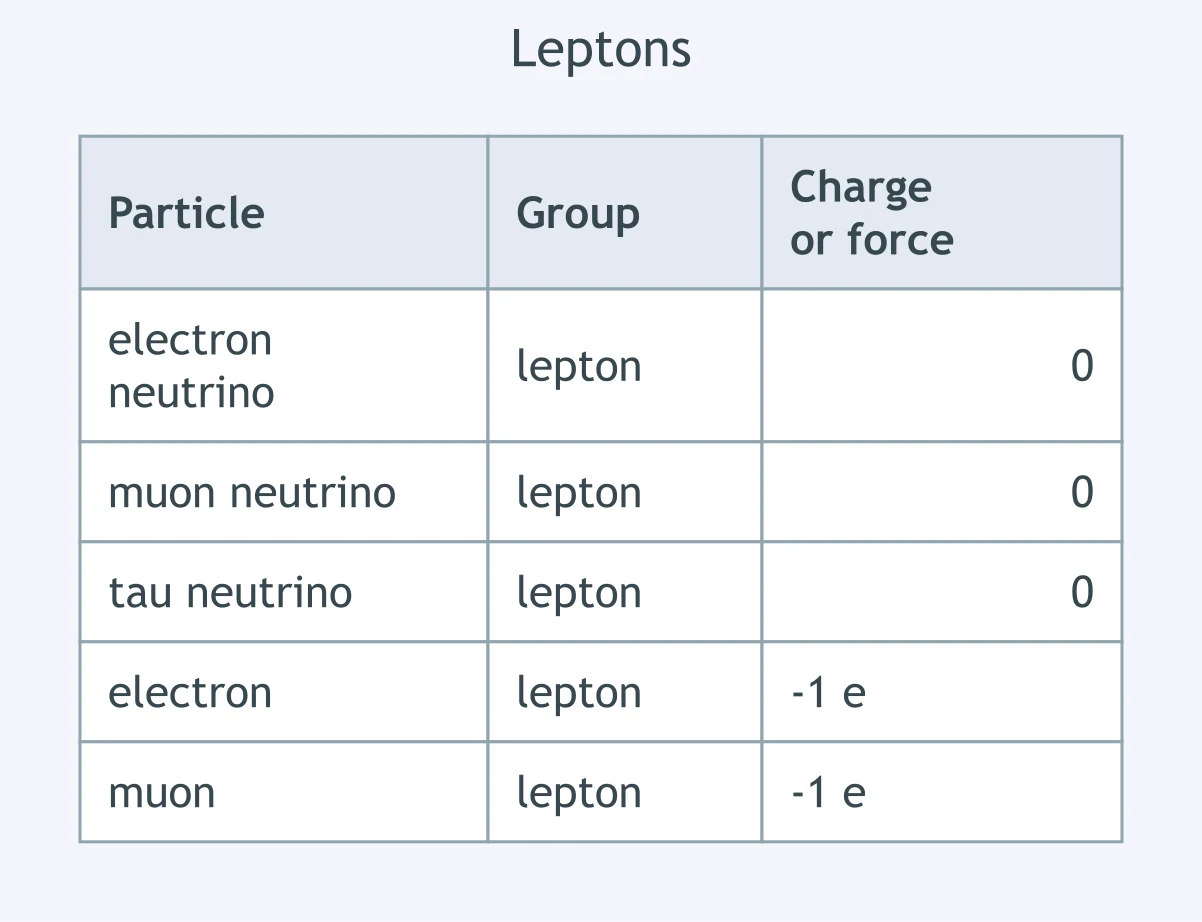
In the grid, the charm quark is placed in which group?
Read the Z boson row on the chart. Which force is associated with it?
According to the grid, what charge does the tau carry?
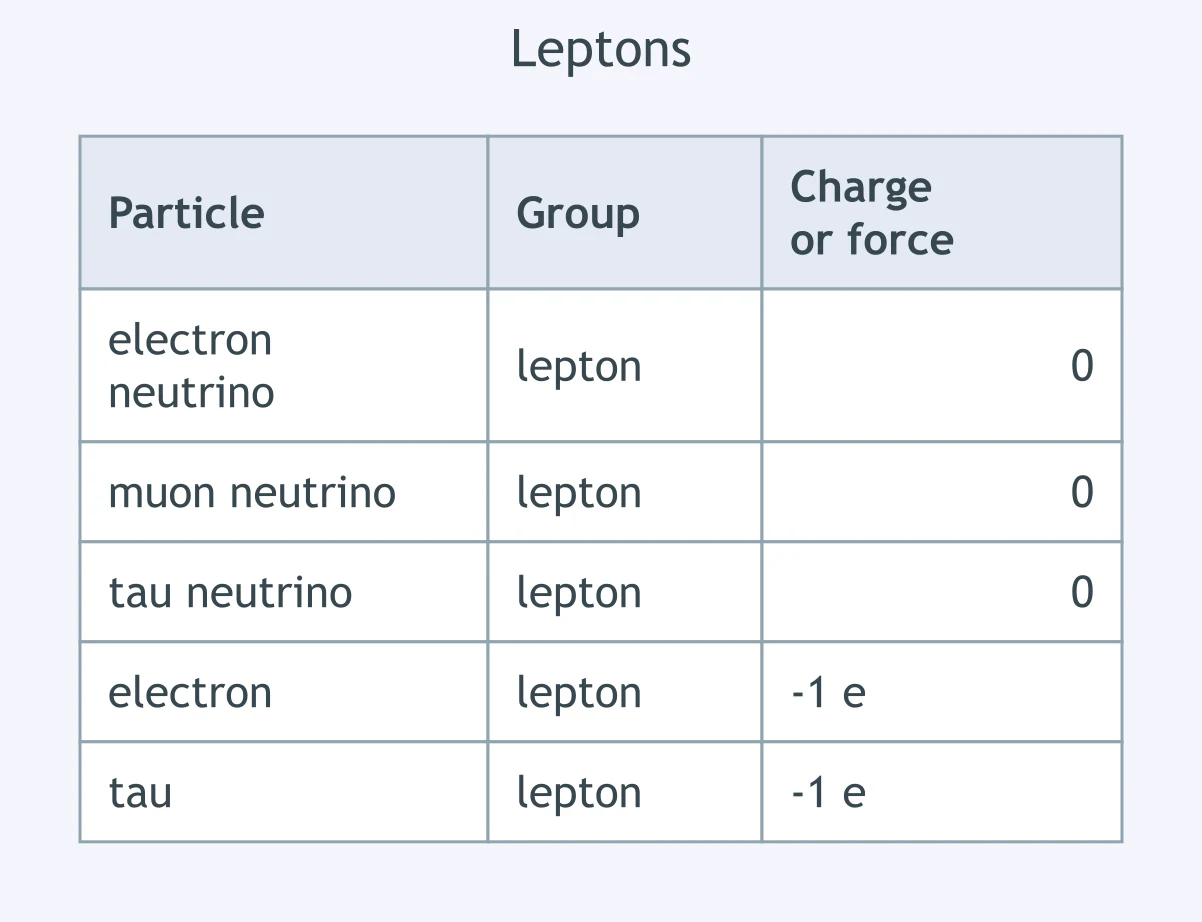
The chart lists the top quark with which electric charge?
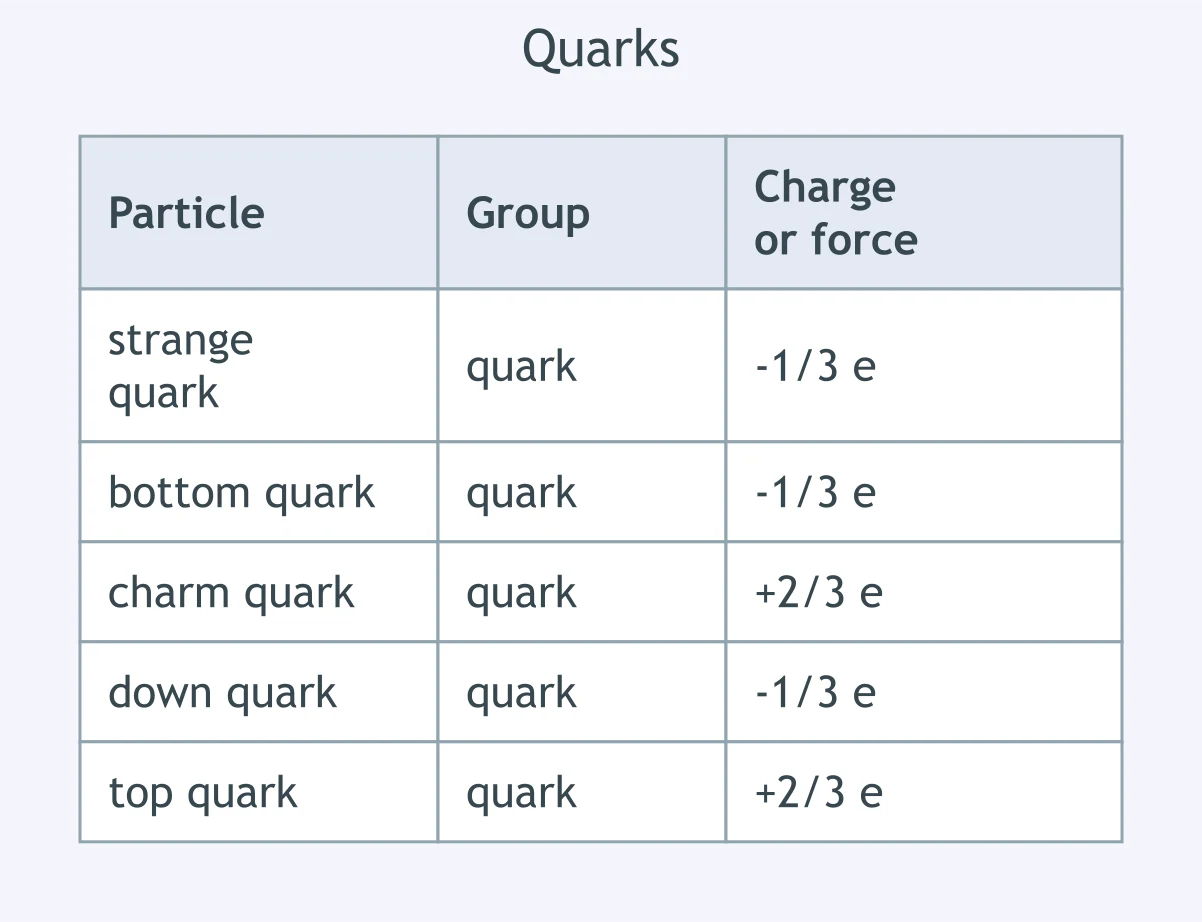
Find the electron in the grid. Which group is it in?
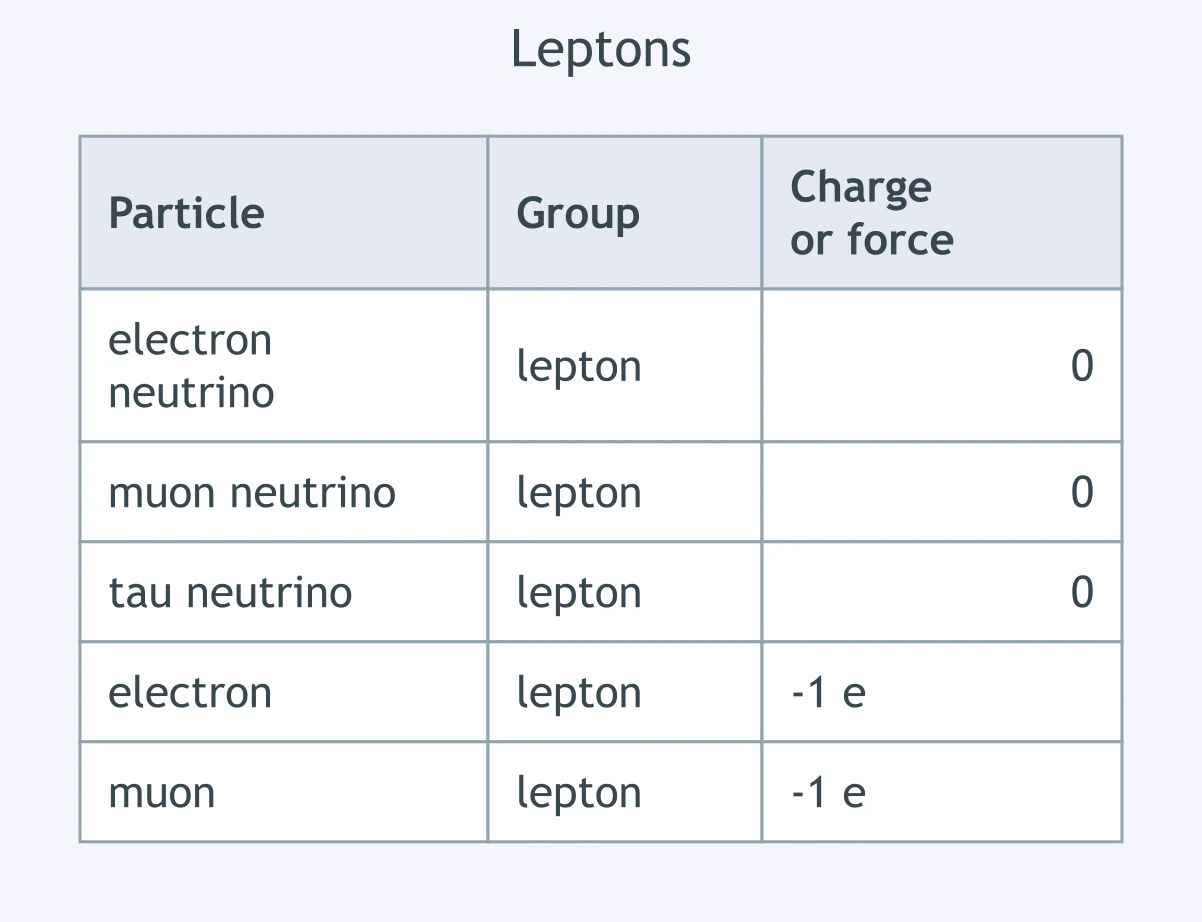
Use the table. Four of the listed bosons are force-carrying gauge bosons. Which boson is not a gauge boson?
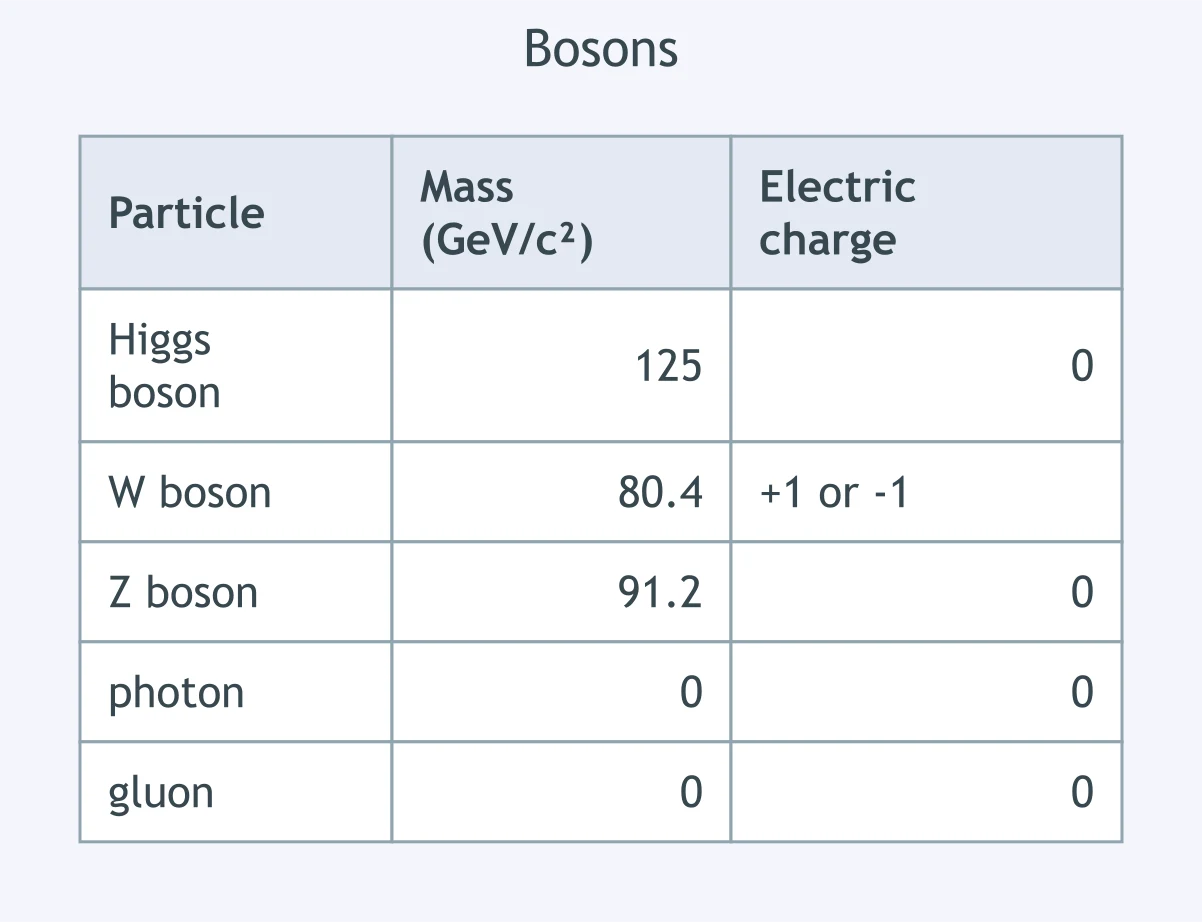
Use the chart to identify the particle paired with the electromagnetic force.
The electron is a fundamental particle in the Standard Model. Which family does it belong to?
In the Standard Model, which family includes top, the heaviest known fundamental particle?
A photon is a fundamental particle. In the Standard Model, which kind of particle is it?
The tau is grouped with the electron and muon. What family is that?
Bottom is one of the named fundamental particles. Which family contains it?
The electron neutrino is a fundamental particle with no electric charge. Which Standard Model family is it in?
How is the Higgs boson classified in the Standard Model?
Strange is one of the named fundamental particles in the Standard Model. Which family does it belong to?
A muon neutrino is electrically neutral, but it still belongs to which matter-particle family?
Charm is paired by generation with strange. What Standard Model family are both in?
Which family contains the gluon?
The Z boson is one of the particles responsible for the weak interaction. Which family is it in?
Down is listed with up, charm, strange, top, and bottom. What Standard Model family is it in?
The W boson mediates a fundamental interaction. What kind of Standard Model particle is it?
Which force is carried by the gluon?
Which fundamental force is carried by photons?
What interaction is carried by the W boson?
The Z boson is a gauge boson for which force?
Which fundamental force is not included as a carried force in the Standard Model?
Three of the Standard Model bosons below carry a fundamental force between particles. Which one does not, being instead the boson associated with the field that gives particles their mass?
Which pair of gauge bosons carries the weak nuclear force?
Which gauge boson carries the electromagnetic force?
Which gauge boson carries the strong nuclear force?
Interacting with the Higgs field gives many fundamental particles which property?
A proton has a net charge of +1 e. An up quark is +2/3 e and a down quark is -1/3 e. Which combination gives a proton's charge?
A neutron has no net electric charge. Which three-quark combination gives 0 total charge?
The chart's up-type quarks (up, charm, top) each carry +2/3 e. What is the total charge of a hypothetical three-quark particle made of three up-type quarks?
The chart's down-type quarks (down, strange, bottom) each carry -1/3 e. What is the total charge of a hypothetical three-quark particle made of three down-type quarks?
A pi-plus meson is made of an up quark (+2/3 e) and an anti-down quark. An antiquark has the opposite charge of its matching quark, so the anti-down quark carries +1/3 e. What is the pi-plus meson's total charge?
The proton is made of two up quarks and one down quark. An antiproton is made of the antiquark counterparts instead: two anti-up quarks (-2/3 e each) and one anti-down quark (+1/3 e). What is the antiproton's total charge?
A hypothetical three-quark particle is made of two charm quarks and one strange quark. Charm is up-type (+2/3 e) and strange is down-type (-1/3 e). What is its total charge?
A hypothetical three-quark particle is made of one top quark and two bottom quarks. Top is up-type (+2/3 e) and bottom is down-type (-1/3 e). What is its total charge?
Three hypothetical three-quark particles are listed: (1) up, up, down; (2) charm, charm, strange; (3) top, bottom, bottom. Which one has a total charge different from the other two?
Crack the passcode before the zombies get in.
Answer, then swat bugs for bonus points.
Race through questions at your own speed.
Same question on every screen. Fastest wins.

Pick a tile, answer, hit bonuses and steals.
Fission, Fusion and Mass-Energy Equivalence
25 questions