Loading
by BlastRoom
Decide when quantum evidence requires wave or particle models.
#physics
40 questions
One question set, multiple game modes. Tap any game to see it in action. Not sure which to pick?
Answer to place stones and capture territory.
Outrun the snow together.
Earn blasts, then hunt the other team.
Answer to earn energy, then climb.

The class blasts through walls together.
Bid on mystery lots. Most money wins.
Sell tours. Nice, standard, or a total scam.

Answer, restock, and serve the rush.
More correct answers pulls the rope your way.
Answer, then shoot down the alien wave.
Answer, then tap to leap the frozen ridge.
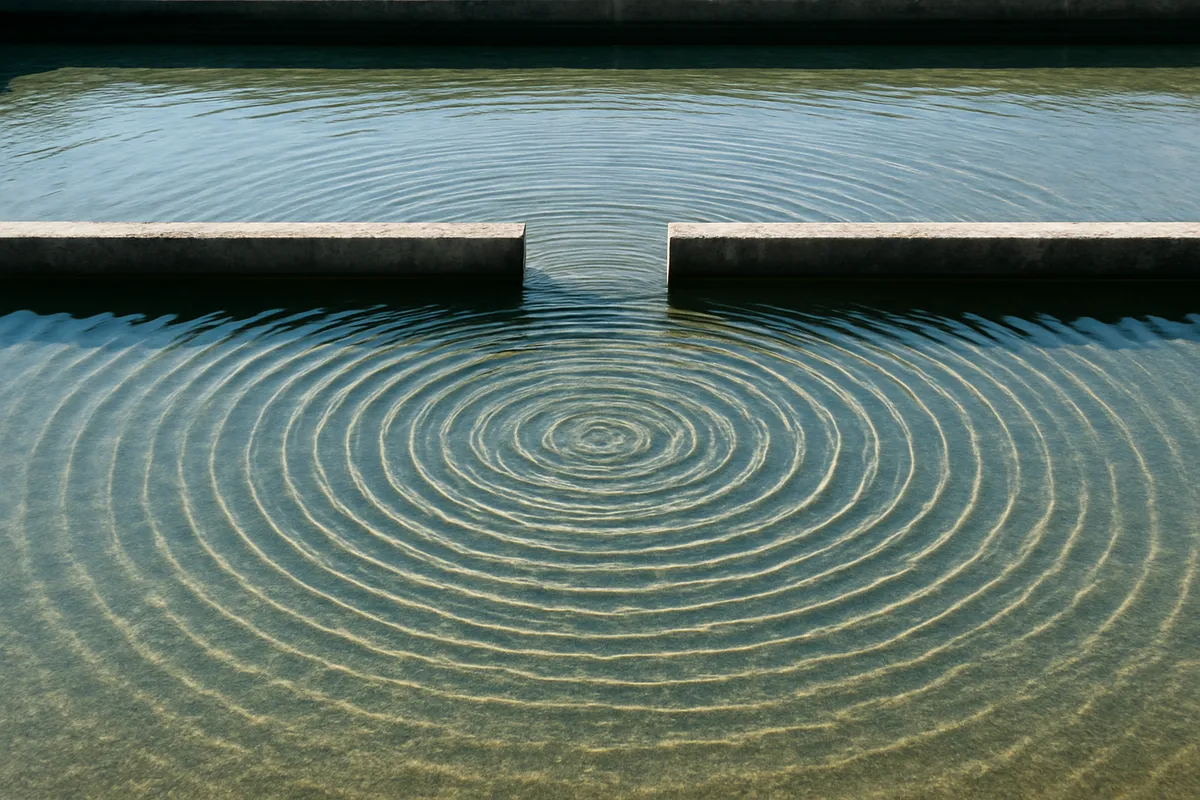
Look at the two-slit figure. Electrons form the many-fringe screen instead of only two bands. What behavior does that result demonstrate?
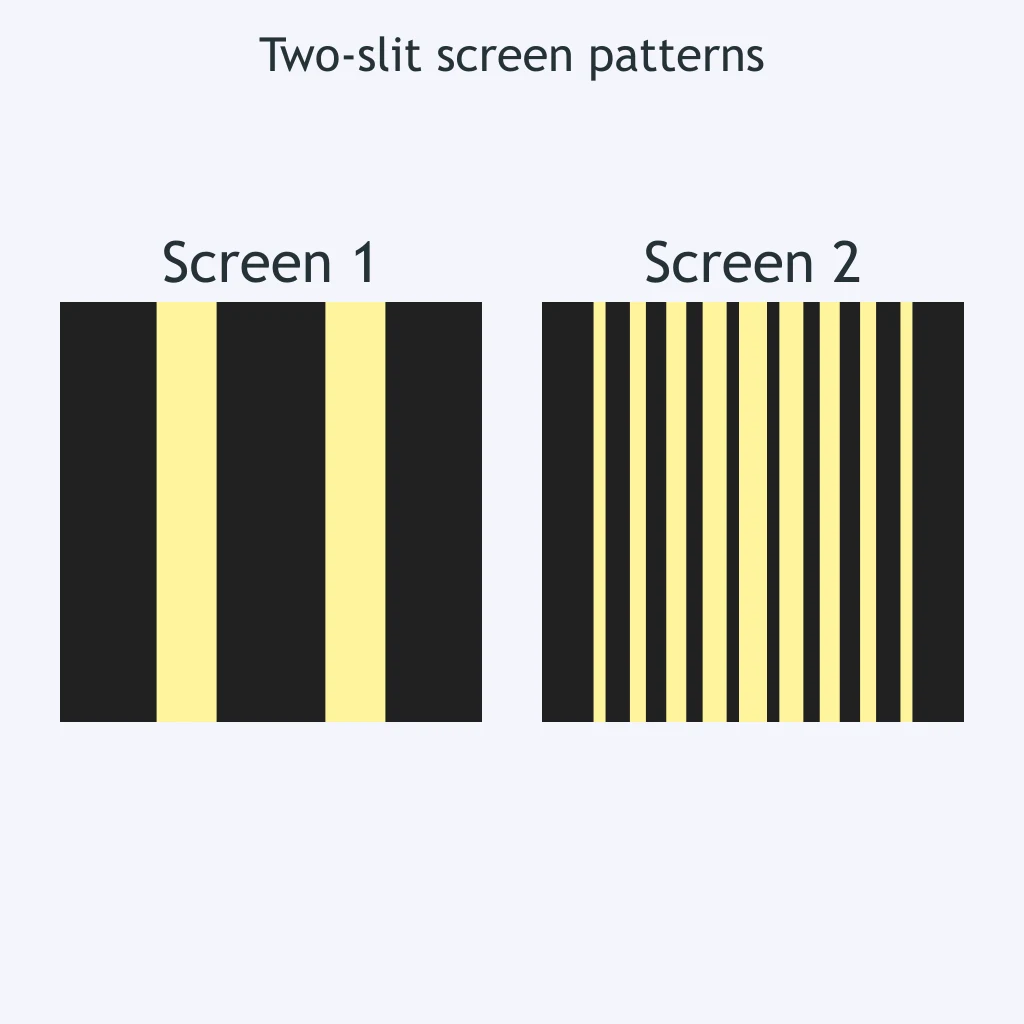
In the figure, one screen has two bands and the other has alternating fringes spread across the screen. Which pattern is evidence for wave behavior?
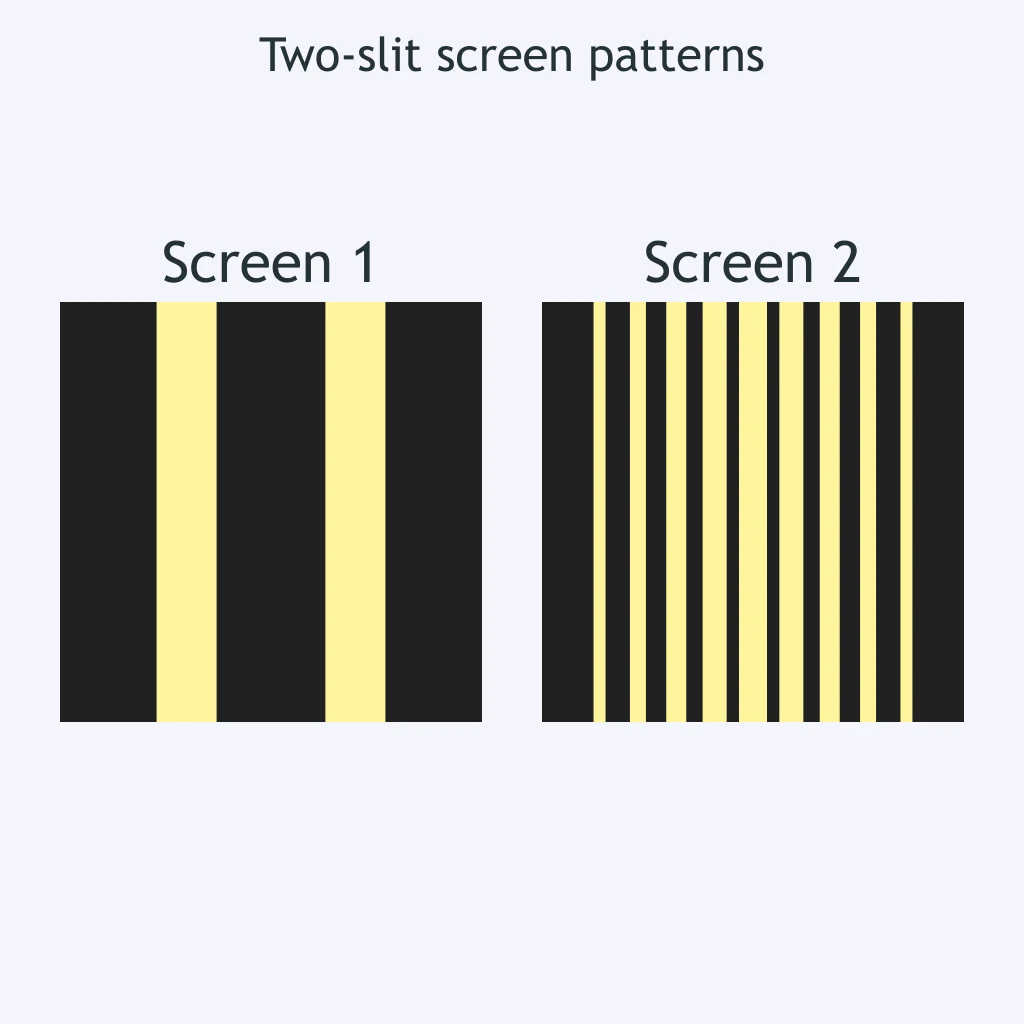
The two-slit figure compares particle bands with an electron fringe pattern. Why does the electron pattern rule out a simple small-ball model?
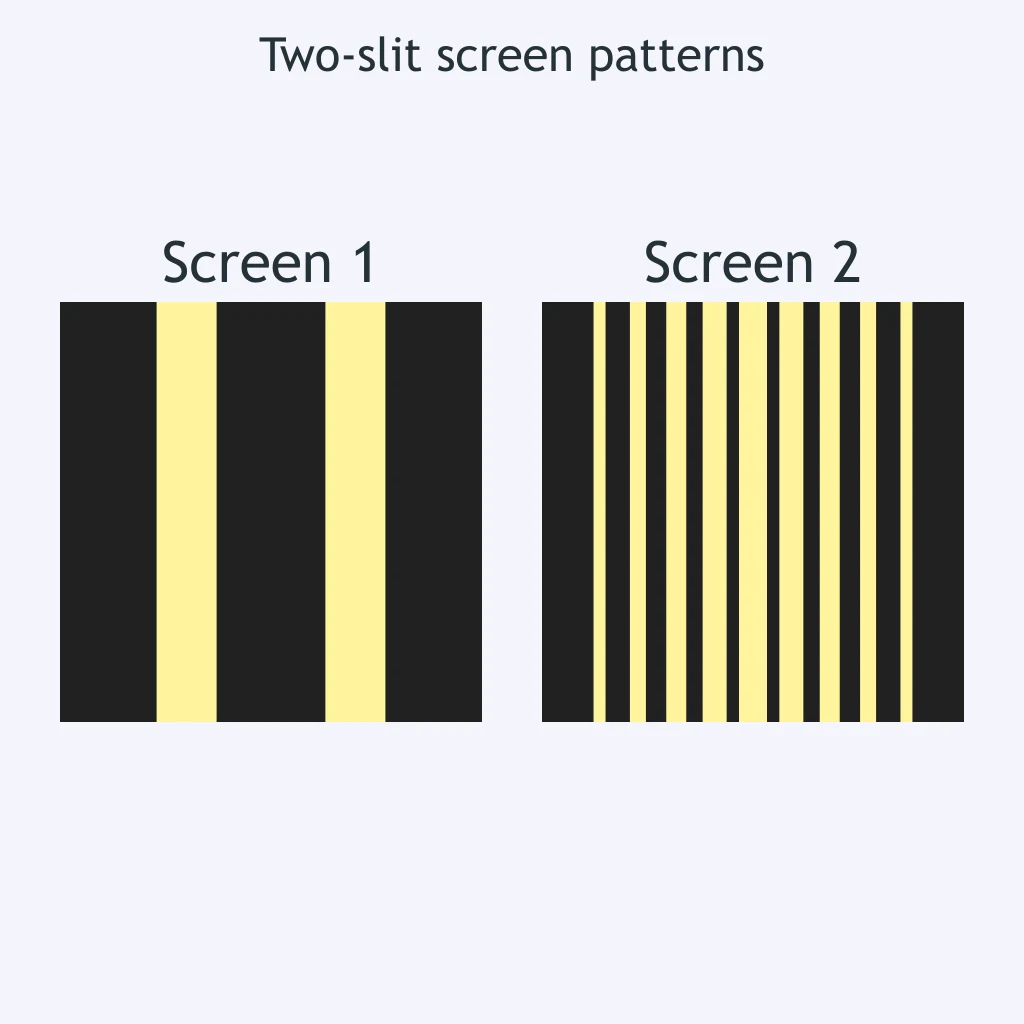
Use the figure showing a two-band screen and a many-fringe screen. What must be added to the particle description to explain the many-fringe result?
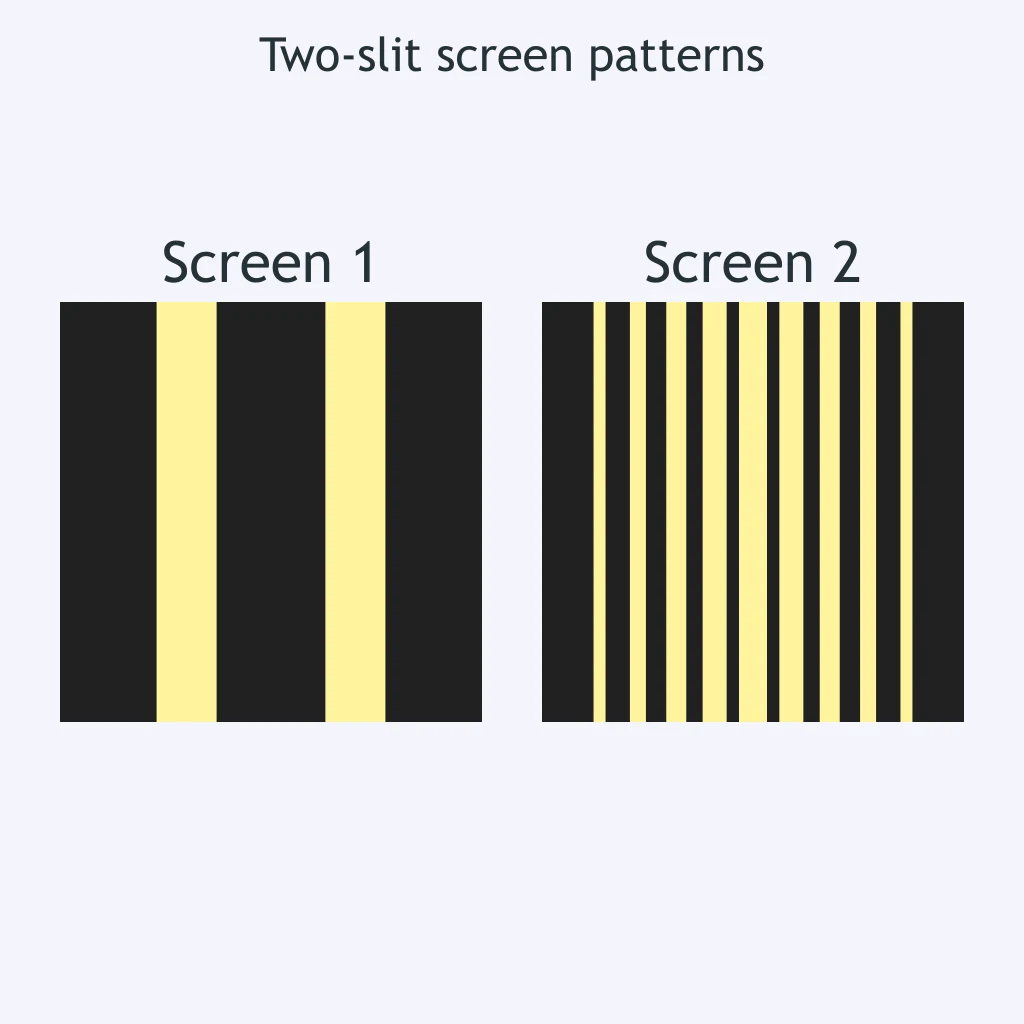
The figure shows that electrons are detected at many bright stripes, with dark stripes between them. Which statement best matches that evidence?
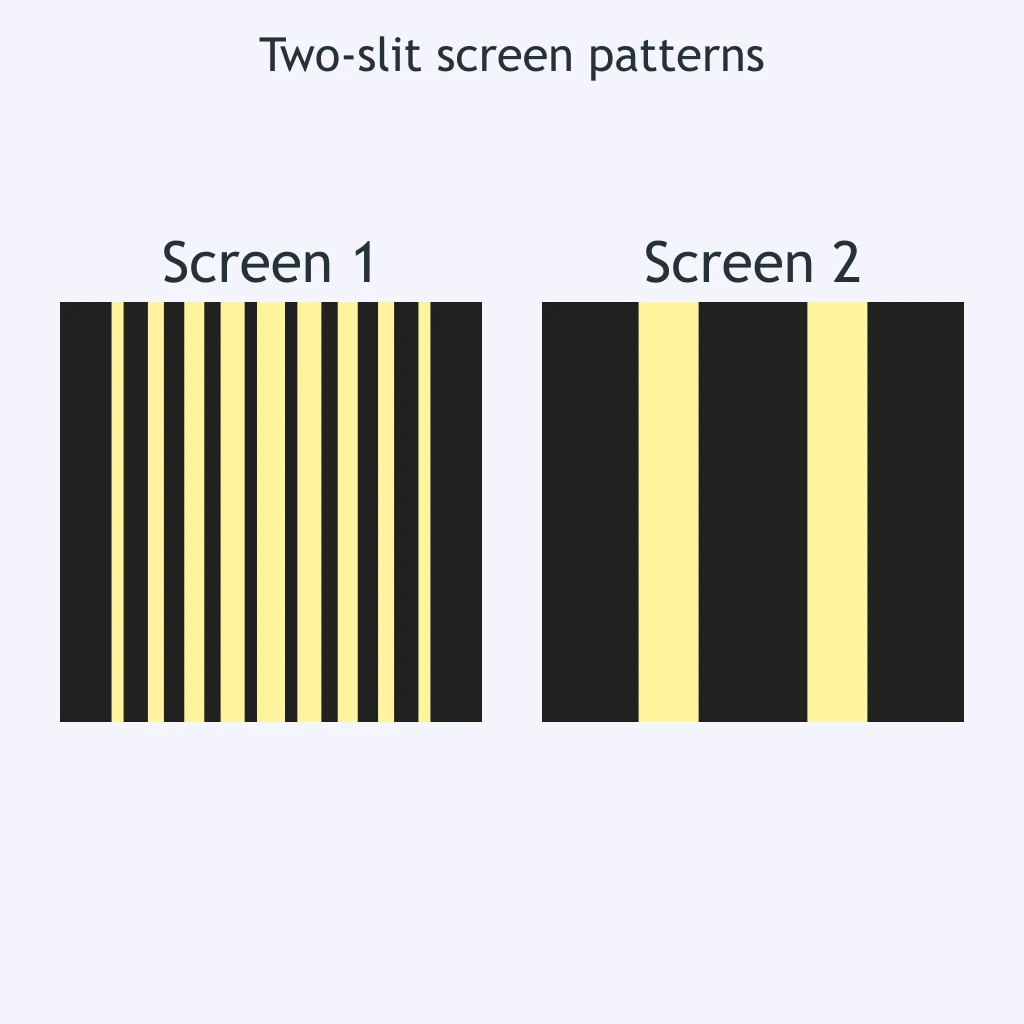
In the two-slit figure, why is the two-band screen a particle-like expectation?
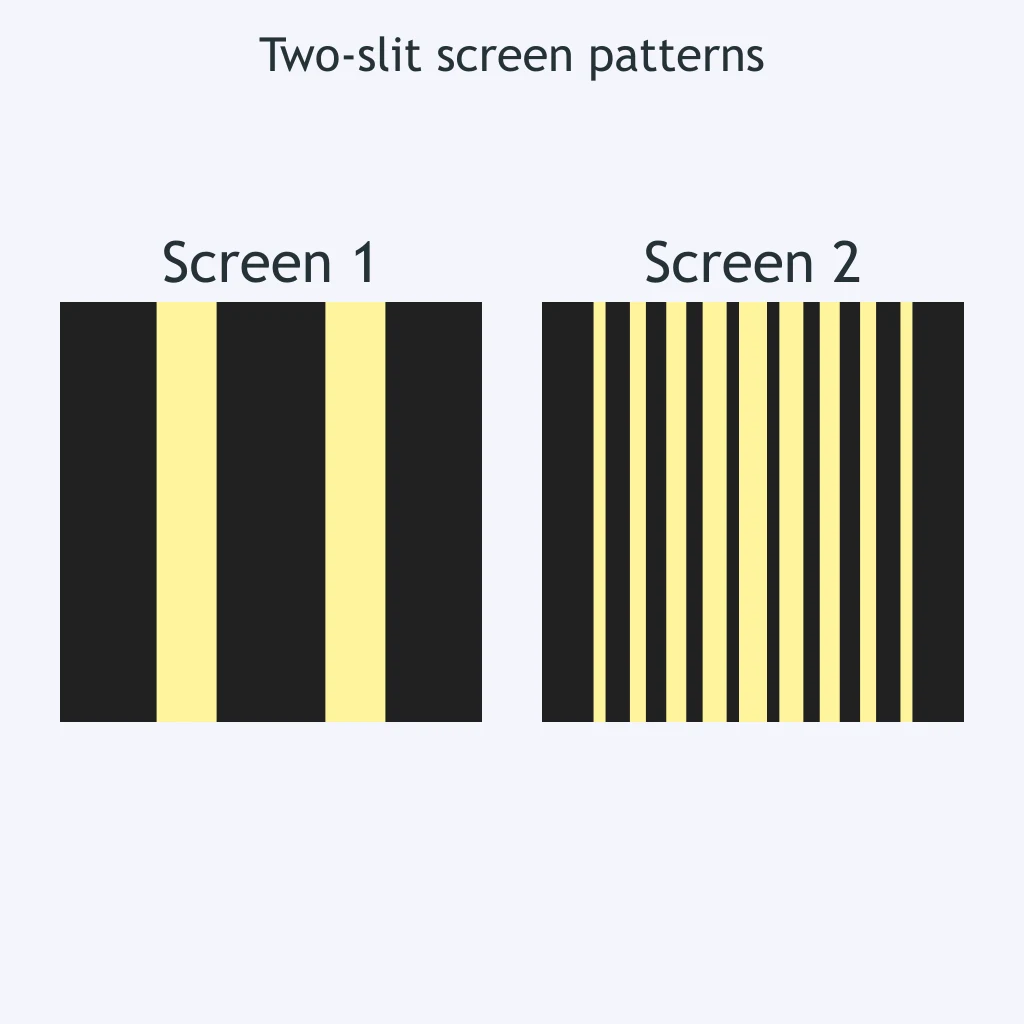
A teacher points to the many-fringe result in the double-slit figure. Which explanation uses the correct model?
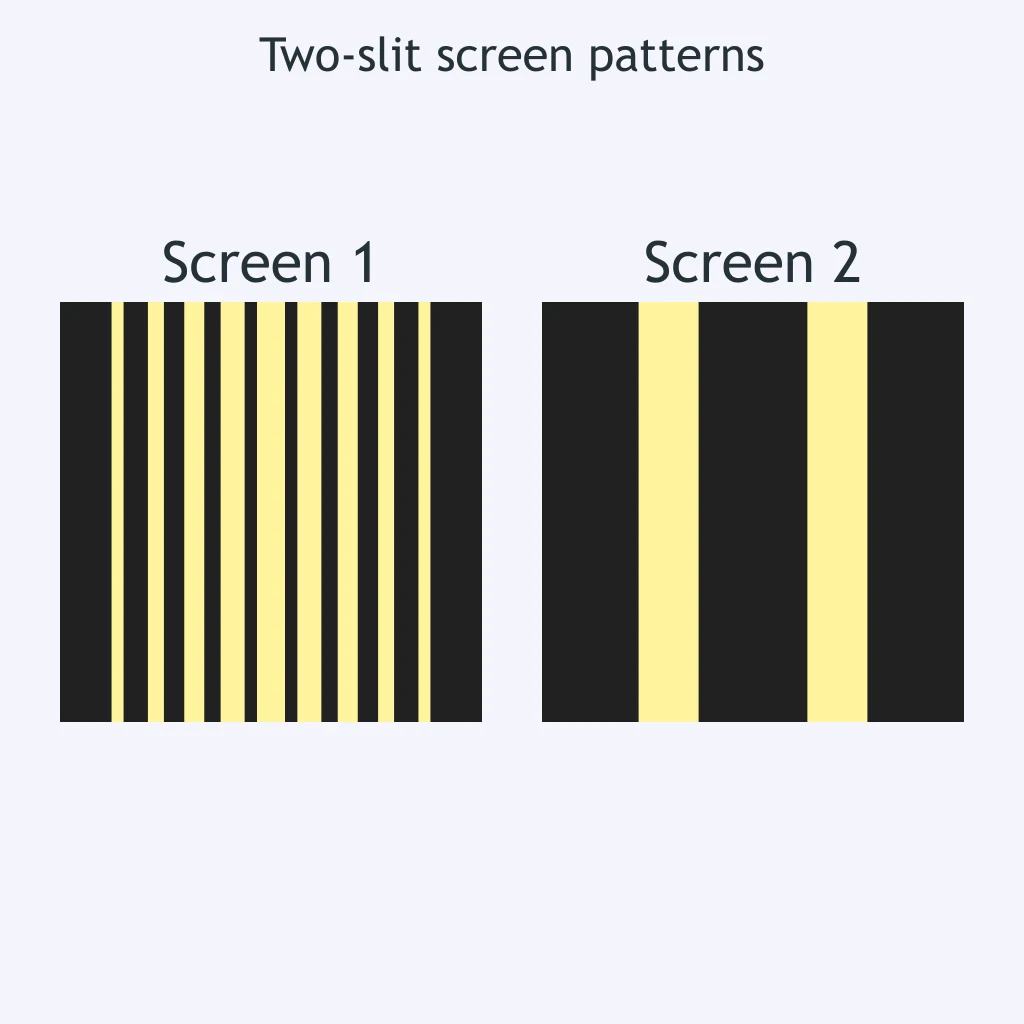
The fringes in the figure are evenly and regularly spaced rather than scattered at random widths. What does that regular spacing indicate?
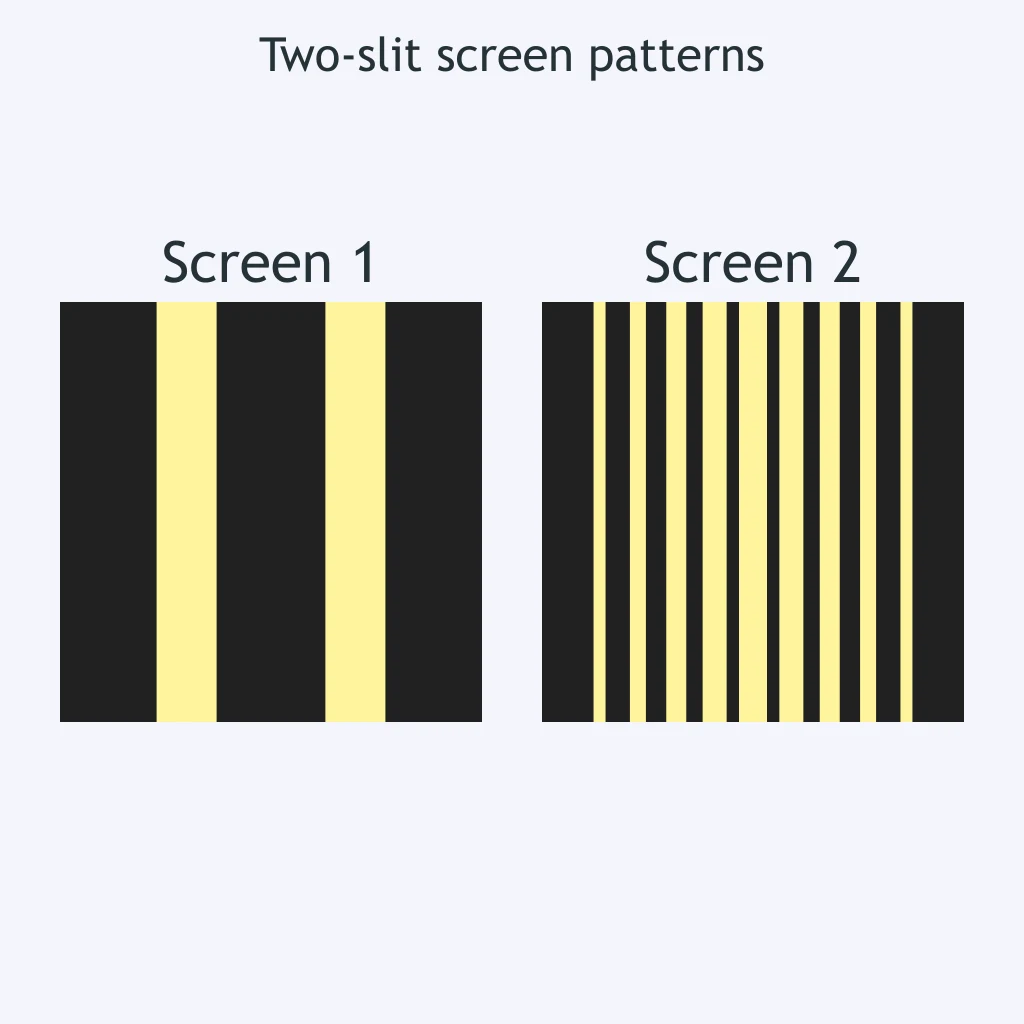
If the electron screen in the figure is built up one electron at a time, what does the final fringe pattern show?
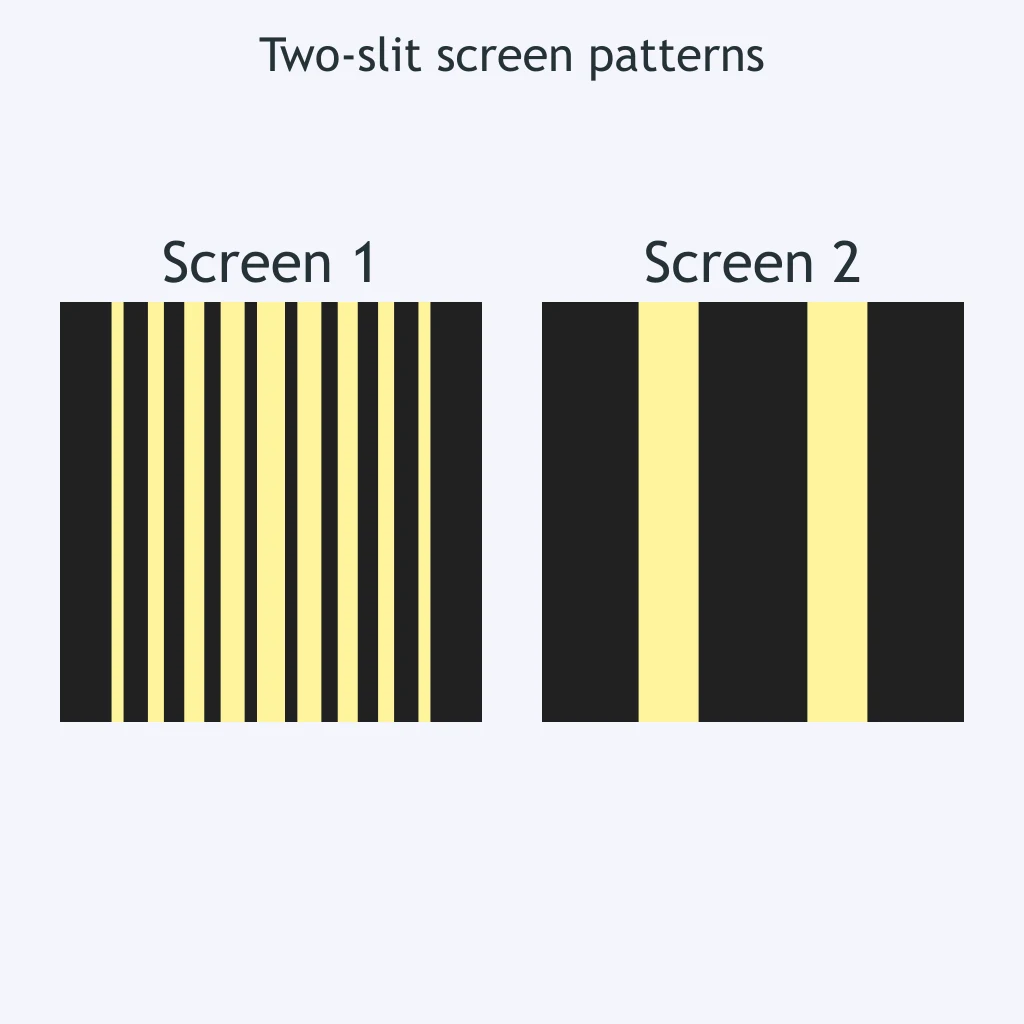
Which conclusion follows from the double-slit figure when the observed result is fringes rather than two bands?
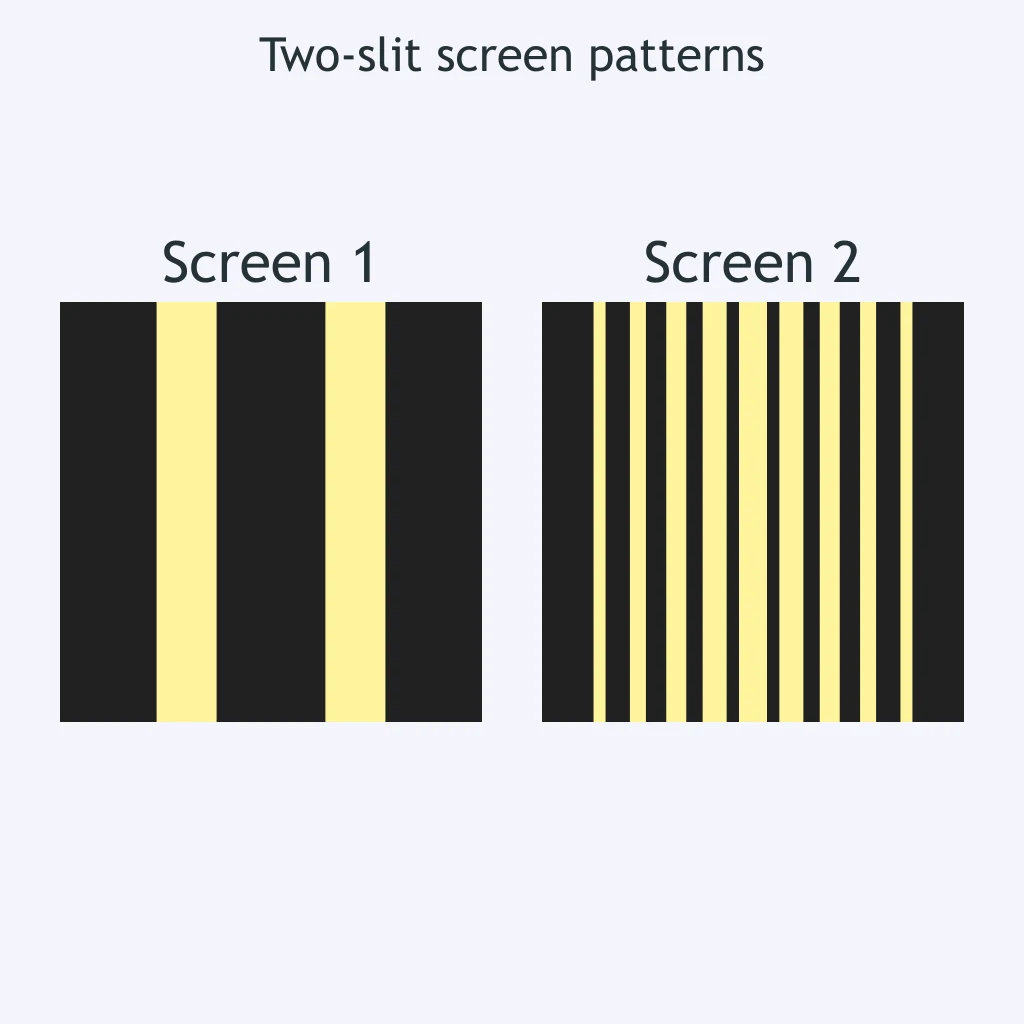
An electron of mass kg travels at m/s. Planck's constant is J·s. What is its de Broglie wavelength?
An electron of mass kg moves at m/s. Use J·s. What is its de Broglie wavelength?
An electron of mass kg travels at m/s. With J·s, what is its de Broglie wavelength?
An electron of mass kg has speed m/s. Use J·s. What is λ?
An electron of mass kg moves at m/s. Planck's constant is J·s. What is λ?
An electron of mass kg travels at m/s. Use J·s. What is its de Broglie wavelength?
An electron of mass kg moves at m/s. With J·s, what is its de Broglie wavelength?
A 0.145 kg ball is thrown at 40.0 m/s. Use J·s. What is its de Broglie wavelength?
In 1924, Louis de Broglie proposed which relationship for a moving particle?
Which result gave early experimental evidence that electrons have wave behavior?
What did Thomas Young's double-slit experiment show about light?
What did Einstein's explanation of the photoelectric effect require?
According to λ = h/p, what happens to a particle's de Broglie wavelength when its momentum increases?
In the equation E = hf for light, what does Planck's constant connect?
Which statement best defines a photon in this unit?
Which statement best summarizes wave-particle duality?
Bright red light below a metal's threshold frequency ejects no electrons, but dim violet light above it does. Which model is required?
An electron beam diffracts after striking a crystal surface. Which model does that evidence require?
Very dim light arrives at a detector as separate clicks at specific places. Which model explains the clicks?
A beam above the threshold frequency ejects more electrons when its intensity is increased, but each electron's maximum energy is unchanged. Why?
Light passing through a narrow opening spreads into the region behind the barrier. Which model is needed for that observation?
A single-electron double-slit experiment builds an interference pattern after many electrons. Which description fits the final pattern?
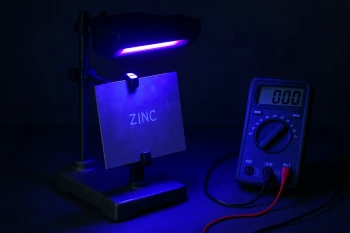
Ultraviolet light ejects electrons from zinc, but much brighter low-frequency light does not. Which explanation works?
Two coherent light waves overlap and create bright and dark bands. Which feature cannot be explained by a particle-only model?
Before a which-slit measurement, how is an electron in a double-slit setup described in quantum physics?
What usually happens to double-slit interference when a detector records which slit each electron used?
A spin is prepared in a superposition of up and down, then measured along that same axis. What is recorded in one trial?
Which statement correctly describes superposition and avoids the common hidden-path misconception?
Why does marking which slit an electron used remove the fringe pattern?
If the same superposition is prepared many times and measured, what pattern should a class expect?
Crack the passcode before the zombies get in.
Answer, then swat bugs for bonus points.
Race through questions at your own speed.
Same question on every screen. Fastest wins.

Pick a tile, answer, hit bonuses and steals.
The Standard Model of Particles
50 questions