Loading
by BlastRoom
Practice identifying proper time and calculating dilated time intervals with the Lorentz factor.
#physics
25 questions
One question set, multiple game modes. Tap any game to see it in action. Not sure which to pick?
Answer to place stones and capture territory.
Outrun the snow together.
Earn blasts, then hunt the other team.
Answer to earn energy, then climb.

The class blasts through walls together.
Bid on mystery lots. Most money wins.
Sell tours. Nice, standard, or a total scam.

Answer, restock, and serve the rush.
More correct answers pulls the rope your way.
Answer, then shoot down the alien wave.
Answer, then tap to leap the frozen ridge.
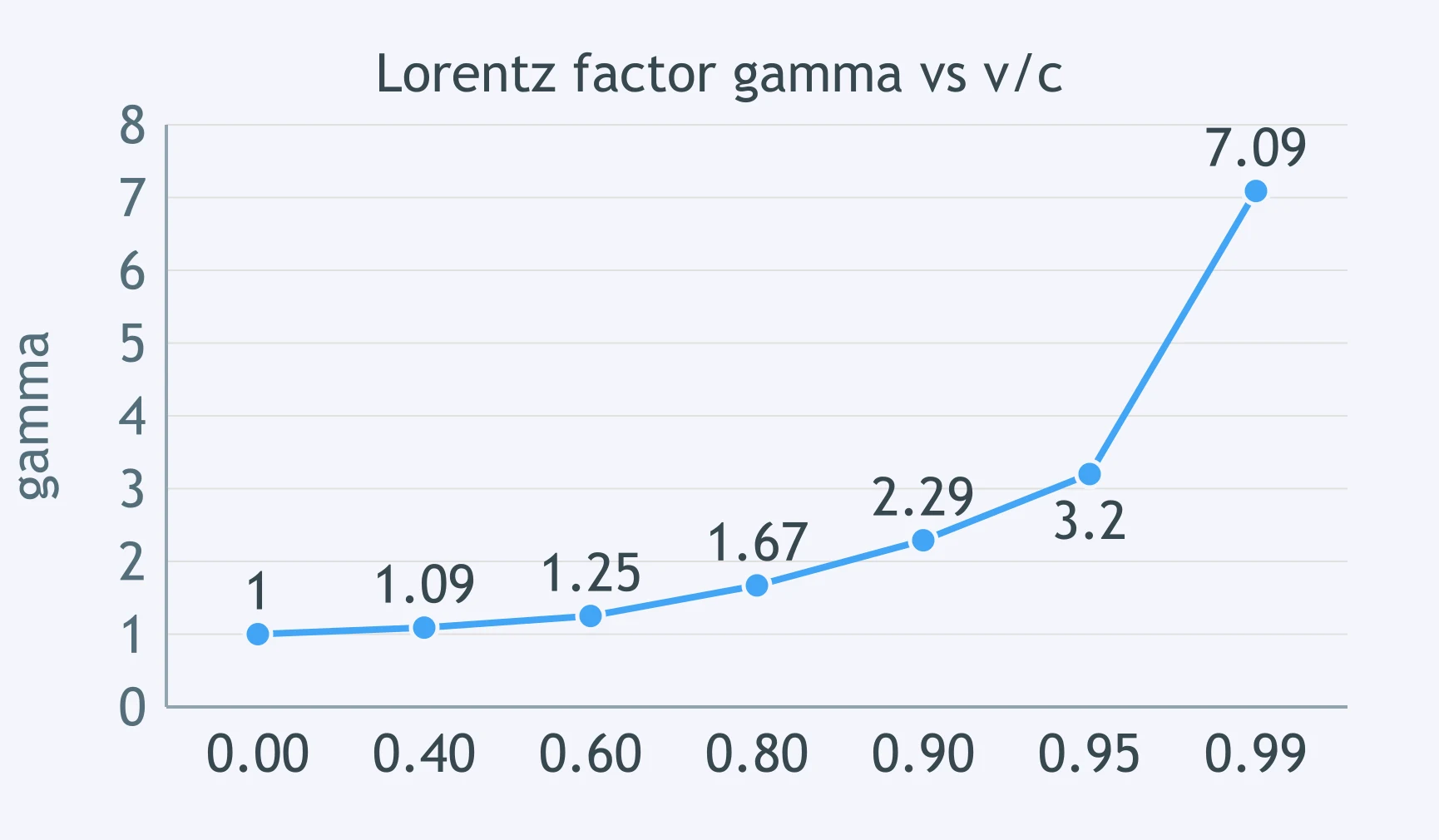
Use the graph of Lorentz factor γ versus v/c. A probe passes Earth at 0.90c; its onboard clock measures 2.0 s between beacon flashes. What interval does Earth measure?
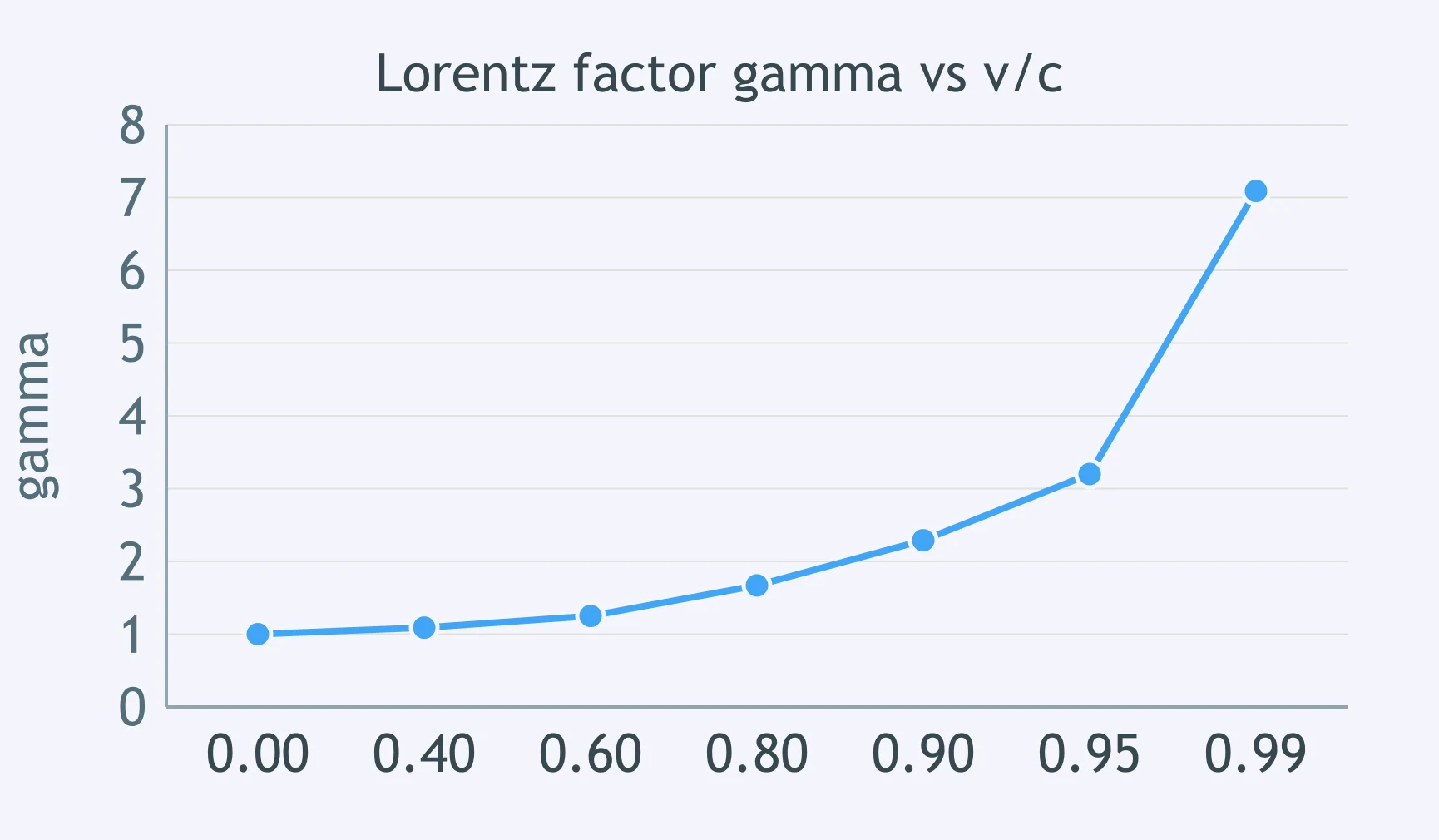
Use the γ versus v/c graph. A ship moving at 0.60c records 8.0 s of proper time between two engine pulses. What time interval does a station observer measure?
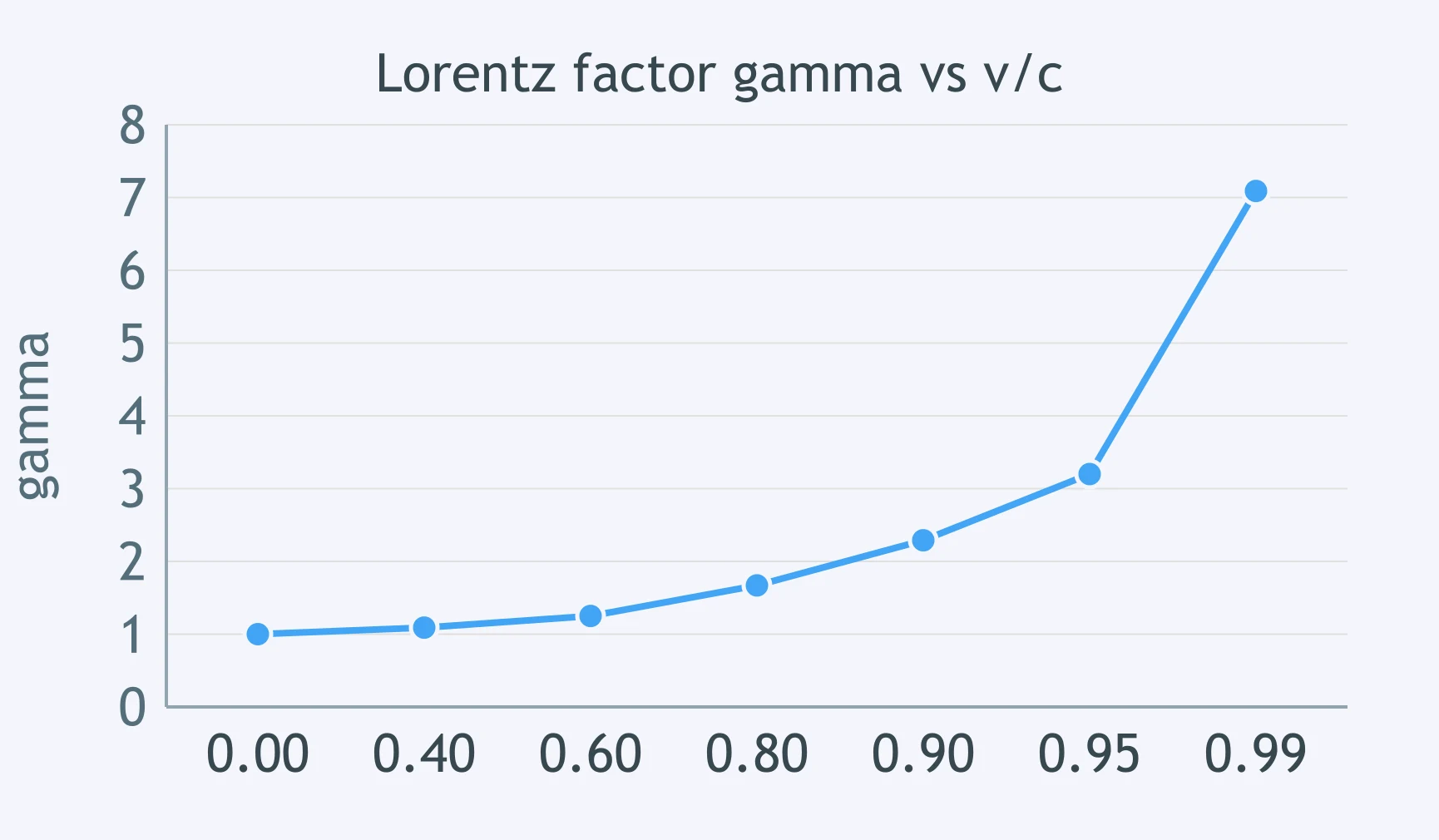
Use the γ versus v/c graph. A moving particle's own clock measures 3.0 ms between two flashes while it travels at 0.80c. What interval is measured in the lab?
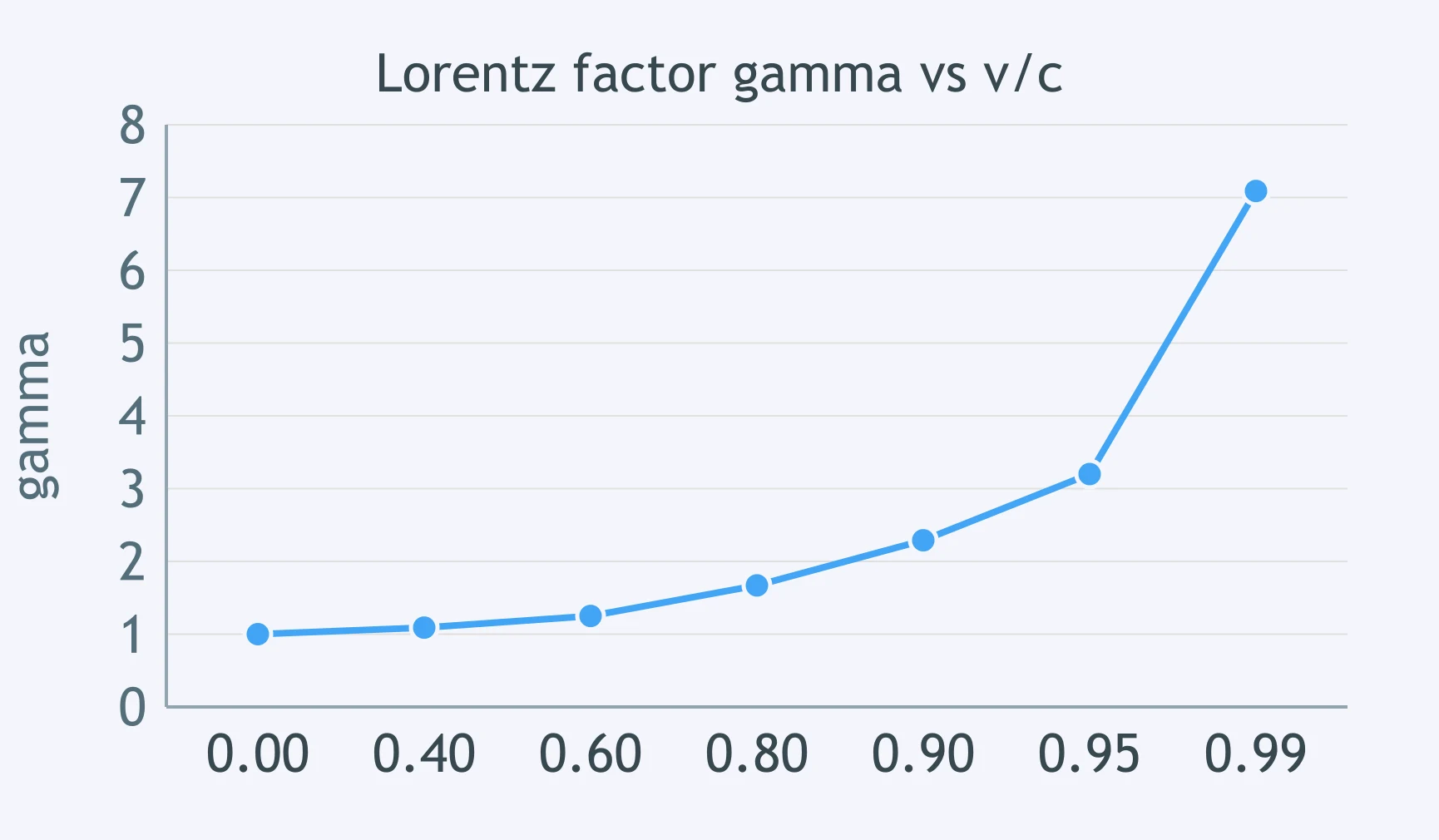
Use the γ versus v/c graph. A muon traveling at 0.99c has a proper lifetime of 1.5 µs in its own frame. What lifetime does an Earth observer measure?
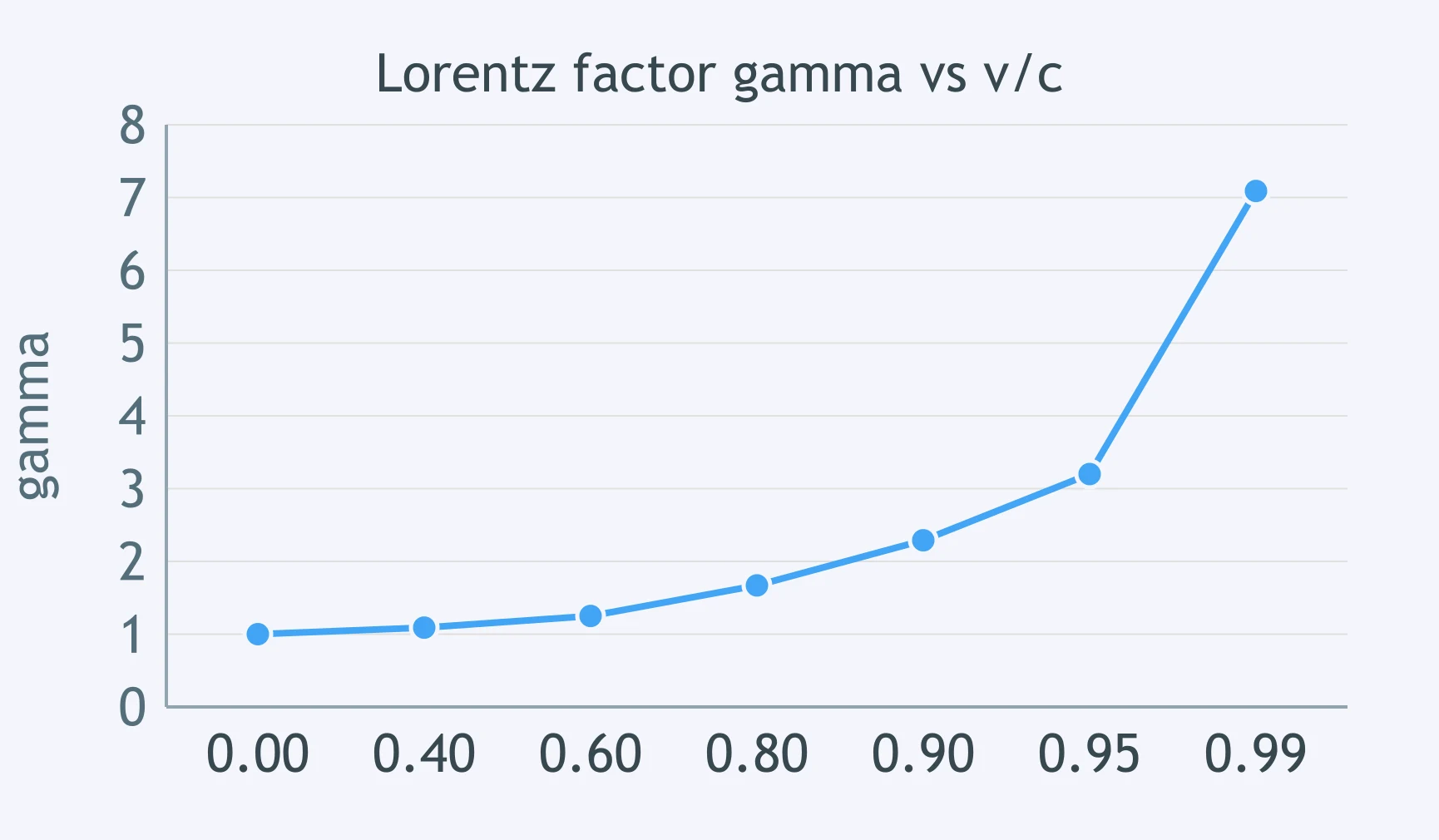
Use the γ versus v/c graph. A spacecraft clock measures 0.50 s between two beeps while the craft moves at 0.95c. What interval does Earth measure?
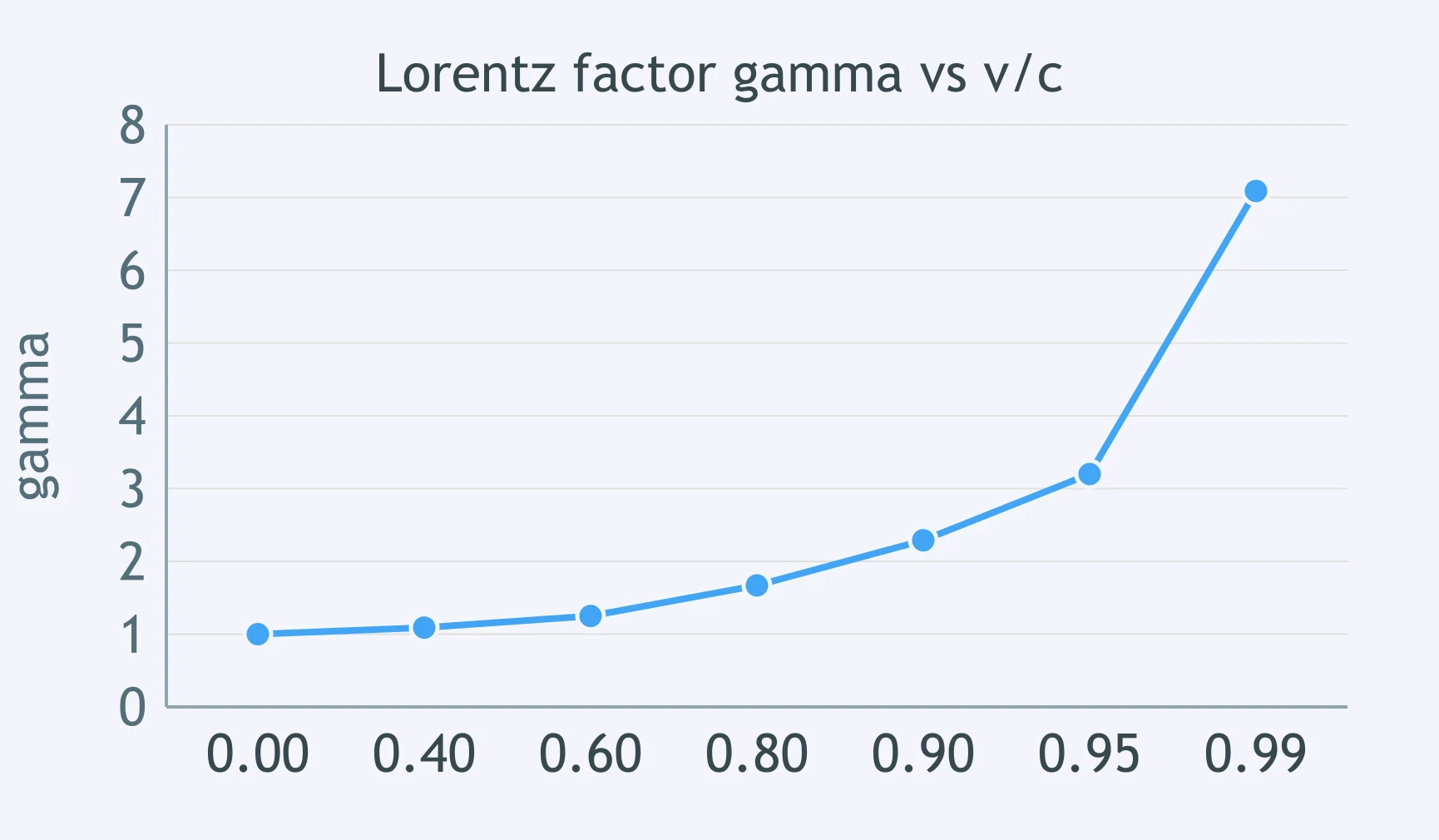
Use the γ versus v/c graph. A fast probe at 0.40c records 12 s between two onboard events. What interval does an observer at rest with Earth measure?
A spacecraft travels at 0.60c. Its clock measures 4.0 s between launch and landing of a ball at the same spot in the cabin. Use . What does the station measure?
A particle moves through a lab at 0.80c. Its own clock measures 6.0 µs between two decays in a detector it carries. Use . What interval does the lab measure?
A rocket passes Earth at 0.90c. A clock on the rocket measures 5.0 s between two flashes from the same onboard lamp. Use . What does Earth measure?
A moving clock travels at 0.50c, and its proper time between two ticks is 20 ns. Use . What time between ticks is measured by a stationary observer?
A spacecraft clock measures 30 s while passing a beacon at 0.70c. Use . What interval does the beacon's inertial frame measure?
A capsule moves at 0.95c. Its onboard timer reads 2.0 s between two radio pulses from the same antenna. Use . What interval does Earth measure?
An ion moves at 0.30c. In the ion's rest frame, two events are separated by 100 ns. Use . What interval is measured in the lab?
A muon travels at 0.99c. Its proper lifetime is 2.2 µs. Use . What lifetime does an Earth observer measure?
A spacecraft antenna emits two pulses from the same point on the craft. Which clock measures the proper time between the emissions?
Two sparks occur at the same marked point on a lab bench while a rocket flies by. Who measures the proper time between the sparks?
A muon is created and later decays while moving through the atmosphere. Which observer would measure the muon's proper lifetime?
A passenger taps the same spot on a train seat twice as the train passes a platform. Which clock measures the proper time between taps?
A ground detector records two particle hits at the same sensor while a spacecraft passes overhead. Which frame measures the proper time between the hits?
An astronaut starts and stops a wristwatch timer while holding it in the same hand. Which time is the proper time for those start and stop events?
An airliner travels at about 250 m/s, roughly 0.0000008c. Why do its clocks differ from airport clocks by only tiny amounts after a flight?
A car moves at 30 m/s, about 0.0000001c. What does special relativity predict about time dilation for the car's clock?
Cosmic-ray muons created high in the atmosphere can reach the ground even though their rest lifetime is short. What explains this in Earth's frame?
A lab finds that unstable particles moving at high speed last longer in the lab than identical particles at rest. Which interpretation matches special relativity?
A student says time dilation only means light from a moving clock arrives late. What is the best correction?
Crack the passcode before the zombies get in.
Answer, then swat bugs for bonus points.
Race through questions at your own speed.
Same question on every screen. Fastest wins.

Pick a tile, answer, hit bonuses and steals.
The Relativity of Simultaneity
20 questions