Loading
by BlastRoom
Trace Islamic expansion and the trade networks linking Asia, Africa, and Europe.
#world_history#us_grade_7_social_studies
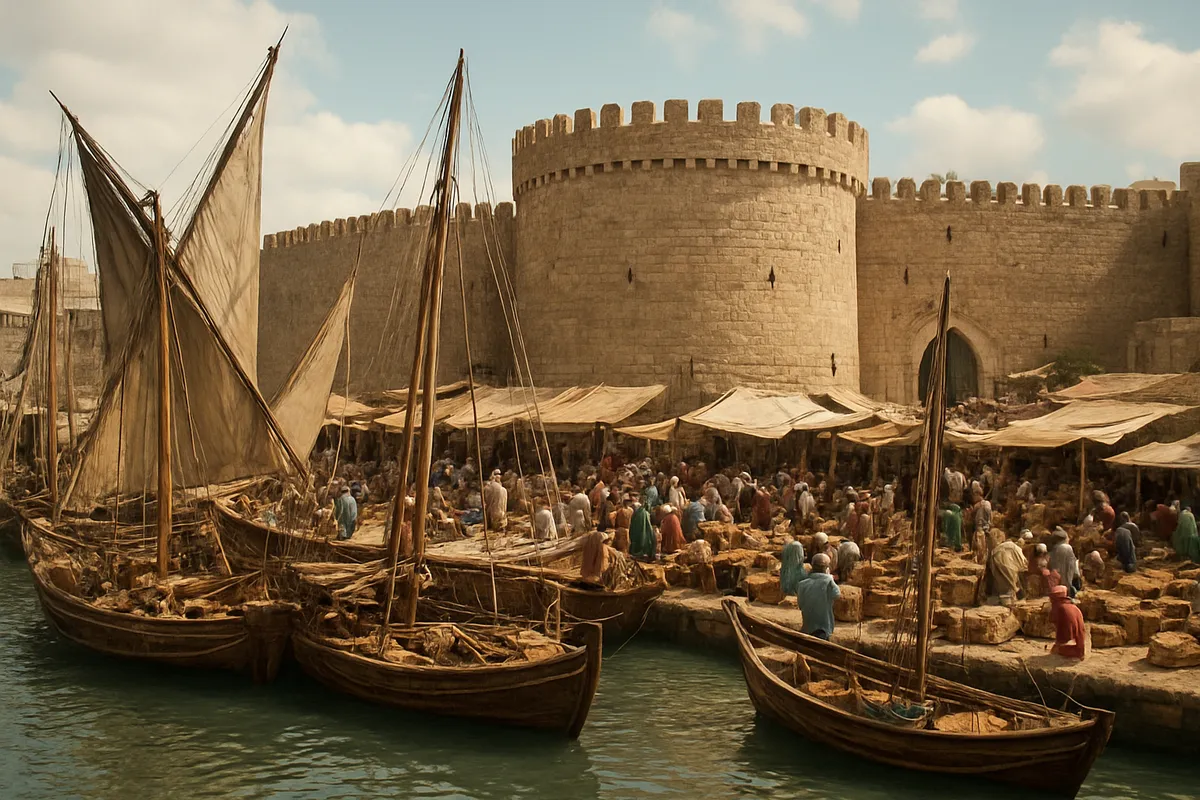
20 questions
One question set, multiple game modes. Tap any game to see it in action. Not sure which to pick?

Pick a tile, answer, hit bonuses and steals.

Battleship. Sink every enemy ship to win.
Pass the potato before the fuse runs out.
Buy low, sell high, before the news breaks.
Take the wages, or take the whole vault.
Answer, then shoot for the top corner
A Damascus-based caliphate expanded west across North Africa and east into Central Asia. Which empire is described?
After 750, a caliphate ruled from Baghdad and connected trade from the Mediterranean to India and China. Which empire was this?
A new dynasty overthrew the Umayyads in 750 and built power near Persian trade routes. Which caliphate formed?
Under Abd al-Malik, the Damascus-based rulers used Arabic administration across a vast empire. Which caliphate made this change?
Muslim rule in al-Andalus began after armies crossed from North Africa into Iberia in 711. Which caliphate led that expansion?
Abbasids moved the caliphate's capital from Damascus to Baghdad. What expansion pattern does that shift show?
Abbasid caliphs used powerful chief ministers called viziers and copied the court customs of an older empire. Which culture shaped the Abbasid court most?
Merchants used seasonal monsoon winds to sail between Arabia, East Africa, and India. What network did they use?
Gold from West Africa moved north across the Sahara to Muslim cities. What good commonly traveled south in return?
Chinese goods reached Abbasid markets on camel caravans through Central Asian oasis cities such as Samarkand. Which route system carried them?
Merchants loaded ivory, gold, and enslaved people at ports such as Kilwa before sailing to Arabia and India. Which coast was involved?
A merchant bought pepper in India and sold it in Basra. Which trading region connected these ports?
Caravans crossing North Africa stopped at oases because camels and travelers needed water. Which route depended on these stops?
Muslim merchants in many lands used shared Arabic contracts, coins, and credit notes. What economic effect did this support?
Baghdad's House of Wisdom drew scholars who translated Greek, Persian, and Indian works. What effect of exchange is shown?
Trans-Saharan trade made the city of Timbuktu rich. What was Timbuktu most famous for by the 1400s and 1500s?
Muslim, Jewish, Christian, and Hindu merchants met in port cities around the Indian Ocean. What effect did trade encourage?
Swahili developed along East Africa's coast with many Arabic loanwords. What caused this language blend?
Markets in Cairo linked Mediterranean goods with Red Sea routes to Mecca and India. What city effect followed?
When paper-making spread from China into Abbasid lands, books became easier to copy. What cultural effect followed?
The Election of 1860 and Secession
20 questions
The Fall of the Western Roman Empire
20 questions
The Byzantine Empire and Justinian
20 questions
The Origins and Beliefs of Islam
20 questions
The Islamic Golden Age
30 questions

Tang and Song China: Government and Technology
30 questions
The Silk Road and Cultural Exchange
20 questions
West African Empires: Ghana, Mali and Songhai
20 questions

Elements and Compounds
40 questions
Keep the tile or give it to a rival team.
Answer correctly to move your piece.
Texas Hold'em. Answer to draw better cards.
Pick a chest. Big bonus, or lose it all.
Catapult a rival castle or repair your own.
Climb the mountain, or push a rival off it.




