Loading
by BlastRoom
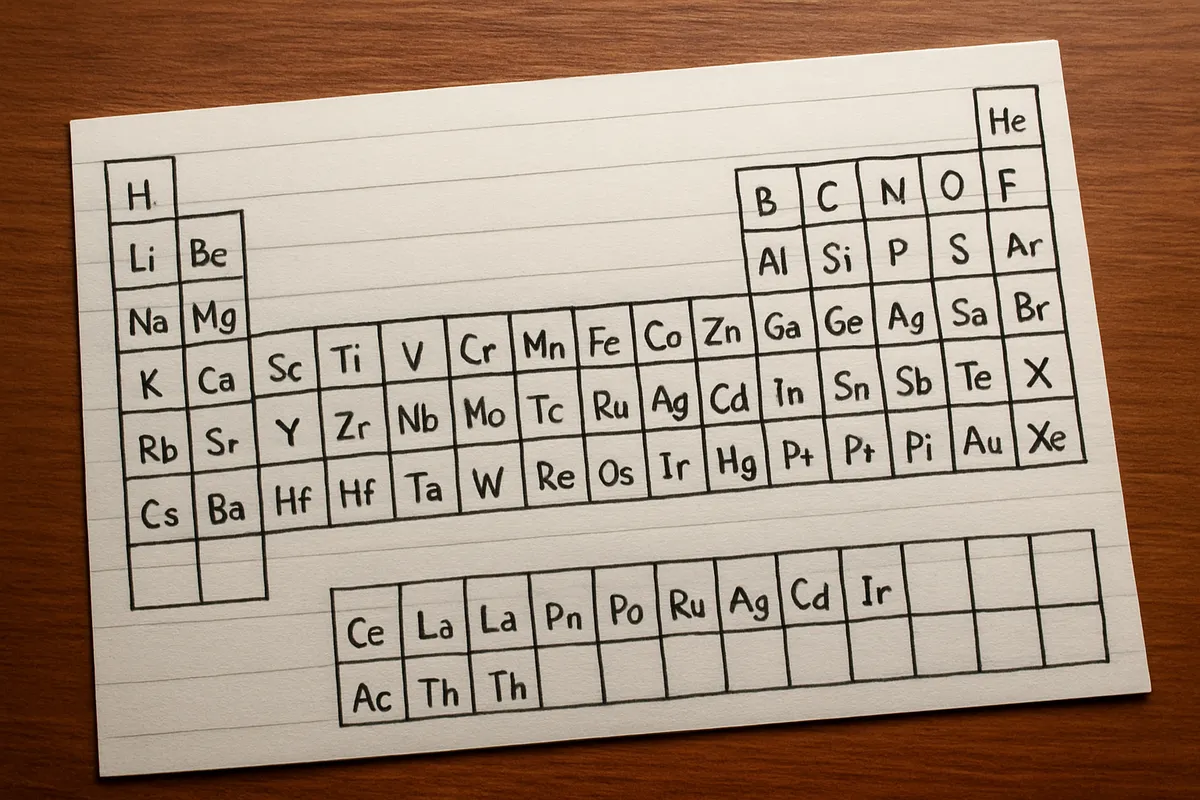
Trace how predictions and atomic number shaped the modern periodic table.
#chemistry
15 questions
One question set, multiple game modes. Tap any game to see it in action. Not sure which to pick?
Answer to place stones and capture territory.
Outrun the snow together.
Earn blasts, then hunt the other team.
Answer to earn energy, then climb.

The class blasts through walls together.
Bid on mystery lots. Most money wins.
Sell tours. Nice, standard, or a total scam.

Answer, restock, and serve the rush.
More correct answers pulls the rope your way.
Answer, then shoot down the alien wave.
Answer, then tap to leap the frozen ridge.
A chemist arranged known elements so repeating properties lined up, even if it meant leaving blank spaces for elements not yet found. Which scientist is described?
Which scientist used X-ray spectra to show that each element has a unique whole-number nuclear charge?
A scientist predicted that the blank space called eka-aluminum would be filled by a metal with specific properties. Who made that prediction?
Who provided evidence that the periodic table should follow increasing atomic number rather than strictly increasing atomic mass?
In an early periodic table, an element could be placed where its chemical family fit even if its measured mass seemed slightly out of order. Which scientist used that approach?
A scientist's nuclear charge measurements showed that elements were still missing at certain atomic numbers, such as 43 and 61. Which scientist made that advance?
A blank space was left under aluminum in an early periodic table. What later discovery supported that choice?
Why were some positions left empty instead of forcing known elements into every spot?
A predicted element was later discovered with properties close to those expected for eka-silicon. Why was that a strong test of the table?
An early table sometimes challenged accepted atomic masses when an element's properties fit a different family. What evidence was being emphasized?
When argon and the other noble gases were discovered in the 1890s, how were they added to the periodic table?
Tellurium has a slightly greater atomic mass than iodine, but it belongs before iodine so each element stays with similar properties. What ordering rule explains this?
In the modern periodic table, what value increases by one from each element to the next?
Why do isotopes of the same element occupy one position in the modern periodic table?
If two elements appear out of order by average atomic mass, why can the modern table still place them correctly?
Crack the passcode before the zombies get in.
Answer, then swat bugs for bonus points.
Race through questions at your own speed.
Same question on every screen. Fastest wins.

Pick a tile, answer, hit bonuses and steals.

Why Atoms Bond: Valence Electrons and the Octet Rule
20 questions