Loading
by BlastRoom
Why some religions seek converts and spread, and others stay with a people and a place.
#us_hs_human_geography
40 questions
One question set, multiple game modes. Tap any game to see it in action. Not sure which to pick?
Answer to place stones and capture territory.
Outrun the snow together.
Earn blasts, then hunt the other team.
Answer to earn energy, then climb.

The class blasts through walls together.
Bid on mystery lots. Most money wins.
Sell tours. Nice, standard, or a total scam.

Answer, restock, and serve the rush.
More correct answers pulls the rope your way.
Answer, then shoot down the alien wave.
Answer, then tap to leap the frozen ridge.
A faith teaches that any person can join, translates its teachings into many languages, and sends missionaries to seek converts. What kind of religion is this?
A religion's festivals follow one people's farming calendar, membership usually comes by birth, and leaders make no effort to recruit outsiders. What kind is it?
A congregation funds proselytizing abroad and counts converts from any ethnicity as full members. How should this religion be classified?
A tradition centers on family shrines, ancestral land, and rituals inherited through kinship. Outsiders are not expected to join. What type is it?
A faith teaches that salvation is available to all humankind and opens worship centers in many countries to welcome new believers. What kind is it?
A community links worship to a single nation's origin stories and sees the faith as part of that people's inherited identity. What type is this?
A religion's main holidays mark events in its founder's life rather than local harvest seasons, so believers in many countries celebrate them together. What type of religion is this?
A religion's rites are tied to local rivers, pilgrimage sites, and duties of caste or lineage. It rarely recruits outsiders. What type is it?
Believers from dozens of ethnic groups and countries travel to holy sites linked to the life of the religion's founder. How should this religion be classified?
A tradition defines membership mainly by descent from a covenant community while accepting only limited conversion. What kind of religion is this?
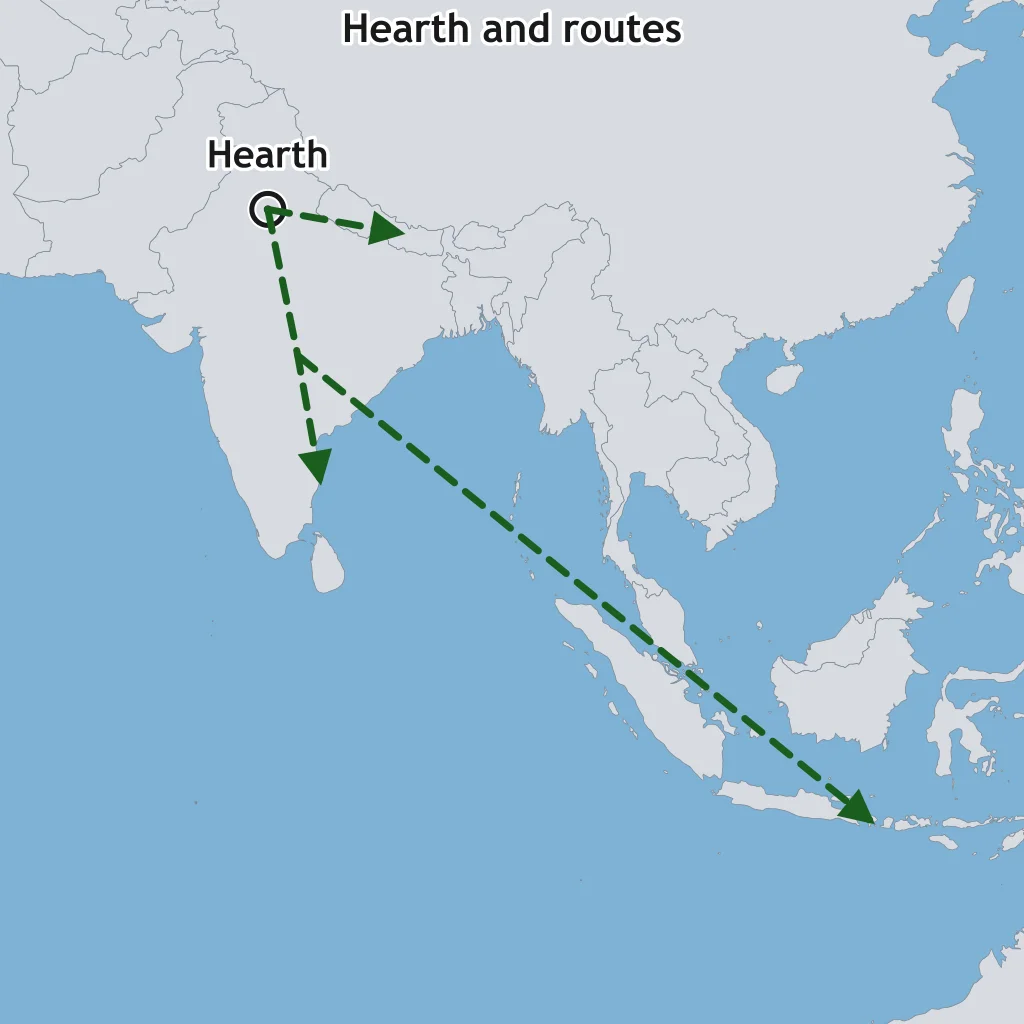
This religion traces its origin to a teacher on the Ganges plain who taught a path away from suffering in the sixth century BCE. Which religion is it?
This religion began among the ancient Hebrew people in the eastern Mediterranean and centers on covenant, law, and sacred sites such as Jerusalem. Which is it?
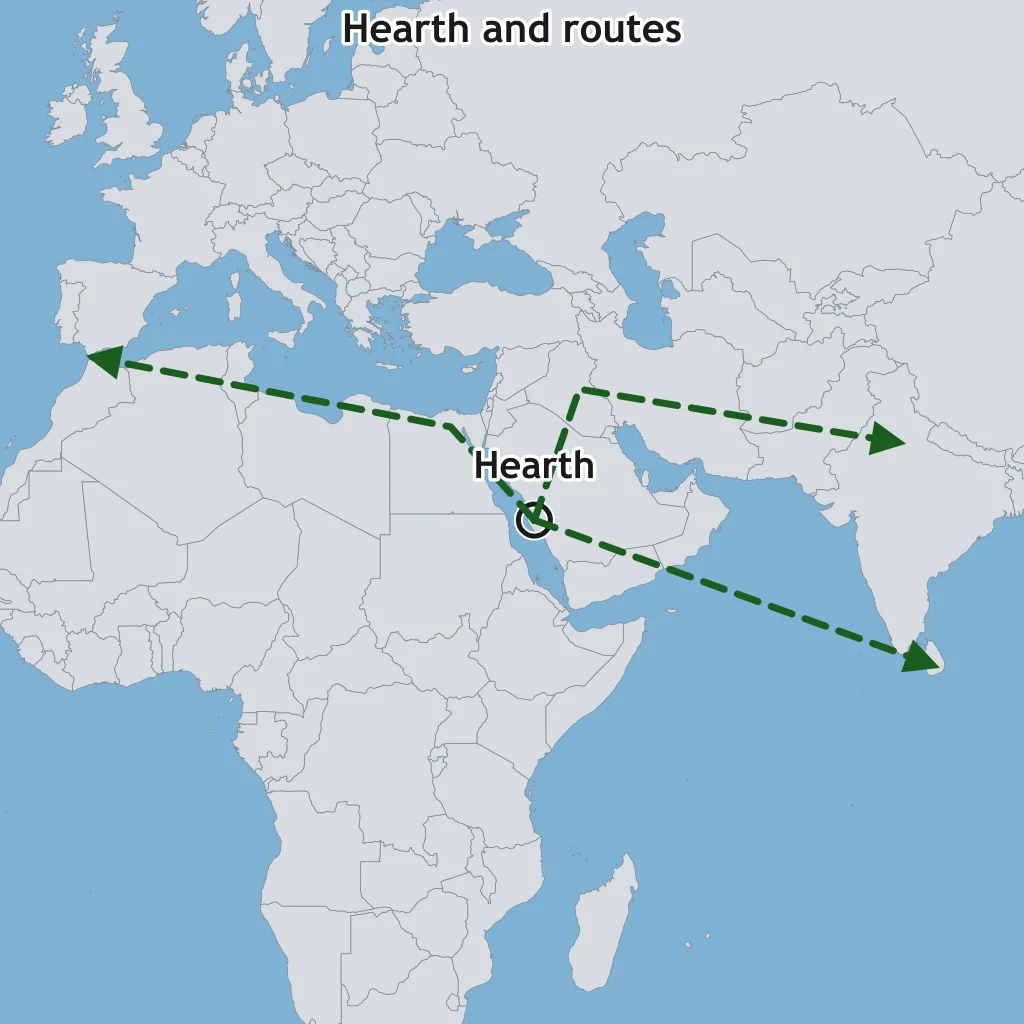
This religion began in western Arabia in the seventh century CE after revelations received by Muhammad. Which religion is it?
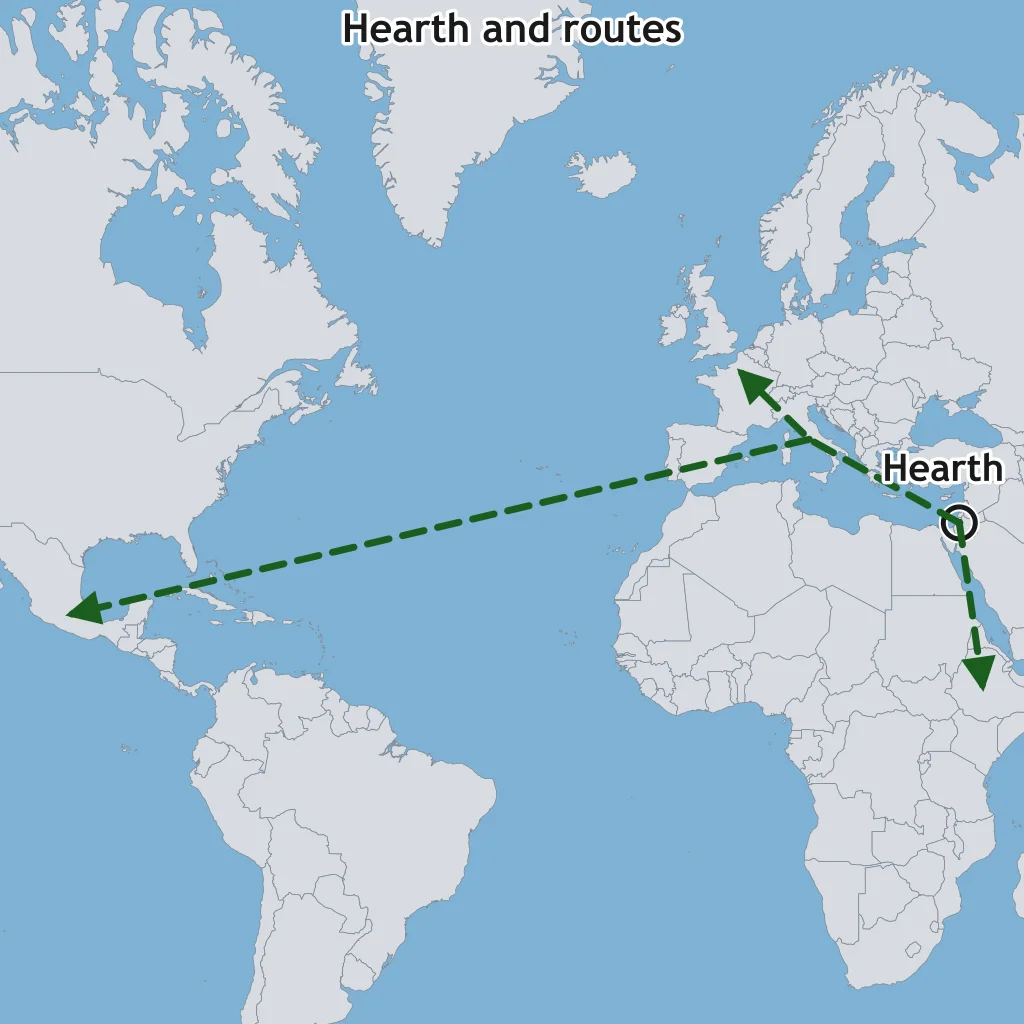
This religion began in the Roman province of Judea with followers of Jesus and later spread through the Roman world. Which religion is it?
This religion arose in Punjab with Guru Nanak and later gurus, combining devotion to one God with a distinct community identity. Which religion is it?
This religion grew from Vedic traditions in the Indian subcontinent and has no single founder. Which religion is it?
This tradition is rooted in worship of kami and sacred places in the Japanese islands. Which religion is it?
This tradition is traced to a teacher in eastern China whose teachings emphasize ritual, hierarchy, and proper social relationships. Which is it?
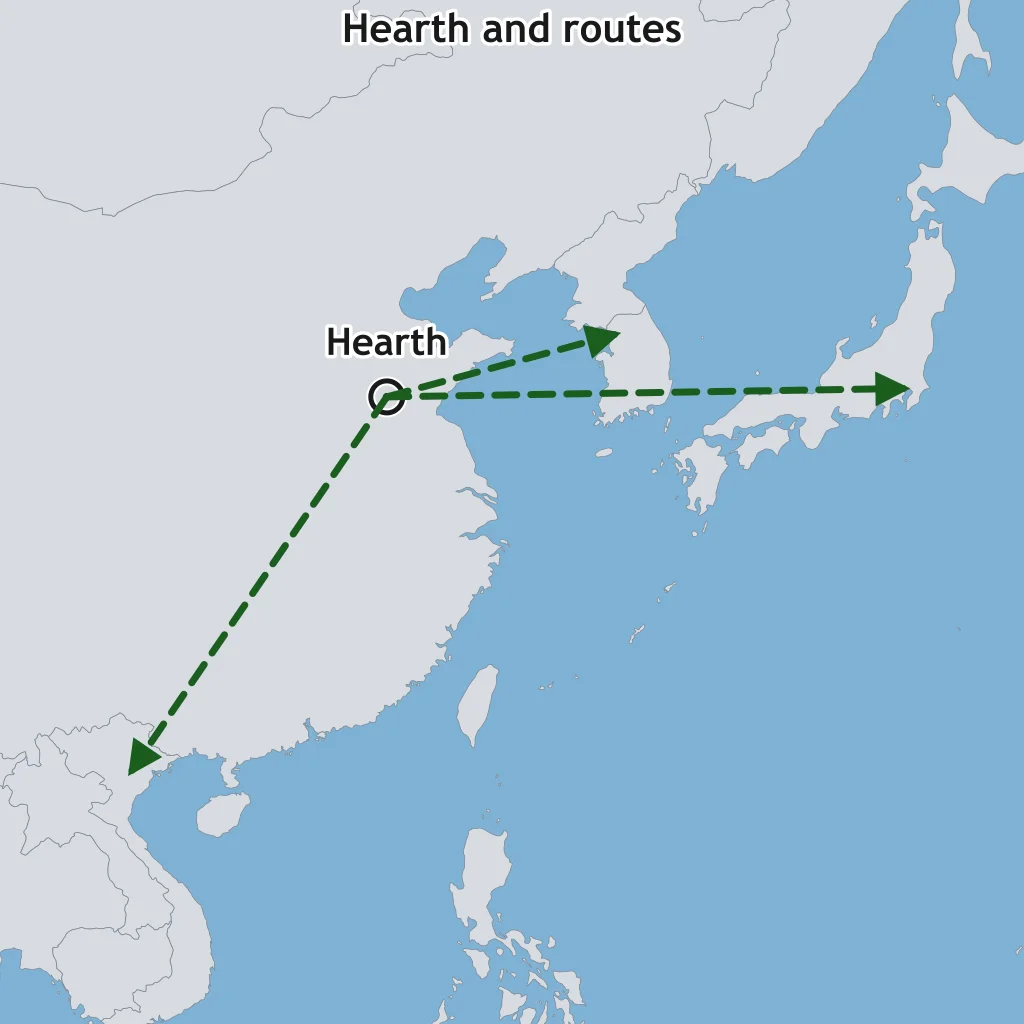
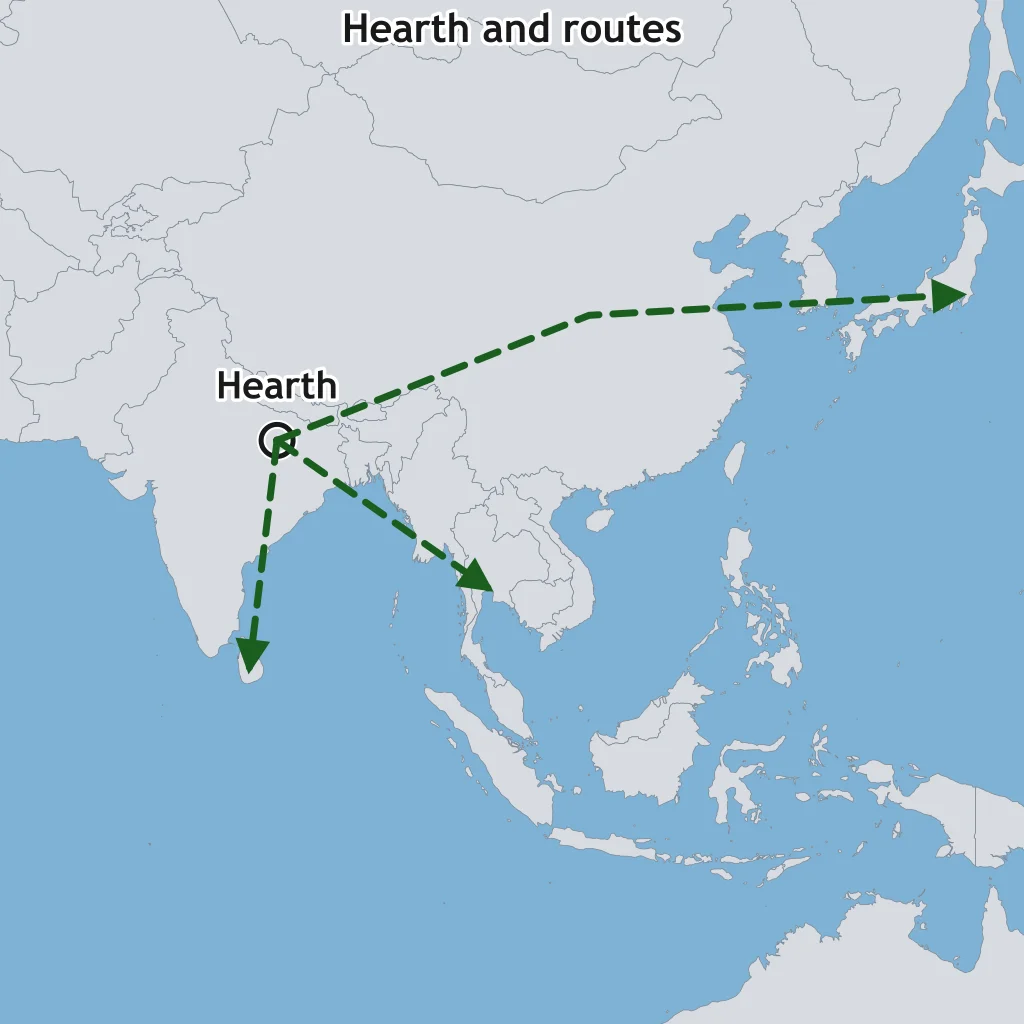
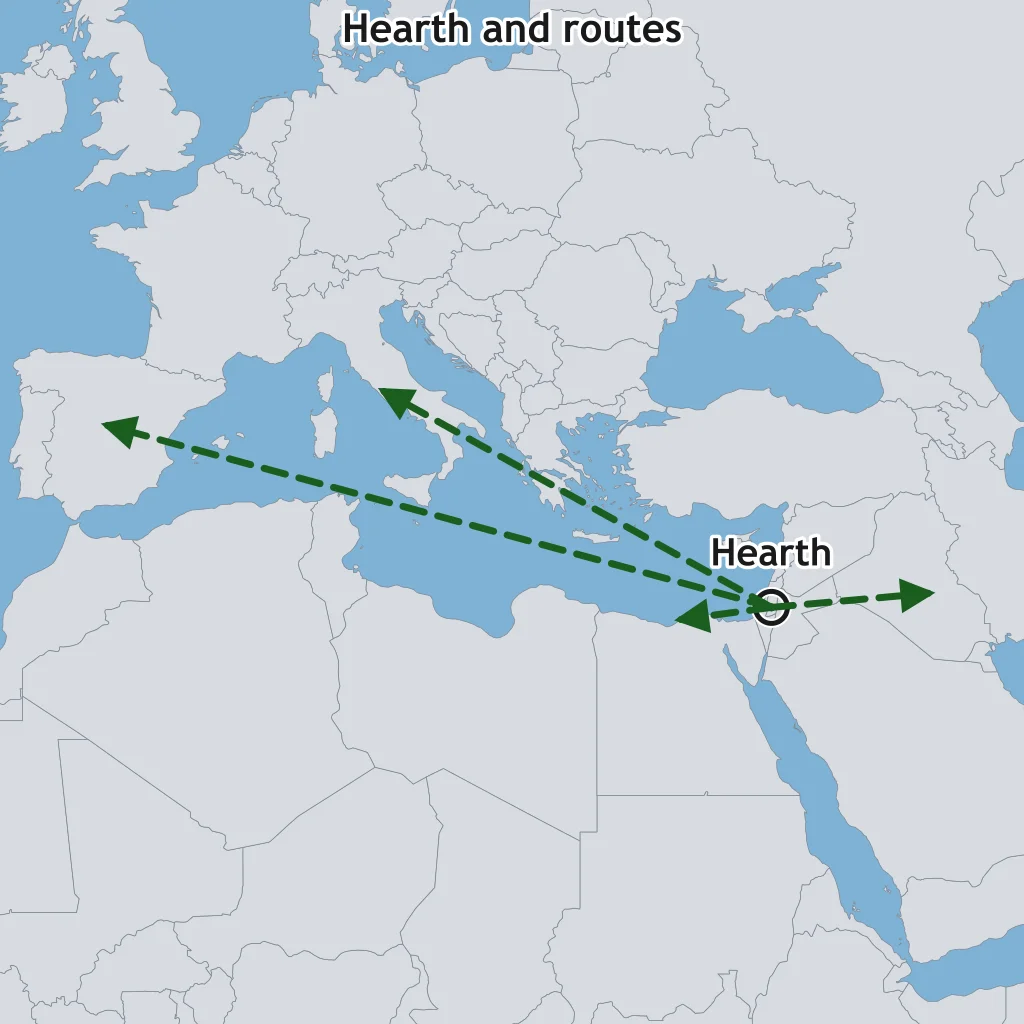
Use the map of a hearth and diffusion routes. Which religion's spread is shown?
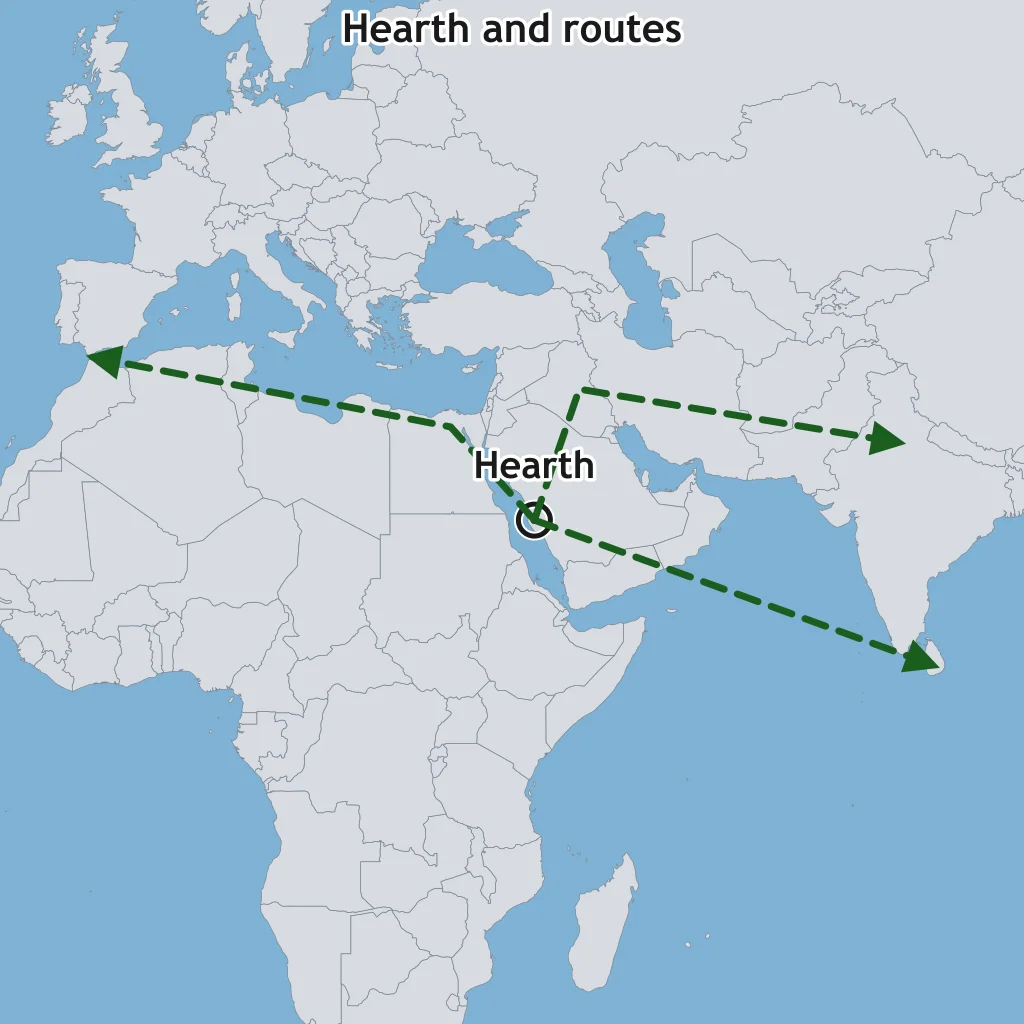
The figure traces routes from a marked hearth to several parts of Asia. Which religion matches the mapped pattern?
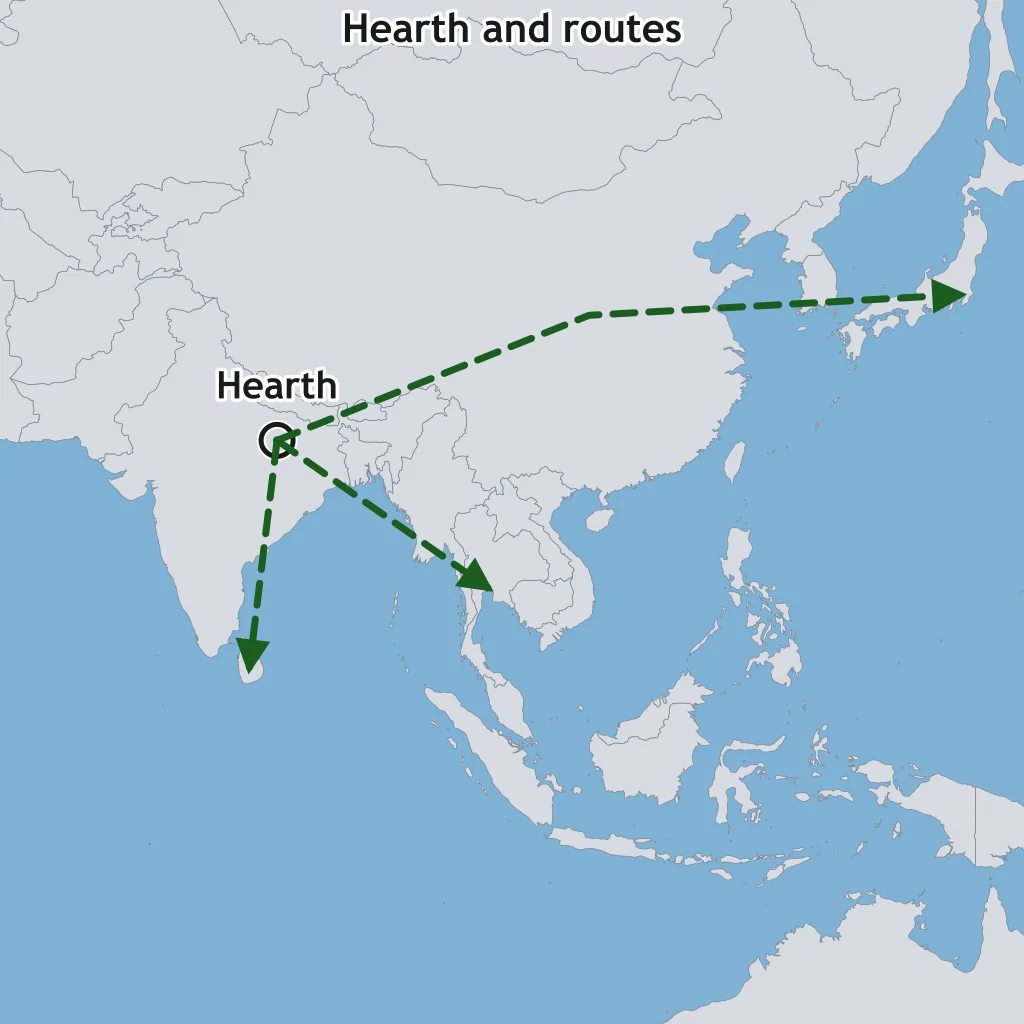
A hearth and long-distance routes are mapped without naming the faith. Which religion fits the pattern?
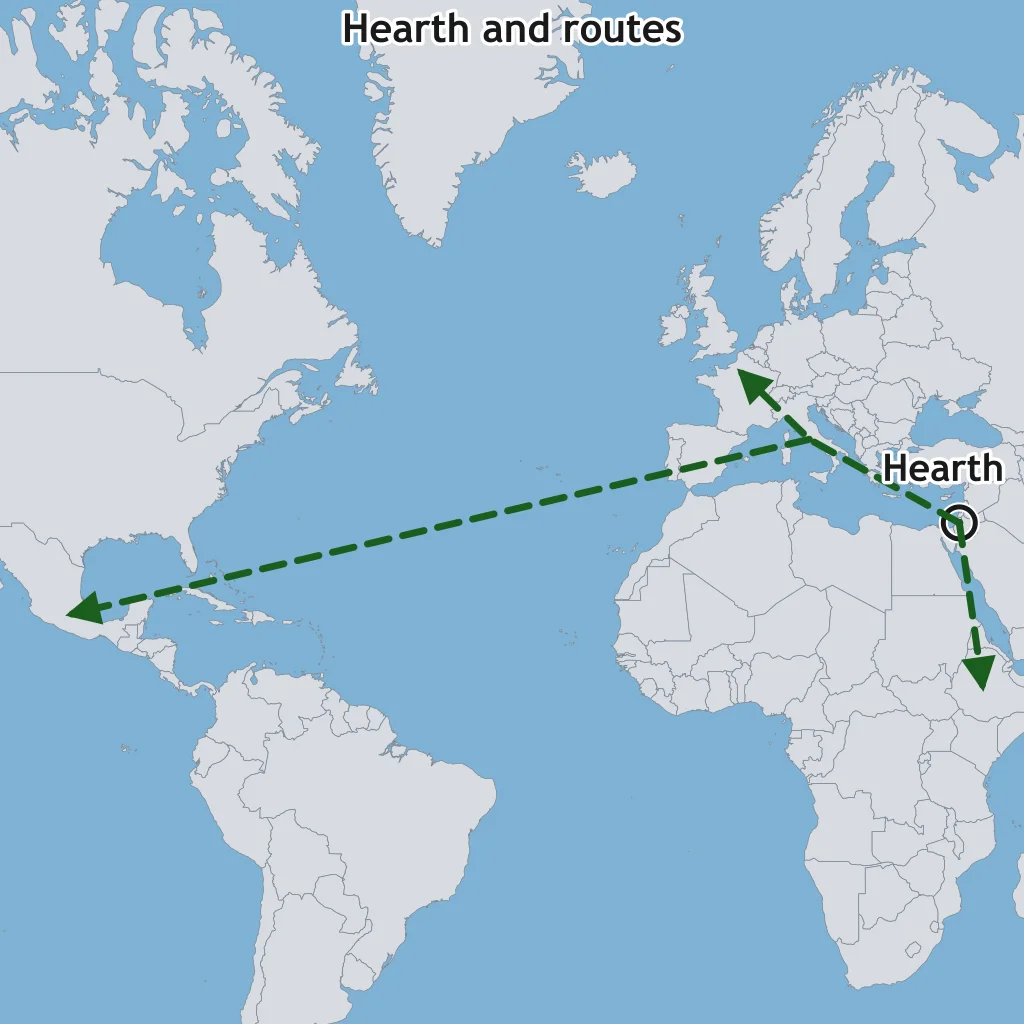
Read the mapped hearth and routes. What religion is most closely associated with this pattern?
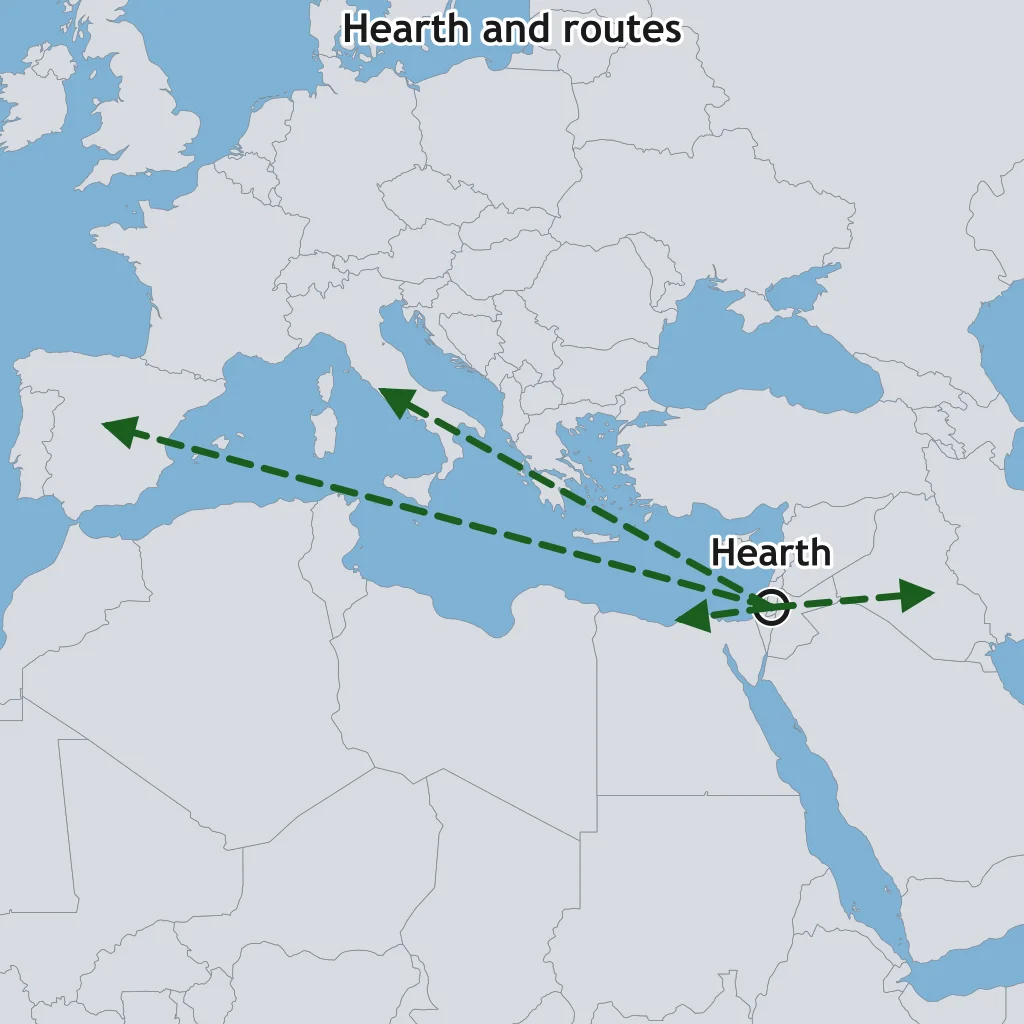
The map shows a South Asian hearth with routes mostly within the subcontinent and nearby islands. Which religion is mapped?
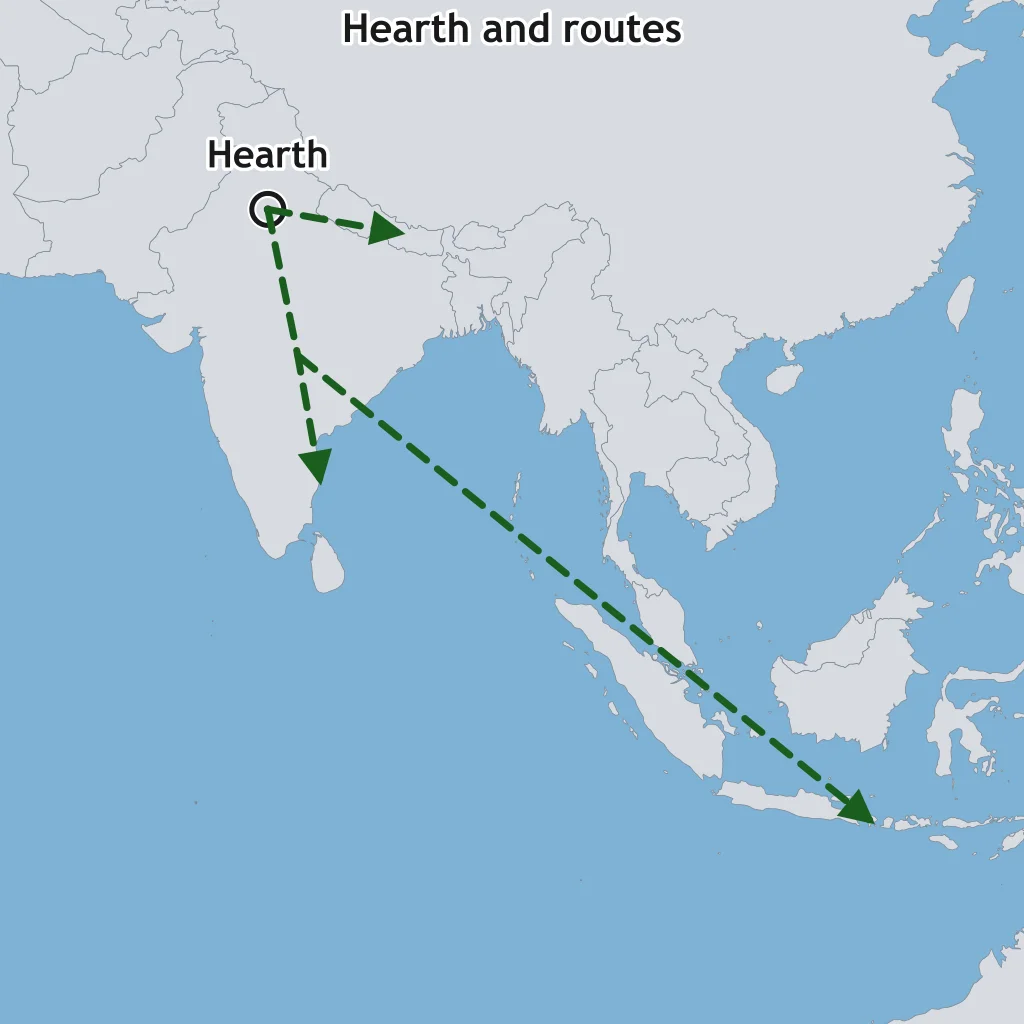
The map marks a Punjab hearth and routes to overseas diaspora destinations. Which religion is shown?
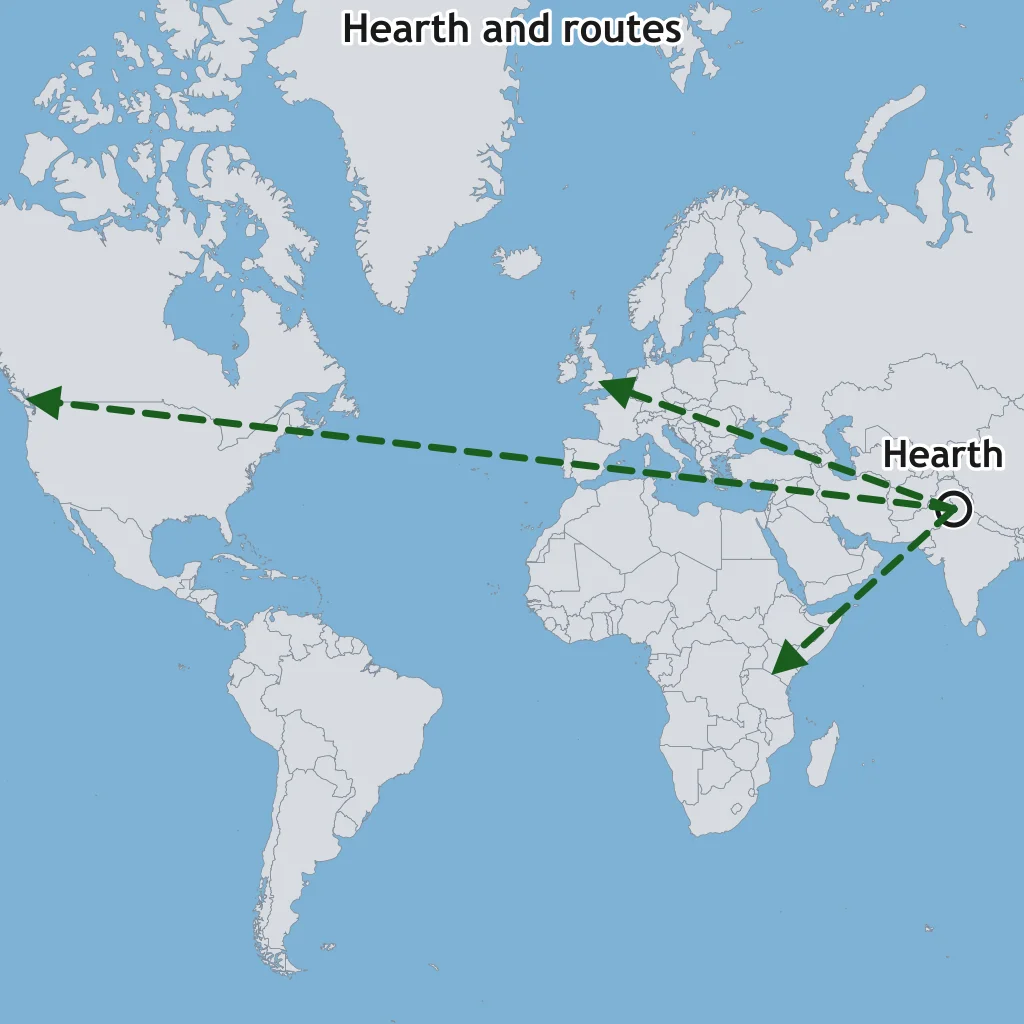
A faith moved from its hearth to Rome, then outward after emperors and kings adopted it before many subjects did. What diffusion process is described?
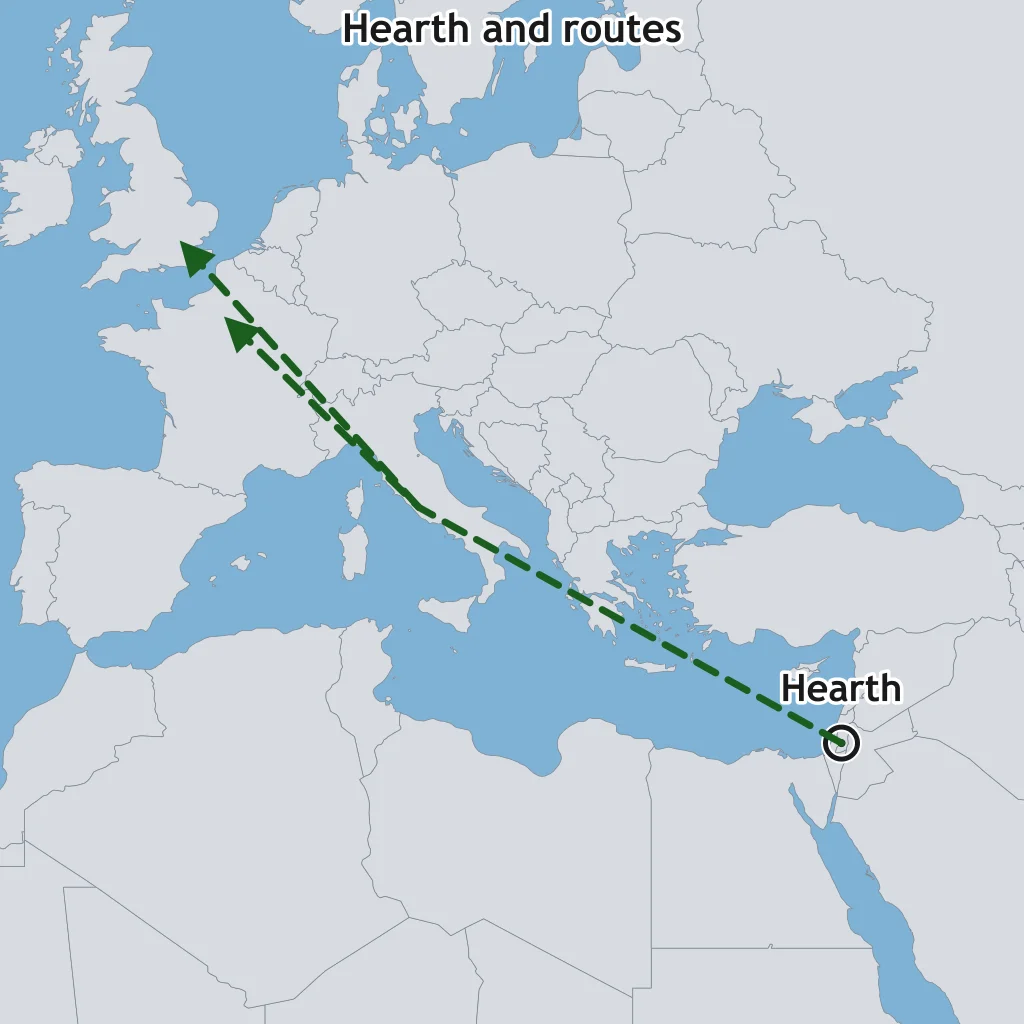
Monks and merchants physically traveled from India into China and later Japan, carrying texts and practices with them. What type of diffusion is this?
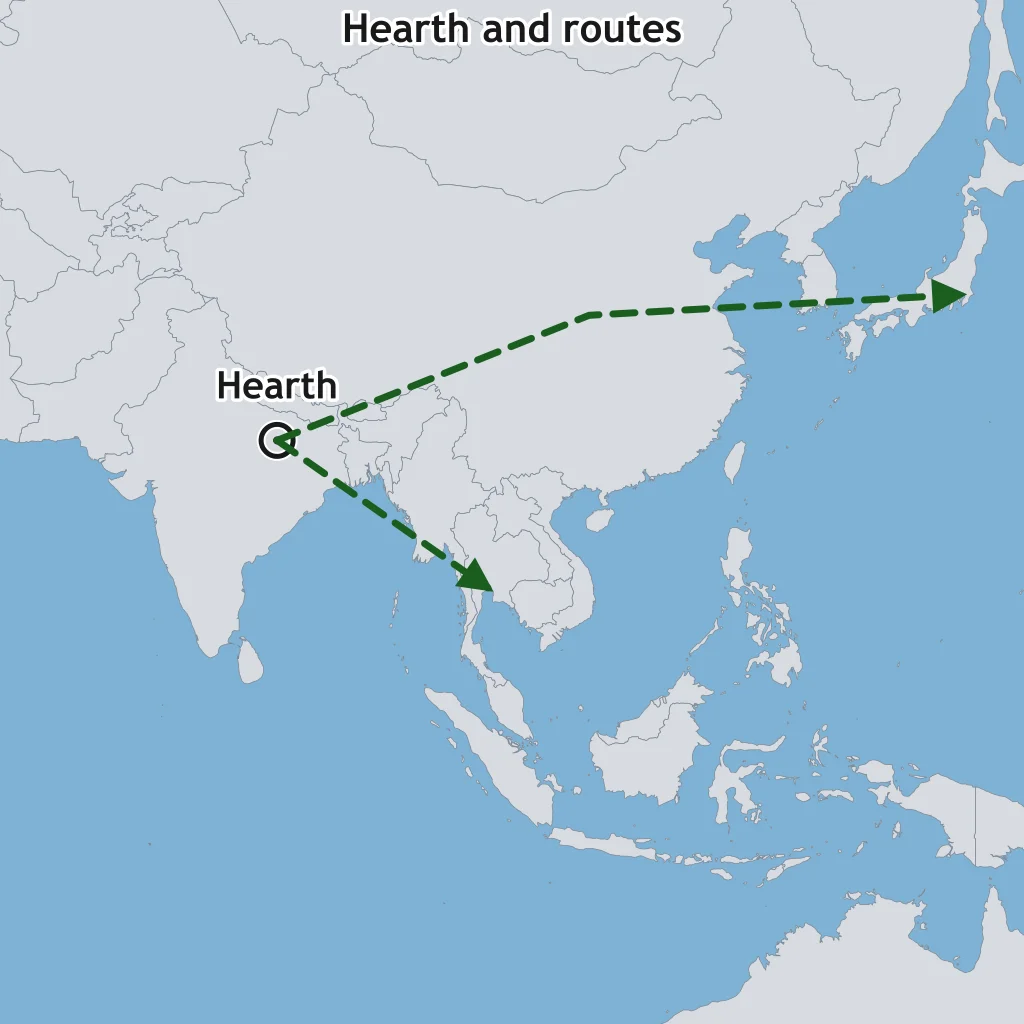
Migrants from Muslim regions settled in France and established mosques in new neighborhoods. What diffusion process explains the new communities?
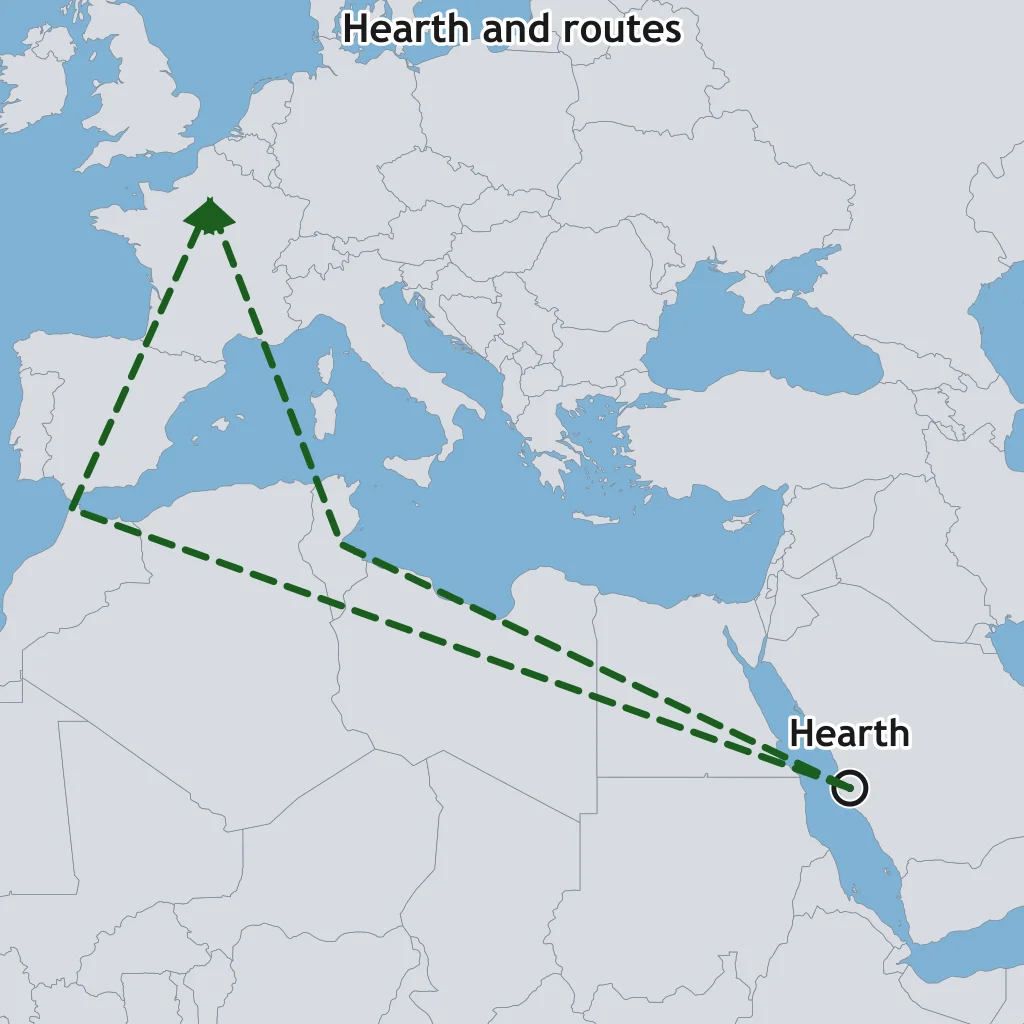
A prayer practice spreads from village to village as neighbors copy relatives and friends. What diffusion type is this?
In the Caribbean, West African sacred practices and Catholic symbols were reworked into new local religious forms. What diffusion type does this show?
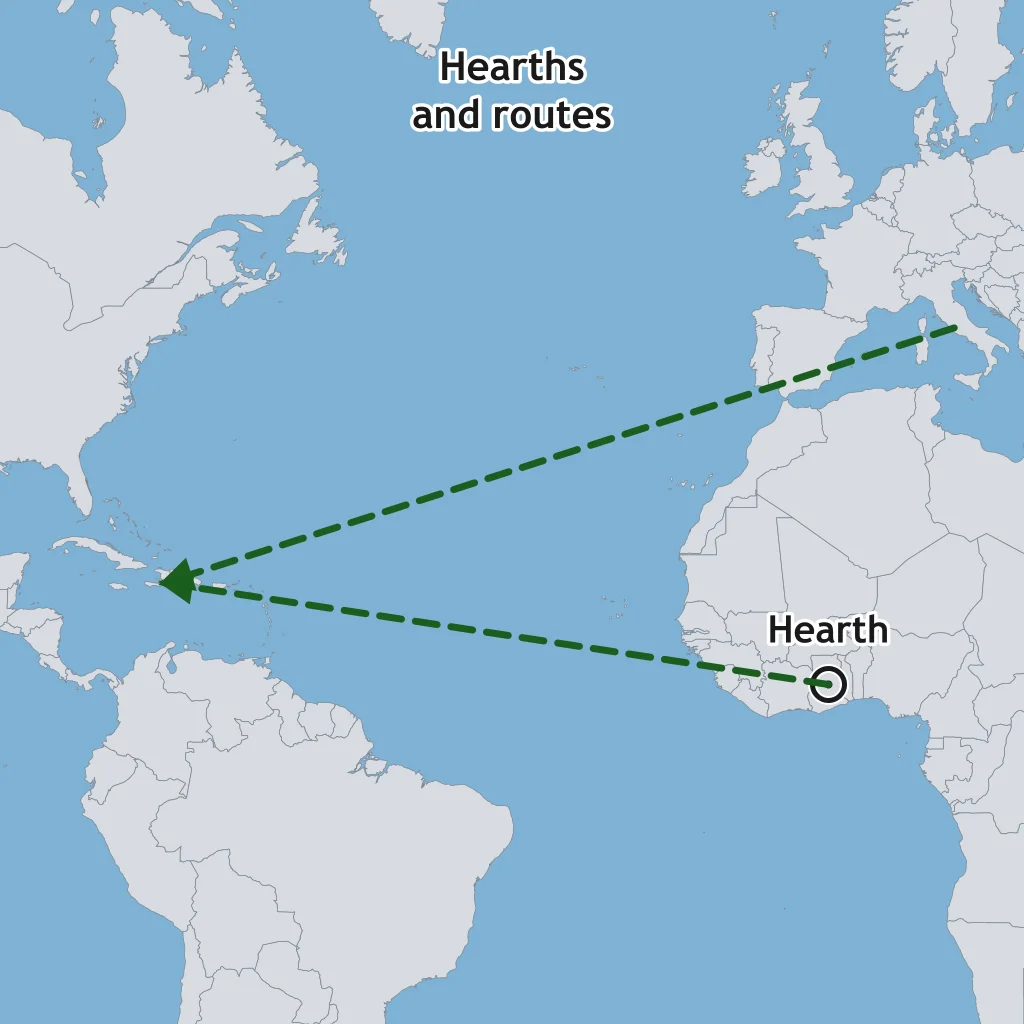
Missionaries and settlers crossed the Atlantic and established churches in Andean towns. Which diffusion process carried the religion there?
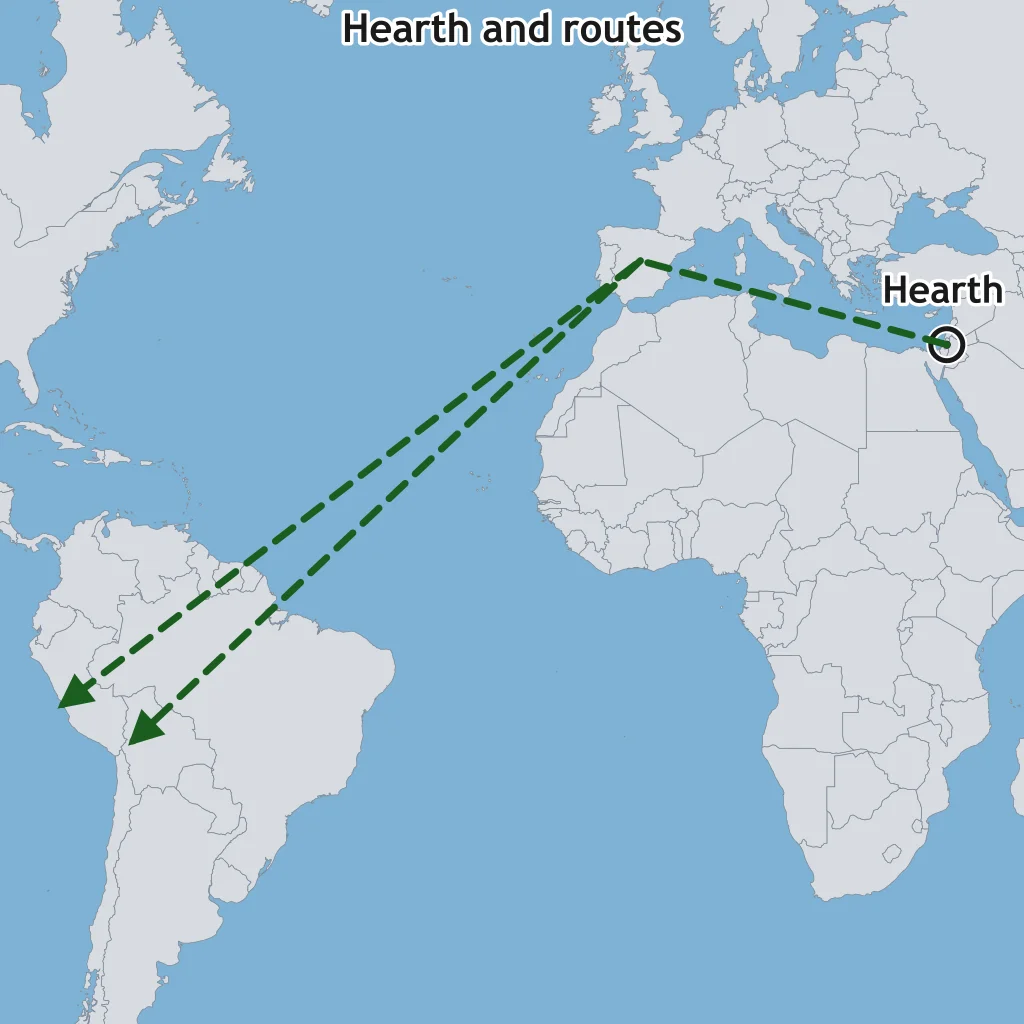
After traders brought a faith to ports, coastal rulers converted and sponsored mosques, encouraging subjects to follow. What process describes the court-first spread?
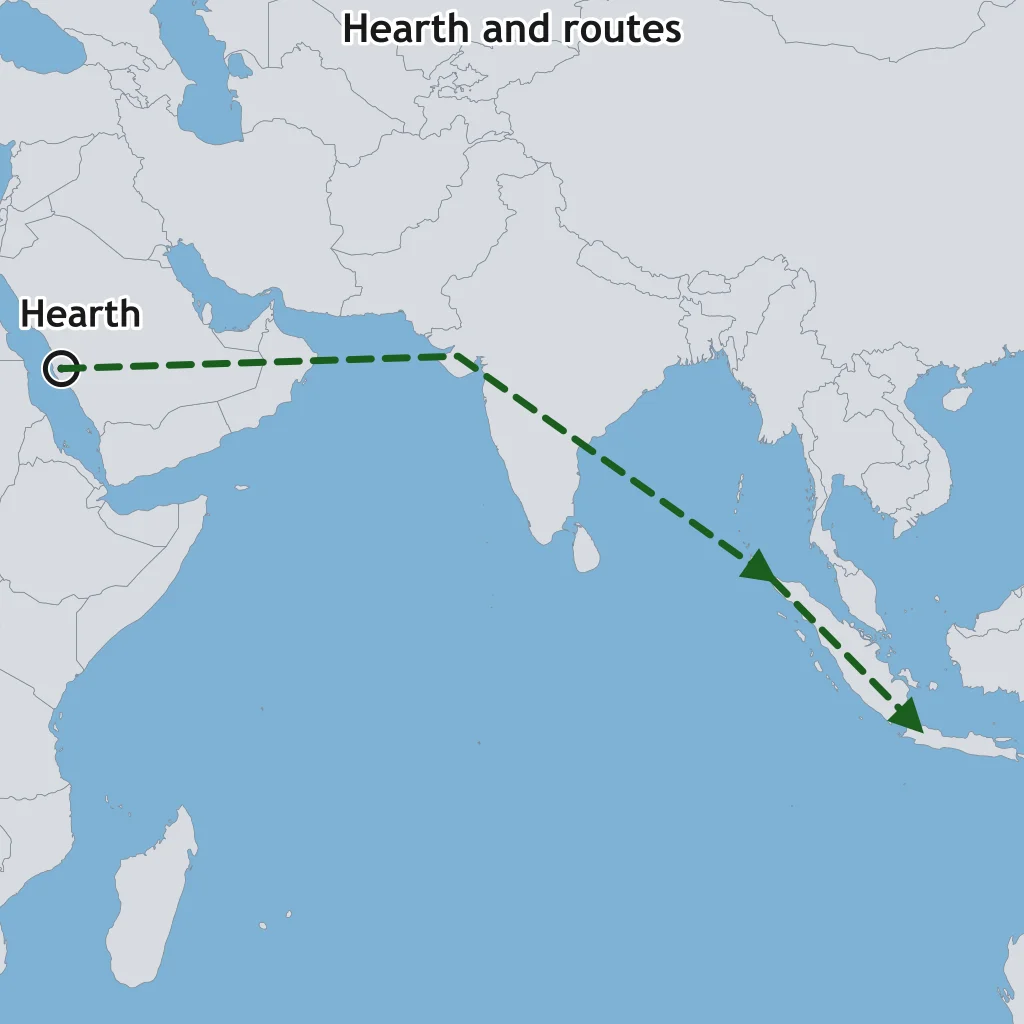
When a religion spreads by contagious diffusion, which places usually adopt it first?
A king converts, orders court temples built, and nobles adopt the new religion before rural villages do. What diffusion process is shown?
Buddhist ideas entered China but were translated through Daoist vocabulary and became Chan forms rather than copies of Indian practice. What process is this?
Hindu temples in Trinidad and Fiji grew from communities of indentured workers from India. What diffusion process best explains this spread?
Hinduism is concentrated in India and Nepal despite long trade contact with other regions. What best explains its regional concentration?
Shinto remains strongly associated with Japan. What geographic reason best explains this pattern?
Judaism has communities in many countries but remains an ethnic religion. What explains that classification?
Daoist traditions are strongest in China and the Chinese cultural sphere. What best explains the limited regional spread?
Many Indigenous religions remain tied to one people and homeland. Why do they usually not diffuse like universalizing religions?
Historical Causes of Diffusion: Colonialism, Trade and the Columbian Exchange
30 questions
Contemporary Causes of Diffusion: Communication, Transport and Time-Space Convergence
25 questions

World Language Families and Their Distribution
40 questions

Dialects, Lingua Franca, Pidgin and Creole
30 questions
World Religions: Beliefs, Branches and Distribution
Crack the passcode before the zombies get in.
Answer, then swat bugs for bonus points.
Race through questions at your own speed.
Same question on every screen. Fastest wins.

Pick a tile, answer, hit bonuses and steals.
45 questions