Loading
by BlastRoom
The major language families, where they are spoken, and how they are related.
#us_hs_human_geography

40 questions
One question set, multiple game modes. Tap any game to see it in action. Not sure which to pick?
Answer to place stones and capture territory.
Outrun the snow together.
Earn blasts, then hunt the other team.
Answer to earn energy, then climb.

The class blasts through walls together.
Bid on mystery lots. Most money wins.
Sell tours. Nice, standard, or a total scam.

Answer, restock, and serve the rush.
More correct answers pulls the rope your way.
Answer, then shoot down the alien wave.
Answer, then tap to leap the frozen ridge.
Farsi, also called Persian, uses an Arabic-based script, but its inherited grammar and core vocabulary link it most closely to which family?
Arabic, Hebrew, and Amharic share related roots and word-pattern systems. Which language family includes them?
Mandarin Chinese belongs to which language family?
Swahili has many Arabic loanwords, but its grammar and inherited core vocabulary place it in which family?
Kazakh, spoken across the steppes of Central Asia, belongs to which language family?
Indonesian, a standardized form of Malay, belongs to which family?
Vietnamese belongs to which language family, despite strong historical influence from Chinese vocabulary?
Hungarian is a Uralic language, yet Hungary is far from Finland and Estonia and surrounded by Indo-European speakers. What best explains this?
Tamil, spoken widely in southern India and Sri Lanka, belongs to which family?
Yoruba, spoken mainly in southwestern Nigeria and neighboring areas, belongs to which family?
Use the shaded world map. Which language family best matches the shaded pattern?
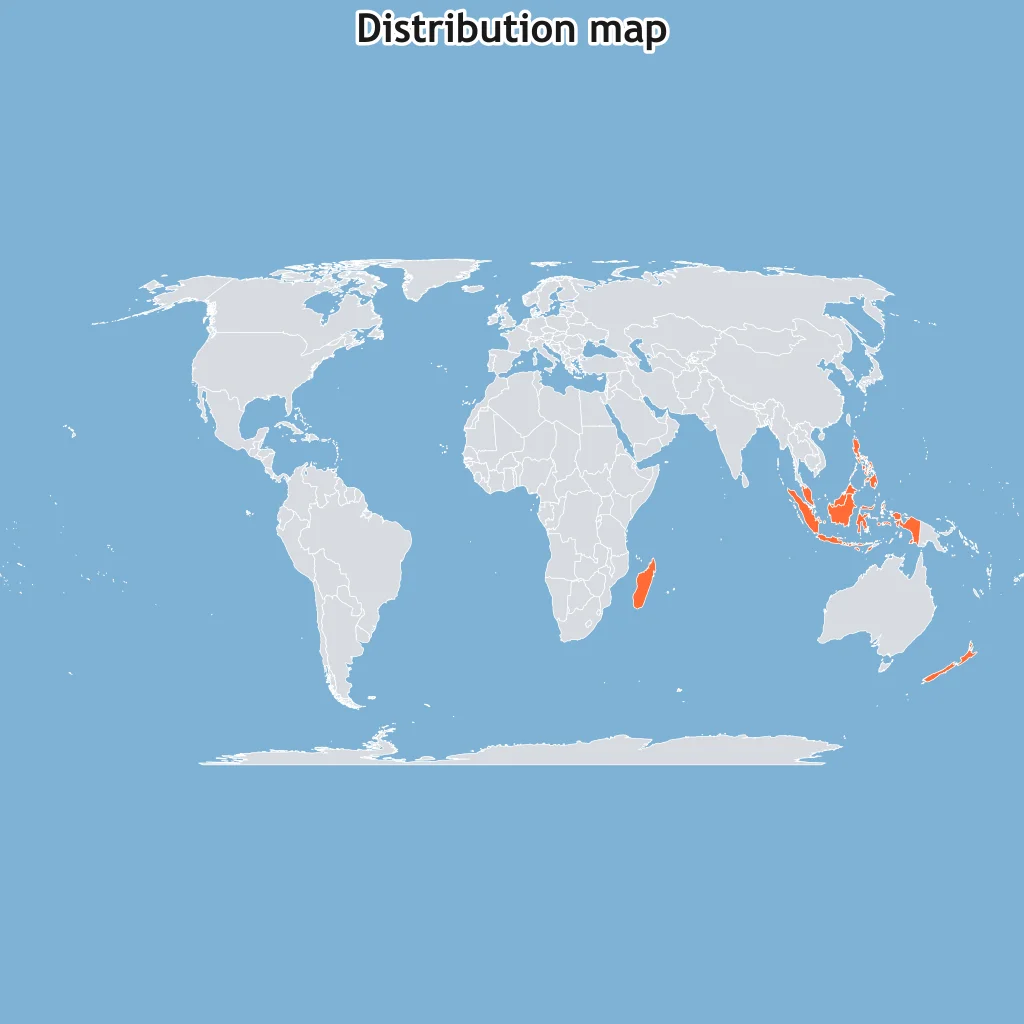
Use the shaded map. Which family is most closely associated with the highlighted North African, Horn of Africa, and Southwest Asian pattern?
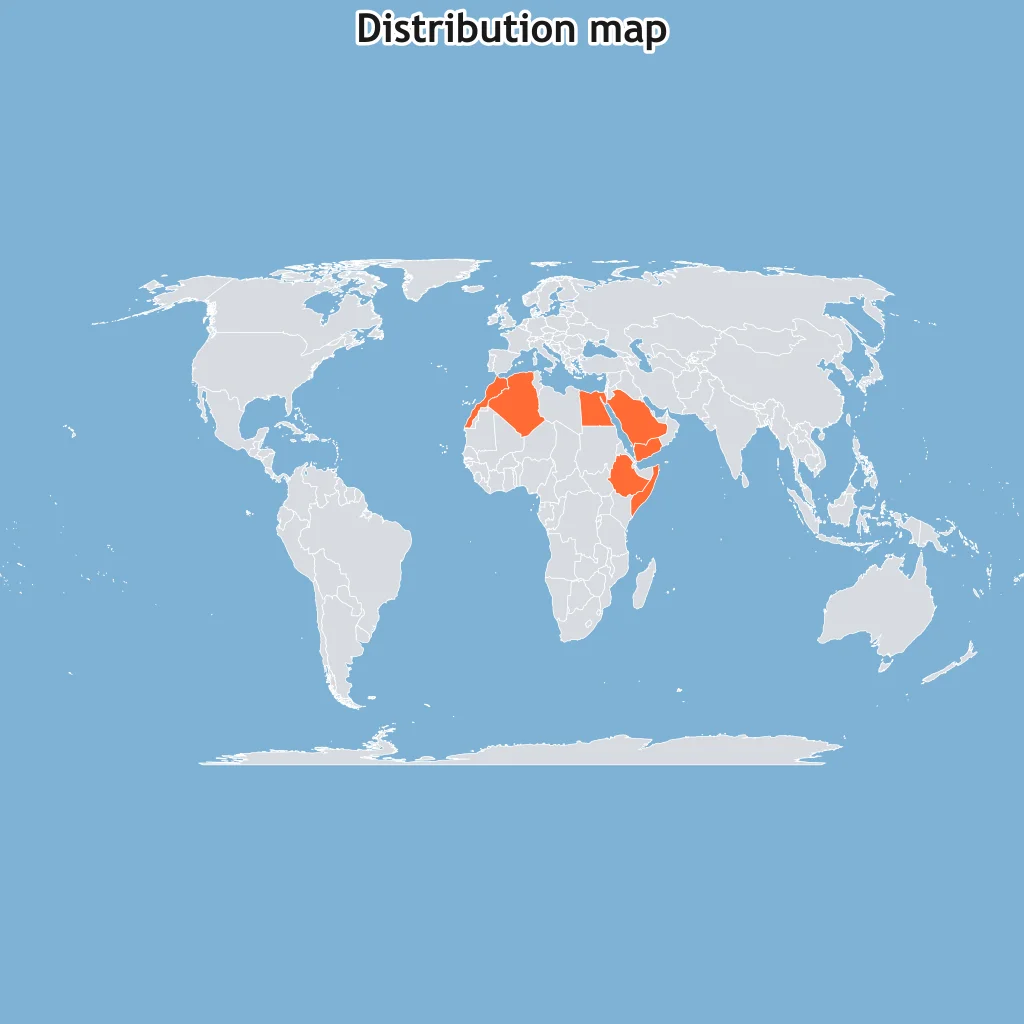
The map shades a broad belt across much of sub-Saharan Africa. Which language family does this distribution most strongly indicate?
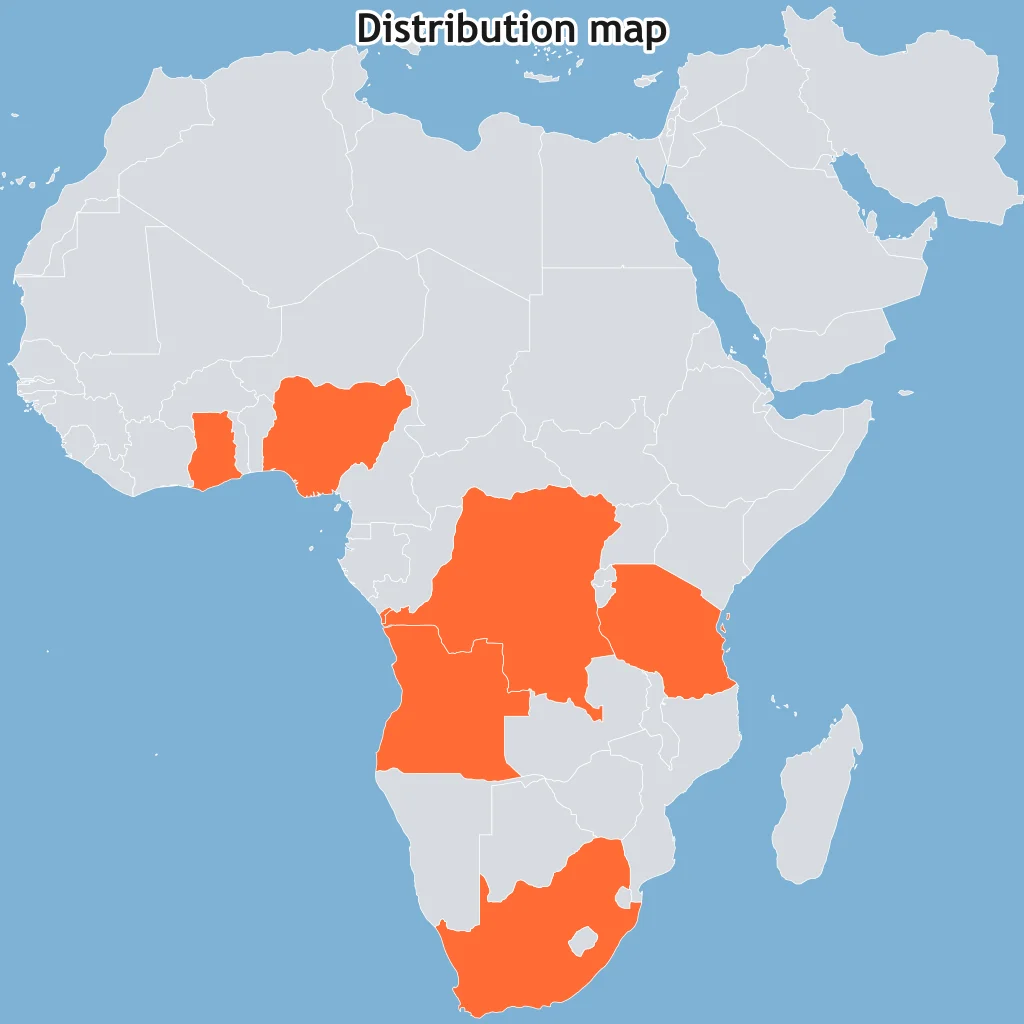
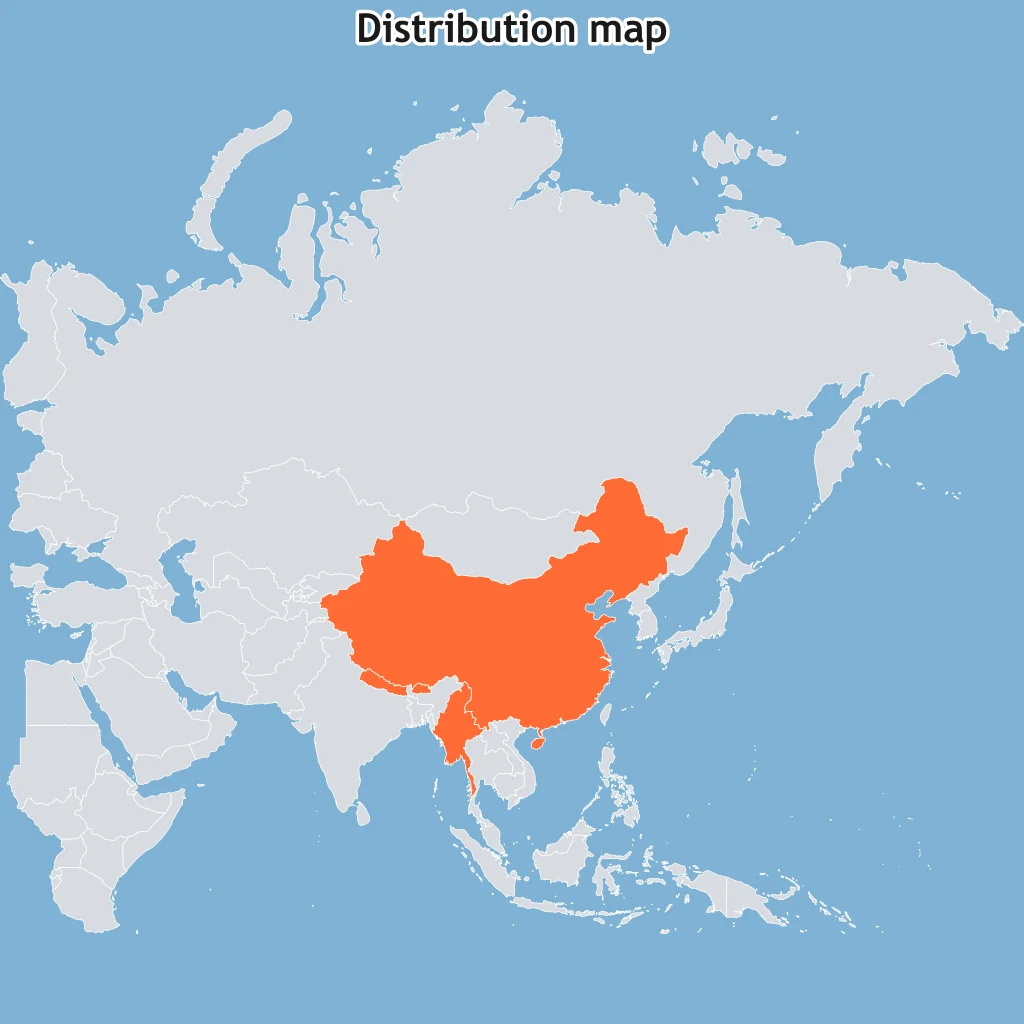
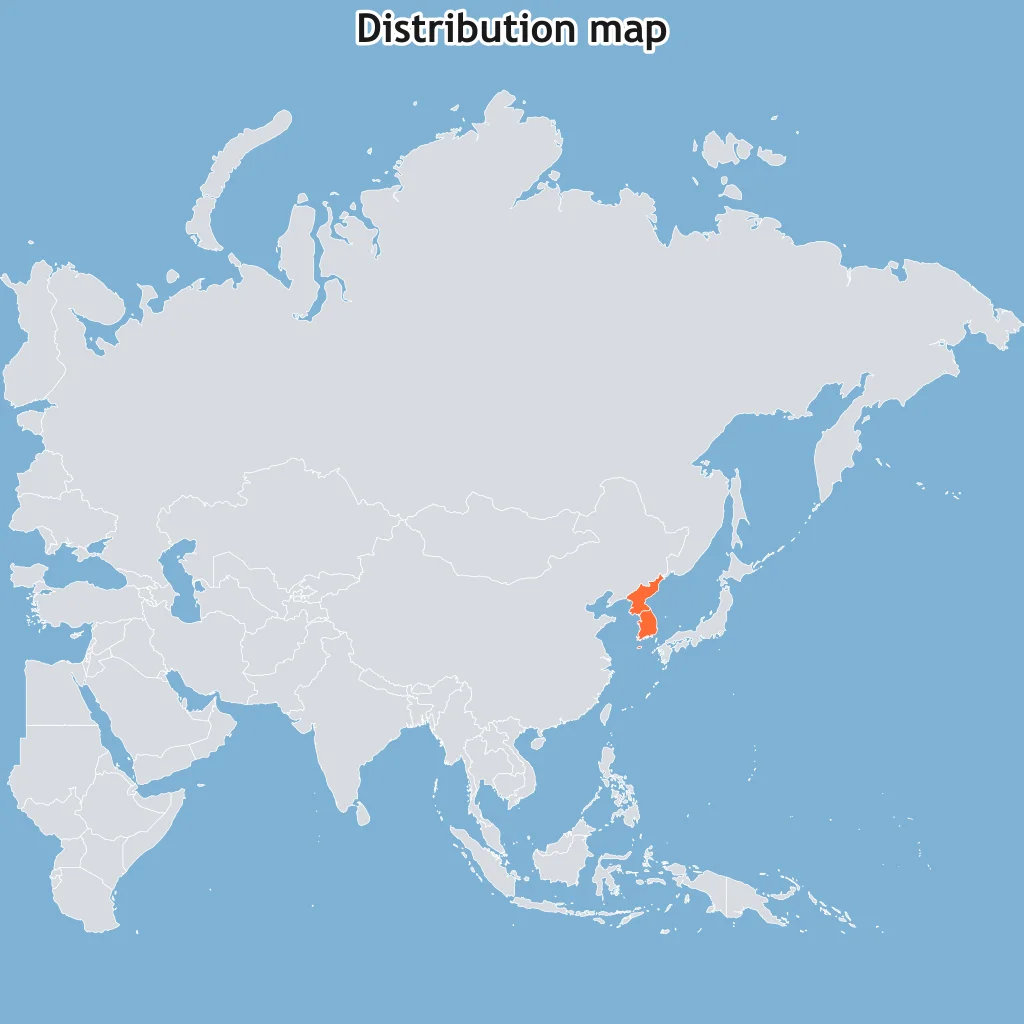
Use the shaded Asian map. Which family best fits the highlighted distribution?
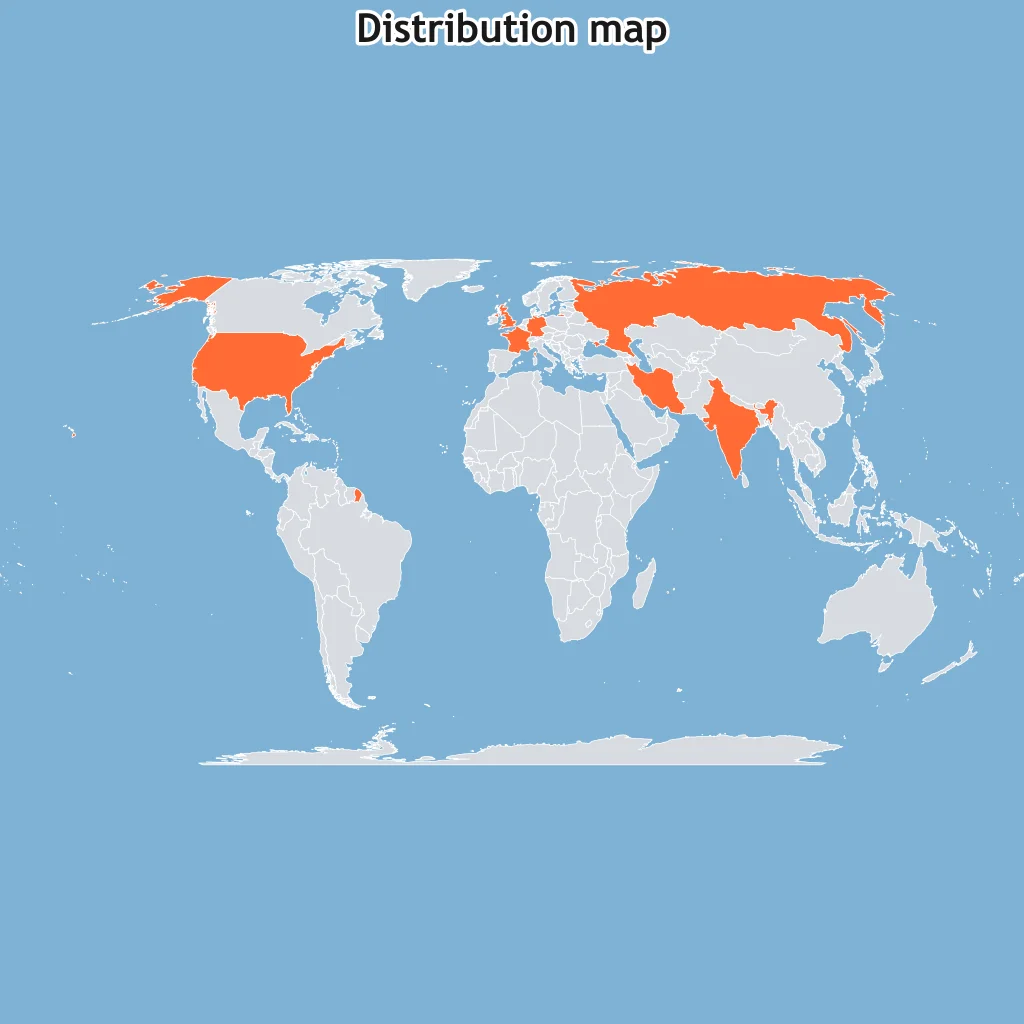
The shaded countries show a family spread through Europe, parts of South Asia and Iran, and overseas settler regions. Which family is shown?
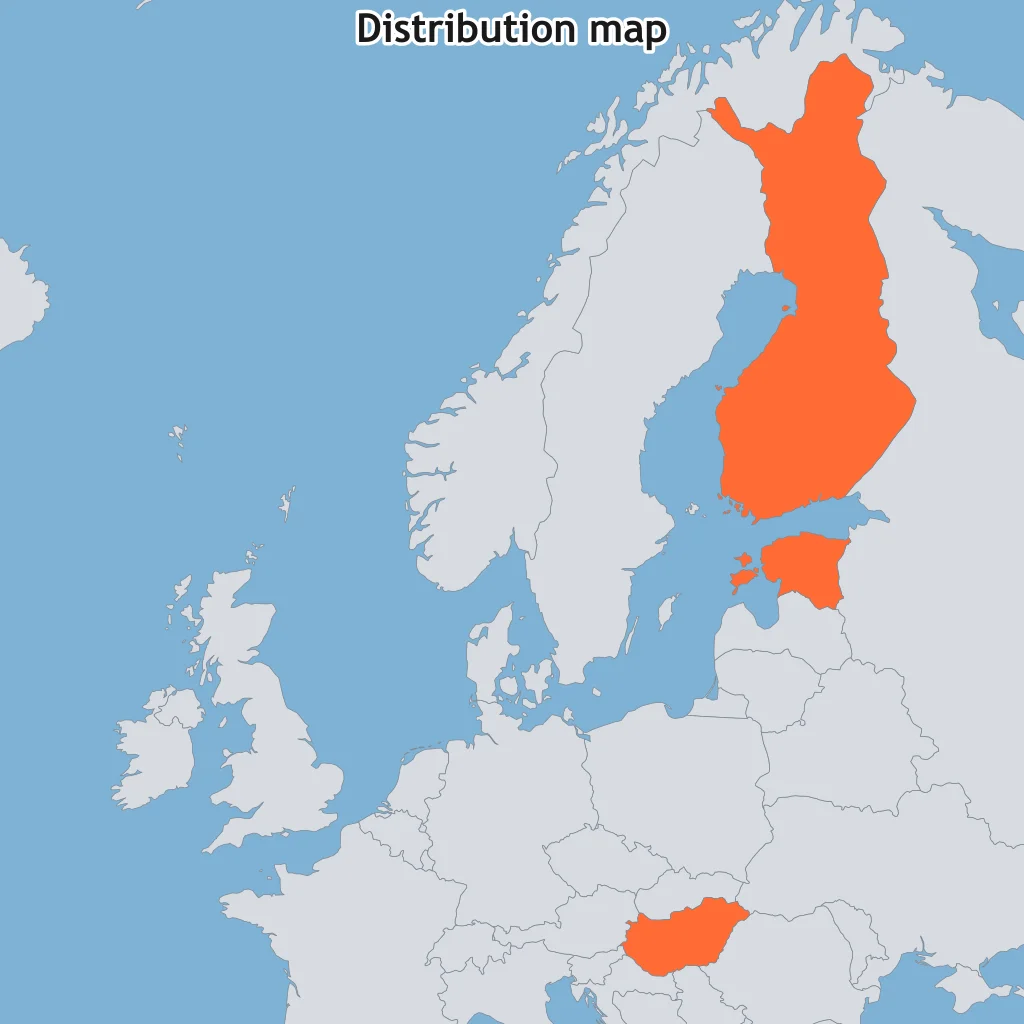
The shaded European countries share a small family that includes Finnish, Estonian, and Hungarian. Which family is it?
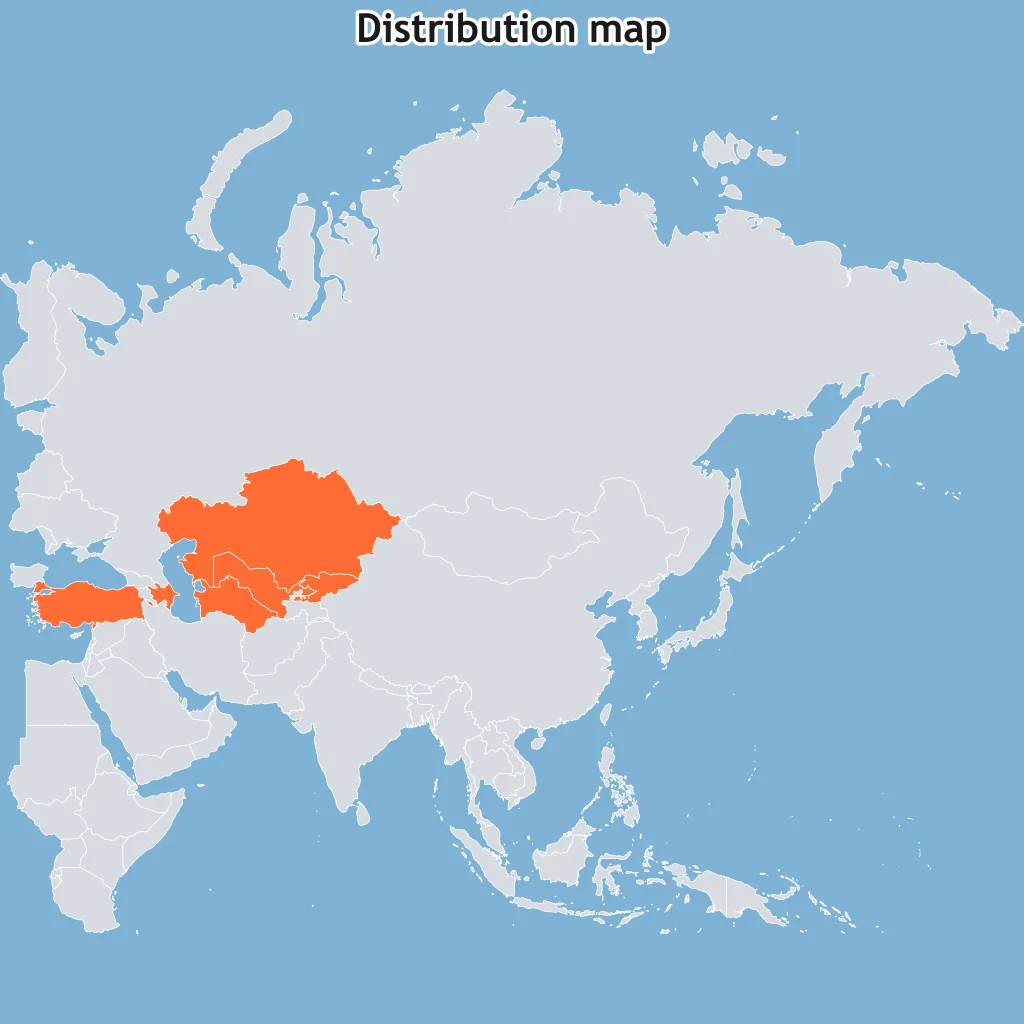
Use the shaded map of Anatolia and Central Asia. Which language family is indicated?
The shaded mainland Southeast Asian countries include major homelands of Vietnamese and Khmer. Which family is represented?
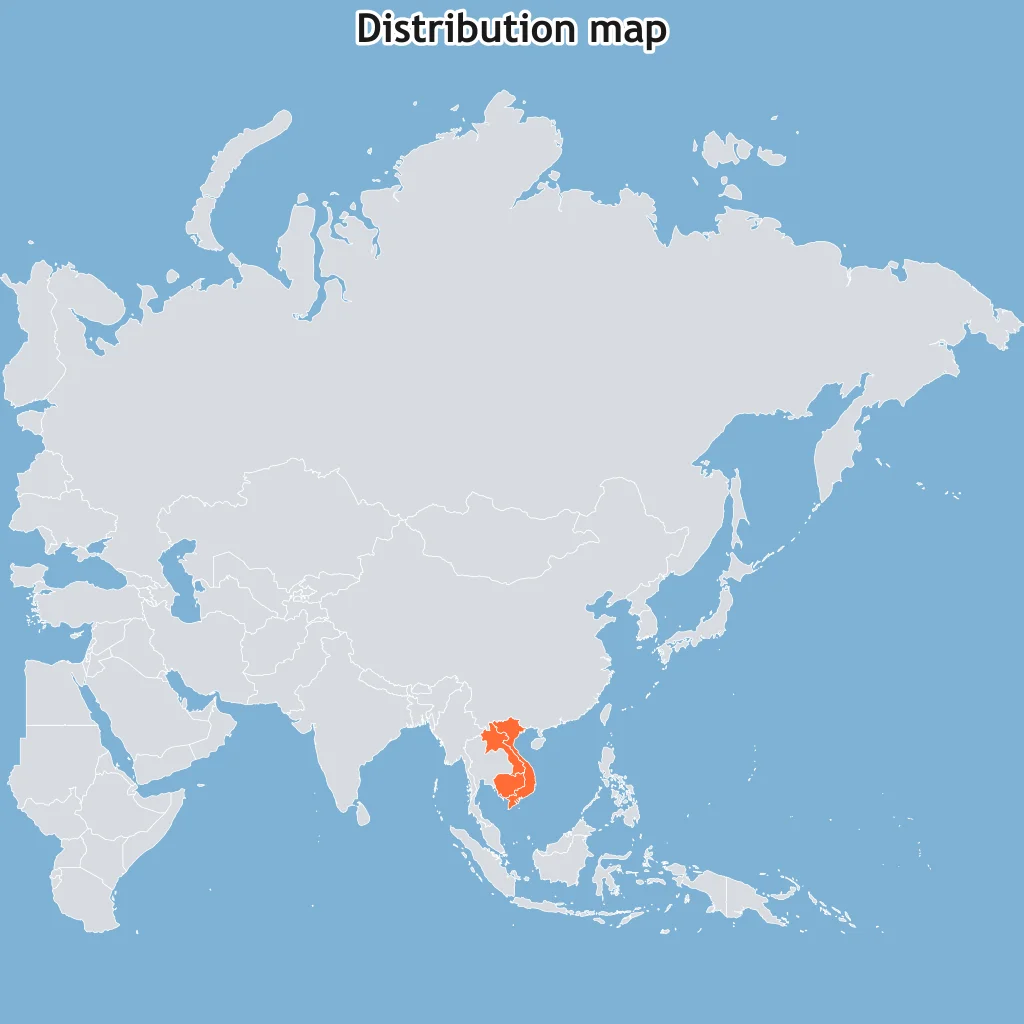
The map shades the main homeland of one language family. Which family is the best match?
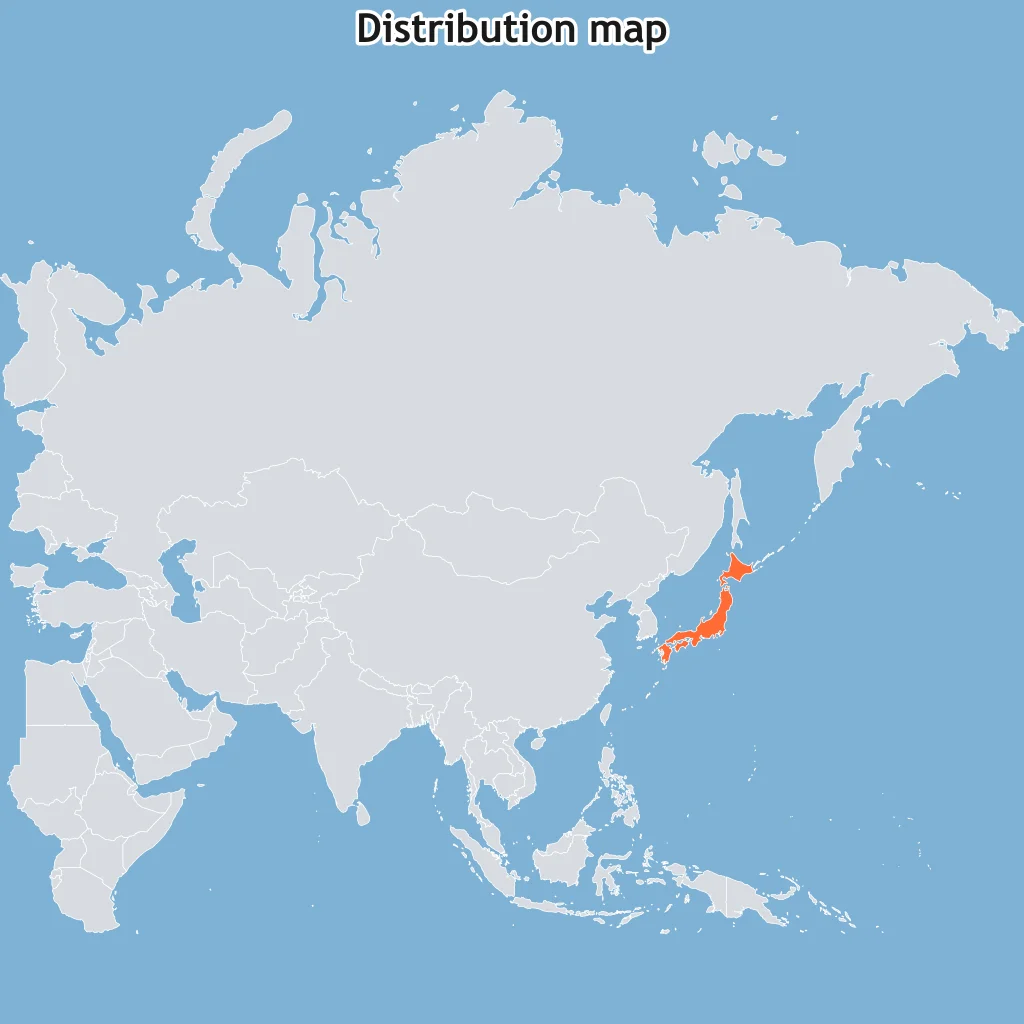
The map shades the homeland of one language family. Which family is most closely tied to this distribution?
In the branching diagram, the visible languages are grouped under related nodes. Which Indo-European branch is shown?
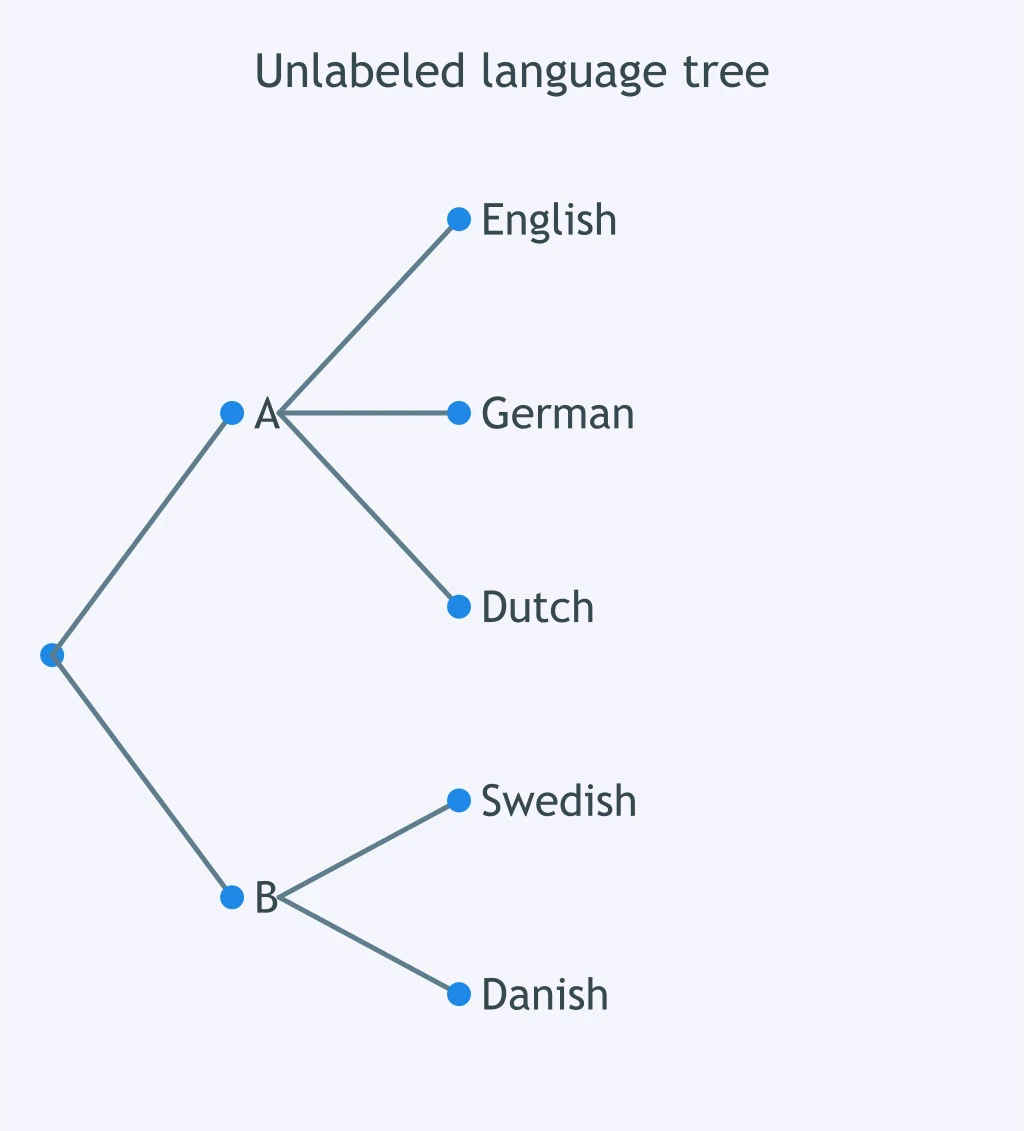
Read the two-cluster language tree. Which Indo-European branch contains the visible leaf languages?
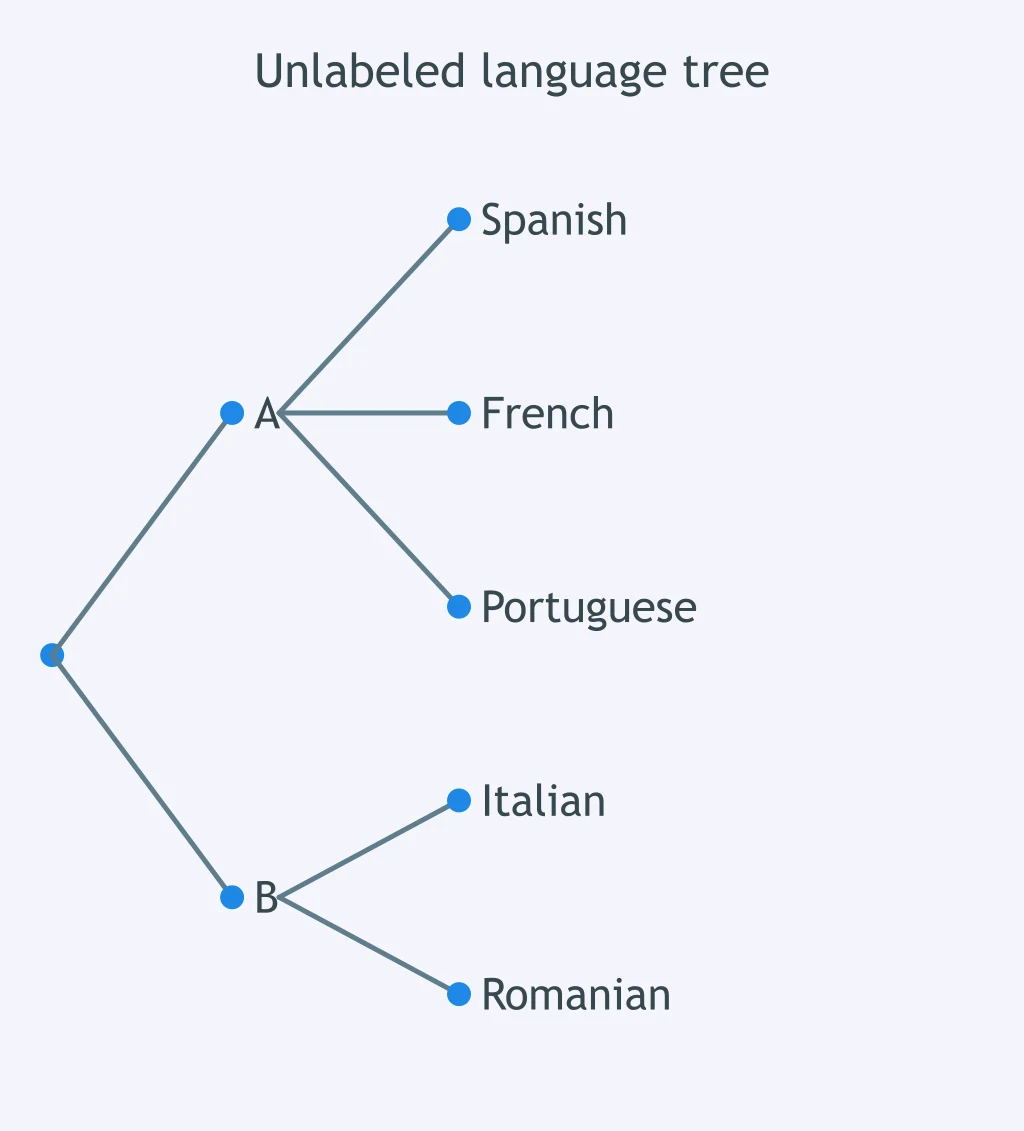
The diagram groups the listed European languages on neighboring branches. Which Indo-European branch does the grouping identify?
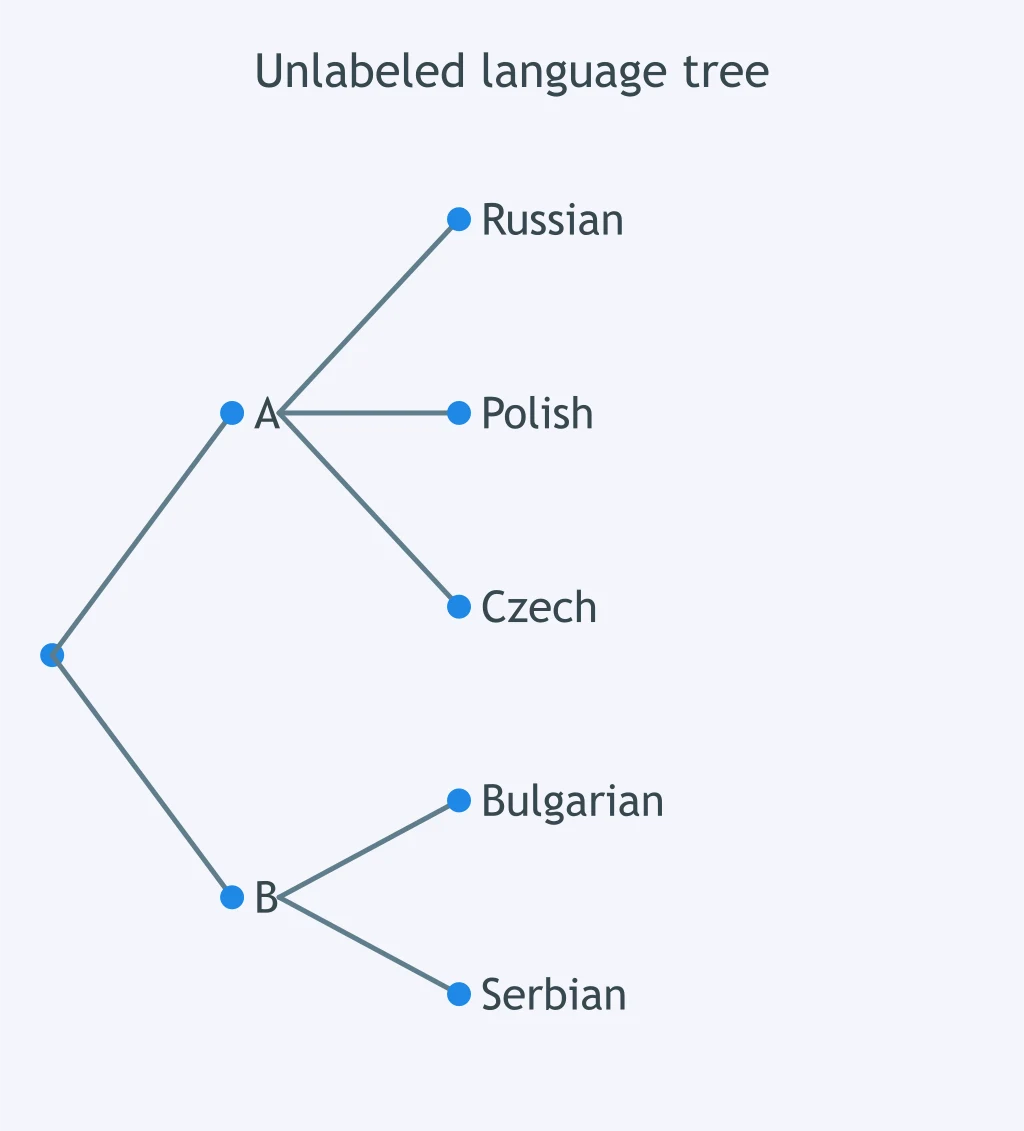
Use the language tree to identify the Indo-European branch represented by the leaf labels.
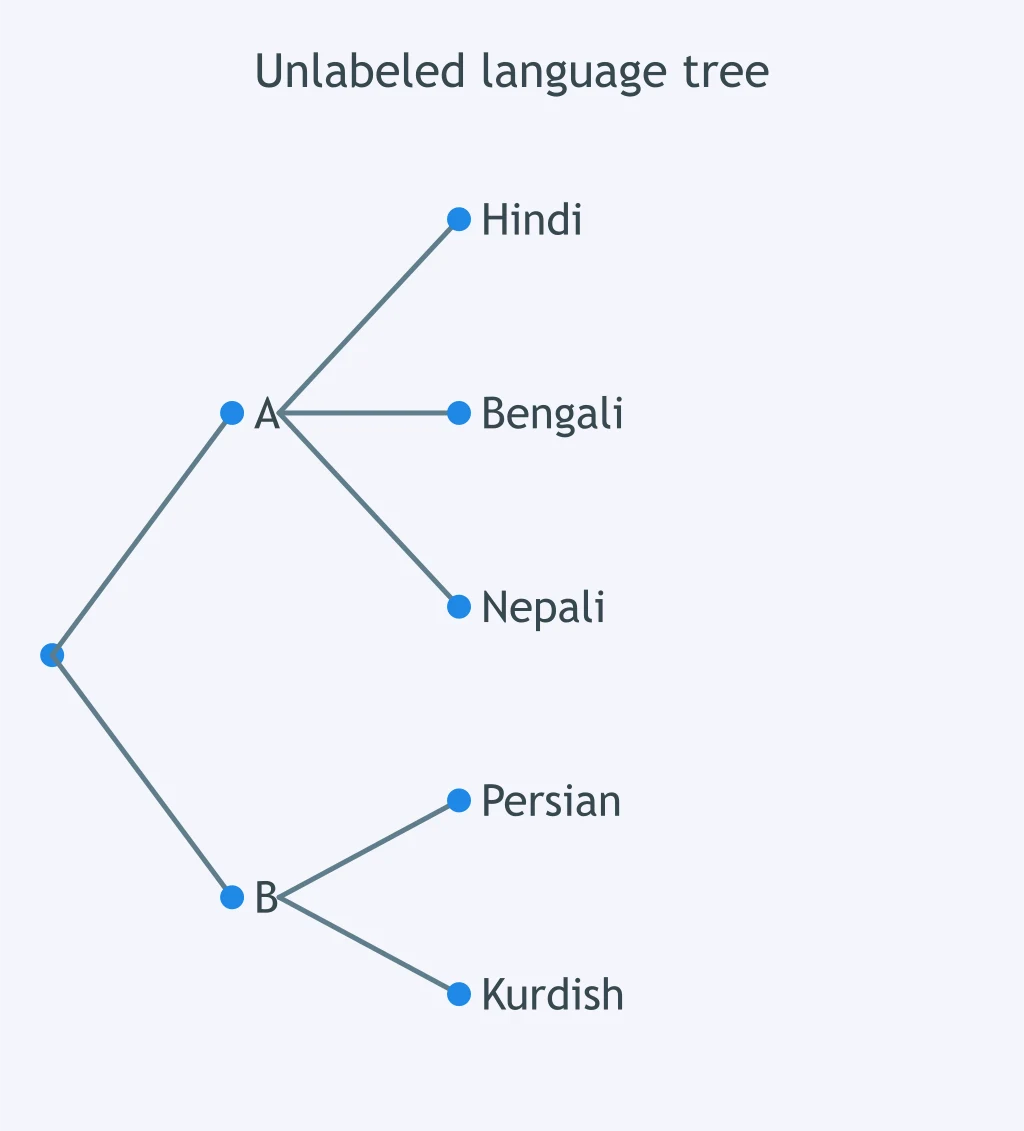
The branching diagram shows several related Afro-Asiatic languages. Which branch is represented?
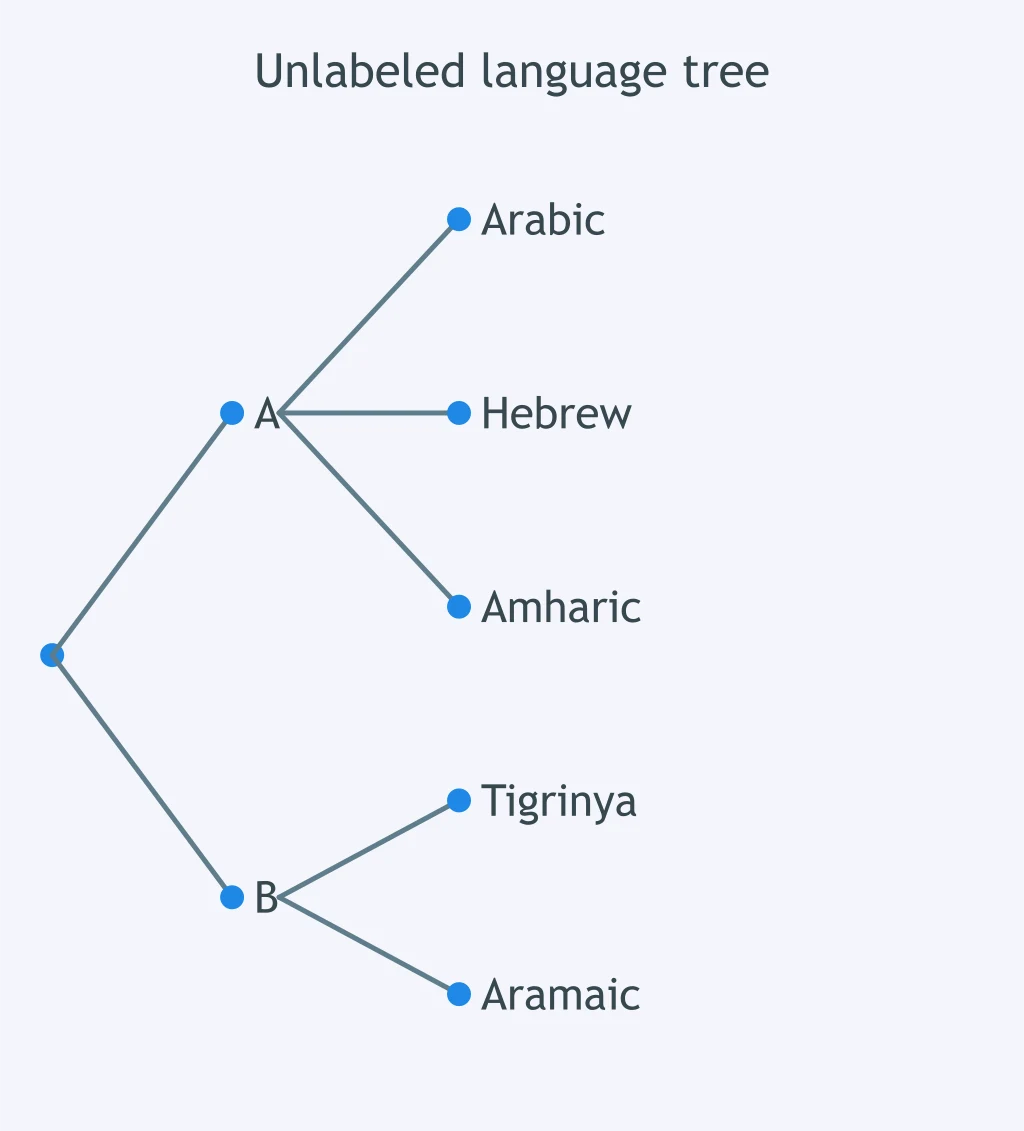
Use the tree to name the Niger-Congo branch that includes the visible languages.
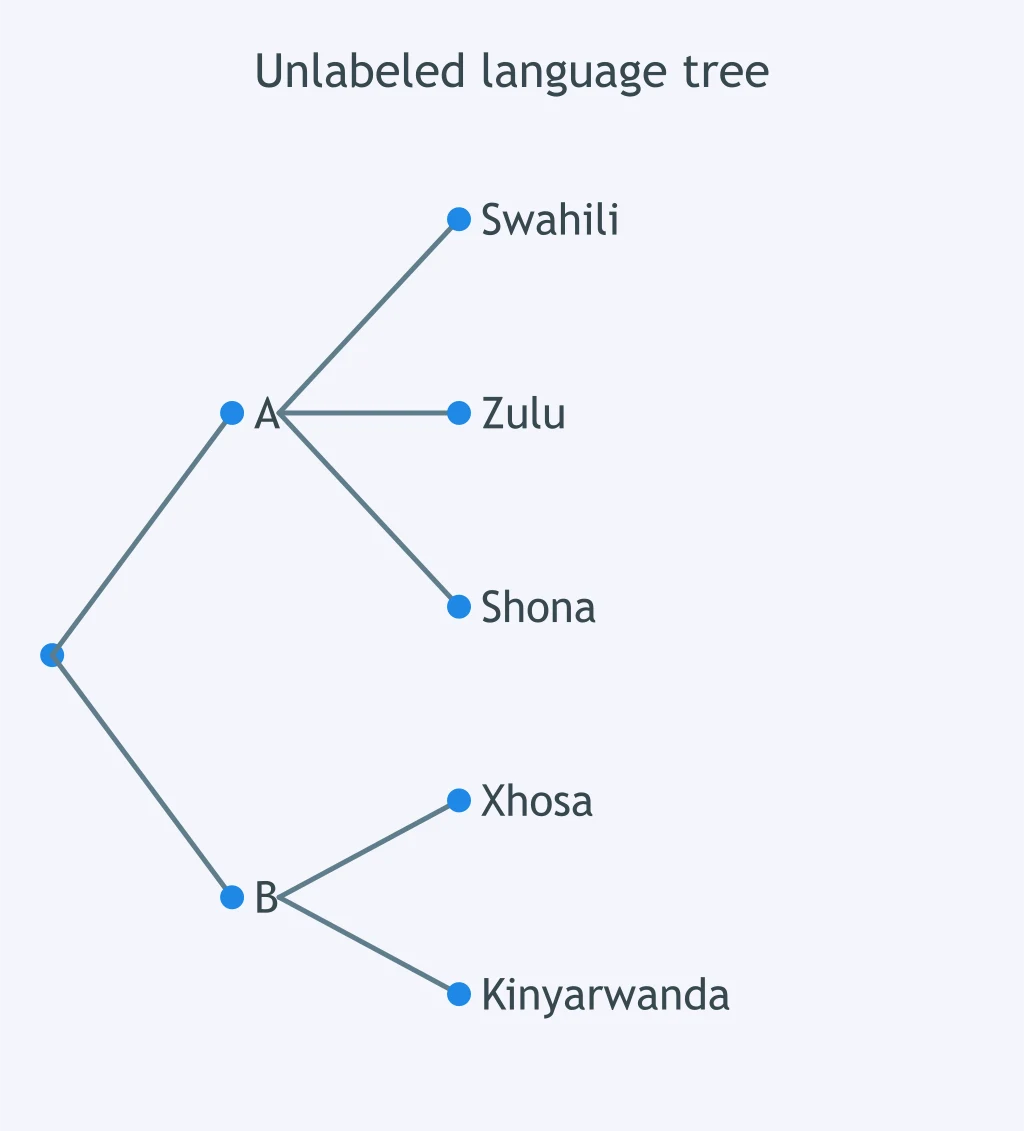
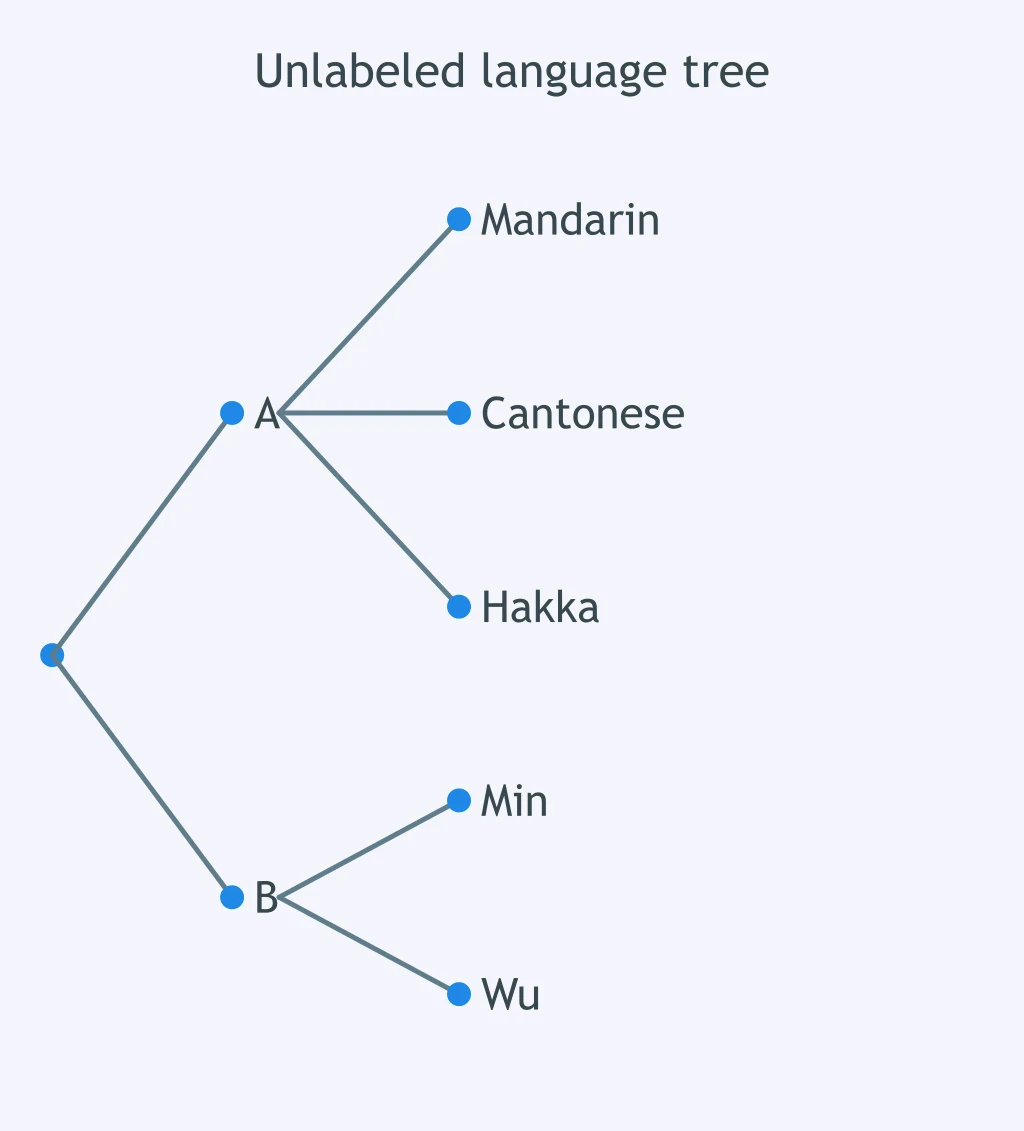
The tree groups several Chinese varieties as sister branches. Which Sino-Tibetan branch is being shown?
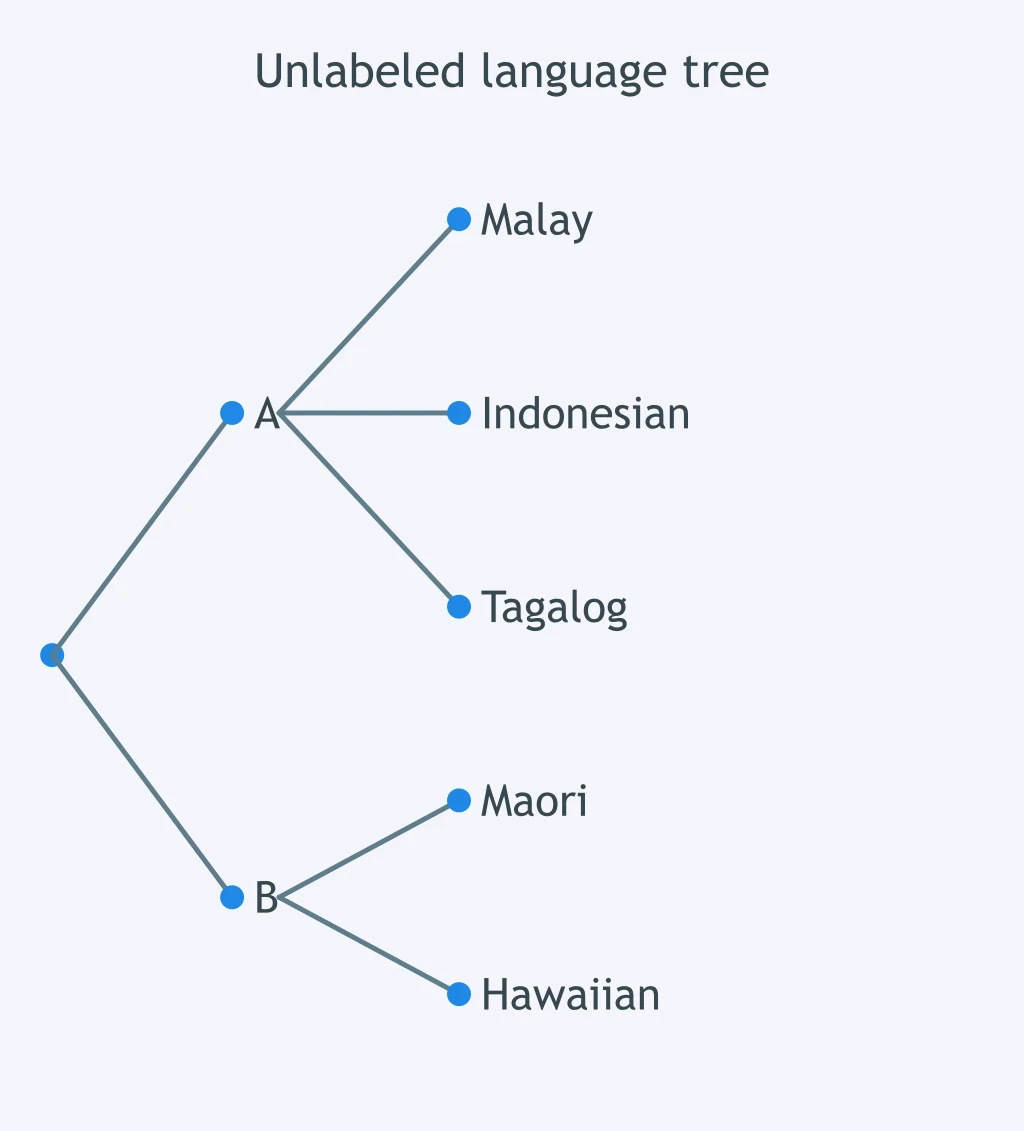
The tree links island languages from Southeast Asia and the Pacific. Which Austronesian branch best names the grouping?
Spanish and Portuguese dominate much of Latin America even though Indigenous populations were much larger than Iberian settler populations. What best explains this distribution?
English is official or dominant in the United States, Canada, Australia, and New Zealand. What accounts for this wide overseas distribution?
Swahili became a lingua franca along the East African coast and inland trade routes. What best explains its regional reach?
Russian extends across Siberia far beyond the early East Slavic homeland. Which explanation fits that pattern?
Arabic is widely spoken across North Africa as well as Southwest Asia. Which historical pattern best explains that distribution?
Austronesian languages are found across many islands from Madagascar to the central Pacific. What explains that pattern?
Turkic languages appear from Anatolia through Central Asia. Which process best explains this belt?
Basque is spoken in the western Pyrenees of Spain and France. How do linguists classify it?
Ainu is a language of northern Japan whose speakers largely shifted to Japanese during the 1800s and 1900s. Which description best fits its status today?
Hawaiian is a Polynesian language. In 1896, Hawaii made English the language of instruction in its schools. Which pattern best describes Hawaiian since then?
Irish is an official language of Ireland and is taught in schools, yet most people in Ireland use English in daily life. What best explains this?
Wales requires Welsh lessons in schools and funds Welsh-language television, even though most people in Wales speak English at home. Which status best fits Welsh?

Popular Culture and Globalization
30 questions

Types of Diffusion: Relocation, Expansion, Contagious, Hierarchical and Stimulus
40 questions

Historical Causes of Diffusion: Colonialism, Trade and the Columbian Exchange
30 questions

Contemporary Causes of Diffusion: Communication, Transport and Time-Space Convergence
25 questions

Dialects, Lingua Franca, Pidgin and Creole
Crack the passcode before the zombies get in.
Answer, then swat bugs for bonus points.
Race through questions at your own speed.
Same question on every screen. Fastest wins.

Pick a tile, answer, hit bonuses and steals.
30 questions